




When your TV's built-in speakers just aren't cutting it anymore, the world of soundbars can feel overwhelming. Do you need Dolby Atmos? How many channels are enough? Should you spend three times more for wireless speakers? These are exactly the questions I found myself wrestling with when comparing two fundamentally different approaches to home audio: the Hisense AX5140Q and the Ultimea Poseidon D70.
Released in 2023 and 2024 respectively, these soundbars represent two distinct philosophies in home theater audio. The Hisense AX5140Q embodies the premium approach—fewer channels but cutting-edge spatial audio technology, while the Ultimea Poseidon D70 goes all-in on value, delivering more physical speakers and extensive customization at a fraction of the cost.
Before diving into specifics, it's worth understanding what we're actually comparing. Modern soundbars have evolved far beyond simple stereo upgrades. The numbers you see—like 5.1.4 or 7.1—tell a specific story about how sound is distributed around your room.
The first number indicates front and surround channels (5 or 7), the second represents the subwoofer (.1), and when present, the third number shows height channels (.4). Height channels are what enable Dolby Atmos—a technology that places sounds not just around you, but above you. Think of rain falling from overhead in a movie, or a helicopter passing directly above your couch.
Dolby Atmos fundamentally changed how we think about home audio by treating sounds as objects that can move freely through three-dimensional space, rather than being locked to specific channels. DTS:X offers similar capabilities with slightly different processing approaches. These aren't just marketing buzzwords—they represent genuine technological advances that create more immersive experiences when the content supports them.
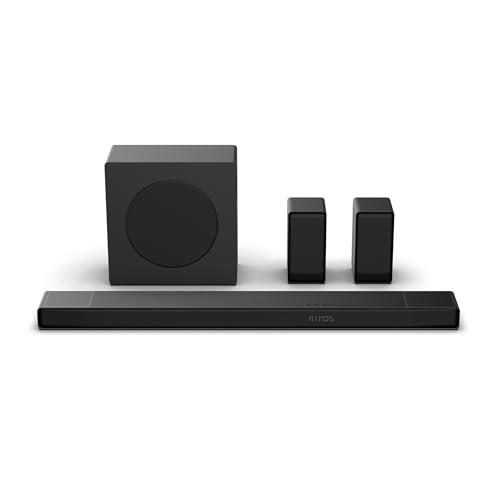
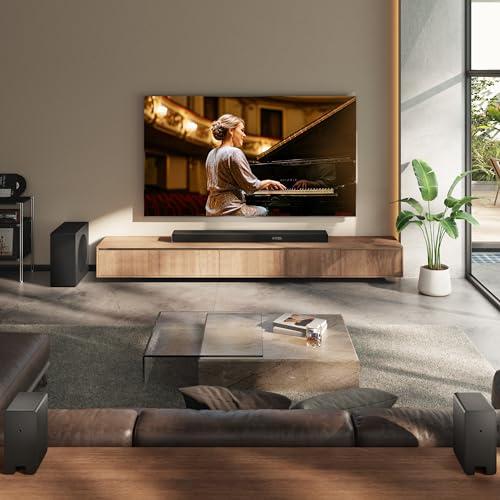
The Hisense AX5140Q launched in 2023 as part of Hisense's push into premium home audio, coinciding with their growing TV market share. What immediately sets it apart is its 5.1.4 configuration with true wireless rear speakers—something typically reserved for much more expensive systems.
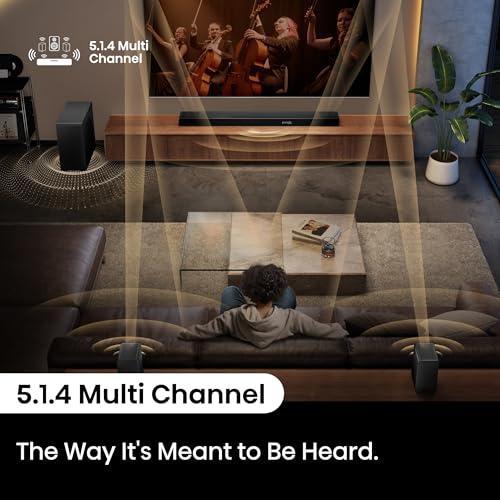
The star feature here is genuine Dolby Atmos processing through four physical upfiring speakers. Two sit atop the main soundbar, while two more are built into the wireless rear speakers. These upfiring drivers bounce sound off your ceiling to create overhead effects. When it works well—and in most rooms with standard 8-10 foot ceilings it does—the effect is genuinely impressive.
Having experienced both virtual and physical Atmos implementations, the difference is noticeable. Virtual processing can create a sense of height, but physical upfiring speakers deliver more precise object placement and a more convincing "dome" of sound. The Hisense AX5140Q excels particularly with movie content where atmospheric effects like rain, aircraft, or environmental ambience become positionally accurate rather than just "louder."
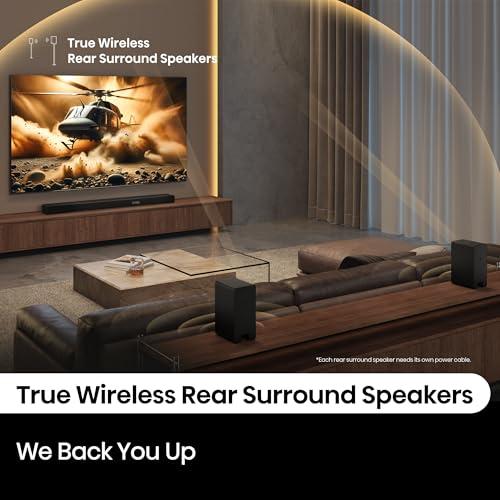
The truly wireless rear speakers solve one of home theater's biggest aesthetic challenges. No cable runs across doorways or under rugs—just power connections for each component. Having dealt with running speaker wire through living spaces, this convenience factor shouldn't be underestimated. The wireless connection maintains stable synchronization based on user reports, though as with any wireless audio system, interference from WiFi networks or other devices can occasionally cause issues.
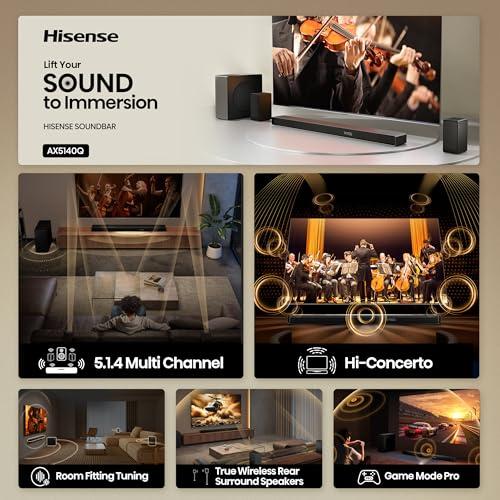
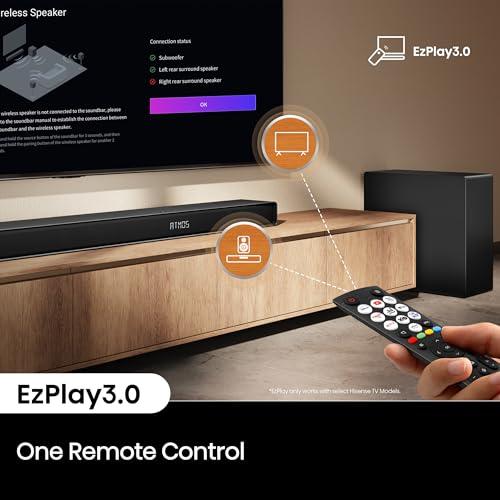
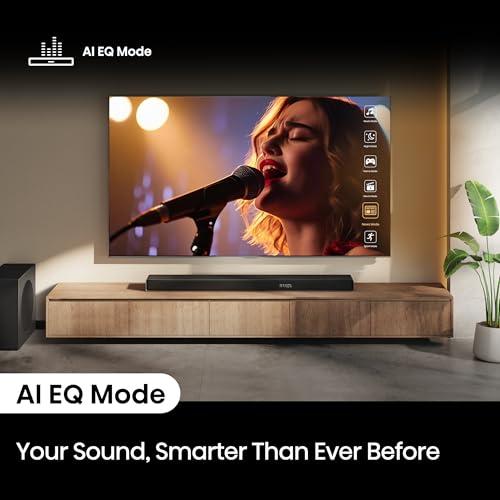
Hisense's Hi-Concerto technology represents their attempt to create a unified ecosystem. When paired with compatible Hisense TVs, the system can coordinate audio processing between the TV and soundbar, potentially improving dialogue clarity and overall integration. The AI EQ Mode automatically adjusts frequency response based on content type and room acoustics, though the effectiveness varies significantly based on room characteristics.
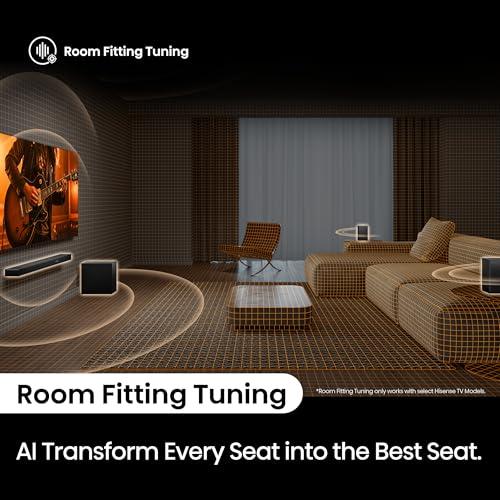
The Room Fitting Tuning feature analyzes your space and adjusts output accordingly. While not as sophisticated as dedicated room correction systems found in high-end AV receivers, it provides meaningful improvements in most typical living room setups.
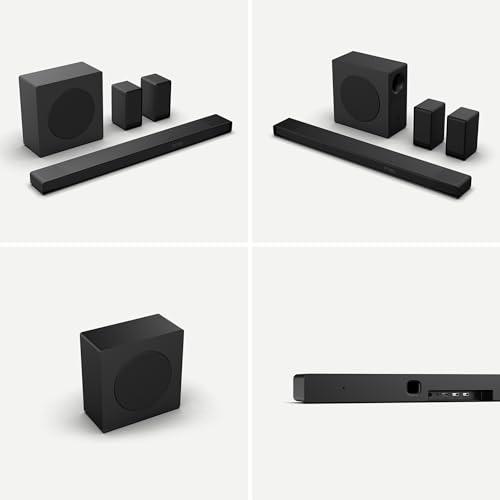
With 600W of maximum power distributed across 13 speakers, the Hisense AX5140Q has substantial headroom for larger rooms. The frequency response extends from 40Hz to 20kHz, which covers most audible content well. The 6.5" wireless subwoofer integrates smoothly with the system's overall tuning, providing controlled bass that doesn't overwhelm dialogue.
Based on user feedback and professional reviews, dialogue clarity stands out as a particular strength. The dedicated center channel processing and AI optimization keep speech intelligible even during complex action sequences—a common failing point for many soundbars that prioritize effects over voice clarity.
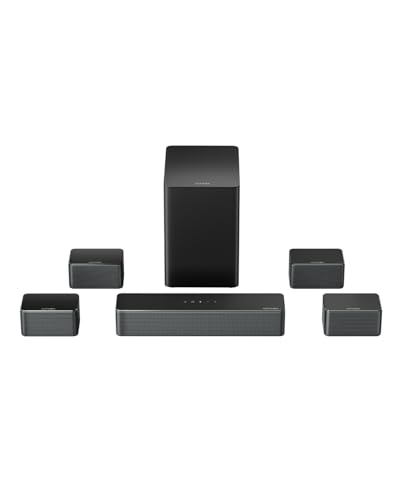
Released in 2024, the Ultimea Poseidon D70 takes a completely different approach. Rather than chasing premium audio formats, it maximizes channel count and customization options while keeping costs low.
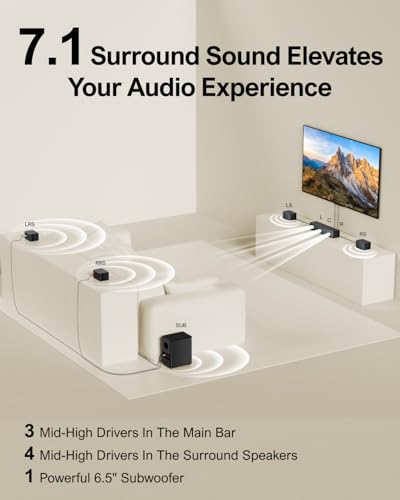
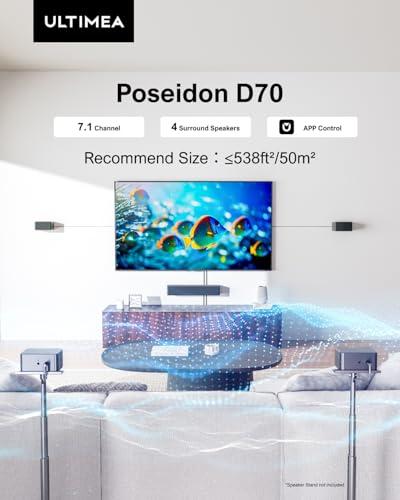
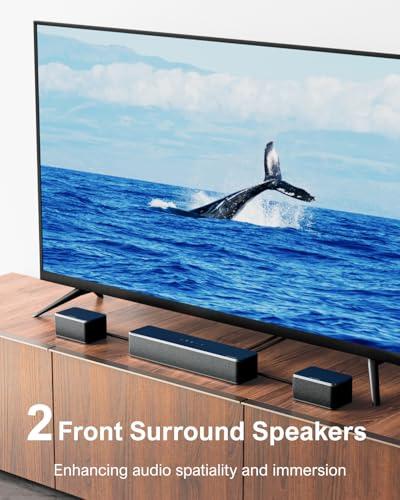
The 7.1 configuration provides more lateral surround coverage than the Hisense AX5140Q's 5.1.4 setup. Four dedicated surround speakers create excellent front-to-back and side-to-side movement, particularly effective for gaming and action movies where directional cues matter. While it lacks height channels, the system compensates with DTS Virtual:X processing that simulates overhead effects.
The trade-off here is clear: wider horizontal coverage versus vertical dimension. For content that doesn't heavily utilize Dolby Atmos—which includes most TV shows, news, sports, and older movies—the Ultimea D70's approach often provides more noticeable surround immersion.
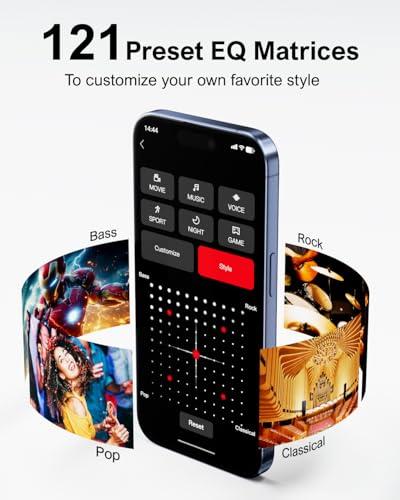
Where the Ultimea D70 truly differentiates itself is customization. The 121 preset EQ matrices cover everything from specific music genres (rock, classical, jazz) to content types (movies, gaming, news). This isn't just marketing fluff—each preset applies different frequency curves tailored to enhance specific types of content.
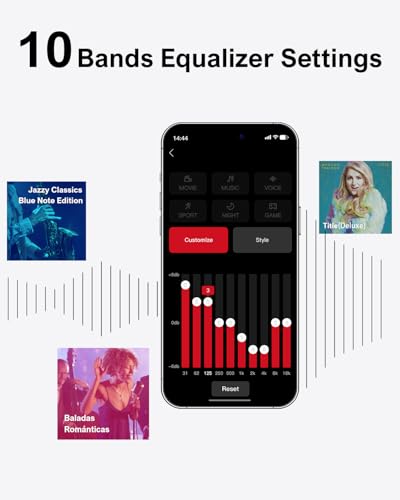
The 10-band graphic equalizer provides granular control over frequency response. Having spent time with various EQ systems, this level of control typically requires separate audio processors or high-end receivers. Being able to boost dialogue frequencies while controlling bass peaks, or enhance treble detail for music listening, provides flexibility that audio enthusiasts genuinely appreciate.
The dedicated Ultimea app offers comprehensive system control that goes beyond basic remote functions. You can save custom EQ profiles, adjust surround speaker levels independently (helpful for rooms where speakers can't be positioned symmetrically), and manage firmware updates. The app-centric approach appeals to users who prefer smartphone control over traditional remotes.
The wired surround speakers require cable runs from the subwoofer, which serves as the wireless hub. This creates more installation complexity than the Hisense AX5140Q's wireless approach, but also ensures zero latency or synchronization issues. The cables are color-coded and reasonably long, making most room configurations manageable.
At 410W peak power across eight speakers, the Ultimea D70 delivers surprising impact for its price point. The 35Hz-18kHz frequency response actually extends slightly lower than the Hisense system, contributing to its reputation for punchy, engaging bass performance.
For modern blockbusters with Dolby Atmos soundtracks, the Hisense AX5140Q provides a more cinematic experience. The overhead effects in movies like "Top Gun: Maverick" or Marvel films genuinely enhance immersion. The AI EQ Mode automatically optimizes for movie content, maintaining dialogue clarity while preserving dynamic range.
The Ultimea D70 excels with traditional surround content and older films. Its wider channel spread creates excellent movement across the horizontal plane, and the extensive EQ options allow fine-tuning for different movie genres. Action films benefit from the ability to boost specific frequency ranges where effects live.
This is where the philosophical differences become most apparent. The Hisense AX5140Q takes a more hands-off approach with preset sound modes (Music, AI, etc.) that apply broad optimizations. The Dolby processing can actually work against some music, as it's designed for multichannel movie content.
The Ultimea D70 shines for music enthusiasts. The genre-specific EQ presets are genuinely useful—the Jazz preset enhances vocal clarity and reduces harsh frequencies, while the Rock preset adds punch to drums and guitars. The ability to save custom profiles means you can optimize for your specific music preferences and room acoustics.
Both systems offer dedicated gaming modes, but they approach the challenge differently. The Hisense AX5140Q's Game Pro mode reduces audio latency and emphasizes directional cues, working particularly well with games that support Dolby Atmos for gaming. The height channels can provide genuine tactical advantages in shooters where overhead audio cues matter.
The Ultimea D70's wider surround coverage excels for competitive gaming where horizontal directional audio is crucial. The customizable EQ allows boosting frequencies where footsteps and environmental cues live, while the four surround speakers provide excellent spatial awareness for games that support 7.1 output.
The processing approaches reveal fundamental design philosophies. The Hisense AX5140Q emphasizes automated optimization—AI EQ, room calibration, and preset modes that adapt to content. This appeals to users who want premium performance without manual tweaking.
The Ultimea D70 puts control in user hands. Every aspect of the sound signature can be adjusted, from individual surround speaker levels to detailed frequency response curves. This requires more involvement but provides results tailored to specific preferences and room conditions.
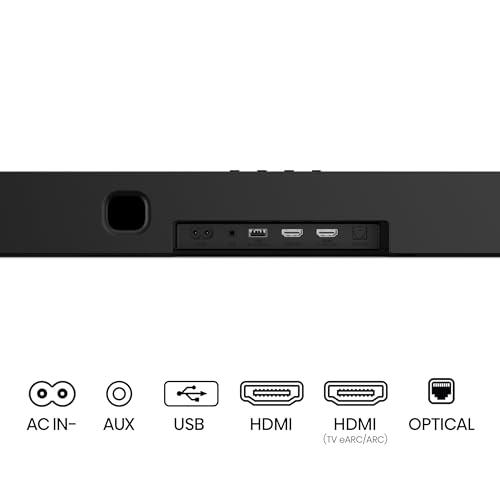
Connectivity differs meaningfully too. The Hisense AX5140Q includes HDMI eARC with 4K passthrough, essential for premium streaming services and gaming consoles. The Ultimea D70 offers HDMI ARC (without the 'e'), which handles most content but may limit high-bandwidth audio formats from some sources.
At the time of writing, these systems occupy very different price tiers. The Hisense AX5140Q typically costs about 2.5 times more than the Ultimea D70, positioning them for different market segments despite overlapping functionality.
The Hisense justifies its premium through genuine Dolby Atmos implementation, wireless rear speakers, and sophisticated processing. If budget allows, the convenience and spatial audio capabilities provide meaningful value over virtual alternatives.
The Ultimea delivers exceptional channel count and customization at its price point. Finding comparable 7.1 systems with physical surround speakers and extensive EQ options typically requires spending significantly more.
Room characteristics significantly impact performance for both systems. The Hisense AX5140Q's Atmos effects work best with flat ceilings 8-12 feet high. Vaulted or textured ceilings can diminish overhead effects, while very low ceilings may create unnatural reflections.
The Ultimea D70's performance depends heavily on surround speaker placement. Optimal positioning requires speakers at ear level, slightly behind and to the sides of the main listening position. The wired connections provide placement flexibility but require planning for cable routing.
Both systems benefit from proper subwoofer positioning. Corner placement typically maximizes bass output, while positioning along walls can provide more even distribution. The wireless subwoofers in both systems simplify this optimization process.
The Hisense AX5140Q makes most sense for users who prioritize convenience and cutting-edge audio processing. If you consume significant Dolby Atmos content through Netflix, Disney+, or 4K Blu-rays, the height channels provide genuine value. Hisense TV owners gain additional integration benefits through Hi-Concerto features.
The Ultimea D70 appeals to hands-on users who enjoy audio customization and want maximum surround coverage per dollar spent. Music enthusiasts particularly benefit from the extensive EQ options, while budget-conscious buyers get impressive channel count without premium pricing.
For small to medium rooms (up to about 300 square feet), both systems provide adequate power and coverage. Larger spaces favor the Hisense AX5140Q's higher power output and more sophisticated processing.
These soundbars represent two valid approaches to home theater audio improvement. The Hisense AX5140Q delivers premium features and convenience at a premium price, while the Ultimea D70 maximizes value and customization for budget-conscious buyers.
Your choice ultimately depends on priorities: spatial audio and convenience versus customization and value. Both significantly improve over TV speakers, but they serve different user types and use cases. Consider your content consumption habits, room characteristics, and willingness to tinker with settings when making your decision.
The soundbar market continues evolving rapidly, with features once reserved for high-end systems trickling down to budget options. Both systems represent solid choices within their respective market segments, offering meaningful improvements over built-in TV audio while addressing different user priorities and budgets.
| Hisense AX5140Q | Ultimea Poseidon D70 |
|---|---|
| Channel Configuration - Determines surround coverage and immersion quality | |
| 5.1.4 channels with height speakers for overhead effects | 7.1 channels with wider horizontal coverage |
| Audio Format Support - Critical for premium streaming and disc content | |
| Dolby Atmos, DTS:X (object-based 3D audio) | DTS Virtual:X only (simulated height effects) |
| Maximum Power Output - Affects volume capability and room filling ability | |
| 600W across 13 speakers | 410W across 8 speakers |
| Rear Speaker Configuration - Major convenience and placement difference | |
| True wireless rear speakers (power-only connections) | Wired surrounds (connect to subwoofer via cables) |
| Sound Customization Options - How much control you have over audio tuning | |
| 7 preset sound modes with AI automatic optimization | 121 EQ presets plus 10-band graphic equalizer |
| Subwoofer Design - Bass performance and placement flexibility | |
| 6.5" wireless subwoofer with room calibration | 6.5" wireless subwoofer with BassMX technology |
| Smart Features - Automation vs manual control approach | |
| AI EQ Mode, Room Fitting Tuning, Hi-Concerto TV integration | Smart app control, custom profile storage, manual adjustments |
| Connectivity Options - Compatibility with various devices | |
| HDMI eARC, Optical, USB, AUX, Bluetooth 5.3 | HDMI ARC, Optical, USB, AUX, Bluetooth |
| Total Speaker Count - More drivers typically mean better sound distribution | |
| 13 speakers (includes 4 upfiring height drivers) | 8 speakers (4 surround + 3 soundbar + subwoofer) |
| Frequency Response Range - How low and high the system can reproduce sound | |
| 40Hz - 20kHz (standard hi-fi range) | 35Hz - 18kHz (slightly deeper bass extension) |
| Target User - Who each system is designed for | |
| Premium experience seekers, Hisense TV owners, Atmos content consumers | Budget-conscious buyers, audio tweakers, customization enthusiasts |
The Hisense AX5140Q offers true Dolby Atmos with physical height speakers that create overhead effects, making it superior for movies and premium streaming content. The Ultimea Poseidon D70 provides wider 7.1 channel coverage with four surround speakers, which excels for traditional surround content and gaming. For genuine 3D audio experiences, the Hisense AX5140Q wins, but for broader horizontal surround coverage, the Ultimea D70 performs better.
The Hisense AX5140Q's 5.1.4 setup includes 5 main channels, 1 subwoofer, and 4 height channels for overhead effects in Dolby Atmos content. The Ultimea Poseidon D70's 7.1 configuration has 7 main channels and 1 subwoofer, providing more lateral surround coverage but no dedicated height channels. The choice depends on whether you prioritize vertical sound effects or wider horizontal surround immersion.
For modern movies with Dolby Atmos soundtracks, the Hisense AX5140Q delivers superior cinematic immersion with its overhead audio effects and AI optimization. The Ultimea Poseidon D70 excels with traditional TV shows and older films that don't use height channels, offering excellent dialogue clarity and customizable EQ settings. Both systems significantly improve over built-in TV speakers.
The Hisense AX5140Q offers simpler installation with truly wireless rear speakers requiring only power connections, plus automatic room calibration. The Ultimea Poseidon D70 requires running speaker wires from the subwoofer to the four surround speakers but includes color-coded cables and clear instructions. Both systems come with wall-mounting hardware and setup guides.
The Ultimea Poseidon D70 provides exceptional value with 7.1 surround sound, extensive customization options, and four physical surround speakers at a budget-friendly price point. The Hisense AX5140Q costs significantly more but justifies the premium with Dolby Atmos support, wireless rear speakers, and advanced processing features. Your choice depends on budget priorities versus premium features.
Both systems work well for music, but with different strengths. The Ultimea Poseidon D70 excels for music with 121 genre-specific EQ presets and a 10-band equalizer for detailed customization. The Hisense AX5140Q offers preset music modes with automatic optimization but less manual control. Music enthusiasts who enjoy tweaking audio settings will prefer the Ultimea D70's extensive customization options.
The Hisense AX5140Q offers excellent gaming performance with dedicated Game Pro mode and Dolby Atmos support for compatible games, providing tactical audio advantages. The Ultimea Poseidon D70 delivers superior horizontal directional audio for competitive gaming with its four surround speakers and customizable EQ for enhancing specific game audio frequencies. Both systems reduce audio latency for responsive gaming experiences.
The Hisense AX5140Q includes HDMI eARC with 4K passthrough, optical input, USB, AUX, and Bluetooth 5.3 connectivity. The Ultimea Poseidon D70 offers HDMI ARC, optical, USB, AUX, and Bluetooth connections. Both systems connect wirelessly to their subwoofers and support multiple input sources for various devices like gaming consoles, streaming players, and smartphones.
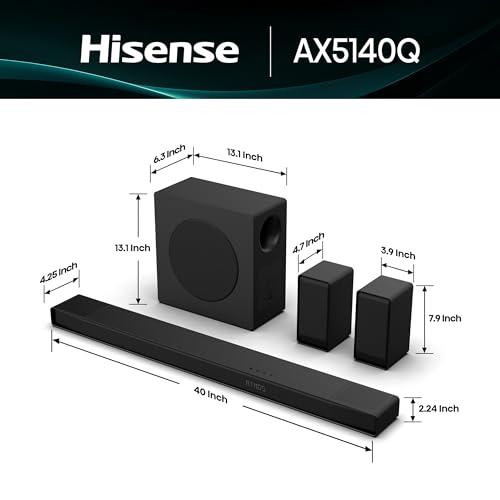
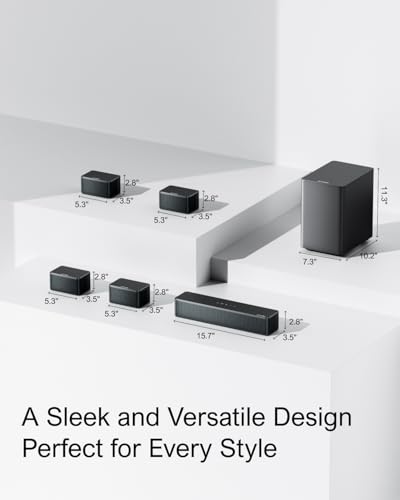
The Hisense AX5140Q features a 40-inch wide soundbar with wireless rear speakers that only need power outlets, making placement very flexible. The Ultimea Poseidon D70 has a more compact 15.7-inch soundbar but requires space for four wired surround speakers connected to the subwoofer. Both systems work well in medium to large rooms and can be wall-mounted to save space.
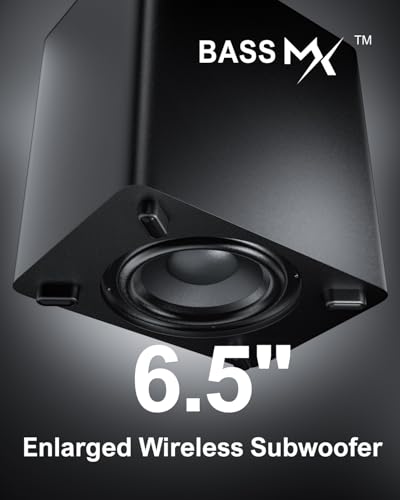
Both systems feature 6.5-inch wireless subwoofers that deliver impressive bass for their size. The Ultimea Poseidon D70 extends slightly lower (35Hz vs 40Hz) and includes BassMX technology for enhanced low-frequency impact. The Hisense AX5140Q offers more controlled, room-calibrated bass that integrates seamlessly with its AI optimization. Both provide significant bass improvement over TV speakers.
Yes, both the Hisense AX5140Q and Ultimea Poseidon D70 work with any TV brand through HDMI ARC/eARC or optical connections. The Hisense AX5140Q offers additional integration features when paired with Hisense TVs through Hi-Concerto technology, but functions fully with other brands. The Ultimea D70 provides universal compatibility and app-based control regardless of TV manufacturer.
Choose the Hisense AX5140Q if you want premium Dolby Atmos effects, wireless installation convenience, and automatic optimization for a more cinematic experience. Select the Ultimea Poseidon D70 if you prioritize maximum surround coverage, extensive audio customization, and exceptional value with physical surround speakers. Consider your budget, room size, content preferences, and whether you prefer automated or manual audio control when making your decision.
We've done our best to create useful and informative comparisons to help you decide what product to buy. Our research uses advanced automated methods to create this comparison and perfection is not possible - please contact us for corrections or questions. These are the sites we've researched in the creation of this article: shop.hisense-usa.com - manuals.plus - dolby.com - youtube.com - gzhls.at - rtings.com - youtube.com - bestbuy.com - manuals.plus - bestbuy.com - hisense-usa.com - youtube.com - device.report - manuals.plus - youtube.com - device.report - manuals.plus - youtube.com - ultimea.com - provantage.com - ultimea.com - youtube.com - youtube.com - bestbuy.com - the-gadgeteer.com - shopmyexchange.com - youtube.com - youtube.com - youtube.com - ultimea.com - manuals.plus - device.report - images.thdstatic.com - shopmyexchange.com - staples.com - ultimea.de

Privacy Policy
Terms and Conditions - Affiliate Policy
Home Security
© Copyright 2008-2026.
11816 Inwood Rd #1211, Dallas, TX 75244