




When your TV's built-in speakers leave you straining to hear dialogue or missing the rumble of movie explosions, a soundbar can transform your entertainment experience. But choosing between a budget system and a premium flagship isn't just about money—it's about understanding what you actually need for your space and entertainment habits.
Today we're comparing two very different approaches to home theater audio: the Ultimea Poseidon D70, a budget-friendly true surround system, and the Samsung HW-Q990D, a premium flagship with all the latest audio technology. Released in recent years as manufacturers refined their soundbar designs, these represent fundamentally different philosophies about how to deliver great sound at home.
Before diving into specifics, let's clarify what we mean by channel configurations. When you see "7.1" or "11.1.4," these numbers describe how many discrete audio channels the system can reproduce. The first number represents the main speakers (front left, center, front right, and surround channels), the second is dedicated subwoofer channels, and the third (when present) indicates height channels for overhead sound effects.
This matters because more channels generally mean more precise sound placement and a more immersive experience. However, the quality of implementation matters more than just counting speakers—something we'll explore as we compare these systems.
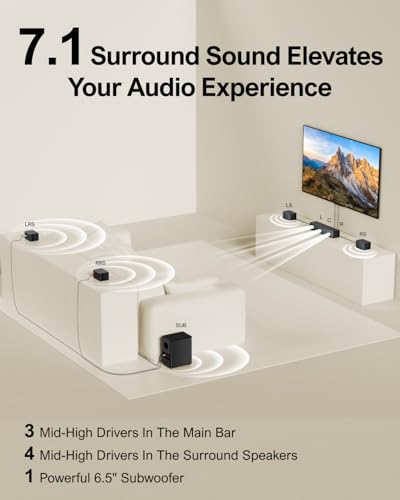
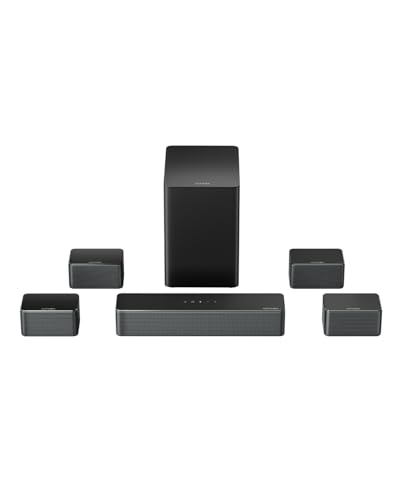
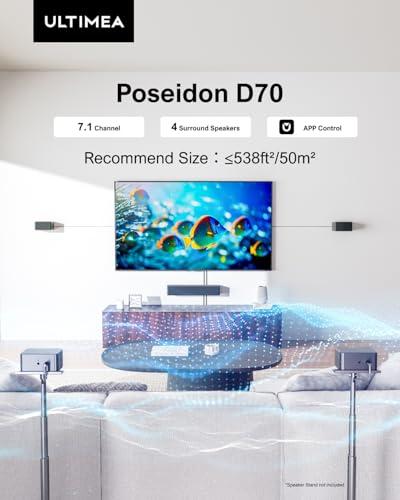
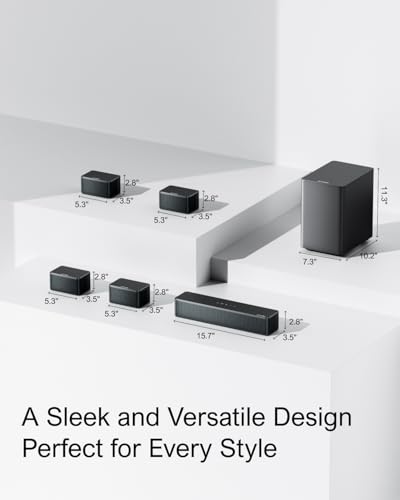
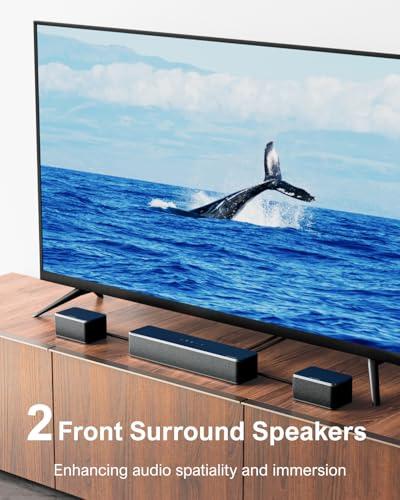
The Ultimea Poseidon D70 takes a refreshingly straightforward approach to surround sound. Instead of relying on digital trickery to simulate surround effects, it gives you actual physical speakers positioned around your room. The system includes a compact main soundbar, four small satellite speakers, and a wireless subwoofer—creating a genuine 7.1 channel setup.
What makes this approach special is authenticity. When a helicopter flies from left to right in a movie, the sound actually moves from your left surround speaker to your right one. This creates convincing directional audio that virtual surround systems struggle to match, especially at this price point.
The main soundbar houses three 2.25-inch drivers handling the front channels, while each of the four satellite speakers contains its own 2.25-inch driver. These satellites connect via wired cables to either the soundbar or subwoofer, depending on their position. While this means more cables to manage, it ensures reliable, lag-free surround sound.
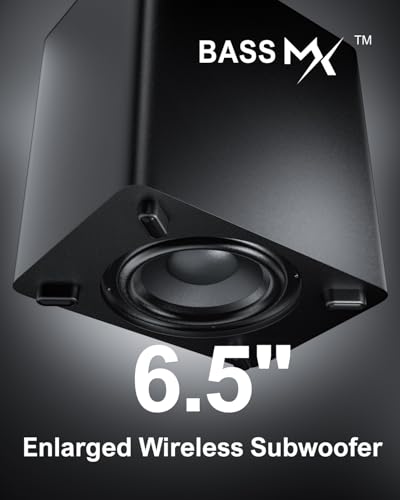
The 6.5-inch wireless subwoofer connects to the main bar via Bluetooth and handles the low-frequency effects that make movie explosions feel impactful. Ultimea's BassMX technology optimizes this bass response, allowing users to adjust the intensity through the remote or smartphone app.
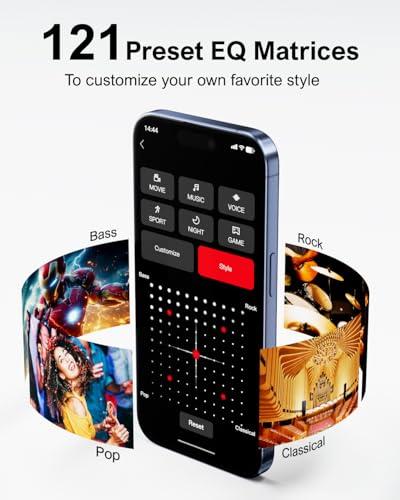
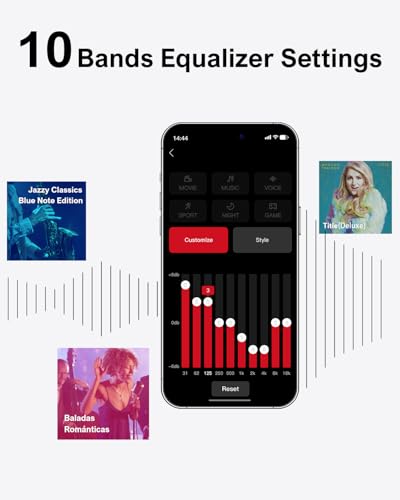
Perhaps most impressively, the Ultimea Poseidon D70 includes extensive sound customization. The mobile app provides access to 121 preset EQ settings and a 10-band graphic equalizer. This level of audio tweaking is rare in budget soundbars and lets you fine-tune the sound for your specific room and preferences.
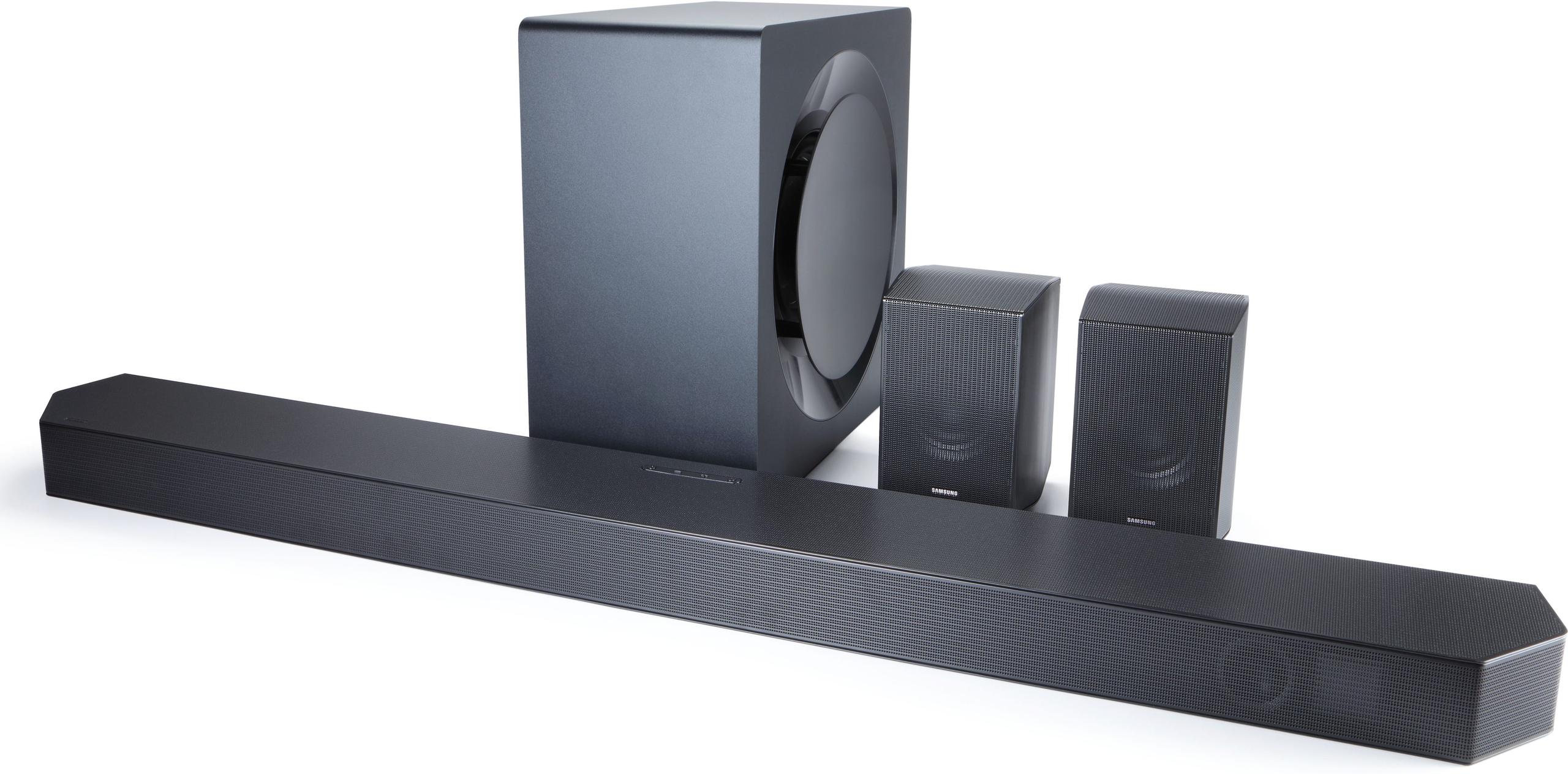
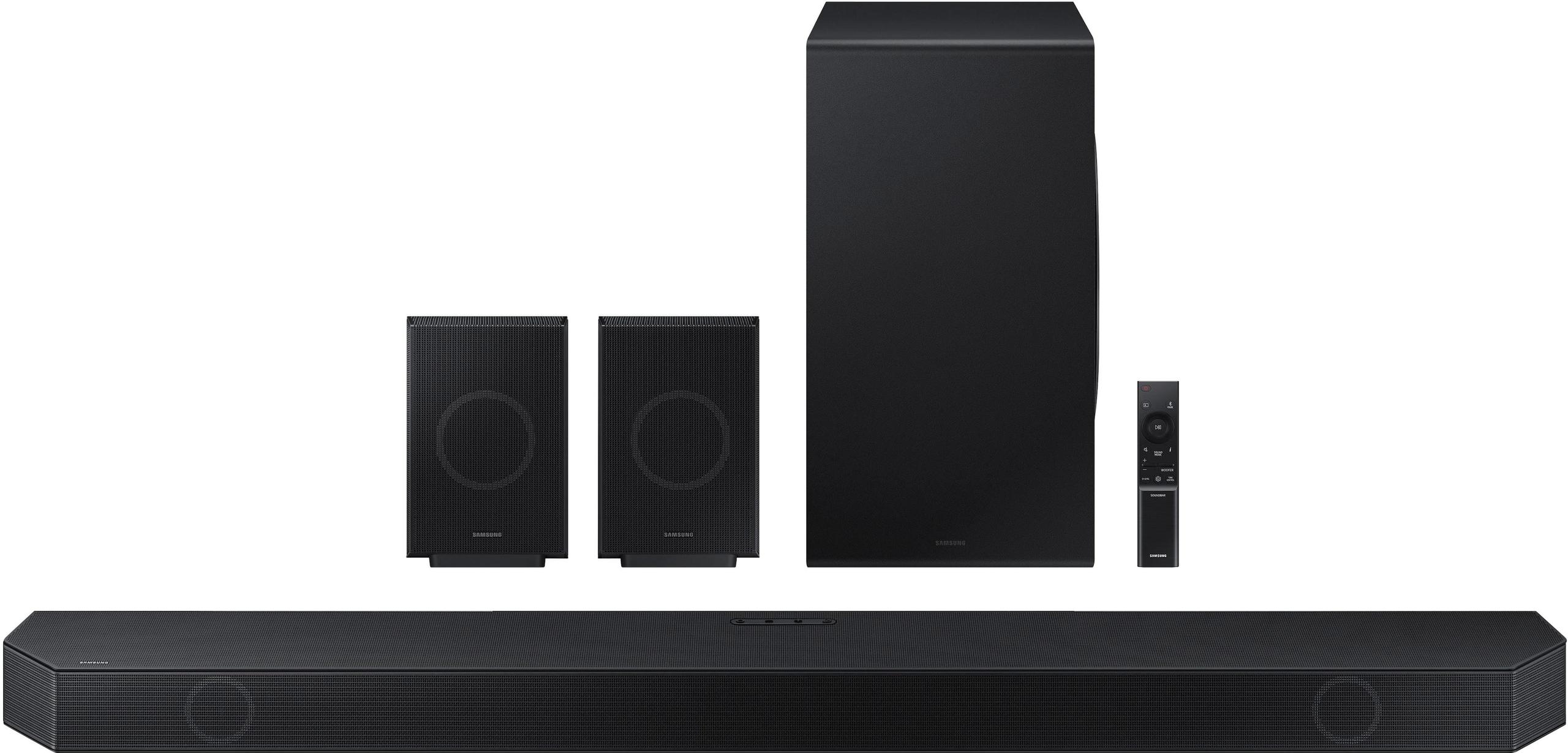
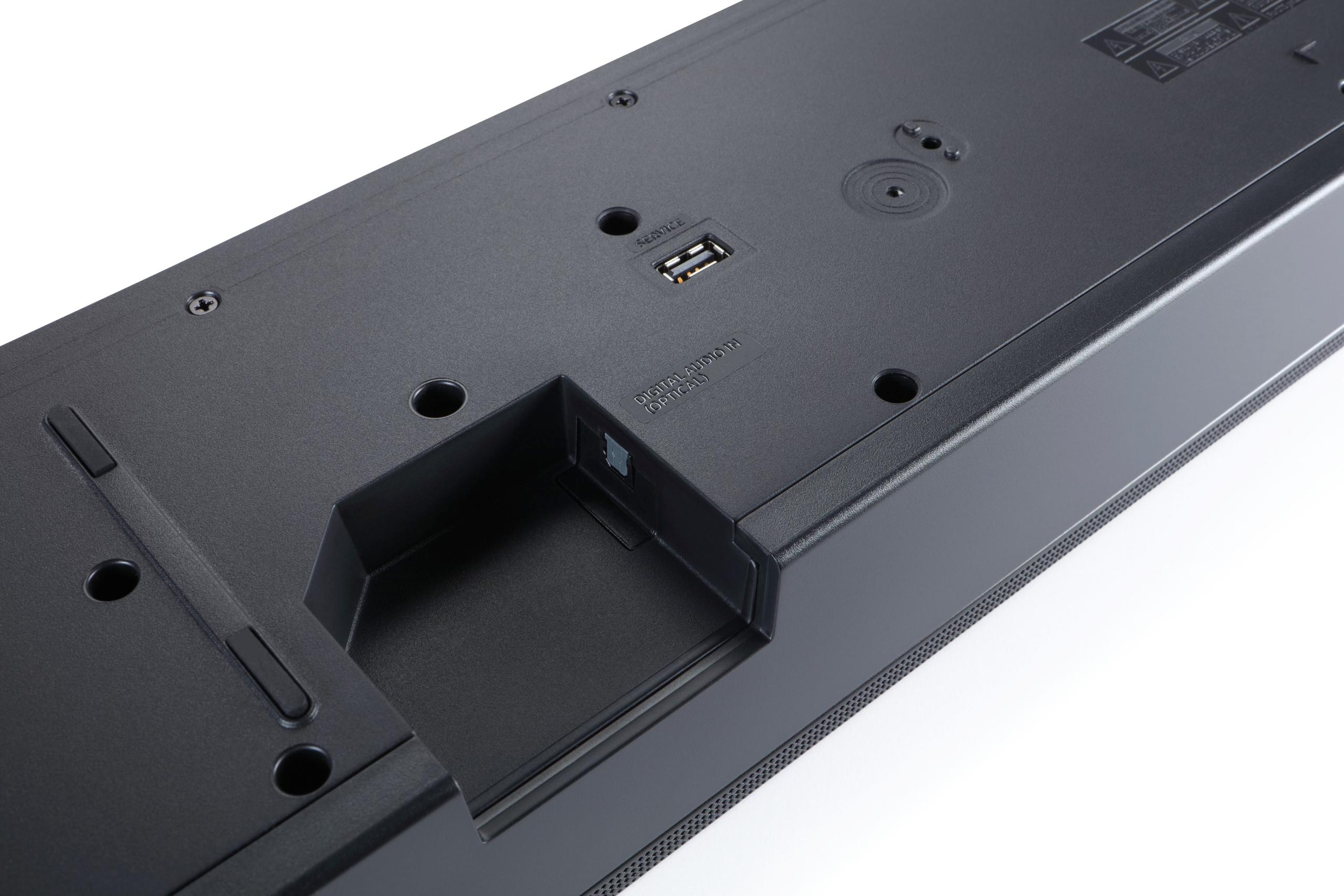
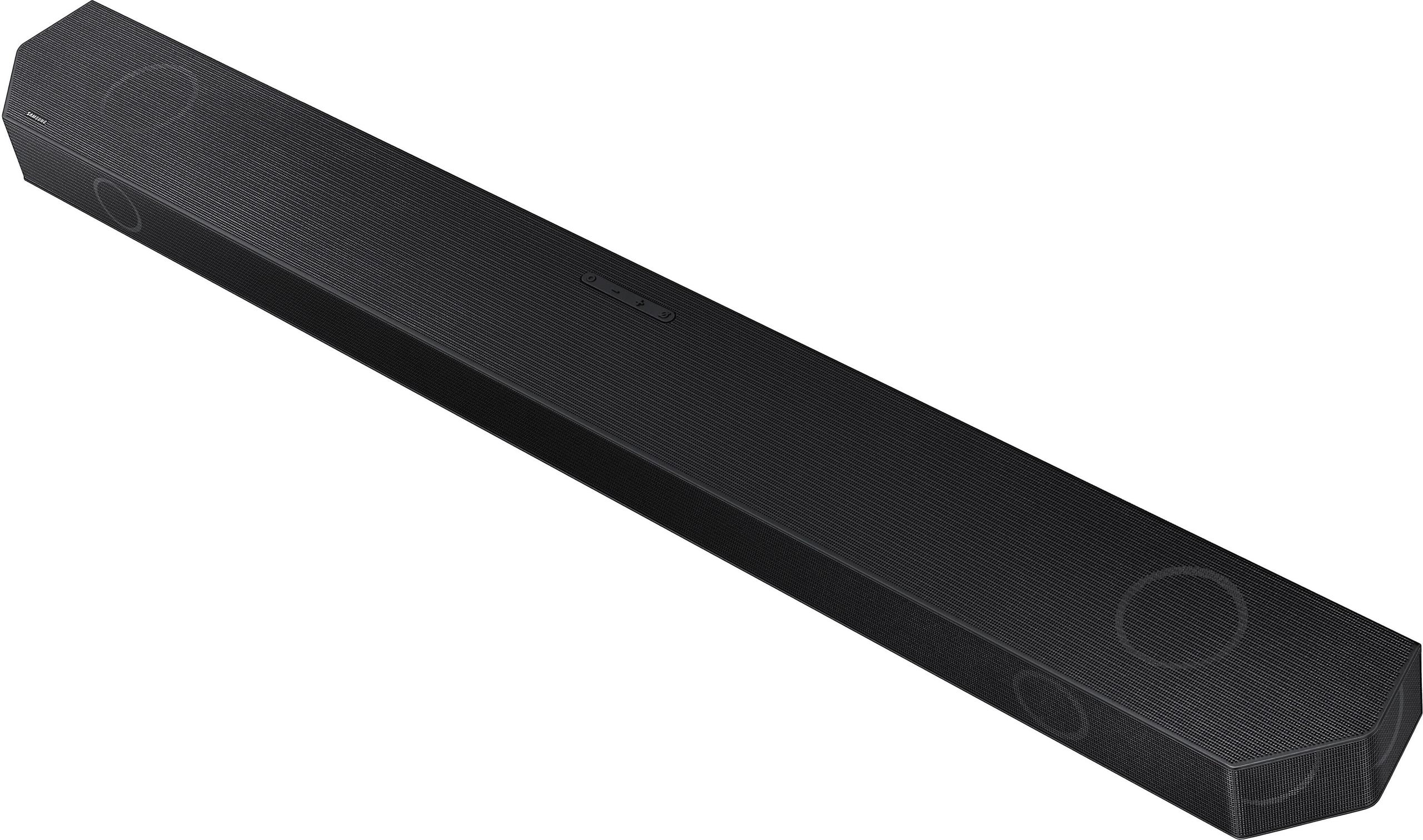
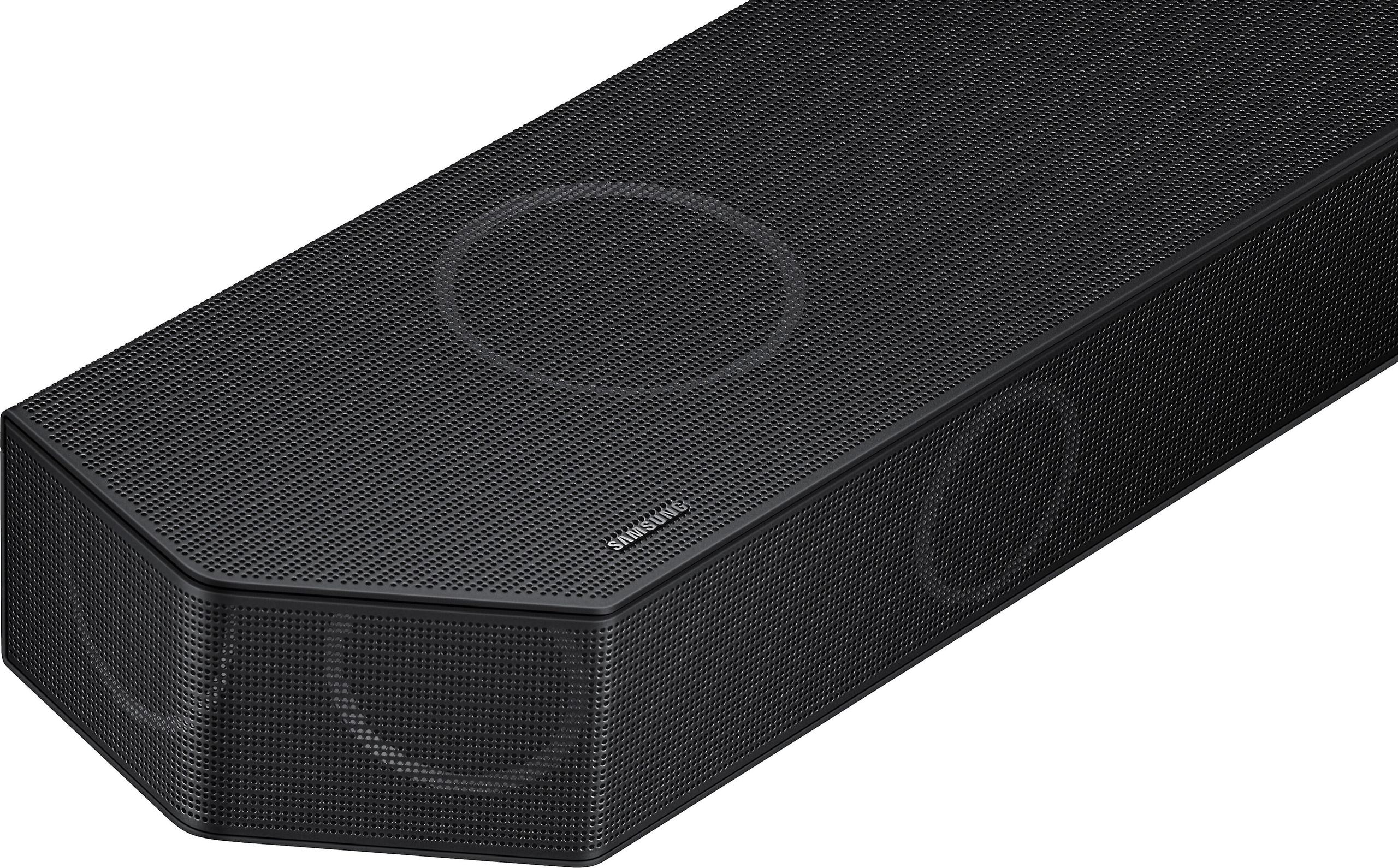
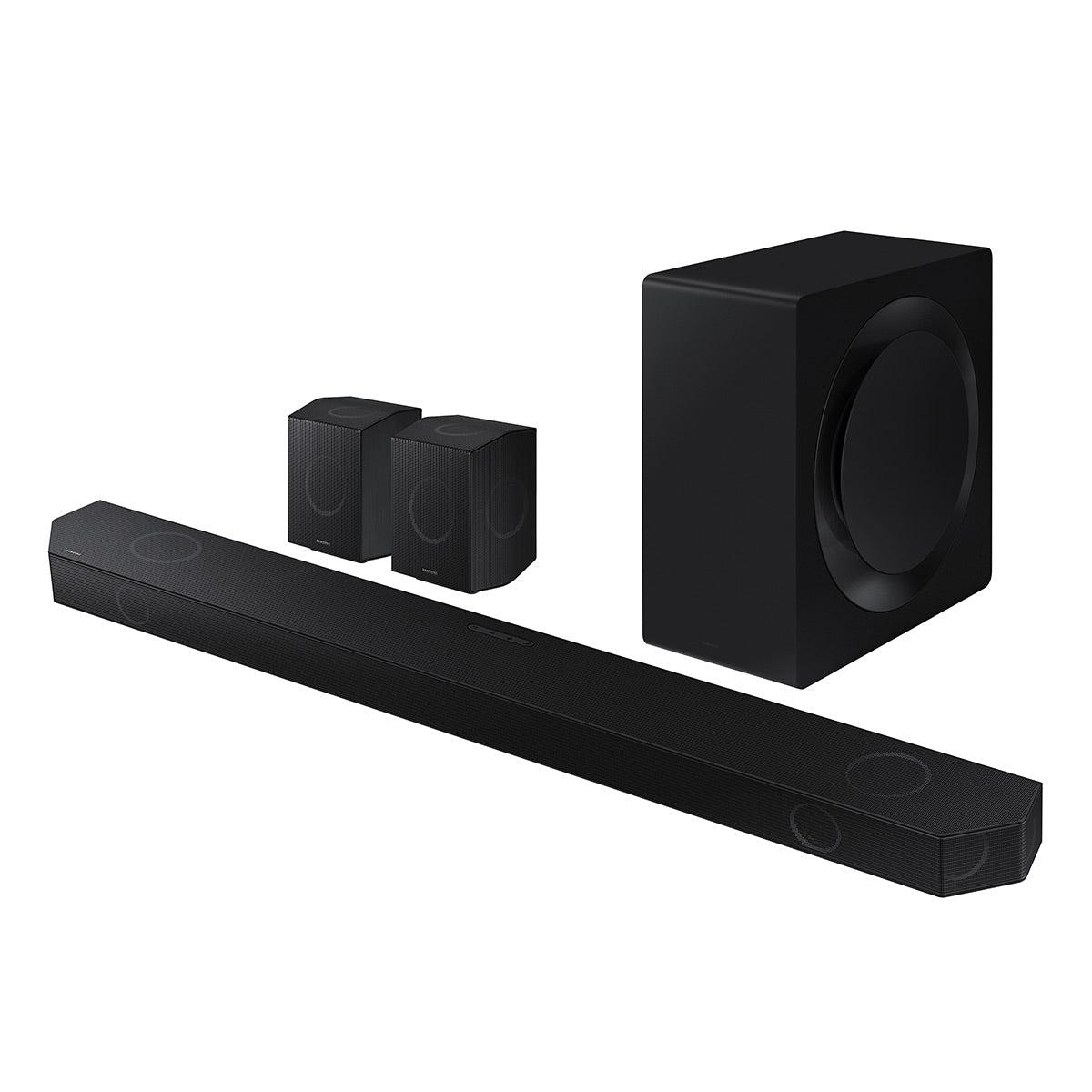
The Samsung HW-Q990D represents the opposite philosophy—throw every possible feature and technology into one system. This 11.1.4 channel behemoth includes 22 total speakers spread across a large main soundbar, two wireless satellite speakers, and an 8-inch subwoofer.
The "11.1.4" configuration means this system can reproduce height channels—sounds that appear to come from above you. Four up-firing drivers (two in the main bar, two in the satellites) bounce sound off your ceiling to create overhead effects. When a plane flies overhead in a movie with Dolby Atmos encoding, you'll hear it pass above you rather than just in front.
This spatial audio capability sets premium soundbars apart from budget alternatives. Dolby Atmos and DTS:X are object-based audio formats that place sounds precisely in three-dimensional space around the listener. The Samsung HW-Q990D excels at reproducing these formats, creating an almost theatrical experience in your living room.
Samsung's processing power shows in features like SpaceFit Sound Pro, which uses built-in microphones to analyze your room's acoustics and automatically adjust the sound output. This room correction technology compensates for challenging spaces—like rooms with hard surfaces that create echoes or odd shapes that cause audio dead spots.
The system also includes Active Voice Amplifier Pro, which monitors ambient noise in your room and boosts dialogue clarity when needed. If your air conditioner kicks on during a quiet movie scene, the soundbar automatically enhances voices to cut through the background noise.
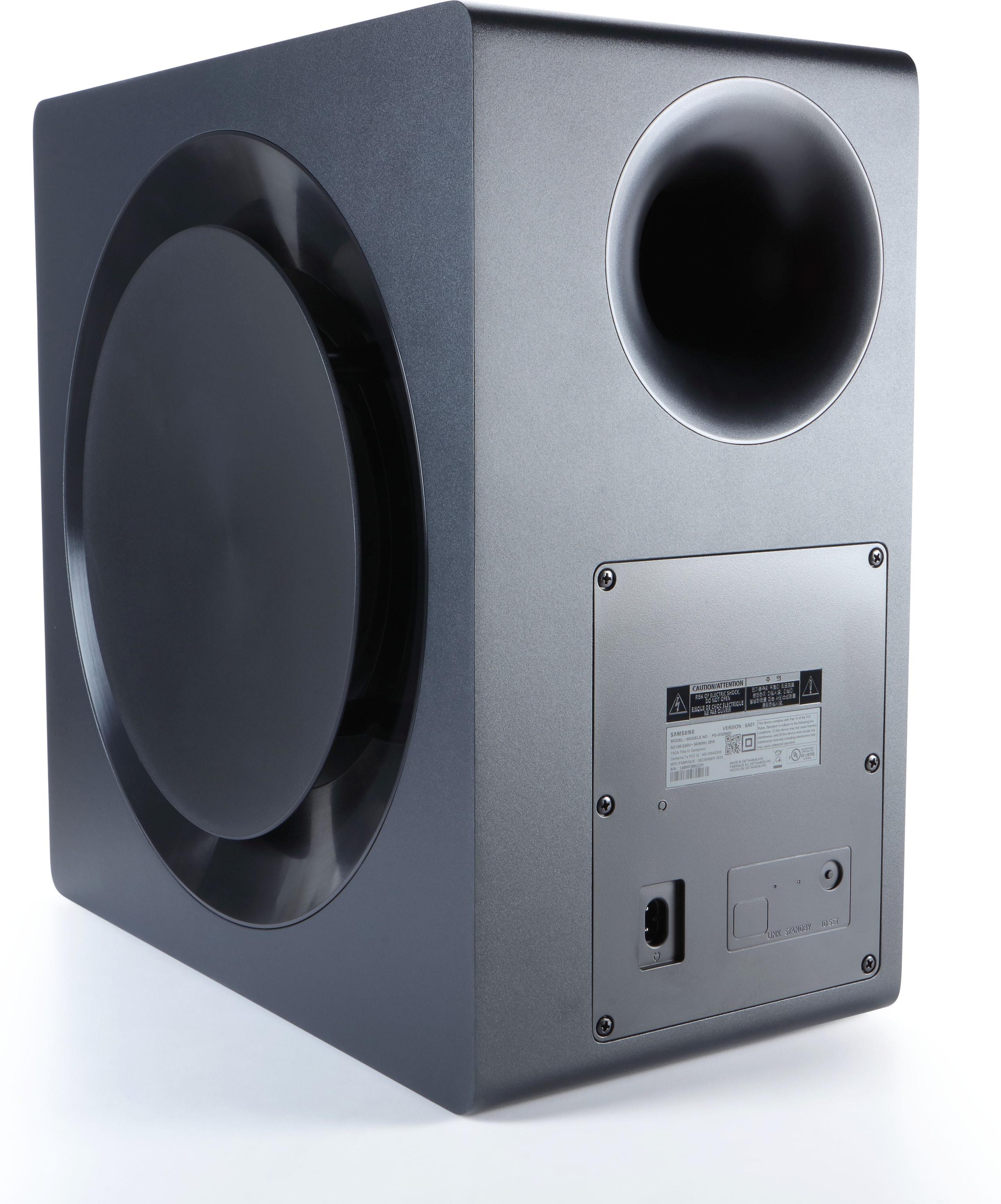
This is where the price difference becomes most apparent. The Samsung HW-Q990D uses an 8-inch subwoofer that can reproduce frequencies down to 32Hz—deep enough to feel the rumble of movie explosions in your chest. The larger driver and more powerful amplification mean it can fill large rooms with authoritative bass without distortion.
The Ultimea Poseidon D70's 6.5-inch subwoofer performs admirably for its size and price, but it can't match the Samsung's low-end extension or power handling. In smaller to medium-sized rooms, this difference may not matter much. But in larger spaces or for users who love bass-heavy content, the Samsung's advantage becomes clear.
However, the Ultimea's BassMX technology does provide adjustable bass enhancement that can make up some ground. Users can fine-tune the bass response through the app, potentially achieving satisfying low-end performance that suits their specific room and preferences.
Both systems prioritize clear dialogue, but they achieve it differently. The Samsung HW-Q990D uses sophisticated processing to automatically enhance voices based on content analysis and room conditions. Its dedicated center channel drivers are specifically tuned for vocal reproduction, and the Active Voice Amplifier Pro feature provides real-time adjustments.
The Ultimea Poseidon D70 relies more on traditional engineering and user customization. Its center channel drivers deliver clear dialogue, and the extensive EQ options let users boost vocal frequencies if needed. Based on user reviews, dialogue clarity is consistently praised, with voices remaining distinct even during complex action sequences.
For most users, both systems will deliver satisfactory dialogue performance. The Samsung's automatic optimization might appeal to those who prefer "set it and forget it" simplicity, while the Ultimea's manual controls suit users who enjoy tweaking their audio setup.
This represents the most significant performance difference between these systems. The Samsung HW-Q990D creates a full three-dimensional soundscape with overhead effects that the Ultimea Poseidon D70 simply cannot reproduce. When watching Dolby Atmos content, sounds can appear to come from any direction around you—including above.
The Samsung's height channels excel with content like rain scenes (where droplets seem to fall around you), helicopter sequences (with rotor noise overhead), or action movies with debris flying through the air. This overhead dimension adds significant immersion to properly encoded content.
However, the Ultimea Poseidon D70 shouldn't be underestimated for traditional surround sound. Its four physical satellite speakers create genuine directional audio that many virtual surround systems can't match. Car chase sequences, gunfire, and ambient environmental sounds are precisely positioned around the listener. For content without height channels, this authentic surround staging can be more convincing than systems relying purely on psychoacoustic processing.
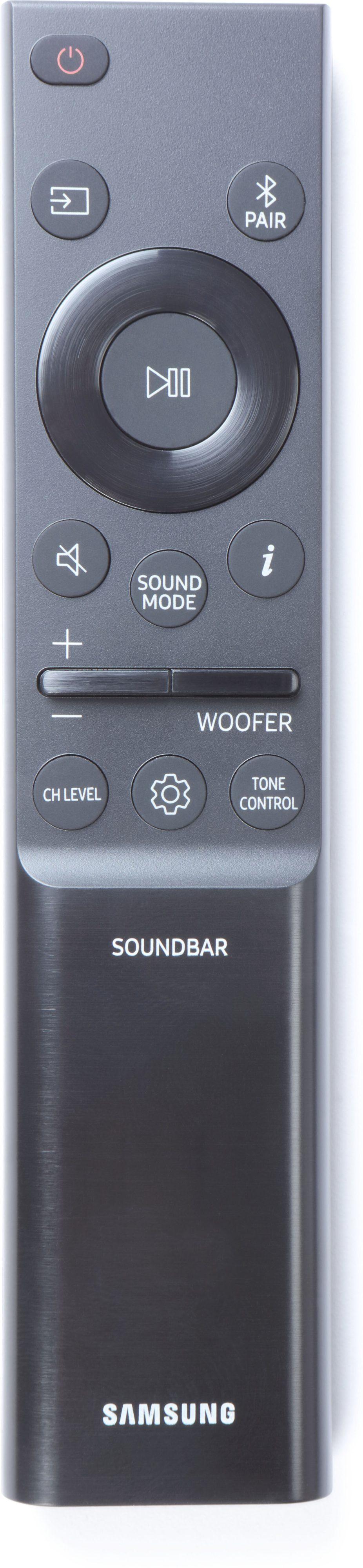
The feature gap here is substantial. The Samsung HW-Q990D includes built-in voice assistants (Alexa, Bixby, Google Assistant), allowing hands-free control of playback and smart home devices. The SpaceFit Sound Pro room correction runs automatically without user intervention, continuously optimizing sound based on your space.
Samsung TV owners get additional benefits through Q-Symphony technology, which coordinates the TV's speakers with the soundbar for expanded soundstage width. This integration can make the front presentation more immersive by utilizing every available driver in your entertainment setup.
The Ultimea Poseidon D70 takes a more manual approach. The smartphone app provides extensive control over EQ settings and sound modes, but users need to make these adjustments themselves. The system includes AI-enhanced processing that optimizes audio signals in real-time, though without the automatic room correction features of premium systems.
Some users actually prefer this hands-on approach. The 121 preset EQ settings and 10-band graphic equalizer offer more granular control than many systems provide. Enthusiasts who enjoy tweaking their audio setup may find this level of customization more satisfying than automatic optimization.
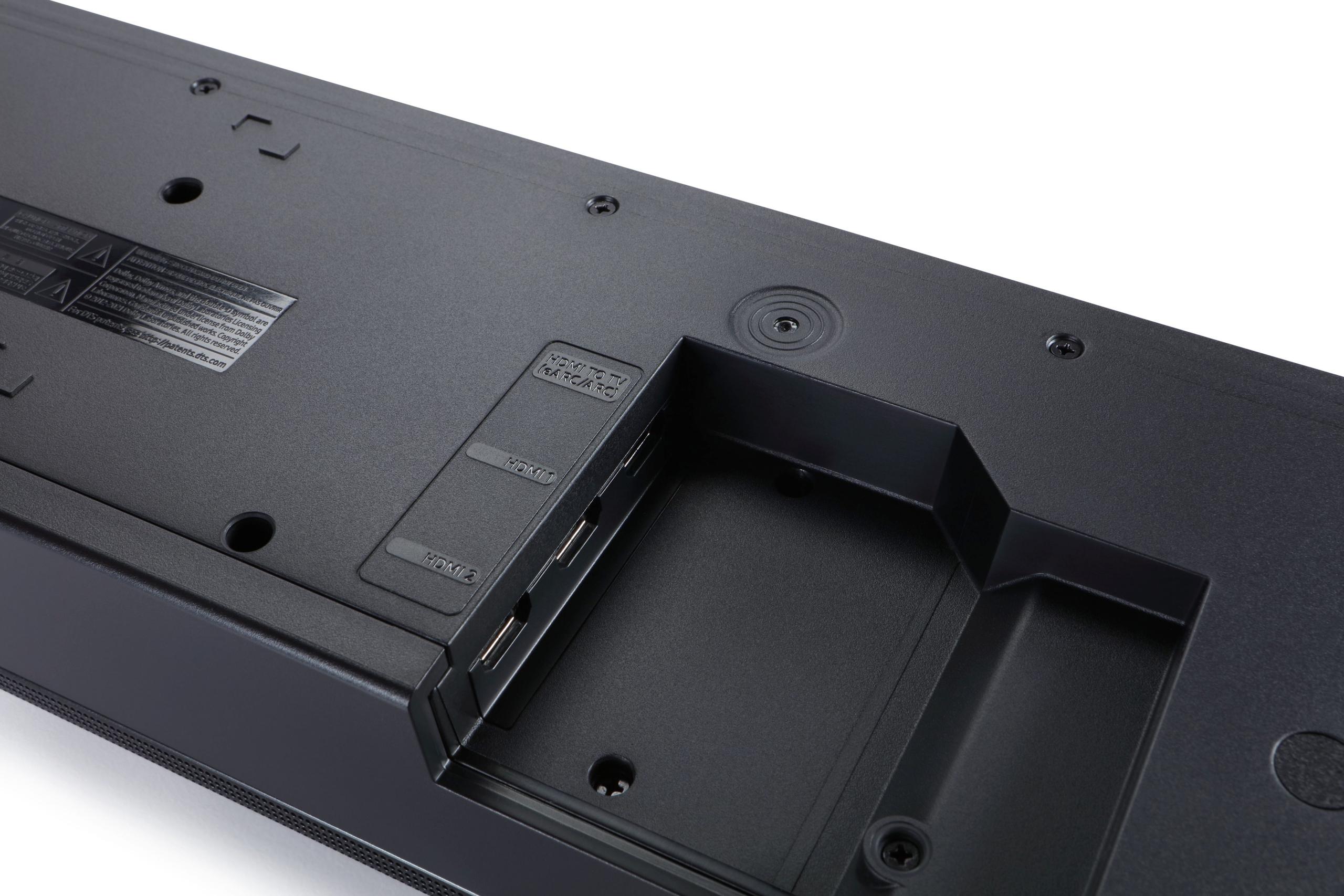
For gaming enthusiasts, the Samsung HW-Q990D offers clear advantages. Its HDMI 2.1 inputs support 4K gaming at 120Hz, Variable Refresh Rate (VRR), and Auto Low Latency Mode (ALLM)—features essential for next-generation gaming consoles. Game Mode Pro automatically adjusts audio processing based on gaming content for optimized sound effects and spatial awareness.
The Ultimea Poseidon D70 includes basic gaming modes but lacks advanced gaming connectivity features. Its HDMI ARC, optical, USB, Bluetooth, and auxiliary inputs cover most entertainment devices, but without the bandwidth for cutting-edge gaming features.
This connectivity difference reflects the systems' different target markets. Serious gamers investing in premium consoles will benefit from the Samsung's advanced features, while casual gamers will find the Ultimea perfectly adequate for their needs.
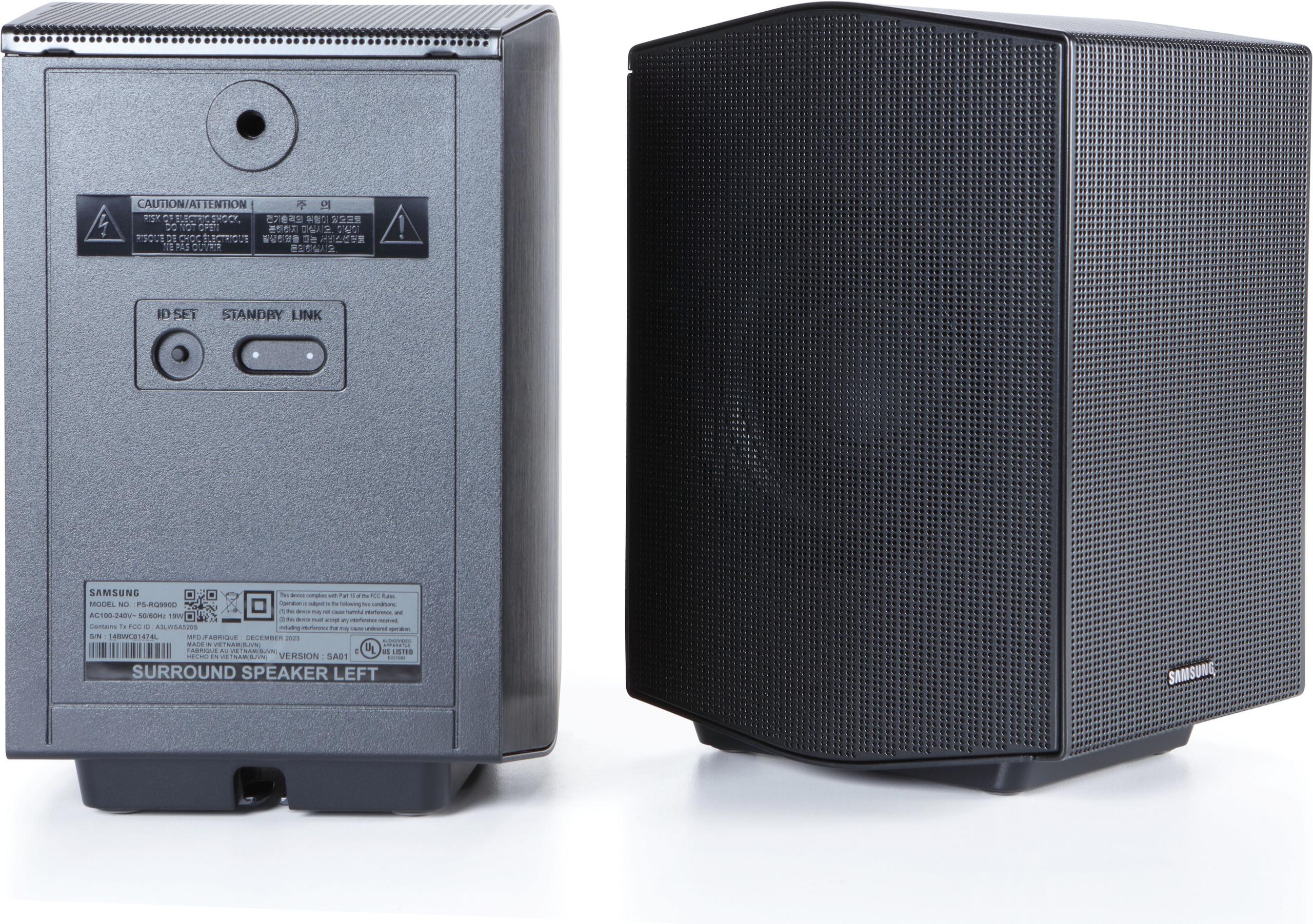
The Samsung HW-Q990D offers wireless convenience for its satellite speakers—they need AC power but no audio cables running to the main unit. This reduces cable management significantly, especially in larger rooms where cable runs would be lengthy.
However, the Ultimea Poseidon D70 deserves credit for thoughtful installation design. All cables are color-coded and clearly labeled, making the wired setup process straightforward even for non-technical users. The system includes wall-mounting hardware for all components, and the compact satellite speakers integrate discretely into most room layouts.
The installation choice often comes down to your room layout and personal preferences. Wireless satellites are convenient but require electrical outlets near each speaker position. Wired satellites need cable management but work anywhere you can run the included wires.
At the time of writing, these systems occupy very different price segments, making direct value comparisons challenging. The Ultimea Poseidon D70 typically retails for under $200, while the Samsung HW-Q990D commands a premium price approaching $800.
The Ultimea's value proposition is straightforward: genuine 7.1 surround sound with extensive customization at a fraction of traditional surround system costs. User reviews consistently highlight it as exceptional value, delivering performance that competes with systems costing several times more.
The Samsung's premium pricing reflects its advanced features—Dolby Atmos processing, room correction, gaming optimization, and wireless convenience. Whether these features justify the price premium depends on your specific needs and budget.
Consider that home theater audio systems often represent long-term investments. A system purchased today may serve your entertainment needs for many years. The Samsung's advanced features may provide better future-proofing as content creators increasingly adopt object-based audio formats.
The Ultimea Poseidon D70 makes sense for budget-conscious users who prioritize authentic surround sound over advanced features. It's ideal for apartments or smaller homes where true multi-channel audio provides significant improvement over TV speakers without requiring premium investment.
This system particularly suits users who enjoy audio customization and don't mind manual setup. The extensive EQ options reward experimentation, and the straightforward design appeals to those who prefer understanding and controlling their audio equipment.
The Samsung HW-Q990D targets home theater enthusiasts with larger budgets who want cutting-edge audio technology. It excels in larger rooms where its powerful drivers and advanced processing can showcase their capabilities.
Samsung TV owners should seriously consider this system for its ecosystem integration benefits. The Q-Symphony feature and seamless connectivity create a more cohesive entertainment experience that justifies the premium pricing.
Serious gamers will also benefit from the Samsung's advanced connectivity and gaming-optimized features, especially when paired with next-generation consoles that support 4K gaming at high refresh rates.
These systems represent different philosophies about home audio improvement. The Ultimea Poseidon D70 proves that authentic surround sound doesn't require premium pricing, delivering genuine multi-channel audio with impressive customization options.
The Samsung HW-Q990D demonstrates what's possible when price is less of a constraint, offering spatial audio capabilities and convenience features that create a more immersive and effortless experience.
Your choice should align with your budget, room size, and entertainment priorities. If you want authentic surround sound without premium cost, the Ultimea delivers exceptional value. If you desire the latest audio technology and have the budget to support it, the Samsung provides a more comprehensive and future-proof solution.
Both systems will dramatically improve your TV audio experience compared to built-in speakers. The question isn't whether either system is good—it's which approach better matches your specific needs and preferences.
| Ultimea Poseidon D70 7.1 Channel Soundbar System | Samsung HW-Q990D 11.1.4 Channel Sound Bar |
|---|---|
| Channel Configuration - Determines surround sound immersion and spatial audio capabilities | |
| 7.1 channels (authentic surround without height channels) | 11.1.4 channels (full 3D audio with overhead effects) |
| Total Speakers - More drivers generally mean better sound separation and detail | |
| 8 speakers across all components | 22 speakers across all components |
| Dolby Atmos Support - Essential for modern movie and streaming content with overhead effects | |
| Not supported (traditional surround only) | Full Dolby Atmos and DTS:X support |
| Subwoofer Size - Larger drivers produce deeper bass and handle more power | |
| 6.5" wireless subwoofer with BassMX technology | 8" wireless subwoofer (extends to 32Hz) |
| Satellite Speaker Setup - Affects installation complexity and audio positioning | |
| 4 wired surround speakers (authentic positioning) | 2 wireless satellite speakers (convenient placement) |
| Room Correction - Automatically optimizes sound for your specific space | |
| Manual EQ with 10-band equalizer and 121 presets | SpaceFit Sound Pro with automatic room analysis |
| Gaming Features - Important for console gaming and PC setups | |
| Basic gaming mode, HDMI ARC only | HDMI 2.1 with 4K/120Hz, VRR, Game Mode Pro |
| Smart Features - Voice control and ecosystem integration capabilities | |
| Mobile app control with extensive EQ customization | Built-in Alexa/Bixby/Google Assistant, Q-Symphony |
| Peak Power Output - Determines maximum volume and dynamic range | |
| 410-420W peak power | Higher output with 22-driver configuration |
| Connectivity Options - Determines compatibility with various devices | |
| HDMI ARC, Optical, USB, Bluetooth 5.3, 3.5mm AUX | HDMI 2.1 (2 inputs + eARC), Optical, Wi-Fi, Bluetooth 5.2 |
| Installation Complexity - Affects setup time and cable management | |
| Wired satellites require cable runs but ensure reliability | Wireless satellites need AC power but minimal cables |
| Target Market - Who each system is designed for | |
| Budget-conscious users wanting authentic surround sound | Premium users seeking latest audio technology and convenience |
The Ultimea Poseidon D70 delivers exceptional value by providing authentic 7.1 surround sound with physical satellite speakers at a budget-friendly price point. The Samsung HW-Q990D justifies its premium pricing with advanced features like Dolby Atmos, room correction, and wireless convenience. For budget-conscious buyers wanting true surround sound, the Ultimea Poseidon D70 offers unmatched value in its price range.
The Ultimea Poseidon D70 features 7.1 channels, meaning 7 main speakers plus 1 subwoofer for traditional surround sound. The Samsung HW-Q990D uses 11.1.4 channels, adding 4 height channels for overhead effects in Dolby Atmos content. The Samsung's configuration creates three-dimensional audio with sounds appearing above you, while the Ultimea Poseidon D70 focuses on horizontal surround placement.
The Samsung HW-Q990D excels for gaming with HDMI 2.1 support, 4K/120Hz passthrough, Variable Refresh Rate, and dedicated Game Mode Pro. The Ultimea Poseidon D70 includes basic gaming modes but lacks advanced gaming connectivity features. Serious gamers with next-gen consoles will benefit more from the Samsung HW-Q990D's gaming-optimized features.
The Ultimea Poseidon D70 requires wired connections for its four surround speakers, meaning you'll need to run cables around your room. The Samsung HW-Q990D uses wireless surround speakers that only need AC power outlets. While the Samsung offers more convenient placement, the Ultimea Poseidon D70's wired approach ensures zero audio lag and reliable connectivity.
The Samsung HW-Q990D features an 8-inch subwoofer that produces deeper bass extending down to 32Hz, ideal for large rooms and bass-heavy content. The Ultimea Poseidon D70 uses a 6.5-inch subwoofer with BassMX technology that delivers satisfying bass for most rooms, though it can't match the Samsung's low-end extension. Room size often determines which bass performance is more appropriate.
Yes, both the Ultimea Poseidon D70 and Samsung HW-Q990D work with any TV brand through standard connections like HDMI ARC and optical inputs. However, the Samsung HW-Q990D offers special integration features like Q-Symphony when paired with Samsung TVs, allowing the TV speakers and soundbar to work together for enhanced performance.
The Samsung HW-Q990D offers easier setup with wireless surround speakers and automatic room calibration through SpaceFit Sound Pro. The Ultimea Poseidon D70 requires more manual setup including running speaker wires, but provides color-coded cables and clear labeling to simplify the process. Both systems include wall-mounting hardware and detailed instructions.
Only the Samsung HW-Q990D supports Dolby Atmos and DTS:X formats with dedicated height channels for overhead sound effects. The Ultimea Poseidon D70 focuses on traditional 7.1 surround sound without height channels, so it cannot reproduce Dolby Atmos content's vertical audio elements. This makes the Samsung HW-Q990D better for modern streaming content and 4K Blu-rays.
The Ultimea Poseidon D70 provides extensive manual customization with 121 preset EQ settings and a 10-band graphic equalizer through its mobile app. The Samsung HW-Q990D focuses more on automatic optimization but still includes sound modes and basic EQ adjustments. Audio enthusiasts who enjoy tweaking settings may prefer the Ultimea Poseidon D70's hands-on approach.
The Ultimea Poseidon D70 includes 8 total speakers: 3 in the soundbar, 4 surround speakers, and 1 subwoofer driver. The Samsung HW-Q990D features 22 speakers distributed across the main soundbar, two wireless satellites, and subwoofer. The Samsung's higher speaker count enables more precise sound placement and better frequency separation.
The Ultimea Poseidon D70 works excellently in small to medium rooms where its authentic surround sound creates impressive immersion without overwhelming the space. The Samsung HW-Q990D can work in smaller rooms but its powerful output and advanced features are better utilized in larger spaces. Room size and layout often influence which system provides the best experience.
Both systems offer mobile app control, but with different approaches. The Ultimea Poseidon D70 provides comprehensive app control for EQ settings, sound modes, and system adjustments. The Samsung HW-Q990D includes app control plus built-in voice assistants (Alexa, Bixby, Google Assistant) for hands-free operation. The Samsung HW-Q990D offers more convenient smart home integration overall.
We've done our best to create useful and informative comparisons to help you decide what product to buy. Our research uses advanced automated methods to create this comparison and perfection is not possible - please contact us for corrections or questions. These are the sites we've researched in the creation of this article: ultimea.com - provantage.com - ultimea.com - youtube.com - youtube.com - bestbuy.com - the-gadgeteer.com - shopmyexchange.com - youtube.com - youtube.com - youtube.com - ultimea.com - manuals.plus - device.report - images.thdstatic.com - shopmyexchange.com - staples.com - ultimea.de - techradar.com - avsforum.com - valueelectronics.com - samsung.com - rtings.com - samsung.com - avsforum.com - samsung.com - cdwg.com - youtube.com - whathifi.com

Privacy Policy
Terms and Conditions - Affiliate Policy
Home Security
© Copyright 2008-2026.
11816 Inwood Rd #1211, Dallas, TX 75244