



The home theater soundbar market has exploded in recent years, with manufacturers taking radically different approaches to deliver surround sound without the complexity of traditional receiver-based systems. Two products that perfectly illustrate this divide are the Ultimea Poseidon D70 and the TCL Q85H—systems that couldn't be more different in their philosophy, pricing, or target audience.
Understanding these differences matters because your choice between a budget system with physical speakers versus a premium system with virtual height channels will fundamentally shape your home theater experience for years to come.
Before diving into specifics, it's worth understanding what we're dealing with here. Traditional 2.1 soundbars (a main bar plus subwoofer) dominated the market for years, but consumers increasingly demanded true surround sound without running speaker wires throughout their living rooms.
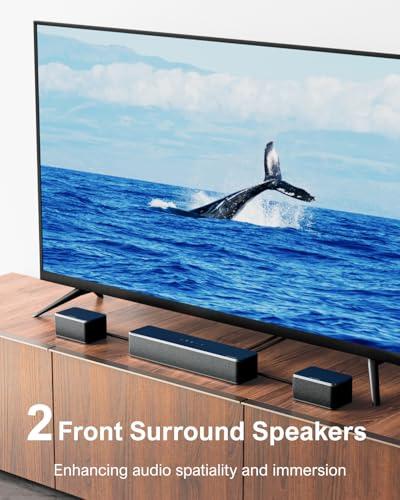
This led to two distinct approaches: systems like the Ultimea Poseidon D70 that use physical satellite speakers to create real surround channels, and systems like the TCL Q85H that use advanced processing and upward-firing drivers to bounce sound off your ceiling, creating virtual height effects.
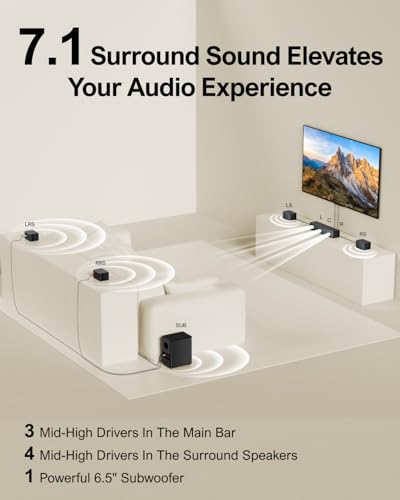
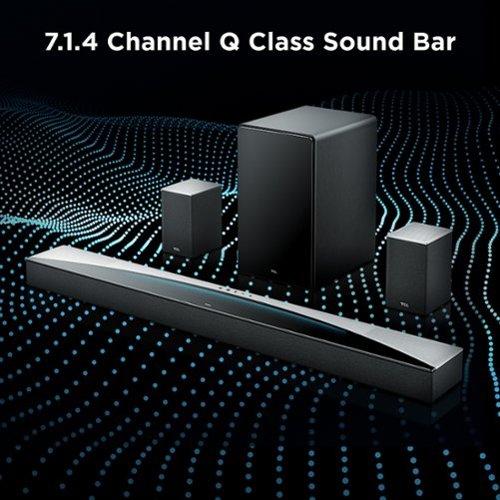
The numbers in these model names tell the story. "7.1" means seven main channels (front left, center, front right, side left, side right, rear left, rear right) plus one subwoofer channel. The TCL's "7.1.4" adds four height channels that fire upward, creating what the industry calls "object-based audio"—where sounds can be precisely placed anywhere in three-dimensional space around you.
Both approaches have merit, but they solve different problems for different users.
The Ultimea Poseidon D70, released in 2024, represents something almost unheard of in the soundbar world: a genuine 7.1-channel system with eight physical speakers at a price point typically reserved for basic 2.1 systems. At the time of writing, it costs roughly what you'd pay for a decent pair of bookshelf speakers alone.
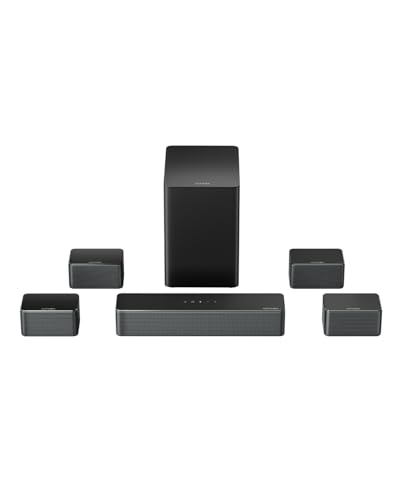
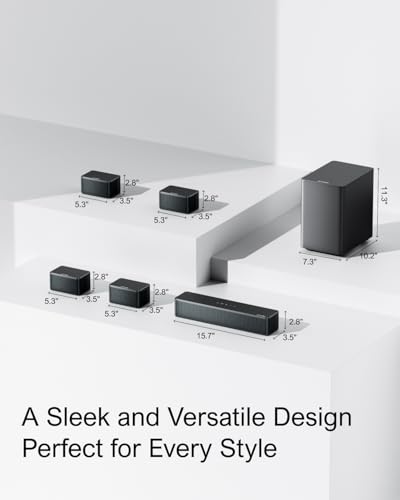
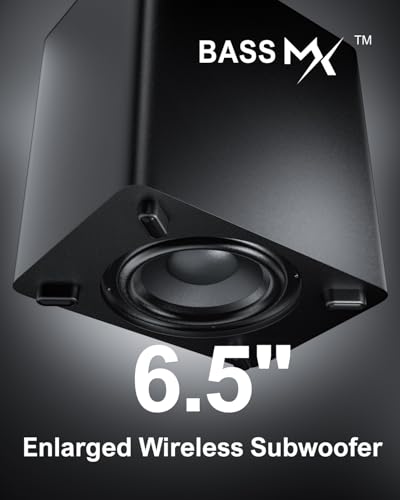
What makes this possible is Ultimea's approach of using smaller drivers throughout the system. The main soundbar houses three 2.25-inch drivers handling the front left, center, and right channels. Four separate satellite speakers, each with their own 2.25-inch driver, create the side and rear surround channels. A wireless 6.5-inch subwoofer completes the setup.
This might sound modest on paper, but there's real wisdom in this design. Those 2.25-inch drivers are specifically chosen for midrange and vocal reproduction—the frequencies where most movie dialogue and music fundamentals live. The Poseidon D70's frequency response spans from 35Hz up to 18kHz, covering essentially the full range of human hearing.
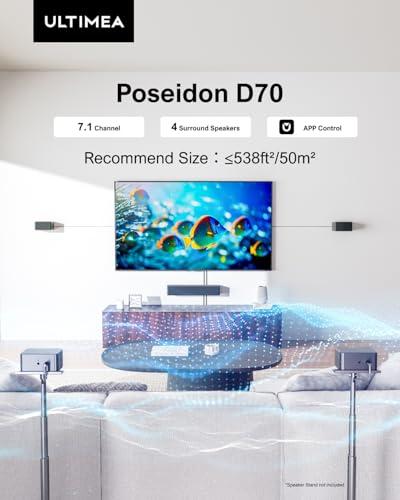
The system's total power output reaches 410 watts peak, with a more realistic 144 watts RMS (continuous power). Breaking this down: each of the seven main speakers receives about 12 watts, while the subwoofer gets 60 watts. These aren't earth-shaking numbers, but they're sufficient for rooms up to about 600 square feet—which covers most living rooms and bedrooms.
What sets the Ultimea system apart is its sophisticated processing. The company's SurroundX technology analyzes incoming audio signals and uses spatial positioning algorithms to create what they call a 360-degree sound field. Meanwhile, BassMX technology optimizes the subwoofer's output, allowing users to manually adjust bass levels through either the included remote or the companion smartphone app.
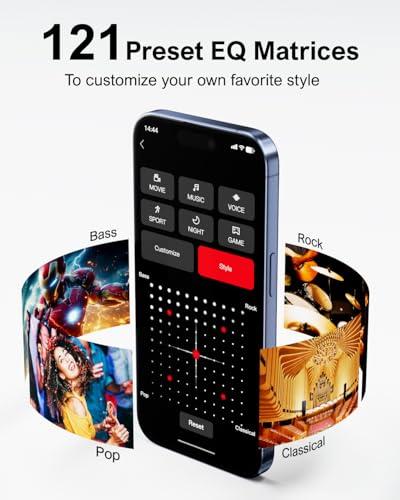
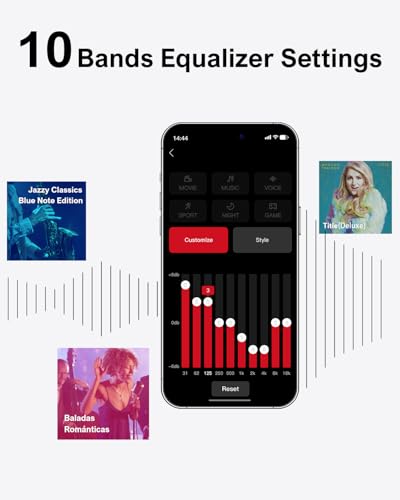
Speaking of that app, it's genuinely impressive. The Ultimea Smart App provides access to 121 preset equalizer matrices—pre-configured sound profiles for everything from rock music to dialogue-heavy dramas. There's also a 10-band graphic equalizer for users who want granular control over their audio. Perhaps most cleverly, the app includes a unique "soundboard" interface where you drag a crosshair around a grid, automatically adjusting treble and bass balance based on position.
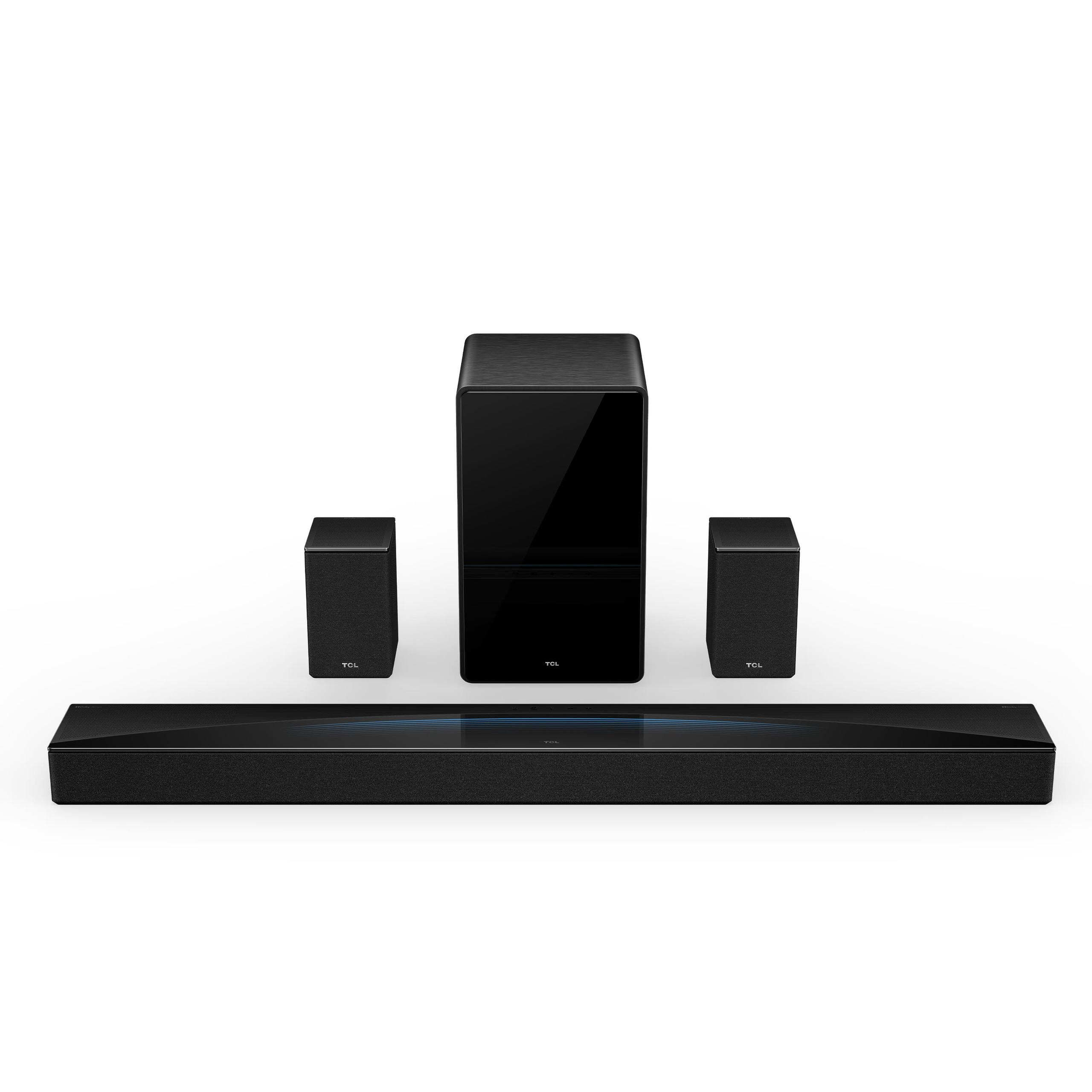
The TCL Q85H, also from 2024, takes the opposite approach. Instead of multiple physical speakers, it relies on advanced acoustic engineering and industry-standard audio formats to create immersion. At the time of writing, it costs roughly three times more than the Ultimea, placing it firmly in premium soundbar territory.
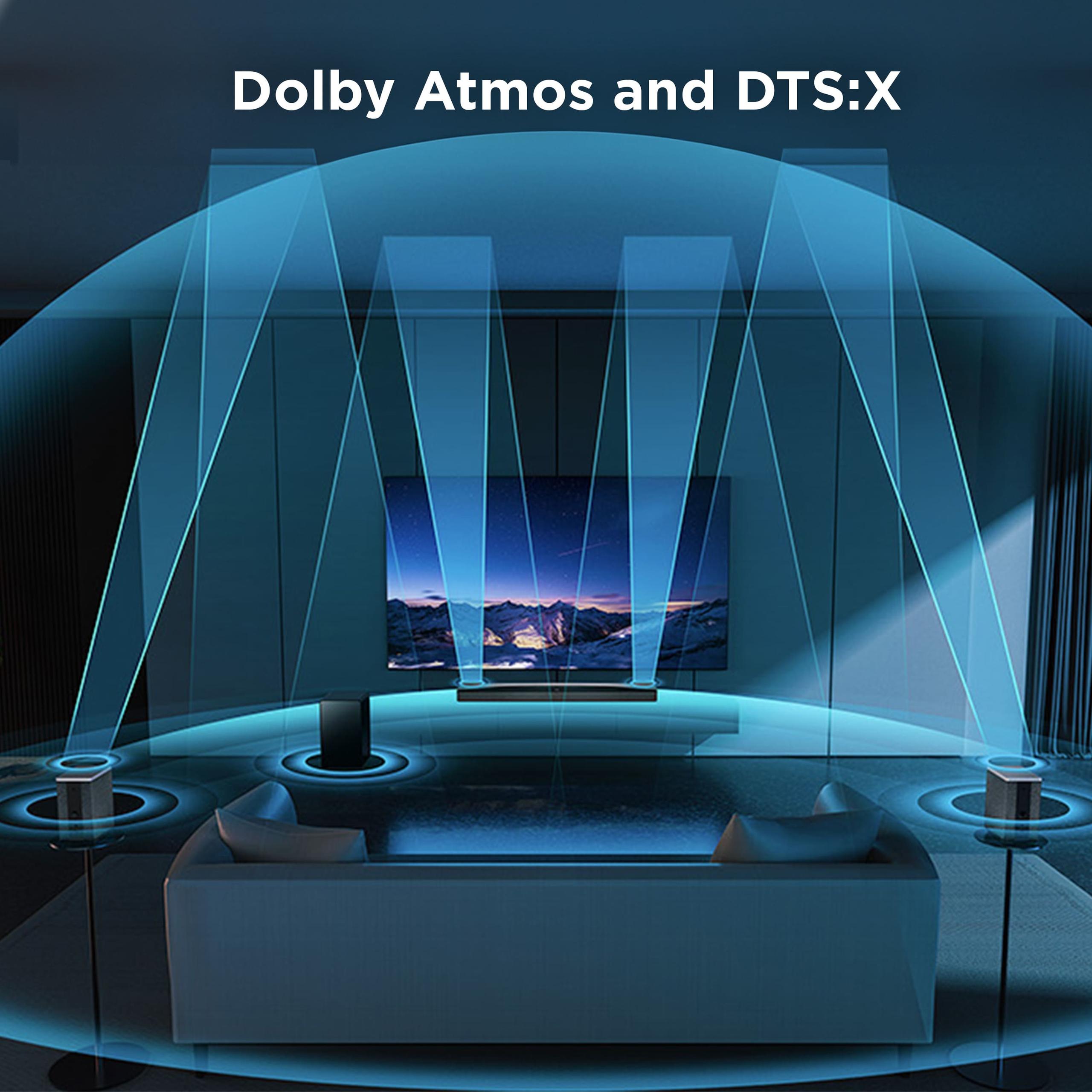
That price premium buys you Dolby Atmos and DTS:X support—the two leading object-based audio formats that have become standard for streaming services, 4K Blu-rays, and modern gaming. Unlike traditional surround sound that assigns audio to specific channels, object-based audio treats sounds as individual entities that can be placed anywhere in three-dimensional space around the listener.
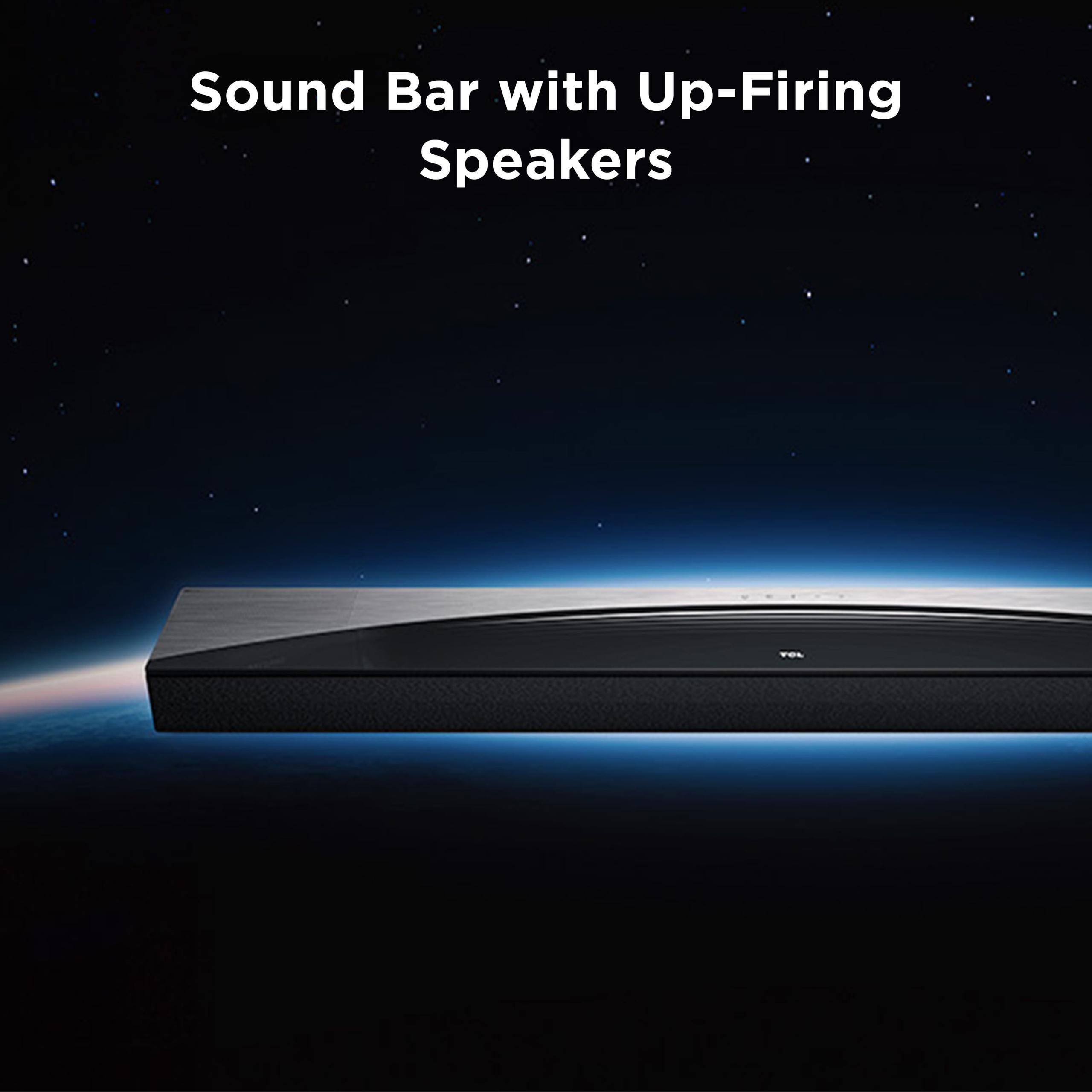
The Q85H's party trick is its upward-firing speakers. These drivers point toward your ceiling, reflecting audio downward to create the illusion of overhead sound effects. When a helicopter flies across the screen, you genuinely hear it pass overhead rather than just from the left and right sides.
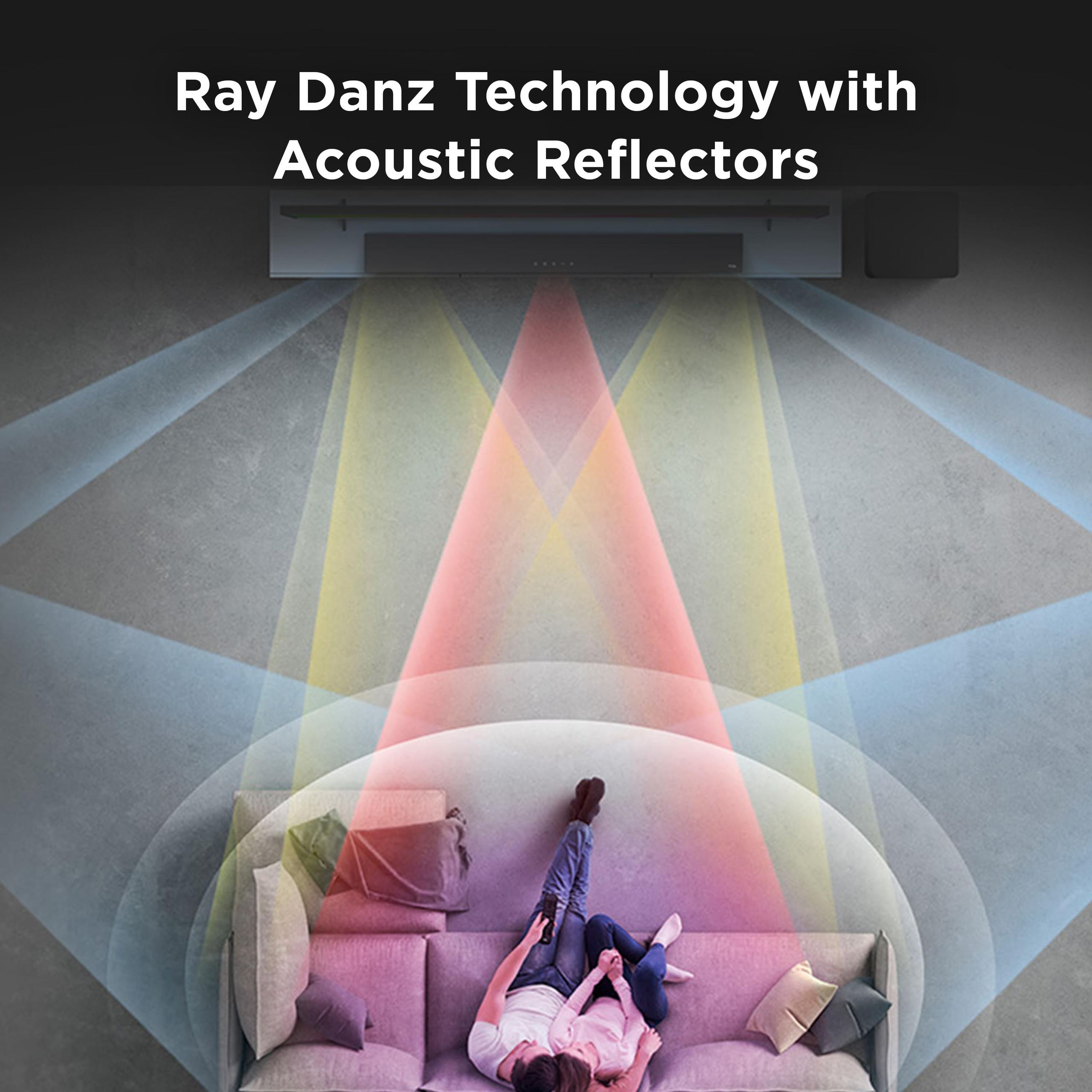
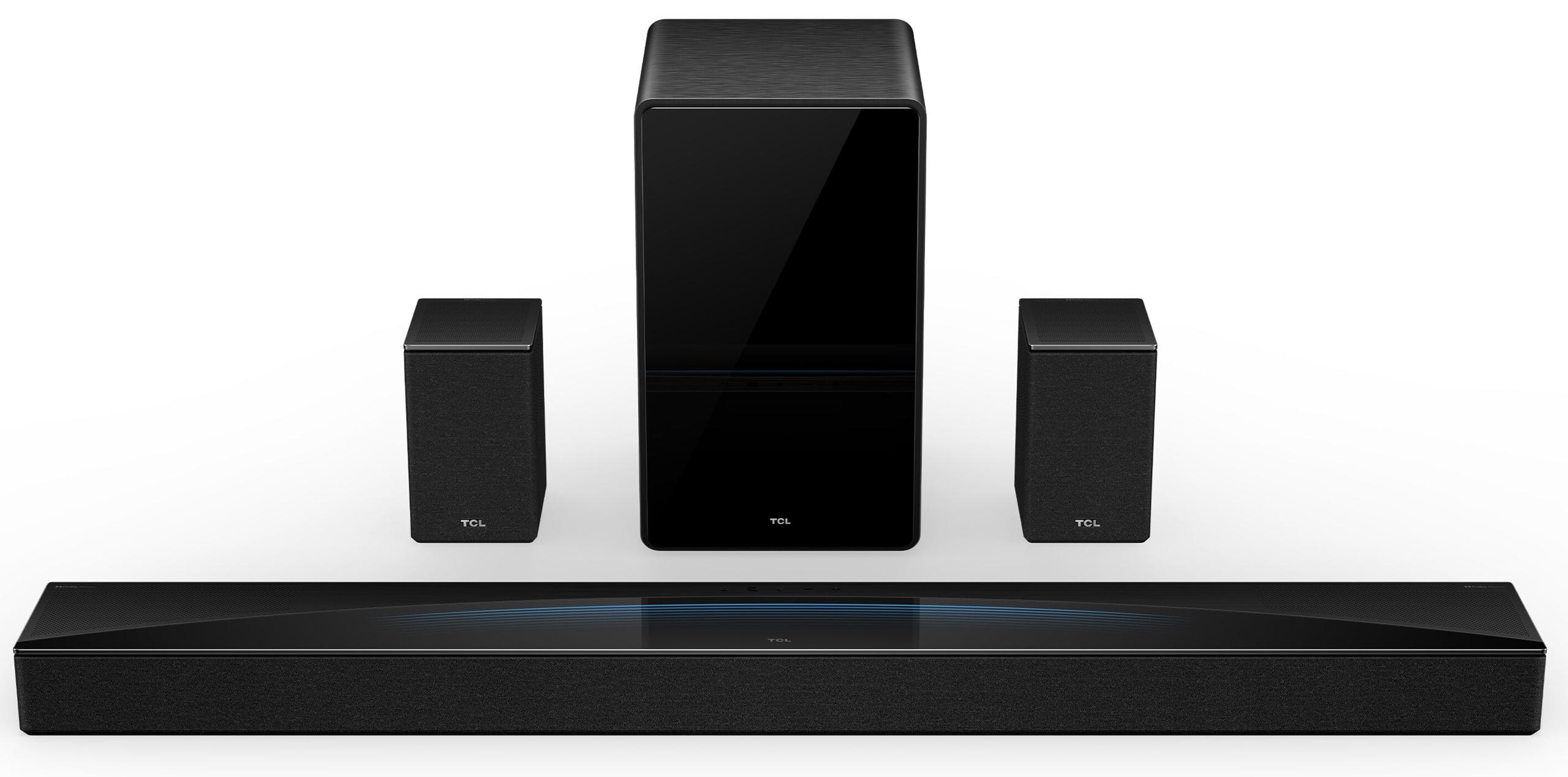
TCL enhances this effect with their proprietary RayDanz technology, which uses acoustic reflectors to dramatically widen the soundstage beyond the physical dimensions of the soundbar. The system also includes wireless surround speakers that feature both forward-firing and upward-firing drivers, adding to the three-dimensional effect.
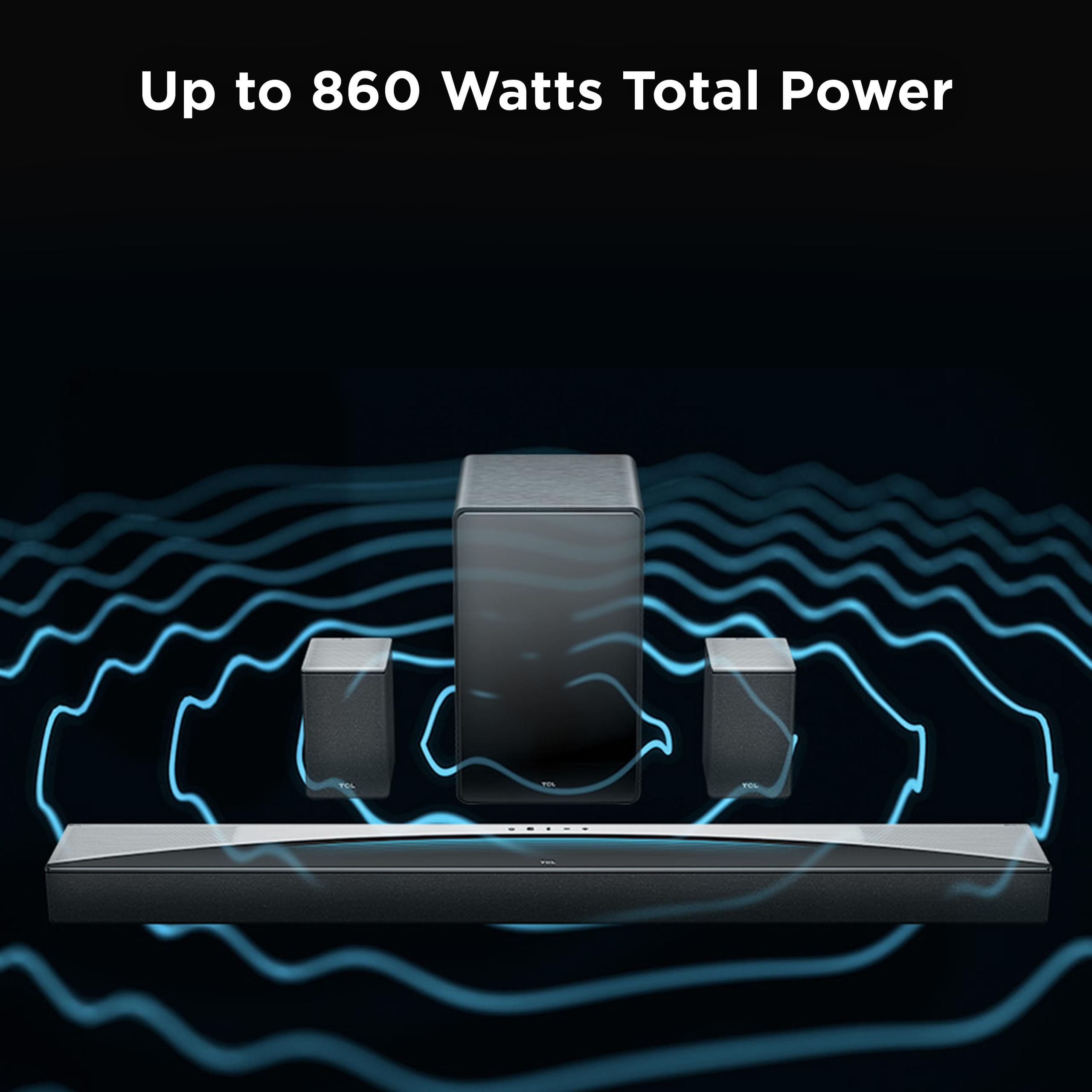
With 860 watts of total power, the TCL system has substantially more headroom than the Ultimea. This becomes particularly important in larger rooms where you need both volume and dynamic range—the difference between the quietest and loudest sounds in a movie soundtrack.
The Q85H also includes TCL's AI Sonic room calibration, which automatically adjusts the system's output based on your room's acoustics. This removes much of the guesswork from setup, automatically optimizing sound regardless of whether you're sitting directly in front of the TV or off to one side.
In our research of user and expert reviews, a clear pattern emerges regarding each system's strengths. The Ultimea Poseidon D70 consistently impresses listeners with its ability to create convincing directional audio cues. When a character speaks from off-screen, you genuinely hear their voice coming from the side or rear speakers. This directional precision comes from having actual speakers positioned around the room rather than relying on acoustic tricks.
The trade-off is vertical immersion. Without height channels, the Poseidon D70 can't reproduce overhead rain effects, aircraft flyovers, or the subtle ceiling reflections that make Dolby Atmos content so compelling. What it does instead is create a wide, enveloping soundstage that works particularly well with older content and non-Atmos material.
The TCL Q85H, by contrast, shines with modern content. Netflix's growing library of Dolby Atmos titles, Disney+ 4K movies, and Xbox Series X games all take full advantage of the system's height channels. The effect isn't subtle—watching "Top Gun: Maverick" with proper Dolby Atmos creates moments where you instinctively look up as fighter jets scream overhead.
However, this strength becomes less relevant if you primarily watch older movies, basic cable TV, or streaming content that hasn't been mixed in Dolby Atmos. The TCL system includes processing to "up-mix" standard stereo and 5.1 content, but it's not quite as convincing as having dedicated surround speakers in those positions.
Both systems take different approaches to bass reproduction, and the results vary significantly based on room size and content preferences. The Ultimea's 6.5-inch wireless subwoofer, enhanced by BassMX technology, delivers surprisingly authoritative low-end for its size and price point. The system's frequency response extends down to 35Hz, which captures most of the bass content in movies and music.
What makes the Ultimea particularly effective is its bass customization options. The included remote has dedicated buttons for adjusting bass, mid-range, and treble levels independently. The smartphone app takes this further, allowing precise bass level adjustment and even bass boost modes for different content types.
The TCL Q85H's higher total power output gives it a significant advantage in larger rooms. While specific subwoofer specifications weren't detailed in our research, the system's 860-watt rating suggests substantial headroom for dynamic content. Users consistently report that the TCL can fill larger spaces with authoritative bass that the Ultimea simply can't match.
For smaller rooms under 400 square feet, this difference becomes less pronounced. The Poseidon D70's bass output proves adequate for most content, and its fine-tuning options often result in better integration with the room's acoustics than systems that rely purely on raw power.
Both systems recognize that clear dialogue is crucial for home theater enjoyment, but they address it differently. The Ultimea Poseidon D70 dedicates one of its three soundbar drivers specifically to center channel reproduction, ensuring that dialogue remains anchored to the screen even during complex surround passages.
The system's 121 preset EQ matrices include specific modes for dialogue enhancement, boosting the frequency ranges where human speech is most intelligible while reducing competing sounds. Users consistently praise the Poseidon D70's ability to maintain clear dialogue even during action sequences where many soundbars struggle.
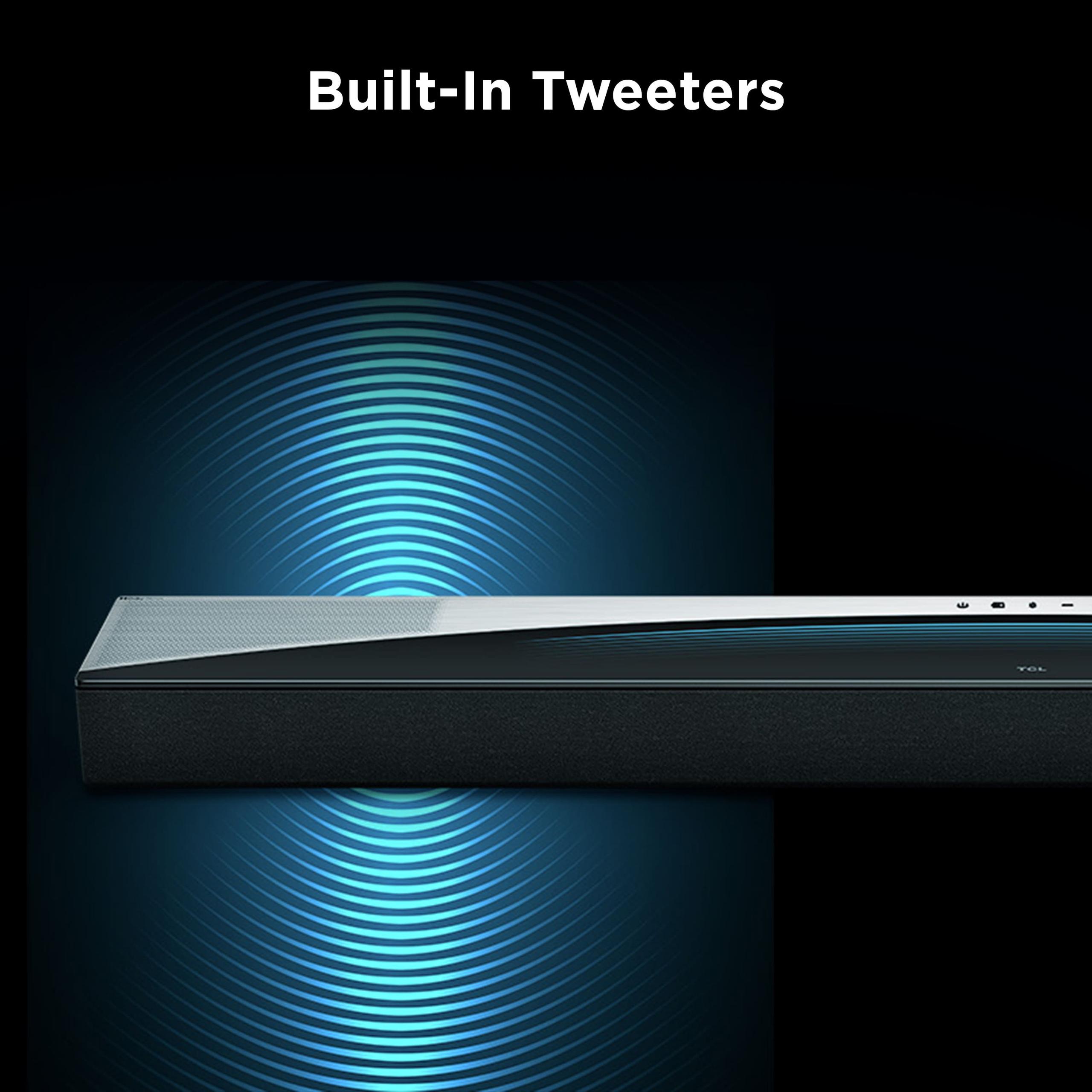
The TCL Q85H takes a more sophisticated approach, using built-in tweeters—specialized high-frequency drivers—to ensure precise reproduction of consonant sounds that make speech intelligible. The system's AI Sonic calibration also analyzes your room's acoustics to optimize dialogue clarity for your specific seating position.
In practice, both systems excel at dialogue reproduction, but the TCL has a slight edge with complex, multi-layered soundtracks where its superior processing power can better separate dialogue from background effects.
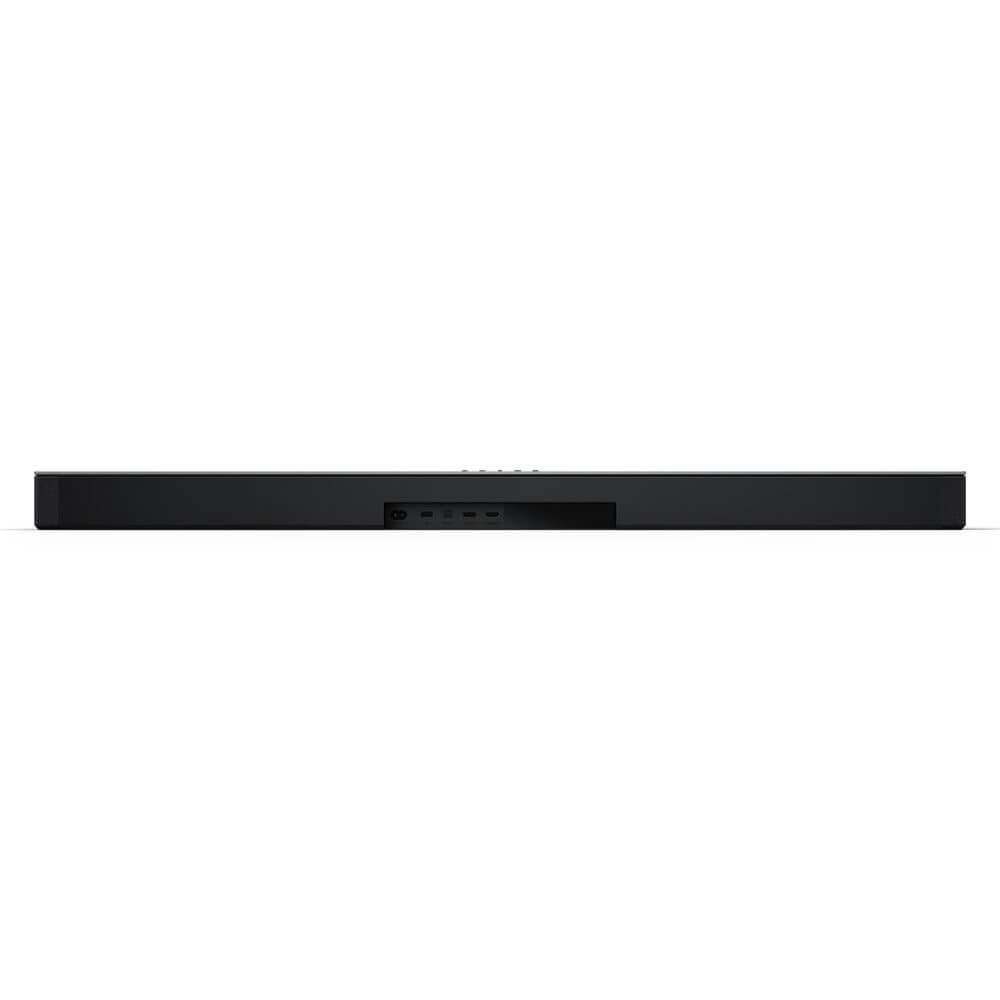
Here's where the philosophical differences between these systems become most apparent. The Ultimea Poseidon D70 prioritizes connection flexibility, offering HDMI ARC, optical audio, USB input, auxiliary input, and Bluetooth 5.3 connectivity. This variety ensures compatibility with virtually any source device, from modern 4K TVs to older gaming consoles.
The Poseidon D70's smartphone app deserves special mention. Beyond basic volume and input control, it provides access to firmware updates, extensive EQ customization, and that unique soundboard interface. However, there's one frustrating limitation: the app can turn the system off but cannot power it on, requiring use of the physical remote for startup.
The TCL Q85H focuses on integration with modern ecosystems. Its "TCL TV Ready" and "Roku TV Ready" features allow control through compatible TV remotes, reducing remote clutter. HDMI eARC support enables advanced features like variable refresh rate (VRR) and automatic low latency mode (ALLM) for gaming applications.
The TCL also supports AirPlay 2 streaming, allowing iPhone and iPad users to stream music directly without additional apps or connections. Bluetooth 5.1 provides improved stability and range compared to older Bluetooth implementations.
For typical bedrooms, apartments, and smaller living rooms, the Ultimea Poseidon D70 often provides the more satisfying experience. Its physical surround speakers create convincing directional effects that virtual processing simply cannot match in intimate spaces.
The system's wired connections, while requiring some cable management, become less problematic in smaller rooms where speaker placement is more constrained anyway. The included cables measure 3 and 6 meters, which proves adequate for most room configurations.
Perhaps most importantly, the Poseidon D70's extensive EQ customization becomes particularly valuable in smaller spaces where room acoustics have a more dramatic impact on sound quality. The ability to fine-tune bass response, midrange clarity, and treble balance often results in better overall sound than systems that rely primarily on automatic calibration.
Rooms over 500 square feet present different challenges that favor the TCL Q85H. The system's 860-watt power output provides the headroom necessary to fill larger spaces with dynamic content, while RayDanz acoustic technology extends the soundstage well beyond the physical speaker placement.
The TCL's wireless surround speakers become particularly valuable in open floor plans where running cables would be impractical or aesthetically unacceptable. The AI Sonic room calibration also proves more effective in complex acoustic environments where manual EQ adjustment would be overwhelming.
For users with cathedral ceilings or unusual room geometry, the Q85H's upward-firing speakers and ceiling reflection technology often work better than traditional surround speakers that might not have optimal placement options.
Dedicated home theater rooms present their own considerations. If your primary content includes modern movies, streaming services with Dolby Atmos, and current-generation gaming, the TCL Q85H's format support becomes increasingly important.
However, many home theater enthusiasts have extensive libraries of older content—classic movies, television series, and music that predates object-based audio formats. For these collections, the Ultimea Poseidon D70's physical surround speakers often provide more convincing spatial effects than virtual processing can create.
At the time of writing, the price difference between these systems represents one of the most dramatic value propositions in consumer audio. The Ultimea Poseidon D70 delivers genuine multichannel surround sound at a price point where most alternatives offer only stereo or basic virtual surround processing.
This value becomes even more compelling when you consider the system's expandability through software updates and its extensive customization options. The smartphone app's 121 preset EQ matrices essentially provide 121 different soundbars in one package, each optimized for specific content types or listening preferences.
The TCL Q85H, while substantially more expensive, justifies its premium through future-proofing and convenience. Dolby Atmos adoption continues accelerating across streaming services, gaming platforms, and physical media. Investing in proper Dolby Atmos hardware now ensures compatibility with content for years to come.
The wireless convenience factor also has real value, particularly for users who plan to relocate or redecorate frequently. Traditional surround speaker installations become permanent fixtures, while wireless systems offer flexibility.
Choose the Ultimea Poseidon D70 if you prioritize authentic surround sound over cutting-edge audio formats. This system excels for users with diverse content libraries, smaller to medium-sized rooms, and strong preferences for customization over automation. The physical surround speakers create convincing directional effects that virtual processing cannot match, while the extensive EQ options allow fine-tuning that audiophile-oriented users will appreciate.
The Poseidon D70 also makes sense for budget-conscious buyers who want genuine home theater audio without compromise. At its price point, no competing system offers comparable multichannel authenticity.
Choose the TCL Q85H if you consume primarily modern content, have a large room that demands substantial power, or prioritize wireless convenience over cable management. The Dolby Atmos and DTS:X support ensures compatibility with current and future content, while the height channels create overhead effects that traditional 7.1 systems cannot reproduce.
The Q85H particularly suits users who want a premium, set-it-and-forget-it experience. The AI room calibration, wireless components, and TV integration create a more seamless user experience than systems requiring manual optimization.
Ultimately, both represent excellent values within their respective price segments. The Ultimea delivers impossible-to-match multichannel authenticity for its price, while the TCL provides genuine Dolby Atmos immersion with premium convenience features. Your choice should align with your room size, content preferences, and whether you value customization flexibility over automated simplicity.
The evolution of soundbar technology continues accelerating, but these two systems represent mature implementations of their respective approaches. Either will provide years of satisfying home theater audio, just through very different philosophies of how surround sound should be achieved.
| Ultimea Poseidon D70 | TCL Q85H |
|---|---|
| Channel Configuration - Determines surround sound capability and immersion | |
| True 7.1 with 8 physical speakers (soundbar + 4 wired surrounds + wireless subwoofer) | 7.1.4 with height channels (includes up-firing speakers for overhead effects) |
| Audio Format Support - Critical for modern streaming content compatibility | |
| Proprietary SurroundX and BassMX technologies, no Dolby Atmos | Dolby Atmos and DTS:X support for object-based 3D audio |
| Total Power Output - Affects volume capability and room size suitability | |
| 410W peak / 144W RMS (suitable for rooms up to 600 sq ft) | 860W total power (designed for larger spaces and higher volumes) |
| Surround Speaker Setup - Impacts installation complexity and audio positioning | |
| 4 wired surround speakers with 3m and 6m cables included | Wireless surround speakers with forward and up-firing drivers |
| Subwoofer Configuration - Affects bass performance and placement flexibility | |
| 6.5" wireless subwoofer with BassMX technology, connects via Bluetooth | Wireless subwoofer with unspecified driver size, higher power allocation |
| Customization Options - Important for fine-tuning sound to room and preferences | |
| 10-band EQ + 121 preset matrices via smartphone app, extensive manual controls | AI Sonic auto room calibration, standard EQ modes (Movie/Music/Voice/Game/Sports) |
| Connectivity Options - Determines device compatibility and connection flexibility | |
| HDMI ARC, Optical, USB, AUX, Bluetooth 5.3 | HDMI eARC with 4K passthrough, Bluetooth 5.1, AirPlay 2, TCL/Roku TV integration |
| Price Positioning - Value proposition for different budgets | |
| Budget-friendly with exceptional multichannel value | Premium pricing for Dolby Atmos and wireless convenience |
| Room Size Optimization - Best performance based on space requirements | |
| Small to medium rooms (under 600 sq ft) where physical speakers excel | Large rooms and open floor plans where higher power and wireless setup shine |
| Content Compatibility - Which viewing habits each system serves best | |
| Excellent for older movies, TV shows, and non-Atmos content libraries | Optimized for modern streaming, 4K Blu-rays, and Atmos-enabled gaming |
The Ultimea Poseidon D70 is generally better for small to medium rooms under 600 square feet. Its four physical surround speakers create more convincing directional audio in intimate spaces, while its 410W power output is perfectly adequate for smaller areas. The TCL Q85H is designed for larger rooms and may be overpowered for compact spaces.
If you watch modern Netflix shows, Disney+ movies, or play Xbox/PlayStation games, the TCL Q85H with Dolby Atmos support will provide significantly better overhead sound effects. However, if you primarily watch older movies, basic cable TV, or non-Atmos content, the Ultimea Poseidon D70 will perform just as well with its physical surround speakers.
The TCL Q85H is much easier to install since its surround speakers are wireless and it includes automatic room calibration. The Ultimea Poseidon D70 requires running cables to four surround speakers and manual adjustment, but this setup provides more precise audio positioning once completed.
The Ultimea Poseidon D70 has 7.1 channels with seven main speakers plus a subwoofer arranged horizontally around your room. The TCL Q85H adds four height channels (the ".4") that bounce sound off your ceiling to create overhead effects, making helicopter scenes and rain sounds more realistic.
Both systems include wireless subwoofers, but they serve different room sizes. The Ultimea Poseidon D70 offers more bass customization with dedicated controls and BassMX technology, making it excellent for fine-tuning. The TCL Q85H has higher total power output, providing more impactful bass for larger spaces.
Yes, both systems offer smartphone apps. The Ultimea Poseidon D70 provides extensive control with 121 preset sound modes and a 10-band equalizer for detailed customization. The TCL Q85H offers simpler app control focused on basic functions, with most optimization handled automatically.
For modern gaming with Xbox Series X or PlayStation 5, the TCL Q85H is superior due to its Dolby Atmos support and HDMI eARC with gaming-specific features like low latency mode. For older consoles or PC gaming, the Ultimea Poseidon D70 provides excellent directional audio cues for competitive gaming.
The Ultimea Poseidon D70 includes 8 physical speakers total: 3 in the main soundbar, 4 separate surround speakers, and 1 subwoofer. The TCL Q85H has 15 total drivers distributed across the soundbar, wireless surrounds, and subwoofer, including specialized up-firing speakers for height effects.
The Ultimea Poseidon D70 provides exceptional value by delivering genuine 7.1 surround sound with physical speakers at a budget-friendly price point. The TCL Q85H costs significantly more but includes premium features like Dolby Atmos, wireless setup, and higher power output that justify the price for larger rooms and modern content.
Both systems work with virtually any TV. The Ultimea Poseidon D70 offers more connection options including HDMI ARC, optical, USB, and auxiliary inputs. The TCL Q85H focuses on HDMI eARC for the best audio quality and includes special integration features for TCL and Roku TVs.
The TCL Q85H is specifically designed for large rooms and open floor plans with its 860W power output and RayDanz technology that widens the soundstage. The Ultimea Poseidon D70 works best in rooms under 600 square feet where its physical surround speakers can be properly positioned.
The Ultimea Poseidon D70 receives firmware updates through its smartphone app to improve performance and add features over time. The TCL Q85H also supports updates and is designed to handle future Dolby Atmos content as streaming services expand their libraries. Neither system allows adding additional speakers or components.
We've done our best to create useful and informative comparisons to help you decide what product to buy. Our research uses advanced automated methods to create this comparison and perfection is not possible - please contact us for corrections or questions. These are the sites we've researched in the creation of this article: ultimea.com - provantage.com - ultimea.com - youtube.com - youtube.com - bestbuy.com - the-gadgeteer.com - shopmyexchange.com - youtube.com - youtube.com - youtube.com - ultimea.com - manuals.plus - device.report - images.thdstatic.com - shopmyexchange.com - staples.com - ultimea.de - gamerant.com - bestbuy.com - tcl.com - bestbuy.com - tcl.com - tcl.com - nfm.com - tcl.com - electronicexpress.com - tcl.com - tcl.com - digitaltrends.com

Privacy Policy
Terms and Conditions - Affiliate Policy
Home Security
© Copyright 2008-2026.
11816 Inwood Rd #1211, Dallas, TX 75244