



If you've ever sat through a movie straining to hear dialogue while explosions blow out your eardrums, you know why soundbars have become essential home theater upgrades. The question isn't whether to get one—it's which approach serves you best. Today we're diving deep into two very different philosophies: the Ultimea Poseidon D70's all-out surround assault versus the Amazon Fire TV Soundbar Plus's streamlined simplicity.
Before jumping into our comparison, let's establish what actually matters in soundbar performance. At its core, a soundbar's job is projecting clear dialogue, delivering impactful bass, and creating a sense of space that makes you forget you're listening to a TV speaker upgrade.
Channel configuration tells you how many discrete audio streams the system can handle. A 3.1 system has left, right, center channels plus a subwoofer (.1), while 7.1 adds four surround channels for true 360-degree audio. More channels generally mean better sound separation and positioning, but only if you have the physical speakers to match.
RMS power output measures sustained power delivery—the real-world muscle behind your audio. Peak power ratings are marketing fluff; RMS tells you what the system can actually maintain during demanding scenes. Frequency response shows how low the bass extends and how high the treble reaches, measured in Hertz (Hz). Human hearing spans roughly 20Hz to 20kHz, so wider ranges typically sound fuller.
Virtual surround processing uses digital tricks to simulate surround sound from fewer speakers, while physical surround uses actual speakers positioned around your room. Both have merits, but physics usually wins—real speakers in real positions create more convincing spatial audio.
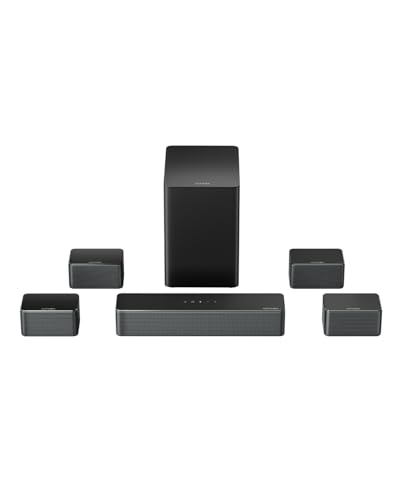
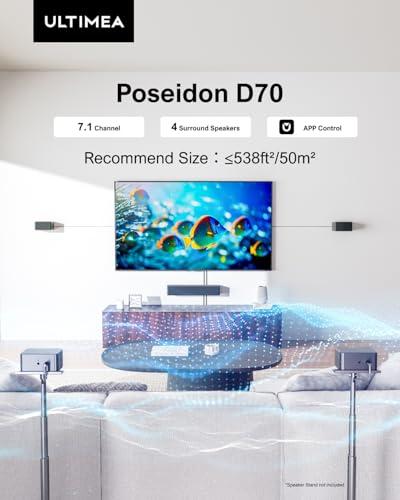
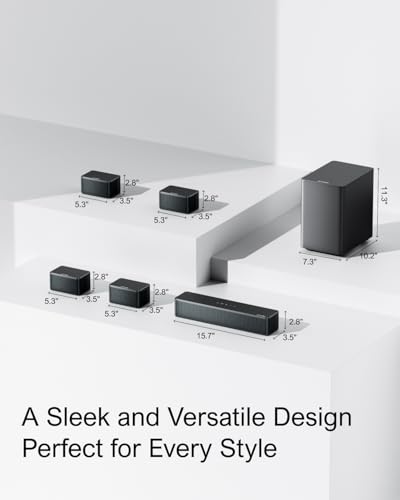
The Ultimea Poseidon D70, released in 2024, represents the "more is more" philosophy. This 7.1-channel system throws four surround speakers, a wireless subwoofer, and extensive customization at the problem of mediocre TV audio. At the time of writing, it typically retails in the budget-friendly range while delivering features you'd expect from systems costing several times more.
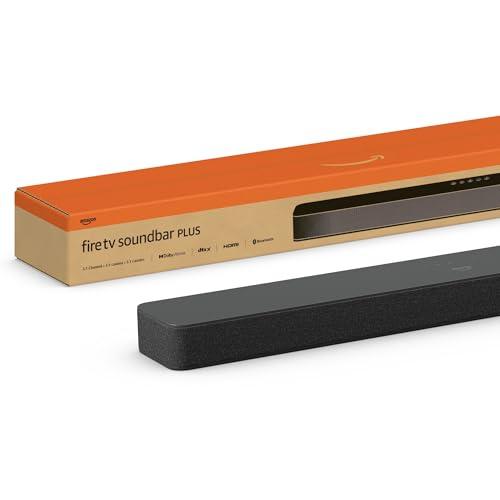
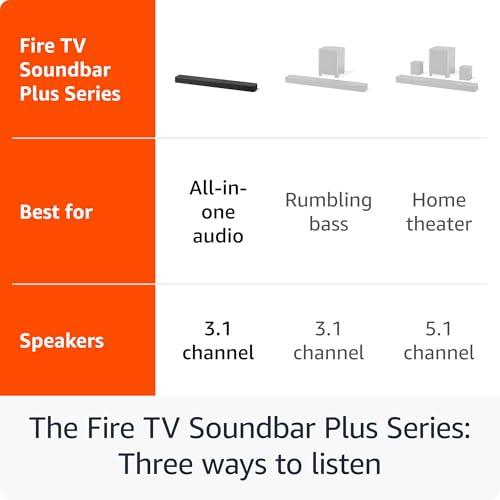
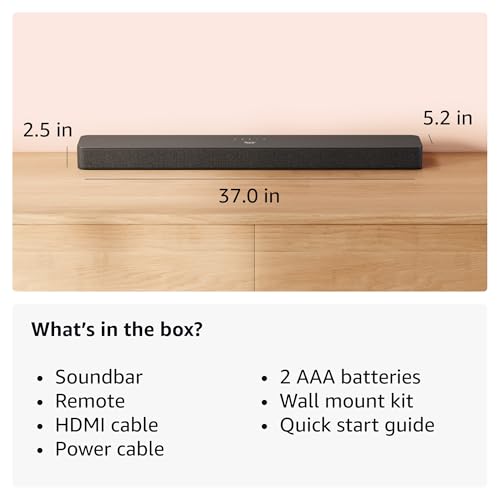
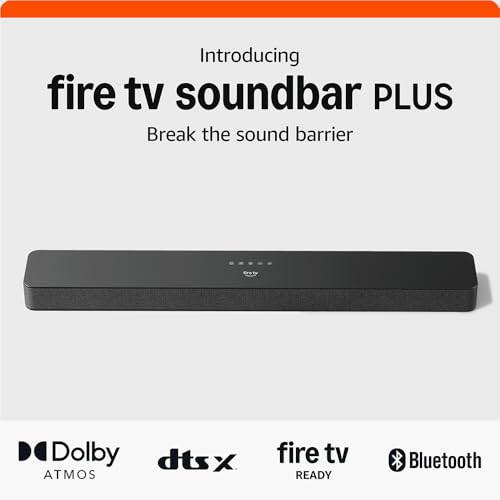
The Amazon Fire TV Soundbar Plus, also arriving in 2024, takes the opposite approach. This 3.1-channel system (expandable to 5.1) prioritizes ecosystem integration and plug-and-play simplicity. Amazon positioned it as the audio complement to their Fire TV devices, though as we'll see, the "Fire TV" branding is somewhat misleading in terms of smart features.
Both products emerged during an interesting period in audio technology. By 2024, virtual surround processing had matured significantly, Dolby Atmos had become mainstream (though often implemented poorly), and budget audio companies began challenging established brands with feature-rich products at aggressive price points.
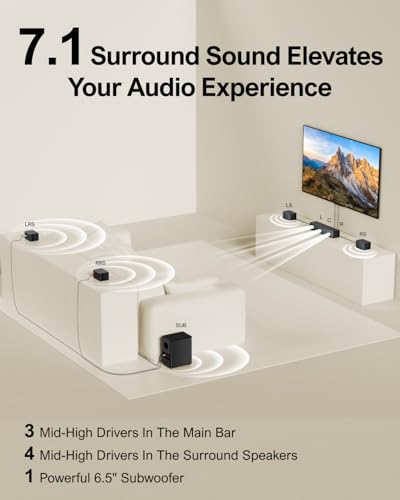
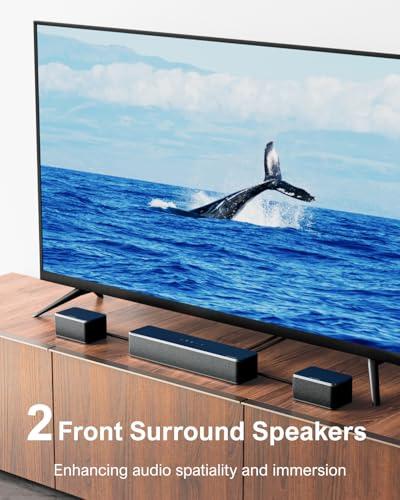
The most fundamental difference between these systems lies in their approach to surround sound. The Ultimea Poseidon D70 delivers true 7.1-channel audio through eight physical drivers: three 2.25-inch mid-bass drivers in the soundbar, four 2.25-inch drivers in the surround speakers, and a 6.5-inch subwoofer driver. This configuration provides 410W peak power with 144W RMS—numbers that actually matter in real-world listening.
That RMS figure breaks down to 36W for the soundbar, 48W for the four surround speakers, and 60W for the subwoofer. This distribution makes sense because the subwoofer handles the most demanding bass frequencies while the surrounds primarily manage ambient effects and directional cues.
The Amazon Fire TV Soundbar Plus takes a more conservative approach with its 3.1 base configuration. The soundbar houses three full-range speakers, three tweeters, and two built-in woofers. Amazon doesn't publish specific wattage figures, which often indicates modest power output. The system can expand to 5.1 with optional wireless components, but even then, you're working with fewer total drivers than the D70's base configuration.
From a pure performance standpoint, more physical speakers typically translate to better sound separation and more convincing surround effects. Virtual processing can work miracles, but it can't overcome the physics of sound wave propagation and room acoustics.
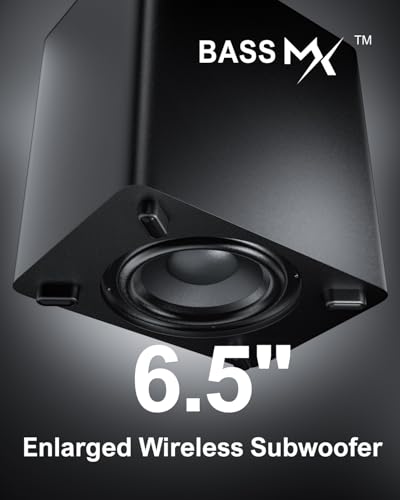
Bass reproduction separates good soundbars from great ones, especially for home theater use. The Ultimea Poseidon D70 includes a 6.5-inch wireless subwoofer with BassMX technology—Ultimea's proprietary bass enhancement system. This sub delivers 35Hz extension, which covers the fundamental frequencies in movie soundtracks and music. For context, most TV speakers barely reach 100Hz, so this represents a massive improvement in low-end capability.
The wireless connection eliminates cable runs to the subwoofer, though interestingly, the surround speakers connect to the subwoofer via RCA cables rather than wirelessly to the soundbar. This hybrid approach reduces wireless interference while maintaining flexibility in subwoofer placement.
The Amazon Fire TV Soundbar Plus takes a different approach with built-in bass drivers in the main soundbar. This keeps the system compact but limits how deep the bass can extend—physics dictates that smaller enclosures produce less low-frequency output. The optional separate subwoofer addresses this limitation but requires additional purchase.
Based on our research into user experiences, the Poseidon D70's dedicated subwoofer provides more impactful bass for action movies and music. The Fire TV Soundbar's built-in approach works for dialogue and lighter content but may disappoint bass enthusiasts.
Clear dialogue often determines whether a soundbar upgrade feels worthwhile. Both systems prioritize speech intelligibility through dedicated center channels, but their implementations differ significantly.
The Ultimea Poseidon D70 uses AI deep learning audio optimization—essentially, algorithms trained on massive datasets of human speech to enhance dialogue clarity. The system offers multiple dialogue-focused presets and lets you fine-tune voice prominence through its comprehensive app controls.
The Amazon Fire TV Soundbar Plus employs a more traditional approach with its dedicated center channel and five-step dialogue enhancement. User feedback suggests this works well for most content, though some reviewers noted that deeper voices can sound thin compared to premium systems.
Both systems include night modes that compress dynamic range—the difference between loud and quiet sounds—making late-night viewing more neighbor-friendly without losing dialogue clarity.
This comparison's most critical performance difference lies in surround sound implementation. The Ultimea Poseidon D70 positions four physical speakers around your listening area, creating genuine 360-degree audio. When a helicopter flies overhead in a movie, you hear it move from front to back through actual speakers positioned behind you.
The system's SurroundX technology uses spatial positioning algorithms to optimize this effect, ensuring sounds appear to originate from specific locations rather than generic "somewhere behind you" positioning. This level of precision requires the physical speakers the D70 provides.
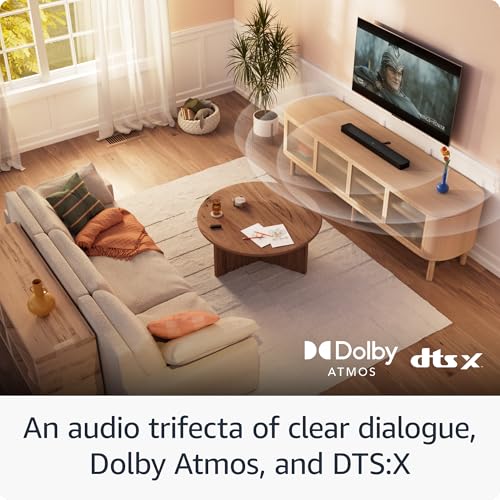
The Amazon Fire TV Soundbar Plus relies heavily on virtual surround processing, including virtual Dolby Atmos and DTS:X. While these technologies have improved dramatically, they face inherent limitations. Virtual Atmos attempts to bounce sound off your ceiling to create height effects, but this only works in acoustically favorable rooms with appropriate ceiling heights and materials.
Our research into professional reviews consistently shows that while virtual surround can sound impressive initially, extended listening reveals its limitations compared to physical speaker placement. The soundstage feels wider than the soundbar itself, but gaps appear in stereo imaging, and the overall effect lacks the convincing directionality of true surround systems.
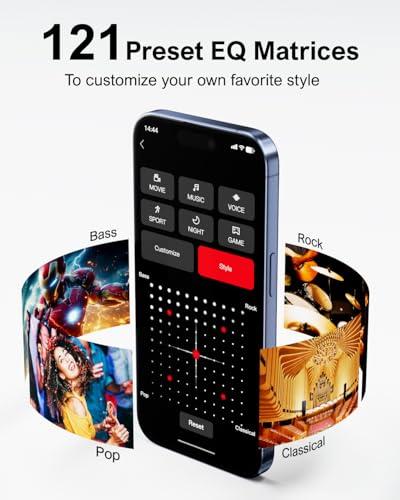
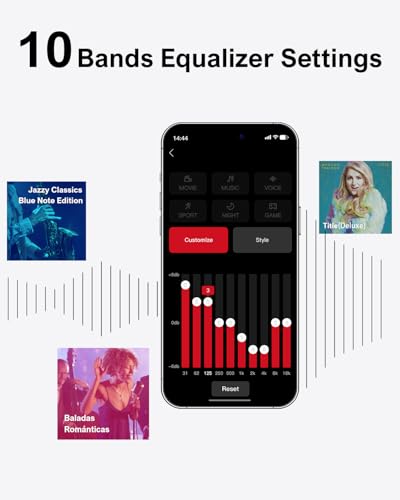
The Ultimea Poseidon D70 excels in audio customization through its comprehensive mobile app. The 10-band equalizer allows precise frequency shaping—you can boost vocals around 1-3kHz, enhance bass slam around 60-80Hz, or tame harsh treble above 10kHz. The 121 preset EQ matrices cover everything from jazz to action movies, essentially providing professionally tuned audio profiles for different content types.
This level of control appeals to enthusiasts who enjoy tweaking settings, but it might overwhelm users who just want better TV audio without complexity. The system includes traditional sound modes (Movie, Music, Voice, Sports, Game, Night) for simpler operation while maintaining the deeper customization for those who want it.
The Amazon Fire TV Soundbar Plus deliberately minimizes complexity. Basic bass and treble controls span a 1-9 scale, dialogue enhancement offers five steps, and the four sound modes handle most listening scenarios. This approach serves users who want immediate improvement without learning curve, though it may frustrate those seeking precise control.
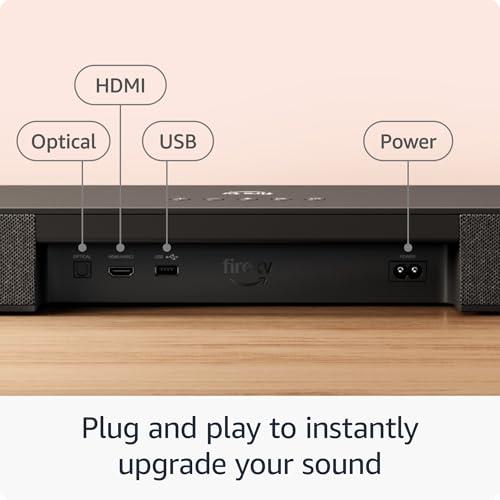
Both systems offer standard connectivity—HDMI ARC/eARC, optical, and Bluetooth—but their integration philosophies differ markedly. The Ultimea Poseidon D70 functions as a universal audio upgrade, working equally well with any TV, streaming device, or gaming console. Its color-coded, labeled cables simplify setup despite the system's complexity.
The Amazon Fire TV Soundbar Plus shines when paired with Fire TV devices, enabling single-remote control and deeper integration. However, despite its "Fire TV" branding, the soundbar lacks built-in streaming capabilities or Alexa integration—it's purely an audio device that works well within Amazon's ecosystem rather than extending it.
This distinction matters more than you might expect. If you're invested in Fire TV devices, the seamless integration justifies the simpler feature set. If you use multiple streaming platforms or gaming consoles, the Poseidon D70's universal compatibility and extensive customization become more valuable.
The Amazon Fire TV Soundbar Plus wins decisively on setup simplicity. Everything arrives pre-paired—just plug in the components, connect one cable to your TV, and you're done. This plug-and-play approach makes sense for users who want immediate gratification or lack technical confidence.
The Ultimea Poseidon D70 requires more effort. You'll position four surround speakers around your room, run RCA cables from them to the subwoofer, pair the wireless subwoofer to the soundbar, and potentially mount speakers on walls. This takes time but rewards you with optimal audio positioning.
Wall-mounting deserves specific mention for home theater setups. Both systems include mounting hardware, but the Poseidon D70's four surround speakers offer much more placement flexibility. Proper surround speaker positioning—slightly behind and above ear level—dramatically improves the home theater experience compared to soundbar-only solutions.
Our analysis of user reviews reveals interesting patterns in long-term satisfaction. Ultimea Poseidon D70 owners consistently report growing appreciation for the system's capabilities as they explore its customization options. The extensive EQ presets and app-based controls maintain engagement over time.
Amazon Fire TV Soundbar Plus users tend to remain satisfied with the initial improvement but may hit limitations as their audio expectations evolve. The system's expandability to 5.1 provides an upgrade path, though this requires additional investment.
For dedicated home theater use, the differences become more pronounced. Movie soundtracks benefit enormously from proper surround separation—think of the famous "bullet time" sequence in The Matrix, where audio pans smoothly around the listener. The Ultimea Poseidon D70's four surround speakers handle these effects convincingly, while virtual processing struggles with such precise directional movement.
Bass extension also matters more in home theater contexts. The 35Hz capability of the Poseidon D70's subwoofer captures the rumble of dinosaur footsteps, spaceship engines, and musical fundamentals that add weight to cinematic experiences. Built-in soundbar bass drivers, while convenient, simply can't move enough air to recreate these effects convincingly.
However, the Amazon Fire TV Soundbar Plus shouldn't be dismissed for home theater use. Its dialogue clarity and general audio improvement still represent substantial upgrades over TV speakers, and the simplicity appeals to users who want better sound without complexity.
At the time of writing, the Ultimea Poseidon D70 typically costs less than the Amazon Fire TV Soundbar Plus while delivering more speakers, more power, and more features. This creates an unusual situation where the more capable system costs less—a testament to how competitive the budget audio market has become.
The value equation depends heavily on your priorities. The Poseidon D70 offers exceptional performance per dollar for users willing to invest setup time. The Fire TV Soundbar Plus provides premium brand reliability and ecosystem integration for users prioritizing simplicity.
Both systems represent 2024's approach to budget home audio, but they've aged differently in their first year. The Ultimea Poseidon D70 has received firmware updates adding features and improving performance—a practice more common in smart devices that's now reaching traditional audio equipment.
The Amazon Fire TV Soundbar Plus benefits from Amazon's ecosystem evolution, though its limited smart features reduce the impact of these improvements compared to devices with built-in streaming capabilities.
After extensive research into professional reviews, user feedback, and technical specifications, the Ultimea Poseidon D70 emerges as the clear winner for performance-focused buyers. Its combination of true 7.1 surround sound, extensive customization, and aggressive pricing delivers exceptional value for home theater enthusiasts.
Choose the Ultimea Poseidon D70 if you want maximum audio immersion for your investment, enjoy customizing settings, have space for surround speakers, and don't mind spending extra setup time for superior performance.
Choose the Amazon Fire TV Soundbar Plus if you prioritize effortless setup, are heavily invested in Amazon's ecosystem, need the flexibility to expand gradually, or simply want decent audio improvement without technical involvement.
The reality is that both systems serve their intended audiences well. The Poseidon D70 pushes budget audio boundaries with features typically found in much more expensive systems, while the Fire TV Soundbar Plus provides reliable, straightforward audio enhancement with premium brand backing.
For most readers seeking home theater upgrades, the Ultimea Poseidon D70's superior surround coverage, customization options, and value proposition make it the smarter choice. The setup complexity pays dividends in long-term satisfaction and audio performance that genuinely transforms your viewing experience.
The Amazon Fire TV Soundbar Plus remains viable for specific use cases—particularly for users who value simplicity above all else or need tight Fire TV integration. However, at current pricing and feature levels, it's harder to recommend over more capable alternatives like the Poseidon D70.
Both systems represent the democratization of quality home audio, bringing features once reserved for expensive dedicated systems to mainstream price points. Your choice ultimately depends on whether you prefer the D70's performance maximalism or the Fire TV Soundbar's streamlined approach—but either represents a massive upgrade from built-in TV speakers.
| Ultimea Poseidon D70 7.1 Channel Soundbar System | Amazon Fire TV Soundbar Plus |
|---|---|
| Channel Configuration - Determines surround sound immersion and speaker count | |
| True 7.1 with 4 physical surround speakers + soundbar + subwoofer | 3.1 base (expandable to 5.1 with optional speakers) |
| Total Power Output - Affects maximum volume and dynamic range | |
| 410W peak / 144W RMS across 8 drivers | Power not disclosed (estimated lower based on configuration) |
| Subwoofer Design - Critical for bass impact in movies and music | |
| 6.5" wireless subwoofer with 35Hz extension | Built-in subwoofer (optional external sub available) |
| Surround Sound Technology - Virtual vs physical speaker placement | |
| Physical 360° surround with SurroundX positioning | Virtual Dolby Atmos/DTS:X (no upward-firing drivers) |
| Smart Controls and Customization - How much you can fine-tune the sound | |
| 10-band EQ + 121 presets via mobile app | Basic bass/treble controls, no mobile app |
| Setup Complexity - Time and effort required for installation | |
| Moderate (4 surround speakers to position and wire) | Very easy (pre-paired, plug-and-play) |
| Connectivity Options - Compatibility with different devices | |
| HDMI ARC, Optical, USB, AUX, Bluetooth (universal) | HDMI eARC, Optical, USB, Bluetooth + Fire TV integration |
| Dolby Atmos Support - Spatial audio for overhead effects | |
| No Atmos (honest 7.1 virtual surround marketing) | Virtual Atmos only (misleading without height speakers) |
| Expandability - Future upgrade options | |
| Complete system as purchased | Expandable to 5.1 with additional wireless components |
| Ideal Room Size - Performance scales with space | |
| Medium to large rooms (benefits from surround placement) | Small to medium rooms (compact single-unit focus) |
| Best Use Cases - Where each system excels | |
| Home theater, gaming, music with surround effects | TV/streaming, Fire TV ecosystem, simple upgrades |
The Ultimea Poseidon D70 offers superior surround sound with true 7.1 channels and four physical surround speakers that create genuine 360-degree audio. The Amazon Fire TV Soundbar Plus relies on virtual surround processing with only 3.1 channels, which can't match the immersive experience of actual speakers positioned around your room.
The Amazon Fire TV Soundbar Plus is much easier to set up with pre-paired components and plug-and-play installation. The Ultimea Poseidon D70 requires more effort as you need to position four surround speakers around your room and connect them with cables, but this extra work delivers significantly better audio performance.
For dedicated home theater setups, the Ultimea Poseidon D70 is the clear winner with its four surround speakers, 6.5" subwoofer, and 35Hz bass extension that captures movie sound effects properly. The Amazon Fire TV Soundbar Plus works for casual viewing but lacks the immersive surround coverage that makes movies truly cinematic.
The Amazon Fire TV Soundbar Plus claims Dolby Atmos support, but it's virtual-only without upward-firing speakers for true height effects. The Ultimea Poseidon D70 doesn't support Dolby Atmos but honestly markets its 7.1 virtual surround capabilities instead of making misleading claims about spatial audio.
The Ultimea Poseidon D70 provides extensive customization through its mobile app with a 10-band equalizer and 121 preset sound profiles for different content types. The Amazon Fire TV Soundbar Plus offers only basic bass/treble controls and sound modes, making it better for users who prefer simplicity over fine-tuning.
The Ultimea Poseidon D70 includes a dedicated 6.5" wireless subwoofer that delivers deep, powerful bass down to 35Hz - essential for movie soundtracks and music. The Amazon Fire TV Soundbar Plus has built-in bass drivers that provide adequate low-end for dialogue but can't match the impact of a dedicated subwoofer.
The Amazon Fire TV Soundbar Plus is specifically designed for Fire TV integration, allowing single-remote control and seamless setup with Fire TV streaming devices. The Ultimea Poseidon D70 works with any TV or streaming device equally well but doesn't offer the same ecosystem integration benefits.
The Ultimea Poseidon D70 includes 8 total speakers: 3 in the soundbar, 4 surround speakers, and 1 subwoofer driver. The Amazon Fire TV Soundbar Plus has 6 drivers in the main soundbar (3 full-range, 3 tweeters) plus built-in woofers, but can be expanded with optional wireless components.
The Ultimea Poseidon D70 typically offers exceptional value with more speakers, higher power output, and extensive features at a competitive price point. The Amazon Fire TV Soundbar Plus costs more for fewer features but provides premium brand reliability and effortless setup that some users prefer.
Both the Ultimea Poseidon D70 and Amazon Fire TV Soundbar Plus include wall-mounting hardware. However, the Ultimea Poseidon D70 also lets you wall-mount its four surround speakers for optimal positioning, while the Amazon Fire TV Soundbar Plus focuses on mounting just the main soundbar unit.
The Amazon Fire TV Soundbar Plus works well in smaller spaces with its compact design and built-in bass. The Ultimea Poseidon D70 really shines in medium to large rooms where you have space to properly position the four surround speakers for maximum immersive effect.
Both the Ultimea Poseidon D70 and Amazon Fire TV Soundbar Plus offer HDMI ARC, optical input, and Bluetooth connectivity. The Amazon Fire TV Soundbar Plus features HDMI eARC for higher bandwidth audio, while the Ultimea Poseidon D70 adds USB and auxiliary inputs for broader device compatibility.
We've done our best to create useful and informative comparisons to help you decide what product to buy. Our research uses advanced automated methods to create this comparison and perfection is not possible - please contact us for corrections or questions. These are the sites we've researched in the creation of this article: ultimea.com - provantage.com - ultimea.com - youtube.com - youtube.com - bestbuy.com - the-gadgeteer.com - shopmyexchange.com - youtube.com - youtube.com - youtube.com - ultimea.com - manuals.plus - device.report - images.thdstatic.com - shopmyexchange.com - staples.com - ultimea.de - rtings.com - wirelessplace.com - techradar.com - cordbusters.co.uk - whathifi.com - developer.amazon.com - t3.com - dolby.com - youtube.com - youtube.com - youtube.com - dugoutnorthbrook.com - dolby.com - aboutamazon.com - youtube.com - developer.amazon.com

Privacy Policy
Terms and Conditions - Affiliate Policy
Home Security
© Copyright 2008-2026.
11816 Inwood Rd #1211, Dallas, TX 75244