















The home theater soundbar market has exploded in recent years, offering everything from simple TV audio upgrades to sophisticated systems that can fill massive living rooms with cinema-quality sound. At the heart of this evolution lies a fundamental choice: do you prioritize getting genuine surround sound at an accessible price, or invest heavily in cutting-edge audio technology with all the modern conveniences?
This dilemma perfectly captures the difference between the Ultimea Poseidon D70 and the LG S95TR. Released in 2024, these systems represent opposite ends of the soundbar spectrum—one focuses on delivering real multi-channel audio without breaking the bank, while the other showcases premium technology with a price tag to match. At the time of writing, you're looking at roughly a seven-fold price difference between these systems, making this comparison as much about budget philosophy as audio performance.
Before diving into specifics, it's worth understanding what makes these systems tick. Traditional surround sound required multiple speakers placed around your room, connected by cables to a bulky receiver. Modern soundbars attempt to recreate this experience using various approaches, from virtual processing that tricks your ears into hearing sounds from different directions, to actual satellite speakers placed around your space.
The numbers in soundbar names tell the story: the first digit represents main channels (left, center, right, plus surrounds), the second indicates subwoofer presence, and the third (when present) shows height channels for overhead effects. The Ultimea D70's 7.1 configuration means seven main channels plus a subwoofer, while the LG S95TR's 9.1.5 setup adds five height channels for three-dimensional audio.
Both systems launched in 2024, entering a market that's become increasingly sophisticated since the early days of simple soundbars. The major advancement has been the adoption of Dolby Atmos—a technology that treats sounds as objects moving through three-dimensional space rather than just sending audio to specific channels. This shift has divided the market between older systems using traditional surround processing and newer ones supporting these object-based formats.
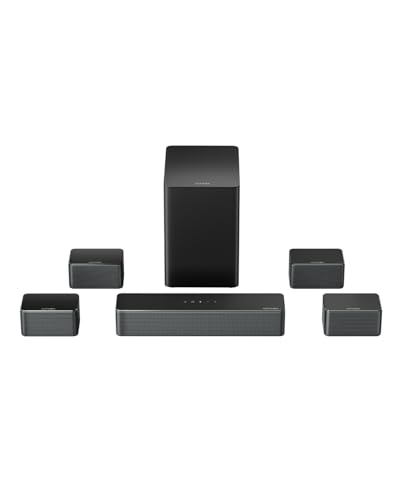
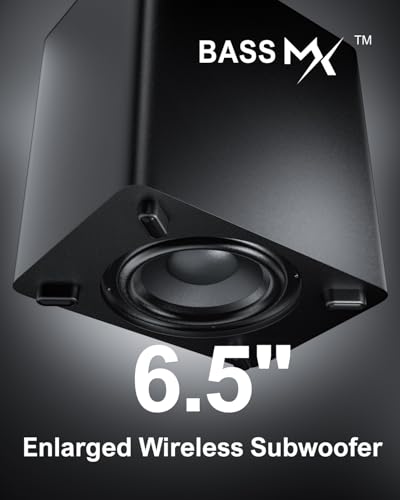
The Ultimea Poseidon D70 takes the honest approach to surround sound. You get eight actual speakers: three drivers in the main soundbar handling front channels, four separate satellite speakers for true surround positioning, and a 6.5-inch wireless subwoofer for bass duties. Each satellite contains a 2.25-inch driver—not huge, but positioned where surround effects should actually come from.
This physical approach matters more than marketing might suggest. When a helicopter flies overhead in a movie, the D70 can actually play that sound from speakers behind and to the sides of your seating position. The brain processes these directional cues naturally, creating convincing spatial audio even though the individual drivers aren't particularly large or powerful.
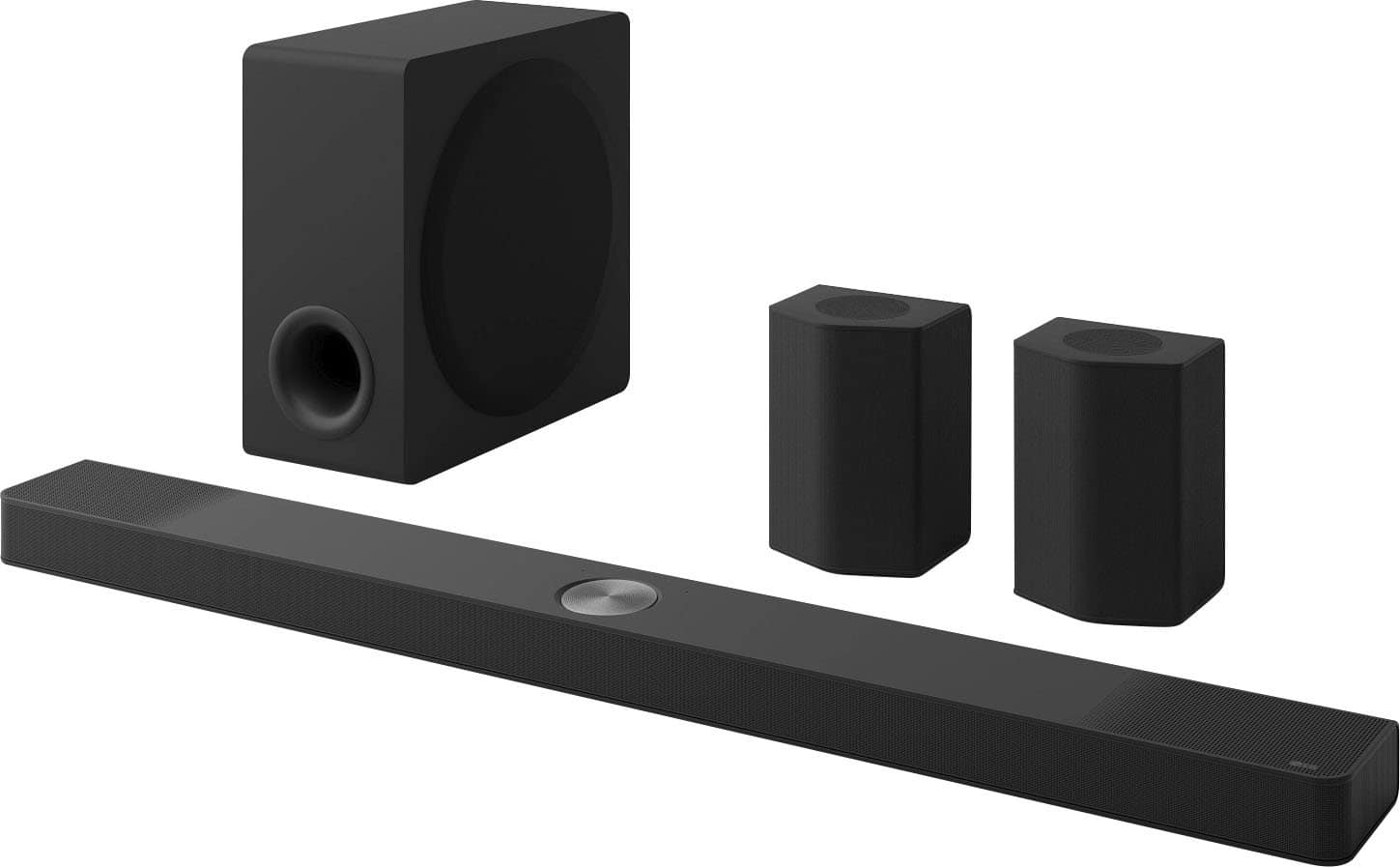
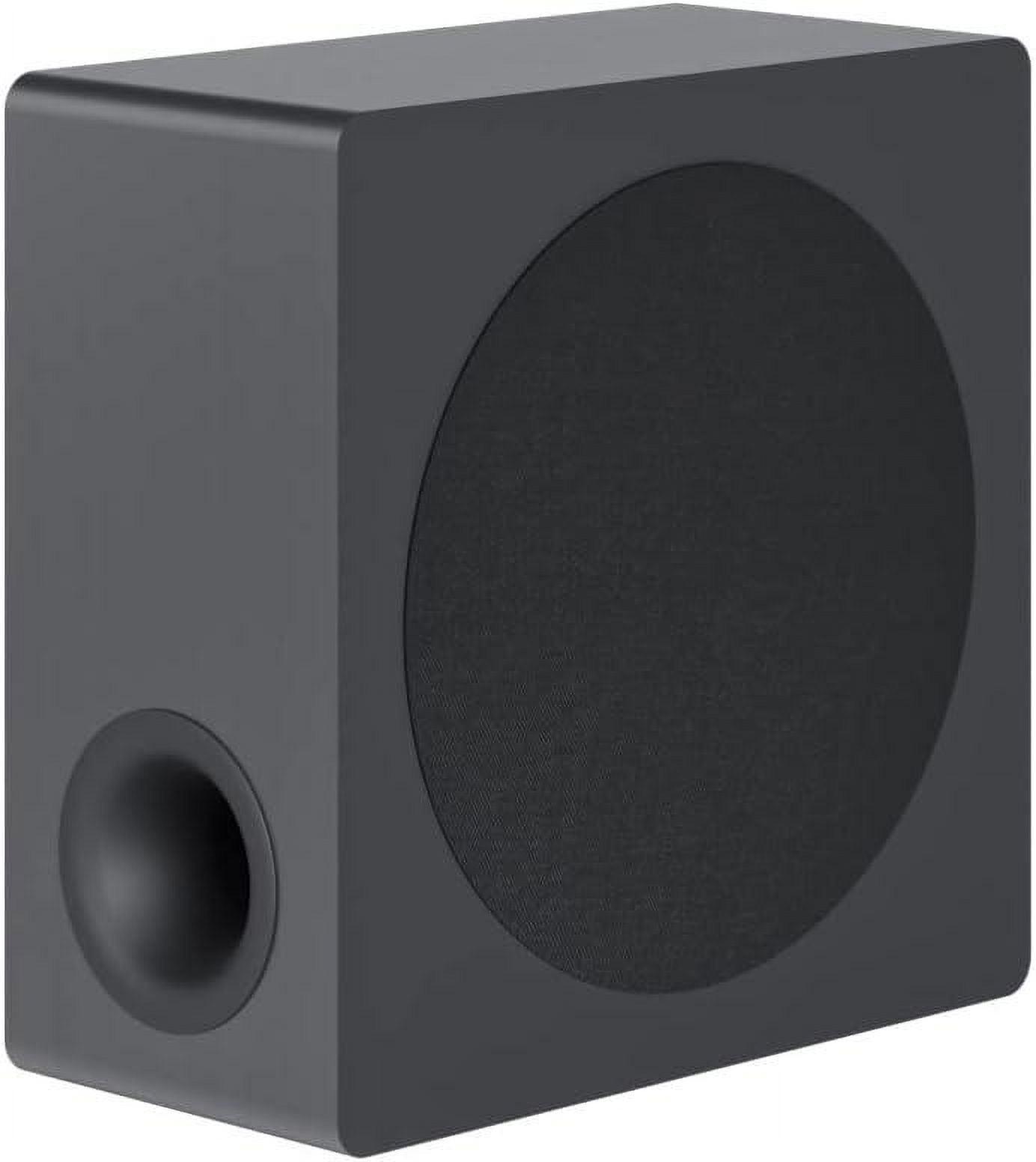
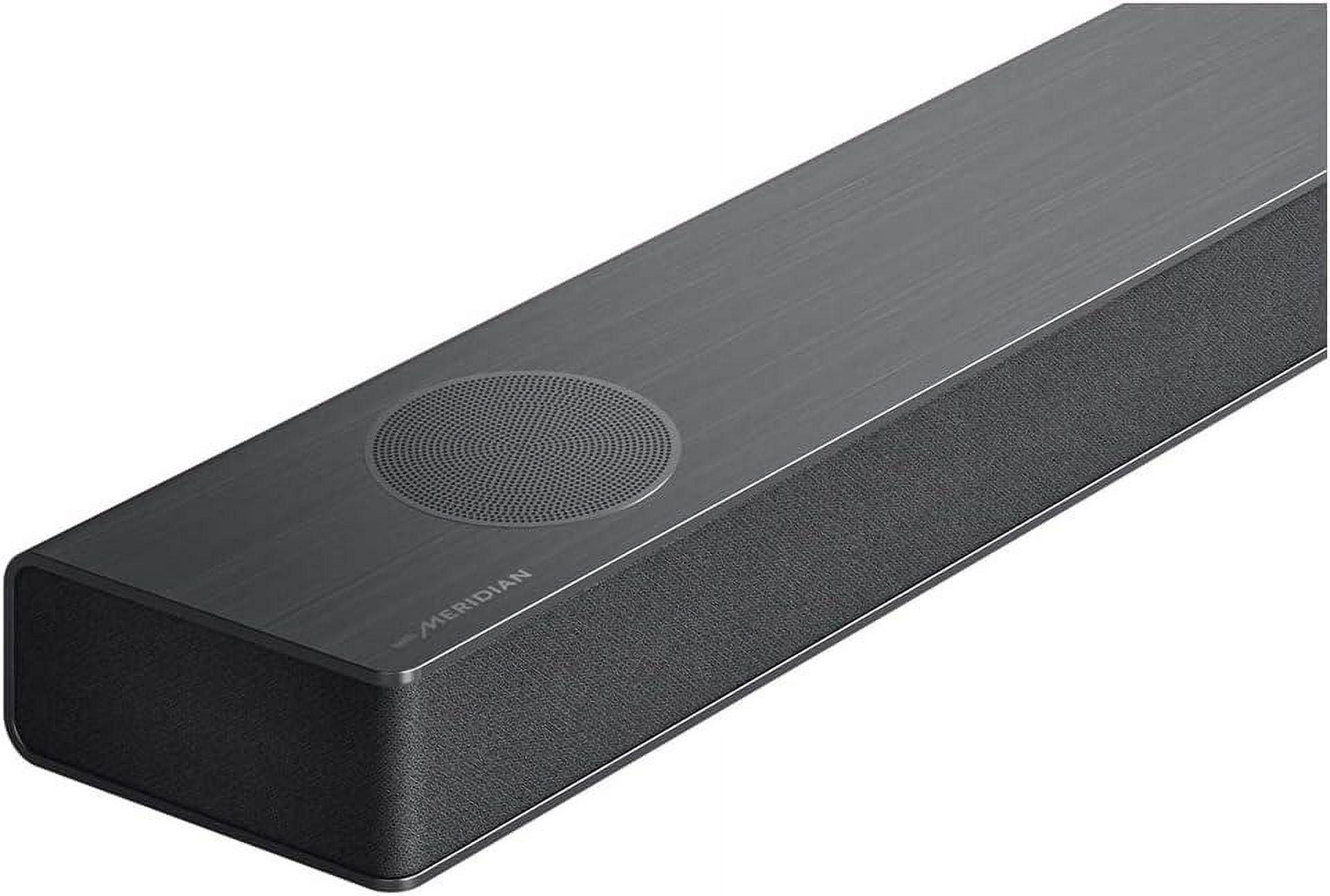
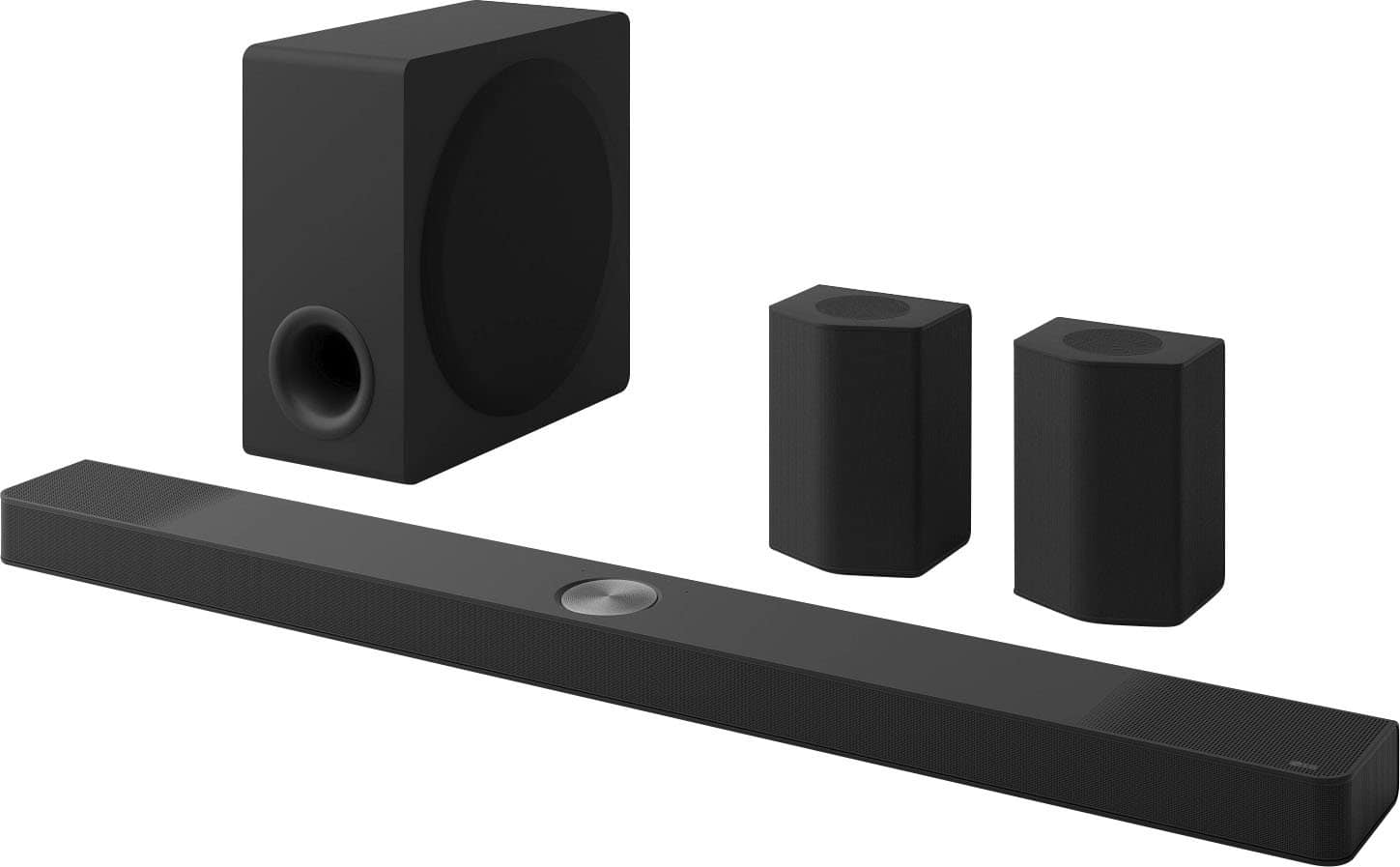
The LG S95TR operates on a more sophisticated level with 15 total speakers across its 9.1.5 configuration. Beyond traditional surround placement, it includes five upward-firing drivers designed to bounce sound off your ceiling, creating the illusion of helicopters, rain, or aircraft actually passing overhead. The main soundbar houses three upward-firing speakers, including a dedicated center channel for height effects, while each wireless rear satellite contains its own ceiling-bouncing driver.
In our research across professional and user reviews, the physical differences translate into distinct listening experiences. The D70 excels at creating a wide, enveloping sound field around your seating area—you'll clearly hear explosions and ambient effects coming from beside and behind you. However, it can't reproduce the overhead dimension that modern movie soundtracks increasingly utilize.
The S95TR attempts to fill that vertical space, though with mixed success according to reviewer consensus. While the height channels do add atmosphere—particularly noticeable during thunderstorms or aerial sequences—several professional reviews noted that the satellite speakers lack the volume and presence of the main soundbar. This can make height effects feel more subtle than the dramatic overhead immersion promised by Dolby Atmos marketing.
Raw power tells an important story about room compatibility. The Ultimea D70 delivers 410 watts peak power, though its more meaningful RMS (continuous) output measures 144 watts total. This breaks down to 36 watts from the soundbar, 48 watts combined across the four satellites, and 60 watts from the subwoofer.
These numbers might seem modest, but they're adequate for small to medium-sized rooms—think typical living rooms under 220 square feet. The system can reach sound pressure levels exceeding 96 decibels, which is plenty loud for most viewing situations without distortion.
The LG S95TR nearly doubles that output at 810 watts total. This extra power becomes crucial in larger spaces where sound energy dissipates over greater distances. Professional reviews consistently note the S95TR's ability to maintain clean, undistorted audio even when pushed to high volumes—something that smaller systems struggle with.
From a practical standpoint, the power difference defines appropriate room sizes. The D70 works best in apartments, smaller family rooms, or bedrooms where you're sitting relatively close to the speakers. The S95TR can fill open-concept living areas, large family rooms, or spaces with high ceilings where sound energy gets absorbed before reaching your ears.
This represents the most significant technological divide between these systems. The Ultimea D70 doesn't support Dolby Atmos, DTS:X, or other modern object-based audio formats. Instead, it relies on Ultimea's proprietary SurroundX technology, which uses AI processing and spatial positioning algorithms to enhance traditional stereo and 5.1/7.1 content.
SurroundX can make regular content sound more spacious and immersive than basic stereo processing, and the AI component attempts to analyze incoming audio to optimize spatial positioning. However, it's essentially an enhancement layer rather than true format support—it can't access the height information embedded in Dolby Atmos soundtracks.
The LG S95TR fully supports both Dolby Atmos and DTS:X, meaning it can decode the actual three-dimensional positioning information that sound engineers embedded during movie production. When watching compatible content, sounds can move precisely through the three-dimensional space around and above you, following the filmmaker's intent rather than approximated processing.
This difference matters significantly for modern content consumption. Netflix, Disney+, Apple TV+, and most other streaming services now offer substantial Dolby Atmos libraries. New movie releases almost universally include Atmos soundtracks on Blu-ray and digital releases. Gaming consoles like PlayStation 5 and Xbox Series X output Dolby Atmos for supported games.
If your viewing habits include significant modern content—recent movies, premium streaming shows, or next-generation gaming—the format support gap becomes a major consideration. The D70 will make everything sound better than TV speakers, but it can't unlock the spatial audio experience that content creators intended.
Both systems handle basic connectivity well, offering HDMI ARC for simple TV connection, optical inputs for older devices, and Bluetooth for wireless music streaming. However, they diverge significantly in advanced gaming features.
The LG S95TR supports 4K resolution at 120Hz passthrough, variable refresh rate (VRR), and Auto Low Latency Mode (ALLM)—features that gamers with PlayStation 5, Xbox Series X, or high-end PCs care about deeply. Game Mode Pro reduces audio latency to approximately 60 milliseconds, ensuring that gunshots and explosions sync properly with fast-paced action.
However, the S95TR has a notable limitation: it only supports 8-bit color depth at 4K/120Hz rather than the full 10-bit that next-generation consoles can output. This won't affect most users, but it's an odd omission for a premium system released in 2024.
The Ultimea D70 offers basic HDMI ARC connectivity without advanced gaming features. For casual gaming or older consoles, this isn't problematic. But if you've invested in current-generation gaming hardware, the D70 won't maximize its potential.
Setup complexity differs dramatically between these systems, reflecting their different design philosophies. The Ultimea D70 requires running speaker wires from the main soundbar to all four surround satellites. Ultimea includes both 3-meter and 6-meter cables, and they're thoughtfully color-coded and labeled for easier installation.
This wired approach has both advantages and drawbacks. Positively, you never worry about wireless interference, battery life, or connectivity dropouts—the speakers always work when the system powers on. Negatively, you need to route cables around your room, either along baseboards, under rugs, or through walls for a clean installation.
The LG S95TR uses WOWCAST wireless technology for its rear satellites. These speakers need only power outlets—no audio cables running across your living room. For many users, this wireless convenience justifies significant cost alone, especially in finished rooms where running cables isn't practical.
Both systems include smartphone apps for control and customization, but with different capabilities. The D70's app offers impressive flexibility for its price point, including a 10-band graphic equalizer and 121 preset sound profiles covering everything from rock music to movie dialogue enhancement. This level of customization typically appears only on much more expensive systems.
The S95TR's app focuses more on smart home integration and automatic optimization. It includes voice assistant support for Amazon Alexa and Google Assistant, AI-powered room calibration that optimizes sound for your specific space, and seamless integration with LG TVs through WOW Orchestra—a feature that coordinates the soundbar with your TV's built-in speakers for enhanced effects.
At the time of writing, these systems occupy vastly different price territories, creating an interesting value comparison. The Ultimea D70 represents exceptional value in the budget tier—you're getting genuine multi-channel surround sound with physical satellite speakers, wireless subwoofer, and extensive customization options at a price point where most competitors offer basic stereo soundbars or virtual surround processing.
Professional reviews consistently highlight this value proposition. The consensus suggests that the D70 outperforms many soundbars costing two or three times more in terms of spatial audio and bass impact, though it obviously can't match premium systems in absolute sound quality or modern format support.
The LG S95TR justifies its premium pricing through advanced technology and convenience features. You're paying for Dolby Atmos processing, wireless convenience, smart home integration, and the ability to fill large rooms with clean, powerful audio. Whether this represents good value depends entirely on your budget, room size, and how much you prioritize modern audio formats.
From a performance-per-dollar perspective, the gap narrows when you consider total system capability. The S95TR costs roughly seven times more than the D70 but delivers approximately double the power output, three-dimensional audio processing, wireless convenience, and smart features. The question becomes whether those additional capabilities matter enough to justify the price premium for your specific situation.
After researching extensive professional and user reviews, clear recommendations emerge based on different user profiles and priorities.
Choose the Ultimea Poseidon D70 if:
You're working with a limited budget but want genuine surround sound improvement over TV speakers. This system excels in small to medium rooms where you can position the satellite speakers appropriately and don't mind running speaker wires. It's particularly appealing if your content library consists mainly of older movies, broadcast television, or music where Dolby Atmos support isn't crucial.
The D70 also makes sense if you prefer the certainty of wired speakers over wireless connectivity. Some users report satisfaction with the system's bass output and spatial audio effects, particularly when properly calibrated using the extensive EQ options.
Choose the LG S95TR if:
You have a larger room requiring high power output and want the latest audio technology. This system justifies its cost in spaces where the D70 would struggle to fill the room adequately. The Dolby Atmos support becomes essential if you regularly watch modern movies, premium streaming content, or play next-generation games.
The S95TR also makes sense if wireless convenience is a priority—either because running speaker wires isn't practical in your space or because you want the clean aesthetics of wireless rear speakers. Smart home integration and voice control capabilities add further value for users invested in connected home ecosystems.
Neither system is perfect, and understanding their limitations helps set appropriate expectations. The Ultimea D70 can't reproduce modern three-dimensional audio formats, limiting its future-proofing as more content adopts Dolby Atmos. The satellite speakers, while effective for spatial positioning, use relatively small drivers that won't match the dynamics of larger, more expensive speakers.
The LG S95TR faces different challenges. Professional reviews consistently note that its height effects, while present, don't deliver the dramatic overhead immersion that Dolby Atmos marketing suggests. The wireless rear speakers, though convenient, sometimes lack the volume and presence of the main soundbar, reducing their effectiveness for critical surround effects.
Additionally, the S95TR's incomplete HDMI 2.1 support—limited to 8-bit color depth at 4K/120Hz—represents a surprising omission for a premium system launched in 2024.
These systems serve different markets and succeed in their respective categories. The Ultimea Poseidon D70 delivers remarkable value for budget-conscious buyers who want real surround sound without premium pricing. Its physical satellite speakers and extensive customization options provide genuine audio improvements that most alternatives in its price range can't match.
The LG S95TR justifies its premium cost for serious home theater enthusiasts with appropriate rooms and budgets. Its Dolby Atmos support, wireless convenience, and powerful output make it suitable for modern content and large spaces where the D70 wouldn't suffice.
The decision ultimately comes down to budget reality, room requirements, and content consumption habits. Both systems will significantly improve your audio experience over TV speakers—the question is whether the advanced features and convenience of the S95TR justify its substantially higher cost for your specific situation.
| Ultimea Poseidon D70 7.1 Channel Soundbar System | LG S95TR 9.1.5 Channel Soundbar with Dolby Atmos |
|---|---|
| Channel Configuration - Determines surround sound immersion and spatial audio capabilities | |
| 7.1 channels (8 speakers total: 3 in soundbar + 4 satellites + subwoofer) | 9.1.5 channels (15 speakers total including 5 height channels for 3D audio) |
| Dolby Atmos Support - Essential for modern streaming content and movies | |
| No Dolby Atmos or DTS:X (uses proprietary SurroundX virtual processing) | Full Dolby Atmos and DTS:X support with object-based 3D audio |
| Power Output - Affects maximum volume and room size compatibility | |
| 410W peak / 144W RMS (suitable for small-medium rooms under 220 sq ft) | 810W total output (can fill large rooms with minimal distortion) |
| Satellite Speakers - Physical surround placement vs convenience | |
| 4 wired satellite speakers (requires cable management but reliable connection) | 2 true wireless rear satellites with WOWCAST (clean installation, power only) |
| Subwoofer - Bass performance and placement flexibility | |
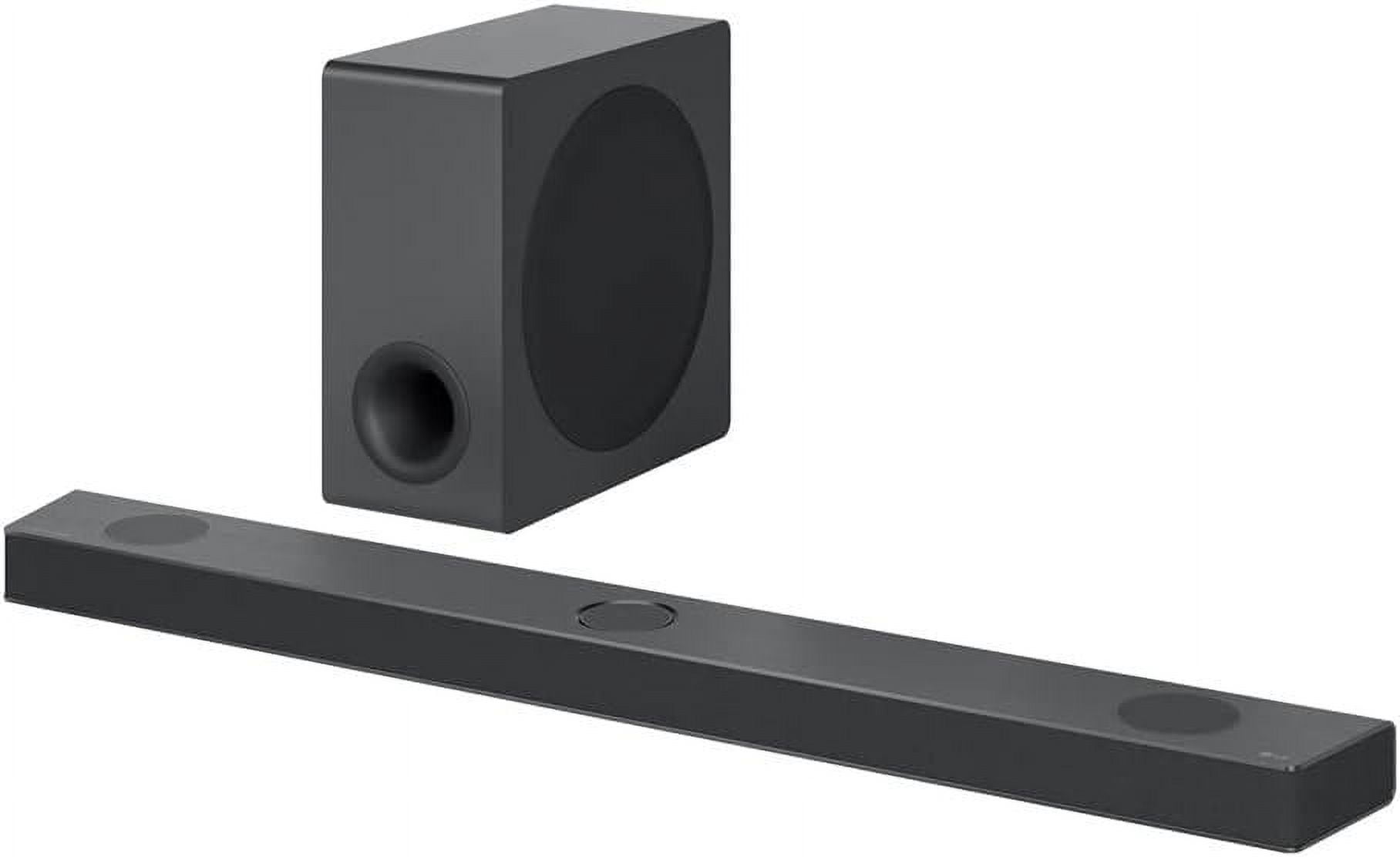
| 6.5" wireless subwoofer with BassMX technology (adequate bass for price point) | Wireless subwoofer with front port (more powerful, optimized for larger spaces) |
| Gaming Features - Important for PlayStation 5 and Xbox Series X owners | |
| Basic HDMI ARC (no advanced gaming features or 4K/120Hz support) | 4K/120Hz passthrough, VRR, ALLM, Game Mode Pro with ~60ms latency |
| Smart Features - Voice control and home automation integration | |
| Smart app with 10-band EQ and 121 presets (extensive manual customization) | Alexa/Google Assistant, AI Room Calibration, LG TV integration with WOW Orchestra |
| Physical Design - Installation requirements and aesthetics | |
| Compact soundbar (400mm wide), requires speaker wire routing to satellites | Large soundbar (1250mm wide), wireless rears need only power outlets |
| Best Room Size - Where each system performs optimally | |
| Small to medium rooms (apartments, bedrooms, typical living rooms) | Large rooms, open concepts, high ceilings where power and wireless matter |
| Value Proposition - Performance per dollar at time of writing | |
| Exceptional value for genuine multi-channel surround at budget price point | Premium pricing justified by advanced features, power, and wireless convenience |
The LG S95TR is significantly better for dedicated home theater setups due to its Dolby Atmos support, 9.1.5 channel configuration with height effects, and 810W power output that can fill large rooms. The Ultimea Poseidon D70 works well for casual home theater use in smaller rooms but lacks modern audio format support and the power needed for cinematic experiences.
Only the LG S95TR supports Dolby Atmos and DTS:X, which are increasingly important for modern streaming content from Netflix, Disney+, and new movie releases. The Ultimea Poseidon D70 doesn't support these formats, relying instead on virtual surround processing. If you watch recent movies and premium streaming content regularly, Dolby Atmos support becomes essential.
The Ultimea Poseidon D70 is ideal for small to medium rooms under 220 square feet, offering genuine 7.1 surround sound at a budget-friendly price. While the LG S95TR will work in smaller spaces, its premium features and high power output are better suited for larger rooms where you can fully utilize its capabilities.
The Ultimea D70 uses four wired satellite speakers that require running cables across your room but provide reliable, interference-free connections. The LG S95TR features wireless rear speakers that only need power outlets, offering cleaner installation but at a significantly higher cost. Wired speakers are more dependable, while wireless offers convenience.
Both systems include wireless subwoofers, but the LG S95TR delivers more powerful bass due to its higher overall power output and larger driver configuration. The Ultimea D70's 6.5" subwoofer with BassMX technology provides adequate bass for its price range and room size, but can't match the depth and impact of the premium system.
The LG S95TR offers advanced gaming features including 4K/120Hz passthrough, Variable Refresh Rate (VRR), and Auto Low Latency Mode (ALLM) that maximize next-gen console performance. The Ultimea Poseidon D70 provides basic HDMI ARC connectivity suitable for casual gaming but lacks the advanced features that serious gamers want.
The LG S95TR is easier to install since its wireless rear speakers only require power outlets, eliminating the need to run speaker cables across your room. The Ultimea D70 requires routing wired connections to four satellite speakers, which takes more effort but ensures reliable performance once installed.
The LG S95TR includes comprehensive smart features like Alexa and Google Assistant support, AI Room Calibration, and integration with LG TVs through WOW Orchestra. The Ultimea Poseidon D70 offers smart app control with extensive EQ customization including 121 presets and a 10-band equalizer, but lacks voice assistant integration.
The Ultimea Poseidon D70 provides exceptional value, delivering genuine multi-channel surround sound with physical speakers at a budget price point that typically only buys basic stereo soundbars. The LG S95TR justifies its premium cost through advanced technology, wireless convenience, and powerful performance, but costs significantly more.
The Ultimea D70 outputs 410W peak power (144W RMS), suitable for small to medium rooms. The LG S95TR delivers 810W total output, nearly double the power, enabling it to fill large rooms and maintain clean audio at high volumes without distortion.
Both soundbars handle music well, but serve different preferences. The Ultimea Poseidon D70 offers extensive EQ customization with 121 presets for different music genres and a 10-band equalizer for fine-tuning. The LG S95TR provides more powerful, room-filling sound with AI optimization, making it better for larger spaces and critical listening.
Choose the Ultimea Poseidon D70 if you want genuine surround sound on a budget, have a smaller room, and don't mind running speaker cables. Choose the LG S95TR if you have a larger room, want Dolby Atmos for modern content, prefer wireless convenience, and can justify the premium cost for advanced features and superior power output.
We've done our best to create useful and informative comparisons to help you decide what product to buy. Our research uses advanced automated methods to create this comparison and perfection is not possible - please contact us for corrections or questions. These are the sites we've researched in the creation of this article: ultimea.com - provantage.com - ultimea.com - youtube.com - youtube.com - bestbuy.com - the-gadgeteer.com - shopmyexchange.com - youtube.com - youtube.com - youtube.com - ultimea.com - manuals.plus - device.report - images.thdstatic.com - shopmyexchange.com - staples.com - ultimea.de - techradar.com - bestbuy.com - youtube.com - trustedreviews.com - zdnet.com - rtings.com - lg.com - lambcotvandappliance.com - valueelectronics.com - romomattressfurniture.com - dolby.com - youtube.com

Privacy Policy
Terms and Conditions - Affiliate Policy
Home Security
© Copyright 2008-2026.
11816 Inwood Rd #1211, Dallas, TX 75244