




When your TV's built-in speakers aren't cutting it for movie nights or gaming sessions, a soundbar becomes essential. But the soundbar market has evolved dramatically, splitting into two distinct philosophies: systems that use multiple physical speakers to create genuine surround sound, and those that rely on advanced audio processing to simulate that experience from fewer speakers.
The Ultimea Poseidon D70 and Samsung HW-B550D represent these two approaches perfectly. Released in 2024, both systems emerged during a period when soundbar technology was maturing rapidly. The past few years have seen significant improvements in virtual surround processing, wireless connectivity, and smartphone app integration. However, the fundamental question remains: is authentic multi-speaker surround sound worth the extra complexity?
Before diving into specifics, it's crucial to understand what those numbers like "7.1" and "3.1" actually mean. The first number tells you how many main speakers handle different directions of sound - front left, center, right, and various surround positions. The second number indicates whether there's a dedicated subwoofer (the ".1") for bass frequencies below about 120Hz.
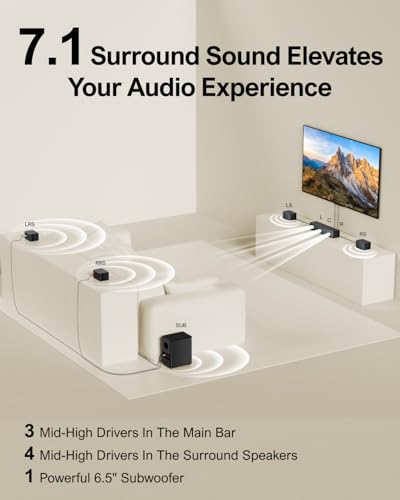
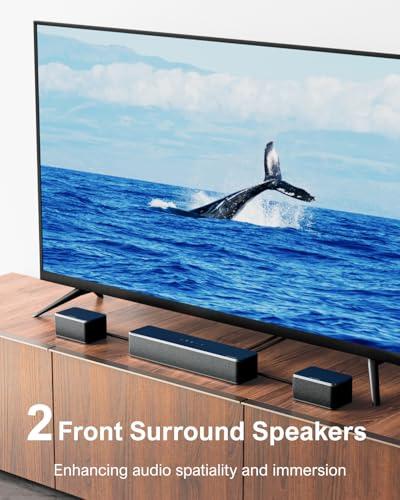
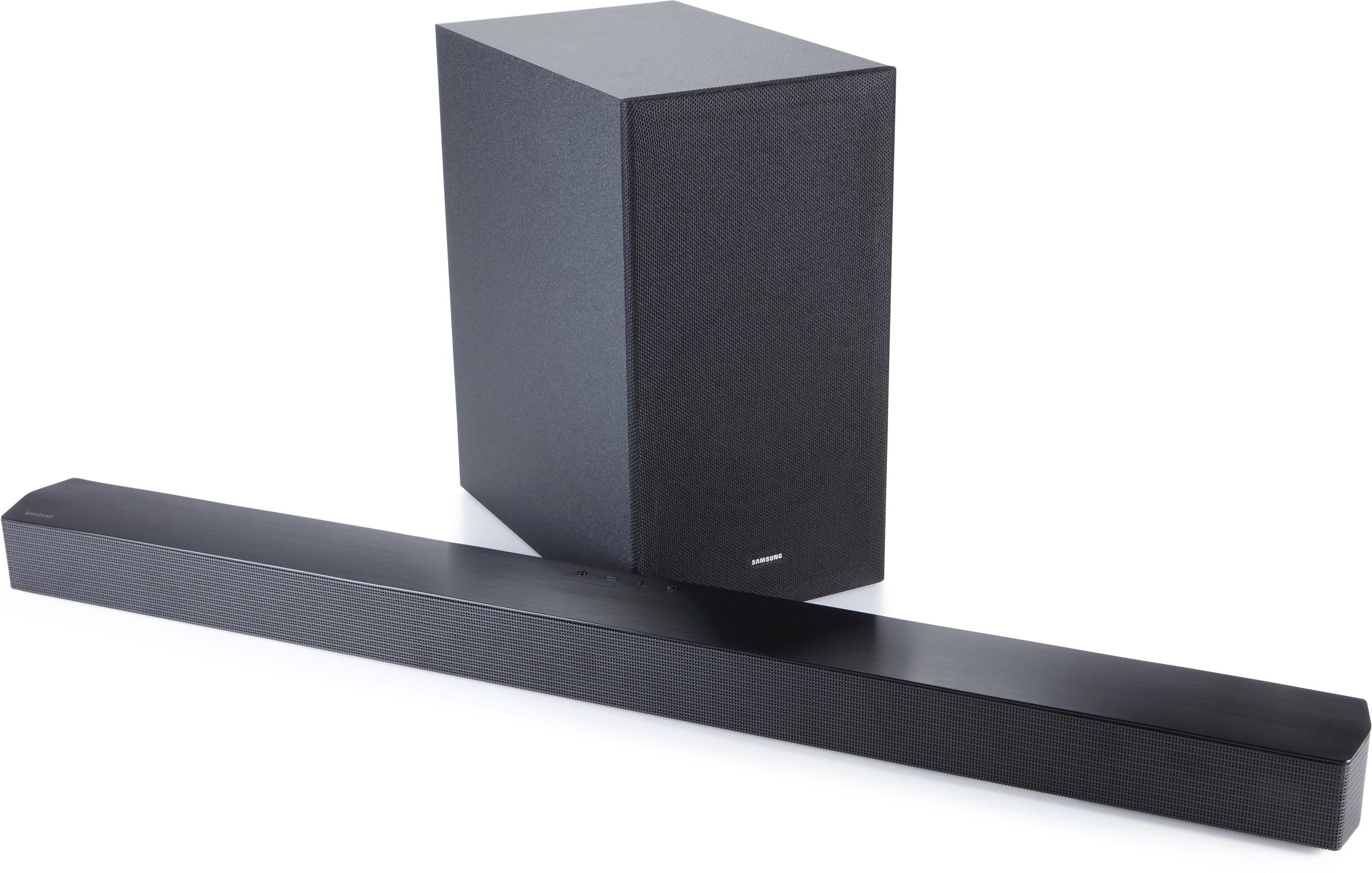
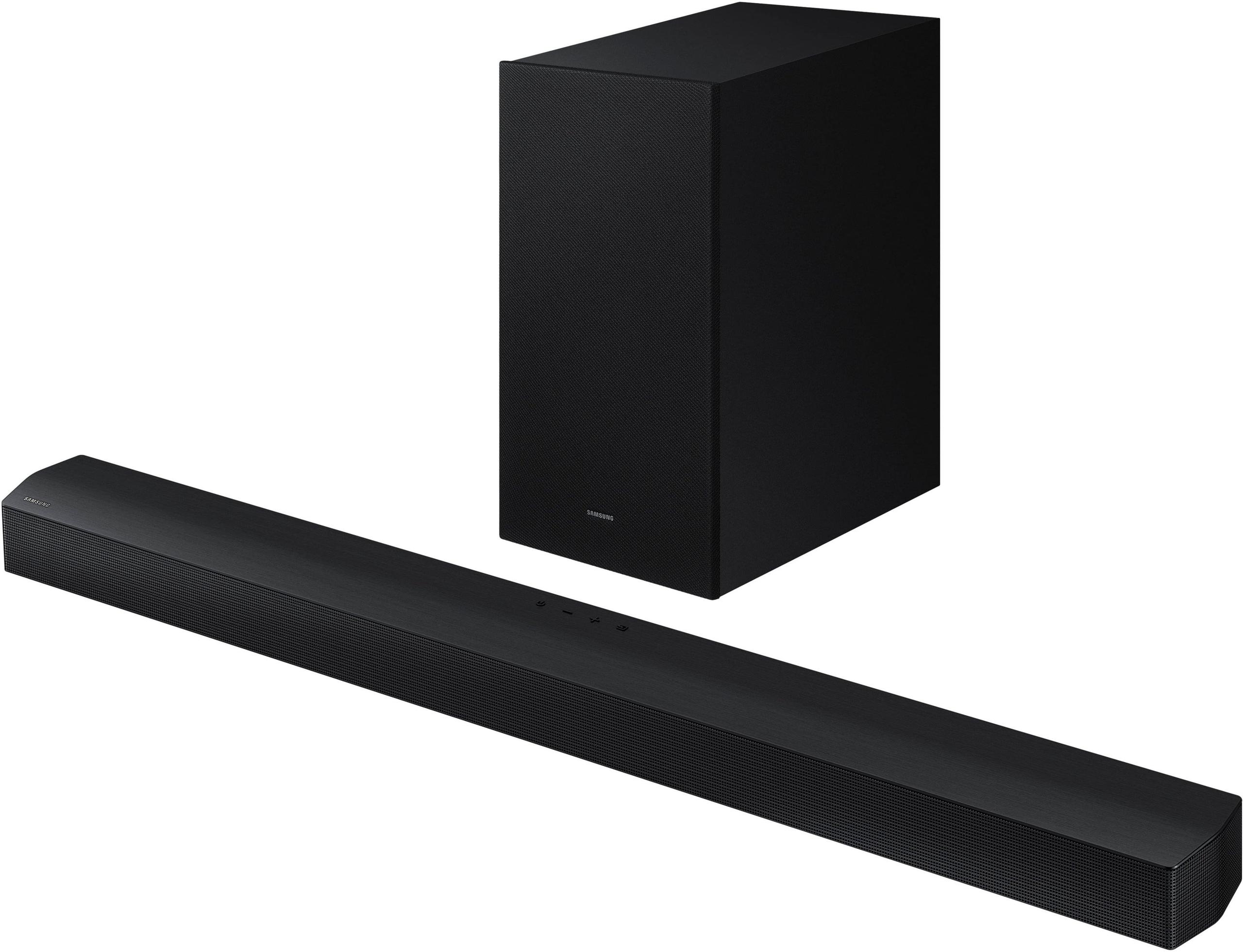
A 7.1 system like the Ultimea Poseidon D70 has seven distinct speaker channels: front left, center, and right, plus side left and right, and rear left and right. The Samsung HW-B550D's 3.1 configuration means it has left, center, and right channels in the main soundbar, plus that separate subwoofer.
The most critical performance factors in any soundbar system are dialogue clarity, bass impact, surround immersion, and overall power handling. Dialogue clarity determines whether you'll catch every whispered conversation in a thriller. Bass impact affects how movie explosions and music low-end feel in your room. Surround immersion decides whether you hear helicopters flying overhead or footsteps approaching from behind. Power handling influences how loud the system can play without distortion, which directly affects room-filling capability.
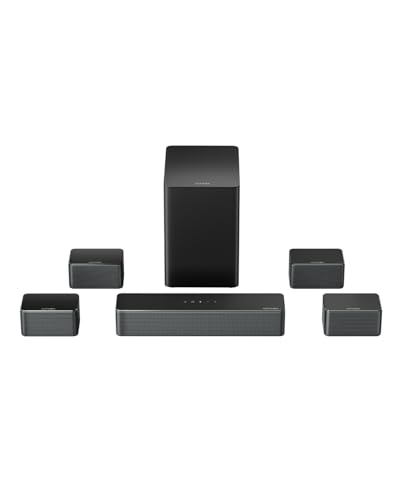
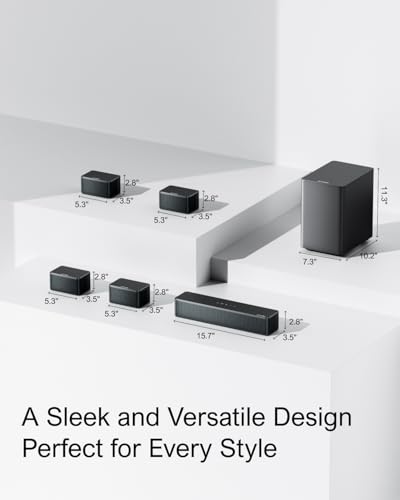
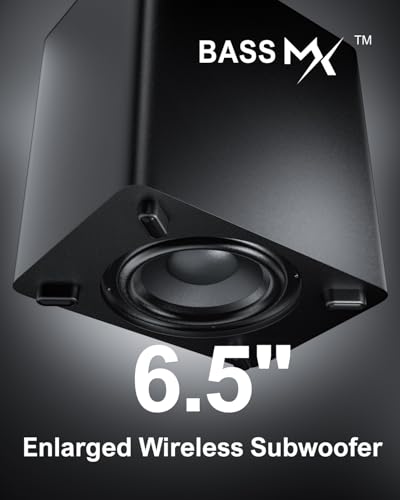
The Ultimea Poseidon D70 takes the maximalist approach. You get eight individual speakers: three drivers in the main soundbar, four separate surround speakers that you position around your room, and a 6.5-inch wireless subwoofer. This setup creates what's called "discrete" surround sound - each audio channel gets its own physical speaker.
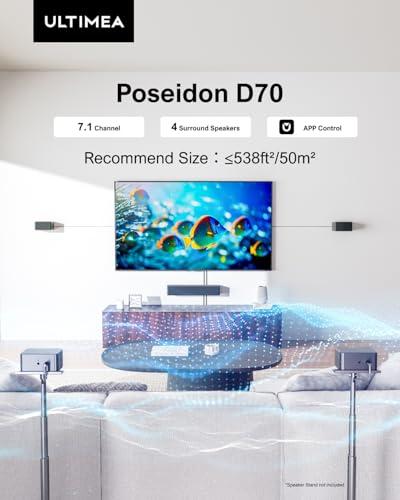
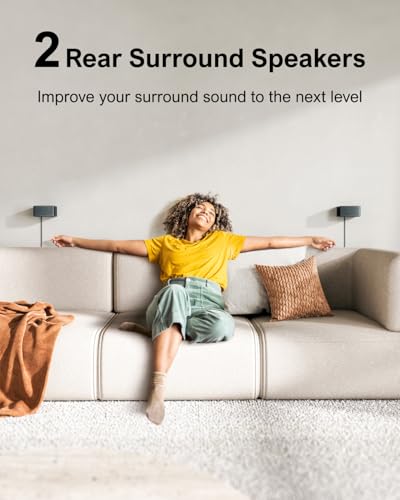
Those four surround speakers are the system's defining feature. Two connect with 3-meter cables, two with 6-meter cables, giving you flexibility in speaker placement. Each surround speaker houses a 2.25-inch driver, which might sound small but proves adequate for the directional cues and ambient sounds that make surround audio effective.
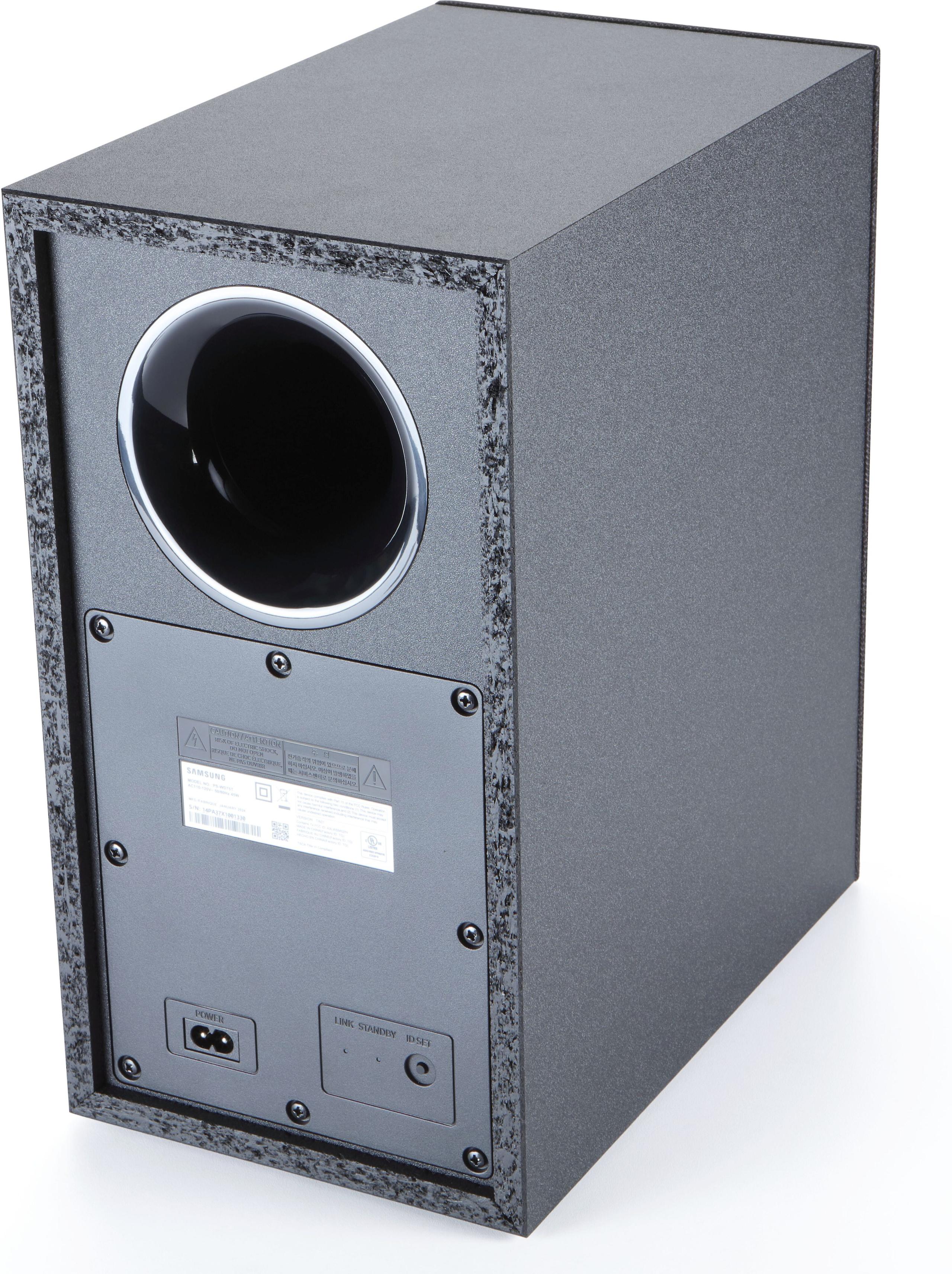
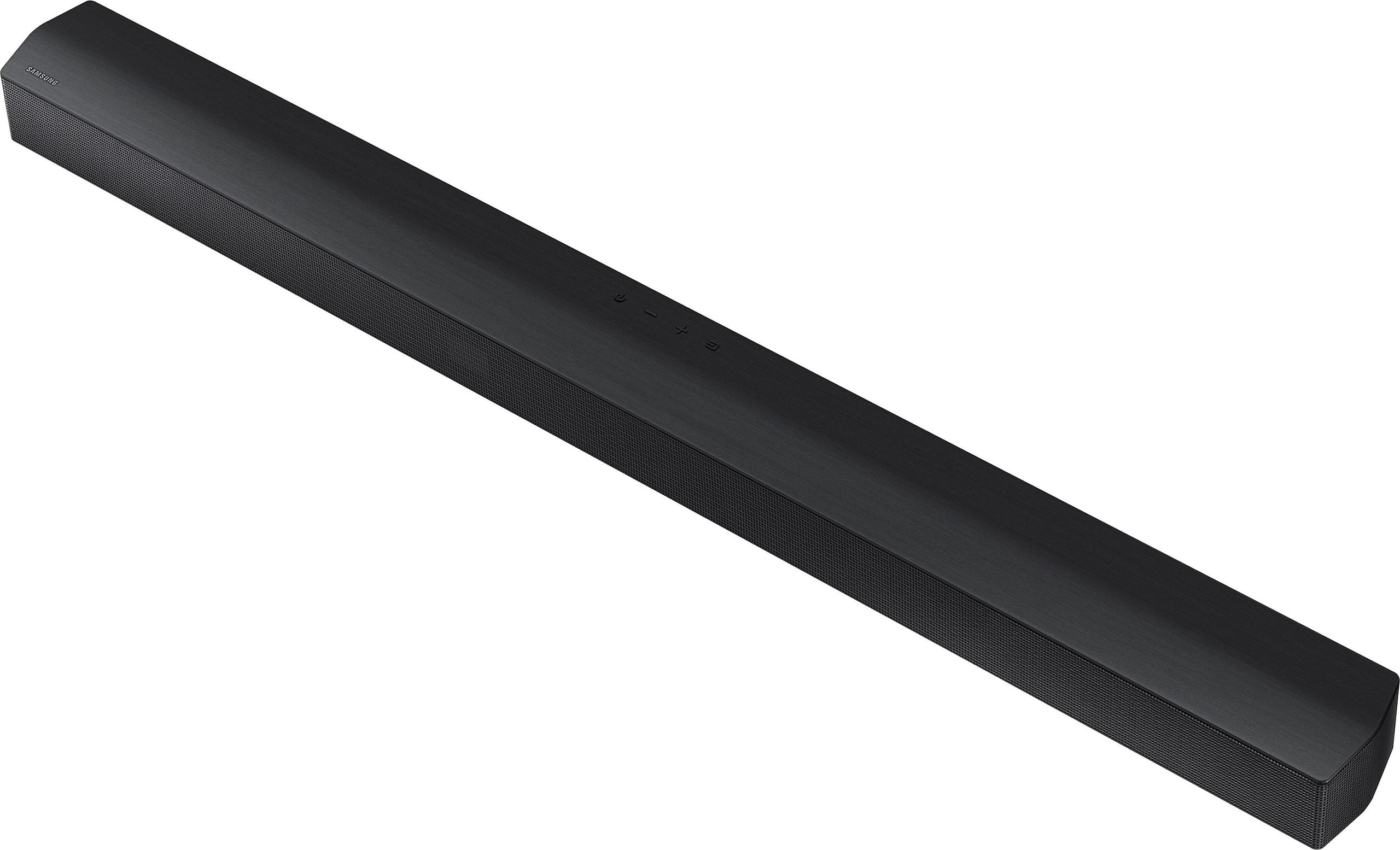
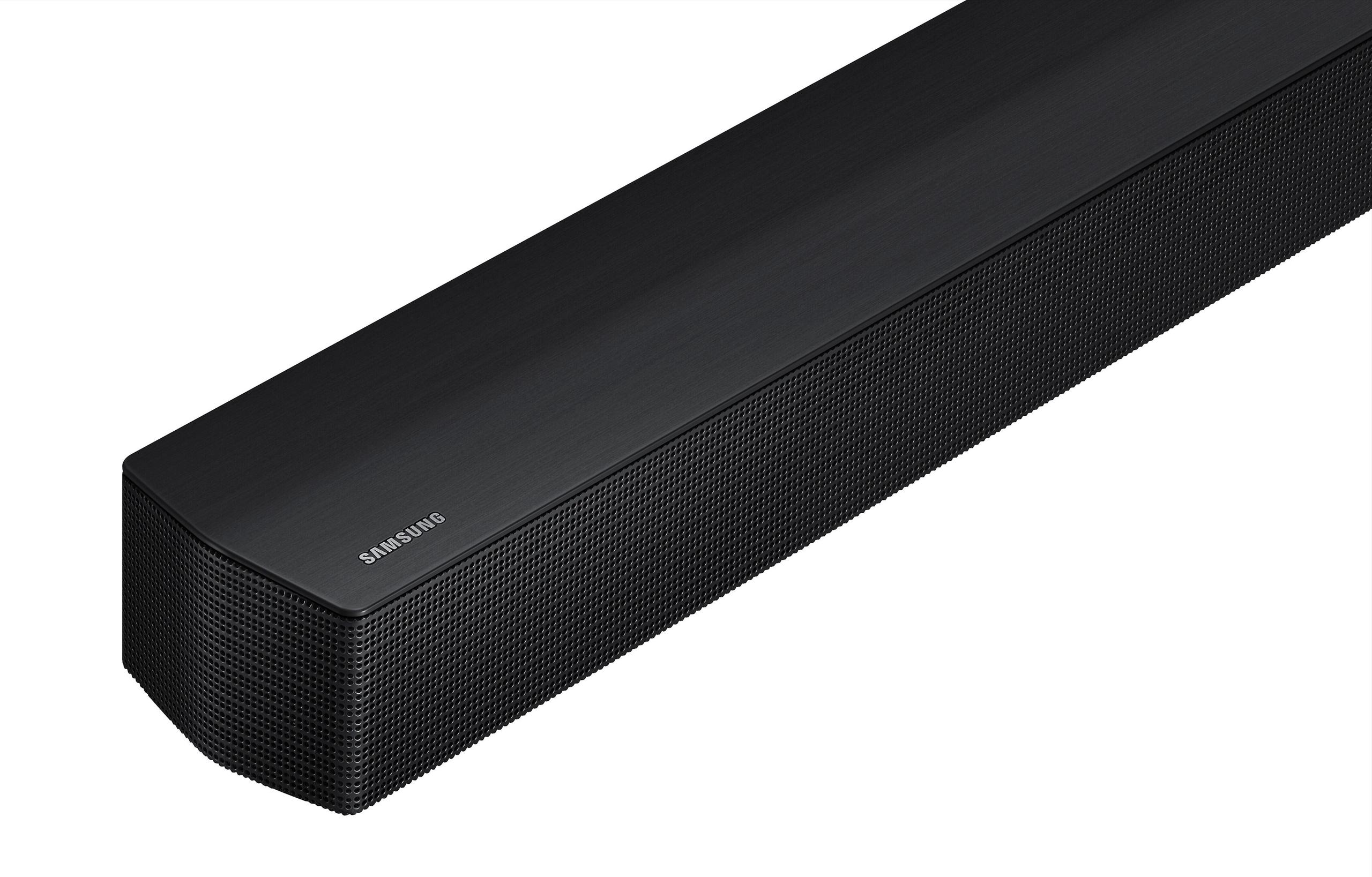
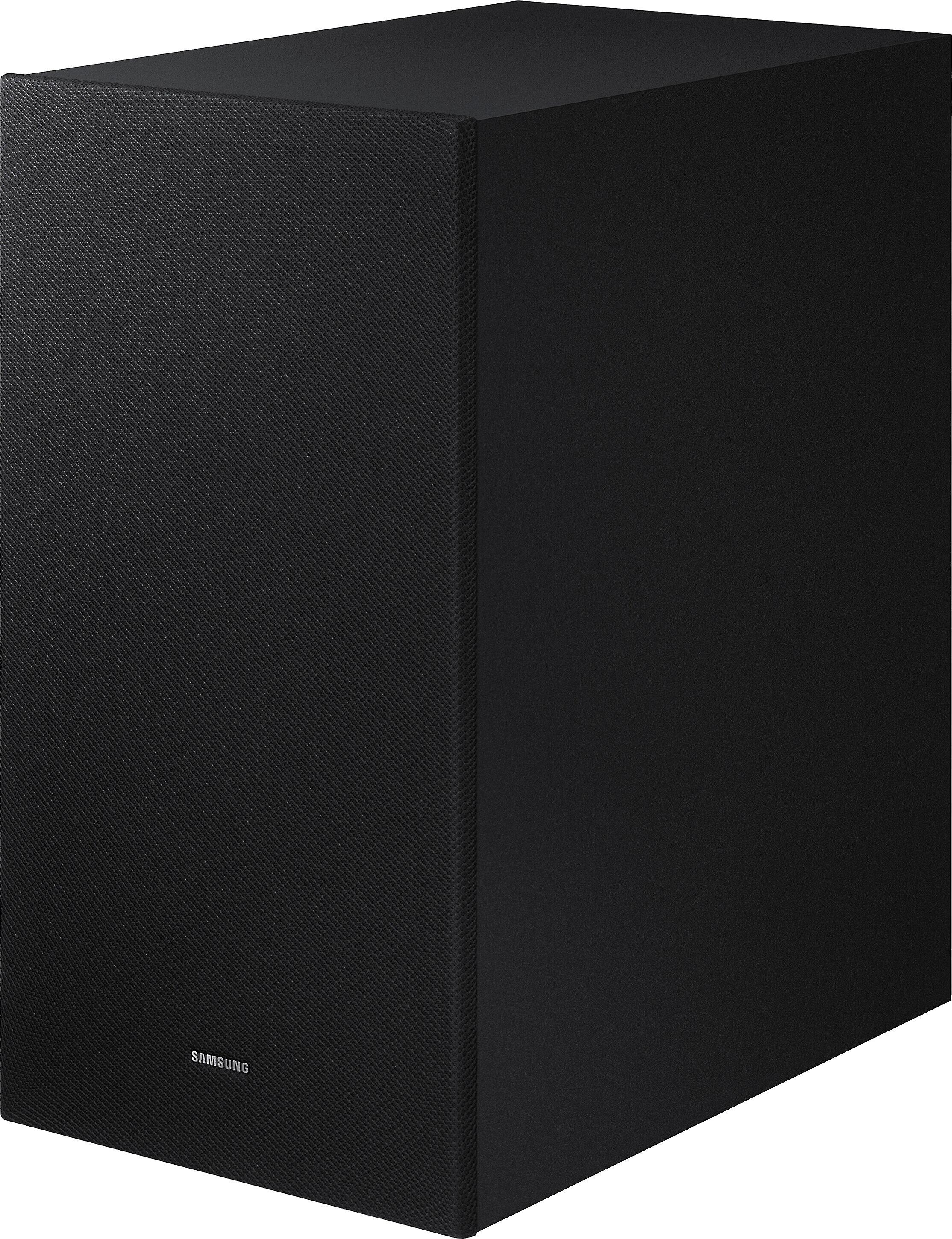
The Samsung HW-B550D packs six drivers into its 34-inch soundbar, creating left, center, and right channels, plus a 5-inch wireless subwoofer. No separate surround speakers means simpler setup, but Samsung compensates with sophisticated audio processing called DTS Virtual:X. This technology analyzes incoming audio and uses psychoacoustic principles - essentially tricks your brain plays with sound - to create the impression of speakers that aren't physically there.
Where these systems really diverge is in their audio processing philosophies. The Poseidon D70 employs what Ultimea calls SurroundX technology, which uses spatial positioning algorithms to coordinate all eight speakers. Think of it as a traffic controller ensuring each speaker plays its part at precisely the right moment and volume level.
More intriguingly, the Poseidon D70 incorporates AI deep learning that's been trained on what Ultimea claims are billions of real-world audio samples. This system analyzes incoming audio in real-time, adjusting processing to optimize sound based on whether you're watching dialogue-heavy drama, action movies, or listening to music. The AI component represents one of the more advanced features in this price category.
The Samsung HW-B550D relies on DTS Virtual:X, a more established technology that's been refined over several years. Virtual:X takes stereo or surround sound sources and processes them to create the perception of 3D audio - sounds that seem to come from above, beside, and behind you, even though they're only coming from the front. Samsung enhances this with Adaptive Sound Lite, which analyzes content scene by scene and adjusts audio settings automatically. During quiet dialogue scenes, it might boost center channel clarity. During action sequences, it might enhance surround effects and bass impact.
The subwoofer comparison reveals interesting trade-offs. The Poseidon D70's 6.5-inch driver in a ported enclosure can move more air than Samsung's 5-inch unit, translating to deeper bass extension. Ultimea's specifications claim response down to 35Hz, which covers the lowest frequencies in most movie soundtracks and music.
BassMX technology, Ultimea's proprietary bass enhancement system, allows independent control over low-frequency impact. Through the smartphone app, you can adjust bass levels separately from overall volume, useful when you want movie explosions to rumble without overwhelming dialogue.
The Samsung HW-B550D's smaller subwoofer compensates with intelligent processing. Its Bass Boost mode doesn't simply amplify low frequencies - it analyzes bass content and applies dynamic enhancement that adapts to different types of low-frequency sounds. A movie explosion gets different treatment than a bass guitar in jazz music.
Based on user reports and technical specifications, the Ultimea system delivers more impactful bass for large rooms and bass-heavy content. The Samsung provides well-integrated bass that complements rather than dominates the overall sound signature.
Power specifications can be misleading in audio equipment, but they provide useful context for room coverage capabilities. The Poseidon D70 claims 410 watts of peak power distributed across eight speakers. More importantly, it can achieve sound pressure levels exceeding 98 decibels with minimal distortion, making it suitable for rooms up to 270 square feet.
Samsung doesn't publish specific power ratings for the HW-B550D, which is common among manufacturers who prioritize processing efficiency over raw power. However, user reports suggest adequate volume for most living rooms, though it may struggle in very large spaces or when competing with significant background noise.
The practical implication: if you have a large family room or open-concept living space, the Ultimea system's higher power output and multiple speaker positions will fill the space more effectively. For typical bedroom or apartment living room setups, the Samsung's power is sufficient.
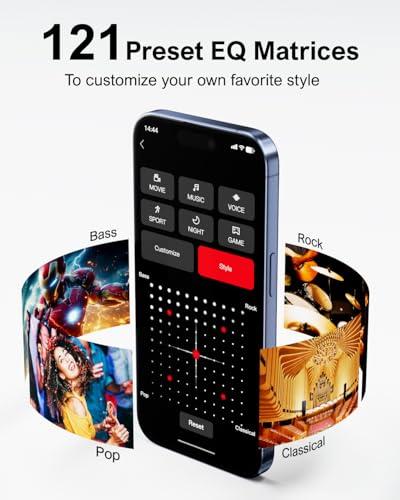
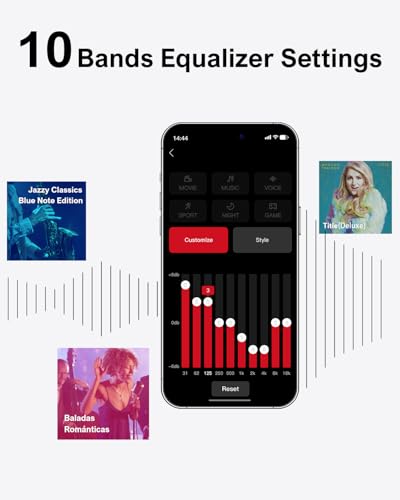
This is where the philosophical differences become most apparent. The Poseidon D70 includes comprehensive smartphone app control that would satisfy audio enthusiasts. The 10-band graphic equalizer lets you adjust specific frequency ranges - boosting vocal clarity around 2-3kHz or adding warmth in the 200-500Hz range. More impressively, it offers 121 preset equalizer matrices covering everything from classical music to gaming audio profiles.
The app control extends beyond equalization. You can adjust individual surround speaker volumes, switch between input sources, and even power the system on or off remotely. This level of control is typically reserved for much more expensive systems.
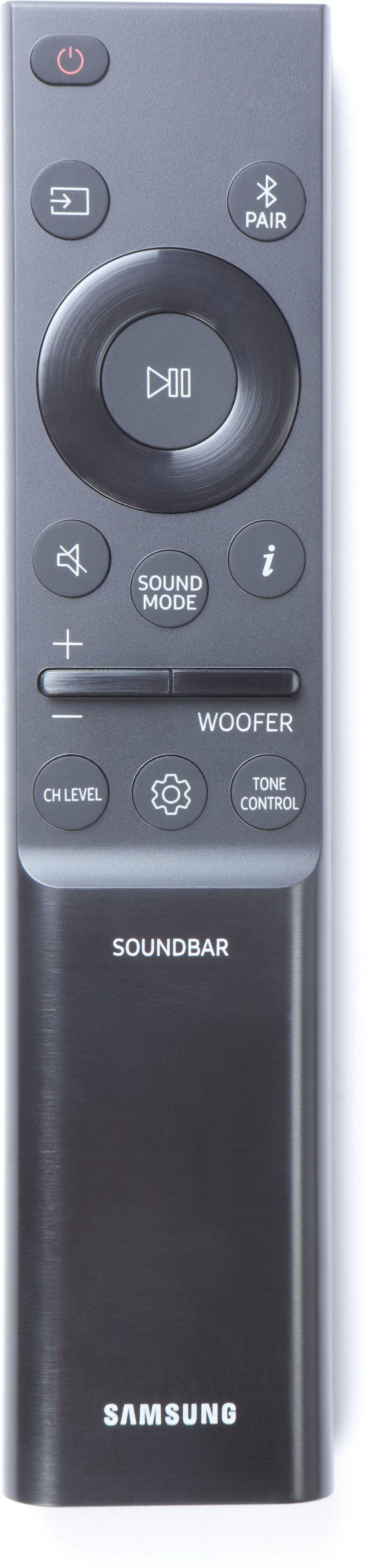
Samsung takes a different approach with the HW-B550D, emphasizing integration over customization. If you own a Samsung TV, the soundbar integrates seamlessly with your TV's remote control through HDMI-CEC (Consumer Electronics Control). This technology allows one remote to control multiple devices connected via HDMI.
The Samsung's Bluetooth Multi-Connection feature lets two smartphones connect simultaneously, making it easy for family members or roommates to share music control without constantly pairing and unpairing devices.
Here's where these systems' approaches create dramatically different user experiences. Installing the Poseidon D70 requires planning and patience. You need to position four surround speakers around your room, which means running cables along baseboards or through walls for a clean installation. The included cables are color-coded and labeled, but you're still looking at 30-60 minutes of setup time.
The payoff is authentic surround sound. When a helicopter flies overhead in a movie, it actually moves from the front speakers, across the sides, to the rear speakers behind you. Footsteps in a horror movie come from their actual screen position. Gaming benefits enormously - you can precisely locate enemy movements or environmental audio cues.
The Samsung HW-B550D takes 10-15 minutes to install. Mount or place the soundbar, position the wireless subwoofer anywhere within about 30 feet, and connect one HDMI cable. The virtual surround processing handles the rest.
Samsung's virtual surround is genuinely impressive for what it accomplishes with just front-firing speakers. DTS Virtual:X creates a convincing sense of spaciousness and can generate height effects that seem to come from above your seating position. However, it cannot truly replicate sounds coming from behind you - the fundamental limitation of any virtual system.
Gaming audio has specific requirements that general movie or music listening doesn't emphasize as much. Directional accuracy - knowing exactly where gunfire or footsteps originate - can provide competitive advantages in many games.
The Poseidon D70's physical surround speakers excel here. When playing first-person shooters or battle royale games, having actual speakers behind you means rear audio cues come from their correct positions. The system includes a dedicated gaming preset within its 121 EQ matrices, though the exact tuning parameters aren't publicly detailed.
The Samsung HW-B550D includes a specifically designed Game Mode that optimizes audio processing for gaming scenarios. This mode reduces audio latency (the delay between on-screen action and sound) and enhances directional cues within the virtual surround processing. While not as precise as physical rear speakers, it's remarkably effective for a virtual system.
For casual gaming, either system works well. For competitive gaming where audio positioning matters significantly, the Ultimea's discrete speakers provide a measurable advantage.
At the time of writing, these systems occupy different value propositions despite some price overlap. The Poseidon D70 delivers substantially more hardware - eight speakers versus two main components - at a lower typical retail price. This makes it exceptional value for users who want authentic surround sound and don't mind installation complexity.
The Samsung HW-B550D commands a premium for its processing technology, brand reputation, and ecosystem integration features. Samsung TV owners get additional value through seamless remote integration and automatic setup features.
Choose the Ultimea Poseidon D70 if you're committed to authentic surround sound and have the room layout to support it. This system works best for dedicated home theater setups, gaming enthusiasts who value directional accuracy, and anyone who enjoys customizing audio settings. The extensive app control and EQ options appeal to users who want to fine-tune their audio experience.
The system's complexity becomes a benefit if you're setting up a permanent installation where you can properly position and cable the surround speakers. For larger rooms or spaces where you frequently host movie nights or gaming sessions, the additional power and authentic surround positioning justify the installation effort.
Choose the Samsung HW-B550D for simplicity without sacrificing audio quality. This system excels for Samsung TV owners who want everything to work together seamlessly. The virtual surround processing is sophisticated enough to satisfy most users, and the simple installation makes it practical for renters or anyone who moves frequently.
Samsung's approach works particularly well in apartments or spaces where running speaker cables isn't practical. The Adaptive Sound Lite feature provides ongoing optimization without requiring user intervention - ideal for family members with different technical comfort levels.
Based on extensive research into user experiences and technical capabilities, the Ultimea Poseidon D70 offers superior value for users seeking maximum audio performance and customization. Its authentic 7.1 surround sound, extensive app control, and powerful bass capabilities deliver flagship features at a mainstream price point.
The Samsung HW-B550D provides the better overall experience for users prioritizing simplicity and integration. Its virtual surround processing is genuinely impressive, the Samsung TV integration is seamless, and the two-component installation suits modern living situations.
For most home theater enthusiasts willing to handle installation complexity, the Poseidon D70 delivers better performance per dollar. For Samsung ecosystem users or anyone prioritizing plug-and-play simplicity, the HW-B550D justifies its premium through superior convenience and integration features.
Neither system supports Dolby Atmos, which has become increasingly common in premium soundbars since 2023. However, both systems provide substantial improvements over TV speakers and satisfy the majority of home audio needs. The choice ultimately depends on whether you value authentic multi-speaker surround sound enough to handle its installation requirements, or prefer the convenience and integration benefits of advanced virtual processing.
| Ultimea Poseidon D70 7.1 Channel Soundbar System | Samsung HW-B550D 3.1 Channel Sound Bar |
|---|---|
| Channel Configuration - Determines surround sound authenticity | |
| True 7.1 with 8 physical speakers (3 in bar + 4 surrounds + subwoofer) | 3.1 with virtual surround (6 drivers in bar + subwoofer) |
| Subwoofer Size - Impacts bass depth and room-filling capability | |
| 6.5" wireless subwoofer with BassMX technology | 5" wireless subwoofer with Bass Boost mode |
| Peak Power Output - Affects maximum volume and room coverage | |
| 410W across all speakers (suitable for rooms up to 270 sq ft) | Not specified (adequate for typical living rooms) |
| Frequency Response - Shows how deep the bass goes | |
| 35Hz - 18kHz (deeper bass extension) | Not specified (likely starts around 50-60Hz) |
| Surround Technology - Different approaches to immersive audio | |
| SurroundX with AI deep learning and physical rear speakers | DTS Virtual:X with psychoacoustic processing |
| Smart Control Options - Convenience and customization features | |
| Full app control with 10-band EQ and 121 preset matrices | Basic remote control, One Remote with Samsung TVs |
| Installation Complexity - Time and effort required for setup | |
| Complex (30-60 min, requires positioning 4 surround speakers) | Simple (10-15 min, just soundbar and wireless sub) |
| HDMI Connectivity - Affects compatibility with modern TVs | |
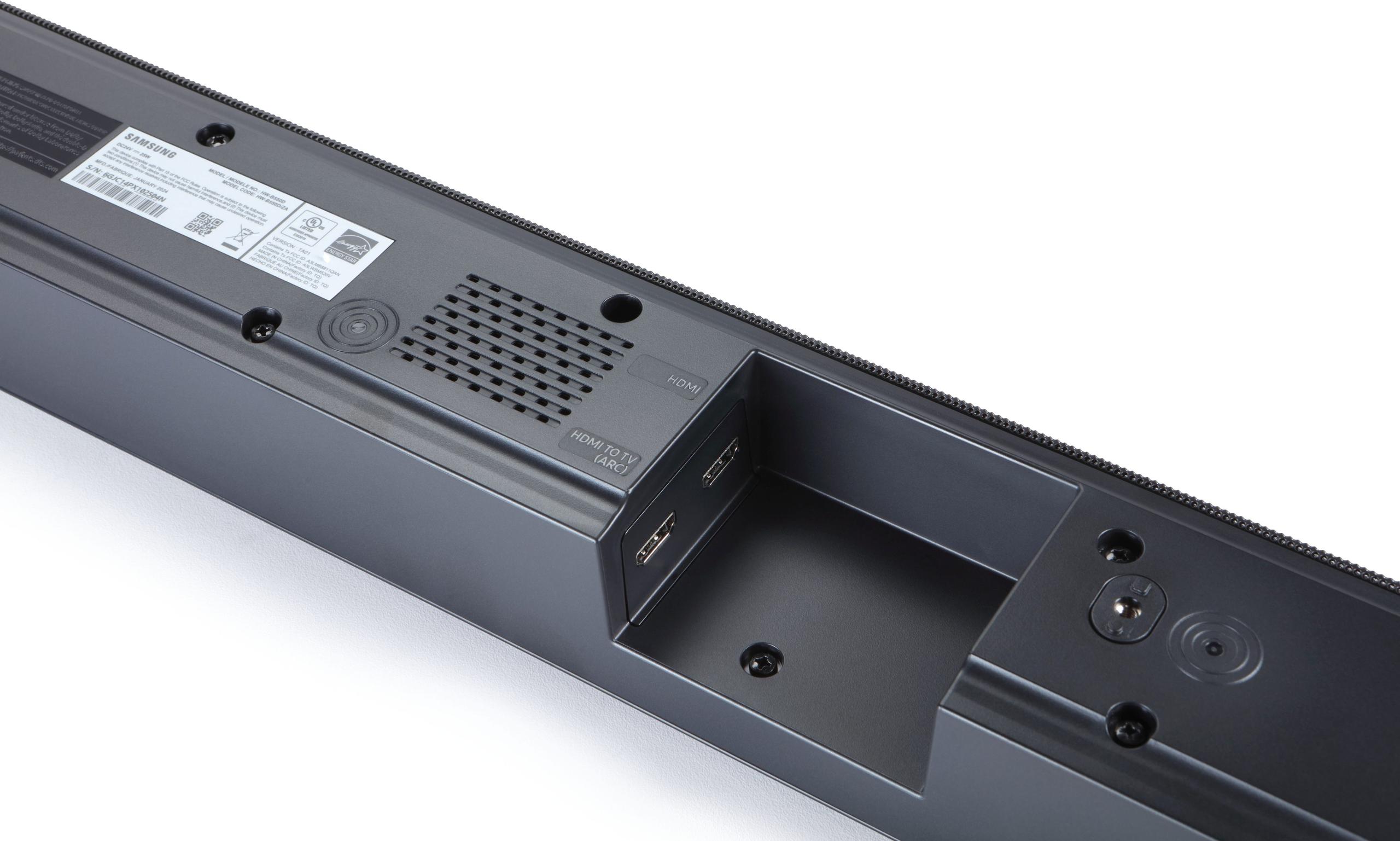
| HDMI ARC support | HDMI 1.4 ARC (1 input, 1 output with pass-through) |
| Gaming Features - Optimization for gaming audio | |
| Gaming preset in EQ matrices, authentic directional audio | Dedicated Game Mode with reduced latency |
| TV Integration - How well it works with your existing setup | |
| Universal compatibility with any TV brand | Enhanced integration with Samsung TVs, One Remote control |
| Upgrade Path - Future expansion possibilities | |
| Complete system, no upgrades needed or available | Optional SWA-9200S wireless surround kit for true 5.1 |
| Cable Management - Physical installation requirements | |
| Multiple cables (2x 3m, 2x 6m) for surround speakers | Minimal cables, wireless subwoofer up to 32.8ft range |
| Sound Customization - How much you can tailor the audio | |
| Extensive (individual speaker levels, custom EQ, scene modes) | Limited (preset modes, Voice Enhance, Night Mode) |
| Brand Support - Warranty and service considerations | |
| Newer brand, warranty terms vary by region | Established brand with 1-year parts/labor warranty |
The Ultimea Poseidon D70 provides superior surround sound quality with its true 7.1 channel system featuring four physical surround speakers that you place around your room. This creates authentic directional audio where sounds actually come from behind and beside you. The Samsung HW-B550D uses advanced DTS Virtual:X technology to simulate surround sound from just the soundbar, which is impressive but cannot match the precision of actual rear speakers for movies and gaming.
A 7.1 system like the Ultimea Poseidon D70 has seven distinct speaker channels plus a subwoofer, creating true surround sound with speakers positioned around your room. A 3.1 system like the Samsung HW-B550D has left, center, and right channels in the main soundbar plus a subwoofer, relying on virtual processing to create the illusion of surround sound. The 7.1 configuration provides more immersive audio for home theater setups.
The Samsung HW-B550D is significantly easier to install, requiring only 10-15 minutes to position the soundbar and wireless subwoofer. The Ultimea Poseidon D70 requires 30-60 minutes of setup time as you need to position four surround speakers around your room and run the included cables. If you want plug-and-play simplicity, Samsung wins; if you don't mind the extra setup for better performance, the Ultimea is worth the effort.
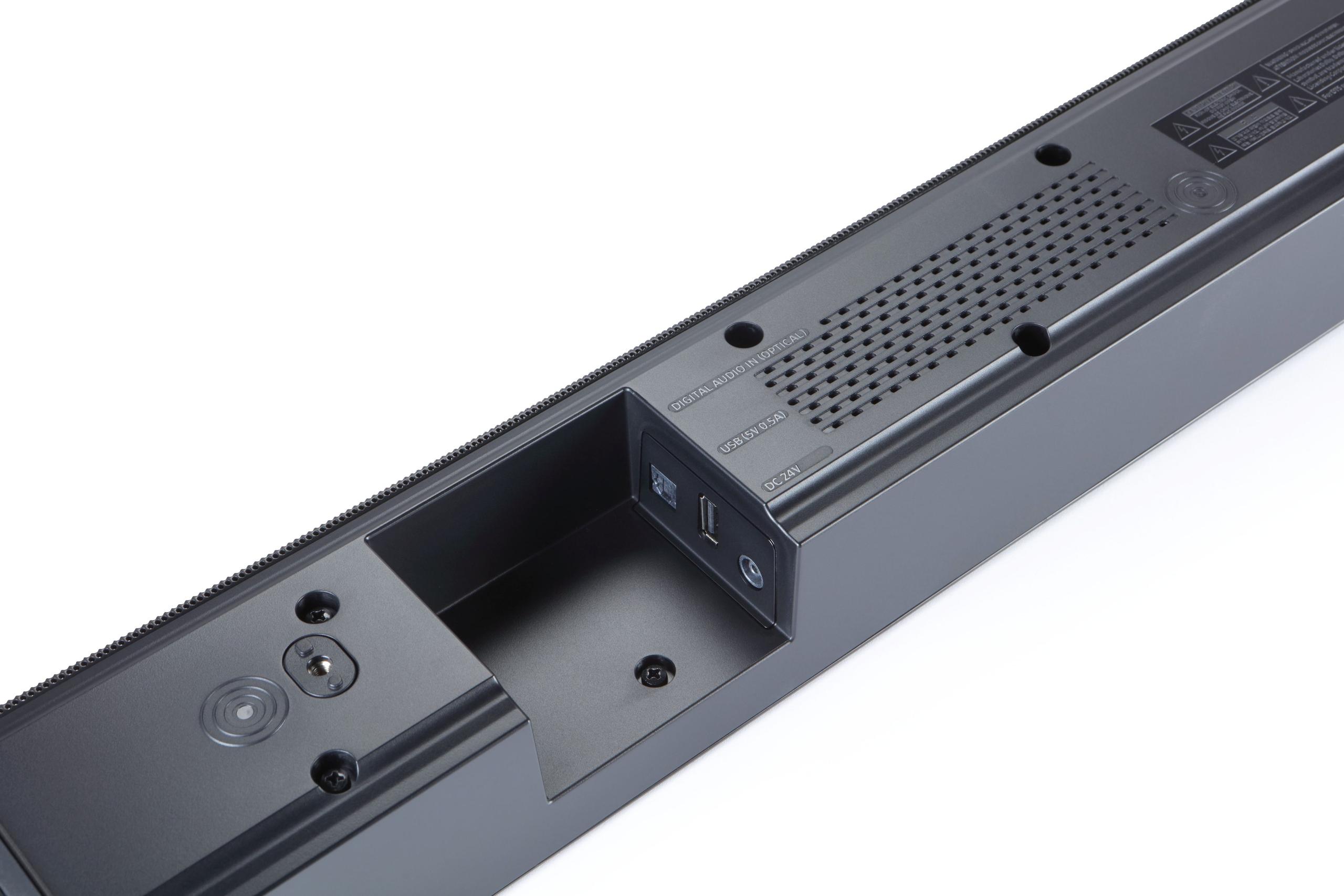
Yes, both the Ultimea Poseidon D70 and Samsung HW-B550D work with any TV brand through HDMI ARC, optical, or Bluetooth connections. However, the Samsung offers enhanced integration features like One Remote control if you own a Samsung TV, allowing you to control the soundbar with your TV remote seamlessly.
The Ultimea Poseidon D70 delivers stronger bass performance with its larger 6.5-inch subwoofer and BassMX technology, extending down to 35Hz for deeper low-frequency response. The Samsung HW-B550D has a smaller 5-inch subwoofer but includes intelligent Bass Boost processing. For movie explosions and music with heavy bass, the Ultimea provides more impact, especially in larger rooms.
The Ultimea Poseidon D70 offers comprehensive smartphone app control with a 10-band equalizer, 121 preset sound modes, and individual speaker level adjustments. The Samsung HW-B550D does not have a dedicated smartphone app but can be controlled through your Samsung TV's smart features if you own a compatible Samsung television. For customization enthusiasts, the Ultimea's app provides significantly more control options.
The Ultimea Poseidon D70 is superior for gaming due to its physical surround speakers that provide precise directional audio cues - essential for competitive gaming where you need to locate enemy positions accurately. The Samsung HW-B550D includes a dedicated Game Mode that optimizes virtual surround processing and reduces audio latency, making it good for casual gaming but not as precise as the Ultimea's discrete speakers.
The Samsung HW-B550D requires minimal space - just room for a 34-inch soundbar and flexible placement of the wireless subwoofer within 32 feet. The Ultimea Poseidon D70 needs more space planning as you must position four surround speakers around your seating area, making it better suited for dedicated home theater rooms rather than small apartments or spaces where you can't run speaker cables.
The Ultimea Poseidon D70 typically offers exceptional value, providing eight physical speakers including true surround sound at a lower price point than many competing systems. The Samsung HW-B550D costs more but includes premium processing technology, brand reputation, and superior TV integration features. The Ultimea wins on hardware quantity per dollar, while Samsung provides better convenience and ecosystem integration.
The Samsung HW-B550D offers an upgrade path through the optional SWA-9200S wireless surround speaker kit, which can transform it into a true 5.1 system. The Ultimea Poseidon D70 comes as a complete 7.1 system with no upgrade options available, but also no upgrades needed since you already get the full surround experience from day one.
The Ultimea Poseidon D70 performs better in large rooms up to 270 square feet, thanks to its 410W peak power output and multiple speaker positioning that fills the space more evenly. The Samsung HW-B550D works well in typical living rooms but may struggle to provide adequate volume and bass impact in very large or open-concept spaces without the distributed speaker placement.
Neither the Ultimea Poseidon D70 nor the Samsung HW-B550D supports Dolby Atmos, which has become common in premium soundbars. Both systems focus on delivering excellent surround sound through their respective technologies - the Ultimea through physical 7.1 speakers and the Samsung through advanced virtual processing. For most users, both provide substantial audio improvements over TV speakers even without Atmos support.
We've done our best to create useful and informative comparisons to help you decide what product to buy. Our research uses advanced automated methods to create this comparison and perfection is not possible - please contact us for corrections or questions. These are the sites we've researched in the creation of this article: ultimea.com - provantage.com - ultimea.com - youtube.com - youtube.com - bestbuy.com - the-gadgeteer.com - shopmyexchange.com - youtube.com - youtube.com - youtube.com - ultimea.com - manuals.plus - device.report - images.thdstatic.com - shopmyexchange.com - staples.com - ultimea.de - bestbuy.com - crutchfield.com - avsforum.com - consumerreports.org - abt.com - pcrichard.com - samsung.com - samsung.com - rtings.com - samsung.com - jeffsappliance.com

Privacy Policy
Terms and Conditions - Affiliate Policy
Home Security
© Copyright 2008-2026.
11816 Inwood Rd #1211, Dallas, TX 75244