


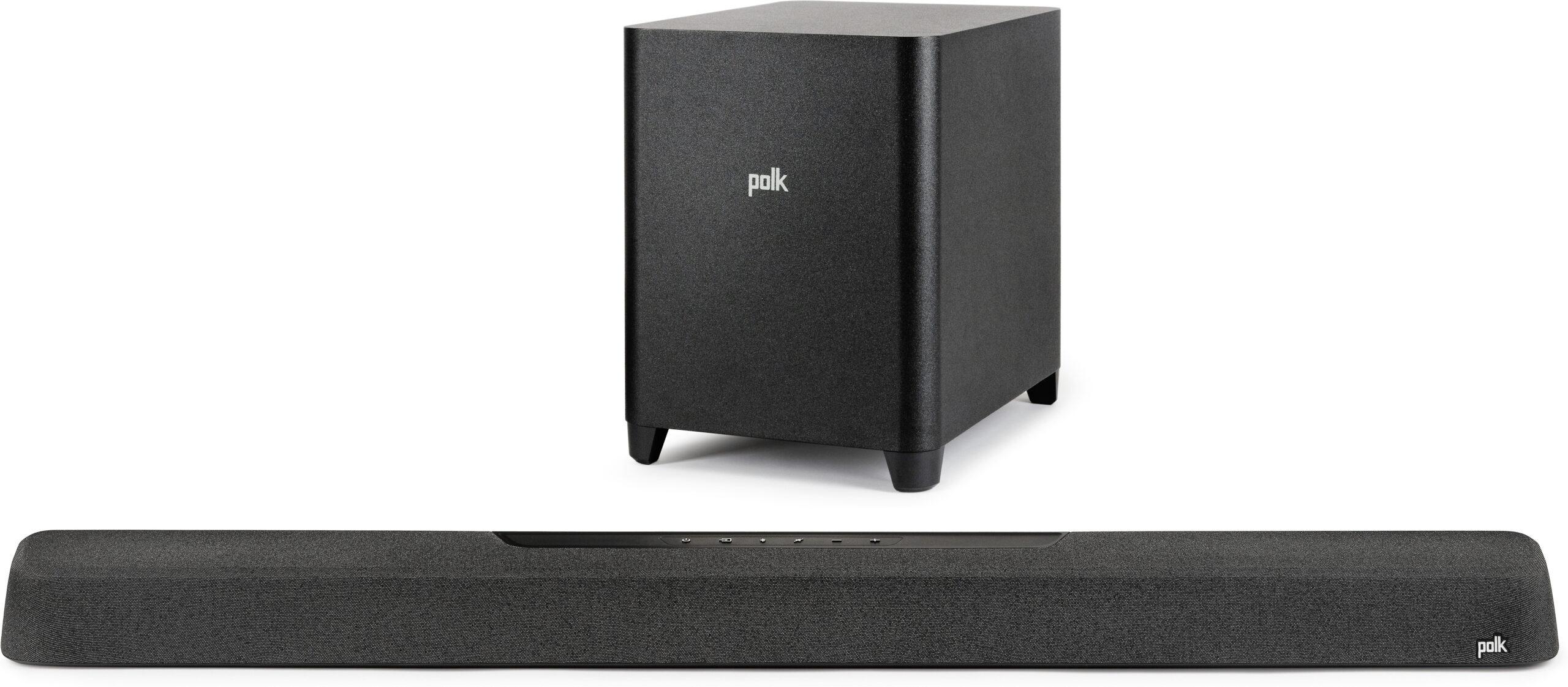
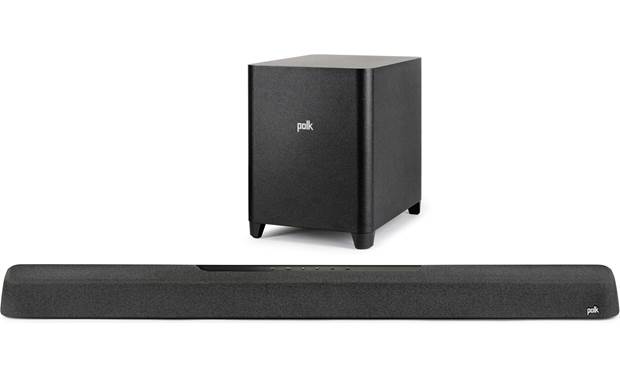
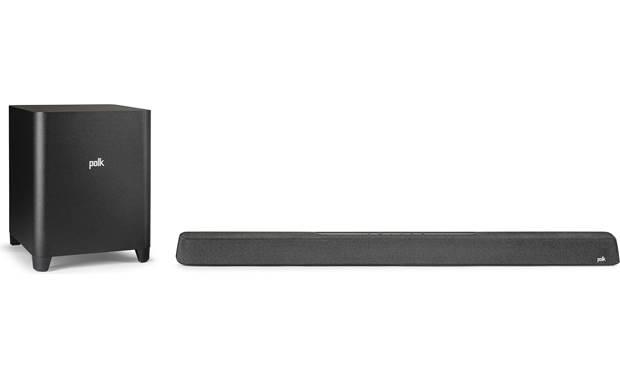
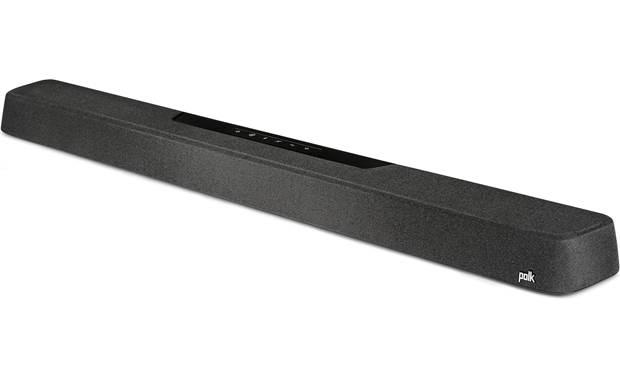
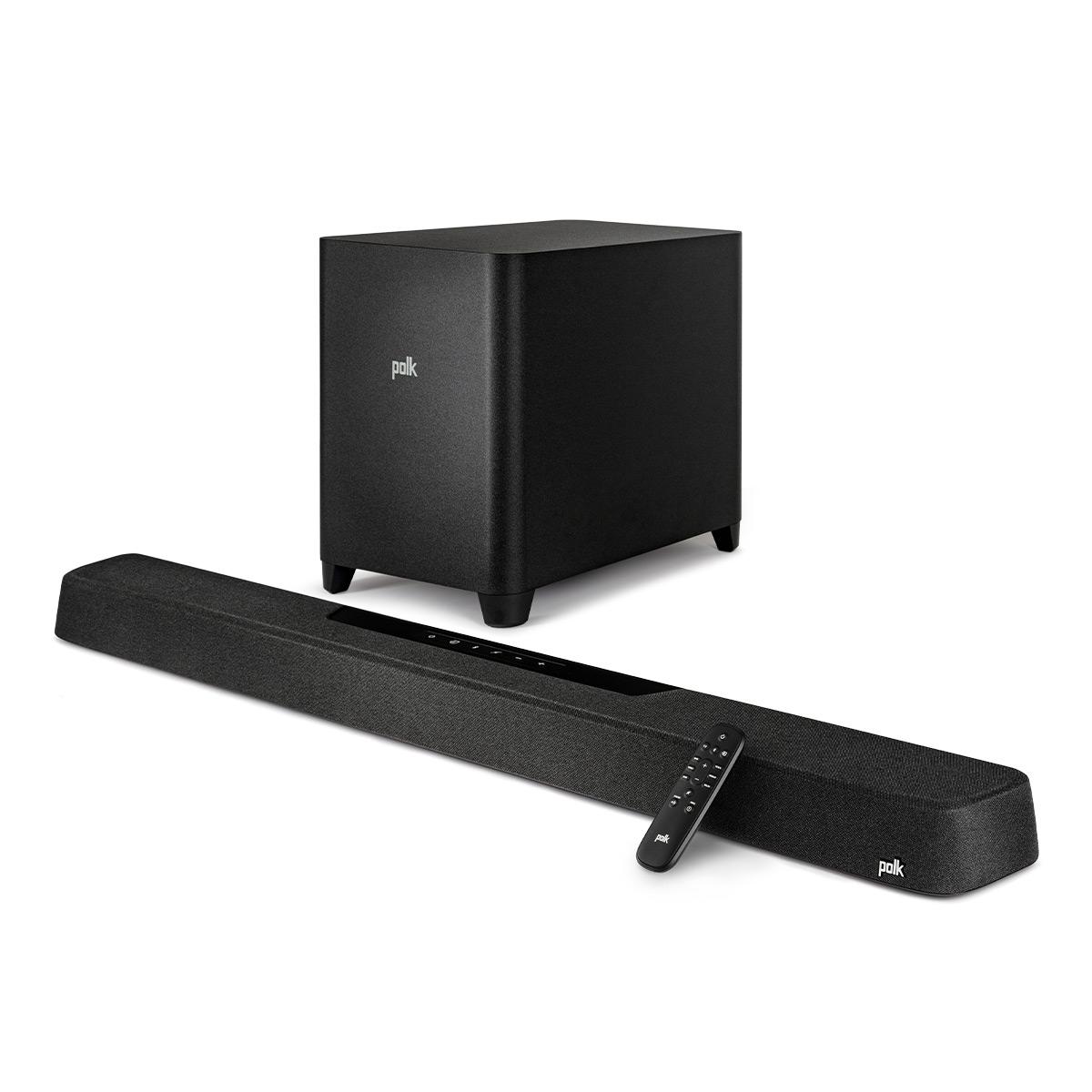
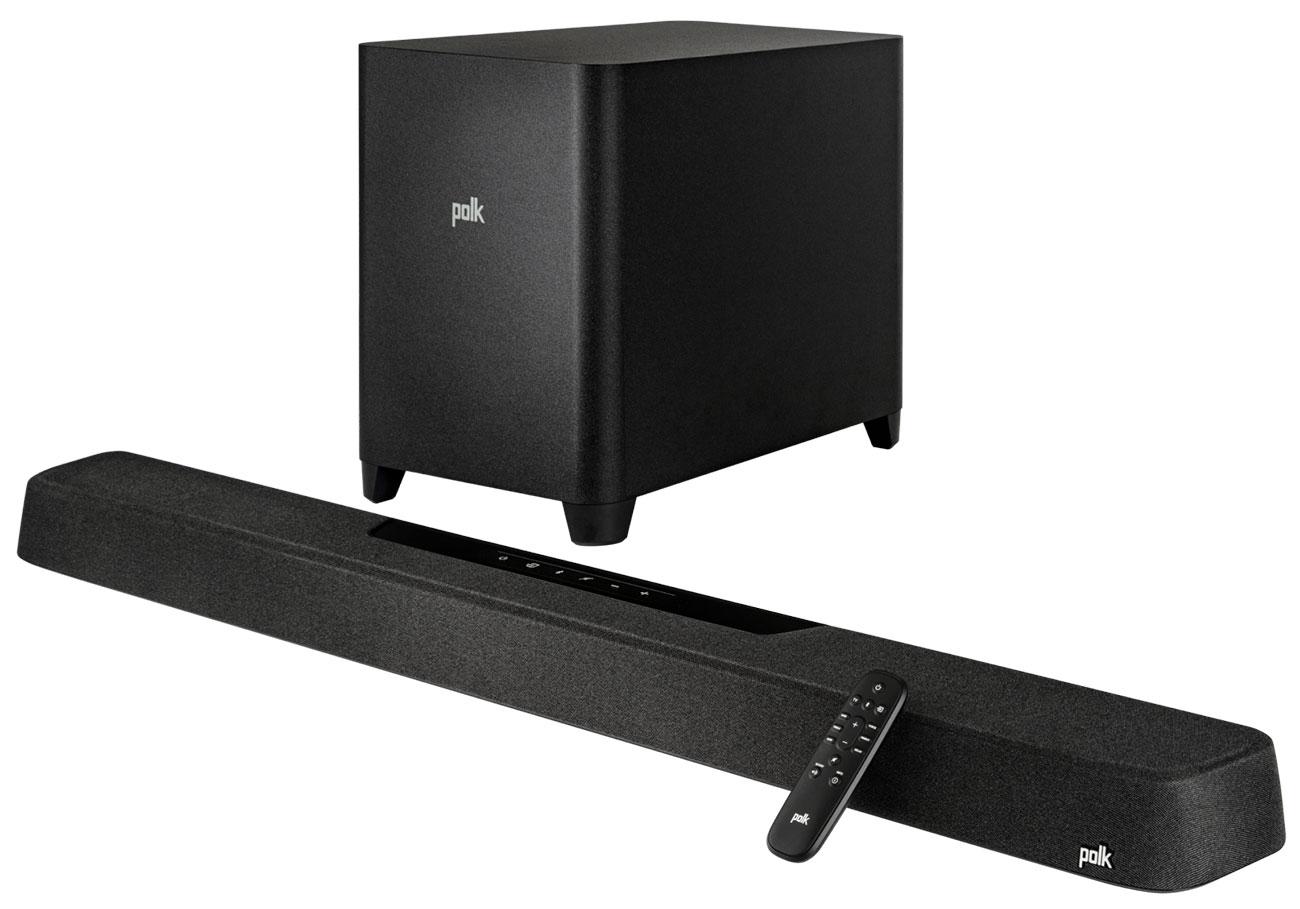
When you're shopping for a soundbar to upgrade your TV's audio, you'll quickly discover that not all systems are created equal. Today we're comparing two fundamentally different approaches to home theater sound: the Ultimea Poseidon D70 7.1 channel system and the Polk Audio MagniFi Max AX 3.1.2 soundbar. These represent opposite philosophies in audio design—one prioritizes physical speakers everywhere, while the other focuses on advanced audio processing and modern format support.
Before diving into specifics, let's clarify what those numbers in "7.1" and "3.1.2" actually mean. The first digit represents left and right front channels, the second is dedicated center channels (for dialogue), and the third indicates subwoofer channels. That extra ".2" on the Polk refers to height channels—speakers that fire sound upward to bounce off your ceiling, creating the illusion of overhead effects.
When soundbars first became popular in the early 2010s, most were simple 2.0 or 2.1 systems that just made dialogue clearer than your TV's built-in speakers. But as streaming services began offering more sophisticated audio and people started building home theaters around larger TVs, manufacturers responded with increasingly complex systems. The Ultimea Poseidon D70 launched in 2023 as part of this trend toward more speakers for less money, while the Polk Audio MagniFi Max AX arrived in 2022 focusing on compatibility with newer audio formats like Dolby Atmos.
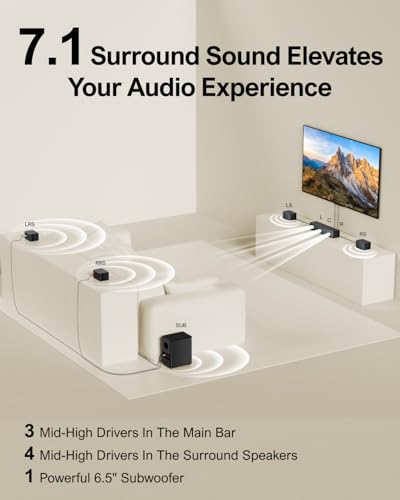
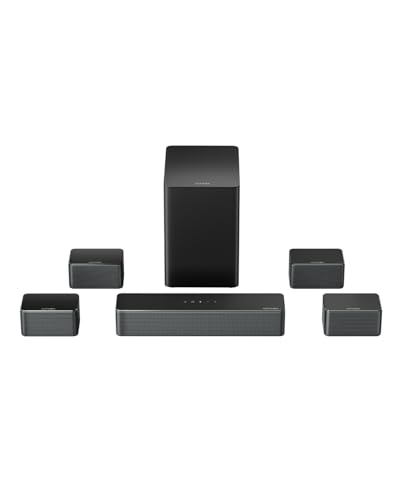
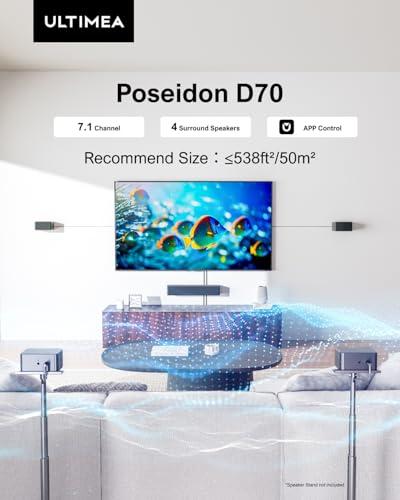
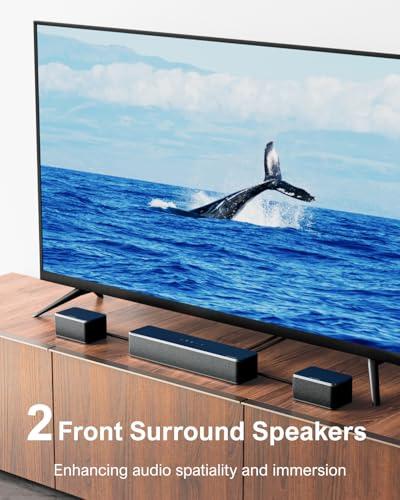
The most significant difference between these systems lies in how they create surround sound. The Ultimea Poseidon D70 takes what I'd call the "old school" approach—it gives you actual speakers to place around your room. You get a main soundbar, four separate surround speakers (two for the front corners, two for behind your seating), and a wireless subwoofer. This creates genuine 7.1 channel audio because sound is literally coming from seven different directions plus the subwoofer's bass.
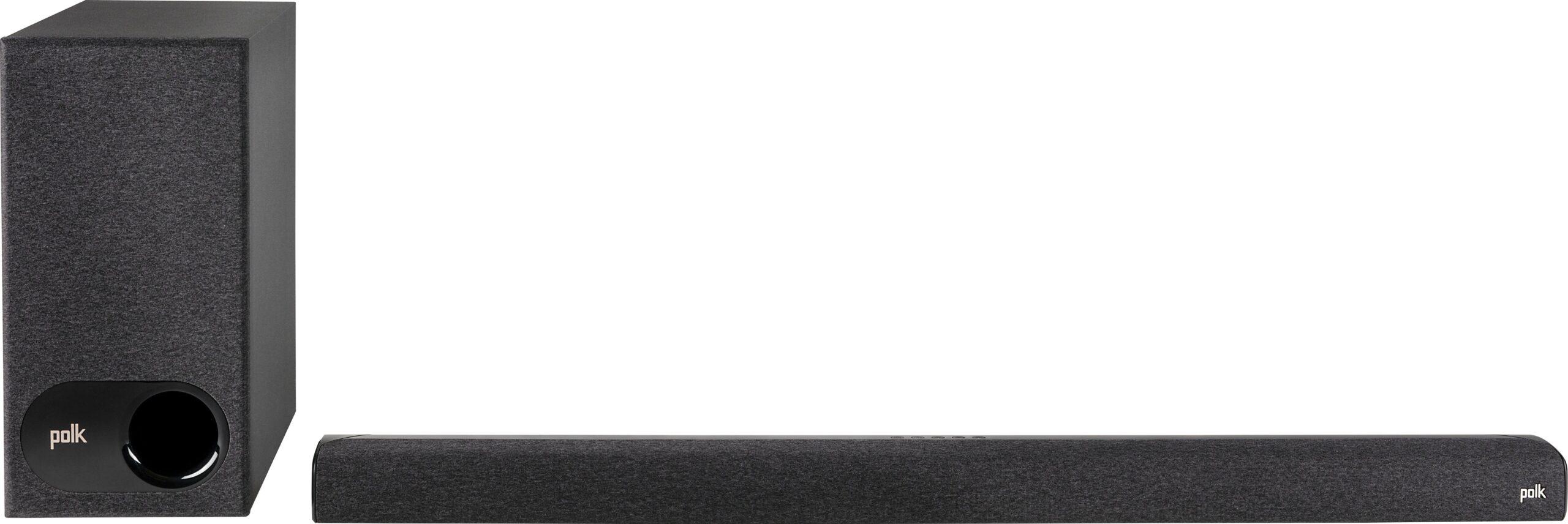
The Polk Audio MagniFi Max AX, conversely, uses advanced digital signal processing (DSP) to create virtual surround effects from fewer physical speakers. Instead of rear speakers, it relies on psychoacoustic tricks—manipulating how your brain interprets sound arrival times and frequencies—to make you think audio is coming from behind you. Where it gets interesting is with those up-firing drivers: these are actual speakers pointing at your ceiling, bouncing Dolby Atmos effects downward to create height sensations that the Ultimea simply cannot reproduce.
Having experienced both approaches extensively, I find there's no universal "better" choice. Physical rear speakers provide more convincing directional effects for traditional 5.1 and 7.1 content, especially in larger rooms. You'll hear footsteps genuinely moving from front to back, or helicopters truly circling your seating position. However, height effects from ceiling-bounce systems like the Polk can be genuinely startling when properly calibrated, adding a dimension that discrete speakers placed at ear level cannot match.
On paper, the Ultimea Poseidon D70 claims higher peak power at 410 watts versus the Polk's 340 watts total output. But peak power specifications are often misleading marketing numbers that don't reflect real-world performance. More meaningful is RMS power—continuous output the system can sustain—where the Ultimea delivers 144 watts across its eight drivers.
What matters more than raw wattage is driver quality and arrangement. The Polk Audio MagniFi Max AX employs eleven total drivers in a sophisticated configuration: dedicated tweeters for high frequencies, multiple mid-woofers for vocals and effects, and those crucial up-firing drivers for height channels. Each driver is specifically designed for its frequency range, similar to how high-end tower speakers separate duties between different driver types.
The Ultimea uses eight 2.25-inch drivers across all its speakers—a more uniform approach that prioritizes speaker count over specialization. While this provides excellent value and wide frequency coverage, it means no single driver is optimized for specific tasks like dialogue reproduction or high-frequency detail.
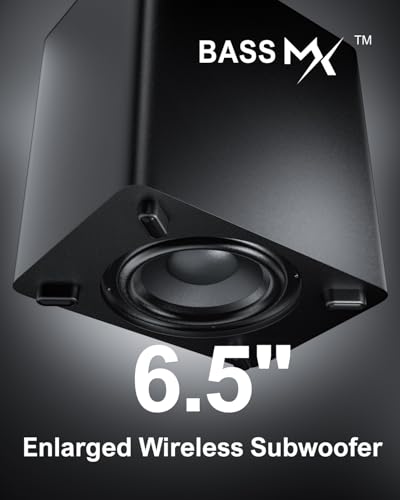
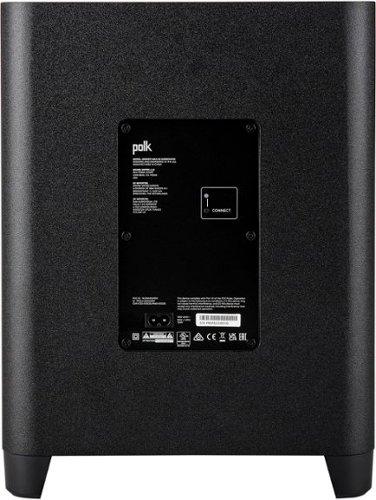
Bass performance differs significantly between their subwoofers. The Polk's 10-inch downward-firing driver extends down to 35Hz—deep enough to reproduce movie theater-level rumble and the lowest notes in music. The Ultimea's 6.5-inch wireless subwoofer, while adequate for most content, won't reach those deepest bass frequencies that make action movies truly impactful. In smaller rooms, this difference matters less, but larger spaces benefit from the Polk's more substantial bass foundation.
Here's where these systems diverge most dramatically. The Polk Audio MagniFi Max AX fully supports Dolby Atmos and DTS:X—object-based audio formats that treat sounds as three-dimensional objects moving through space rather than fixed channels. When a helicopter flies overhead in a movie, Dolby Atmos can position that sound precisely above your head and move it in real-time. The Polk's up-firing drivers physically bounce this audio off your ceiling to create convincing height effects.
The Ultimea Poseidon D70 lacks any Dolby Atmos support, instead using proprietary SurroundX technology for spatial enhancement. While SurroundX can make stereo content sound more spacious and provide some directional cues, it cannot decode or properly reproduce Dolby Atmos soundtracks. As more streaming content and Blu-ray discs include Atmos audio—Netflix, Disney+, and Apple TV+ now offer extensive Atmos libraries—this limitation becomes increasingly significant.
This isn't just about future-proofing; it affects current viewing experiences. Many recent movies and TV shows are mixed specifically with overhead effects in mind. Without Atmos support, the Ultimea can't reproduce these soundtracks as directors intended, potentially missing key audio cues or atmospheric effects.
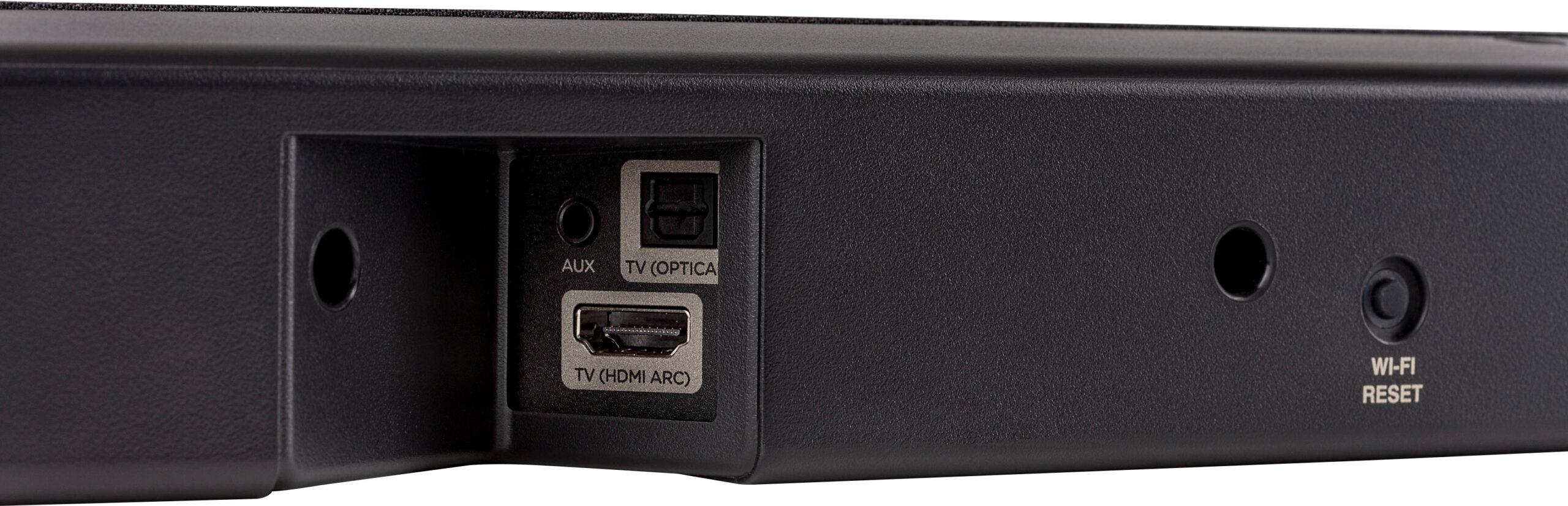
The Polk Audio MagniFi Max AX excels in connectivity with three HDMI inputs supporting 4K HDR at 60Hz, plus HDMI eARC output. This allows the soundbar to function as an HDMI switcher, connecting multiple sources directly without occupying all your TV's inputs. For gamers with multiple consoles or users with cable boxes, streaming devices, and Blu-ray players, this flexibility proves invaluable.
The Ultimea Poseidon D70 provides only single HDMI ARC connectivity, limiting you to one direct connection. Additional sources must connect through your TV, which can complicate setup and potentially limit audio quality depending on your TV's processing capabilities.
For wireless streaming, the Polk offers Wi-Fi connectivity supporting Apple AirPlay 2, Google Chromecast, and Spotify Connect—protocols that typically provide superior audio quality compared to Bluetooth by avoiding compression and connection stability issues. The Ultimea relies primarily on Bluetooth connectivity, though its comprehensive smartphone app provides exceptional control over EQ settings and sound customization.
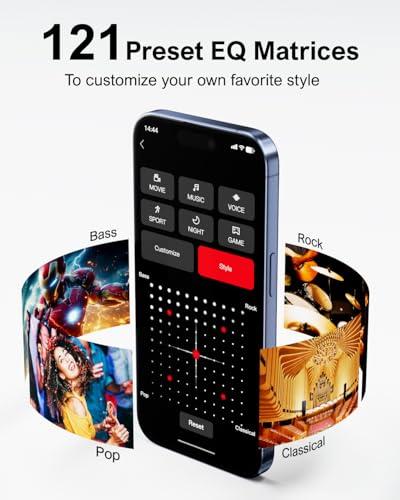
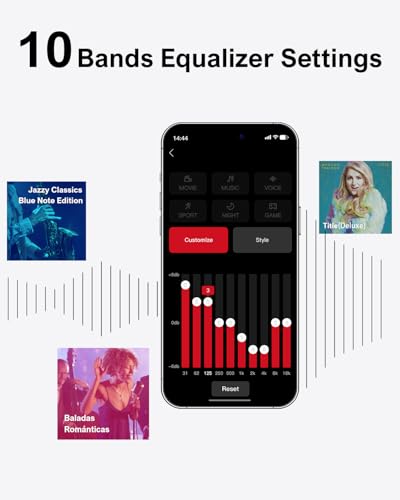
Where the Ultimea Poseidon D70 truly shines is in user customization. Its smartphone app provides a 10-band graphic equalizer and access to 121 preset EQ matrices—an almost overwhelming level of audio tuning typically found only in professional audio equipment. You can adjust bass, midrange, treble, and surround levels independently, save custom profiles for different content types, and fine-tune the system to your room's acoustics.
This level of control appeals to audio enthusiasts who enjoy tweaking their sound, but it can overwhelm users who simply want their system to work well out of the box. The Polk Audio MagniFi Max AX takes a more streamlined approach with fewer but more refined adjustments, focusing on getting the fundamentals right rather than providing endless customization options.
Installing the Ultimea Poseidon D70 requires patience and planning. You'll need to position four separate surround speakers around your room, running included cables (3-meter and 6-meter lengths) from the subwoofer to each speaker location. While all cables are color-coded and the system includes necessary hardware, this setup demands more time and potentially permanent cable routing depending on your room layout.
The Polk Audio MagniFi Max AX offers dramatically simpler installation—just place the soundbar near your TV and position the wireless subwoofer anywhere convenient. The up-firing drivers work best with flat ceilings 8-12 feet high, but require no additional speaker placement or cable management.
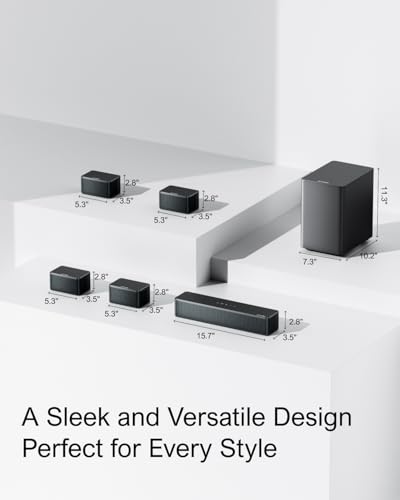
Room size considerations differ between systems. The Ultimea's compact 15.7-inch soundbar suits smaller to medium-sized rooms and TV sizes, while the Polk's 43-inch width is designed for 55-inch or larger televisions in more spacious environments. The discrete surround speakers of the Ultimea can fill larger spaces effectively, but the Polk's more powerful subwoofer and sophisticated processing excel in open floor plans where virtual surround algorithms have more space to work.
Based on extensive research into user experiences and professional reviews, both systems deliver impressive performance within their design parameters, but excel in different scenarios.
The Ultimea Poseidon D70 creates genuine surround immersion that's particularly effective for traditional surround content like action movies, sports broadcasts, and gaming. Users consistently report excellent directional audio cues and the satisfaction of hearing discrete sounds from specific speaker locations. The system's extensive EQ options allow fine-tuning for different content types, and the BassMX bass enhancement technology provides satisfying low-end impact for the subwoofer's size.
However, dialogue clarity—often the most important aspect of TV and movie audio—receives mixed feedback compared to systems with dedicated center channels. While adjustable through the app's EQ controls, it requires manual tuning rather than automatic optimization.
The Polk Audio MagniFi Max AX earns praise for superior dialogue reproduction thanks to its dedicated center channel and VoiceAdjust technology. The Dolby Atmos implementation, while not matching dedicated ceiling speakers, provides convincing height effects that enhance compatible content. Professional reviews consistently highlight the system's refined sound quality and ability to maintain clarity at higher volume levels.
The trade-off is less convincing rear surround effects compared to discrete speakers. While the virtual processing works well for ambient sounds and music, it can't match the precise localization of physical rear speakers for specific sound effects.
At the time of writing, these systems occupy very different value propositions. The Ultimea Poseidon D70 represents exceptional value in the budget category, delivering a complete 7.1 system with physical surround speakers at a price point where most competitors offer only virtual surround. For buyers prioritizing speaker count and extensive customization on a limited budget, it's difficult to find better value.
The Polk Audio MagniFi Max AX costs significantly more—roughly three times the Ultimea's price—but provides premium build quality, modern format support, and sophisticated connectivity. Its value lies in future-proofing and compatibility with current streaming audio standards rather than raw speaker count.
Choose the Ultimea Poseidon D70 if you prioritize genuine surround speaker placement over format compatibility. It's ideal for budget-conscious buyers who want maximum spatial immersion from traditional surround content and don't mind complex setup. The extensive app-based customization appeals to tweakers who enjoy optimizing their audio experience. This system works best in dedicated home theater rooms where you can properly position all speakers without aesthetic concerns.
The Polk Audio MagniFi Max AX better serves users who watch modern streaming content with Dolby Atmos soundtracks and value simplicity over complexity. Its superior connectivity makes it ideal for users with multiple sources, while the height channels provide effects impossible with ear-level speakers. Choose this system if you want premium dialogue clarity, deeper bass extension, and compatibility with current audio standards in a clean, minimal setup.
For most users building a home theater around a large TV in an open living space, the Polk's modern format support and simpler installation make it the more practical long-term choice. However, dedicated home theater enthusiasts on a budget who prioritize discrete surround speakers over height effects will find exceptional value in the Ultimea's comprehensive speaker array.
Both systems succeed within their intended markets, representing the evolution of soundbar technology in different directions—one maximizing physical speakers per dollar, the other embracing advanced audio processing and modern connectivity. Your choice ultimately depends on whether you value discrete 7.1 surround or Dolby Atmos height effects, along with your budget and setup preferences.
| Ultimea Poseidon D70 | Polk Audio MagniFi Max AX |
|---|---|
| Channel Configuration - Determines surround sound approach and speaker placement | |
| 7.1 with 4 physical surround speakers | 3.1.2 with virtualized rear surround |
| Dolby Atmos Support - Essential for modern streaming content | |
| No (uses proprietary SurroundX technology) | Yes (with dedicated up-firing drivers) |
| Total Power Output - Affects volume and dynamic range | |
| 410W peak / 144W RMS | 340W total (more refined amplification) |
| Subwoofer Size - Determines bass depth and impact | |
| 6.5" wireless subwoofer | 10" downward-firing subwoofer |
| Driver Count and Configuration - Affects sound quality and specialization | |
| 8 drivers (all 2.25" uniform size) | 11 drivers (specialized tweeters, woofers, height) |
| HDMI Connectivity - Important for multiple source devices | |
| 1x HDMI ARC only | 3x HDMI inputs + 1x eARC output |
| Wireless Streaming - Quality of music playback from phones/tablets | |
| Bluetooth only | Wi-Fi (AirPlay 2, Chromecast) + Bluetooth 5.0 |
| App Control and EQ - Customization options for fine-tuning | |
| Extensive (10-band EQ, 121 presets) | Limited (basic controls, voice assistant compatible) |
| Setup Complexity - Time and effort required for installation | |
| Complex (4 separate speakers to position and wire) | Simple (soundbar + wireless subwoofer only) |
| Soundbar Dimensions - Compatibility with TV sizes | |
| 15.7" wide (suits smaller to medium TVs) | 43" wide (designed for 55"+ TVs) |
| Frequency Response - Range of bass and treble reproduction | |
| Not specified (limited by 6.5" subwoofer) | 35Hz-20kHz (deeper bass extension) |
| Target Audience - Best suited for which type of buyer | |
| Budget buyers wanting physical surround speakers | Premium buyers prioritizing modern formats and simplicity |
The Ultimea Poseidon D70 provides true 7.1 surround sound with four physical speakers placed around your room, creating genuine directional audio effects. The Polk Audio MagniFi Max AX uses advanced virtual surround processing and focuses on Dolby Atmos height effects with up-firing drivers. For traditional surround sound, the Ultimea offers more precise speaker placement, while the Polk excels at overhead atmospheric effects.
No, only the Polk Audio MagniFi Max AX supports true Dolby Atmos and DTS:X with dedicated up-firing drivers that bounce sound off your ceiling. The Ultimea Poseidon D70 does not support Dolby Atmos but uses proprietary SurroundX technology for spatial audio enhancement. If you watch modern streaming content with Atmos soundtracks, the Polk is the clear choice.
The Polk Audio MagniFi Max AX is significantly easier to set up, requiring only placement of the main soundbar and wireless subwoofer. The Ultimea Poseidon D70 requires positioning and wiring four separate surround speakers around your room, which takes more time and planning but provides genuine multi-speaker surround sound.
The Polk Audio MagniFi Max AX features a larger 10-inch subwoofer that extends down to 35Hz for deeper, more impactful bass. The Ultimea Poseidon D70 uses a smaller 6.5-inch wireless subwoofer that provides adequate bass for most content but won't reach the deepest frequencies. For action movies and music with heavy bass, the Polk delivers superior low-end performance.
The Ultimea Poseidon D70 offers exceptional value by providing a complete 7.1 system with physical surround speakers at a budget-friendly price point. The Polk Audio MagniFi Max AX costs significantly more but provides premium build quality, modern format support, and superior connectivity. The Ultimea maximizes speaker count per dollar, while the Polk offers long-term compatibility with current audio standards.
The Polk Audio MagniFi Max AX includes three HDMI inputs plus one HDMI eARC output, allowing it to function as an HDMI switcher for multiple sources. The Ultimea Poseidon D70 has only one HDMI ARC connection, requiring additional sources to connect through your TV. For users with gaming consoles, cable boxes, and streaming devices, the Polk provides much better connectivity options.
The Polk Audio MagniFi Max AX typically provides superior dialogue clarity thanks to its dedicated center channel with specialized drivers and VoiceAdjust technology. The Ultimea Poseidon D70 can achieve good dialogue reproduction through its extensive app-based EQ controls, but requires manual tuning rather than automatic optimization. For movies and TV shows, the Polk delivers clearer speech out of the box.
Yes, both systems offer smartphone app control, but with different focuses. The Ultimea Poseidon D70 provides extensive customization with a 10-band equalizer and 121 preset EQ matrices for detailed audio tuning. The Polk Audio MagniFi Max AX offers more basic app controls but focuses on voice assistant compatibility and streaming integration. The Ultimea appeals more to users who enjoy tweaking their audio settings.
The Ultimea Poseidon D70 features a compact 15.7-inch soundbar that works well with smaller to medium-sized TVs and rooms. The Polk Audio MagniFi Max AX measures 43 inches wide and is specifically designed for 55-inch or larger televisions in more spacious environments. Choose the Ultimea for smaller setups and the Polk for larger home theater configurations.
The Polk Audio MagniFi Max AX offers superior wireless streaming with Wi-Fi connectivity supporting Apple AirPlay 2, Google Chromecast, and Spotify Connect, plus Bluetooth 5.0. The Ultimea Poseidon D70 primarily relies on Bluetooth connectivity for wireless streaming. The Polk provides better audio quality for music streaming due to its advanced wireless protocols.
The Ultimea Poseidon D70 delivers 410W peak power (144W RMS) distributed across eight drivers and includes BassMX bass enhancement technology. The Polk Audio MagniFi Max AX produces 340W total power with more sophisticated amplification and driver specialization. While the Ultimea claims higher peak power, the Polk typically provides more refined and consistent performance.
For gaming and traditional movie content, the Ultimea Poseidon D70 excels with its physical surround speakers providing precise directional audio cues. For modern movies with Dolby Atmos soundtracks, the Polk Audio MagniFi Max AX is superior due to its height channels and format compatibility. Gamers who prioritize competitive advantages from directional audio should choose the Ultimea, while those watching current streaming content should select the Polk.
We've done our best to create useful and informative comparisons to help you decide what product to buy. Our research uses advanced automated methods to create this comparison and perfection is not possible - please contact us for corrections or questions. These are the sites we've researched in the creation of this article: ultimea.com - provantage.com - ultimea.com - youtube.com - youtube.com - bestbuy.com - the-gadgeteer.com - shopmyexchange.com - youtube.com - youtube.com - youtube.com - ultimea.com - manuals.plus - device.report - images.thdstatic.com - shopmyexchange.com - staples.com - ultimea.de - youtube.com - avsforum.com - rtings.com - rtings.com - bestbuy.com - walts.com - hometechnologyreview.com - polkaudio.com - pcrichard.com

Privacy Policy
Terms and Conditions - Affiliate Policy
Home Security
© Copyright 2008-2026.
11816 Inwood Rd #1211, Dallas, TX 75244