








If you've been suffering through your TV's built-in speakers, you already know the frustration of muffled dialogue and wimpy explosions that barely register above a whisper. Soundbars have become the go-to solution for this problem, but the market has split into two distinct camps: affordable systems that give you multiple physical speakers, and premium brands that use sophisticated processing to create virtual surround sound from a single bar.
The Ultimea Poseidon D70 and Klipsch Flexus Core 100 represent these two philosophies perfectly. Released in 2023 and 2024 respectively, both arrived during a period when soundbar technology was rapidly advancing, with manufacturers pushing harder into both directions – more physical speakers for true surround, and better virtual processing for convenience.
Before diving into specifics, it's worth understanding what separates a good soundbar from a great one. The most important factor is channel configuration – this refers to how many separate audio channels the system can produce. A 2.1 system has left and right channels plus a subwoofer (the ".1" always refers to bass). A 7.1 system theoretically has seven full-range channels plus bass: front left, center, front right, side left, side right, rear left, and rear right.
The catch is that many soundbars claim surround sound capabilities without actually having speakers in those positions. They use something called psychoacoustic processing – essentially tricking your brain into thinking sound is coming from directions it isn't. This can work surprisingly well, but physics still matters. A speaker behind you will always sound more convincingly "behind you" than one in front trying to bounce sound off your ceiling.
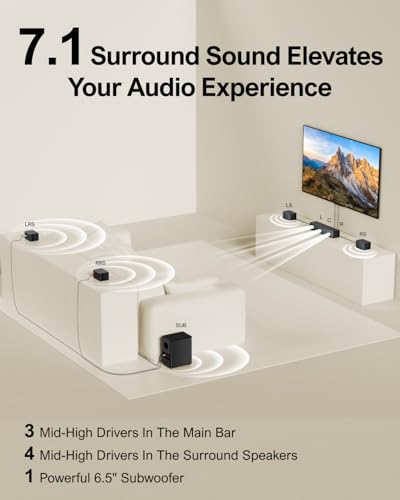
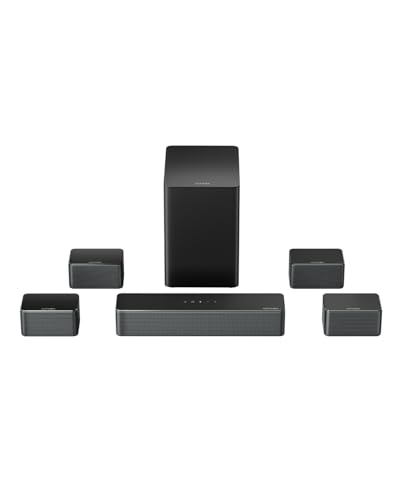
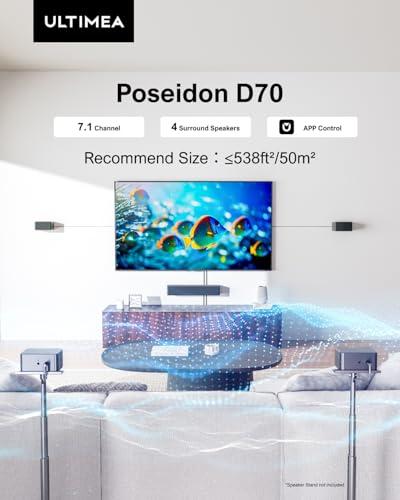
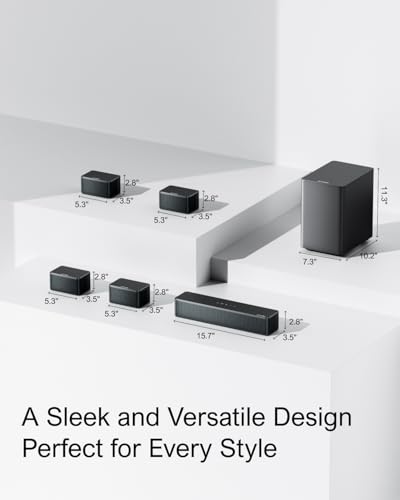
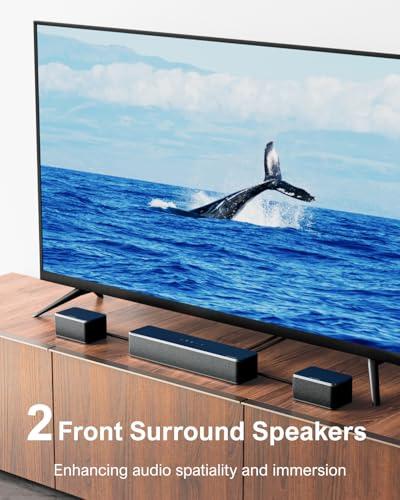
The Poseidon D70 takes the straightforward approach: if you want 7.1 surround sound, it gives you actual speakers in 7.1 positions. The system includes a main soundbar with three drivers, four separate surround speakers that you place around your room, and a wireless subwoofer. At the time of writing, this complete setup costs significantly less than many premium single soundbars, making it one of the most aggressive value propositions in home audio.
What makes this particularly impressive is the power output. With 410 watts of peak power distributed across all these speakers, the Ultimea can reach sound pressure levels of 103 dB. To put that in perspective, that's about as loud as a chainsaw – probably louder than you'll ever need in your living room, but having that headroom means the system won't strain or distort when you crank up an action movie.
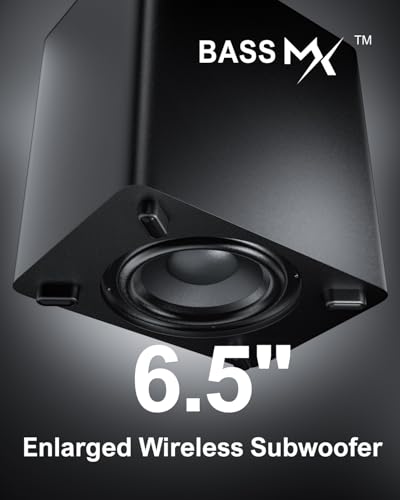
The 6.5-inch wireless subwoofer deserves special attention. Unlike many budget systems that skimp on bass, Ultimea equipped this sub with their BassMX technology, which is essentially a bass enhancement algorithm that can be adjusted through their app. The subwoofer connects wirelessly to the main soundbar, so you can place it anywhere in your room for optimal bass response – typically in a corner where room boundaries amplify low frequencies.
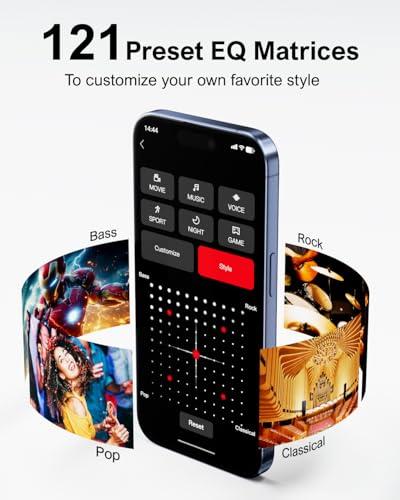
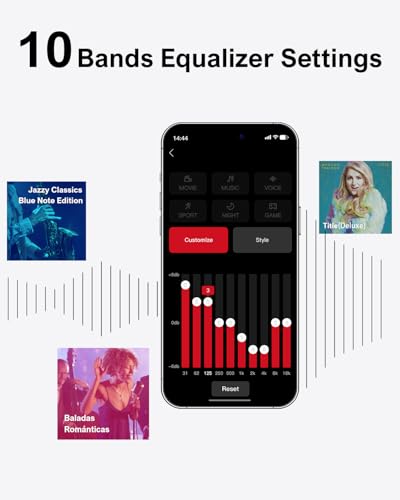
One of the Poseidon D70's most appealing features is its customization options. The system includes 121 preset EQ matrices, which sounds like marketing overkill until you realize these cover everything from specific music genres to movie types. More importantly, there's a 10-band graphic equalizer accessible through their smartphone app, letting you fine-tune frequencies from 60 Hz up to 16 kHz. This level of control is unusual in any soundbar, let alone one at this price point.
The surround speakers themselves use 2.25-inch drivers and connect to the system via traditional speaker wire. While this means running cables around your room (Ultimea includes both 3-meter and 6-meter cables), it also means no wireless connectivity issues or battery concerns. Each surround speaker is compact enough for wall mounting, and the included hardware makes installation straightforward.
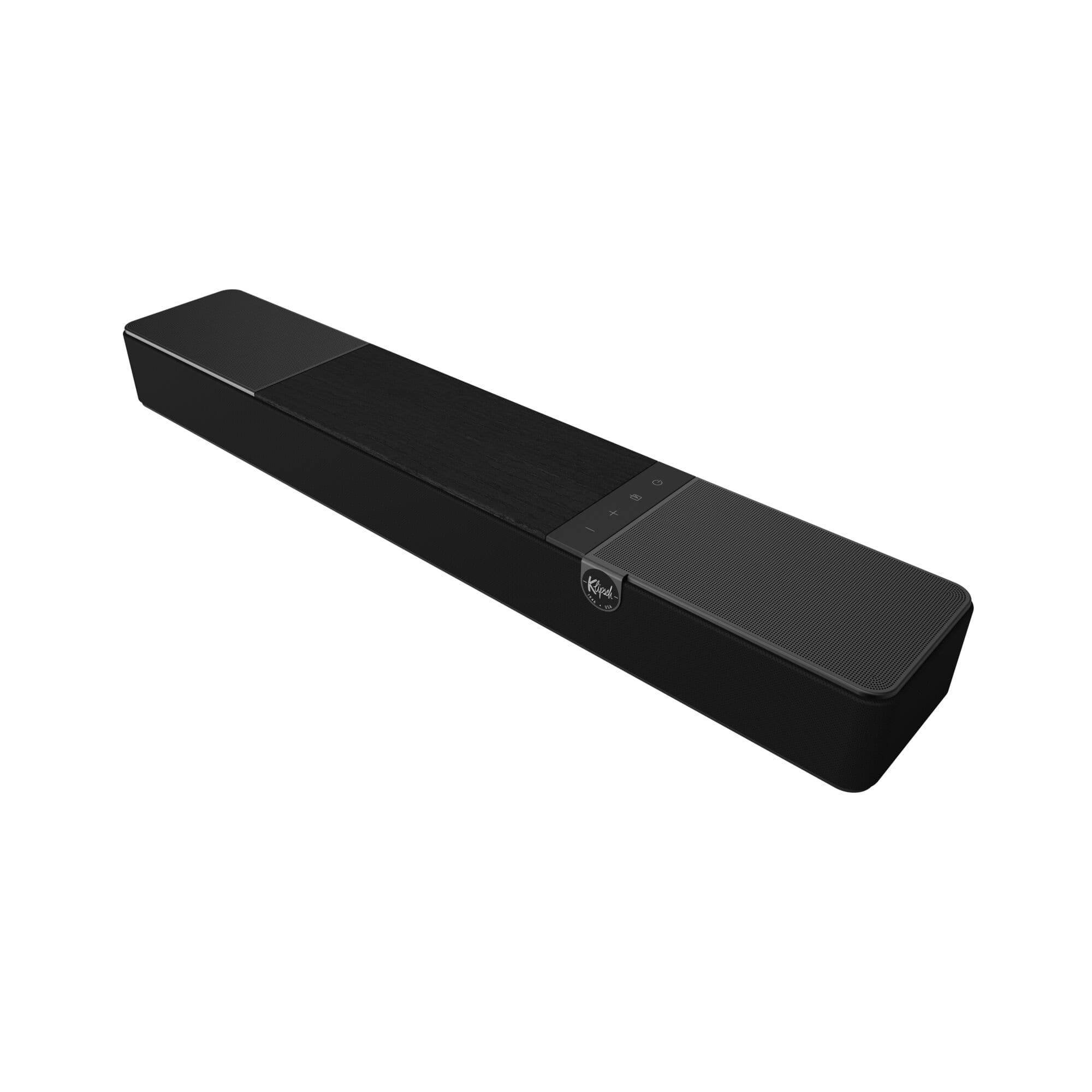
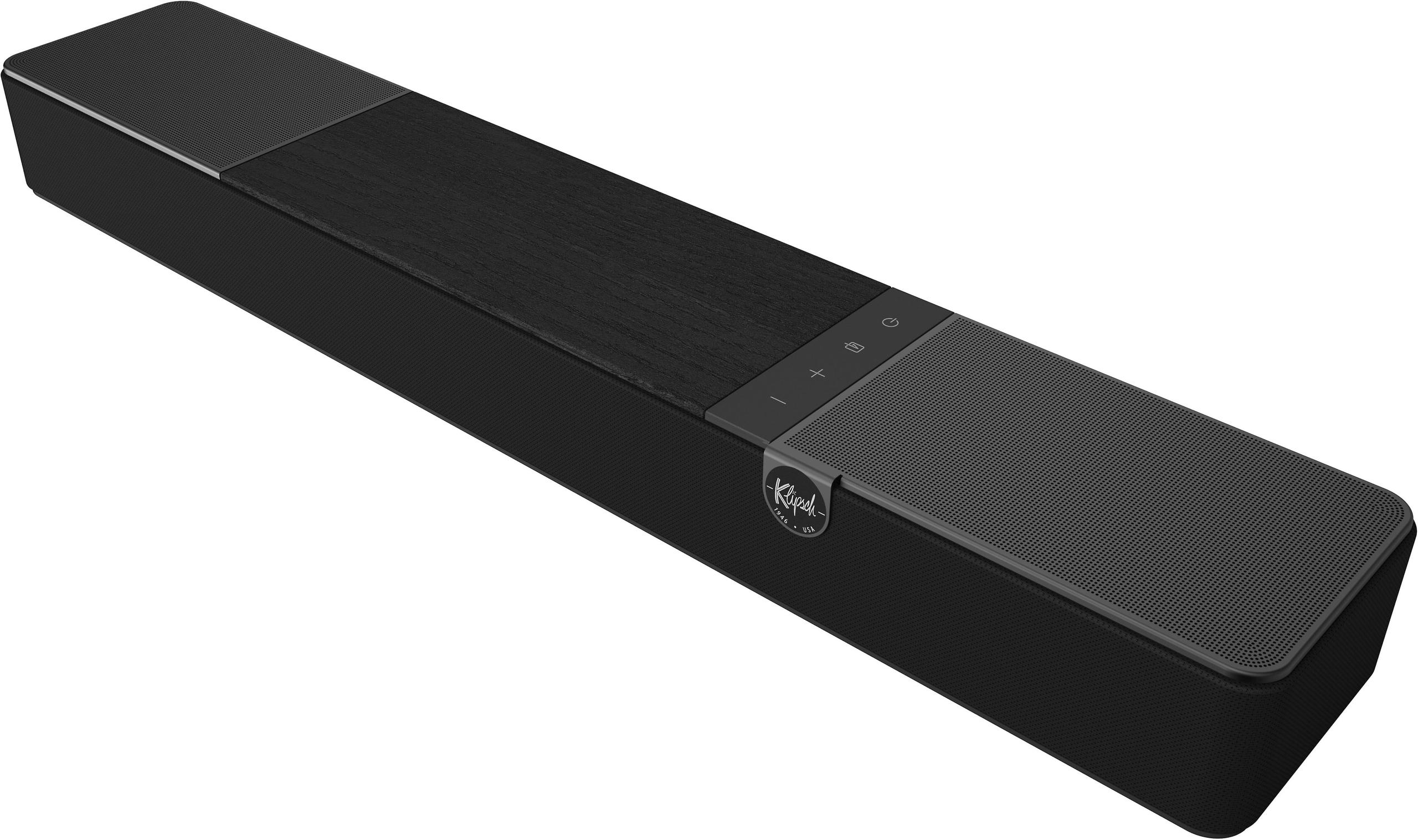
The Flexus Core 100 represents everything Klipsch has learned about acoustic engineering since the company's founding in 1946. Released in 2024, it incorporates Dolby Atmos processing – a technology that creates height effects by bouncing sound off your ceiling to simulate speakers above you.
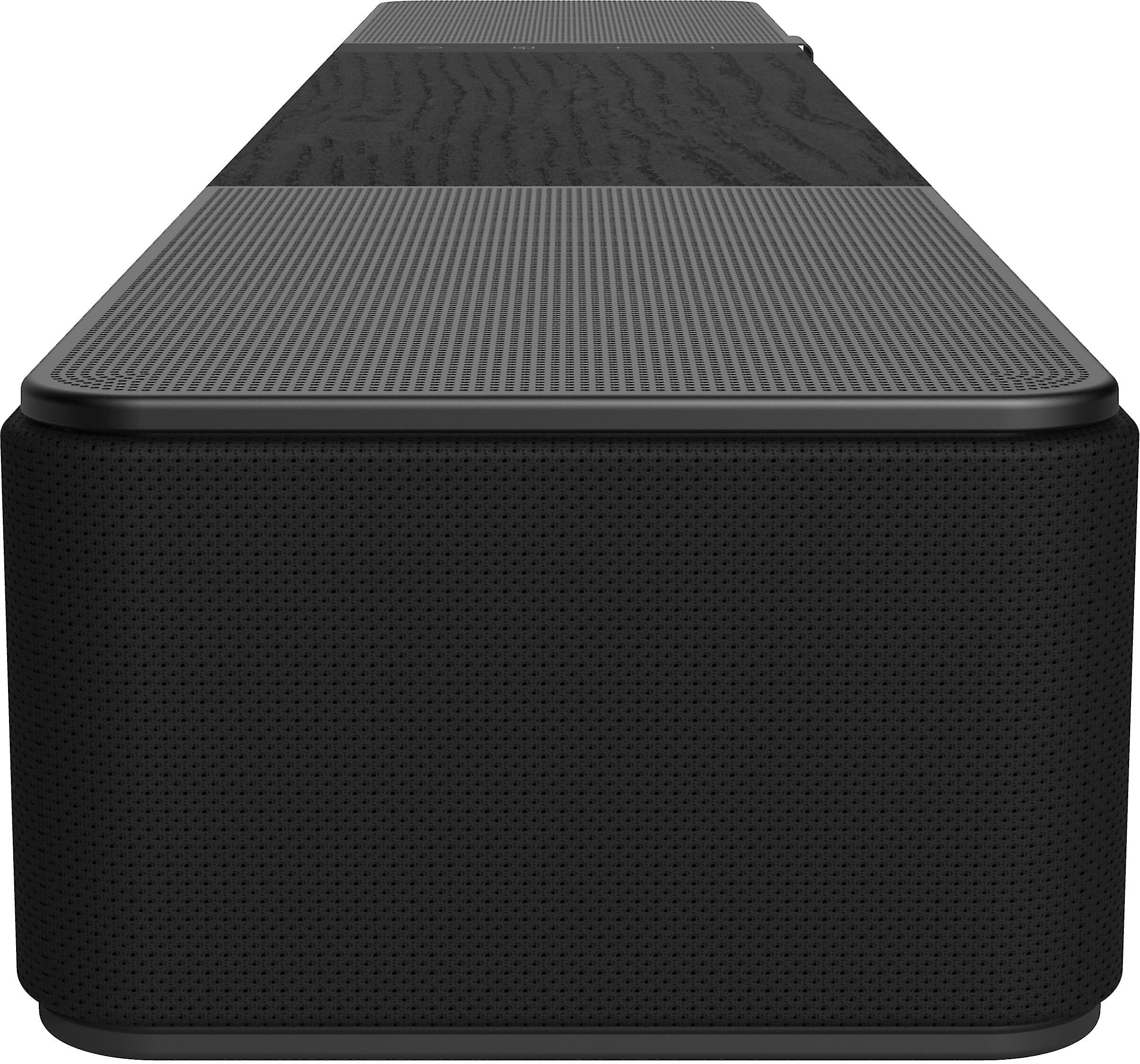
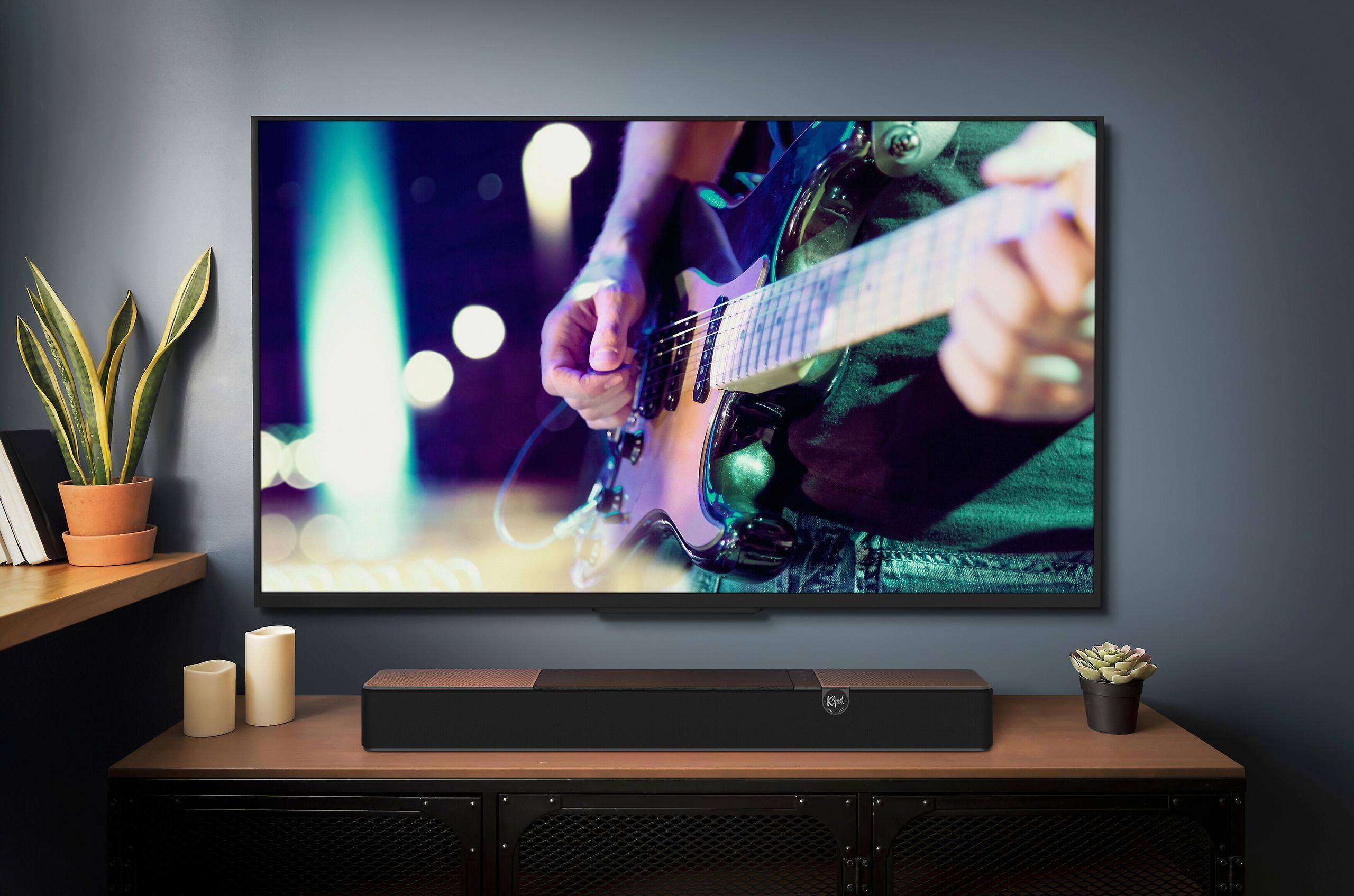
The key difference here is approach. Instead of multiple physical speakers, the Klipsch uses two precision-tuned 2.25-inch aluminum cone drivers for main channels and two 4-inch paper cone woofers for bass, all housed within a single 28-inch soundbar. The aluminum drivers are significant because aluminum is both lightweight and rigid, allowing for accurate reproduction across a wide frequency range without the distortion that cheaper materials introduce.
Klipsch's horn-loaded technology, a signature element in their speakers for decades, helps create their characteristic sound signature. Horn loading essentially amplifies sound by funneling it through a shaped acoustic pathway, increasing efficiency and creating a more dynamic presentation. While the Flexus Core 100 doesn't have visible horns like traditional Klipsch speakers, the same acoustic principles are applied internally.
The Klipsch generates 100 watts RMS, reaching maximum sound levels of 96.4 dB. While this is considerably less powerful than the Ultimea, it's important to understand that the comparison isn't entirely fair – the Klipsch is driving four drivers while the Ultimea is distributing power across eight. Per driver, the power density is actually quite similar.
Where the Klipsch particularly excels is in its connectivity and format support. The HDMI eARC connection supports enhanced Audio Return Channel, which allows for higher-quality audio formats and better TV integration. However, there's one significant limitation: the system doesn't support DTS formats at all – only Dolby variants. This means if you have Blu-rays with DTS-HD Master Audio tracks, they'll be downgraded to standard Dolby Digital, potentially losing audio quality.
Based on our research into user experiences and expert reviews, the bass performance reveals interesting contrasts. The Ultimea Poseidon D70's 6.5-inch subwoofer consistently impresses users with its depth and impact. The BassMX technology allows for significant bass boost when needed, and the wireless design means optimal placement for room acoustics.
The Klipsch Flexus Core 100 takes a different approach with dual 4-inch woofers integrated into the soundbar. While Klipsch claims "best-in-class bass without an external subwoofer," the reality is more nuanced. The bass is tight, controlled, and well-integrated with the main drivers, but it simply can't move as much air as the Ultimea's larger dedicated subwoofer. For most content, the Klipsch provides sufficient low-end, but action movies and bass-heavy music will reveal the limitations of integrated woofers.
This is where the fundamental difference in approach becomes most apparent. The Poseidon D70 creates surround effects through actual speaker placement. When a helicopter flies from front to back in a movie, you hear it move through actual speakers positioned around you. This creates convincing directional audio that doesn't depend on room acoustics or seating position.
The Flexus Core 100 relies on psychoacoustic processing and room reflections to create surround effects. In ideal conditions – a rectangular room with reasonable ceiling height and reflective surfaces – this can be surprisingly effective. The Dolby Atmos processing is sophisticated, creating a sense of spaciousness and even some height effects. However, it's sensitive to room conditions and seating position in ways that physical speakers aren't.
Both systems handle dialogue well, but for different reasons. The Ultimea uses a dedicated center channel in its soundbar specifically for dialogue, which is the traditional home theater approach. User reviews consistently praise dialogue clarity even during complex action scenes.
The Klipsch benefits from decades of acoustic engineering experience. The aluminum cone drivers and horn-loaded principles create exceptionally clear midrange reproduction. The system includes a dedicated Dialog Mode that enhances vocal frequencies, and the precision of the drivers means dialogue rarely gets lost in the mix.
The power difference between these systems becomes most apparent at higher volumes. The Ultimea's 410-watt peak output and 7 dB higher maximum SPL means it can fill larger rooms and handle demanding content without strain. Multiple drivers also means better power distribution – no single driver is being pushed to its limits.
The Klipsch approach focuses on efficiency rather than raw power. The 100 watts RMS is well-managed across four carefully designed drivers, and the horn-loaded technology increases efficiency. For most rooms and listening levels, this is entirely adequate, but the system will reach its limits sooner than the Ultimea in larger spaces or at party volumes.
Both systems embrace smartphone control, but with different philosophies. The Ultimea app is comprehensive almost to a fault, offering those 121 EQ presets plus the 10-band equalizer. The AI deep learning optimization – which Ultimea claims analyzes billions of real-world sounds – adjusts the audio in real-time based on content type. Whether this actually works as advertised is debatable, but users report noticeable improvements in audio quality with it enabled.
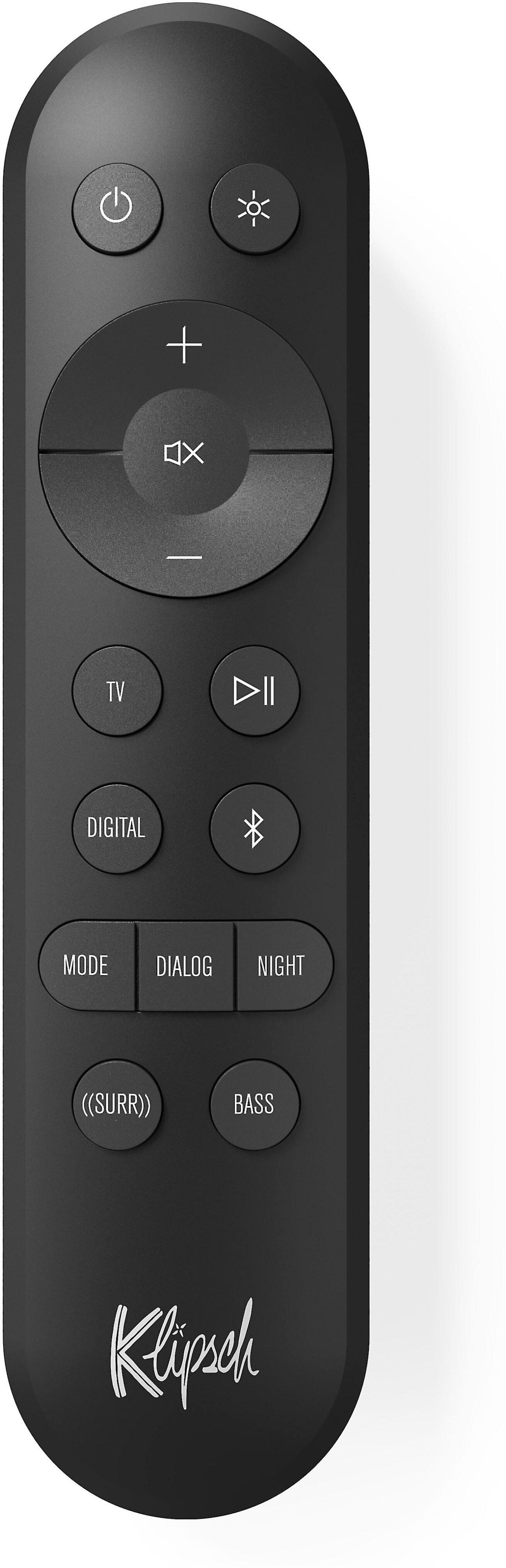
The Klipsch Connect Plus app is more focused. It offers EQ adjustments and sound mode selection, but emphasizes simplicity over extensive customization. The trade-off is that some adjustments can only be made through the app – the included remote is more basic than Ultimea's full-featured controller.
Here's where the systems diverge significantly. The Poseidon D70 is what it is – a complete system that can't be upgraded piecemeal. You get everything at once, which is great for immediate satisfaction but limits future growth.
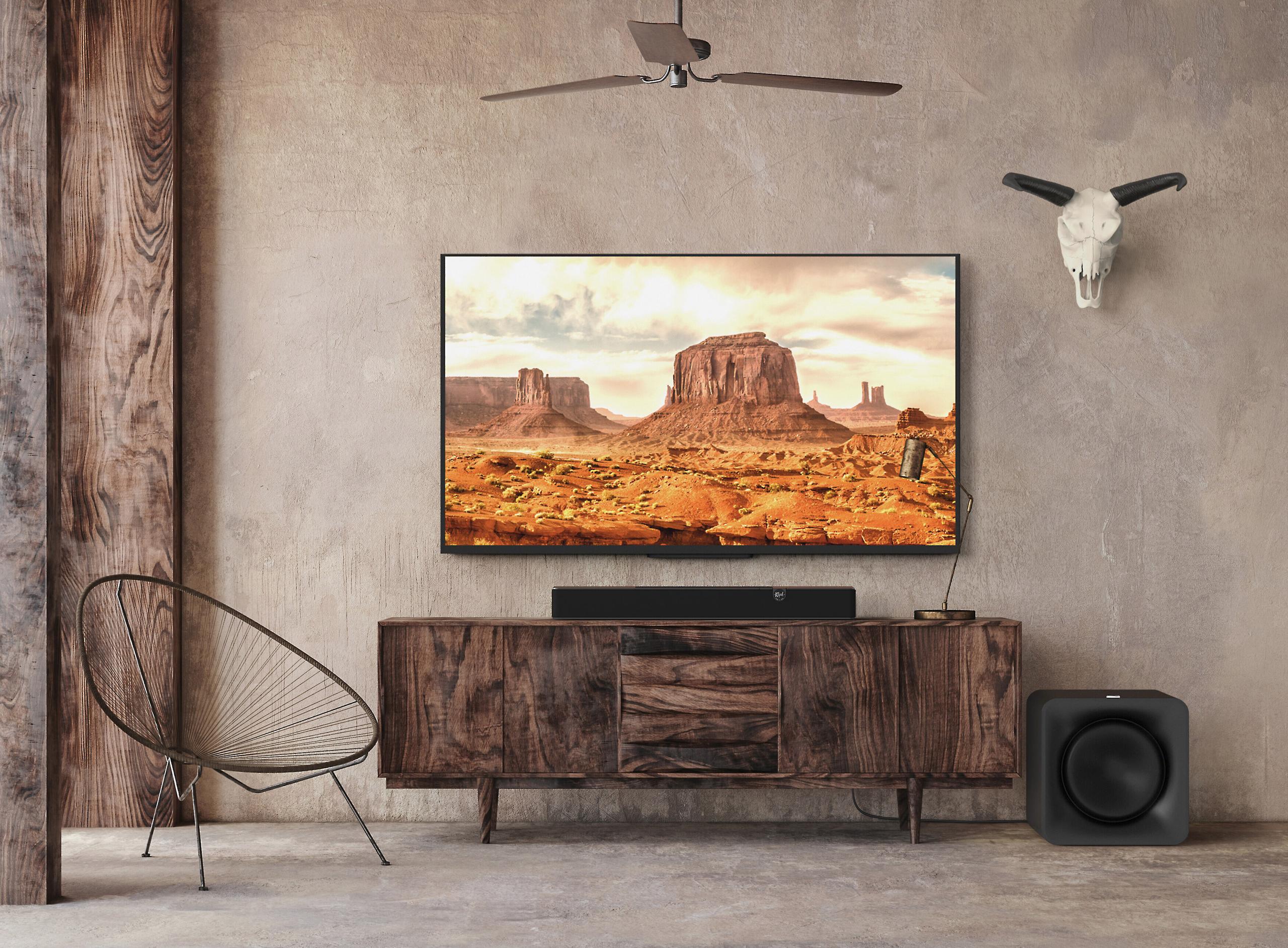
The Flexus Core 100 is designed as a foundation. Klipsch's Transport technology allows wireless connection to additional components: the Flexus SUB 100 subwoofer and Flexus SURR 100 speakers. This modular approach means you can start with the soundbar and add components as budget allows, eventually building a true surround system. However, at the time of writing, the total cost for a fully expanded Klipsch system would significantly exceed the complete Ultimea package.
The Ultimea system requires more planning. You'll need to run speaker wires to four positions around your room and find placement for the wireless subwoofer. The cables are color-coded and the manual is clear, but this is still a more involved installation. The payoff is authentic surround sound, but you need to be comfortable with wire management and speaker placement.
The Klipsch installation is considerably simpler – mount the soundbar, connect HDMI or optical, and you're done. The slim profile and premium finish integrate well with modern TV setups. This simplicity comes at the cost of true surround effects, but for many users, the convenience factor outweighs this limitation.
After researching user experiences and expert opinions, the choice becomes clearer when you consider your priorities and constraints.
Choose the Ultimea Poseidon D70 if you want authentic surround sound without spending premium prices. It's ideal for dedicated home theater setups where you can accommodate multiple speakers and don't mind the installation complexity. The extensive customization options appeal to enthusiasts who like to tune their systems, and the sheer power output makes it suitable for larger rooms or higher volume levels. At the time of writing, the value proposition is exceptional – you're getting a complete 7.1 system for less than many mid-range soundbars.
The Klipsch Flexus Core 100 makes sense when you prioritize convenience, build quality, and brand reputation. It's perfect for users who want significant audio improvement without the complexity of multiple speakers. The modular design appeals to those who prefer to build their system gradually, and the premium materials and engineering justify the higher initial cost. The Dolby Atmos processing works well in appropriate rooms, making it suitable for users whose space or lifestyle doesn't accommodate multiple speakers.
These soundbars represent two valid but different approaches to home audio improvement. The Ultimea Poseidon D70 delivers authentic multichannel audio at an aggressive price point, making it an outstanding value for those willing to embrace a more complex setup. The Klipsch Flexus Core 100 offers premium engineering and convenience at a higher price, with the flexibility to expand over time.
The choice ultimately depends on your room, lifestyle, and audio priorities. If you want the most immersive possible experience and don't mind the installation complexity, the physical speakers of the Ultimea will consistently outperform virtual processing. If you prioritize simplicity and gradual system building, the Klipsch provides a solid foundation with room to grow.
Both systems represent significant improvements over TV speakers, and either choice will transform your viewing experience. The question isn't which is objectively better – it's which approach better fits your specific needs and preferences.
| Ultimea Poseidon D70 7.1 Channel Soundbar System | Klipsch Flexus Core 100 Soundbar |
|---|---|
| Channel Configuration - Determines if you get true surround sound or virtual effects | |
| True 7.1 channels with 4 physical surround speakers | 2.1 channels with virtual Dolby Atmos processing |
| Total System Power - Affects maximum volume and bass impact | |
| 410W peak / 144W RMS across all components | 100W RMS from single soundbar unit |
| Maximum Volume Output - Critical for larger rooms | |
| 103 dB SPL (significantly louder) | 96.4 dB SPL (7 dB difference = roughly half as loud) |
| Subwoofer Configuration - Determines bass depth and placement flexibility | |
| 6.5" wireless subwoofer with BassMX technology | Dual 4" integrated woofers in soundbar |
| Speaker Setup Complexity - Impacts installation time and room aesthetics | |
| Requires positioning 4 surround speakers with wire runs | Single soundbar installation only |
| Audio Customization - How much you can tune the sound to your preferences | |
| 121 EQ presets + 10-band graphic equalizer via app | Klipsch Connect Plus app with basic EQ and sound modes |
| System Expandability - Whether you can add components later | |
| Complete fixed system, no upgrades possible | Modular design: add Flexus subwoofer and surrounds separately |
| Connectivity Options - Compatibility with different devices | |
| HDMI ARC, Optical, Bluetooth 5.3, USB, AUX | HDMI eARC, Optical, USB-C, Bluetooth |
| Audio Format Support - Which movie/music formats play at full quality | |
| Universal compatibility, focuses on physical surround | Dolby formats only (no DTS support) |
| Build Quality and Warranty - Long-term reliability and support | |
| Solid construction for price point, basic warranty | Premium materials, 2-year warranty, Klipsch reputation |
| Complete System Value - What you get for your initial investment | |
| Everything included: soundbar, 4 surrounds, subwoofer, cables | Base soundbar only, additional components sold separately |
The Ultimea Poseidon D70 delivers true 7.1 surround sound with four physical speakers positioned around your room, creating authentic directional audio effects. The Klipsch Flexus Core 100 uses virtual Dolby Atmos processing from a single soundbar to simulate surround effects. For genuine surround sound experience, the Ultimea Poseidon D70 provides superior spatial audio, while the Klipsch offers convenience with respectable virtual surround capabilities.
The Ultimea Poseidon D70 outputs significantly more power at 410W peak with a maximum volume of 103 dB, making it capable of filling large rooms without distortion. The Klipsch Flexus Core 100 provides 100W RMS with 96.4 dB maximum output, which is adequate for most rooms but roughly half as loud as the Ultimea. Choose the Ultimea for maximum volume capability.
The Klipsch Flexus Core 100 wins for simplicity with single-bar installation requiring only HDMI or optical connection. The Ultimea Poseidon D70 requires positioning four surround speakers around your room and running the included cables, making installation more complex but delivering authentic surround sound. If convenience is your priority, the Klipsch is much easier to install.
The Ultimea Poseidon D70 features a dedicated 6.5-inch wireless subwoofer with BassMX technology, delivering deeper and more powerful bass response. The Klipsch Flexus Core 100 uses dual 4-inch integrated woofers within the soundbar, providing controlled bass but less impact than a dedicated subwoofer. For movie explosions and music with deep bass, the Ultimea significantly outperforms the integrated solution.
The Klipsch Flexus Core 100 is designed for expansion using Klipsch Transport technology, allowing you to add Flexus subwoofers and surround speakers later. The Ultimea Poseidon D70 is a complete fixed system that cannot be upgraded with additional components. Choose the Klipsch if you want to build your system gradually over time.
The Ultimea Poseidon D70 provides exceptional value by including a complete 7.1 system with soundbar, four surround speakers, wireless subwoofer, and all cables at a budget-friendly cost. The Klipsch Flexus Core 100 costs more for just the base soundbar unit, though it offers premium build quality and brand reputation. For immediate complete system value, the Ultimea is hard to beat.
Both soundbars offer comprehensive connectivity, with the Ultimea Poseidon D70 providing HDMI ARC, optical, Bluetooth 5.3, USB, and AUX inputs. The Klipsch Flexus Core 100 features HDMI eARC, optical, USB-C, and Bluetooth connections with superior HDMI capabilities. However, the Klipsch notably lacks DTS format support, only supporting Dolby audio formats.
The Ultimea Poseidon D70 excels in large rooms due to its higher power output (410W peak), dedicated subwoofer, and physical surround speakers that maintain effectiveness regardless of room size. The Klipsch Flexus Core 100 works well in medium-sized rooms but may struggle to fill larger spaces with sufficient volume and bass impact. Choose the Ultimea for rooms over 300 square feet.
The Ultimea Poseidon D70 offers extensive customization through its mobile app with 121 EQ presets, 10-band graphic equalizer, and comprehensive audio tuning options. The Klipsch Flexus Core 100 uses the Klipsch Connect Plus app for basic EQ adjustments and sound mode selection. For audio enthusiasts who enjoy fine-tuning their sound, the Ultimea provides significantly more control options.
The Klipsch Flexus Core 100 offers premium build quality with high-grade materials, professional finish, and established brand reputation backed by a 2-year warranty. The Ultimea Poseidon D70 provides solid construction appropriate for its cost point with basic warranty coverage. While both are reliable, the Klipsch represents higher-end manufacturing standards and long-term durability.
Both soundbars excel at gaming and movies but in different ways. The Ultimea Poseidon D70 provides superior directional audio cues for gaming with true surround speakers and powerful bass for movie explosions. The Klipsch Flexus Core 100 offers refined audio quality with Dolby Atmos processing ideal for cinematic experiences. Choose the Ultimea for immersive gaming or the Klipsch for premium movie watching.
Choose the Ultimea Poseidon D70 if you want maximum immersion, don't mind speaker placement complexity, and prefer getting a complete system immediately at budget-friendly cost. Select the Klipsch Flexus Core 100 if you prioritize premium brand quality, prefer simple installation, and want the flexibility to expand your system over time. Both significantly improve over TV speakers, but the Ultimea offers better immediate value while the Klipsch provides premium quality and future expandability.
We've done our best to create useful and informative comparisons to help you decide what product to buy. Our research uses advanced automated methods to create this comparison and perfection is not possible - please contact us for corrections or questions. These are the sites we've researched in the creation of this article: ultimea.com - provantage.com - ultimea.com - youtube.com - youtube.com - bestbuy.com - the-gadgeteer.com - shopmyexchange.com - youtube.com - youtube.com - youtube.com - ultimea.com - manuals.plus - device.report - images.thdstatic.com - shopmyexchange.com - staples.com - ultimea.de - cnet.com - klipsch.com - klipsch.com - bestbuy.com - sweetwater.com - assets.onkyo-av.com - youtube.com - worldwidestereo.com - avnirvana.com - target.com

Privacy Policy
Terms and Conditions - Affiliate Policy
Home Security
© Copyright 2008-2026.
11816 Inwood Rd #1211, Dallas, TX 75244