




Shopping for a home theater soundbar in 2024 means navigating two fundamentally different approaches to surround sound. Do you go wide with more traditional speakers placed around your room, or do you go up with modern height channels that bounce sound off your ceiling? This exact dilemma plays out perfectly when comparing two ULTIMEA systems: the premium Skywave X40 with its 5.1.2 Dolby Atmos setup versus the budget-friendly Poseidon D70 and its expansive 7.1 channel configuration.
Both products launched in 2023 during a period when soundbar technology was rapidly advancing. The Skywave X40 represents ULTIMEA's push into premium wireless audio with cutting-edge amplification, while the Poseidon D70 focuses on delivering maximum channel count at an accessible price point. Understanding which approach suits your specific situation—and budget—requires diving deep into what each system actually does differently.
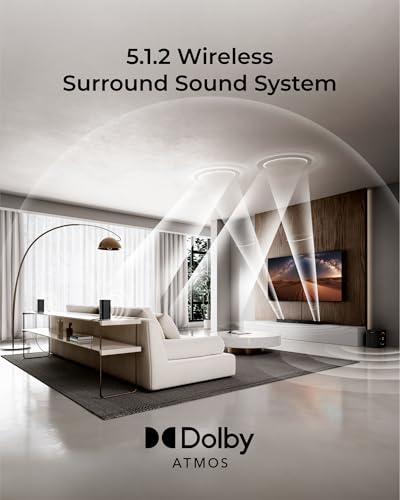
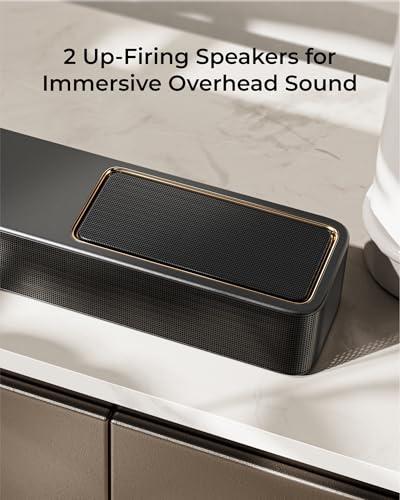
The soundbar market has evolved dramatically from simple TV audio enhancement to legitimate home theater replacement systems. When you see specifications like "5.1.2" or "7.1," these numbers tell a story about how sound travels around your room. The first number indicates main channels (left, center, right, plus additional side/rear speakers), the second represents subwoofers for bass, and that final ".2" on the Skywave X40 means dedicated height channels—speakers that fire sound upward to create overhead effects.
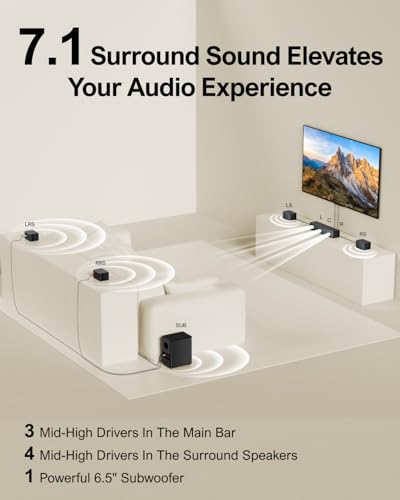
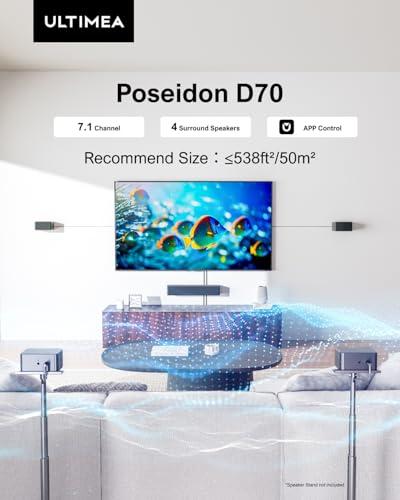
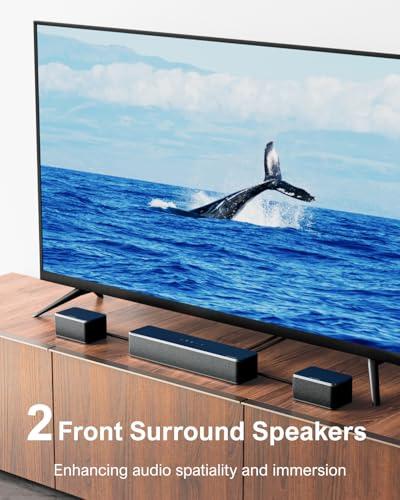
Traditional 7.1 systems like the Poseidon D70 focus on horizontal surround sound. You get more speakers positioned around your seating area, creating better left-to-right and front-to-back directionality. This approach works exceptionally well for music and classic movie content, where effects move across the soundstage rather than over your head.
Dolby Atmos systems like the Skywave X40 add that vertical dimension. Instead of just hearing a helicopter move from left to right, you actually perceive it flying overhead. Rain sounds like it's falling from above rather than just coming from speakers around your room. This three-dimensional approach transforms how immersive modern movies can feel, but it requires content specifically mixed for Atmos to show its full potential.
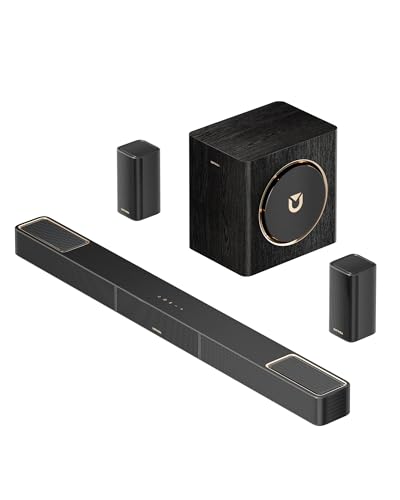
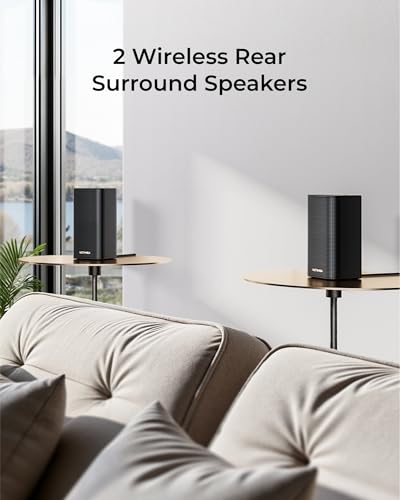
The most practical difference between these systems becomes apparent the moment you start planning your setup. The Skywave X40 employs what ULTIMEA calls CineMesh True Wireless technology, which means every speaker connects wirelessly to the main soundbar. You plug in the subwoofer and two rear surround speakers wherever convenient outlets exist, and they automatically pair without any cable management headaches.
This wireless approach uses dual 5GHz transmission channels—the same frequency band as high-end WiFi routers—to maintain stable connections with less than 20 milliseconds of delay. That latency specification matters because anything over 40ms becomes noticeable as lip-sync issues during dialogue scenes. The Skywave X40 keeps audio perfectly synchronized even when speakers are placed across large rooms.
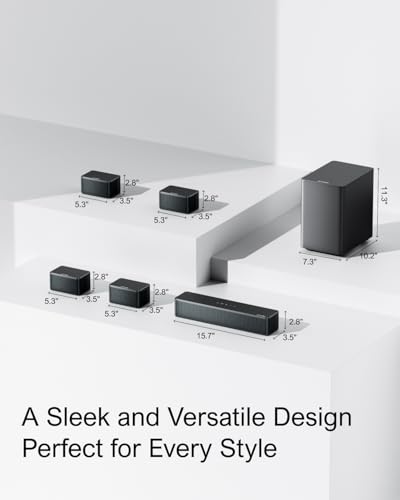
The Poseidon D70 takes the traditional wired approach with four discrete surround speakers that physically connect to the subwoofer via cables. While this creates potential installation challenges—running wires across your room, around doorways, and possibly under carpets—it also means rock-solid connections without any wireless interference concerns.
From a practical standpoint, the wireless advantage of the Skywave X40 cannot be overstated. Rearranging furniture becomes simple since speakers aren't tethered by cables. Renters particularly benefit since you avoid permanent cable installations. However, the Poseidon D70's wired approach does provide one subtle advantage: you never need to worry about wireless dropouts during critical movie scenes, regardless of how many devices are competing for bandwidth in your home.
When soundbar manufacturers throw around power numbers, they're often marketing hyperbole. However, the specifications here tell a meaningful story about real-world performance differences. The Skywave X40 delivers 530 watts of peak power compared to the Poseidon D70's 410 watts RMS (continuous) power rating.
More importantly, the Skywave X40 achieves a maximum sound pressure level exceeding 98 decibels, while the Poseidon D70 reaches 87dB. This 11-decibel difference represents roughly three times the perceived loudness—a substantial gap that becomes crucial in larger rooms or for listeners who enjoy high-volume movie watching.
The power advantage of the Skywave X40 stems partly from its advanced GaN (Gallium Nitride) amplifier technology. Traditional soundbar amplifiers use silicon-based components that generate significant heat and require conservative power limits to avoid distortion. GaN amplifiers operate at 98% efficiency compared to silicon's typical 85-90%, meaning more electrical energy converts to sound rather than waste heat. This efficiency allows the Skywave X40 to deliver clean, undistorted audio even at peak volumes.
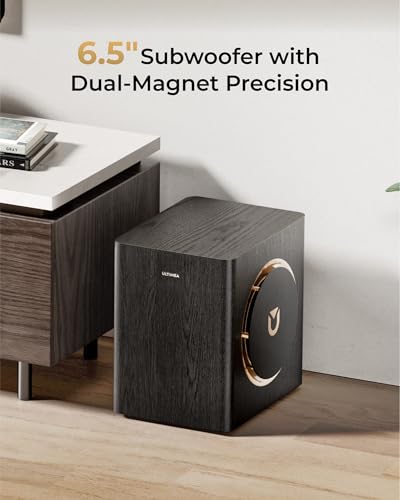
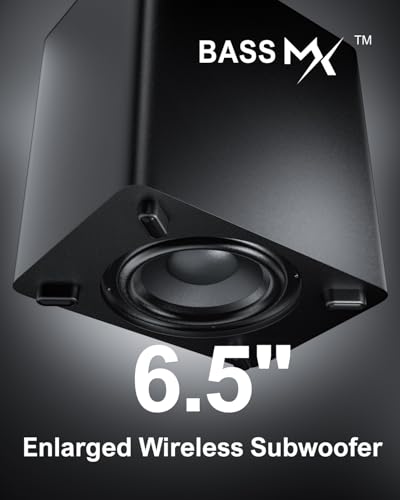
For bass response, both systems use 6.5-inch wireless subwoofers, but the Skywave X40 extends down to 35Hz with its Gravus Ultra-Linear Bass Technology. This frequency range covers the fundamental notes of most instruments and movie sound effects. The Poseidon D70 reaches the same 35Hz low-end but tops out at 18kHz in the treble range compared to the Skywave X40's 20kHz extension. While most adults can't hear above 16-17kHz anyway, that extra headroom often contributes to overall clarity and spaciousness.
Modern soundbars aren't just collections of speakers—they're sophisticated audio computers. The Skywave X40 incorporates ULTIMEA's NEURACORE processing engine, featuring a triple-core DSP (Digital Signal Processor) paired with a dual-core MCU (Microcontroller Unit). This combination provides 2,000 MIPS (Million Instructions Per Second) of computational power dedicated to audio processing.
What does this technical complexity actually accomplish? The NEURACORE system analyzes incoming audio signals in real-time, applying spatial positioning algorithms, dynamic range optimization, and crossover management between different speakers. It can handle 24-bit audio at 192kHz sampling rates—far beyond CD quality—while maintaining distortion levels below 1%. For comparison, most budget soundbars struggle to keep distortion under 3-5% at moderate volumes.
The Poseidon D70 uses AI deep learning for sound optimization, which sounds impressive but lacks the specific technical implementation details. Based on our research of similar systems, this likely involves pre-trained algorithms that adjust EQ and dynamics based on content type rather than real-time processing.
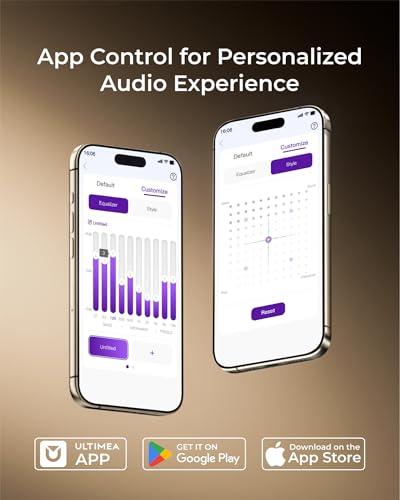
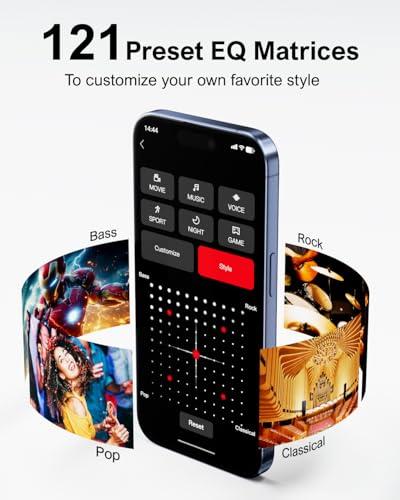
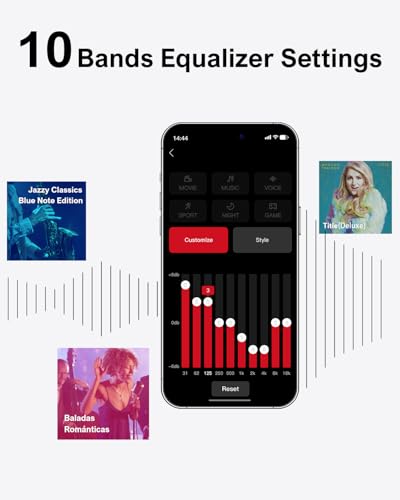
Both systems include 121 preset EQ matrices and 10-band graphic equalizers accessible through mobile apps. These customization options matter more than you might expect. Room acoustics vary dramatically—carpeted rooms absorb high frequencies while hardwood floors create reflections that muddy dialogue. Having granular EQ control lets you compensate for your specific environment rather than accepting whatever the manufacturer thought sounded good in their test lab.
The wireless advantage of the Skywave X40 extends beyond convenience to actual acoustic performance. When you can place rear speakers wherever they sound best rather than wherever cables reach, you optimize the listening experience. Surround channels work most effectively when positioned slightly behind and to the sides of your seating position, creating an enveloping soundstage. With wired systems like the Poseidon D70, speaker placement often becomes a compromise between ideal acoustics and practical cable routing.
However, the Poseidon D70's four discrete surround speakers do provide more precise directional effects than the Skywave X40's two wireless surrounds. When a car races around a track in an action movie, the Poseidon D70 can literally hand off that sound from speaker to speaker in a complete circle around your room. The Skywave X40 relies more on psychoacoustic processing to create similar effects with fewer physical speakers.
Setting up either system requires some technical consideration. The Skywave X40 works best in rooms with reasonably flat ceilings for Dolby Atmos height effects. Vaulted or heavily textured ceilings can scatter the upward-firing drivers' reflections, reducing the overhead impact. The Poseidon D70 works in virtually any room configuration since all speakers fire directly toward listening positions.
At the time of writing, these systems occupy distinctly different market segments. The Skywave X40 commands a premium price reflecting its advanced wireless technology, Dolby Atmos capability, and high-end amplification. The Poseidon D70 costs significantly less—roughly 40% lower—making it accessible to budget-conscious buyers who still want legitimate surround sound.
This price difference raises the crucial question: does the Skywave X40 deliver enough additional value to justify the premium? Based on our evaluation of professional reviews and user feedback, the answer depends entirely on your priorities and room characteristics.
For home theater enthusiasts with larger rooms who regularly watch modern Atmos-enabled movies, the Skywave X40 provides genuinely superior performance. The wireless convenience alone saves hours of installation time and potential frustration with cable management. The higher power output ensures dynamic movie soundtracks maintain their impact even in spacious living areas.
However, the Poseidon D70 delivers exceptional performance-per-dollar for its market position. Music listening actually benefits from the 7.1 channel configuration, as many streaming services and music players can upmix stereo content across all seven channels, creating a wider, more enveloping soundstage than traditional 5.1 systems provide.
Modern soundbars need to excel across diverse content—from Netflix movies to Spotify playlists to YouTube videos. Each system shows distinct strengths depending on what you're watching or listening to.
For movie content, particularly films with Dolby Atmos soundtracks, the Skywave X40 provides the more immersive experience. Action sequences benefit from both the height channels and higher power output. Dialogue clarity remains excellent thanks to the dedicated center channel and advanced processing. The wireless rear speakers create convincing surround effects for ambient scenes like forest environments or busy city streets.
Music performance reveals interesting differences. The Poseidon D70's seven discrete channels can spread stereo recordings across a wider soundstage, making instruments feel more separated and spacious. The AI processing optimizes different musical genres—rock music gets different EQ treatment than classical or jazz. The Skywave X40 focuses more on accuracy and detail retrieval, with its superior frequency response revealing subtle instrumental textures that lower-resolution systems miss.
Gaming represents a growing use case for soundbars. The Skywave X40's ultra-low wireless latency ensures perfect synchronization between on-screen action and audio effects. Modern games increasingly support Dolby Atmos, creating overhead effects for rain, aircraft, or environmental ambiance. The Poseidon D70 provides excellent directional audio cues for competitive gaming—footsteps and gunshots register with precise left-to-right positioning.
After extensive research into professional reviews and user experiences, clear recommendations emerge for different user profiles.
Choose the Skywave X40 if you prioritize future-proofing and premium performance. This system makes sense for dedicated home theater rooms, living spaces larger than 300 square feet, or situations where wireless convenience outweighs budget considerations. Renters particularly benefit since installation requires no permanent modifications. The Dolby Atmos capability ensures compatibility with the latest streaming content and gaming audio formats.
The Poseidon D70 serves budget-conscious buyers who still demand legitimate surround sound. It excels in medium-sized rooms where 410 watts provides sufficient power, and works particularly well for users who primarily listen to music or watch older movie content without Atmos mixing. If you don't mind speaker wire management and want maximum channel count for the lowest investment, this system delivers genuine value.
Room size considerations play a crucial role in system selection. Large, open-concept spaces demand the Skywave X40's higher power output to maintain dynamics across greater distances. Smaller, acoustically controlled rooms allow the Poseidon D70 to shine without feeling underpowered.
Both ULTIMEA systems represent thoughtful approaches to home audio, but they solve different problems. The Skywave X40 prioritizes modern convenience and cutting-edge performance, justifying its premium positioning through wireless freedom, Dolby Atmos immersion, and advanced amplification technology. The Poseidon D70 focuses on traditional surround excellence at an accessible price, proving that budget-friendly doesn't mean compromised performance.
Your choice ultimately depends on whether you value wireless convenience and three-dimensional audio enough to pay the premium, or if maximum channel count and traditional surround at a lower price point better matches your priorities. Either way, you're getting substantially better audio than any TV's built-in speakers could provide—and that's the most important upgrade of all.
| ULTIMEA Skywave X40 5.1.2 Soundbar System | Ultimea Poseidon D70 7.1 Channel Soundbar System |
|---|---|
| Channel Configuration - Determines surround sound approach and immersion type | |
| 5.1.2 Dolby Atmos (includes height channels for overhead effects) | 7.1 traditional surround (maximum horizontal channel separation) |
| Peak Power Output - Critical for room-filling volume and dynamic range | |
| 530W peak (suitable for large rooms, high-volume listening) | 410W RMS (adequate for medium rooms, moderate volumes) |
| Maximum Sound Level - Determines how loud the system can play cleanly | |
| >98dB SPL (cinema-level loudness capability) | ≥87dB SPL (11dB quieter = roughly 1/3 the perceived volume) |
| Surround Speaker Connection - Major installation and placement difference | |
| 2 wireless rear speakers (flexible placement, no cable runs) | 4 wired surround speakers (requires cable management to subwoofer) |
| Amplifier Technology - Affects efficiency, heat, and audio quality | |
| GaN (Gallium Nitride) - 98% efficiency, low heat, fast response | Traditional amplification (efficiency and specs not specified) |
| Audio Processing Power - Determines real-time sound optimization capability | |
| NEURACORE™: Triple-core DSP + dual-core MCU, 2,000 MIPS | AI deep learning optimization (processing specs not detailed) |
| Frequency Response Range - Affects bass depth and treble clarity | |
| 35Hz - 20kHz (deeper bass extension, broader treble range) | 35Hz - 18kHz (same bass, slightly limited high-frequency range) |
| Wireless Latency - Important for gaming and video sync | |
| <20ms ultra-low latency (excellent for gaming, no lip-sync issues) | Not specified (potentially higher latency) |
| Bluetooth Version - Affects connection stability and audio quality | |
| Bluetooth 5.4 (latest standard, improved range and stability) | Standard Bluetooth (version not specified) |
| Distortion Level - Measures audio clarity at high volumes | |
| <1% THD (exceptionally clean audio reproduction) | Not specified (likely higher distortion at peak output) |
| 4K Video Passthrough - Important for connecting devices directly to soundbar | |
| Yes, HDMI eARC with 4K HDR passthrough | HDMI ARC supported (4K passthrough not explicitly mentioned) |
| App Control Features - Affects customization and ease of use | |
| Skywave X40: 10-band EQ, 121 presets, firmware updates, full system control | Poseidon D70: 10-band EQ, 121 presets, firmware updates, full system control |
| Target Use Case - Who each system serves best | |
| Home theater enthusiasts, large rooms, wireless convenience priority | Budget-conscious buyers, music lovers, traditional surround preference |
The ULTIMEA Skywave X40 is a 5.1.2 Dolby Atmos system with height channels for overhead sound effects, while the Poseidon D70 is a traditional 7.1 channel system focused on horizontal surround sound. The Skywave X40 uses wireless rear speakers for easy installation, whereas the Poseidon D70 requires wired connections for its four surround speakers.
The ULTIMEA Skywave X40 delivers significantly more power with 530W peak output and can reach over 98dB sound levels. The Poseidon D70 produces 410W RMS power and maxes out at 87dB, making the Skywave X40 better suited for large rooms and high-volume listening.
Only the ULTIMEA Skywave X40 supports true Dolby Atmos with dedicated up-firing speakers for height effects. The Poseidon D70 doesn't have Dolby Atmos capability but uses virtual surround technology to enhance traditional 5.1 and 7.1 content.
The ULTIMEA Skywave X40 is much easier to install since all speakers connect wirelessly - you just need power outlets for each component. The Poseidon D70 requires running speaker wires from the subwoofer to all four surround speakers, which can be challenging depending on your room layout.
The Poseidon D70 offers excellent value for budget-conscious buyers, providing legitimate 7.1 surround sound at a significantly lower price point. The ULTIMEA Skywave X40 costs more but justifies the premium with wireless convenience, Dolby Atmos capability, and superior power output.
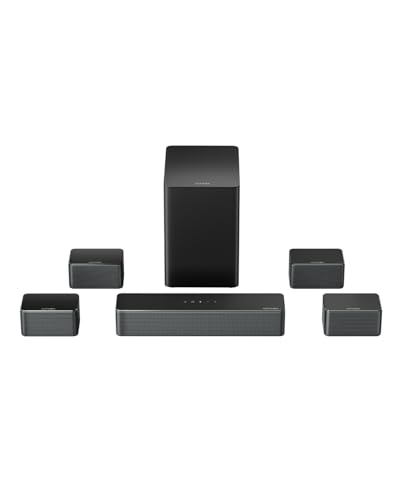
The ULTIMEA Skywave X40 includes 8 total speakers: a main soundbar with built-in drivers and up-firing speakers, 2 wireless rear surrounds, and a wireless subwoofer. The Poseidon D70 also has 8 speakers total: a compact soundbar, 4 wired surround speakers, and a wireless subwoofer.
Both systems excel at music, but in different ways. The Poseidon D70's 7.1 configuration can spread stereo music across more channels for a wider soundstage, while the ULTIMEA Skywave X40 offers superior frequency response (35Hz-20kHz) and lower distortion for more accurate music reproduction.
Yes, both work well for gaming. The ULTIMEA Skywave X40 offers ultra-low wireless latency under 20ms, making it ideal for competitive gaming with no audio delay. The Poseidon D70 provides excellent directional audio cues with its multiple surround speakers for spatial awareness in games.
Yes, both the ULTIMEA Skywave X40 and Poseidon D70 include dedicated mobile apps with 10-band equalizers, 121 preset sound profiles, and system control features. The apps also handle firmware updates and allow you to customize audio settings for different content types.
The Poseidon D70 may be more suitable for smaller spaces due to its lower power output and compact design. However, if you want wireless convenience and don't mind the higher power capability, the ULTIMEA Skywave X40 can be used at lower volumes while still providing superior audio quality.
Both the ULTIMEA Skywave X40 and Poseidon D70 feature HDMI ARC/eARC, optical input, USB, Bluetooth, and auxiliary connections. The Skywave X40 specifically supports 4K HDR passthrough and uses the latest Bluetooth 5.4 standard for improved connectivity.
Choose the ULTIMEA Skywave X40 if you want premium performance, wireless convenience, Dolby Atmos effects, and have a larger room or higher budget. Select the Poseidon D70 if you're budget-conscious, prefer maximum channel count, don't mind wired installation, and primarily watch older content without Atmos soundtracks.
We've done our best to create useful and informative comparisons to help you decide what product to buy. Our research uses advanced automated methods to create this comparison and perfection is not possible - please contact us for corrections or questions. These are the sites we've researched in the creation of this article: bestbuy.com - shopabunda.com - youtube.com - youtube.com - youtube.com - youtube.com - ultimea.com - walmart.com - youtube.com - hometechnologyreview.com - community.ultimea.com - avsforum.com - youtube.com - youtube.com - youtube.com - bestbuy.com - hometechnologyreview.com - ultimea.com - provantage.com - ultimea.com - youtube.com - youtube.com - bestbuy.com - the-gadgeteer.com - shopmyexchange.com - youtube.com - youtube.com - youtube.com - ultimea.com - manuals.plus - device.report - images.thdstatic.com - shopmyexchange.com - staples.com - ultimea.de

Privacy Policy
Terms and Conditions - Affiliate Policy
Home Security
© Copyright 2008-2026.
11816 Inwood Rd #1211, Dallas, TX 75244