





When you're shopping for a home theater audio system, you'll quickly discover there are two very different philosophies at work. On one side, you have traditional multi-channel systems that use multiple wired speakers to surround you with sound. On the other, there are newer wireless systems that use clever processing and fewer speakers to create immersive audio experiences. The Sony HT-A9M2 and Ultimea Poseidon D70 represent these two approaches perfectly—and at vastly different price points.
Understanding which approach works better for your situation requires diving into how these systems actually create surround sound, what compromises each makes, and most importantly, what you'll hear when watching your favorite movies or listening to music.
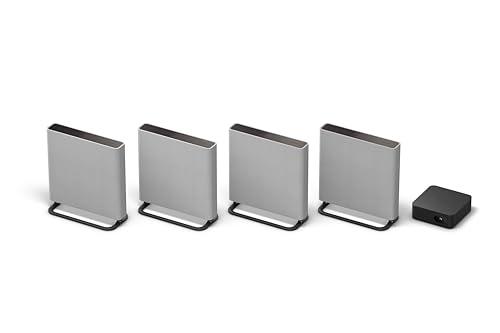
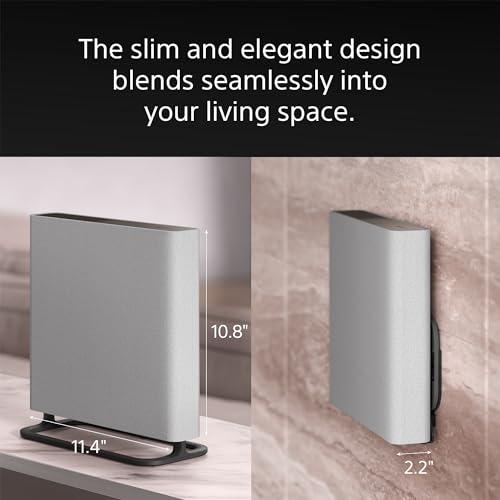
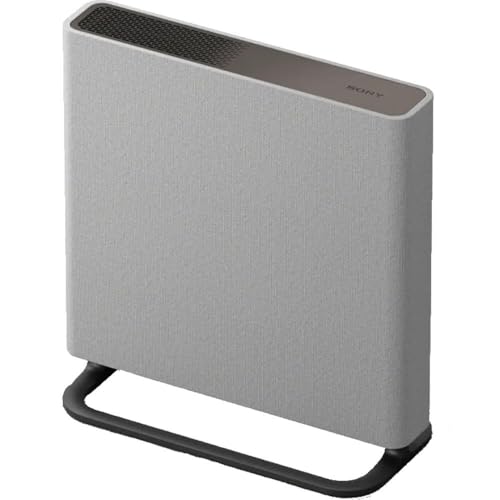
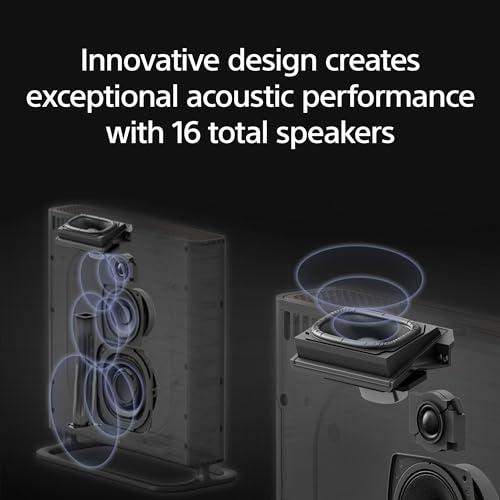
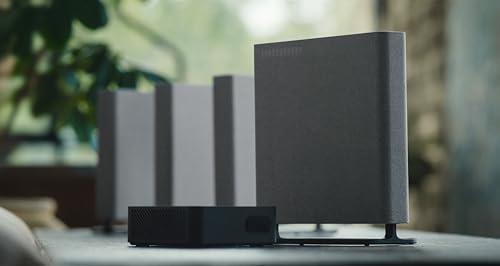
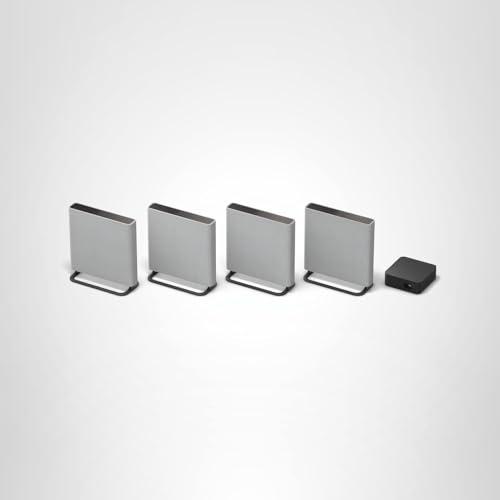
The Sony HT-A9M2, released in 2024, represents Sony's latest thinking about wireless home theater. Instead of the traditional approach of placing speakers in specific locations around your room, Sony gives you four identical wireless speakers that can go almost anywhere. Each speaker is essentially a complete audio system containing four drivers: a woofer for bass, a midrange driver for voices, a tweeter for high frequencies, and an upward-firing driver that bounces sound off your ceiling to create height effects.
This upward-firing driver is crucial for Dolby Atmos—a surround sound format that places sounds not just around you horizontally, but also above you. When you hear a helicopter flying overhead in a movie, Dolby Atmos tells that upward-firing driver to create sound waves that bounce off your ceiling, making it seem like the helicopter is actually above you rather than coming from a speaker beside your couch.
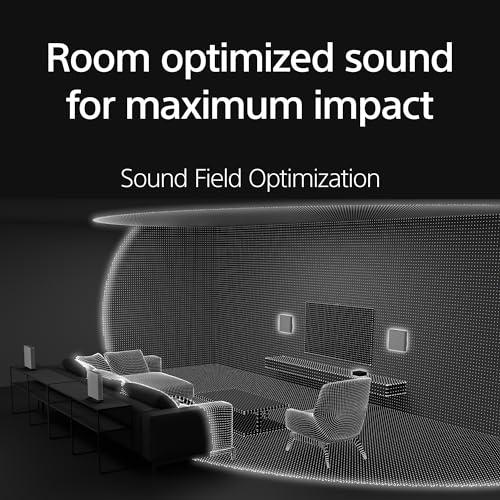
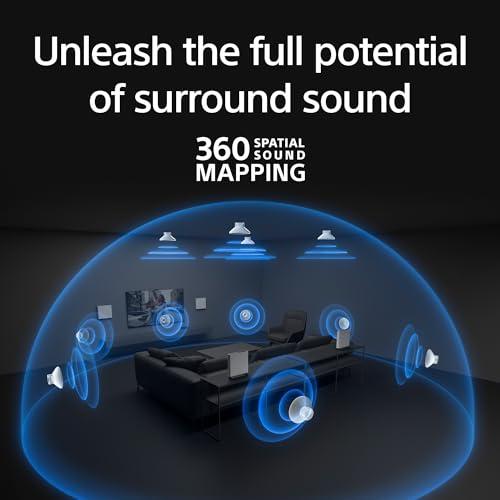
What makes the HT-A9M2 special is Sony's 360 Spatial Sound Mapping technology. After you place the four speakers anywhere in your room, the system uses built-in microphones to measure how sound travels in your space. It then creates "phantom speakers"—virtual sound sources that don't physically exist but seem to be there because of how the four real speakers work together. Think of it like an audio magic trick where your brain is convinced there are speakers in locations where there aren't any.
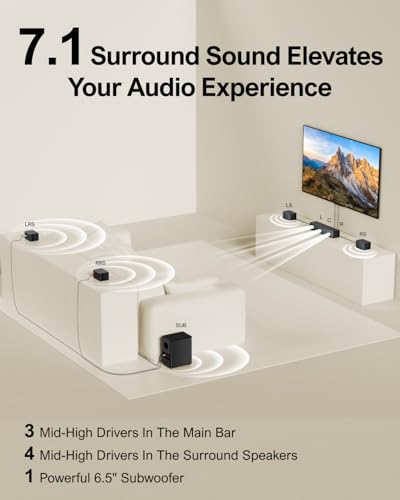
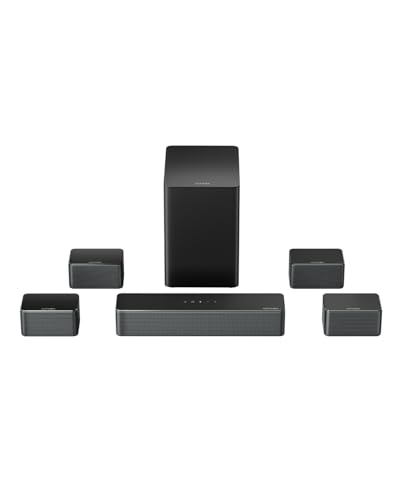
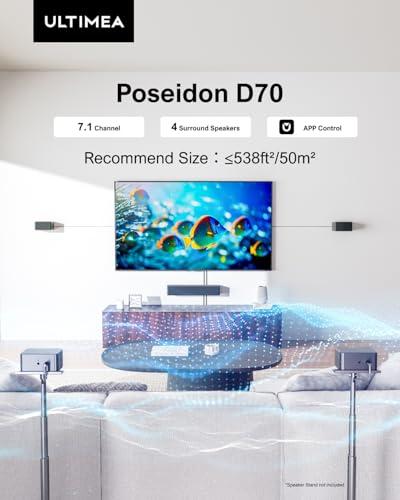
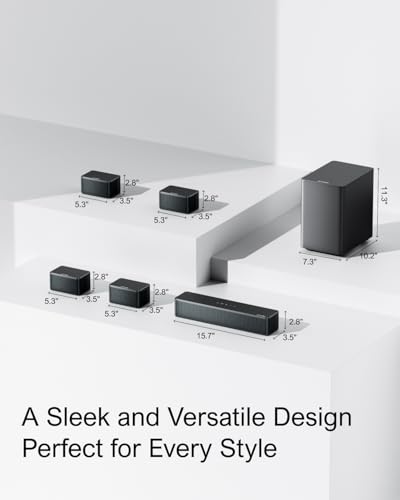
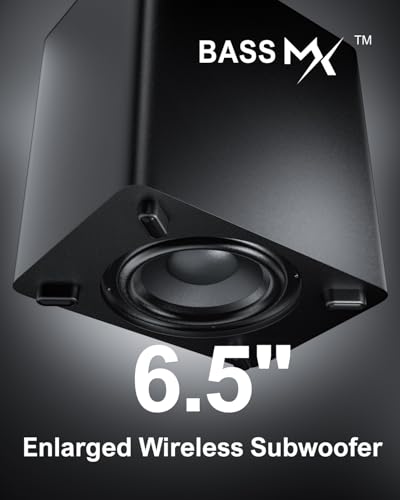
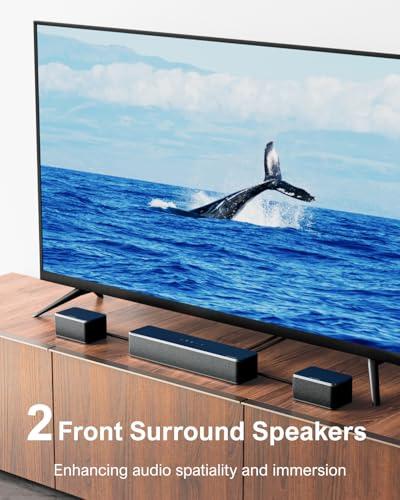
The Ultimea D70, while newer to the market, follows the time-tested approach of true multi-channel surround sound. You get a soundbar for the front, four small satellite speakers that you place around your seating area, and a 6.5-inch subwoofer that handles deep bass frequencies. This creates what's called a 7.1 system—seven main speakers plus one subwoofer.
Each satellite speaker in the D70 system has a dedicated job. The front speakers handle dialogue and front sound effects, while the rear speakers create the sense of being surrounded by action. The subwoofer—a specialized speaker designed only for low frequencies—adds the chest-thumping bass that makes explosions feel real and music sound full.
What's particularly clever about the D70 is how it balances cost with features. The subwoofer connects wirelessly to the soundbar, reducing cable clutter, but the satellite speakers connect with wires to ensure reliable, lag-free audio. This hybrid approach gives you the convenience of wireless where it matters most while maintaining the reliability of wired connections for the surround channels.
Based on our research into professional reviews and user feedback, the Sony HT-A9M2 excels at creating what reviewers consistently describe as an unusually wide and immersive soundstage. This soundstage refers to how large the audio environment feels—whether sounds seem to come from a small area or fill your entire room.
The system's strength lies in its clarity and precision. Dialogue in movies comes through crisp and natural, even during complex action scenes where lesser systems might muddle voices with sound effects. This clarity comes from having dedicated amplifiers for each of the 16 drivers across the four speakers, allowing precise control over every aspect of the sound.
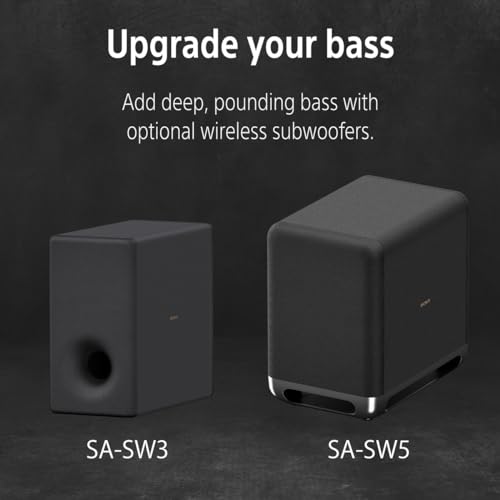
However, the HT-A9M2 has one significant limitation: it doesn't include a subwoofer. While each speaker has a small woofer, they can't produce the deep, room-shaking bass that makes action movies truly exciting. Professional reviewers consistently note that while the system sounds excellent, it really needs Sony's optional wireless subwoofer to reach its full potential. This is particularly noticeable compared to the original HT-A9 from 2021, which seemed to have more natural bass presence.
The Ultimea D70 takes a different approach entirely. Rather than focusing on spatial tricks and phantom speakers, it gives you physical speakers in multiple locations plus a dedicated subwoofer from day one. This means you get immediate bass impact and true surround separation without needing to buy additional components.
User reviews consistently praise the D70's ability to fill rooms with sound and deliver satisfying bass for movies and music. The 6.5-inch subwoofer, while not massive, provides enough low-frequency output to make action scenes feel impactful. The satellite speakers, though compact, create genuine directional audio cues—when something happens behind you in a movie, it actually sounds like it's coming from behind you rather than being processed to seem that way.
The trade-off is in refinement. The D70's smaller drivers and budget-focused design can't match the Sony's precision and detail retrieval. However, for many listeners, the immediate satisfaction of full-range sound with solid bass impact more than compensates for these limitations.
One of the biggest technical differences between these systems is how they handle height effects in modern movie soundtracks. The Sony HT-A9M2 includes those upward-firing drivers specifically designed for Dolby Atmos content. When you're watching a movie that uses Atmos—which includes most major releases since 2014—the Sony can create convincing overhead effects.
This matters more than you might think. Modern movie sound design uses height channels to create atmosphere and place specific effects in three-dimensional space. Rain falling, aircraft passing overhead, or even subtle ambient sounds like birds chirping can be positioned above you, creating a more realistic and engaging experience.
The Ultimea D70 doesn't have height speakers, so it relies on virtual processing to simulate these effects. While its SurroundX technology can create a sense of spaciousness, it can't replicate the specific overhead positioning that dedicated height speakers provide. For viewers who prioritize the latest in immersive audio formats, this represents a meaningful difference.
The HT-A9M2's wireless design offers remarkable flexibility that becomes apparent when you actually live with the system. Each speaker only needs a power cord, so you can place them on shelves, mount them on walls, or even position them at different heights without worrying about running speaker cables through your walls or across your floor.
Sony's Sound Field Optimization system adapts to wherever you place the speakers. Professional reviewers have tested placing speakers in completely asymmetrical positions—even having some higher or lower than others—and the system still creates a coherent surround experience. This flexibility is particularly valuable in apartments or homes where ideal speaker placement isn't practical.
The wireless connection between speakers has also been significantly improved from the original 2021 HT-A9. Sony increased the radio power and added dual antennas with automatic frequency selection to prevent the audio dropouts that occasionally plagued the earlier system.
Setting up the D70 follows more traditional patterns, but Ultimea has made the process as straightforward as possible. All cables are color-coded and labeled, and the wireless subwoofer pairs automatically when you turn on the system. While you do need to run wires to the four satellite speakers, the connections are simple RCA plugs that don't require any special tools or technical knowledge.
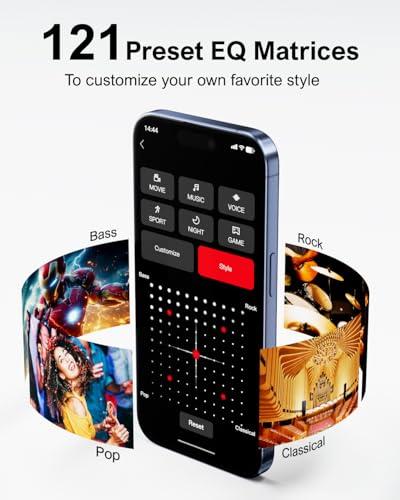
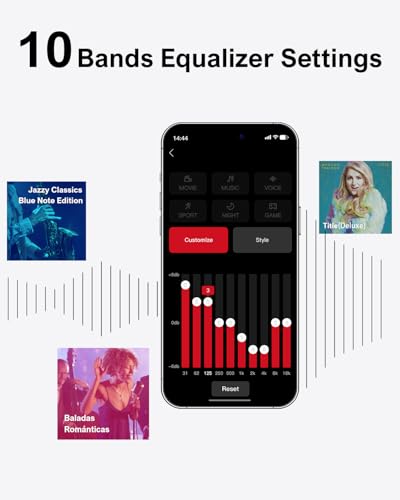
The system's 121 preset EQ settings and 10-band equalizer, accessible through Ultimea's smartphone app, provide extensive customization options. This level of adjustability is unusual at this price point and allows you to fine-tune the sound for your specific room and preferences. Whether your room is naturally boomy or sounds too bright, you can likely find or create an EQ setting that addresses the issue.
As of this writing, these systems occupy completely different price categories, which shapes everything about how you should evaluate them.
The Sony HT-A9M2 sits in the premium wireless audio category, commanding pricing that reflects its advanced processing, build quality, and brand reputation. This puts it in competition with high-end soundbars and entry-level traditional surround systems from established audio brands.
What you're paying for with the Sony is convenience, flexibility, and sophisticated processing technology. The 360 Spatial Sound Mapping system represents genuine innovation in how home theater systems adapt to real-world living spaces. For buyers who value having a clean, wire-free setup that can be easily reconfigured and sounds excellent with minimal tweaking, the premium can be justified.
However, the value proposition becomes more complex when you factor in the near-necessity of adding a subwoofer. Sony's wireless subs add considerable cost to an already expensive system. Professional reviewers consistently note that while the HT-A9M2 sounds good on its own, it doesn't reach its full potential without that additional bass component.
The D70 represents exceptional value in the budget surround sound category. At its price point, you typically see either basic 2.1 soundbars or virtual surround systems that simulate multi-channel audio rather than providing it. Getting four actual satellite speakers plus a subwoofer at this price level is uncommon.
Professional and user reviews consistently highlight the D70's ability to deliver satisfying surround sound performance that punches well above its price class. While it doesn't match the refinement or advanced features of much more expensive systems, it provides the core surround sound experience—directional audio, solid bass, and room-filling volume—without compromise.
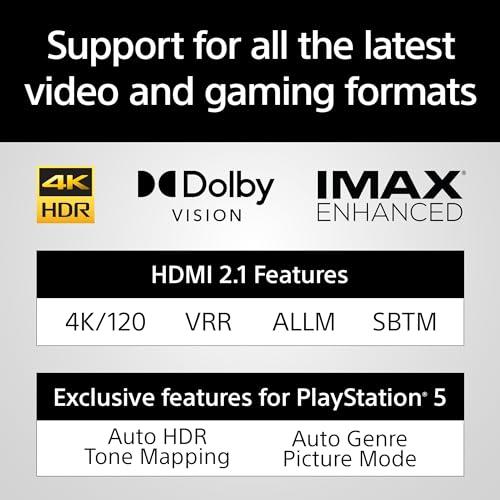
For gaming enthusiasts, the Sony HT-A9M2 offers significant advantages through its HDMI 2.1 support. This includes features like Variable Refresh Rate (VRR) and Auto Low Latency Mode (ALLM), which are important for modern gaming consoles like the PlayStation 5 and Xbox Series X. The system can pass through 4K at 120Hz and even 8K at 60Hz video signals without degradation.
The Ultimea D70 focuses more on traditional connectivity, offering multiple input options including HDMI ARC, optical, USB, and Bluetooth. While it doesn't include the latest HDMI 2.1 gaming features, it provides broader compatibility with older devices and more flexibility for connecting multiple sources.
For streaming music, both systems support modern wireless standards, but the Sony includes more advanced features like 360 Reality Audio support and DSEE Ultimate upscaling, which uses AI to enhance compressed music files in real-time.
The Sony HT-A9M2 makes sense if you prioritize flexibility and refinement over immediate impact. It's ideal for challenging room layouts where traditional speaker placement isn't practical, or for people who frequently rearrange their living spaces. The wireless convenience and clean aesthetics appeal to users who want high-quality audio without the visual clutter of cables.
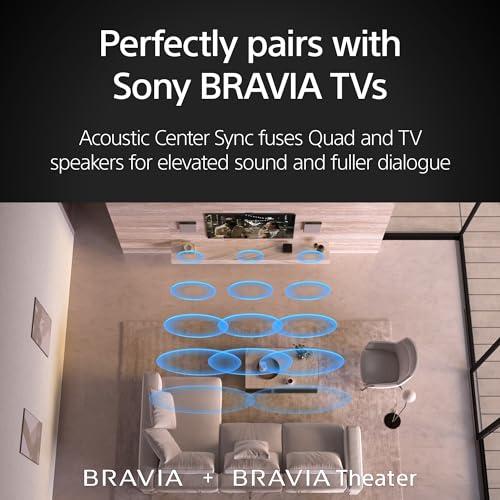
This system particularly shines for apartment dwellers or renters who can't modify walls for speaker installation, and for owners of Sony BRAVIA TVs who can take advantage of the Acoustic Center Sync feature. If you're willing to invest in the complete system including a subwoofer, and you value cutting-edge spatial audio processing, the Sony delivers a unique and compelling experience.
The Ultimea D70 is the better choice if you want immediate, complete surround sound satisfaction without additional purchases. It's perfect for budget-conscious buyers who still want true multi-channel audio rather than virtual surround processing. The inclusion of a proper subwoofer means you get satisfying bass impact for movies and music right out of the box.
This system works well in traditional home theater setups where running speaker wires isn't a problem, and where you want maximum surround coverage and bass impact for the money. The extensive EQ options and multiple input choices make it versatile for various content types and room situations.
These systems represent fundamentally different approaches to home theater audio, making direct comparison challenging but instructive. The Sony HT-A9M2 pushes the boundaries of what's possible with wireless, spatially-aware audio processing, while the Ultimea D70 delivers traditional multi-channel surround sound at an accessible price point.
Your choice should align with your priorities: spatial audio innovation and installation flexibility versus immediate full-range impact and maximum value. Both systems succeed brilliantly within their intended contexts, making either a smart choice depending on your specific needs, budget, and living situation.
The Sony represents where home theater audio is heading—intelligent, adaptable, and focused on real-world convenience. The Ultimea proves that traditional surround sound principles still deliver exceptional value when executed thoughtfully. Understanding these different philosophies will help you choose the system that best matches your expectations and enhances your entertainment experience.
| Sony HT-A9M2 BRAVIA Theater Quad | Ultimea Poseidon D70 |
|---|---|
| Channel Configuration - Determines surround sound coverage and immersion | |
| 4.0.4 channels (4 main + 4 height) with 16 total drivers | 7.1 channels (7 main + 1 sub) with 8 total speakers |
| Height Effects - Essential for modern Dolby Atmos content | |
| Dedicated upfiring drivers in each speaker for true overhead effects | Virtual height simulation only, no physical height channels |
| Subwoofer Inclusion - Critical for bass impact in movies and music | |
| No subwoofer included (optional SA-SW3/SW5 required for full bass) | 6.5" wireless subwoofer included with BassMX technology |
| Speaker Connectivity - Affects installation flexibility and reliability | |
| Four speakers connect wirelessly to control hub (power cord only) | Four satellites wired to subwoofer, subwoofer wireless to soundbar |
| Room Calibration - Determines how well system adapts to your space | |
| Advanced 360 Spatial Sound Mapping with phantom speaker generation | 121 preset EQ matrices + 10-band equalizer via mobile app |
| Audio Processing Technology - Impacts sound quality and immersion | |
| Sony's proprietary spatial mapping, Voice Zoom 3 AI, DSEE Ultimate | SurroundX virtual surround, BassMX bass enhancement, AI optimization |
| HDMI Features - Important for gaming and modern TV connectivity | |
| HDMI 2.1 with 8K/4K120, VRR, ALLM, eARC support | HDMI ARC support only, no advanced gaming features |
| Premium Audio Format Support - Matters for high-quality content | |
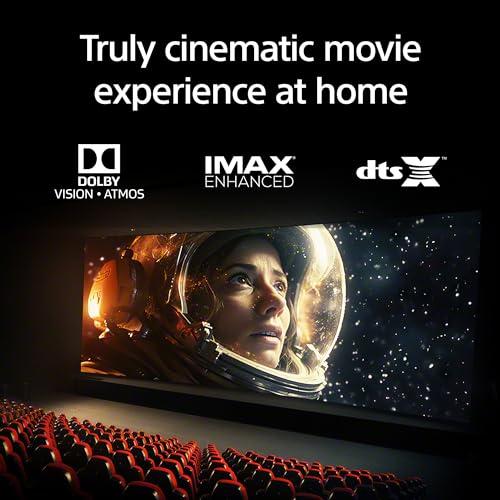
| Dolby Atmos, DTS:X, IMAX Enhanced, 360 Reality Audio, Hi-Res Audio | Standard surround formats with virtual enhancement |
| TV Integration - Enhances experience with compatible displays | |
| Sony BRAVIA Acoustic Center Sync, BRAVIA Sync control | Universal TV compatibility via HDMI ARC and optical |
| Setup Complexity - Determines ease of installation | |
| Minimal wiring, flexible placement, automatic calibration | Traditional wired setup with color-coded cables and mounting hardware |
| Power Output - Affects maximum volume and dynamic range | |
| 504W total across 16 channels (31.5W per driver) | 410W peak power (144W RMS) with dedicated subwoofer amplification |
| Input Options - Important for connecting multiple devices | |
| 1 HDMI input + eARC, Bluetooth, Wi-Fi, AirPlay 2 | HDMI ARC, optical, USB, Bluetooth 5.3, 3.5mm aux |
The Sony HT-A9M2 is ideal for small apartments because it requires minimal wiring and offers flexible speaker placement. You only need power outlets for each of the four wireless speakers, making it perfect for renters who can't run cables through walls. The Ultimea D70 requires more cable management but still works well in apartments if you can position the satellite speakers properly.
The Ultimea D70 includes everything you need out of the box, including a 6.5" wireless subwoofer for deep bass. The Sony HT-A9M2 doesn't include a subwoofer, and most users find they need to purchase Sony's optional wireless subwoofer to get satisfying bass for movies and music.
The Ultimea D70 delivers better bass immediately since it includes a dedicated 6.5" subwoofer with BassMX technology. The Sony HT-A9M2 has limited bass without an additional subwoofer purchase, though it excels in clarity and spatial effects once you add Sony's wireless sub.
Yes, the Sony HT-A9M2 fully supports Dolby Atmos with dedicated upfiring drivers in each speaker for true overhead effects. The Ultimea D70 doesn't support Dolby Atmos but uses virtual surround processing to simulate height effects from its 7.1 channel layout.
The Sony HT-A9M2 is easier to install since each speaker only needs a power cord and connects wirelessly. The Ultimea D70 requires running wired connections between the soundbar, subwoofer, and four satellite speakers, though all cables are color-coded for easier installation.
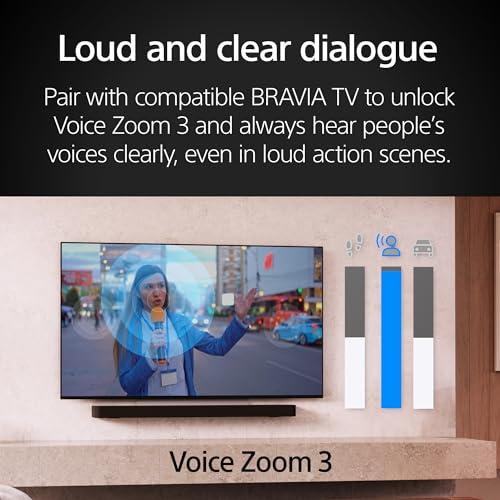
Both systems handle dialogue well, but the Sony HT-A9M2 excels with its Voice Zoom 3 AI technology that separates and enhances speech. The Ultimea D70 provides clear dialogue through its dedicated front channels and offers voice-specific EQ presets via the mobile app.
The Ultimea D70 may work better in large rooms due to its higher power output and physical subwoofer that can fill bigger spaces with bass. The Sony HT-A9M2 can adapt to large rooms through its spatial mapping technology, but you'll likely need to add a subwoofer for adequate bass coverage.
Yes, both systems support TV remote control. The Sony HT-A9M2 works seamlessly with Sony BRAVIA TVs through BRAVIA Sync and supports standard HDMI CEC control. The Ultimea D70 supports HDMI CEC control and also includes its own remote plus a comprehensive mobile app.
The Sony HT-A9M2 offers superior music quality with its DSEE Ultimate upscaling, 360 Reality Audio support, and precise imaging across its 16 drivers. The Ultimea D70 handles music well with its included subwoofer and extensive EQ options, making it better for bass-heavy genres right out of the box.
The Sony HT-A9M2 is better for modern gaming with HDMI 2.1 support, including 4K 120Hz passthrough, VRR, and Auto Low Latency Mode for PlayStation 5 and Xbox Series X. The Ultimea D70 works with gaming consoles through HDMI ARC and optical connections but lacks advanced gaming features.
The Ultimea D70 offers exceptional value with true 7.1 surround sound, included subwoofer, and extensive features at a budget-friendly price point. The Sony HT-A9M2 provides premium wireless convenience and advanced spatial audio technology but requires a higher investment, especially when adding the recommended subwoofer.
The Sony HT-A9M2 can be expanded with Sony's wireless subwoofers and integrates with other Sony BRAVIA Theater components. The Ultimea D70 is a complete system that cannot be expanded with additional speakers, but its extensive EQ customization allows for significant sound tuning and optimization over time.
We've done our best to create useful and informative comparisons to help you decide what product to buy. Our research uses advanced automated methods to create this comparison and perfection is not possible - please contact us for corrections or questions. These are the sites we've researched in the creation of this article: bestbuy.com - whathifi.com - whathifi.com - youtube.com - rtings.com - audiosciencereview.com - bhphotovideo.com - skybygramophone.com - sony.com - manuals.plus - audioadvice.com - dell.com - valueelectronics.com - youtube.com - merlinstv.com - videoandaudiocenter.com - electronics.sony.com - sony.com - bestbuy.com - beachcamera.com - sony.com - win.consulting - sony.com - ultimea.com - provantage.com - ultimea.com - youtube.com - youtube.com - bestbuy.com - the-gadgeteer.com - shopmyexchange.com - youtube.com - youtube.com - youtube.com - ultimea.com - manuals.plus - device.report - images.thdstatic.com - shopmyexchange.com - staples.com - ultimea.de

Privacy Policy
Terms and Conditions - Affiliate Policy
Home Security
© Copyright 2008-2026.
11816 Inwood Rd #1211, Dallas, TX 75244