





When it comes to upgrading your TV's audio, the world of home theater soundbars has become surprisingly complex. Gone are the days when your only choice was between "good" and "better" - now you're faced with decisions about channel configurations, audio formats, and wildly different approaches to creating that cinematic experience at home.
Two soundbars perfectly illustrate this complexity: the Ultimea Poseidon D70 and the Sony HT-A5000. Released in 2021 and 2021 respectively, these systems represent fundamentally different philosophies about what makes great home theater sound. One focuses on giving you the most hardware for your money, while the other emphasizes cutting-edge audio technology in a sleek package.
Before diving into these specific models, it's crucial to understand what you're actually buying when you purchase a soundbar system. The most important factors that will affect your daily listening experience are audio technology support, physical speaker configuration, power output, and how the system handles different types of content.
Audio technology refers to formats like Dolby Atmos and DTS:X - these are essentially instruction sets that tell speakers how to create three-dimensional sound effects. Think of them like subtitles for your speakers, providing precise timing and positioning information to create the illusion that helicopters are flying overhead or rain is falling around you.
Physical configuration is about whether you have actual speakers positioned around your room versus a single soundbar using psychoacoustic tricks (manipulating how your brain processes sound) to simulate surround effects. Power output determines how loud and dynamic your system can get, while content handling affects how well the system works with everything from Netflix shows to video games.
The key insight from our research is that these two approaches - physical separation versus technological sophistication - each excel in different scenarios, and understanding which matches your priorities is essential for making the right choice.
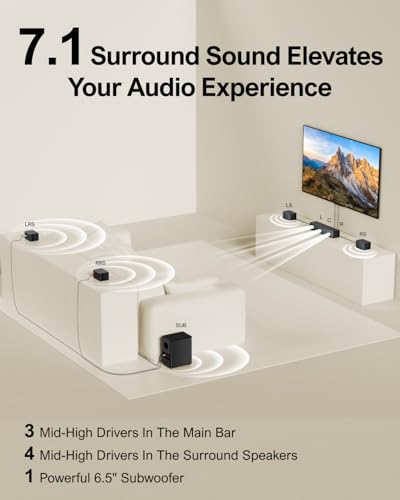
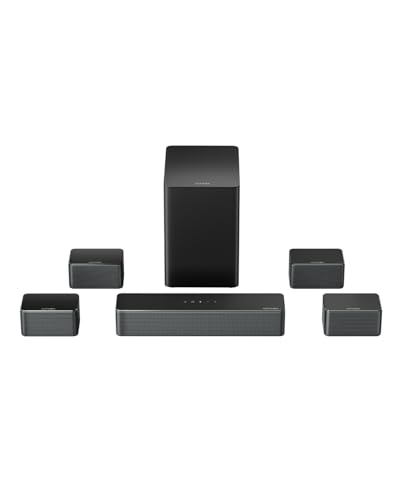
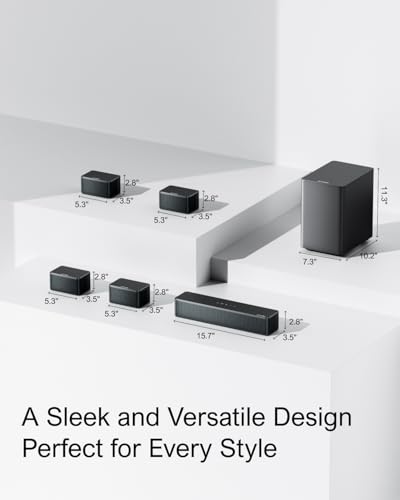
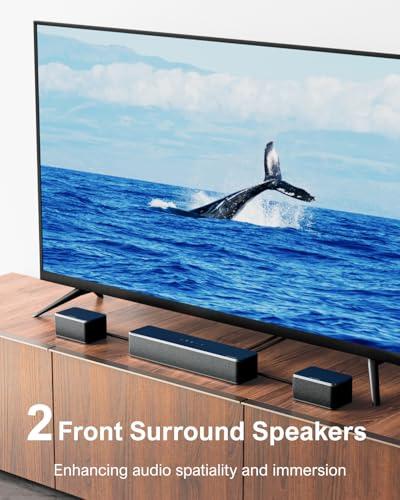
The Ultimea Poseidon D70 follows what we call the "more is more" philosophy. Released in 2021, this system gives you eight separate drivers across multiple physical components: a main soundbar with three drivers, four individual surround speakers, and a dedicated 6.5-inch wireless subwoofer. This creates a true 7.1 channel system where sound actually comes from different locations in your room.
What makes this approach compelling is the genuine spatial separation. When a car drives from left to right in a movie, you're not relying on audio processing tricks - you're hearing actual sound movement from the left surround speaker to the right surround speaker. This physical approach has been the gold standard in home theater for decades, and the Ultimea Poseidon D70 brings it to a budget-friendly price point that was unthinkable just a few years ago.
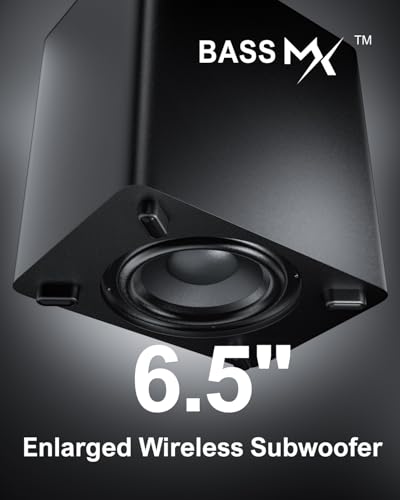
The system's SurroundX™ Technology uses spatial positioning algorithms to optimize how these physical speakers work together, while BassMX™ Technology specifically enhances the wireless subwoofer's performance. These aren't just marketing terms - they represent actual signal processing that maximizes the impact of having dedicated hardware for different frequency ranges.
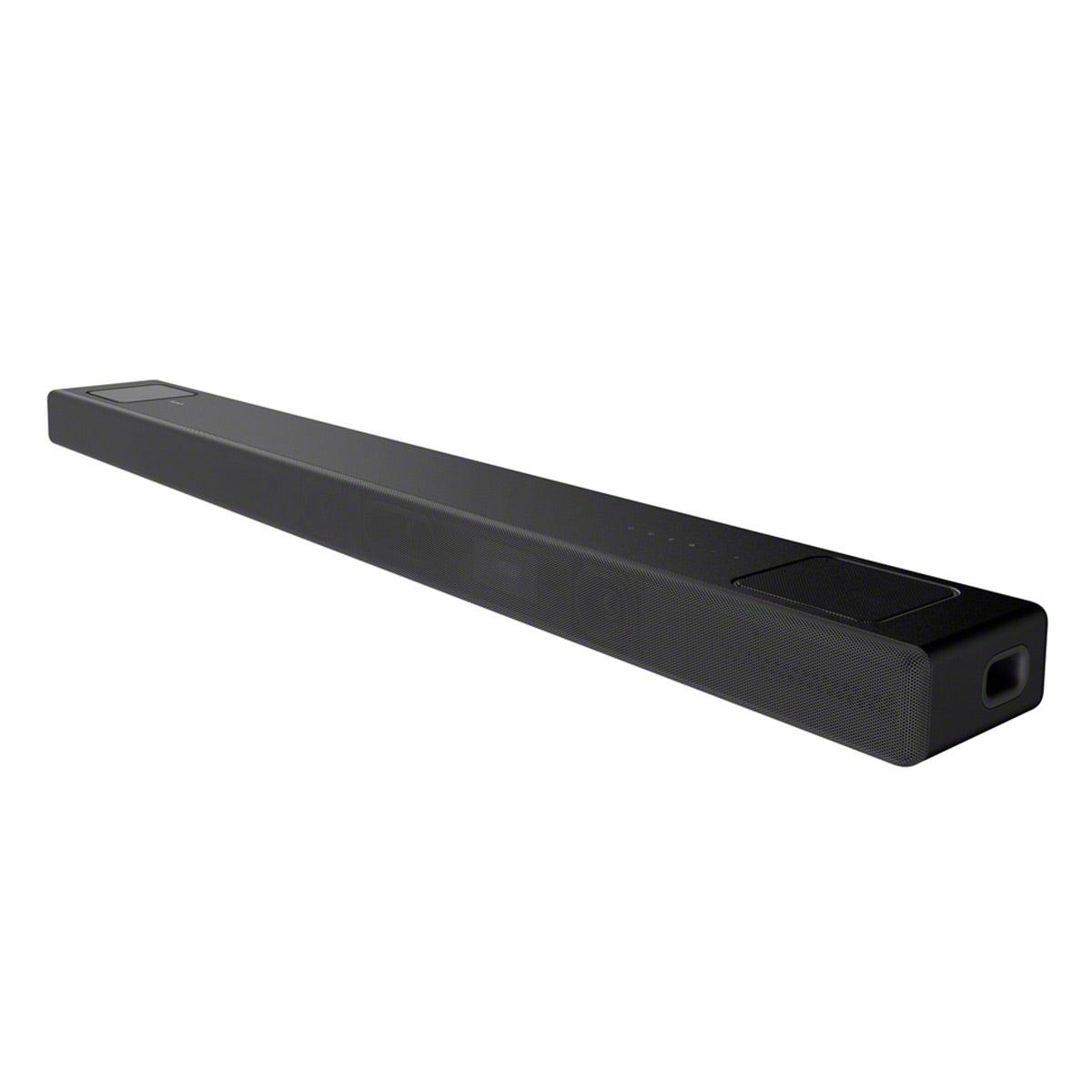
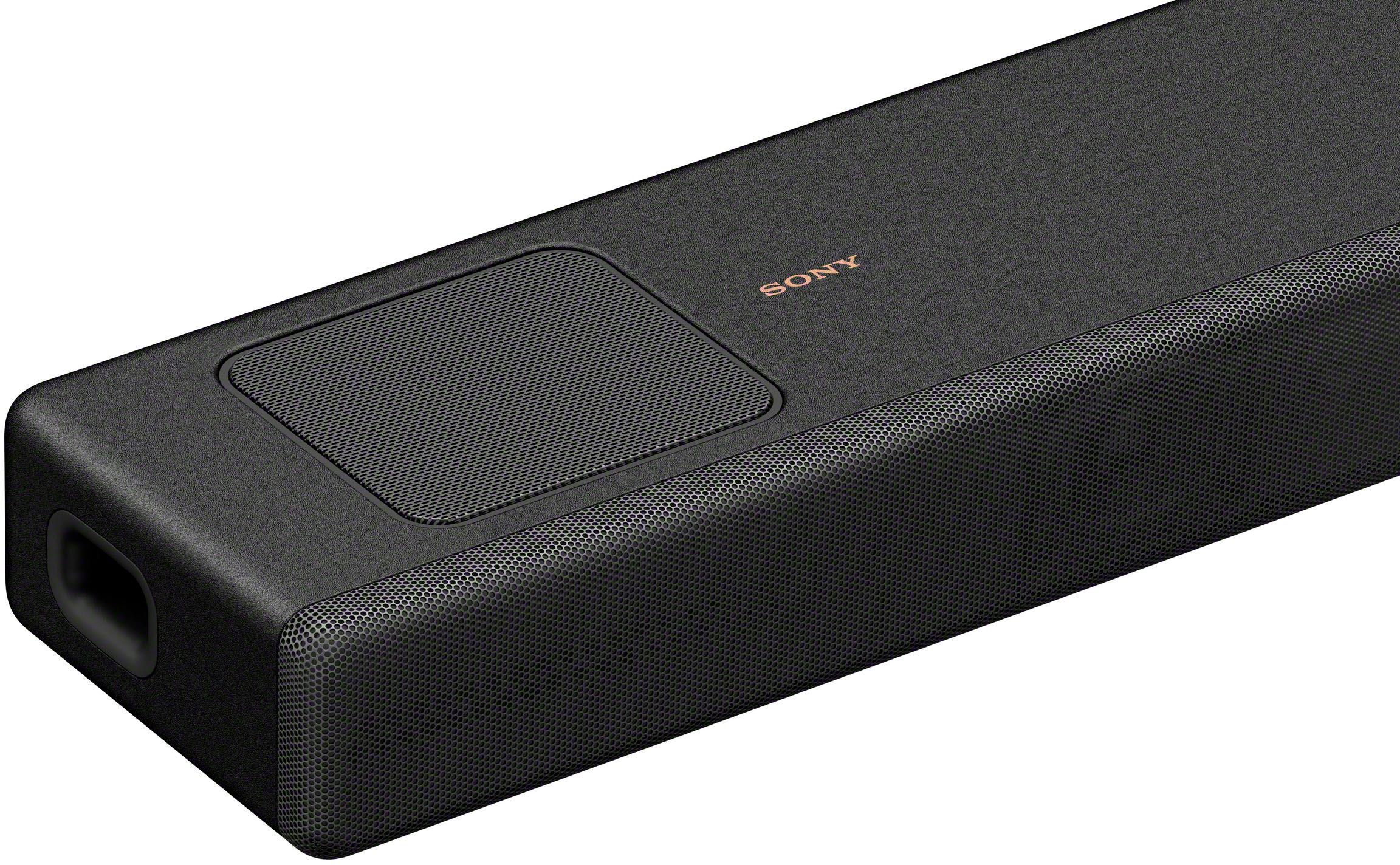
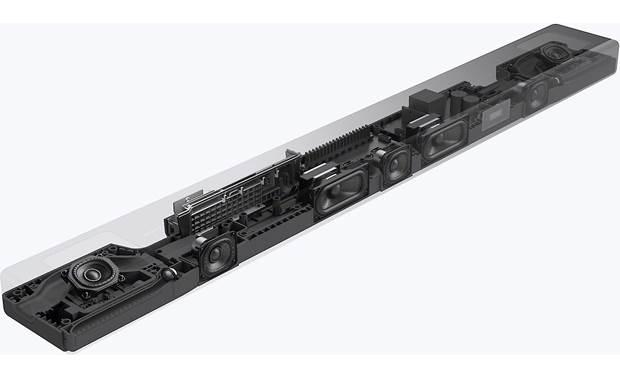
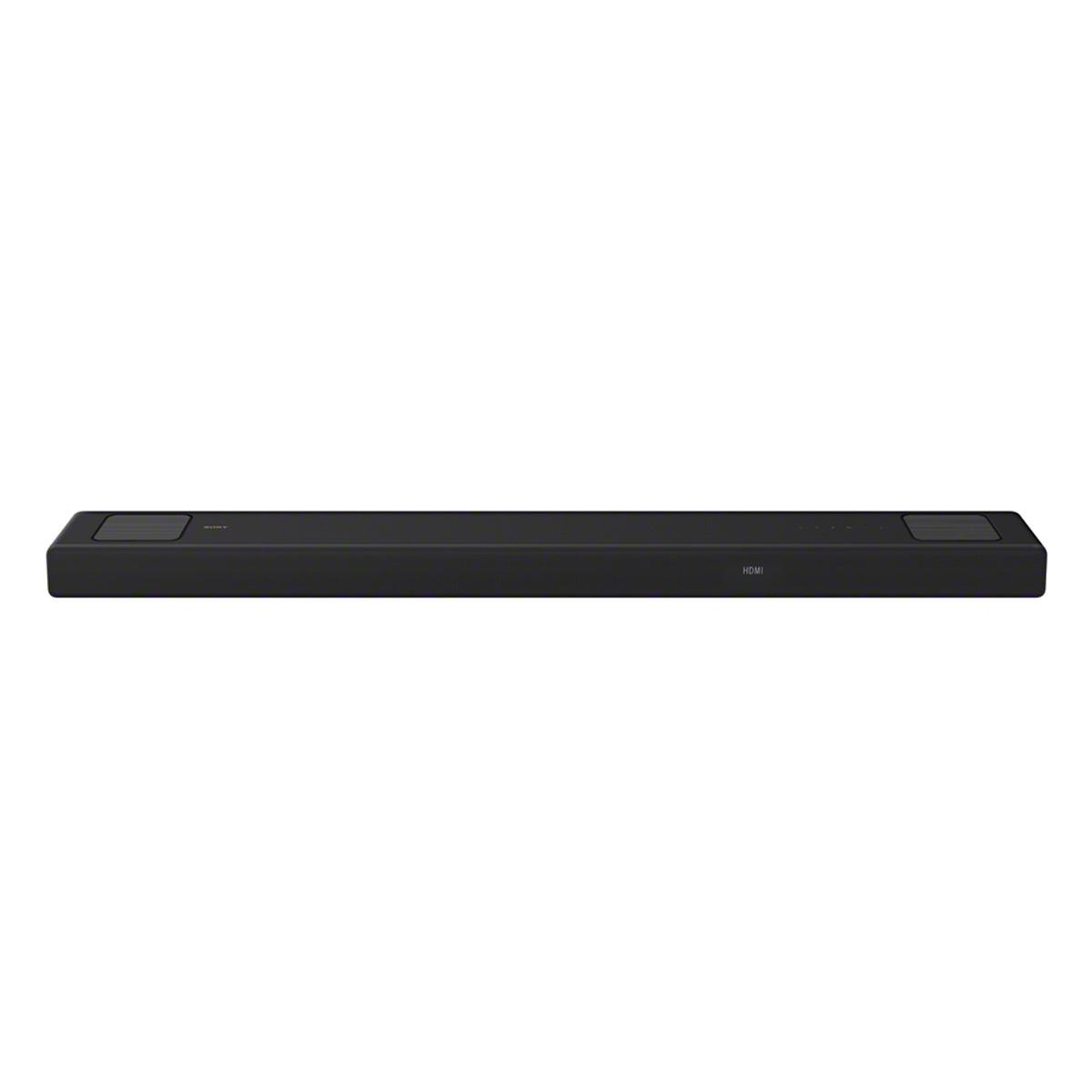
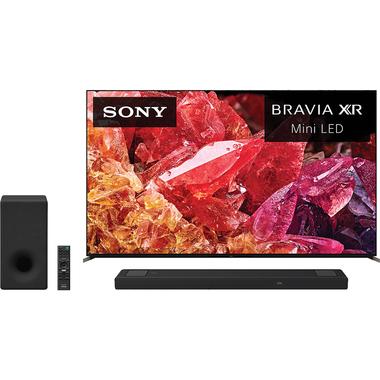
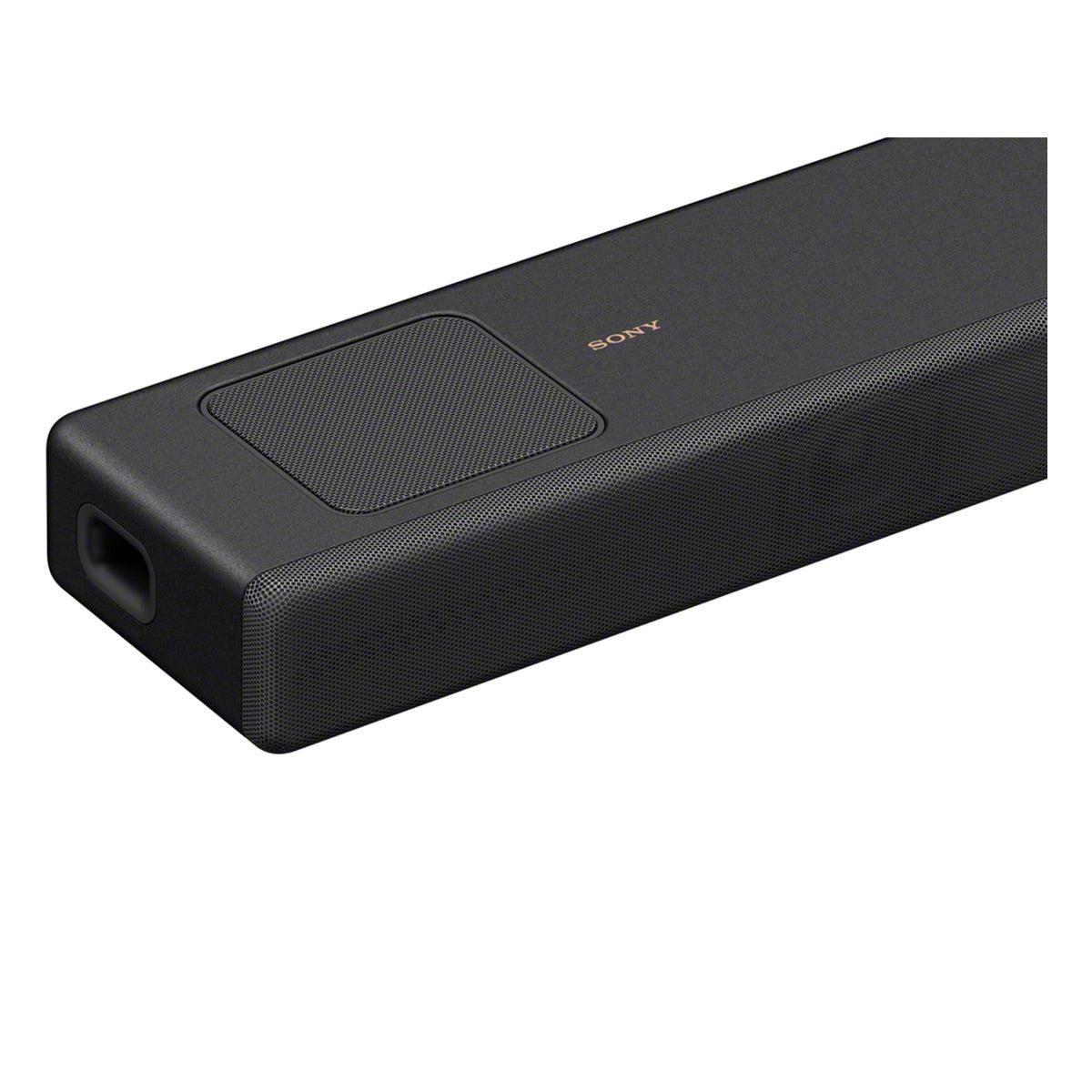
The Sony HT-A5000, also released in 2021, represents the "smarter, not harder" philosophy. This single soundbar houses everything: five main drivers for front and surround channels, two upward-firing speakers for height effects, side beam tweeters for width, and a built-in subwoofer. The ".2" in its 5.1.2 designation refers to those upward-firing drivers that bounce sound off your ceiling to create overhead effects.
Sony's approach relies heavily on advanced processing. The Vertical Surround Engine creates height effects even from non-Atmos content, while S-Force PRO Front Surround uses psychoacoustic processing to simulate speakers that aren't physically there. The 360 Spatial Sound Mapping technology actually maps your room acoustically and adjusts the audio accordingly - it's like having an audio engineer automatically tune your system for your specific space.
What's particularly impressive about the Sony HT-A5000 is its support for Dolby Atmos and DTS:X. These object-based audio formats, which became mainstream around 2020-2021, represent a fundamental shift in how surround sound works. Instead of just sending audio to specific channels, they include metadata about where sounds should be positioned in three-dimensional space, allowing for much more precise and immersive audio placement.
This is where the biggest philosophical difference emerges. The Sony HT-A5000 fully supports Dolby Atmos and DTS:X, which have become the standard for premium streaming content, gaming, and 4K Blu-ray movies since their widespread adoption around 2020. When you watch a Netflix movie mastered in Dolby Atmos, you're getting the full intended experience with height effects, precise object placement, and three-dimensional soundscapes.
The Ultimea Poseidon D70, however, doesn't support these formats. Instead, it relies on its proprietary processing and the inherent advantages of physical speaker placement. The AI deep learning optimization, trained on what Ultimea claims are billions of audio samples, attempts to enhance any audio source regardless of its original format.
From our research into user experiences, this creates an interesting trade-off. The Sony delivers the "correct" experience for modern content - you're hearing exactly what the sound engineers intended. The Ultimea might not decode Dolby Atmos properly, but its physical surround speakers create genuine directional effects that many users find more convincing than processed audio from a single soundbar, even a sophisticated one.
The difference in channel configuration represents the core debate in modern soundbar design. The Ultimea Poseidon D70 gives you actual surround speakers that you position around your listening area. When properly set up, this creates what audio enthusiasts call a "true" surround sound experience - sounds genuinely originate from different locations in your room.
Our analysis of user feedback consistently shows that people notice and appreciate this physical separation, especially for movie watching and gaming. The system's 7.1 configuration means you have dedicated left and right front speakers, left and right rear speakers, and dedicated handling of center channel and bass frequencies.
The Sony HT-A5000 uses its 5.1.2 configuration differently. The five main channels handle front, center, and surround duties through psychoacoustic processing, while the ".2" channels provide genuine height effects through those upward-firing drivers. This approach is more sophisticated in some ways - those height channels can create compelling overhead effects that the Ultimea simply cannot match.
However, our research suggests the Sony's virtual surround, while impressive, doesn't quite match the spatial convincingness of actual rear speakers. The trade-off is that you get genuine height effects and much simpler installation.
Bass performance represents another fundamental design choice. The Ultimea Poseidon D70 includes a dedicated 6.5-inch wireless subwoofer that can be positioned anywhere in your room for optimal bass response. This separate subwoofer, combined with BassMX™ Technology, provides what our research indicates is notably deeper and more impactful low-frequency performance.
The Sony HT-A5000 integrates its subwoofer into the main soundbar unit. While Sony's X-Balanced Driver design reduces distortion and maximizes the available space, physics ultimately limits what you can achieve with a subwoofer built into a soundbar chassis.
From user reports we've analyzed, the difference is quite noticeable. The Ultimea provides the kind of chest-thumping bass that enhances action movies and electronic music, while the Sony's bass is adequate but not as commanding. Some users report that the Sony can exhibit chuffing noises (air turbulence sounds) at higher volumes, which is common with integrated subwoofers pushed beyond their optimal range.
Power specifications tell an interesting story about these systems' approaches. The Sony HT-A5000 claims 450W total power output through its S-Master HX digital amplification, while the Ultimea Poseidon D70 provides 410W peak power (144W RMS) distributed across its eight drivers.
However, power numbers can be misleading. The Sony's power is concentrated in a single unit that must fill your entire room through psychoacoustic processing and driver design. The Ultimea distributes its power across multiple physical locations, which can be more efficient for creating room-filling sound.
Our analysis of user experiences suggests both systems can adequately fill medium-sized rooms, but they do it differently. The Sony creates a wide, enveloping soundstage from a central location, while the Ultimea creates distinct sound zones that can be more engaging for certain content types.
For movies, the choice between these systems often comes down to what type of content you watch most. If you're primarily streaming modern content from Netflix, Disney+, or Amazon Prime - services that increasingly offer Dolby Atmos soundtracks - the Sony HT-A5000 provides the intended experience. Those overhead effects during helicopter scenes or rain sequences can be genuinely impressive when properly implemented.
However, our research indicates that many users find the Ultimea Poseidon D70's physical surround speakers more consistently engaging across all movie types. The system doesn't care whether your movie was mastered in Dolby Atmos or standard stereo - those rear speakers will create spatial effects that enhance the viewing experience.
The dialogue clarity comparison is particularly interesting. The Sony's center channel processing and Voice Mode feature provide excellent vocal clarity, especially when paired with Sony TVs through Acoustic Center Sync. The Ultimea's three front drivers and customizable EQ settings also deliver clear dialogue, but with more manual tuning required to optimize performance.
Music performance reveals another key difference in philosophy. The Sony HT-A5000 includes DSEE Extreme technology, which analyzes compressed music files and attempts to restore high-frequency information lost during compression. This is particularly valuable for streaming services like Spotify or Apple Music, which use compression to reduce file sizes.
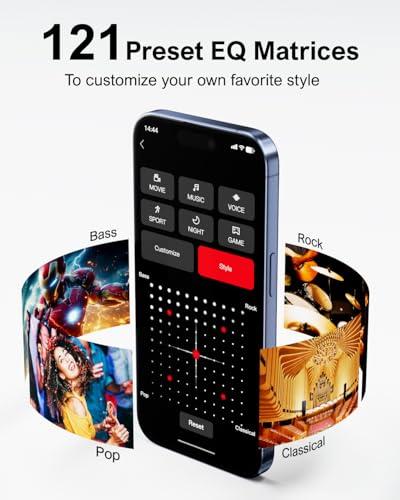
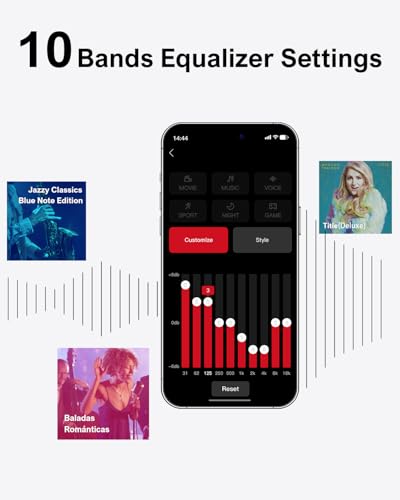
The Ultimea Poseidon D70 takes a more hands-on approach with its 121 preset EQ matrices and 10-band graphic equalizer. This extensive customization capability allows you to tune the system for different musical genres, room acoustics, or personal preferences in ways that the Sony simply doesn't match.
From user feedback we've analyzed, music enthusiasts who like to tweak and optimize their sound tend to prefer the Ultimea's flexibility, while users who want excellent performance without manual adjustment favor the Sony's automated processing.
Gaming represents an interesting use case where both systems have distinct advantages. The Sony HT-A5000 supports HDMI 2.1, which is crucial for next-generation gaming consoles that output 4K content at 120Hz refresh rates. The system's low-latency processing and Dolby Atmos gaming support make it excellent for modern gaming experiences.
The Ultimea Poseidon D70 excels at directional audio cues that are crucial for competitive gaming. Those physical surround speakers provide genuine directional information that can help you locate enemies or environmental sounds in games. The system's game-specific EQ presets also optimize audio for different gaming genres.
The installation difference between these systems is dramatic. The Sony HT-A5000 is essentially plug-and-play - connect it to your TV via HDMI, run the automatic calibration, and you're done. The single soundbar design means minimal cable management and no speaker positioning decisions.
The Ultimea Poseidon D70 requires significantly more setup work. You need to position four surround speakers around your room, run cables to connect them to the subwoofer, and optimize their placement for your specific listening position. While Ultimea includes color-coded cables to simplify installation, this process can take several hours versus the Sony's 15-minute setup.
However, this complexity brings flexibility. The Ultimea's wireless subwoofer can be positioned anywhere for optimal bass response, and the surround speakers can be adjusted for your specific room layout and furniture arrangement.
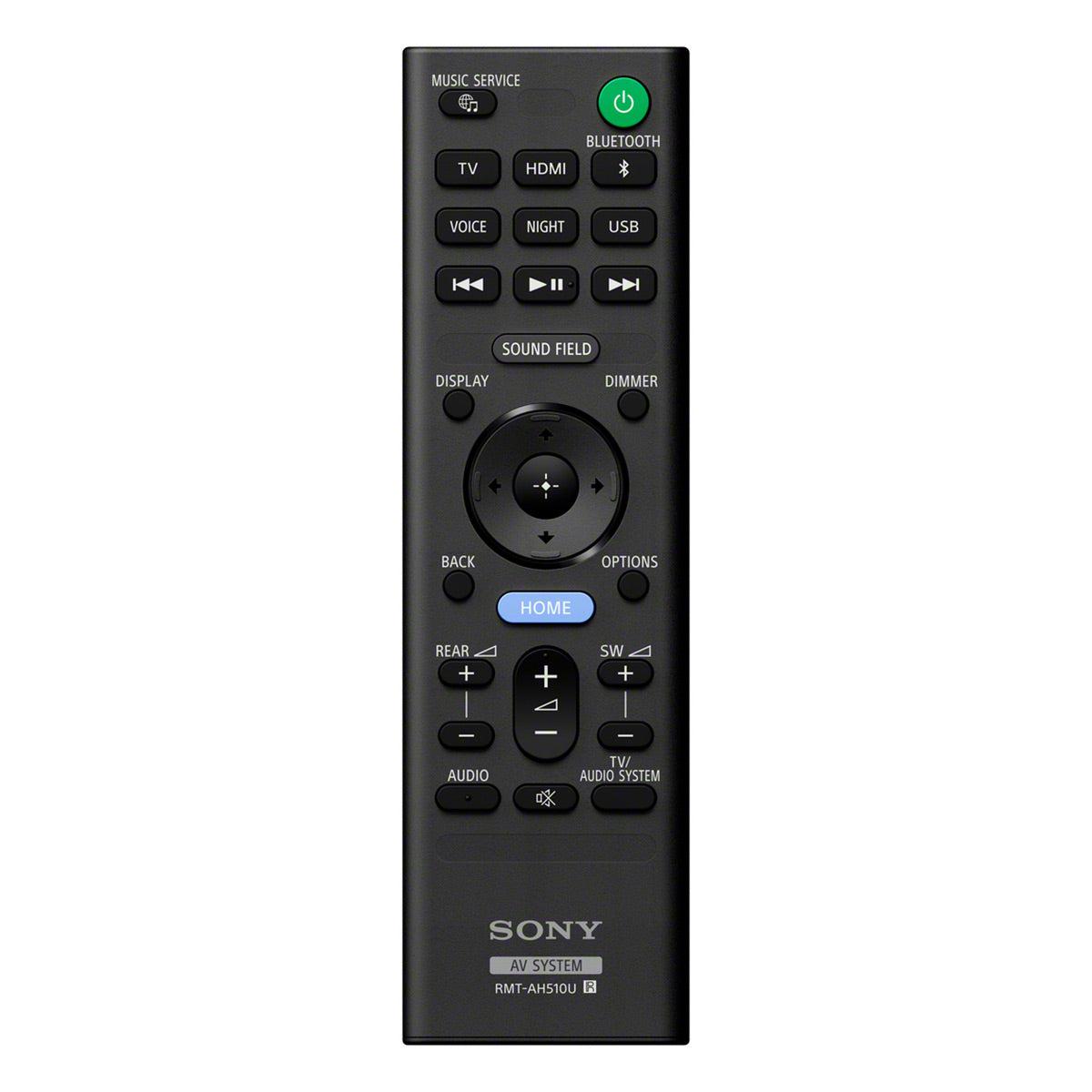
Both systems offer comprehensive control options, but with different focuses. The Sony HT-A5000 integrates with voice assistants, supports multiple streaming protocols, and works seamlessly with Sony's ecosystem. The premium streaming service buttons on its remote and automatic input switching make daily operation effortless.
The Ultimea Poseidon D70 provides more granular audio control through its dedicated app and remote. You can adjust bass, mid-range, and treble independently, switch between EQ presets instantly, and save custom profiles for different content types. This level of control appeals to users who like to optimize their audio experience actively.
At the time of writing, these systems occupy very different price segments. The Ultimea Poseidon D70 represents exceptional value in the budget category, providing a complete 7.1 system with dedicated subwoofer and extensive customization features at a price point that was unthinkable for such hardware just a few years ago.
The Sony HT-A5000 commands a premium price that reflects its advanced audio technology, premium build quality, and sophisticated processing capabilities. You're paying for Dolby Atmos support, automatic room calibration, and the convenience of a streamlined installation.
The value equation depends entirely on your priorities. If you want maximum hardware and don't mind the setup complexity, the Ultimea provides incredible bang for your buck. If you prioritize modern audio formats, sophisticated processing, and effortless daily use, the Sony justifies its higher price through premium features and convenience.
After extensive research and analysis of user experiences, both systems excel in their intended roles, but they serve fundamentally different user types and priorities.
Choose the Ultimea Poseidon D70 if you:
Choose the Sony HT-A5000 if you:
The Ultimea Poseidon D70 represents the traditional home theater approach optimized for budget-conscious buyers - more speakers, more power, more control. The Sony HT-A5000 embodies the modern premium approach - sophisticated technology, streamlined design, format compatibility.
Both systems will dramatically improve your TV's audio, but they'll do it in fundamentally different ways. Your choice should align with whether you prefer hands-on optimization or automated excellence, physical speaker placement or advanced processing, and maximum hardware value or premium technology integration.
In the rapidly evolving world of home theater audio, both approaches have merit. The key is understanding which philosophy matches your priorities, room constraints, and daily usage patterns.
| Ultimea Poseidon D70 | Sony HT-A5000 |
|---|---|
| Channel Configuration - Determines how surround sound is created | |
| True 7.1 with 4 physical surround speakers + soundbar + subwoofer | 5.1.2 all-in-one soundbar with upward-firing drivers for height |
| Audio Format Support - Essential for modern streaming content | |
| Virtual surround processing only (no Dolby Atmos/DTS:X) | Full Dolby Atmos and DTS:X support with height effects |
| Subwoofer Type - Critical for bass impact and room flexibility | |
| Dedicated 6.5" wireless subwoofer with BassMX™ technology | Built-in subwoofer integrated into main soundbar unit |
| Total Power Output - Affects volume and dynamic range | |
| 410W peak (144W RMS) distributed across 8 drivers | 450W total through S-Master HX digital amplification |
| Setup Complexity - Time and effort required for installation | |
| Multi-component setup requiring speaker positioning and wiring | Single soundbar with plug-and-play installation |
| Audio Customization - Control over sound tuning | |
| 121 preset EQ matrices + 10-band graphic equalizer + app control | Automatic Sound Field Optimization with limited manual EQ |
| Physical Footprint - Space requirements in your room | |
| Soundbar + 4 surround speakers + subwoofer placement needed | Single 47.75" soundbar unit only |
| HDMI Features - Gaming and 4K TV compatibility | |
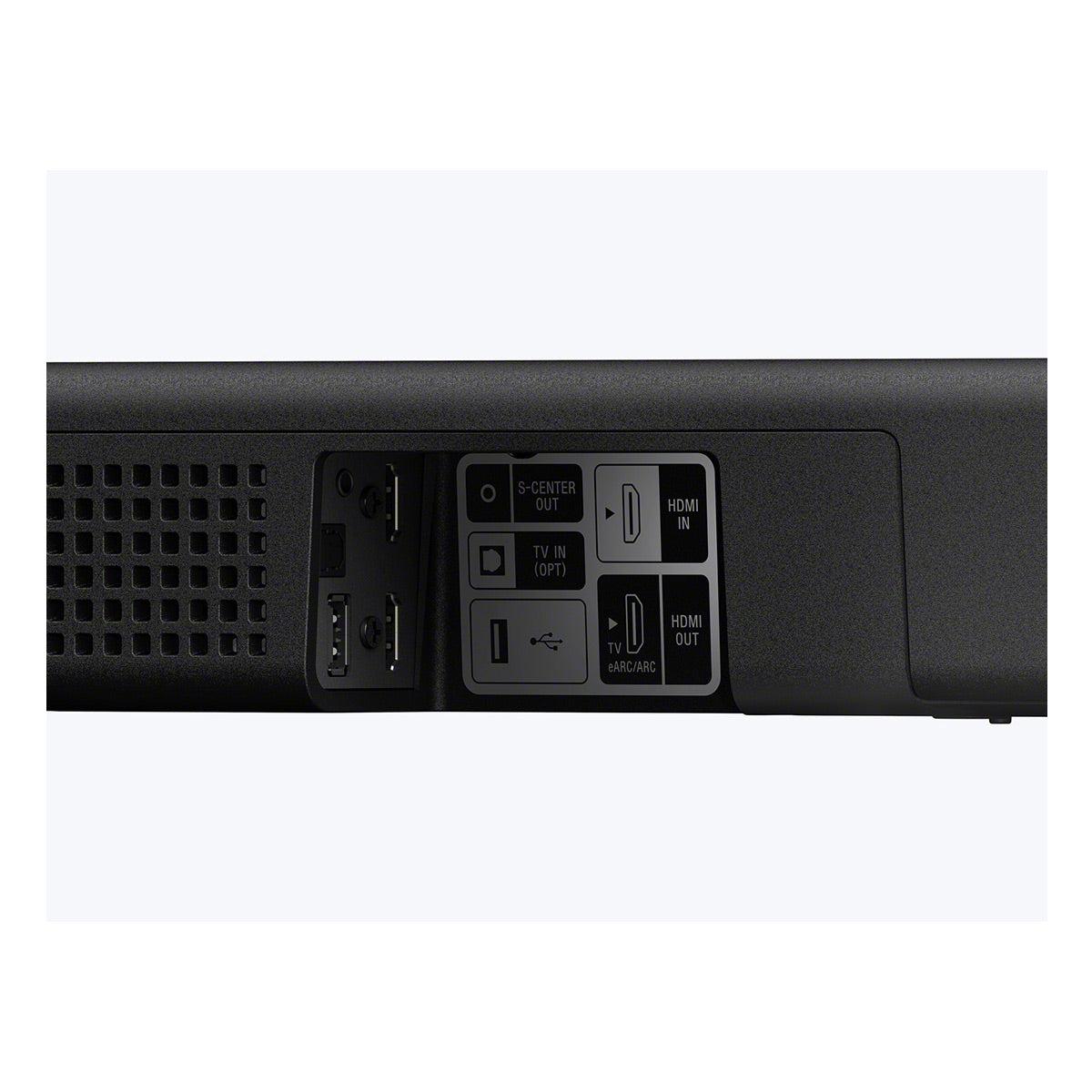
| HDMI ARC support with basic passthrough | HDMI 2.1 with eARC, 4K/8K passthrough for gaming |
| Connectivity Options - Streaming and device compatibility | |
| HDMI ARC, Optical, USB, AUX, Bluetooth | HDMI 2.1, Bluetooth, Wi-Fi, Chromecast, AirPlay 2 |
| Room Size Optimization - Best performance space | |
| 330-600 sq ft rooms with proper surround speaker placement | Medium to large rooms (designed for 75-80" TVs) |
| Expandability - Future upgrade potential | |
| Complete system with no official expansion options | Compatible with Sony wireless rear speakers and subwoofer |
| Value Proposition - Performance per dollar at time of writing | |
| Exceptional hardware value with true surround separation | Premium pricing for advanced audio technology and convenience |
For home theater use, the Sony HT-A5000 excels with Dolby Atmos and DTS:X support, providing the intended experience for modern streaming content and 4K movies. However, the Ultimea Poseidon D70 offers more engaging surround effects through its four physical speakers positioned around your room, creating genuine directional audio that many users find more immersive than virtual processing.
The core difference is approach: the Ultimea Poseidon D70 uses eight separate physical drivers (soundbar + 4 surround speakers + wireless subwoofer) for true 7.1 surround sound, while the Sony HT-A5000 packs everything into a single soundbar using advanced processing to create 5.1.2 virtual surround with height effects.
The Ultimea Poseidon D70 delivers superior bass with its dedicated 6.5-inch wireless subwoofer and BassMX™ technology. The Sony HT-A5000 has a built-in subwoofer that's adequate but can't match the depth and impact of a separate subwoofer unit.
No, only the Sony HT-A5000 supports Dolby Atmos and DTS:X formats with dedicated upward-firing drivers for height effects. The Ultimea Poseidon D70 relies on virtual surround processing and doesn't decode Dolby Atmos content properly.
The Sony HT-A5000 is much easier to install - it's a single soundbar that connects via HDMI with automatic room calibration. The Ultimea Poseidon D70 requires positioning four surround speakers around your room and connecting them with included cables, taking several hours versus 15 minutes for the Sony.
The Ultimea Poseidon D70 provides exceptional value, offering a complete 7.1 system with dedicated subwoofer and extensive customization features at a budget-friendly price. The Sony HT-A5000 costs significantly more but justifies the premium with advanced audio technology and convenience features.
Yes, but very differently. The Ultimea Poseidon D70 offers extensive customization with 121 preset EQ matrices, a 10-band graphic equalizer, and app control. The Sony HT-A5000 focuses on automatic optimization with Sound Field Optimization but has limited manual EQ adjustment options.
For modern gaming, the Sony HT-A5000 is superior with HDMI 2.1 support for 4K/120Hz gaming and low-latency processing. However, the Ultimea Poseidon D70 excels at directional audio cues through its physical surround speakers, which can be valuable for competitive gaming.
The Sony HT-A5000 requires minimal space - just the 47.75-inch soundbar itself. The Ultimea Poseidon D70 needs room for the main soundbar, wireless subwoofer placement, and positioning of four surround speakers around your seating area.
The Sony HT-A5000 is optimized for streaming with full Dolby Atmos support for Netflix, Disney+, and other premium services, plus built-in Chromecast and AirPlay 2. The Ultimea Poseidon D70 works with all streaming content but can't decode the advanced audio formats used by premium streaming services.
The Sony HT-A5000 can be expanded with official Sony wireless rear speakers and subwoofer for enhanced performance. The Ultimea Poseidon D70 comes as a complete system with no official upgrade path - all components are included from the start.
For music, it depends on your preferences. The Sony HT-A5000 includes DSEE Extreme technology to enhance compressed music files and offers excellent streaming integration. The Ultimea Poseidon D70 provides more hands-on control with extensive EQ customization and powerful bass from its dedicated subwoofer, appealing to users who like to tune their sound.
We've done our best to create useful and informative comparisons to help you decide what product to buy. Our research uses advanced automated methods to create this comparison and perfection is not possible - please contact us for corrections or questions. These are the sites we've researched in the creation of this article: ultimea.com - provantage.com - ultimea.com - youtube.com - youtube.com - bestbuy.com - the-gadgeteer.com - shopmyexchange.com - youtube.com - youtube.com - youtube.com - ultimea.com - manuals.plus - device.report - images.thdstatic.com - shopmyexchange.com - staples.com - ultimea.de - whathifi.com - electronics.sony.com - costco.com - sony.com - expertreviews.co.uk - crutchfield.com - audioadvice.com - sony.com - sony.com - bestbuy.com - videoandaudiocenter.com - community.sony.co.uk

Privacy Policy
Terms and Conditions - Affiliate Policy
Home Security
© Copyright 2008-2026.
11816 Inwood Rd #1211, Dallas, TX 75244