


When your TV's built-in speakers sound like they're trapped in a cardboard box, a soundbar becomes essential. But choosing between a simple 2.1 setup and a full surround system isn't straightforward. The Samsung HW-C450 and Ultimea Poseidon D70 represent two completely different philosophies for upgrading your audio—and at the time of writing, they're priced similarly enough that the decision comes down to what you actually need.
Both soundbars launched in 2023, but they target different audiences entirely. Samsung's approach focuses on simplicity and TV integration, while Ultimea prioritizes maximum audio performance per dollar. Understanding these fundamental differences will save you from buyer's remorse later.
Before diving into specifics, let's clarify what we're dealing with. Soundbars exist on a spectrum from basic TV audio enhancement to full home theater replacement systems. The Samsung HW-C450 sits firmly in the "simple upgrade" category—it's designed to make TV dialogue clearer and add some bass without complicating your life. The Ultimea Poseidon D70 ventures into "serious home theater" territory, attempting to recreate a movie theater experience in your living room.
This distinction matters because your expectations should align with the category. If you want to hear dialogue better while watching Netflix, both will deliver. If you want to feel like bullets are whizzing past your ears during action scenes, only one will truly succeed.
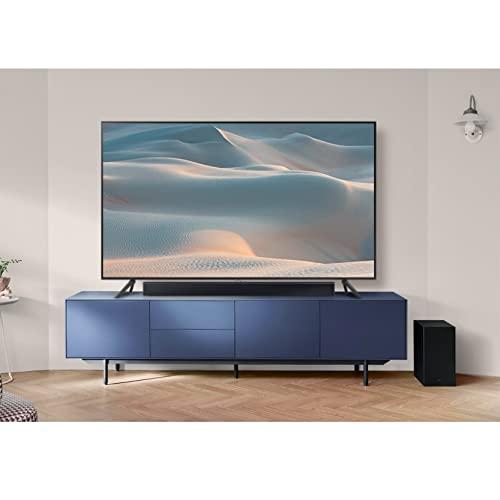
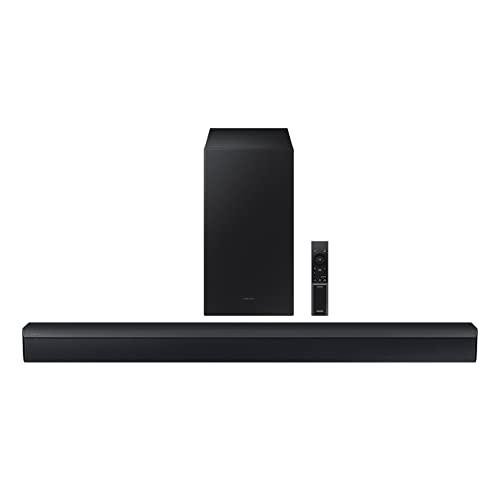
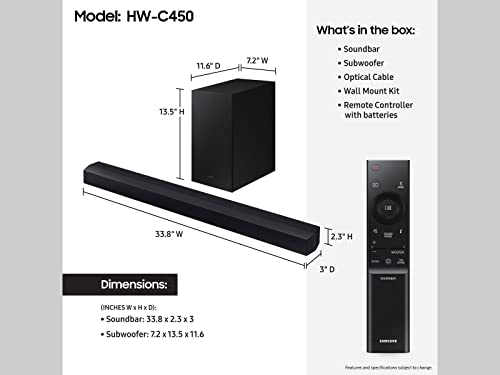
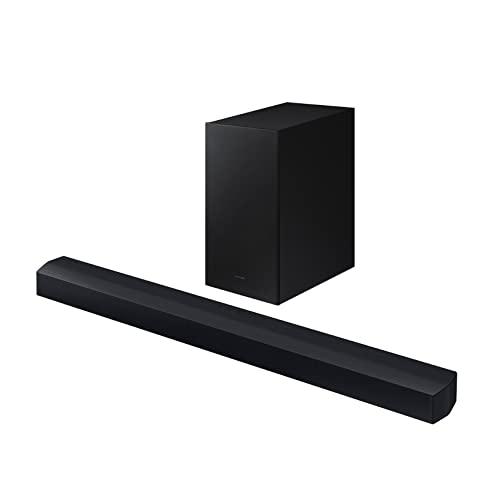
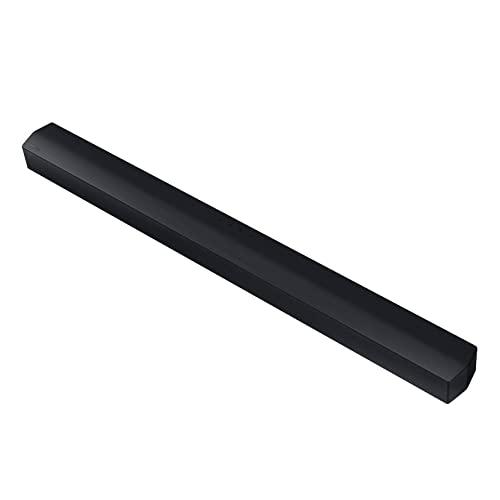
The Samsung HW-C450 embodies the "keep it simple" philosophy. Released in 2023 as part of Samsung's entry-level C-series, it represents years of refinement in making soundbars that just work without fuss. You get a sleek black soundbar that sits under your TV and a wireless subwoofer that you can tuck anywhere within about 30 feet.
What makes the Samsung HW-C450 appealing is its DTS Virtual:X technology. This is essentially audio wizardry that takes regular stereo or 5.1 surround content and processes it to create the illusion of sound coming from all around you, even though you only have speakers in front. It's like an audio magic trick—not quite the real thing, but surprisingly convincing for what it is.
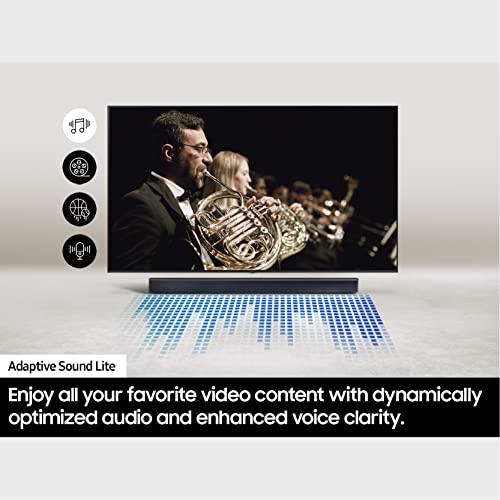
The system includes Samsung's Adaptive Sound Lite, which automatically adjusts audio settings based on what you're watching. During dialogue-heavy scenes, it boosts the frequency range where human voices live (roughly 1-4kHz), making conversations clearer. When explosions happen, it emphasizes the bass frequencies to add impact. This happens transparently in the background, which perfectly matches Samsung's user-friendly approach.
For gaming, the Samsung HW-C450 includes a dedicated Game Mode that reduces audio lag—the delay between when something happens on screen and when you hear it. This latency reduction is crucial for competitive gaming where split-second timing matters. However, since the system only has three physical speakers total, don't expect pinpoint directional accuracy for locating enemy footsteps.
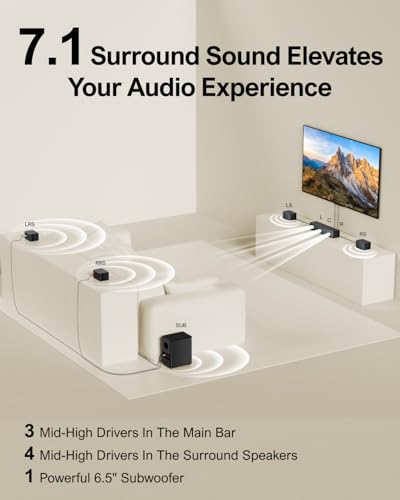
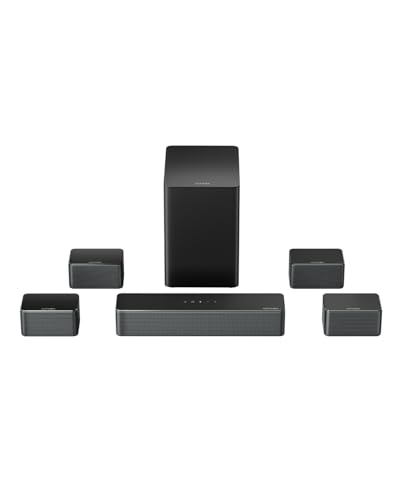
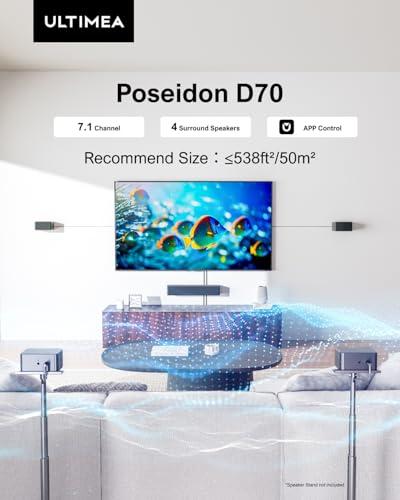
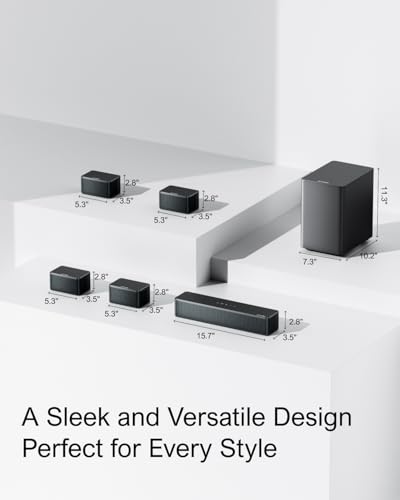
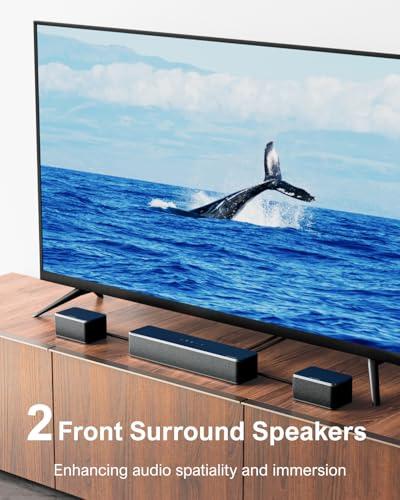
The Ultimea Poseidon D70 takes a radically different approach. Instead of virtual surround sound, it gives you the real deal: eight separate speakers positioned around your room. This includes the main soundbar with three drivers, four satellite speakers that you place behind and to the sides of your seating area, and a 6.5-inch wireless subwoofer.
This physical speaker placement creates what audio enthusiasts call "discrete surround sound"—each audio channel gets its own dedicated speaker rather than relying on processing tricks. When a helicopter flies overhead in a movie, you'll hear it move from the front speakers to the rear speakers in a smooth arc. When someone whispers behind you in a horror film, that sound actually comes from behind you, not from speakers in front trying to fool your brain.
The Ultimea Poseidon D70 incorporates what the company calls AI deep learning audio optimization. While marketing terms like this often amount to fancy equalization, in practice it means the system analyzes incoming audio in real-time and adjusts processing based on content type. During dialogue scenes, it emphasizes vocal clarity. During action sequences, it enhances dynamic range—the difference between quiet and loud sounds—to maximize impact.
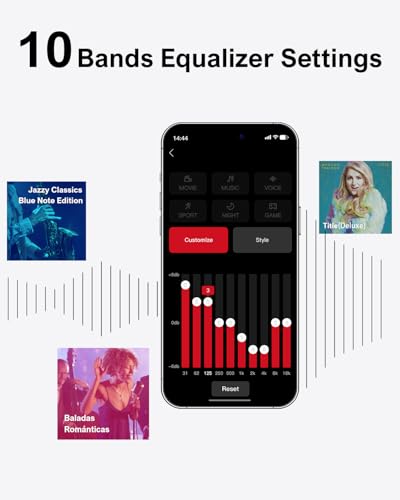
What sets the Ultimea Poseidon D70 apart is its 10-band graphic equalizer accessible through a smartphone app. This lets you adjust specific frequency ranges to match your room acoustics or personal preferences. If your room has hardwood floors that make dialogue sound harsh, you can reduce the 2-4kHz range. If your space absorbs bass, you can boost the 60-120Hz range to compensate.
The numbers tell an interesting story. The Samsung HW-C450 delivers 300W total power with the majority (220W) coming from its subwoofer. The Ultimea Poseidon D70 provides 410W distributed across eight speakers. But raw wattage only tells part of the story.
What matters more is how that power gets used. The Samsung HW-C450 concentrates all its energy in two locations—the soundbar under your TV and the subwoofer somewhere nearby. This creates a focused listening sweet spot directly in front of your TV but can leave side seating positions feeling disconnected from the audio.
The Ultimea Poseidon D70 spreads its power around the room, creating more even coverage. With speakers positioned at multiple points, everyone in the room gets enveloped by sound rather than just those sitting directly in front. This distribution advantage becomes crucial in larger rooms or when you have multiple seating positions.
From our research into user experiences, the Samsung HW-C450 works well in rooms up to about 200 square feet, while the Ultimea Poseidon D70 can effectively fill spaces approaching 300 square feet. Beyond these sizes, you start running into the physical limitations of each approach.
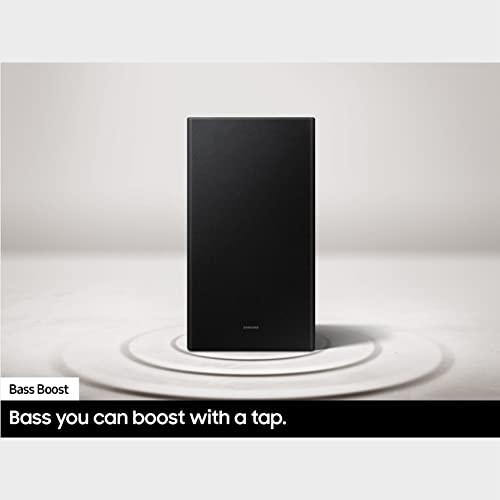
Bass response separates good soundbars from great ones, and these two systems handle low frequencies very differently. The Samsung HW-C450 relies on a single wireless subwoofer with Bass Boost mode for added impact. This approach works well for most content, providing the thump you need for action movies and the warmth that makes music enjoyable.
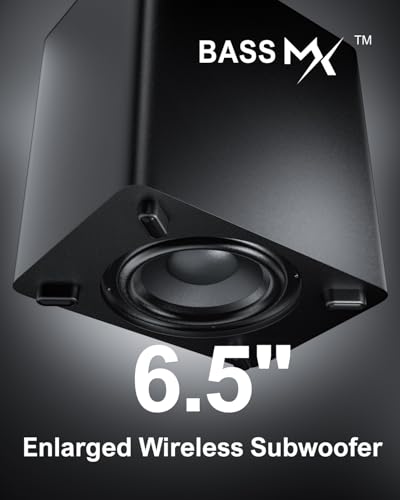
The Ultimea Poseidon D70 uses a larger 6.5-inch driver in its wireless subwoofer, combined with BassMX technology that extends frequency response down to 35Hz. To put this in perspective, 35Hz covers the lowest notes on a bass guitar and the rumble of thunder or explosions. The Samsung HW-C450 likely bottoms out around 50-60Hz, which still covers most bass content but misses the deepest impacts.
Based on user feedback we've analyzed, the bass difference becomes most apparent during action movies and electronic music. The Ultimea Poseidon D70 delivers more subsonic rumble—those low frequencies you feel as much as hear. The Samsung HW-C450 provides solid bass impact but doesn't reach quite as deep.
Since most of your soundbar usage involves TV shows and movies with dialogue, voice clarity often matters more than explosive bass or surround effects. Both systems excel here but through different methods.
The Samsung HW-C450 uses Voice Enhance mode that specifically boosts the frequency range where human speech occurs. This is particularly effective for older movies or shows with muddy audio mixing where dialogue gets buried under background music or effects. The Adaptive Sound Lite feature continuously monitors content and automatically maintains optimal dialogue levels.
The Ultimea Poseidon D70 tackles dialogue clarity through its AI processing and customizable equalization. You can fine-tune vocal frequencies to match your specific room acoustics or hearing preferences. If you find certain actors hard to understand, you can boost the specific frequency range where their voice sits.
From reviews we've studied, both systems receive consistent praise for dialogue clarity. The Samsung HW-C450 gets points for making dialogue enhancement automatic and transparent, while the Ultimea Poseidon D70 earns recognition for allowing precise customization.
Gaming represents one area where the fundamental differences between these systems become crystal clear. The Samsung HW-C450 includes Game Mode that reduces audio latency and optimizes virtual surround processing for gaming content. This helps with general immersion and ensures audio sync stays tight with fast-paced action.
However, virtual surround processing has inherent limitations for competitive gaming. When you need to locate enemy footsteps in a first-person shooter, virtual processing provides general directional cues but lacks the precision of physical speakers placed around the room.
The Ultimea Poseidon D70 excels for gaming because those four surround speakers provide genuine 360-degree audio positioning. Footsteps behind you actually come from speakers behind you. Gunfire to your left originates from speakers to your left. This spatial accuracy can provide legitimate competitive advantages in games where audio cues matter.
Gaming enthusiasts we've encountered consistently prefer systems with physical surround speakers for competitive play while acknowledging that virtual surround works fine for casual gaming.
Here's where these products diverge most dramatically in day-to-day usability. The Samsung HW-C450 setup takes about 15 minutes. You position the soundbar, place the wireless subwoofer within range, connect one cable to your TV, and you're done. The subwoofer pairs automatically, and Samsung TV owners get bonus integration features like One Remote Control support.
The Ultimea Poseidon D70 demands significantly more commitment. You need to position four surround speakers around your seating area and run cables from the subwoofer to each speaker. The included cables are generously long (up to 6 meters), but you'll still need to plan wire routing around doorways, under furniture, or along walls. Expect 45-60 minutes for a clean installation.
This setup complexity has real implications. If you rent your home, running speaker wires may not be practical. If you rearrange furniture frequently, having four speakers positioned around the room creates constraints. If other family members need to use the system, the Samsung HW-C450 presents a much simpler learning curve.
Conversely, if you have a dedicated entertainment room and don't mind the installation effort, the Ultimea Poseidon D70 rewards that investment with significantly better audio performance.
The control experience reflects each system's philosophy. The Samsung HW-C450 comes with a straightforward remote and integrates with Samsung TV remotes for unified control. Sound modes are preset and automatic—you select Movie, Music, or Game mode and let the system handle the details.
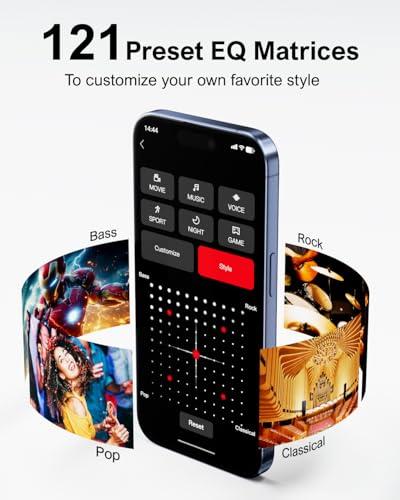
The Ultimea Poseidon D70 provides extensive control through its smartphone app. The 10-band equalizer lets you adjust frequencies with precision, while 121 preset EQ matrices cover everything from classical music to action movies to specific game genres. This level of control appeals to audio enthusiasts but can overwhelm users who just want better TV sound.
Based on user feedback, the Samsung HW-C450 wins for family friendliness and simplicity, while the Ultimea Poseidon D70 satisfies users who enjoy tweaking and optimizing their audio setup.
At the time of writing, these systems are priced within about $10-15 of each other, making value comparison particularly relevant. The Samsung HW-C450 commands a slight premium for its brand reputation and Samsung ecosystem integration. You're paying for proven reliability and simplified user experience.
The Ultimea Poseidon D70 delivers dramatically more hardware for similar money—eight speakers instead of three, 37% more power output, and extensive customization capabilities. From a pure specifications perspective, it offers exceptional value.
However, value depends on utilization. If you use 30% of the Ultimea Poseidon D70's capabilities, the Samsung HW-C450 might represent better value through its simplicity and reliability. If you maximize the Ultimea's features, it becomes an outstanding value proposition.
Choose the Samsung HW-C450 if you prioritize simplicity and integration. It's ideal for Samsung TV owners who want noticeably better audio without complexity. If you live in a rental property, move frequently, or share your entertainment system with less tech-savvy family members, the Samsung approach makes more sense. It also works well in smaller rooms where physical surround speaker placement isn't practical.
Choose the Ultimea Poseidon D70 if audio performance is your primary concern and you're willing to invest setup time for better results. It's perfect for dedicated home theater rooms, gaming enthusiasts who value directional accuracy, and audio hobbyists who enjoy customization. The system really shines in larger rooms where its distributed speaker placement provides more even coverage than front-focused alternatives.
Consider your long-term usage patterns. If you primarily watch TV shows and news, either system will satisfy your needs, but the Samsung HW-C450 offers easier daily operation. If you regularly watch movies, play games, or listen to music with attention to audio quality, the Ultimea Poseidon D70 will provide a more engaging experience.
The decision ultimately comes down to whether you value convenience or performance more highly. Both systems deliver significant improvements over TV speakers, but they achieve that improvement through fundamentally different approaches that align with different user priorities and living situations.
| Samsung HW-C450 | Ultimea Poseidon D70 |
|---|---|
| Channel Configuration - Determines authentic vs simulated surround sound | |
| 2.1 channels with 3 total speakers | True 7.1 channels with 8 discrete speakers |
| Total Power Output - Affects maximum volume and room coverage | |
| 300W total (220W subwoofer, 80W soundbar) | 410W peak distributed across 8 speakers |
| Speaker Setup - Impacts installation complexity and flexibility | |
| Wireless subwoofer + main soundbar only | 4 wired surround speakers + wireless sub + soundbar |
| Room Size Coverage - Critical for proper audio distribution | |
| Effective up to ~200 sq ft (concentrated front audio) | Covers up to 270 sq ft with even sound distribution |
| Surround Sound Technology - Virtual processing vs physical placement | |
| DTS Virtual:X creates simulated surround effects | Physical surround speakers provide authentic directional audio |
| Bass Extension - Determines depth of low-frequency response | |
| Standard wireless subwoofer (~50-60Hz likely) | 6.5" subwoofer with BassMX extends to 35Hz |
| Audio Customization - Controls available for sound tuning | |
| Preset modes only (Movie, Music, Game, etc.) | 10-band EQ + 121 preset matrices via smartphone app |
| Setup Time - Real-world installation effort required | |
| 10-15 minutes (plug and play with auto-pairing) | 45-60 minutes (speaker placement + cable routing) |
| Connectivity Options - Determines device compatibility | |
| Optical, USB, Bluetooth 4.2 (no HDMI) | HDMI ARC, Optical, USB, Bluetooth 5.3 |
| TV Integration - Seamless control and ecosystem benefits | |
| Excellent with Samsung TVs (One Remote support) | Universal compatibility but no special TV brand features |
| Gaming Performance - Directional accuracy for competitive play | |
| Game Mode with virtual positioning | Physical surround speakers provide precise directional cues |
| Target User - Best suited for specific needs and preferences | |
| Simple upgrade seekers, renters, small spaces | Home theater enthusiasts, gamers, permanent setups |
The Samsung HW-C450 is ideal for small apartments due to its simple two-piece design and minimal cable requirements. You only need to place the wireless subwoofer and connect one optical cable to your TV. The Ultimea Poseidon D70 requires running speaker wires to four surround speakers, which can be challenging in rental properties or tight spaces.
The Samsung HW-C450 uses 2.1 channels with virtual surround processing to simulate directional audio from just three speakers. The Ultimea Poseidon D70 provides true 7.1 surround sound with eight physical speakers positioned around your room, creating authentic directional audio where sounds actually come from behind and beside you.
The Ultimea Poseidon D70 delivers superior bass with its 6.5-inch subwoofer and BassMX technology, extending down to 35Hz for deeper impact. The Samsung HW-C450 provides solid bass through its wireless subwoofer but doesn't reach as deep into the low frequencies, making the Ultimea Poseidon D70 better for action movies and music.
The Samsung HW-C450 takes about 15 minutes to set up with automatic wireless pairing and one cable connection. The Ultimea Poseidon D70 requires 45-60 minutes due to positioning four surround speakers and routing the included cables around your room. Choose the Samsung HW-C450 if you prioritize simple installation.
The Ultimea Poseidon D70 excels for gaming because its four physical surround speakers provide precise directional audio for locating enemies and environmental cues. While the Samsung HW-C450 includes Game Mode for reduced latency, it can only simulate directional audio through processing rather than actual speaker placement.
Both soundbars excel at dialogue clarity but through different approaches. The Samsung HW-C450 uses Voice Enhance mode and Adaptive Sound Lite for automatic speech optimization. The Ultimea Poseidon D70 offers AI processing and a 10-band equalizer that lets you fine-tune vocal frequencies to your preference and room acoustics.
The Ultimea Poseidon D70 offers exceptional hardware value with eight speakers and 410W of power compared to the Samsung HW-C450's three speakers and 300W. However, the Samsung HW-C450 provides value through simplicity, brand reliability, and Samsung TV integration if you prioritize ease of use over maximum performance.
The Samsung HW-C450 integrates seamlessly with Samsung TV remotes through One Remote Control support. The Ultimea Poseidon D70 works with most TV remotes through HDMI ARC but doesn't offer the same deep integration. Both systems include their own dedicated remotes for full functionality.
The Ultimea Poseidon D70 performs better in large rooms up to 270 square feet because its distributed speaker placement provides even audio coverage throughout the space. The Samsung HW-C450 works well in rooms up to 200 square feet but may leave side seating positions feeling disconnected from the audio in larger spaces.
The Samsung HW-C450 provides preset sound modes (Movie, Music, Game) with automatic optimization through Adaptive Sound Lite. The Ultimea Poseidon D70 offers extensive customization with a smartphone app featuring a 10-band equalizer and 121 preset EQ matrices, making it better for users who enjoy fine-tuning their audio experience.
The Ultimea Poseidon D70 creates a more authentic home theater experience with its true 7.1 surround sound and physical speaker placement that envelops viewers in directional audio. The Samsung HW-C450 provides a solid TV audio upgrade but relies on virtual processing that can't match the immersion of actual surround speakers for movie watching.
The Ultimea Poseidon D70 offers more comprehensive connectivity with HDMI ARC, optical, USB, and Bluetooth 5.3 for modern device compatibility. The Samsung HW-C450 provides optical, USB, and Bluetooth 4.2 but lacks HDMI connectivity, which may limit integration with newer TVs and gaming consoles that benefit from HDMI ARC features.
We've done our best to create useful and informative comparisons to help you decide what product to buy. Our research uses advanced automated methods to create this comparison and perfection is not possible - please contact us for corrections or questions. These are the sites we've researched in the creation of this article: e-catalog.com - alibaba.com - smart.dhgate.com - greentoe.com - requiremints.com - versus.com - bhphotovideo.com - rtings.com - soundmachine.com.mt - samsung.com - samsung.com - youtube.com - bhphotovideo.com - newegg.com - images.samsung.com - bestbuy.com - samsung.com - youtube.com - jsappliance.com - gadgetsleo.com - youtube.com - saraappliance.com - walmart.com - ultimea.com - provantage.com - ultimea.com - youtube.com - youtube.com - bestbuy.com - the-gadgeteer.com - shopmyexchange.com - youtube.com - youtube.com - youtube.com - ultimea.com - manuals.plus - device.report - images.thdstatic.com - shopmyexchange.com - staples.com - ultimea.de

Privacy Policy
Terms and Conditions - Affiliate Policy
Home Security
© Copyright 2008-2026.
11816 Inwood Rd #1211, Dallas, TX 75244