


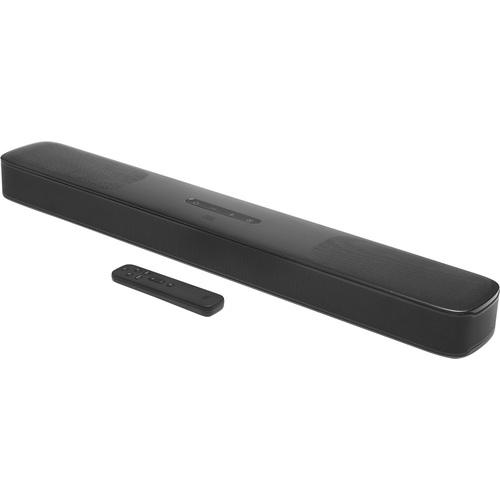
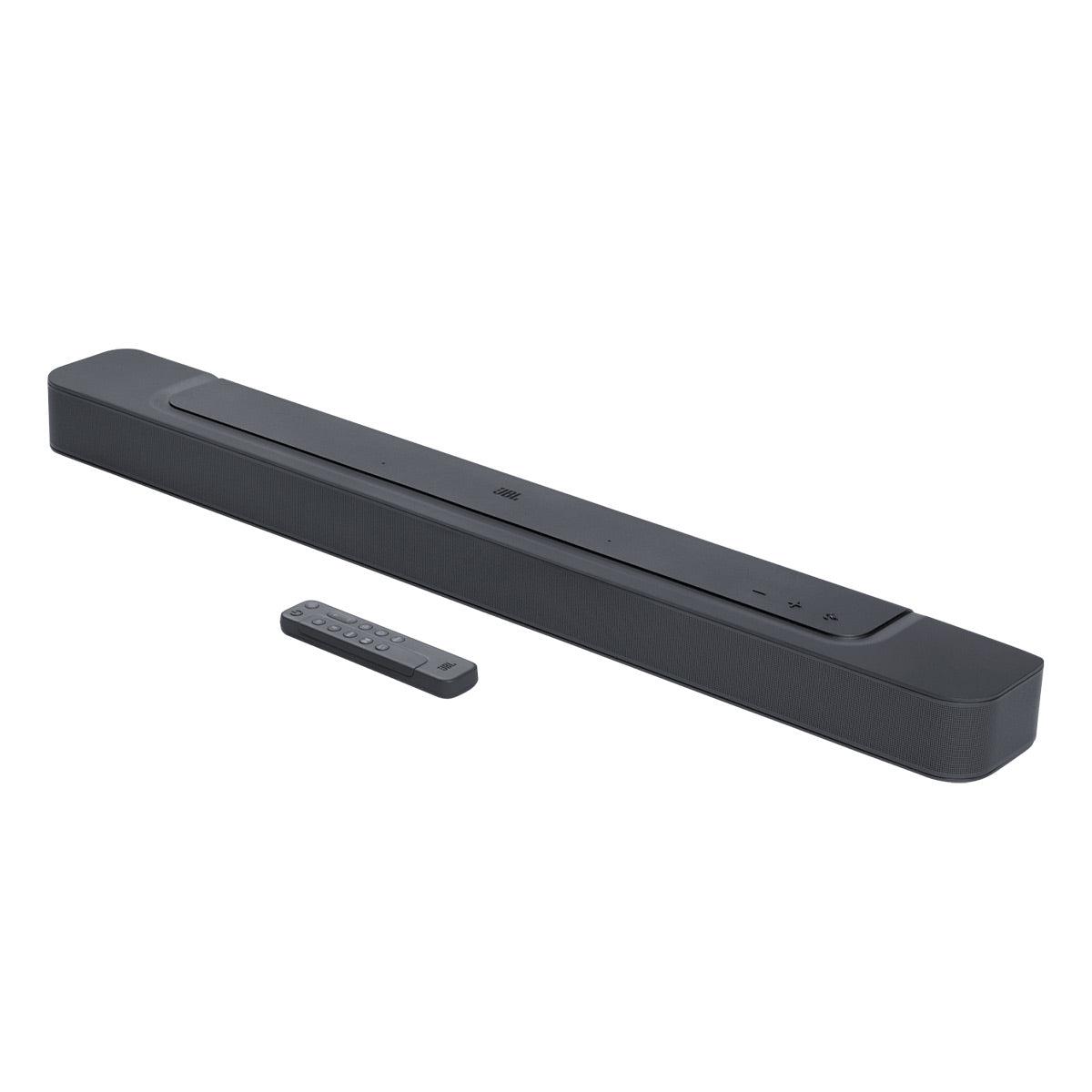
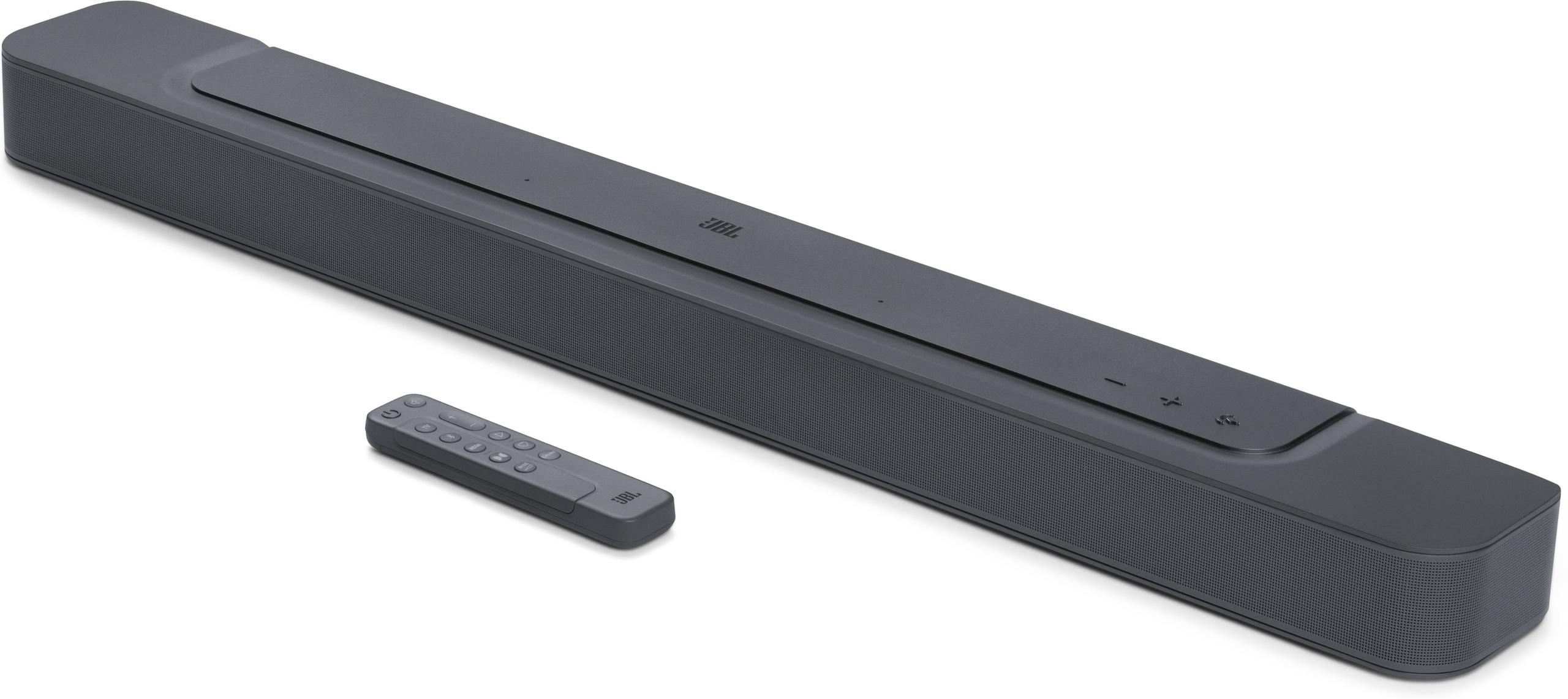

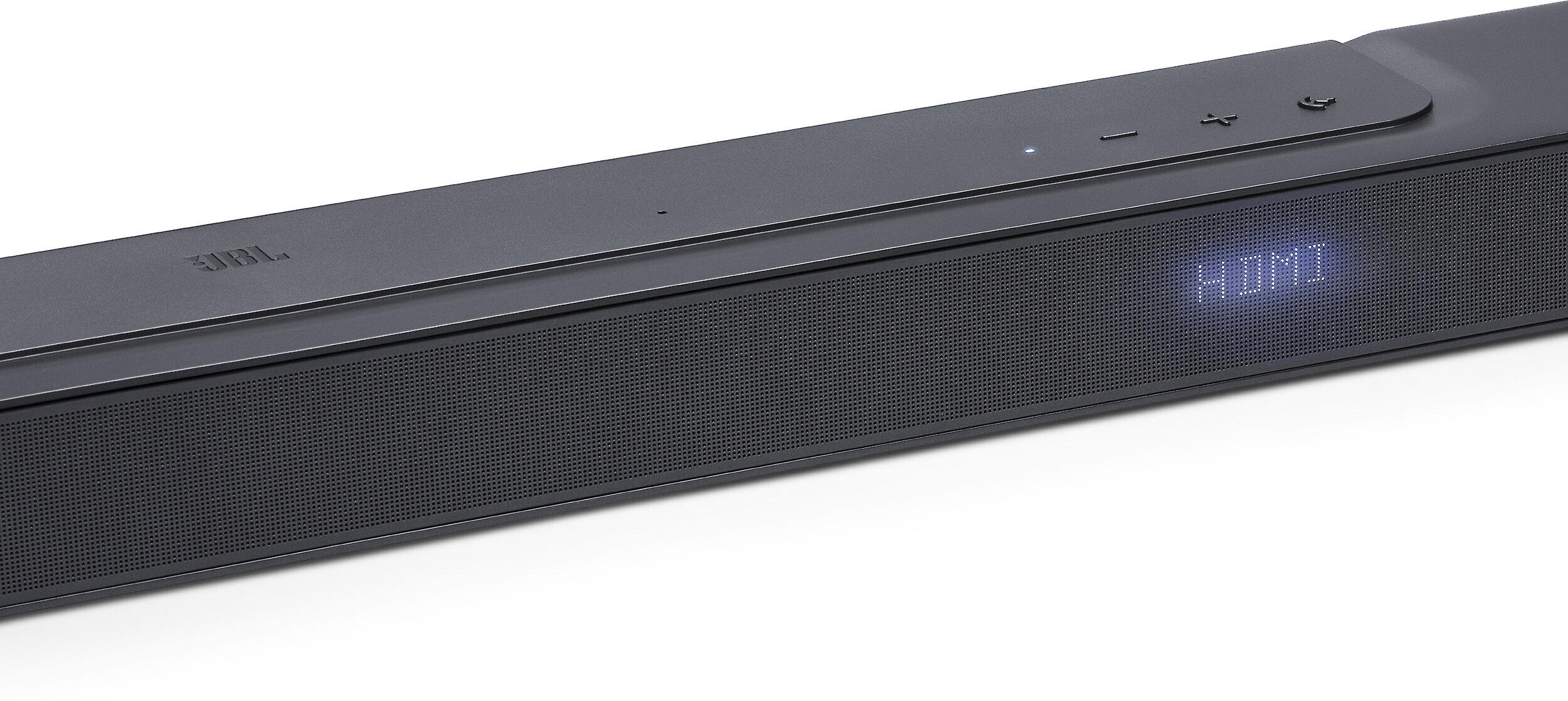


When your TV's built-in speakers sound like they're trapped inside a tin can, it's time to upgrade to a soundbar. But not all soundbars are created equal, and the choice between authentic surround sound and virtual processing can make or break your home theater experience. Today we're diving deep into two fundamentally different approaches to better audio: the Ultimea Poseidon D70 with its true 7.1 surround system versus the JBL Bar 300 and its sleek virtual surround technology.
The soundbar market has exploded in recent years as people seek better TV audio without the complexity of traditional home theater systems. At its core, you're choosing between two philosophies: systems that use multiple physical speakers placed around your room (true surround) versus sophisticated single-bar solutions that use acoustic tricks to simulate that same effect (virtual surround).
The key considerations haven't changed much—you want better dialogue clarity than your TV provides, some bass impact for action scenes, and ideally, sound that feels like it's coming from more than just the spot directly below your screen. What has changed dramatically is how different systems achieve these goals and what additional features they bring to the table.
Modern soundbars also need to handle streaming audio, support the latest surround sound formats like Dolby Atmos (which adds height channels for overhead sound effects), and integrate with smart home systems. The JBL Bar 300, released in 2024, represents this new generation with built-in Wi-Fi and voice control. The Ultimea Poseidon D70, also from 2024, takes a more traditional approach by focusing on authentic speaker placement and customization.
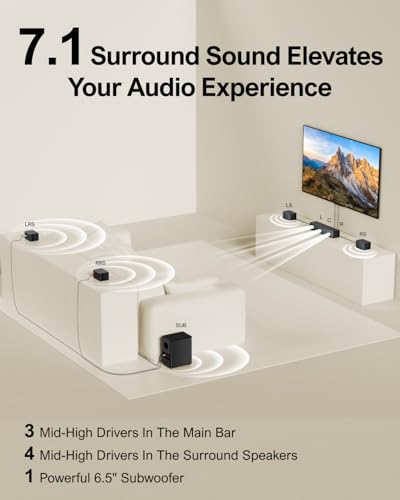
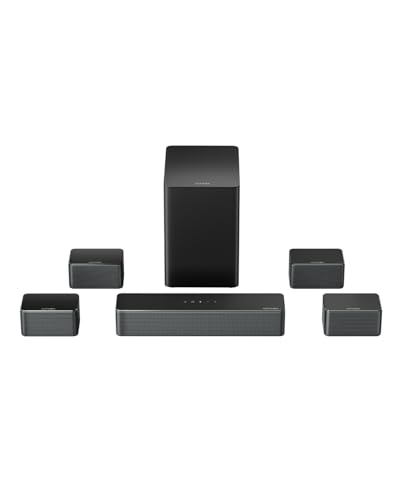
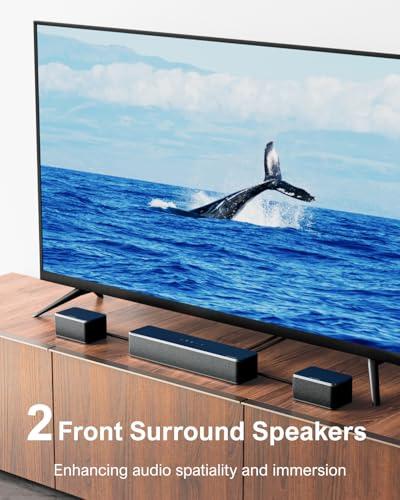
Here's where things get interesting from a technical standpoint. The Ultimea Poseidon D70 gives you eight actual speakers: three in the main soundbar, four detachable satellite speakers you place around your room, and a wireless subwoofer. When a helicopter flies overhead in a movie, the sound literally moves from the front speakers to the rear ones because there are actual speakers behind you creating that effect.
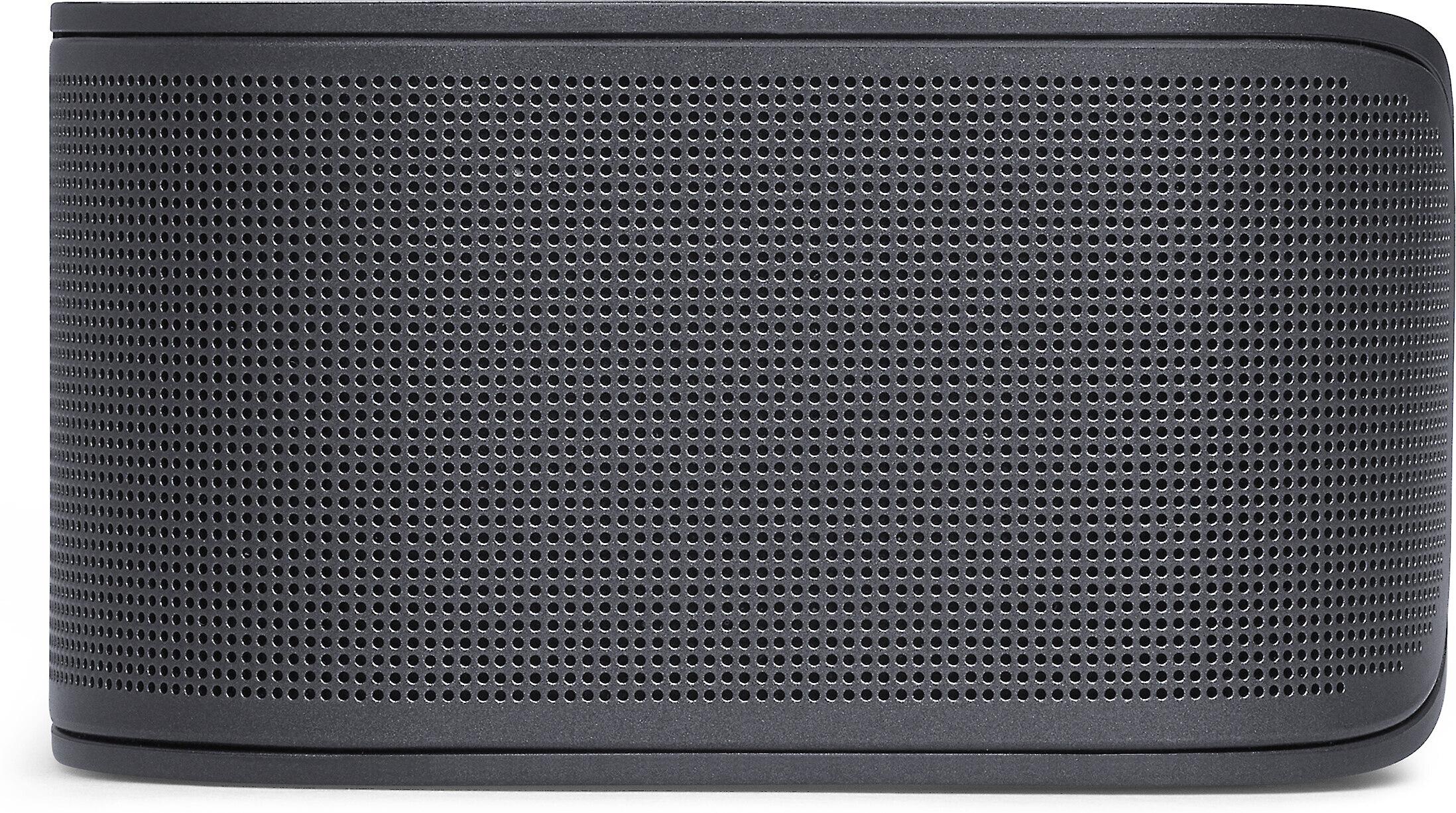
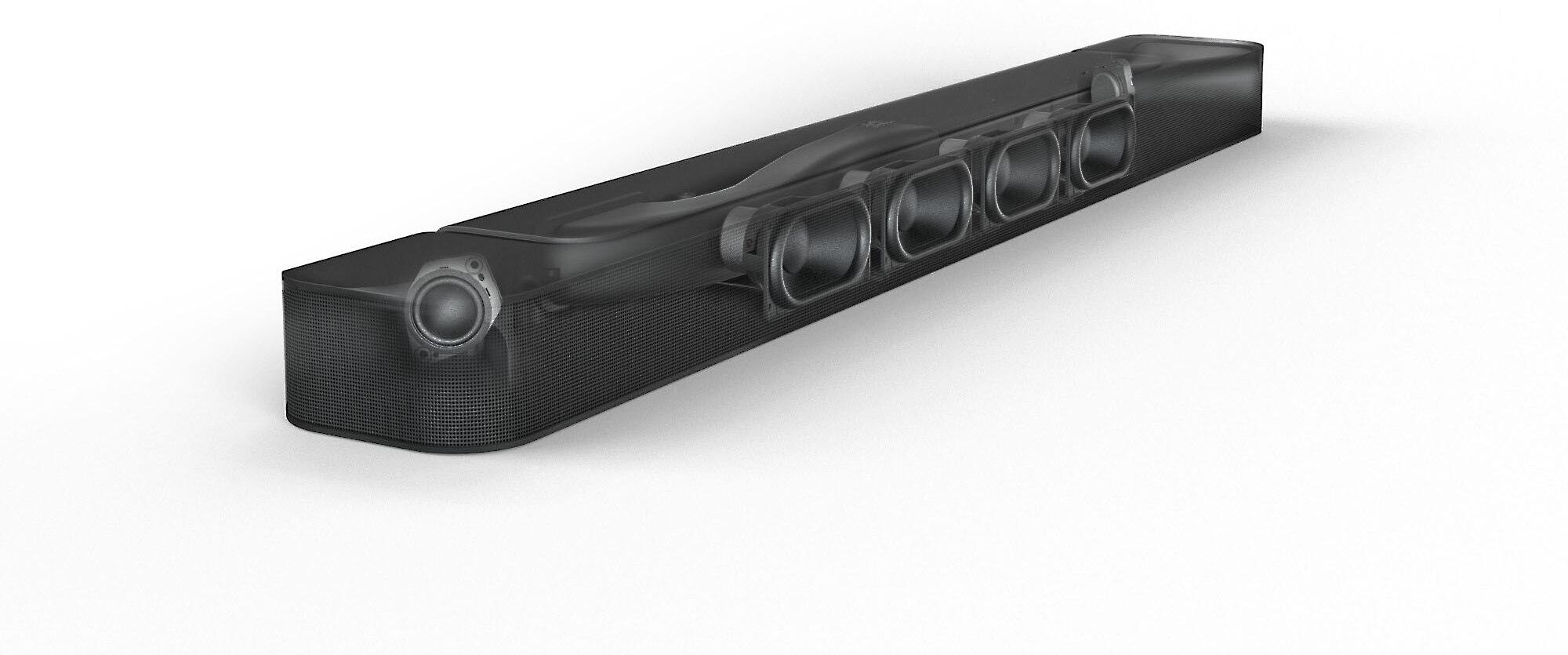
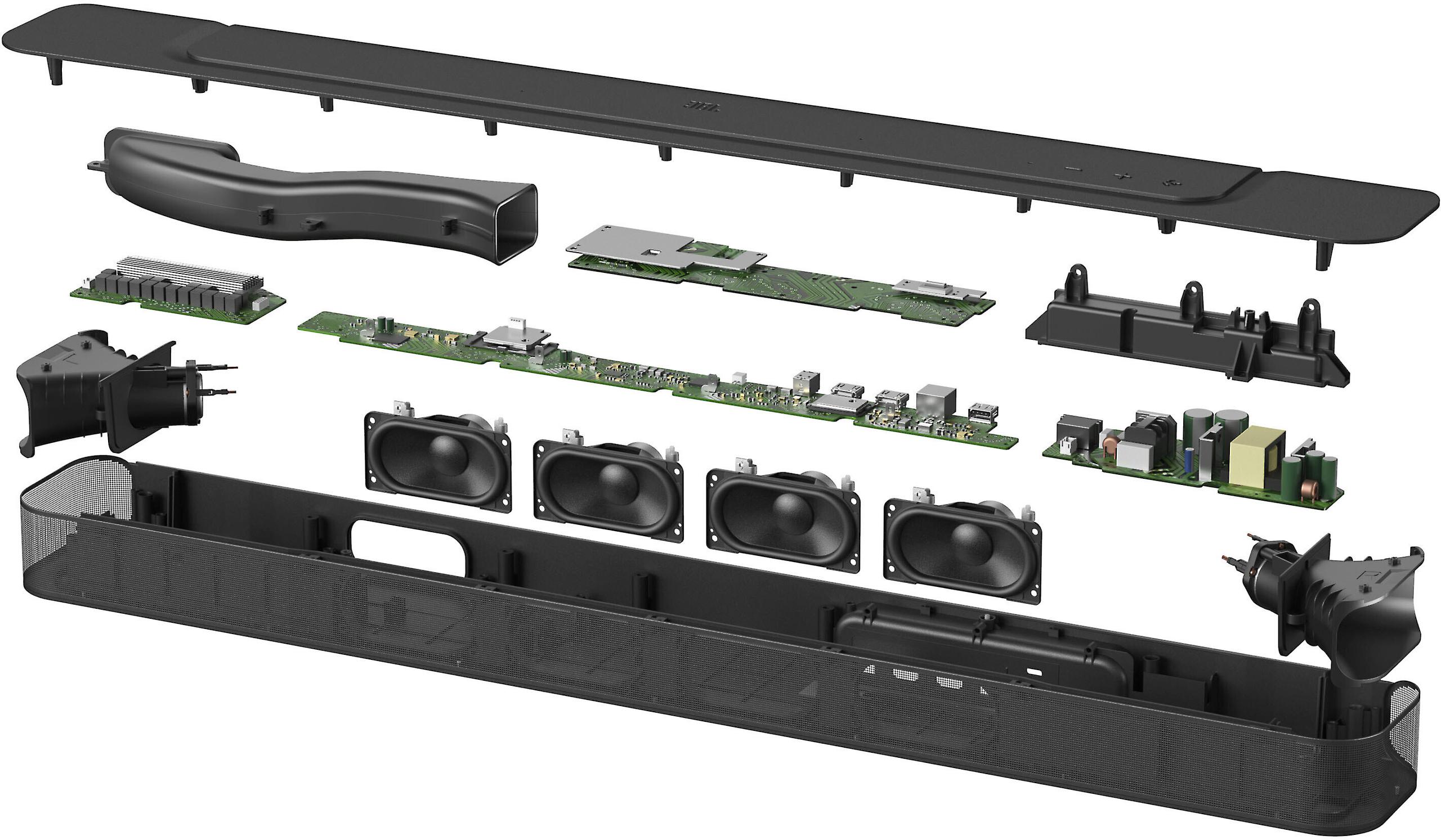
The JBL Bar 300 accomplishes something that seems almost magical using what's called MultiBeam technology. It houses six precisely angled speakers inside its single bar, including side-firing and upward-angled drivers. These bounce sound off your walls and ceiling in carefully calculated patterns. Your brain interprets these reflections as coming from different locations, creating the illusion of surround sound without any speakers actually being positioned around your room.
Both approaches work, but they work differently. The Poseidon D70's method is straightforward physics—sound comes from where the speakers are located. The JBL's approach relies on psychoacoustics (how your brain interprets sound) and room acoustics. In a room with good reflective surfaces and appropriate size, virtual surround can be convincingly effective. In a room with heavy curtains, carpeting, or unusual dimensions, physical speakers will always win.
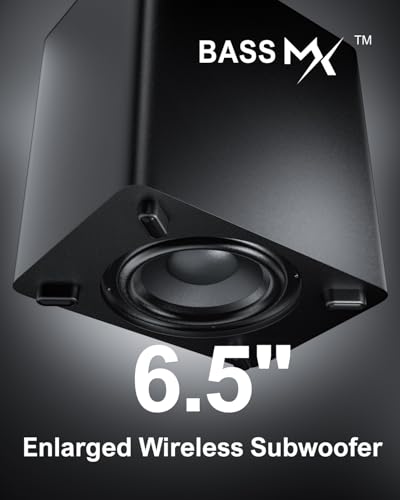
Nothing reveals the difference between these systems quite like bass performance. The Ultimea Poseidon D70 includes a dedicated 6.5-inch wireless subwoofer that can reproduce frequencies down to 35Hz—that's getting into the territory where you feel sound as much as hear it. This separate subwoofer can be positioned anywhere in your room for optimal bass response, typically in a corner where room boundaries amplify the low-frequency output.
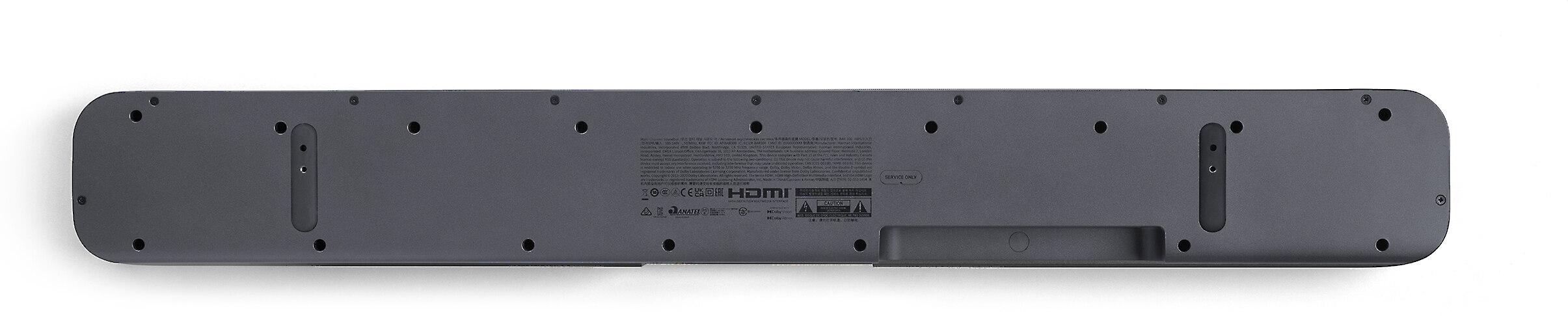
The JBL Bar 300 takes a different approach with built-in bass enhancement through rear-firing ports. These are essentially openings that allow the soundbar's internal drivers to move more air, extending bass response down to around 50Hz. While this produces what reviewers consistently describe as "punchy" bass, there's simply no substitute for the air movement and room coupling that a dedicated subwoofer provides.
From our research into user experiences, this difference becomes most apparent during action movies. The Poseidon D70 delivers the kind of bass that makes explosion scenes feel visceral, while the JBL Bar 300 provides enough low-end to enhance the experience without overwhelming smaller rooms. For music listening, both systems handle most genres adequately, though bass-heavy electronic music and hip-hop clearly benefit from the Poseidon's dedicated subwoofer.
Understanding power output helps explain why these systems perform differently in various spaces. The Ultimea Poseidon D70 distributes 144 watts RMS (the continuous power rating that matters more than peak specs) across eight speakers, with peak output reaching 410 watts during dynamic passages. This distributed power approach means each speaker can focus on its specific frequency range without being overworked.
The JBL Bar 300 concentrates 260 watts RMS into its compact form factor. That's actually more total power, but it's all coming from one location. In smaller rooms under 200 square feet, this concentrated approach can work brilliantly, especially with the automatic room calibration that optimizes the sound for your specific space.
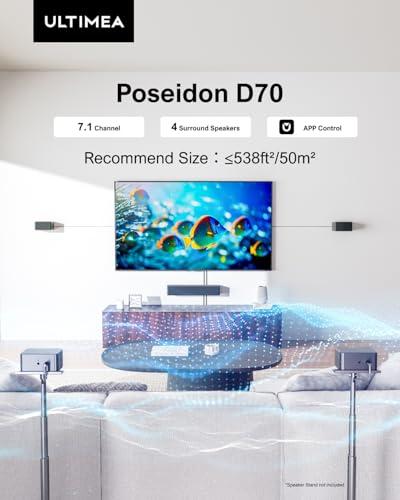
The room size consideration is crucial here. Based on user feedback and expert reviews, the Poseidon D70 excels in larger spaces and open floor plans where its distributed speakers maintain consistent coverage throughout the area. The JBL Bar 300 works best in more intimate settings where wall reflections remain strong enough to create convincing virtual surround effects.
Here's where the 2024 release date of the JBL Bar 300 shows its advantage. It supports Dolby Atmos, the current standard for premium surround sound that adds height channels for overhead effects. When a scene has rain, helicopters, or ceiling-mounted speakers in a movie, Dolby Atmos places those sounds above you rather than just around you. The Ultimea Poseidon D70 doesn't support Atmos, which is becoming increasingly important as streaming services expand their Atmos content libraries.
The JBL also includes PureVoice dialogue enhancement technology, which uses algorithms to identify and boost voice frequencies while reducing competing sounds. This addresses one of the most common complaints about modern movies and TV shows—dialogue that gets lost in the mix. While the Poseidon D70 can be manually adjusted through its extensive equalizer options, the JBL's automatic approach works more seamlessly for most users.
For streaming integration, the differences are night and day. The JBL Bar 300 includes Wi-Fi 6 support, built-in Chromecast, AirPlay 2, and direct access to over 300 streaming services. You can literally stream Spotify, Apple Music, or podcasts directly to the soundbar without any other device. The Ultimea Poseidon D70 requires Bluetooth pairing or wired connections, which works fine but feels dated compared to the seamless streaming experience of its competitor.
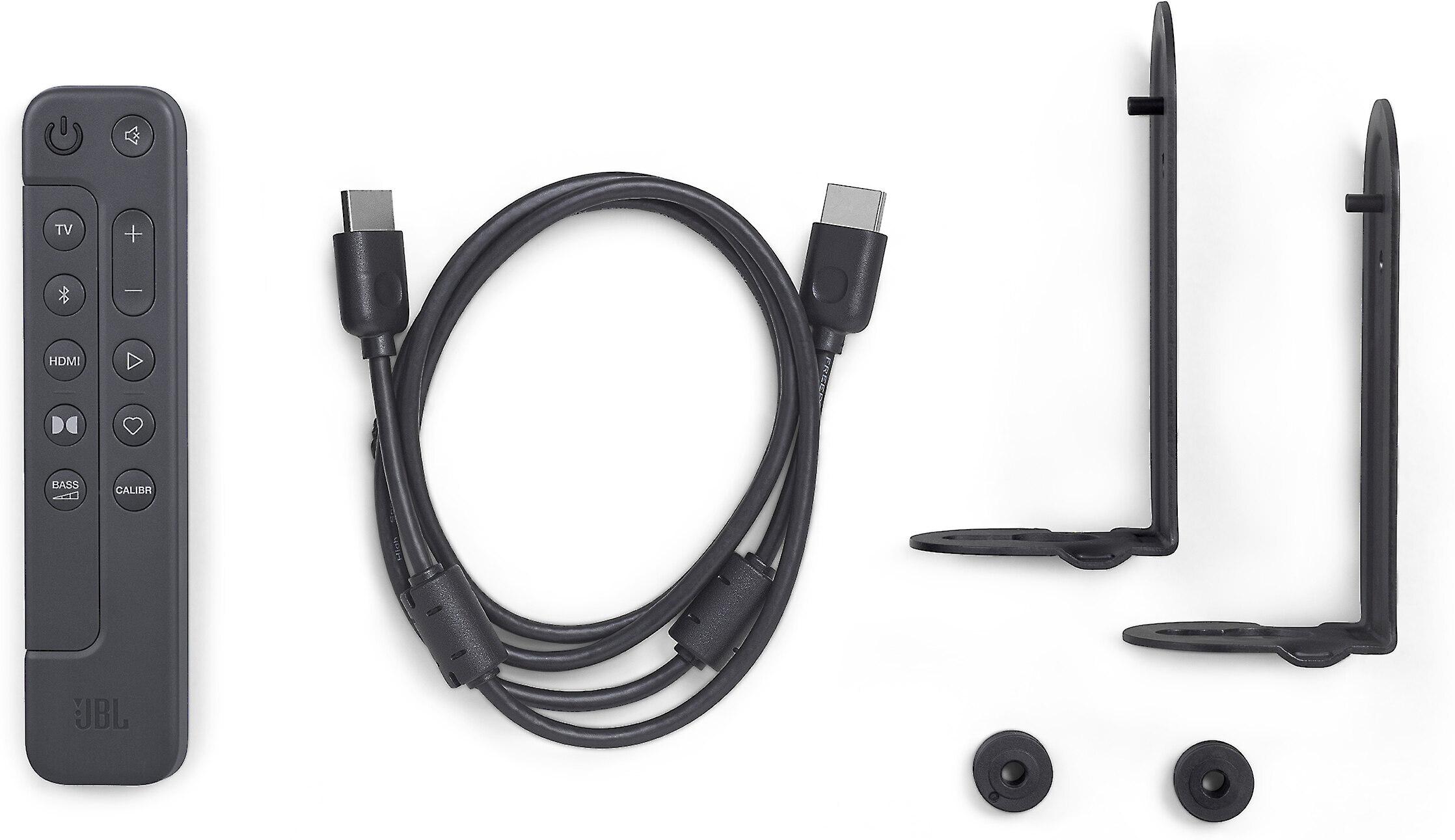
This is where personal preference heavily influences the decision. Setting up the JBL Bar 300 takes about five minutes: connect one HDMI cable to your TV, plug in power, and run the automatic calibration. The soundbar weighs just 5.5 pounds and wall-mounts easily with the included hardware.
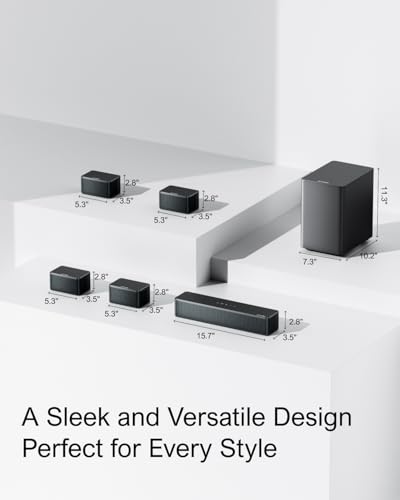
The Ultimea Poseidon D70 requires significantly more commitment. You'll spend 30-45 minutes finding optimal positions for four satellite speakers, running the included cables (which come in 3-meter and 6-meter lengths), and positioning the wireless subwoofer. The total system weighs 22 pounds and requires thoughtful placement to avoid cable visibility issues.
However, this setup complexity brings rewards. Once properly positioned, the Poseidon D70 creates an audio experience that single-bar systems simply cannot match. Sound moves naturally around your room because it's actually coming from different physical locations. The wireless subwoofer means you can place it wherever it sounds best, not where it's convenient for cable management.
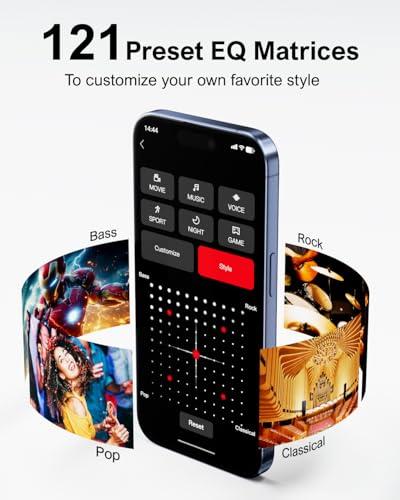
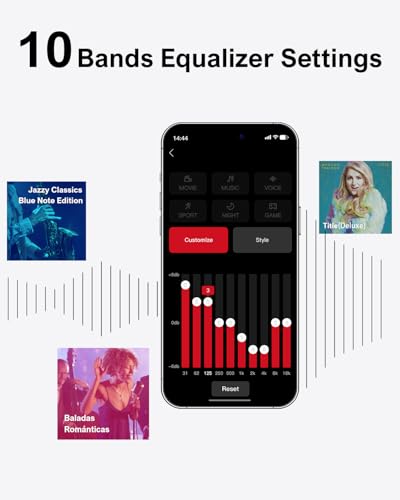
The Ultimea Poseidon D70 shines in customization options. Its smartphone app provides access to 121 preset EQ matrices—essentially pre-programmed sound profiles for different content types, room acoustics, and personal preferences. The 10-band graphic equalizer allows fine-tuning of specific frequencies, while the SurroundX and BassMX technologies can be adjusted independently.
This level of control appeals to users who enjoy optimizing their audio setup. Based on user reviews, many Poseidon D70 owners spend considerable time experimenting with different EQ settings for movies versus music, eventually finding configurations that significantly outperform the default settings.
The JBL Bar 300 takes a more automated approach. Its room calibration system uses built-in microphones to analyze your space and adjust accordingly. While this reduces user control, it also eliminates the learning curve and ensures optimal performance without technical knowledge.
At the time of writing, the Ultimea Poseidon D70 represents exceptional value in the soundbar market. You're getting a complete 7.1 system with physical surround speakers and a wireless subwoofer at a price point where most competitors offer only basic stereo or virtual surround solutions. The included accessories—cables, remote, wall mounts, and mobile app—add to the value proposition.
The JBL Bar 300 commands a premium price that reflects its brand reputation, modern feature set, and convenience factor. The Dolby Atmos support, built-in streaming capabilities, and established customer support network justify the higher cost for users who prioritize these features.
From a performance-per-dollar standpoint, the Poseidon D70 delivers audio quality typically found in systems costing significantly more. However, the JBL provides features and convenience that some users will find worth the premium.
For dedicated home theater use, the differences become most apparent during dynamic content. The Ultimea Poseidon D70 excels at creating the immersive soundscape that makes movies feel cinematic. When characters move across the screen, their voices track naturally from speaker to speaker. Environmental sounds—rain, crowds, ambient noise—fill the room from appropriate directions.
The system's bass extension to 35Hz means it reproduces the full range of movie sound effects. Explosion rumbles, musical orchestrations, and LFE (Low Frequency Effects) channels play back with authority that smaller systems cannot match. The separate subwoofer eliminates the distortion that can occur when compact speakers attempt to reproduce low frequencies at high volumes.
The JBL Bar 300's Dolby Atmos support provides a different kind of immersion. Height effects—helicopters overhead, rain from above, ceiling-mounted speakers in movie scenes—add a three-dimensional quality that the Poseidon D70 cannot reproduce. However, without physical rear speakers, the sense of being surrounded by sound remains less convincing than true surround systems provide.
Both systems handle music well, but with different strengths. The Poseidon D70's dedicated subwoofer and customizable EQ make it excellent for bass-heavy genres and allow fine-tuning for different musical styles. The distributed speakers can create a more spacious stereo image, particularly noticeable with well-recorded acoustic music.
The JBL Bar 300's streaming integration makes it more convenient for daily music listening. The ability to directly access streaming services, combined with voice control compatibility, creates a more seamless experience for casual listening sessions.
The Ultimea Poseidon D70 makes sense for users who prioritize audio performance over convenience, have larger rooms or open floor plans, and don't mind investing time in proper setup and customization. It's ideal for dedicated home theater enthusiasts who want authentic surround sound and powerful bass without the complexity of traditional receiver-based systems.
The JBL Bar 300 suits users who value modern convenience features, have smaller to medium-sized rooms, and want current audio format support. It's perfect for streaming-first households where ease of use matters more than ultimate performance, and where the compact form factor aligns with minimalist aesthetics.
Based on extensive research into user experiences and expert reviews, the choice comes down to your priorities and room situation. The Ultimea Poseidon D70 delivers superior audio performance and exceptional value but requires commitment to proper setup and positioning. The JBL Bar 300 provides modern convenience and features at a premium price, with performance that satisfies most users in appropriately sized spaces.
For rooms larger than 200 square feet, open floor plans, or users who prioritize bass impact and authentic surround positioning, the Poseidon D70 represents the better choice despite the setup complexity. For smaller spaces, convenience-focused users, or those who need current audio format support, the JBL Bar 300 justifies its higher price with features and ease of use that the budget system cannot match.
Both systems will dramatically improve your TV's audio, but they achieve this improvement through fundamentally different approaches that appeal to different types of users and room situations.
| Ultimea Poseidon D70 7.1 Channel Soundbar System | JBL Bar 300 5.0 Soundbar |
|---|---|
| Channel Configuration - Determines authenticity of surround sound experience | |
| True 7.1 surround with 8 physical speakers positioned around room | Virtual 5.0 surround from single soundbar using acoustic processing |
| Bass Performance - Critical for movie impact and music depth | |
| Dedicated 6.5" wireless subwoofer (35Hz-18kHz frequency range) | Built-in bass ports only (50Hz-20kHz frequency range) |
| Total Power Output - Affects volume levels and dynamic range | |
| 144W RMS / 410W peak distributed across 8 speakers | 260W RMS concentrated in single soundbar |
| Setup Complexity - Time investment vs. convenience trade-off | |
| 30-45 minutes setup with speaker placement and cable management | 5 minutes plug-and-play with automatic room calibration |
| Dolby Atmos Support - Essential for modern streaming content | |
| No Dolby Atmos support | Full Dolby Atmos with height channel effects |
| Streaming Integration - Daily convenience for music and podcasts | |
| Bluetooth only, requires external streaming devices | Built-in Wi-Fi with 300+ streaming services, AirPlay, Chromecast |
| Audio Customization - Control over sound tuning | |
| 121 preset EQ matrices plus 10-band graphic equalizer via app | Automatic PureVoice dialogue enhancement and room correction |
| Physical Footprint - Space requirements and aesthetics | |
| Multiple components: soundbar + 4 satellites + subwoofer (22 lbs total) | Single 32.5" soundbar only (5.5 lbs) |
| Room Size Suitability - Performance scaling with space | |
| Excellent for large rooms and open floor plans (200+ sq ft) | Best for small to medium rooms (under 200 sq ft) |
| Voice Control Integration - Smart home compatibility | |
| None - app and remote control only | Built-in Alexa, Google Assistant, and Siri compatibility |
| HDMI Standard - Future-proofing for high-quality audio | |
| Standard HDMI ARC | Enhanced HDMI eARC with 4K Dolby Vision passthrough |
| Value Proposition - Performance per dollar at time of writing | |
| Exceptional value with complete 7.1 system at budget price point | Premium pricing for convenience and modern features |
The Ultimea Poseidon D70 provides superior surround sound quality with true 7.1 channel audio using eight physical speakers positioned around your room. Sound literally comes from behind and beside you through dedicated satellite speakers. The JBL Bar 300 uses virtual surround processing from a single soundbar, which creates the illusion of surround sound but cannot match the authenticity of physical speakers placed throughout your space.
The Ultimea Poseidon D70 includes a dedicated 6.5-inch wireless subwoofer that delivers deep, room-filling bass down to 35Hz - essential for action movies and bass-heavy music. The JBL Bar 300 relies on built-in bass ports that provide adequate "punchy" bass for most content but cannot match the impact and depth of a dedicated subwoofer, especially in larger rooms.
The JBL Bar 300 wins for convenience with a simple 5-minute setup requiring only one HDMI cable connection and automatic room calibration. The Ultimea Poseidon D70 requires 30-45 minutes to properly position four satellite speakers around your room and run the included cables, though this effort rewards you with superior audio performance.
The JBL Bar 300 excels here with built-in Wi-Fi, allowing direct streaming from over 300 services including Spotify, Apple Music, and podcasts. It also supports AirPlay, Chromecast, and voice control. The Ultimea Poseidon D70 only offers Bluetooth connectivity, requiring you to stream from a phone, tablet, or other device.
Only the JBL Bar 300 supports Dolby Atmos, which adds height channels for overhead sound effects like helicopters, rain, or ceiling-mounted speakers in movies. The Ultimea Poseidon D70 does not support Dolby Atmos, focusing instead on traditional surround sound positioning through physical speakers.
The JBL Bar 300 requires minimal space with just a compact 32.5-inch soundbar weighing 5.5 pounds. The Ultimea Poseidon D70 needs significantly more room for its multiple components: the main soundbar, four satellite speakers positioned around your seating area, and a wireless subwoofer, with the complete system weighing 22 pounds.
The Ultimea Poseidon D70 performs better in large rooms and open floor plans over 200 square feet because its distributed speakers maintain consistent audio coverage throughout the space. The JBL Bar 300 works best in smaller rooms under 200 square feet where wall reflections remain strong enough for effective virtual surround sound.
The Ultimea Poseidon D70 offers extensive customization with 121 preset EQ settings and a 10-band graphic equalizer accessible through its mobile app, allowing detailed sound tuning. The JBL Bar 300 uses automatic optimization with PureVoice dialogue enhancement and room correction, providing less manual control but easier operation.
The Ultimea Poseidon D70 provides exceptional value, delivering a complete 7.1 surround system with physical speakers and subwoofer at a budget-friendly price point. The JBL Bar 300 costs significantly more but justifies the premium with modern convenience features, streaming integration, and Dolby Atmos support.
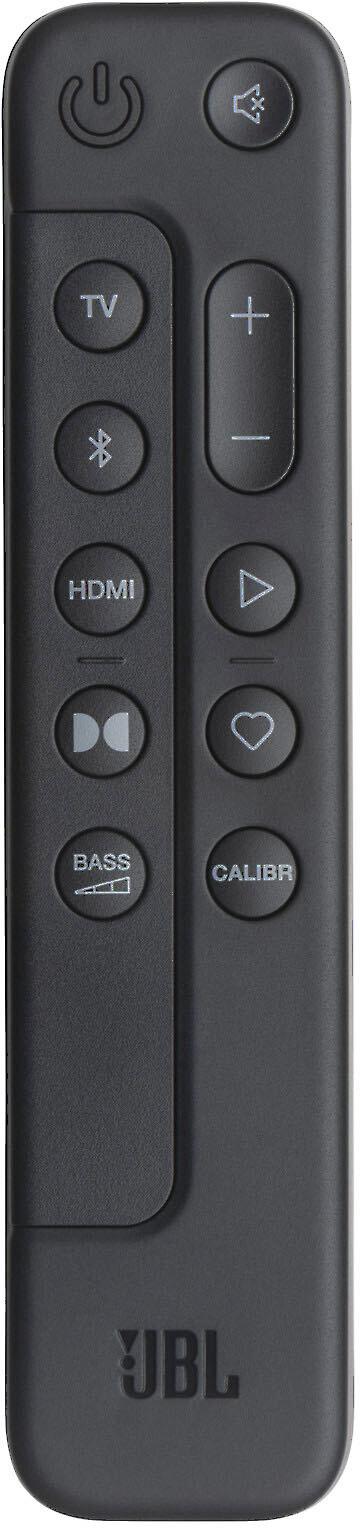
The JBL Bar 300 offers full voice control integration with built-in support for Alexa, Google Assistant, and Siri, allowing hands-free operation and smart home integration. The Ultimea Poseidon D70 does not support voice assistants and relies on its mobile app and included remote control for operation.
For pure movie audio immersion, the Ultimea Poseidon D70 excels with authentic surround sound positioning and powerful subwoofer bass that makes action scenes feel visceral. However, the JBL Bar 300 offers advantages for modern streaming content with Dolby Atmos support and enhanced dialogue clarity, making it better for users who prioritize current audio formats and convenience.
The Ultimea Poseidon D70 delivers 144W RMS distributed across eight speakers with 410W peak output, providing excellent coverage for larger spaces. The JBL Bar 300 concentrates 260W RMS into its compact design, offering more total power but from a single location, making it better suited for smaller to medium-sized rooms.
We've done our best to create useful and informative comparisons to help you decide what product to buy. Our research uses advanced automated methods to create this comparison and perfection is not possible - please contact us for corrections or questions. These are the sites we've researched in the creation of this article: ultimea.com - provantage.com - ultimea.com - youtube.com - youtube.com - bestbuy.com - the-gadgeteer.com - shopmyexchange.com - youtube.com - youtube.com - youtube.com - ultimea.com - manuals.plus - device.report - images.thdstatic.com - shopmyexchange.com - staples.com - ultimea.de - whathifi.com - safeandsoundhq.com - youtube.com - cnet.com - mm.jbl.com - jbl.com - bestbuy.com - support.jbl.com - dell.com - walmart.com

Privacy Policy
Terms and Conditions - Affiliate Policy
Home Security
© Copyright 2008-2026.
11816 Inwood Rd #1211, Dallas, TX 75244