


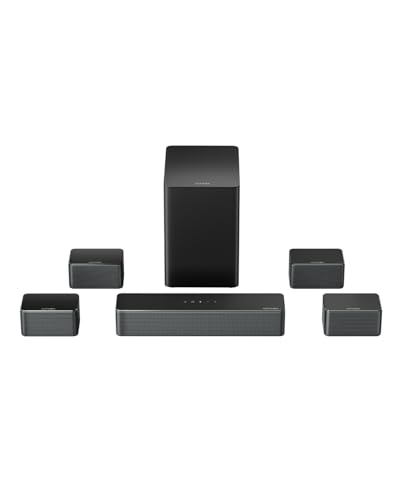
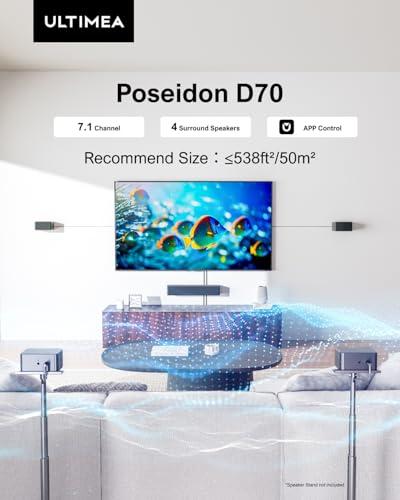
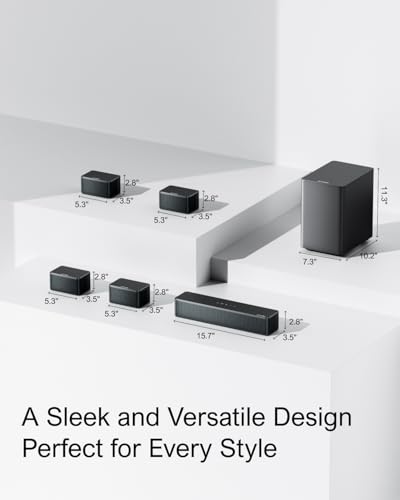



When it comes to transforming your living room into a mini home theater, 7.1 channel soundbar systems offer an appealing middle ground between basic stereo soundbars and complex receiver-based setups. These systems promise true surround sound through a clever combination of a main soundbar, dedicated surround speakers positioned around your room, and a subwoofer for deep bass. The question is: do you go budget-friendly or spend more for premium features?
Both the Ultimea Poseidon D70 and Aura A40 launched in 2024, representing two different approaches to affordable surround sound. At the time of writing, the D70 sits in the premium budget category while the A40 targets the entry-level market. Having researched extensive user feedback and professional reviews, I can tell you the price difference between these systems—roughly $40-70—comes down to some crucial performance and connectivity differences that could make or break your home theater experience.
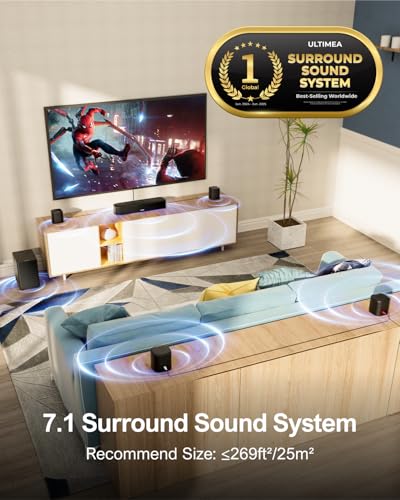
Before diving into specifics, let's clarify what "7.1 channel" actually means. The first number represents main audio channels: left, center, right, surround left, surround right, rear left, and rear right. The ".1" refers to the dedicated subwoofer channel for low-frequency effects (LFE). Unlike traditional 7.1 systems that require seven separate speakers plus a subwoofer, soundbar systems achieve this through a combination of physical speakers and digital signal processing.
The beauty of these systems lies in their simplicity. Instead of running speaker wire throughout your room and dealing with a bulky AV receiver, you get genuine surround sound with minimal setup complexity. However, not all 7.1 soundbar systems are created equal—the implementation varies significantly between manufacturers and price points.
What matters most when evaluating these systems? Power output determines how loud and dynamic your audio can get without distortion. Bass performance affects the impact of explosions, music, and low-frequency effects. Connectivity options determine compatibility with your TV and devices. Sound quality across different content types—movies, music, gaming—reveals whether the system excels in specific scenarios or provides balanced performance.
The Ultimea Poseidon D70 and Aura A40 represent distinctly different philosophies within the same product category. The D70 follows a "premium budget" approach, incorporating higher-end features like wireless connectivity and substantial power output while maintaining affordability. The A40 takes the "maximum value" route, delivering genuine surround sound at the lowest possible price point through clever engineering compromises.
Both systems launched in 2024, benefiting from recent improvements in digital signal processing, Bluetooth connectivity standards, and compact driver technology. The timing is significant—2024 marked a turning point where budget soundbar systems began incorporating features previously reserved for expensive home theater setups.
Here's where the Poseidon D70 flexes its muscles. With 420W peak power output compared to the A40's 330W, the difference translates to real-world performance advantages that extend beyond simple volume levels.
Peak power rating tells you the maximum wattage the system can handle during demanding audio passages—think explosion scenes or orchestral crescendos. More importantly, higher power output provides headroom, meaning the system can reproduce dynamic audio without strain or distortion. In practical terms, the D70 can fill larger rooms (over 270 square feet) while maintaining clarity, whereas the A40 performs best in smaller to medium-sized spaces.
From our research into user experiences, the power difference becomes apparent during movie nights. The D70 handles action sequences with authority, delivering punchy dialogue and effects without the compressed, strained sound that lower-powered systems exhibit when pushed hard. The A40, while adequate for typical TV viewing, reaches its limits more quickly in larger spaces or when you want that true cinema-level impact.
This power advantage also manifests in music reproduction. Higher wattage allows for better dynamic range—the difference between soft and loud passages that makes music feel alive and realistic. If you frequently listen to classical music, rock, or electronic genres with wide dynamic swings, the D70's extra power translates to a more engaging experience.
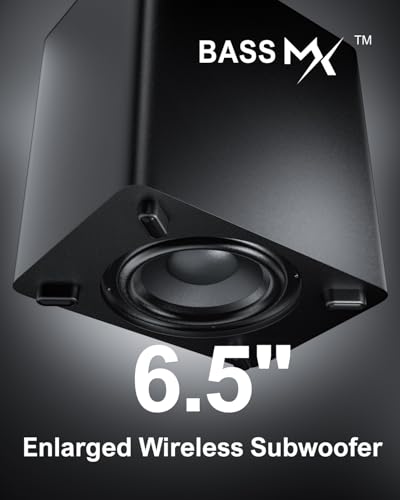
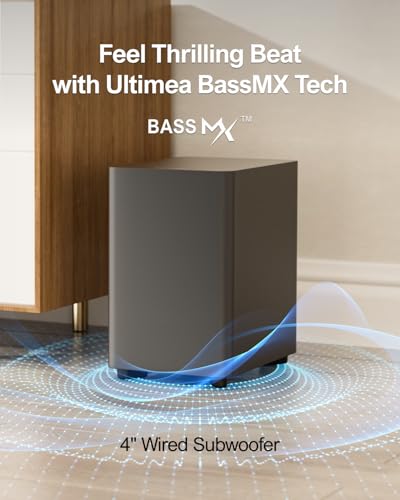
The subwoofer comparison reveals the most significant performance gap between these systems. The Poseidon D70's 6.5-inch wireless subwoofer versus the Aura A40's 4-inch wired unit represents more than just a size difference—it's a fundamental change in bass capability and installation flexibility.
Subwoofer driver size directly correlates with bass extension and impact. A larger driver can move more air, producing deeper frequencies and more physical bass sensation. The D70's 6.5-inch driver reaches down to approximately 35Hz, capturing the lowest frequencies in movie soundtracks and bass-heavy music. The A40's 4-inch driver, with its 65Hz low-frequency limit, misses the deepest bass notes that add visceral impact to action scenes and electronic music.
But the wireless versus wired distinction might be even more important for real-world use. The D70's wireless subwoofer connects to the main soundbar via Bluetooth, eliminating the need for a physical cable between components. This freedom allows you to position the subwoofer anywhere in your room for optimal bass response—perhaps tucked behind a couch or in a corner where bass naturally reinforces.
The A40's wired subwoofer, while more limiting in placement, does offer one advantage: zero connection reliability concerns. Wireless subwoofers occasionally experience brief dropouts or connection issues, though modern implementations have largely resolved these problems.
From analyzing user feedback, the bass performance difference is immediately noticeable. D70 owners consistently mention the "room-shaking" low-end that makes movie explosions feel more realistic. A40 users, while generally satisfied with the overall sound, often note that bass-heavy content lacks the physical impact they expected from a surround sound system.
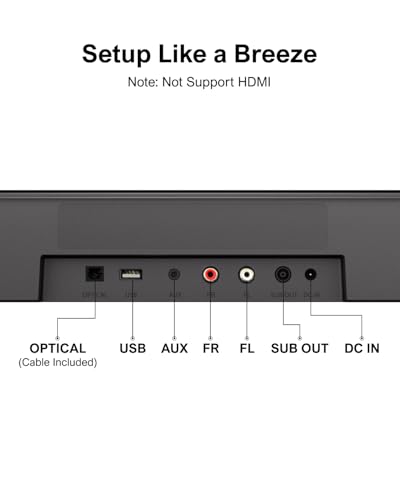
This comparison reveals what might be the most important practical difference between these systems. The Poseidon D70 includes HDMI ARC (Audio Return Channel) connectivity, while the Aura A40 does not—and this omission significantly impacts usability with modern TVs.
HDMI ARC allows bi-directional communication between your TV and soundbar through a single HDMI cable. Your TV can send audio to the soundbar while receiving control commands back, enabling your TV remote to adjust soundbar volume. More importantly, HDMI supports higher-quality audio formats like Dolby Digital Plus and DTS that optical connections cannot handle.
The A40's reliance on optical, auxiliary, and Bluetooth connections creates several limitations. Optical audio, while digital, has bandwidth restrictions that prevent transmission of advanced audio formats. You'll also need separate power and audio cables, creating more wire management challenges. Most frustrating, you cannot power on the A40 using your TV remote—a convenience that HDMI ARC provides automatically.
This connectivity difference becomes crucial when connecting gaming consoles, streaming devices, or 4K TVs that support advanced audio formats. The D70 integrates seamlessly into modern entertainment setups, while the A40 requires more manual management and potentially sacrifices audio quality depending on your source devices.
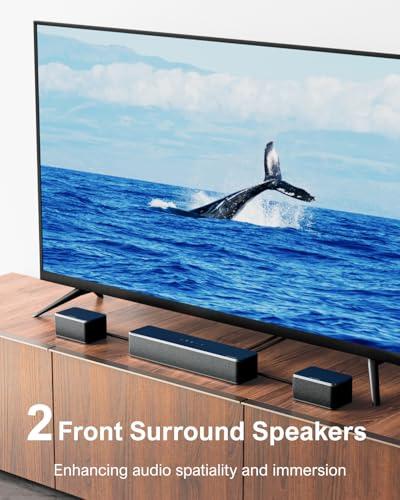
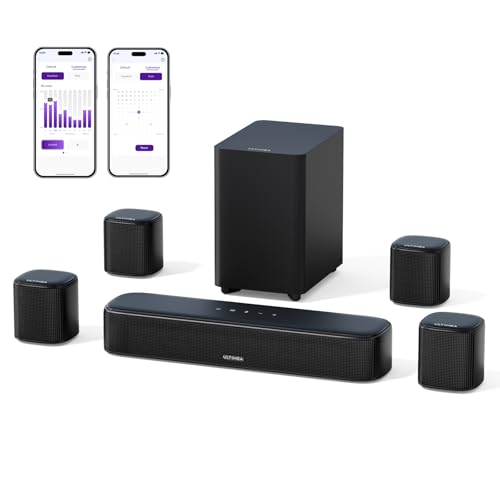
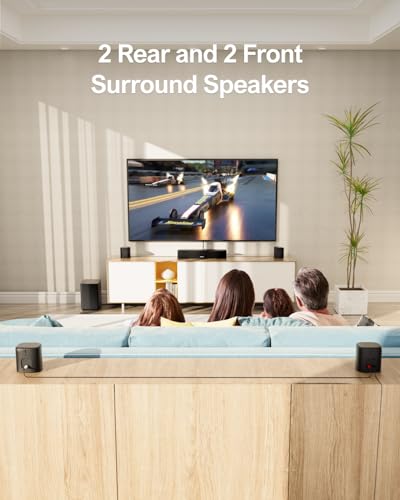
Both systems create their 7.1 channel experience through physical surround speakers, but their approaches differ in interesting ways. The Poseidon D70 uses a traditional configuration with four wired surround speakers connecting to the system through the subwoofer and main unit. The Aura A40 employs a hybrid design where two front surround speakers connect via short cables while the rear speakers use a longer cable with one speaker connecting wirelessly to reduce cable clutter.
The effectiveness of surround sound depends heavily on speaker placement and room acoustics. Both systems benefit from Ultimea's SurroundX technology, which uses digital signal processing to optimize the surround effect and create convincing directional audio cues. Users consistently report that properly positioned speakers deliver genuine surround immersion, with sound effects moving convincingly around the room.
What's particularly impressive about both systems is their inclusion of physical surround speakers at these price points. Many competing soundbar systems rely entirely on virtual surround processing, bouncing sound off walls to create spatial effects. While virtual surround has improved significantly, physical speakers provide more reliable and consistent directional audio regardless of room acoustics.
The A40's 13 adjustable surround levels deserve special mention. This feature allows fine-tuning of the rear speaker output to match your room size and personal preferences—crucial for optimizing the surround experience in different spaces.
Movie performance represents both systems' strongest suit. The D70 excels with clear dialogue reproduction, dynamic effects, and the bass impact that makes action sequences compelling. Its wider frequency response (35Hz-18kHz) captures more of the audio spectrum, particularly beneficial for complex movie soundtracks with layered effects and music.
The A40 also delivers impressive movie performance, with users praising dialogue clarity even during loud action scenes. However, some limitations become apparent during demanding content—the smaller subwoofer and limited power output can't quite match the visceral impact of larger explosions or deep musical scores.
Gaming performance shows both systems to advantage, with directional audio helping players locate enemies and environmental cues. The surround speakers provide tactical advantages in competitive gaming while enhancing immersion in single-player adventures.
Music reproduction reveals the most significant quality differences. The D70 handles various musical genres more competently, with better dynamic range and frequency balance. Users report satisfying performance across rock, classical, electronic, and pop music. The A40 receives more mixed reviews for music, with some users noting a somewhat "metallic" or "tinny" character that becomes more apparent with critical listening to high-quality music sources.
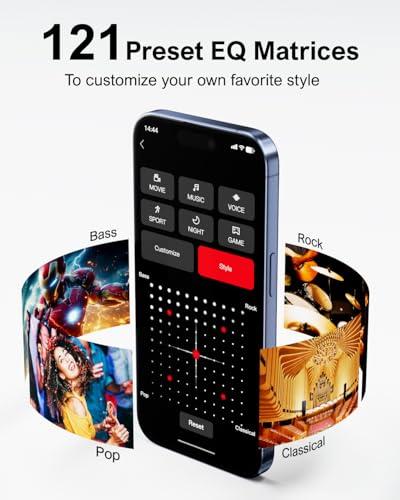
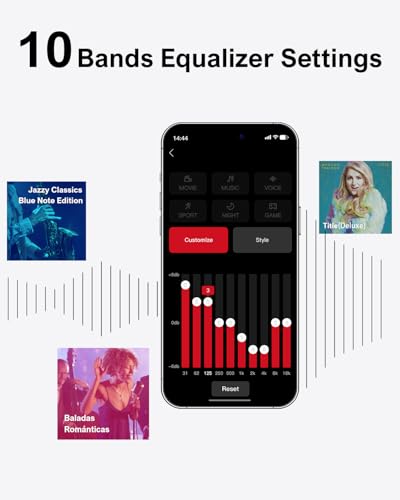
Both systems shine in customization options, offering identical smart features through the Ultimea app. The 121 preset EQ matrices provide instant optimization for different music genres and content types, while the 10-band graphic equalizer enables precise frequency adjustments.
The app-based control system represents a significant advantage over basic soundbar systems. You can adjust bass levels, modify surround intensity, switch between sound modes (Movie, Music, Voice, Sports, Game, Night), and receive firmware updates that add features over time. This level of customization helps optimize performance for different room acoustics and personal preferences.
Regular firmware updates ensure both systems remain current with bug fixes and feature additions—an important consideration for long-term ownership satisfaction.
For dedicated home theater use, the Poseidon D70 presents compelling advantages. The higher power output handles the dynamic range of movie soundtracks more effectively, while the larger subwoofer provides the low-frequency impact that makes action sequences feel realistic rather than merely loud.
The HDMI ARC connectivity proves invaluable in home theater setups, enabling seamless integration with 4K TVs, gaming consoles, and streaming devices. The ability to control everything with your TV remote maintains the simplicity that makes soundbar systems appealing alternatives to complex receiver-based setups.
The Aura A40 can certainly serve home theater duty in smaller rooms, but the limitations become more apparent when you want that true cinema experience. The smaller subwoofer and lack of HDMI connectivity create compromise points that might frustrate users seeking maximum immersion.
At the time of writing, the price difference between these systems—roughly $40-70—represents one of the most important value decisions in the budget soundbar category. The A40 delivers remarkable value for users prioritizing genuine surround sound at the lowest possible price. Getting four physical surround speakers, a subwoofer, and extensive app-based customization at this price point is genuinely impressive.
However, the D70's premium addresses the A40's most significant limitations: limited bass performance, lack of modern connectivity, and restricted power output. For users who can accommodate the higher price, these improvements provide meaningful performance advantages that justify the additional cost.
Choose the Ultimea Aura A40 if you're working with a strict budget, have a smaller listening space (under 270 square feet), primarily watch TV and movies rather than critical music listening, or have an older TV with only optical audio output. The A40 excels as an introduction to genuine surround sound, offering features and performance that would have cost significantly more just a few years ago.
Choose the Ultimea Poseidon D70 if you have a larger room, prioritize bass performance for movies and music, own a modern TV with HDMI ARC, listen to music frequently, or want the most future-proof feature set available at this price point. The D70 represents the sweet spot where budget constraints meet premium performance expectations.
The decision ultimately comes down to your priorities and space requirements. Both systems deliver on their promises, but they serve different needs within the broader home audio landscape. The A40 democratizes surround sound for budget-conscious buyers, while the D70 provides a more complete home theater experience without breaking into truly expensive territory.
In my assessment, the D70 justifies its premium through meaningful performance improvements and modern connectivity that will serve you better over time. However, the A40 remains an exceptional value for users whose needs align with its capabilities and limitations.
| Ultimea Poseidon D70 7.1 Channel Soundbar System | Ultimea Aura A40 7.1 Channel Soundbar System |
|---|---|
| Peak Power Output - Determines maximum volume and dynamic range without distortion | |
| 420W (fills larger rooms, better headroom) | 330W (adequate for small-medium rooms) |
| Subwoofer Size & Connection - Critical for bass impact and placement flexibility | |
| 6.5" wireless subwoofer (deeper bass, flexible placement) | 4" wired subwoofer (limited bass extension, fixed placement) |
| Frequency Response Range - Shows how deep the bass goes and how crisp the highs are | |
| 35Hz - 18kHz (captures deeper bass frequencies) | 65Hz - 18kHz (misses lowest bass notes) |
| HDMI Connectivity - Essential for modern TV integration and audio quality | |
| HDMI ARC included (single cable, TV remote control) | No HDMI (requires optical cable, separate remote control) |
| Connectivity Options - Determines compatibility with different devices | |
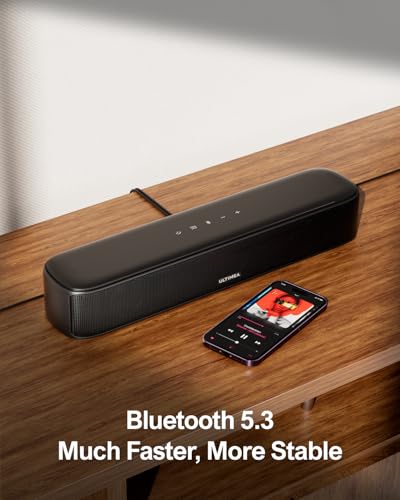
| HDMI ARC, Optical, USB, 3.5mm AUX, Bluetooth | Optical, USB, 3.5mm AUX, Bluetooth 5.3 only |
| Surround Speaker Configuration - How the physical surround speakers connect | |
| 4 wired surround speakers (traditional setup) | Hybrid: 2 wired front + 2 rear (one wireless connection) |
| Total System Weight - Indicates build quality and driver size | |
| 17.2 lbs (heavier drivers, larger subwoofer) | 12.6 lbs (compact design, smaller components) |
| Smart App Features - Customization and control options | |
| Ultimea Smart App with 121 EQ presets, 10-band EQ, firmware updates | Ultimea Smart App with 121 EQ presets, 10-band EQ, 13 surround levels |
| Sound Processing Technology - Enhances audio quality and spatial effects | |
| BassMX™, SurroundX™, AI deep learning optimization | BassMX™, SurroundX™, AI audio optimization |
| Recommended Room Size - Where each system performs optimally | |
| Large rooms 25+ m² (270+ sq ft) | Small-medium rooms 10-25 m² (108-270 sq ft) |
| Best Use Cases - What each system excels at | |
| Home theater, music listening, gaming in larger spaces | TV/movies, casual music, gaming in apartments/smaller rooms |
The Ultimea Poseidon D70 is better suited for larger rooms due to its 420W peak power output compared to the Aura A40's 330W. The D70 can effectively fill rooms over 270 square feet without distortion, while the A40 performs best in small to medium spaces under 270 square feet.
The Poseidon D70 features a 6.5-inch wireless subwoofer that delivers deeper bass down to 35Hz, while the Aura A40 has a 4-inch wired subwoofer limited to 65Hz. This means the D70 provides more impactful, room-shaking bass for movies and music, especially action scenes and bass-heavy genres.
No - this is a key difference. The Ultimea Poseidon D70 includes HDMI ARC connectivity for single-cable connection and TV remote control, while the Ultimea Aura A40 lacks HDMI entirely and requires optical or auxiliary connections. The D70 offers much better integration with modern 4K TVs and devices.
The Poseidon D70 is superior for music due to its wider frequency response (35Hz-18kHz), higher power output, and larger subwoofer. Users report better dynamic range and clarity across all music genres. The A40 can sound somewhat metallic or tinny with music, though it's adequate for casual listening.
The Aura A40 offers exceptional value for budget-conscious buyers, delivering genuine 7.1 surround sound with physical speakers at an entry-level price. The Poseidon D70 provides better overall value for users who can spend more, as the price premium delivers meaningful improvements in bass, power, and connectivity.
Yes, both the Ultimea Poseidon D70 and Aura A40 excel for gaming with their physical surround speakers providing directional audio cues. The D70's higher power output and better bass make it more immersive for action games, while both systems help with competitive gaming by accurately positioning enemy sounds.
Both systems offer identical smart features through the Ultimea app, including 121 preset EQ matrices, 10-band graphic equalizer, multiple sound modes (Movie, Music, Voice, Sports, Game, Night), and firmware updates. The A40 adds 13 adjustable surround levels for room customization.
The Poseidon D70 is generally easier due to its wireless subwoofer (no cable needed) and HDMI ARC connection (single cable to TV). The Aura A40 requires more cables but features a clever hybrid surround design that reduces some wire management complexity.
For dedicated home theater setups, the Ultimea Poseidon D70 is superior with its higher power output, deeper bass extension, and HDMI ARC connectivity that integrates seamlessly with 4K TVs and gaming consoles. The A40 works for home theater in smaller rooms but lacks the power and bass impact for a true cinema experience.
The Poseidon D70's main limitation is its higher price point, though it lacks few features for its category. The Aura A40 has more significant limitations: no HDMI connectivity, smaller subwoofer with limited bass extension, lower power output, and wired subwoofer placement restrictions.
Choose the Aura A40 if you're new to surround sound, have a smaller room, and want to experience genuine 7.1 audio at the lowest cost. Choose the Ultimea Poseidon D70 if you want a more complete home theater experience with better bass, modern connectivity, and room to grow into larger spaces or more demanding content.
We've done our best to create useful and informative comparisons to help you decide what product to buy. Our research uses advanced automated methods to create this comparison and perfection is not possible - please contact us for corrections or questions. These are the sites we've researched in the creation of this article: ultimea.com - provantage.com - ultimea.com - youtube.com - youtube.com - bestbuy.com - the-gadgeteer.com - shopmyexchange.com - youtube.com - youtube.com - youtube.com - ultimea.com - manuals.plus - device.report - images.thdstatic.com - shopmyexchange.com - staples.com - ultimea.de - youtube.com - walmart.com - youtube.com - ultimea.com - homestudiobasics.com - ultimea.co - youtube.com - eu.ultimea.com - walmart.com - device.report - bestbuy.com - manuals.plus - community.ultimea.com - judge.me - support.ultimea.com - geekmaxi.com - provantage.com - bestbuy.com - youtube.com - uk.whatgeek.com

Privacy Policy
Terms and Conditions - Affiliate Policy
Home Security
© Copyright 2008-2026.
11816 Inwood Rd #1211, Dallas, TX 75244