







When your TV's built-in speakers leave you straining to hear dialogue over explosions, it's time to consider a proper soundbar system. But not all soundbars are created equal—some rely on audio tricks to simulate surround sound, while others use actual speakers positioned around your room. Today we're comparing two systems from Ultimea that take the real-speaker approach: the Poseidon D70 7.1-channel system and the Poseidon D50 5.1-channel setup.
Both systems launched in the mid-2020s, with the D50 (2025 version) arriving in 2023 and the D70 following in 2024. Since then, we've seen the home audio market shift toward more affordable true surround systems, making both of these products particularly relevant for budget-conscious buyers who don't want to sacrifice the immersive experience that physical rear speakers provide.
Before diving into the comparison, let's clarify what sets these apart from typical soundbars. Most budget soundbars are "2.1" systems—meaning they have a left channel, right channel, and a subwoofer (the ".1" refers to the dedicated bass speaker). They create the illusion of surround sound through digital processing, bouncing audio off your walls to simulate speakers behind you.
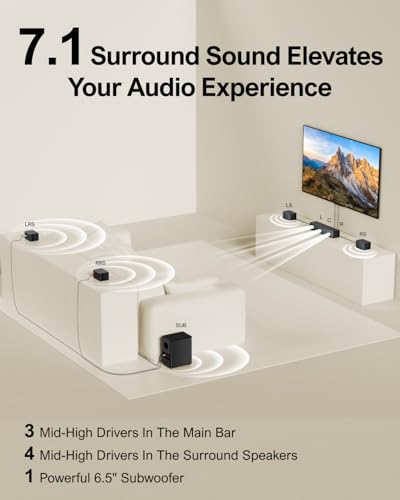
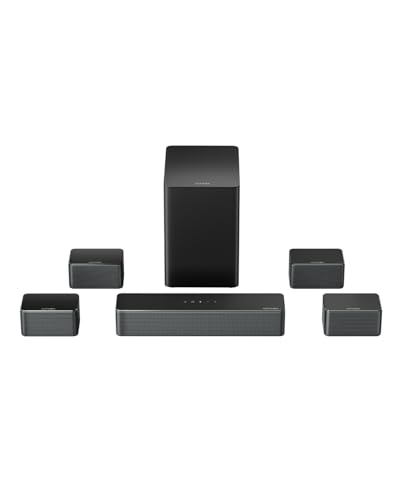
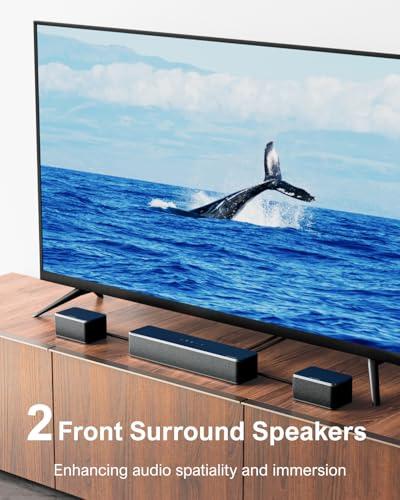
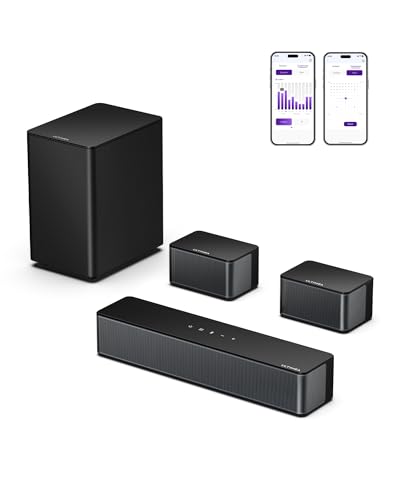
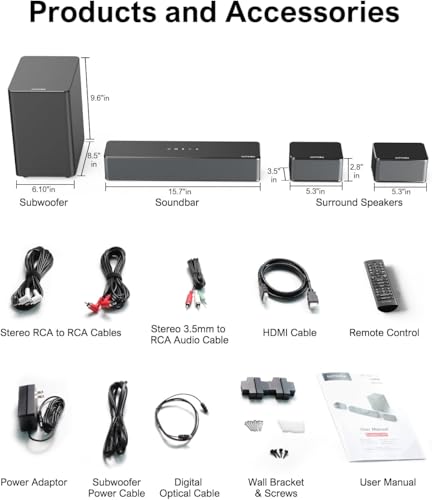
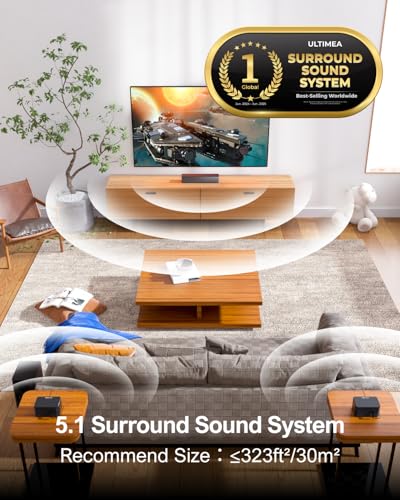
Both the D70 and D50 take a different approach. They're true multi-channel systems with actual satellite speakers that you position around your room. The D50 is a 5.1 system (front left, front right, center, two rear speakers, plus subwoofer), while the D70 goes further with 7.1 channels (adding dedicated side speakers to the mix). This physical approach creates more convincing directional audio—when a helicopter flies overhead in a movie, you'll actually hear it move from speaker to speaker rather than relying on your brain to fill in the gaps.
The difference is immediately noticeable. Virtual surround can sound impressive in the sweet spot directly in front of the soundbar, but move around the room and the illusion breaks down. Physical rear speakers maintain their positional accuracy regardless of where you sit, making these systems better for families or anyone who doesn't always watch from the perfect center position.
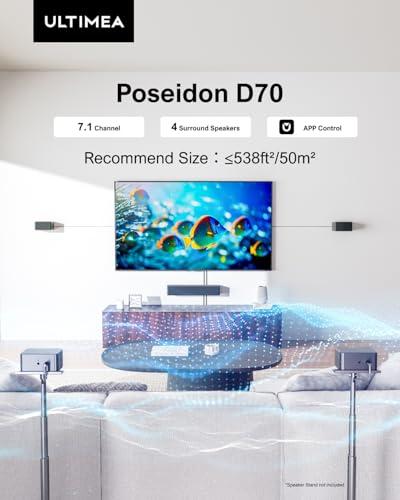
One of the most significant differences between these systems lies in their power output and room coverage capabilities. The D70 delivers 410 watts of peak power across its eight speakers, while the D50 produces 330 watts through six speakers. That 24% power advantage isn't just about getting louder—it's about maintaining clarity and dynamic range at higher volumes.
Peak power refers to the maximum wattage a system can handle during brief, intense moments like explosions or musical crescendos. RMS power (the continuous power rating) is usually lower and more relevant for everyday listening, but manufacturers often emphasize peak figures because they sound more impressive. What matters is having enough headroom so the system doesn't strain or distort when you crank it up for action scenes.
From our research into user feedback and professional reviews, the D70 handles larger rooms more effectively. Its additional speakers distribute sound more evenly across wider spaces, and the extra power prevents that "thin" sound that underpowered systems develop in bigger rooms. The D50 works well in small to medium spaces—think typical bedrooms, apartments, or cozy living rooms up to about 270 square feet.
Room acoustics play a huge role here. Hard surfaces like tile floors and bare walls reflect sound, potentially making a powerful system overwhelming in a small space. Conversely, large rooms with carpet, furniture, and soft furnishings absorb sound energy, requiring more power to maintain impact. If you're unsure about your room size, measuring the square footage and considering your furnishings will help guide your choice.
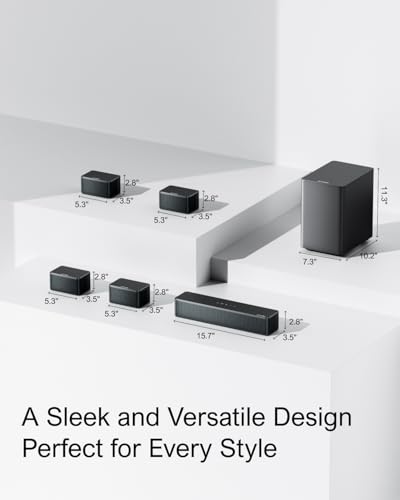
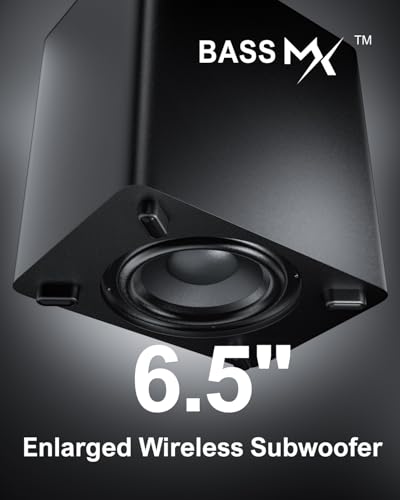
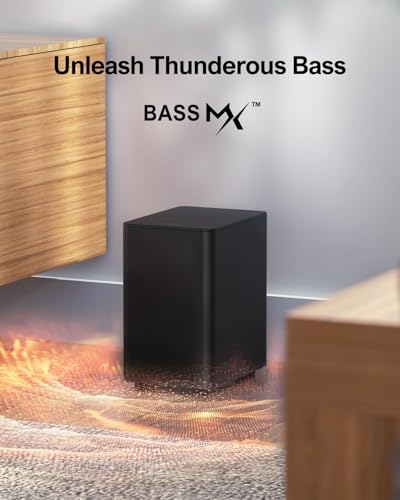
Bass response might be the most immediately noticeable difference between these systems. The D70 uses a 6.5-inch wireless subwoofer, while the D50 features a smaller 5.25-inch housing with a 4-inch active driver. Subwoofer size directly correlates with bass depth and impact—larger drivers move more air, creating those chest-thumping low frequencies that make explosions feel real.
Both systems incorporate Ultimea's BassMX technology, which optimizes the magnetic circuit and amplifier design for maximum bass output from each driver size. The technology includes features like 15mm diaphragm excursion (how far the speaker cone can move) and enhanced magnetic circuits. Think of it as getting the most performance possible from each subwoofer size.
In practice, the D70's larger subwoofer produces noticeably deeper bass extension and more physical impact. This becomes apparent during action movies with subway rumbles, thunder effects, or the deep growl of movie monsters. The D50's bass is respectable for its size and adequate for most content, but bass enthusiasts or users with larger rooms will likely find it lacking during intense scenes.
The wireless connectivity on both subwoofers deserves mention. Unlike traditional home theater systems that require running cables to the subwoofer, these connect wirelessly to the main soundbar. This flexibility allows optimal subwoofer placement for room acoustics rather than being limited by cable length. Corner placement often maximizes bass output, while midwall positions can provide more even distribution.
Here's where the channel difference becomes most apparent. The D50's 5.1 configuration places two satellite speakers behind your seating position, creating a front-to-back surround effect. The D70 adds two more speakers for side channels, creating true 7.1 surround with sound coming from all directions.
Both systems use physical speakers rather than relying solely on digital processing, which makes a dramatic difference in surround effectiveness. When watching movies with helicopter flyovers, car chases, or ambient forest sounds, you'll hear distinct audio cues from specific directions. The D70's additional side channels provide more precise localization—sounds can move smoothly around the room rather than jumping from front to back.
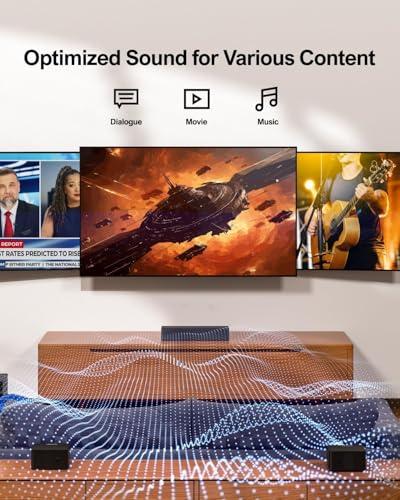
The systems also incorporate SurroundX technology, which uses digital signal processing to enhance the surround effect. This technology can upmix standard stereo content to fill all available speakers, making even non-surround sources more engaging. The algorithm analyzes audio frequencies and timing to determine which sounds should come from which speakers, creating a more spacious soundstage even with older movies or music.
For gaming, the directional accuracy becomes particularly valuable. In competitive games, being able to pinpoint enemy footsteps or incoming threats by their audio position can provide a real advantage. The D70's more detailed positional audio excels here, though the D50 still provides meaningful directional cues that most TV speakers simply can't match.
This represents one of the starkest differences between the systems. The D50 offers six preset sound modes—Movie, Music, Voice, Sport, Game, and Night—covering the basics for different content types. These presets adjust the frequency balance to emphasize dialogue clarity in Voice mode, enhance bass in Movie mode, or reduce dynamics in Night mode to avoid disturbing others.
The D70 takes customization much further with 121 preset EQ matrices plus a 10-band graphic equalizer. The EQ matrices are professionally tuned settings for specific genres, room types, or listening preferences. The 10-band equalizer allows precise frequency adjustment across the audio spectrum, from deep bass (around 60Hz) up to the highest treble frequencies (around 16kHz).
Why does this matter? Every room has unique acoustic characteristics. A room with hardwood floors might need bass reduction and treble softening, while a carpeted room with heavy furniture might benefit from bass boosting and upper-midrange emphasis. The D70's extensive EQ options allow fine-tuning for your specific environment and preferences.
Both systems include smartphone apps for control and customization. The apps handle everything from volume and input selection to EQ adjustment and firmware updates. The D70's app necessarily includes more options given its extensive customization features, while the D50's app focuses on essential controls with a cleaner, simpler interface.
Installation complexity differs significantly between these systems. The D50 requires positioning and wiring two rear speakers, which typically means running speaker wire along baseboards or through walls to reach behind your seating area. The included cables are usually long enough for typical room layouts, but longer runs might require extension cables.
The D70 quadruples the satellite speaker installation challenge with four speakers to position and wire. You'll need to run cables to two rear speakers plus two side speakers, requiring more strategic planning and potentially more visible wire management. However, both systems include color-coded, labeled cables that simplify the connection process once you've handled the positioning.
Both subwoofers connect wirelessly, eliminating one major cable run and allowing flexible placement for optimal bass response. The main soundbars connect to your TV via HDMI ARC (Audio Return Channel), optical cable, or other included connections. HDMI ARC is generally preferable as it allows your TV remote to control the soundbar volume and can automatically switch inputs.
For renters or temporary setups, the D50's simpler installation makes more sense. For permanent installations where you can plan cable routing through walls or along architectural features, the D70's more complex setup pays dividends in audio performance.
At the time of writing, both systems occupy interesting positions in the home theater market. The D50 (2025) has seen significant price reductions since its 2023 launch, positioning it as one of the most affordable true 5.1 systems available. This aggressive pricing makes it competitive with many 2.1 soundbars that don't include physical rear speakers.
The D70, being newer to market, commands a premium over the D50 but still undercuts established brands offering similar 7.1 configurations. When you consider that traditional home theater receivers plus speakers can cost several times more, both systems represent solid value for users wanting genuine surround sound without the complexity of component systems.
The value calculation depends heavily on your priorities. If your primary goal is upgrading from TV speakers to decent surround sound at the lowest possible cost, the D50 delivers exceptional bang for the buck. If you want a more complete home theater experience and can justify the additional investment, the D70 provides meaningful performance improvements that justify its premium.
Neither system includes advanced features like Dolby Atmos (overhead sound effects) or 4K HDR passthrough, which keeps costs down but limits future compatibility with the latest audio formats. For most users focused on dramatic improvement over TV audio, these omissions won't matter. Serious home theater enthusiasts might eventually want to upgrade to systems supporting these newer technologies.
Based on our analysis of user reviews and professional evaluations, both systems excel at their intended purposes with some important caveats. Dialog clarity—often the primary complaint with TV speakers—improves dramatically with both systems. The dedicated center channel in the main soundbar ensures voices remain clear even during action sequences.
Music playback reveals some limitations. While both systems handle music competently, they're clearly optimized for movies and TV rather than critical music listening. The D50 can sound slightly harsh at higher volumes, while the D70 maintains better composure but still lacks the refinement of dedicated stereo systems at similar price points.
Gaming performance is particularly strong with both systems. The directional audio capabilities provide competitive advantages in games where audio cues matter, and the physical bass response enhances immersion in action games. The D70's more precise positioning gives it an edge for competitive gaming, while the D50 still provides meaningful improvements over standard TV audio.
Both systems support multiple input types including HDMI, optical, USB, and Bluetooth connectivity. This flexibility ensures compatibility with virtually any modern device, from streaming players to game consoles to smartphones. The Bluetooth 5.3 connectivity provides stable wireless streaming for music playback, though wired connections will always provide better audio quality.
The decision between the D50 and D70 ultimately comes down to your room size, budget, and performance expectations. The D50 makes sense for smaller spaces, budget-conscious buyers, or first-time surround sound users who want dramatic improvement without complexity. Its simplified setup and operation appeal to users who want better audio without becoming home theater hobbyists.
The D70 justifies its premium for larger rooms, audio enthusiasts, or users who want room to grow into the system's capabilities. Its extensive customization options and superior power handling make it suitable for more demanding applications and evolving needs over time.
Both systems represent the sweet spot between performance and complexity in modern home audio. They deliver genuine surround sound experiences that dramatically improve upon TV audio without requiring the space, cost, or complexity of traditional component systems. For most users stepping up from TV speakers or basic soundbars, either system will provide years of satisfying home theater audio that makes movies, shows, and games significantly more engaging.
The choice isn't really about right or wrong—both systems succeed at their intended purposes. It's about matching the system capabilities to your specific needs, space, and expectations for the home theater experience you want to create.
| Ultimea Poseidon D70 7.1 Channel Soundbar System | Ultimea Poseidon D50 5.1 Soundbar Home Theater (2025) |
|---|---|
| Channel Configuration - More channels create better surround positioning | |
| 7.1 channels with 8 total speakers (4 surround + soundbar + subwoofer) | 5.1 channels with 6 total speakers (2 rear + soundbar + subwoofer) |
| Peak Power Output - Higher wattage handles larger rooms and louder volumes | |
| 410W peak power (better for rooms over 270 sq ft) | 330W peak power (ideal for small to medium rooms up to 270 sq ft) |
| Subwoofer Size - Larger drivers produce deeper, more impactful bass | |
| 6.5" wireless subwoofer with deeper bass extension | 5.25" housing with 4" active driver (adequate but less impactful) |
| Audio Customization - More EQ options let you fine-tune sound for your room | |
| 121 preset EQ matrices + 10-band graphic equalizer | 6 preset sound modes (Movie, Music, Voice, Sport, Game, Night) |
| Surround Speaker Count - More speakers create better directional audio | |
| 4 dedicated surround speakers (front and rear pairs) | 2 rear satellite speakers only |
| Setup Complexity - More speakers mean more cables to run | |
| Complex installation with 4 surround speakers to position and wire | Simpler setup with only 2 rear speakers to install |
| Total System Weight - Heavier systems require more robust mounting | |
| 22 lbs total system weight | 12.6 lbs total system weight |
| Smart Features - Both offer app control and wireless connectivity | |
| Smart app control, Bluetooth 5.3, extensive firmware customization | Smart app control, Bluetooth 5.3, simplified interface |
| Connectivity Options - Standard modern inputs on both systems | |
| HDMI ARC, Optical, AUX, USB (no 4K HDR passthrough) | HDMI ARC, Optical, AUX, USB (no 4K HDR passthrough) |
| Target Room Size - Choose based on your space and power needs | |
| Larger rooms, high ceilings, open floor plans | Small to medium rooms, apartments, bedrooms |
| Best For - Consider your priorities and experience level | |
| Home theater enthusiasts, gamers, users wanting maximum customization | First-time surround buyers, budget-conscious users, simple setup preference |
| Value Proposition - Performance per dollar at time of writing | |
| Premium pricing but significant performance upgrades over 5.1 systems | Exceptional value with true surround sound at entry-level pricing |
The Ultimea Poseidon D70 is a 7.1 channel system with 8 total speakers including 4 surround speakers, while the Ultimea Poseidon D50 is a 5.1 channel system with 6 speakers and 2 rear satellites. The D70 provides more immersive surround sound with additional side channels, while the D50 offers simpler setup with fewer speakers to position.
The Ultimea Poseidon D50 is better suited for small to medium rooms up to 270 square feet. Its 330W power output and simpler 2-speaker surround setup won't overwhelm smaller spaces. The D70 is designed for larger rooms and may be overpowered for compact areas.
Both the Poseidon D70 and D50 use real physical surround speakers that you position around your room, not virtual surround processing. This creates authentic directional audio that's much more convincing than soundbars that rely only on digital sound effects to simulate surround sound.
The Ultimea Poseidon D70 has superior bass with its 6.5-inch wireless subwoofer compared to the D50's 5.25-inch housing with 4-inch active driver. The D70 produces deeper, more impactful bass that's better for action movies and music with heavy low-end content.
The Poseidon D50 is easier to install with only 2 rear speakers to wire and position. The D70 requires more complex installation with 4 surround speakers to connect and place around your room. Both have wireless subwoofers and color-coded cables to simplify connections.
The Ultimea Poseidon D70 delivers 410W peak power compared to the D50's 330W output. This extra power helps the D70 fill larger rooms and maintain clarity at higher volumes, making it better for bigger spaces and louder listening levels.
The D70 offers extensive customization with 121 preset EQ matrices and a 10-band graphic equalizer for precise tuning. The Poseidon D50 has simpler controls with 6 preset sound modes (Movie, Music, Voice, Sport, Game, Night) but lacks advanced EQ adjustment capabilities.
The Ultimea Poseidon D70 provides superior gaming audio with its 7.1 channels offering more precise directional sound for competitive gaming. However, the D50 still delivers meaningful positional audio improvements over TV speakers and works well for casual gaming at a lower cost.
Both the Poseidon D70 and D50 include HDMI ARC, optical, AUX, and USB connections for compatibility with virtually any modern TV or device. Neither supports 4K HDR passthrough, so you'll connect source devices directly to your TV rather than through the soundbar.
The Ultimea Poseidon D50 provides exceptional value as one of the most affordable true 5.1 surround systems available. The D70 costs more but delivers meaningful performance improvements in bass response, surround accuracy, and customization options that may justify the premium for enthusiasts.
Both systems handle music adequately but are optimized primarily for movies and TV. The Poseidon D70 maintains better composure at higher volumes and offers extensive EQ options for music tuning. The D50 can sound harsh at maximum volume but performs well at moderate listening levels.
The Ultimea Poseidon D50 is ideal for first-time surround sound buyers due to its simpler setup, lower cost, and straightforward operation. The D70 is better for users who want maximum performance and don't mind the more complex installation process for superior audio results.
We've done our best to create useful and informative comparisons to help you decide what product to buy. Our research uses advanced automated methods to create this comparison and perfection is not possible - please contact us for corrections or questions. These are the sites we've researched in the creation of this article: ultimea.com - provantage.com - ultimea.com - youtube.com - youtube.com - bestbuy.com - the-gadgeteer.com - shopmyexchange.com - youtube.com - youtube.com - youtube.com - ultimea.com - manuals.plus - device.report - images.thdstatic.com - shopmyexchange.com - staples.com - ultimea.de - youtube.com - eu.ultimea.com - newegg.com - tvsbook.com - youtube.com - provantage.com - ultimea.com - techradar.com - community.ultimea.com - homedepot.com - community.ultimea.com - ultimea.de - youtube.com - medisamhealthcenter.com - ultimea.com - youtube.com - walmart.com

Privacy Policy
Terms and Conditions - Affiliate Policy
Home Security
© Copyright 2008-2026.
11816 Inwood Rd #1211, Dallas, TX 75244