




When your TV's built-in speakers sound like they're stuck in a cardboard box, it's time to upgrade. The soundbar market offers everything from simple stereo upgrades to complex multi-speaker systems that rival traditional home theater setups. Today, we're comparing two fundamentally different approaches: the Ultimea Poseidon D70, a true 7.1-channel system with discrete surround speakers, and the Yamaha SR-C30A, a compact 2.1-channel soundbar that uses virtual processing to create surround effects.
These products represent opposite philosophies in soundbar design. One prioritizes maximum immersion through physical speaker placement, while the other focuses on convenience and space-saving without sacrificing too much audio quality. Understanding their differences will help you choose the right approach for your living situation and audio priorities.
The soundbar category has evolved dramatically since its early days of simple stereo speaker bars. Modern systems range from basic two-channel units to elaborate multi-piece configurations that challenge traditional home theater receivers. The key distinction lies between virtual surround sound (using digital processing to simulate directional audio from fewer speakers) and true surround sound (using multiple physical speakers positioned around your room).
Channel configuration tells you how many discrete audio streams a system can handle. A 2.1 system has left and right channels plus a subwoofer (.1), while 7.1 adds center, side surrounds, rear surrounds, and low-frequency effects. The Ultimea Poseidon D70, released in 2023, represents the newer trend of affordable true surround systems, while the Yamaha SR-C30A, launched in 2022, showcases how advanced virtual processing has become.
Frequency response measures how well speakers reproduce different pitches, from deep bass (measured in Hertz, or Hz) to high treble. Most humans hear from about 20Hz to 20,000Hz (20kHz), so wider frequency response generally means fuller, more accurate sound reproduction.
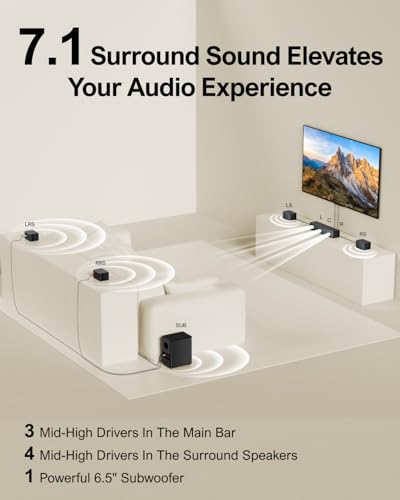
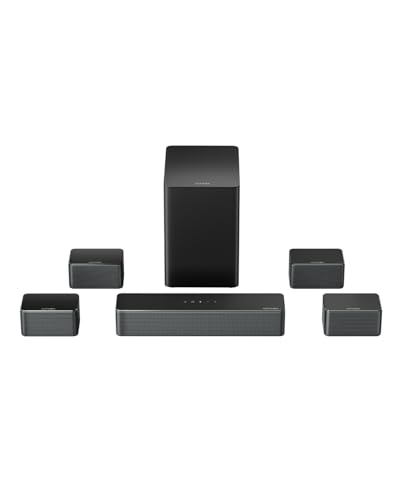
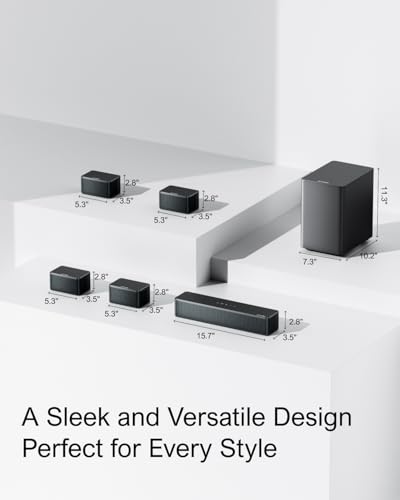
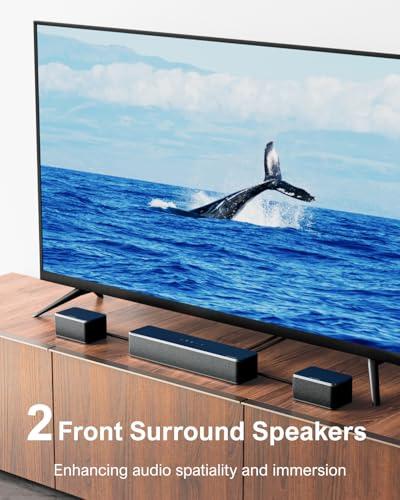
The Poseidon D70 takes the "more is better" philosophy seriously. This system includes eight separate drivers across six physical components: a main soundbar with three drivers, four surround speakers with one driver each, and a wireless subwoofer. The result is genuine 7.1-channel surround sound that creates audio coming from all directions.
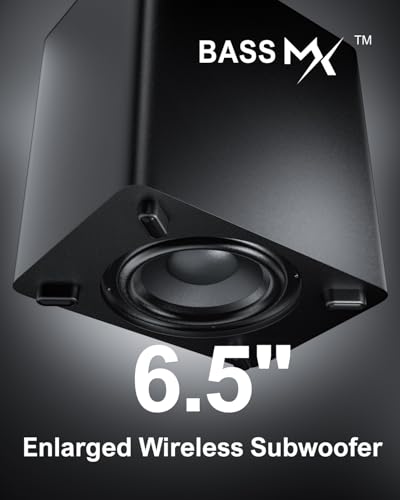
Power output reaches 410 watts peak across all components, which is substantial for a soundbar system at this price point. Peak wattage measures maximum short-term power during loud passages, while RMS (Root Mean Square) power of 144 watts represents continuous output – a more realistic measure of everyday performance. The 6.5-inch subwoofer handles frequencies as low as 35Hz, delivering the deep rumbles that make movie explosions feel visceral.
The standout feature is BassMX technology, Ultimea's proprietary bass enhancement that allows users to adjust low-frequency emphasis beyond traditional EQ settings. Combined with SurroundX processing, which coordinates all speakers for precise audio positioning, the system creates convincing directional effects. When a helicopter flies overhead in a movie, you'll hear it move from front to back through your actual speakers, not just processed approximations.
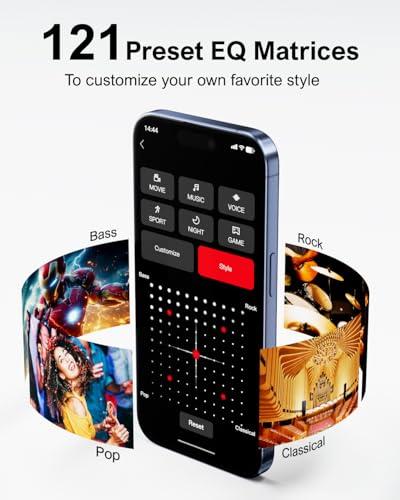
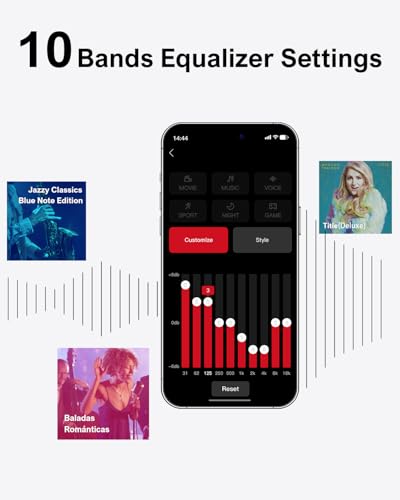
What sets the D70 apart is its 121 preset EQ matrices – essentially 121 different sound profiles optimized for various content types. The companion smartphone app provides a 10-band graphic equalizer, allowing granular frequency adjustments that most soundbars reserve for much higher price points. This level of customization means you can tune the system for your room's acoustics and personal preferences.
The complexity comes with trade-offs. Setup requires running cables up to 19.6 feet to position rear speakers properly. You'll need to commit to speaker placement around your seating area, which isn't practical in all living situations. The system works best in dedicated home theater spaces between 108-270 square feet where you can optimize speaker positioning.
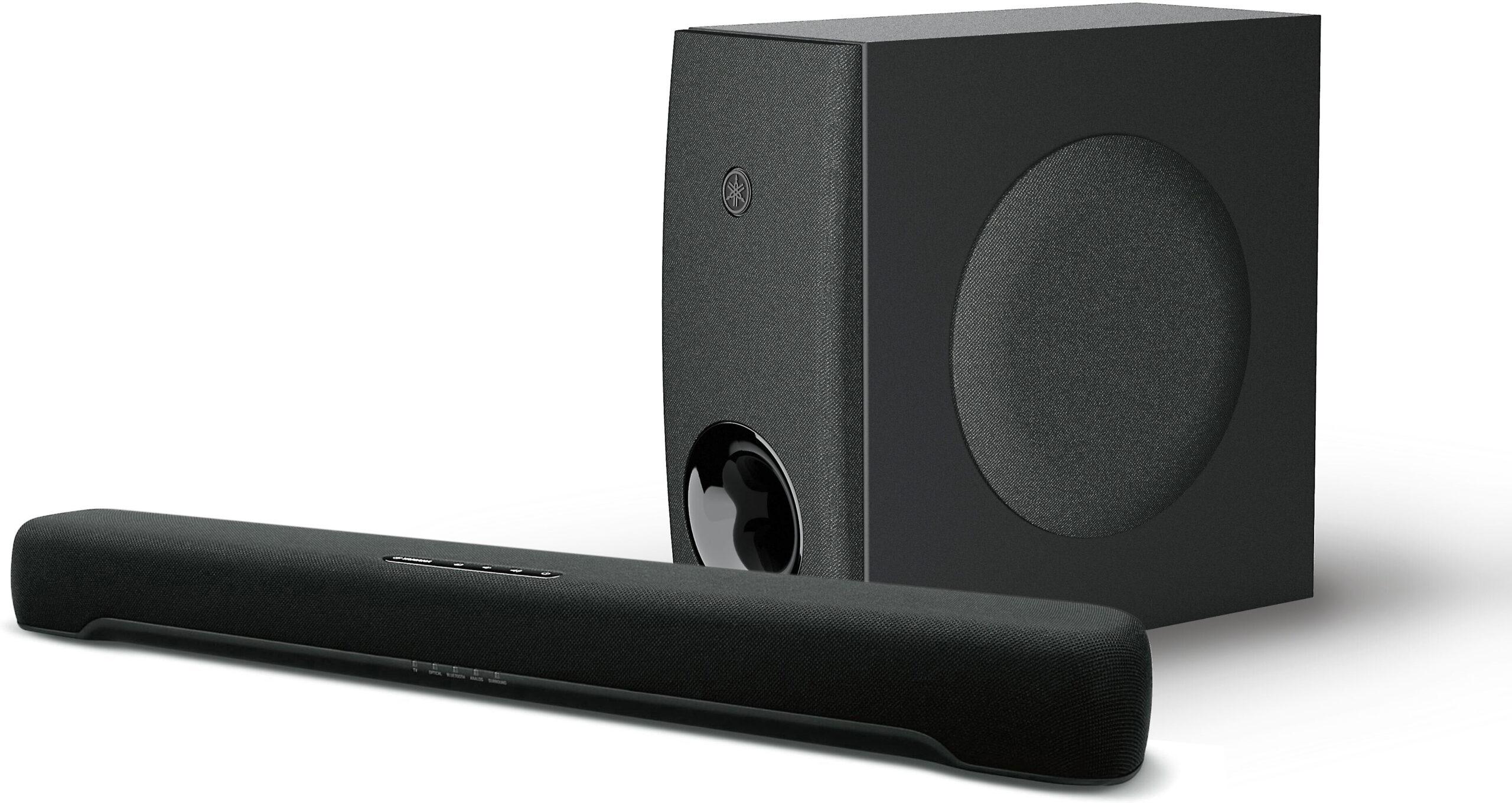
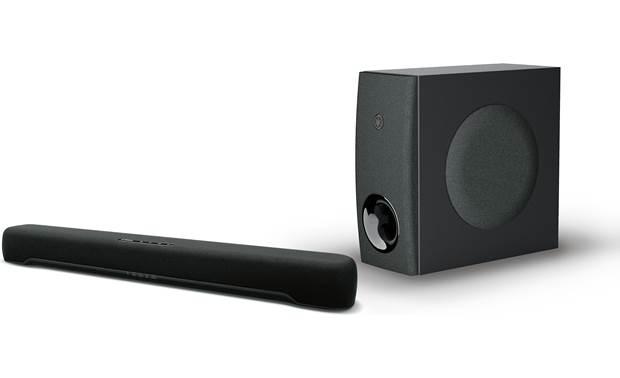
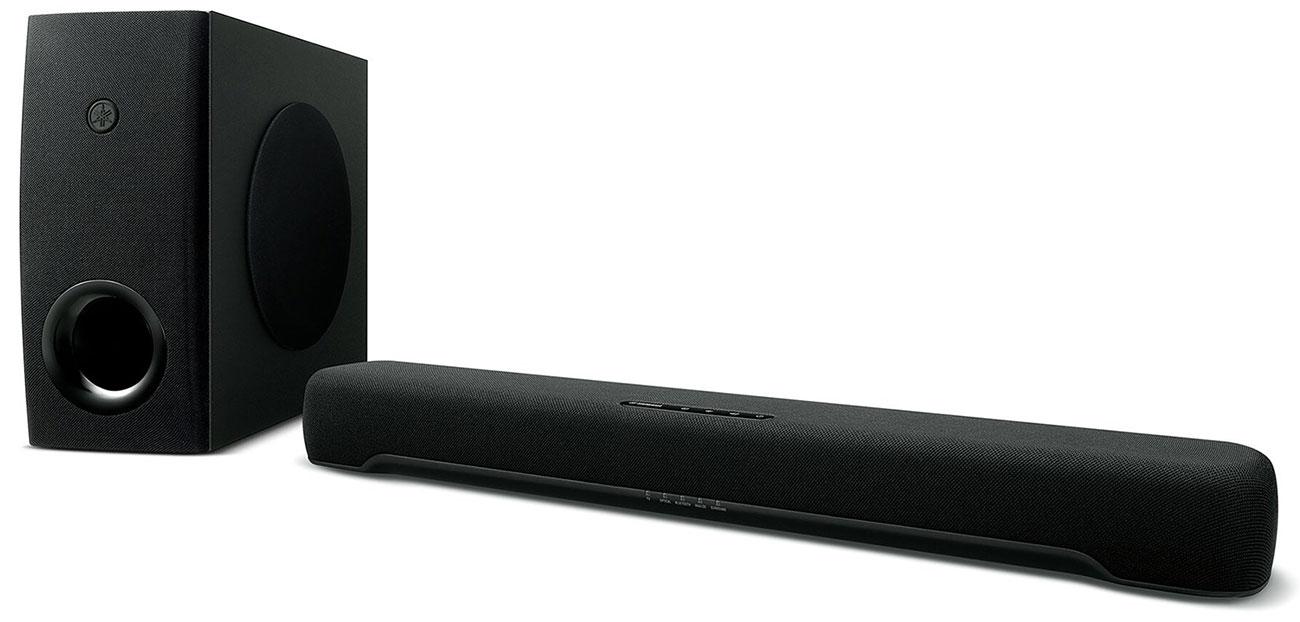
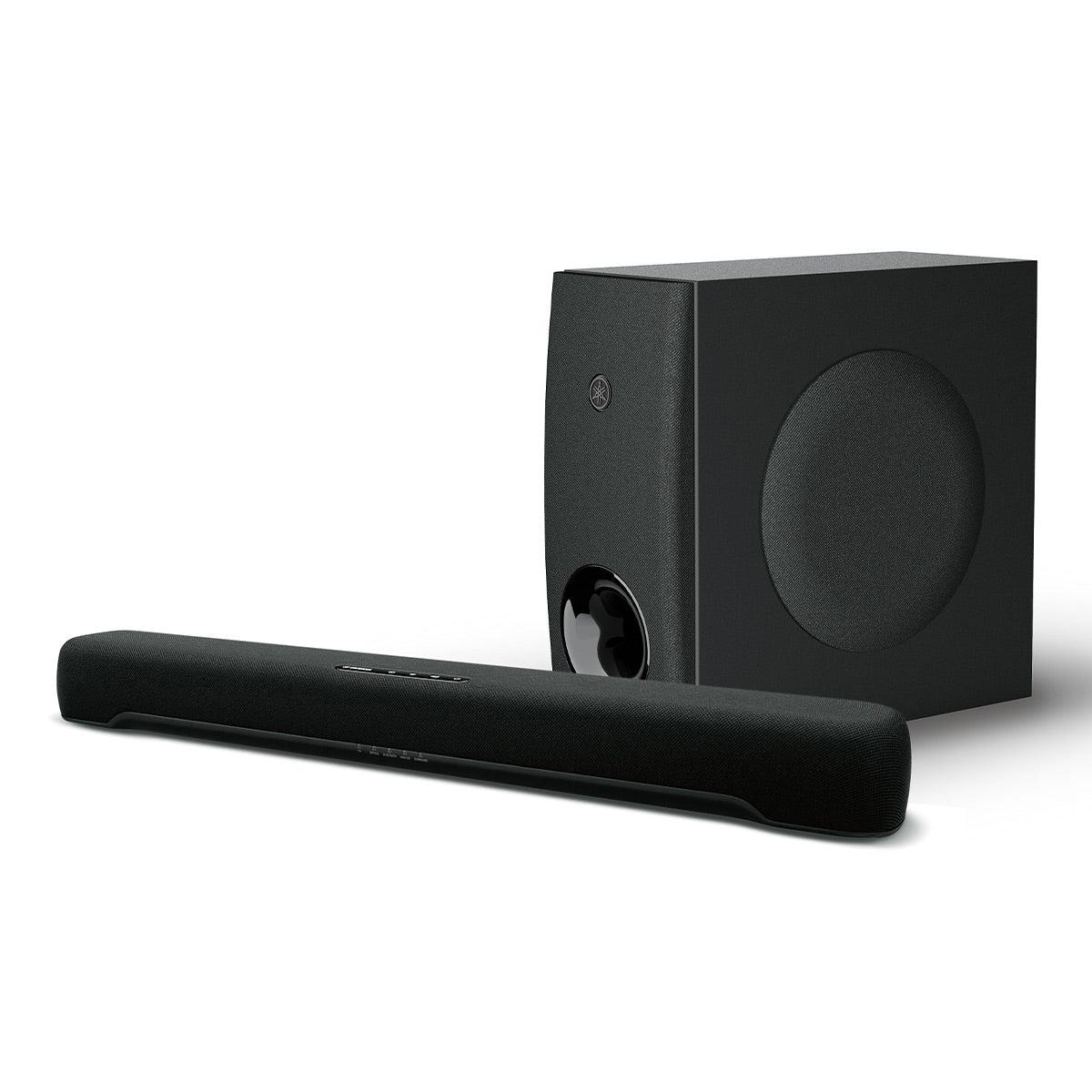
Yamaha took a completely different approach with the SR-C30A. This compact 2.1 system relies on sophisticated digital signal processing rather than multiple physical speakers. The soundbar measures just 23.6 inches wide – about 30% smaller than typical soundbars – making it ideal for smaller TVs and tight spaces.
True Sound design is Yamaha's approach to driver engineering, using decades of acoustic research to optimize how the two 1.8-inch drivers and 5.1-inch subwoofer work together. Despite producing only 90 watts total power (40W from the soundbar, 50W from the subwoofer), the system achieves impressive frequency response from 40Hz to 22kHz.
The magic happens in Yamaha's virtual 3D surround processing. The 3D Movie mode analyzes incoming audio and uses psychoacoustic principles (how your brain interprets sound direction and distance) to create the illusion of sounds coming from beside and behind you. While not as convincing as discrete speakers, well-implemented virtual surround can create surprisingly wide soundstages.
Clear Voice technology addresses one of the most common TV audio complaints: difficulty understanding dialogue when background music and sound effects compete for attention. This feature dynamically adjusts frequency response to make speech more prominent without completely suppressing other audio elements. It's particularly effective for action movies and shows with complex soundtracks.
Adaptive Low Volume is another standout feature. Traditional "night modes" simply compress dynamic range (reduce the difference between loud and quiet sounds), often making everything sound flat. Yamaha's approach maintains audio quality and detail even at low volumes, making it perfect for apartment living or late-night viewing without disturbing others.
The Poseidon D70's 6.5-inch subwoofer provides significantly more bass extension and impact than the SR-C30A's 5.1-inch unit. In practical terms, you'll feel movie explosions and music basslines more physically with the D70. The larger driver can move more air, creating those chest-thumping effects that add excitement to action scenes.
However, the Yamaha compensates with Bass Extended technology, which uses digital processing to enhance perceived low-frequency response. While it can't match the D70's physical impact, it provides surprisingly deep bass for such a compact subwoofer. For most TV watching and casual music listening, the difference may not be as significant as the specifications suggest.
This is where the SR-C30A potentially pulls ahead. Yamaha's Clear Voice processing specifically targets the frequency ranges where human speech occurs (roughly 300Hz to 3kHz), making dialogue more intelligible even during complex audio passages. The dedicated center channel processing, while virtual, effectively separates speech from other audio elements.
The D70 uses its center soundbar driver for dialogue, which should theoretically provide excellent speech clarity. However, user feedback suggests that the system's strength lies more in dramatic effects and bass impact than in subtle dialogue enhancement. The extensive EQ options allow for manual dialogue optimization, but this requires user effort that the Yamaha handles automatically.
Here's where the fundamental difference becomes most apparent. The Poseidon D70 creates genuine surround effects through physical speaker placement. When properly positioned, you'll hear distinct audio cues from specific directions. Gaming becomes more immersive as footsteps and gunshots provide positional information, and movies deliver the "you are there" experience that virtual processing struggles to match.
The SR-C30A's virtual surround works best when you're seated in the optimal listening position directly in front of the soundbar. Move too far to either side, and the illusion breaks down. However, within its sweet spot, Yamaha's processing creates convincingly wide soundstages that extend well beyond the physical soundbar width.
The D70's 410-watt peak power advantage becomes noticeable in larger rooms or when you want party-level volume. Eight drivers working together can fill more space with less strain than two drivers and a subwoofer. If you regularly host movie nights or want your system to work well with background conversations, the extra headroom matters.
The SR-C30A reaches satisfying volume levels for most situations, but it can't match the D70's ability to pressurize large rooms. At extreme volumes, the smaller drivers may exhibit more distortion as they reach their physical limits.
The Ultimea system's smartphone app provides extensive control over audio processing. The 10-band equalizer allows precise frequency adjustments, while the 121 preset matrices cover everything from classical music to gaming optimizations. Firmware updates ensure the system stays current with audio processing improvements.
Yamaha's app for the SR-C30A focuses more on convenience than customization. You can adjust basic settings and switch between sound modes, but the emphasis is on letting Yamaha's engineers handle the complex processing decisions. This appeals to users who want better sound without becoming audio enthusiasts.
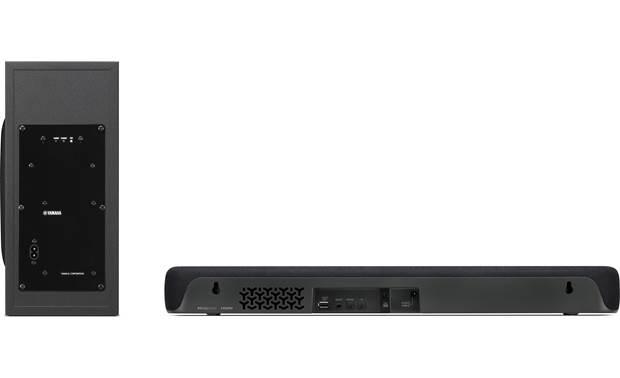
Both systems include HDMI ARC (Audio Return Channel), which allows your TV remote to control soundbar volume and enables the highest quality digital audio transmission. The D70 adds USB input for direct music playback and supports various Bluetooth codecs for wireless streaming.
The SR-C30A includes two optical inputs plus Bluetooth 5.0 with multi-point connectivity – the ability to connect multiple devices simultaneously and switch between them seamlessly. This modern Bluetooth implementation provides more stable connections and better audio quality than older versions.
At the time of writing, both systems compete in the sub-$250 soundbar segment, but they target different buyer priorities. The Poseidon D70 offers exceptional value for true surround sound, typically costing less than half what established brands charge for similar multi-speaker configurations. You're getting genuine 7.1-channel processing and substantial power output at budget pricing.
The Yamaha SR-C30A commands a slight premium for brand reputation and refined engineering. Yamaha's decades of audio expertise show in the system's balanced sound signature and thoughtful feature implementation. You're paying for reliability, sophisticated processing, and the peace of mind that comes with an established manufacturer's warranty support.
For dedicated home theater use, the Poseidon D70 provides more convincing surround effects that enhance movie immersion. The ability to position speakers around your seating area creates the enveloping soundscape that makes action sequences more exciting and atmospheric scenes more engaging. The extensive customization options let you optimize performance for your specific room acoustics.
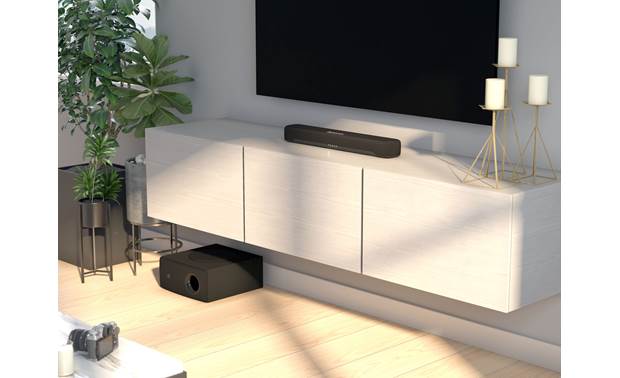
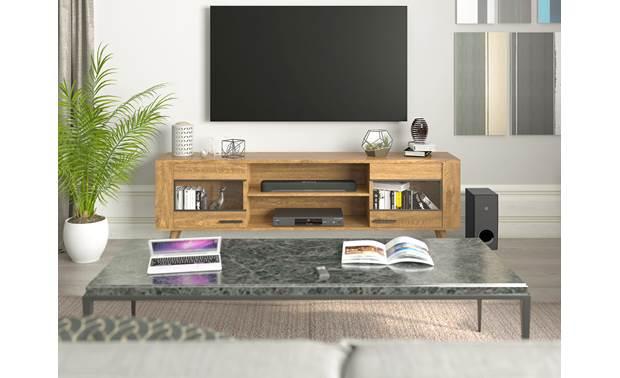
The SR-C30A works better in multi-purpose living spaces where permanent speaker installation isn't practical. Its compact form factor won't dominate your room's aesthetics, and the virtual surround processing provides enough spatial enhancement to improve the viewing experience significantly over TV speakers.
Choose the Ultimea Poseidon D70 if you:
Choose the Yamaha SR-C30A if you:
Both soundbars succeed at their intended purposes, but they serve fundamentally different user needs. The Poseidon D70 delivers maximum immersion and impact for users willing to embrace its complexity, while the SR-C30A provides refined performance enhancement with minimal lifestyle disruption.
Your living situation ultimately determines the best choice. In a dedicated home theater where you can optimize speaker placement, the D70's true surround sound justifies the extra setup effort. In shared living spaces or smaller rooms where convenience matters more than absolute performance, the Yamaha's sophisticated virtual processing and compact form factor make more sense.
Consider your long-term plans as well. If you might move frequently or your viewing space serves multiple purposes, the Yamaha's flexibility provides better value. If you're building a dedicated entertainment space and want the most immersive audio experience possible at this price point, the Ultimea system delivers exceptional performance that rivals much more expensive alternatives.
| Ultimea Poseidon D70 7.1 Channel Soundbar System | Yamaha SR-C30A Soundbar with Subwoofer |
|---|---|
| Channel Configuration - Determines surround sound authenticity | |
| True 7.1 channels with 4 physical surround speakers | 2.1 channels with virtual surround processing |
| Total System Components - Affects setup complexity and immersion | |
| 6 pieces: soundbar + 4 surround speakers + wireless subwoofer | 2 pieces: compact soundbar + wireless subwoofer |
| Peak Power Output - Higher wattage fills larger rooms effectively | |
| 410W peak (144W RMS) across 8 drivers | 90W total (40W soundbar, 50W subwoofer) |
| Subwoofer Size - Larger drivers produce deeper, more impactful bass | |
| 6.5" wireless subwoofer with BassMX™ technology | 5.1" wireless subwoofer with Bass Extended processing |
| Frequency Response - Wider range reproduces more audio detail | |
| 35Hz - 18kHz (extends deeper into bass territory) | 40Hz - 22kHz (extends higher into treble range) |
| Setup Requirements - Consider your space and installation tolerance | |
| Requires running cables up to 19.6 feet for surround speakers | Simple placement of soundbar and wireless subwoofer only |
| Smart Features - Advanced control and customization options | |
| 10-band EQ, 121 preset matrices, AI optimization via app | Clear Voice dialogue enhancement, Adaptive Low Volume |
| Physical Footprint - Room size and aesthetic considerations | |
| Large: 400mm soundbar + 4 satellites + subwoofer placement | Compact: 23.6" soundbar (30% smaller than typical) + subwoofer |
| Audio Processing Technologies - Different approaches to sound enhancement | |
| SurroundX™ spatial positioning, BassMX™ bass enhancement | True Sound design, virtual 3D surround, Dolby Digital/Pro Logic II |
| Connectivity Options - Input flexibility for various devices | |
| HDMI ARC, Optical, USB, Bluetooth, 3.5mm AUX | HDMI ARC, 2x Optical, Bluetooth 5.0 multi-point, 3.5mm AUX |
| Ideal Room Size - Manufacturer recommendations for optimal performance | |
| 108-270 square feet (medium to large rooms) | Small to medium rooms, especially space-constrained setups |
| Brand Heritage - Experience and reliability considerations | |
| Newer brand (2023) with app-based firmware updates | Established audio manufacturer with 2-year warranty |
The Ultimea Poseidon D70 delivers true 7.1 surround sound with four physical speakers placed around your room, creating genuine directional audio effects. The Yamaha SR-C30A uses virtual surround processing to simulate surround effects from just two speakers. For authentic surround sound immersion, the Poseidon D70 provides superior spatial audio positioning, especially for movies and gaming.
The Ultimea Poseidon D70 features a larger 6.5" wireless subwoofer that produces deeper, more impactful bass down to 35Hz. The Yamaha SR-C30A has a smaller 5.1" subwoofer but uses Bass Extended technology to enhance perceived low-frequency response. For powerful bass that you can physically feel during action movies, the D70 has a clear advantage.
The Yamaha SR-C30A is significantly easier to install, requiring only placement of the compact soundbar and wireless subwoofer. The Ultimea Poseidon D70 requires running cables up to 19.6 feet to position four surround speakers around your seating area. If you want minimal setup hassle, the SR-C30A can be installed in under 10 minutes.
The Yamaha SR-C30A is specifically designed for smaller spaces, with a compact 23.6" soundbar that's 30% smaller than typical models. It also performs well at low volumes without disturbing neighbors. The Ultimea Poseidon D70 requires more space for multiple speakers and works best in rooms 108-270 square feet. For apartments or small rooms, the Yamaha is the better choice.
The Yamaha SR-C30A excels at dialogue clarity with its dedicated Clear Voice technology that enhances speech frequencies and separates dialogue from background sounds. While the Ultimea Poseidon D70 can be customized for dialogue through its app-based equalizer, the Yamaha handles dialogue enhancement automatically and more effectively.
The Ultimea Poseidon D70 produces 410W peak power compared to the Yamaha SR-C30A's 90W output. This power advantage allows the D70 to fill larger rooms and reach higher volumes without distortion. For smaller rooms or moderate listening levels, the SR-C30A's power is adequate, but for large spaces or party-level volume, the Poseidon D70 performs better.
The Ultimea Poseidon D70 offers extensive customization with a 10-band equalizer, 121 preset sound profiles, and AI-powered audio optimization through its smartphone app. The Yamaha SR-C30A focuses on simplicity with basic app controls and automatic audio processing. If you enjoy tweaking audio settings, the D70 provides more control options.
Both systems offer excellent value in different ways. The Ultimea Poseidon D70 provides true 7.1 surround sound typically found in much more expensive systems. The Yamaha SR-C30A offers premium brand reliability, sophisticated processing, and thoughtful features. The D70 delivers more raw performance per dollar, while the Yamaha provides refined engineering and brand reputation.
The Ultimea Poseidon D70 excels for gaming with its true surround sound providing precise directional audio cues for competitive advantage. The four surround speakers create immersive gaming environments where you can pinpoint enemy locations. The Yamaha SR-C30A includes a dedicated Game mode but relies on virtual processing. For serious gaming, the D70 offers superior spatial awareness.
This depends on your priorities. The Yamaha SR-C30A provides more balanced, refined sound reproduction with Yamaha's True Sound engineering, making it better for critical music listening. The Ultimea Poseidon D70 offers more powerful bass and extensive EQ customization for different music genres. For audiophile-quality music reproduction, the SR-C30A has the edge.
Both systems include HDMI ARC and optical inputs for TV connection. The Ultimea Poseidon D70 adds USB input for direct music playback and standard Bluetooth connectivity. The Yamaha SR-C30A features Bluetooth 5.0 with multi-point connectivity, allowing connection to multiple devices simultaneously, plus two optical inputs instead of one. The Yamaha offers more modern wireless connectivity.
Choose the Ultimea Poseidon D70 if you have a dedicated home theater room where you can position multiple speakers and want maximum immersion for movies and gaming. Select the Yamaha SR-C30A if you have a multi-purpose living space, prioritize dialogue clarity, or need a system that works well in smaller rooms. The D70 provides more dramatic effects, while the SR-C30A offers refined performance with minimal space requirements.
We've done our best to create useful and informative comparisons to help you decide what product to buy. Our research uses advanced automated methods to create this comparison and perfection is not possible - please contact us for corrections or questions. These are the sites we've researched in the creation of this article: ultimea.com - provantage.com - ultimea.com - youtube.com - youtube.com - bestbuy.com - the-gadgeteer.com - shopmyexchange.com - youtube.com - youtube.com - youtube.com - ultimea.com - manuals.plus - device.report - images.thdstatic.com - shopmyexchange.com - staples.com - ultimea.de - techradar.com - usa.yamaha.com - expertreviews.com - usa.yamaha.com - trustedreviews.com - crutchfield.com - europe.yamaha.com - usa.yamaha.com - shop.usa.yamaha.com - assetserver.net

Privacy Policy
Terms and Conditions - Affiliate Policy
Home Security
© Copyright 2008-2026.
11816 Inwood Rd #1211, Dallas, TX 75244