




When shopping for a soundbar system, you're essentially choosing between two fundamentally different approaches to home theater audio. On one side, you have systems like the Ultimea Poseidon D70 that use multiple physical speakers placed around your room to create genuine surround sound. On the other, premium all-in-one units like the Klipsch Flexus Core 300 pack sophisticated audio processing and driver arrays into a single sleek bar.
This isn't just about features or price—it's about understanding which approach better fits your room, your content, and your priorities. After researching dozens of professional reviews and user experiences, the differences between these approaches are more significant than most buyers realize.
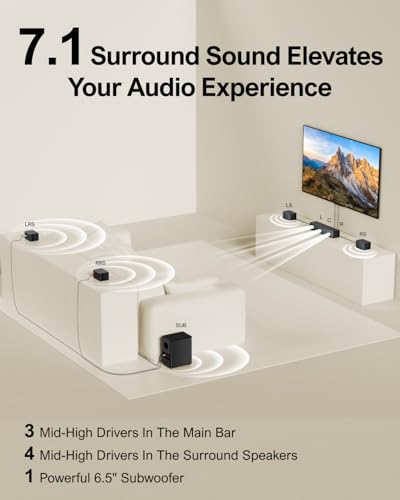
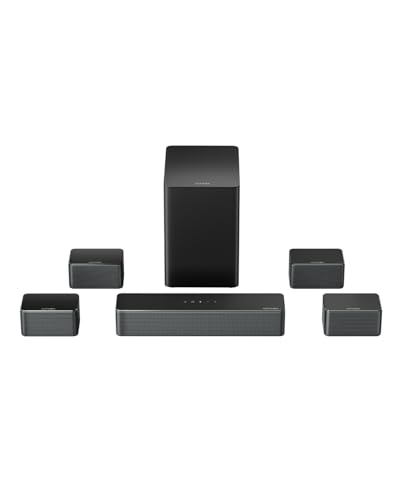
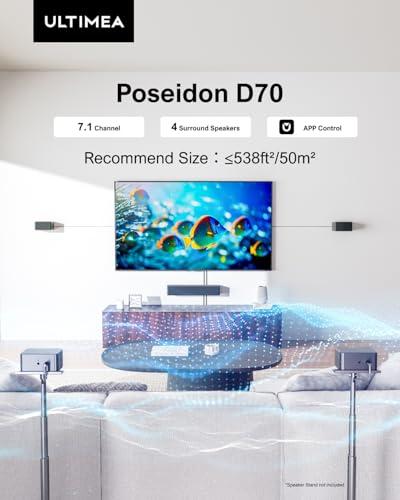
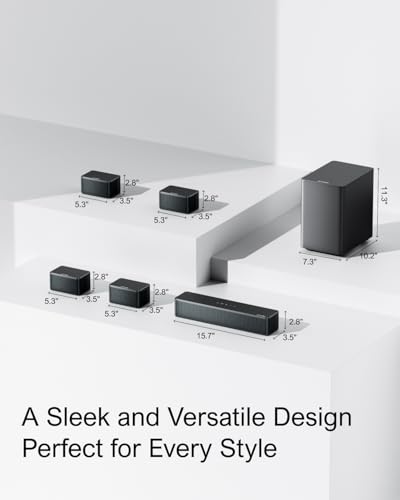
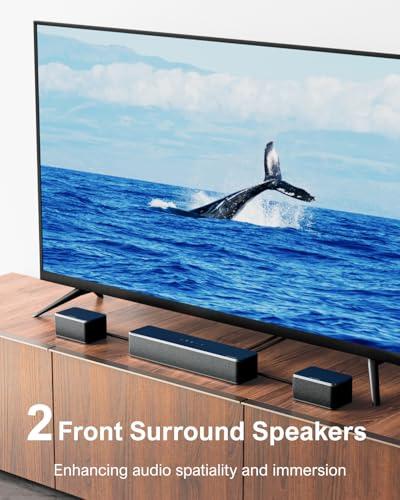
The Ultimea Poseidon D70, released in 2024, represents what I'd call the "old school done right" approach. You get seven physical speakers: a main soundbar, four separate surround speakers that you position around your room, and a wireless subwoofer. This creates what audio engineers call "true surround sound" because different sounds actually originate from different locations in your space.
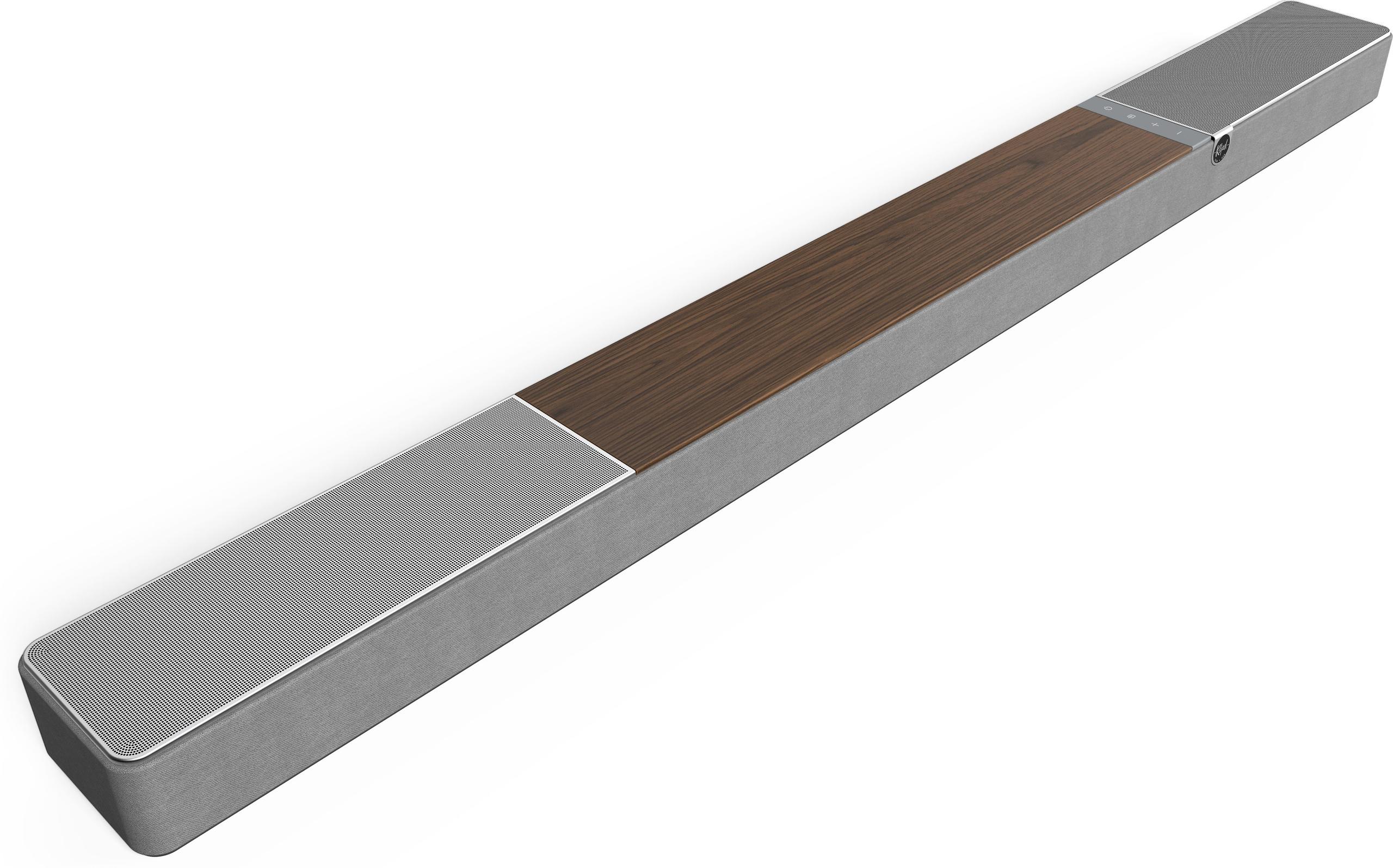
The Klipsch Flexus Core 300, also from 2024, takes the opposite approach. Everything happens within a single 54-inch soundbar that houses 13 individual drivers. Using advanced signal processing, it simulates surround effects and bounces sound off your walls and ceiling to create the illusion of multi-directional audio.
Both approaches have merit, but they excel in different scenarios and serve different types of users.
Here's where the technology gap becomes most apparent. The Klipsch Flexus Core 300 supports Dolby Atmos and DTS:X—the current standards for object-based surround sound. These formats don't just send audio to specific channels; they position individual sounds in three-dimensional space around you. When a helicopter flies overhead in a movie, Atmos can make it sound like it's actually above you, moving from front to back.
The Poseidon D70 uses older surround formats like standard Dolby Digital and DTS. While these still create immersive experiences through its physical speakers, they can't decode the height information in modern Atmos tracks. This means you'll miss out on overhead effects that have become standard in Netflix originals, Disney+ content, and 4K Blu-rays.
However—and this is important—the D70's physical approach often sounds more convincing than virtual processing for traditional surround content. When a sound is supposed to come from behind you, it actually does come from the rear speakers you've placed there. There's no processing trickery involved.
The Flexus Core 300 compensates with up-firing drivers that bounce sound off your ceiling to simulate height effects. In rooms with appropriate ceilings (8-12 feet, relatively flat), this works surprisingly well. But it's still a simulation, and the effectiveness varies dramatically based on your room's acoustics.
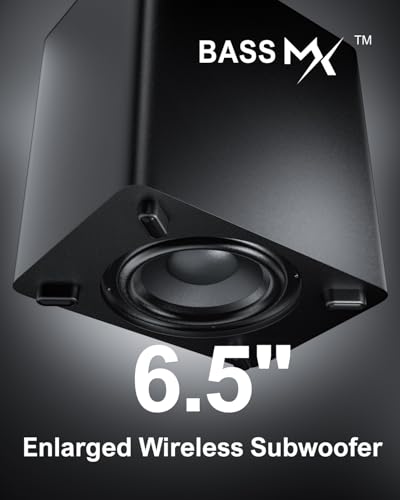
The Ultimea D70 approaches power like a traditional home theater system. It distributes 410 watts peak power (144 watts continuous) across all its speakers, with each component handling its specific frequency range. The 6.5-inch wireless subwoofer gets 60 watts, while the four surround speakers share 48 watts between them.
More importantly, the D70 can reach 103 decibels of sound pressure level—loud enough to fill large rooms without strain. This matters more than raw wattage numbers because it represents actual acoustic output in your space.
The Klipsch Core 300 takes a more mysterious approach to power specifications. Klipsch doesn't publish specific wattage figures, which is common with premium soundbars that focus on efficiency and processing over raw power. However, real-world testing reveals it peaks at around 96 decibels—noticeably quieter than advertised and significantly less than the D70's output.
This difference becomes crucial if you have a large room or like your action movies loud. The D70 simply has more headroom for dynamic content, while the Core 300 prioritizes refinement over raw output.
Bass reproduction showcases another fundamental difference in approach. The Poseidon D70 uses a dedicated 6.5-inch subwoofer that connects wirelessly to the main soundbar but can be placed anywhere in your room for optimal bass response. This separation is crucial because low-frequency sounds interact heavily with room dimensions and furniture placement.
The subwoofer incorporates Ultimea's BassMX technology, which essentially fine-tunes the frequency response and timing to deliver more impactful low-end. You can adjust bass levels independently through the remote or app, and because it's a dedicated driver in its own enclosure, it can move more air than integrated solutions.
The Klipsch Core 300 integrates four subwoofers directly into the soundbar chassis. While this eliminates the need to find space for a separate sub, it inherently limits bass output and extension. The drivers are smaller and share enclosure space with other components, reducing their ability to produce deep, room-shaking bass.
That said, the Core 300's integrated approach means better bass integration with the other drivers—there's no risk of timing mismatches or poorly blended crossover points that can occur with separate subwoofers.
For most content, the Core 300's bass is adequate. But if you're watching action movies or listening to bass-heavy music, the D70's dedicated subwoofer provides more impact and flexibility.
This is where the philosophical differences become most apparent. The Ultimea D70 creates surround effects by actually placing sounds where they belong in your room. Its SurroundX technology uses spatial positioning algorithms—essentially sophisticated timing and level adjustments—to coordinate all seven speakers for precise sound localization.
When properly set up with the four surround speakers positioned behind and to the sides of your seating area, the D70 creates genuinely convincing directional audio. Sounds move smoothly around the room, and you get that enveloping effect that makes movies more immersive.
The trade-off is complexity. You need to run cables to four different locations, find appropriate placement spots, and tune the system for your specific room layout. The app provides 121 preset EQ matrices and a 10-band equalizer specifically because every room setup will sound different.
The Klipsch Core 300 relies on psychoacoustic processing—tricking your brain into perceiving directional effects from reflected sound. Side-firing drivers create width by bouncing audio off your side walls, while up-firing drivers reflect sound off the ceiling for height effects.
This works surprisingly well in ideal rooms with appropriate wall and ceiling surfaces. However, rooms with high ceilings, irregular shapes, or heavily furnished spaces can significantly reduce effectiveness. The processing is sophisticated, but it can't overcome basic acoustic limitations.
Dialogue clarity often determines whether a soundbar succeeds or fails for daily use. The Klipsch Core 300 has a significant advantage here with its discrete center channel featuring a horn-loaded tweeter. This dedicated driver handles vocal frequencies without interference from other sounds, ensuring dialogue remains clear even during complex movie scenes.
Horn-loading is an acoustic design where the tweeter sits behind a small horn-shaped waveguide. This focuses the sound directly toward the listener and increases efficiency, making voices sound more natural and easier to understand at any volume level.
The Poseidon D70 handles center channel duties through three drivers in the main soundbar, but they're not isolated from other audio content. While the system includes a dedicated voice mode and the app allows mid-range adjustments, it can't match the focused clarity of a true discrete center channel.
For households where someone struggles to understand dialogue or where you frequently watch content with accents or complex audio mixing, the Core 300's center channel provides a noticeable advantage.
The Flexus Core 300 represents a breakthrough in soundbar technology by including Dirac Live room correction—the first soundbar to offer this level of acoustic optimization. Room correction addresses how your specific space affects audio reproduction by measuring and compensating for acoustic anomalies.
Using an included microphone and the Klipsch Connect Plus app, the system analyzes your room's frequency response and timing characteristics, then applies digital corrections to optimize the sound. This technology has been available in high-end AV receivers for years but never in a mainstream soundbar.
The basic Dirac Live license corrects frequencies up to 500 Hz, which covers the most problematic room interactions involving bass and lower midrange. A paid upgrade provides full-range correction, though this comes with trade-offs including reduced maximum volume output.
The Ultimea D70 takes a manual approach with extensive EQ options. The 121 preset matrices cover different music genres, room types, and content preferences, while the 10-band equalizer allows precise frequency adjustments. This requires more user involvement but provides granular control over the final sound.
For users who enjoy tweaking and optimizing their audio setup, the D70's manual approach offers more flexibility. For those who want sophisticated room optimization without the learning curve, the Core 300's automatic correction is more appealing.
Modern soundbars need to handle evolving audio formats and display technologies. The Klipsch Core 300 includes HDMI 2.1 with eARC (enhanced Audio Return Channel), supporting 8K video passthrough and high-frame-rate gaming. The eARC specification allows transmission of full-resolution Dolby Atmos and DTS:X audio from compatible TVs and streaming devices.
Additional inputs include USB-C, Ethernet for network updates, and Bluetooth 5.3 for improved wireless audio quality. The sub output port allows adding an external subwoofer later, addressing the integrated bass limitations.
The Poseidon D70 uses older HDMI ARC (without the "e"), limiting it to compressed audio formats. While this handles most current content adequately, it won't support future lossless Atmos formats or advanced gaming audio features.
The connectivity difference matters more for early adopters and gaming enthusiasts than casual users, but it represents a significant future-proofing gap at the time of writing.
Installing the Ultimea D70 requires planning and patience. You'll need to position four speakers around your room, run cables from the subwoofer to the rear speakers, and optimize placement for your specific seating arrangement. The wireless subwoofer helps by eliminating one cable run to the main soundbar, but you're still dealing with a multi-component system.
The payoff is authentic surround sound that doesn't rely on room acoustics or processing limitations. Once properly set up, the system provides consistent performance regardless of seating position or room characteristics.
The Klipsch Core 300 offers plug-and-play simplicity. Position the soundbar, run through the Dirac Live calibration process, and you're ready to go. The sophisticated processing handles the complexity automatically, though optimal performance still depends on appropriate room conditions.
At the time of writing, these products serve very different market segments despite some functional overlap. The Ultimea D70 offers exceptional value for budget-conscious buyers who want genuine surround sound and don't mind a more complex setup. You get seven physical speakers, extensive customization options, and room-filling volume at a remarkably low price point.
The Klipsch Core 300 commands a significant premium for its advanced processing, premium build quality, and convenience features. The Dirac Live integration alone represents substantial added value for audiophiles, while the comprehensive format support future-proofs the investment.
Choose the Ultimea Poseidon D70 if you want authentic surround sound at a budget price, don't mind positioning multiple speakers, primarily consume traditional content formats, and prefer extensive manual control over your audio settings. It's ideal for larger rooms where you need high output levels and for users who enjoy optimizing their system through experimentation.
The Klipsch Flexus Core 300 makes more sense if you prioritize convenience and premium features, need Dolby Atmos support for modern content, prefer automated room optimization, and want future-proof connectivity. It suits users who value sophisticated technology and elegant design over raw performance per dollar.
Neither approach is inherently superior—they represent different priorities and use cases. The D70 maximizes performance for the investment, while the Core 300 maximizes convenience and technology integration.
For home theater enthusiasts on a budget, the Ultimea's physical surround approach provides more authentic immersion. For users who want premium features without setup complexity, the Klipsch's all-in-one sophistication justifies its higher cost through advanced technology and user-friendly operation.
The key is honestly assessing your room setup, content preferences, technical comfort level, and budget priorities. Both systems excel within their intended use cases, but choosing the wrong approach for your specific needs will lead to disappointment regardless of which product performs better in isolation.
| Ultimea Poseidon D70 7.1 Channel Soundbar System | Klipsch Flexus Core 300 Soundbar |
|---|---|
| Audio Format Support - Determines compatibility with modern streaming content | |
| Traditional surround (Dolby Digital, DTS) - great for most content but lacks modern overhead effects | Dolby Atmos, DTS:X - full support for Netflix, Disney+, and 4K Blu-ray height effects |
| Surround Sound Approach - Affects authenticity and setup complexity | |
| 4 physical surround speakers + wireless subwoofer - authentic directional audio but requires room placement | All-in-one with side/up-firing drivers - convenient setup but relies on room acoustics for effectiveness |
| Maximum Volume Output - Critical for larger rooms and dynamic content | |
| 103 dB SPL - excellent for large rooms and action movies | 96 dB SPL actual (vs 106 dB advertised) - adequate for most rooms but limited headroom |
| Bass Performance - Affects movie impact and music enjoyment | |
| Dedicated 6.5" wireless subwoofer with BassMX technology - deep, impactful bass with flexible placement | Built-in dual subwoofers - adequate bass but limited extension, can add external sub via output port |
| Room Correction Technology - Optimizes sound for your specific space | |
| Manual tuning with 121 EQ presets + 10-band equalizer - extensive control but requires user adjustment | Dirac Live auto-calibration (first soundbar to offer this) - sophisticated but basic version included, full license costs extra |
| Dialogue Clarity - Essential for TV shows and movies with complex audio | |
| Integrated center channel in main soundbar - good clarity with voice mode optimization | Discrete center channel with horn-loaded tweeter - superior vocal isolation and intelligibility |
| Connectivity Options - Determines compatibility with modern devices | |
| HDMI ARC, Optical, Bluetooth, USB - basic connectivity suitable for most current devices | HDMI 2.1 eARC, USB-C, Ethernet, Bluetooth 5.3 - future-proof for 8K gaming and lossless audio |
| Setup Complexity - Time and effort required for optimal performance | |
| Multi-component system requiring speaker placement and cable management around room | Single soundbar with automated calibration - minimal setup but performance depends on room conditions |
| Expandability - Ability to upgrade or add components later | |
| Complete system included - no expansion options but everything needed is provided | Modular design - can add Klipsch Flexus Core 300 rear speakers and external subwoofer for enhanced performance |
| Build Quality and Design - Affects longevity and room aesthetics | |
| Functional plastic construction with multiple components - solid for price point but visible speaker placement | Premium materials in sleek 54" soundbar design - high-end appearance suitable for modern entertainment centers |
| Value Proposition - Performance per dollar at time of writing | |
| Exceptional value with complete 7.1 system at budget price - best performance per dollar for physical surround | Premium pricing justified by advanced technology and convenience - pays for sophisticated processing and brand reputation |
The Klipsch Flexus Core 300 is better for modern home theater use because it supports Dolby Atmos and DTS:X formats found in Netflix, Disney+, and 4K Blu-rays. These formats create overhead sound effects that make movies more immersive. The Ultimea Poseidon D70 uses older surround formats but provides more authentic directional audio through its four physical surround speakers placed around your room.
The Ultimea Poseidon D70 requires placing four surround speakers around your room and connecting them with cables for true 7.1 surround sound. The Klipsch Flexus Core 300 is an all-in-one soundbar that doesn't require additional speaker placement - it uses internal drivers and sound reflection to create surround effects.
The Ultimea Poseidon D70 reaches 103 dB sound pressure level, making it significantly louder than the Klipsch Flexus Core 300 which peaks at 96 dB in real-world testing. For large rooms or listeners who prefer high volume levels, the Ultimea provides better headroom and dynamic range.
The Ultimea Poseidon D70 includes a dedicated 6.5-inch wireless subwoofer that delivers deeper, more impactful bass with flexible room placement. The Klipsch Flexus Core 300 has built-in subwoofers within the soundbar itself, which is convenient but produces less powerful bass extension.
The Klipsch Flexus Core 300 is much easier to set up - just place the soundbar and run the automated room calibration. The Ultimea Poseidon D70 requires positioning four surround speakers around your room, running cables, and manual tuning, making it more complex but potentially more rewarding.
The Klipsch Flexus Core 300 has HDMI 2.1 with eARC support, making it ideal for PS5 and Xbox Series X gaming with advanced audio formats and 8K video passthrough. The Ultimea Poseidon D70 uses older HDMI ARC connectivity that works with gaming consoles but doesn't support the latest audio formats.
The Klipsch Flexus Core 300 has superior dialogue clarity thanks to its discrete center channel with a horn-loaded tweeter that isolates voices from other sounds. The Ultimea Poseidon D70 handles dialogue through its main soundbar drivers, which is good but not as focused as a dedicated center channel.
Both soundbars offer smartphone app control. The Ultimea Poseidon D70 provides extensive control through its app with 121 EQ presets and 10-band equalizer customization. The Klipsch Flexus Core 300 uses the Klipsch Connect Plus app primarily for room calibration setup and basic controls.
The Ultimea Poseidon D70 offers exceptional value by including a complete 7.1 channel system with physical surround speakers and wireless subwoofer at a budget-friendly price point. The Klipsch Flexus Core 300 commands a premium price but justifies it with advanced technology, Dolby Atmos support, and sophisticated room correction.
Both the Ultimea Poseidon D70 and Klipsch Flexus Core 300 work with all major TV brands through HDMI and optical connections. The Klipsch offers better compatibility with newer smart TVs through its HDMI 2.1 eARC connection, while the Ultimea uses standard HDMI ARC that works with most current TVs.
For music, the Ultimea Poseidon D70 excels with its dedicated subwoofer and extensive EQ customization options, allowing you to fine-tune sound for different music genres. The Klipsch Flexus Core 300 offers more refined audio processing and room correction but may lack the bass impact that music enthusiasts prefer.
The Klipsch Flexus Core 300 is designed for expansion - you can add Flexus rear speakers and external subwoofers to create a full surround system. The Ultimea Poseidon D70 comes as a complete system with all components included, so there are no expansion options, but everything you need is provided from the start.
We've done our best to create useful and informative comparisons to help you decide what product to buy. Our research uses advanced automated methods to create this comparison and perfection is not possible - please contact us for corrections or questions. These are the sites we've researched in the creation of this article: ultimea.com - provantage.com - ultimea.com - youtube.com - youtube.com - bestbuy.com - the-gadgeteer.com - shopmyexchange.com - youtube.com - youtube.com - youtube.com - ultimea.com - manuals.plus - device.report - images.thdstatic.com - shopmyexchange.com - staples.com - ultimea.de - crutchfield.com - whathifi.com - avnirvana.com - hometechnologyreview.com - ecoustics.com - gearpatrol.com - klipsch.com - avsforum.com - youtube.com - avsforum.com - listenup.com - chowmain.software - klipsch.com - novis.ch - avsforum.com - klipsch.ca - lefflers.se - abt.com - sweetwater.com - wifihifi.com - klipsch.com - dirac.com

Privacy Policy
Terms and Conditions - Affiliate Policy
Home Security
© Copyright 2008-2026.
11816 Inwood Rd #1211, Dallas, TX 75244