


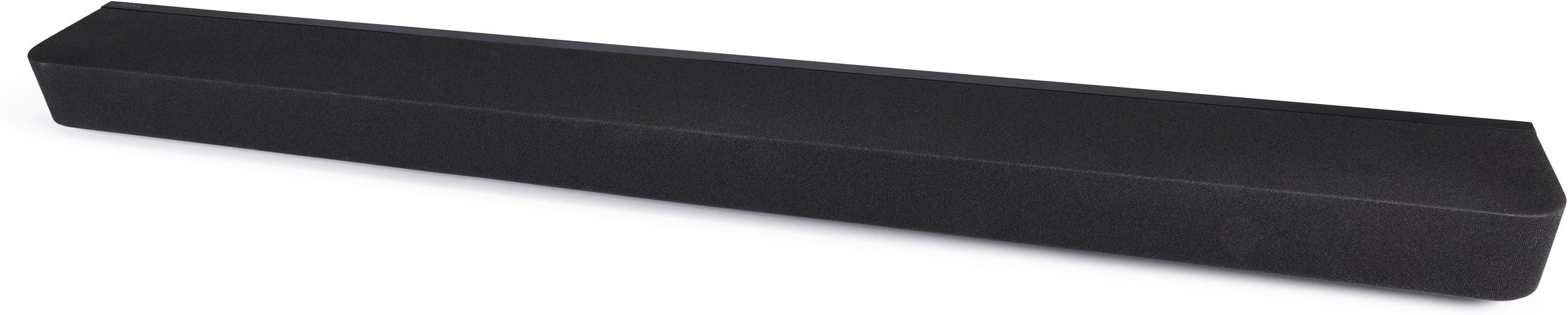
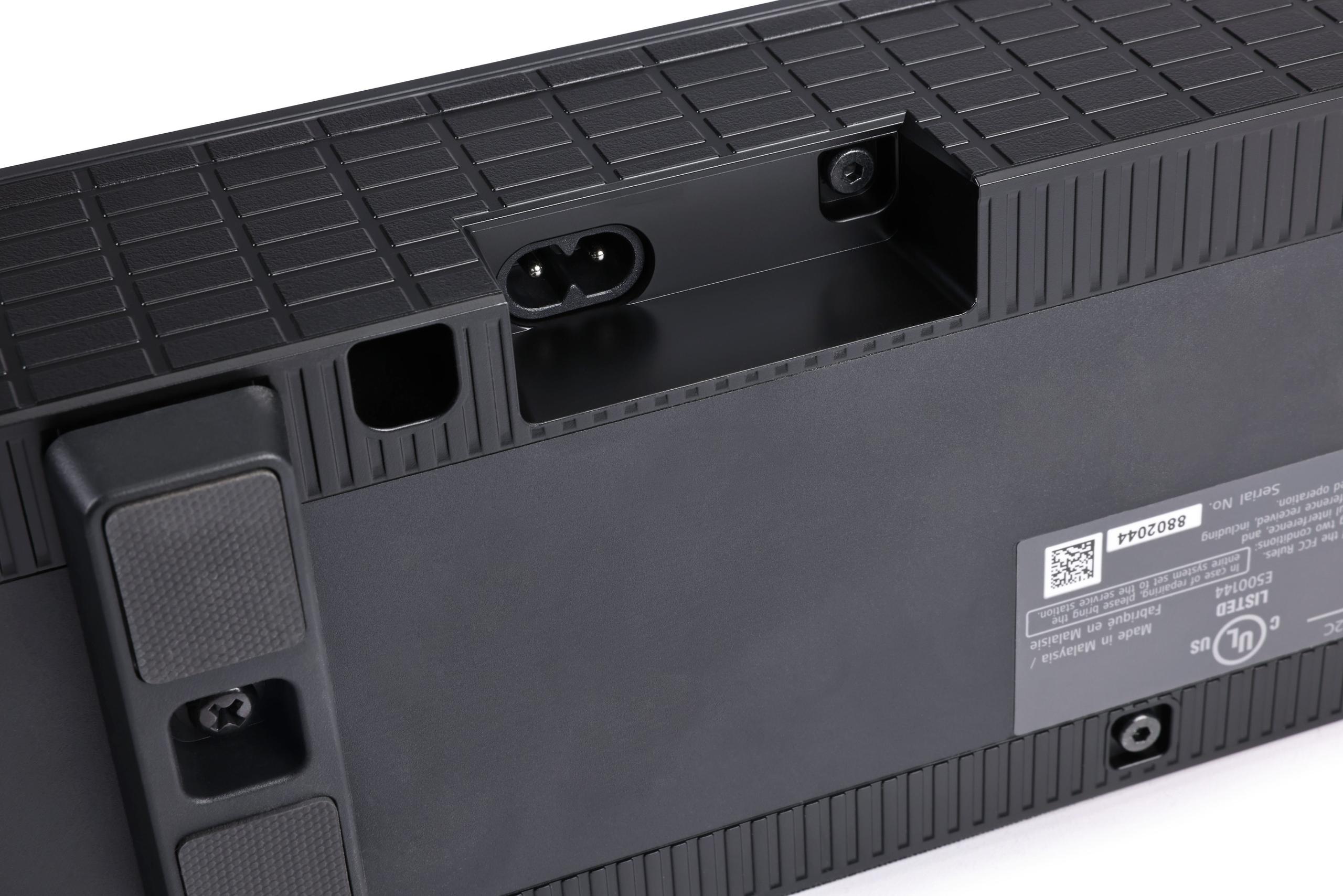
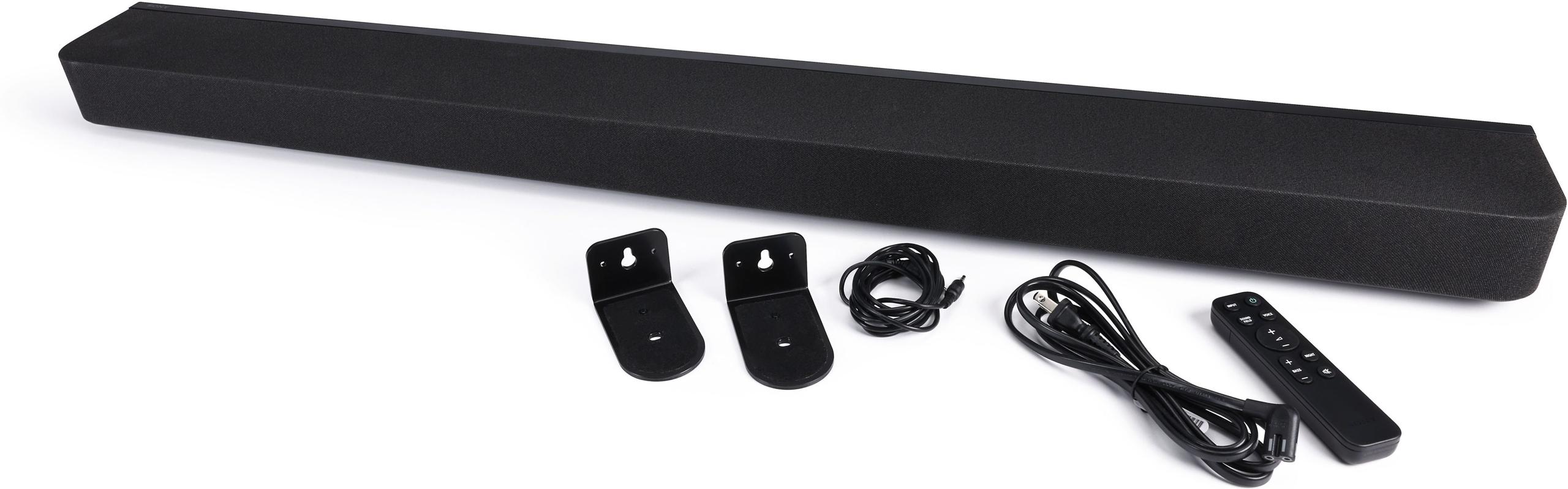


When shopping for a home theater audio upgrade, you'll quickly discover that the soundbar world splits into two very different camps. There's the sleek, premium single-unit approach exemplified by Sony's flagship HT-A8000 BRAVIA Theater Bar 8, and the complete multi-speaker system route taken by budget champions like the Ultimea Poseidon D70. At the time of writing, these products represent entirely different price tiers—with the Sony commanding premium pricing around $800-900, while the Ultimea delivers a complete 7.1 system for roughly one-quarter of that cost.
This isn't just about money, though. These two approaches to home audio represent fundamentally different philosophies about how to create immersive sound in your living room. After researching extensive user feedback and professional reviews, I've found that each has distinct advantages that make them ideal for different situations and preferences.
The modern soundbar market has evolved dramatically since both products launched in 2024. What started as simple TV speaker replacements has branched into sophisticated audio systems rivaling traditional home theater setups. The key decision you'll face isn't just about features or price—it's about choosing between virtual audio processing that creates surround effects from a single unit, versus physical speakers placed around your room for authentic directional sound.
Virtual surround processing uses complex algorithms and precisely positioned drivers to "trick" your brain into hearing sounds from locations where no speakers exist. It's the same concept movie theaters use, but condensed into a single soundbar. Physical surround sound places actual speakers in multiple locations, giving you genuine left-right-center-rear audio positioning that virtual processing can approximate but never fully replicate.
The Sony HT-A8000 represents the pinnacle of virtual surround technology, while the Ultimea Poseidon D70 takes the traditional multi-speaker approach and makes it affordable for mainstream buyers.
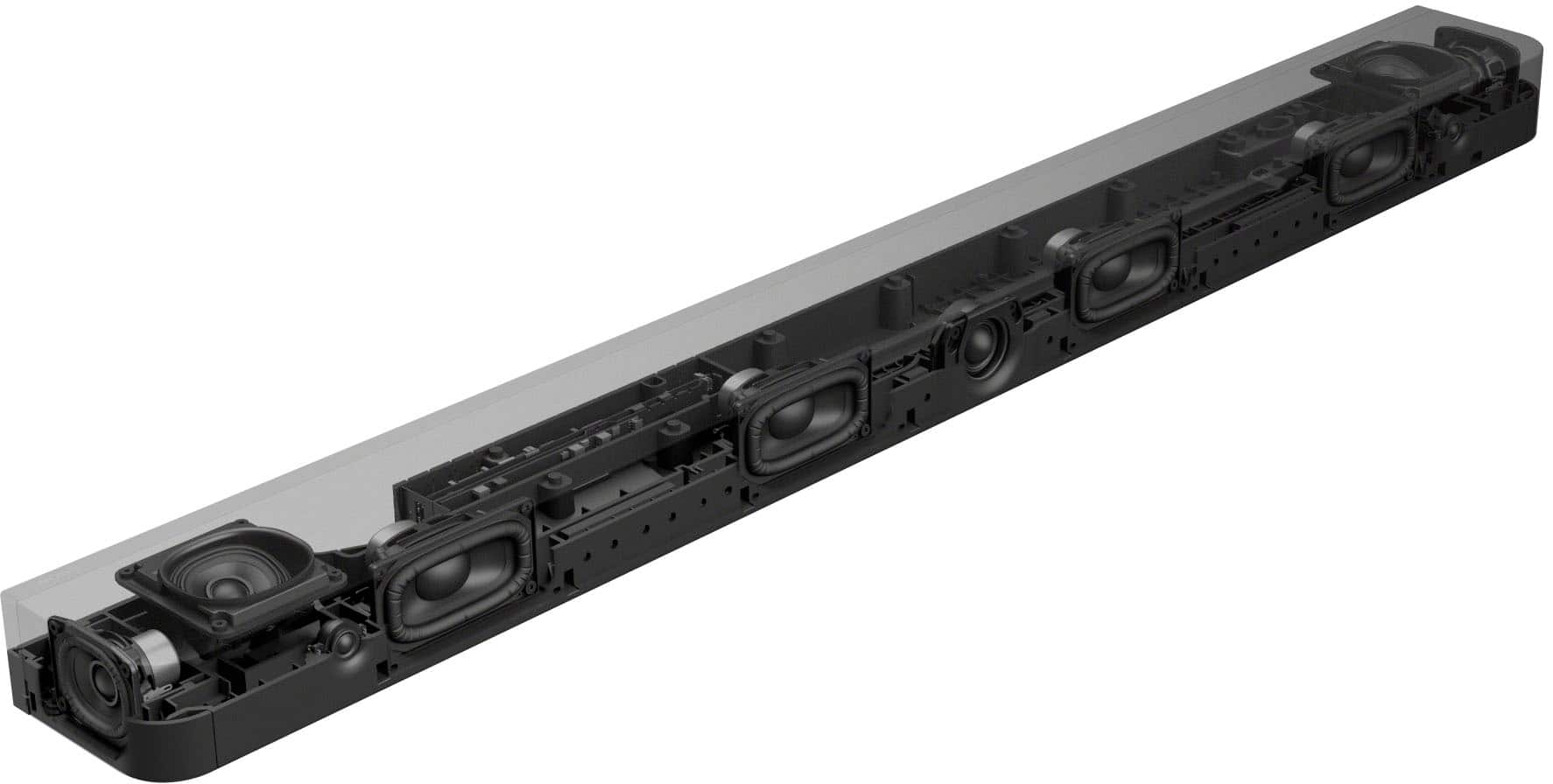
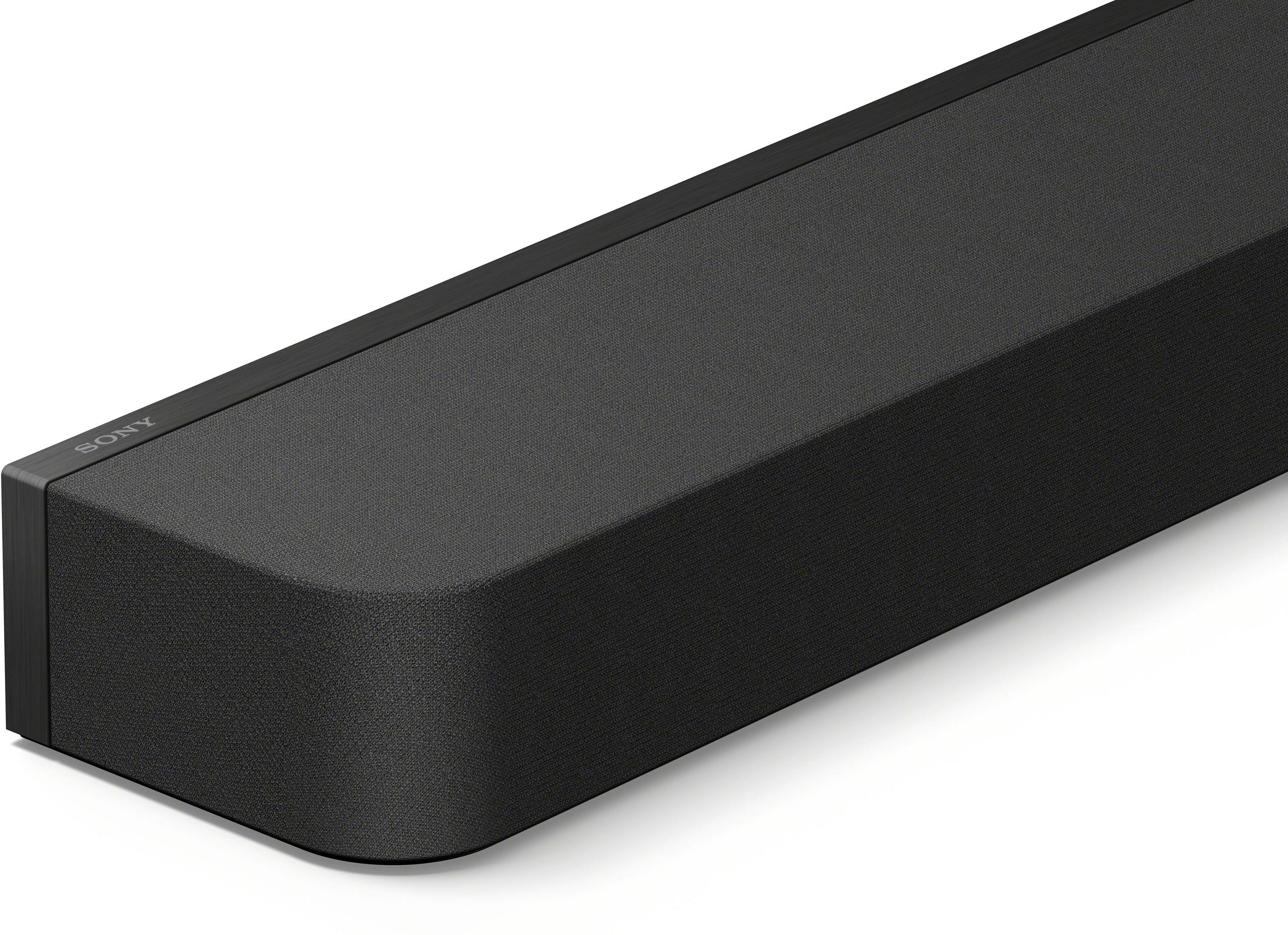
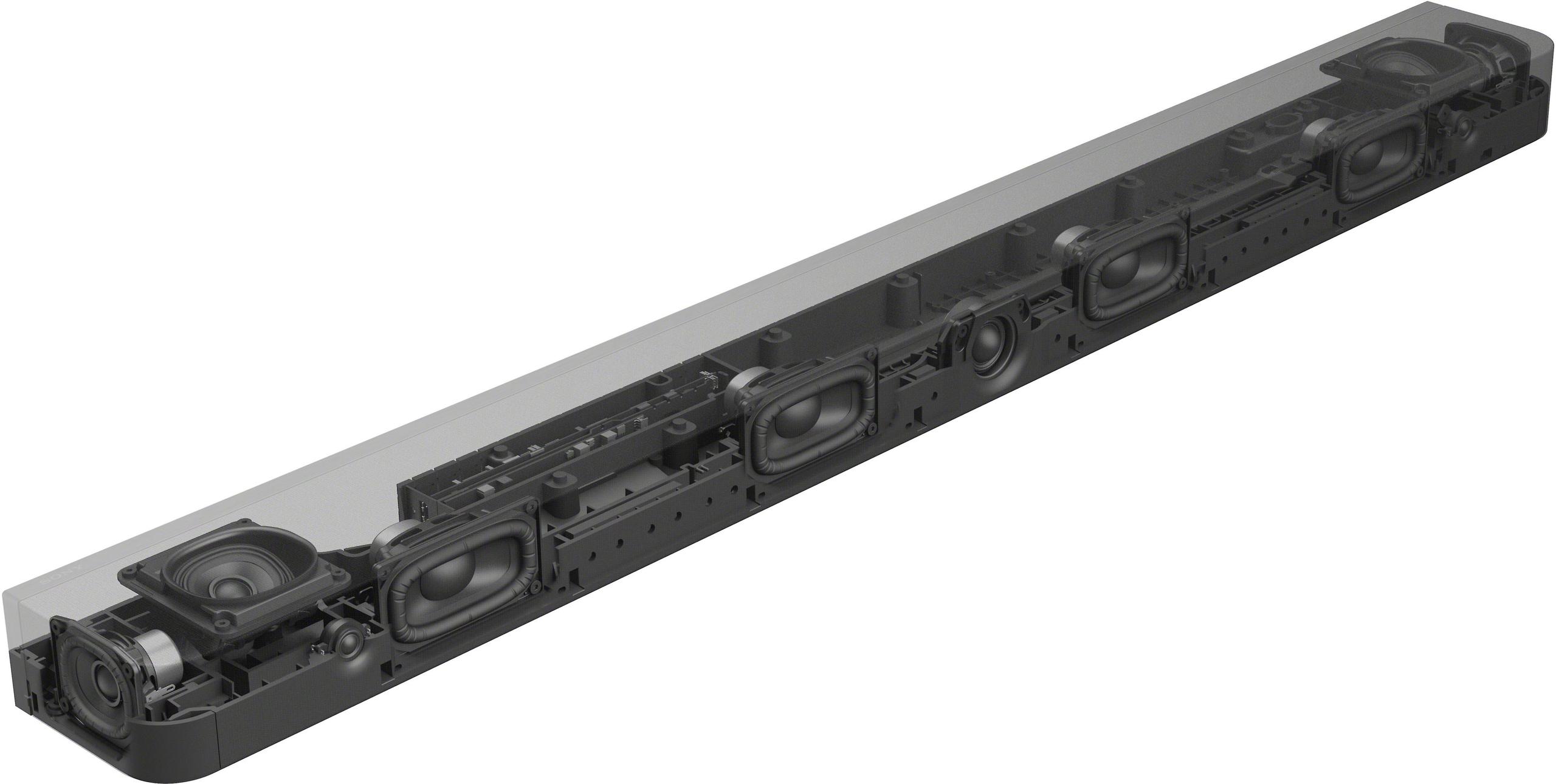
Sony released the HT-A8000 in 2024 as their flagship soundbar, packing eleven individual speakers into a sleek 43-inch unit. This isn't just about cramming more drivers into a box—Sony's 360 Spatial Sound Mapping technology uses those eleven speakers in a coordinated orchestra to create what they call "phantom speakers" in your room.
Here's how this works: The soundbar contains traditional front-firing speakers for dialogue and music, plus side-firing drivers that bounce sound off your walls, and up-firing speakers that reflect audio off your ceiling. Advanced processing analyzes your room's acoustics in real-time, adjusting how each speaker fires to create the illusion of surround speakers floating in space around you.
The technical term for this driver configuration is 5.0.2 channels—five main audio channels (front left, center, front right, plus two side channels) and two height channels from the up-firing speakers. The "phantom speakers" Sony creates effectively expand this to a 7.1-like experience without requiring physical rear speakers.
Sound Field Optimization represents another significant technological advancement. When you first set up the Sony HT-A8000, it listens to how sound bounces around your specific room, identifying walls, furniture, and acoustic dead spots. It then tailors its phantom speaker placement and processing to work optimally in your space. This auto-calibration technology wasn't available in earlier soundbar generations and makes a noticeable difference in audio quality.
For dialogue clarity, Sony includes Voice Zoom 3, which uses artificial intelligence to identify human voices in the audio mix and selectively amplify them. This feature proves especially valuable when watching movies with complex soundtracks where dialogue can get buried under music and effects.
The HT-A8000 also supports Dolby Atmos and DTS:X, which are object-based audio formats that place individual sounds in three-dimensional space rather than just assigning them to specific channels. The up-firing speakers bounce these height effects off your ceiling, creating the sensation of helicopters flying overhead or rain falling from above.
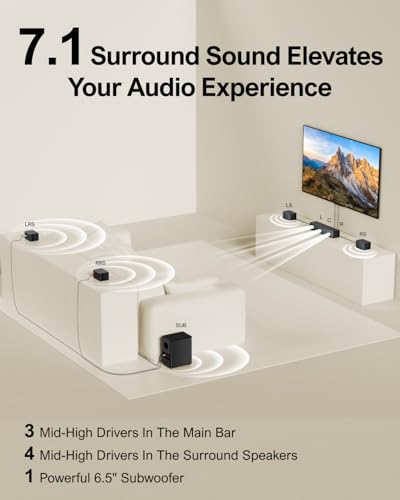
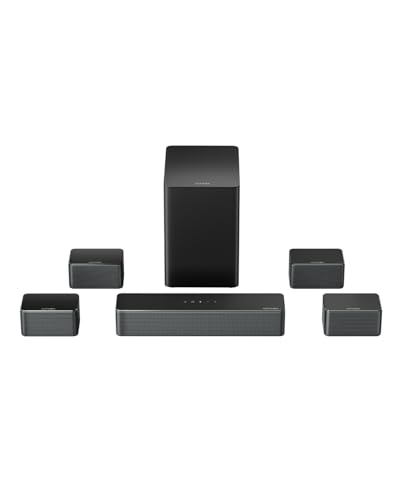
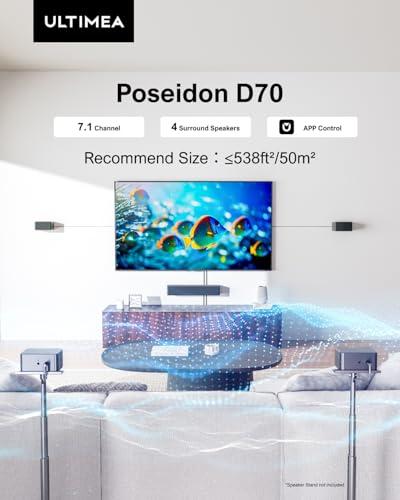
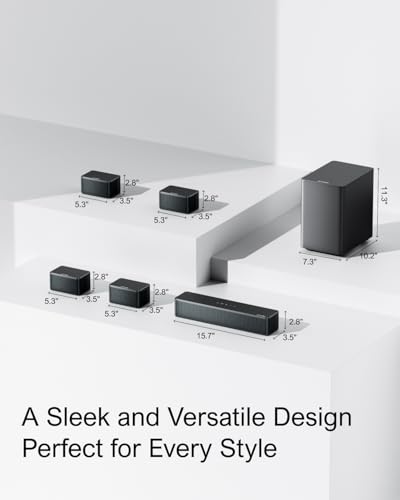
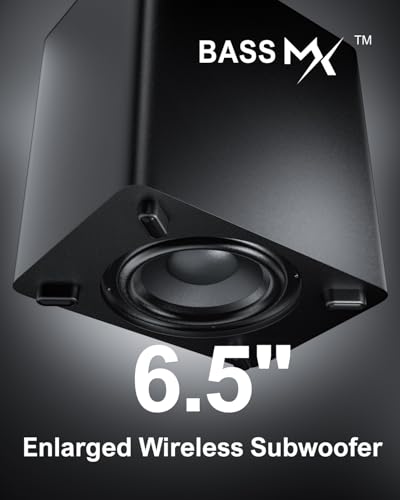
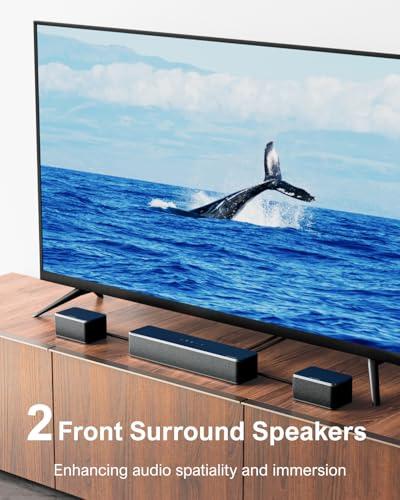
The Ultimea Poseidon D70 takes a completely different approach by giving you eight actual speakers to place around your room. This includes a main soundbar with three drivers, four separate surround speakers you position at the front-left, front-right, rear-left, and rear-right locations, plus a 6.5-inch wireless subwoofer for deep bass.
This true 7.1 configuration means you get genuine directional audio from multiple physical locations. When a car drives from left to right across your TV screen, you'll hear it move from the front-left speaker, through the soundbar's center channel, and over to the front-right speaker. When someone speaks from behind the main character, that dialogue comes from the rear speakers behind your couch.
The Poseidon D70 includes BassMX technology, which is Ultimea's proprietary bass enhancement system. The 6.5-inch subwoofer connects wirelessly to the main soundbar, reducing cable clutter while providing adjustable low-frequency output down to 35Hz—deep enough to feel explosions and musical bass lines in your chest.
SurroundX technology coordinates all eight speakers to create what Ultimea calls "environmental sound detail with high authenticity." While this doesn't match Sony's sophisticated processing, it does ensure that sounds move smoothly between the physical speakers rather than jumping abruptly from one to another.
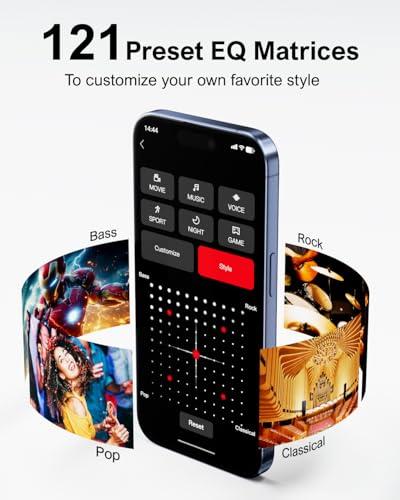
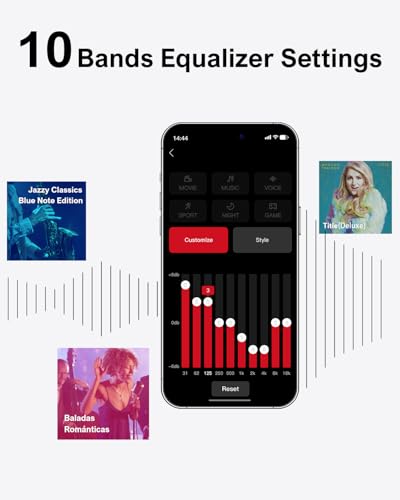
One standout feature is the 121 preset EQ matrices accessible through Ultimea's mobile app. These aren't just basic sound modes—they're detailed frequency adjustments optimized for different music genres, movie types, and even specific room acoustics. The 10-band graphic equalizer lets you fine-tune frequencies manually, giving you more audio customization than most systems at any price point.
Based on user reviews and expert evaluations, the surround sound experience differs significantly between these approaches. The Sony HT-A8000 creates an impressively wide soundstage that extends well beyond the physical soundbar. Users consistently report feeling "surrounded" by audio even without rear speakers, and the phantom speaker placement convincingly positions effects around the room.
However, the Ultimea Poseidon D70's physical speakers provide directional accuracy that virtual processing cannot fully match. When reviewing user feedback, owners frequently mention the impact of having actual rear speakers—dialogue from off-screen characters genuinely comes from behind you, and action sequences create a more convincing 360-degree audio environment.
The Sony's advantage lies in height effects from its Dolby Atmos support. The up-firing speakers create overhead audio that adds a vertical dimension to movies and games. The Ultimea system lacks height channels entirely, limiting it to horizontal surround effects.
Both systems excel at dialogue reproduction, but for different reasons. The Sony HT-A8000 uses dedicated center channel drivers combined with Voice Zoom 3 AI processing to ensure dialogue cuts through complex soundtracks. Users report excellent speech clarity even during explosive action scenes.
The Poseidon D70 achieves clear dialogue through its dedicated soundbar center channel, and the physical speaker separation means vocals don't compete with surround effects coming from the same location. The result is naturally clear speech without requiring AI enhancement.
This represents the biggest performance difference between the systems. The Ultimea Poseidon D70 includes a 6.5-inch wireless subwoofer with BassMX technology, providing immediate deep bass extension and adjustable low-frequency impact. Users consistently praise the subwoofer's punch and depth, especially considering the system's modest price point.
The Sony HT-A8000 relies on four internal woofer drivers for bass, which limits low-frequency extension compared to a dedicated subwoofer. While Sony offers optional wireless subwoofers (the SA-SW3 and SA-SW5), these require additional investment. The soundbar alone produces respectable bass for its size, but cannot match the Ultimea's dedicated subwoofer performance.
The Sony HT-A8000 delivers 495 watts of RMS (continuous) power through its digital amplification system. This sustained power rating indicates strong high-volume performance and headroom for dynamic audio peaks without distortion.
The Ultimea Poseidon D70 specifies 410 watts peak power across its entire eight-speaker system, with 144 watts RMS sustained output. While the peak power specification makes direct comparison difficult, the distributed power across multiple speakers provides effective room-filling capability that often sounds louder than the numbers suggest.
The Sony HT-A8000 showcases several premium technologies that justify its higher price point. DSEE Ultimate upscales compressed audio from streaming services and Bluetooth sources to near high-resolution quality, making Spotify and Netflix content sound noticeably better. The S-Master HX digital amplification provides clean power with minimal distortion across all volume levels.
BRAVIA integration offers seamless pairing with Sony televisions, enabling the soundbar to function as the TV's center speaker while maintaining its own surround processing. This creates a more cohesive audio-visual experience where dialogue appears to come directly from the screen.
The Poseidon D70 focuses on practical features rather than cutting-edge processing. Its mobile app provides comprehensive system control, EQ adjustment, and firmware updates. While it lacks Sony's premium upscaling and AI features, it offers more hands-on audio customization than most systems regardless of price.
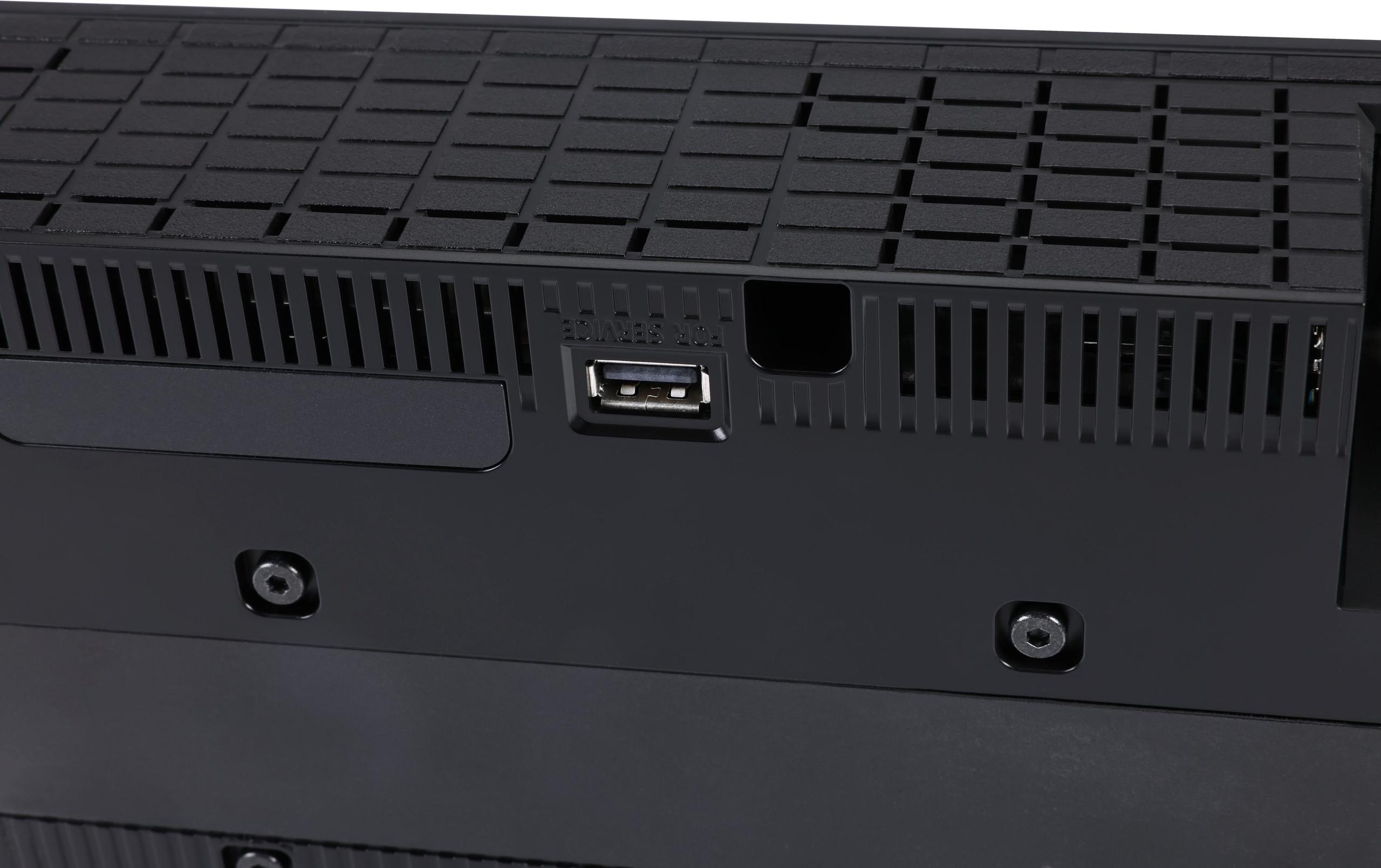
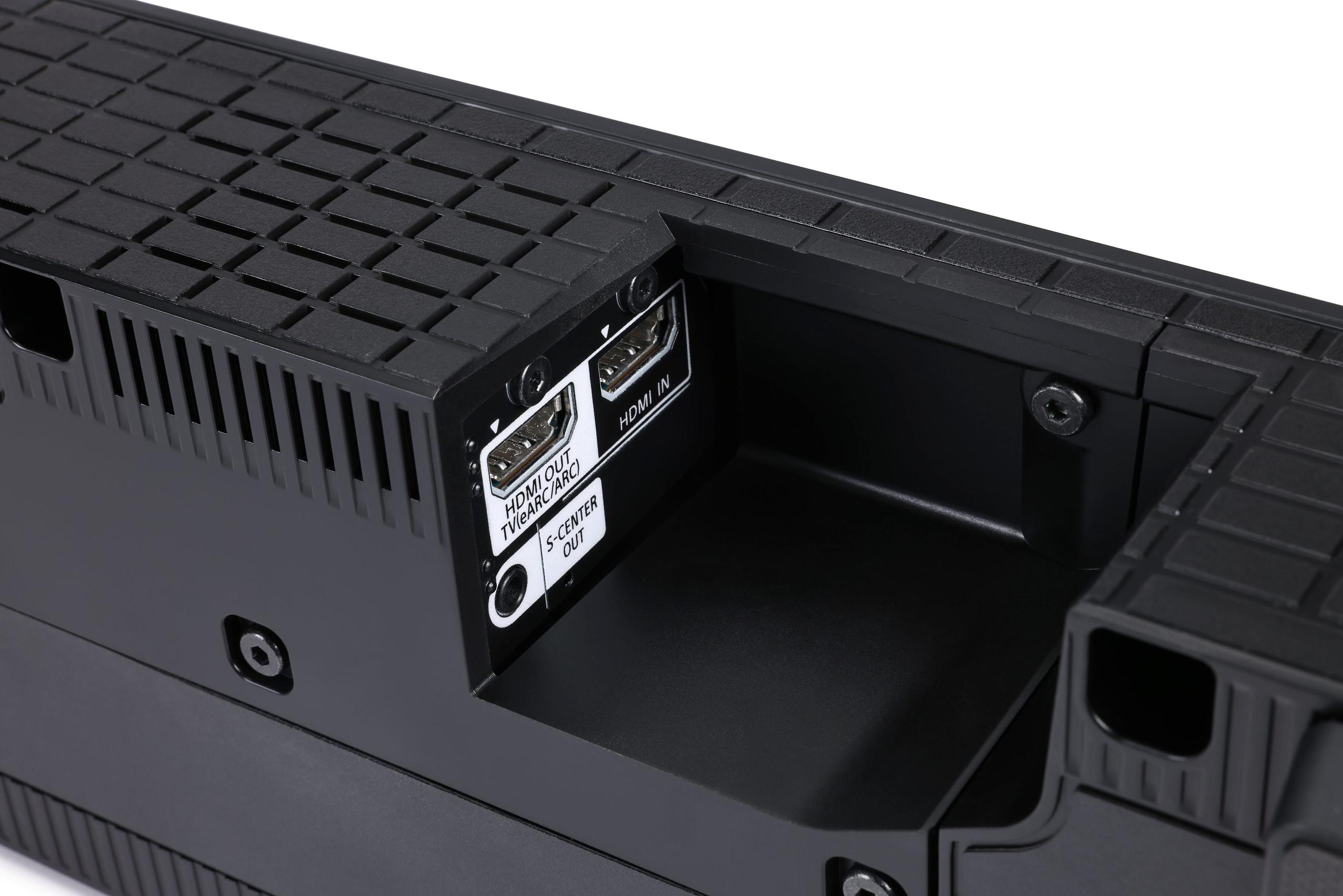
Here's where the price difference becomes most apparent. The Sony HT-A8000 includes HDMI 2.1 with eARC support, enabling 8K video passthrough and advanced gaming features like Variable Refresh Rate (VRR) and Auto Low Latency Mode (ALLM). These features future-proof your setup for next-generation gaming consoles and 8K content.
The soundbar also supports Wi-Fi 802.11ac and Bluetooth 5.2 for high-quality wireless streaming, plus Spotify Connect and Apple AirPlay 2 for direct music streaming without using your phone's Bluetooth.
The Ultimea Poseidon D70 provides standard connectivity including HDMI ARC, optical input, Bluetooth, and auxiliary connections. While this covers most current devices adequately, it lacks the advanced gaming features and 8K support that future-proof the Sony system.
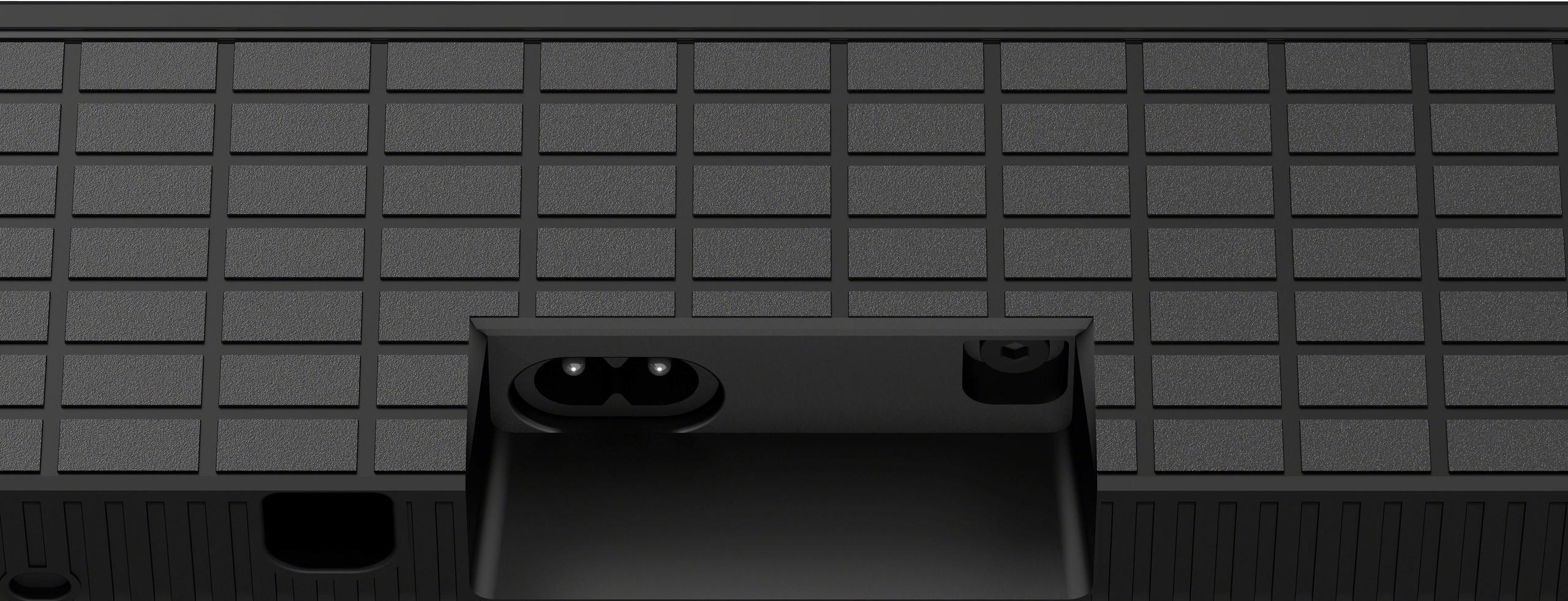
The Sony HT-A8000 offers the ultimate in setup simplicity—place the soundbar below your TV, connect a single HDMI cable, and you're done. The wireless expansion capability means you can add Sony's optional subwoofers and rear speakers later without running new cables.
This approach works particularly well in apartments, condos, or rooms where running speaker cables isn't practical. The 360 Spatial Sound Mapping technology adapts to your room's acoustics automatically, optimizing performance without manual adjustment.
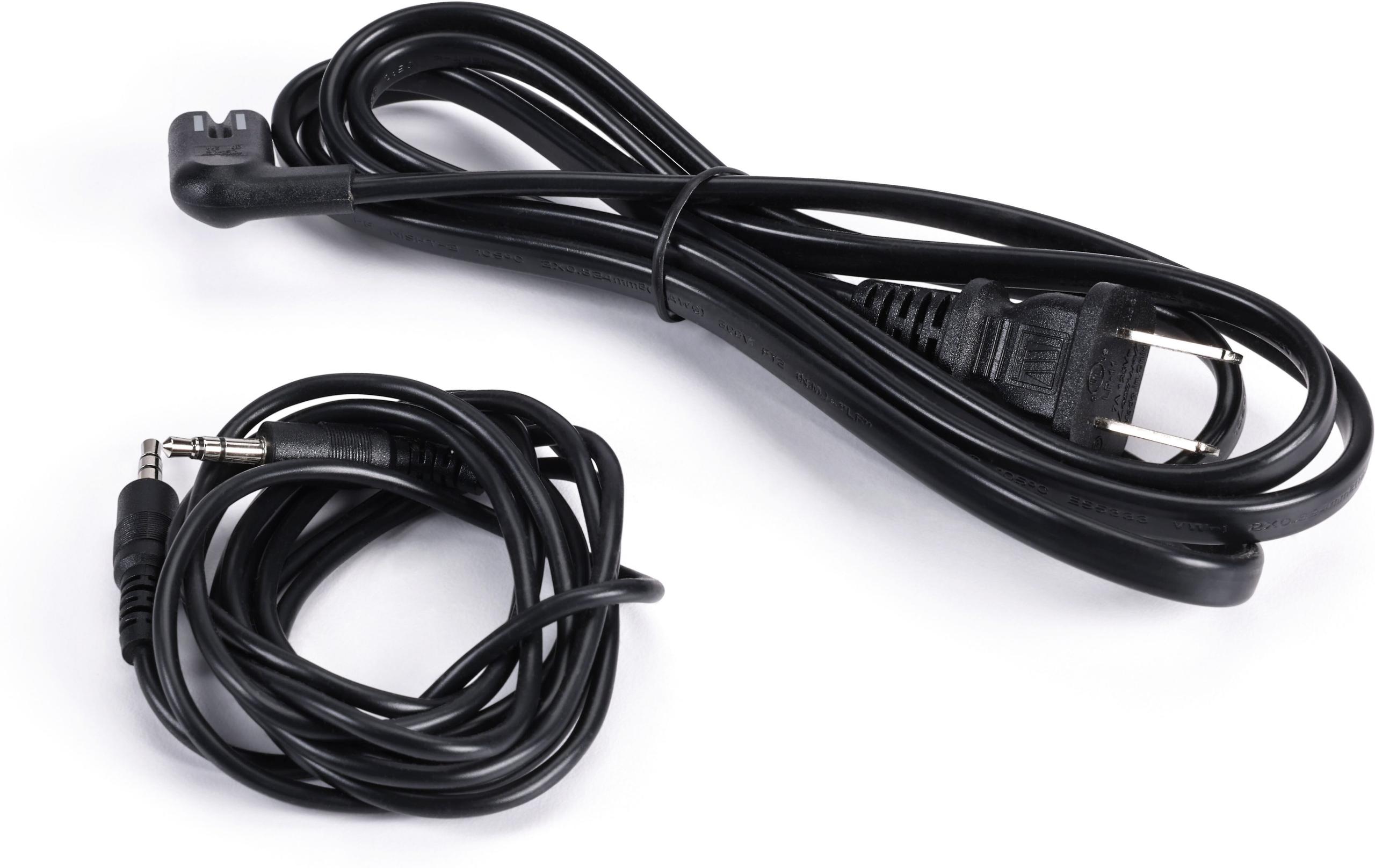
The Ultimea Poseidon D70 requires more planning and physical setup. You'll need to position four surround speakers around your seating area and run the included cables (3-meter and 6-meter lengths) from the subwoofer to each speaker location. The wireless subwoofer reduces some cable complexity, but you'll still need to manage four speaker wire runs.
However, this physical setup provides flexibility that virtual surround cannot match. You can position speakers for optimal directional effects based on your seating arrangement and room layout.
Based on user feedback analysis, the Sony HT-A8000 performs exceptionally well in medium-sized rooms (12x15 feet to 15x20 feet) where its phantom speakers can effectively bounce off walls and furniture. In very large or acoustically challenging spaces, the virtual surround effects may become less convincing.
The Poseidon D70's physical speakers work effectively in rooms of any size, as you're placing actual sound sources around the space rather than relying on acoustic reflections. This makes it particularly suitable for larger family rooms, finished basements, or open floor plans where virtual surround might struggle.
At the time of writing, the pricing difference between these systems is substantial. The Sony HT-A8000 represents a significant investment even at its discounted street price, and reaching full surround capability requires purchasing optional subwoofers and rear speakers that can double or triple the total cost.
The Ultimea Poseidon D70 provides everything needed for complete 7.1 surround sound in a single purchase. This represents exceptional value for buyers wanting immediate, authentic surround sound without additional investments.
The Sony HT-A8000 offers a modular approach—start with just the soundbar and add components as budget allows. Sony's wireless expansion speakers integrate seamlessly and maintain the system's premium audio processing. This flexibility appeals to buyers who want to spread their investment over time.
The Poseidon D70 arrives as a complete system with no official upgrade path beyond what's included. While this limits future expansion, it also means you get full surround capability immediately without worrying about compatibility or additional purchases.
For dedicated movie watching, both systems deliver compelling but different experiences. The Sony HT-A8000 excels with Dolby Atmos content, creating height effects that add vertical dimension to films. The sophisticated processing ensures smooth sound movement and convincing phantom speaker placement.
The Ultimea Poseidon D70 provides the classic surround sound experience that many home theater enthusiasts prefer. The physical rear speakers deliver authentic behind-you effects that virtual processing cannot fully replicate, making action sequences and environmental audio particularly immersive.
The Sony HT-A8000 handles music reproduction with the refinement expected from premium audio components. The DSEE Ultimate upscaling improves compressed music quality, and the wide soundstage creates an engaging listening experience for stereo content.
While the Poseidon D70 focuses more on surround sound than pure music reproduction, its extensive EQ options allow significant sound customization. The dedicated subwoofer provides strong bass response that many listeners prefer for contemporary music genres.
The Sony HT-A8000's HDMI 2.1 gaming features provide advantages for PlayStation 5, Xbox Series X, and PC gaming. The low latency processing and VRR support ensure audio stays synchronized with fast-paced action, while the Dolby Atmos processing adds immersion to compatible games.
The Poseidon D70 lacks advanced gaming features but provides excellent directional audio for gaming. The physical surround speakers offer clear positional advantages in competitive games where hearing enemy locations matters.
You prioritize premium audio technology and sophisticated processing over pure value. The Sony HT-A8000 makes sense for discerning listeners who appreciate advanced features like DSEE Ultimate upscaling, Voice Zoom 3 dialogue enhancement, and 360 Spatial Sound Mapping.
This system particularly suits apartment dwellers or anyone unable to run cables for surround speakers. The single-unit convenience combined with convincing virtual surround makes it ideal for spaces where physical speaker placement isn't practical.
If you own Sony BRAVIA TVs, the integration benefits provide additional value through features like Acoustic Center Sync. The HDMI 2.1 gaming features also make this the better choice for serious gamers with next-generation consoles.
Budget is a primary concern and you want maximum surround sound impact for your investment. The Poseidon D70 delivers authentic 7.1 surround sound at a fraction of premium system costs, making it exceptional value for price-conscious buyers.
You prefer physical speaker placement over virtual processing, or your room is large enough that virtual surround might not be as effective. The ability to position actual speakers around your seating area provides surround authenticity that processing cannot fully match.
This system also suits buyers who enjoy audio customization through the extensive EQ options and preset matrices. If you like tweaking sound settings to match different content or personal preferences, the Ultimea app provides more hands-on control than most systems at any price.
These products serve fundamentally different market segments with minimal direct competition. The Sony HT-A8000 delivers premium virtual surround technology for users who value convenience and sophisticated processing. The Ultimea Poseidon D70 provides authentic multi-speaker surround at an extraordinary value point for budget-conscious buyers willing to handle physical speaker placement.
Your decision should focus primarily on budget, room setup capabilities, and whether you prioritize processing sophistication or physical surround authenticity. Both systems excel within their intended markets, making this more about choosing the right approach for your situation rather than determining an overall winner.
For most buyers, the Poseidon D70 represents better value and more immediate surround impact, while the Sony HT-A8000 offers premium refinement and future-proof features that justify its higher investment for the right user.
| Sony HT-A8000 BRAVIA Theater Bar 8 Soundbar | Ultimea Poseidon D70 7.1 Channel Soundbar System |
|---|---|
| Speaker Configuration - Determines how surround sound is created | |
| 5.0.2 channel (11 drivers in single unit) | True 7.1 channel (8 physical speakers) |
| Surround Sound Approach - Virtual vs physical speaker placement | |
| 360 Spatial Sound Mapping creates phantom speakers | Four physical surround speakers placed around room |
| Dolby Atmos Support - Adds overhead/height effects to compatible content | |
| Yes, with dedicated up-firing speakers | No height channels (horizontal surround only) |
| Included Components - What you get out of the box | |
| Soundbar only (subwoofer/surrounds sold separately) | Complete system: soundbar + 4 surrounds + wireless subwoofer |
| Bass Performance - Low-frequency impact and depth | |
| Internal woofers only (limited bass extension) | 6.5" wireless subwoofer with BassMX technology |
| Power Output - Volume capability and headroom | |
| 495W RMS (sustained power rating) | 410W peak / 144W RMS across 8 speakers |
| HDMI Connectivity - Gaming and video features | |
| HDMI 2.1 with 8K/4K120 passthrough, VRR, ALLM | Standard HDMI ARC only |
| Setup Complexity - Installation requirements | |
| Single unit placement, one cable connection | Requires positioning 4 speakers and running cables |
| Audio Customization - Sound tuning options | |
| Basic sound modes with auto-calibration | 121 preset EQ matrices + 10-band graphic equalizer |
| Wireless Features - Streaming and connectivity options | |
| Wi-Fi, Spotify Connect, AirPlay 2, Bluetooth 5.2 | Bluetooth only for wireless audio |
| Expansion Capability - Adding components later | |
| Optional wireless subwoofers (SA-SW3/SW5) and rears (SA-RS3S/RS5) | Complete system with no upgrade path |
| Room Size Suitability - Optimal performance conditions | |
| Medium rooms where virtual surround can reflect effectively | Any room size (physical speakers work regardless of acoustics) |
The Ultimea Poseidon D70 provides exceptional value by including everything needed for 7.1 surround sound in one purchase - the main soundbar, four surround speakers, and a wireless subwoofer. The Sony HT-A8000 costs significantly more and requires separate purchases of subwoofer and rear speakers to match the Ultimea's complete setup.
The Sony HT-A8000 requires only a single HDMI cable connection since it creates virtual surround sound from one unit. The Ultimea Poseidon D70 includes four physical surround speakers that need to be wired to positions around your seating area, though it provides the necessary cables.
The Ultimea Poseidon D70 includes a dedicated 6.5-inch wireless subwoofer with BassMX technology, delivering deeper bass extension and more impactful low-frequency effects. The Sony HT-A8000 relies on internal woofers and requires purchasing an optional subwoofer separately for comparable bass performance.
Only the Sony HT-A8000 supports Dolby Atmos with dedicated up-firing speakers that bounce sound off your ceiling for height effects. The Ultimea Poseidon D70 provides excellent horizontal surround sound but lacks height channels for overhead audio effects.
The Sony HT-A8000 offers simpler setup with single-unit placement and one cable connection. The Ultimea Poseidon D70 requires more setup time to position four surround speakers around your room and connect the included cables, but provides clear instructions and color-coded connections.
The Sony HT-A8000 excels for gaming with HDMI 2.1 features including 4K/120Hz support, Variable Refresh Rate (VRR), and Auto Low Latency Mode (ALLM). The Ultimea Poseidon D70 provides excellent directional audio for gaming but lacks advanced gaming-specific features.
The Ultimea Poseidon D70 delivers authentic directional audio through four physical speakers placed around your room, creating genuine 360-degree sound placement. The Sony HT-A8000 uses sophisticated virtual processing to create convincing phantom speakers, but cannot fully replicate the authenticity of physical speaker placement.
The Ultimea Poseidon D70 offers extensive customization with 121 preset EQ matrices and a 10-band graphic equalizer through its mobile app. The Sony HT-A8000 provides automatic sound optimization and basic sound modes but fewer manual adjustment options.
The Ultimea Poseidon D70 performs well in rooms of any size since you place actual speakers around the space. The Sony HT-A8000 works best in medium-sized rooms where its virtual surround effects can effectively bounce off walls and furniture.
The Ultimea Poseidon D70 includes all components for complete 7.1 surround sound - soundbar, four surround speakers, wireless subwoofer, and all necessary cables. The Sony HT-A8000 includes only the soundbar, with subwoofers and rear speakers sold separately as optional additions.
Both systems excel at dialogue reproduction but through different methods. The Sony HT-A8000 uses Voice Zoom 3 AI technology to intelligently enhance speech clarity. The Ultimea Poseidon D70 achieves clear dialogue through dedicated center channel separation and physical speaker placement that prevents vocal interference.
The Sony HT-A8000 offers modular expansion with optional wireless subwoofers and rear speakers that integrate seamlessly with the main soundbar. The Ultimea Poseidon D70 arrives as a complete system with all components included but provides no official upgrade path beyond the initial setup.
We've done our best to create useful and informative comparisons to help you decide what product to buy. Our research uses advanced automated methods to create this comparison and perfection is not possible - please contact us for corrections or questions. These are the sites we've researched in the creation of this article: consumerreports.org - skybygramophone.com - target.com - rtings.com - bestbuy.com - rubbermonkey.co.nz - shopatsc.com - audioadvice.com - sony.com - sony.com - sony.com - shop.cosmopolitan.com - store.sony.com.my - videoandaudiocenter.com - ultimea.com - provantage.com - ultimea.com - youtube.com - youtube.com - bestbuy.com - the-gadgeteer.com - shopmyexchange.com - youtube.com - youtube.com - youtube.com - ultimea.com - manuals.plus - device.report - images.thdstatic.com - shopmyexchange.com - staples.com - ultimea.de

Privacy Policy
Terms and Conditions - Affiliate Policy
Home Security
© Copyright 2008-2026.
11816 Inwood Rd #1211, Dallas, TX 75244