



Setting up a home theater system used to mean dealing with complex receivers, multiple speakers, and miles of cable running around your room. Today's multi-channel soundbar systems promise to deliver that immersive surround sound experience without the headache—but they take dramatically different approaches to get there.
The Ultimea Poseidon D70 and M60 Boom represent two distinct philosophies in home audio design. One stays true to traditional surround sound principles with physical speakers positioned around your room, while the other embraces modern digital processing to create spatial audio from a single unit. Understanding these differences is crucial for choosing the system that'll transform your movie nights.
Multi-channel soundbar systems emerged as the sweet spot between basic TV audio and full home theater complexity. Instead of the flat, lifeless sound coming from your TV's built-in speakers, these systems create a three-dimensional audio environment that places sounds around you—helicopters swooping overhead, footsteps creeping behind you, explosions that seem to shake the entire room.
The key considerations boil down to several factors: how the system creates that surround effect (virtual processing versus physical speaker placement), how much setup complexity you're willing to accept, whether your room can accommodate multiple speakers, and which modern audio standards matter most for your viewing habits. These decisions significantly impact both the immediate experience and long-term satisfaction with your purchase.
Audio architecture particularly matters because there are fundamentally different ways to achieve surround sound. Traditional systems place speakers around your seating position so sound literally comes from multiple directions. Modern systems use sophisticated digital signal processing—essentially computer algorithms—to trick your brain into hearing directional audio from fewer speakers. Both approaches work, but they excel in different scenarios.
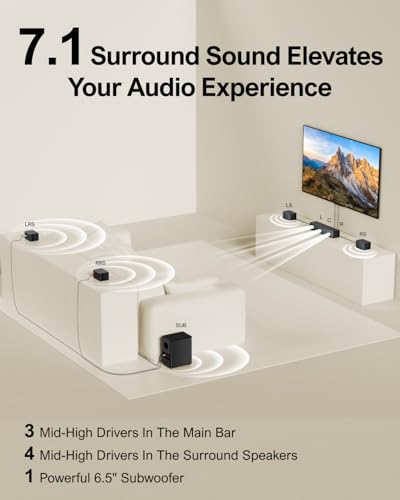
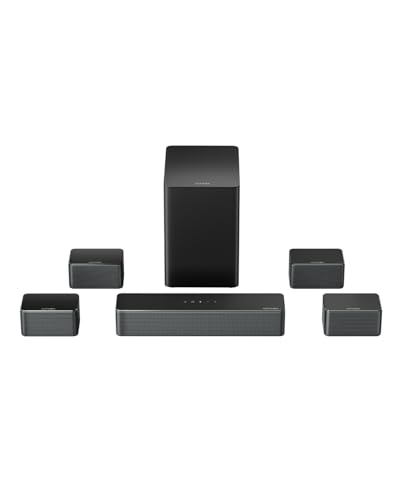
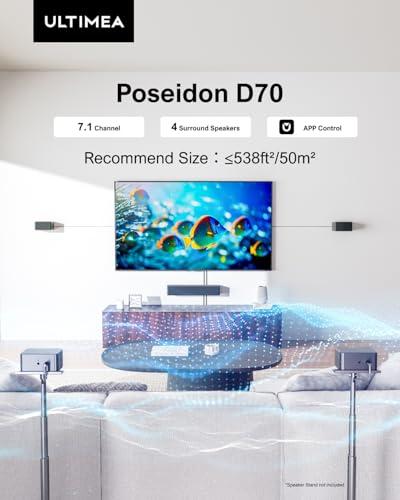
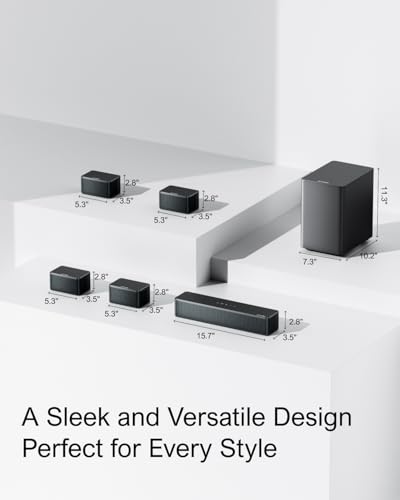
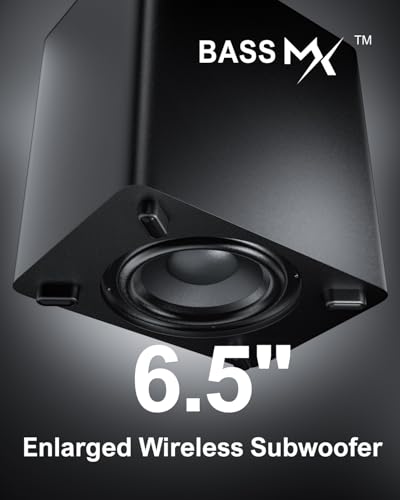
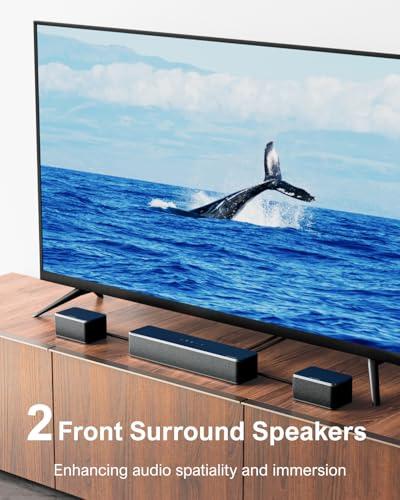
Released in 2023, the D70 follows the time-tested approach of physically placing speakers around your listening area. This system includes a main soundbar with three drivers, four separate surround speakers (each housing a 2.25-inch driver), and a substantial 6.5-inch wireless subwoofer. The result is genuine 7.1 channel separation where audio signals are sent to eight distinct speakers positioned throughout your room.
This physical separation creates what audio engineers call "discrete channels"—each speaker receives its own unique audio signal rather than processed versions of the same signal. When a helicopter flies across the screen in an action movie, you hear it moving from the front speakers, through the side surrounds, and finally to the rear speakers. Your brain doesn't need to interpret spatial cues because the sound actually originates from those locations.
The D70 also incorporates Ultimea's proprietary technologies: SurroundX for spatial positioning and BassMX for bass enhancement. SurroundX uses AI algorithms trained on billions of real-world sounds to optimize how audio moves between the physical speakers, while BassMX maximizes the impact of that 6.5-inch subwoofer through cabinet tuning and driver optimization.
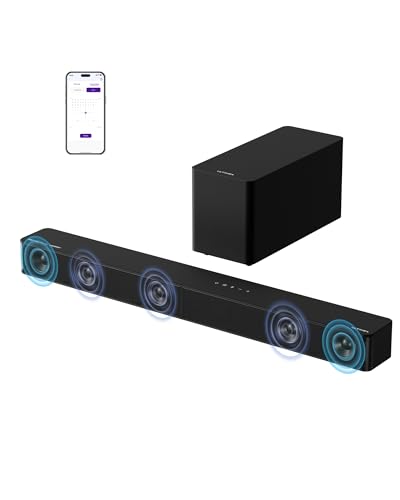
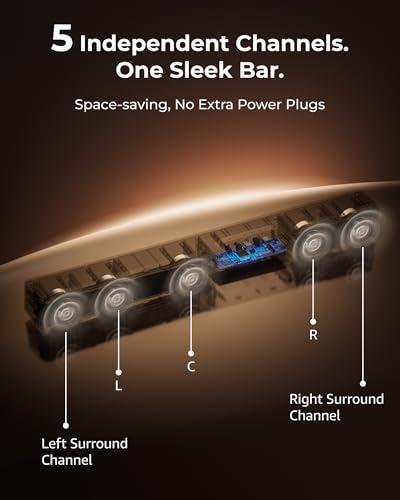
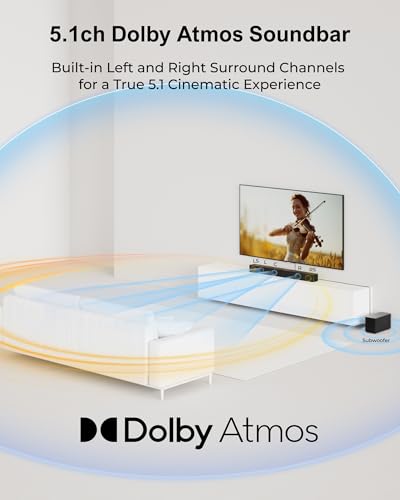
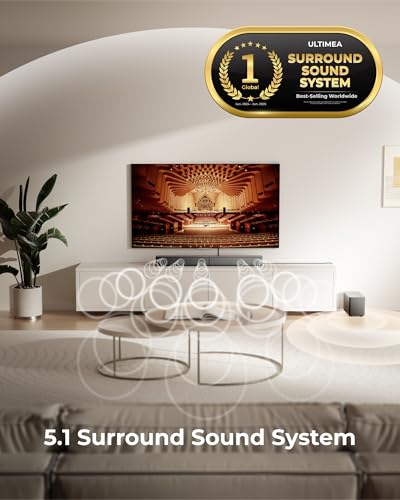
The M60 Boom, also released in 2023, represents the newer school of soundbar design. Instead of separate surround speakers, it houses five full-range drivers within the main soundbar unit, including side-firing speakers that bounce sound off your room's walls to create surround effects. This approach relies heavily on digital signal processing and room acoustics to simulate the experience of having speakers behind you.
What sets the M60 Boom apart is its support for Dolby Atmos, an audio format that adds a third dimension—height—to surround sound. Traditional 5.1 or 7.1 systems move sound horizontally around you, but Dolby Atmos also places sounds above you. This creates more realistic audio environments where rain falls from overhead, aircraft pass above, or ceiling debris crashes down during action sequences.
The system's triple-core DSP (Digital Signal Processing) technology—two processors running at 800MHz and one at 600MHz—provides over 2000 MIPS (Million Instructions Per Second) of computational power. This processing muscle enables real-time audio manipulation, analyzing incoming signals and adjusting them hundreds of times per second to create convincing spatial effects from the integrated speaker array.
Raw power numbers tell only part of the performance story, but they're important for understanding each system's capabilities. The D70 delivers 410 watts of peak power across its eight drivers, achieving maximum sound pressure levels of 103 decibels. In practical terms, this means it can fill large rooms with clean, undistorted audio even during explosive action sequences.
The M60 Boom produces 340 watts peak power with a maximum SPL of 99 decibels. While lower on paper, the difference in real-world listening is minimal—both systems provide more than enough volume for typical home environments. The M60's sophisticated DSP actually allows it to use power more efficiently, delivering impressive dynamics despite the lower peak rating.
More important than peak power is how each system handles dynamic range—the difference between quiet dialogue and thunderous explosions. Based on our research into user experiences and professional reviews, both systems excel here, but the D70's additional physical drivers provide more headroom for complex soundtracks with lots of simultaneous effects.
This represents the most significant performance difference between these systems. The D70's approach of placing four surround speakers around your seating position creates what audio enthusiasts call "true surround." When properly positioned, these speakers deliver precise directional cues that your brain interprets naturally—no processing required.
During action movies, this translates to remarkably convincing effects. Bullets whizzing past your head, vehicles circling around you, or ambient environmental sounds like wind through trees all benefit from having actual sound sources positioned where your ears expect them. The experience feels more natural because it matches how you hear sounds in real life.
The M60 Boom's virtual surround approach is more dependent on room acoustics and seating position, but when conditions align, it can be surprisingly effective. The side-firing drivers bounce audio off your walls to create the impression of rear speakers, while the DSP manipulates timing and frequency response to enhance the illusion. However, this technique works best in rooms with appropriate wall surfaces and when you're seated in the optimal listening position.
The addition of Dolby Atmos processing in the M60 Boom partially compensates for the lack of physical surround speakers by adding that crucial height dimension. Many users report that the overhead effects create a more enveloping experience than traditional horizontal surround, especially with content specifically mixed for Atmos.
Bass response significantly impacts the overall home theater experience, providing the foundation for movie soundtracks and music alike. The D70's 6.5-inch wireless subwoofer, enhanced by BassMX technology, delivers authoritative low-end performance. The larger driver moves more air, creating deeper bass extension and more visceral impact during action sequences.
The wireless design also provides placement flexibility—you can position the subwoofer anywhere in your room for optimal bass response, often in a corner where room boundaries reinforce low frequencies. This flexibility typically results in better bass integration and fewer dead spots where certain frequencies cancel out.
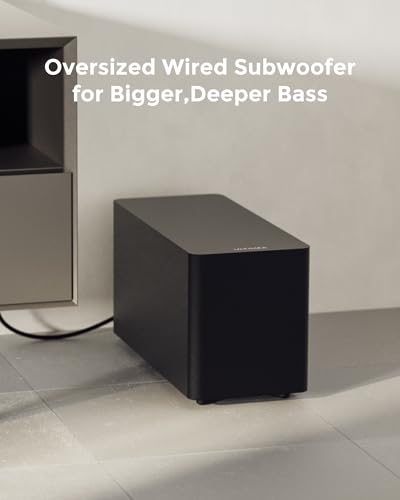
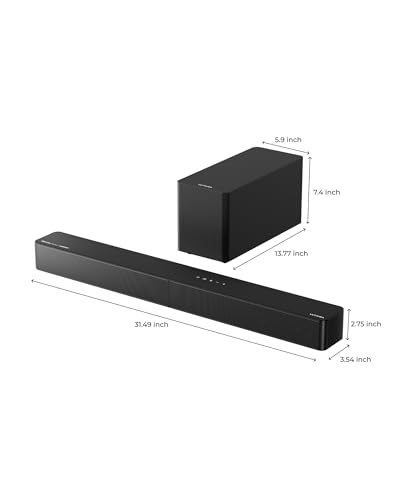
The M60 Boom's 5.25-inch subwoofer features an impressive 18mm excursion capability (how far the driver moves back and forth) housed in a carefully tuned 5.3-liter cabinet. While smaller than the D70's sub, this design punches above its weight class. However, being wired to the main unit limits placement options, potentially compromising bass optimization in some rooms.
Both systems allow bass adjustment through their respective smartphone apps, but the D70's placement flexibility generally provides more opportunities to achieve optimal low-end response in your specific room.
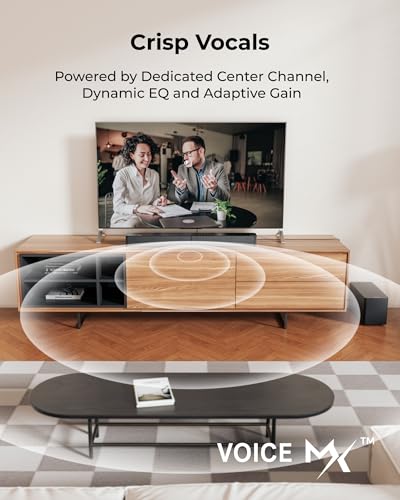
Clear dialogue often determines whether a home theater system succeeds or fails in daily use. The M60 Boom incorporates VoiceMX technology that specifically targets the 300Hz to 3kHz frequency range where human vocals reside. This system uses dynamic EQ and adaptive gain control to ensure dialogue remains intelligible even during complex scenes with lots of background effects.
In practice, this means you're less likely to reach for the remote to adjust volume when scenes transition from quiet conversations to explosive action. The system automatically manages the balance, keeping voices prominent without sacrificing the impact of effects and music.
The D70 relies on its dedicated center channel (the middle driver in the soundbar) for dialogue reproduction, which is the traditional approach used by most home theater systems. While effective, it lacks the dynamic processing found in the M60 Boom, potentially requiring more manual volume adjustments during varied content.
Based on user feedback we've analyzed, both systems provide clear dialogue, but the M60 Boom's active voice enhancement gives it a slight edge for users who frequently watch content with challenging audio mixes or have hearing difficulties.
The M60 Boom's support for Dolby Atmos represents a significant technological advantage. As streaming services and 4K Blu-ray discs increasingly include Atmos soundtracks, this format has become the new standard for immersive audio. The three-dimensional audio experience adds a layer of realism that traditional surround formats can't match.
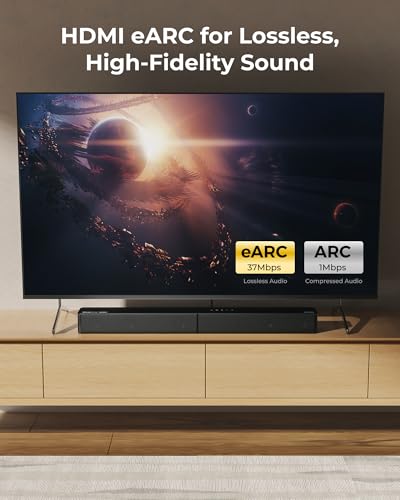
Equally important is the M60 Boom's HDMI eARC (enhanced Audio Return Channel) connectivity. This advanced connection standard supports higher bandwidth audio formats and provides better integration with modern TVs and streaming devices. It ensures lossless audio transmission and often provides more reliable device synchronization.
The D70 uses standard HDMI ARC, which handles most audio formats adequately but lacks the bandwidth for the most advanced audio codecs. For current content, this limitation rarely matters, but it could impact compatibility with future audio formats.
Wireless connectivity also differs significantly. The M60 Boom's Bluetooth 5.4 support provides faster pairing, more stable connections, and lower latency—crucial for gaming or when streaming audio from mobile devices. The D70 uses older Bluetooth standards that work reliably but lack these improvements.
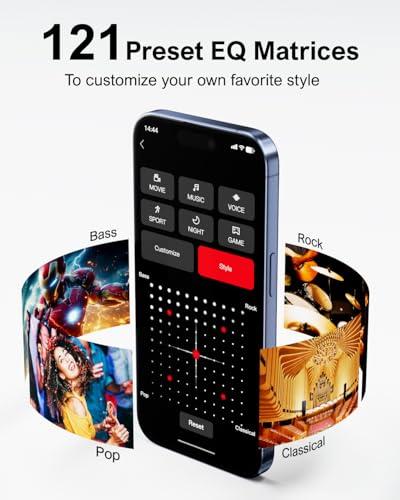
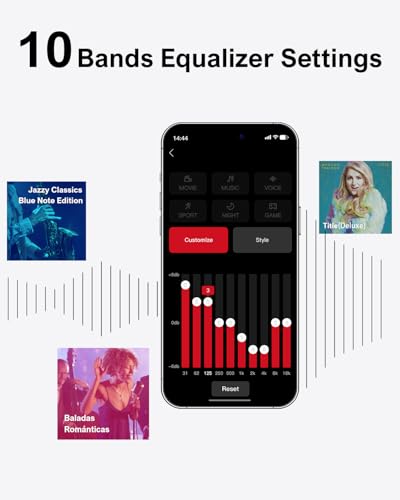
Both systems offer extensive customization through dedicated smartphone apps, including 10-band graphic equalizers and 121 preset EQ matrices. These features allow fine-tuning for different content types, room acoustics, and personal preferences.
However, the M60 Boom's triple-core DSP architecture enables more sophisticated real-time processing. The system can continuously analyze and adjust audio characteristics, adapting to content changes automatically. This processing power also supports the complex calculations required for Dolby Atmos virtualization and VoiceMX dialogue enhancement.
The D70's processing focuses more on channel routing and bass management, which aligns with its philosophy of letting the physical speaker placement handle spatial effects rather than relying on digital manipulation.
Setting up the D70 requires careful planning and some patience. You'll need to position four surround speakers around your seating area—typically on side walls and behind your main viewing position. The system includes cables up to 6 meters long, but you'll need to run these around your room, either along baseboards or through walls for a clean installation.
The wireless subwoofer simplifies one aspect of setup, pairing automatically with the soundbar and allowing placement anywhere in your room. However, you'll still need to find appropriate locations for four additional speakers, each requiring power connections and careful positioning for optimal sound.
This complexity isn't necessarily negative—many enthusiasts enjoy the setup process and appreciate the control it provides over their audio environment. But it does require commitment and isn't suitable for everyone's living situation or comfort level with home installation projects.
The M60 Boom's setup typically takes less than five minutes. Connect the soundbar to your TV via HDMI eARC, plug in the wired subwoofer, and you're essentially done. The soundbar's built-in speakers handle all surround processing internally, eliminating cable runs and speaker positioning concerns.
This simplicity makes the M60 Boom particularly appealing for renters, apartment dwellers, or anyone who wants impressive audio without the installation complexity. The trade-off is less control over speaker placement and potentially less convincing surround effects in some room configurations.
At the time of writing, these systems occupy different value propositions within Ultimea's lineup. The M60 Boom typically costs less while offering modern features like Dolby Atmos and advanced connectivity. The D70 commands a premium for its physical surround speakers and higher power output.
From a performance-per-dollar perspective, both systems deliver impressive value compared to traditional component systems that would require separate receivers, speakers, and complex setup. The D70 provides authentic multi-channel audio typically found in much more expensive systems, while the M60 Boom offers current-generation processing and convenience at an accessible price point.
The value equation depends heavily on your priorities. If you value the most convincing surround effects and don't mind the setup complexity, the D70's authentic multi-channel approach provides excellent value. If you prioritize modern audio standards, simple setup, and space efficiency, the M60 Boom represents better value for most users' needs.
Your room significantly impacts which system will perform better. The D70 works best in dedicated home theater spaces where you can position speakers optimally and don't mind the visual presence of multiple components. It excels in larger rooms where the higher power output and multiple drivers can fully develop their potential.
Smaller rooms, apartments, or multi-purpose spaces often favor the M60 Boom. Its compact design and virtual processing work well when physical speaker placement isn't practical. The system also performs admirably in bedrooms, secondary viewing areas, or any space where simplicity outweighs maximum performance.
Room acoustics matter more for the M60 Boom since its surround effects depend on sound reflection. Heavily furnished rooms with carpet and soft furnishings may dampen the wall reflections needed for optimal virtual surround, while rooms with hard surfaces and appropriate geometry enhance the effect.
After researching extensive user feedback and professional evaluations, the choice between these systems comes down to your priorities and constraints.
Choose the Ultimea Poseidon D70 if you have a dedicated viewing room where running cables and mounting speakers is feasible. This system delivers the most convincing surround sound experience, with higher power output that excels in larger spaces. It's ideal for serious movie enthusiasts who prioritize maximum immersion over convenience and don't mind investing time in proper setup.
The D70 also makes sense if you're building a long-term home theater setup where you own your space and can make permanent installations. The authentic multi-channel experience remains relevant regardless of future processing technology changes.
Select the Ultimea Poseidon M60 Boom if you want modern Dolby Atmos technology with minimal setup complexity. Its built-in surround processing, enhanced dialogue clarity, and latest connectivity standards make it perfect for most living situations where convenience and space constraints matter more than having physical surround speakers.
The M60 Boom excels for apartment living, bedrooms, secondary viewing areas, or any situation where you need great sound without the complexity. Its future-proof features like Dolby Atmos and HDMI eARC ensure compatibility with current and upcoming content standards.
Both systems represent significant upgrades over TV speakers and basic soundbars, but they serve different audiences and use cases. The D70 maximizes the traditional surround sound experience, while the M60 Boom embraces modern audio processing to deliver impressive performance with maximum convenience. Understanding your priorities, room constraints, and setup preferences will guide you to the right choice for years of improved movie watching.
| Ultimea Poseidon D70 | Ultimea Poseidon M60 Boom |
|---|---|
| Channel Configuration - Determines how authentic the surround sound feels | |
| True 7.1 with 4 physical surround speakers + subwoofer | Virtual 5.1 with all speakers built into soundbar + subwoofer |
| Dolby Atmos Support - Essential for modern movies and streaming content | |
| No Dolby Atmos (uses SurroundX virtual processing) | Full Dolby Atmos support with 3D audio positioning |
| Peak Power Output - Affects maximum volume and dynamic range | |
| 410W peak power (144W RMS across 8 drivers) | 340W peak power with triple-core DSP optimization |
| Subwoofer Size and Connection - Impacts bass depth and placement flexibility | |
| 6.5" wireless subwoofer (can place anywhere in room) | 5.25" wired subwoofer (placement limited by cable length) |
| Setup Complexity - Time and effort required for installation | |
| Complex: 4 surround speakers need positioning and cable runs up to 6m | Simple: Under 1-minute setup with just soundbar and subwoofer |
| HDMI Standard - Affects audio quality and device compatibility | |
| HDMI ARC (standard bandwidth) | HDMI eARC (enhanced bandwidth for lossless audio) |
| Bluetooth Version - Impacts connection stability and audio latency | |
| Standard Bluetooth connectivity | Bluetooth 5.4 (faster pairing, lower latency, more stable) |
| Voice Enhancement Technology - Critical for dialogue clarity | |
| Standard center channel dialogue reproduction | VoiceMX technology with adaptive vocal range enhancement |
| Physical Footprint - How much space the system occupies in your room | |
| 8 separate components requiring placement around room | 2 components (soundbar + subwoofer) with minimal footprint |
| Processing Power - Enables advanced audio features and real-time optimization | |
| Basic audio processing with AI-trained algorithms | Triple-core DSP (2000+ MIPS) for real-time Atmos processing |
The Ultimea Poseidon D70 uses four separate physical surround speakers that you place around your room for true 7.1 surround sound, while the Ultimea Poseidon M60 Boom keeps all speakers built into the main soundbar and uses virtual surround processing with Dolby Atmos support.
The Ultimea Poseidon M60 Boom is much easier to install, taking less than a minute with just the soundbar and subwoofer to connect. The Ultimea Poseidon D70 requires positioning four surround speakers around your room and running cables up to 6 meters long, making it a more complex weekend project.
Only the Ultimea Poseidon M60 Boom supports Dolby Atmos for three-dimensional audio with overhead effects. The Ultimea Poseidon D70 uses SurroundX virtual processing technology instead, focusing on traditional horizontal surround sound through its physical speakers.
The Ultimea Poseidon D70 has a larger 6.5-inch wireless subwoofer that can be placed anywhere in your room for optimal bass response. The Ultimea Poseidon M60 Boom uses a smaller 5.25-inch wired subwoofer, though it still delivers impressive bass with its high-excursion driver design.
The Ultimea Poseidon M60 Boom is ideal for apartments since it doesn't require separate surround speakers or cable runs around the room. The Ultimea Poseidon D70 needs space for four additional speakers and isn't practical for most rental situations or small spaces.
The Ultimea Poseidon D70 delivers higher peak power at 410W across its eight total drivers, while the Ultimea Poseidon M60 Boom produces 340W peak power. Both provide plenty of volume for home theater use, but the D70 has more headroom for large rooms.
Yes, but the Ultimea Poseidon M60 Boom has more advanced connectivity with HDMI eARC and Bluetooth 5.4 for better compatibility with newer devices. The Ultimea Poseidon D70 uses standard HDMI ARC and basic Bluetooth, which work fine but lack some modern features.
The Ultimea Poseidon M60 Boom includes VoiceMX technology that specifically enhances vocal frequencies and automatically adjusts dialogue levels during complex scenes. The Ultimea Poseidon D70 relies on traditional center channel dialogue reproduction without active voice enhancement.
Both work well for gaming, but the Ultimea Poseidon M60 Boom has advantages with Bluetooth 5.4's lower latency and Dolby Atmos support for games that use 3D audio. The Ultimea Poseidon D70 provides excellent directional audio cues through its physical surround speakers.
The Ultimea Poseidon M60 Boom typically costs less while offering modern features like Dolby Atmos and simplified setup. The Ultimea Poseidon D70 provides better value if you want authentic surround sound and don't mind the installation complexity, delivering performance usually found in much more expensive systems.
Both the Ultimea Poseidon D70 and Ultimea Poseidon M60 Boom include smartphone apps with 10-band equalizers and 121 preset sound modes. You can adjust volume, switch inputs, customize sound settings, and update firmware through the dedicated Ultimea app.
Choose the Ultimea Poseidon D70 if you have a dedicated theater room where you can properly install surround speakers and want the most authentic surround sound experience. Pick the Ultimea Poseidon M60 Boom if you want modern Dolby Atmos technology with simple setup and don't mind virtual surround processing instead of physical speakers.
We've done our best to create useful and informative comparisons to help you decide what product to buy. Our research uses advanced automated methods to create this comparison and perfection is not possible - please contact us for corrections or questions. These are the sites we've researched in the creation of this article: ultimea.com - provantage.com - ultimea.com - youtube.com - youtube.com - bestbuy.com - the-gadgeteer.com - shopmyexchange.com - youtube.com - youtube.com - youtube.com - ultimea.com - manuals.plus - device.report - images.thdstatic.com - shopmyexchange.com - staples.com - ultimea.de - ultimea.com - ultimea.com - youtube.com - bestbuy.com - youtube.com - avsforum.com - youtube.com - manuals.plus - youtube.com - device.report - ultimea.com - ultimea.de - community.ultimea.com - ultimea.com - community.ultimea.com - ultimea.com - youtube.com - aliexpress.com - ultimea.com

Privacy Policy
Terms and Conditions - Affiliate Policy
Home Security
© Copyright 2008-2026.
11816 Inwood Rd #1211, Dallas, TX 75244