

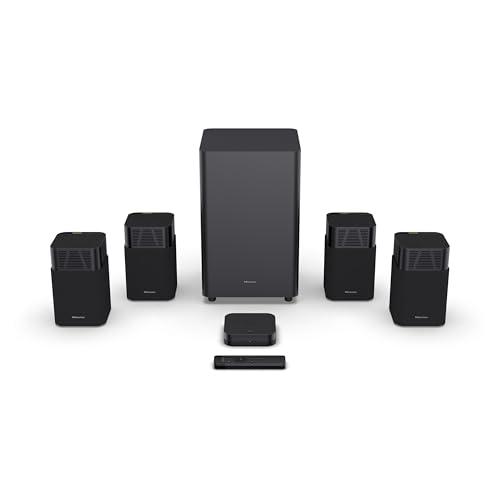
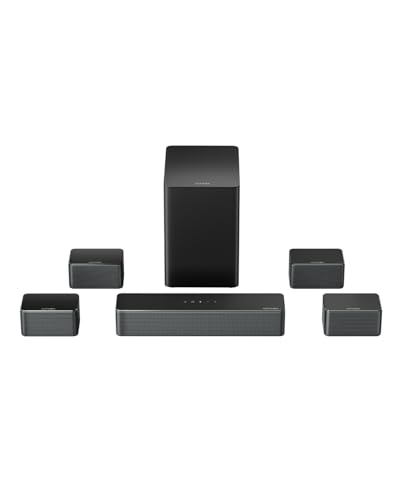
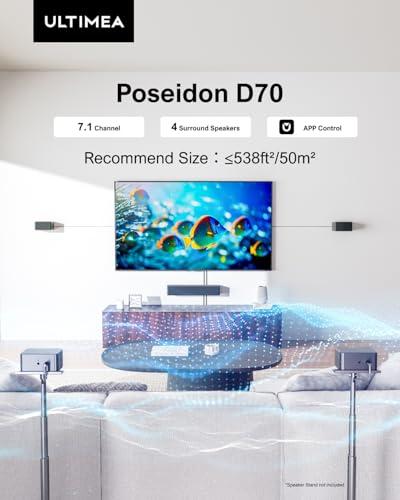
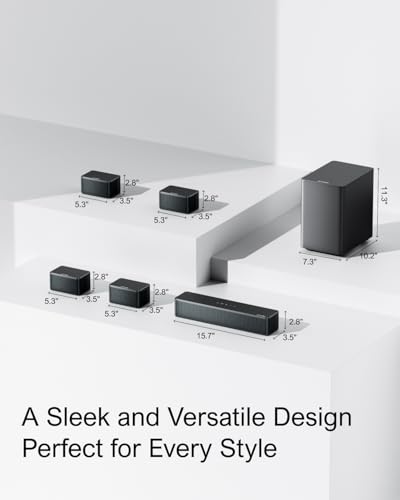

When you're ready to upgrade from your TV's built-in speakers, you'll quickly discover that home theater audio isn't a one-size-fits-all world. The difference between a $150 system and a $1,300 system can be dramatic—but that doesn't always mean the expensive option is right for everyone. Today we're diving deep into two completely different approaches to surround sound: the premium Hisense HT Saturn and the budget-focused Ultimea Poseidon D70.
Before we get into the nitty-gritty, let's talk about what makes a great home theater audio system in 2025. The landscape has changed dramatically over the past few years, largely thanks to object-based audio formats like Dolby Atmos and DTS:X. These technologies treat sounds as individual objects that can be placed anywhere in three-dimensional space, rather than just sending audio to specific channels.
Think of it this way: old surround sound systems would send the sound of a helicopter to your rear speakers. Object-based audio can make that helicopter sound like it's moving from the front-left, up and over your head, to the back-right—following its actual path on screen. It's a game-changer for movies, and increasingly important for gaming and streaming content.
The challenge is that achieving this effect requires either physical speakers positioned around and above you, or very sophisticated processing to create the illusion of height and movement. This is where our two products take completely different approaches.
The Hisense HT Saturn, announced at CES 2025, represents a premium approach to home theater audio. At the time of writing, it commands a price that's nearly ten times higher than the Ultimea Poseidon D70, which has been available since late 2024. This isn't just a price difference—it represents two fundamentally different philosophies.
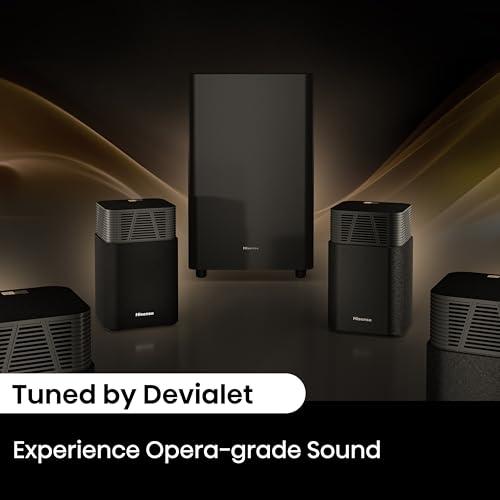
The HT Saturn is designed specifically to complement large Hisense TVs (85 inches and up) and deliver what Hisense calls an "opera-grade" experience. It's targeting users who want the absolute best in audio reproduction and are willing to pay for premium engineering.
The Poseidon D70, on the other hand, aims to democratize surround sound. It's designed to give budget-conscious buyers a taste of true multi-channel audio without breaking the bank. The question is: can it deliver a satisfying experience, or are you better off saving for something more expensive?
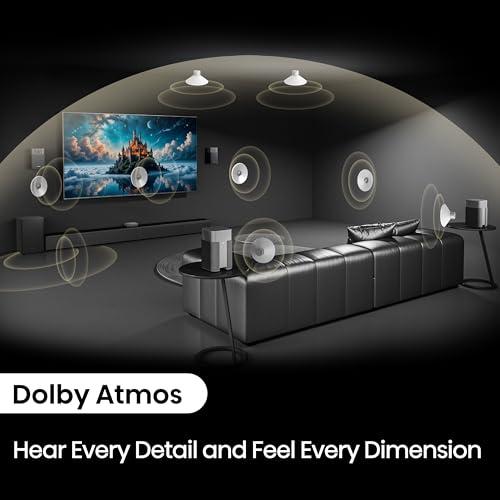
This is where the fundamental difference between these systems becomes crystal clear. The Hisense HT Saturn supports full Dolby Atmos and DTS:X processing, meaning it can decode and reproduce the height information embedded in modern movie soundtracks. Its 4.1.2 channel configuration includes dedicated upward-firing drivers that bounce sound off your ceiling to create overhead effects.
When you're watching a scene with rain, aircraft flyovers, or debris falling from above, the HT Saturn can place those sounds in the correct three-dimensional space. It's not simulating or guessing—it's playing back the exact audio objects that the sound engineers placed in the mix.
The Ultimea Poseidon D70 takes a different approach. It uses proprietary SurroundX technology to create virtual surround effects, but it cannot process Dolby Atmos or DTS:X audio tracks. When it encounters an Atmos soundtrack, it falls back to the standard 5.1 or 7.1 mix embedded within the track. You'll still get surround sound, but you'll miss all the height information that makes modern movie audio so immersive.
This might sound like a dealbreaker, but here's the reality: if you're primarily watching older movies, broadcast TV, or streaming content that doesn't heavily utilize height effects, the difference may be less noticeable than you'd expect. The Poseidon D70 does an impressive job with traditional surround sound, and its four physical satellite speakers provide genuine directional audio cues that many single-bar systems can't match.
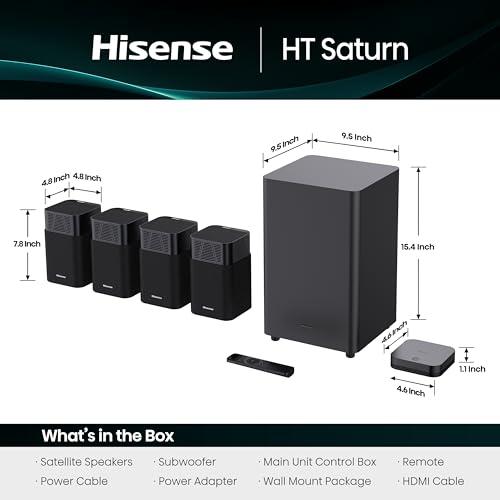
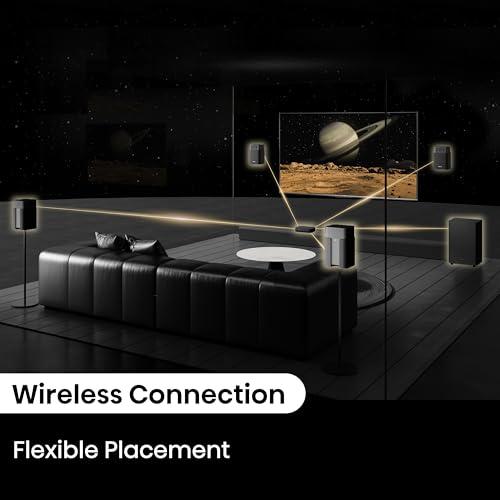
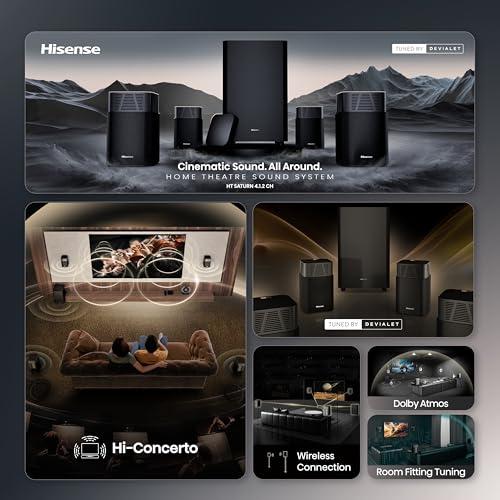
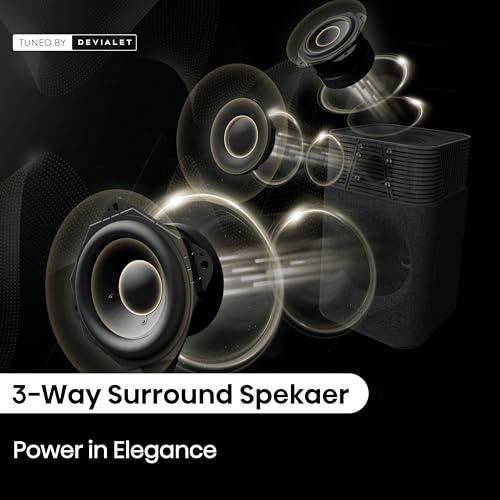
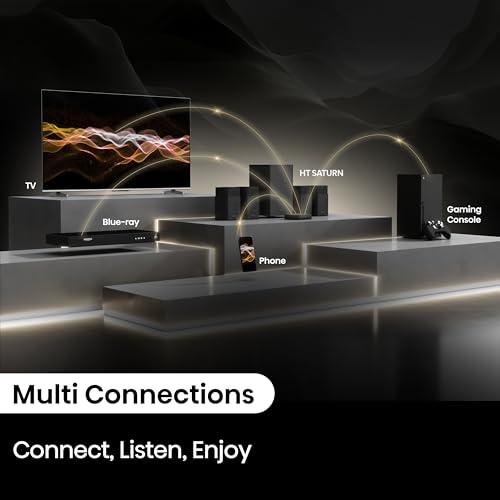
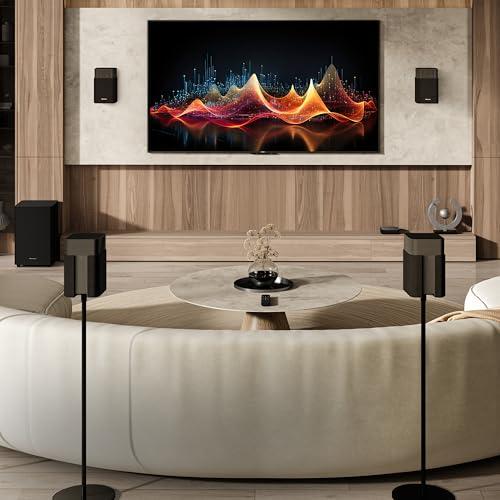
The HT Saturn uses what I consider a nearly ideal approach for wireless home theater: four separate satellite speakers, each containing multiple drivers and connecting wirelessly to a central hub. This system includes 13 total speakers—8 full-range drivers, 4 tweeters, and a 6.5-inch subwoofer. Each satellite speaker is a sophisticated 3-way design with upward-firing elements for Atmos effects.
What's particularly clever about the HT Saturn's design is its wireless implementation. It uses three different frequency bands (2.4GHz, 5.2GHz, and 5.8GHz) to ensure stable, low-latency connections between all components. This tri-band approach helps prevent the audio dropouts and synchronization issues that plague some wireless multi-speaker systems.
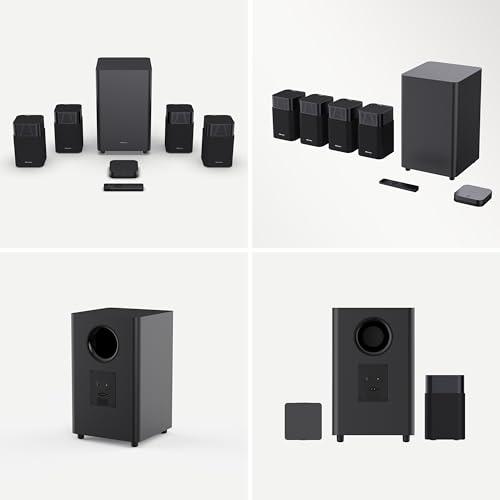
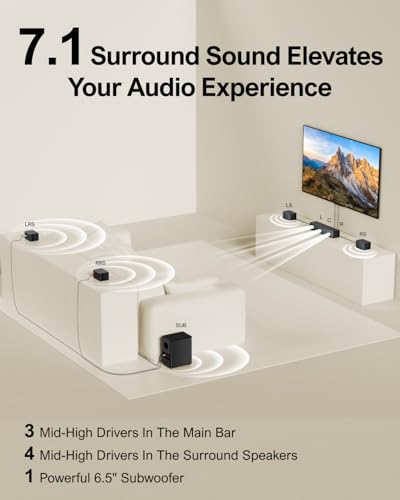
The Poseidon D70 takes a hybrid approach that's more common in budget systems. The main soundbar houses three drivers, four satellite speakers connect via wires to the subwoofer, and only the subwoofer connects wirelessly to the main unit. While this reduces wireless complexity, it means you'll need to run speaker cables from your subwoofer to your surround speakers—not ideal for every room layout.
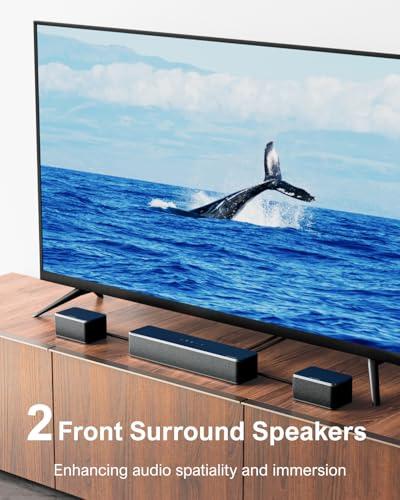
However, the Poseidon D70 does include four physical surround speakers, which is remarkable at this price point. Most budget soundbars rely entirely on virtual processing, so having actual speakers behind you creates a much more convincing surround field for movies and gaming.
Here's where we need to talk about audio specifications, because not all watts are created equal. The HT Saturn is rated at 720W RMS (Root Mean Square), which represents the continuous power the system can sustain without distortion. The Poseidon D70 claims 410W, but this appears to be peak power rather than RMS—a crucial distinction.
RMS power ratings give you a much better sense of real-world performance. Peak power ratings can be misleading because they represent brief bursts rather than sustained output. Based on typical industry ratios, the Poseidon D70's actual RMS power is likely around 144W, with individual components rated at 36W for the soundbar, 48W for the surrounds, and 60W for the subwoofer.
This power difference becomes apparent when you're watching dynamic content at higher volumes. The HT Saturn maintains clarity and detail during loud action sequences, while the Poseidon D70 may start to compress or distort when pushed to its limits. However, for normal listening levels in typical home environments, the power difference may be less noticeable than the raw numbers suggest.
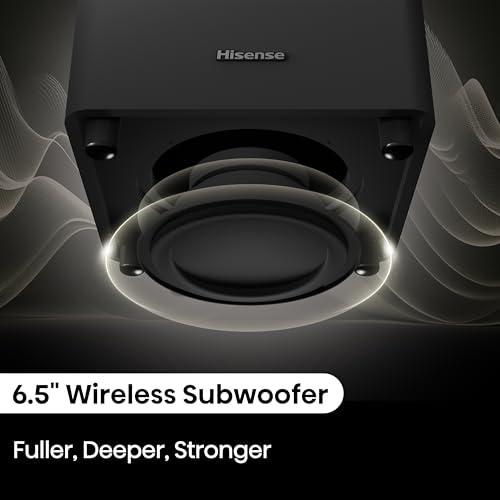
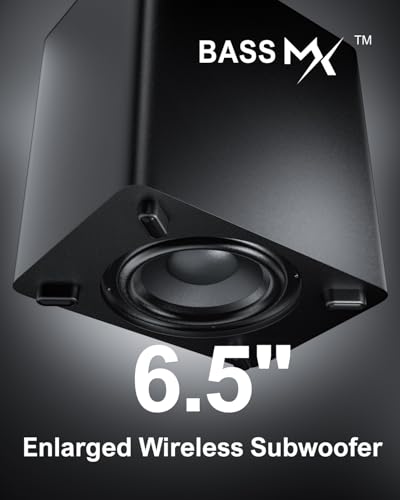
Both systems use 6.5-inch wireless subwoofers, but their approaches to bass reproduction differ significantly. The HT Saturn's subwoofer benefits from Devialet's tuning expertise, focusing on tight, accurate bass that integrates seamlessly with the satellite speakers. The frequency response extends down to 40Hz, which covers most movie content well.
The Poseidon D70 uses BassMX technology to enhance its bass output, and actually extends slightly deeper to 35Hz. In our research of user reviews, many owners praise the system's bass impact, particularly for the price point. However, the integration between the subwoofer and satellite speakers isn't as refined as the HT Saturn's Devialet-tuned system.
For most users, both systems provide satisfying bass for movies and music. The HT Saturn offers more nuanced bass reproduction with better integration, while the Poseidon D70 emphasizes impact and presence. Your preference may depend on whether you prioritize accuracy or excitement in your low-frequency reproduction.
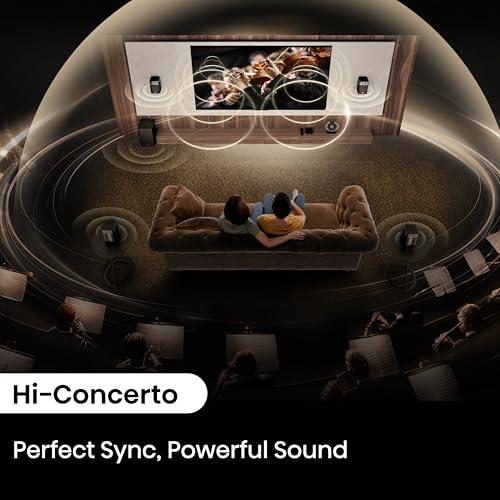
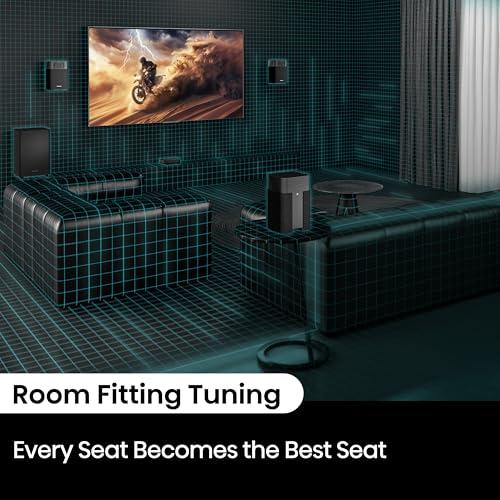
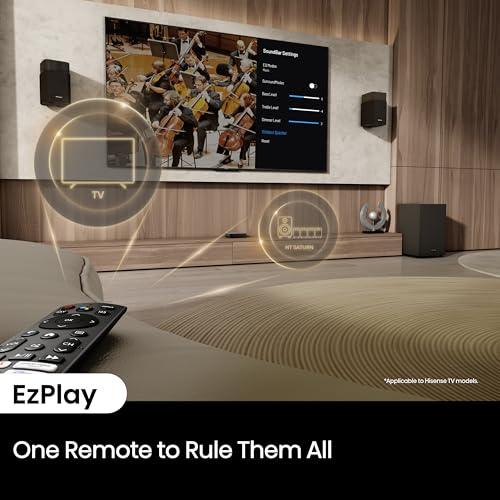
The HT Saturn prioritizes ease of use, especially within the Hisense ecosystem. When paired with a compatible Hisense TV, the system offers Hi-Concerto technology, which combines the TV's built-in speakers with the soundbar system for an expanded soundstage. Room Fitting Tuning automatically adjusts the audio to match your room's acoustics, and EZPlay allows control through your TV's remote and on-screen menus.
This integration is genuinely impressive when it works. The system can automatically optimize its output based on your room's size and acoustic properties, adjusting timing, levels, and EQ to deliver the best possible sound. However, these features require a compatible Hisense TV, limiting the system's appeal for users with other brands.
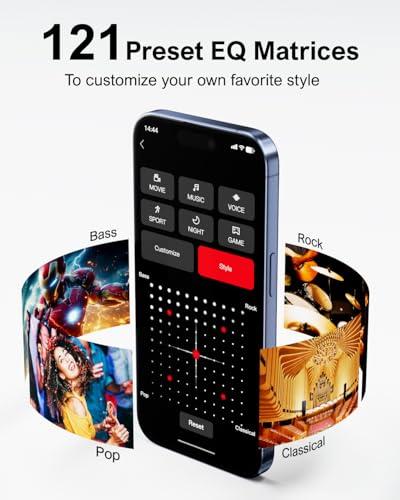
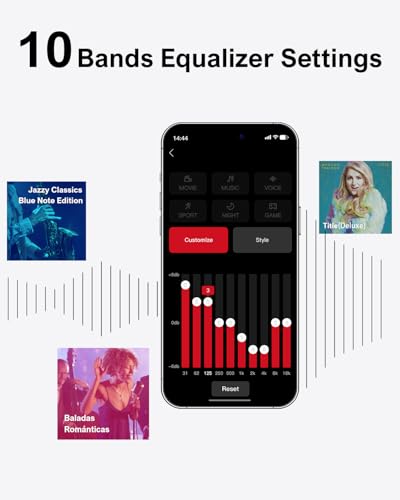
The Poseidon D70 takes a more manual but flexible approach. Its Smart App provides extensive control over the system, including a 10-band equalizer and 121 preset EQ matrices. You can fine-tune everything from surround levels to bass emphasis, which appeals to users who enjoy tweaking their audio settings.
The app also allows you to switch between different sound modes optimized for movies, music, gaming, and other content types. While this requires more user involvement than the HT Saturn's automatic optimization, it provides more granular control for users who want to customize their experience.
At the time of writing, the price difference between these systems is dramatic—approximately ten times higher for the HT Saturn compared to the Poseidon D70. This raises the obvious question: is the premium system ten times better?
The answer depends entirely on your priorities and expectations. The HT Saturn delivers genuine Dolby Atmos processing, premium acoustic engineering, and sophisticated wireless technology. If you consume a lot of modern streaming content with height-enhanced audio and want the most authentic cinematic experience possible, the premium may be justified.
However, the Poseidon D70 offers remarkable value for users who primarily want better audio than their TV speakers without premium features. It provides genuine surround sound with physical speakers positioned around the room, wireless subwoofer connectivity, and extensive customization options—all at a fraction of the cost of comparable systems from established audio brands.
The HT Saturn works best in medium to large rooms with adequate ceiling height for its Atmos effects to function properly. The upward-firing drivers need to reflect sound off your ceiling, so rooms with very high ceilings or unusual shapes may not get the full benefit. The wireless satellites provide excellent placement flexibility, but you'll need power outlets near each speaker location.
The Poseidon D70 is more accommodating for different room sizes and shapes, but its wired surround speakers require more planning. You'll need to route speaker cables from the subwoofer to your rear surround positions, which may not be practical in all room layouts. However, once properly positioned, the physical speakers provide excellent directional cues regardless of your room's acoustic properties.
This is where the HT Saturn's premium positioning really shows. As streaming services increasingly adopt Dolby Atmos for their premium content, and as gaming systems integrate more sophisticated 3D audio, having a system that can properly decode these formats becomes more valuable.
The Poseidon D70 will continue to work well with traditional surround sound content, but it can't take advantage of the height information in modern audio mixes. If you're planning to keep your sound system for several years, this limitation may become more noticeable as Atmos content becomes more prevalent.
The Hisense HT Saturn makes sense for users who own or plan to purchase a large Hisense TV, want the best possible audio reproduction, and have the budget for premium home theater equipment. It's particularly appealing for movie enthusiasts who consume a lot of streaming content with Dolby Atmos soundtracks, and for users who prioritize convenience and automatic optimization over manual tweaking.
The Ultimea Poseidon D70 is ideal for budget-conscious users who want genuine surround sound without premium pricing. It's particularly good for users who enjoy customizing their audio settings, have rooms suitable for wired surround speakers, and primarily watch traditional movies and TV content rather than Atmos-heavy material.
After researching both systems extensively, I believe the choice comes down to your specific situation rather than one being objectively better than the other. The HT Saturn delivers premium performance that justifies its higher price for users who value the latest audio technology and seamless integration. The Poseidon D70 provides exceptional value for users who want substantial audio improvement without premium pricing.
If you're unsure which approach suits you better, consider starting with the Poseidon D70. It provides a genuine surround sound experience that's dramatically better than TV speakers, and you can always upgrade to a premium system later if you find yourself wanting more advanced features. However, if you're committed to building a reference-quality home theater and have compatible equipment, the HT Saturn delivers an experience that few systems can match at any price point.
The key is being honest about your needs, room constraints, and long-term plans. Both systems excel in their intended markets—it's just a matter of figuring out which market you're actually in.
| Hisense HT Saturn HTSATURN 4.1.2Ch Sound Bar System | Ultimea Poseidon D70 7.1 Channel Soundbar System |
|---|---|
| 3D Audio Formats - Essential for modern streaming content and movies | |
| Full Dolby Atmos & DTS:X with dedicated height channels | No Dolby Atmos support, uses virtual SurroundX technology |
| Speaker Configuration - Determines sound quality and placement flexibility | |
| 4 wireless satellite speakers + subwoofer (13 total drivers) | 4 wired surround speakers + wireless subwoofer (8 total drivers) |
| Power Output - Affects maximum volume and dynamic range | |
| 720W RMS (sustained clean power) | 410W peak (actual RMS likely ~144W) |
| Wireless Technology - Impacts setup convenience and reliability | |
| Tri-band wireless (2.4G/5.2G/5.8G) for all satellites | Hybrid: wireless subwoofer, wired surround speakers |
| Audio Tuning - Professional calibration affects overall sound quality | |
| Tuned by Devialet (premium French audio engineering) | BassMX and SurroundX proprietary technologies |
| TV Integration - Seamless control and enhanced features | |
| Hi-Concerto (uses TV speakers), Room Fitting Tuning, EZPlay control | Universal HDMI ARC compatibility, Smart App control |
| Customization Options - User control over sound preferences | |
| Automatic room optimization, limited manual adjustment | 10-band EQ, 121 preset matrices, extensive app controls |
| Bass Extension - Low-frequency reach for movie effects | |
| 40Hz (tight, accurate bass integration) | 35Hz (deeper extension, more emphasis on impact) |
| Setup Complexity - Installation difficulty and time required | |
| Auto-pairing wireless, minimal configuration needed | Manual surround wiring, app-based optimization required |
| Premium Features - Advanced capabilities that justify higher cost | |
| Object-based 3D audio, automatic calibration, ecosystem integration | Physical surround speakers, extensive customization at budget price |
The Hisense HT Saturn is better for premium home theater setups, offering true Dolby Atmos with overhead sound effects and 4 wireless satellite speakers. The Ultimea Poseidon D70 provides excellent value with physical surround speakers but lacks Dolby Atmos support. Choose the HT Saturn for cutting-edge audio formats, or the Poseidon D70 for budget-friendly surround sound.
No, only the Hisense HT Saturn supports full Dolby Atmos and DTS:X with dedicated height channels for 3D audio. The Ultimea Poseidon D70 does not support Dolby Atmos and instead uses virtual SurroundX technology to simulate surround effects.
The Hisense HT Saturn has 13 total speakers across its 4 wireless satellites and subwoofer. The Ultimea Poseidon D70 has 8 speakers total, including 4 wired surround speakers and a wireless subwoofer. The HT Saturn offers more drivers for richer sound reproduction.
The Hisense HT Saturn features fully wireless satellite speakers that connect without any cables. The Ultimea Poseidon D70 uses wired surround speakers that must be connected to the subwoofer with speaker cables, though the subwoofer itself connects wirelessly to the main unit.
The Hisense HT Saturn is easier to set up with auto-pairing wireless speakers and automatic room calibration when paired with compatible Hisense TVs. The Ultimea Poseidon D70 requires running speaker wires and manual configuration through its mobile app for optimal performance.
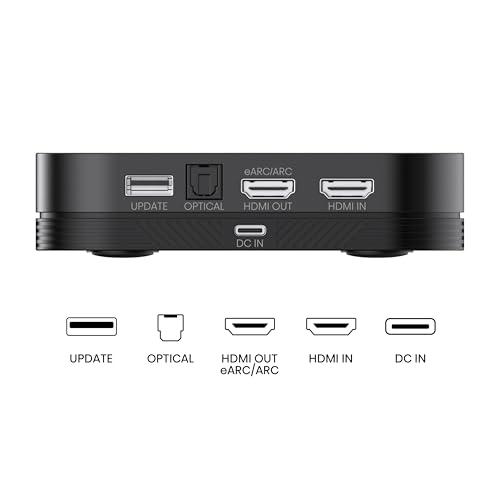
The Ultimea Poseidon D70 works with any TV brand via HDMI ARC, optical, or Bluetooth connections. The Hisense HT Saturn also works with other TV brands but offers enhanced features like Hi-Concerto and Room Fitting Tuning only with compatible Hisense TVs.
Both systems feature 6.5-inch wireless subwoofers. The Ultimea Poseidon D70 extends slightly deeper to 35Hz with BassMX technology for impactful bass. The Hisense HT Saturn reaches 40Hz but offers more refined, accurate bass integration thanks to Devialet tuning.
The Hisense HT Saturn delivers 720W RMS of sustained clean power. The Ultimea Poseidon D70 offers 410W peak power, which translates to approximately 144W RMS. The HT Saturn provides significantly more power for dynamic movie soundtracks.
The Ultimea Poseidon D70 provides extensive customization with a 10-band equalizer, 121 preset EQ matrices, and comprehensive app controls. The Hisense HT Saturn focuses on automatic optimization with limited manual adjustment options, prioritizing convenience over customization.
Both systems work well for gaming. The Hisense HT Saturn excels with modern games that support Dolby Atmos for 3D positional audio. The Ultimea Poseidon D70 provides good directional audio cues through its physical surround speakers, making it suitable for competitive gaming at a lower cost.
The Ultimea Poseidon D70 offers exceptional value for budget-conscious buyers, providing genuine surround sound with physical speakers at a fraction of premium system costs. The Hisense HT Saturn delivers premium value for users wanting the latest audio technology and willing to invest in reference-quality sound.
The main difference is audio technology: the Hisense HT Saturn supports true Dolby Atmos 3D audio with wireless satellites, while the Ultimea Poseidon D70 uses virtual surround processing with wired speakers. The HT Saturn targets premium users, while the Poseidon D70 maximizes features for budget buyers.
We've done our best to create useful and informative comparisons to help you decide what product to buy. Our research uses advanced automated methods to create this comparison and perfection is not possible - please contact us for corrections or questions. These are the sites we've researched in the creation of this article: bestbuy.com - youtube.com - blog.son-video.com - youtube.com - youtube.com - techradar.com - ecoustics.com - jbhifi.com.au - shop.hisense-usa.com - bhphotovideo.com - bestbuy.com - digitalreviews.net - hisense-usa.com - projectorscreenstore.com - valueelectronics.com - dolby.com - giftpack.ai - ultimea.com - provantage.com - ultimea.com - youtube.com - youtube.com - bestbuy.com - the-gadgeteer.com - shopmyexchange.com - youtube.com - youtube.com - youtube.com - ultimea.com - manuals.plus - device.report - images.thdstatic.com - shopmyexchange.com - staples.com - ultimea.de

Privacy Policy
Terms and Conditions - Affiliate Policy
Home Security
© Copyright 2008-2026.
11816 Inwood Rd #1211, Dallas, TX 75244