





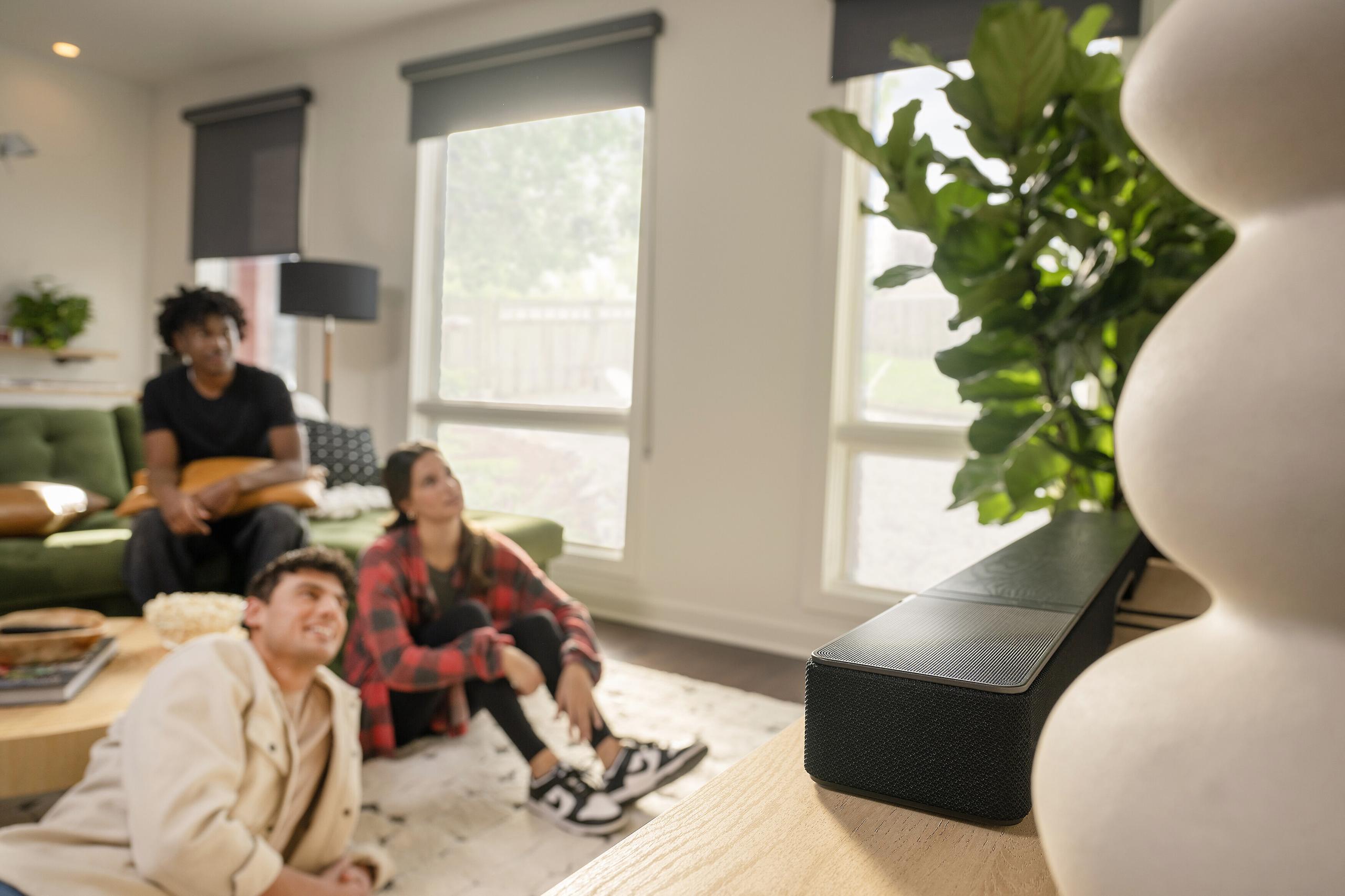

Shopping for a soundbar in 2024 means navigating two fundamentally different philosophies about home theater audio. Do you want the tried-and-true approach of discrete speakers positioned around your room, or would you prefer the newer technology that bounces sound off your ceiling to create three-dimensional audio? The Ultimea Poseidon D70 and Klipsch Flexus Core 200 represent these opposing camps perfectly, and understanding their differences will help you make the right choice for your space and budget.
The soundbar market has evolved dramatically since the early 2010s, when most units were simple two-channel upgrades over TV speakers. Today's systems fall into two distinct categories: traditional discrete surround setups that use multiple physical speakers, and advanced processing soundbars that rely on psychoacoustic tricks to simulate immersive audio.
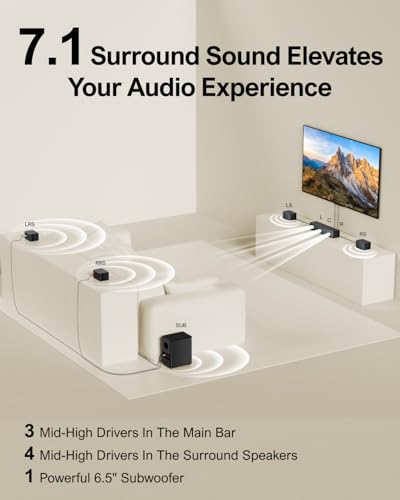
Traditional systems like the Ultimea Poseidon D70 follow the time-tested approach of placing speakers around your listening area. This creates genuine surround sound because audio actually comes from different directions. When a helicopter flies from front to back in a movie, you hear it move because the sound literally travels from the front speakers to the rear ones.
Modern soundbars like the Klipsch Flexus Core 200, released in 2024, use sophisticated audio processing and upfiring drivers—speakers that point toward the ceiling—to bounce sound around your room. This technology, called Dolby Atmos, can place sounds above, around, and even behind you using just the speakers in the soundbar itself.
Both approaches have merit, but they excel in different scenarios. The key is understanding what each system can and cannot do, then matching that to your room, viewing habits, and budget.
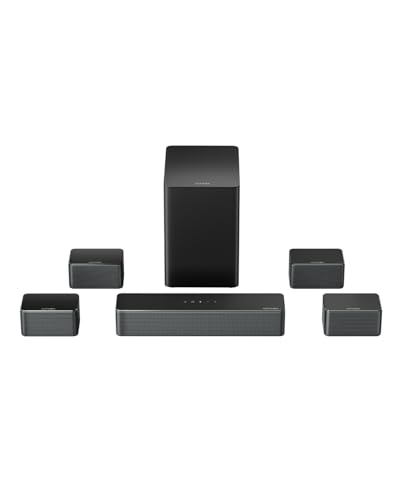
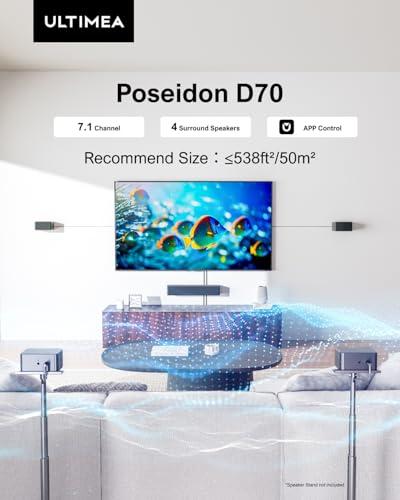
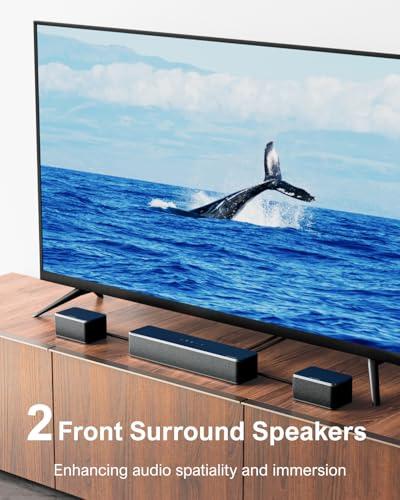
The Poseidon D70 delivers something increasingly rare at its price point: genuine 7.1 channel surround sound through eight separate speakers. This isn't virtual surround or audio processing trickery—it's the real deal with four dedicated surround speakers that you position around your seating area.
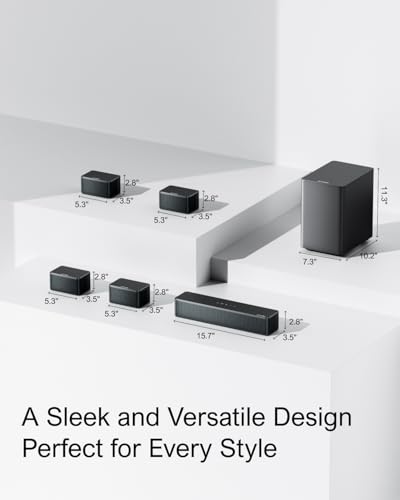
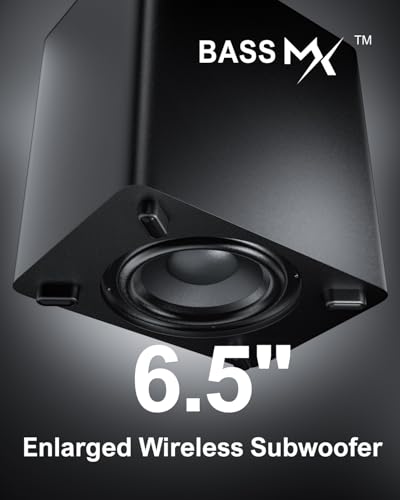
The system includes a main soundbar housing three 2.25-inch drivers, four satellite speakers with their own 2.25-inch drivers, and a substantial 6.5-inch wireless subwoofer. When you add up the total speaker count and compare it to the system's budget-friendly price (at the time of writing), the value proposition becomes clear. You're essentially getting eight separate speakers for less than what many single soundbars cost.
What makes the Poseidon D70 special isn't just the speaker count—it's the implementation. The wireless subwoofer connects to the main bar via Bluetooth, eliminating one set of cables. The four surround speakers connect to the subwoofer using color-coded wires (3-meter and 6-meter lengths included), making setup straightforward even for beginners. This hybrid approach reduces cable complexity while maintaining the authentic surround experience that only discrete speakers can provide.
The system's BassMX technology works with the 6.5-inch subwoofer to produce bass that reaches down to 35Hz—low enough to feel those rumbling explosions and thunderous dinosaur footsteps. With 410 watts of peak power output, the Poseidon D70 can reach impressive volume levels of 103 decibels, which is loud enough to fill large rooms without distortion.
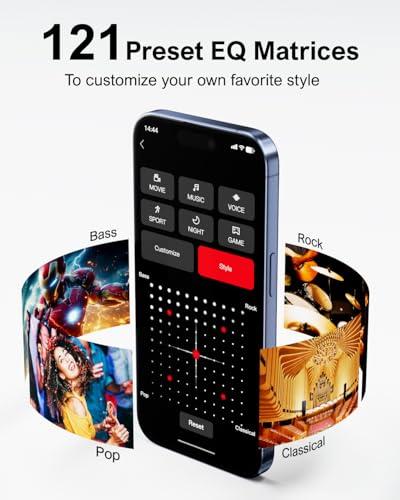
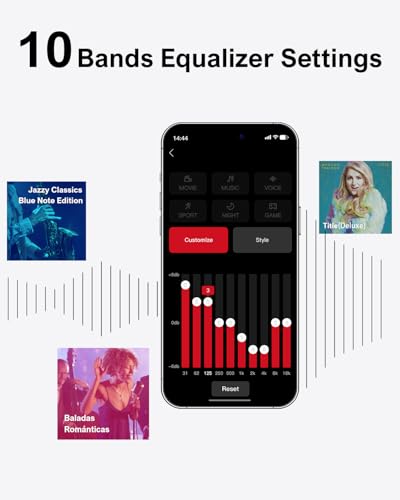
Perhaps most impressively, Ultimea includes 121 preset EQ matrices and a full 10-band equalizer accessible through their mobile app. This level of customization is typically found in much more expensive systems. Whether you're fine-tuning the sound for your specific room acoustics or switching between profiles optimized for movies, music, or gaming, the depth of control available is remarkable.
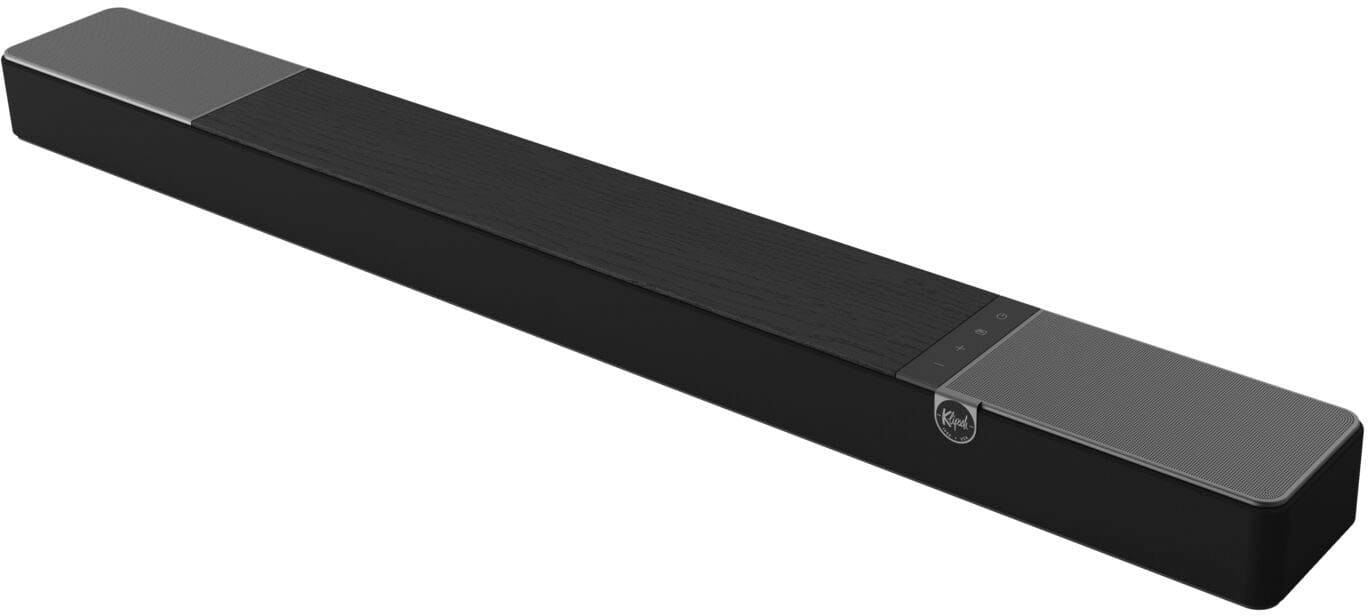
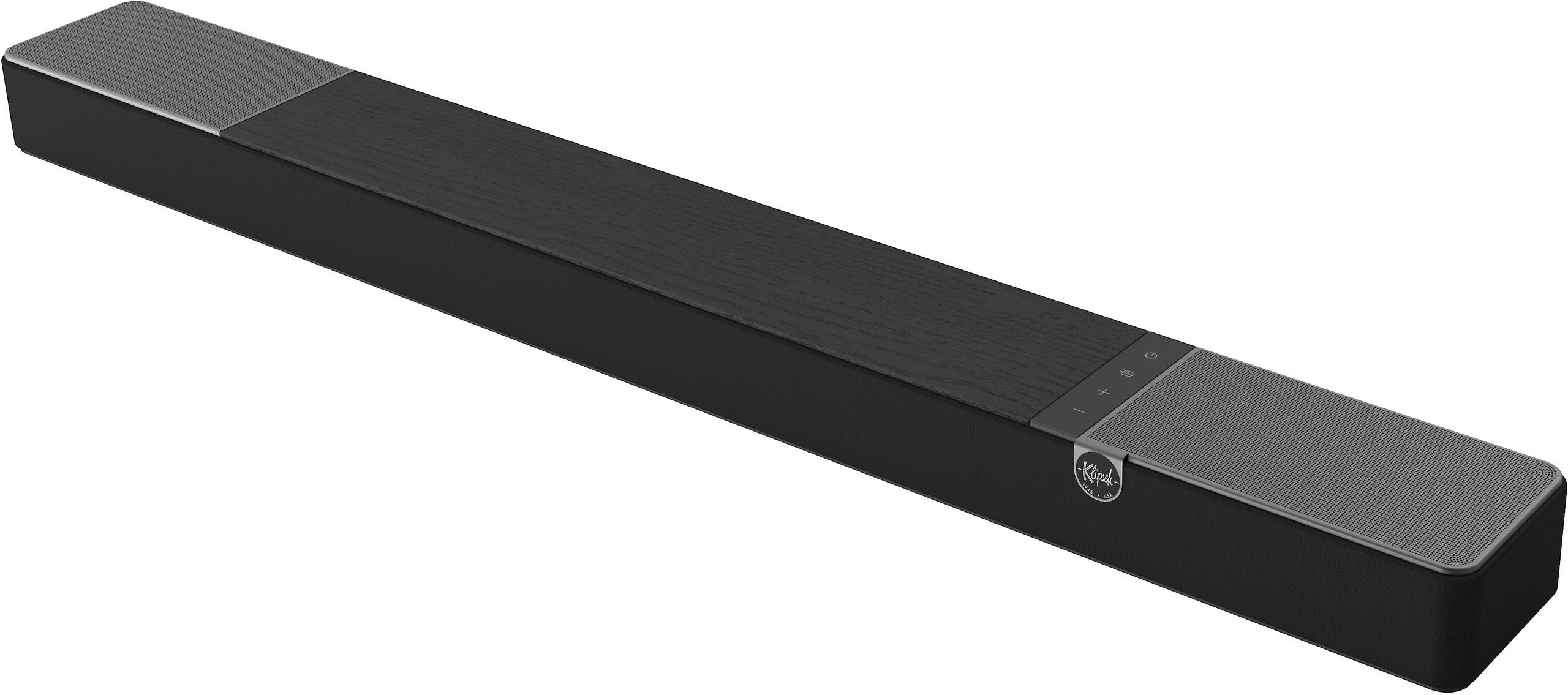
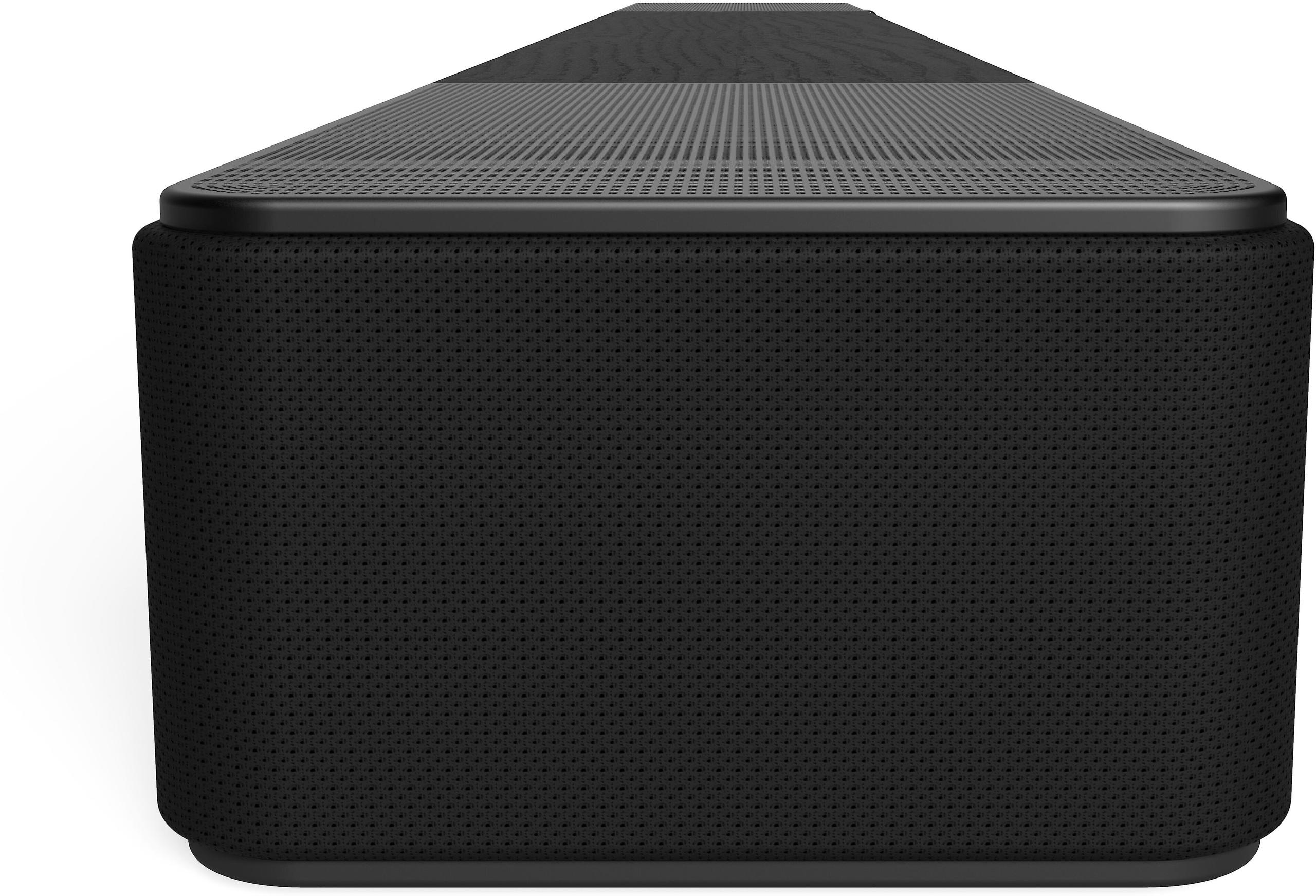
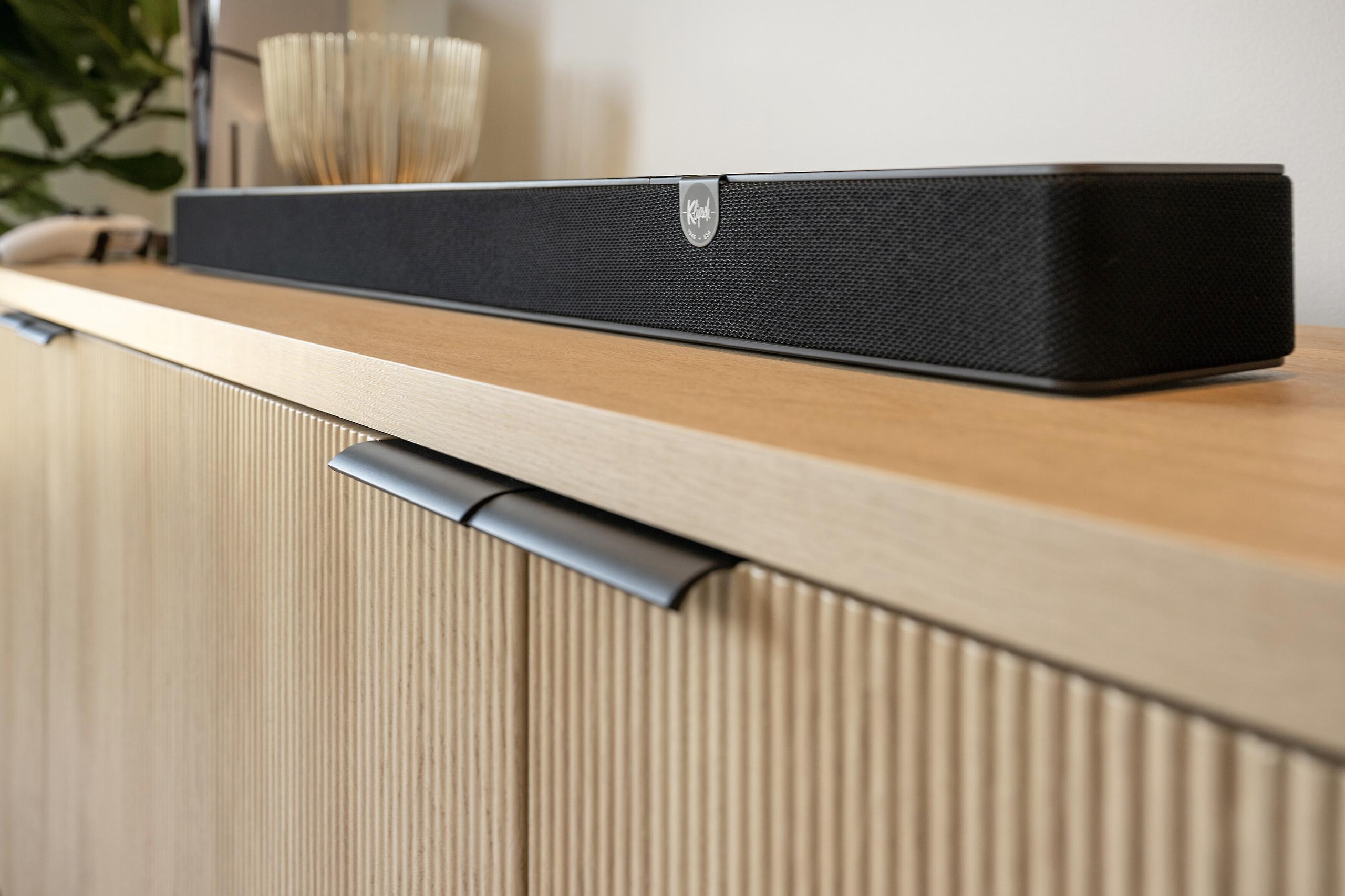
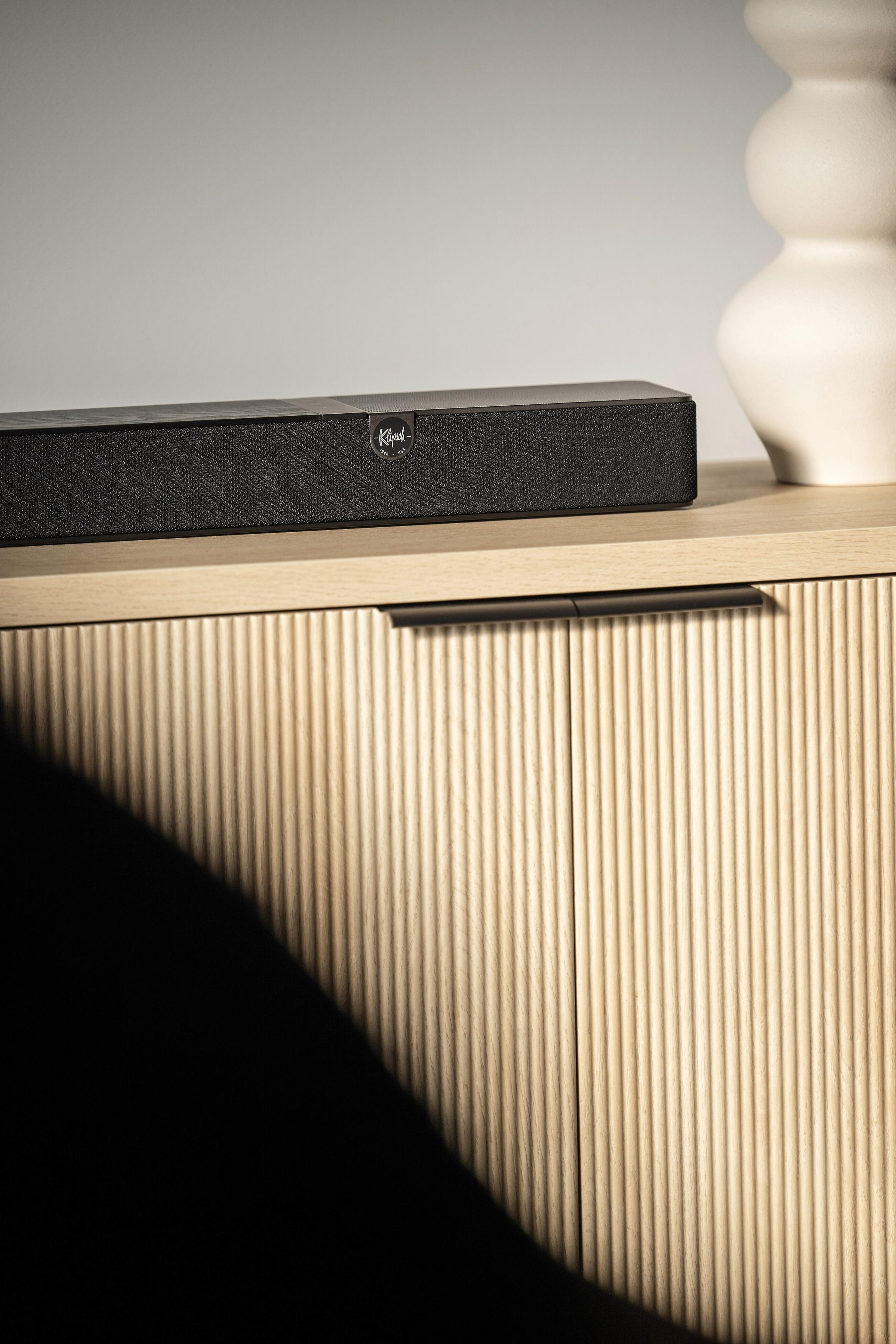
Released in 2024 as a collaboration between Klipsch and Onkyo, the Flexus Core 200 represents a more refined approach to soundbar design. Rather than overwhelming you with speakers and wires, it focuses on delivering premium audio quality and modern features in a sleek, single-unit package.
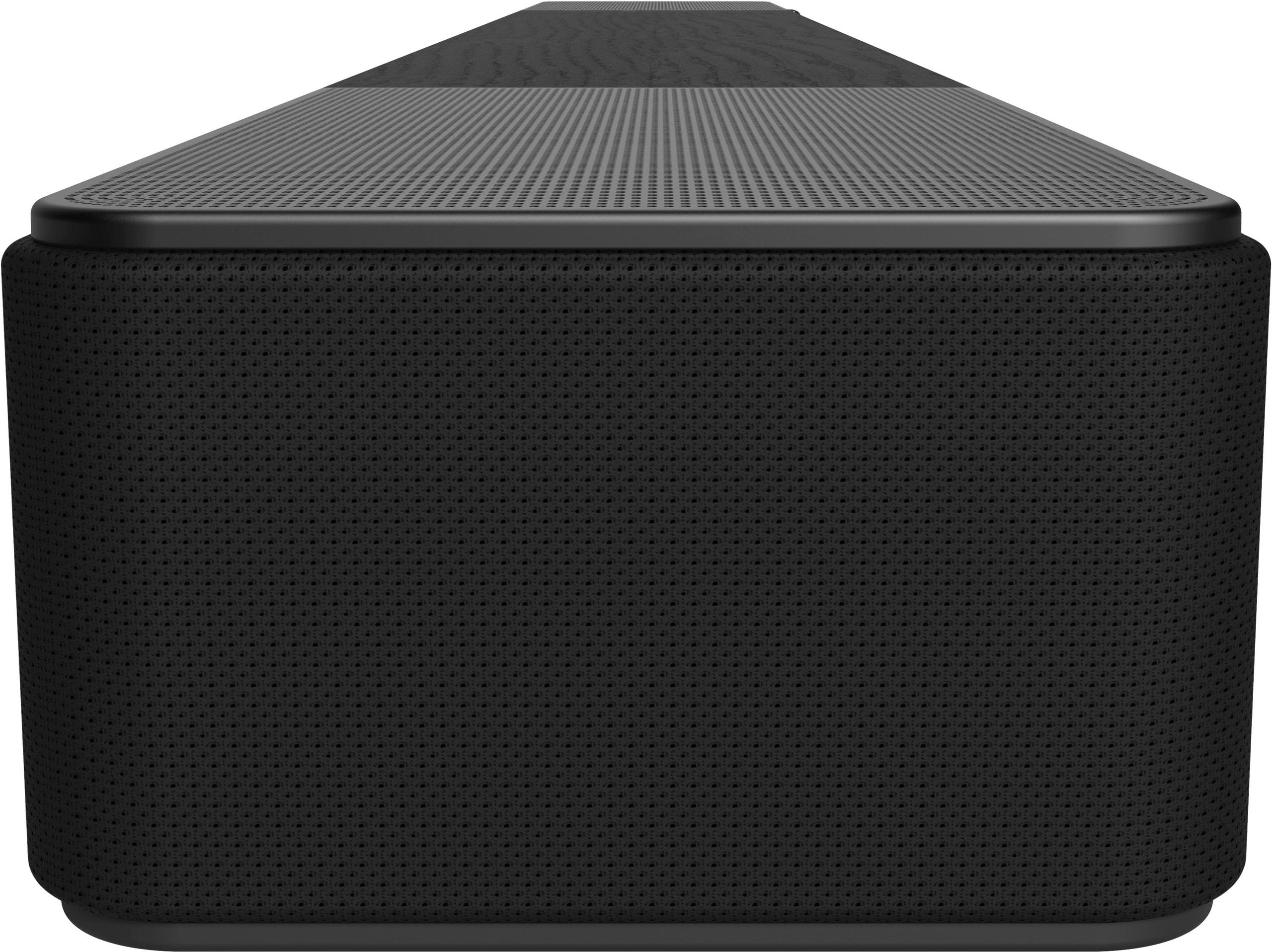
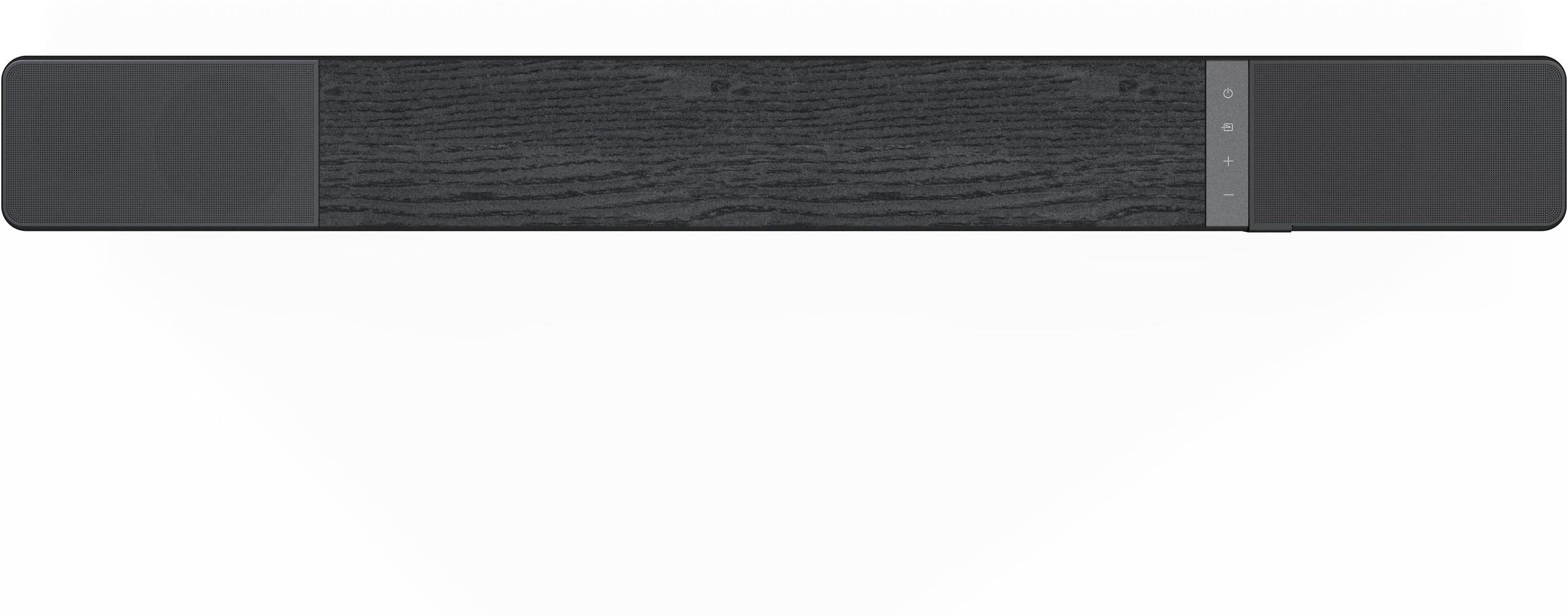
The Flexus Core 200 houses nine precision-engineered drivers within its 44-inch frame. Four 2.25-inch aluminum cone drivers handle front-channel duties, while two additional 2.25-inch drivers fire upward toward your ceiling to create Dolby Atmos height effects. Dual 4-inch subwoofers provide integrated bass response, and Klipsch's signature 0.75-inch horn-loaded tweeter ensures crystal-clear dialogue—a feature that sets Klipsch apart from most competitors.
That horn-loaded tweeter deserves special attention. Klipsch has been perfecting horn technology since the 1940s, and this design dramatically improves efficiency and clarity in the frequency range where human voices live. When you're watching dialogue-heavy dramas or trying to catch every word in a fast-paced action sequence, this tweeter makes a noticeable difference.
The Dolby Atmos implementation in the Flexus Core 200 goes beyond simple upfiring drivers. The system processes audio signals to precisely time and position sounds in three-dimensional space. When executed properly—which requires ceilings at least 8 feet high—you'll hear helicopters overhead, rain falling from above, and ambient effects that seem to surround you completely.
What's particularly clever about the Flexus Core 200 is its expandability through Klipsch's proprietary Transport technology. This wireless communication system allows you to add Flexus surround speakers and additional subwoofers later, transforming your simple soundbar into a full home theater system as your budget and needs grow.
The bass conversation reveals fundamental differences in philosophy. The Poseidon D70's 6.5-inch dedicated subwoofer, enhanced by BassMX technology, provides the kind of deep, room-shaking bass that makes action movies come alive. Its 35Hz low-frequency response means you'll feel those T-Rex footsteps in Jurassic Park or the rumbling engines in Fast & Furious films.
The separate subwoofer also offers placement flexibility—you can position it where it sounds best in your room, rather than being locked into the soundbar's location. This matters more than you might think, because bass response varies dramatically based on where the subwoofer sits relative to walls, corners, and your seating position.
The Flexus Core 200's dual 4-inch built-in subwoofers take a different approach. While they can't match the Poseidon D70 for sheer depth (43Hz vs 35Hz), they provide tighter, more controlled bass that integrates seamlessly with the soundbar's other drivers. There's no separate unit to place or wireless connection to worry about—everything just works from day one.
For maximum impact and room-filling power, the Poseidon D70 wins decisively. Its 410-watt peak output dwarfs the Flexus Core 200's 185-watt RMS rating, and this difference is audible in real-world use. If you have a large room or like your movies loud, the Ultimea system delivers.
This is where the fundamental differences between discrete and processed surround become clear. The Poseidon D70's four physical surround speakers create genuine directional audio that no amount of processing can replicate. When something moves from front to back in a movie, the sound literally travels from the front speakers to the rear ones. Your brain doesn't have to work to create the illusion—the effect is physically real.
The Flexus Core 200 achieves immersion through sophisticated audio processing and those upfiring drivers. Dolby Atmos content gets decoded and repositioned in three-dimensional space, with overhead effects bounced off your ceiling to create height sensations. When properly calibrated for your room, the effect can be genuinely impressive, placing sounds above and around you in ways that traditional surround sometimes cannot match.
However, there's a critical caveat for the Flexus Core 200: it requires the right room conditions to work properly. You need relatively flat ceilings at least 8 feet high, and the system works best with hard ceiling surfaces that reflect sound effectively. Vaulted ceilings, textured surfaces, or low ceilings can significantly impact the Atmos effect.
The Poseidon D70 works in any room where you can position its surround speakers, making it more universally effective for creating immersive audio.
Here's where the Flexus Core 200 shows its premium engineering. That horn-loaded tweeter isn't just marketing speak—it's a legitimate advantage for vocal clarity. Klipsch has spent decades perfecting horn technology, and the difference is immediately apparent when watching dialogue-heavy content.
The horn design dramatically improves the efficiency of the tweeter, allowing it to produce clear, natural-sounding voices even at moderate volume levels. Whether you're watching a Christopher Nolan film with its notoriously complex audio mix or following rapid-fire dialogue in a TV drama, voices cut through the mix with exceptional clarity.
The Poseidon D70 handles dialogue well through its three front-channel drivers and AI optimization algorithms, but it can't match the focused clarity that Klipsch's horn-loaded design provides. If clear dialogue is your top priority—perhaps you watch a lot of British dramas or have family members with hearing difficulties—the Flexus Core 200 has a clear advantage.
Setting up the Poseidon D70 requires more planning but isn't overly complex. You'll need to position four surround speakers around your seating area, which means running the included cables (3 meters and 6 meters) to appropriate locations. The good news is that all cables are color-coded and clearly labeled, and the wireless subwoofer eliminates one major cable run.
The system offers comprehensive connectivity including HDMI ARC, optical, Bluetooth, USB, and auxiliary inputs. The mobile app provides access to all 121 EQ presets and the 10-band equalizer, though some users report that the app interface could be more intuitive.
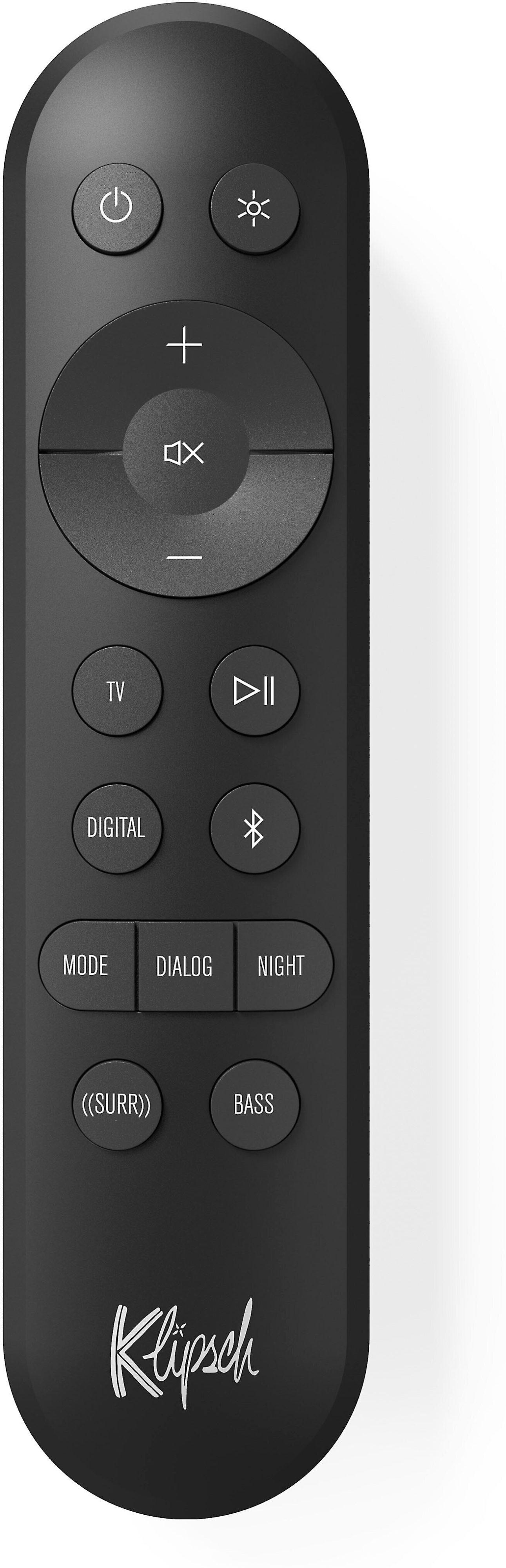
The Flexus Core 200 setup is dramatically simpler—position the soundbar, plug it in, connect one HDMI cable to your TV, and you're essentially done. The system supports HDMI eARC for the highest quality audio transmission, and CEC integration means your TV remote can control basic functions.
The Klipsch Connect Plus app handles advanced settings and room calibration for optimal Atmos performance. While the Flexus Core 200 has fewer connectivity options than the Poseidon D70, it covers the essentials with HDMI eARC, optical, Bluetooth, and USB-C inputs.
This is where release timing becomes relevant. The Poseidon D70 excels with traditional 5.1 and 7.1 surround content—the format that dominated movies and games for decades. If your media library consists primarily of older films, standard TV programming, or traditional gaming, this system will handle everything perfectly.
However, the Poseidon D70 lacks native Dolby Atmos support. While it can process Atmos content through virtual surround algorithms, it cannot deliver the genuine overhead effects that Atmos was designed to create. As streaming services increasingly adopt Atmos for their premium content, this limitation becomes more significant.
The Flexus Core 200, released in 2024, was designed specifically for today's content landscape. Netflix, Disney+, Apple TV+, and most premium streaming services now offer extensive Atmos catalogs. The system also handles standard surround content well, though it downmixes true discrete surround to its 3.1.2 configuration.
One significant limitation of the Flexus Core 200 is its lack of DTS support—a format still common on Blu-ray discs. If you have an extensive physical media collection, this could impact your listening experience with certain titles.
At the time of writing, the Poseidon D70 represents exceptional value in the budget soundbar category. You're getting eight separate speakers, extensive customization options, and genuine surround sound at a price point where most competitors offer only basic soundbar functionality. The system delivers a complete home theater audio solution without requiring additional purchases.
The Flexus Core 200 commands a premium price that reflects its Klipsch heritage and advanced engineering. You're paying for decades of acoustic expertise, premium materials, and sophisticated Dolby Atmos processing. The modular design also provides a clear upgrade path—you can add Flexus surrounds and subwoofers as your budget allows.
Both systems should provide years of reliable service, but they represent different long-term strategies. The Poseidon D70 gives you everything upfront at a budget price, while the Flexus Core 200 starts as a premium foundation that can grow into a more comprehensive system.
Choose the Ultimea Poseidon D70 if you have a dedicated home theater space where running speaker cables isn't a major concern. This system excels in basement theaters, bonus rooms, or any space where you can properly position surround speakers. It's perfect for users who prioritize maximum immersion and volume output over modern audio processing features.
The Poseidon D70 also makes sense if your viewing habits lean toward older movies, traditional TV programming, and gaming. Its genuine 7.1 surround processing handles this content better than any virtual surround system can manage.
Choose the Klipsch Flexus Core 200 if you need a sophisticated audio solution for a living room or shared space where multiple speakers aren't practical. This system works best for users who primarily stream modern content with Dolby Atmos soundtracks and value audio refinement over raw power.
The Flexus Core 200 is also the better choice if you plan to build your system gradually. Starting with the soundbar and adding components over time lets you spread the cost while maintaining a clean, uncluttered appearance during the initial setup phase.
Both the Ultimea Poseidon D70 and Klipsch Flexus Core 200 excel at what they're designed to do, but they serve different users and use cases. The Poseidon D70 delivers traditional surround sound immersion with exceptional value, while the Flexus Core 200 provides modern audio processing and premium engineering in a more convenient package.
Your choice ultimately depends on your room constraints, viewing preferences, and whether you prioritize immediate value or long-term audio refinement. Either system will dramatically improve your TV's audio, but understanding these fundamental differences ensures you'll choose the one that best matches your specific needs and expectations.
| Ultimea Poseidon D70 | Klipsch Flexus Core 200 |
|---|---|
| Channel Configuration - Determines surround sound approach and immersion quality | |
| True 7.1 with 4 discrete surround speakers | 3.1.2 Dolby Atmos with upfiring drivers |
| Total Speakers - More drivers can mean better sound separation and power | |
| 8 speakers (3 soundbar + 4 surround + 1 subwoofer) | 9 speakers (all integrated in soundbar) |
| Power Output - Higher wattage typically means louder maximum volume | |
| 410W peak (can reach 103dB for large rooms) | 185W RMS (more controlled, quality-focused output) |
| Subwoofer Design - Affects bass depth and placement flexibility | |
| 6.5" wireless external subwoofer (35Hz response) | Dual 4" built-in subwoofers (43Hz response) |
| Dolby Atmos Support - Essential for modern streaming content overhead effects | |
| No (virtual surround processing only) | Yes (native support with upfiring drivers) |
| Physical Surround Speakers - Creates authentic directional audio vs processed effects | |
| 4 wired satellite speakers included | None (expandable with separate Flexus surrounds) |
| Setup Complexity - Consider your room layout and cable management preferences | |
| Moderate (requires positioning 4 surround speakers) | Simple (single soundbar placement) |
| Customization Options - Important for fine-tuning sound to your room | |
| 121 EQ presets + 10-band equalizer via app | Standard EQ via Klipsch Connect Plus app |
| Connectivity Options - Ensure compatibility with your devices | |
| HDMI ARC, Optical, Bluetooth, USB, 3.5mm AUX | HDMI eARC, Optical, Bluetooth, USB-C |
| Expandability - Future upgrade potential without replacing entire system | |
| Complete system (no expansion options) | Modular (add Flexus surrounds and subs wirelessly) |
| Content Compatibility - Consider your viewing habits and media formats | |
| Excellent with traditional 5.1/7.1 content | Optimized for Atmos streaming (no DTS support) |
| Value Proposition - Performance per dollar at time of writing | |
| Exceptional budget value with complete surround setup | Premium engineering with room for system growth |
The Ultimea Poseidon D70 provides true 7.1 surround sound with four physical speakers positioned around your room, creating authentic directional audio. The Klipsch Flexus Core 200 uses Dolby Atmos processing with upfiring drivers to simulate surround effects from a single unit. For genuine surround immersion, the Poseidon D70 wins, but the Flexus Core 200 offers more convenient setup with impressive virtual surround.
The Ultimea Poseidon D70 includes a dedicated 6.5-inch wireless subwoofer that delivers deep bass down to 35Hz. The Klipsch Flexus Core 200 has dual 4-inch subwoofers built into the soundbar itself. While the Flexus Core 200 provides good integrated bass, the Poseidon D70's larger separate subwoofer offers more impactful low-frequency performance for action movies and music.
Only the Klipsch Flexus Core 200 has native Dolby Atmos support with dedicated upfiring drivers that bounce sound off your ceiling for overhead effects. The Ultimea Poseidon D70 does not support Dolby Atmos, instead using virtual surround processing. If you watch modern streaming content with Atmos soundtracks, the Flexus Core 200 is the clear choice.
The Klipsch Flexus Core 200 offers simple setup - just place the soundbar and connect one HDMI cable. The Ultimea Poseidon D70 requires more effort as you need to position four surround speakers around your room and run the included cables. While the Poseidon D70 takes more time to set up, the color-coded cables make the process straightforward.
The Ultimea Poseidon D70 produces significantly higher volume levels with 410 watts of peak power, reaching up to 103dB. The Klipsch Flexus Core 200 offers 185 watts RMS with more controlled output. For large rooms or users who prefer very loud audio, the Poseidon D70 delivers superior maximum volume capability.
The Klipsch Flexus Core 200 is designed for expansion using Klipsch's wireless Transport technology - you can add Flexus surrounds and additional subwoofers over time. The Ultimea Poseidon D70 comes as a complete system with no expansion options. If you want to build your system gradually, the Flexus Core 200 offers more flexibility.
The Klipsch Flexus Core 200 excels in dialogue clarity thanks to its signature horn-loaded tweeter, which provides exceptional vocal reproduction. While the Ultimea Poseidon D70 offers good dialogue through its front drivers and AI optimization, the Klipsch horn technology delivers superior voice clarity for movies and TV shows.
Both systems handle older content well, but with different strengths. The Ultimea Poseidon D70 excels with traditional 5.1 and 7.1 surround content through its discrete speakers. The Klipsch Flexus Core 200 processes older content effectively but is optimized for modern Dolby Atmos streaming. For extensive collections of older media, the Poseidon D70 may provide better compatibility.
The Ultimea Poseidon D70 provides exceptional value by including four surround speakers, a wireless subwoofer, and extensive customization options at a budget-friendly price point. The Klipsch Flexus Core 200 commands a premium for its brand heritage, Dolby Atmos support, and superior audio engineering. Your best value depends on whether you prioritize complete surround setup or premium audio quality.
The Ultimea Poseidon D70 provides comprehensive connectivity with HDMI ARC, optical, Bluetooth, USB, and auxiliary inputs. The Klipsch Flexus Core 200 offers HDMI eARC, optical, Bluetooth, and USB-C connections. Both systems support the essential connections for modern TVs and devices, with the Flexus Core 200 featuring the more advanced eARC standard.
The Ultimea Poseidon D70 provides excellent gaming audio through its true surround speakers, creating authentic directional cues for competitive gaming. The Klipsch Flexus Core 200 offers good gaming performance with Dolby Atmos processing but lacks HDMI 2.1 features. For immersive gaming experiences, the Poseidon D70's discrete surround speakers give it an edge.
Choose the Ultimea Poseidon D70 if you have a dedicated theater room where surround speaker placement isn't an issue and want maximum immersion at a budget price. Select the Klipsch Flexus Core 200 if you prefer a clean, single-unit setup with premium audio quality and plan to stream modern Dolby Atmos content. The Poseidon D70 offers complete surround value, while the Flexus Core 200 provides sophisticated processing and expandability.
We've done our best to create useful and informative comparisons to help you decide what product to buy. Our research uses advanced automated methods to create this comparison and perfection is not possible - please contact us for corrections or questions. These are the sites we've researched in the creation of this article: ultimea.com - provantage.com - ultimea.com - youtube.com - youtube.com - bestbuy.com - the-gadgeteer.com - shopmyexchange.com - youtube.com - youtube.com - youtube.com - ultimea.com - manuals.plus - device.report - images.thdstatic.com - shopmyexchange.com - staples.com - ultimea.de - soundandvision.com - avnirvana.com - avsforum.com - cnet.com - klipsch.com - klipsch.com - youtube.com - assets.klipsch.com - klipsch.com - worldwidestereo.com - klipsch.com - crutchfield.com - digitaltrends.com

Privacy Policy
Terms and Conditions - Affiliate Policy
Home Security
© Copyright 2008-2026.
11816 Inwood Rd #1211, Dallas, TX 75244