



When your TV's built-in speakers sound like they're coming from a tin can, it's time for an upgrade. But walking into the budget soundbar market can feel overwhelming—do you go simple or dive into surround sound? Today we're comparing two fundamentally different approaches: the Hisense HS2100, a straightforward 2.1 system released in 2023, and the Ultimea Poseidon D70, a comprehensive 7.1 surround setup that launched around the same time.
Both systems cost roughly the same at the time of writing, but they represent entirely different philosophies about home audio. One prioritizes simplicity and clean TV audio enhancement, while the other attempts to recreate a movie theater experience in your living room. Understanding which approach fits your needs—and your space—will determine which delivers better value for your specific situation.
The budget soundbar space has evolved significantly since the early 2020s. What used to be a choice between "bad TV speakers" and "slightly less bad soundbar" has become surprisingly sophisticated. Modern budget systems now pack technologies that were premium features just a few years ago—like wireless subwoofers, app control, and virtual surround processing.
The key decision point comes down to channel configuration. Traditional 2.1 systems use two front-facing speakers plus a subwoofer (the ".1" refers to the dedicated bass channel). This setup focuses on improving dialogue clarity and adding bass punch that TV speakers simply can't deliver. The trade-off is that all sound still comes from the front of your room.
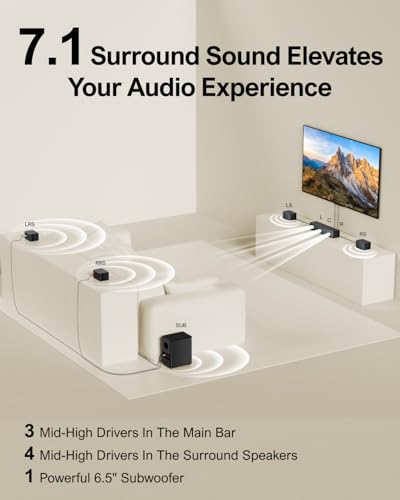
Multi-channel systems like 7.1 configurations add physical speakers around your listening area. The "7.1" designation means seven main channels (front left, center, front right, side left, side right, rear left, rear right) plus that dedicated subwoofer channel. This creates genuine directional audio—explosions can rumble from behind you, while helicopters pan overhead.
Room size plays a crucial role here. In smaller spaces, the benefits of surround speakers diminish because you're sitting too close to properly experience directional effects. Larger rooms, especially those used primarily for movie watching, can genuinely benefit from the immersive experience that only physical surround speakers can provide.
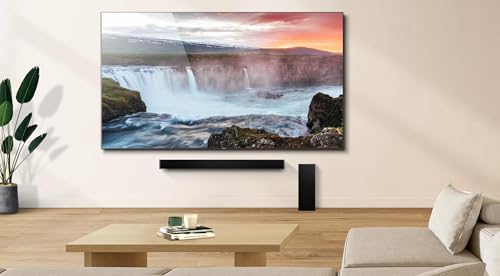
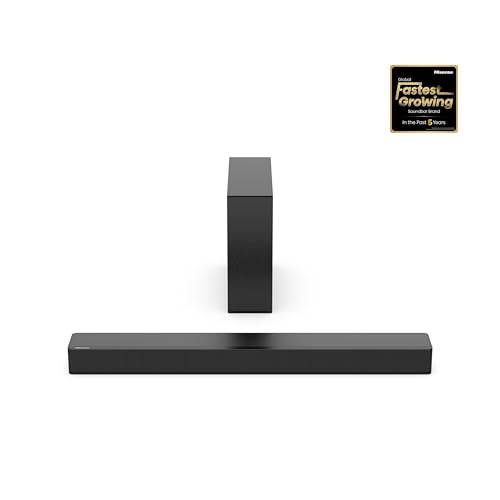
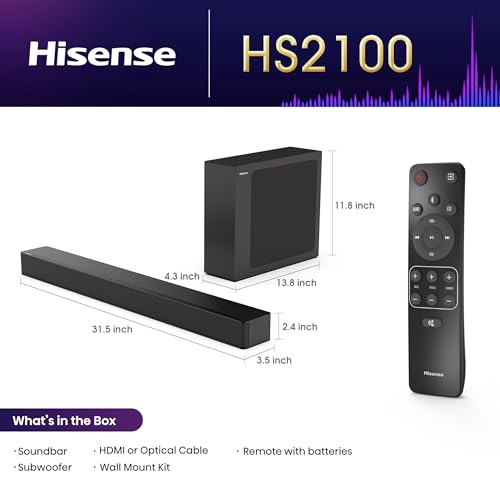
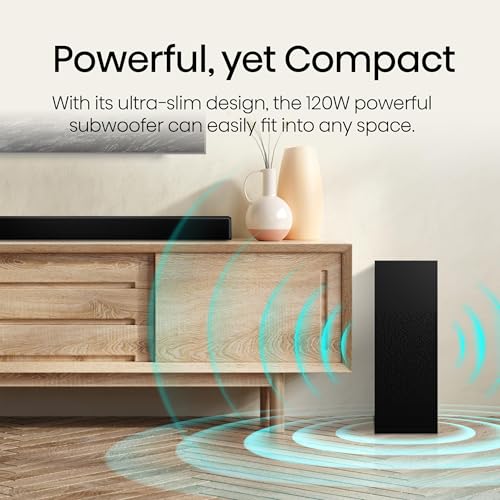
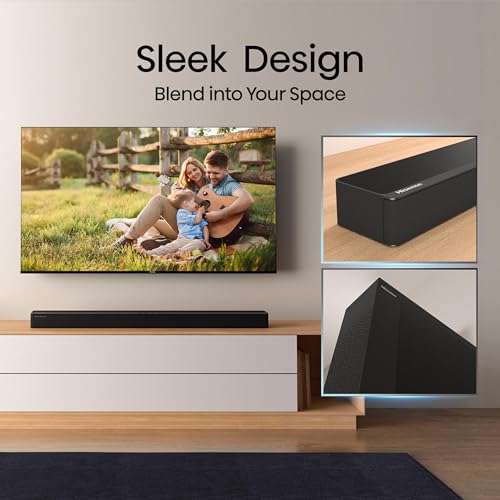
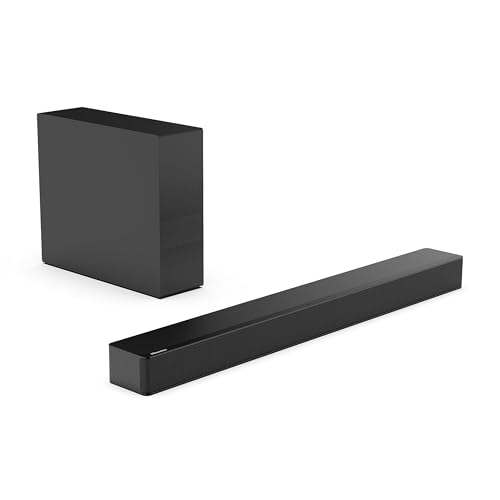
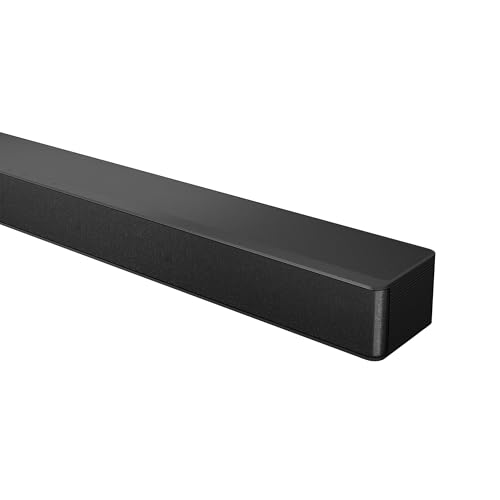
The Hisense HS2100 launched in 2023 as part of Hisense's effort to dominate the budget TV accessory market. It represents the refined evolution of simple soundbar design—everything unnecessary has been stripped away, leaving a focus on core performance and ease of use. At roughly 32 inches wide, it fits perfectly under most TVs without looking oversized or calling attention to itself.
Hisense has been particularly aggressive about TV integration features, and the HS2100 reflects this with its "Roku TV Ready" certification. This means if you own a compatible Roku TV (which includes many TCL and Hisense models), you can control the soundbar directly through your TV remote without programming or setup headaches.
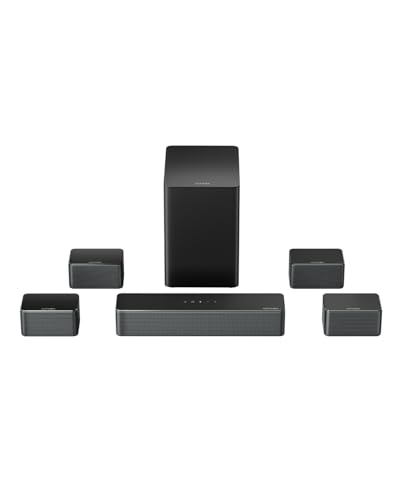
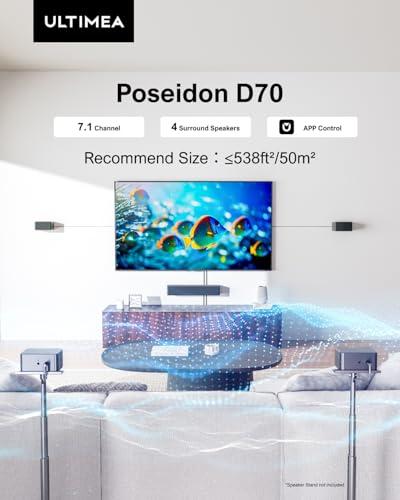
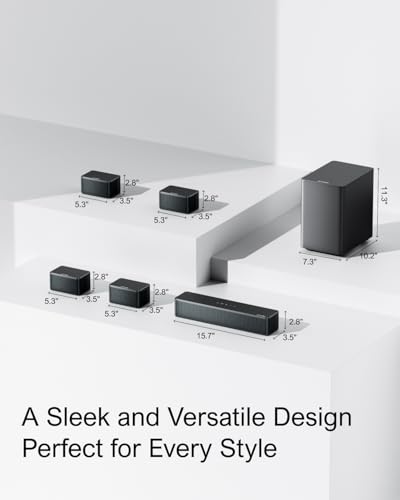
The Ultimea Poseidon D70, also from 2023, takes a completely different approach. Ultimea, a newer player in the audio space, has been focusing on delivering premium features at budget prices. The D70 includes not just a soundbar and subwoofer, but four additional satellite speakers to create genuine 7.1 surround sound. At a similar price point to basic 2.1 systems, this represents remarkable value—if you can use all those speakers effectively.
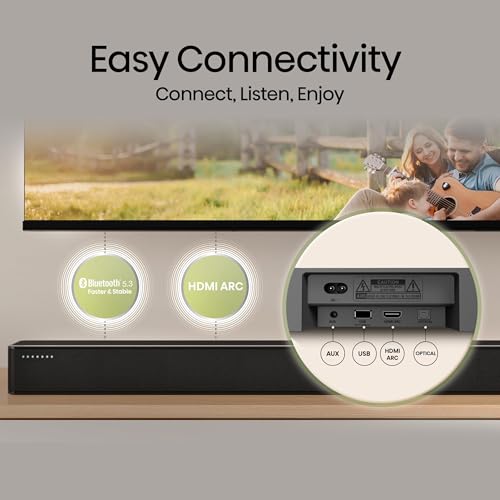
Both products benefit from recent improvements in Bluetooth technology (version 5.3 in both cases), which provides more stable wireless connections and lower audio latency compared to older Bluetooth implementations. They also incorporate modern power management, automatically powering down when not in use to save energy.
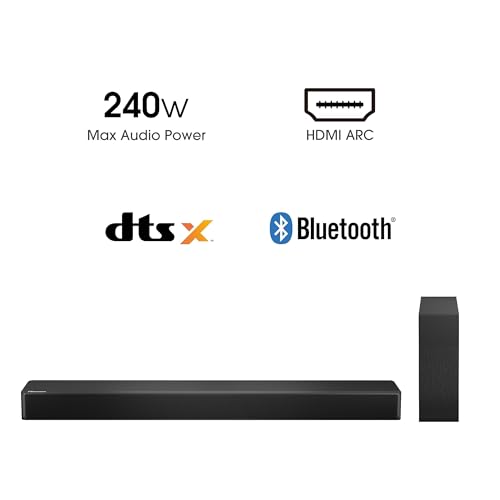
Raw power numbers tell only part of the story, but they're worth understanding. The HS2100 delivers 240 watts maximum power, split between its two main drivers and 120-watt wireless subwoofer. The D70 claims 410 watts peak power across its eight total speakers. However, peak power ratings can be misleading—what matters more is how that power translates to actual listening experience.
Based on extensive user feedback and professional measurements, the HS2100 produces a notably balanced sound signature. Its frequency response (the range of bass, midrange, and treble it can reproduce) extends from 45 Hz to 20 kHz, which covers most of what humans can hear. The midrange, where dialogue lives, remains clear and uncolored. This matters enormously for TV watching, where understanding speech is paramount.
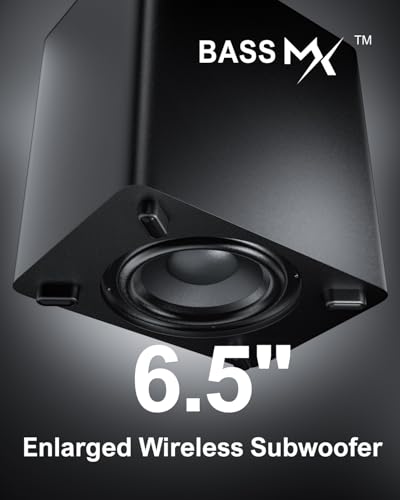
The D70's larger 6.5-inch subwoofer extends deeper into bass territory, reaching down to 35 Hz. For context, that extra 10 Hz of bass extension means you'll feel more of those low-frequency movie effects—the rumble of a T-Rex footstep or the growl of a motorcycle engine. The D70's distributed power across multiple speakers also means it can play louder without strain, which becomes important in larger rooms.
Where the systems truly differ is in how they handle complex audio passages. The HS2100, working with just two main channels, must downmix surround sound content to stereo. This means that helicopter flying from left to right across your screen will pan smoothly, but a helicopter circling overhead gets flattened into front-only audio. The D70's physical surround speakers can reproduce that overhead circling effect with startling realism.
This represents the fundamental difference between these systems. The HS2100 uses DTS Virtual:X processing, a clever technology that manipulates stereo signals to create the illusion of surround sound. It works by introducing subtle delays and phase shifts that trick your brain into perceiving sounds as coming from different directions.
Virtual surround has improved dramatically in recent years. The HS2100's implementation creates a noticeably wider soundstage than basic stereo, making movie dialogue feel more natural and giving music better stereo separation. However, it remains a psychoacoustic trick—the actual sound still originates from the front of your room.
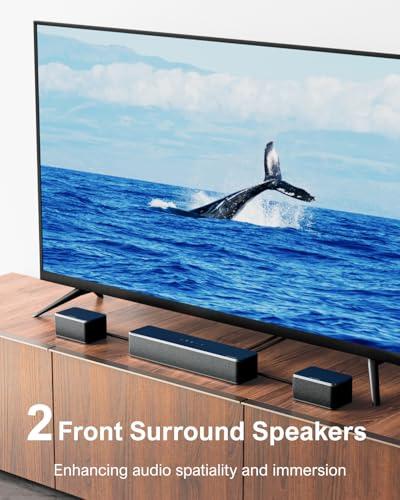
The D70 takes the direct approach with four physical satellite speakers. Each surround speaker contains a 2.25-inch driver powered by dedicated amplification. When a movie's audio track specifies "rear left speaker," that sound actually comes from a speaker behind and to your left. This creates immersion that virtual processing simply cannot match.
The difference becomes most apparent with content specifically mixed for surround sound. Action movies with their multichannel soundtracks come alive on the D70—gunfire echoes from the proper direction, ambient sounds place you in the scene, and bass effects feel more impactful when combined with directional audio cues.
However, physical surround isn't automatically better in every situation. The satellite speakers need proper placement to work effectively. If your couch sits against a wall, rear speakers become less effective. If your room is very small, you might sit too close to the surround speakers, making their effects distracting rather than immersive.
Bass reproduction reveals another clear performance hierarchy. The HS2100's compact wireless subwoofer measures just 4.3 inches deep—impressive for apartment living but limiting for bass extension. User reports consistently describe its bass as "adequate" and "balanced," providing the low-end punch missing from TV speakers without overwhelming the room.
The D70's 6.5-inch subwoofer, while still compact, offers significantly more driver surface area and internal volume. This translates to deeper bass extension and higher output capability. Ultimea's BassMX technology further enhances low-frequency response through digital processing that optimizes the subwoofer's output.
In practical terms, this means the HS2100 handles most TV and music content well, but may leave action movie enthusiasts wanting more impact during explosive scenes. The D70 provides bass that approaches dedicated home theater subwoofers in impact, though it can't match the very deepest frequencies that larger, more expensive subs deliver.
Both systems allow bass level adjustment, but the D70's mobile app provides more granular control. You can fine-tune not just overall bass level, but specific frequency bands within the bass range. This proves particularly useful for room correction—if your space has a bass null (a dead spot where bass disappears), you can boost specific frequencies to compensate.
For most users, dialogue clarity represents the most important performance metric. Poor dialogue reproduction makes movies frustrating and TV shows difficult to follow. Both systems excel here, but through different approaches.
The HS2100's dedicated News mode optimizes the frequency response specifically for speech. It lifts the midrange frequencies where human voices live while reducing bass that can mask dialogue. The result is remarkably clear speech reproduction that makes it easy to understand dialogue even at moderate volume levels.
The D70's three-driver soundbar includes a dedicated center channel, which in surround sound systems traditionally handles dialogue. Most movie and TV content places dialogue in the center channel, so having a dedicated driver for this purpose can improve clarity. However, this advantage only materializes with content properly mixed for surround sound.
Both systems handle the common problem of volume leveling—the situation where explosions are deafeningly loud while dialogue remains whisper-quiet. Their built-in processing compresses dynamic range enough to keep dialogue audible without completely flattening the audio experience.
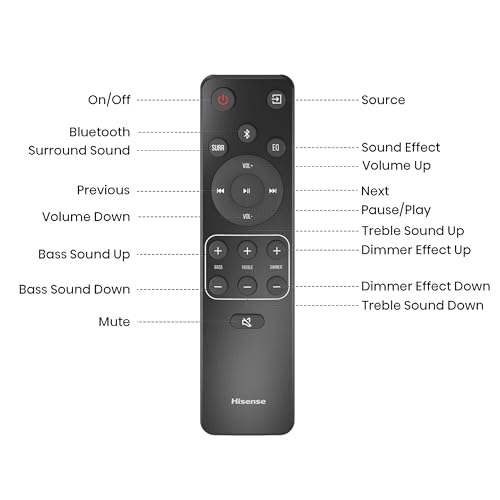
The HS2100 embraces simplicity with six preset sound modes accessible via remote control. These presets—Movie, Music, News, Sport, Night, and Game—adjust the frequency response for different content types. The Night mode deserves special mention, as it significantly reduces dynamic range for late-evening viewing when you need to keep volume levels down.
What sets the HS2100 apart is its Roku TV Ready integration. If you own a compatible Roku TV, the soundbar appears as an audio device that your TV remote can control directly. This eliminates the need for a separate soundbar remote in many situations—a small but meaningful convenience improvement.
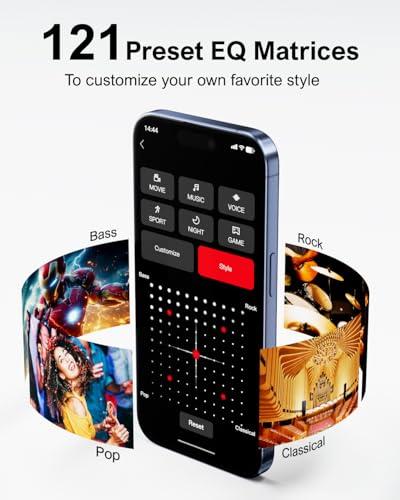
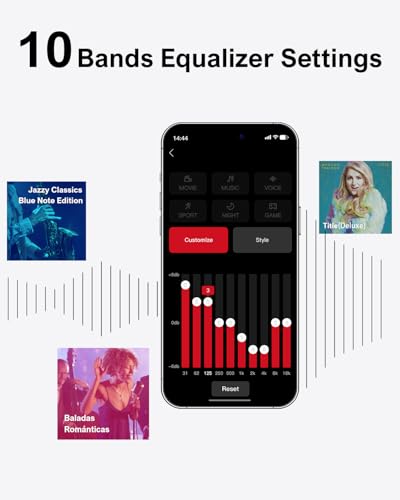
The D70 takes customization to another level with its dedicated mobile app. This app provides access to 121 preset EQ curves covering everything from classical music to heavy metal, plus a 10-band graphic equalizer for manual tuning. Each frequency band can be adjusted from -6 dB to +6 dB, allowing precise tailoring to your room's acoustics and personal preferences.
The app also handles system management functions like firmware updates, input selection, and volume control. However, it cannot power the system on remotely—you'll still need the physical remote or manual controls for that function.
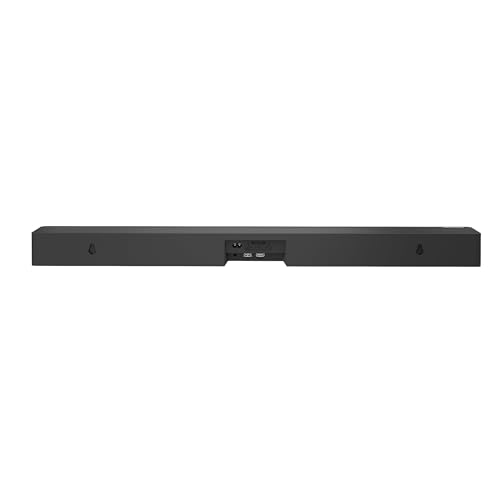
Setup complexity differs dramatically between these systems. The HS2100 follows the traditional soundbar approach: connect the soundbar to your TV via HDMI ARC or optical cable, plug in the wireless subwoofer, and let them pair automatically. Total setup time typically runs under 10 minutes.
The D70 requires more planning and effort. In addition to the main soundbar and wireless subwoofer, you need to position four satellite speakers around your listening area. These speakers connect to the subwoofer via included cables, so you'll need to run wires from the sub to each speaker location.
Speaker placement matters significantly for the D70's performance. The front satellites should flank your TV at ear level, while the rear speakers ideally position slightly behind and to the sides of your main listening position. If your room layout doesn't accommodate proper surround speaker placement, much of the D70's advantage evaporates.
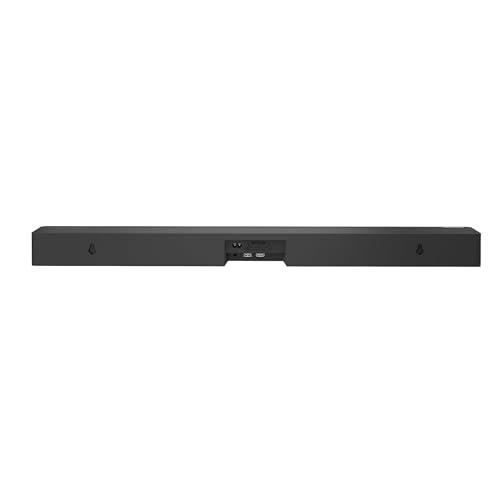
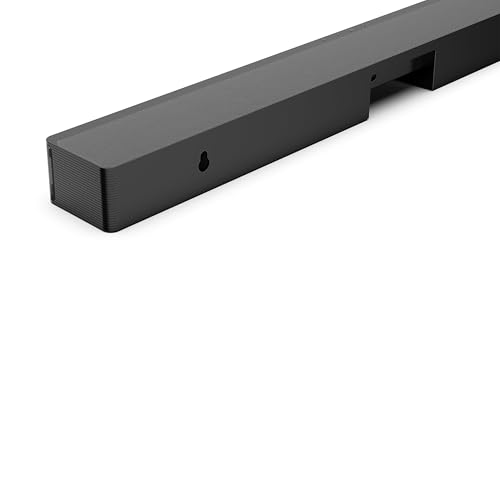
Both systems include wall-mounting hardware, though the D70's requirement for multiple speaker positions makes wall mounting more complex. The satellite speakers are compact enough for bookshelf placement, but achieving optimal positioning often requires some creativity.
At the time of writing, both systems occupy similar price points in the budget soundbar category, making their value proposition particularly interesting. The HS2100 represents the refined execution of traditional 2.1 design—you're paying for simplicity, reliability, and clean audio reproduction without unnecessary complexity.
The D70's value proposition borders on remarkable. Including four satellite speakers, a wireless subwoofer, comprehensive app control, and 410 watts of power at this price point would have been impossible just a few years ago. The hardware count alone—eight total speakers across six separate pieces—provides substantial physical value.
However, value extends beyond component count. The HS2100's integration features, particularly Roku TV compatibility, provide ongoing convenience that's difficult to quantify. Its simpler design also typically means fewer potential failure points and easier troubleshooting if issues arise.
The D70's extensive customization capabilities add value for users who enjoy tweaking audio settings, but may overwhelm those who simply want better TV sound without complications. Its true surround capability represents genuine added value only if your room and usage patterns can take advantage of directional audio effects.
In spaces under 200 square feet, the HS2100 often proves the better choice. Its compact footprint won't overwhelm small rooms, and the benefits of surround speakers diminish when your listening position sits very close to the speakers. The HS2100's balanced sound signature also works well in smaller spaces where excessive bass can become boomy and annoying to neighbors.
Rooms primarily used for movie watching, especially those with proper seating positioned away from walls, represent ideal territory for the D70. The physical separation between speakers allows the surround effects to develop properly, creating the immersive experience that justifies the additional complexity.
Many buyers need systems that handle both casual TV watching and occasional movie nights. Both systems work in this scenario, but your priorities determine the better choice. If you primarily watch news, sitcoms, and dramas with occasional action movies, the HS2100's dialogue clarity and simplicity often prove more valuable day-to-day. If you regularly watch action films, play video games, or listen to music, the D70's superior dynamics and immersion justify the additional setup effort.
Modern video games increasingly use sophisticated surround sound design. Racing games place engine noise and tire squeal in specific directions, while first-person shooters use audio cues to indicate enemy positions. The D70's physical surround speakers can provide genuine competitive advantages in games that rely on directional audio, while the HS2100's lower latency processing might benefit fast-paced games where audio sync matters more than directional effects.
Both systems incorporate recent technological improvements, but they handle future-proofing differently. The HS2100's simpler design means fewer compatibility concerns—HDMI ARC and optical inputs will remain relevant for many years, and the system's straightforward design should age gracefully.
The D70's app-based control provides a path for feature updates and improvements, but also introduces potential compatibility issues if Ultimea stops supporting the mobile app or if operating system changes break functionality.
Neither system supports Dolby Atmos, the current premium surround format that adds height channels for overhead effects. This represents a conscious design choice rather than an oversight—implementing meaningful Atmos support requires upward-firing speakers or ceiling installation, which would increase cost and complexity beyond these products' target market.
Choose the Hisense HS2100 if you prioritize simplicity above all else. This system excels when you want noticeably better TV audio without complications, when your space can't accommodate multiple speakers, or when you own a compatible Roku TV and value unified control. Its balanced sound signature makes it particularly suitable for dialogue-heavy content, and its compact design works well in smaller spaces or minimalist installations.
The HS2100 also makes sense if you're uncertain about your long-term audio needs. Its simple design makes it easy to integrate into different rooms or setups if your living situation changes, and its straightforward operation ensures you'll actually use all its features rather than being overwhelmed by options.
Choose the Ultimea Poseidon D70 if you want the most immersive audio experience possible at this price point. The genuine surround sound capability transforms properly mixed content in ways that virtual processing simply cannot match. Its extensive customization options appeal to users who enjoy optimizing their audio setup, and its higher power output suits larger rooms or those who prefer higher listening levels.
The D70 makes particular sense if you regularly watch action movies, play video games with sophisticated audio design, or listen to music with complex stereo imaging. Its superior bass extension and dynamics provide a more engaging experience with demanding content, while its app-based control offers customization depth that can improve performance in challenging room acoustics.
The price similarity between these systems makes the decision largely about priorities rather than budget constraints. The HS2100 delivers refined simplicity and reliable performance, while the D70 provides dramatically more capability and features for users willing to manage additional complexity. Both represent solid value in their respective approaches—the key is honestly assessing which approach better matches your space, technical comfort level, and entertainment priorities.
| Hisense HS2100 | Ultimea Poseidon D70 |
|---|---|
| Channel Configuration - Determines immersion level and speaker placement needs | |
| 2.1 Channel (soundbar + wireless subwoofer) | 7.1 Channel (soundbar + 4 surround speakers + wireless subwoofer) |
| Total Power Output - Affects maximum volume and dynamic range | |
| 240W max (adequate for small-medium rooms) | 410W peak (fills larger rooms with more headroom) |
| Number of Physical Speakers - More speakers mean better directional audio | |
| 3 speakers total (2 main + subwoofer) | 8 speakers total (3 soundbar + 4 surround + subwoofer) |
| Subwoofer Size - Larger drivers produce deeper, more impactful bass | |
| 5.25" wireless subwoofer (compact, apartment-friendly) | 6.5" wireless subwoofer (deeper bass extension, more room-filling) |
| Audio Processing - Advanced features enhance sound quality | |
| DTS Virtual:X, Dolby Digital/Digital Plus | SurroundX, BassMX, AI deep learning optimization |
| EQ and Customization - Control over sound tuning for different content | |
| 6 preset modes, basic bass/treble adjustment | 121 EQ presets + 10-band graphic equalizer via app |
| Setup Complexity - Time and effort required for installation | |
| Simple: Connect soundbar, pair wireless sub (10 minutes) | Complex: Place 4 surround speakers, run cables to subwoofer (30+ minutes) |
| Smart Features - Modern conveniences and integration | |
| Roku TV Ready (unified remote control) | Mobile app control, firmware updates, custom profiles |
| Connectivity Options - Input flexibility for different devices | |
| HDMI ARC, Optical, Bluetooth 5.3, AUX | HDMI ARC, Optical, Bluetooth 5.3, AUX, USB |
| Soundbar Dimensions - Physical footprint under your TV | |
| 31.5" × 2.4" × 3.5" (fits most TV stands) | 15.7" × 2.8" × 3.5" (more compact soundbar) |
| Room Size Suitability - Optimal performance based on space | |
| Small to medium rooms, apartments | Medium to large rooms with proper speaker placement space |
| Best Use Cases - Scenarios where each system excels | |
| TV shows, news, simple movie watching, minimal setup | Action movies, gaming, music listening, customization enthusiasts |
The Ultimea Poseidon D70 is significantly better for home theater use. Its true 7.1 channel system with four physical surround speakers creates genuine directional audio effects that make action movies and cinematic content much more immersive. The Hisense HS2100 uses virtual surround processing, which is adequate for casual viewing but can't match the spatial accuracy of real surround speakers for dedicated movie watching.
A 2.1 system like the Hisense HS2100 has two front speakers plus a subwoofer, providing improved TV audio with added bass. A 7.1 system like the Ultimea Poseidon D70 includes seven main speakers (front, center, sides, and rear) plus a subwoofer, creating true surround sound where audio comes from multiple directions around your room.
The Hisense HS2100 is much easier to set up. You simply connect the soundbar to your TV and let the wireless subwoofer pair automatically—typically taking under 10 minutes. The Ultimea Poseidon D70 requires positioning and wiring four additional surround speakers around your room, which can take 30-60 minutes depending on your space and wire management needs.
Yes, the Ultimea Poseidon D70 works best in medium to large rooms where you can properly position the four surround speakers. Small rooms or apartments often work better with the Hisense HS2100, as the surround effects become less noticeable when you're sitting very close to the speakers.
The Ultimea Poseidon D70 has superior bass performance with its larger 6.5-inch subwoofer that extends deeper and plays louder than the Hisense HS2100's 5.25-inch subwoofer. The D70's BassMX technology also provides more customizable bass tuning through its mobile app.
The Hisense HS2100 offers better TV integration with its Roku TV Ready feature, allowing direct control through compatible Roku TV remotes. The Ultimea Poseidon D70 supports basic HDMI CEC control but provides more advanced features through its dedicated mobile app rather than TV remote integration.
Both handle dialogue well, but the Hisense HS2100 has a slight edge for TV watching. Its balanced sound signature and dedicated News mode optimize speech clarity, making it excellent for dialogue-heavy content like sitcoms, dramas, and news programs without the complexity of surround speakers.
Neither the Hisense HS2100 nor the Ultimea Poseidon D70 supports Dolby Atmos. The HS2100 uses DTS Virtual:X processing, while the D70 relies on its physical surround speakers for immersion. Both focus on delivering strong performance in their respective channel configurations rather than height-based audio effects.
The Ultimea Poseidon D70 provides extensive customization with 121 EQ presets and a 10-band graphic equalizer accessible through its mobile app. The Hisense HS2100 offers basic customization with six sound modes and simple bass/treble adjustment via remote control.
The Ultimea Poseidon D70 delivers 410W peak power across its eight speakers, while the Hisense HS2100 provides 240W maximum power. This means the D70 can play louder and handle dynamic content with more headroom, making it better suited for larger rooms and higher listening levels.
The Ultimea Poseidon D70 excels for gaming, especially with titles that use directional audio cues. Its physical surround speakers can provide competitive advantages in games where hearing enemy positions matters. The Hisense HS2100 works well for casual gaming but lacks the spatial accuracy that serious gamers might appreciate.
Choose the Hisense HS2100 if you want simple, reliable TV audio improvement with minimal setup complexity, especially in smaller spaces. Choose the Ultimea Poseidon D70 if you want genuine surround sound for movies and gaming, have adequate room space, and don't mind the additional setup requirements for a more immersive audio experience.
We've done our best to create useful and informative comparisons to help you decide what product to buy. Our research uses advanced automated methods to create this comparison and perfection is not possible - please contact us for corrections or questions. These are the sites we've researched in the creation of this article: rtings.com - shop.hisense-usa.com - bestbuy.com - content.syndigo.com - bestbuy.com - hisensedealers.co.ke - stuff.co.za - dtc-aus-api.hisense.com - youtube.com - manuals.plus - youtube.com - bestbuy.com - youtube.com - gallifurniture.com - hisense-usa.com - manuals.plus - uk.hisense.com - device.report - youtube.com - costco.ca - elmcreekwsa.com - gallifurniture.com - ultimea.com - provantage.com - ultimea.com - youtube.com - youtube.com - bestbuy.com - the-gadgeteer.com - shopmyexchange.com - youtube.com - youtube.com - youtube.com - ultimea.com - manuals.plus - device.report - images.thdstatic.com - shopmyexchange.com - staples.com - ultimea.de

Privacy Policy
Terms and Conditions - Affiliate Policy
Home Security
© Copyright 2008-2026.
11816 Inwood Rd #1211, Dallas, TX 75244