




When your TV's built-in speakers sound like they're trapped in a tin can, it's time for an upgrade. But stepping into the soundbar world can feel overwhelming—especially when you're comparing fundamentally different approaches to home theater audio. Today we're diving deep into two compelling options that represent opposite ends of the design spectrum: the Ultimea Poseidon D70 and the Sony HT-S2000.
Released in 2024, the Ultimea Poseidon D70 takes the "more is more" approach with a complete 7.1-channel system that includes physical surround speakers. Meanwhile, Sony's HT-S2000, launched in 2023, represents the minimalist camp with sophisticated virtual surround processing packed into a sleek single bar. At the time of writing, these products sit at dramatically different price points—the Ultimea offering exceptional value in the budget category while the Sony commands a premium price for its advanced technology.
The choice between them isn't just about money; it's about two completely different philosophies for delivering surround sound. Let's break down what each approach means for your living room.
Before we dive into specifics, it's worth understanding what separates good soundbars from great ones. The most important factors aren't always obvious from spec sheets.
Channel configuration tells you how sound is distributed around your room. A 3.1 system has left, center, and right channels plus a subwoofer (the ".1" represents bass). A 7.1 system adds rear left, rear right, and side speakers for true surround sound. But here's where it gets tricky: some soundbars claim high channel counts using virtual processing rather than physical speakers.
Audio format support determines what types of content your soundbar can properly decode. Dolby Atmos and DTS:X are object-based formats that can place sounds in three-dimensional space—like a helicopter flying overhead or rain falling around you. However, a soundbar needs either upward-firing speakers or sophisticated processing to create these height effects.
Power output matters, but not in the way many people think. Raw wattage doesn't guarantee better sound quality. How that power is distributed across drivers and the efficiency of those drivers matters more than headline numbers.
Connectivity options affect how you'll use your soundbar daily. HDMI ARC (Audio Return Channel) or eARC (enhanced ARC) provide the best connection to modern TVs, while optical inputs work with older devices. Bluetooth enables wireless music streaming, but the quality and codec support vary significantly between products.
In my experience evaluating home theater setups, the most critical performance characteristics are dialogue clarity, bass extension, and soundstage width. A soundbar that can't deliver clear voices during action scenes fails at its primary job, regardless of how impressive its surround effects might be.
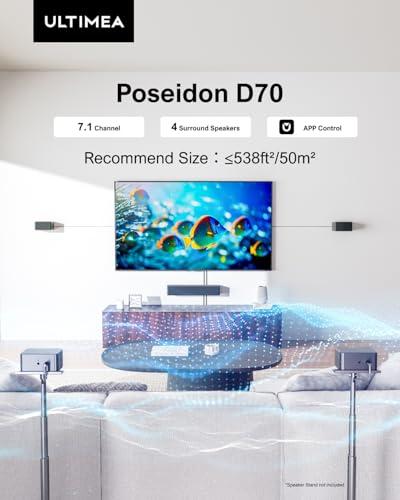
The Ultimea Poseidon D70 and Sony HT-S2000 represent fundamentally different solutions to the same problem: how to create immersive surround sound without the complexity of a traditional AV receiver setup.
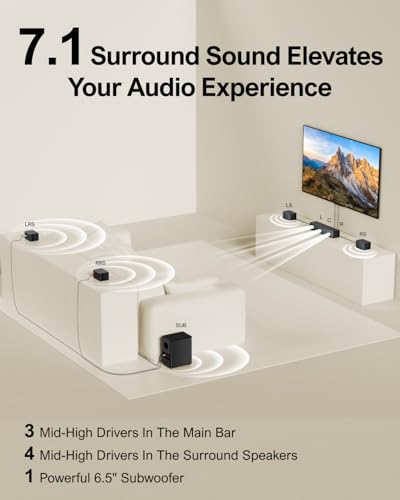
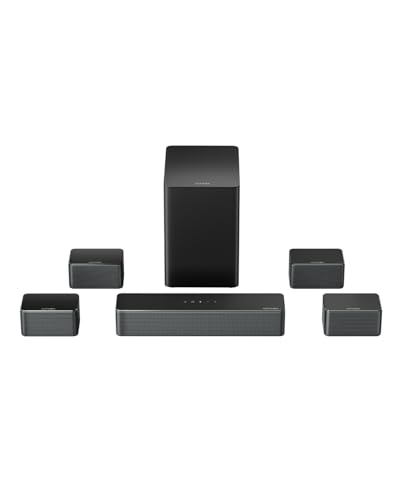
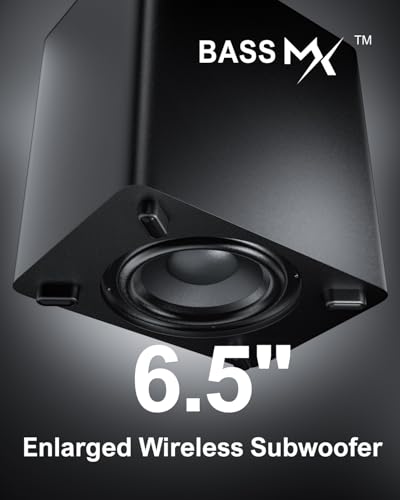
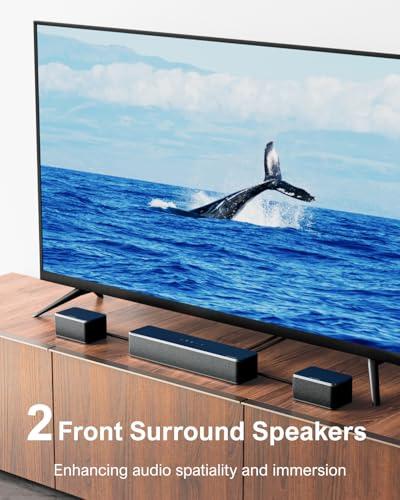
The Ultimea's approach is refreshingly straightforward—give you actual speakers to place around your room. The system includes a main soundbar with three 2.25-inch mid-bass drivers, four separate surround speakers with matching 2.25-inch drivers, and a substantial 6.5-inch wireless subwoofer. This creates genuine 7.1-channel audio where sounds can originate from their intended positions in space.
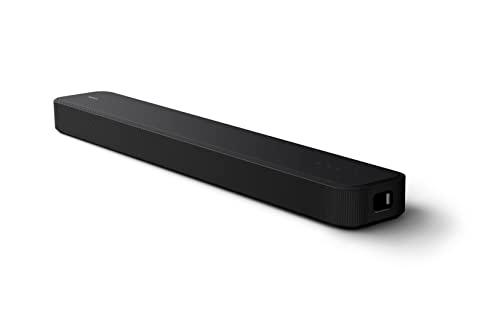
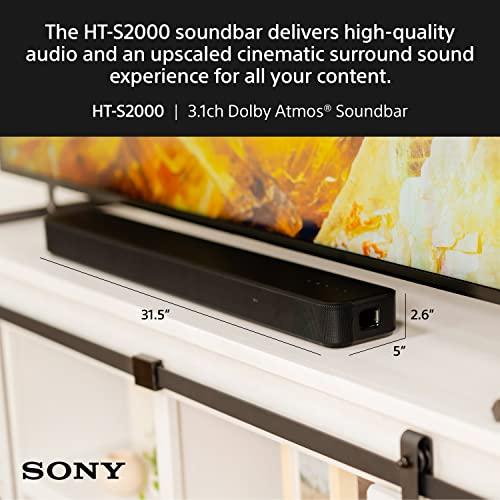
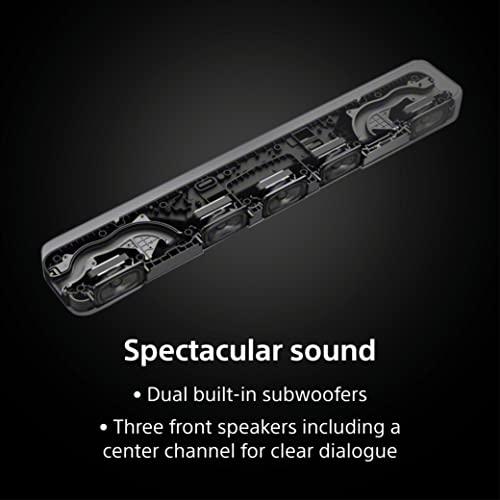
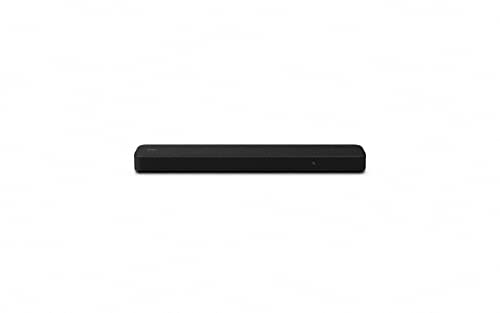
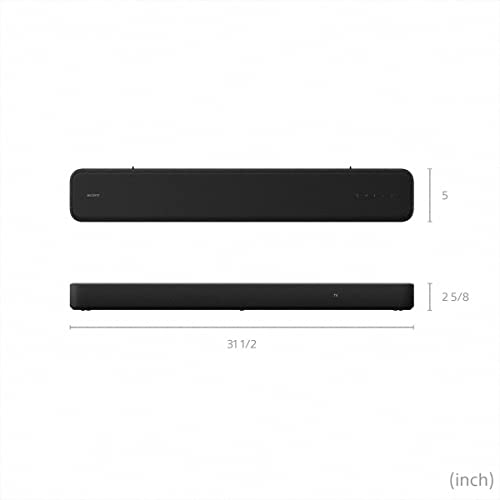
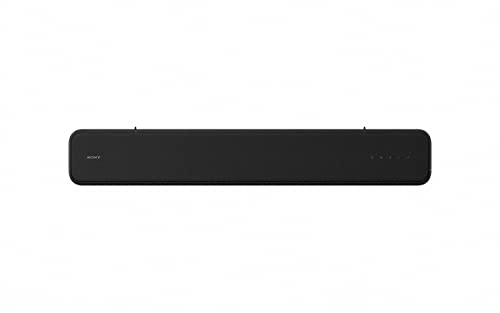
Sony's HT-S2000 takes the opposite route, cramming five specially designed X-Balanced drivers into a single 31.5-inch soundbar along with dual built-in subwoofers. It relies on psychoacoustic processing—essentially tricking your brain into perceiving surround effects that aren't physically there. Sony's Vertical Surround Engine and S-Force PRO Front Surround technologies analyze incoming audio and use phase manipulation, delay processing, and frequency filtering to simulate sounds coming from different directions.
Both approaches have merit, but they excel in different scenarios. Physical surround speakers can't be fooled—when a sound is supposed to come from behind you, it actually does. Virtual processing has improved dramatically in recent years, but it's still fighting physics and room acoustics to create convincing effects.
The Poseidon D70 delivers an impressive 410 watts of peak power distributed across eight physical drivers. More importantly, it provides 144 watts of RMS (continuous) power—36 watts to the soundbar, 48 watts combined to the four surround speakers, and 60 watts to the subwoofer. RMS ratings matter more than peak numbers because they represent sustained power output during actual use.
The Sony HT-S2000 provides 250 watts of total amplification through Sony's S-Master digital amplifiers. While this seems lower on paper, Sony's X-Balanced Speaker Units are engineered differently than conventional round drivers. Their rectangular shape maximizes the driver's surface area within the soundbar's constraints, allowing for greater sound pressure and reduced distortion. These drivers can move more air efficiently, which translates to cleaner sound at higher volumes.
From our research into professional reviews and user feedback, the power difference is less significant in practice than the numbers suggest. The Ultimea can get louder in most rooms, but the Sony delivers cleaner, more controlled audio at typical listening levels.
This is where the fundamental design differences become most apparent. The Poseidon D70's 6.5-inch wireless subwoofer operates independently with its own 60-watt amplifier, reaching down to 35Hz according to specifications. The subwoofer uses downward-firing configuration with BassMX Technology—Ultimea's proprietary bass enhancement processing that can be adjusted through three intensity levels.
The Sony HT-S2000's integrated dual subwoofers rely on side-firing bass ports for low-frequency extension. While more compact and convenient, this design inherently limits bass output compared to a dedicated subwoofer enclosure. Professional reviews consistently note that the Sony delivers respectable bass for its size but lacks the deep rumble that makes action movies truly impactful.
In practical terms, the Ultimea will satisfy bass lovers and those who want to feel movie explosions in their chest. The Sony provides adequate bass for most content but may leave enthusiasts wanting more during blockbuster films.
Here's where these products diverge most dramatically. The Poseidon D70's four physical surround speakers create authentic spatial audio. When positioned correctly around your seating area, sounds genuinely originate from their intended locations. The system uses SurroundX Technology—an AI-powered processing system trained on billions of audio samples—to optimize how these speakers work together, but the fundamental advantage is having actual rear channels.
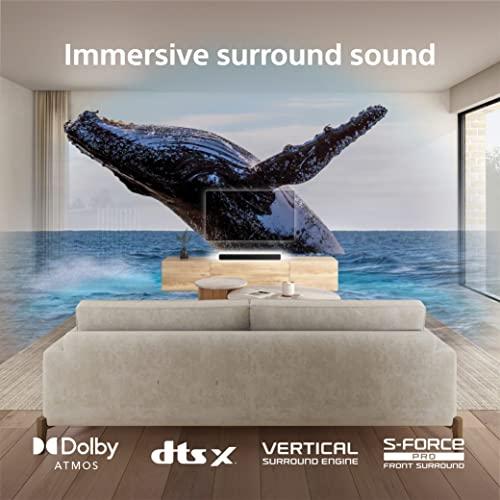
The Sony HT-S2000 must accomplish surround effects through virtualization. Despite supporting Dolby Atmos and DTS:X formats natively, it must downmix these multi-channel signals to stereo for playback through its front-facing drivers. Sony's Vertical Surround Engine attempts to create height effects by manipulating frequency response and timing, while S-Force PRO Front Surround widens the soundstage horizontally.
Our evaluation of expert reviews reveals that Sony's virtual processing is among the best available, creating convincing width and some sense of height. However, it cannot match the directionality and immersion of physical rear speakers. The Sony excels at expanding stereo content and making small rooms feel larger, while the Ultimea delivers more authentic surround positioning in properly configured spaces.
This represents perhaps the biggest philosophical divide between these products. The Sony HT-S2000 supports every current premium audio format: Dolby Atmos, DTS:X, Dolby TrueHD, DTS-HD Master Audio, and high-resolution LPCM up to 192kHz/24-bit. It's fully prepared for current and future streaming content, 4K Blu-rays, and next-generation gaming audio.
The Ultimea Poseidon D70 lacks support for object-based audio formats entirely. It cannot decode Dolby Atmos or DTS:X, instead relying on its proprietary processing to enhance standard surround formats. This limitation becomes more significant as streaming services increasingly offer Atmos content and gaming platforms adopt spatial audio.
However, there's an important caveat: the Sony cannot fully utilize these premium formats without additional speakers. It downmixes Atmos content to stereo, losing the discrete channel information that makes these formats special. The Ultimea may lack format support, but its physical speakers can more accurately reproduce the spatial positioning that Atmos and DTS:X are designed to create.
The installation experience reveals another fundamental difference between these approaches. The Sony HT-S2000 exemplifies plug-and-play simplicity—connect the HDMI cable, plug in power, and you're essentially done. The compact 8.2-pound soundbar can sit on a TV stand or mount to the wall using the included template. There's no room calibration or complex setup procedure.
The Ultimea Poseidon D70 demands more commitment. You'll need to position four surround speakers around your room, run the included RCA cables (ranging from 3 to 6 meters) to connect them to the wireless subwoofer, and find optimal placement for the subwoofer itself. The setup process isn't difficult, but it requires planning and potentially some creativity with cable management.
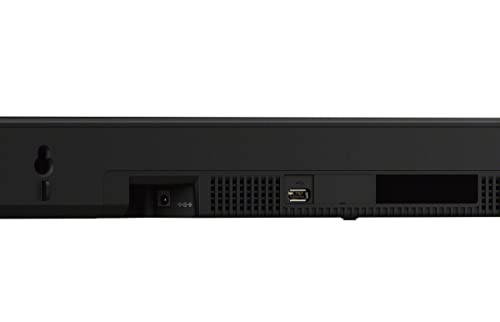
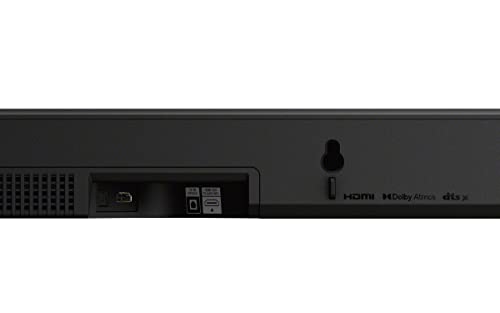
For connectivity, both systems offer HDMI ARC, optical, USB, and Bluetooth inputs. The Sony features Bluetooth 5.2 with AAC codec support for higher-quality wireless streaming, while the Ultimea uses standard Bluetooth without specified codec details. The Sony also integrates seamlessly with Sony BRAVIA TVs through BRAVIA Sync, enabling unified remote control and automatic input switching.
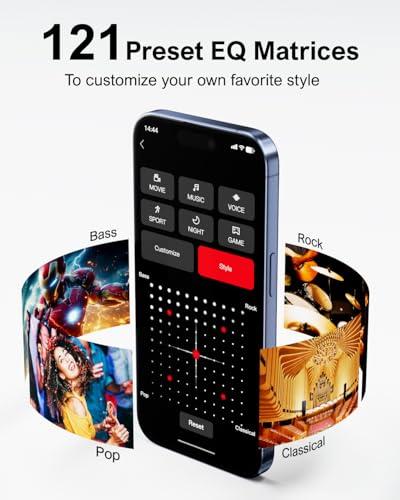
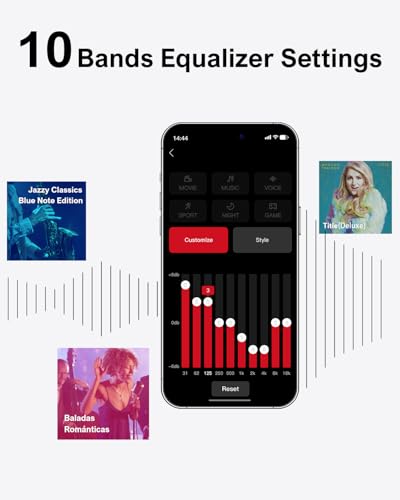
Smart features heavily favor the Ultimea. Its dedicated smartphone app provides comprehensive control over the system's 121 preset EQ matrices and 10-band graphic equalizer. You can adjust surround speaker levels independently, modify bass response through BassMX Technology, and even update firmware wirelessly. This level of customization appeals to audio enthusiasts who enjoy fine-tuning their systems.
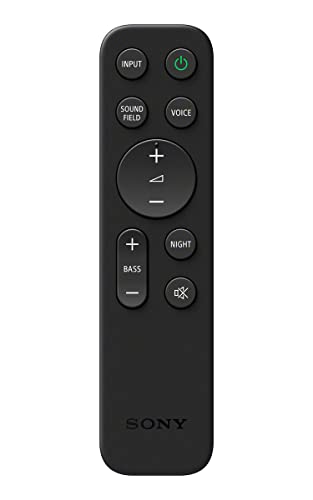
The Sony's app primarily replicates remote control functions without extensive customization options. It offers Sound Field mode (which enhances virtual surround processing), Night mode (compresses dynamic range for late-night viewing), and Voice mode (emphasizes dialogue), plus three bass adjustment levels. The simplicity is intentional—Sony prioritizes ease of use over granular control.
At the time of writing, these products occupy different value propositions entirely. The Ultimea Poseidon D70 delivers exceptional value in the budget category, providing a complete 7.1-channel system with all components included. You get authentic surround sound immediately without needing future purchases.
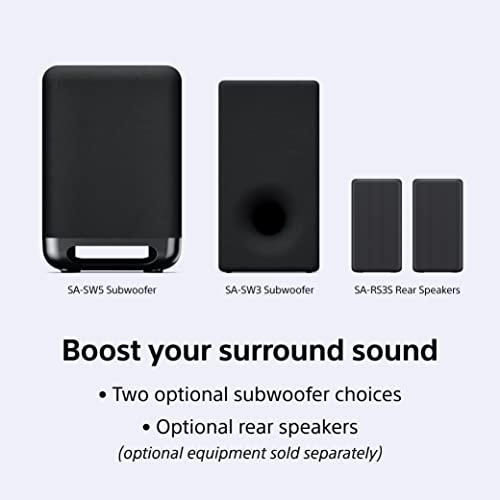
The Sony HT-S2000 commands a premium price but offers a different value equation. The base system provides excellent build quality, premium format support, and room for expansion. Sony sells optional SA-RS3S wireless rear speakers and SA-SW3/SW5 wireless subwoofers that can transform the system into a more traditional surround setup, though purchasing these components significantly increases the total investment.
From a long-term perspective, the Ultimea represents a complete solution with limited upgrade paths. You cannot replace individual components or substantially improve performance without replacing the entire system. However, the extensive EQ customization and AI processing may provide longevity through software updates.
The Sony offers modular growth potential but at considerable expense. The ability to add components over time appeals to users who prefer gradual investment, but achieving surround coverage equivalent to the Ultimea costs substantially more when fully configured.
For dedicated home theater use, room characteristics dramatically influence which approach works better. The Poseidon D70 shines in medium to large rooms where surround speakers can be positioned at appropriate distances from the primary seating area. The system benefits from rooms with some sound-absorbing materials and clear pathways for the wireless subwoofer's signal to the soundbar.
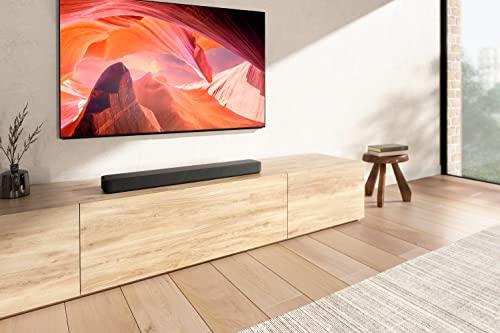
The Sony HT-S2000 excels in challenging spaces—small rooms, apartments, or living areas where multiple speakers aren't practical. Its virtual processing actually works better in smaller spaces where wall reflections can enhance the surround illusion. The compact footprint and single-cable connection make it ideal for minimalist setups or rooms where aesthetics matter.
Speaker placement significantly affects the Ultimea's performance. The rear speakers should ideally sit 2-3 feet behind and slightly above your primary seating position, while side speakers work best at ear level. Poor placement undermines the system's advantages, making proper room layout crucial for optimal results.
The Sony is more forgiving of placement but still benefits from proper positioning. Placing it at ear level and ensuring clear path to the listening position maximizes its virtual surround effectiveness.
Gaming represents an interesting use case for both systems. Modern games increasingly use spatial audio to provide competitive advantages—hearing enemy footsteps from specific directions or identifying weapon fire locations. The Ultimea's physical surround speakers excel at this directional accuracy, making it potentially superior for competitive gaming despite lacking dedicated gaming modes.
The Sony HT-S2000 supports advanced audio formats used by PlayStation 5 and Xbox Series X/S consoles, ensuring compatibility with next-generation spatial audio features. However, its virtual processing may not provide the pinpoint accuracy that serious gamers prefer.
For music listening, preferences diverge based on content types and listening habits. The Sony generally provides more balanced frequency response and better stereo imaging for traditional music playback. Its Digital Sound Enhancement Engine (DSEE) can improve compressed streaming audio quality—a real benefit for Spotify and Apple Music users.
The Ultimea excels with concert recordings and music mixed for surround presentation, using its multiple speakers to create an expansive soundstage. The extensive EQ customization allows fine-tuning for different genres, though this requires more user involvement than the Sony's automated processing.
The Ultimea Poseidon D70 makes the most sense for budget-conscious home theater enthusiasts who want authentic surround sound without compromise. It's ideal for users with adequate space who don't mind the installation complexity and cable management. If you primarily watch movies and TV shows, enjoy customizing audio settings, and want everything included in one purchase, the Ultimea delivers exceptional value.
The Sony HT-S2000 suits users prioritizing convenience, premium format compatibility, and future-proofing. It's perfect for Sony TV owners, apartment dwellers with space constraints, or anyone who values clean aesthetics over raw performance. If you consume lots of Dolby Atmos content from streaming services, prefer minimal setup complexity, and plan to potentially expand your system over time, the Sony justifies its premium pricing.
These soundbars represent fundamentally different approaches to the same goal, and your choice should align with your priorities and constraints. The Ultimea Poseidon D70 delivers genuine surround sound at an remarkable value point, making it hard to beat for users who want complete home theater audio without breaking the bank. Its physical speakers provide authenticity that virtual processing cannot match, though it requires more installation effort and space commitment.
The Sony HT-S2000 offers sophisticated technology, premium build quality, and format compatibility that ensures relevance for years to come. While it costs substantially more and requires additional components for true surround coverage, it provides convenience and future-proofing that many users will appreciate.
Ultimately, if you want authentic surround sound immediately at budget pricing and don't mind some installation complexity, the Ultimea is an outstanding choice. If you prioritize advanced audio format support, minimal setup, and premium engineering with expansion potential, the Sony represents a solid long-term investment despite its higher cost.
| Ultimea Poseidon D70 7.1 Channel Soundbar System | Sony HT-S2000 3.1ch Dolby Atmos Soundbar |
|---|---|
| Channel Configuration - Determines authentic vs virtual surround sound experience | |
| True 7.1 with 4 physical surround speakers + soundbar + wireless subwoofer | 3.1 with virtual surround processing (no physical rear speakers) |
| Total System Power - Affects maximum volume and dynamic range | |
| 410W peak / 144W RMS across 8 physical drivers | 250W total through S-Master digital amplification |
| Subwoofer Type - Critical for bass impact in movies and music | |
| Separate 6.5" wireless subwoofer with 60W dedicated amplification | Dual built-in subwoofers with side-firing bass ports |
| Premium Audio Format Support - Future-proofing for streaming and gaming | |
| No Dolby Atmos or DTS:X support (uses proprietary processing) | Full Dolby Atmos, DTS:X, and high-resolution audio up to 192kHz/24-bit |
| Setup Complexity - Time and effort required for installation | |
| Moderate: Position and wire 4 surround speakers around room | Very simple: Single soundbar with plug-and-play HDMI connection |
| Audio Customization - Control over sound tuning and preferences | |
| Extensive: 121 EQ presets, 10-band equalizer, app-based control | Limited: 3 sound modes, 3 bass levels, basic app functionality |
| Physical Footprint - Impact on room aesthetics and space requirements | |
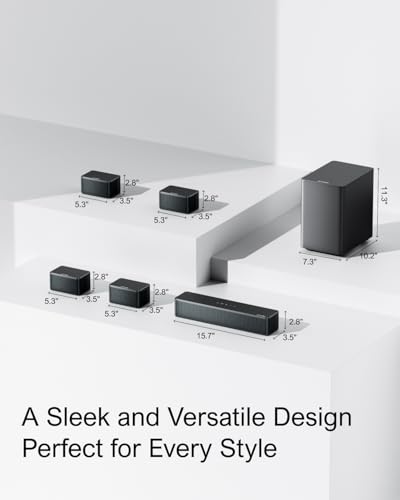
| 5 separate components requiring positioning throughout room | Single 31.5" soundbar with minimal visual impact |
| Expandability - Ability to upgrade or add components later | |
| Complete system with no upgrade options | Modular: Add Sony wireless surrounds and subwoofers (sold separately) |
| Frequency Response - Range of audio reproduction | |
| 35Hz - 18kHz with BassMX bass enhancement | Not specified, but X-Balanced drivers optimized for clarity |
| Connectivity Options - Compatibility with devices and future-proofing | |
| HDMI ARC, Optical, USB, Bluetooth, dedicated smartphone app | HDMI eARC/ARC, Optical, USB, Bluetooth 5.2 with AAC, BRAVIA Sync integration |
The Ultimea Poseidon D70 delivers authentic 7.1 surround sound with four physical speakers you place around your room, plus a wireless subwoofer. The Sony HT-S2000 uses virtual surround processing from a single soundbar to simulate surround effects. For genuine directional audio where sounds actually come from behind you, the Ultimea Poseidon D70 is superior.
The Sony HT-S2000 is much easier to install - just connect one HDMI cable and plug it in. The Ultimea Poseidon D70 requires positioning four surround speakers around your room and running cables to connect them. If you want minimal setup hassle, choose the Sony HT-S2000.
The Ultimea Poseidon D70 has stronger bass thanks to its dedicated 6.5-inch wireless subwoofer with 60 watts of power. The Sony HT-S2000 uses built-in dual subwoofers that are more compact but less powerful. For deep, room-shaking bass in action movies, the Ultimea Poseidon D70 performs better.
Only the Sony HT-S2000 supports Dolby Atmos, DTS:X, and other premium audio formats. The Ultimea Poseidon D70 doesn't decode these formats but uses its own processing technology. If you stream a lot of Dolby Atmos content from Netflix or Disney+, the Sony HT-S2000 is the better choice.
The Ultimea Poseidon D70 requires significantly more space since you need to position four surround speakers, a subwoofer, and the main soundbar around your room. The Sony HT-S2000 is just one compact soundbar. For small rooms or minimalist setups, the Sony HT-S2000 is more practical.
The Ultimea Poseidon D70 provides exceptional value by including everything needed for complete 7.1 surround sound at a budget-friendly price. The Sony HT-S2000 costs more but offers premium features and build quality. To get equivalent surround coverage from the Sony HT-S2000, you'd need to buy additional speakers separately.
The Sony HT-S2000 can be expanded with optional Sony wireless rear speakers and subwoofers, though this increases the total cost significantly. The Ultimea Poseidon D70 comes complete and cannot be upgraded with individual components. Choose the Sony HT-S2000 if you prefer gradual expansion.
The Ultimea Poseidon D70 excels for gaming because its physical surround speakers provide accurate directional audio - crucial for hearing enemy footsteps or gunfire location. The Sony HT-S2000 supports advanced gaming audio formats but relies on virtual processing. Competitive gamers often prefer the Ultimea Poseidon D70's authentic positioning.
The Ultimea Poseidon D70 delivers 410 watts peak power across all its speakers and subwoofer. The Sony HT-S2000 provides 250 watts total. However, the Sony HT-S2000's engineered drivers are more efficient, so the power difference isn't as significant in real-world listening as the numbers suggest.
The Ultimea Poseidon D70 offers extensive customization with 121 EQ presets, a 10-band equalizer, and adjustable surround levels through its smartphone app. The Sony HT-S2000 provides basic sound modes and three bass levels. Audio enthusiasts who enjoy tweaking settings will prefer the Ultimea Poseidon D70.
The Sony HT-S2000 is ideal for apartments due to its compact single-bar design and virtual surround that works well in smaller spaces. The Ultimea Poseidon D70 requires space for multiple speakers and may overwhelm small rooms. Apartment dwellers should choose the Sony HT-S2000.
The Sony HT-S2000 has better future-proofing with support for current and upcoming audio formats like Dolby Atmos. The Ultimea Poseidon D70 lacks premium format support but delivers timeless authentic surround sound that doesn't rely on format compatibility. Both approaches have longevity, but the Sony HT-S2000 is more prepared for evolving streaming content.
We've done our best to create useful and informative comparisons to help you decide what product to buy. Our research uses advanced automated methods to create this comparison and perfection is not possible - please contact us for corrections or questions. These are the sites we've researched in the creation of this article: ultimea.com - provantage.com - ultimea.com - youtube.com - youtube.com - bestbuy.com - the-gadgeteer.com - shopmyexchange.com - youtube.com - youtube.com - youtube.com - ultimea.com - manuals.plus - device.report - images.thdstatic.com - shopmyexchange.com - staples.com - ultimea.de - techradar.com - valueelectronics.com - youtube.com - videoandaudiocenter.com - whathifi.com - hometheaterhifi.com - youtube.com - sony.com - rtings.com - whathifi.com - rtings.com - helpguide.sony.net - electronics.sony.com - sony.com - dolby.com - sony.com - youtube.com - youtube.com

Privacy Policy
Terms and Conditions - Affiliate Policy
Home Security
© Copyright 2008-2026.
11816 Inwood Rd #1211, Dallas, TX 75244