






When your TV's built-in speakers sound like they're coming from inside a cardboard box, it's time to upgrade. But the soundbar market has exploded with options ranging from budget-friendly bars to premium systems that cost more than some TVs. Today we're comparing two fundamentally different approaches to home theater audio: the Ultimea Poseidon D70, a budget system that uses actual surround speakers, and the Samsung HW-Q800D, a premium all-in-one soundbar with advanced processing.
These products represent opposite philosophies in soundbar design, and at the time of writing, they're priced about five times apart. The question isn't just which sounds better—it's which approach makes more sense for your specific needs, room, and budget.
The soundbar market has matured significantly since basic 2.1 systems dominated the early 2010s. Today's options span from simple TV audio upgrades to sophisticated home theater replacements that can decode the latest audio formats and integrate with smart home ecosystems.
Channel configuration tells you how many discrete audio channels a system can handle. A 5.1 system has five main speakers (front left, center, front right, surround left, surround right) plus a subwoofer (the ".1"). The Samsung HW-Q800D's 5.1.2 configuration adds two height channels for overhead sound. The Ultimea Poseidon D70's 7.1 setup includes additional rear surround channels for more precise directional audio.
Physical versus virtual surround represents the core philosophical divide. Physical surround uses actual speakers placed around your room—you hear sounds coming from their true locations. Virtual surround uses digital processing to trick your brain into perceiving sounds coming from directions where no speakers exist. Both approaches have merits, but they create fundamentally different listening experiences.
Premium audio formats like Dolby Atmos and DTS:X have revolutionized home theater since their introduction in the mid-2010s. Unlike traditional surround sound that sends specific sounds to specific speakers, these "object-based" formats treat sounds as three-dimensional objects that can move anywhere in your room—including overhead. Supporting these formats requires both hardware capability and software processing power.
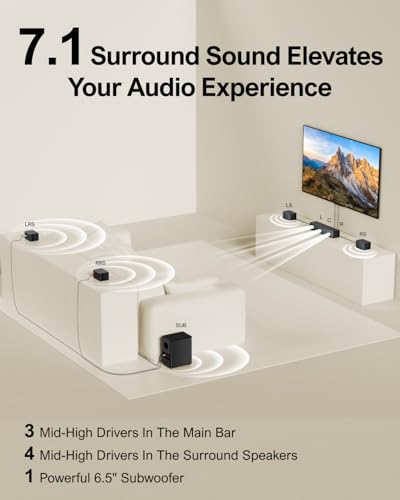
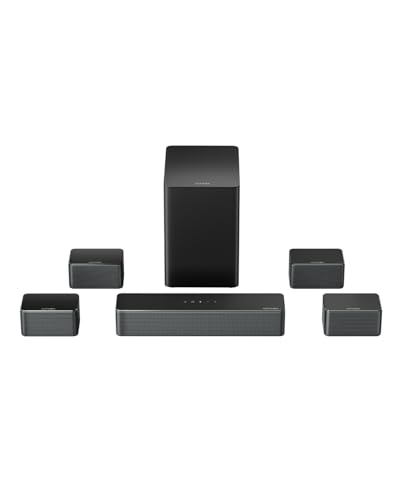
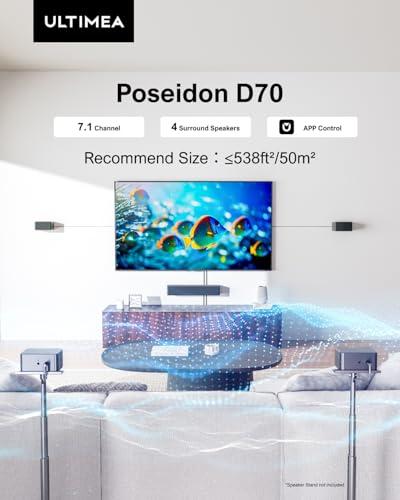
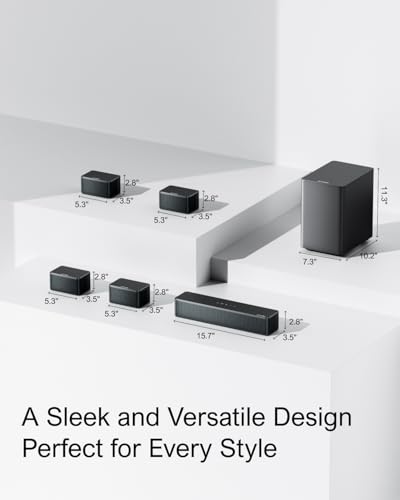
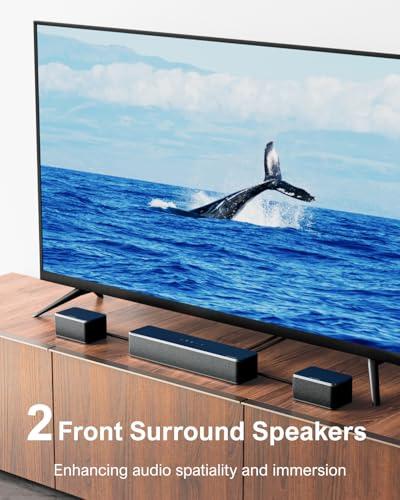
Released in 2024, the Ultimea Poseidon D70 takes an old-school approach to surround sound by actually putting speakers where surround sounds should come from. The system includes eight separate drivers: three in the main soundbar, four in discrete surround speakers that you place around your room, and one in a wireless subwoofer.
This physical approach means when a helicopter flies overhead in a movie, you hear it travel from the front soundbar to the rear speakers behind you—because there are actually speakers behind you making that sound. The system delivers 410 watts of peak power across all channels, with the wireless subwoofer handling bass duties below 35Hz.
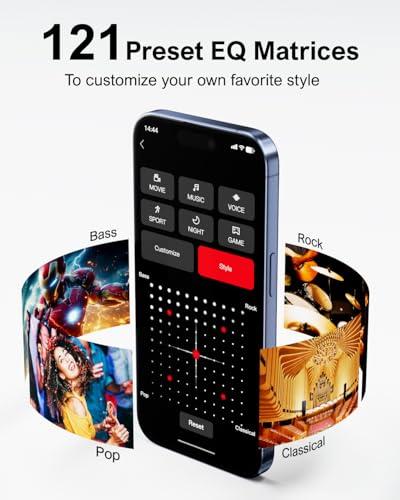
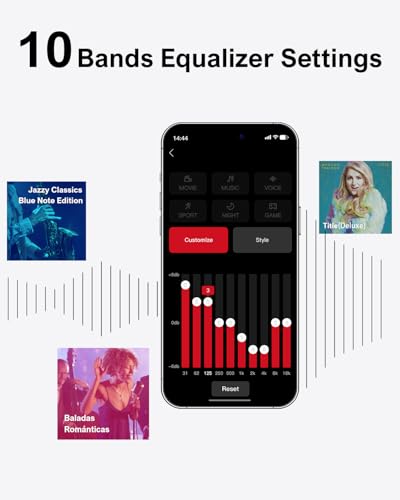
The D70 doesn't support modern Dolby Atmos or DTS:X formats, but it compensates with Ultimea's proprietary SurroundX technology for virtual processing enhancement and BassMX technology for bass optimization. A smartphone app provides extensive control, including a 10-band equalizer and 121 preset sound profiles—more customization options than many premium soundbars offer.
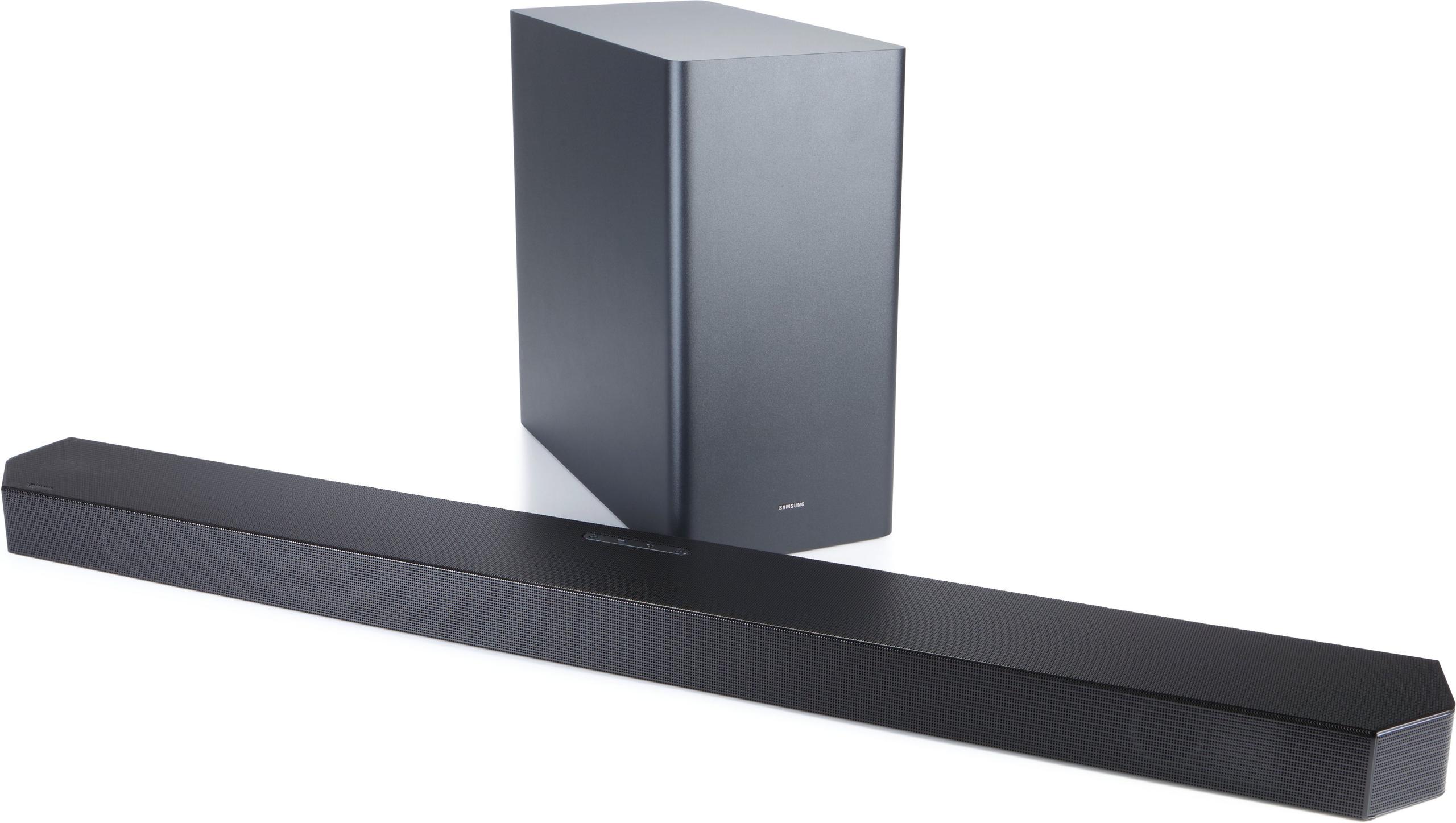
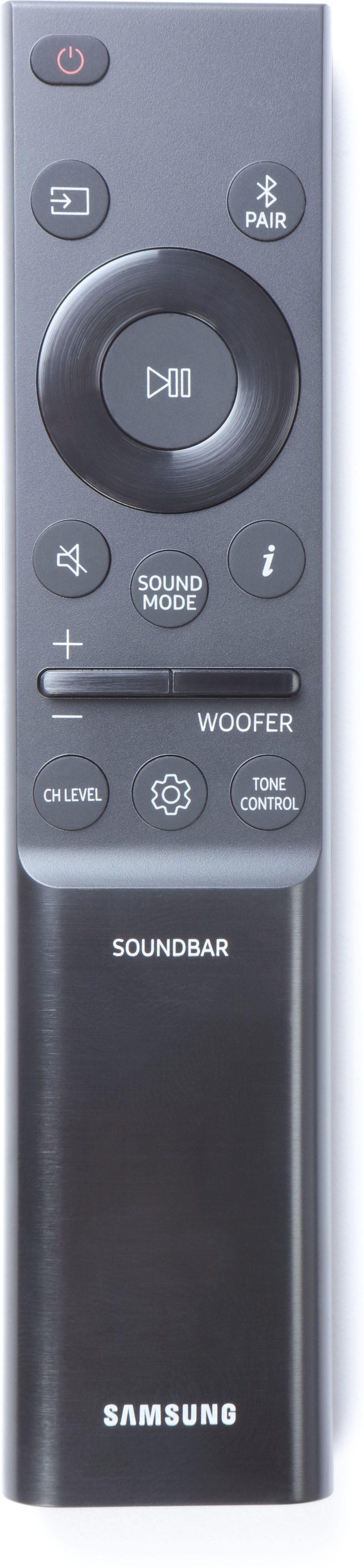
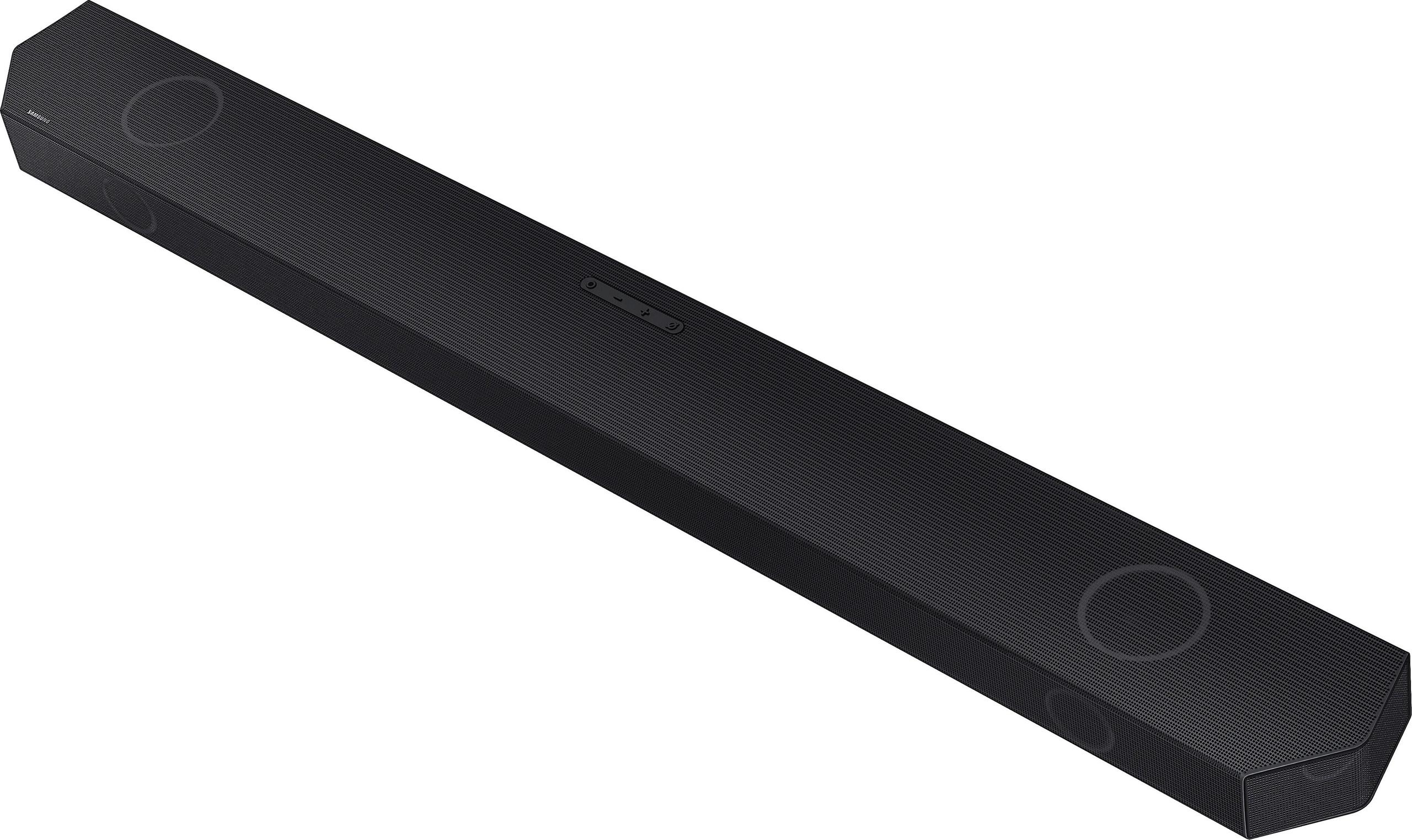
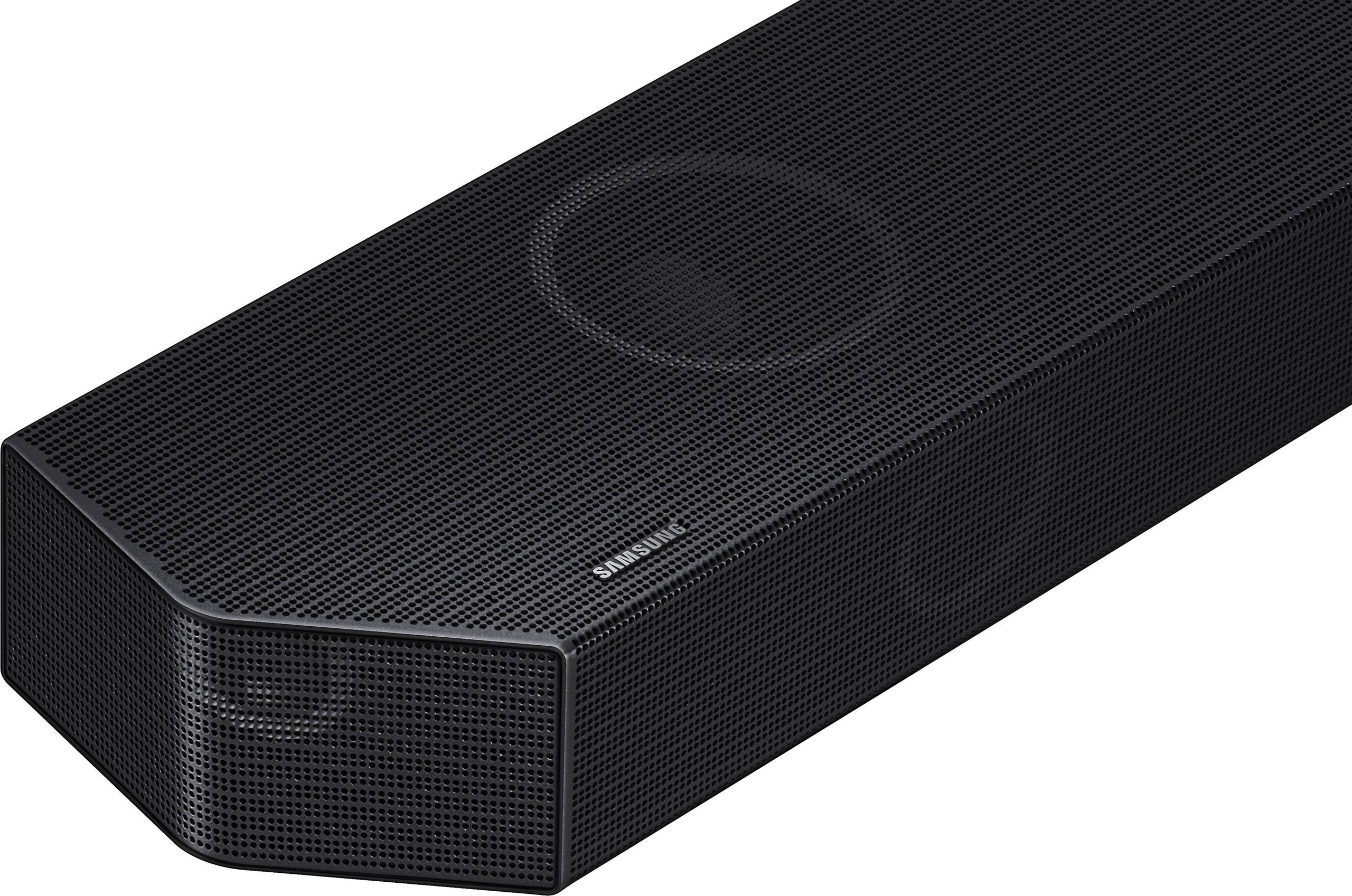
Samsung's HW-Q800D, also from 2024, represents the opposite philosophy: pack everything into a single sophisticated soundbar and use advanced processing to create immersive sound. All ten drivers live within the main bar, arranged as front channels (with dedicated tweeters and woofers), a center channel for dialogue, side-firing drivers for surround effects, and upfiring speakers for height channels.
The key advantage here is Dolby Atmos and DTS:X support. These formats can position sounds anywhere in three-dimensional space, including overhead. When that same helicopter flies by, the HW-Q800D uses psychoacoustic processing to make your brain perceive it moving through the ceiling—even though all the speakers are in front of you.
Samsung's SpaceFit Sound Pro technology uses built-in microphones to analyze your room's acoustics and automatically optimize the sound accordingly. The system also features Q-Symphony technology, which can coordinate with compatible Samsung TVs to use the TV's speakers alongside the soundbar for enhanced immersion.
The most fundamental performance difference lies in how these systems create surround sound. Our research into user and expert reviews reveals distinct advantages for each approach.
The Ultimea D70's physical surround speakers create what audio enthusiasts call "discrete channel separation." When sounds are supposed to come from behind you, they actually do—there's no processing trickery involved. This creates particularly convincing effects for traditional 5.1 and 7.1 content like DVDs, Blu-rays, and video games. Users consistently report that the rear speakers provide excellent directional cues for gaming, making it easier to locate enemies or environmental sounds.
However, the Samsung HW-Q800D's virtual surround processing has impressed reviewers with its sophistication. Dolby Atmos and DTS:X create a more enveloping soundfield than traditional surround sound by treating audio as three-dimensional objects rather than fixed channels. The side-firing drivers bounce sound off your walls to create convincing surround effects, while the upfiring speakers reflect audio off your ceiling for overhead height.
The Samsung's approach works particularly well with modern streaming content. Netflix, Disney+, and other services increasingly offer Dolby Atmos tracks that the HW-Q800D can fully decode and present. The D70, lacking Atmos support, plays this content but misses the height information entirely.
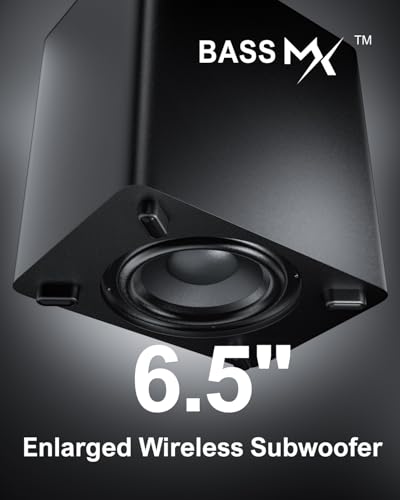
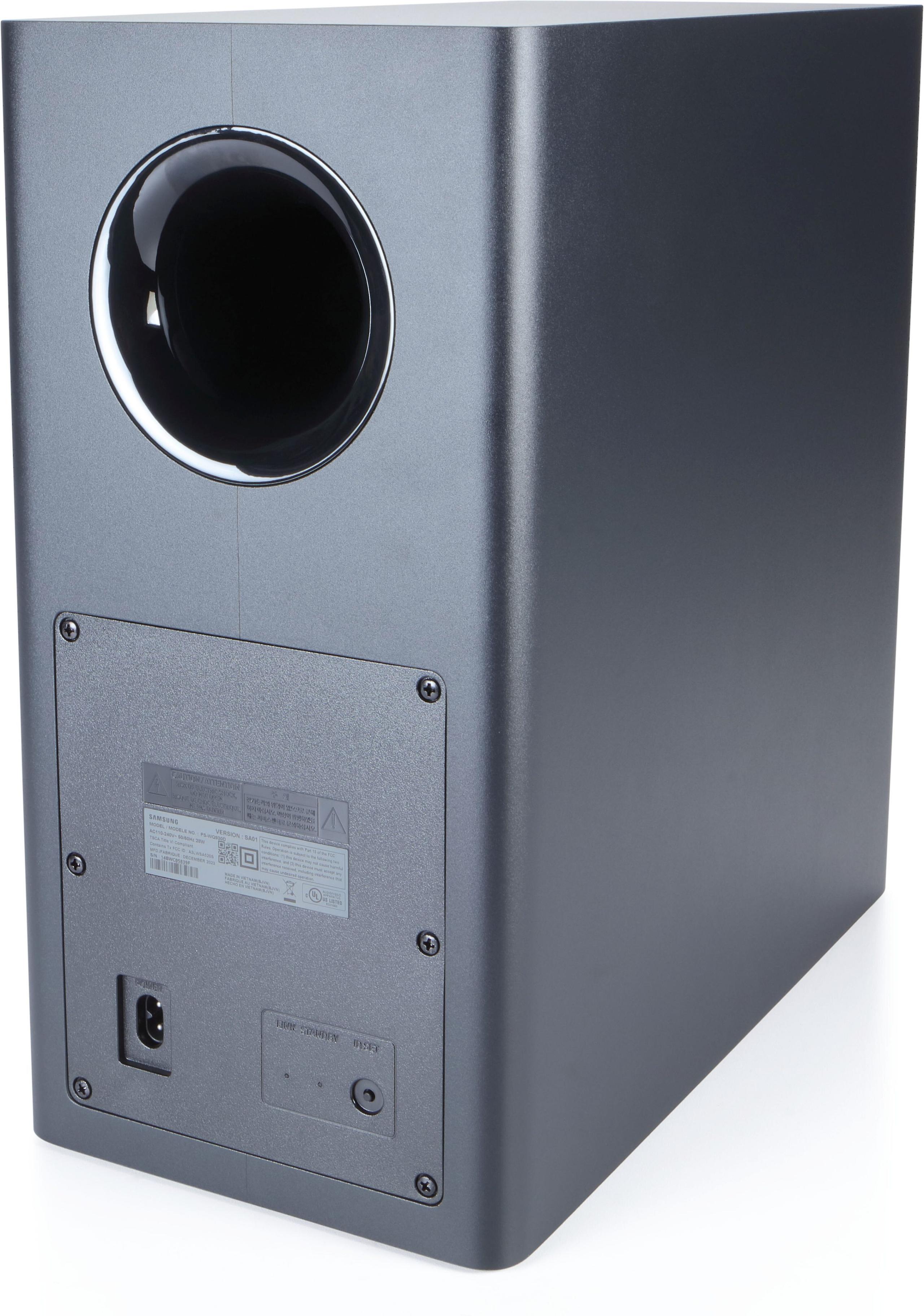
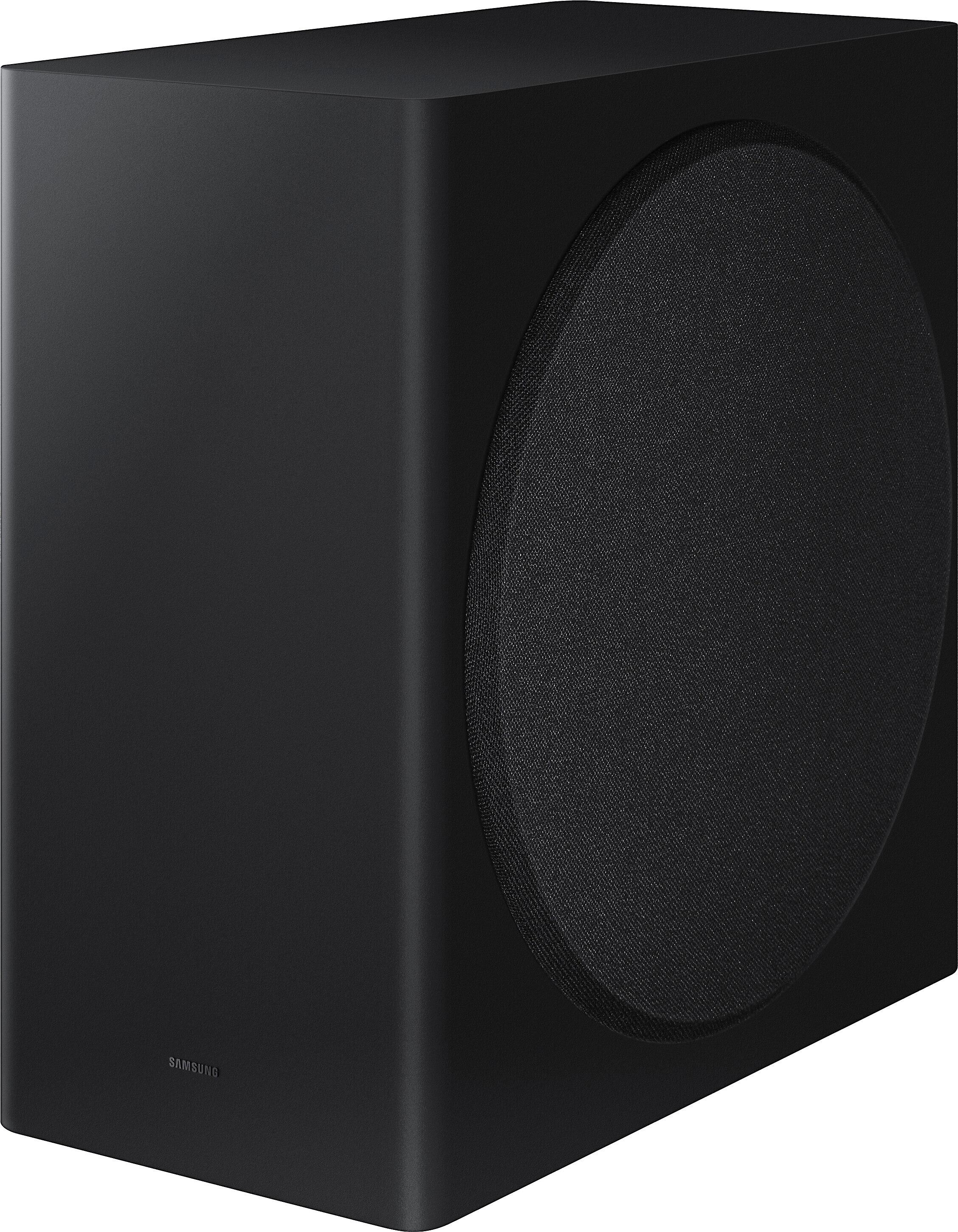
Both systems include wireless subwoofers, but their approaches differ significantly. The Ultimea D70 uses a 6.5-inch driver with BassMX technology, while the Samsung HW-Q800D employs an 8-inch driver with advanced digital signal processing.
Raw specifications favor the D70 with 410 watts peak power versus the Samsung's 360 watts total output. However, power ratings can be misleading—what matters is how effectively that power translates into clean, impactful bass. Expert reviews consistently note that the Samsung's larger driver and sophisticated processing deliver deeper extension and tighter control, particularly in the crucial 40-80Hz range where movie explosions and music fundamentals reside.
The D70's BassMX technology provides manual bass enhancement that users can adjust through the mobile app. This gives you direct control over low-frequency impact, which some listeners prefer over automatic optimization. The wireless connection on both subwoofers eliminates the need for long cables, though proper placement remains crucial for optimal bass response.
Here's where the price difference becomes most apparent. The Samsung HW-Q800D uses dedicated tweeters for high-frequency reproduction—small speakers optimized specifically for crisp treble and detailed vocals. The main channels combine these tweeters with mid-range woofers, creating a more sophisticated frequency distribution than single-driver solutions.
The Ultimea D70's 2.25-inch drivers handle both mid-range and high frequencies, which is typical for budget systems. While Ultimea claims 99.99% audio reproduction accuracy, real-world performance depends heavily on the quality of source material and listening environment. User reviews suggest the system performs admirably for its price point but lacks the refinement and detail resolution of premium alternatives.
The Samsung's Adaptive Sound technology analyzes incoming audio in real-time and optimizes processing for different content types. This means dialogue in TV shows gets different treatment than explosions in action movies, maximizing clarity for each scenario. The D70 offers six preset sound modes (movie, music, voice, sports, game, night) but relies on manual switching rather than automatic optimization.
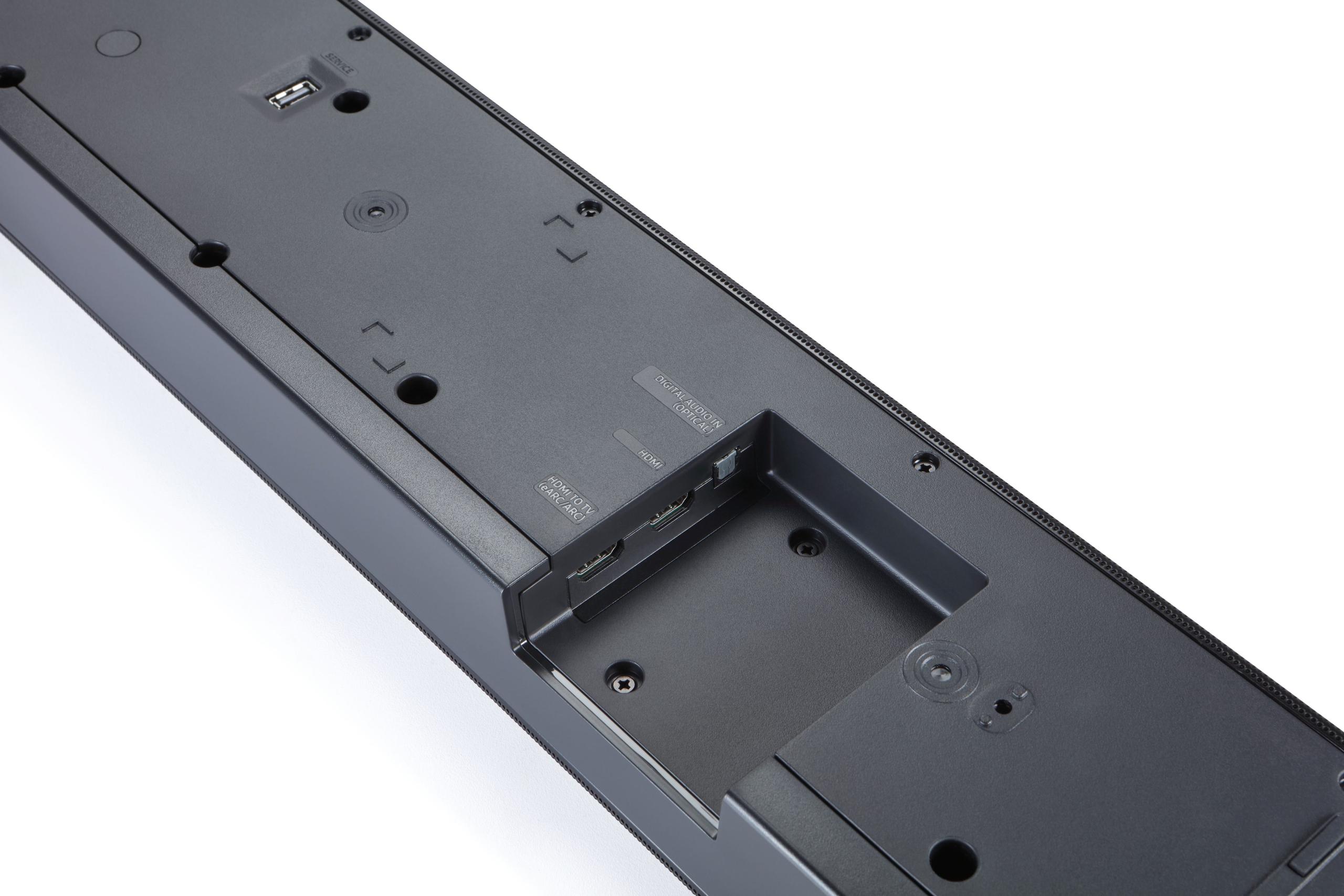
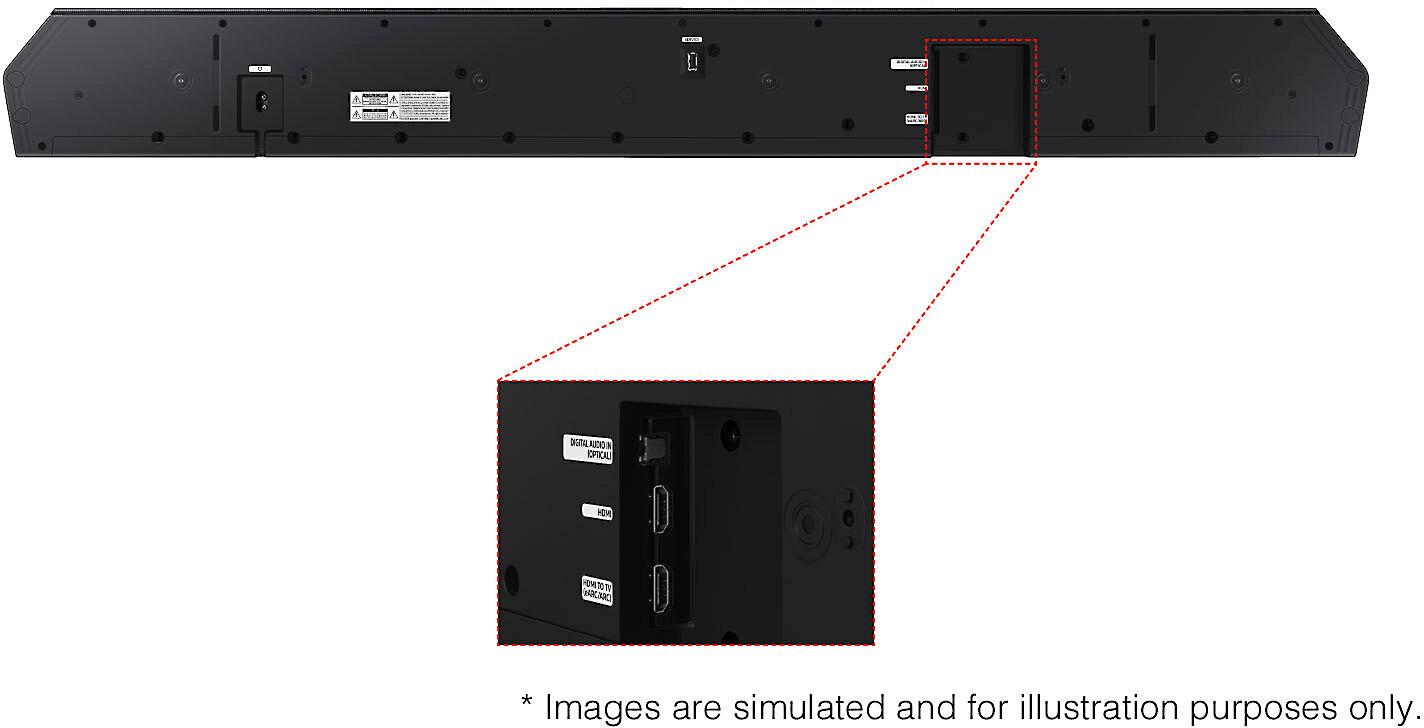
This category shows the clearest distinction between budget and premium approaches. The Samsung HW-Q800D includes HDMI 2.1 with eARC (enhanced Audio Return Channel), which supports the highest quality audio formats without compression. It also features Wi-Fi connectivity for streaming services like Spotify Connect and Apple AirPlay 2, plus built-in Alexa voice control.
The Ultimea D70 sticks to basics with HDMI ARC (the older standard), optical digital input, Bluetooth for wireless music, and USB connectivity. While these connections handle most users' needs, the lack of eARC means some advanced audio formats from gaming consoles or 4K players might not pass through at full quality.
Samsung's Q-Symphony technology deserves special mention—it can coordinate compatible Samsung TVs to work alongside the soundbar, using the TV's speakers to create an even wider soundstage. This feature only works with specific Samsung models from 2021-2023, but for owners of compatible TVs, it adds significant value.
Setting up the Ultimea D70 requires more planning and effort. You'll need to position four surround speakers around your room, which means running cables (though they're color-coded for easy identification) and finding appropriate placement locations. The wireless subwoofer provides placement flexibility, but the wired surround speakers limit your options.
The Samsung HW-Q800D simplifies installation dramatically—it's essentially a single soundbar plus wireless subwoofer. The SpaceFit Sound Pro calibration runs automatically, using built-in microphones to measure your room and optimize audio accordingly. This appeals to users who want great sound without becoming audio engineers.
Both systems support wall mounting, though the D70's multiple speakers require more mounting hardware and wall space. For renters or anyone who frequently rearranges furniture, the Samsung's simpler setup offers clear advantages.
The Samsung HW-Q800D's Dolby Atmos and DTS:X support makes it inherently more future-proof. These formats are becoming standard for premium content across streaming services, gaming platforms, and physical media. Netflix has been expanding Atmos availability since 2017, and most major Hollywood releases now include Atmos tracks.
The Ultimea D70 excels with traditional surround content that many people already own—DVD collections, older Blu-rays, and video games that use standard 5.1 or 7.1 mixing. For users whose content libraries primarily consist of pre-Atmos material, the physical surround advantage often outweighs the missing format support.
Gaming presents an interesting case study. Modern PlayStation 5 and Xbox Series X games increasingly support Dolby Atmos, favoring the Samsung. However, competitive gaming often benefits from the precise directional cues that the D70's physical surround speakers provide. The choice depends on whether you prioritize atmospheric immersion or tactical audio advantages.
At the time of writing, these systems occupy completely different market segments. The Ultimea D70 delivers genuine surround sound at a budget price point where most alternatives offer only virtual processing or basic 2.1 configurations. For users seeking maximum surround immersion per dollar spent, it represents exceptional value.
The Samsung HW-Q800D justifies its premium pricing through advanced processing, premium materials, comprehensive connectivity, and brand reliability. Samsung has dominated global soundbar sales for over a decade, and their experience shows in build quality and feature integration. The automatic calibration alone saves many users from complex manual setup procedures.
Consider the total cost of ownership beyond initial purchase. The D70 includes everything needed for full 7.1 surround—no additional speakers required. The Samsung can add optional rear speakers for enhanced surround, but they cost extra and bring the total investment significantly higher.
Choose the Ultimea Poseidon D70 if:
Your budget prioritizes getting surround sound over getting the latest formats. The physical rear speakers create more convincing traditional surround effects than virtual processing, especially for gaming and older content. The extensive EQ options appeal to users who enjoy customizing their audio experience, and the compact main soundbar suits smaller TV setups.
This system makes sense for users with existing DVD/Blu-ray collections, competitive gamers who value precise directional audio, and anyone whose room can accommodate surround speaker placement without aesthetic compromises.
Choose the Samsung HW-Q800D if:
You consume modern streaming content and want access to Dolby Atmos experiences. The single-unit installation appeals to users who prioritize aesthetics and simplicity, while the automatic room calibration eliminates manual setup complexity. Samsung TV owners get additional benefits through Q-Symphony integration.
This system suits users who stream 4K content regularly, own modern gaming consoles, value smart home integration and voice control, and prefer automated optimization over manual adjustment.
The deciding factors often come down to:
Both systems represent thoughtful approaches to different user needs. The Ultimea Poseidon D70 proves that budget doesn't have to mean compromise when it comes to surround sound immersion. The Samsung HW-Q800D demonstrates how premium processing and modern features can create compelling audio experiences from a single elegant unit.
Your choice ultimately depends on whether you value maximum traditional surround immersion or cutting-edge format support and convenience features. Either way, you're getting significantly better audio than your TV's built-in speakers can provide.
| Ultimea Poseidon D70 | Samsung HW-Q800D |
|---|---|
| Channel Configuration - Determines surround sound immersion quality | |
| 7.1 channels with 4 physical surround speakers | 5.1.2 channels with virtual surround + height |
| Premium Audio Format Support - Essential for modern streaming content | |
| No Dolby Atmos/DTS:X (limited to standard surround) | Full Dolby Atmos and DTS:X decoding |
| Total Power Output - Raw amplifier strength for volume and dynamics | |
| 410W peak / 144W RMS across 8 drivers | 360W total across 10 integrated drivers |
| Subwoofer Configuration - Critical for bass impact and placement flexibility | |
| 6.5" wireless sub with BassMX technology | 8" wireless sub with advanced DSP tuning |
| HDMI Connectivity - Affects audio quality from modern devices | |
| HDMI ARC only (compressed audio formats) | HDMI 2.1 with eARC (uncompressed high-res audio) |
| Smart Features - Convenience and integration capabilities | |
| Basic app control with 10-band EQ | Wi-Fi streaming, Alexa, room calibration, TV sync |
| Installation Complexity - Setup time and room requirements | |
| 4 surround speakers require room placement and wiring | Single soundbar + wireless sub, automatic calibration |
| Frequency Response - Audio range and bass extension | |
| 35Hz-18kHz with manual bass adjustment | Deeper bass extension with automatic optimization |
| Bluetooth Connectivity - Wireless music streaming capability | |
| Basic Bluetooth for phone/tablet streaming | Bluetooth 5.2 plus AirPlay 2 and Chromecast |
| Voice Control Integration - Smart home compatibility | |
| None (manual remote/app control only) | Built-in Alexa with full voice command support |
| TV Brand Integration - Enhanced performance with specific TVs | |
| Universal compatibility, no special features | Q-Symphony sync with compatible Samsung TVs |
| EQ Customization - Sound personalization options | |
| 121 preset matrices plus 10-band manual EQ | Adaptive Sound with automatic content optimization |
The Ultimea Poseidon D70 provides more convincing traditional surround sound because it uses four physical speakers placed around your room. You'll hear sounds coming from their actual locations behind and beside you. The Samsung HW-Q800D uses virtual surround processing with side-firing drivers, which works well but relies on room reflections rather than discrete speakers.
No, only the Samsung HW-Q800D supports Dolby Atmos and DTS:X formats. This means it can decode the latest 3D audio tracks from Netflix, Disney+, and modern movies. The Ultimea Poseidon D70 doesn't support these premium formats but excels with traditional 5.1 and 7.1 surround content from DVDs, Blu-rays, and games.
The Samsung HW-Q800D is much easier to install - it's just one soundbar plus a wireless subwoofer with automatic room calibration. The Ultimea D70 requires placing and wiring four surround speakers around your room, which takes more time and planning but provides authentic surround placement.
The Ultimea Poseidon D70 delivers 410 watts peak power across its eight drivers, while the Samsung HW-Q800D provides 360 watts total. However, the Samsung's power is more efficiently distributed through premium drivers and processing, often resulting in cleaner, more impactful sound despite lower wattage.
For competitive gaming, the Ultimea D70 excels because its physical rear speakers provide precise directional audio cues. For immersive single-player games with Dolby Atmos support, the Samsung HW-Q800D creates more atmospheric overhead effects. Choose based on whether you prioritize tactical audio or cinematic immersion.
Yes, both work with any TV brand through HDMI or optical connections. However, the Samsung HW-Q800D offers special Q-Symphony features when paired with compatible Samsung TVs from 2021-2023, using your TV's speakers alongside the soundbar for enhanced sound width.
The Samsung HW-Q800D typically delivers deeper, more controlled bass through its larger 8-inch subwoofer and advanced processing. The Ultimea Poseidon D70 uses a 6.5-inch sub with BassMX technology that provides punchy bass with manual adjustment options, though it may not extend as deep.
The Samsung HW-Q800D offers comprehensive wireless streaming including Bluetooth, Wi-Fi, AirPlay 2, Chromecast, and Spotify Connect. The Ultimea D70 provides basic Bluetooth connectivity for streaming from phones and tablets, but lacks advanced wireless features and voice control.
The Ultimea Poseidon D70 provides exceptional value by delivering true 7.1 surround sound with physical speakers at a budget price point. The Samsung HW-Q800D offers premium value through advanced processing, modern format support, and sophisticated features, but at a significantly higher investment level.
Both soundbars include smartphone apps, but with different focuses. The Ultimea D70 app emphasizes manual control with a 10-band equalizer and 121 preset sound profiles. The Samsung HW-Q800D app integrates with Samsung's SmartThings ecosystem and focuses on automatic optimization and smart home control.
For small rooms, the Samsung HW-Q800D works better because it doesn't require space for surround speakers and uses room reflections more effectively in compact spaces. The Ultimea Poseidon D70 needs adequate room for proper surround speaker placement to achieve its full potential.
The Samsung HW-Q800D can be expanded with optional rear speakers, though they're sold separately. The Ultimea D70 comes as a complete 7.1 system with no upgrade options, but also no additional purchases needed for full surround sound functionality.
We've done our best to create useful and informative comparisons to help you decide what product to buy. Our research uses advanced automated methods to create this comparison and perfection is not possible - please contact us for corrections or questions. These are the sites we've researched in the creation of this article: ultimea.com - provantage.com - ultimea.com - youtube.com - youtube.com - bestbuy.com - the-gadgeteer.com - shopmyexchange.com - youtube.com - youtube.com - youtube.com - ultimea.com - manuals.plus - device.report - images.thdstatic.com - shopmyexchange.com - staples.com - ultimea.de - techradar.com - valueelectronics.com - samsung.com - rtings.com - samsung.com - crutchfield.com - samsung.com - samsung.com - samsung.com - shidirect.com

Privacy Policy
Terms and Conditions - Affiliate Policy
Home Security
© Copyright 2008-2026.
11816 Inwood Rd #1211, Dallas, TX 75244