



When your TV's built-in speakers leave you constantly asking "what did they just say?" or missing the rumble of movie explosions, it's time for a soundbar upgrade. But not all soundbars are created equal. The Ultimea Poseidon D70 and Bose Solo Series 2 represent two completely different philosophies in home audio—and understanding these differences is crucial to making the right choice for your setup.
Soundbars have evolved dramatically since their introduction in the early 2000s. What started as simple stereo bars designed to improve dialogue clarity has branched into multiple categories. Today, you'll find everything from basic 2.0 channel units to complex systems rivaling traditional surround sound setups.
The most important distinction is channel configuration. A 2.0 system has two channels (left and right), while a 7.1 system has seven main channels plus a dedicated subwoofer channel—that's where the ".1" comes from. More channels generally mean better sound positioning and a more immersive experience, but they also require more speakers and complexity.
Released in 2021, the Bose Solo Series 2 represents the "keep it simple" approach with its 2.0 stereo configuration. Meanwhile, the Ultimea Poseidon D70, which became available in 2024, embraces the "full surround experience" philosophy with its comprehensive 7.1 channel system. The three-year gap between releases shows in their approach to modern connectivity and smart features.
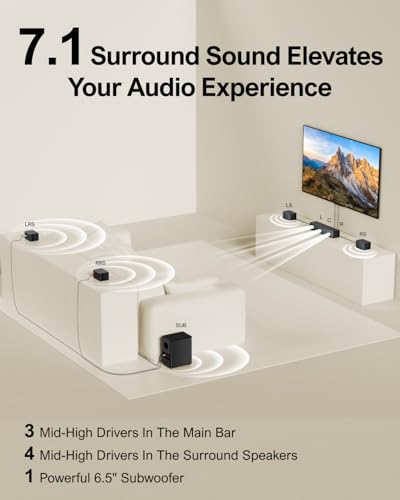
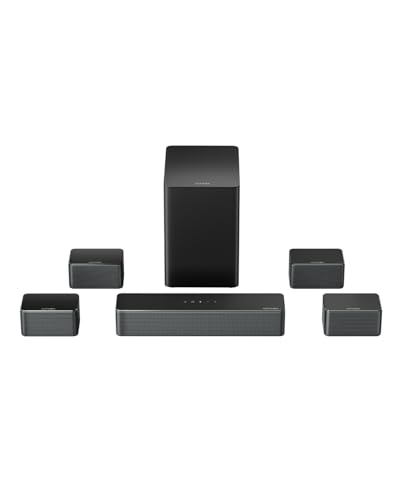
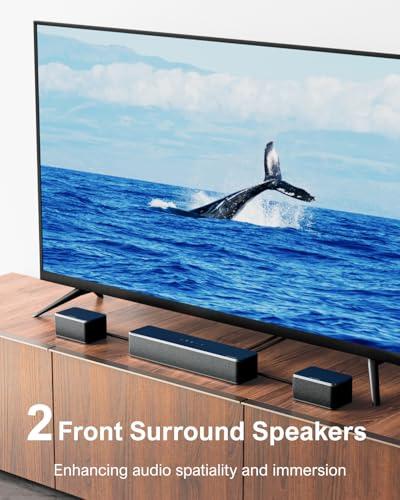
The Ultimea Poseidon D70 is essentially a complete home theater system disguised as a soundbar package. You get eight separate speakers: a main soundbar with three drivers, four surround speakers that you place around your room, and a wireless subwoofer. This creates genuine surround sound where explosions rumble behind you and dialogue comes clearly from the center.
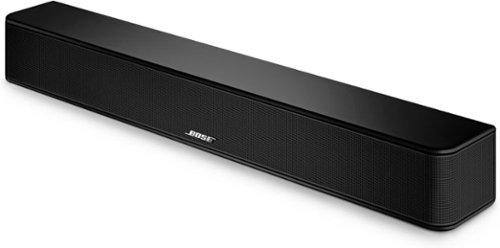
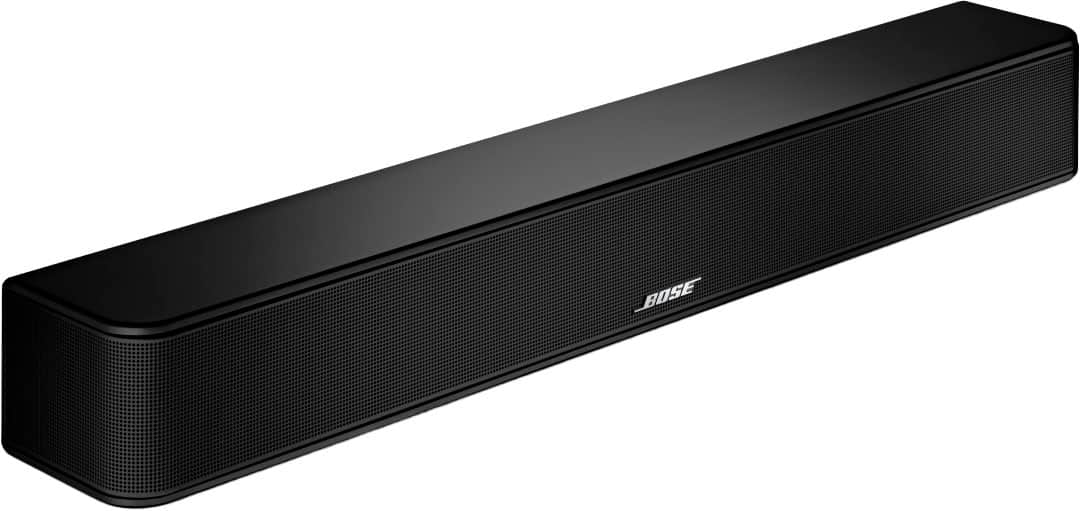
The Bose Solo Series 2, by contrast, is minimalism perfected. It's a single 21.6-inch bar that sits under your TV and disappears into your setup. No extra speakers, no subwoofer, no complex wiring—just improved TV audio in the smallest possible package.
At the time of writing, both systems occupy similar price ranges in the budget-to-mid-range category, making the choice between them particularly interesting. You're essentially choosing between two completely different audio philosophies at comparable costs.
Here's where the fundamental difference becomes crystal clear. The Ultimea D70 delivers true 7.1 surround sound through its eight-speaker configuration. When watching movies, you'll hear helicopters fly overhead (well, side to side since there are no ceiling speakers), gunfire coming from behind you, and dialogue anchored to the center of your screen.
This immersive experience comes from having actual speakers positioned around your listening area. The two rear surround speakers create genuine directional audio—when someone speaks off-screen to the left in a movie, the sound actually comes from your left. It's the same principle movie theaters use, just scaled down for your living room.
The Bose Solo Series 2 can't create this effect because it's a single stereo bar. Instead, it relies on psychoacoustic processing—essentially tricking your brain into perceiving wider sound through careful timing and frequency manipulation. While Bose executes this technique well, it's still virtual surround sound, not the real thing.
For dialogue-heavy content like news or talk shows, this distinction matters less. But for movies, gaming, and music with complex soundscapes, having actual surround speakers makes a noticeable difference in immersion.
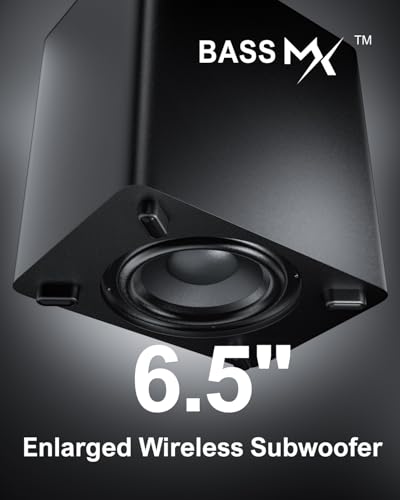
Bass response reveals another major divide between these systems. The Ultimea D70 includes a dedicated 6.5-inch wireless subwoofer with BassMX™ technology—Ultimea's proprietary bass enhancement system. This specialized driver can reproduce frequencies down to 35Hz, capturing the deep rumble of movie explosions and the fundamental tones that give music its fullness.
Bass isn't just about volume; it's about extension and control. A good subwoofer reproduces low frequencies without muddying the midrange where dialogue lives. The D70's wireless subwoofer connects via Bluetooth to the main soundbar, letting you position it anywhere in your room for optimal bass response.
The Bose Solo Series 2 handles bass through its main drivers, which limits how deep and powerful the low end can be. Small speakers simply can't move enough air to create substantial bass. While Bose includes bass adjustment controls, you're essentially controlling a limited range of low frequencies—like adjusting the bass knob on a car stereo with tiny speakers.
User feedback consistently highlights this difference. D70 owners report satisfying bass impact for movies and music, while Solo Series 2 users frequently mention bass limitations, especially in larger rooms or for bass-heavy content.
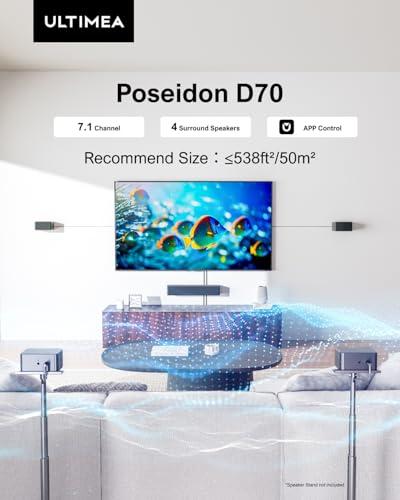
Power output directly affects how loud your system can play and how well it fills your room. The Ultimea D70 delivers 410 watts of peak power distributed across its eight speakers, with a maximum sound pressure level exceeding 98 decibels. This specification means it can easily fill rooms up to 400 square feet with authority.
The Bose Solo Series 2 doesn't publish specific power ratings, but its compact stereo configuration inherently limits output. It's designed for smaller spaces and moderate listening levels. Push it too hard, and you'll notice distortion and compression—the audio equivalent of shouting through a megaphone.
This power difference affects more than just maximum volume. Higher-powered systems maintain clarity and dynamics at moderate volumes because they're not working as hard. Think of it like the difference between a small car engine at full throttle versus a larger engine cruising comfortably.
Both systems prioritize dialogue clarity, but they achieve it differently. The Bose Solo Series 2 includes a dedicated dialogue enhancement mode that boosts vocal frequencies and reduces background noise. This makes conversations stand out clearly, even in noisy scenes.
The Ultimea D70 approaches dialogue clarity through its three-driver soundbar configuration, which creates a phantom center channel where dialogue naturally anchors. Its AI Deep Learning processing—trained on billions of audio samples—optimizes vocal clarity in real-time across different content types.
For purely dialogue-focused content, both systems perform admirably. The Bose might have a slight edge for speech clarity in challenging acoustic environments, while the D70 provides better overall balance between dialogue and other audio elements.
Here's where the three-year age gap becomes apparent. The Ultimea D70 includes HDMI eARC (enhanced Audio Return Channel), the modern standard for connecting soundbars to TVs. This single cable carries audio from your TV and allows control through your TV remote. It also supports 4K HDR pass-through, meaning you can connect devices like gaming consoles directly to the soundbar without losing video quality.
The Bose Solo Series 2 completely lacks HDMI connectivity—a significant limitation in 2024. You're restricted to optical and coaxial digital connections, plus analog inputs. While these work fine for audio, you lose the convenience of single-cable connection and unified remote control.
HDMI eARC also supports higher-quality audio formats. When streaming services eventually offer better surround sound (many already do), the D70 can take advantage while the Bose cannot. It's a future-proofing consideration that matters for long-term value.
Both systems support Bluetooth for wireless music streaming, though the D70 uses the newer Bluetooth 5.3 standard compared to the Bose's older 4.0 version. The practical difference is better connection stability and slightly improved audio quality with newer devices.
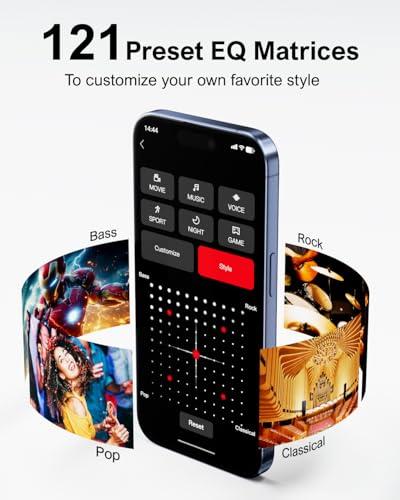
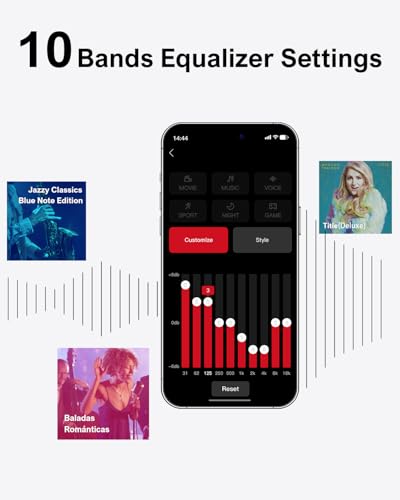
The Ultimea D70 includes comprehensive smart features through its mobile app. You can adjust the 10-band equalizer, choose from 121 preset sound profiles, update firmware, and control all system functions. The app includes a unique visual equalizer where you position a crosshair on a grid to adjust treble and bass—an intuitive way to tune sound without understanding technical terminology.
Six preset listening modes (Movie, Music, Voice, Sports, Game, Night) optimize the sound for different content types. Night mode, for example, compresses dynamic range so you can hear dialogue clearly without explosive action scenes waking the neighbors.
The Bose Solo Series 2 keeps things simple with basic remote control only. You can adjust dialogue enhancement and bass levels, but there's no app support or custom equalization. This simplicity appeals to users who want better TV audio without learning new interfaces, but it limits long-term flexibility.
Installing the Bose Solo Series 2 takes about five minutes. Connect one optical cable to your TV, plug in the power cord, and you're done. The soundbar sits under your TV and disappears into your setup. There's no speaker placement to consider or cables to hide.
The Ultimea D70 requires more planning. You need to position four surround speakers around your room and connect them with the included cables (3 meters and 6 meters long). Wall mounting hardware is provided for all speakers, but you'll need to run cables along baseboards or through walls for a clean installation.
This setup complexity isn't necessarily bad—it's the price of genuine surround sound. Professional home theater installations follow the same principles. But it's definitely more involved than the Bose's plug-and-play approach.
The D70's wireless subwoofer helps by eliminating one cable run, and all connections are color-coded and labeled for easier installation. Still, expect 30-45 minutes for proper setup versus 5 minutes for the Bose.
For dedicated home theater use, the Ultimea D70 is the clear winner. Its 7.1 surround configuration, dedicated subwoofer, and HDMI connectivity align with home theater standards. Movie soundtracks benefit from directional audio, and the system's power reserves handle dynamic action sequences without strain.
The multiple listening modes optimize performance for different content. Movie mode enhances surround effects and bass impact, while Music mode provides more balanced stereo presentation for concerts or albums.
Gaming particularly benefits from the D70's surround capabilities. Competitive gamers gain positional audio advantages—hearing footsteps behind them or gunfire direction. Immersive single-player games become more engaging with proper surround sound.
The Bose Solo Series 2 works for casual home theater use, especially in smaller rooms or apartments where complex speaker systems aren't practical. Its dialogue enhancement helps with movie conversations, but you'll miss the immersive surround effects that make blockbuster films exciting.
At the time of writing, both systems occupy similar price brackets, making the value comparison particularly interesting. The Ultimea D70 includes eight speakers, wireless subwoofer, comprehensive app control, modern connectivity, and true surround sound processing. From a pure component count perspective, it's exceptional value.
The Bose Solo Series 2 offers brand reputation, excellent build quality, and refined stereo sound in an ultracompact package. You're paying for engineering expertise and the convenience of simplicity, but the feature set is limited compared to the D70.
Value depends partly on your priorities. If you want maximum audio performance per dollar spent, the D70 delivers substantially more capability. If you prioritize brand trust, minimal setup, and space efficiency, the Bose justifies its price despite fewer features.
Long-term value also favors the D70 due to firmware updates, extensive customization options, and modern connectivity that won't become obsolete quickly. The Bose is essentially a static product—what you buy is what you get for its entire lifespan.
Choose the Ultimea Poseidon D70 if you're building a home entertainment system where audio quality matters. Movie enthusiasts, gamers, and music lovers will appreciate the genuine surround sound and powerful bass. The system works best in dedicated entertainment areas where you can properly position surround speakers and don't mind visible cables.
The D70 also makes sense if you plan to upgrade your TV or add gaming consoles in the future. Its HDMI connectivity and app-based controls provide flexibility for changing setups and preferences.
Choose the Bose Solo Series 2 for secondary rooms, apartments with strict space constraints, or situations where simplicity trumps performance. It excels at improving dialogue clarity for news, talk shows, and conversation-heavy dramas. The compact design works perfectly in bedrooms, kitchens, or minimalist living spaces.
Elderly users or those uncomfortable with technology might prefer the Bose's straightforward operation. There's no app to learn or multiple speakers to manage—just better TV audio with minimal fuss.
The Ultimea Poseidon D70 and Bose Solo Series 2 serve fundamentally different needs despite both being soundbars. The D70 prioritizes performance and immersion at the cost of complexity, while the Bose emphasizes simplicity and space efficiency with performance compromises.
For most users building a primary entertainment system, the D70 offers dramatically better value. You get genuine surround sound, powerful bass, modern connectivity, and extensive customization at a competitive price. The setup complexity is manageable, and the long-term flexibility justifies the initial effort.
The Bose fills a specific niche for users who absolutely cannot accommodate multiple speakers or who prioritize minimal setup above all else. It's well-executed within its limitations but offers less capability than alternatives at similar pricing.
The three-year technology gap between these products shows in their features and connectivity. The D70 feels like a modern system designed for current and future needs, while the Bose represents older thinking about what soundbars should be.
Unless space constraints or simplicity requirements are absolute priorities, the Ultimea Poseidon D70 delivers substantially more audio performance and features for your investment. It's the system I'd recommend for anyone serious about improving their home entertainment experience.
| Ultimea Poseidon D70 7.1 Channel Soundbar System | Bose Solo Soundbar Series 2 Soundbar |
|---|---|
| Channel Configuration - Determines surround sound capability and immersion level | |
| True 7.1 surround with 8 physical speakers (soundbar + 4 surrounds + subwoofer) | 2.0 stereo from single soundbar unit |
| Total Power Output - Affects maximum volume and room-filling capability | |
| 410W peak power distributed across all speakers | Not specified, significantly lower due to compact design |
| Bass Performance - Critical for movie impact and music fullness | |
| Dedicated 6.5" wireless subwoofer with BassMX™ technology (35Hz extension) | Limited bass from main drivers only, adjustable but shallow extension |
| HDMI Connectivity - Essential for modern TV integration and future-proofing | |
| HDMI eARC/ARC with 4K HDR pass-through | No HDMI ports (optical and coaxial only) |
| Smart Features - Controls customization and long-term flexibility | |
| Full mobile app with 10-band EQ, 121 presets, firmware updates | Basic remote control only, no app support |
| Setup Complexity - Time and effort required for installation | |
| Moderate complexity: 4 wired surround speakers to position and connect | Simple: Single unit with one cable connection to TV |
| Physical Footprint - Space requirements in your room | |
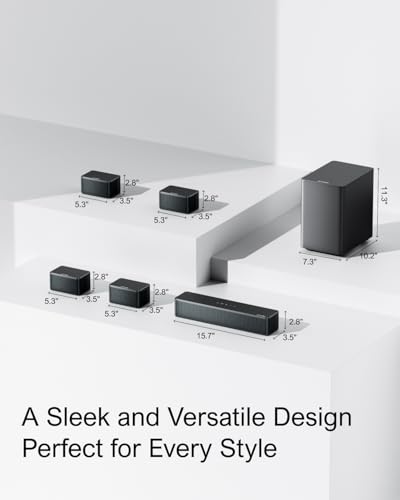
| Large system requiring multiple speaker positions and subwoofer placement | Compact 21.6" bar that sits under TV |
| Bluetooth Version - Affects wireless audio quality and device compatibility | |
| Bluetooth 5.3 (latest standard with improved stability) | Bluetooth 4.0 (older standard, adequate but less advanced) |
| Ideal Room Size - Optimal performance based on power and design | |
| Medium to large rooms (250-400 sq ft) with proper speaker placement | Small to medium rooms, ideal for compact spaces |
| Best Use Case - Primary scenarios where each system excels | |
| Home theater enthusiasts wanting immersive movie and gaming experience | Simple TV audio upgrade with focus on dialogue clarity |
The Ultimea Poseidon D70 is a complete 7.1 surround sound system with 8 speakers including a wireless subwoofer, while the Bose Solo Series 2 is a simple 2.0 stereo soundbar. The D70 creates true surround sound with speakers positioned around your room, whereas the Bose provides enhanced stereo audio from a single compact unit.
The Ultimea Poseidon D70 is significantly better for home theater use. Its 7.1 surround sound system creates immersive audio with directional effects, deep bass from the dedicated subwoofer, and proper sound positioning for movie soundtracks. The Bose Solo Series 2 works for basic movie watching but lacks the surround effects and bass impact that make blockbuster films exciting.
The Bose Solo Series 2 is much easier to install, requiring only a single cable connection to your TV and taking about 5 minutes. The Ultimea Poseidon D70 requires positioning and wiring four surround speakers around your room, which takes 30-45 minutes but delivers genuine surround sound performance.
The Ultimea Poseidon D70 offers better modern connectivity with HDMI eARC, supporting 4K pass-through and single-cable TV connection. The Bose Solo Series 2 lacks HDMI entirely, relying on optical and coaxial connections, which limits compatibility with newer devices and convenience features.
The Ultimea Poseidon D70 has substantially better bass performance with its dedicated 6.5-inch wireless subwoofer that extends down to 35Hz. The Bose Solo Series 2 produces limited bass from its main drivers and frequently requires bass adjustments to optimize what little low-end it can provide.
Only the Ultimea Poseidon D70 offers smartphone app control with extensive features including 10-band equalizer, 121 sound presets, and firmware updates. The Bose Solo Series 2 uses only a basic remote control with no app support or custom sound adjustment options.
The Bose Solo Series 2 is ideal for small spaces with its compact 21.6-inch design that sits discretely under your TV. The Ultimea Poseidon D70 requires space for multiple speakers and works best in medium to large rooms where you can properly position the surround speakers.
The Ultimea Poseidon D70 provides better music performance with its powerful subwoofer, wider frequency range, and multiple EQ options for different music genres. The Bose Solo Series 2 offers decent stereo music playback but lacks the bass extension and dynamic range for impactful music reproduction.
The Ultimea Poseidon D70 delivers exceptional value by including 8 speakers, wireless subwoofer, smart app controls, and modern connectivity in a complete surround system. The Bose Solo Series 2 offers brand reputation and simplicity but provides fewer features and capabilities for similar pricing.
Neither system supports Dolby Atmos, but the Ultimea Poseidon D70 processes various surround sound formats through its true 7.1 speaker configuration. The Bose Solo Series 2 is limited to stereo processing and cannot take advantage of multi-channel audio formats from streaming services or Blu-rays.
The Ultimea Poseidon D70 excels for gaming with its surround sound providing positional audio advantages and immersive effects. Gamers can hear enemies approaching from different directions and experience fuller sound effects. The Bose Solo Series 2 works for casual gaming but lacks the directional audio that enhances competitive and immersive gaming experiences.
The Ultimea Poseidon D70 offers better long-term value with firmware updates, extensive customization options, and HDMI connectivity that won't become obsolete. The Bose Solo Series 2 is essentially a static product with limited upgrade potential and older connectivity standards that may become less compatible with future devices.
We've done our best to create useful and informative comparisons to help you decide what product to buy. Our research uses advanced automated methods to create this comparison and perfection is not possible - please contact us for corrections or questions. These are the sites we've researched in the creation of this article: ultimea.com - provantage.com - ultimea.com - youtube.com - youtube.com - bestbuy.com - the-gadgeteer.com - shopmyexchange.com - youtube.com - youtube.com - youtube.com - ultimea.com - manuals.plus - device.report - images.thdstatic.com - shopmyexchange.com - staples.com - ultimea.de - rtings.com - bose.com - bose.com - assets.bose.com - bestbuy.com - youtube.com - pistonheads.com - costco.com - googlenestcommunity.com - youtube.com - discussions.apple.com

Privacy Policy
Terms and Conditions - Affiliate Policy
Home Security
© Copyright 2008-2026.
11816 Inwood Rd #1211, Dallas, TX 75244