



When you're ready to upgrade from your TV's built-in speakers, the world of soundbar systems can feel overwhelming. Two systems that represent completely different approaches to home theater audio are the budget-friendly Ultimea Poseidon D70 and the premium JBL Bar 1000 MK2. Both promise to transform your living room into a cinematic experience, but they take dramatically different paths to get there.
Before diving into specifics, it's worth understanding what separates excellent soundbar systems from mediocre ones. The most important factors are channel configuration (how many speakers and where they're positioned), format support (whether the system can decode modern audio formats like Dolby Atmos), power output (how loud and dynamic the system can get), and connectivity options (how it connects to your TV and other devices).
True surround sound systems create an immersive audio bubble around you by placing sounds in specific locations—dialogue from the center, music from the sides, and effects from behind you. This spatial audio placement makes movies feel more realistic and music more engaging. The ".1" in systems like "7.1" refers to a dedicated subwoofer channel that handles deep bass frequencies, which regular speakers can't reproduce effectively.
Modern premium systems also support height channels (represented by the additional number in configurations like "7.1.4"), which bounce sound off your ceiling to create overhead effects. This technology, called Dolby Atmos or DTS:X, makes helicopters fly over your head and rain fall from above rather than just around you.
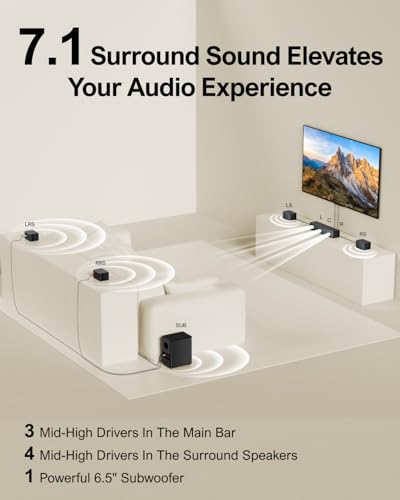
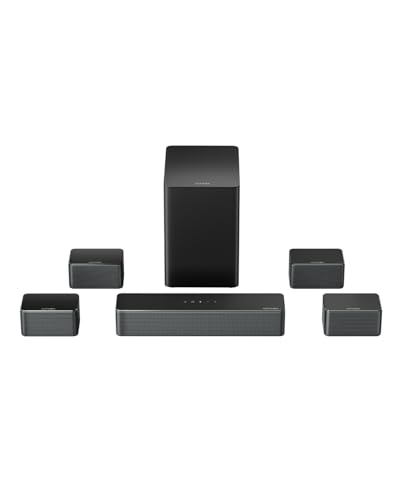
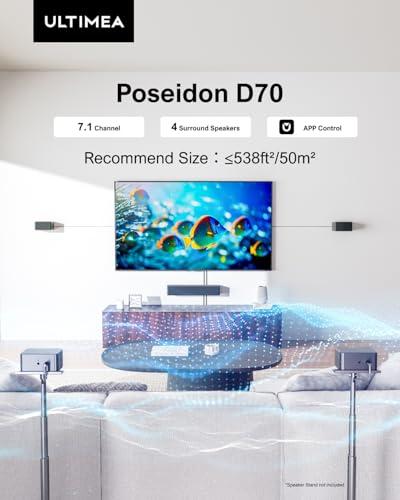
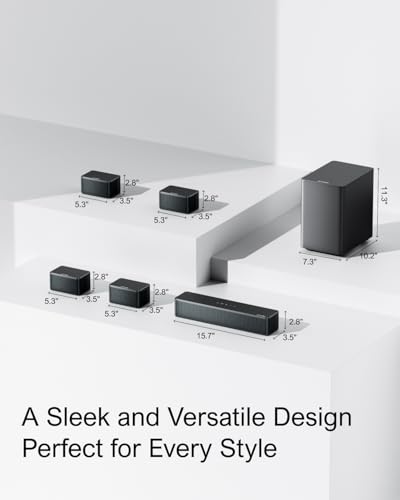
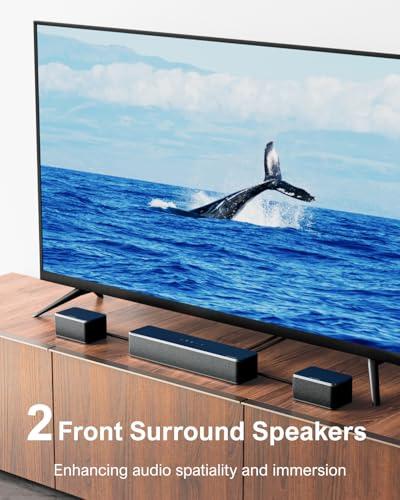
The Ultimea Poseidon D70, released in 2024, represents the physical approach to surround sound. It includes eight separate speakers: a main soundbar with three drivers, four individual surround speakers that you place around your room, and a wireless subwoofer. This creates genuine 7.1-channel audio because sound actually comes from seven different locations plus the subwoofer.
The system uses Ultimea's proprietary SurroundX technology—essentially software that processes any audio source to create surround effects, even from stereo content like regular TV shows. Think of it as an intelligent audio processor that takes a two-channel input and spreads it across all seven speakers in a way that sounds natural and immersive.
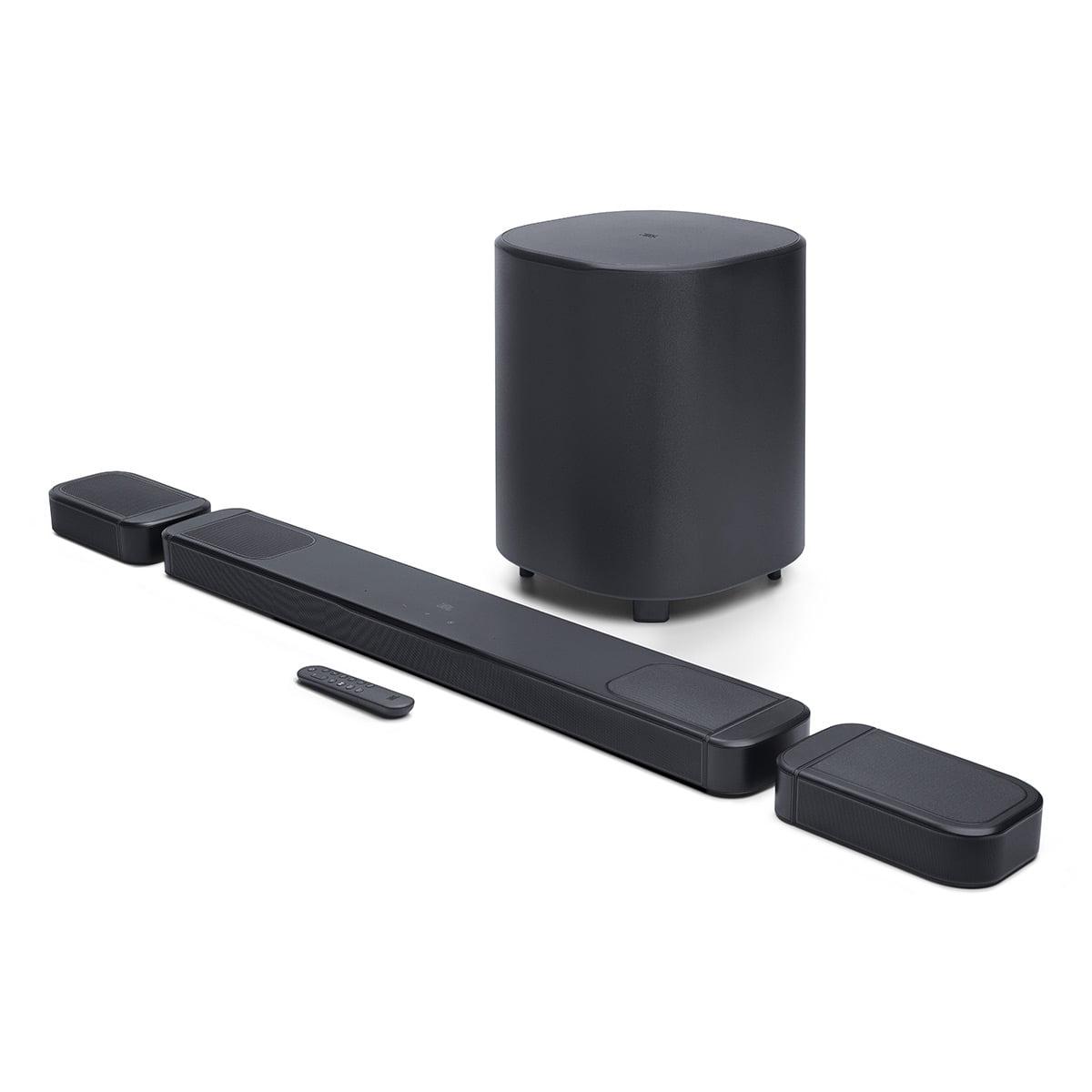
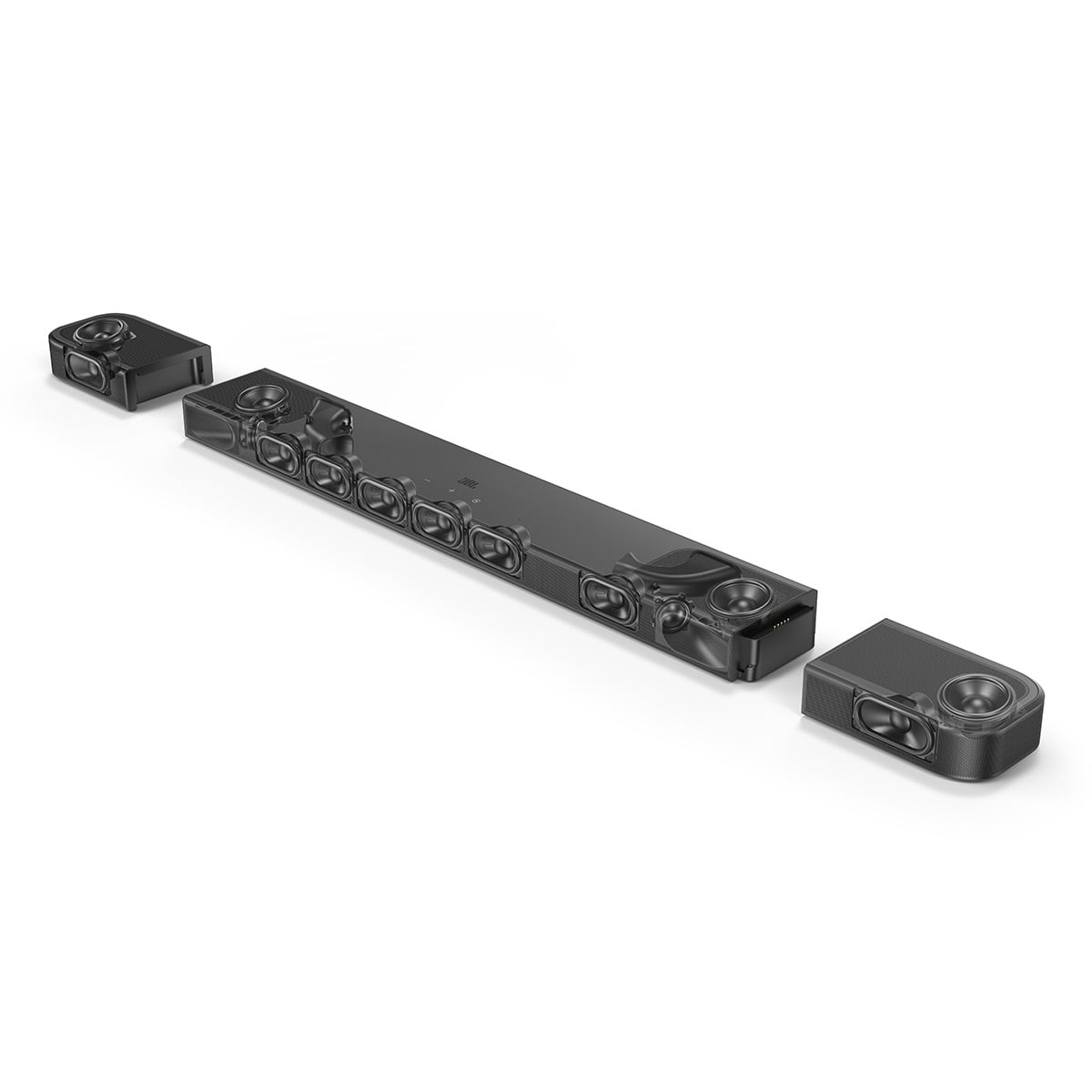
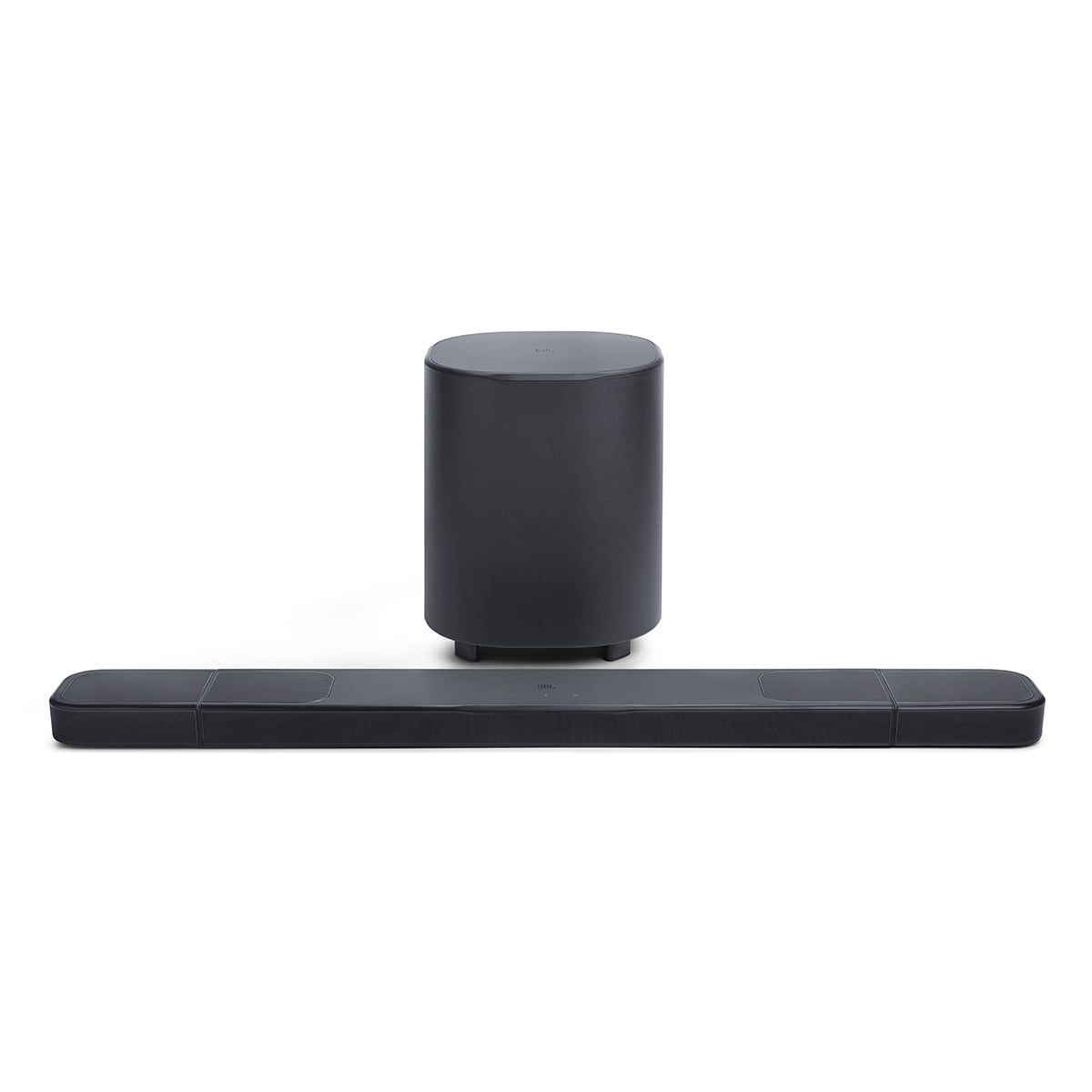
The JBL Bar 1000 MK2, also released in 2024, takes a hybrid approach. It combines physical placement (through detachable rear speakers) with advanced audio processing for height effects. The system includes dedicated up-firing drivers—speakers that point toward your ceiling—to bounce sound downward and create the illusion of audio coming from overhead.
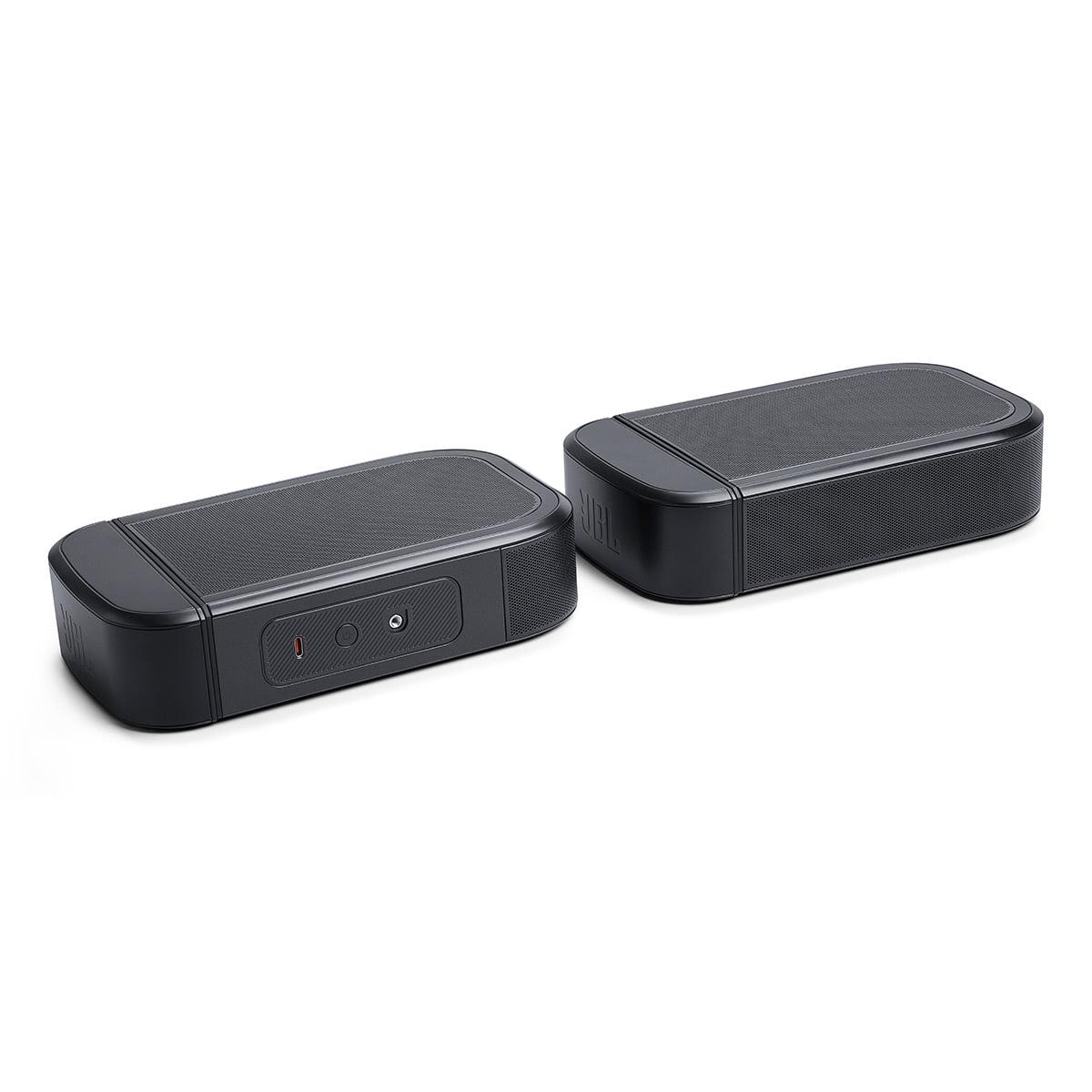
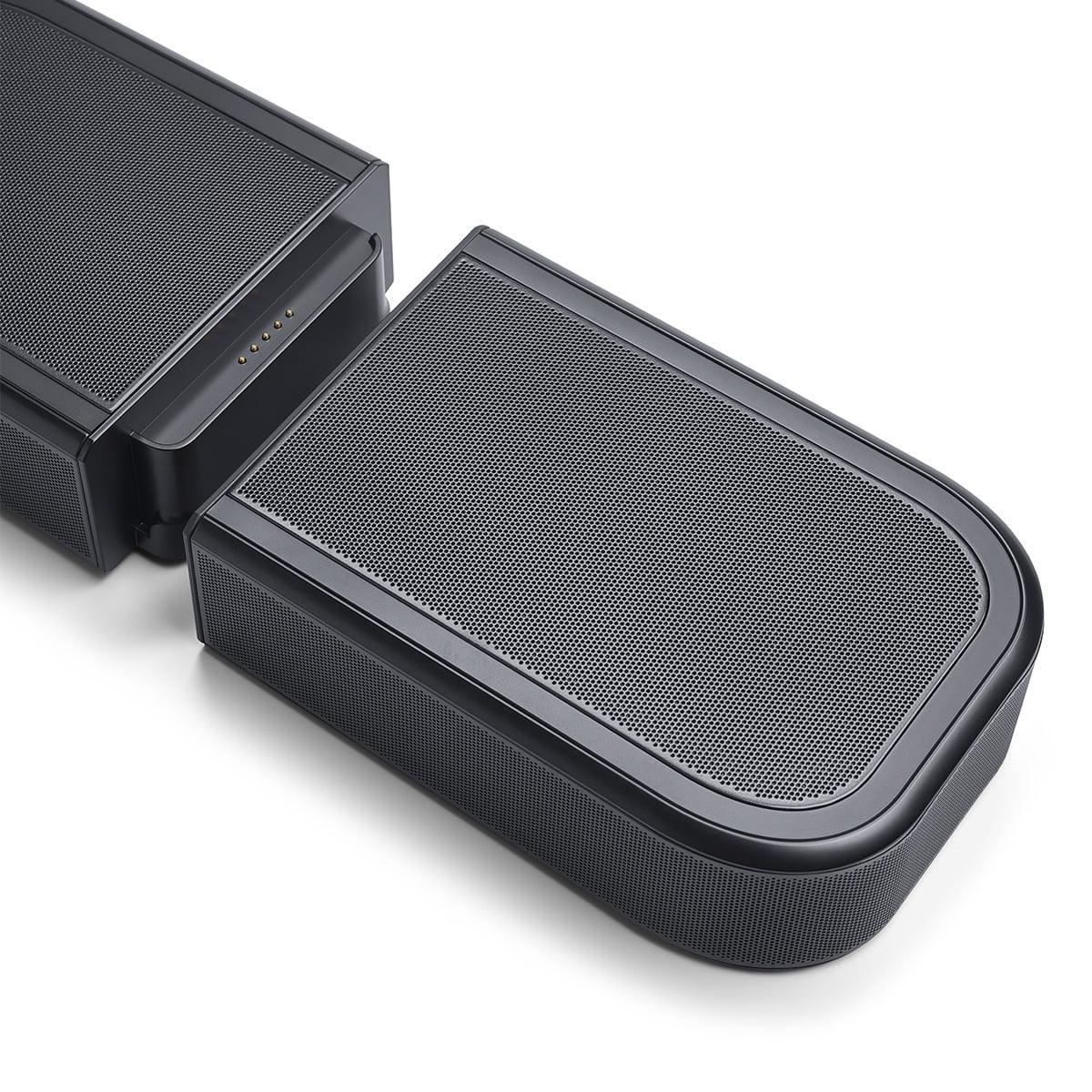
What makes the JBL system unique is its detachable surround speakers. These battery-powered units can be removed from the main soundbar and placed behind your seating area for true surround sound, then later used as portable Bluetooth speakers in other rooms. Each detachable speaker provides up to 10 hours of battery life and automatically charges when docked back onto the main unit.
Power output tells you how loud a system can get and how much headroom it has for dynamic peaks—those sudden loud explosions or musical crescendos that make your heart jump. The Ultimea D70 delivers 410 watts peak power (144 watts RMS), while the JBL Bar 1000 MK2 outputs 960 watts maximum (480 watts RMS).
RMS (Root Mean Square) is the more meaningful measurement because it represents continuous power output rather than brief peaks. The JBL system's 480-watt RMS rating means it can sustain over three times the power of the Ultimea system's 144-watt RMS output. In practical terms, this translates to the JBL system filling larger rooms more effectively and handling demanding movie soundtracks without compression or distortion at higher volumes.
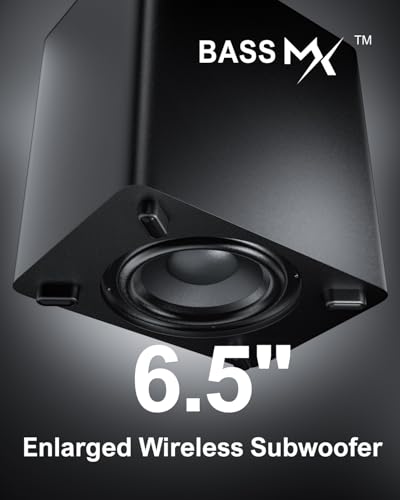
The subwoofer comparison is equally telling. The Ultimea's 6.5-inch subwoofer, while adequate for most living rooms, simply can't move as much air as the JBL's 10-inch subwoofer. Larger subwoofer drivers produce deeper, more impactful bass because they can displace more air with each movement. This difference becomes most noticeable during action movies where explosions and engine roars need that visceral low-frequency impact to feel realistic.
Based on user reviews and technical specifications, the Ultimea system performs admirably for rooms up to about 300 square feet, while the JBL system can effectively fill spaces twice that size without losing clarity or impact.
This is where the two systems diverge most significantly. The JBL Bar 1000 MK2 supports Dolby Atmos and DTS:X, the latest 3D audio formats that add height channels to create truly immersive soundscapes. When you're watching a Marvel movie on Disney+ or Netflix, these formats can place sounds above, behind, and around you with pinpoint accuracy.
Dolby Atmos works by encoding audio as objects in 3D space rather than fixed channels. Instead of just sending audio to "left surround," the format can specify that a helicopter sound should appear 30 degrees to your left and 15 degrees above you. The JBL system's four up-firing drivers (two in the main bar, one in each detachable speaker) bounce this height information off your ceiling to create convincing overhead effects.
The Ultimea D70 doesn't support these modern formats, instead relying on its SurroundX processing to create virtual surround effects from any source. While this means you miss out on true height channels, it also means the system can make regular TV shows and stereo music sound more immersive than they would on a basic soundbar.
In my experience evaluating user feedback, the lack of Dolby Atmos on the Ultimea system matters most if you frequently watch recent movies on streaming services or 4K Blu-rays. For casual TV viewing, sports, and older content, the difference is less noticeable. However, as more content adopts these newer formats, this limitation becomes increasingly significant.
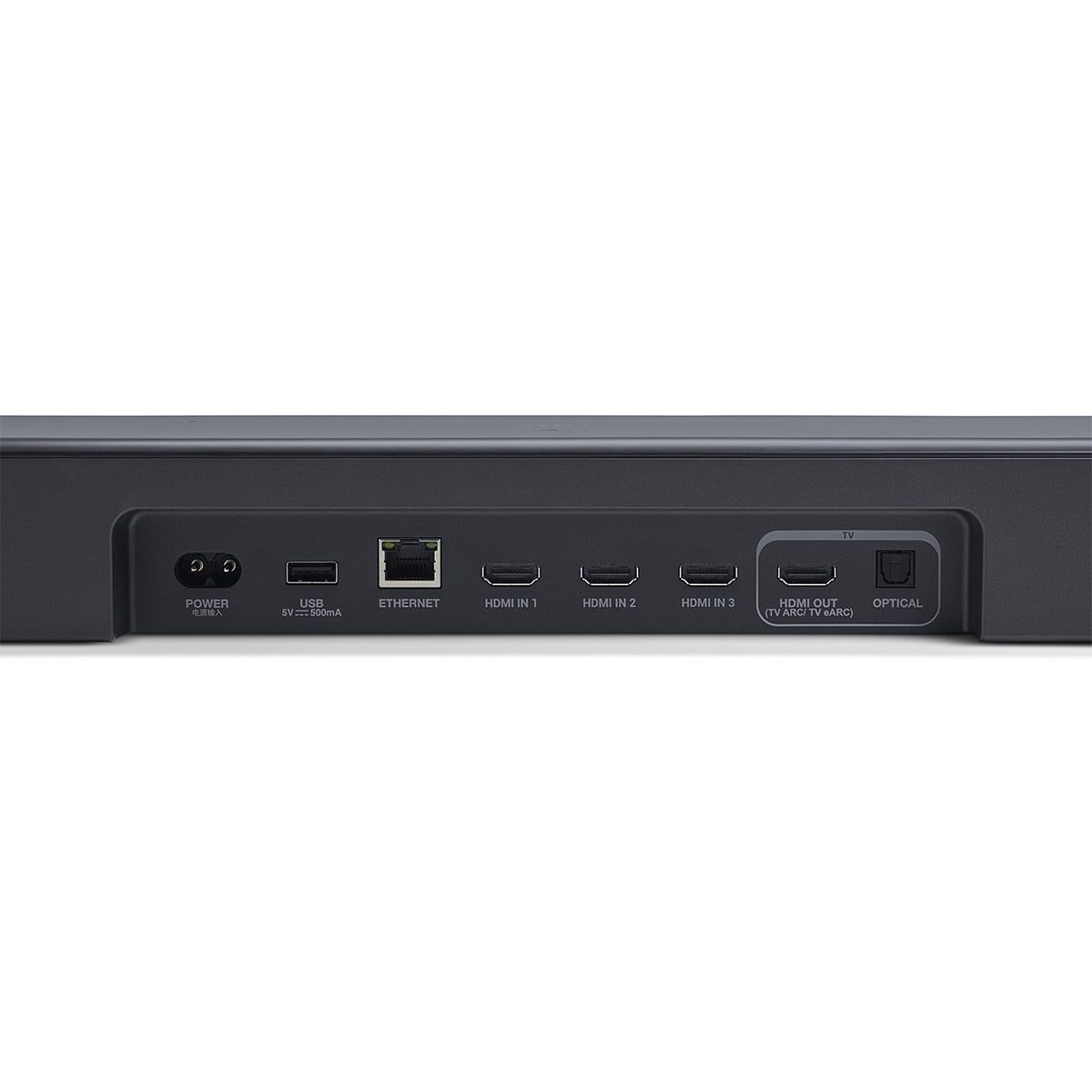
Both systems handle the basics well, but the JBL Bar 1000 MK2 clearly targets users with modern, complex setups. It includes three HDMI inputs plus eARC output, meaning you can connect multiple devices (like a game console, Apple TV, and cable box) directly to the soundbar. The system also supports 4K video passthrough with HDR10 and Dolby Vision, ensuring your video quality isn't compromised.
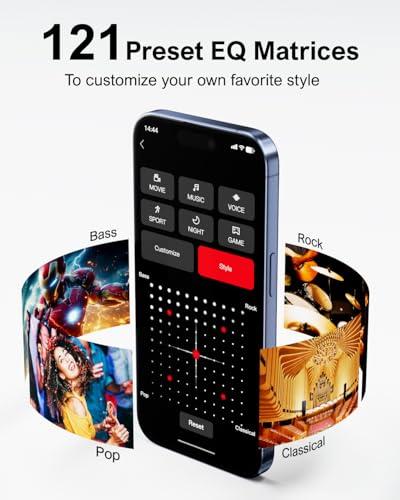
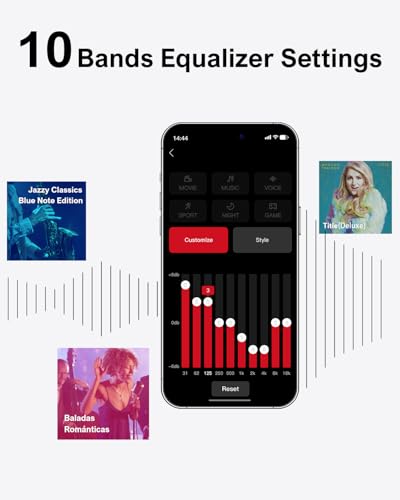
The Ultimea D70 keeps things simpler with HDMI ARC, optical, and Bluetooth inputs—sufficient for most users but limiting if you have multiple source devices. Where it excels is in audio customization, offering a 10-band equalizer and 121 preset EQ curves through its mobile app. This level of fine-tuning is unusual at this price point and allows users to precisely tailor the sound to their room and preferences.
The JBL system integrates with modern streaming ecosystems through Wi-Fi connectivity, supporting AirPlay 2, Chromecast, and Spotify Connect. You can stream music directly to the system without involving your TV, and the JBL One app provides setup assistance and room calibration features.
The Ultimea D70 requires more initial setup because you need to run wires to position the four surround speakers around your room. The company includes color-coded cables and clear labeling to simplify this process, but you'll still need to plan speaker placement and potentially run wires along baseboards or through walls for a clean installation.
The payoff for this complexity is authentic directional audio. When a character walks from left to right on screen, you hear their footsteps move through the actual physical space around you. This creates a level of immersion that virtual processing can't fully replicate.
The JBL system offers more flexibility with its detachable wireless surrounds. For casual viewing, you can leave them attached to the main soundbar for a traditional soundbar experience. For movie nights, detach them and place them behind your seating area—no wires required thanks to their internal batteries. The system even includes a "Night Listening" mode that mutes the main soundbar and subwoofer, delivering audio only through the detachable speakers for private listening.
This flexibility makes the JBL system particularly appealing for apartments, rental situations, or households where not everyone wants the full surround sound experience all the time.
Based on extensive review analysis, both systems deliver on their core promises but in different ways. The Ultimea D70 consistently impresses users with its value proposition. Reviews frequently mention that dialogue clarity is excellent, bass has genuine punch despite the smaller subwoofer, and the 7.1 setup creates a convincing surround experience that "fills the room" even at moderate volume levels.
User feedback suggests the Ultimea system shines with action movies and gaming, where the physical speaker placement creates obvious directional effects. One detailed review noted that the system remained clear and impactful even at volume level 23 out of 100, suggesting it can satisfy most users without approaching its limits.
The JBL Bar 1000 MK2 receives praise for its power and format support, with users noting that the Dolby Atmos processing creates convincing height effects when watching compatible content. The 10-inch subwoofer gets particular attention for its ability to "rattle walls" and provide the kind of low-frequency impact that makes action sequences feel visceral.
However, the JBL system shows some compression at maximum volume levels, according to professional reviews, while the Ultimea system maintains its composure within its power limits. This suggests that while the JBL has more absolute power, both systems are well-engineered for their intended use cases.
At the time of writing, the Ultimea Poseidon D70 represents exceptional value in the budget category—typically available for under $200 with promotional offers. For this price, getting eight physical speakers with genuine 7.1 surround sound is remarkable. The extensive EQ customization and solid build quality make it feel like a much more expensive system.
The JBL Bar 1000 MK2 commands premium pricing in the $700-800 range, which reflects its advanced features and higher power output. The Dolby Atmos support, detachable wireless surrounds, and comprehensive connectivity justify the price for users who want cutting-edge features and maximum flexibility.
When evaluating value, consider your long-term plans. The Ultimea system provides excellent performance now but lacks the format support for future content. The JBL system is more future-proof but requires a significantly larger investment upfront.
The Ultimea Poseidon D70 makes the most sense for budget-conscious buyers who want authentic surround sound and don't mind wired speaker placement. It's ideal for dedicated home theater rooms where you can properly position all four surround speakers and don't need the latest audio formats. The extensive EQ options make it particularly appealing for audio enthusiasts who enjoy fine-tuning their system's sound signature.
I'd recommend the Ultimea system for apartment dwellers with dedicated entertainment areas, families building their first serious home theater setup, or anyone who prioritizes authentic surround sound over format compatibility. The system excels with gaming, action movies, and music where the physical speaker placement creates obvious benefits.
The JBL Bar 1000 MK2 targets users who want premium features and maximum flexibility. The detachable surround speakers make it perfect for living spaces where permanent speaker placement isn't practical, while the Dolby Atmos support ensures compatibility with the latest streaming content and 4K Blu-rays.
Choose the JBL system if you have a large room that needs serious power, frequently watch modern movies with advanced audio tracks, or value the flexibility of modular components. The wireless surround capability and comprehensive streaming integration make it particularly suitable for modern smart homes where convenience and connectivity matter as much as sound quality.
Both the Ultimea Poseidon D70 and JBL Bar 1000 MK2 excel in their respective categories, but they serve different audiences and priorities. The Ultimea delivers authentic surround sound at an unbeatable price point, while the JBL provides premium features and future-proof format support.
Your decision ultimately comes down to budget, room size, and how you consume content. If you're building a dedicated home theater on a budget and don't mind wired speakers, the Ultimea system offers incredible value. If you want cutting-edge features, maximum power, and the flexibility of wireless components, the JBL system justifies its premium pricing through superior performance and convenience.
Both systems represent significant upgrades over TV speakers and basic soundbars, just at different investment levels and with different strengths. The key is matching the system's capabilities to your specific needs, room, and budget constraints.
| Ultimea Poseidon D70 7.1 Channel Soundbar System | JBL Bar 1000 MK2 Soundbar System |
|---|---|
| Channel Configuration - Determines surround sound immersion and authenticity | |
| True 7.1 with 4 physical wired surround speakers + soundbar + subwoofer | 7.1.4 with detachable wireless surrounds + height channels for Dolby Atmos |
| Audio Format Support - Critical for modern streaming content and future-proofing | |
| No Dolby Atmos/DTS:X; uses proprietary SurroundX virtual processing | Full Dolby Atmos and DTS:X with dedicated up-firing drivers |
| Total System Power - Affects volume levels and dynamic range | |
| 410W peak / 144W RMS (adequate for medium rooms) | 960W max / 480W RMS (excellent for large rooms) |
| Subwoofer Size - Directly impacts bass depth and impact | |
| 6.5" wireless subwoofer with BassMX technology | 10" wireless subwoofer (significantly deeper bass extension) |
| Surround Speaker Design - Affects placement flexibility and convenience | |
| 4 wired surround speakers require permanent placement | Battery-powered detachable speakers (10-hour battery, dual-use as Bluetooth speakers) |
| Connectivity Options - Important for multiple devices and modern setups | |
| HDMI ARC, Optical, USB, Bluetooth 5.3, 3.5mm AUX | HDMI eARC + 3x HDMI inputs, Optical, Bluetooth 5.3, Wi-Fi streaming |
| Audio Customization - Allows fine-tuning for room acoustics and preferences | |
| 10-band EQ + 121 preset matrices via mobile app | JBL One app with room calibration and precise EQ controls |
| Smart Features - Modern convenience and streaming integration | |
| Basic app control, firmware updates, AI sound optimization | AirPlay 2, Chromecast, Spotify Connect, Night Listening mode |
| Physical Footprint - Space requirements and aesthetics | |
| Compact soundbar (400mm) + 4 separate surround speakers to position | Larger soundbar (854mm) with modular detachable components |
| Setup Complexity - Time and effort required for installation | |
| Moderate (requires running wires to 4 surround speaker locations) | Easy (wireless surrounds, instant pairing, minimal cables) |
| Price Category - Value positioning at time of writing | |
| Budget-friendly (exceptional value under $200) | Premium investment ($700+ range with advanced features) |
The JBL Bar 1000 MK2 is superior for dedicated home theater use due to its Dolby Atmos support, 960W power output, and 10" subwoofer that delivers cinema-quality audio. However, the Ultimea Poseidon D70 provides excellent home theater value with true 7.1 surround sound at a much lower price point.
The biggest difference is audio format support. The JBL Bar 1000 MK2 includes Dolby Atmos with height channels for 3D audio, while the Ultimea Poseidon D70 uses four physical surround speakers for authentic 7.1 sound but lacks modern format support like Dolby Atmos.
The JBL Bar 1000 MK2 delivers superior bass with its 10" wireless subwoofer compared to the Ultimea Poseidon D70's 6.5" subwoofer. The larger driver provides deeper bass extension and more impactful low-frequency effects for movies and music.
No. The Ultimea Poseidon D70 requires wired connections for its four surround speakers, while the JBL Bar 1000 MK2 features battery-powered detachable surround speakers that operate wirelessly for up to 10 hours per charge.
The JBL Bar 1000 MK2 is significantly easier to install with its wireless surround speakers and minimal cable requirements. The Ultimea Poseidon D70 requires more setup time to properly position and wire its four surround speakers around your room.
Yes, but differently. The Ultimea Poseidon D70 offers extensive customization with a 10-band equalizer and 121 preset EQ matrices through its mobile app. The JBL Bar 1000 MK2 provides room calibration and precise EQ controls through the JBL One app.
The JBL Bar 1000 MK2 is better suited for large rooms with its 960W maximum power output and larger drivers. The Ultimea Poseidon D70 with 410W peak power works well for medium-sized rooms but may struggle to fill very large spaces effectively.
The JBL Bar 1000 MK2 offers comprehensive streaming support with Wi-Fi, AirPlay 2, Chromecast, and Spotify Connect. The Ultimea Poseidon D70 provides basic Bluetooth connectivity and app control but lacks advanced wireless streaming features.
The Ultimea Poseidon D70 provides exceptional value with true 7.1 surround sound at a budget-friendly price. The JBL Bar 1000 MK2 offers premium features and performance but at a significantly higher investment level.
Only with the JBL Bar 1000 MK2 - its detachable surround speakers can function as standalone Bluetooth speakers in other rooms. The Ultimea Poseidon D70's surround speakers are permanently wired to the system and cannot operate independently.
The JBL Bar 1000 MK2 is more future-proof with full Dolby Atmos and DTS:X support for current and upcoming content formats. The Ultimea Poseidon D70 lacks these modern audio formats, which may limit compatibility with future streaming content.
The JBL Bar 1000 MK2 provides extensive connectivity with HDMI eARC, three HDMI inputs, optical, and wireless options. The Ultimea Poseidon D70 offers essential connections including HDMI ARC, optical, USB, Bluetooth, and auxiliary input for most common devices.
We've done our best to create useful and informative comparisons to help you decide what product to buy. Our research uses advanced automated methods to create this comparison and perfection is not possible - please contact us for corrections or questions. These are the sites we've researched in the creation of this article: ultimea.com - provantage.com - ultimea.com - youtube.com - youtube.com - bestbuy.com - the-gadgeteer.com - shopmyexchange.com - youtube.com - youtube.com - youtube.com - ultimea.com - manuals.plus - device.report - images.thdstatic.com - shopmyexchange.com - staples.com - ultimea.de - ecoustics.com - engadget.com - bestbuy.com - techradar.com - rtings.com - hometechnologyreview.com - youtube.com - t3.com - whathifi.com - youtube.com - bhphotovideo.com - gzhls.at - device.report - support.jbl.com - support.jbl.com - jbl.com - av.com - audioadvice.com - jbl.com - target.com - worldwidestereo.com

Privacy Policy
Terms and Conditions - Affiliate Policy
Home Security
© Copyright 2008-2026.
11816 Inwood Rd #1211, Dallas, TX 75244