




When shopping for a soundbar in 2024, you're facing a fundamental choice that didn't exist a decade ago. Do you want the authentic experience of having speakers physically positioned around your room, or would you prefer the convenience and sophistication of a single premium unit that creates surround effects through advanced processing? This decision isn't just about budget—though that's certainly a factor—it's about understanding two completely different approaches to home audio.
The soundbar market has essentially split into these distinct categories, and today we're comparing two products that perfectly represent each philosophy: the Ultimea Poseidon D70 and the Sennheiser AMBEO Soundbar. At the time of writing, these systems sit at opposite ends of the price spectrum, with the D70 representing exceptional budget value and the AMBEO commanding premium pricing that reflects its sophisticated engineering.
The traditional approach, exemplified by the Ultimea Poseidon D70, uses what's called "discrete" surround sound. This means you have actual, physical speakers positioned around your room—each one handling specific audio channels. When a helicopter flies from left to right in a movie, the sound literally travels from your left surround speaker to your right surround speaker. It's straightforward, authentic, and exactly how movie theaters work.
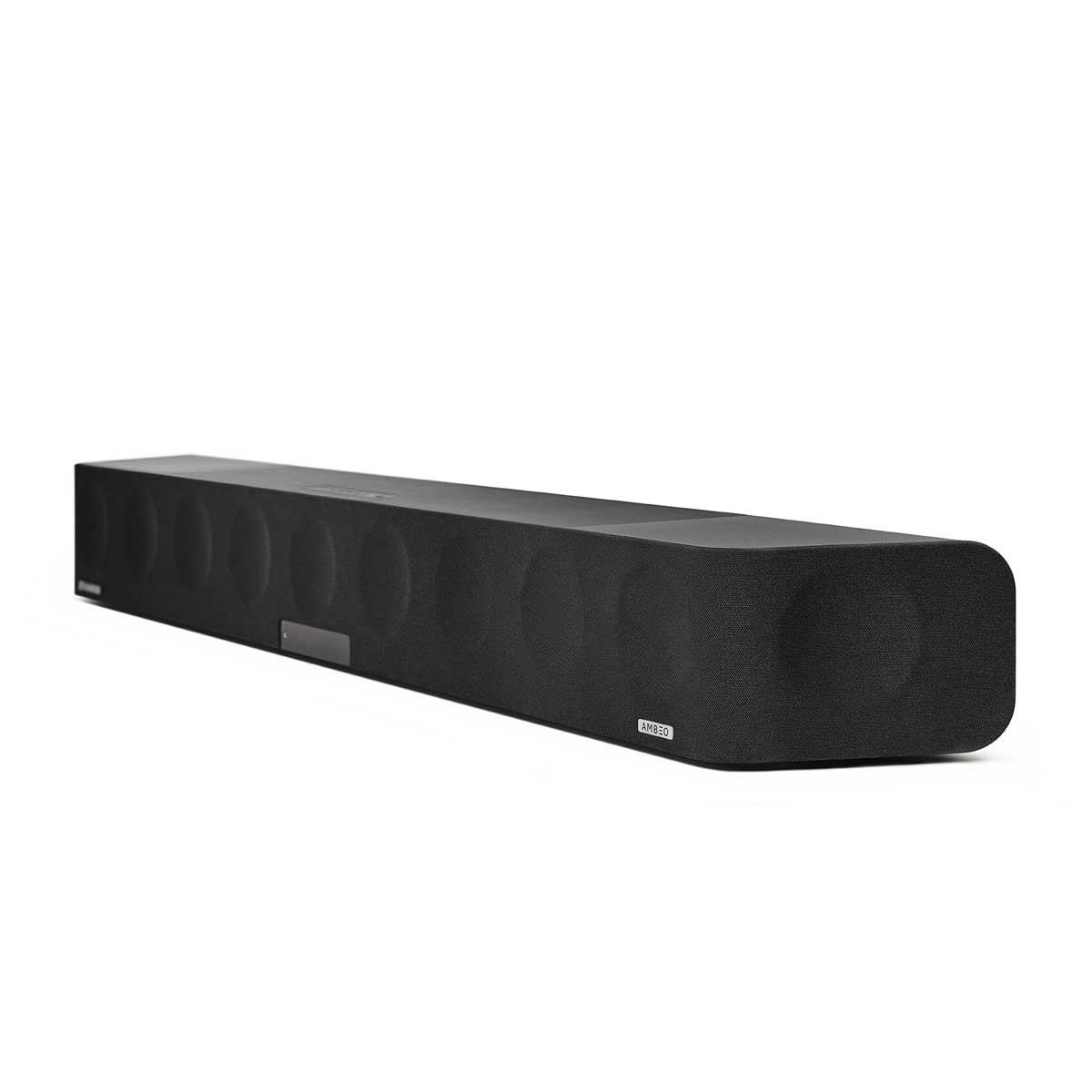
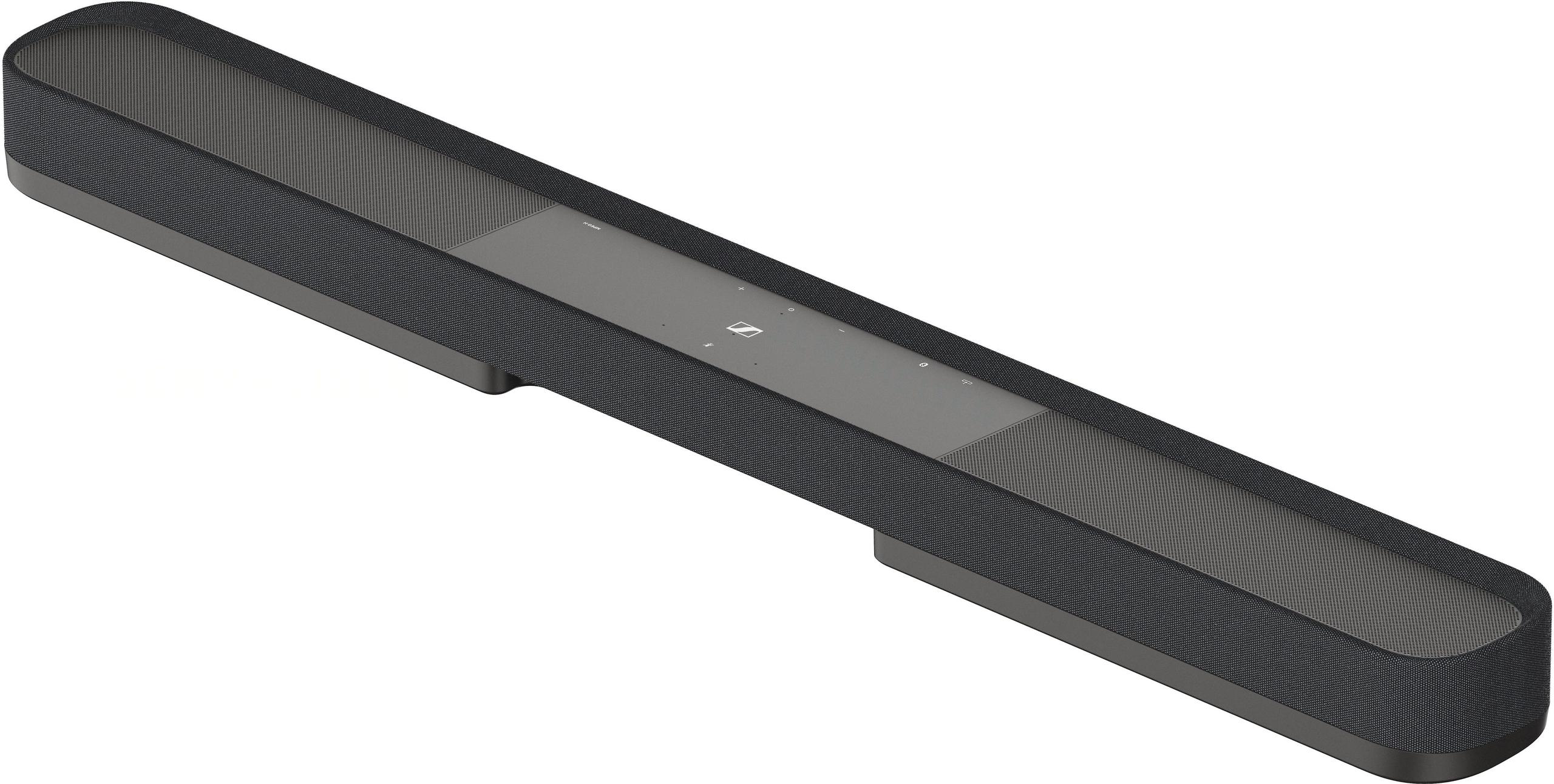
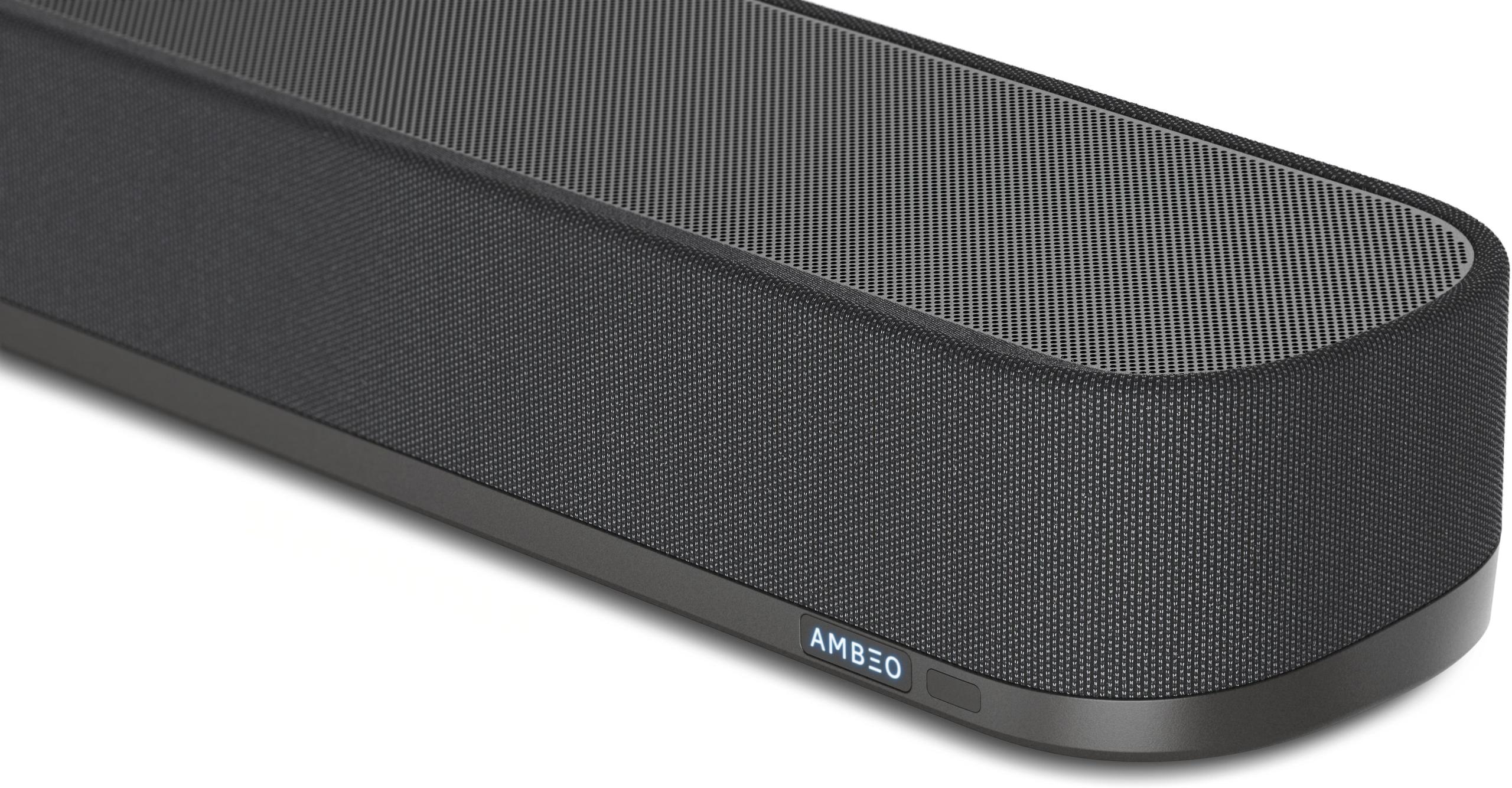
The premium virtualization approach, represented by the Sennheiser AMBEO Soundbar, takes a radically different path. It uses advanced digital signal processing (DSP)—think of it as extremely sophisticated audio mathematics—to trick your brain into hearing sounds coming from places where no speakers exist. By carefully controlling the timing, phase, and frequency of sounds from multiple drivers within a single unit, it can create the illusion of speakers positioned throughout your room.
Both approaches have merit, but they excel in different scenarios and appeal to different priorities. The key is understanding which philosophy aligns with your room, lifestyle, and expectations.
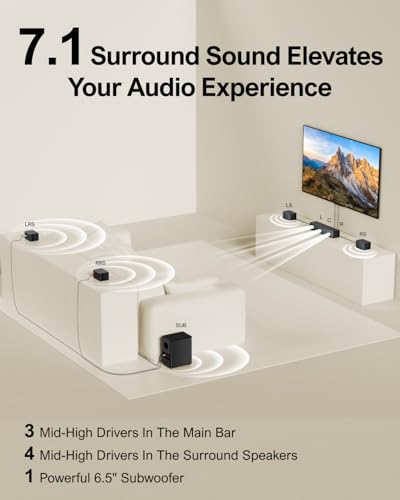
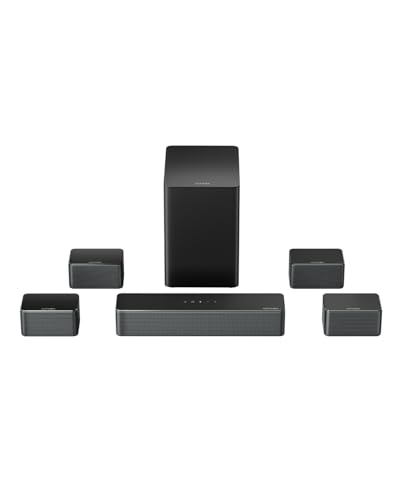
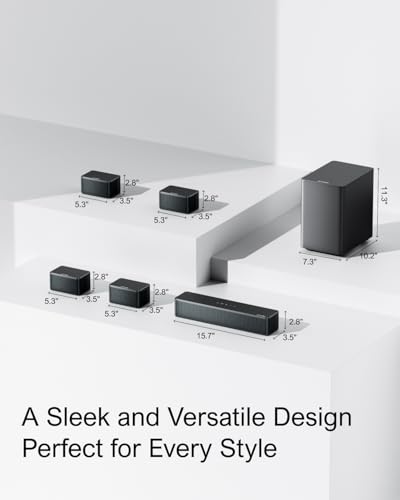
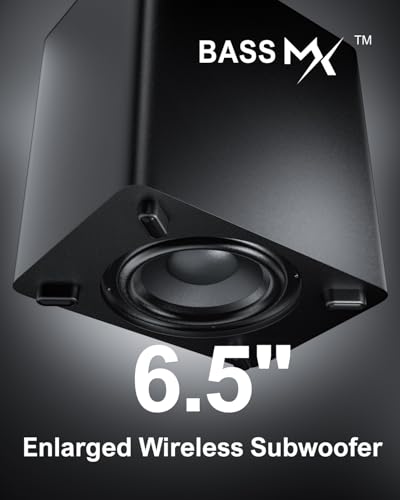
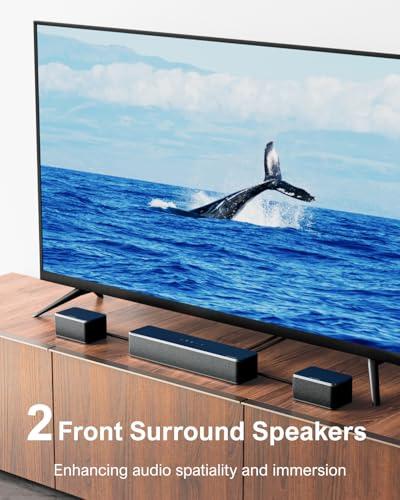
Released in 2024, the Ultimea Poseidon D70 represents what budget-conscious audio enthusiasts have been asking for: a complete 7.1 surround system that doesn't require taking out a second mortgage. This system gives you eight discrete speakers—three drivers in the main soundbar, four separate surround speakers, and a 6.5-inch wireless subwoofer—all working together to create genuine positional audio.
The technology here isn't revolutionary, but it's implemented thoughtfully. The system uses what Ultimea calls "SurroundX" technology, which is essentially intelligent signal routing that ensures each speaker receives the correct audio information at precisely the right time. The "BassMX" enhancement technology works with the wireless subwoofer to extend low-frequency response and add impact to movie explosions and music basslines.
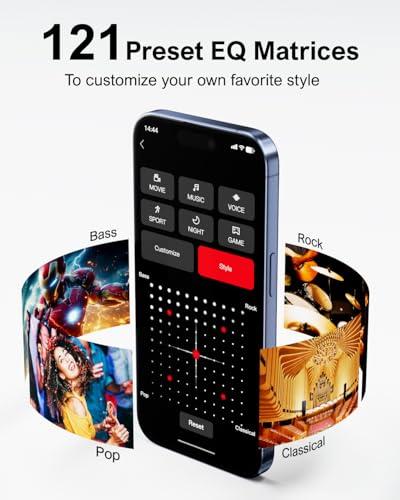
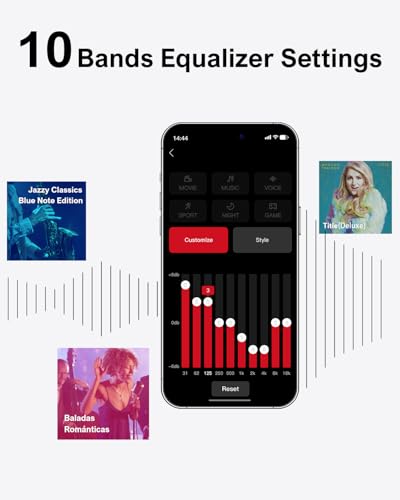
What makes the Poseidon D70 particularly interesting is its customization capability. Through its companion app, you get access to 121 preset EQ matrices—pre-configured sound profiles optimized for different types of content or musical genres. The 10-band graphic equalizer lets you fine-tune frequencies to match your room's acoustics or personal preferences. This level of control is rare at any price point.
The system's AI deep learning optimization is worth understanding. Essentially, Ultimea has trained their audio processing algorithms using "billions of real-world sounds"—likely a database of various audio content—to better recognize and enhance different types of audio in real-time. While the marketing language sounds impressive, in practical terms, this means the system can automatically adjust its output characteristics based on whether you're listening to dialogue, music, or effects-heavy action sequences.
For home theater use, the Poseidon D70 delivers something that virtualized systems simply cannot: true directional audio cues. When properly positioned, the four surround speakers create an authentic "soundstage" where you can pinpoint exactly where sounds originate. This is particularly noticeable in gaming, where hearing footsteps behind you can mean the difference between virtual life and death, and in movies with complex sound design where ambient effects create atmosphere.
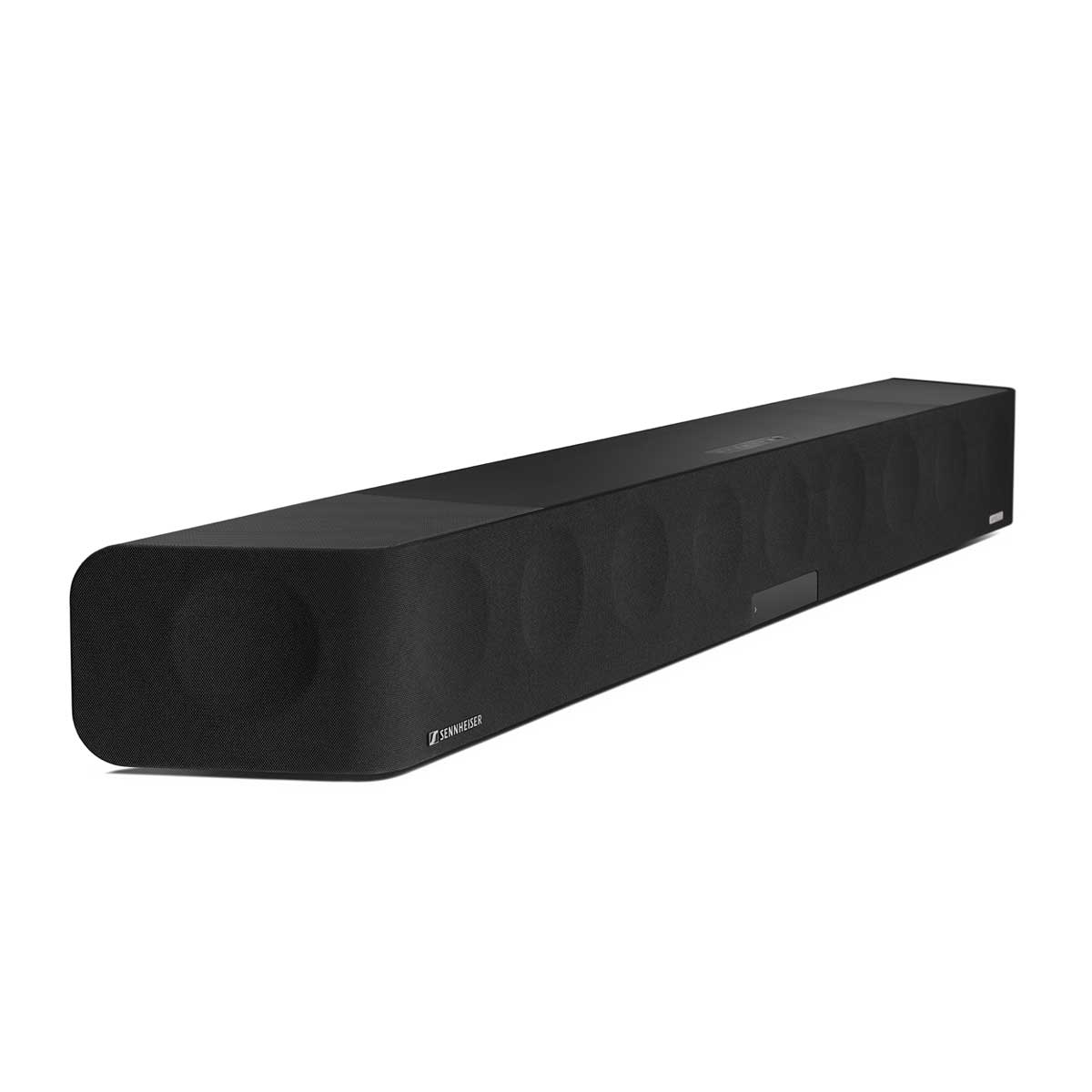
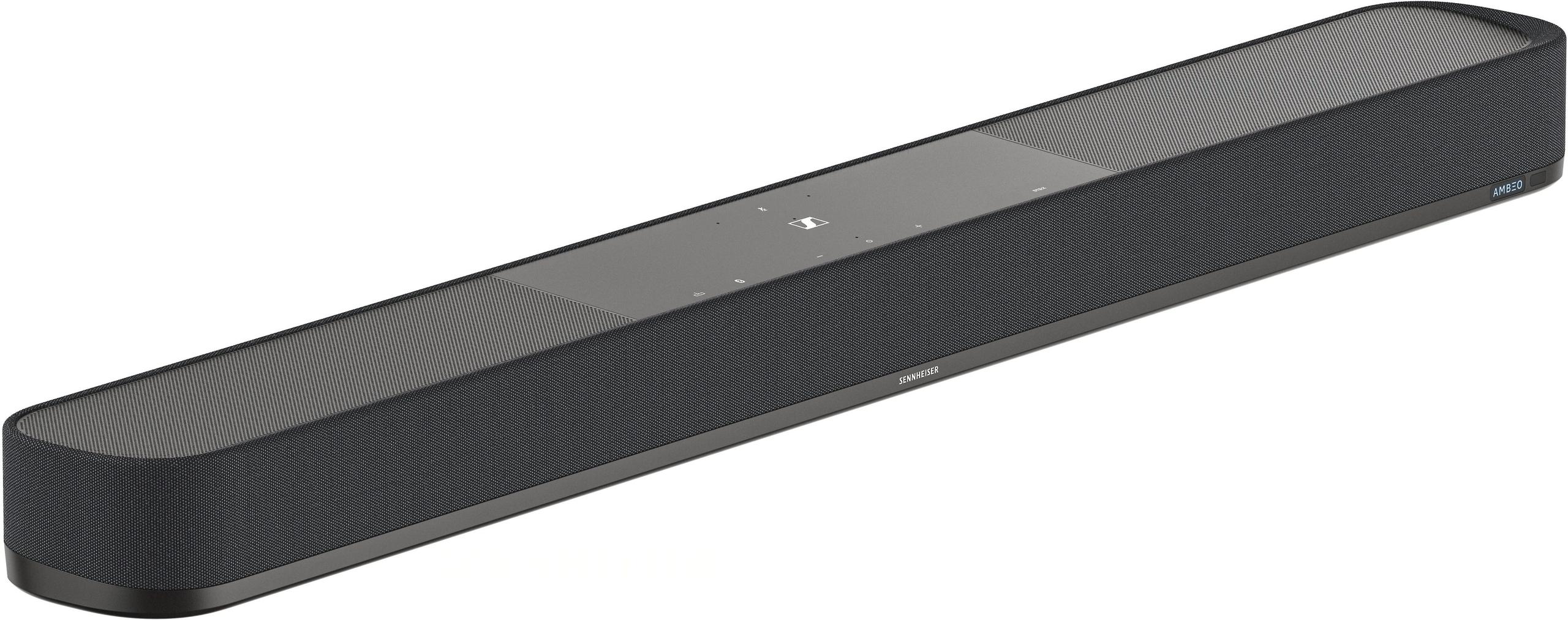
The Sennheiser AMBEO Soundbar launched in 2021, representing years of research and development in collaboration with the Fraunhofer Institute—the same organization behind MP3 technology. Since its release, Sennheiser has continuously updated the system's firmware, adding support for new audio formats and refining its virtualization algorithms.
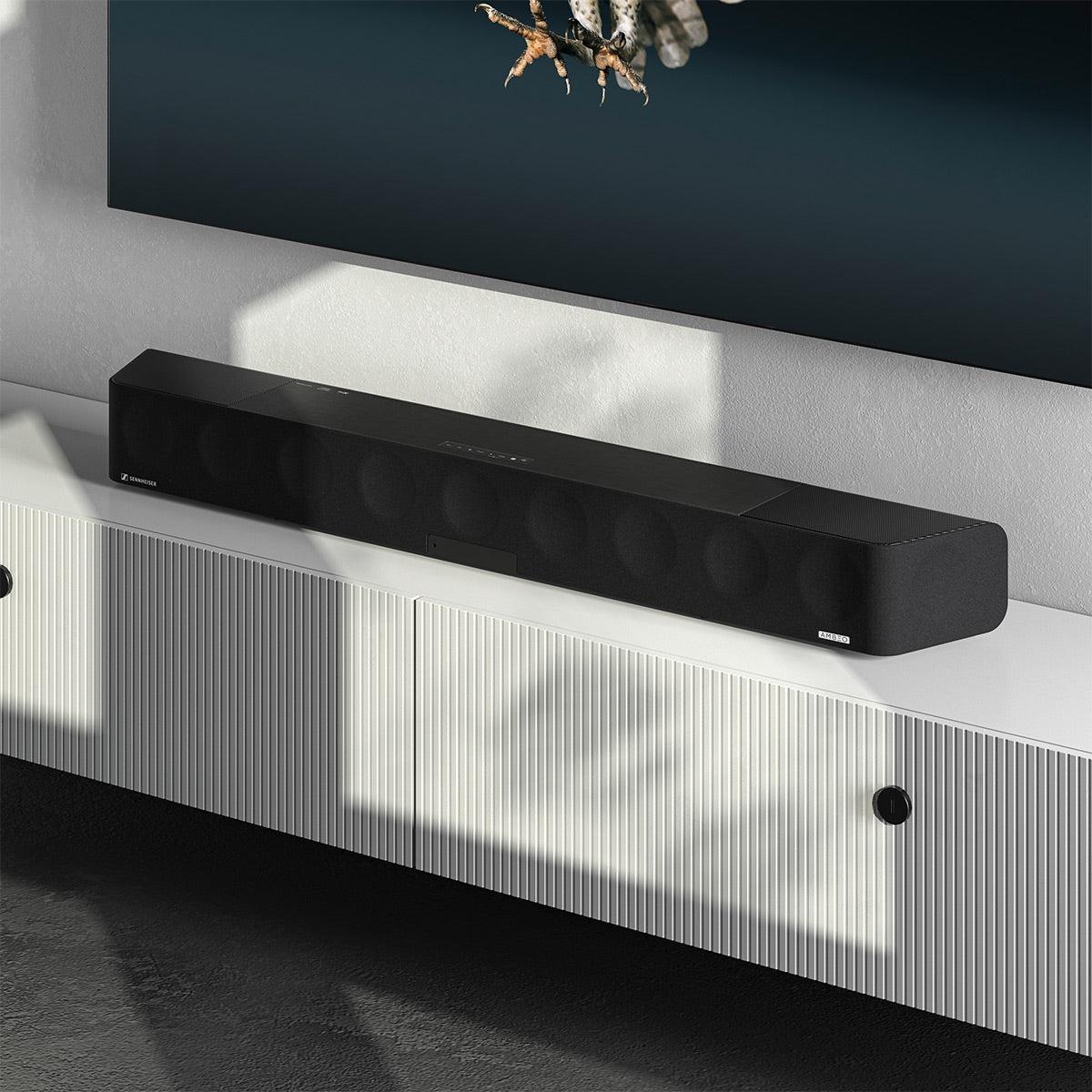
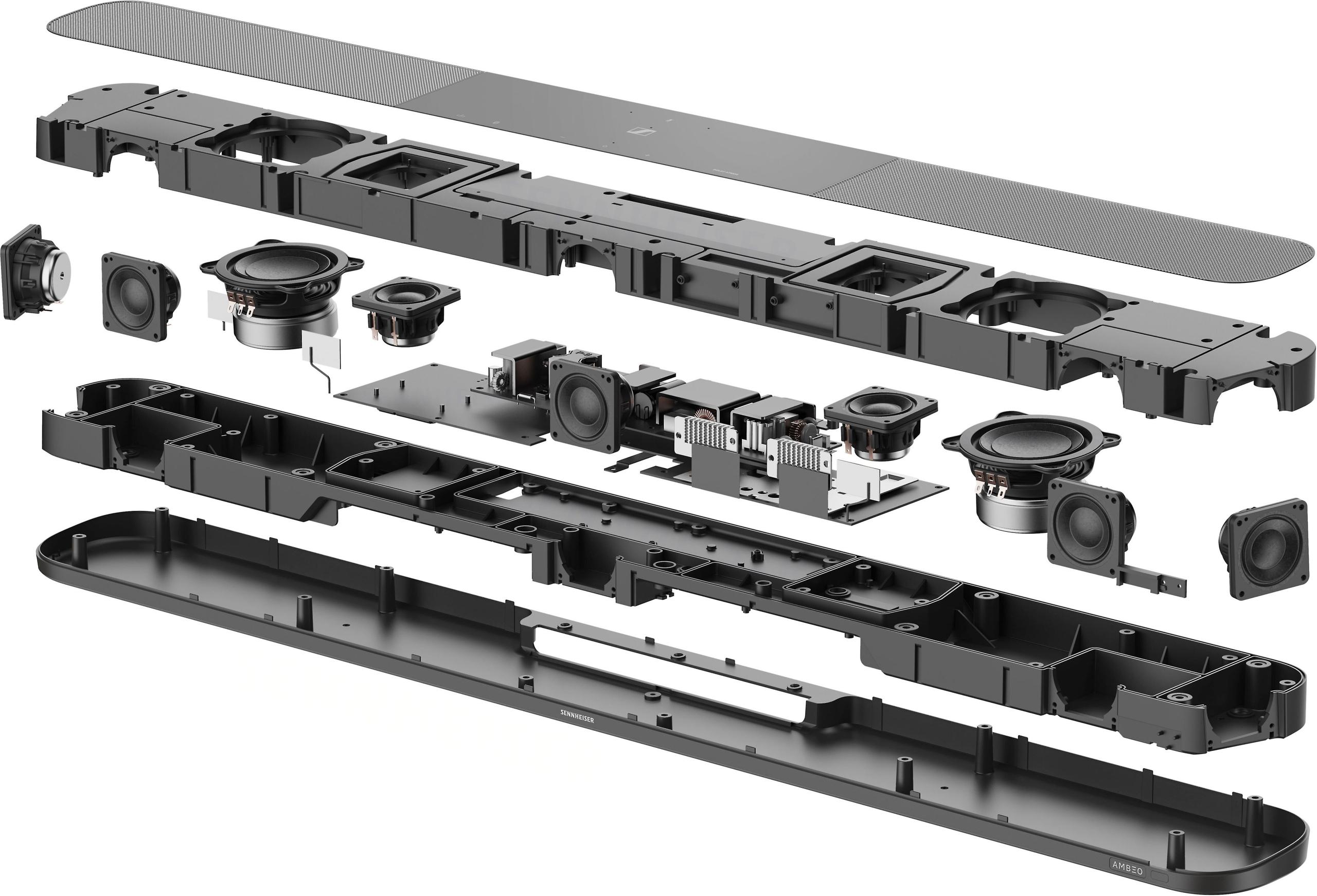
The AMBEO's technical sophistication becomes apparent when you examine its driver configuration. Depending on the model, it houses 9-13 individual speakers, each powered by dedicated Class D amplifiers. These include up-firing drivers that bounce sound off your ceiling to create height effects, side-firing drivers for width, and precision-tuned aluminum cone drivers for midrange and treble reproduction. The two built-in 4-inch long-throw woofers handle bass duties, though many users eventually add the optional AMBEO Sub for deeper extension.
The real magic happens in the digital processing realm. The AMBEO uses 32-bit processing with what Sennheiser calls "AMBEO 3D virtualization technology." This system analyzes your room's acoustic characteristics using built-in microphones, then creates a detailed acoustic model that accounts for wall surfaces, ceiling height, and furniture placement. It uses this information to precisely control how sound waves interact with your environment, effectively turning your entire room into a speaker system.
Support for modern audio formats sets the AMBEO apart from budget alternatives. Dolby Atmos and DTS:X are "object-based" audio formats that treat sounds as three-dimensional objects moving through space, rather than traditional channel-based audio. When properly implemented, these formats can place sounds with pinpoint accuracy anywhere in a three-dimensional sphere around your listening position—including above your head.
The system's room calibration deserves special attention. Unlike simple systems that might adjust basic EQ settings, the AMBEO performs sophisticated acoustic analysis using its four built-in microphones. It measures reverberation times, identifies reflective surfaces, and calculates optimal speaker timing to create coherent audio despite your room's unique characteristics. This process typically takes about five minutes and dramatically improves performance in challenging acoustic environments.
When evaluating soundbar systems, several performance metrics matter more than others. Power output gets the most marketing attention, but it's often misleading. The Poseidon D70 claims 410W peak power, while the AMBEO delivers 400-500W RMS depending on the model. However, these numbers don't tell the complete story.
RMS (Root Mean Square) power represents continuous, sustainable output, while peak power reflects momentary bursts. The AMBEO's RMS rating is more meaningful for real-world performance, as it can maintain higher output levels without distortion. More importantly, the quality of amplification and speaker drivers matters significantly more than raw wattage numbers.
Frequency response—the range of frequencies a system can reproduce—reveals important performance differences. The Poseidon D70 covers 35Hz-18kHz, which is respectable for its price category. The AMBEO extends from 30Hz-20kHz, providing slightly deeper bass and higher treble extension. However, these specifications don't account for how evenly the system reproduces frequencies across this range, which affects tonal balance.
Dynamic range—the difference between the quietest and loudest sounds a system can handle—significantly impacts the listening experience. Premium systems like the AMBEO excel here, maintaining clarity during whisper-quiet dialogue moments while delivering impactful explosions without compression or distortion. Budget systems often compress dynamic content to prevent damage to smaller drivers, reducing the emotional impact of movie soundtracks.
Soundstage width and imaging precision separate good systems from exceptional ones. The Poseidon D70 achieves excellent soundstage width through physical speaker placement—sounds genuinely emanate from different locations around your room. The AMBEO creates impressive virtual soundstage width, but the effect varies significantly based on listening position and room characteristics.
The Poseidon D70 requires thoughtful planning and patience. You'll need to position six separate components: the main soundbar, four surround speakers, and the subwoofer. Each surround speaker needs access to power, and you'll run cables from the soundbar to the subwoofer, then from the subwoofer to each surround speaker. The wireless subwoofer simplifies placement compared to fully wired systems, but you're still dealing with significant cable management.
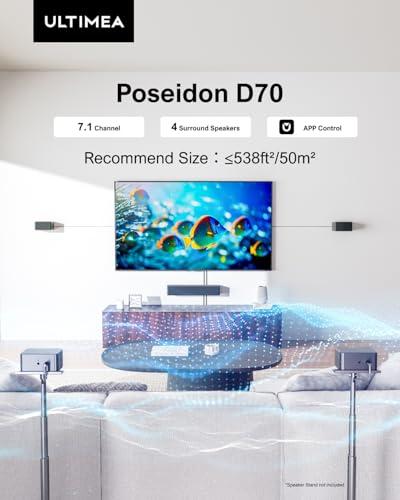
Room layout constraints become apparent quickly. The system works optimally in rooms between 108-270 square feet—smaller than many modern living spaces. In larger rooms, the modest power output and driver size of the surround speakers may leave you wanting more presence and impact. The sweet spot for optimal surround effects is relatively narrow, meaning not everyone in the room gets the full experience.
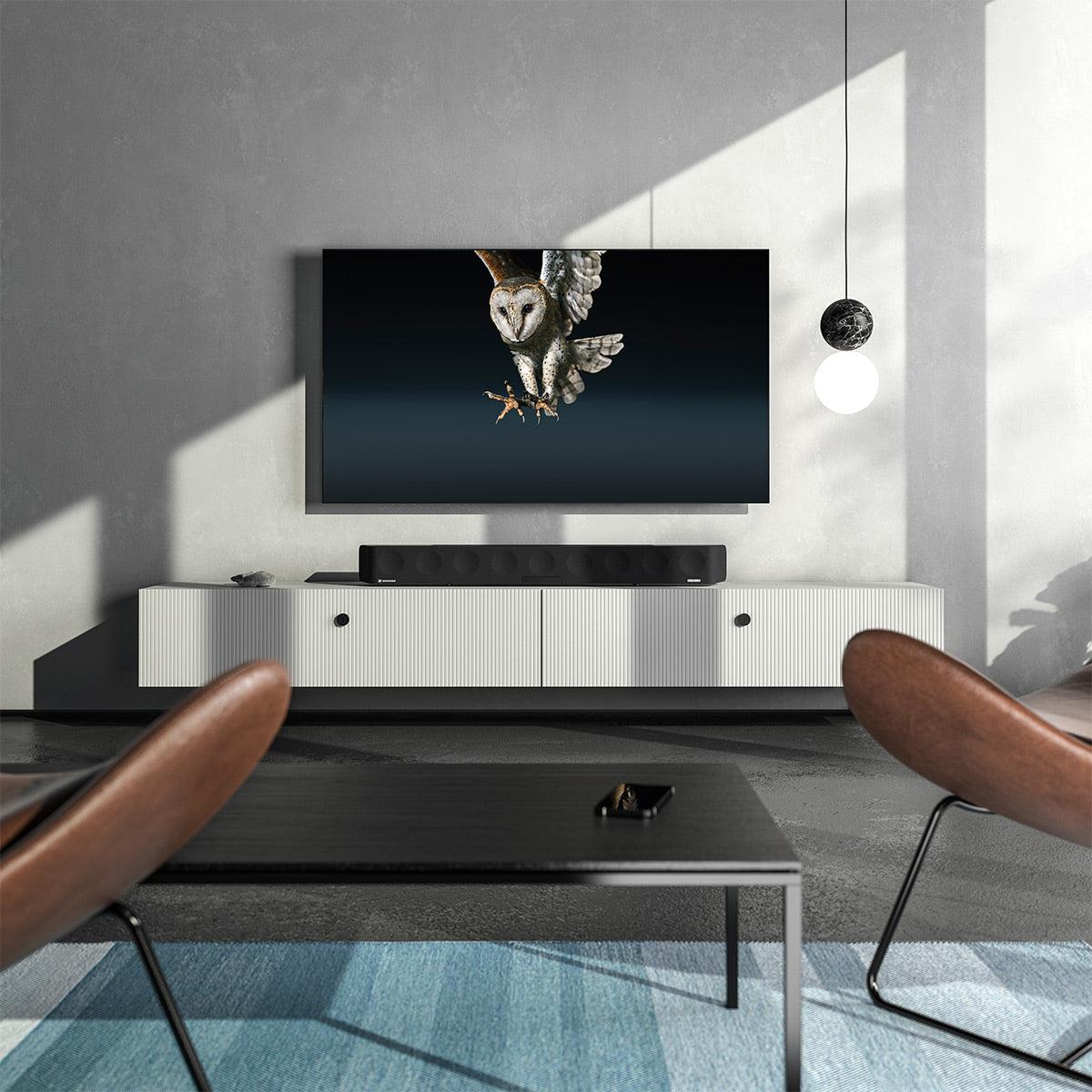
The AMBEO installation is deceptively simple: connect power, run a single cable to your TV, and execute the automatic room calibration routine. However, the system's 14-40 pound weight (depending on model) requires serious consideration for wall mounting. The automatic calibration process is genuinely impressive, using sophisticated algorithms to optimize performance for your specific room.
Placement flexibility varies dramatically between systems. The Poseidon D70 demands precise speaker positioning for optimal performance, and moving furniture or changing seating arrangements can significantly impact the experience. The AMBEO maintains consistent performance regardless of minor room changes, though major modifications might warrant re-running the calibration routine.
For serious home theater enthusiasts, several performance characteristics matter tremendously. Dialogue clarity tops the list, as even the most spectacular surround effects mean nothing if you can't understand what characters are saying. Both systems handle dialogue well, but through different approaches.
The Poseidon D70 benefits from discrete center channel separation in its soundbar configuration, ensuring dialogue remains anchored to the screen even during complex action sequences. The system's voice mode optimizes frequency response for speech intelligibility, though the modest driver size limits dynamic range during whisper-to-shout dialogue transitions.
The AMBEO's sophisticated processing includes dedicated voice enhancement algorithms that can isolate and amplify dialogue even in complex soundtracks. This becomes particularly valuable with poorly mixed content or when watching at reduced volumes during late-night viewing sessions.
Surround immersion reveals the fundamental difference between approaches. The Poseidon D70 delivers authentic positional cues that remain consistent regardless of listening position within the sweet spot. When properly calibrated, you can close your eyes and point exactly toward the source of any sound effect. This precision particularly benefits action movies and gaming where spatial awareness enhances the experience.
The AMBEO creates impressive surround immersion through psychoacoustic manipulation—essentially tricking your brain's audio processing mechanisms. The effect can be startlingly convincing, particularly with Dolby Atmos content where sounds appear to move smoothly through three-dimensional space. However, the illusion works best from specific listening positions and can be less convincing for listeners seated outside the optimal zone.
Bass reproduction capabilities differ significantly. The Poseidon D70's 6.5-inch wireless subwoofer provides satisfying impact for its size and price, though it may struggle with the deepest movie sound effects or music that demands true deep bass extension. The AMBEO's built-in woofers handle most content capably, but many users eventually add the optional AMBEO Sub to achieve reference-level low-frequency performance.
At the time of writing, these systems occupy vastly different price territories, with the AMBEO commanding roughly 7-10 times the investment of the Poseidon D70. This price differential reflects fundamental differences in engineering sophistication, build quality, and feature sets rather than simple markup inflation.
The Poseidon D70 represents exceptional value for users prioritizing authentic surround sound over premium features. For the price of a typical 2.1 soundbar from established brands, you receive a complete 7.1 system with extensive customization options. This value proposition becomes even more compelling when considering that equivalent discrete surround systems typically require separate amplification and significantly higher investment.
The AMBEO pricing reflects its positioning as a premium lifestyle product that eliminates traditional surround sound compromises. When compared to high-end discrete surround systems requiring multiple speakers, amplification, and professional installation, the AMBEO's pricing becomes more reasonable. The convenience factor alone justifies the premium for many users who want exceptional performance without complex installation requirements.
Upgrade potential differs significantly between systems. The Poseidon D70 represents a complete, fixed configuration—you cannot upgrade individual components or add height channels for Dolby Atmos support. However, the extensive EQ customization options allow for significant sonic tuning as your preferences evolve.
The AMBEO benefits from regular firmware updates that have continuously added features and format support since its release. Recent updates have enhanced its upmixing algorithms, added new streaming service compatibility, and improved room calibration accuracy. This ongoing development extends the system's useful life and maintains its relevance as audio formats evolve.
The decision between these approaches ultimately depends on your specific priorities, constraints, and expectations. The Poseidon D70 makes sense for users who want authentic surround sound positioning at an accessible price point and don't mind the complexity of multi-component installation. It's particularly compelling for smaller rooms where the physical speakers can be properly positioned and powered.
Choose the Poseidon D70 if you have a suitable room layout with adequate power outlet access, enjoy audio customization through EQ tweaking, and prioritize getting the maximum surround sound impact per dollar spent. It's also the better choice if your content primarily consists of traditional surround formats rather than modern Dolby Atmos productions.
The AMBEO appeals to users who prioritize convenience, premium build quality, and cutting-edge audio processing over value optimization. It's the superior choice for challenging room layouts where physical surround speakers aren't practical, and for users who demand support for modern audio formats including Dolby Atmos and 360 Reality Audio.
Choose the AMBEO if you want the simplicity of single-unit installation, need comprehensive connectivity including 4K HDR pass-through, value smart home integration with voice assistants, and consume content that includes modern immersive audio formats. It's also the better long-term investment if you expect your audio needs to evolve or if you prioritize having a system that receives ongoing feature updates.
Both systems deliver impressive performance within their respective categories, and either choice can provide years of listening enjoyment when properly matched to user expectations and room characteristics. The key is honestly assessing your priorities, constraints, and long-term plans before making this significant audio investment.
| Ultimea Poseidon D70 | Sennheiser AMBEO Soundbar |
|---|---|
| Speaker Configuration - Determines authentic vs. virtual surround experience | |
| 8 discrete speakers: 3-driver soundbar + 4 surround speakers + wireless subwoofer | 9-13 drivers in single unit with up-firing, side-firing, and forward-firing configuration |
| Surround Sound Technology - Core difference in how immersion is created | |
| True 7.1 with physical speaker placement using SurroundX positioning | Virtual 7.1.4 surround using AMBEO 3D virtualization and room calibration |
| Power Output - Impact on volume and dynamic range | |
| 410W peak / 144W RMS distributed across 8 speakers | 400-500W RMS with dedicated Class D amplifiers per driver |
| Audio Format Support - Modern content compatibility | |
| Traditional surround formats, no Dolby Atmos or DTS:X | Full Dolby Atmos, DTS:X, MPEG-H, and 360 Reality Audio support |
| Installation Complexity - Setup time and room requirements | |
| Multi-component setup requiring 6 separate units and cable management | Single-unit installation with automatic room calibration |
| Room Size Optimization - Performance sweet spot | |
| 108-270 sq ft rooms with multiple power outlets for speakers | 200+ sq ft rooms, single power connection required |
| Connectivity Options - Integration with modern devices | |
| HDMI ARC only, optical, Bluetooth 5.3, USB, AUX (no 4K pass-through) | Multiple HDMI inputs with 4K HDR pass-through, eARC, Wi-Fi 6, Ethernet |
| Customization and Control - User adjustment capabilities | |
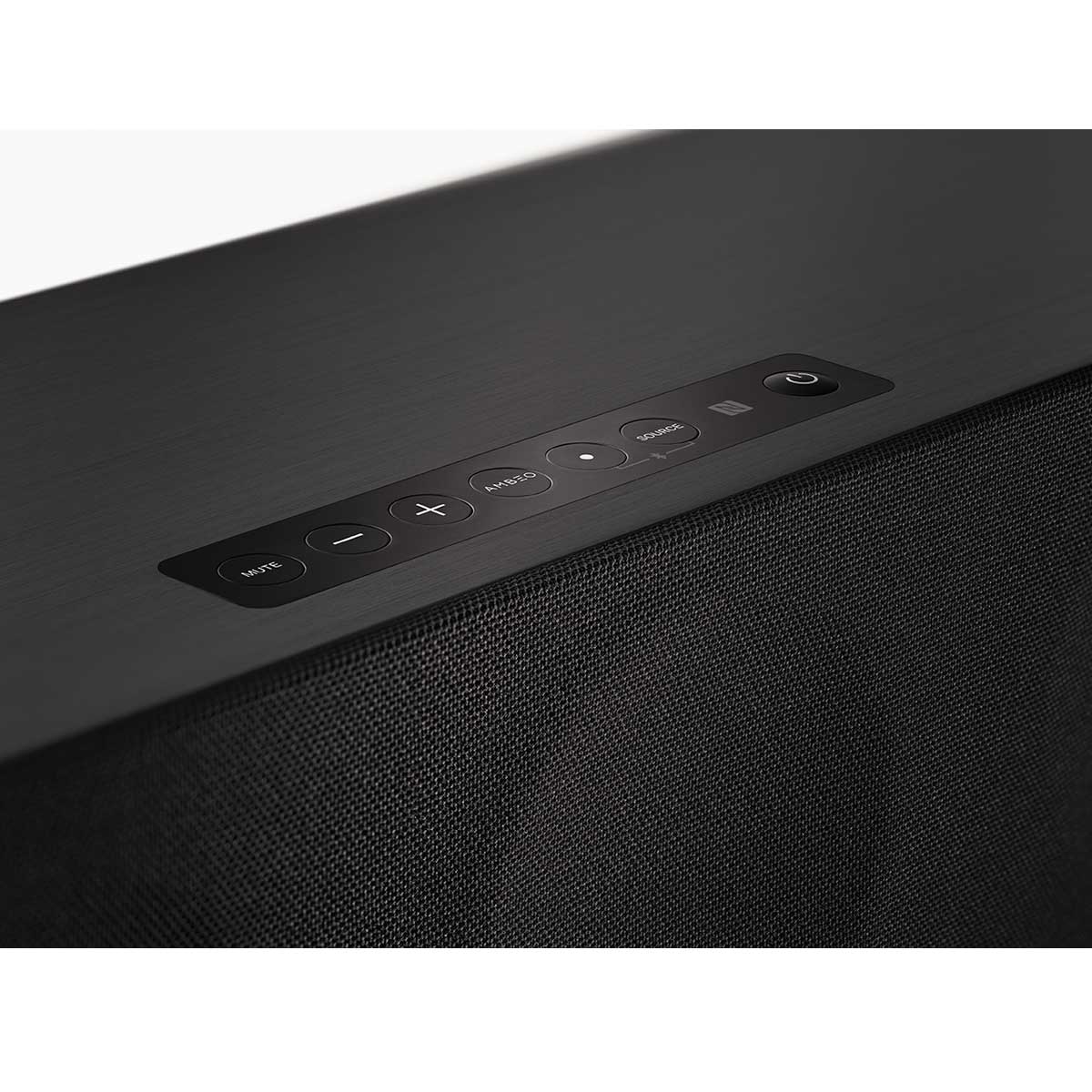
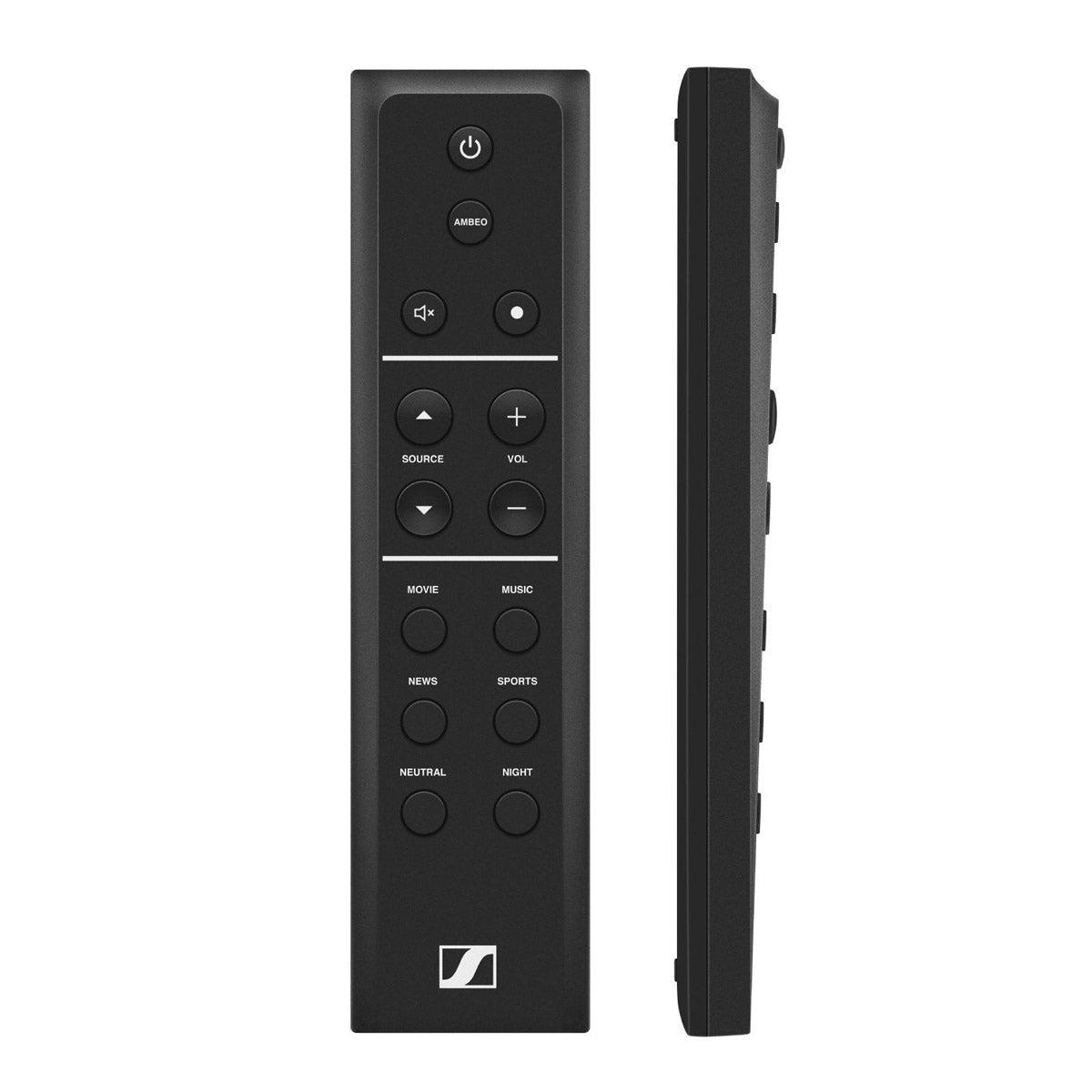
| 121 preset EQ matrices, 10-band equalizer, mobile app control | Voice enhancement, night mode, adjustable virtualization levels, smart assistant integration |
| Frequency Response - Bass extension and treble clarity | |
| 35Hz - 18kHz with 6.5" wireless subwoofer | 30Hz - 20kHz with built-in long-throw woofers |
| Smart Features - Modern convenience and streaming | |
| Basic app control, IR remote, limited streaming options | Built-in Alexa/Google Assistant, AirPlay 2, Chromecast, comprehensive streaming |
| Upgrade Path - Future expandability | |
| Fixed 7.1 configuration, extensive EQ customization only | Firmware updates add features, optional wireless AMBEO Sub expansion |
| Value Proposition - Performance per dollar invested | |
| Exceptional value for authentic multi-channel surround at budget pricing | Premium convenience and processing sophistication at luxury pricing |
The Ultimea Poseidon D70 uses physical speakers positioned around your room to create true 7.1 surround sound, while the Sennheiser AMBEO Soundbar uses advanced virtualization technology from a single unit to simulate surround effects. The D70 gives you authentic directional audio from discrete speakers, whereas the AMBEO creates immersive sound through sophisticated digital processing.
The Ultimea Poseidon D70 is specifically optimized for smaller rooms between 108-270 square feet and works well in compact spaces where you can properly position the surround speakers. The Sennheiser AMBEO Soundbar is designed for larger rooms over 200 square feet and may be overpowered for very small spaces.
The Ultimea Poseidon D70 requires some wiring since the four surround speakers connect to the wireless subwoofer, though the subwoofer itself connects wirelessly to the main soundbar. The Sennheiser AMBEO Soundbar only needs a single power cord and one connection to your TV, making it much simpler to install.
Only the Sennheiser AMBEO Soundbar supports Dolby Atmos, DTS:X, and other modern 3D audio formats. The Ultimea Poseidon D70 does not support Dolby Atmos but provides excellent traditional 7.1 surround sound through its physical speaker arrangement.
Both systems offer smartphone app control. The Ultimea Poseidon D70 app provides access to 121 preset EQ settings and a 10-band equalizer for extensive sound customization. The Sennheiser AMBEO app handles room calibration, streaming control, and voice assistant integration.
The Sennheiser AMBEO Soundbar is significantly easier to set up, requiring only a connection to your TV and running an automatic calibration routine. The Ultimea Poseidon D70 involves positioning six separate components around your room and managing cable connections between them.
The Ultimea Poseidon D70 includes a dedicated 6.5-inch wireless subwoofer that provides solid bass impact for its size. The Sennheiser AMBEO has built-in woofers that handle bass well, though many users add the optional AMBEO Sub for deeper low-frequency extension.
The Ultimea Poseidon D70 offers exceptional value, delivering a complete 7.1 surround system with authentic directional audio at a budget-friendly price point. The Sennheiser AMBEO Soundbar commands premium pricing but justifies it with sophisticated technology, premium build quality, and extensive smart features.
Both systems handle music well but in different ways. The Ultimea Poseidon D70 provides wide soundstage through its physical speaker placement and extensive EQ customization options. The Sennheiser AMBEO supports high-resolution audio streaming and 360 Reality Audio for immersive music experiences.
The Ultimea Poseidon D70 excels for gaming due to its precise directional audio cues from physical surround speakers, making it easier to locate enemies or environmental sounds. The Sennheiser AMBEO Soundbar provides impressive virtual surround for gaming but may not offer the same pinpoint accuracy for competitive gaming.
The Sennheiser AMBEO Soundbar offers broader TV compatibility with multiple HDMI inputs, 4K HDR pass-through, and eARC support for modern TVs. The Ultimea Poseidon D70 has more limited connectivity with HDMI ARC only and no 4K pass-through capability, which may limit integration with some setups.
For home theater, the choice depends on your priorities. The Ultimea Poseidon D70 delivers authentic surround sound positioning that's ideal for action movies and immersive content. The Sennheiser AMBEO Soundbar supports modern audio formats like Dolby Atmos and offers sophisticated processing that works exceptionally well with premium streaming content and 4K Blu-rays.
We've done our best to create useful and informative comparisons to help you decide what product to buy. Our research uses advanced automated methods to create this comparison and perfection is not possible - please contact us for corrections or questions. These are the sites we've researched in the creation of this article: ultimea.com - provantage.com - ultimea.com - youtube.com - youtube.com - bestbuy.com - the-gadgeteer.com - shopmyexchange.com - youtube.com - youtube.com - youtube.com - ultimea.com - manuals.plus - device.report - images.thdstatic.com - shopmyexchange.com - staples.com - ultimea.de - bestbuy.com - rtings.com - techradar.com - audioxpress.com - whathifi.com - upscaleaudio.com - soundstagesimplifi.com - global.sennheiser-hearing.com - sennheiser-hearing.com - audioadvice.com - abt.com - moon-audio.com

Privacy Policy
Terms and Conditions - Affiliate Policy
Home Security
© Copyright 2008-2026.
11816 Inwood Rd #1211, Dallas, TX 75244