



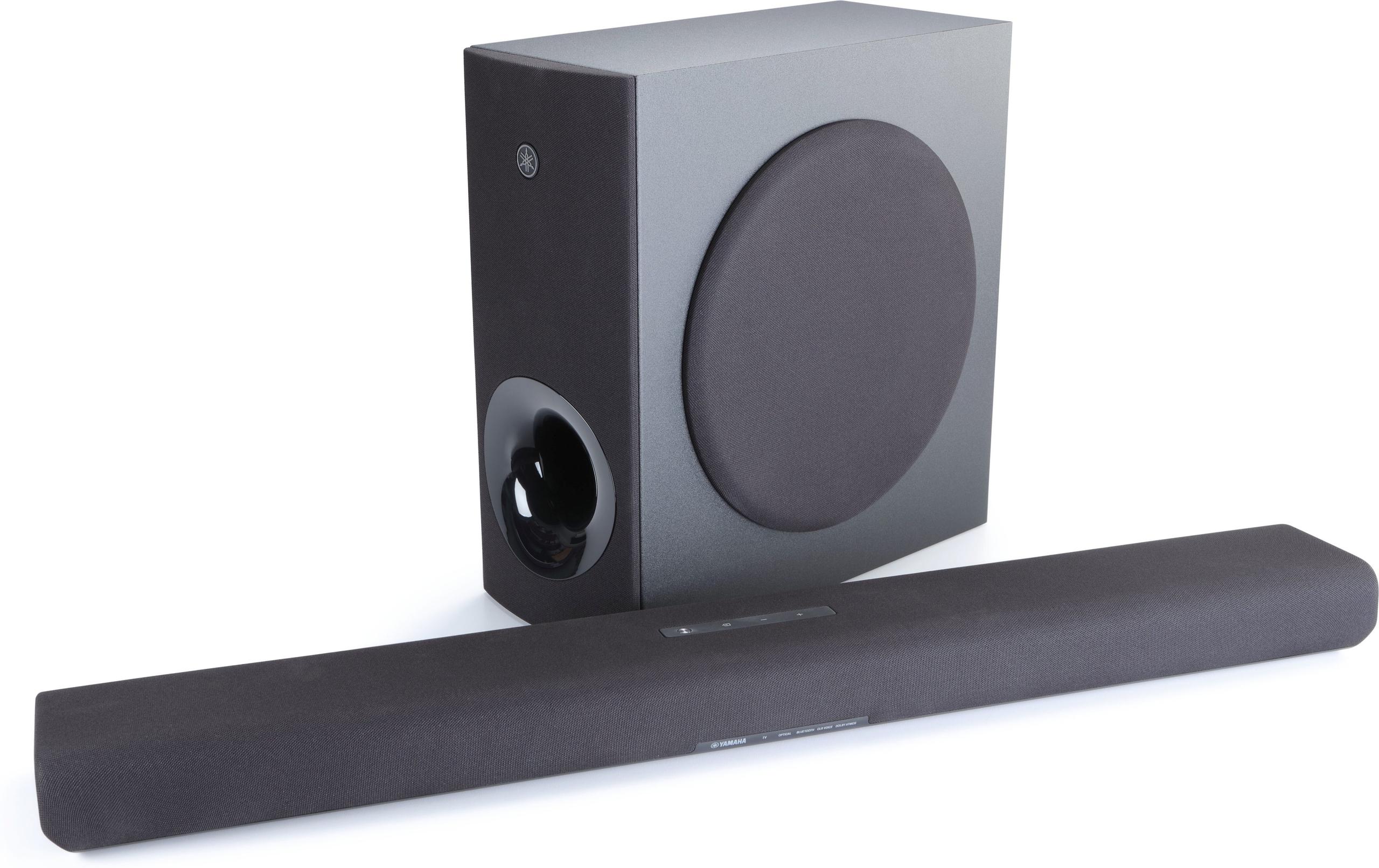
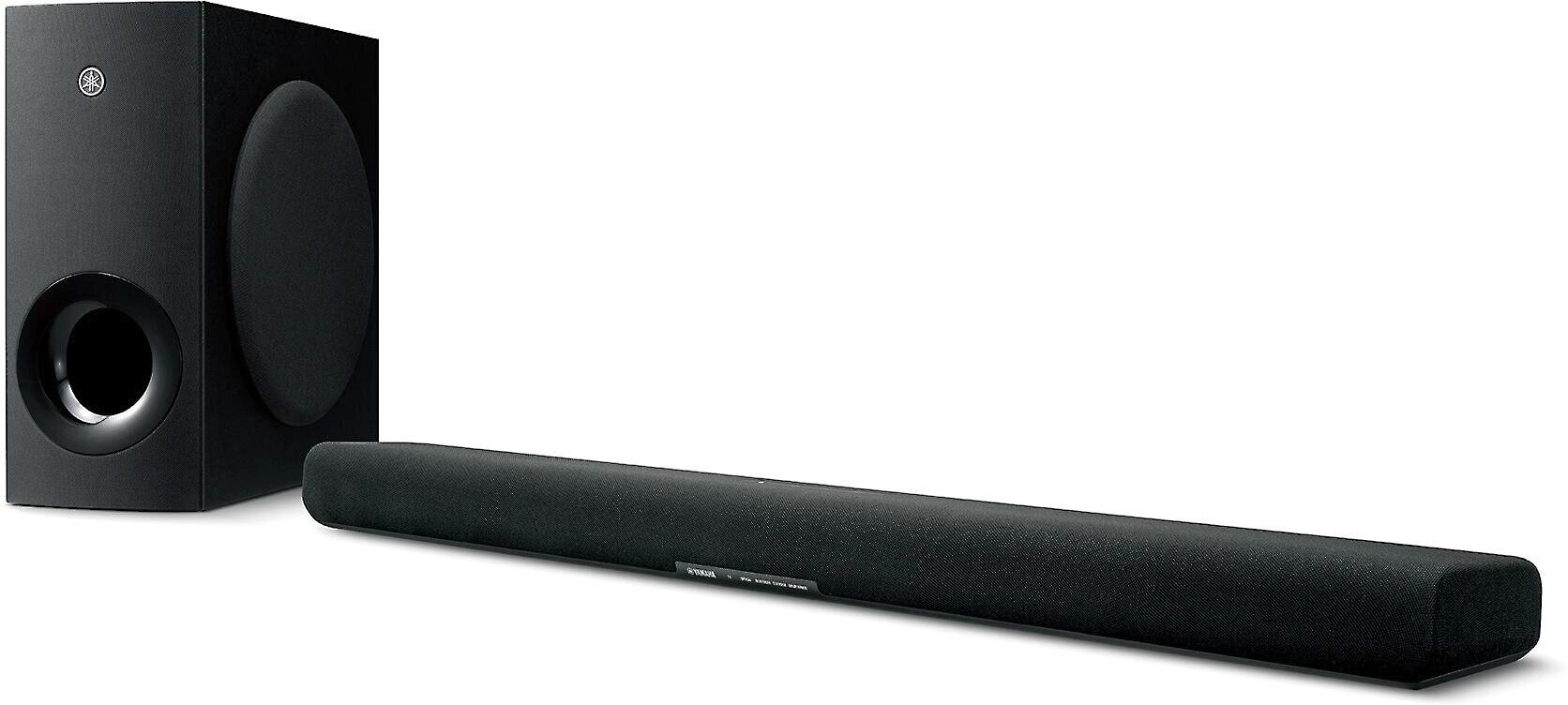
When your TV's built-in speakers just aren't cutting it anymore, a soundbar system becomes essential. But walking into this category can feel overwhelming—there's a massive difference between basic 2.1 setups and full surround sound systems. Today, we're comparing two distinctly different approaches: the Ultimea Poseidon D70, a true 7.1-channel system that surrounds you with eight separate speakers, and the Yamaha SR-B40A, a premium 2.1-channel system that relies on sophisticated audio processing.
These products represent fundamentally different philosophies. The D70 believes more speakers equal better immersion, while the SR-B40A argues that superior engineering and processing can deliver exceptional results with fewer components. Understanding this distinction is crucial because it affects everything from your living room layout to your wallet.
Soundbar systems break down into clear categories based on their channel configuration—the numbers you see like "2.1" or "7.1" aren't just marketing speak. The first number indicates how many main audio channels the system handles, while the ".1" refers to a dedicated subwoofer channel for bass frequencies below about 80Hz.
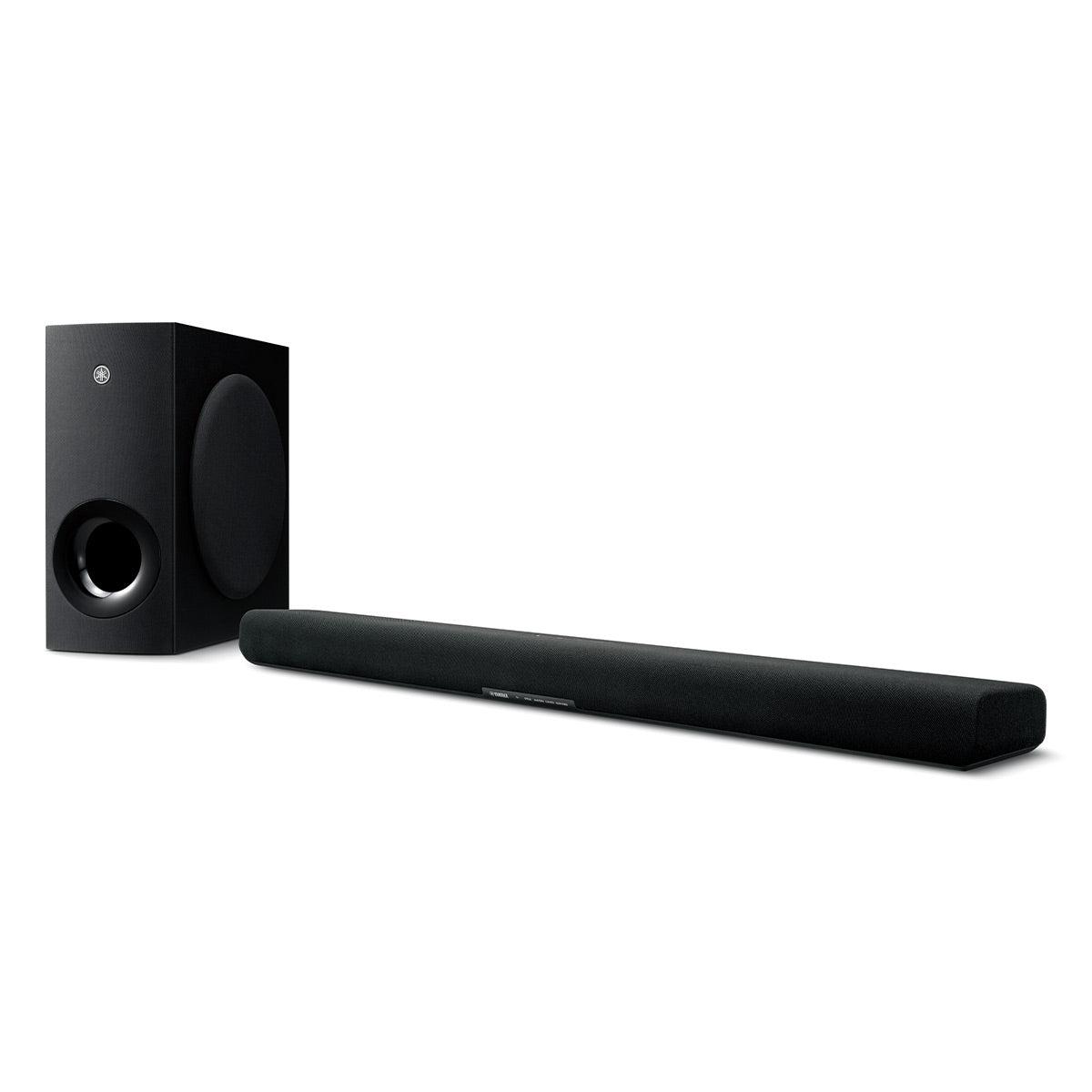
A 2.1-channel system like the SR-B40A uses a soundbar with left and right stereo channels plus a separate subwoofer. This setup excels at enhancing TV dialogue and providing fuller sound than your TV's tiny built-in speakers. The key advantage is simplicity—just two components to place and connect.
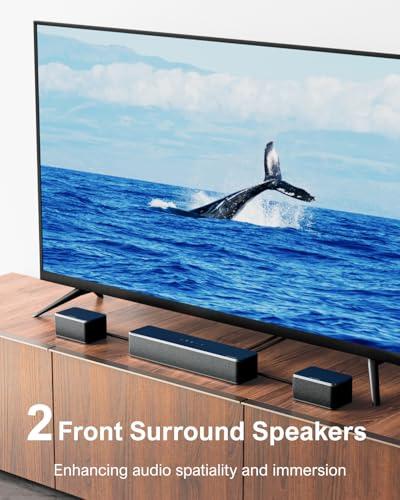
Multi-channel systems like the D70's 7.1 configuration add discrete surround speakers that you physically position around your room. This creates true directional audio where sounds can literally come from behind you or to your sides. The trade-off is complexity—more speakers mean more wires, more placement decisions, and more potential setup headaches.
Room size plays a huge role in which approach works better. In smaller spaces under 200 square feet, the benefits of physical surround speakers diminish because you're sitting too close to everything. Larger rooms above 300 square feet, however, really benefit from the D70's ability to fill space with directional audio.
Content type matters too. If you primarily watch TV shows and news, exceptional dialogue clarity becomes more important than surround immersion. Movie enthusiasts and gamers, conversely, crave that spatial audio experience where helicopters fly overhead and footsteps approach from behind.
The Ultimea Poseidon D70 represents a newer wave of affordable surround systems that emerged around 2022-2023, leveraging improvements in wireless technology and digital signal processing to make true multi-channel audio more accessible. At the time of writing, it sits in the budget-friendly category while delivering features that were previously reserved for much more expensive systems.
The Yamaha SR-B40A, released in 2021, comes from a completely different lineage. Yamaha has been refining audio equipment for over 130 years, and this soundbar reflects decades of acoustic engineering expertise compressed into a sleek package. It represents the premium end of 2.1 systems, focusing on audio quality over channel quantity.
Since these products launched, we've seen significant improvements in Bluetooth codecs (the methods devices use to compress and transmit audio wirelessly), AI-based audio processing, and app-based customization. The D70 particularly benefits from these trends with its smartphone app offering extensive equalization control—something that would have required expensive hardware just a few years ago.
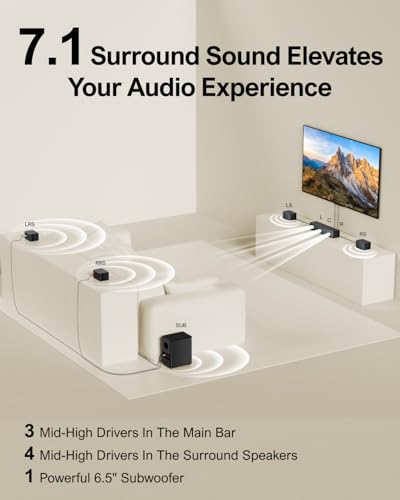
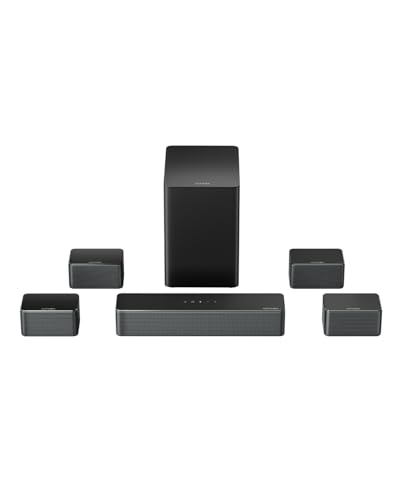
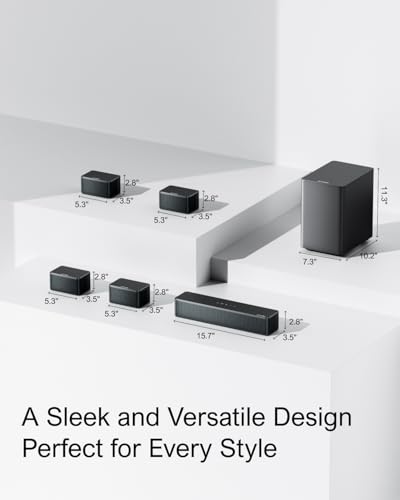
Raw power numbers can be misleading, but they tell an important story here. The Poseidon D70 delivers 410 watts peak power with 144 watts RMS (Root Mean Square—the sustained power that actually matters for consistent performance). This power gets distributed across eight separate drivers: three in the main soundbar, four in the surround speakers, and one large driver in the subwoofer.
The SR-B40A takes a different approach with lower total power but higher efficiency. Yamaha's engineers focus on clean amplification and driver optimization rather than brute force. This matters because poorly implemented high power can actually sound worse than well-engineered moderate power—distortion ruins the listening experience faster than insufficient volume.
In our research of user experiences, the D70 consistently gets praised for its ability to fill large rooms with authoritative sound. Multiple reviews mention it easily handling spaces up to 400 square feet without strain. The SR-B40A, while more limited in total output, delivers remarkable clarity and detail that remains clean even at higher volumes.
Frequency response measures how evenly a system reproduces different pitches, from deep bass rumbles to crystal-clear highs. The D70 achieves an impressive 35Hz to 18kHz range, meaning it can reproduce very low bass frequencies that you feel as much as hear. Those 35Hz capabilities put it in territory typically reserved for much more expensive subwoofers.
The SR-B40A doesn't publish specific frequency response numbers, but Yamaha's reputation suggests careful tuning across the audio spectrum. Their True Sound engineering philosophy emphasizes natural tonal balance over extended frequency extremes. In practice, this often means more accurate midrange reproduction—the frequencies where most music and dialogue live.
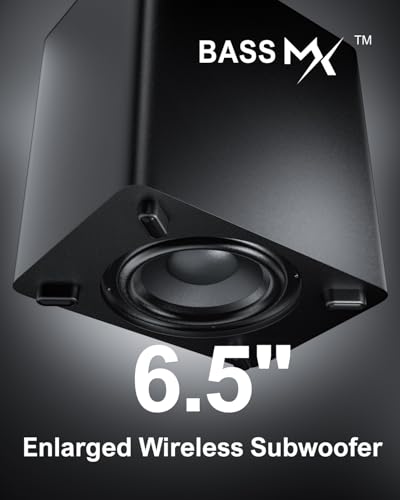
Bass extension deserves special attention because it dramatically affects the listening experience. The D70's 6.5-inch wireless subwoofer with BassMX technology provides that chest-thumping impact crucial for action movies and modern music. User reviews consistently highlight the surprising depth and punch from this relatively affordable system.
This represents the fundamental difference between these approaches. The D70 creates surround sound through physical speaker placement—when a helicopter flies across the screen, it literally moves sound from the front speakers to the rear ones positioned behind your seating area. This is called "discrete" surround sound, and it's the gold standard for immersion.
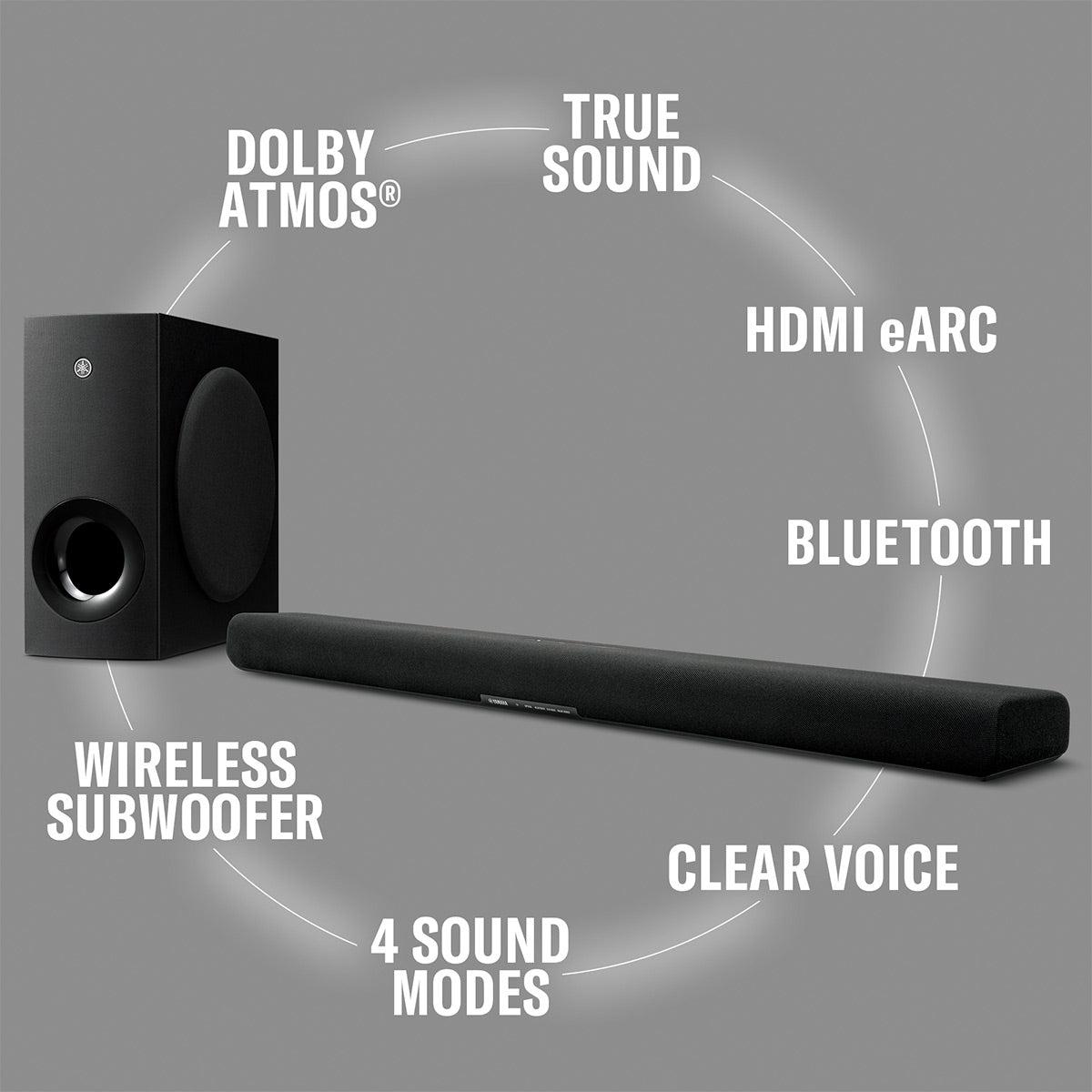
The SR-B40A uses sophisticated digital processing to create virtual surround effects from just the soundbar itself. Dolby Atmos processing analyzes incoming audio and uses psychoacoustic principles—essentially tricks your brain uses to determine sound direction—to simulate sounds coming from above and around you.
Both approaches have merit, but they excel in different scenarios. Physical surround wins for movies and gaming where precise directional cues matter. You'll actually hear enemy footsteps approaching from your left rear speaker in a video game, providing a competitive advantage. Virtual surround works better for general TV watching and music, where the added complexity of physical speakers doesn't justify the benefits.
Poor dialogue clarity ruins the viewing experience faster than any other audio flaw. Both systems address this differently, and it's worth understanding their approaches.
The Poseidon D70 uses dedicated center channel processing within its soundbar to isolate and enhance spoken words. Its three-driver array can separate dialogue from background music and effects, then present it clearly even during chaotic action scenes. The system's AI-based optimization continuously analyzes incoming audio to maintain dialogue prominence.
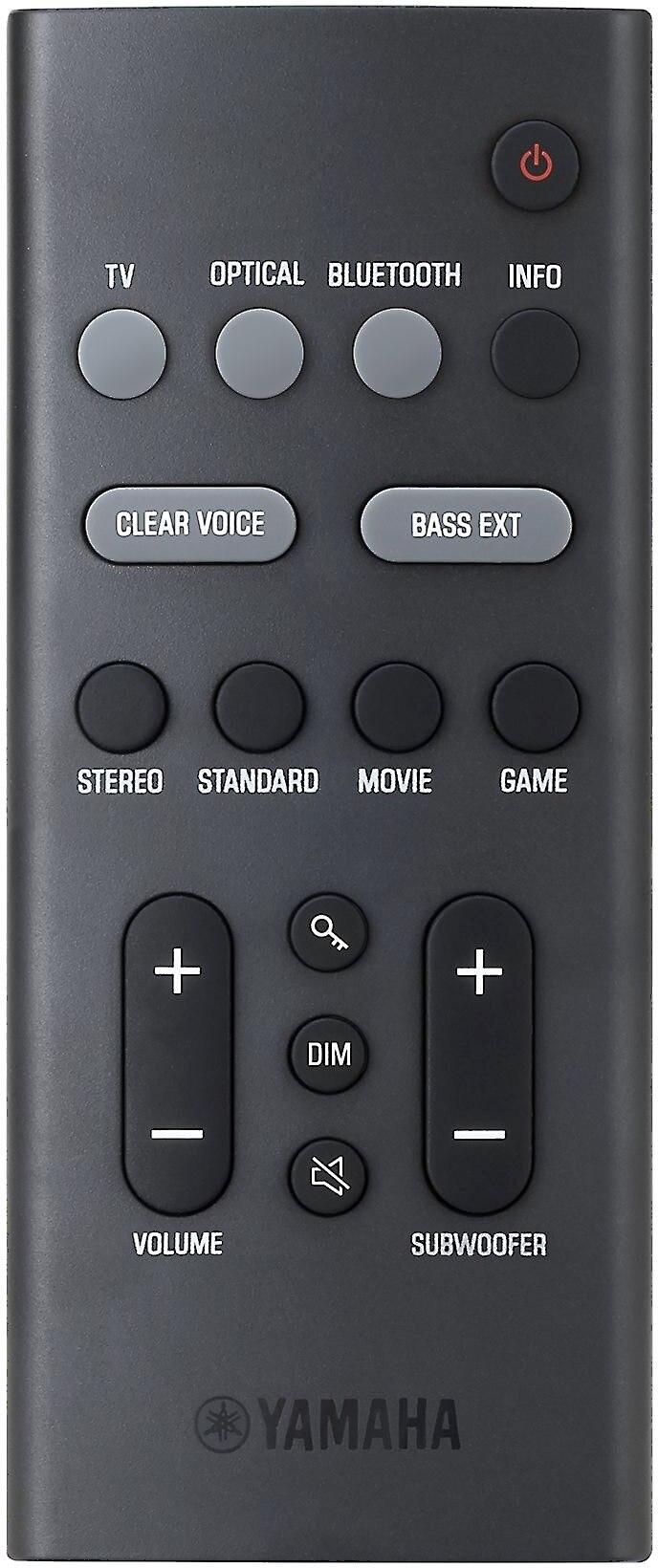
The SR-B40A implements Yamaha's Clear Voice technology, which goes beyond simple center channel enhancement. It analyzes the frequency characteristics of human speech and selectively boosts those ranges while reducing competing frequencies. This is particularly effective for streaming content where dialogue often gets buried under compressed audio tracks.
Based on our analysis of user feedback, both systems excel at dialogue clarity, but for different reasons. The D70 provides clear speech through power and separation, while the SR-B40A achieves it through sophisticated processing and tonal accuracy.
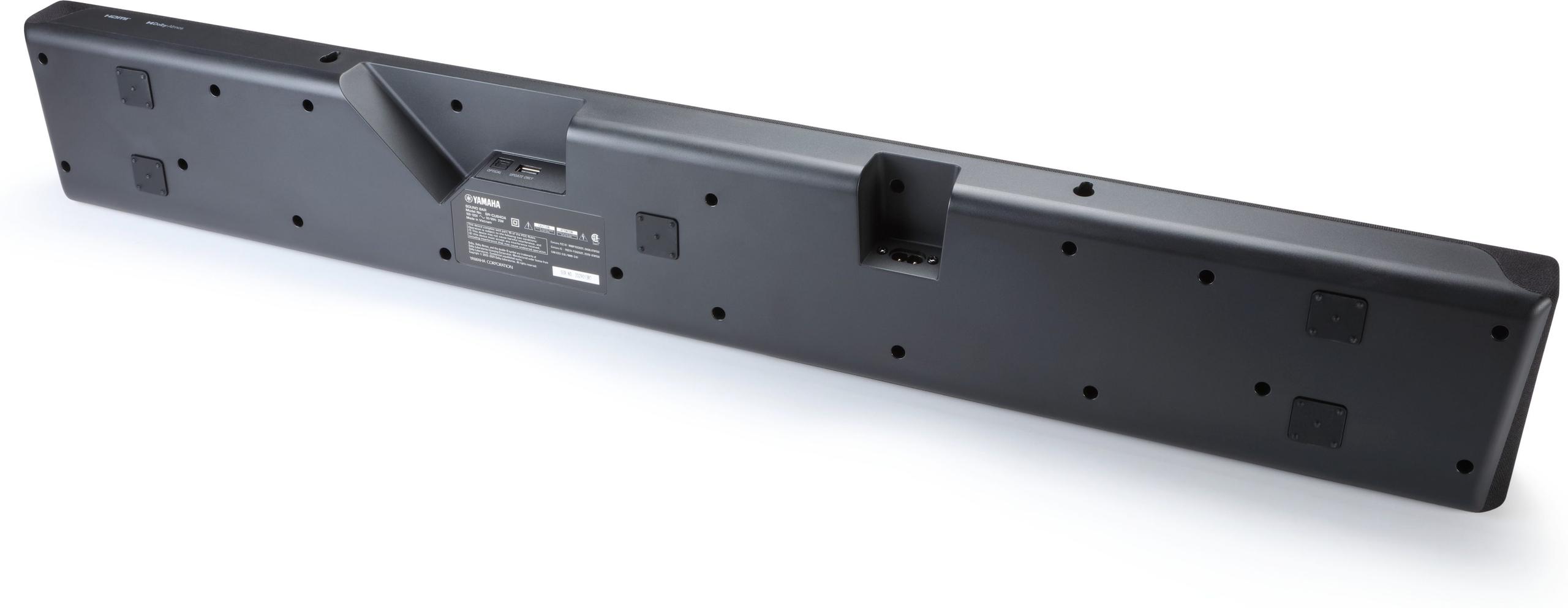
The D70 offers comprehensive connectivity with HDMI ARC, optical input, USB, Bluetooth 5.0, and auxiliary connections. HDMI ARC (Audio Return Channel) is crucial because it allows your TV to send audio back to the soundbar through the same cable that delivers video, simplifying setup and enabling TV remote control of basic soundbar functions.
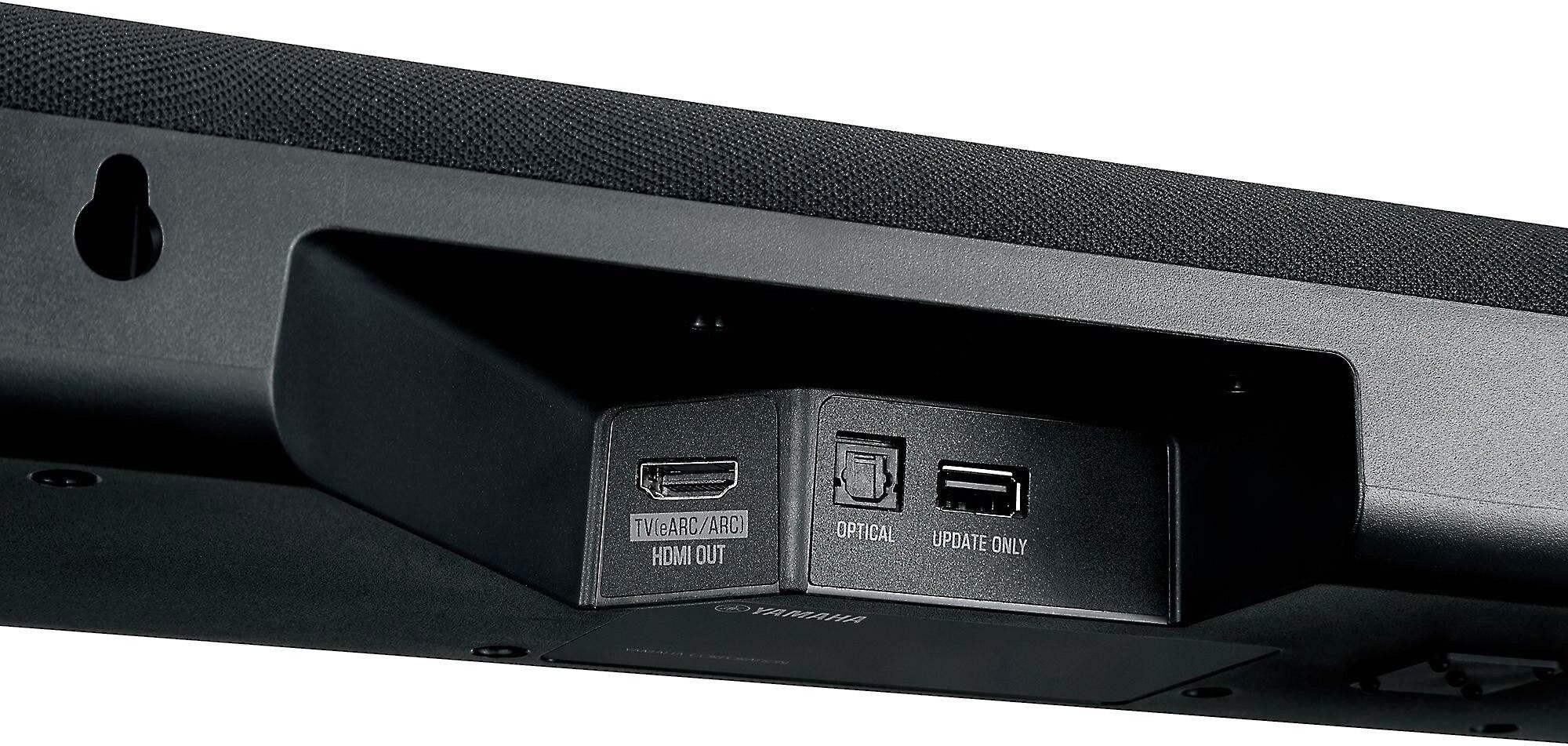
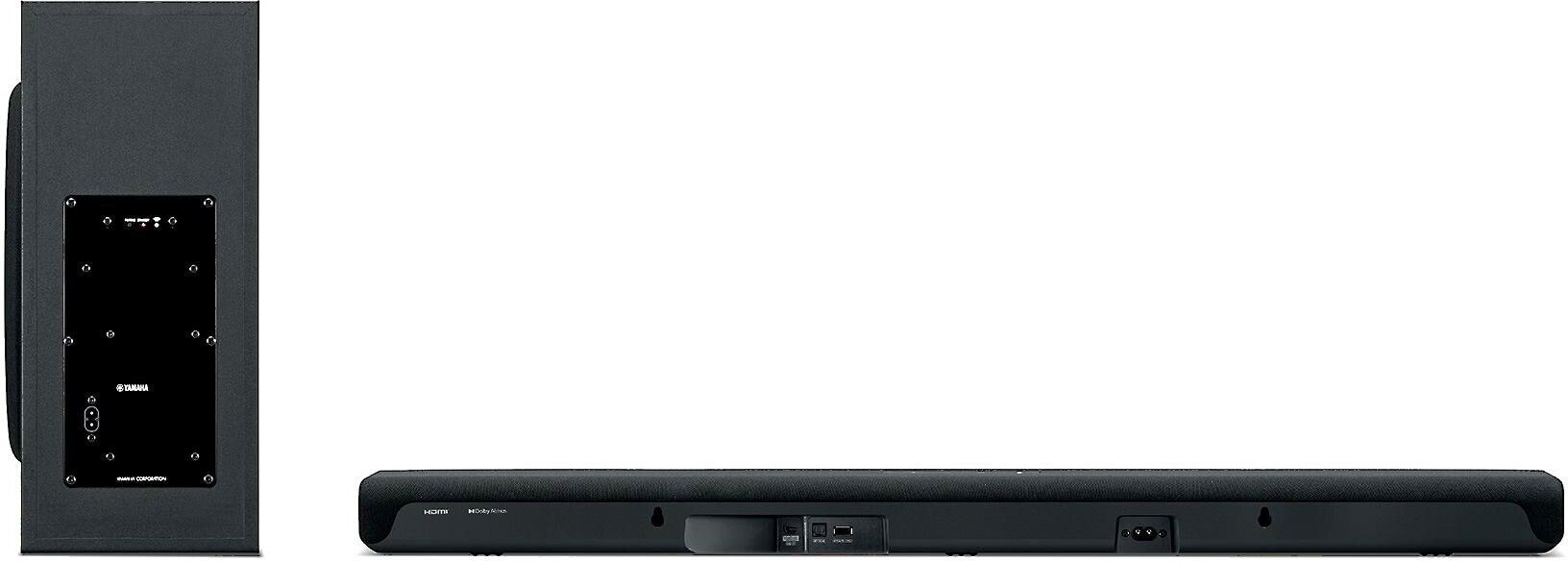
The SR-B40A steps up to HDMI eARC (enhanced Audio Return Channel), which supports higher-quality audio formats including uncompressed surround sound. It also features Bluetooth 5.1 with AAC codec support—important for iPhone users since AAC provides better audio quality than the standard SBC codec when streaming music wirelessly.
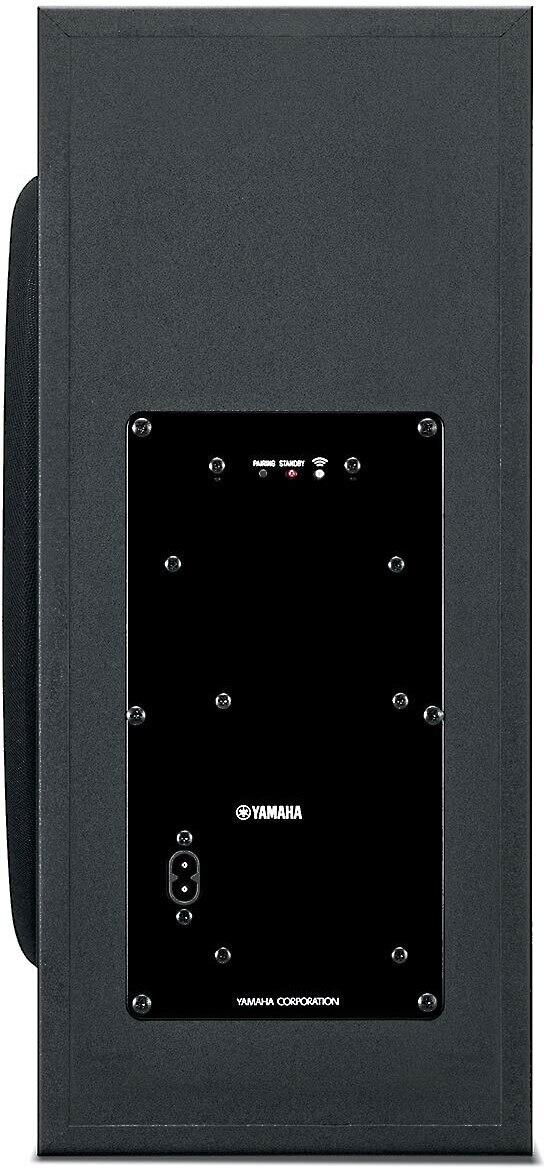
Both systems include wireless subwoofers, eliminating the need to run cables across your room to a bass unit. This seemingly simple feature dramatically improves installation flexibility and room aesthetics.
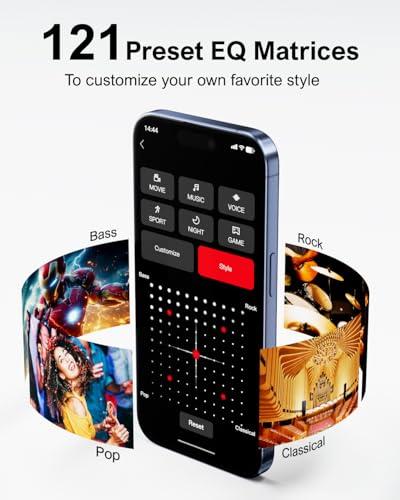
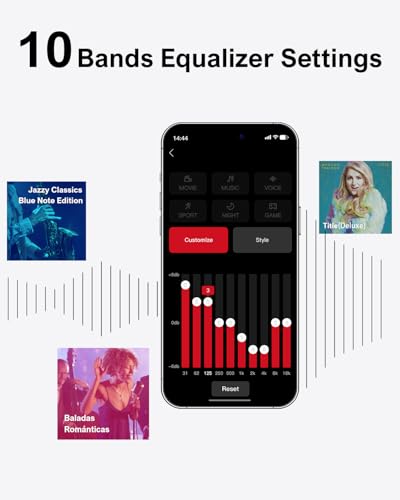
The Ultimea D70 includes a comprehensive smartphone app with 121 preset EQ matrices and a 10-band graphic equalizer. This level of customization was unthinkable in budget systems just a few years ago. You can fine-tune frequency response for your specific room acoustics or content preferences, then save multiple profiles for different viewing scenarios.
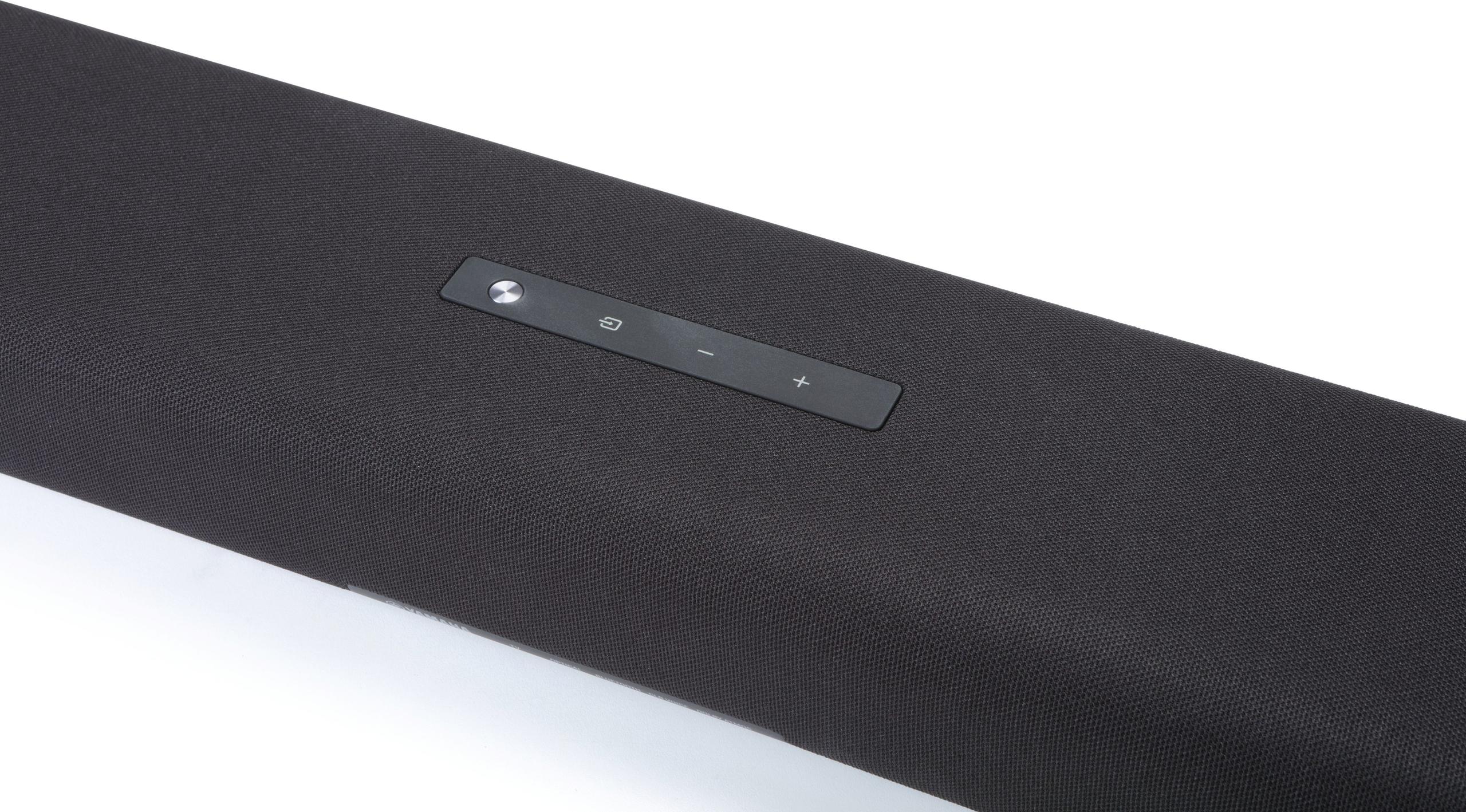
The SR-B40A takes a more refined approach with fewer but more carefully crafted options. Yamaha's Sound Bar Remote app focuses on essential controls and tone adjustments rather than overwhelming users with countless presets. This reflects different philosophies—some users want maximum tweakability, while others prefer expertly crafted defaults.
For dedicated home theater use, the Poseidon D70 provides clear advantages. The physical surround speakers create genuine spatial audio that enhances movie immersion dramatically. Action sequences come alive when explosions rumble from the subwoofer while debris sounds pan across the surround speakers. Horror movies become genuinely unsettling when subtle sounds emerge from behind your seating position.
The system's 410-watt peak power ensures it can handle demanding movie soundtracks without compression or distortion. Multiple user reviews praise its ability to deliver theater-like impact in home environments, particularly for the price point.
However, this comes with installation complexity. You'll need to position four surround speakers around your seating area and manage the wiring back to the subwoofer. The D70 includes color-coded cables and mounting hardware, but expect to spend additional time on setup compared to simpler systems.
The Yamaha SR-B40A excels for music listening and general entertainment. Yamaha's decades of audio engineering experience show in the system's natural tonal balance and musical accuracy. Vocals sound realistic, instruments maintain their distinctive characteristics, and the overall presentation feels cohesive rather than artificially enhanced.
The stereo imaging—how well the system creates the illusion of instruments and voices positioned across a sound stage—is particularly impressive. This matters more for music than movies, where precise stereo separation enhances the listening experience significantly.
For streaming services like Netflix and YouTube, where content quality varies widely, the SR-B40A's sophisticated processing helps normalize inconsistent audio. The Clear Voice feature proves invaluable for older movies or shows with poor audio mixing.
Gaming represents an interesting use case where the D70's physical surround advantage becomes most apparent. First-person shooters, racing games, and adventure titles all benefit from accurate directional audio cues. You'll hear approaching enemies, locate environmental sounds, and experience greater immersion in virtual worlds.
The system's relatively low input lag (the delay between audio signal input and sound output) ensures audio stays synchronized with visual action. Multiple gaming-focused reviews highlight the competitive advantage provided by the D70's surround speaker configuration.
At the time of writing, both systems occupy similar price ranges in the competitive soundbar market, making the value comparison particularly interesting.
The Poseidon D70 delivers exceptional value for those wanting true surround sound. You're getting eight discrete speakers, wireless subwoofer connectivity, comprehensive app control, and room-filling power for significantly less than traditional home theater receiver setups. The inclusion of mounting hardware and color-coded cables adds to the overall value proposition.
The SR-B40A represents a different value equation—you're paying for Yamaha's audio engineering heritage, premium processing capabilities, and refined build quality. The Dolby Atmos support ensures compatibility with current and future content formats, potentially extending the system's useful life.
Consider the total cost of ownership too. The D70 requires more complex installation, potentially including professional setup for optimal performance. The SR-B40A installs in minutes and immediately delivers optimized performance with minimal tweaking required.
The D70 demands careful consideration of your room layout. The four surround speakers need strategic placement for optimal effect—typically at ear level or slightly above, positioned to create an enveloping sound field around your primary seating area. Wall mounting is possible and often preferable, but requires planning and potentially professional installation.
Wire management becomes crucial with the D70. While the subwoofer connects wirelessly to the main soundbar, the surround speakers require physical connections back to the subwoofer unit. This means running cables along baseboards or through walls, depending on your room layout and aesthetic preferences.
The SR-B40A eliminates these concerns with its simple two-component design. The soundbar mounts easily under your TV or sits on a media console, while the wireless subwoofer can be positioned anywhere within reasonable range for optimal bass response.
Choose the Ultimea Poseidon D70 if you:
Want the most immersive home theater experience possible within a reasonable budget. The physical surround speakers create genuine spatial audio that virtual processing simply cannot match. You're willing to invest time in proper setup and speaker placement to achieve optimal performance.
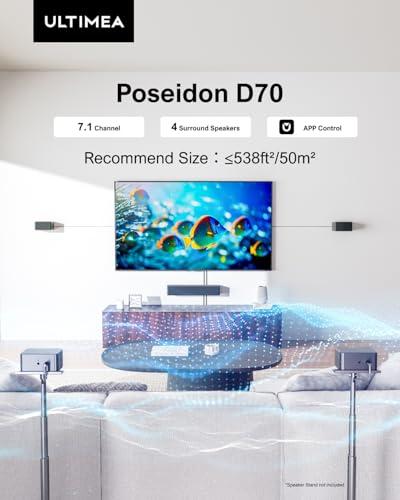
Have a dedicated media room or large living space where the surround speakers can be positioned effectively. Rooms over 300 square feet particularly benefit from the D70's power and multi-speaker configuration.
Enjoy gaming, action movies, or any content where directional audio enhances the experience. The competitive advantage in gaming and immersion factor in movies justify the additional setup complexity.
Value extensive customization options and don't mind spending time tweaking EQ settings and sound profiles to achieve your preferred audio signature.
Choose the Yamaha SR-B40A if you:
Prioritize audio quality and sophisticated processing over maximum immersion. Yamaha's engineering expertise delivers exceptional performance from a simpler configuration, particularly for music listening and dialogue-heavy content.
Want premium performance with minimal setup complexity. The two-component design installs quickly and delivers optimized sound immediately, without requiring room treatment or careful speaker placement.
Live in smaller spaces where physical surround speakers would be impractical or overwhelming. Apartments, condos, and rooms under 250 square feet often work better with refined 2.1 systems.
Value brand heritage and long-term reliability. Yamaha's reputation for durability and customer support provides peace of mind for a long-term audio investment.
These systems represent two valid but fundamentally different approaches to enhancing your audio experience. The Ultimea Poseidon D70 maximizes immersion and value for those willing to embrace complexity, while the Yamaha SR-B40A delivers refined performance and convenience for users who prioritize quality over quantity.
Neither approach is inherently superior—success depends on matching the system to your specific needs, room characteristics, and preferences. The D70 transforms dedicated home theater spaces into truly immersive environments, while the SR-B40A elevates everyday listening with sophisticated engineering and effortless operation.
Consider your primary use cases, installation preferences, and long-term audio goals when making this decision. Both systems will dramatically improve your TV's audio performance, but they'll do so in distinctly different ways that align with different user priorities and lifestyles.
| Ultimea Poseidon D70 | Yamaha SR-B40A |
|---|---|
| Channel Configuration - Determines surround sound immersion level | |
| True 7.1 with 8 physical speakers (3 soundbar + 4 surround + subwoofer) | 2.1 channel with virtual surround processing |
| Total Power Output - Affects maximum volume and room filling capability | |
| 410W peak / 144W RMS across all speakers | 200W total (exact RMS not specified) |
| Subwoofer Size - Impacts bass depth and impact | |
| 6.5" wireless subwoofer with BassMX technology | 6.25" wireless subwoofer with YST II technology |
| Frequency Response - Shows how low the bass extends | |
| 35Hz - 18kHz (deeper bass extension) | Not specified (likely 40Hz+ based on driver size) |
| Audio Processing Technology - Advanced features for sound optimization | |
| SurroundX + BassMX + AI deep learning optimization | Dolby Atmos + True Sound engineering + Clear Voice |
| Setup Complexity - Time and effort required for installation | |
| Complex: 4 wired surround speakers need positioning around room | Simple: Just soundbar and wireless subwoofer placement |
| Connectivity Options - Compatibility with different devices | |
| HDMI ARC, Optical, USB, Bluetooth 5.0, 3.5mm AUX | HDMI eARC, Optical, Bluetooth 5.1 with AAC codec |
| Customization Control - Ability to fine-tune sound | |
| Extensive: 121 EQ presets + 10-band equalizer via app | Refined: 4 sound modes + tone controls via app |
| Room Size Recommendation - Optimal space for best performance | |
| Medium to large rooms (250-400 sq ft) | Small to medium rooms (up to 300 sq ft) |
| Best Use Case - Where each system excels most | |
| Home theater and gaming with true surround immersion | TV viewing and music with premium audio quality |
The Ultimea Poseidon D70 is a true 7.1 surround sound system with 8 physical speakers that you place around your room, while the Yamaha SR-B40A is a 2.1 system with just a soundbar and subwoofer that uses virtual surround processing. The D70 creates real directional audio from multiple speakers, while the SR-B40A relies on advanced digital processing to simulate surround sound.
For dedicated home theater use, the Ultimea Poseidon D70 provides superior immersion with its physical surround speakers that create genuine 360-degree audio. You'll hear helicopters fly overhead and footsteps approach from behind. The Yamaha SR-B40A offers excellent movie audio quality with Dolby Atmos support, but cannot match the spatial audio experience of actual surround speakers positioned around your seating area.
The Yamaha SR-B40A is much simpler to install - just place the soundbar under your TV and position the wireless subwoofer anywhere in the room. The Ultimea Poseidon D70 requires positioning four surround speakers around your room and running cables back to the subwoofer, making setup more complex but delivering true surround sound in return.
The Yamaha SR-B40A typically performs better for music with its refined stereo imaging and Yamaha's decades of audio engineering expertise. The Ultimea Poseidon D70 can enhance music through its surround processing, but music purists often prefer the SR-B40A's natural tonal balance and accurate stereo reproduction.
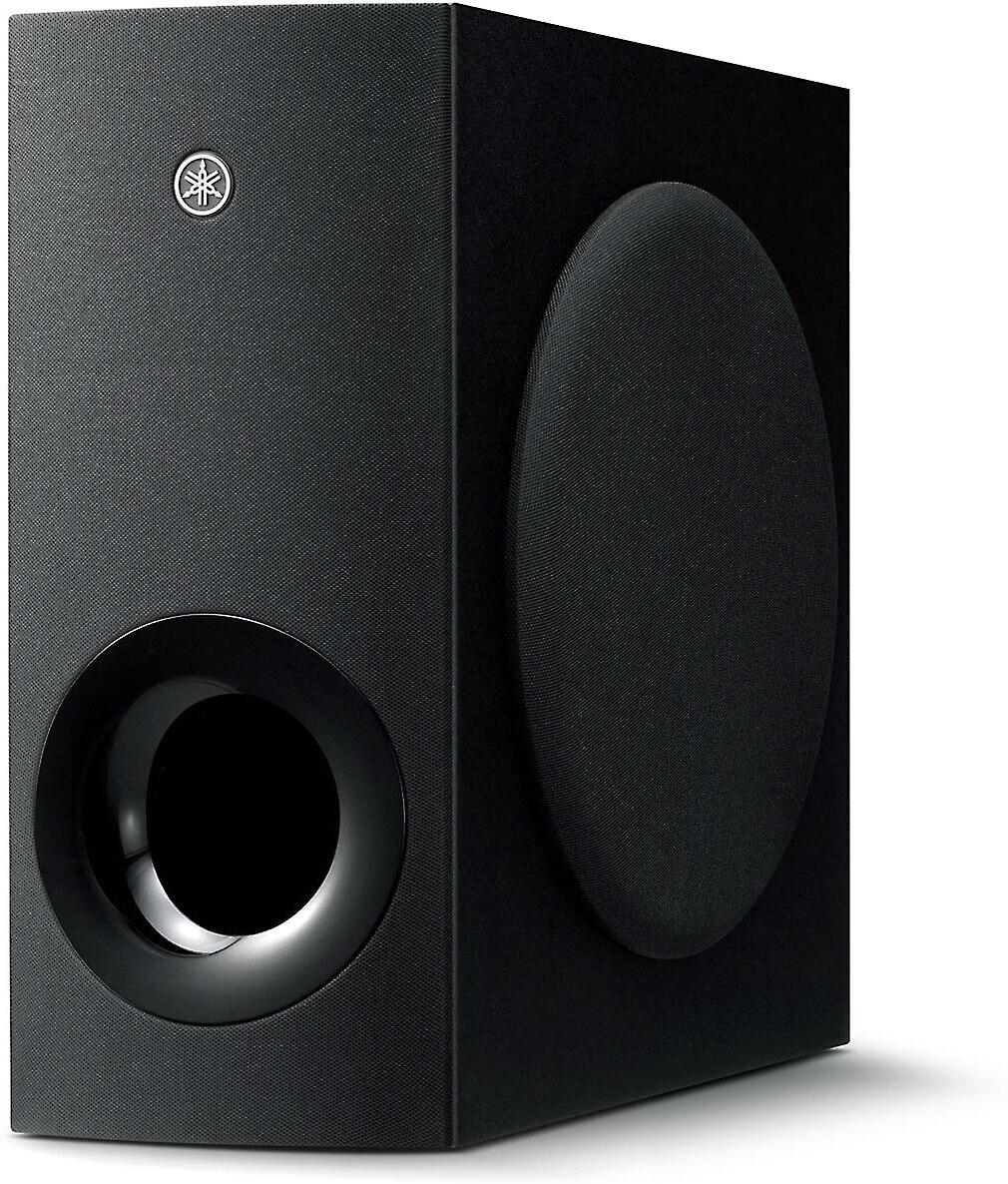
Both systems feature wireless subwoofers, but the Ultimea Poseidon D70 has a slightly larger 6.5" subwoofer with BassMX technology that extends down to 35Hz for deeper bass impact. The Yamaha SR-B40A uses a 6.25" subwoofer with YST II technology that emphasizes clean, controlled bass rather than maximum output.
The Ultimea Poseidon D70 excels for gaming because its physical surround speakers provide precise directional audio cues - you can actually hear enemy footsteps approaching from specific directions. The Yamaha SR-B40A works well for gaming too, but cannot match the competitive advantage and immersion provided by true surround speaker positioning.
The Ultimea Poseidon D70 provides extensive customization with 121 preset EQ settings and a 10-band equalizer through its mobile app. The Yamaha SR-B40A takes a more refined approach with fewer but expertly crafted sound modes and tone controls, focusing on quality presets rather than maximum tweakability.
The Ultimea Poseidon D70 works best in medium to large rooms (250-400 sq ft) where its higher power output and surround speakers can be properly positioned. The Yamaha SR-B40A is ideal for small to medium rooms up to 300 sq ft, where its refined 2.1 configuration provides excellent performance without setup complexity.
Only the Yamaha SR-B40A supports Dolby Atmos processing, which creates virtual height effects and works with modern streaming content. The Ultimea Poseidon D70 doesn't support Dolby Atmos but uses its own SurroundX technology and physical speaker placement to create immersive surround sound from any audio source.
The Ultimea Poseidon D70 delivers 410W peak power (144W RMS) distributed across its 8 speakers, providing room-filling volume for larger spaces. The Yamaha SR-B40A has lower total power output but focuses on efficiency and clean amplification rather than maximum volume, making it better suited for smaller rooms.
The Yamaha SR-B40A comes from Yamaha's 130+ year audio heritage with established customer support and reputation for long-term reliability. The Ultimea Poseidon D70 is from a newer brand but offers excellent value and performance for its price point, though it doesn't have the same long-term track record as Yamaha.
The Ultimea Poseidon D70 provides exceptional value by delivering true 7.1 surround sound with 8 physical speakers at a budget-friendly price point. The Yamaha SR-B40A represents premium value with superior build quality, brand reliability, and sophisticated processing, but costs more per audio channel. Your choice depends on whether you prioritize maximum features (D70) or premium quality (SR-B40A).
We've done our best to create useful and informative comparisons to help you decide what product to buy. Our research uses advanced automated methods to create this comparison and perfection is not possible - please contact us for corrections or questions. These are the sites we've researched in the creation of this article: ultimea.com - provantage.com - ultimea.com - youtube.com - youtube.com - bestbuy.com - the-gadgeteer.com - shopmyexchange.com - youtube.com - youtube.com - youtube.com - ultimea.com - manuals.plus - device.report - images.thdstatic.com - shopmyexchange.com - staples.com - ultimea.de - crutchfield.com - visions.ca - shop.usa.yamaha.com - bestbuy.com - bestbuy.com - usa.yamaha.com - my.yamaha.com - europe.yamaha.com - adorama.com - usa.yamaha.com - digitalhomecreations.com - europe.yamaha.com - sundownone.com

Privacy Policy
Terms and Conditions - Affiliate Policy
Home Security
© Copyright 2008-2026.
11816 Inwood Rd #1211, Dallas, TX 75244