








When your TV's built-in speakers just aren't cutting it anymore, you're probably considering a soundbar upgrade. It's one of the easiest ways to transform your living room into a proper home theater without the complexity of traditional surround sound systems. But with so many options available, choosing between different approaches can feel overwhelming.
Today we're comparing two soundbars that take completely different philosophies: the Ultimea Poseidon D70 and the JBL Bar 700. One focuses on giving you more speakers for less money, while the other emphasizes premium audio technology and modern features. Both launched in recent years as manufacturers recognized that consumers wanted better home theater audio without complicated setups.
Before diving into specifics, let's establish what makes a good soundbar system. Unlike the tiny speakers crammed inside your TV, soundbars use larger drivers (the actual speaker components that move air to create sound) arranged in a wider cabinet. This immediately improves dialogue clarity and creates a broader soundstage—the perceived width and depth of audio.
The key technical specifications that determine performance are channel configuration, total power output, frequency response (how low and high the system can reproduce sound), and what audio formats the system can decode and process. Channel configuration tells you how many discrete audio channels the system can handle—a 5.1 system processes six separate audio streams (left, center, right, left surround, right surround, plus a dedicated bass channel), while 7.1 adds two more surround channels.
Modern soundbars achieve surround sound through two approaches: virtual processing that uses psychoacoustics to trick your brain into hearing sounds from directions they're not actually coming from, or physical speakers placed around your room. Each method has distinct advantages, and understanding the difference is crucial for making the right choice.
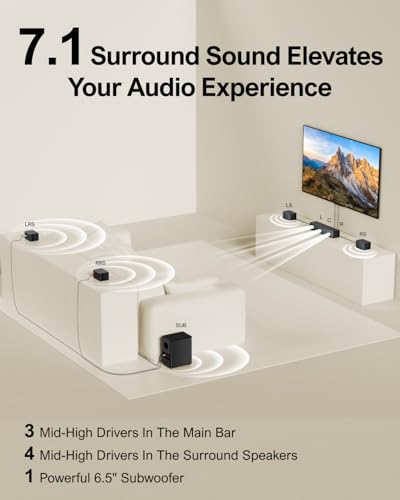
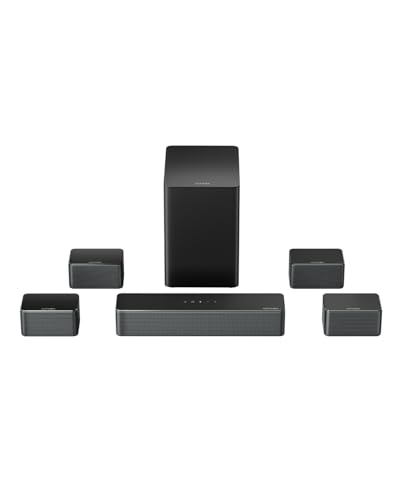
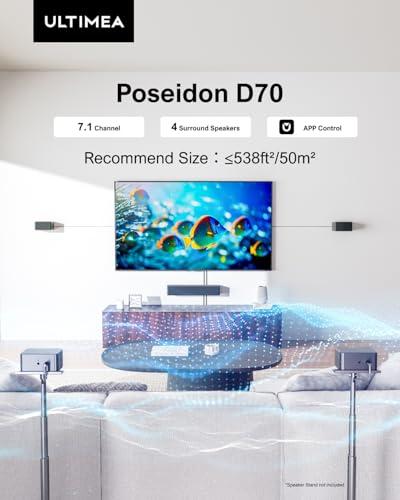
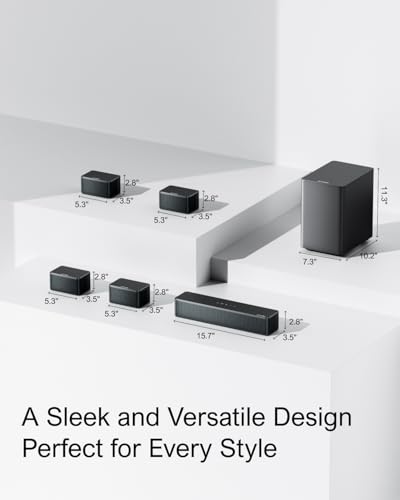
The Ultimea Poseidon D70 represents what we might call the "more is more" philosophy. Released in 2023, this system includes a main soundbar, four separate surround speakers, and a wireless subwoofer—eight total speakers delivering what the company calls 7.1 channel surround sound. At the time of writing, it's positioned as a budget option that doesn't sacrifice speaker count.
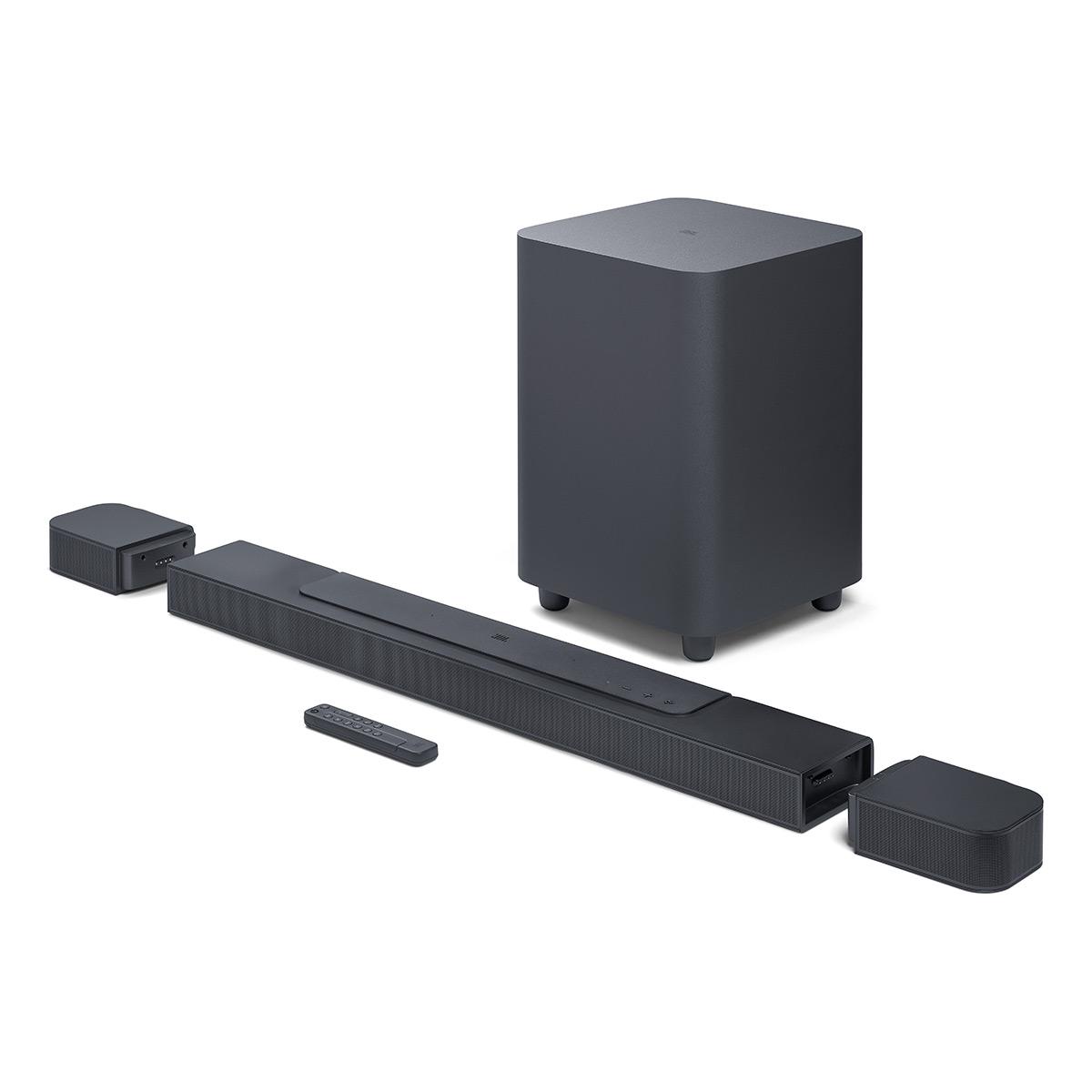
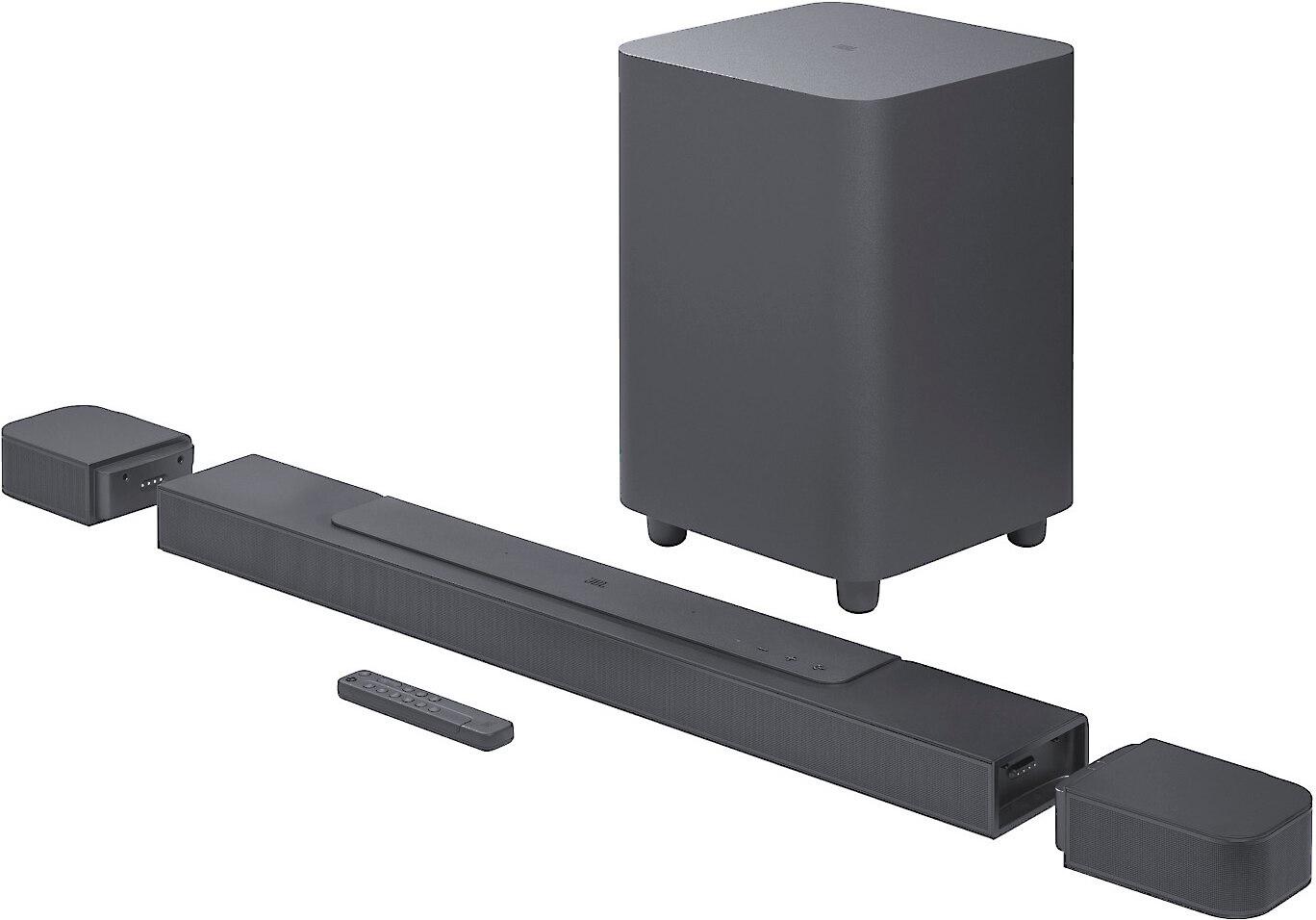
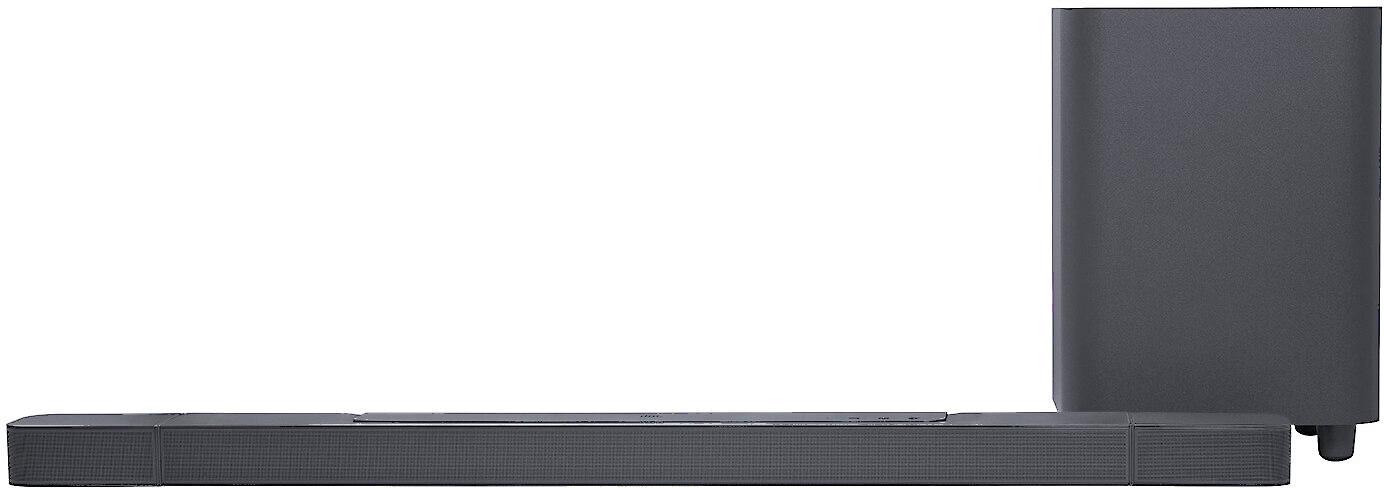
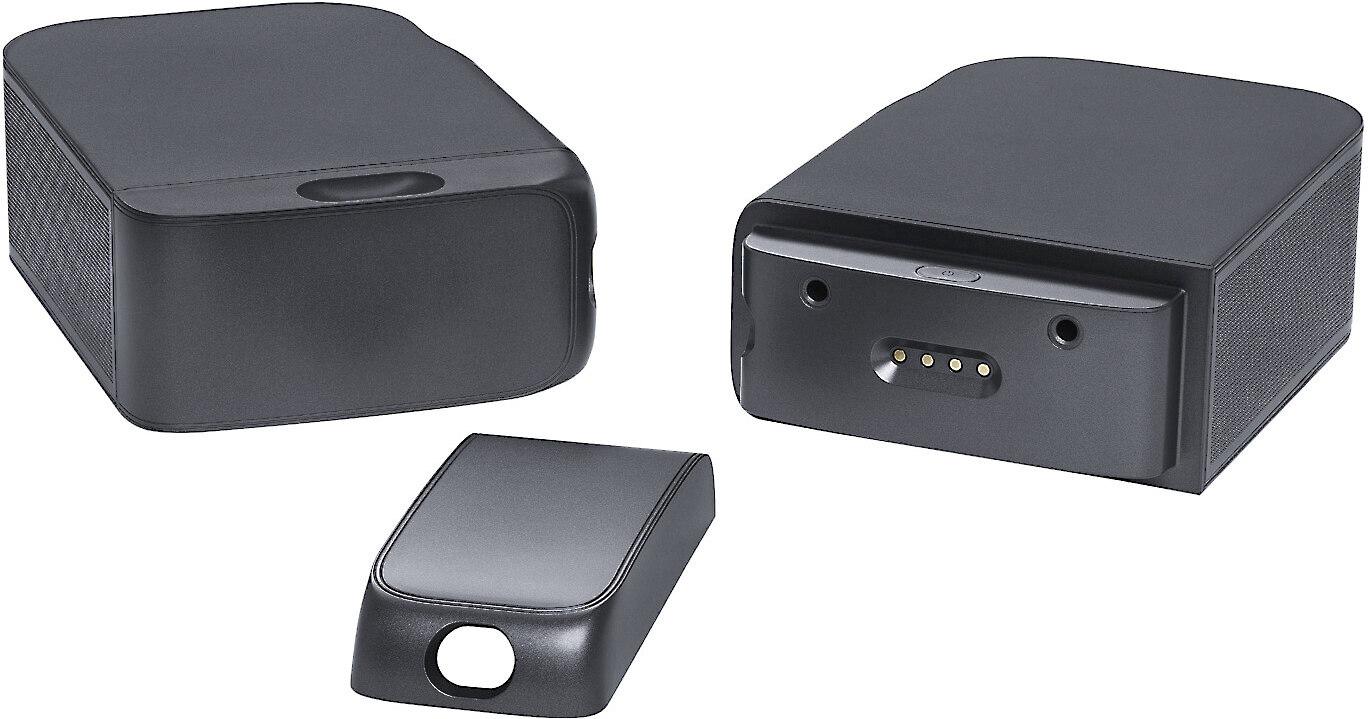
The JBL Bar 700, launched in 2022, takes the opposite approach. Instead of maximizing speaker quantity, JBL focused on advanced audio processing and premium features. This 5.1.2 system includes Dolby Atmos support—a technology that adds height information to create truly three-dimensional sound—along with detachable battery-powered surround speakers and comprehensive streaming capabilities.
The fundamental difference here is philosophy: physical speakers versus sophisticated processing. The D70 gives you more actual speaker drivers, while the Bar 700 uses advanced algorithms to create immersive audio with fewer, but more carefully engineered, components.
When evaluating soundbar performance, the most critical factors are dialogue clarity, bass impact, surround sound effectiveness, and overall dynamic range (the difference between the quietest and loudest sounds the system can reproduce).
Both systems handle dialogue well, but through different methods. The JBL Bar 700 includes PureVoice technology, which uses digital signal processing to enhance vocal frequencies and maintain speech clarity even when explosions and music are competing for attention. This is particularly valuable for modern movies that often bury dialogue in complex soundtracks.
The Ultimea D70 takes a more straightforward approach, relying on its three front-facing drivers to handle center channel duties. While it lacks dedicated dialogue enhancement, our research suggests users generally find speech intelligible, though it may require more manual adjustment of volume levels during dynamic scenes.
For home theater use, dialogue clarity often determines whether you enjoy movies or find yourself constantly reaching for the remote. The Bar 700 has a clear advantage here, especially for viewers who watch action movies or content with heavy musical scores.
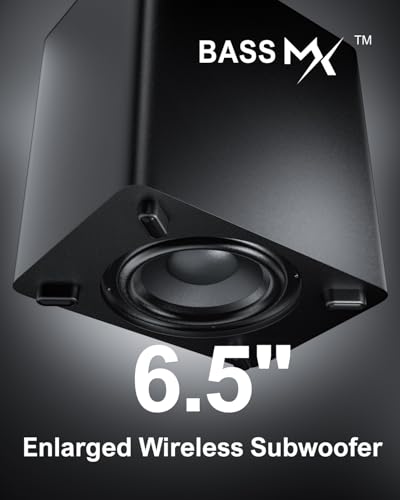
This is where the specifications tell a clear story. The JBL Bar 700 includes a 10-inch wireless subwoofer that can reproduce frequencies down to 35Hz—deep enough to deliver the rumbling bass that makes action movies feel visceral. The Ultimea D70's 6.5-inch subwoofer extends to around 65Hz, which is adequate for most content but won't deliver the same impact during earthquake scenes or when listening to bass-heavy music.
The difference in subwoofer size isn't just about going lower—it's about output capability. Larger drivers can move more air with less distortion, meaning the Bar 700 can maintain clean bass at higher volume levels. For apartment dwellers, this might not matter much, but in larger rooms or for enthusiastic movie watching, the difference becomes significant.
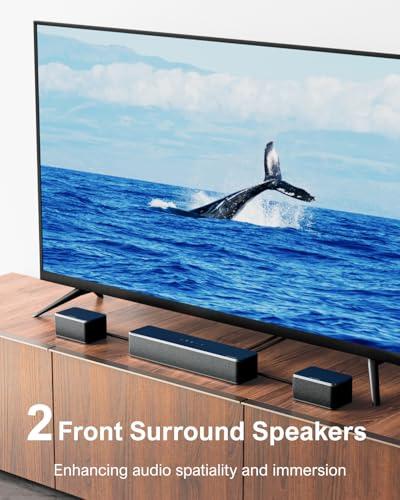
Here's where things get interesting. The D70 includes four physical surround speakers that you place around your seating area, connected via cables to the subwoofer. This creates genuine surround sound with discrete audio coming from behind and beside you. When properly positioned, these speakers can create an enveloping experience that many users find superior to virtual alternatives.
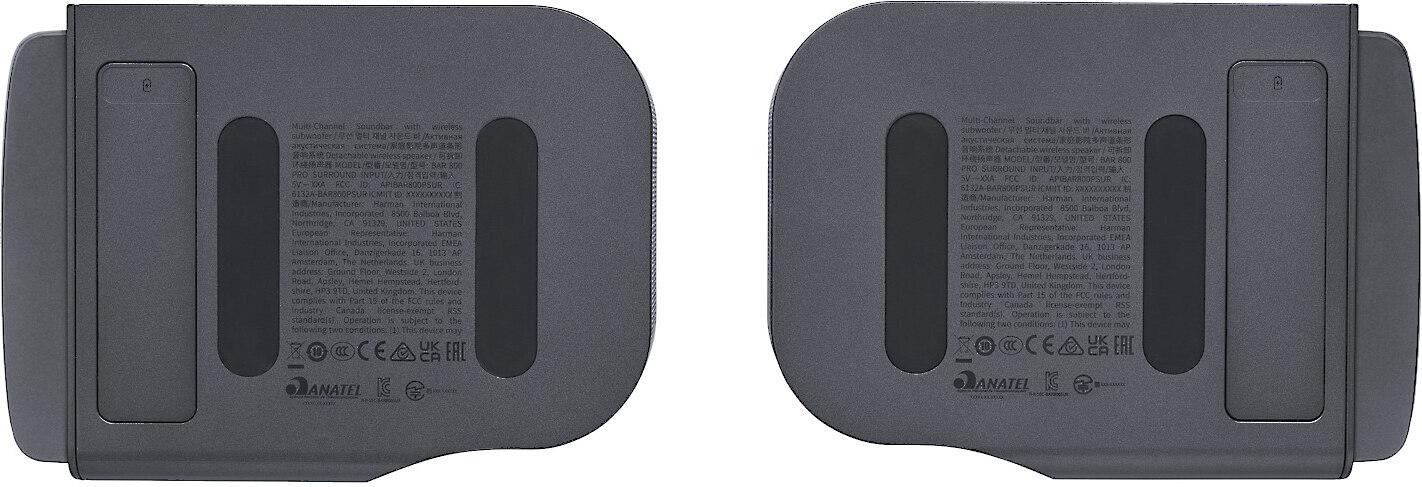
The JBL Bar 700 uses a combination of physical and virtual surround. Its detachable rear speakers are battery-powered (lasting about 10 hours per charge) and wireless, eliminating the cable management issues that plague the D70. However, you're getting fewer discrete speaker positions.
The crucial difference is Dolby Atmos support. The Bar 700 can decode Atmos soundtracks, which include height information that creates overhead sound effects. Modern streaming services like Netflix, Disney+, and Apple TV+ increasingly offer Atmos content, making this support valuable for future-proofing your setup.
The JBL Bar 700 delivers significantly more total power output—around 620 watts compared to the D70's 410 watts. More importantly, the power distribution is more balanced, with the subwoofer receiving substantially more amplification. This translates to better headroom during loud passages and less distortion at high volumes.
Dynamic range capability affects how well the system handles quiet dialogue followed immediately by explosions—a common movie scenario that reveals system limitations. The Bar 700's superior amplification and larger drivers provide better performance here.
Modern soundbars need to integrate seamlessly with today's diverse entertainment ecosystems. The JBL Bar 700 excels in this area, offering Wi-Fi connectivity, AirPlay 2 for Apple devices, Chromecast built-in for Android users, and Alexa Multi-Room Music support. This means you can stream music directly to the soundbar without involving your TV, and integrate it into whole-home audio systems.
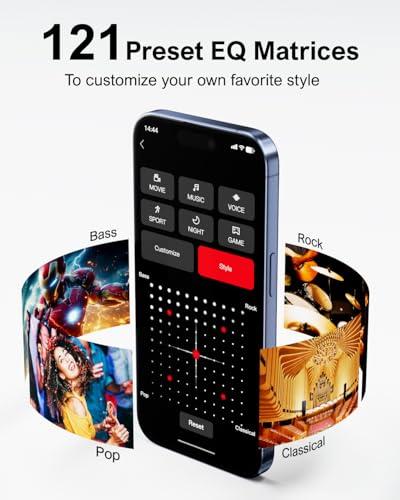
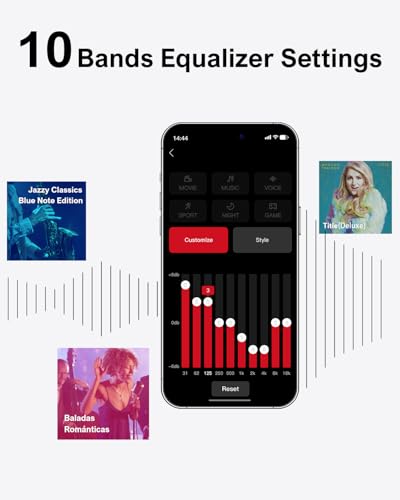
The D70 keeps things simpler with Bluetooth connectivity and comprehensive wired inputs (HDMI ARC, optical, USB, and analog). While it lacks advanced streaming features, it includes extensive EQ customization through its mobile app—121 preset sound profiles plus a 10-band graphic equalizer. This level of manual control appeals to users who prefer tweaking settings themselves.
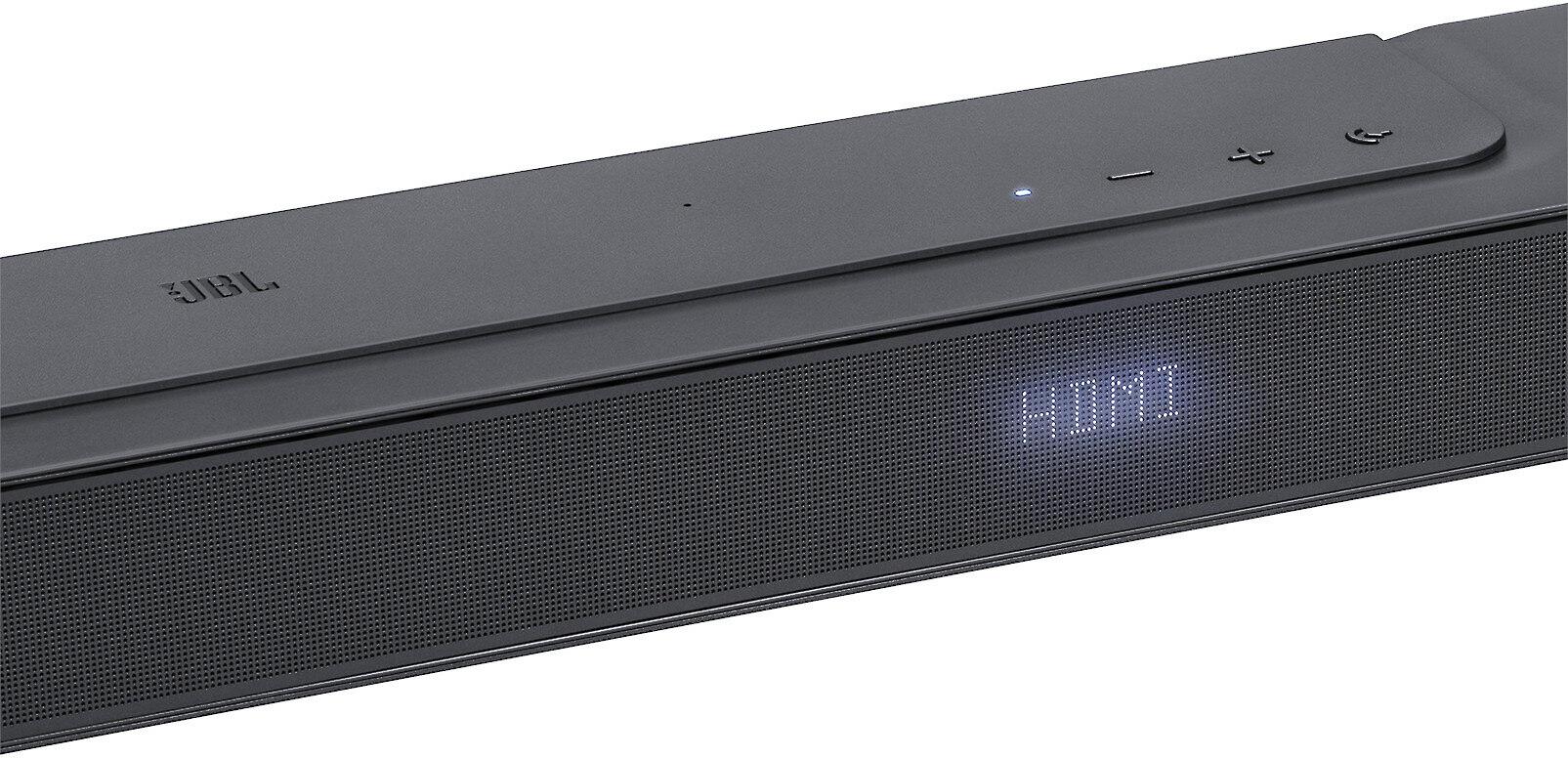
Both systems support HDMI ARC (Audio Return Channel), which allows your TV to send audio back to the soundbar through the same HDMI cable that carries video. The Bar 700 goes further with eARC (enhanced Audio Return Channel) support, enabling higher-quality audio formats including uncompressed Dolby Atmos.
Setup complexity varies significantly between these systems. The D70 requires running speaker wires from the subwoofer to four surround speakers positioned around your seating area. While the system includes cables in multiple lengths, this still means cable management and ensuring you have appropriate placement locations.
The JBL Bar 700 simplifies physical installation with its wireless surrounds, but adds complexity in other areas. The automatic room calibration feature uses built-in microphones to analyze your space and adjust audio accordingly—convenient for most users, but less controllable for those who prefer manual tuning.
For renters or anyone reluctant to run cables, the Bar 700's wireless approach offers obvious advantages. However, you'll need to remember to charge the rear speakers periodically, and their compact size means they won't disappear as easily into your room's décor as the D70's smaller surrounds might.
At the time of writing, these systems occupy different value territories. The Ultimea D70 represents exceptional hardware value—you're getting six separate speaker enclosures plus a subwoofer at a price point where many competitors offer only a soundbar and sub. For budget-conscious buyers who want maximum speaker count, this equation is compelling.
The JBL Bar 700 costs significantly more but justifies the premium through superior audio technology and convenience features. Dolby Atmos processing alone represents substantial value for users who consume modern streaming content, while the wireless connectivity and automatic calibration appeal to those prioritizing convenience over manual control.
The Ultimea D70 makes sense for specific scenarios. If you're primarily watching cable TV, playing games, or streaming services that don't emphasize Atmos content, the four physical surround speakers can create excellent immersion. The extensive manual controls appeal to enthusiasts who enjoy tweaking audio settings, while the included hardware represents genuine value for money.
Choose the D70 if you have a small to medium-sized room where its 6.5-inch subwoofer provides adequate bass, you don't mind running speaker wires, and your budget prioritizes getting the most speakers possible. It's also ideal if you're skeptical of virtual surround processing and prefer knowing exactly where your audio is coming from.
The JBL Bar 700 targets users who prioritize audio quality and modern features over speaker quantity. Its Dolby Atmos support becomes increasingly valuable as streaming services expand their high-quality audio offerings. The larger subwoofer provides superior bass extension for movie watching, while wireless features integrate better with modern smart home ecosystems.
Select the Bar 700 if you frequently watch newer movies and shows with Atmos soundtracks, prefer automated setup over manual tuning, need wireless surround speakers due to room constraints, or want a system that will remain relevant as audio formats continue evolving.
Both systems represent valid approaches to home theater audio, but they serve different priorities. The Ultimea D70 maximizes physical hardware at an aggressive price point, creating genuine surround sound through speaker quantity. The JBL Bar 700 emphasizes technological sophistication and user convenience, delivering superior audio quality through advanced processing and premium components.
For most users today, the Bar 700's Dolby Atmos support and superior bass extension provide better long-term value despite the higher upfront cost. However, budget-conscious buyers who want immediate surround sound immersion and don't mind cable management will find the D70 offers exceptional hardware value.
The choice ultimately depends on whether you prioritize getting the most speakers for your money or investing in premium audio technology that will better serve modern content and future format developments. Both represent significant upgrades over TV speakers, but they'll appeal to different types of home theater enthusiasts.
| Ultimea Poseidon D70 | JBL Bar 700 |
|---|---|
| Channel Configuration - Determines surround sound capability and immersion | |
| 7.1 virtual surround with 4 physical rear speakers | 5.1.2 Dolby Atmos with 2 detachable wireless surrounds |
| Audio Format Support - Critical for modern streaming content compatibility | |
| Standard surround formats only (no Atmos) | Full Dolby Atmos with height channel processing |
| Total Power Output - Affects maximum volume and dynamic range | |
| 410W peak / 144W RMS (adequate for small-medium rooms) | 620W total / 540W RMS (superior headroom for larger spaces) |
| Subwoofer Size and Bass Extension - Determines movie impact and music quality | |
| 6.5" wireless sub extending to ~65Hz | 10" wireless sub extending to 35Hz (much deeper bass) |
| Physical Speakers Included - Value proposition for complete surround setup | |
| 4 wired surround speakers + soundbar + subwoofer (8 total drivers) | 2 battery-powered wireless surrounds + soundbar + subwoofer |
| Streaming and Smart Features - Modern convenience and ecosystem integration | |
| Bluetooth only with comprehensive app EQ controls (121 presets) | Wi-Fi, AirPlay 2, Chromecast, Alexa MRM with auto room calibration |
| Setup Complexity - Installation requirements and cable management | |
| Requires wired connections to all 4 surround speakers | Wireless surrounds (10hr battery) with automatic calibration |
| Dialogue Enhancement - Speech clarity during complex movie scenes | |
| Basic center channel processing | PureVoice technology for optimized vocal clarity |
| HDMI Connectivity - Video passthrough and audio return capabilities | |
| HDMI ARC with standard 4K passthrough | HDMI eARC with 4K Dolby Vision and enhanced audio formats |
| Price Category - Value positioning at time of writing | |
| Budget tier with exceptional hardware-per-dollar value | Mid-range premium focused on audio quality and features |
The JBL Bar 700 is superior for movies due to its Dolby Atmos support, which creates three-dimensional sound with overhead effects that modern films use extensively. Its larger 10" subwoofer also delivers deeper bass for action scenes. While the Ultimea Poseidon D70 provides good surround sound with four physical speakers, it lacks Dolby Atmos processing that's becoming standard in streaming content.
The Ultimea Poseidon D70 requires wired connections to all four surround speakers, which means running cables from your subwoofer to each speaker position. The JBL Bar 700 uses battery-powered wireless surround speakers that eliminate rear wiring, making installation much cleaner and easier for most room layouts.
The JBL Bar 700 has significantly better bass with its 10" wireless subwoofer that extends down to 35Hz, providing deep, impactful low-end for movies and music. The Ultimea D70 uses a smaller 6.5" subwoofer that only reaches about 65Hz, which is adequate for dialogue and mid-range content but lacks the rumbling bass for action movies.
The JBL Bar 700 connects directly to streaming services through Wi-Fi, AirPlay 2, Chromecast built-in, and Alexa Multi-Room Music, letting you stream without turning on your TV. The Ultimea Poseidon D70 only offers Bluetooth connectivity for direct streaming, requiring your phone or tablet as the source device.
The JBL Bar 700 is much easier to set up thanks to its automatic room calibration that uses built-in microphones to optimize sound for your space. The Ultimea D70 requires manual adjustment through its 121 EQ presets, which offers more control but demands more time and experimentation to achieve optimal sound.
The Ultimea Poseidon D70 includes eight total drivers: three in the soundbar, four separate surround speakers, and one subwoofer. The JBL Bar 700 has fewer individual speakers but uses larger, higher-quality drivers in its soundbar, two detachable surrounds, and subwoofer configuration.
The JBL Bar 700 is better for music due to its wider frequency response (35Hz-20kHz vs 65Hz-18kHz), higher power output, and superior dynamic range. While the Ultimea D70 creates good stereo separation with multiple speakers, it lacks the audio fidelity and bass extension that music demands.
Only the JBL Bar 700 supports Dolby Atmos, which is crucial for modern streaming content from Netflix, Disney+, and other services that use this format for immersive audio. The Ultimea Poseidon D70 uses virtual surround processing but cannot decode Dolby Atmos soundtracks, limiting compatibility with newer content.
The JBL Bar 700 performs better in large rooms thanks to its 620W total power output and larger subwoofer that can fill bigger spaces with sound. The Ultimea D70 works well in small to medium rooms but may struggle to provide adequate volume and bass impact in larger or open-concept spaces.
The JBL Bar 700's detachable surround speakers have built-in batteries that last up to 10 hours per charge, and they automatically recharge when connected to the main soundbar. The Ultimea Poseidon D70 doesn't use battery-powered speakers—all four surrounds connect via wires for consistent power.
This depends on your priorities. The Ultimea Poseidon D70 offers exceptional hardware value with four surround speakers and a subwoofer included at a budget price point. The JBL Bar 700 costs more but provides superior audio technology, Dolby Atmos support, and premium features that justify the price for quality-focused buyers.
Both the Ultimea D70 and JBL Bar 700 support HDMI CEC, allowing control through your TV remote for basic functions like volume and power. However, the JBL Bar 700 offers more advanced control through its dedicated app, while the Ultimea D70 provides extensive EQ customization through its mobile app with 121 preset sound profiles.
We've done our best to create useful and informative comparisons to help you decide what product to buy. Our research uses advanced automated methods to create this comparison and perfection is not possible - please contact us for corrections or questions. These are the sites we've researched in the creation of this article: ultimea.com - provantage.com - ultimea.com - youtube.com - youtube.com - bestbuy.com - the-gadgeteer.com - shopmyexchange.com - youtube.com - youtube.com - youtube.com - ultimea.com - manuals.plus - device.report - images.thdstatic.com - shopmyexchange.com - staples.com - ultimea.de - crutchfield.com - harmanaudio.com - target.com - jbl.com - walmart.com - dell.com - jbl.com

Privacy Policy
Terms and Conditions - Affiliate Policy
Home Security
© Copyright 2008-2026.
11816 Inwood Rd #1211, Dallas, TX 75244