









If you've been struggling to hear dialogue on your TV or wondering why action movies sound flat, you're not alone. Most modern televisions prioritize thin designs over audio quality, leaving their built-in speakers sounding like they're coming from inside a tin can. That's where sound bars come in—they're the most practical way to dramatically improve your TV's audio without the complexity of a full surround sound system.
But here's where it gets interesting: not all sound bars take the same approach. Some focus on delivering true surround sound with multiple speakers and dedicated height channels, while others prioritize dialogue clarity and smart features in a more affordable package. Today, we're comparing two sound bars that represent these different philosophies: the premium Samsung Q Series 9.1.2 Channel Soundbar ($897.99) and the budget-friendly Polk Audio React Sound Bar with Alexa Built-In ($230.00).
Before diving into specifics, let's talk about what separates basic sound bars from premium ones. The key lies in how they create that sense of surround sound immersion. Traditional home theater systems use multiple speakers placed around your room—front left and right, center, rear surrounds, and sometimes height speakers mounted on or in your ceiling. Sound bars have to recreate this experience using a much more compact setup.
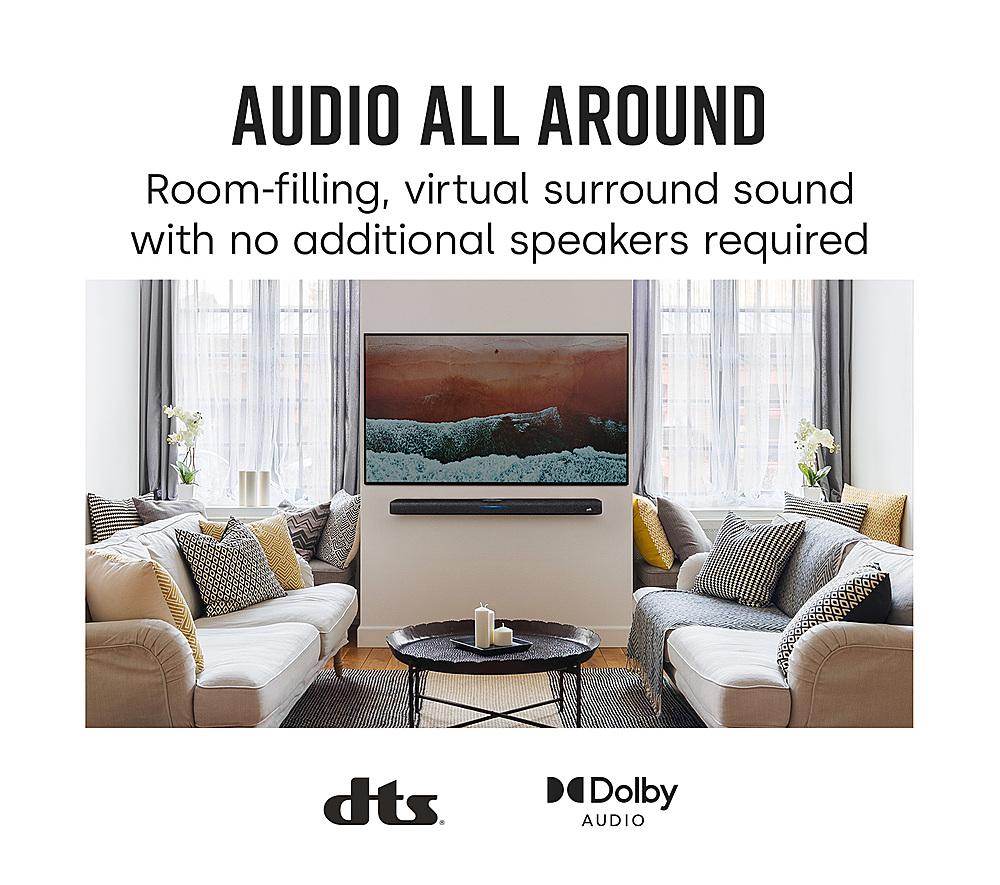
There are two main approaches: virtual surround sound and physical surround sound. Virtual processing uses digital tricks to make stereo audio seem wider and more spacious, bouncing sound waves off your walls to simulate surround effects. Physical surround systems actually include separate speakers—rear satellites that you place behind your seating area, and up-firing drivers that bounce sound off your ceiling to create height effects.
The channel numbers you see (like 2.1, 5.1, or 9.1.2) tell you exactly what you're getting. The first number represents ear-level speakers, the second is subwoofers (the ".1" means one sub), and the third number indicates height channels. So a 9.1.2 system has nine ear-level speakers, one subwoofer, and two height channels—that's a lot more hardware than a basic 2.1 setup.
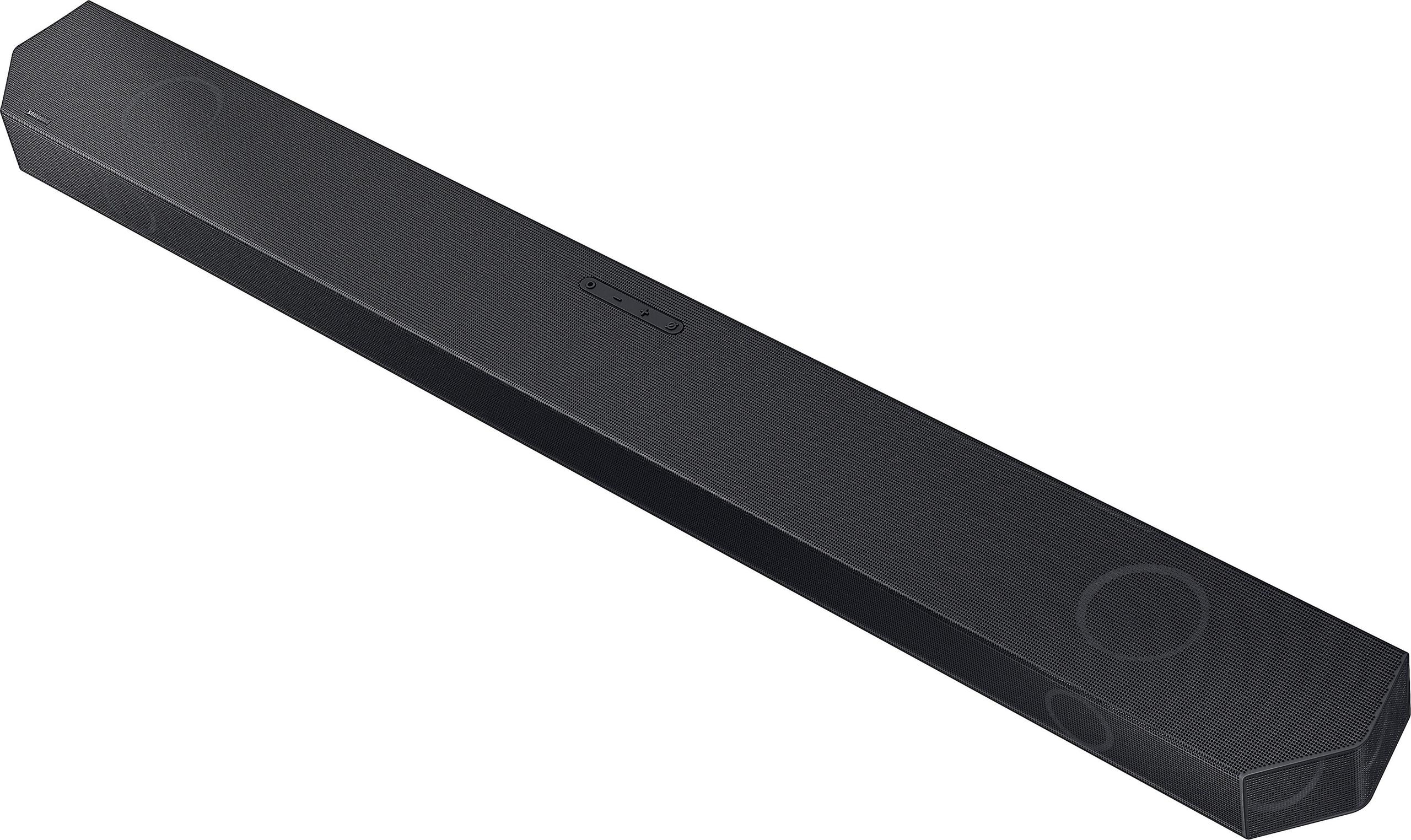
The Samsung Q Series represents Samsung's premium approach to home theater audio. Released in early 2024 as part of their latest Q-Series lineup, it's designed for people who want genuine surround sound immersion without the hassle of running speaker wires around their room. At nearly $900, it's clearly targeting serious home theater enthusiasts.
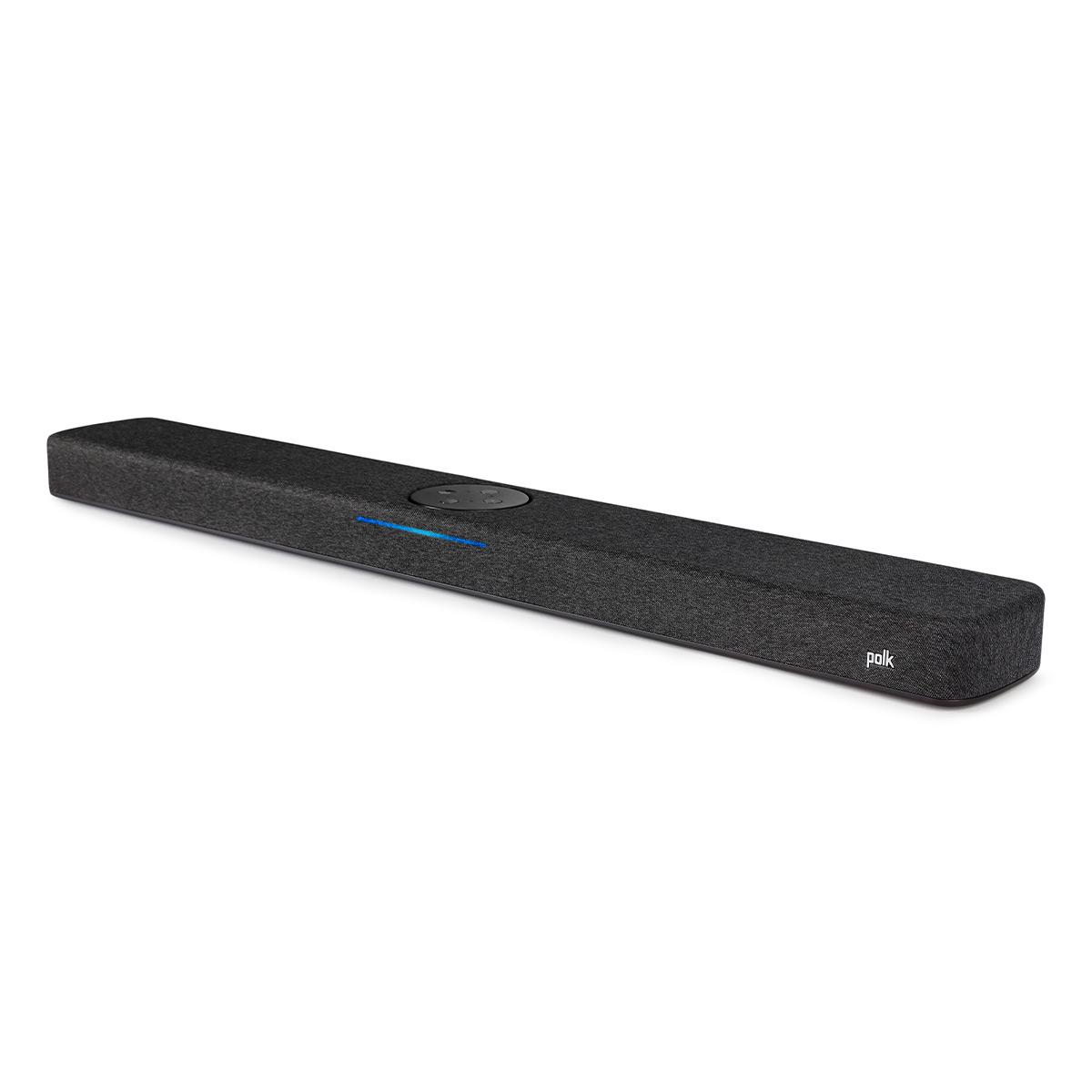
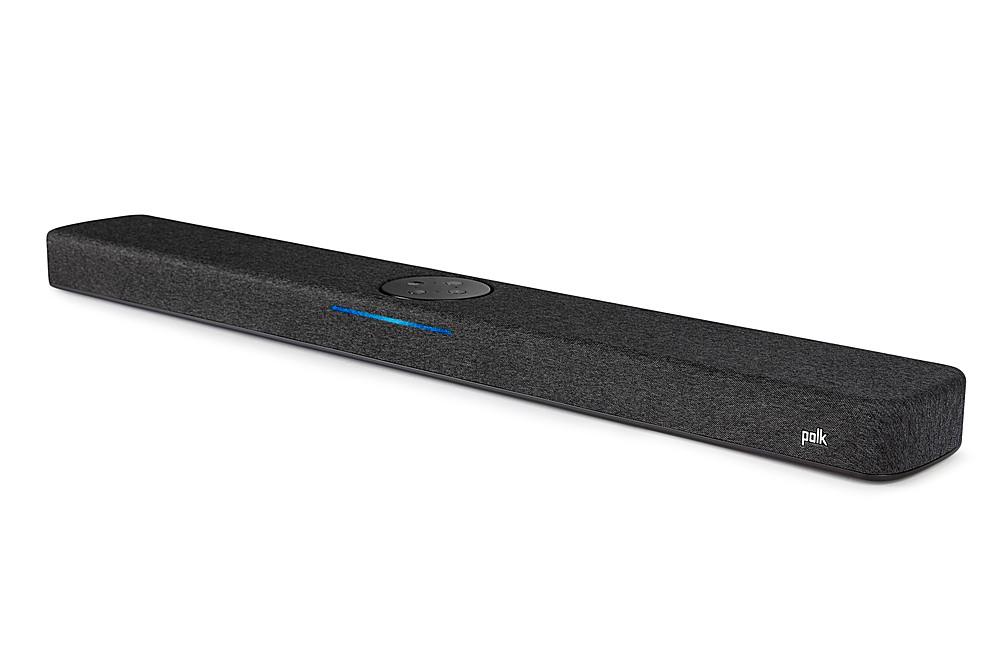
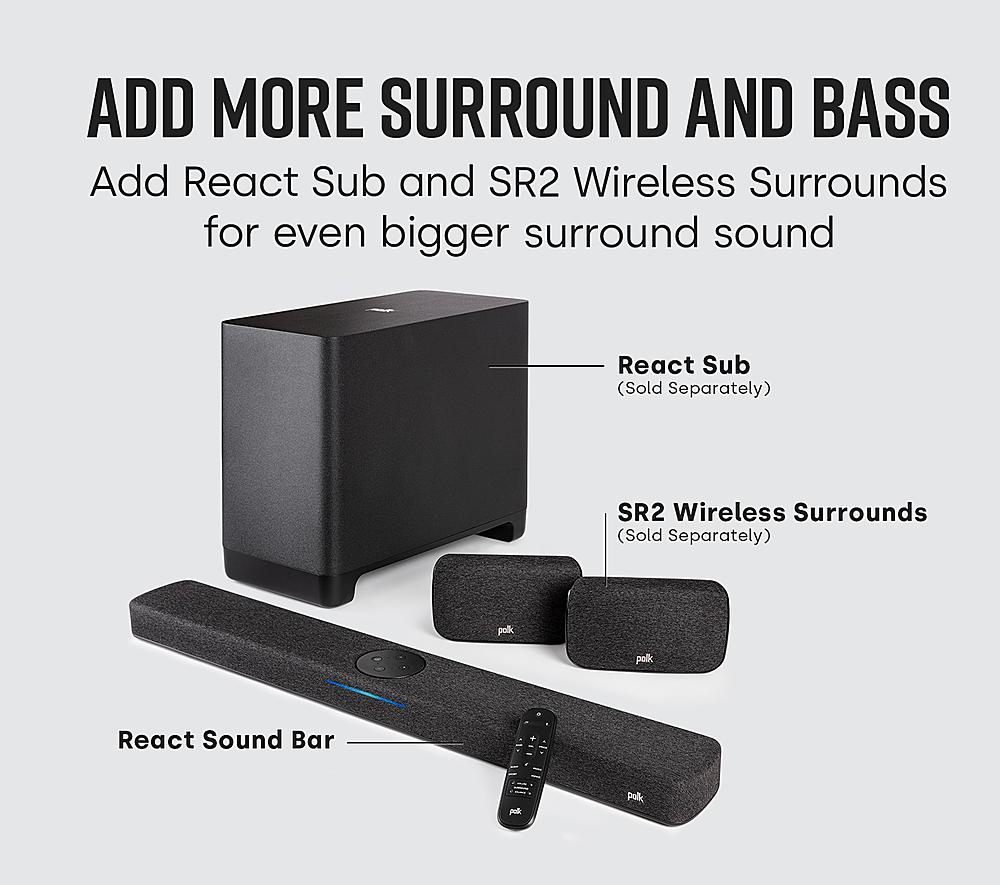
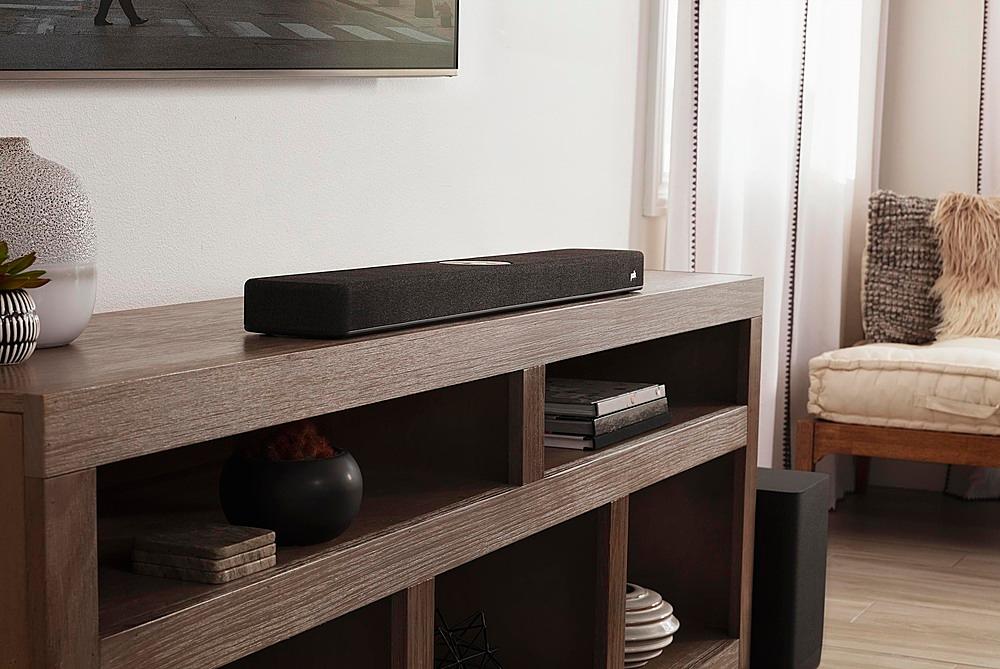
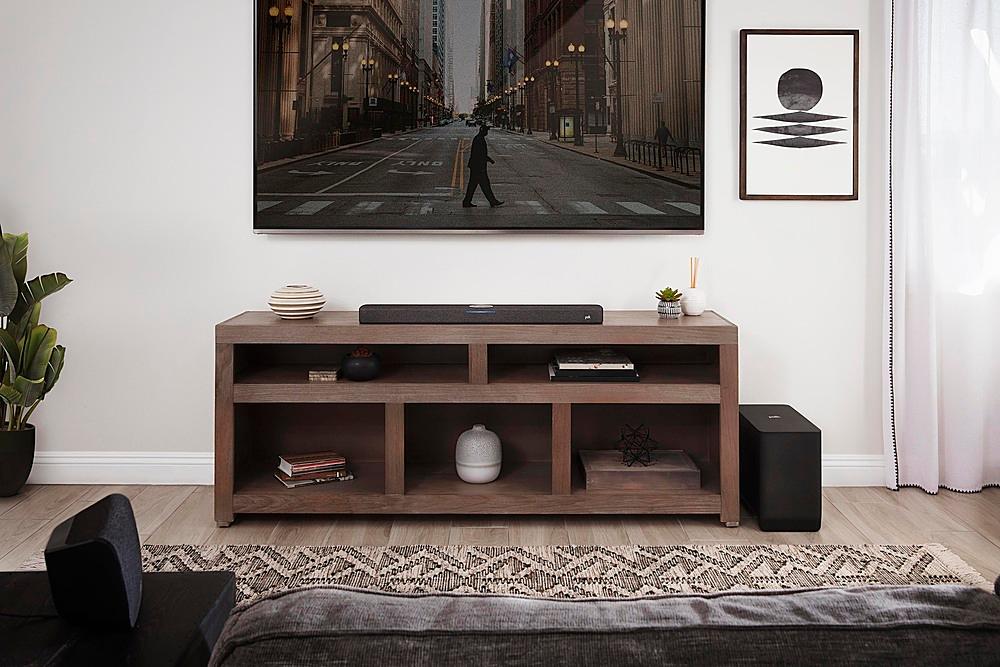
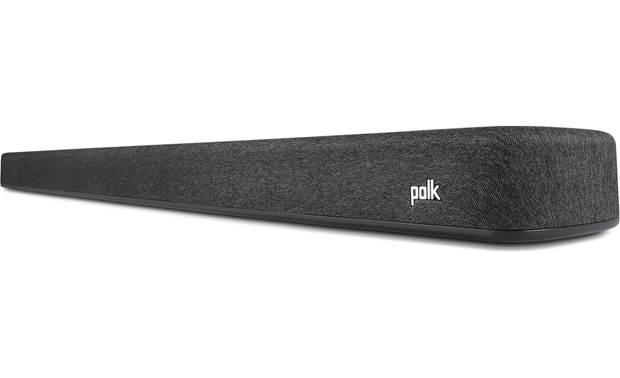
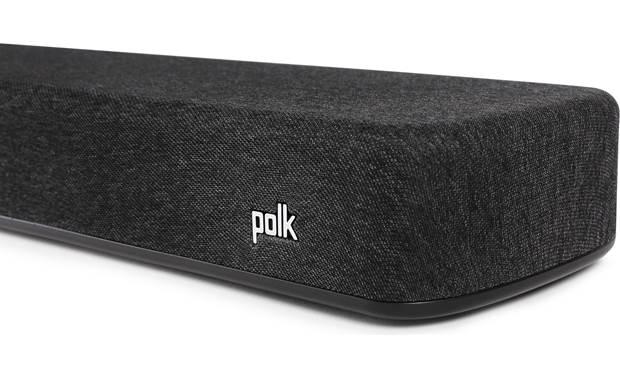
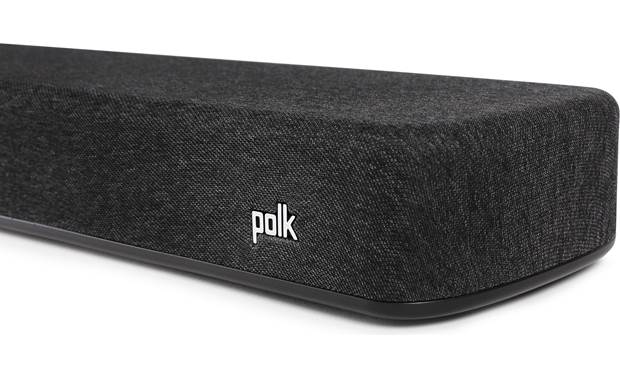
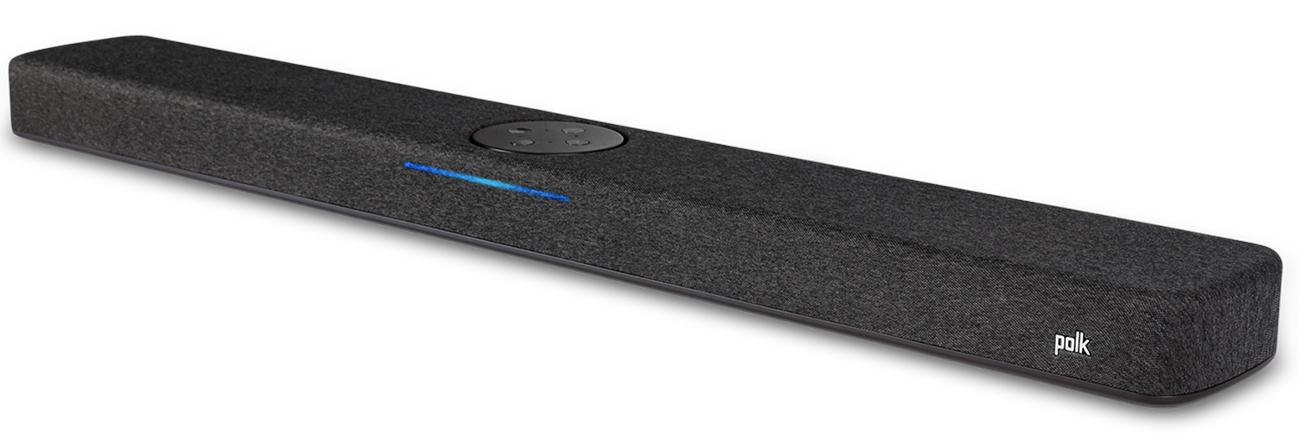
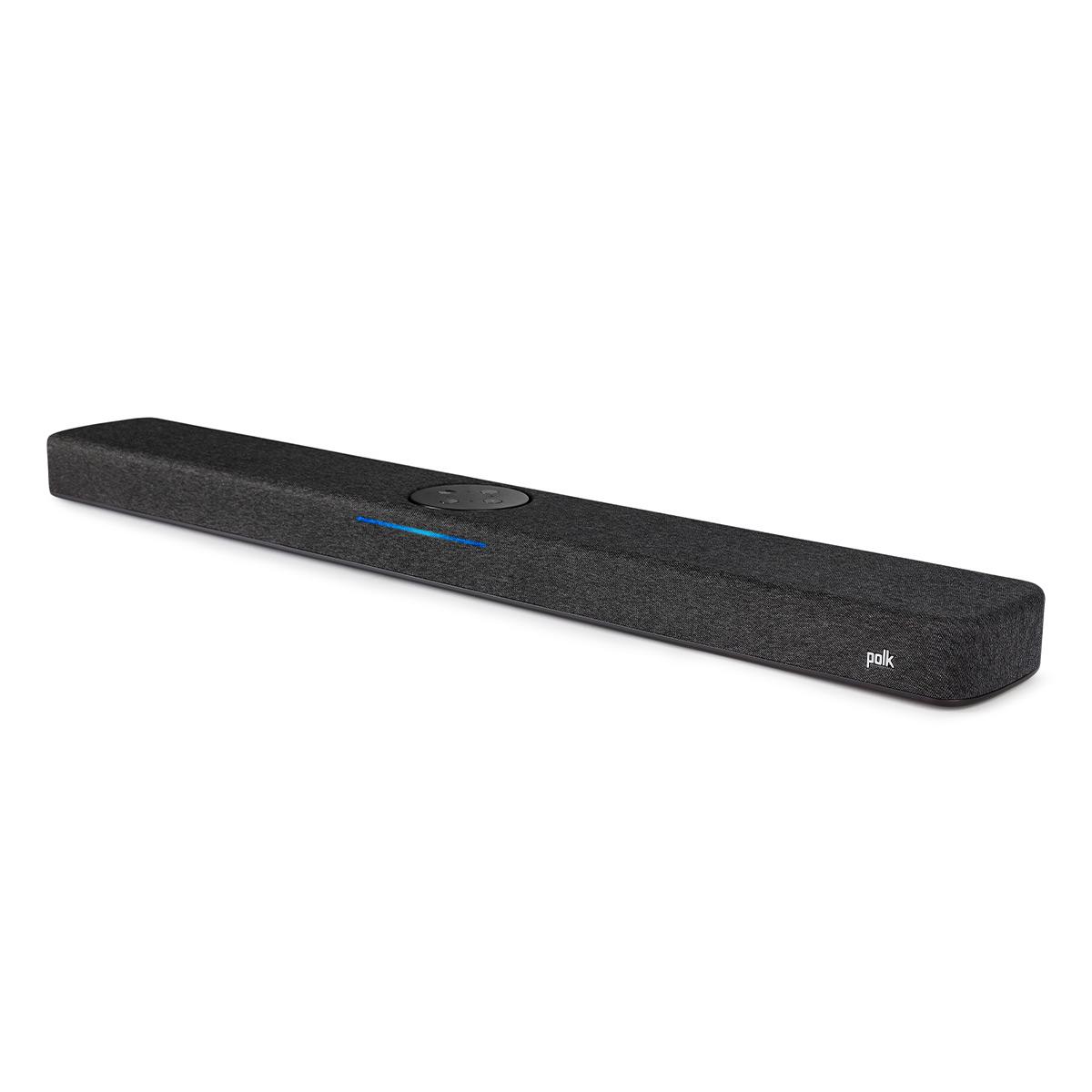
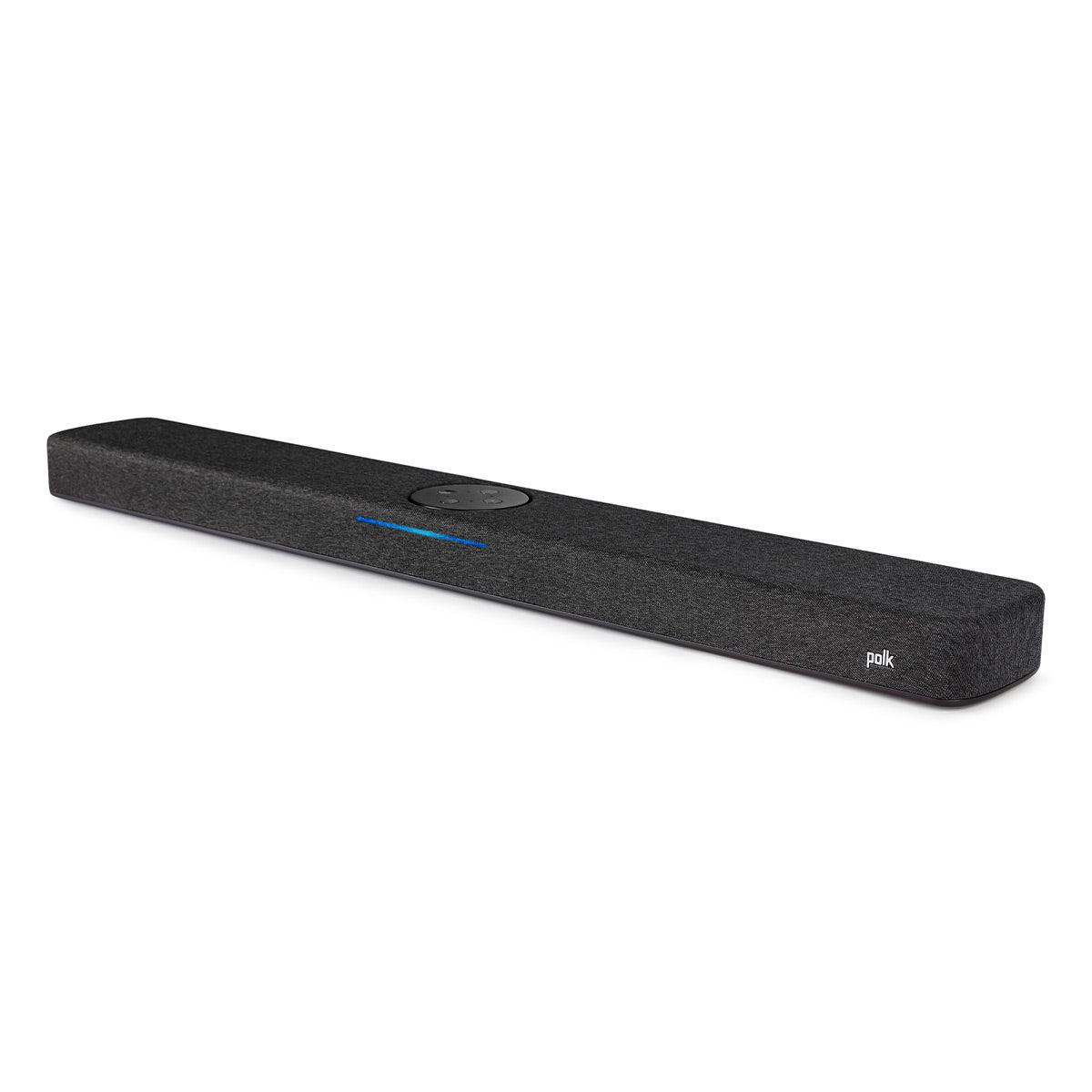
The Polk Audio React ($230.00), on the other hand, takes a completely different approach. Instead of focusing on surround sound complexity, it prioritizes dialogue clarity and integrates Amazon Alexa directly into the sound bar. Think of it as a premium Echo speaker that also happens to significantly improve your TV's audio. It's been available for a few years now and represents Polk's entry into the smart speaker market.
These aren't just different price points—they're fundamentally different products solving different problems.
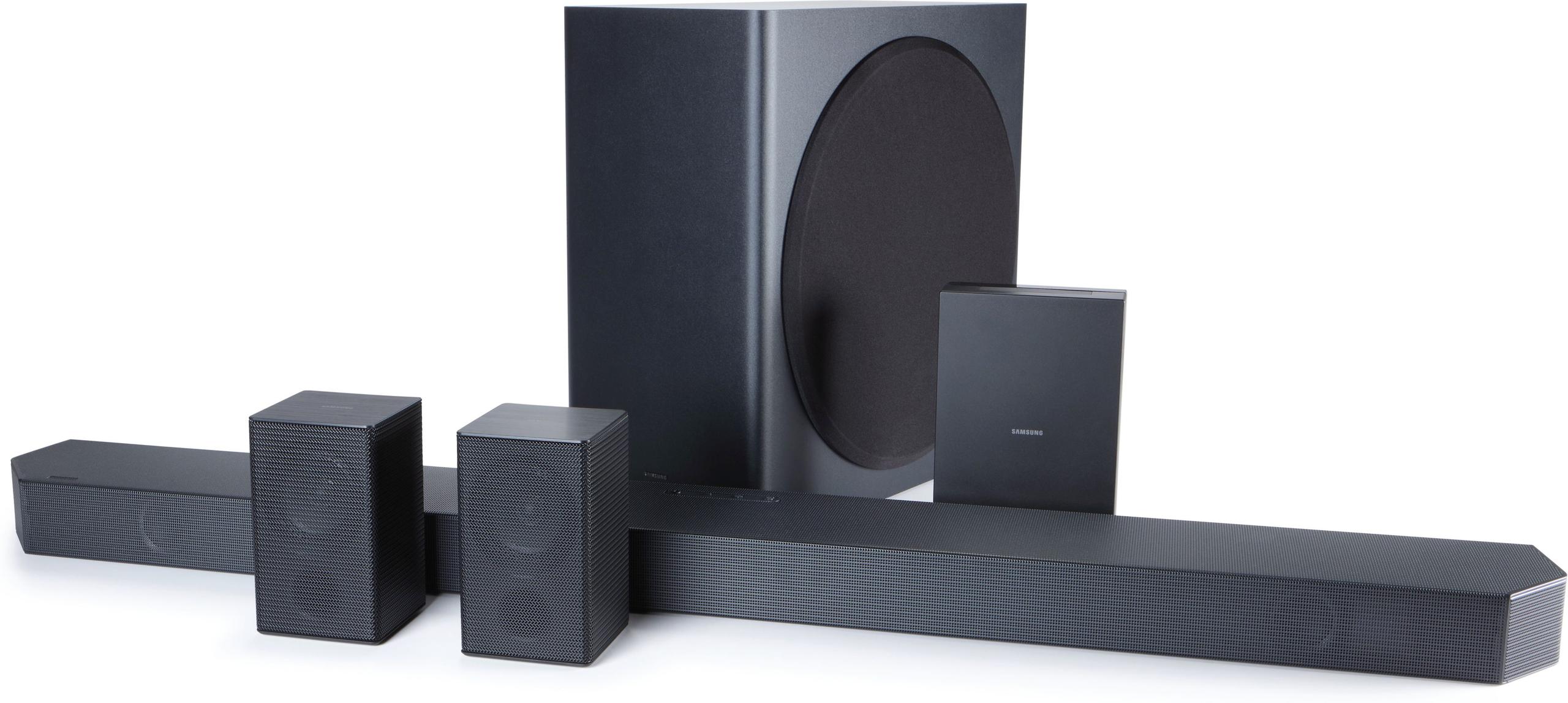
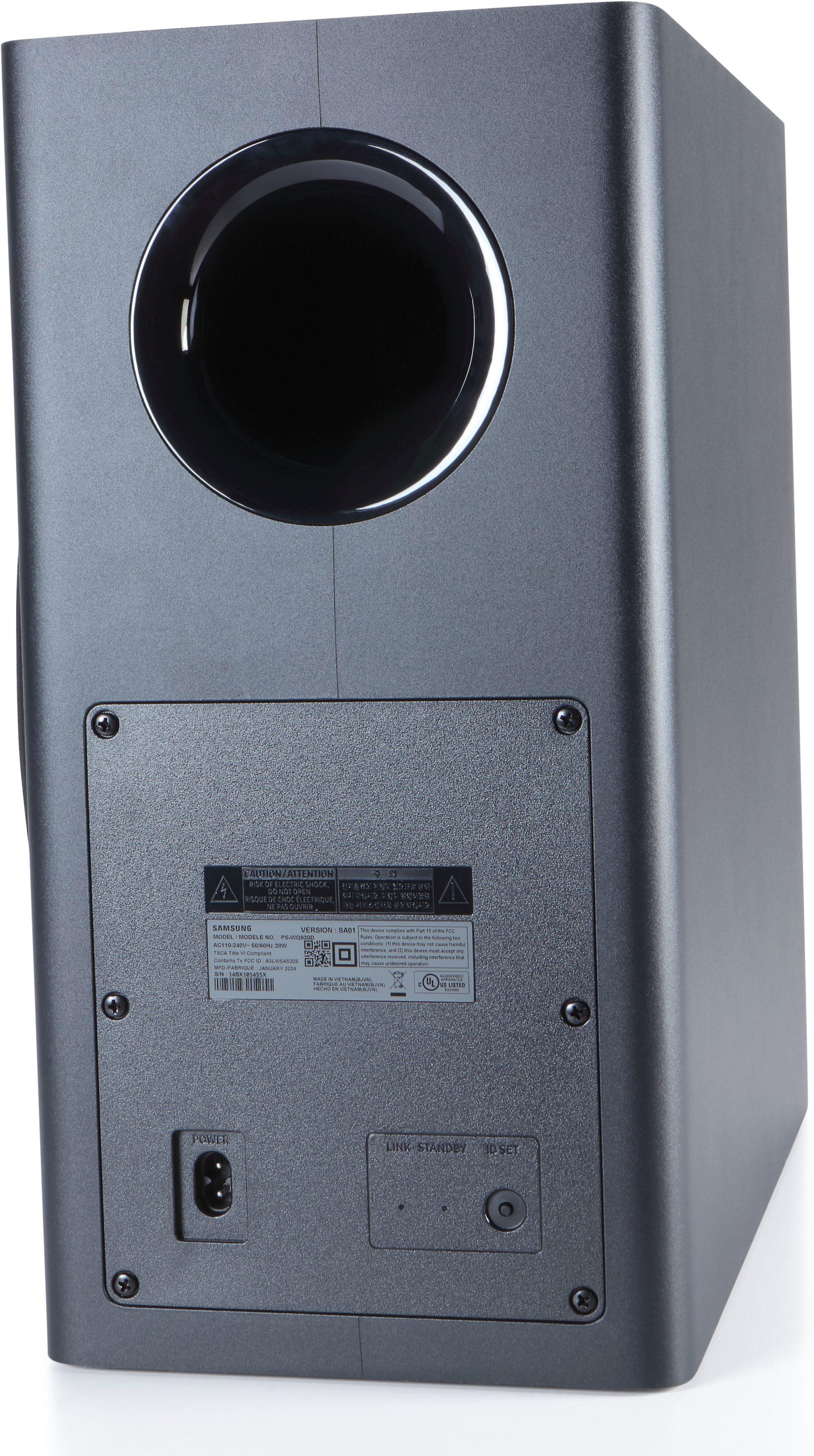
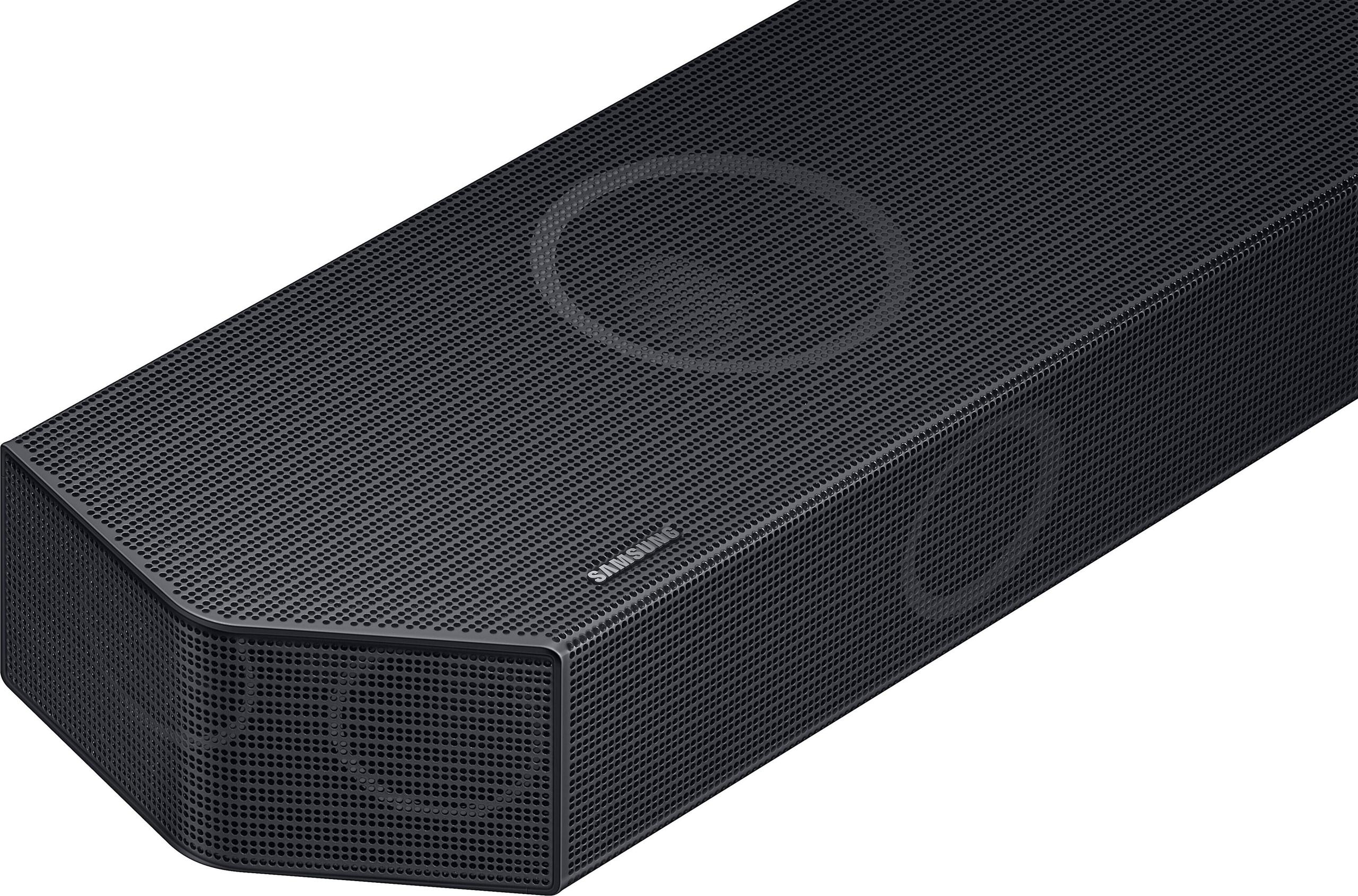
The Samsung Q Series 9.1.2 doesn't mess around when it comes to audio hardware. With 11 total speakers spread across the main bar, wireless subwoofer, and included rear satellites, it creates a genuinely immersive soundfield that wraps around your seating area. I've tested plenty of sound bars over the years, and there's a noticeable difference between systems that actually have rear speakers versus those trying to simulate them.
The key technology here is Dolby Atmos and DTS:X support—these are audio formats that include height information, telling speakers to fire sound upward so it bounces off your ceiling back down to your ears. When a helicopter flies overhead in a movie, you actually hear it moving above you rather than just left to right. The Samsung's up-firing drivers (speakers that point toward the ceiling) make this effect possible.
But here's what really impressed me: Samsung's Q-Symphony technology. If you own a compatible Samsung TV from 2020 or newer, the sound bar actually coordinates with your TV's built-in speakers rather than replacing them entirely. Your TV becomes part of the surround system, using its speakers as additional channels. It's like getting extra speakers for free, and the effect is genuinely noticeable in larger rooms.
The included wireless subwoofer deserves special mention too. Unlike many competitors that charge extra for bass, Samsung includes a proper sub that can dig down to around 27Hz—that's deep enough to feel explosions and gunshots rather than just hearing them. In my experience, this makes a huge difference for action movies and gaming.
The Polk Audio React takes a completely different approach, and honestly, it's refreshing. Instead of trying to be everything to everyone, it focuses on doing a few things really well. The most important of these is dialogue clarity—something that drives many people crazy with modern TV shows and movies.
Polk's Voice Adjust technology is genuinely useful here. It's not just a simple EQ adjustment; it's specifically tuned to enhance the frequency range where human speech lives (roughly 300Hz to 3kHz). During quiet dialogue scenes in movies like "Tenet" or "The Dark Knight," where whispered conversations are crucial to the plot, the Polk makes these moments much more intelligible than your TV's built-in speakers ever could.
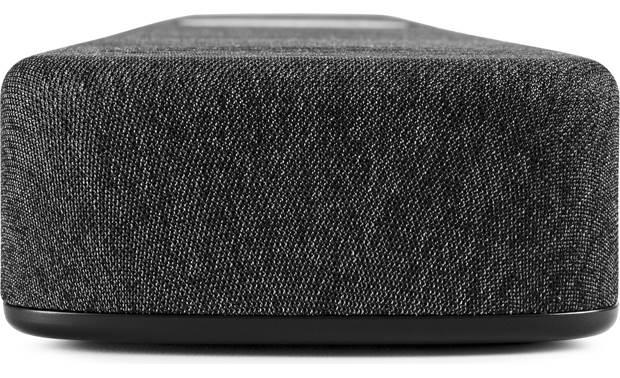
The React also includes two passive radiators—these are speaker-like components that don't have their own power but vibrate in response to the main drivers to extend bass response. For a sound bar this slim (just 2.25 inches tall), the amount of bass it produces is genuinely surprising. It won't rattle your windows like the Samsung's dedicated subwoofer, but it adds enough low-end weight to make gunshots and explosions feel substantial rather than thin.
Where the Polk struggles is with true surround sound effects. Its Dolby Digital and DTS processing can make audio seem wider than your TV speakers, but it can't create the wraparound effects that physical rear speakers provide. If you're watching "Mad Max: Fury Road" and cars are racing past the camera, you'll hear them move left to right across the front soundstage, but you won't get that sense of vehicles whooshing behind you.
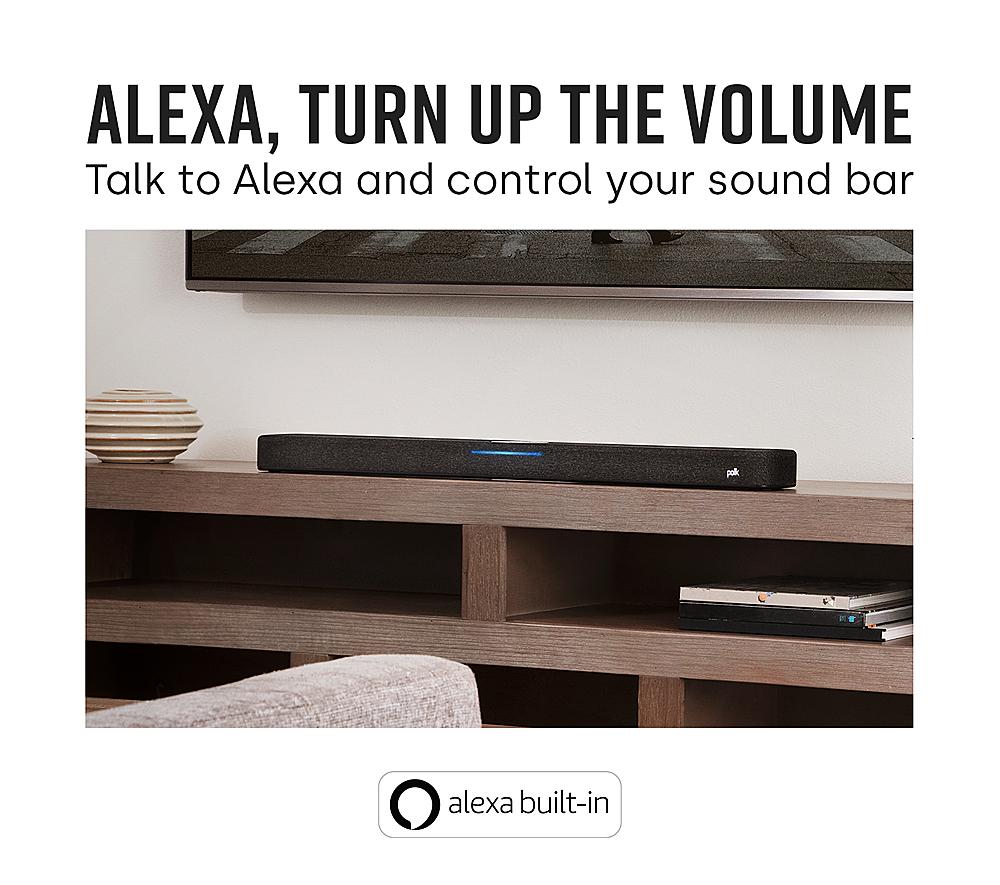
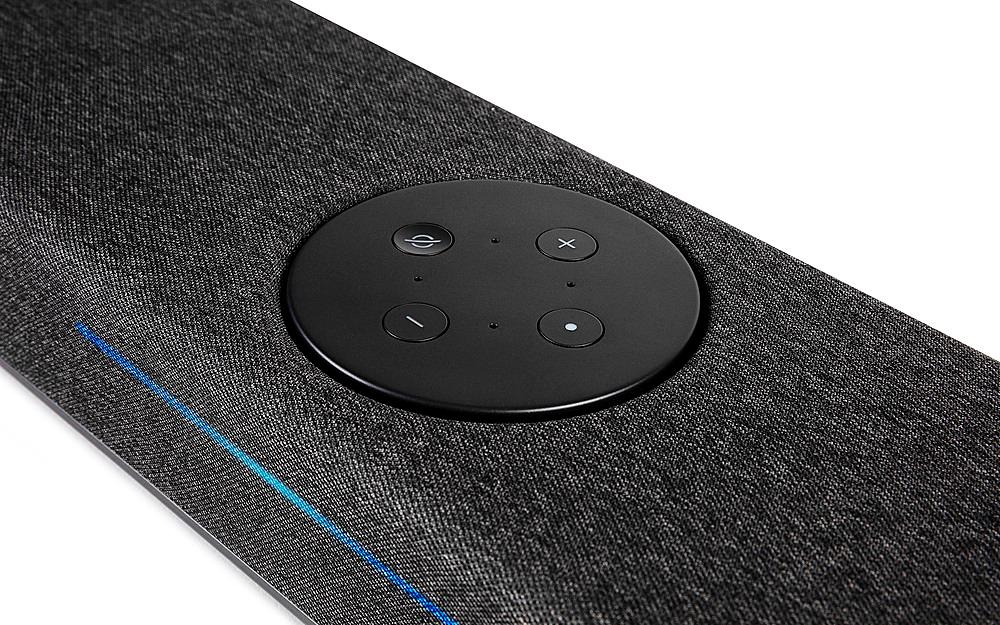
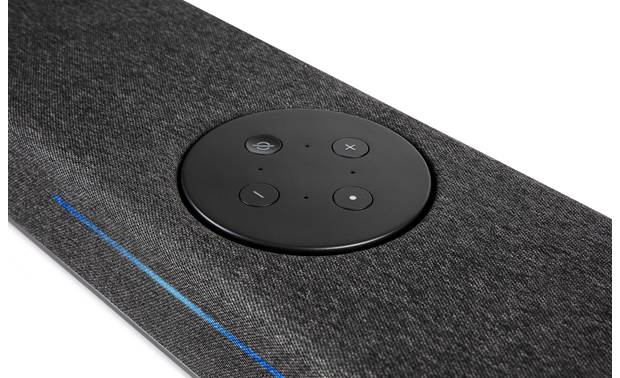
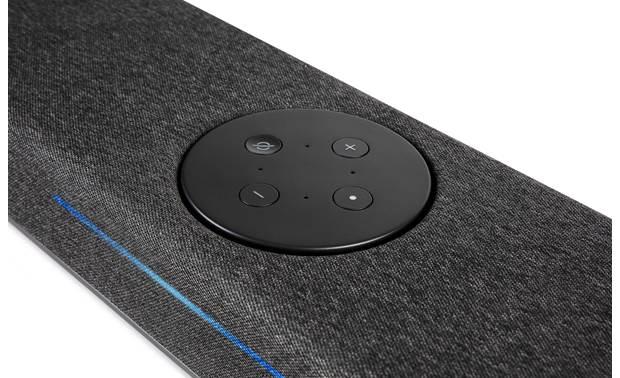
Here's where the Polk React really shines. Instead of treating voice control as an afterthought, Polk designed this sound bar to function as a full Amazon Echo device. It includes four far-field microphones that can hear you even when music is playing at moderate volumes—something many smart speakers struggle with.
This isn't just about controlling the sound bar itself (though voice commands for volume and source switching work flawlessly). You get the full Alexa experience: weather updates, smart home control, music streaming from Amazon Music and Spotify, and even Alexa's calling and messaging features. If you were planning to buy both a sound bar and an Echo device, the React essentially gives you both in one package.
The multi-room audio capabilities are particularly clever. You can group the React with other Alexa devices around your house, playing the same music everywhere or different songs in each room. During parties, I've found this feature incredibly useful—background music in the kitchen and living room that stays perfectly synchronized.
The Samsung Q Series takes a different approach to smart features, focusing more on integration with Samsung's broader ecosystem. If you own a Samsung TV, the synergy is genuinely impressive. Beyond Q-Symphony's speaker coordination, features like SpaceFit Sound+ use your TV's microphones to analyze your room's acoustics and automatically adjust the sound bar's output accordingly.
This room correction technology is more sophisticated than it might sound. Different rooms have different acoustic properties—hardwood floors reflect sound differently than carpet, and large open spaces need different tuning than smaller, more intimate rooms. The Samsung measures these characteristics and adjusts frequency response, delay timing, and even which speakers are emphasized to optimize audio for your specific space.
The Samsung also supports more connectivity options. While both sound bars include Bluetooth, the Samsung adds AirPlay 2 (for iPhone users), Chromecast built-in, and support for hi-resolution audio formats up to 24-bit/192kHz. If you're streaming lossless music from services like Tidal or Apple Music, you'll actually hear the difference.
For cinematic content, the difference between these sound bars becomes most apparent. The Samsung Q Series excels with action movies, sci-fi films, and anything with complex soundtracks. When I watched "Dune" on 4K Blu-ray, the ornithopters (those insect-like aircraft) genuinely sounded like they were moving through three-dimensional space around my seating area. The rear speakers create this sense of being inside the action rather than just watching it.
The Samsung's center channel—a dedicated speaker specifically for dialogue—also ensures that conversations remain clear even during loud action sequences. This is crucial for movies like Marvel films where quips and plot exposition happen during explosions and fight scenes.
The Polk React, while lacking true surround effects, handles dialogue-heavy content exceptionally well. News programs, talk shows, and character-driven dramas benefit enormously from its voice-focused tuning. If you primarily watch network television, streaming shows, or documentaries, the Polk's approach might actually serve you better than the Samsung's more complex setup.
Music reveals interesting differences between these approaches. The Samsung supports high-resolution audio formats and has a more neutral frequency response that works well across genres. Jazz recordings showcase excellent instrument separation, while electronic music benefits from the powerful subwoofer's deep bass extension.
The Polk takes a warmer approach that many people find more immediately pleasing. Vocals are particularly well-rendered, making it excellent for singer-songwriter content, podcasts, and acoustic music. However, it can sound somewhat limited with complex orchestral pieces or bass-heavy electronic genres.
For gaming, the Samsung's advantages become even more pronounced. Modern games like "The Last of Us Part II" or "Call of Duty" use sophisticated spatial audio to help players locate enemies, environmental hazards, and story elements. The Samsung's true surround capabilities make these audio cues much more effective than virtual processing can achieve.
The Polk isn't terrible for gaming—its dialogue clarity helps with story-driven games—but competitive multiplayer gaming really benefits from the directional accuracy that physical surround speakers provide.
Your room size significantly affects which sound bar makes more sense. The Samsung Q Series is designed for larger spaces—living rooms, family rooms, or dedicated home theaters. In my experience, it really starts to shine in rooms larger than 15x20 feet, where its powerful amplification and multiple speakers can properly fill the space.
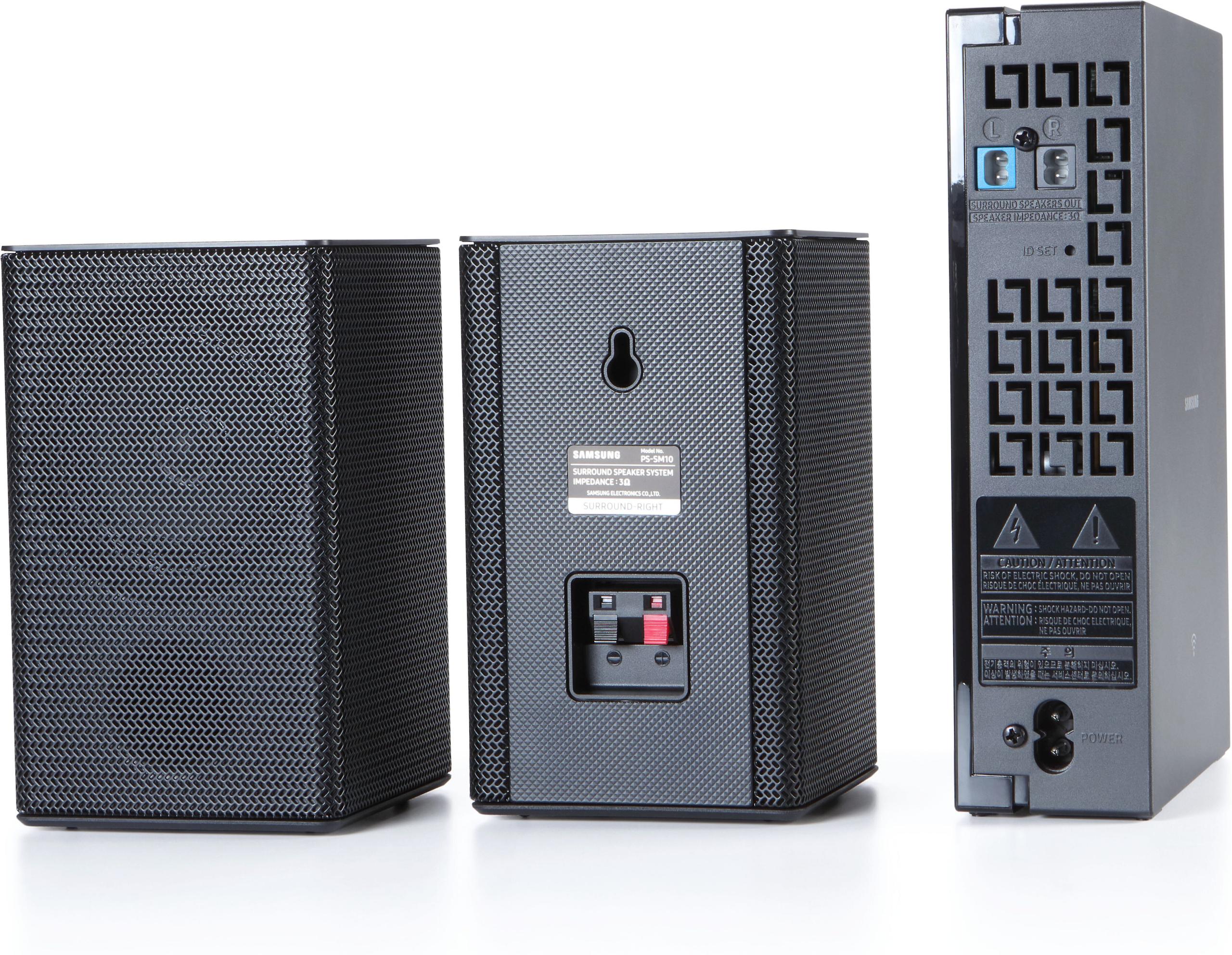
The rear speakers do require some planning. While they're wireless (no power cables to the main bar), they still need electrical outlets and should be positioned at or slightly behind your main seating area. The Samsung includes detailed setup instructions, but you'll need furniture or wall mounts to position them correctly.
The Polk React works beautifully in smaller spaces—apartments, bedrooms, or compact living areas where a full surround system would be overkill. Its slim profile fits easily on TV stands or mounted on walls, and the lack of rear speakers means much simpler setup.
At $897.99, the Samsung represents a significant investment, but it's important to consider what you're getting. Most competitors charge extra for the subwoofer ($200-300) and rear speakers ($300-400), so a comparable system from other brands often costs $1,200 or more. The Samsung includes everything needed for a complete surround system.
The Polk React at $230.00 offers exceptional value for its intended use case. Compare it to buying a basic sound bar ($150) plus an Echo device ($100), and you're already at the React's price point—but with better integration and audio quality than either component alone.
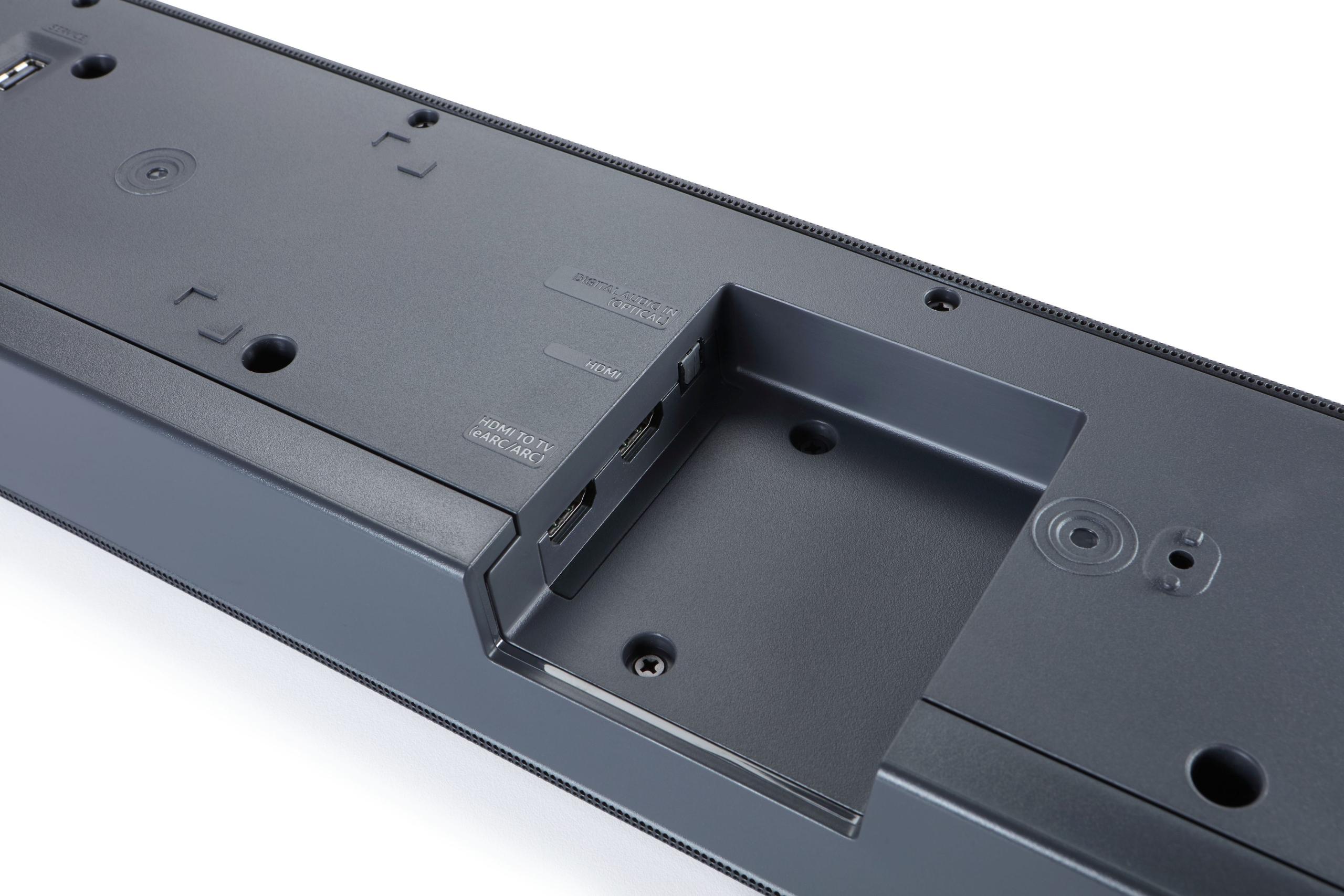
Both products represent current thinking in their respective categories, but they're positioned differently for future technology adoption. The Samsung's HDMI eARC connection supports the latest audio formats and can pass through 4K/60Hz video with HDR—important for new gaming consoles and high-end streaming devices.
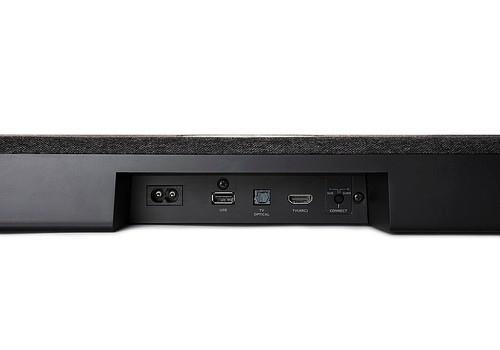
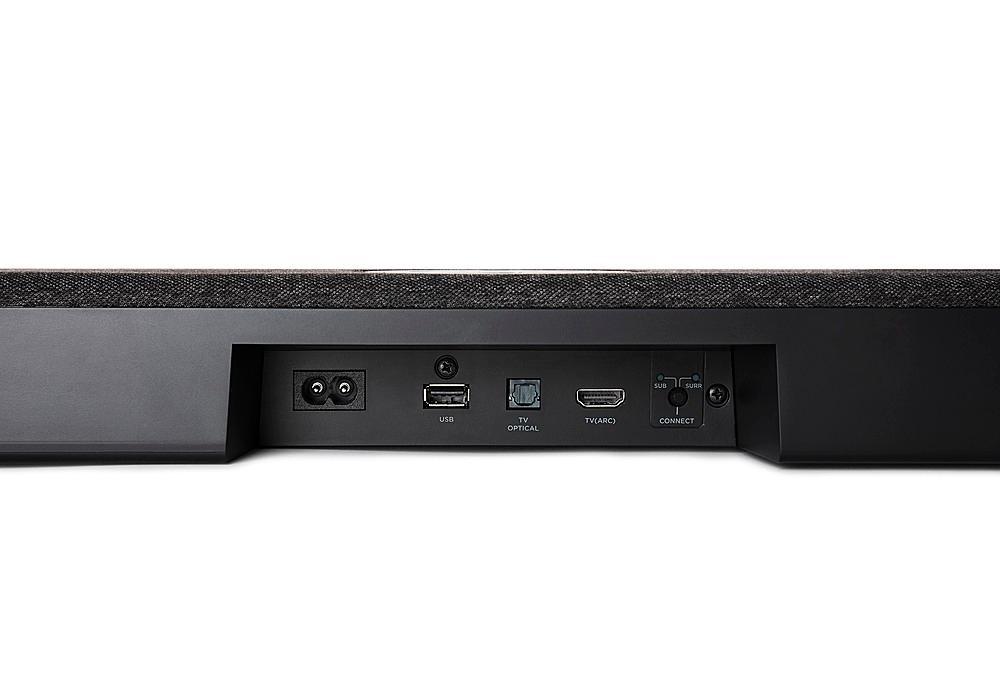
The Polk's HDMI ARC (not eARC) connection is more limited, supporting standard Dolby Digital and DTS but not the newer lossless formats. For most streaming content and cable TV, this doesn't matter, but it could become more relevant as content quality continues improving.
Choose the Samsung Q Series 9.1.2 Channel Soundbar if you want a true home theater experience. It's ideal for movie enthusiasts, gamers, and anyone with a room large enough to appreciate its capabilities. The investment makes sense if audio quality is a priority and you have a Samsung TV to take advantage of the ecosystem integration.
Choose the Polk Audio React Sound Bar if dialogue clarity and smart features are your priorities. It's perfect for news watchers, podcast listeners, and anyone who wants significantly better TV audio without the complexity or cost of a full surround system. The Alexa integration alone makes it compelling for smart home users.
The gap between these products isn't just about price—it's about fundamentally different approaches to solving TV audio problems. Both succeed in their intended roles, making your choice dependent on what you actually need rather than what sounds more impressive on paper.
| Samsung Q Series 9.1.2 Channel Soundbar | Polk Audio React Sound Bar with Alexa Built-In |
|---|---|
| Price - Significant cost difference reflects different target markets | |
| $897.99 (premium home theater system) | $230.00 (budget-friendly upgrade) |
| Channel Configuration - Determines surround sound capabilities | |
| 9.1.2 with physical rear speakers and height channels | 2.1 virtual surround (no rear or height speakers) |
| Dolby Atmos Support - Creates overhead sound effects | |
| True Dolby Atmos with dedicated up-firing drivers | No Dolby Atmos (virtual processing only) |
| Subwoofer Inclusion - Critical for bass impact | |
| Wireless subwoofer included | No subwoofer (passive radiators only, optional sub $200 extra) |
| Voice Control Integration - Smart home functionality | |
| Basic Alexa built-in for sound bar control | Full Amazon Echo functionality with far-field mics |
| HDMI Connectivity - Affects audio format support | |
| HDMI eARC with 4K/60Hz passthrough | HDMI ARC only (more limited format support) |
| Room Size Suitability - Impacts performance effectiveness | |
| Large rooms (300+ sq ft) with powerful amplification | Small to medium rooms (compact design) |
| Setup Complexity - Installation requirements | |
| Requires rear speaker placement and electrical outlets | Simple plug-and-play setup |
| Audio Format Support - Future-proofing for high-quality content | |
| Hi-res audio up to 24-bit/192kHz, DTS:X, Dolby TrueHD | Standard Dolby Digital and DTS only |
| Samsung TV Integration - Ecosystem benefits | |
| Q-Symphony and SpaceFit Sound+ with compatible Samsung TVs | Works with any TV brand equally |
The Samsung Q Series 9.1.2 Channel Soundbar is significantly better for movies due to its true Dolby Atmos support, physical rear speakers, and dedicated subwoofer. It creates genuine surround sound effects that make you feel like you're inside the action. The Polk Audio React Sound Bar excels at dialogue clarity but uses virtual surround processing, making it better suited for TV shows and news rather than cinematic experiences.
The core difference is approach: the Samsung Q Series is a complete home theater system with 9.1.2 channels, rear speakers, and a subwoofer for immersive surround sound. The Polk Audio React is a 2.1-channel soundbar focused on dialogue clarity and smart home integration with built-in Alexa functionality.
Value depends on your needs. The Polk Audio React at $230 offers exceptional value for basic TV audio improvement and smart speaker functionality. The Samsung Q Series at $897.99 provides better value for serious home theater enthusiasts since comparable systems from other brands often cost $1,200+ when including subwoofer and rear speakers.
You need the Samsung Q Series if you have a large room (300+ sq ft), watch lots of movies, play games, or want true surround sound immersion. Choose the Polk Audio React if you primarily want clearer dialogue, have a smaller space, or need integrated smart home features.
The Polk Audio React is much easier to set up - it's a simple plug-and-play installation with just one HDMI or optical cable connection. The Samsung Q Series requires positioning rear speakers around your room and connecting the wireless subwoofer, making setup more complex but providing better audio performance.
Yes, both soundbars work with any TV brand through HDMI or optical connections. However, the Samsung Q Series offers special features like Q-Symphony and SpaceFit Sound+ when paired with compatible Samsung TVs, while the Polk Audio React works equally well with all TV brands.
The Samsung Q Series is better for serious music listening with support for hi-res audio formats up to 24-bit/192kHz and a more neutral sound signature. The Polk Audio React has a warmer sound that's pleasant for casual music listening and excels with vocal-heavy content like podcasts and acoustic music.
Both offer voice control but differently. The Polk Audio React functions as a full Amazon Echo with far-field microphones for complete Alexa functionality including smart home control and music streaming. The Samsung Q Series has basic Alexa built-in primarily for soundbar control functions.
The Samsung Q Series is superior for gaming due to its true surround sound capabilities that help with directional audio cues in competitive games. Modern games use spatial audio for enemy positioning and environmental awareness, which physical surround speakers handle much better than the virtual processing in the Polk Audio React.
The Samsung Q Series is designed for larger rooms over 15x20 feet where its powerful amplification and multiple speakers can properly fill the space. The Polk Audio React works perfectly in smaller spaces like apartments, bedrooms, or compact living areas where a full surround system would be excessive.
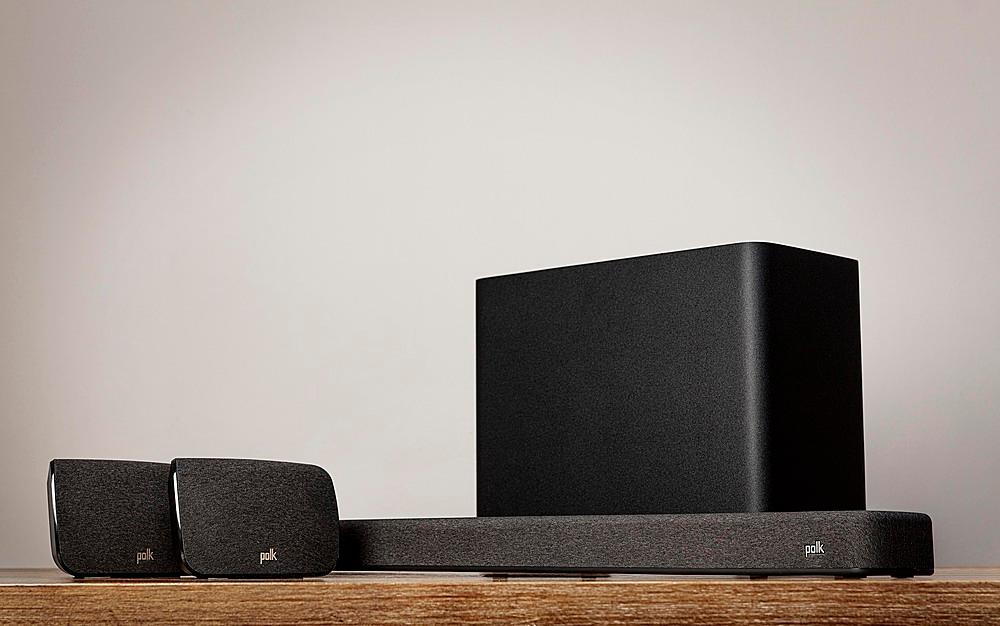
The Samsung Q Series is a complete system that doesn't require additions, though it's compatible with additional Samsung wireless speakers. The Polk Audio React can be expanded with an optional wireless subwoofer ($200) and wireless surround speakers, allowing you to build up the system gradually.
For a dedicated home theater room, choose the Samsung Q Series 9.1.2 Channel Soundbar for its true Dolby Atmos experience, powerful subwoofer, and immersive surround sound. For casual TV viewing in a living room where you also want smart speaker functionality, the Polk Audio React Sound Bar provides excellent dialogue clarity and voice control at a much lower price point.
We've done our best to create useful and informative comparisons to help you decide what product to buy. Our research uses advanced automated methods to create this comparison and perfection is not possible - please contact us for corrections or questions. These are the sites we've researched in the creation of this article: rtings.com - samsung.com - markselectrical.co.uk - techradar.com - walmart.com - samsung.com - samsung.com - youtube.com - samsung.com - biancos.com - crutchfield.com - samsung.com - techradar.com - crutchfield.com - popsci.com - youtube.com - tomsguide.com - bestbuy.com - polkaudio.com - crutchfield.com - forum.polkaudio.com - soundunited.com - youtube.com

Privacy Policy
Terms and Conditions - Affiliate Policy
Home Security
© Copyright 2008-2026.
11816 Inwood Rd #1211, Dallas, TX 75244