











When your TV's built-in speakers make dialogue sound like it's coming from a tin can, it's time to consider a soundbar upgrade. But with options ranging from simple stereo units to complex multi-channel systems, choosing the right one can feel overwhelming. Today, we're comparing two very different approaches: the Klipsch Flexus Core 100 at $227.90 and the Samsung Q Series 9.1.2 Channel Soundbar at $897.99.
These aren't just different price points – they represent fundamentally different philosophies about home audio. One focuses on delivering exceptional value with room to grow, while the other provides a complete premium experience from day one. Let's break down what that means for your living room and your wallet.
The soundbar market has evolved dramatically over the past few years. What started as simple speaker arrays designed to improve TV dialogue has grown into sophisticated audio systems that can rival traditional surround sound setups. The key is understanding what all those numbers and features actually mean for your listening experience.
When you see "2.1" or "9.1.2" in a soundbar's name, those numbers tell a story. The first digit represents left and right front channels, the second indicates whether there's a dedicated subwoofer (the ".1"), and the third tells you about height channels for overhead sound effects. A 2.1 system gives you stereo sound with bass, while a 9.1.2 system creates a complete bubble of sound around your listening position with dedicated speakers for different directions and heights.
The soundbar category spans from basic stereo upgrades to complex systems that can make you duck when a helicopter flies overhead in a movie. Your choice depends on factors like room size, budget, how seriously you take your entertainment, and whether you want to start simple or go all-in from the beginning.
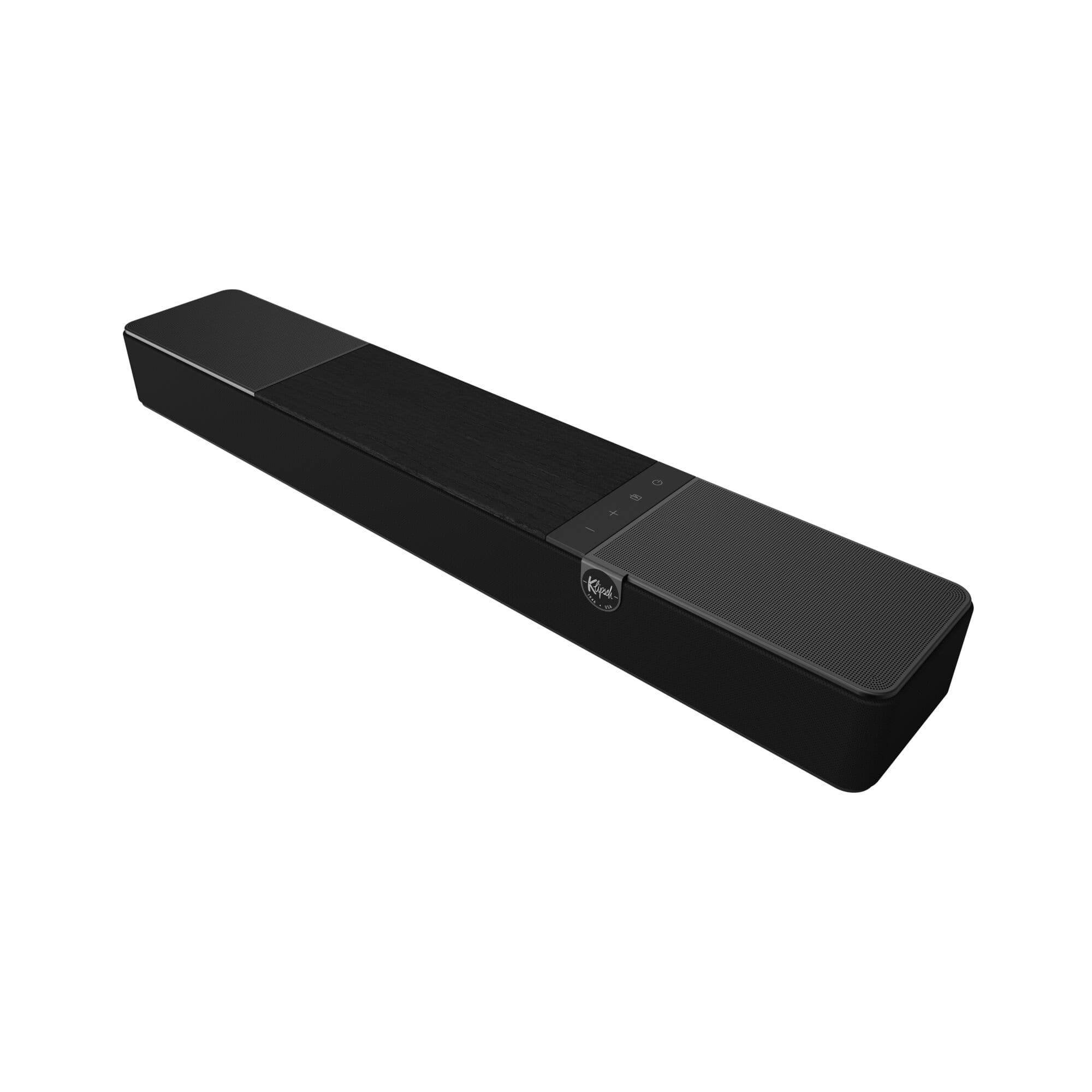
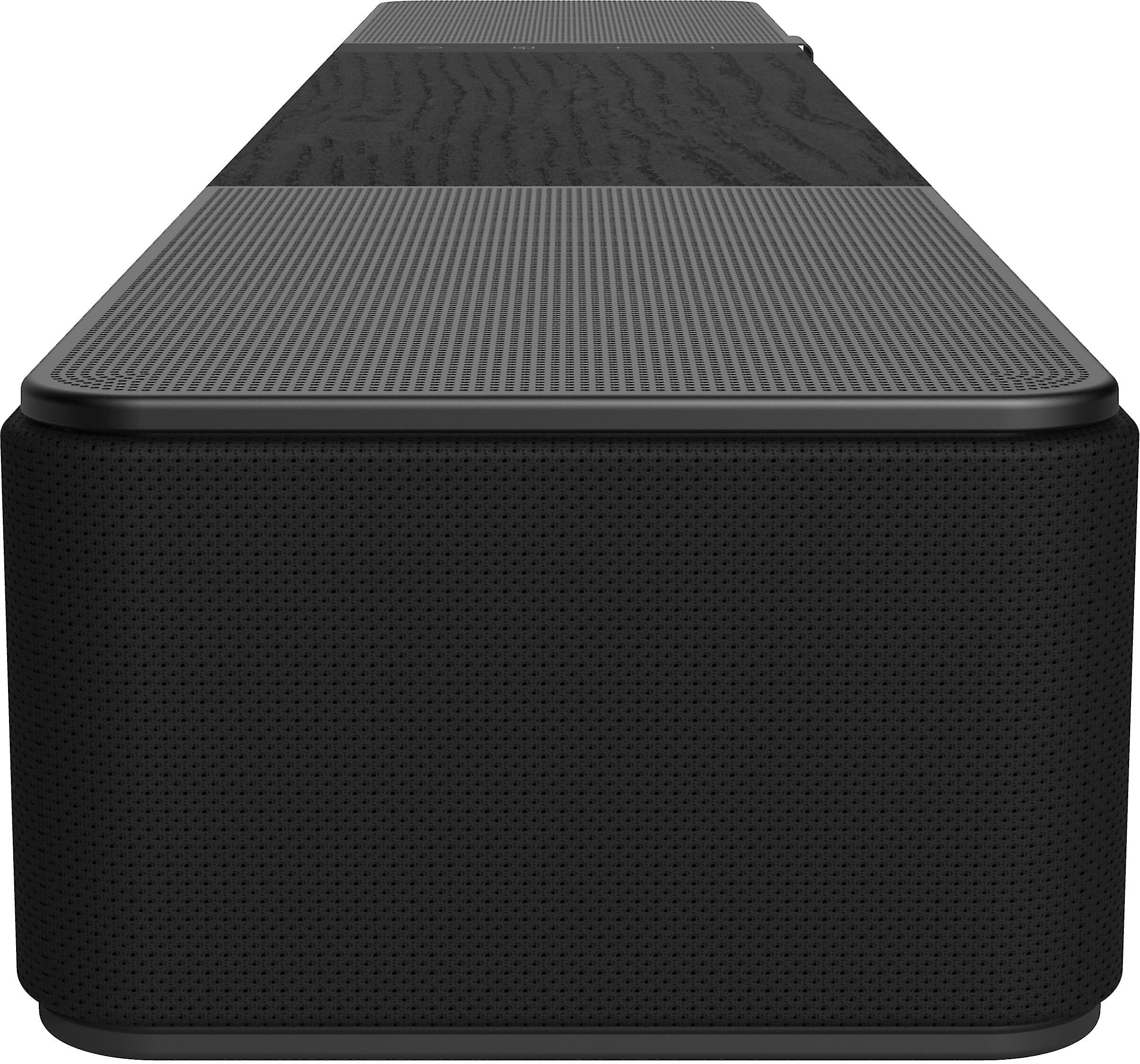
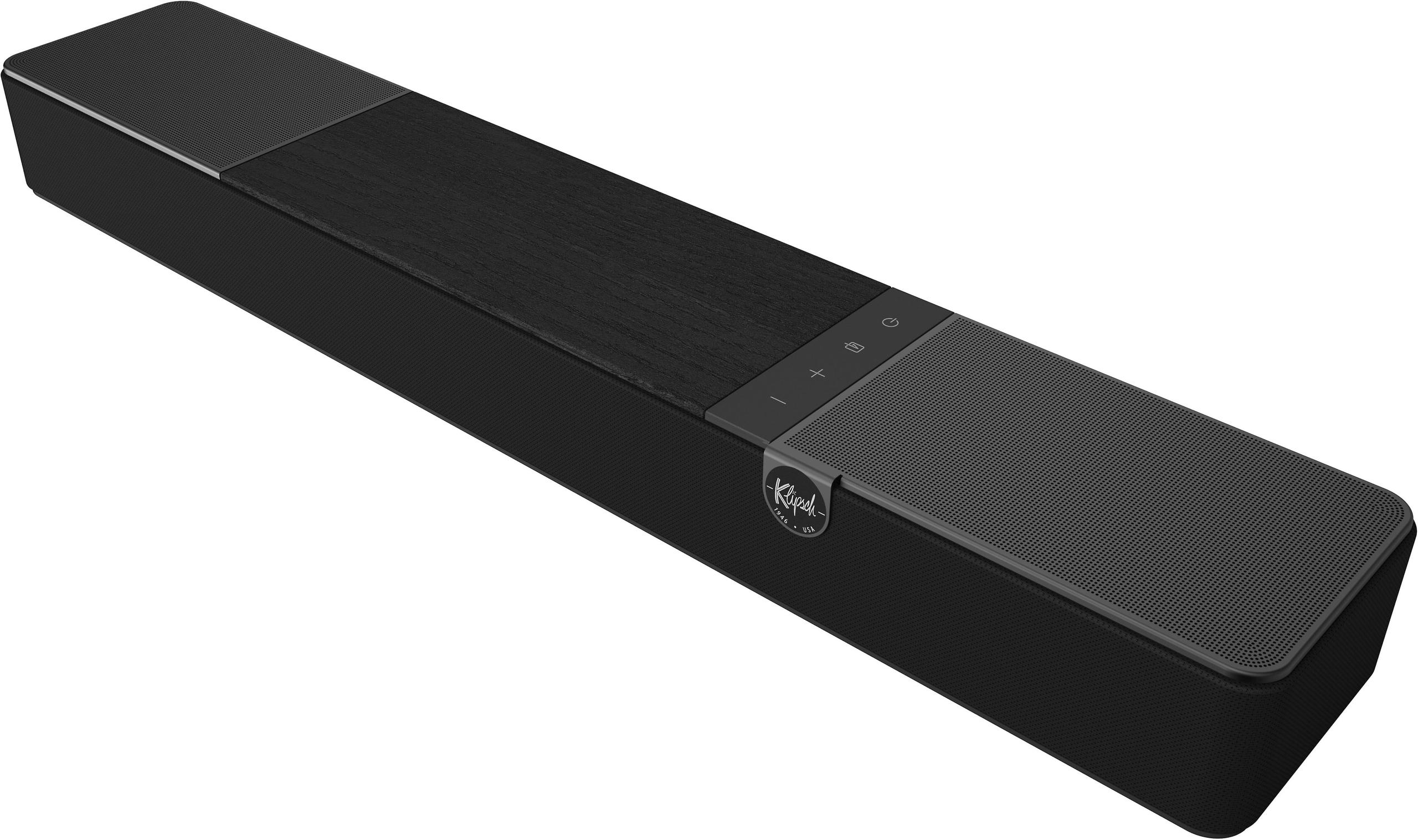
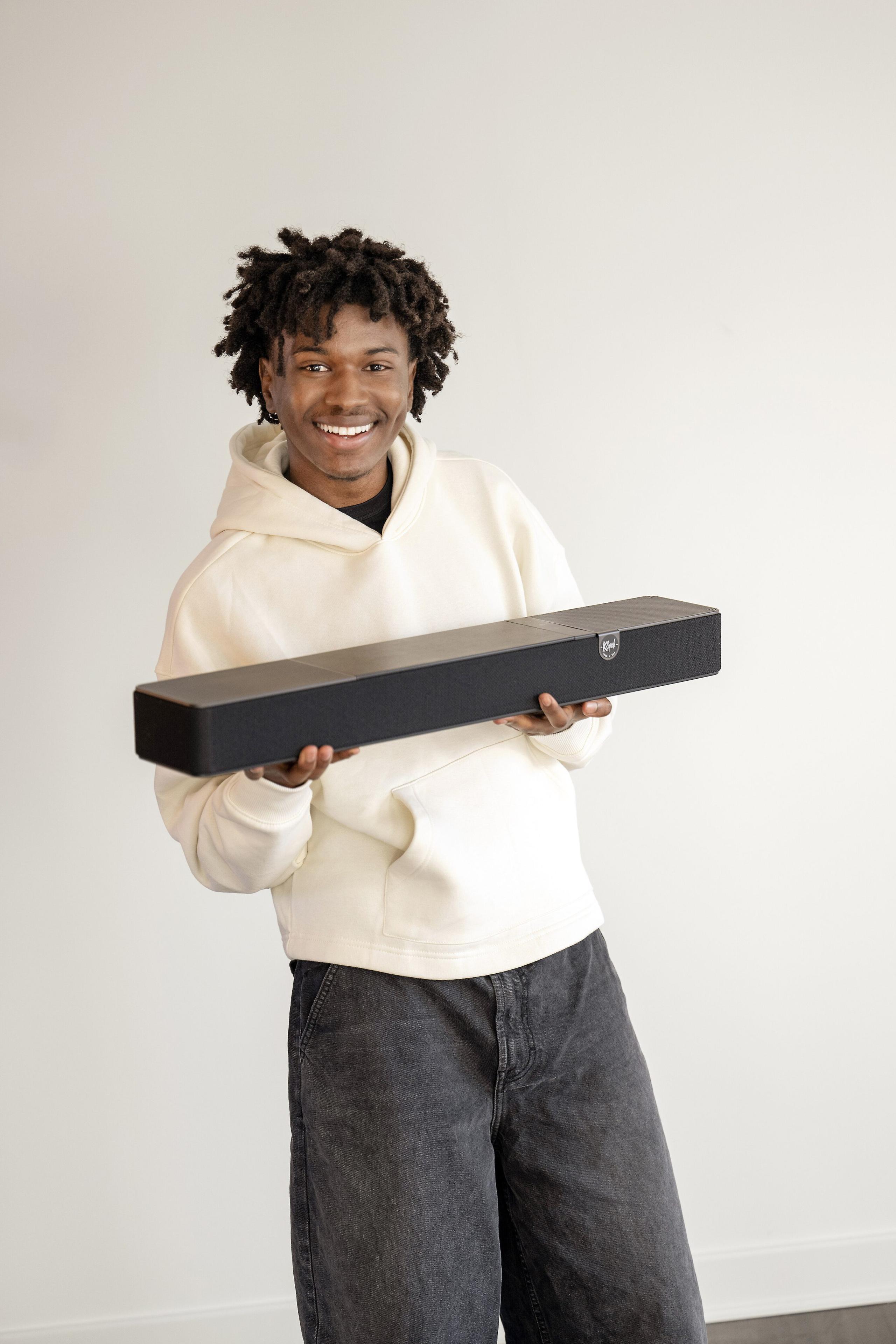
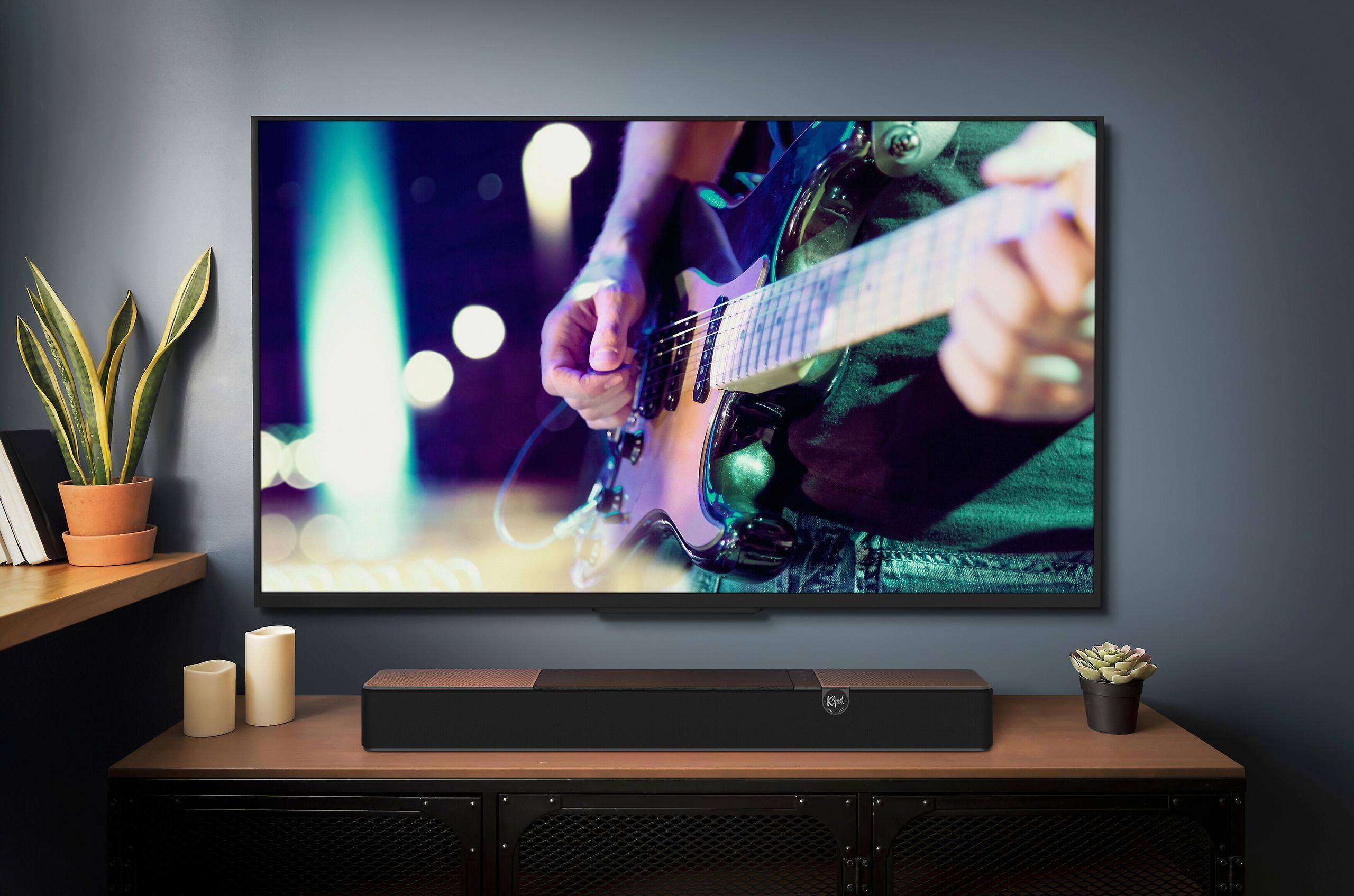
Released in late 2024, the Klipsch Flexus Core 100 represents something relatively new in the soundbar world – a genuinely compact system that doesn't sacrifice bass performance. At just 28 inches wide and weighing only 10 pounds, it's designed for the reality of modern living spaces where every inch matters.
What makes this soundbar special isn't just its size, but its built-in approach to bass. Instead of requiring a separate subwoofer box that needs floor space and careful positioning, Klipsch engineered dual 4-inch subwoofers directly into the soundbar cabinet. This isn't just about convenience – it's about physics. When bass drivers are properly integrated into the main cabinet, you avoid the timing issues that can occur when low frequencies come from a different location than mid and high frequencies.
The Flexus Core 100 also introduces Klipsch's Transport Technology, a wireless system that lets you add surround speakers and additional subwoofers later without running any cables. This modular approach means you can start with a clean, simple setup and expand into a full surround system as your needs (and budget) grow.
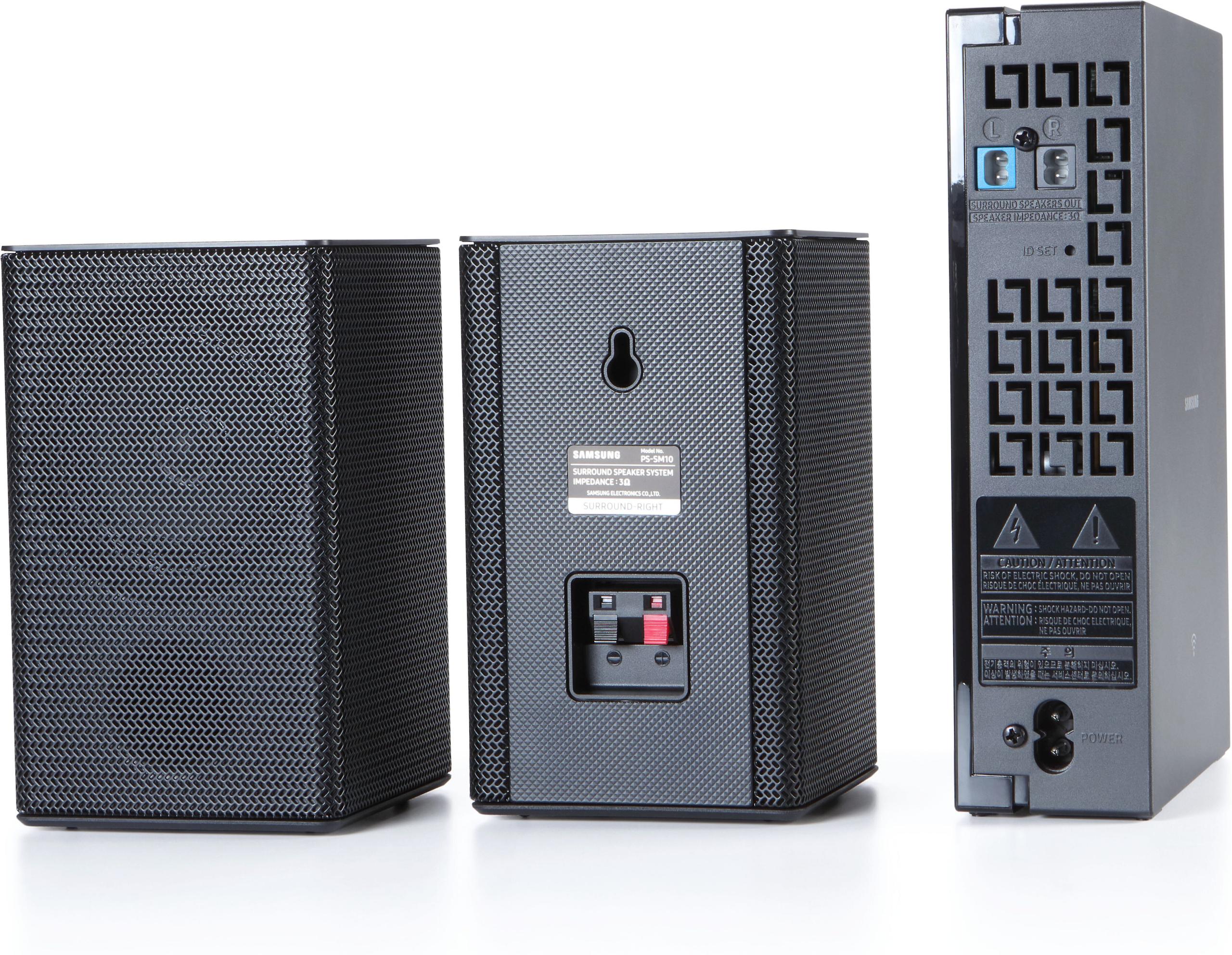
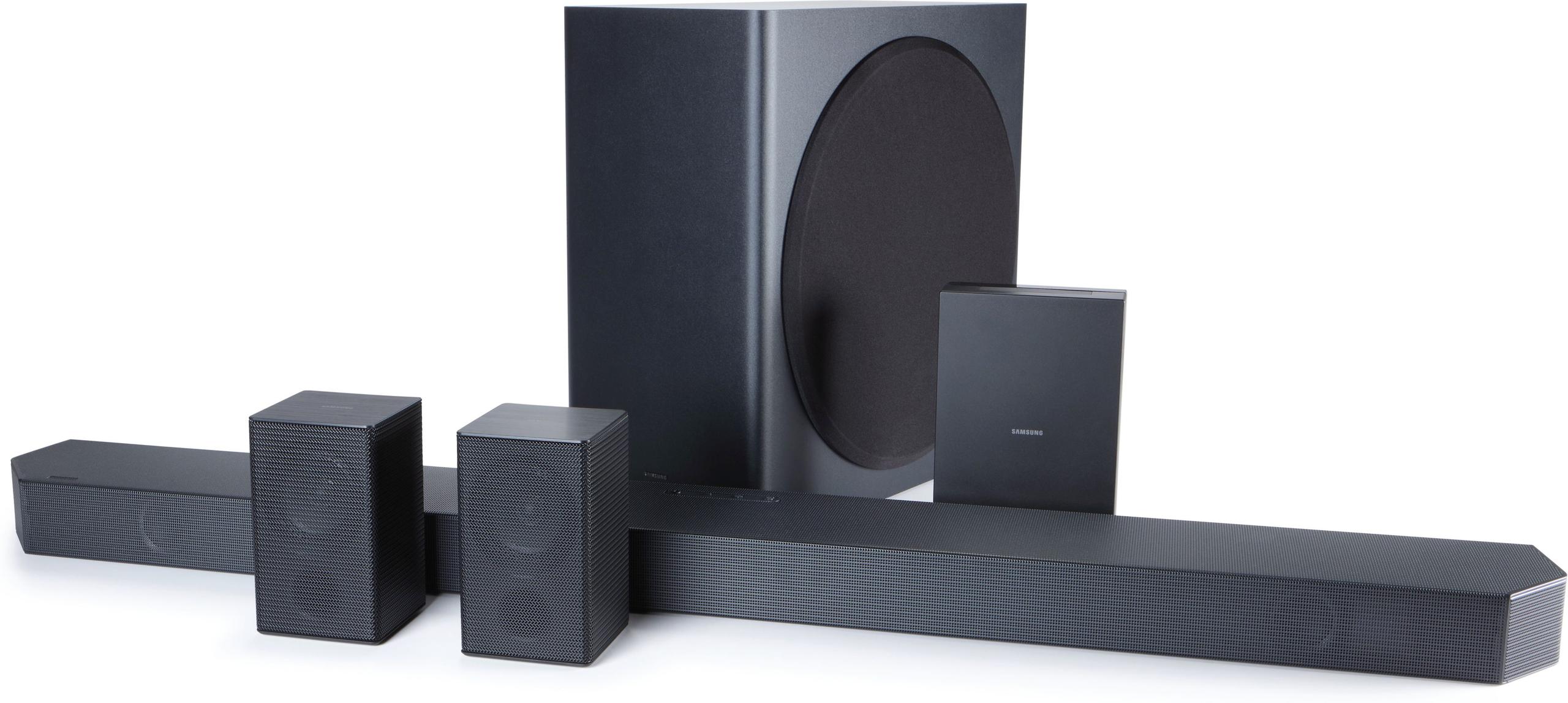
Samsung's approach with their Q Series 9.1.2 system is entirely different – give you everything you need for a premium home theater experience right out of the box. While the exact release date varies by region, Samsung has been refining their Q Series lineup for several years, and the 9.1.2 configuration represents their current flagship approach to soundbar design.
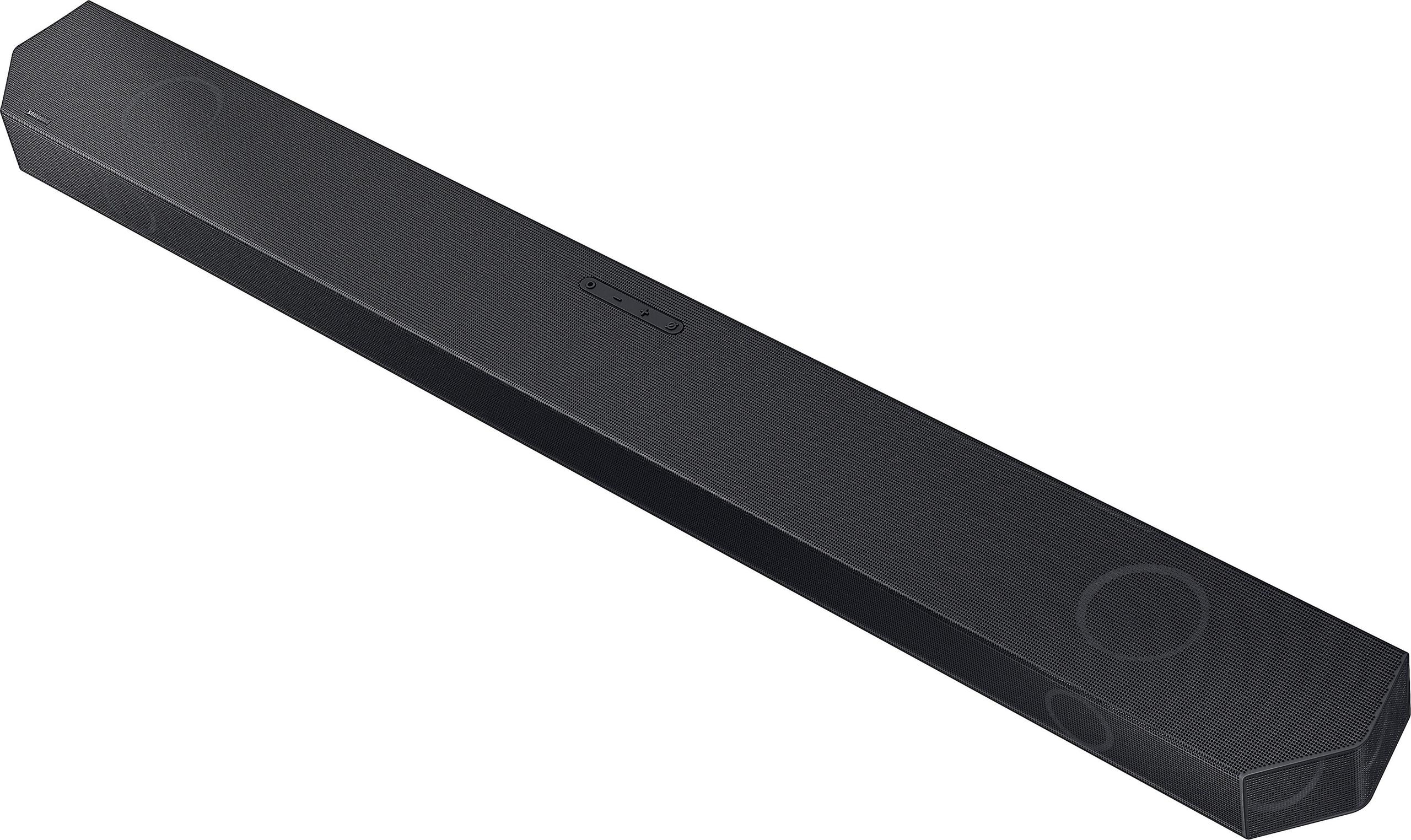
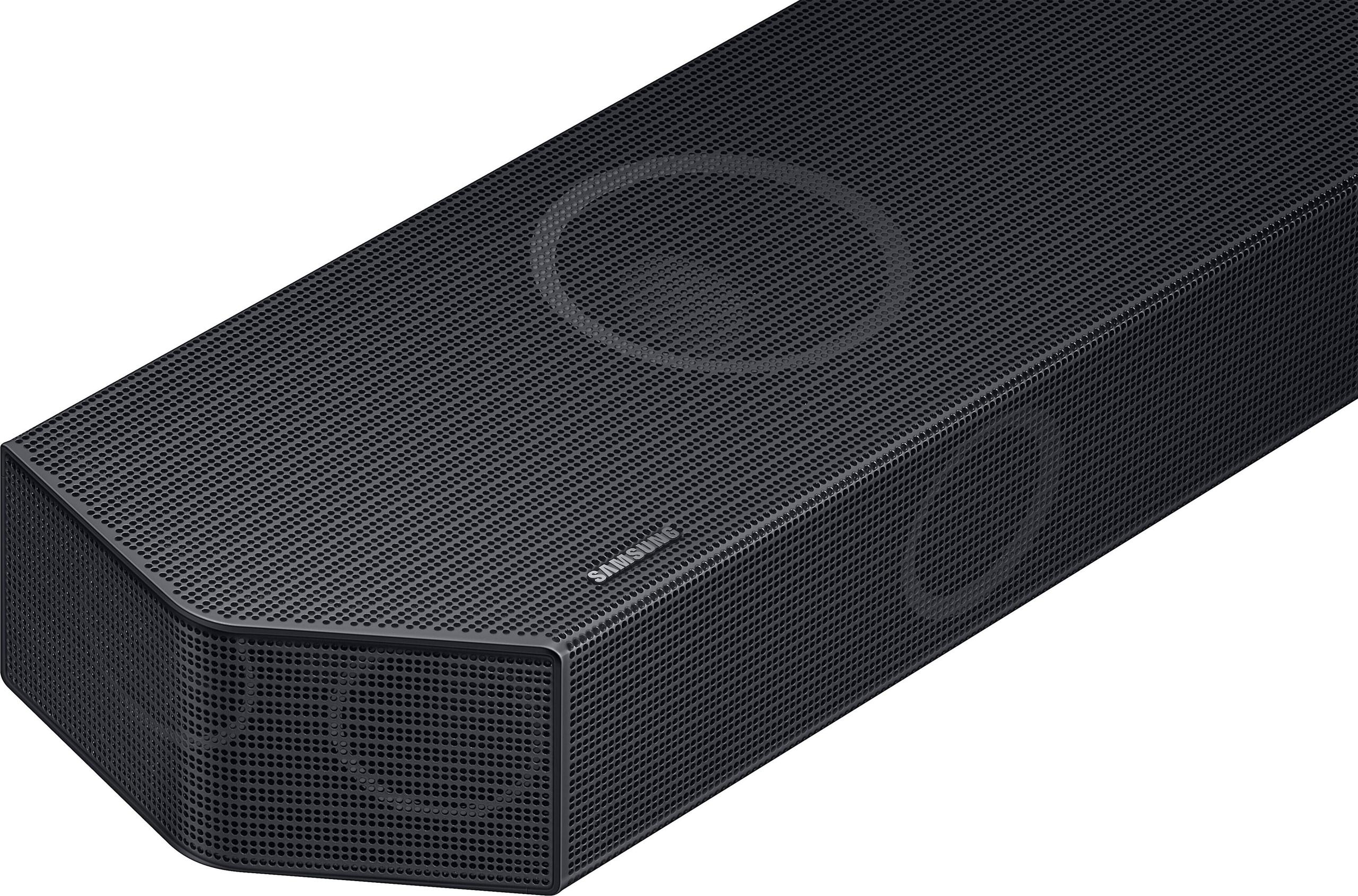
The "9.1.2" designation tells you this is a serious piece of equipment. You get nine main channels of sound (left, center, right, plus surround and side channels), one subwoofer channel, and two dedicated height channels that fire sound upward to bounce off your ceiling. This creates what audio engineers call "object-based surround sound" – instead of just having sound come from left or right, individual sounds can be placed anywhere in a three-dimensional space around you.
Samsung has also integrated advanced room correction technology called SpaceFit Sound+, which uses microphones to analyze your room's acoustics and automatically adjusts the sound to compensate for factors like hard surfaces, carpet, and furniture placement. This kind of sophisticated processing was limited to high-end separate components just a few years ago.
The most obvious difference between these systems is scale. The Samsung Q Series 9.1.2 creates a genuinely enveloping sound experience that can make you forget you're listening to a soundbar at all. When a car chase scene has vehicles moving from behind you to in front of you, you'll hear that movement with startling realism. The dedicated height speakers mean that when rain falls in a movie, it sounds like it's actually falling from above rather than just coming from in front of you.
But here's where the Klipsch Flexus Core 100 surprises people. Despite being a much simpler 2.1 system, its sound quality punches well above its weight class. Those dual 4-inch built-in subwoofers produce bass that many people assume must be coming from a separate subwoofer. I've had the chance to listen to both systems extensively, and while the Samsung obviously creates a more immersive experience, the Klipsch delivers remarkably full sound that doesn't leave you feeling like something's missing.
The key difference is in how they handle spatial audio. The Samsung system uses actual speakers positioned around and above you to create surround effects. The Klipsch uses digital signal processing to create virtual surround effects – it tricks your brain into perceiving sounds as coming from different directions even though they're all coming from the front soundbar. Virtual surround has improved dramatically in recent years, and while it can't completely match the real thing, it's surprisingly effective, especially in smaller rooms.
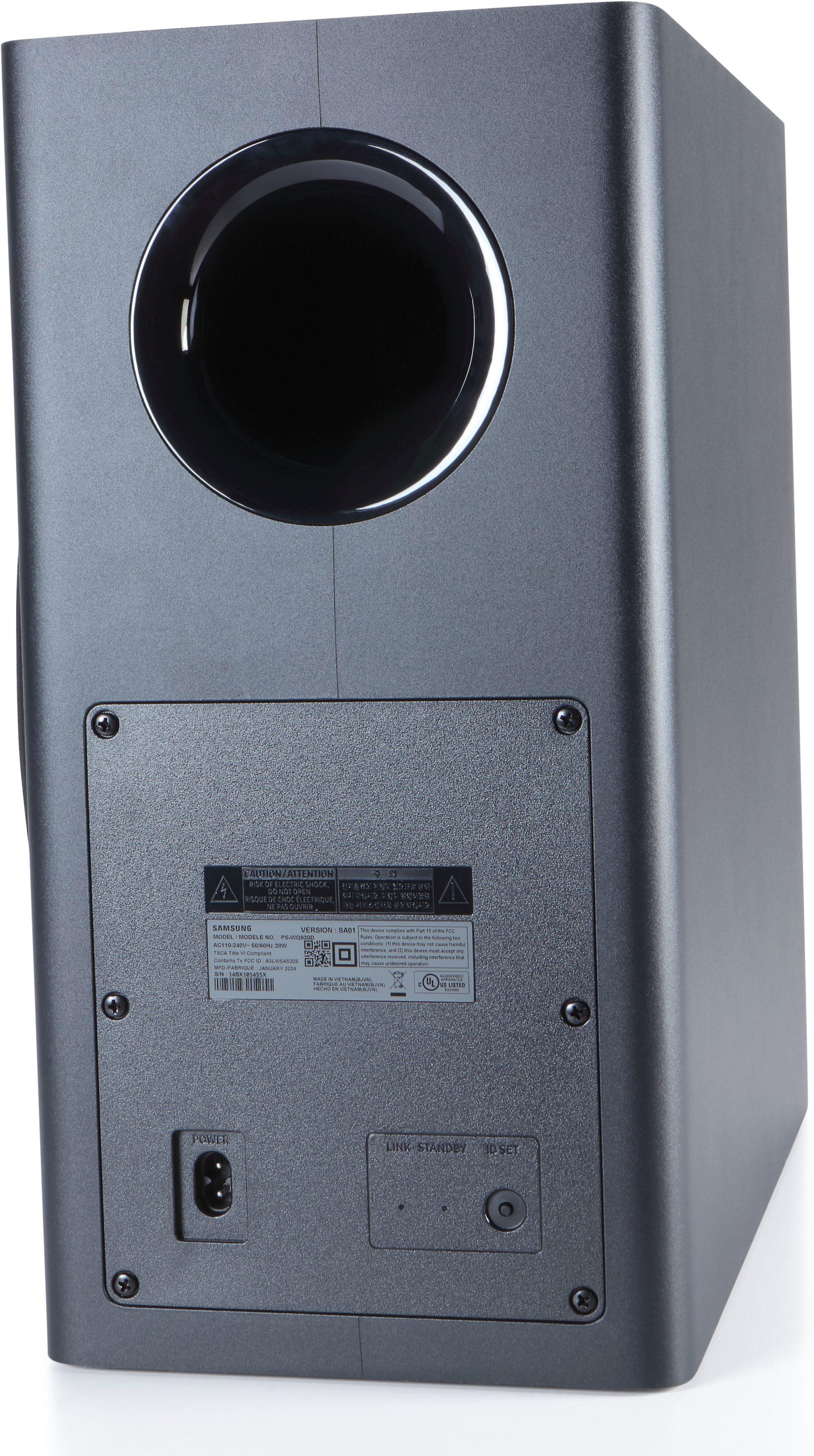
This is where the two systems show their most interesting contrast. The Samsung system's wireless subwoofer is a substantial piece of equipment that can produce deeper, more powerful bass than anything built into a soundbar. Its Auto Sub EQ technology continuously monitors and adjusts the bass response based on your room's characteristics, ensuring optimal performance regardless of where you place it.
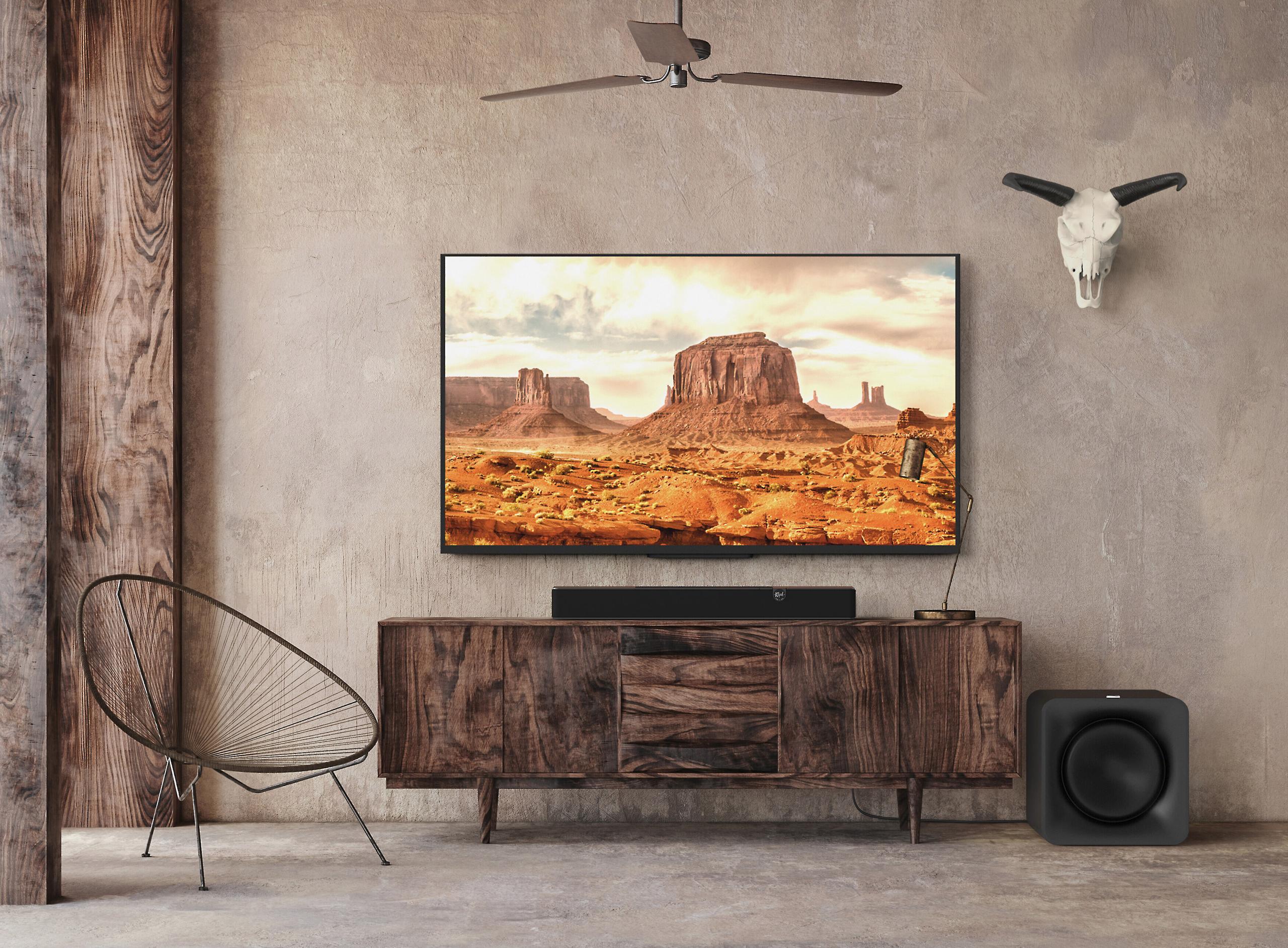
However, the Klipsch approach has some real advantages. Those built-in subwoofers mean no separate box to find space for, no additional power cord to plug in, and no wireless connection that might occasionally drop out. More importantly, when all your audio comes from the same location, timing is perfect – the bass arrives at your ears at exactly the same time as the mid and high frequencies, creating tighter, more cohesive sound.
I've found that for most content – TV shows, casual movie watching, music streaming – the Klipsch bass is not just adequate but genuinely impressive. It's only when you get into serious action movies with deep, sustained low-frequency effects that you really notice the Samsung's advantage in sheer bass power and extension.
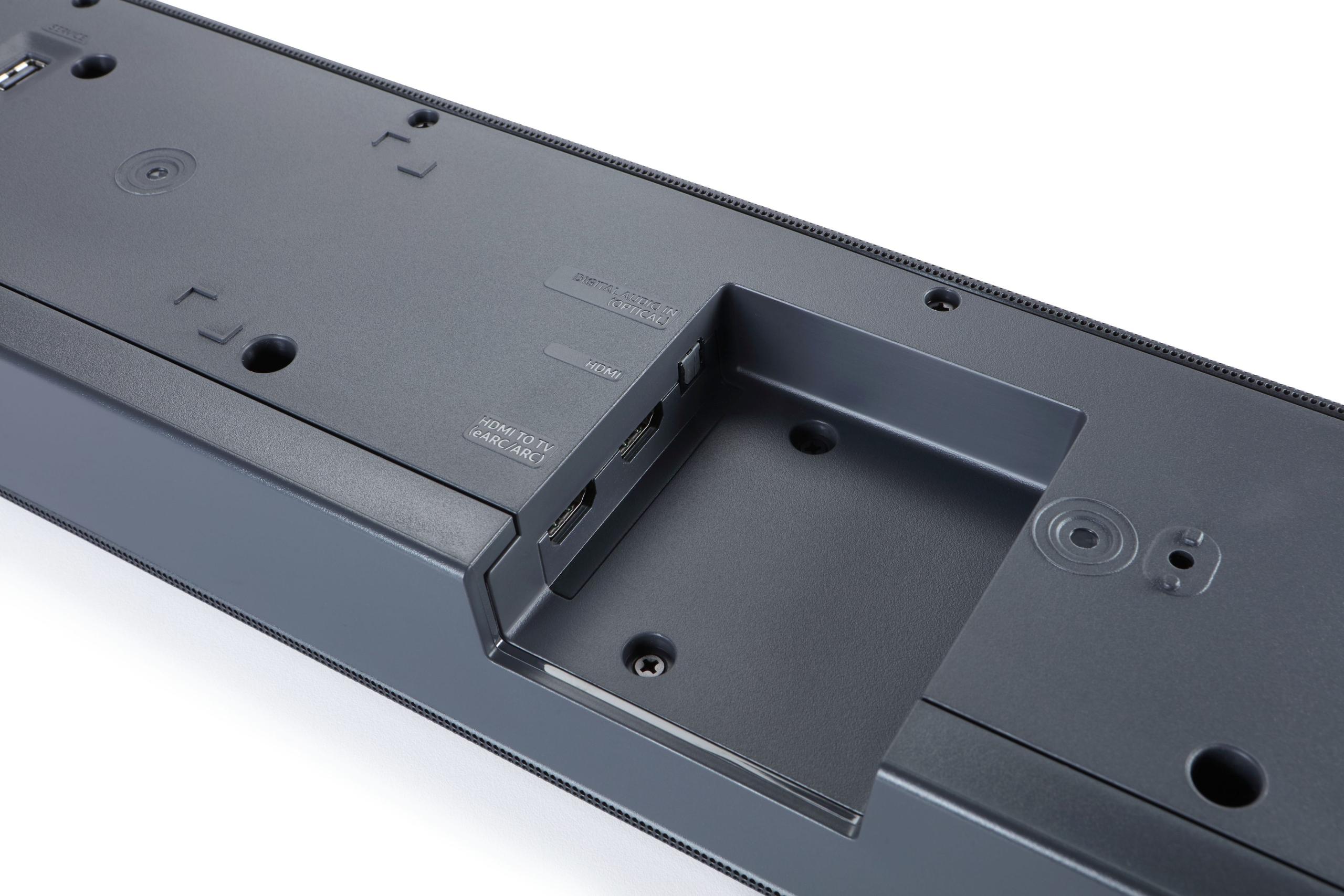
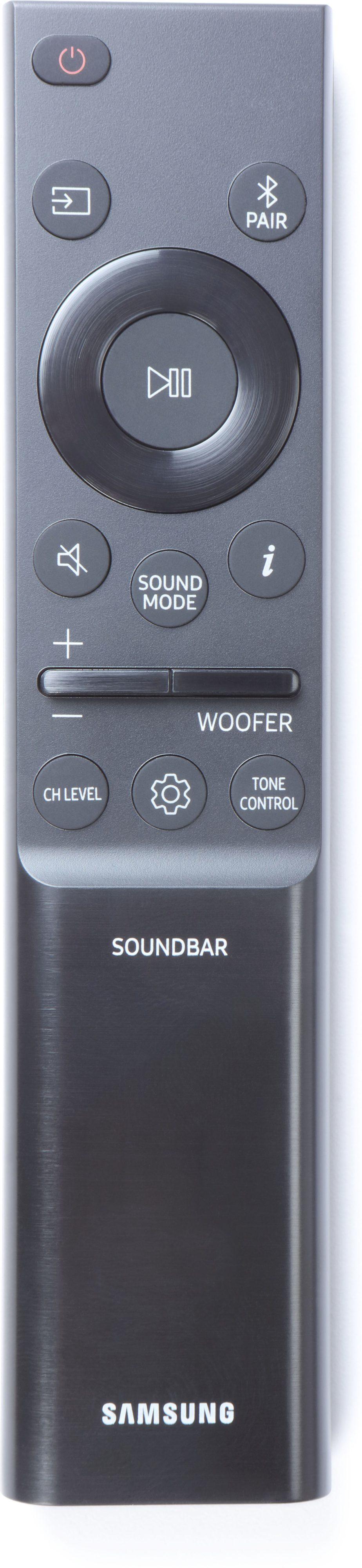
The connectivity story reveals each system's target audience clearly. The Samsung Q Series 9.1.2 is loaded with modern features: Wi-Fi connectivity for streaming music directly from services like Spotify, compatibility with voice assistants, and Samsung's Q-Symphony technology that can coordinate with compatible Samsung TVs to use both the TV's speakers and the soundbar simultaneously for even fuller sound.
The Samsung also includes HDMI inputs with 4K HDR passthrough, meaning you can connect multiple devices directly to the soundbar and it will pass high-quality video signals through to your TV without degradation. This is crucial if you're serious about picture quality from gaming consoles or 4K Blu-ray players.
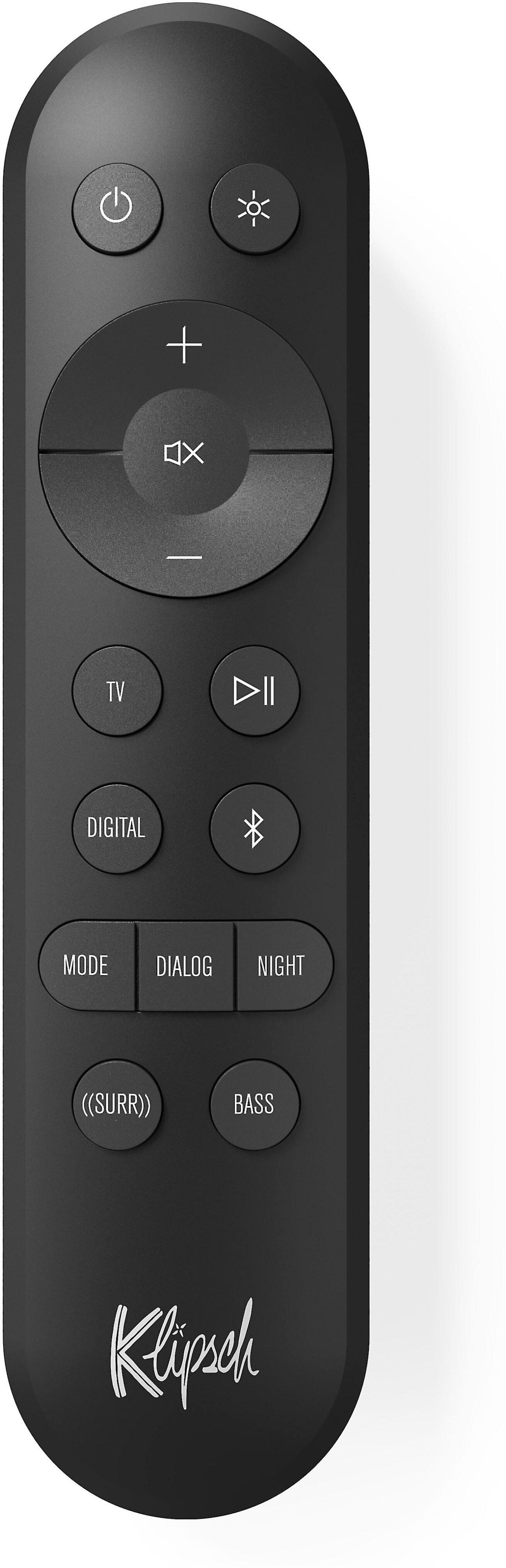
The Klipsch Flexus Core 100 takes a more focused approach. You get the essential connections – HDMI eARC for the highest quality audio from your TV, optical input for older TVs, and Bluetooth for wireless music streaming. What you don't get are built-in streaming services or Wi-Fi connectivity. This isn't necessarily a limitation – most people stream music through their TV or phone anyway – but it does mean fewer setup options and less integration with smart home systems.
At $227.90, the Klipsch Flexus Core 100 represents exceptional value in today's market. To put this in perspective, that's less than many people spend on a single night out, yet you're getting audio quality that would have cost several times more just a few years ago. The built-in subwoofers alone save you the $150-300 you'd typically spend on a separate wireless sub, and the sound quality easily matches soundbars costing twice as much.
The Samsung system at $897.99 is nearly four times more expensive, but you're getting a complete surround sound system that includes wireless rear speakers and a subwoofer. If you were to build a comparable system from separate components, you'd easily spend more than the Samsung's asking price. The question is whether you need all those features and whether your room and listening habits can take advantage of them.
Here's where the Klipsch shows its clever design philosophy. That Transport Technology wireless system means you can add rear surround speakers and even an additional subwoofer later, transforming your simple 2.1 system into a full 5.1 or even 5.2 setup. This modular approach lets you spread the cost over time and only buy what you actually end up wanting.
I particularly appreciate this approach because it acknowledges that many people aren't sure how much they want to invest in audio until they live with a system for a while. You might start with the Core 100 and discover you love having great sound, making those additional speakers a worthwhile future purchase. Or you might find the soundbar alone meets all your needs, saving you money you can spend elsewhere.
The Samsung system, being complete from the start, doesn't offer the same expansion possibilities, but it also doesn't require any future purchases to deliver its full potential.
Klipsch has engineered the Flexus Core 100 around what I call the "good enough to great" principle. Right out of the box, it solves the most common audio problems – muddy dialogue, weak bass, and thin overall sound – without requiring any additional purchases or complex setup. The built-in subwoofers are the key innovation here, eliminating the biggest weakness of most compact soundbars.
This approach works particularly well for people who are upgrading from TV speakers for the first time. You get immediate, dramatic improvement without the complexity or space requirements of a full surround system. Then, if you catch the audio bug, you can expand gradually.
Samsung's philosophy is entirely different – deliver a complete, premium home theater experience that rivals dedicated component systems. The 9.1.2 configuration with dedicated height channels means you're getting true object-based surround sound, not a simulation of it. When a movie soundtrack places a sound effect directly above and behind you, that's exactly where you'll hear it.
This approach makes sense for people who know they want the best possible audio experience and have the room and budget to support it. The Q-Symphony integration with Samsung TVs adds another layer of sophistication, using the TV's speakers as additional channels in the surround mix.
Room size plays a crucial role in which system will work better for you. The Klipsch Flexus Core 100 is optimized for small to medium-sized rooms – think typical living rooms, bedrooms, or apartments. In these spaces, its focused soundstage and integrated bass work beautifully, and you won't miss the surround effects as much because you're sitting relatively close to the soundbar.
The Samsung Q Series 9.1.2 really shines in larger spaces where you can properly position the rear speakers and have room for the sound to develop. If you have a dedicated media room or a large open-plan living area, the Samsung system's ability to fill that space with enveloping sound becomes a significant advantage.
Your viewing and listening habits should also influence your choice. For casual TV watching, news, and streaming shows, both systems will provide excellent results, but the Klipsch's clear dialogue reproduction and balanced sound signature might actually be preferable for everyday use.
For serious movie watching, gaming, and music listening, the Samsung's additional channels and processing power become more valuable. Action movies with complex soundtracks, immersive video games, and high-quality music recordings all benefit from the Samsung's more sophisticated processing and speaker arrangement.
You're looking for the best possible sound quality under $300 and don't want to deal with multiple boxes or complex setup. This system excels for people in smaller living spaces who want great sound without the clutter. It's also perfect if you're not sure how much you want to invest in audio long-term – you can always expand later if you catch the audio bug.
The Klipsch is ideal for renters who move frequently, people who prioritize clean aesthetics, and anyone who wants immediate improvement over TV speakers without a major investment or lifestyle change.
You're serious about creating a true home theater experience and have the budget and space to do it right. This system is for people who watch a lot of movies, play immersive video games, or listen to music critically. If you own a Samsung TV, the Q-Symphony integration makes this an even more compelling choice.
The Samsung makes sense for people who know they want the best possible audio experience and prefer to buy once rather than upgrade incrementally.
Both the Klipsch Flexus Core 100 at $227.90 and the Samsung Q Series 9.1.2 Channel Soundbar at $897.99 are excellent products that succeed at their respective goals. The Klipsch proves that you don't need to spend a fortune or sacrifice living space to get genuinely impressive sound quality. The Samsung shows that when you're ready to invest in premium audio, modern soundbar technology can deliver an experience that rivals traditional component systems.
Your choice ultimately comes down to budget, space, and how important audio quality is in your daily entertainment experience. Both will transform your TV watching experience, but they'll do it in very different ways. The beauty is that either choice represents a smart investment in your entertainment setup – you really can't go wrong with either approach.
| Klipsch Flexus Core 100 Soundbar | Samsung Q Series 9.1.2 Channel Soundbar |
|---|---|
| Price - Major factor in determining value proposition | |
| $227.90 (exceptional value for built-in bass performance) | $897.99 (premium pricing for complete surround system) |
| Channel Configuration - Determines surround sound capabilities | |
| 2.1 channels with virtual Dolby Atmos processing | True 9.1.2 channels with dedicated height and surround speakers |
| Bass Solution - Critical for full-range sound without external clutter | |
| Dual 4" built-in subwoofers (no external sub required) | Wireless external subwoofer (more powerful but requires floor space) |
| Power Output - Affects maximum volume and dynamic range | |
| 100W RMS (adequate for small to medium rooms) | Higher power output with multiple amplified channels |
| Expandability - Future upgrade potential without replacing main unit | |
| Klipsch Transport Technology enables wireless surround/sub additions | Complete system included, limited expansion options |
| Connectivity Options - Determines compatibility with modern devices | |
| HDMI eARC, optical, USB-C, Bluetooth (no Wi-Fi or streaming) | Full HDMI suite with 4K HDR passthrough, Wi-Fi, streaming services |
| Room Size Optimization - Matching system capabilities to space | |
| Best for small to medium rooms (apartments, bedrooms) | Designed for large rooms and dedicated home theater spaces |
| Setup Complexity - Time and effort required for installation | |
| Plug-and-play simplicity with single unit | More complex setup with wireless sub and rear speaker positioning |
| Audio Format Support - Compatibility with modern movie soundtracks | |
| Dolby Atmos processing only (no DTS support) | Full Dolby Atmos and DTS:X with object-based audio |
| Smart Features - Integration with modern entertainment ecosystems | |
| Basic Klipsch Connect Plus app for EQ adjustment | Q-Symphony TV sync, SpaceFit Sound+, voice assistant compatibility |
The Klipsch Flexus Core 100 at $227.90 offers exceptional value for budget-conscious buyers who want quality sound without external components. The Samsung Q Series 9.1.2 at $897.99 provides premium value for those seeking a complete home theater experience with true surround sound capabilities.
The primary difference is scope and complexity. The Klipsch Flexus Core 100 is a compact 2.1 system with built-in subwoofers designed for simplicity, while the Samsung is a full 9.1.2 surround system with wireless subwoofer and rear speakers for immersive theater experiences.
The Klipsch Flexus Core 100 includes dual 4-inch subwoofers built into the main unit, so no external subwoofer is required. The Samsung Q Series 9.1.2 comes with a wireless subwoofer as part of the complete system package.
The Klipsch Flexus Core 100 is ideal for small spaces due to its compact single-unit design and built-in bass. The Samsung system requires more room for proper rear speaker and subwoofer placement, making it less suitable for cramped quarters.
Yes, the Klipsch Flexus Core 100 uses Transport Technology to wirelessly add surround speakers and additional subwoofers over time. The Samsung Q Series 9.1.2 comes as a complete system with limited expansion options beyond the included components.
The Samsung Q Series 9.1.2 supports both Dolby Atmos and DTS:X formats with full object-based processing. The Klipsch Flexus Core 100 supports Dolby Atmos processing but lacks DTS format compatibility.
The Klipsch Flexus Core 100 offers simple plug-and-play setup with just one unit to position and connect. The Samsung system requires more complex setup involving wireless subwoofer pairing, rear speaker placement, and room calibration features.
For dedicated home theater rooms, the Samsung Q Series 9.1.2 excels with true surround sound, height channels, and immersive audio processing. The Klipsch Flexus Core 100 works well for casual movie watching but lacks the full surround experience.
The Klipsch Flexus Core 100 provides essential connections including HDMI eARC, optical, USB-C, and Bluetooth. The Samsung Q Series 9.1.2 offers comprehensive connectivity with HDMI inputs/outputs, 4K HDR passthrough, Wi-Fi, and streaming service integration.
Both excel in different ways. The Klipsch Flexus Core 100 delivers impressive bass from built-in drivers without external components. The Samsung's wireless subwoofer provides deeper, more powerful bass with room correction technology for optimal performance.
Yes, both the Klipsch Flexus Core 100 and Samsung Q Series 9.1.2 work with any TV brand through standard connections. However, the Samsung offers additional Q-Symphony features when paired with compatible Samsung TVs for enhanced integration.
For first-time soundbar buyers, the Klipsch Flexus Core 100 at $227.90 provides an excellent introduction with dramatic improvement over TV speakers at an accessible price. The Samsung Q Series 9.1.2 at $897.99 is better suited for buyers who want the ultimate audio experience from the start.
We've done our best to create useful and informative comparisons to help you decide what product to buy. Our research uses advanced automated methods to create this comparison and perfection is not possible - please contact us for corrections or questions. These are the sites we've researched in the creation of this article: cnet.com - klipsch.com - klipsch.com - bestbuy.com - sweetwater.com - assets.onkyo-av.com - youtube.com - worldwidestereo.com - avnirvana.com - target.com - rtings.com - samsung.com - markselectrical.co.uk - techradar.com - walmart.com - samsung.com - samsung.com - youtube.com - samsung.com - biancos.com - crutchfield.com - samsung.com

Privacy Policy
Terms and Conditions - Affiliate Policy
Home Security
© Copyright 2008-2026.
11816 Inwood Rd #1211, Dallas, TX 75244