









If you've ever found yourself cranking up the TV volume just to understand what characters are saying, you're not alone. Modern TVs, despite their stunning picture quality, often have terrible built-in speakers. That's where soundbars come in – they're designed to dramatically improve your TV's audio without the complexity of a full surround sound system.
But here's the thing: not all soundbars are created equal. Today we're comparing two very different approaches to better TV audio – the compact Yamaha SR-B30A ($279.95) and the premium Samsung Q Series 9.1.2 Channel Soundbar ($897.99). These products represent opposite ends of the soundbar spectrum, and choosing between them depends entirely on what you're looking for and how much you're willing to spend.
Before we dive into the comparison, let's talk about what makes a good soundbar in 2025. The soundbar market has evolved tremendously over the past few years, with manufacturers focusing on several key areas that directly impact your listening experience.
Room acoustics play a huge role in how any speaker system sounds. Modern soundbars often include room calibration technology that uses built-in microphones to analyze your space and automatically adjust the audio settings. This is similar to how noise-canceling headphones work – they listen to the environment and adapt accordingly.
Audio channels are perhaps the most important specification to understand. When you see "2.1" or "9.1.2," these numbers tell you exactly what speakers are included. The first number represents main speakers (left, right, center), the second is for subwoofers (the big speakers that handle bass), and the third indicates height speakers for that overhead sound effect you get in movie theaters.
Dolby Atmos has become the gold standard for immersive audio. Think of it as surround sound's smarter cousin – instead of just sending audio to specific speakers, Atmos treats sounds as objects that can be placed anywhere in a three-dimensional space around you. When a helicopter flies overhead in a movie, you'll actually hear it above you, not just from the sides.
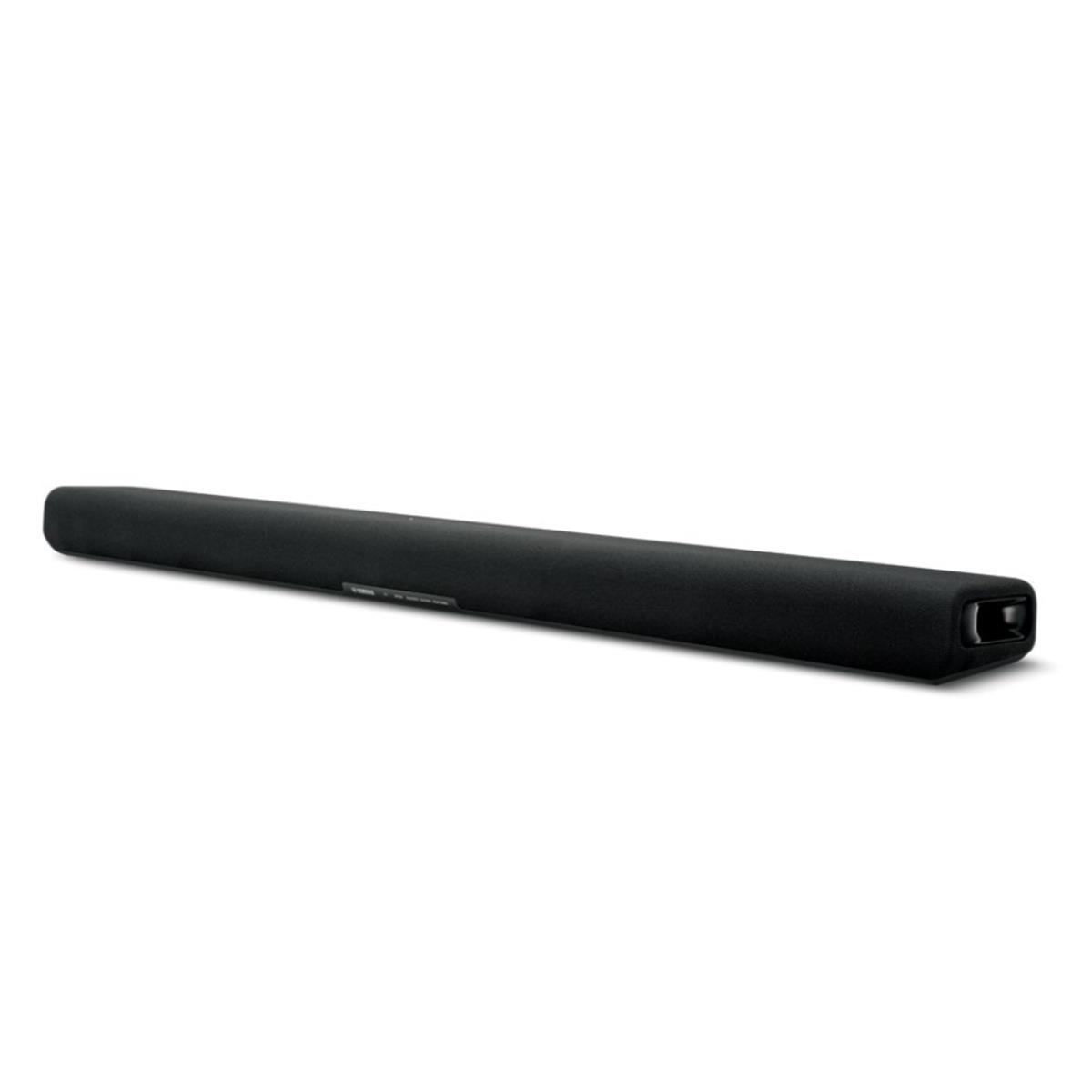
Released in April 2025, the Yamaha SR-B30A represents Yamaha's answer to a common problem: what if you want better TV audio but don't want to deal with multiple boxes, wireless connections, or finding the perfect spot for a subwoofer?
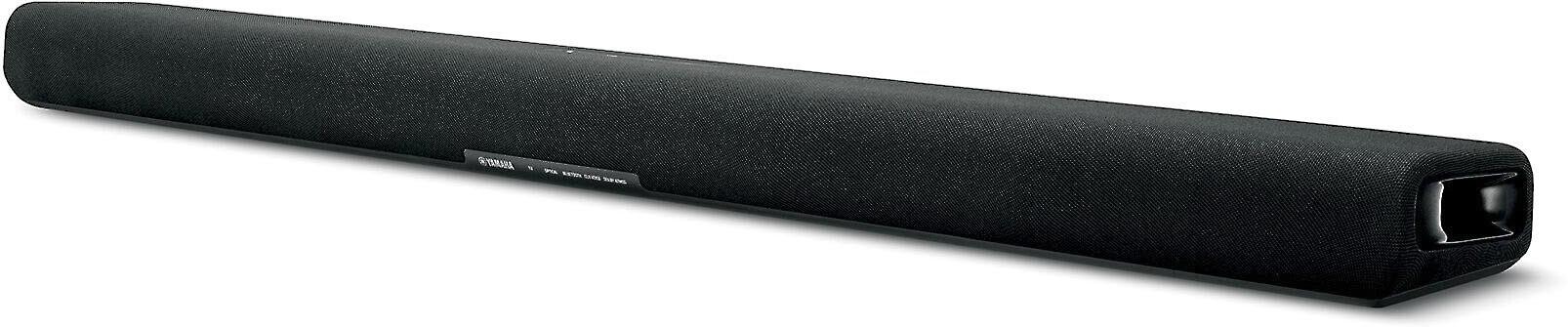
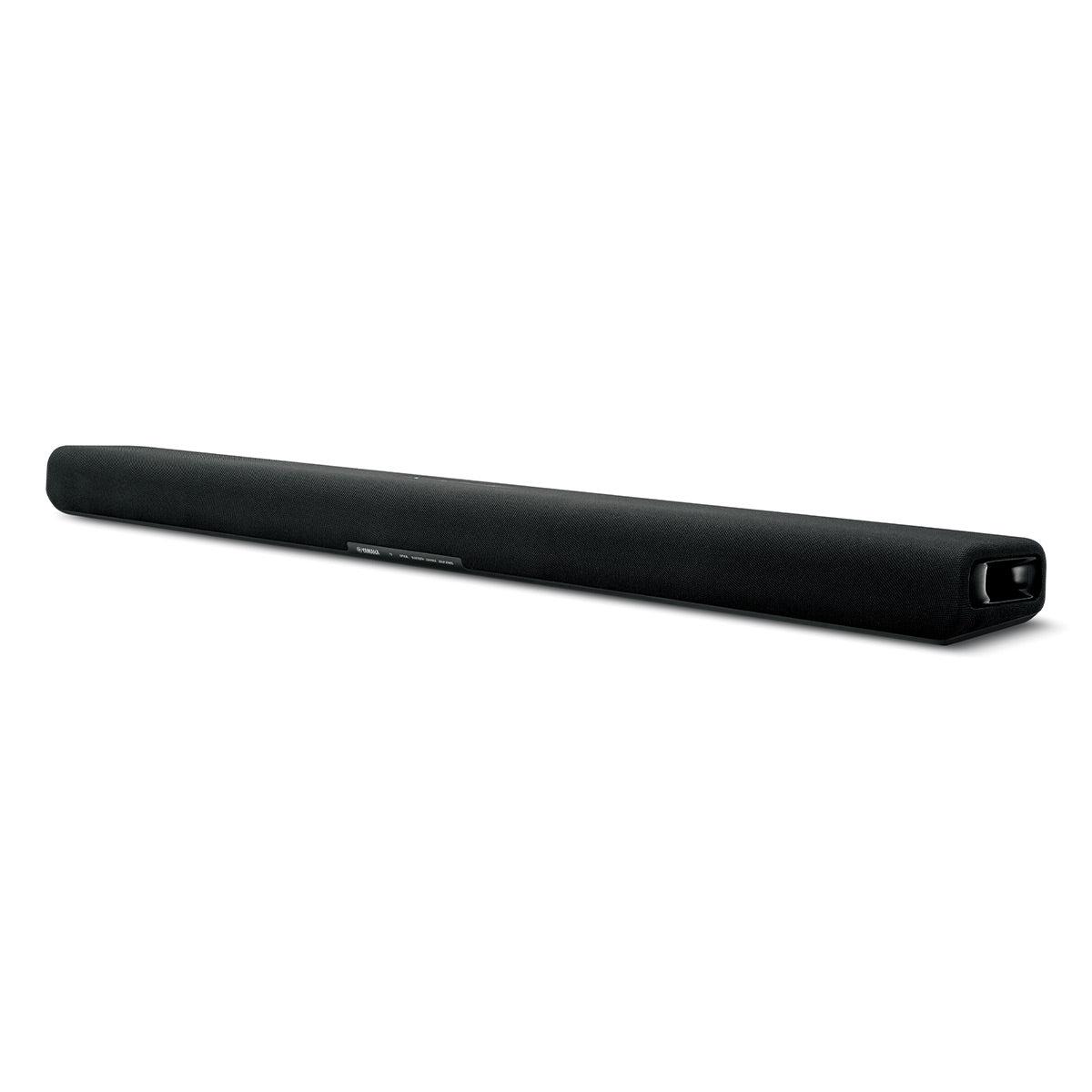
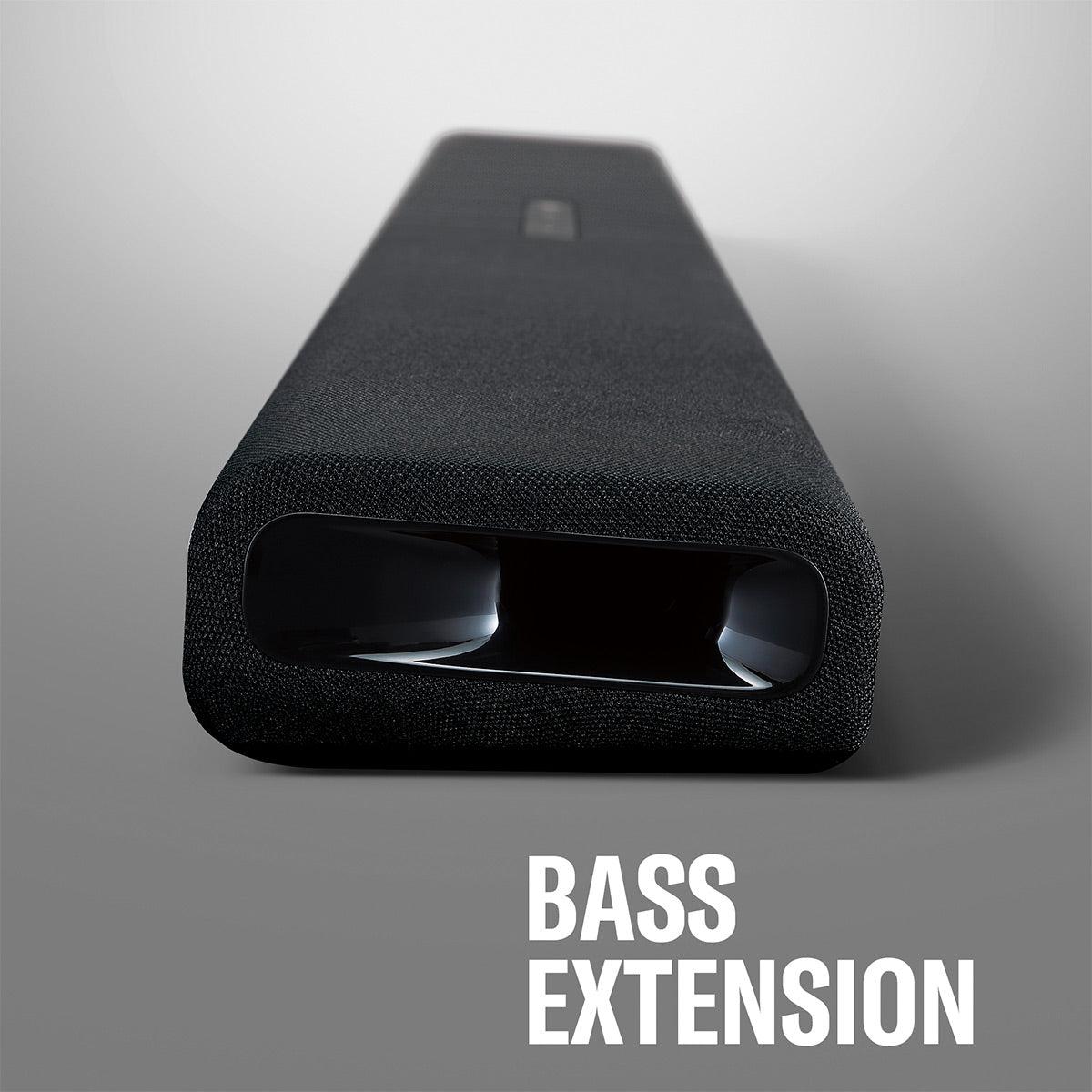
Yamaha solved this by building everything into one sleek 35-7/8 inch bar. The clever engineering here is in those dual built-in subwoofers – two 3-inch drivers that handle the low-frequency sounds (bass) that normally require a separate box sitting on your floor. This isn't just about convenience; it's about physics. By integrating the subwoofers directly into the main unit, Yamaha eliminated the timing issues that can occur when bass comes from a different location than the rest of your audio.
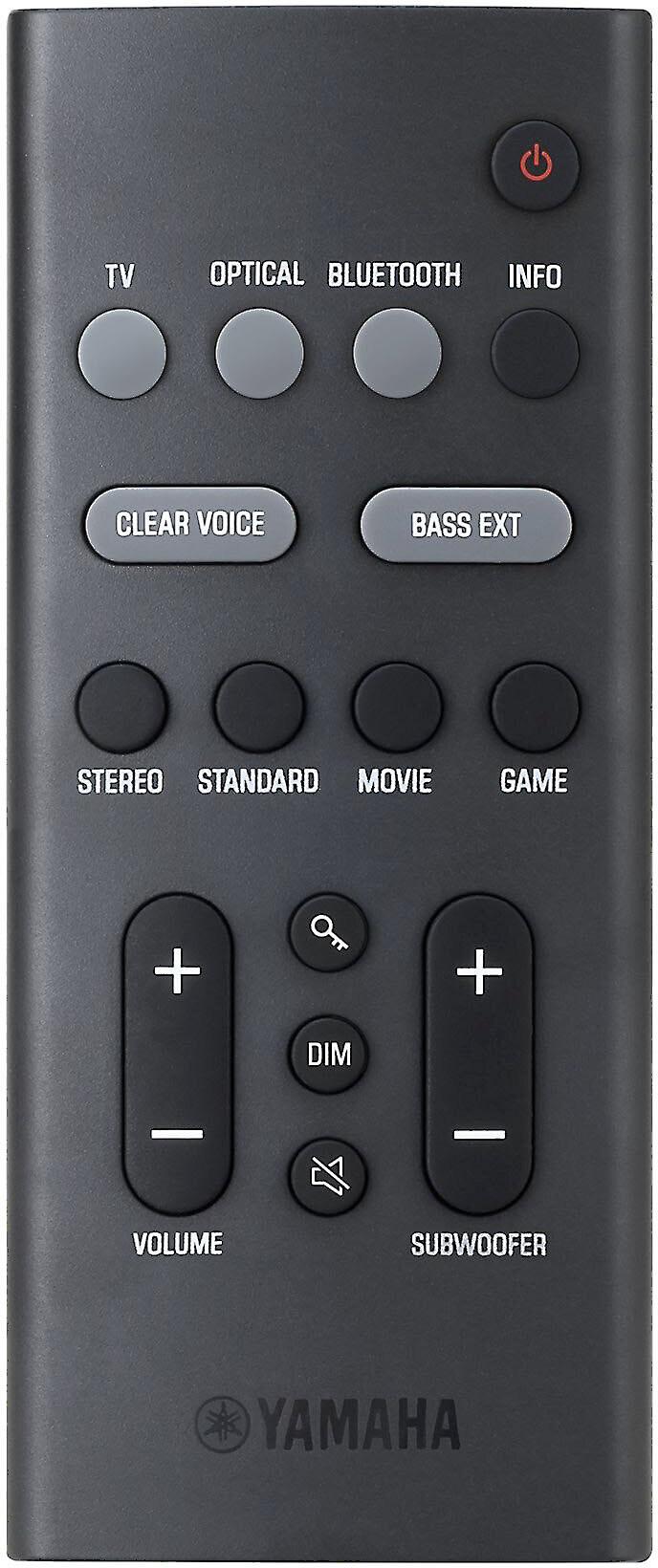
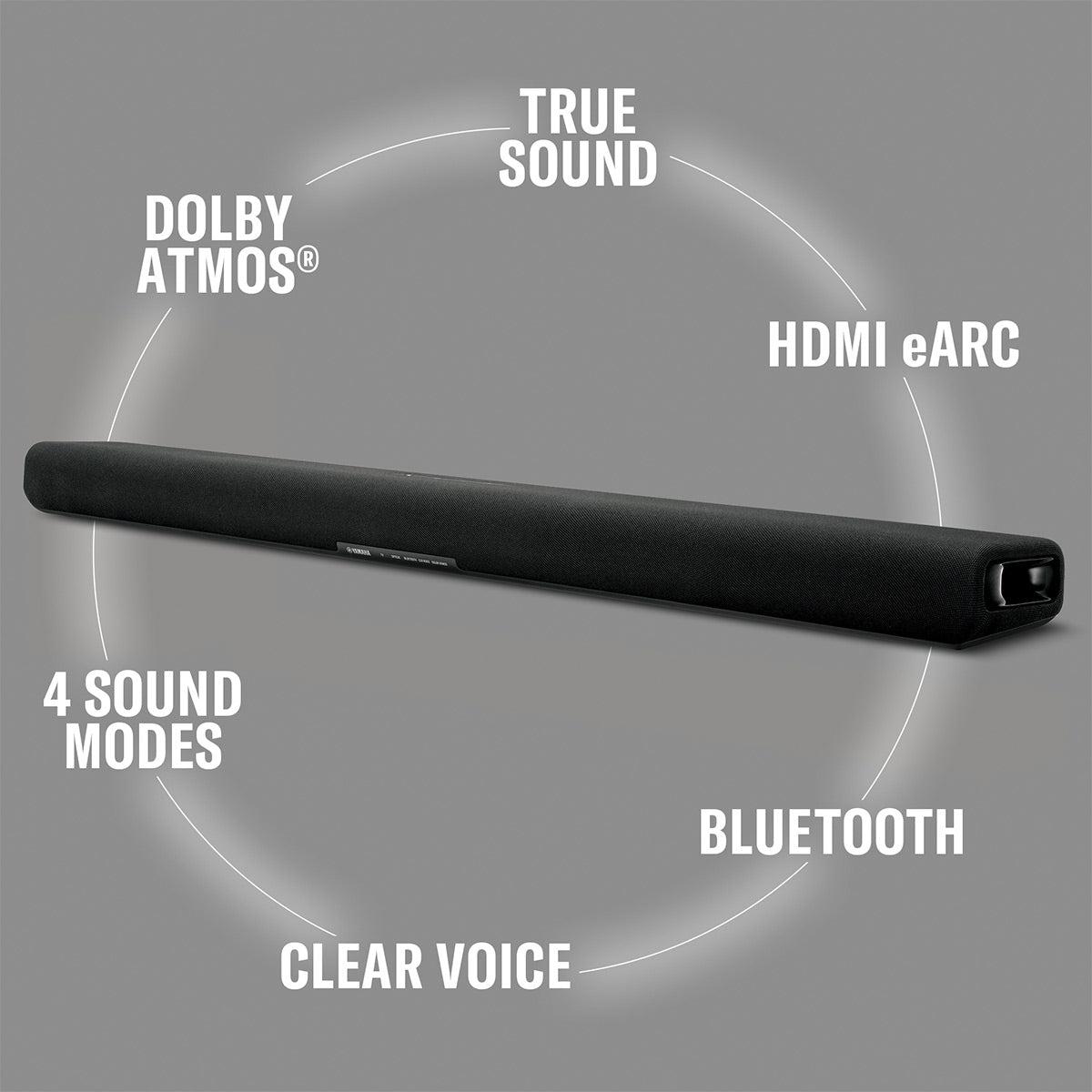
The Clear Voice technology deserves special mention because it addresses one of the most common complaints about modern TV shows and movies: muddy dialogue. This feature uses digital signal processing (DSP) to isolate and enhance the frequency range where human speech occurs, making conversations more intelligible even when there's background music or sound effects competing for attention.
I've noticed this is particularly helpful with streaming content, where audio compression can sometimes make dialogue sound muffled. The SR-B30A's processing helps compensate for these issues without making voices sound artificial or overly bright.
The Bass Extension feature is Yamaha's way of giving you more low-end punch when you want it. While the built-in subwoofers can't match the depth of a large dedicated subwoofer, this mode uses psychoacoustic processing to create the perception of deeper bass. It's similar to how some headphones can make you feel like you're hearing bass frequencies that the tiny drivers technically can't reproduce.
With its 120-watt total power output, the SR-B30A isn't going to shake your walls, but that's not really the point. In a typical living room or bedroom setup, it provides a significant upgrade over TV speakers without overwhelming smaller spaces. The four 1.8-inch main drivers handle dialogue and mid-range frequencies well, while the dual tweeters ensure you're not missing high-frequency details like the subtle ambient sounds that make movie scenes feel more realistic.
One thing I particularly appreciate about this design is how it handles music. Many budget soundbars sound muddy or boomy when you're streaming Spotify or Apple Music, but the SR-B30A maintains pretty good separation between instruments. It's not audiophile-grade, but for casual music listening while cooking or working, it's quite pleasant.
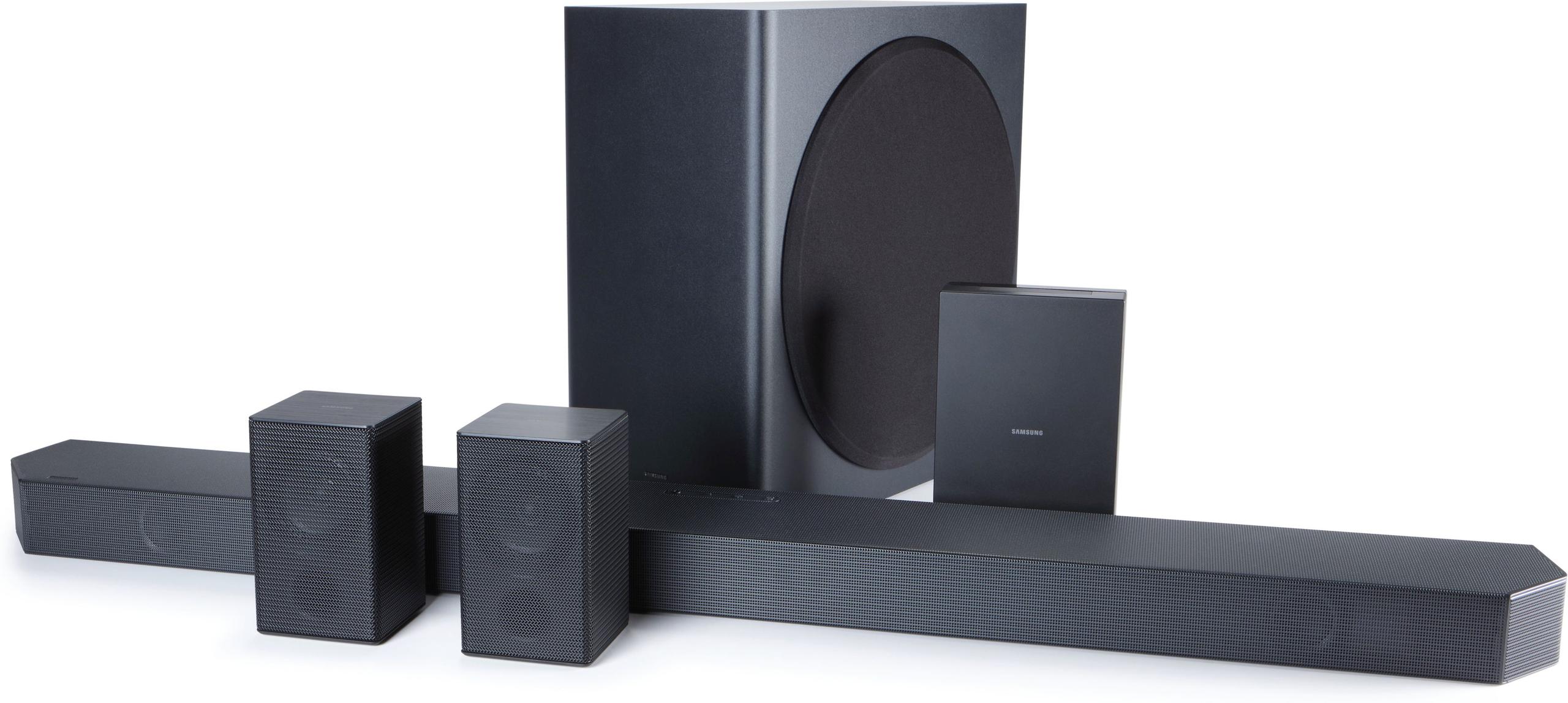
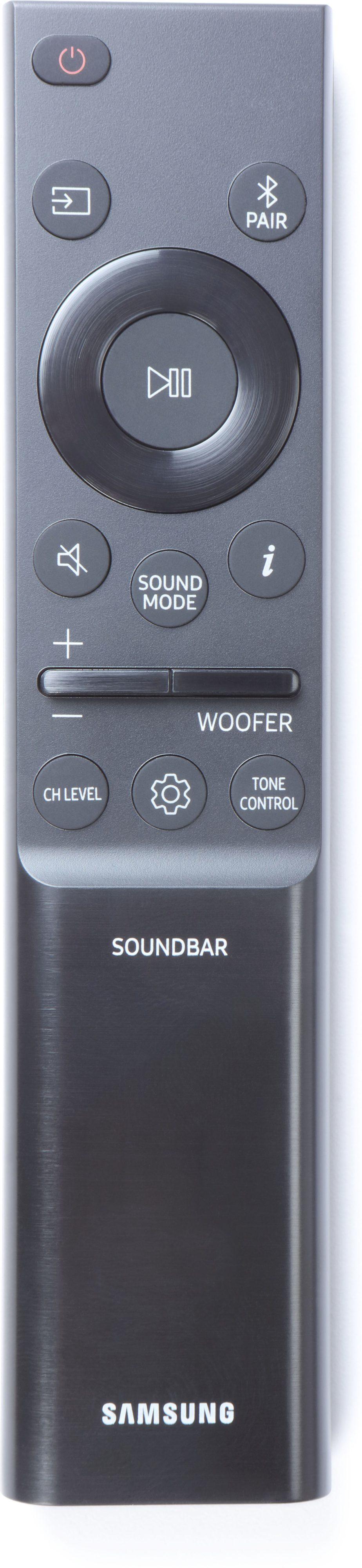
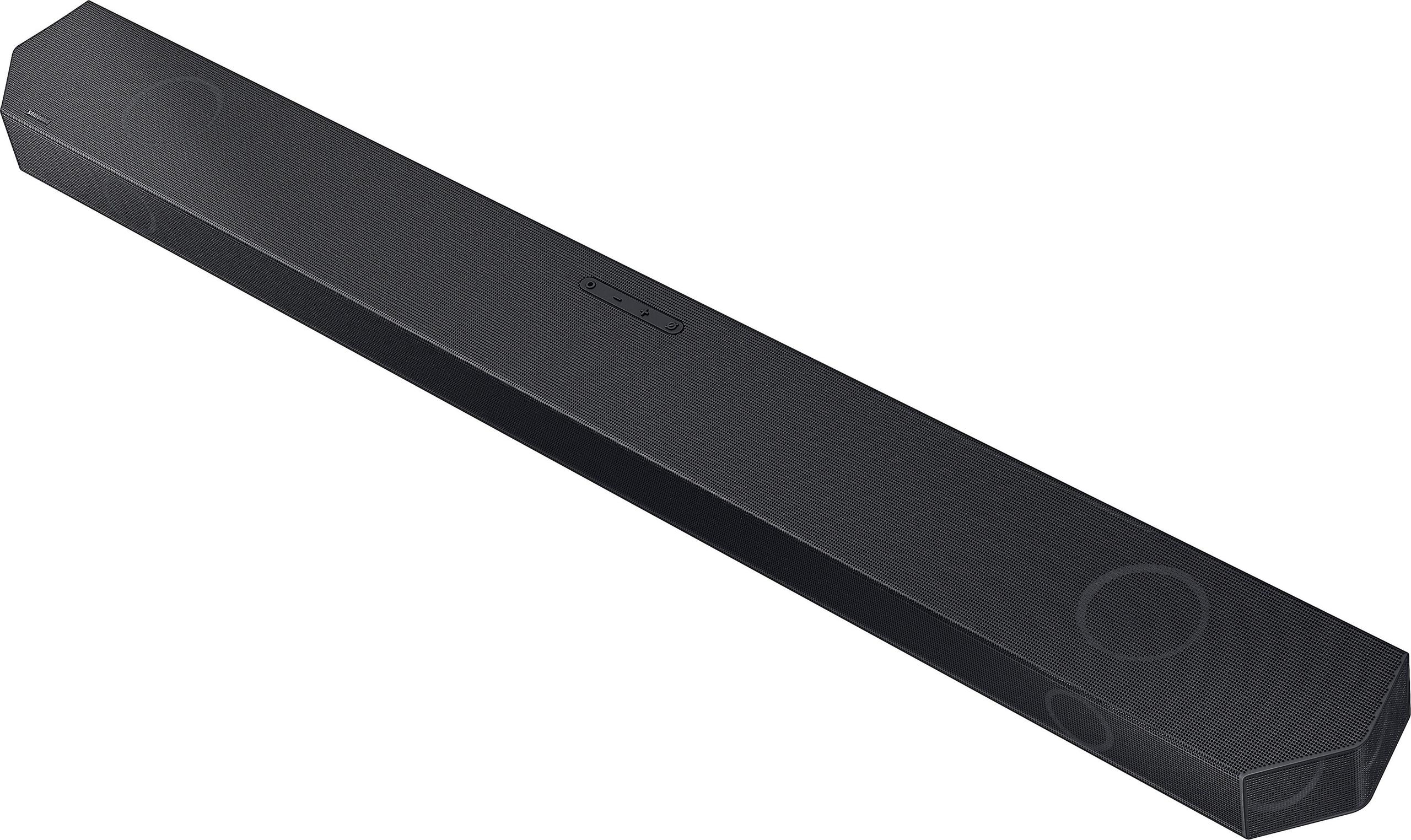
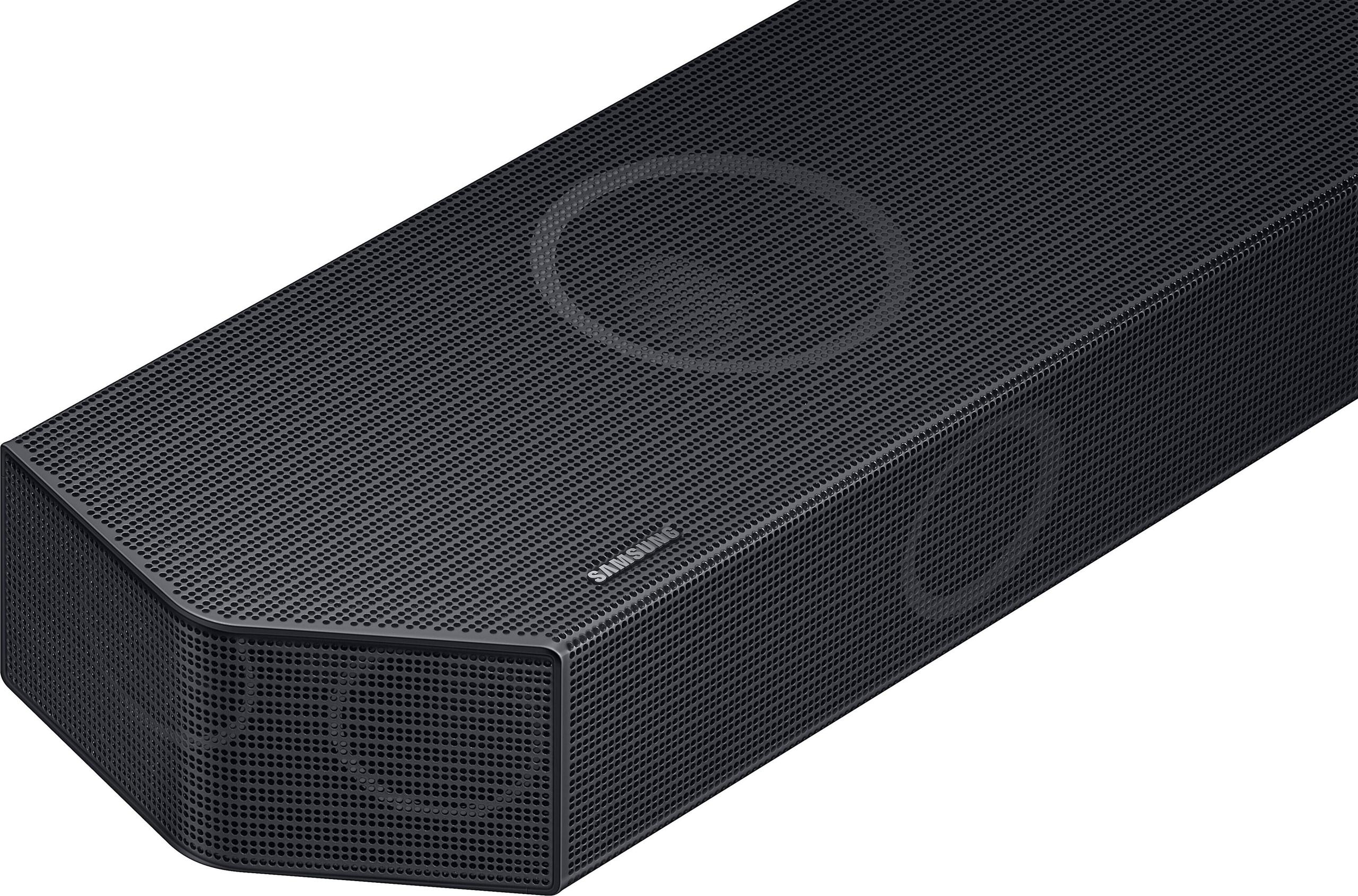
The Samsung HW-Q910D, released in January 2025, takes a completely different approach. This is Samsung's attempt to bring genuine movie theater audio to your living room, and the specifications tell that story immediately: 9.1.2 channels with 17 total speakers spread across the main bar, wireless subwoofer, and dedicated rear speakers.
Samsung's SpaceFit Sound+ technology represents one of the most sophisticated room calibration systems available in consumer audio. Here's how it works: the system plays test tones through each speaker while built-in microphones listen to how those sounds bounce around your room. It then creates a custom EQ curve that compensates for your room's acoustic properties.
This is genuinely impressive technology. Rooms with hard surfaces (like tile floors and large windows) tend to make audio sound harsh and echoey, while rooms with lots of soft furnishings can make everything sound muffled. SpaceFit Sound+ automatically adjusts to find the right balance for your specific environment.
The Q-Symphony feature is particularly clever if you own a compatible Samsung TV. Instead of the soundbar replacing your TV's speakers entirely, Q-Symphony allows both to work together, with the TV speakers handling certain frequency ranges while the soundbar takes care of others. This creates a larger, more enveloping soundstage than either could achieve alone.
This is where the Samsung really separates itself from more affordable options. The HW-Q910D has dedicated up-firing speakers built into the main bar, plus height channels in the rear speakers. These physically fire sound toward your ceiling, which then reflects down to create the impression of overhead audio.
Real Dolby Atmos is dramatically different from the simulated version you get on most budget soundbars. When you're watching a movie like "Top Gun: Maverick" and those jets scream overhead, you actually hear them above you, not just slightly in front of you. It's the difference between watching a movie and feeling like you're inside it.
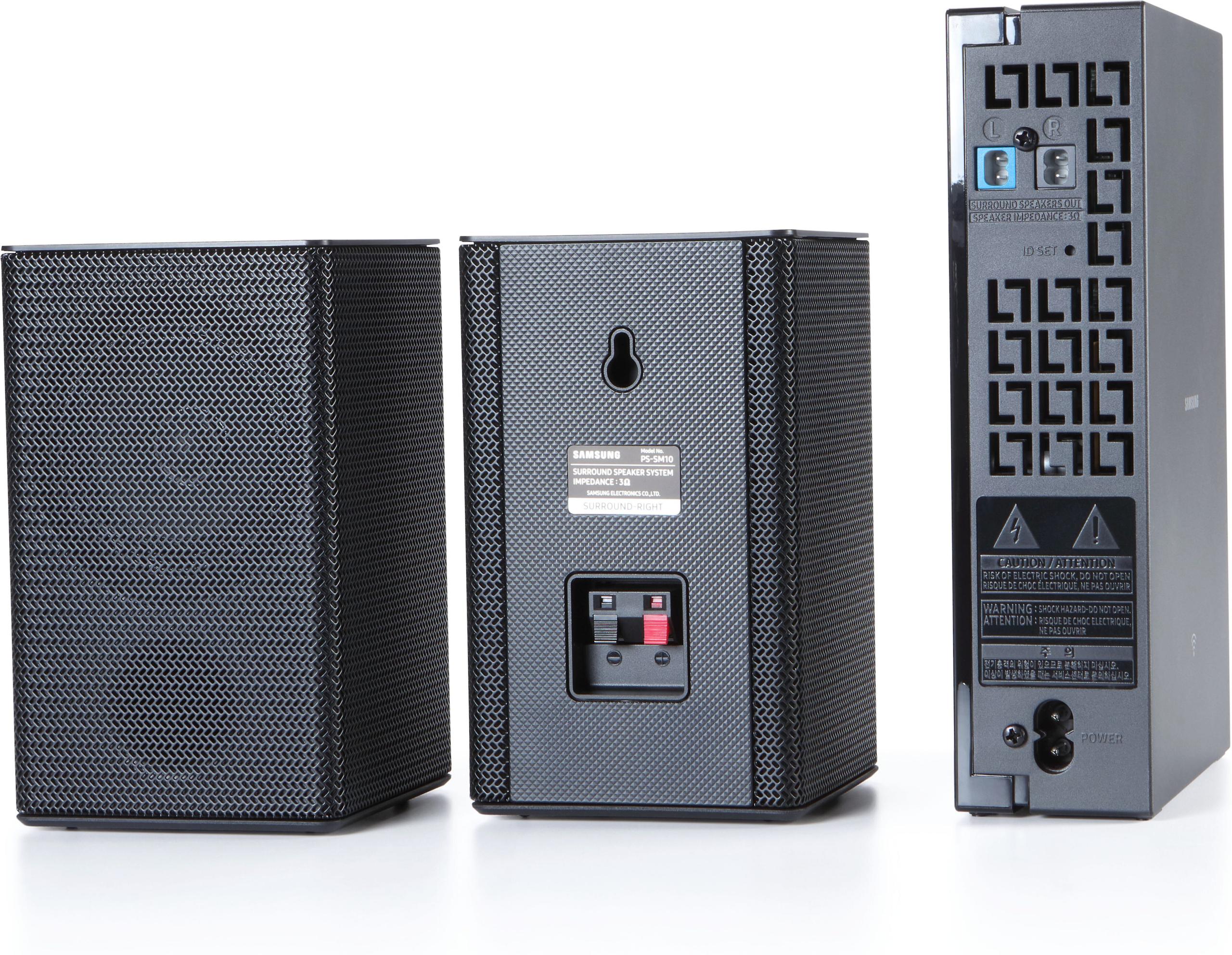
The rear speakers deserve special mention because they're doing something most people don't fully appreciate. True surround sound isn't just about making things louder or wider – it's about creating precise audio positioning. When someone walks from one side of the screen to the other, the audio should follow them seamlessly. The dedicated rear channels make this possible in a way that soundbar-only systems simply can't match.
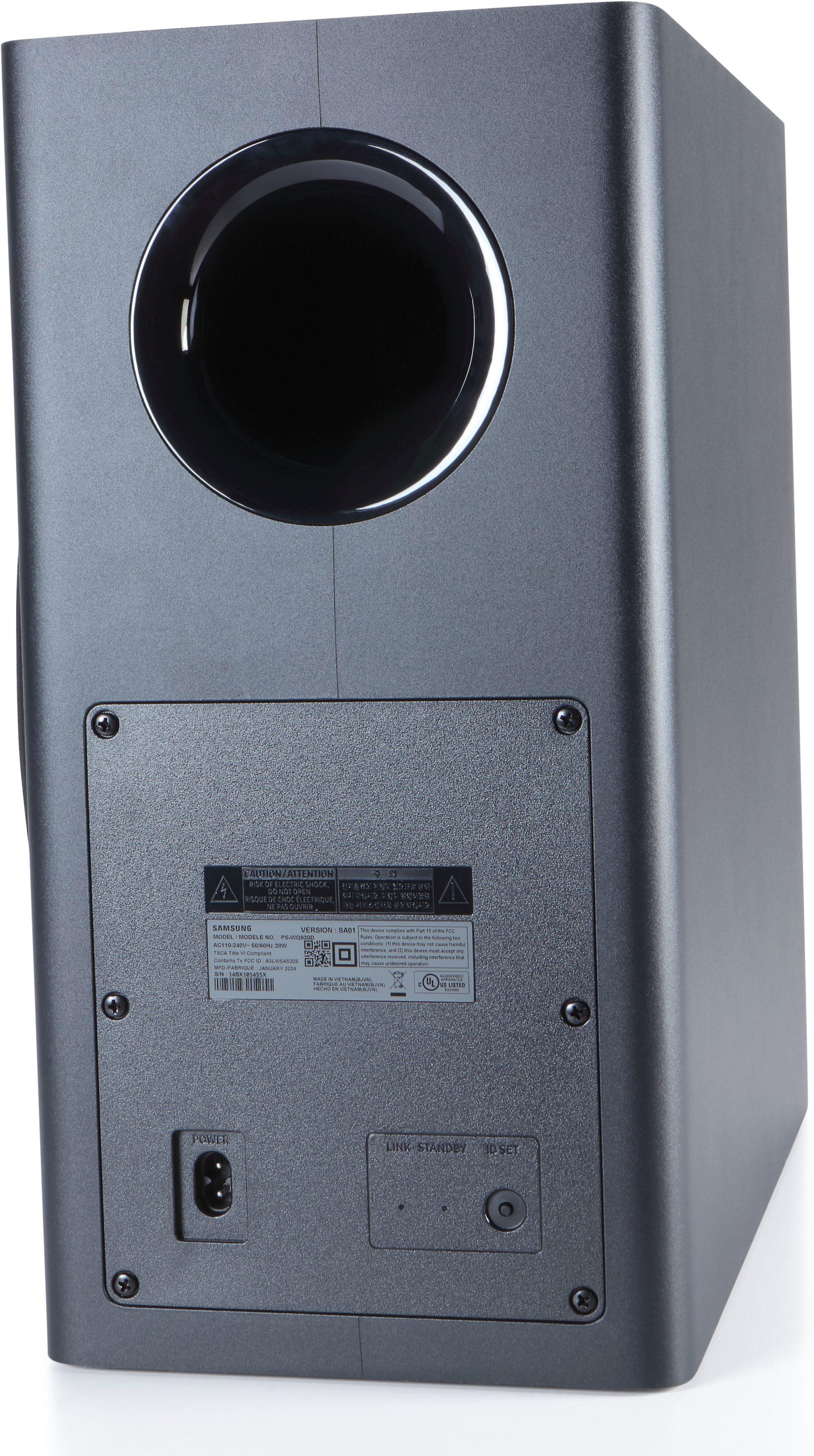
The 8-inch wireless subwoofer is where you really feel the difference in build quality and engineering. This isn't just about volume – though it can certainly get loud – it's about control and accuracy. The larger driver can move more air with less distortion, which means you get cleaner bass that doesn't muddy up the rest of the audio.
Samsung's Auto EQ system uses a microphone built into the subwoofer to analyze the bass response in your room and automatically adjust the output. This is crucial because subwoofer placement can dramatically affect performance. A sub placed in a corner might sound boomy, while one in the center of a room might sound weak. Auto EQ helps optimize performance regardless of where you need to place it.
Both soundbars excel at making dialogue clearer than your TV's built-in speakers, but they achieve this differently. The Yamaha SR-B30A uses its Clear Voice processing to boost the frequency range where most human speech occurs (roughly 300Hz to 3kHz). This works well for most content, though it can occasionally make voices sound slightly artificial in quiet scenes.
The Samsung takes a more sophisticated approach with its Active Voice Amplifier Pro. This system doesn't just boost speech frequencies – it actually analyzes the audio stream in real-time to identify dialogue and separate it from background elements. The result is more natural-sounding speech enhancement that adapts to different types of content.
In my experience, the Samsung's approach works better with complex movie soundtracks where there's a lot happening simultaneously, while the Yamaha's simpler system is perfectly adequate for most TV shows and casual viewing.
This is where the fundamental difference between these two approaches becomes most apparent. The Yamaha creates what audio engineers call a "phantom center" – your brain perceives dialogue as coming from the center of the screen even though there's no dedicated center speaker. This works reasonably well for most content, especially when you're sitting directly in front of the TV.
The Samsung HW-Q910D, with its dedicated center channel and rear speakers, creates a much more precise soundstage. Sounds don't just come from "somewhere in front of you" – they have specific positions that remain stable even if you're not sitting in the perfect listening position. This makes a huge difference for movies and games where audio positioning is part of the experience.
Dynamic range refers to the difference between the quietest and loudest sounds a system can reproduce cleanly. This is where the Samsung's superior amplification and larger drivers really shine. During intense action sequences, it can deliver the full impact of explosions and gunfire without the distortion or compression that affects many smaller systems.
The Yamaha, with its 120-watt power limit, starts to show its limitations during very dynamic content. It's fine for normal listening levels, but if you like to really crank up action movies, you'll notice the sound becoming compressed and less detailed at higher volumes.
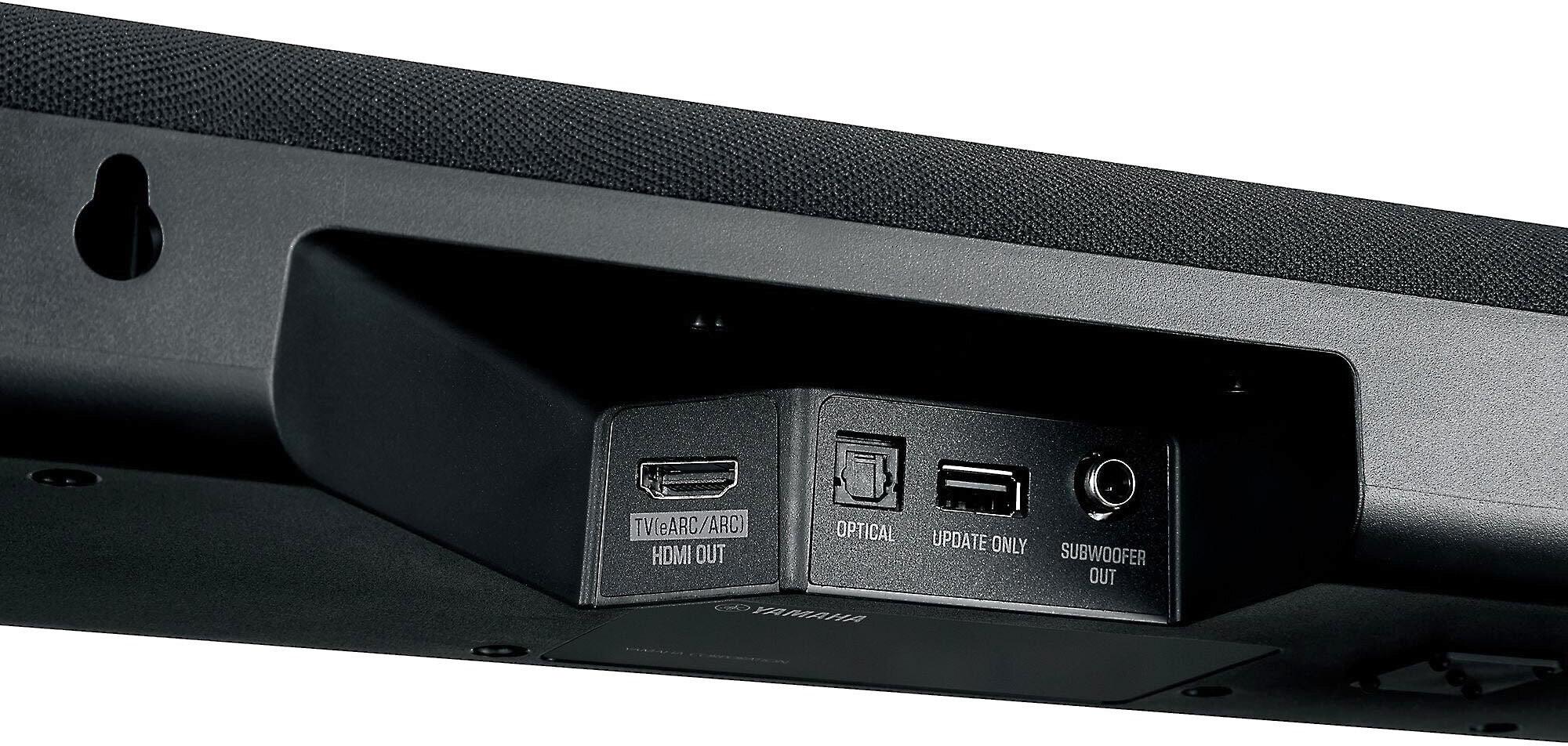
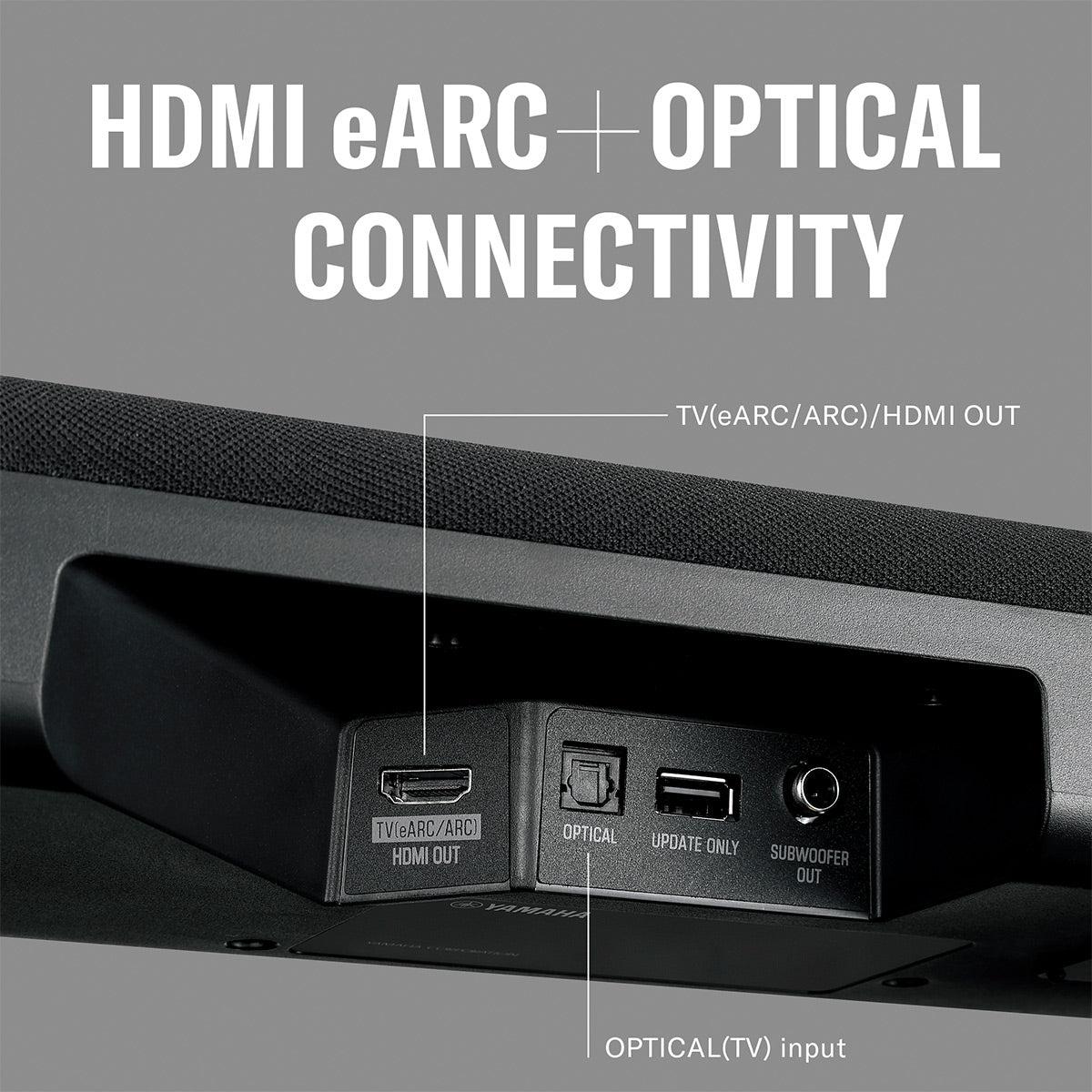
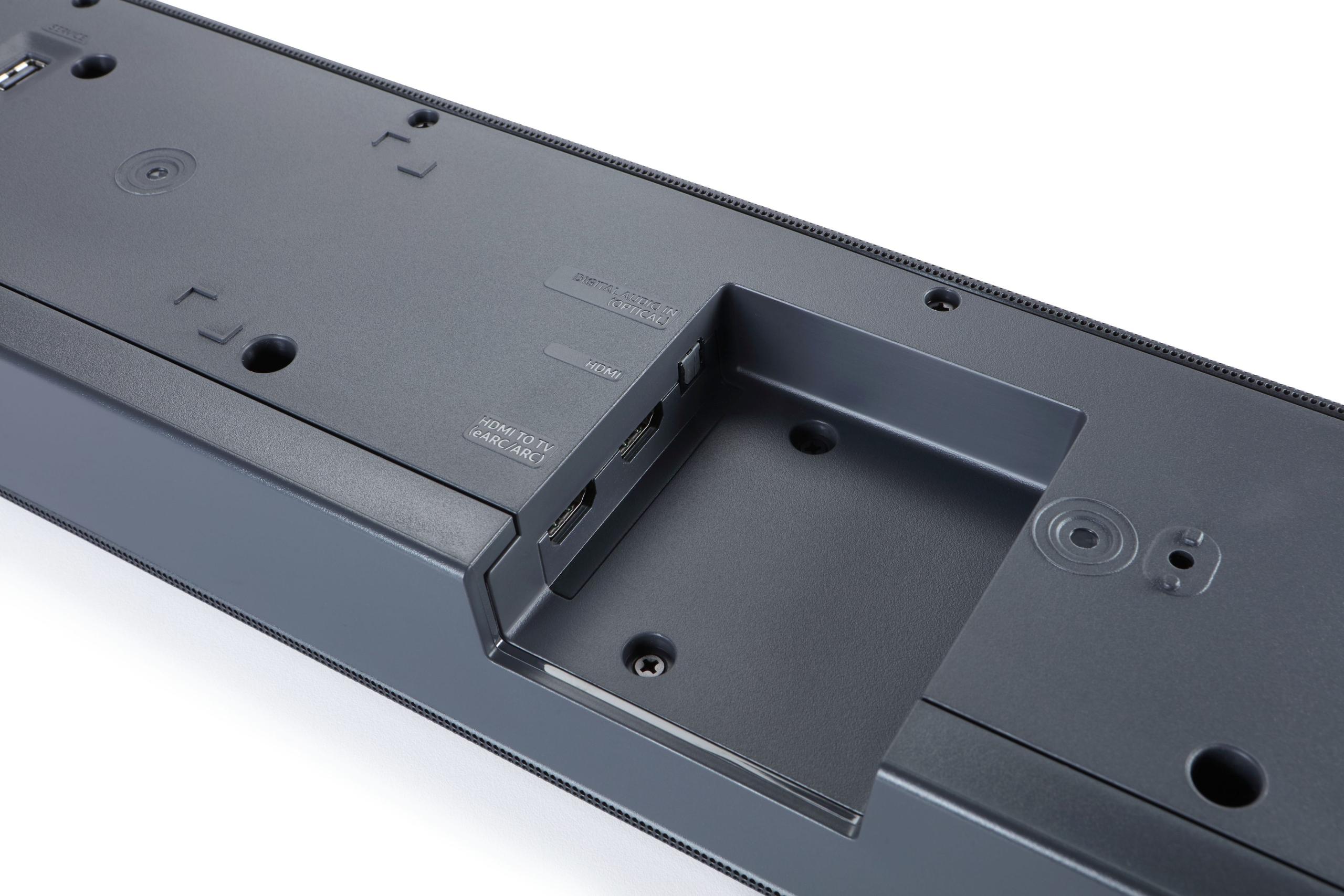
Both soundbars reflect how connectivity has evolved in recent years. HDMI eARC (enhanced Audio Return Channel) has become the standard for high-quality TV audio, supporting uncompressed Dolby Atmos and DTS formats that older optical connections couldn't handle.
The Yamaha keeps things simple with HDMI eARC and Bluetooth 5.1 for music streaming. The Yamaha Sound Bar Remote app provides basic control and EQ adjustments, but don't expect the advanced features found on premium models.
Samsung has embraced the smart home ecosystem more fully. The HW-Q910D includes Wi-Fi connectivity, support for AirPlay 2, Chromecast built-in, and integration with Samsung's SmartThings platform. If you're building a connected home, these features add genuine value beyond just audio performance.
For serious home theater use, the differences between these systems become even more pronounced. The Samsung's support for both Dolby Atmos and DTS:X ensures compatibility with virtually any content you might want to watch. Many premium Blu-ray releases use DTS:X for their audio tracks, and having native support means you're hearing exactly what the filmmakers intended.
The rear speakers make a particular difference with gaming. Modern games like "The Last of Us Part II" or "Call of Duty" use 3D audio to provide crucial positioning information – you need to hear exactly where that enemy footstep is coming from. The Yamaha's virtual surround can give you a general sense of direction, but the Samsung's discrete speakers provide the precision that competitive gaming demands.
Room size is crucial for home theater performance. The Yamaha SR-B30A works well in spaces up to about 200 square feet, but larger rooms expose its limitations. The Samsung can effectively fill rooms of 400+ square feet without losing impact or clarity.
At $279.95, the Yamaha represents exceptional value for its intended use case. It solves the most common TV audio problems – poor dialogue clarity and weak bass – without the complexity or space requirements of multi-component systems. For apartments, bedrooms, or situations where simplicity is paramount, it's hard to argue with this approach.
The Samsung at $897.99 costs more than three times as much, but you're getting fundamentally different capabilities. This isn't just about volume or bass extension – it's about creating an immersive audio environment that can rival dedicated home theater systems costing thousands more.
Choose the Yamaha SR-B30A if you're primarily looking to solve basic TV audio problems in a small to medium-sized room. It's perfect for apartments, bedrooms, or any situation where you want significantly better audio without the complexity of multiple components. The built-in subwoofers mean you get better bass than most TV speakers without needing floor space for a separate subwoofer.
Go with the Samsung Q Series HW-Q910D if you're serious about creating a home theater experience. The investment makes sense if you regularly watch movies, play games that benefit from directional audio, or have a large room that needs powerful, room-filling sound. The advanced features like room calibration and TV integration add genuine value that justifies the premium price.
The bottom line is that both soundbars excel at what they're designed to do. The Yamaha prioritizes convenience and value, while the Samsung prioritizes performance and features. Your choice should depend on your space, budget, and how important audio quality is to your overall entertainment experience. Neither will disappoint if you choose the one that matches your specific needs and expectations.
| Yamaha SR-B30A Sound Bar ($279.95) | Samsung Q Series 9.1.2 Channel Soundbar ($897.99) |
|---|---|
| Audio Channels - Determines surround sound capability and immersion level | |
| 2.1 (stereo + built-in subwoofers) | 9.1.2 (true surround with dedicated rear speakers and height channels) |
| Total Power Output - Affects maximum volume and dynamic range | |
| 120W RMS (adequate for small-medium rooms) | Est. 330W+ (fills large rooms without distortion) |
| Subwoofer Design - Impacts bass quality and setup complexity | |
| Dual 3" built-in subwoofers (no separate box needed) | 8" wireless subwoofer (deeper bass but requires floor placement) |
| Dolby Atmos Support - Creates overhead sound effects for movie immersion | |
| Simulated via DSP processing (virtual height effects) | True Dolby Atmos with physical up-firing speakers (genuine 3D audio) |
| Room Calibration - Automatically optimizes sound for your space | |
| None (manual EQ adjustments only) | SpaceFit Sound+ with microphone-based room analysis |
| Rear Speakers - Essential for true surround sound positioning | |
| None (virtual surround from main bar only) | Dedicated wireless rear speakers included |
| Smart Connectivity - Streaming and smart home integration options | |
| Bluetooth 5.1, HDMI eARC (basic connectivity) | Wi-Fi, Bluetooth 5.2, AirPlay 2, Chromecast, SmartThings integration |
| Setup Complexity - Time and effort required for installation | |
| Single unit, plug-and-play (5 minutes) | Multi-component system requiring speaker placement (30+ minutes) |
| Ideal Room Size - Maximum effective coverage area | |
| Up to 200 sq ft (bedrooms, small living rooms) | 300+ sq ft (large living rooms, home theaters) |
| DTS Format Support - Compatibility with premium movie audio tracks | |
| No DTS support (Dolby only) | Full DTS:X support plus Dolby formats |
| TV Integration Features - Enhanced compatibility with specific TV brands | |
| Basic HDMI-CEC control | Q-Symphony technology with Samsung TVs (speakers work together) |
| Dimensions - Physical footprint and mounting requirements | |
| 35.7" × 2.6" × 5.25" (compact single bar) | Main bar + 8" subwoofer + rear speakers (requires multiple placements) |
The Yamaha SR-B30A ($279.95) is specifically designed for small to medium rooms up to 200 square feet. Its compact single-unit design with built-in subwoofers provides excellent audio improvement without overwhelming smaller spaces. The Samsung Q Series 9.1.2 Channel Soundbar ($897.99) is better suited for larger rooms over 300 square feet where its multiple components and higher power output can be fully utilized.
The primary difference is system complexity and audio channels. The Yamaha SR-B30A is a simple 2.1 system with everything built into one bar, while the Samsung Q Series 9.1.2 is a complete 9.1.2 surround system with a wireless subwoofer and dedicated rear speakers for true home theater audio.
The Samsung Q Series 9.1.2 Channel Soundbar has significantly better bass performance with its dedicated 8-inch wireless subwoofer. The Yamaha SR-B30A uses dual 3-inch built-in subwoofers that provide adequate bass for casual listening but cannot match the depth and power of a dedicated subwoofer unit.
Yes, but differently. The Yamaha SR-B30A simulates Dolby Atmos using digital processing to create virtual height effects. The Samsung Q Series 9.1.2 provides true Dolby Atmos with physical up-firing speakers and dedicated height channels for authentic three-dimensional audio positioning.
The Yamaha SR-B30A ($279.95) is much easier to set up - it's a single unit that connects to your TV with one cable and works immediately. The Samsung Q Series 9.1.2 Channel Soundbar ($897.99) requires positioning the main bar, subwoofer, and rear speakers around your room, plus wireless pairing and room calibration.
The Samsung Q Series 9.1.2 costs $618 more than the Yamaha SR-B30A. Whether it's worth it depends on your needs - if you want true surround sound, powerful bass, and home theater immersion in a large room, the Samsung justifies its premium price. For basic TV audio improvement in smaller spaces, the Yamaha offers excellent value.
Both excel at dialogue clarity but use different approaches. The Yamaha SR-B30A uses Clear Voice technology to enhance speech frequencies, while the Samsung Q Series 9.1.2 features Active Voice Amplifier Pro that intelligently separates dialogue from background audio in real-time for more natural-sounding speech enhancement.
Yes, both support music streaming. The Yamaha SR-B30A connects via Bluetooth 5.1 for basic wireless streaming. The Samsung Q Series 9.1.2 Channel Soundbar offers more options including Wi-Fi, AirPlay 2, Chromecast built-in, and Bluetooth 5.2 for higher-quality wireless audio and smart home integration.
The Samsung Q Series 9.1.2 is significantly better for gaming due to its precise directional audio from dedicated rear speakers and true surround sound positioning. It includes Game Mode Pro for optimized gaming audio. The Yamaha SR-B30A can improve gaming audio over TV speakers but lacks the positional accuracy competitive gaming requires.
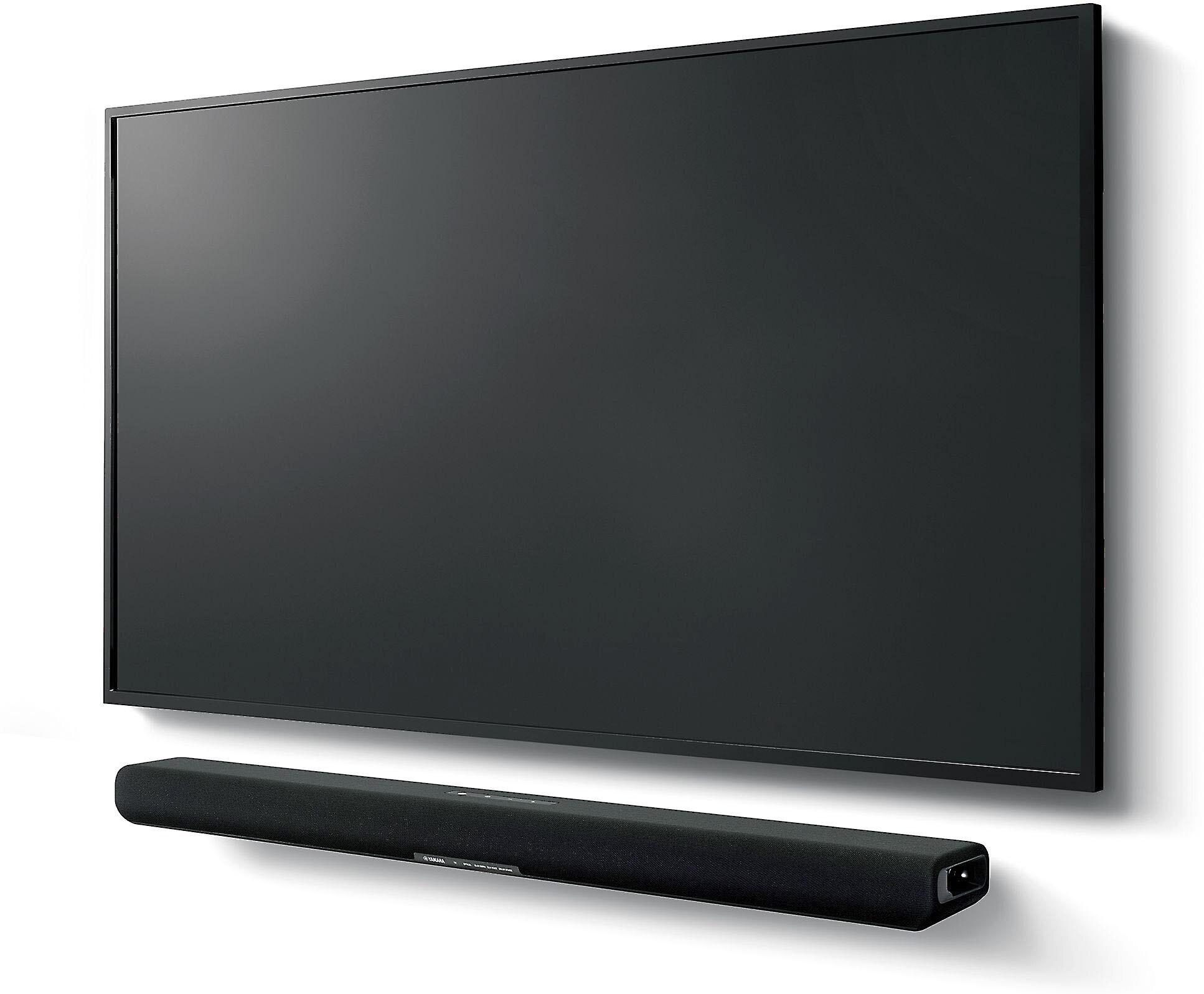
The Yamaha SR-B30A ($279.95) requires minimal space - just the 35.7-inch bar placement in front of or mounted below your TV. The Samsung Q Series 9.1.2 Channel Soundbar ($897.99) needs space for the main bar, floor placement for the subwoofer, and rear speaker positioning, making it better suited for larger, dedicated entertainment rooms.
The Samsung Q Series 9.1.2 has a significant advantage with Samsung TVs through Q-Symphony technology, which allows the TV speakers and soundbar to work together for enhanced audio. The Yamaha SR-B30A works well with any TV brand through standard HDMI eARC connection but doesn't offer special Samsung TV integration features.
For serious home theater applications, the Samsung Q Series 9.1.2 Channel Soundbar is the clear choice with its true 9.1.2 surround sound, dedicated rear speakers, powerful subwoofer, and support for both Dolby Atmos and DTS:X formats. The Yamaha SR-B30A provides a good TV audio upgrade but cannot deliver the immersive surround experience that home theater enthusiasts expect.
We've done our best to create useful and informative comparisons to help you decide what product to buy. Our research uses advanced automated methods to create this comparison and perfection is not possible - please contact us for corrections or questions. These are the sites we've researched in the creation of this article: usa.yamaha.com - worldwidestereo.com - audiolab.com - shop.sg.yamaha.com - consumerreports.org - usa.yamaha.com - vinylsound.ca - bestbuy.com - modernappliancewoodward.com - bluestardist.com - target.com - my.yamaha.com - rtings.com - samsung.com - markselectrical.co.uk - techradar.com - walmart.com - samsung.com - samsung.com - youtube.com - samsung.com - biancos.com - crutchfield.com - samsung.com

Privacy Policy
Terms and Conditions - Affiliate Policy
Home Security
© Copyright 2008-2026.
11816 Inwood Rd #1211, Dallas, TX 75244