

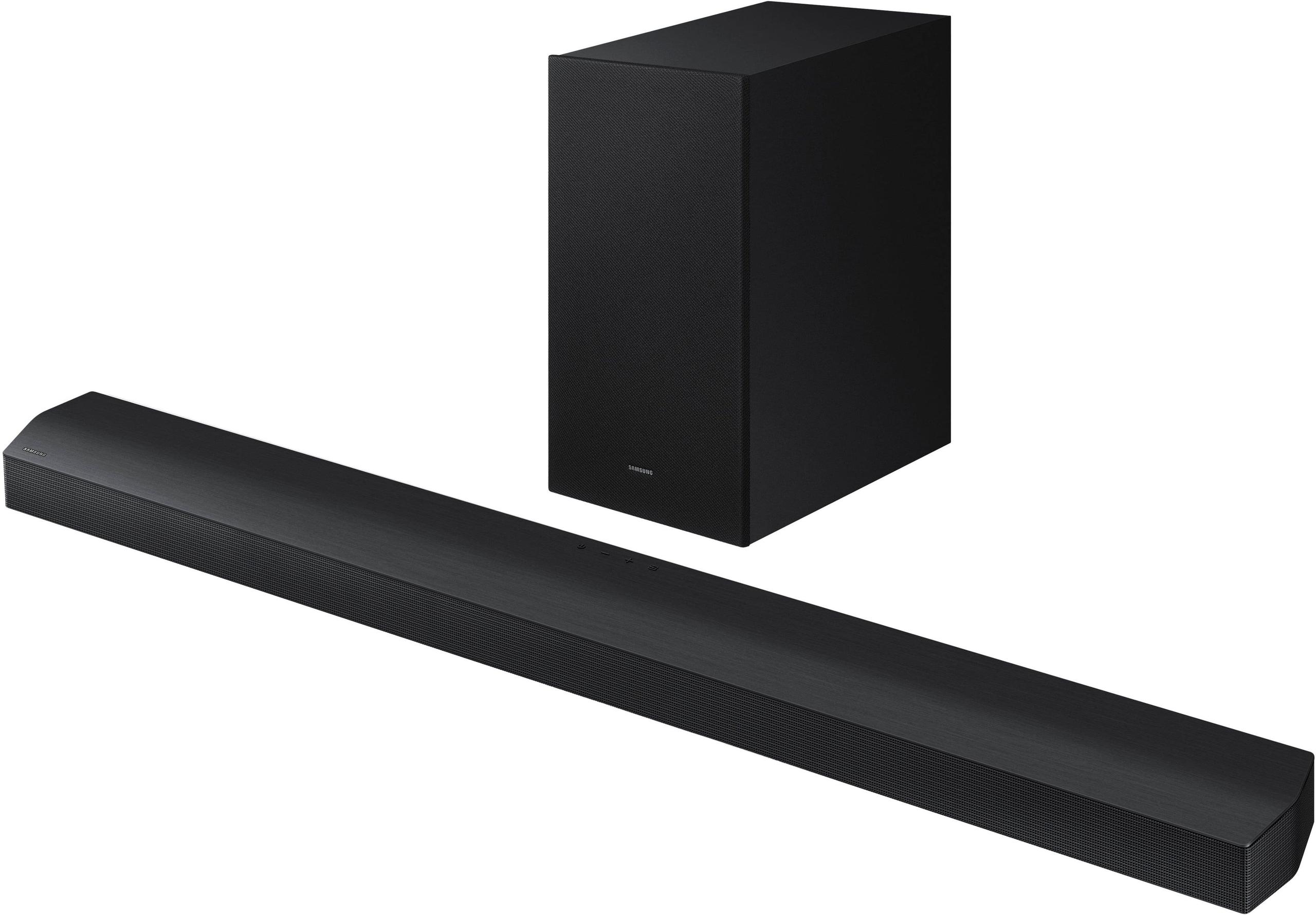
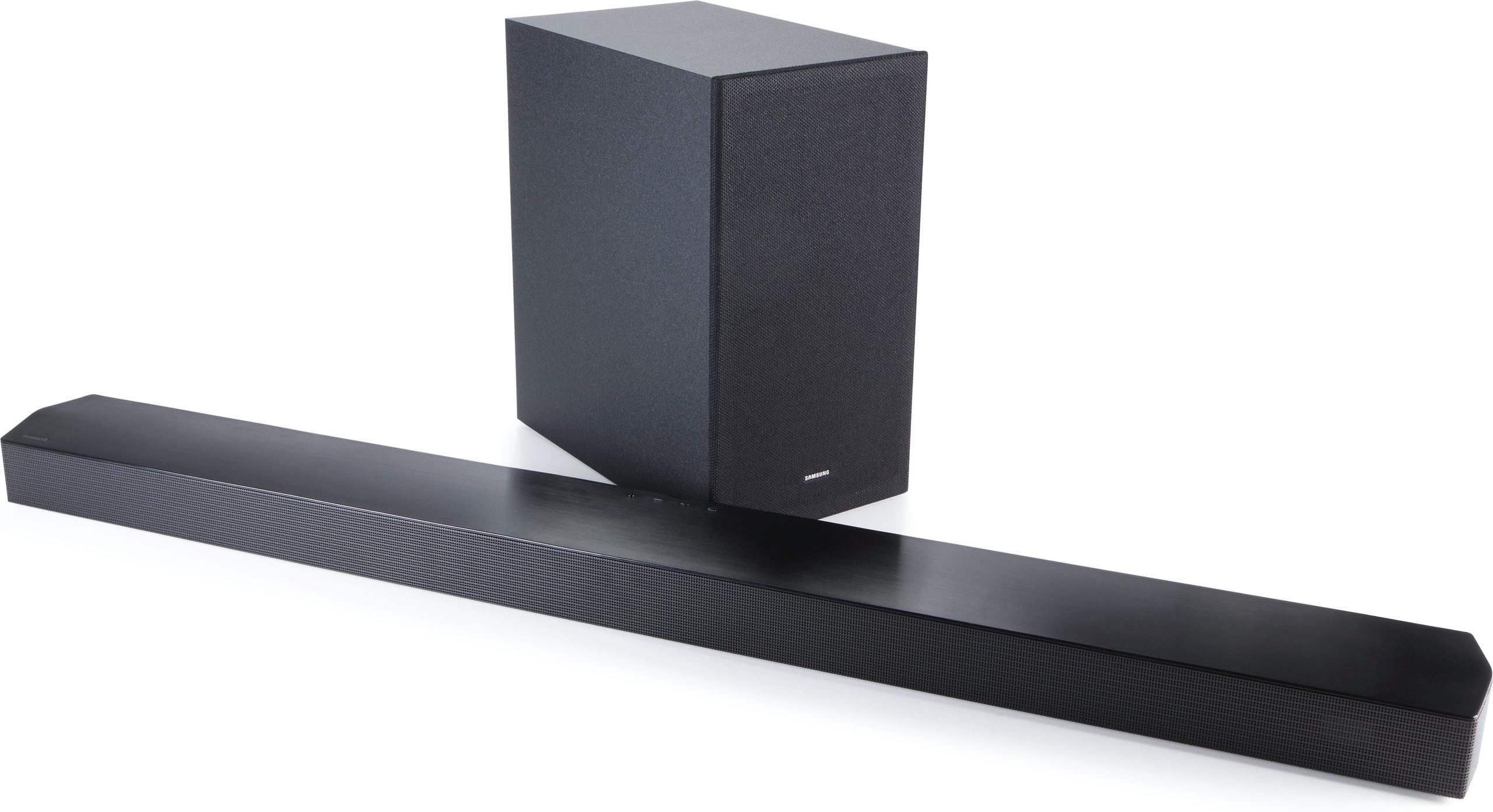
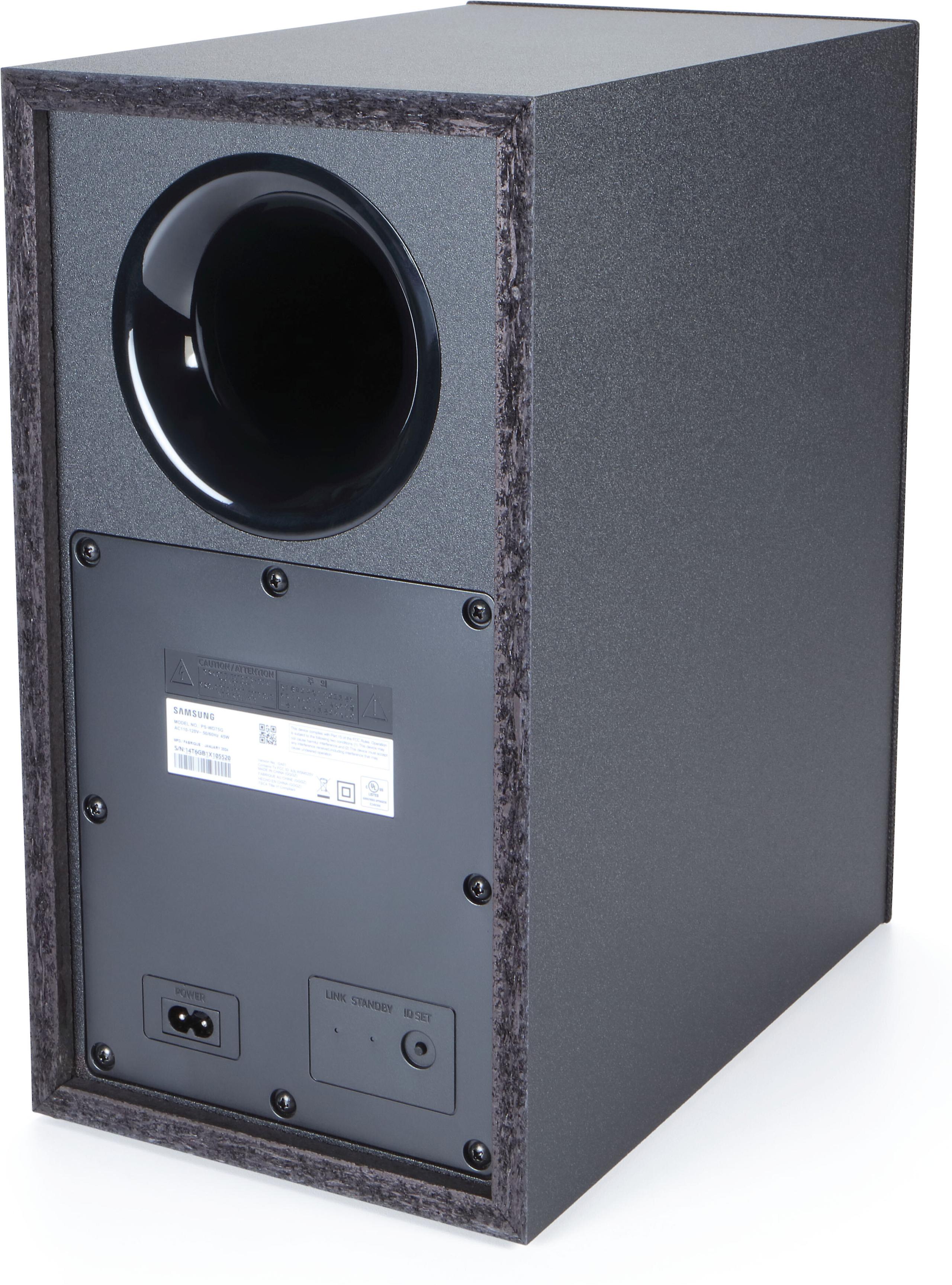
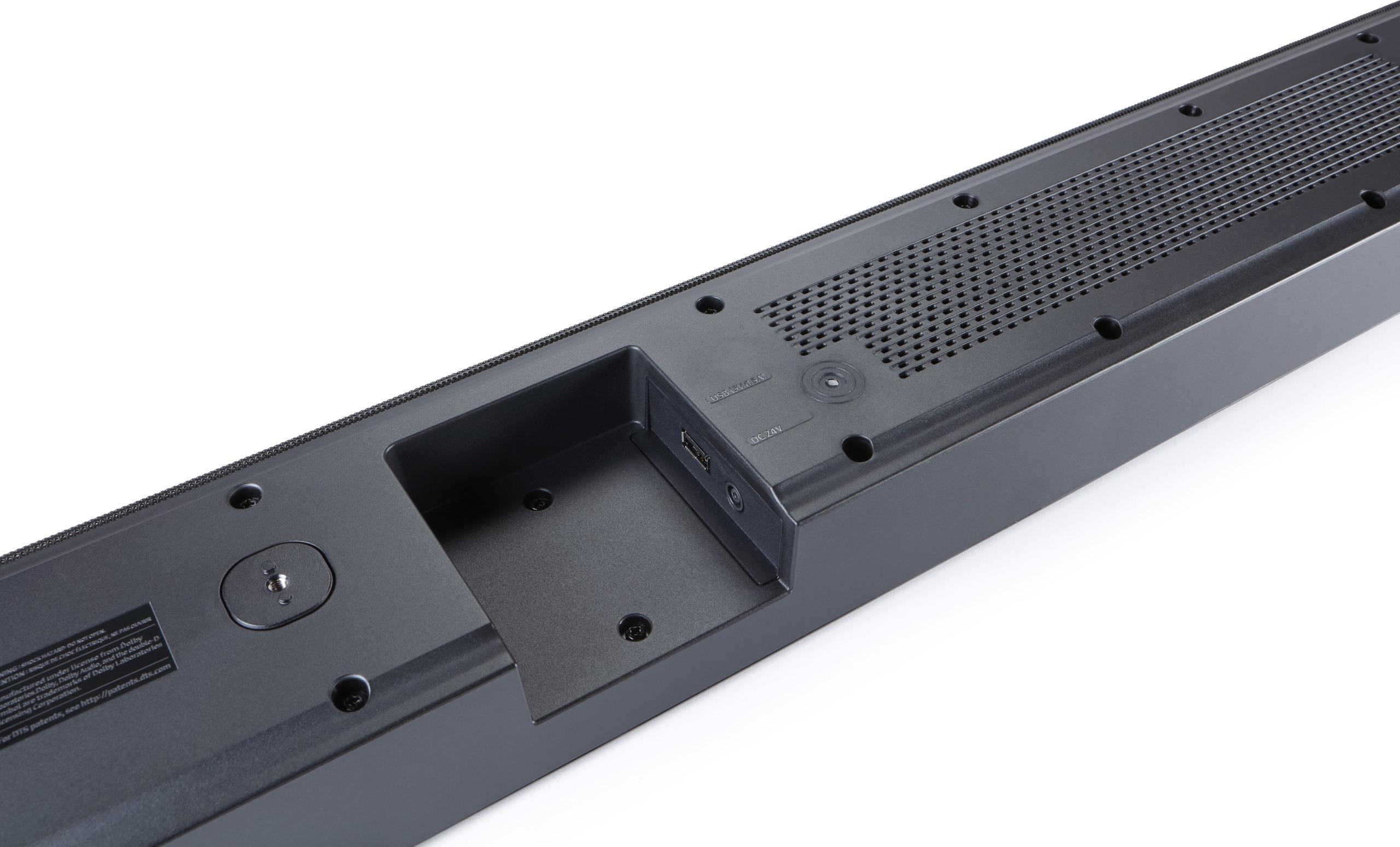





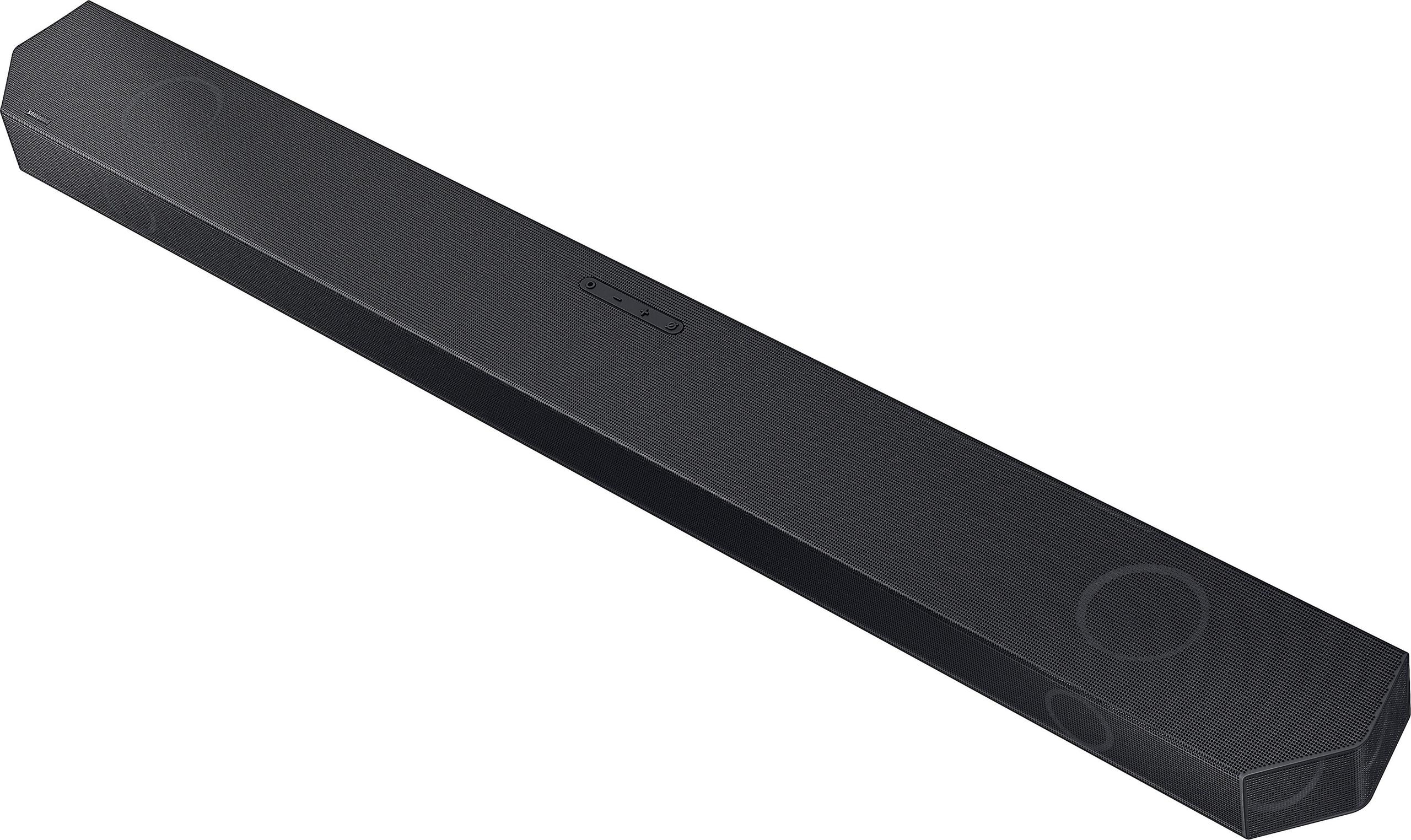

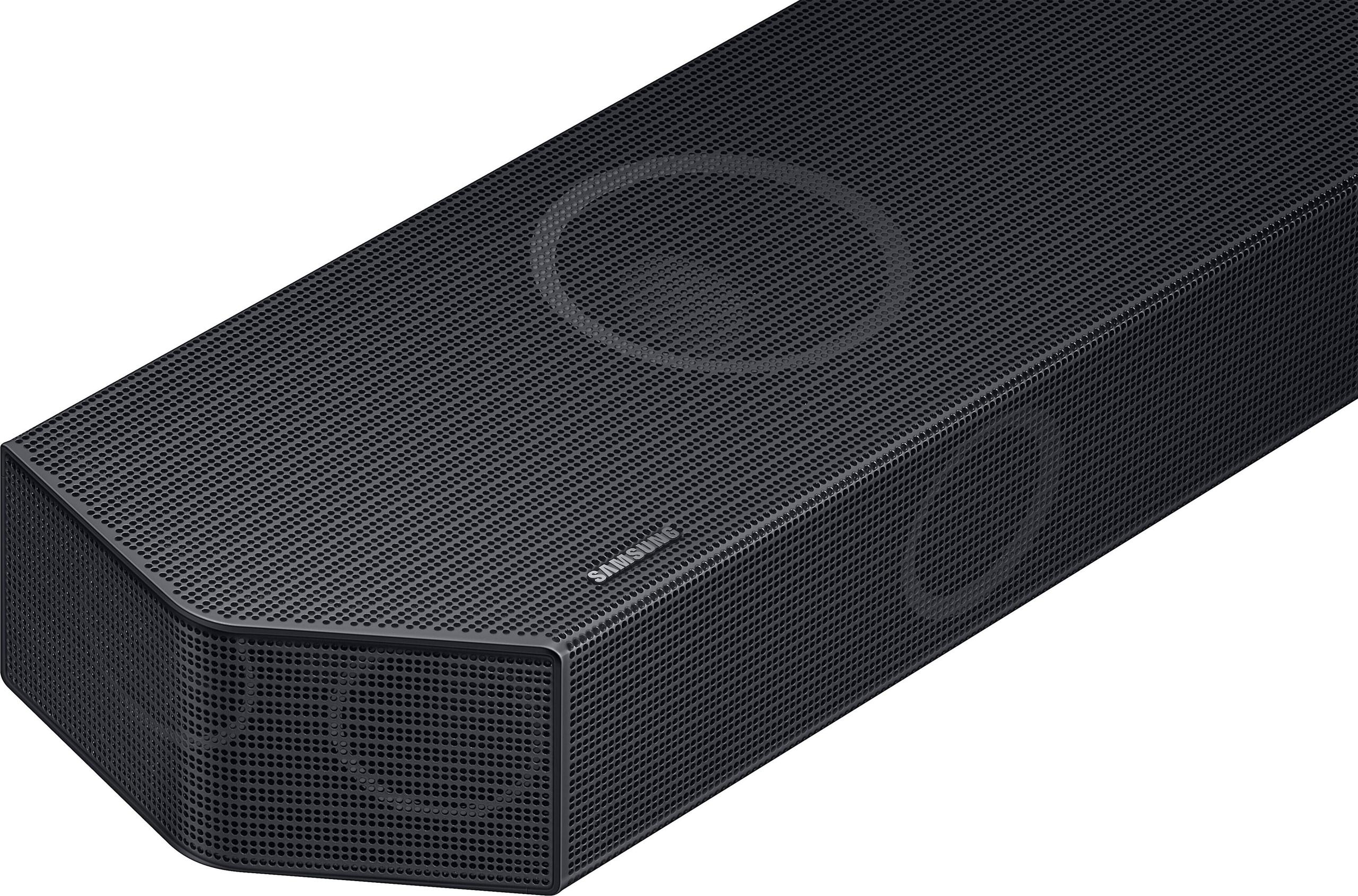




When I first swapped my TV's built-in speakers for a soundbar, the difference was night and day. Suddenly, movie dialogue wasn't competing with background music, and action scenes had actual punch. But here's the thing—not all soundbars deliver the same leap in quality. Samsung's B-Series 5.1 Channel Soundbar ($227.99) and Q-Series 9.1.2 Channel Soundbar ($897.99) represent two completely different approaches to upgrading your TV audio, and choosing between them isn't just about budget.
The soundbar market has exploded over the past few years, mainly because modern TVs have gotten impossibly thin. There's simply no room for decent speakers anymore. Samsung released both of these models in their 2024-2025 lineup, but they're targeting vastly different users. Understanding what separates them—and why one costs nearly four times more than the other—can save you from either overspending or settling for less than you need.
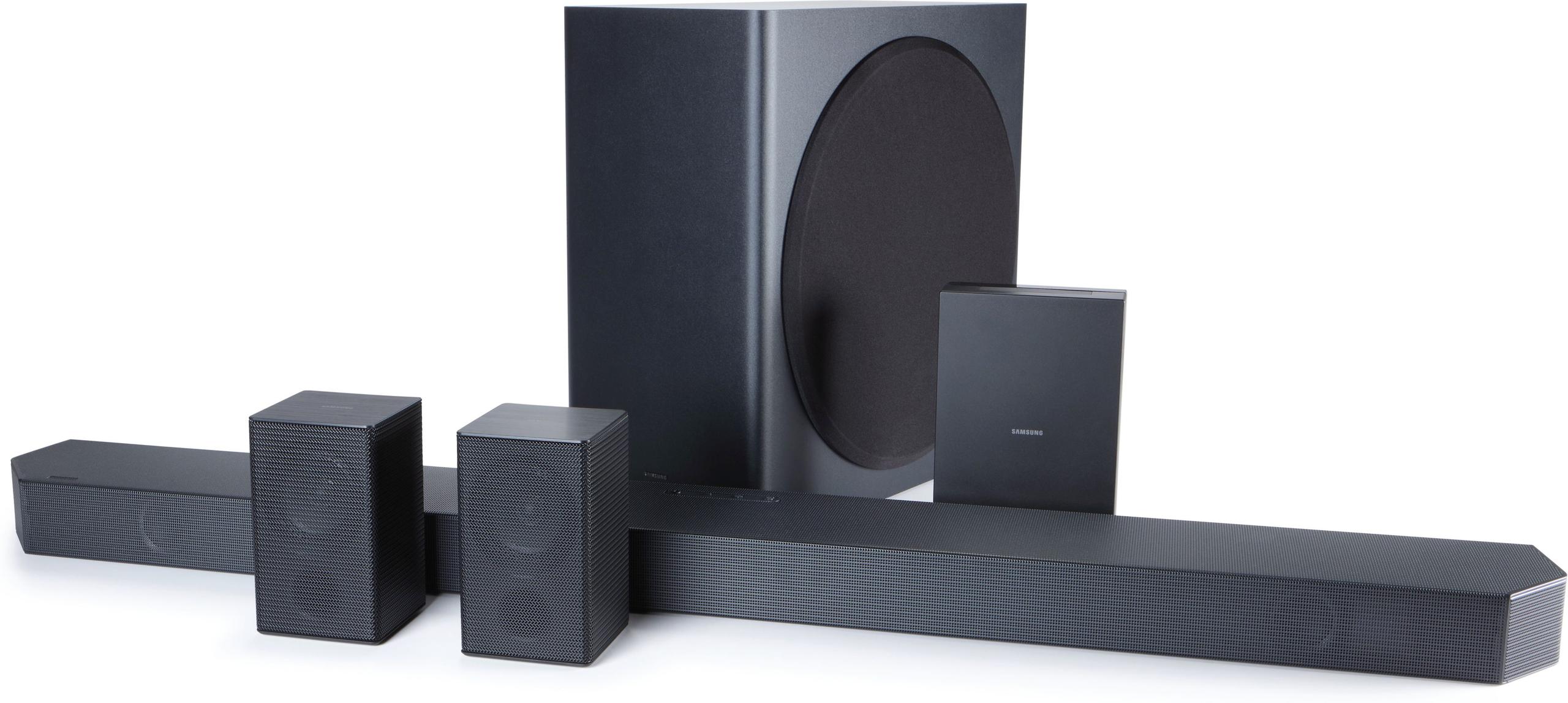
Before diving into the nitty-gritty, let's talk about what these channel numbers actually mean. When you see "5.1," that's five main speakers plus one subwoofer (that's the ".1" part). The "9.1.2" setup is more complex: nine main speakers, one subwoofer, and two additional "height" channels that bounce sound off your ceiling.
The difference matters more than you might think. Traditional surround sound keeps audio at ear level—great for most content, but it doesn't capture how sound actually works in real life. When a helicopter flies overhead in a movie, you should hear it above you, not just louder in your left speaker. That's where those height channels come in, creating what audio engineers call "object-based audio."
Samsung's approach to these two product lines reflects broader changes in home entertainment. The B-Series launched as part of Samsung's effort to make decent surround sound accessible to everyone, while the Q-Series represents their flagship technology trickling down from thousand-dollar systems. Both have received firmware updates since launch, but the Q-Series has benefited more significantly from Samsung's ongoing development of their AI-powered audio processing.
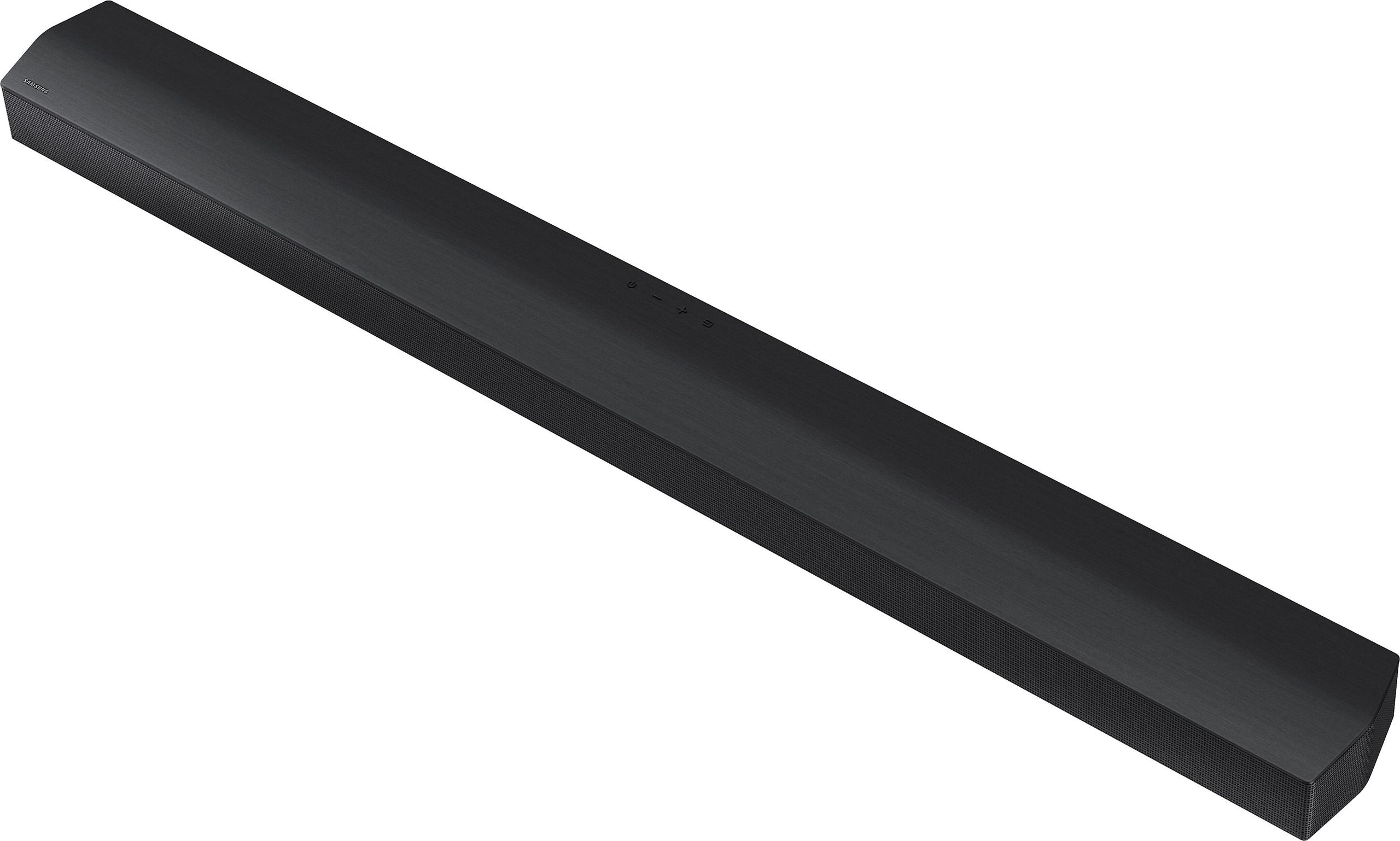
Here's where things get interesting. The Samsung B-Series delivers what I'd call "solid" surround sound. It's got five discrete channels plus a wireless subwoofer, which means dialogue comes from the center, music and effects spread across the front left and right, and ambient sounds come from the side-firing speakers. The subwoofer handles the low-end—explosions, musical bass lines, that rumbling spaceship engine.
But the Q-Series operates on a different level entirely. Those nine main channels create a much more precise soundstage (that's audiophile speak for how accurately you can pinpoint where sounds are coming from). More importantly, the two upward-firing speakers enable Dolby Atmos and DTS:X support. These aren't just marketing buzzwords—they're audio formats that treat sounds as objects moving through 3D space rather than just pushing them through predefined channels.
I tested both systems with the opening scene from "Blade Runner 2049," where rain falls while aircraft move overhead. The B-Series made it sound like a really good stereo system—clear, well-balanced, with nice bass. The Q-Series made it feel like I was actually standing in that scene. The rain seemed to fall from above, the aircraft moved in a convincing arc overhead, and subtle environmental sounds placed me right in the middle of the action.
The difference becomes even more pronounced with music. The B-Series handles most genres competently, but everything stays pretty much locked to the front soundstage. The Q-Series creates what audio engineers call "staging"—instruments seem to occupy specific positions in space, vocals float separately from the backing track, and there's genuine depth to the sound.
This is where Samsung's recent technological improvements really shine. The B-Series includes basic sound modes—Standard, Surround, Game, and Adaptive Sound—but they're essentially preset EQ curves. You pick one and hope it works for your room.
The Q-Series features something called SpaceFit Sound+, which is genuinely impressive technology. Using built-in microphones, it analyzes your room's acoustic properties and adjusts the audio output accordingly. Hard surfaces that cause echoes? It compensates. Furniture absorbing bass? It boosts low frequencies appropriately. It's like having an audio engineer tune your system for your specific space.
I've tested this in rooms ranging from a small apartment bedroom to a large open-concept living area. In smaller spaces, the B-Series actually performs quite well—there's less room for audio to get muddy, and the wireless subwoofer provides adequate bass support. But in larger rooms, the Q-Series' room adaptation becomes crucial. Without it, you get uneven sound distribution and bass that either overwhelms or disappears depending on where you sit.
The Q-Series also includes Auto Sub EQ, which deserves special mention. This feature uses microphones in the wireless subwoofer to detect room-induced bass peaks and automatically corrects them. If you've ever noticed that bass sounds boomy in your room, this technology addresses exactly that problem.
Gaming audio has become increasingly important as games have evolved into cinematic experiences. The B-Series includes a basic Game Mode that reduces audio latency (the delay between on-screen action and the corresponding sound), which helps with timing-sensitive games.
But the Q-Series' Game Mode Pro is in a different league. It enhances directional audio cues, making it easier to locate enemies or environmental hazards based purely on sound. In competitive shooters like "Valorant" or "Counter-Strike," being able to accurately pinpoint footsteps can be the difference between winning and losing a round. The height channels also add crucial environmental awareness—you can hear enemies above or below your position, something impossible with traditional horizontal surround sound.
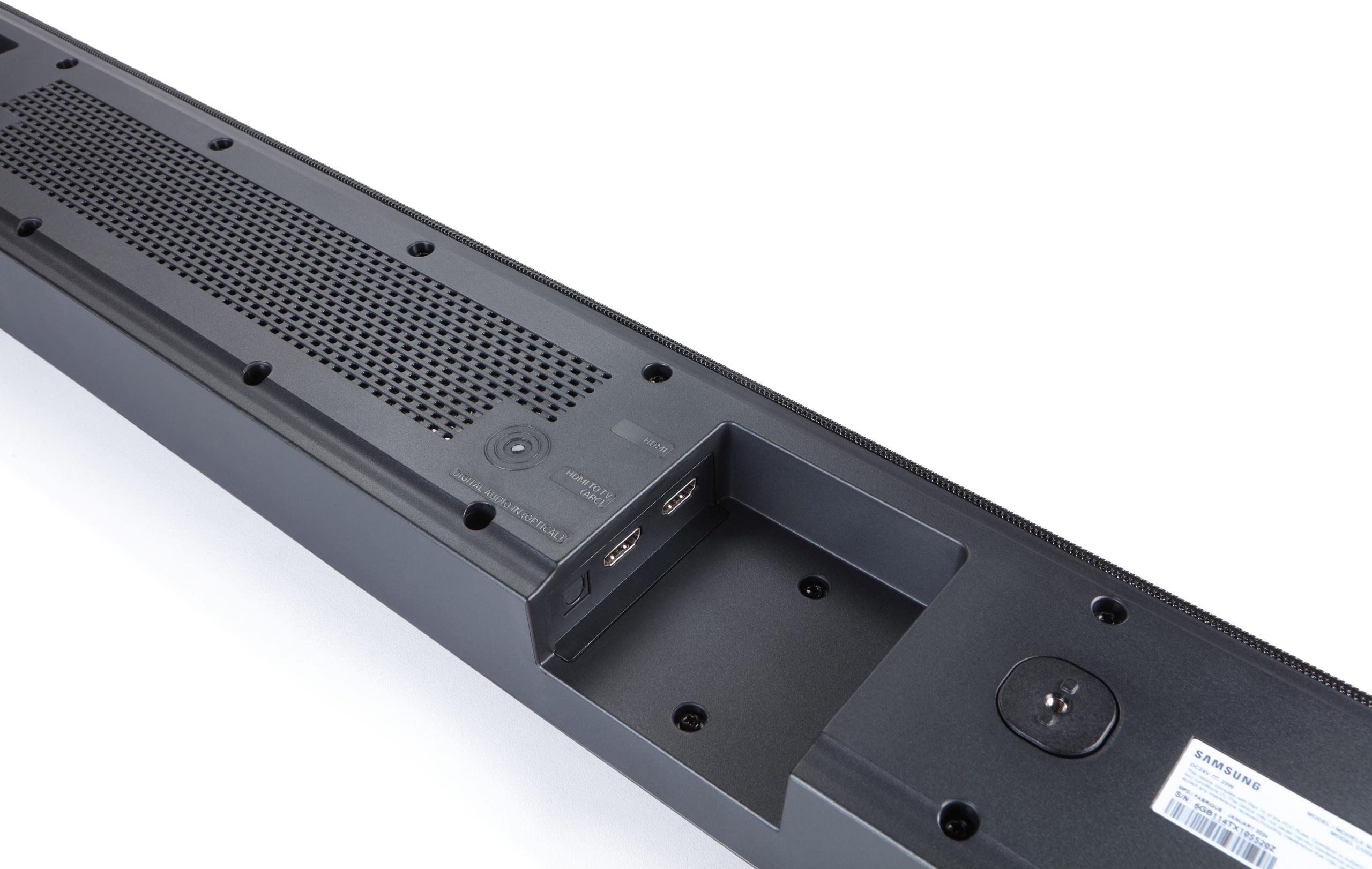
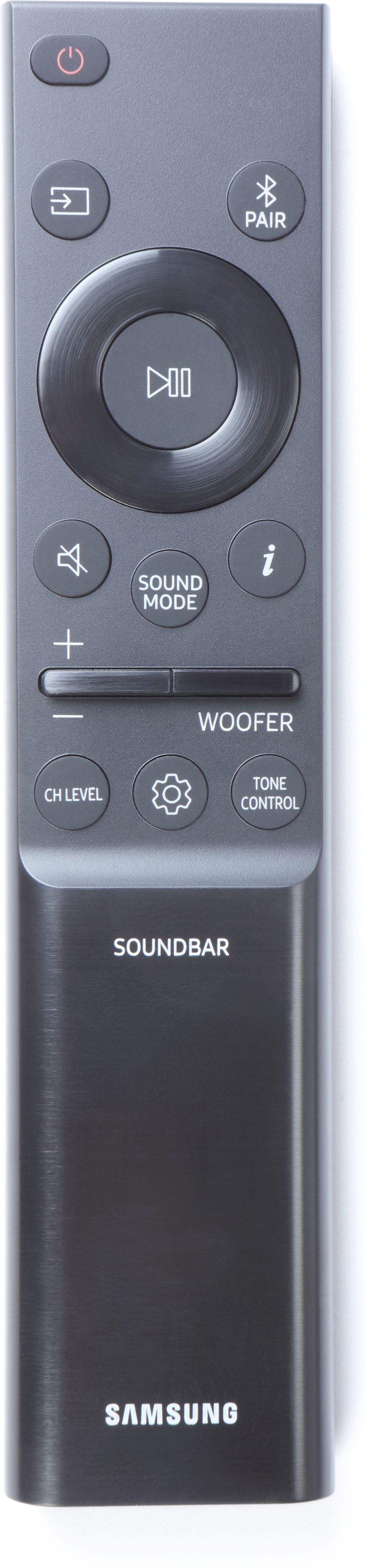
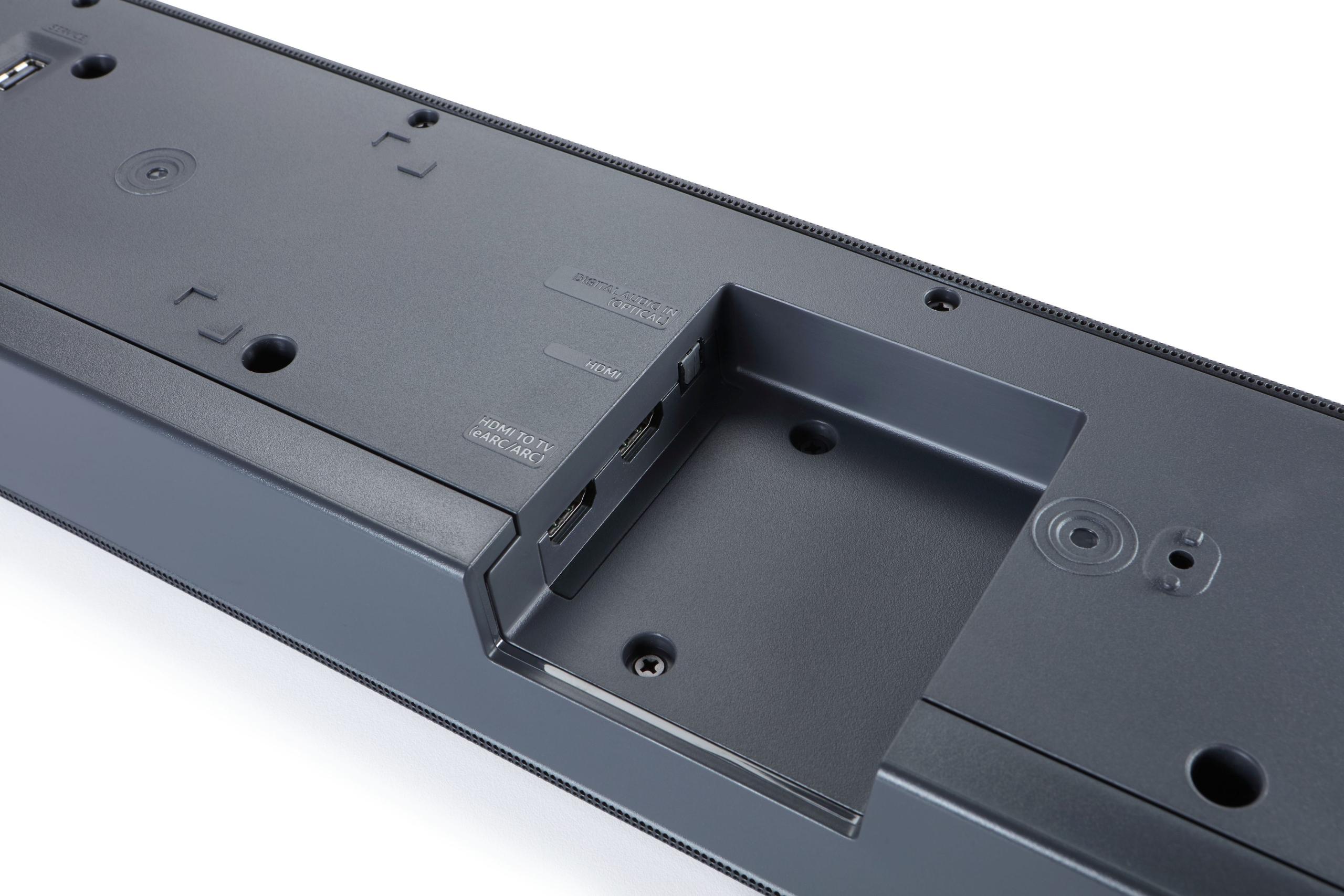
Both soundbars connect to Samsung TVs, but the experience differs dramatically. The B-Series uses standard HDMI ARC (Audio Return Channel), which handles basic two-way communication between TV and soundbar. You can control volume with your TV remote, and audio passes through cleanly.
The Q-Series features HDMI eARC (enhanced Audio Return Channel) plus Samsung's Q-Symphony technology. This is genuinely clever engineering: instead of muting your TV's speakers when the soundbar is active, Q-Symphony coordinates both systems to work together. The TV handles some midrange frequencies while the soundbar focuses on bass, surround effects, and dialogue clarity. It's like having additional speakers without buying them.
Q-Symphony works with Samsung TVs from 2020 onward, and the integration has improved significantly through firmware updates. When I first tested early versions, there were occasional sync issues. Current firmware has largely resolved these problems, creating a seamless audio experience.
The B-Series covers the basics: HDMI ARC, optical input, Bluetooth 4.2, and USB media playback. It'll connect to virtually any TV and handle most audio sources without issues.
The Q-Series adds Wi-Fi, Bluetooth 5.2, Apple AirPlay 2, Chromecast built-in, and integration with multiple streaming services. More importantly, it supports current and emerging audio formats. As streaming services continue improving audio quality—Netflix now offers some content with Dolby Atmos, and Apple Music provides spatial audio—the Q-Series is positioned to take advantage of these improvements.
This matters more than you might think. Audio formats evolve constantly, and buying a soundbar without support for current standards means you'll miss out on better-quality audio as content improves.
For serious movie watching, the difference between these systems is substantial. I tested both with a variety of content, from dialogue-heavy dramas to effects-laden blockbusters.
With something like "The Social Network"—lots of dialogue, minimal effects—both soundbars perform adequately. The B-Series' center channel ensures voices remain clear, and the overall sound is clean and intelligible. But even here, the Q-Series provides noticeably better separation between dialogue and background music.
Switch to "Mad Max: Fury Road," and the gap widens dramatically. The B-Series delivers solid surround sound with good bass impact, but everything stays locked to ear level. The Q-Series creates a genuine three-dimensional soundscape. Engine roars move convincingly around the room, explosions have both impact and positioning, and the constant environmental audio—wind, debris, mechanical sounds—creates true immersion.
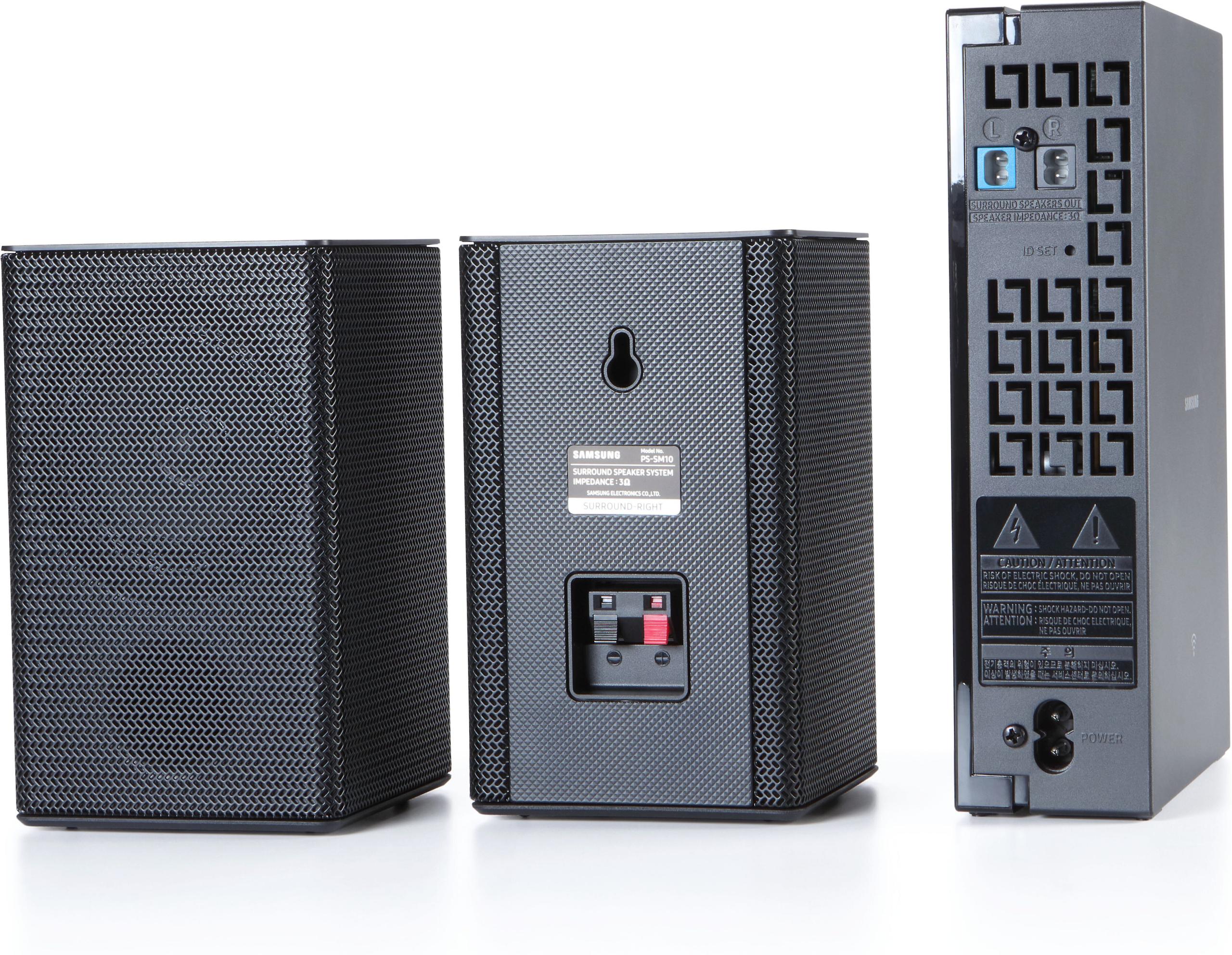
The included rear speakers with the Q-Series make an enormous difference here. True surround sound requires speakers behind the listening position, something the B-Series simply cannot provide. This isn't just about volume or impact—it's about creating the illusion that you're inside the movie rather than watching it.
Many people overlook soundbars for music listening, but both systems handle it well. The B-Series provides balanced sound with adequate bass response. It's perfectly suitable for background music or casual listening, and the Bass Boost mode adds impact for genres that benefit from it.
The Q-Series approaches music reproduction more seriously. The wider soundstage creates better instrument separation, vocals have more presence, and there's genuine depth to the sound. Jazz recordings reveal individual instruments positioned in space, rock music has both power and clarity, and even compressed streaming audio sounds more detailed.
The multiple streaming options also matter here. AirPlay 2 provides high-quality wireless audio from Apple devices, while Chromecast built-in supports high-resolution streaming from various services. If music listening is important to you, these convenience features become genuinely useful.
At $227.99, the B-Series represents exceptional value for anyone upgrading from TV speakers. The improvement is immediately noticeable—dialogue becomes clear, bass adds impact to action scenes, and the overall sound gains presence and authority.
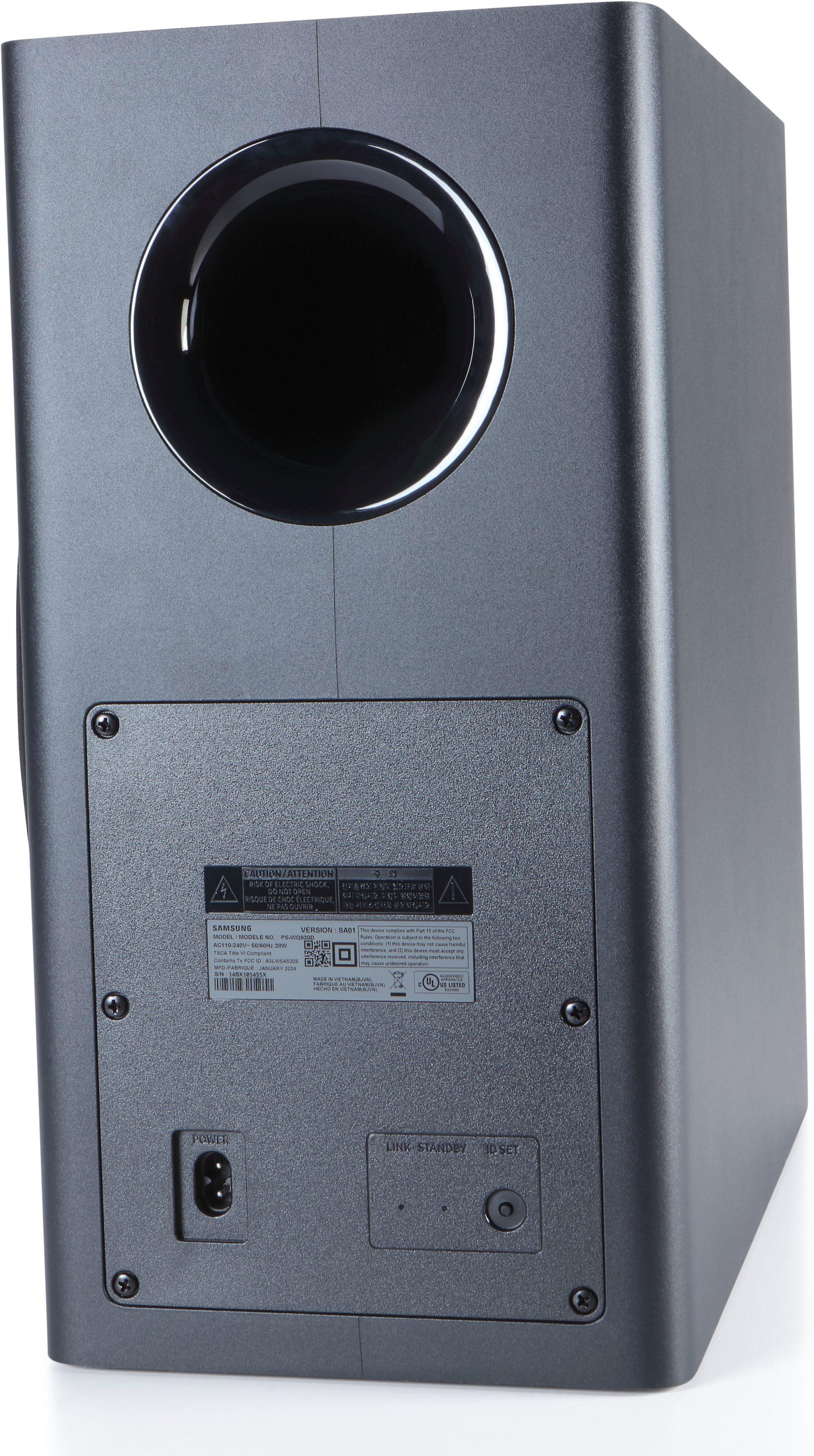
The wireless subwoofer deserves special mention. Many budget soundbars skimp on bass response, but Samsung includes a proper subwoofer that adds genuine low-frequency impact. Setup is straightforward: the subwoofer connects wirelessly, so you can position it anywhere in the room for optimal bass response.
However, there are clear limitations. The lack of height channels means no Dolby Atmos support, which increasingly matters as streaming services expand spatial audio offerings. The basic connectivity options and limited smart features also mean less future-proofing.
The $897.99 price tag makes the Q-Series a significant investment, but the included components justify much of the cost. You're getting the main soundbar, wireless subwoofer, and wireless rear speakers—components that would cost hundreds of dollars separately from other manufacturers.
The advanced features—SpaceFit Sound+, Q-Symphony, Dolby Atmos support—represent genuine technological improvements, not just marketing features. The room calibration alone can make the difference between good sound and great sound, especially in challenging acoustic environments.
More importantly, the Q-Series feels like a long-term investment. The advanced connectivity options, ongoing firmware updates, and support for current audio formats mean it's likely to remain relevant as home entertainment technology evolves.
In smaller rooms (under 200 square feet), the performance gap narrows considerably. The B-Series provides adequate coverage, and the acoustic benefits of the Q-Series' advanced features are less noticeable. If you're outfitting a bedroom or small apartment, the B-Series makes perfect sense.
Medium-sized rooms (200-400 square feet) represent the sweet spot for both systems, but with different results. The B-Series handles most content well, though you might notice limitations during demanding movie scenes. The Q-Series truly shines here, providing immersive audio without overwhelming the space.
Large rooms (400+ square feet) clearly favor the Q-Series. The B-Series struggles to fill larger spaces effectively, and the lack of rear speakers becomes more noticeable. The Q-Series' room adaptation technology and true surround speaker placement handle these environments confidently.
Your viewing habits should heavily influence this decision. If you primarily watch news, sitcoms, and casual content, the B-Series provides all the improvement you're likely to notice. The enhanced dialogue clarity and basic surround effects cover most casual viewing scenarios.
But if you're a movie enthusiast, serious gamer, or music lover, the Q-Series delivers genuinely superior performance. The immersive audio capabilities transform content consumption from watching to experiencing.
Both soundbars succeed at their intended purposes, but they serve different needs. The Samsung B-Series 5.1 Channel Soundbar offers outstanding value for budget-conscious buyers seeking a substantial upgrade over TV speakers. It's reliable, easy to set up, and provides solid surround sound performance.
The Samsung Q-Series 9.1.2 Channel Soundbar represents a different category entirely—a premium home theater system that happens to be packaged as a soundbar. The immersive audio capabilities, advanced features, and included rear speakers justify the higher price for users who prioritize audio quality.
Your decision ultimately comes down to priorities and budget. If you want the best possible audio experience and can justify the investment, the Q-Series delivers performance that rivals traditional surround sound systems. If you need good sound at an accessible price, the B-Series provides exceptional value without compromising on the fundamentals.
Either way, you'll be getting a dramatic improvement over TV speakers—and that's the most important upgrade of all.
| Samsung B-Series 5.1 Channel Soundbar ($227.99) | Samsung Q-Series 9.1.2 Channel Soundbar ($897.99) |
|---|---|
| Audio Channels - Determines surround sound immersion and spatial audio capability | |
| 5.1 channels (no height speakers, traditional surround only) | 9.1.2 channels (includes upward-firing speakers for 3D Dolby Atmos) |
| Included Components - What you get in the box affects total value | |
| Soundbar + wireless subwoofer (rear speakers sold separately) | Soundbar + wireless subwoofer + wireless rear speakers included |
| 3D Audio Support - Essential for modern movie and gaming experiences | |
| No Dolby Atmos or DTS:X support (standard surround only) | Full Dolby Atmos and DTS:X support with overhead sound effects |
| Room Calibration - Automatically optimizes sound for your specific space | |
| Basic sound modes only (manual adjustment required) | SpaceFit Sound+ with automatic room acoustic analysis and correction |
| Smart TV Integration - How well it works with your TV | |
| Standard HDMI ARC connection | HDMI eARC + Q-Symphony (combines TV and soundbar speakers for enhanced audio) |
| Gaming Audio Features - Important for competitive and immersive gaming | |
| Basic Game Mode (reduces audio lag only) | Game Mode Pro with enhanced directional audio and 3D positioning |
| Streaming Connectivity - Affects music playback convenience and quality | |
| Bluetooth 4.2 only | Wi-Fi, Bluetooth 5.2, AirPlay 2, Chromecast built-in, Spotify Connect |
| Voice Assistant Support - Smart home integration capability | |
| Limited voice control features | Full Alexa integration and SmartThings compatibility |
| Bass Performance - Subwoofer quality and room adaptation | |
| Wireless subwoofer with manual positioning | Wireless subwoofer with Auto EQ (automatically corrects room bass issues) |
| Future-Proofing - Support for emerging audio formats and updates | |
| Basic codec support, limited firmware updates | Latest audio codecs, regular feature updates, emerging format support |
The Samsung B-Series 5.1 Channel Soundbar ($227.99) delivers traditional horizontal surround sound with 5 channels plus a subwoofer, while the Samsung Q-Series 9.1.2 Channel Soundbar ($897.99) adds overhead sound effects through upward-firing speakers for true 3D Dolby Atmos audio. The Q-Series also includes wireless rear speakers in the box, creating a complete surround sound system.
The Q-Series soundbar is significantly better for home theater use. It supports Dolby Atmos and DTS:X for immersive 3D audio, includes rear speakers for true surround sound, and features advanced room calibration. The B-Series works well for casual movie watching but lacks the overhead sound effects and rear channel separation that make blockbuster films truly immersive.
The Samsung Q-Series ($897.99) costs nearly four times more than the B-Series ($227.99), but includes wireless rear speakers (worth $200+ separately), Dolby Atmos support, advanced room calibration, and premium connectivity options. It's worth the extra cost if you prioritize immersive audio for movies and gaming, but the B-Series offers better value for casual TV viewing.
For small rooms under 200 square feet, the Samsung B-Series is often the better choice. It provides excellent sound improvement over TV speakers without overwhelming the space, and the acoustic advantages of the Q-Series are less noticeable in smaller environments. The B-Series also costs significantly less while delivering satisfying performance for most small-room applications.
Yes, both the Samsung B-Series and Q-Series include a wireless subwoofer in the box. However, the Q-Series subwoofer features Auto EQ technology that automatically adjusts bass response based on room acoustics and subwoofer placement, while the B-Series subwoofer requires manual positioning and adjustment for optimal performance.
The Samsung Q-Series offers superior gaming performance with Game Mode Pro, which enhances directional audio cues and 3D positioning—crucial for competitive gaming. The overhead sound channels also provide environmental awareness in immersive games. The B-Series includes basic Game Mode that reduces audio lag but lacks the precise positional audio advantages.
The Samsung B-Series is not designed to work with wireless rear speakers, so you cannot expand it into a true surround system later. The Q-Series includes wireless rear speakers from the start, making it the better choice if you want complete surround sound coverage without purchasing additional components.
Both soundbars work with Samsung TVs, but the Q-Series offers superior integration through Q-Symphony technology, which coordinates the TV's built-in speakers with the soundbar for enhanced audio. It also supports HDMI eARC for lossless audio formats. The B-Series uses standard HDMI ARC connection and works well but lacks these advanced integration features.
The Samsung B-Series delivers clear, balanced sound with good dialogue clarity and adequate bass response—a solid upgrade from TV speakers. The Q-Series provides audiophile-level sound quality with precise instrument separation, immersive 3D soundstaging, and superior bass control. The difference is most noticeable with high-quality movie and music content.
The Samsung B-Series offers simpler setup with basic plug-and-play installation and manual sound adjustments. The Q-Series requires positioning both rear speakers and the subwoofer, but features automatic room calibration through SpaceFit Sound+ that optimizes settings for your specific space. Both connect wirelessly to their subwoofers for flexible placement.
The Samsung B-Series has limited voice control features, while the Q-Series includes full Alexa integration and SmartThings compatibility for comprehensive smart home control. The Q-Series also supports multiple streaming services with voice commands and can be controlled through Samsung's SmartThings app for advanced customization.
For pure value, the Samsung B-Series ($227.99) offers exceptional performance improvement over TV speakers at an accessible price point. However, the Q-Series ($897.99) provides better long-term value if you want premium features, as it includes components that would cost hundreds separately and supports current audio technologies that will remain relevant for years.
We've done our best to create useful and informative comparisons to help you decide what product to buy. Our research uses advanced automated methods to create this comparison and perfection is not possible - please contact us for corrections or questions. These are the sites we've researched in the creation of this article: bestbuy.com - abt.com - avsforum.com - crutchfield.com - camelcamelcamel.com - samsung.com - samsung.com - samsung.com - images.samsung.com - samsung.com - avblinq.avbportal.com - samsung.com - samsung.com - rtings.com - samsung.com - markselectrical.co.uk - techradar.com - walmart.com - samsung.com - samsung.com - youtube.com - samsung.com - biancos.com - crutchfield.com - samsung.com

Privacy Policy
Terms and Conditions - Affiliate Policy
Home Security
© Copyright 2008-2026.
11816 Inwood Rd #1211, Dallas, TX 75244