



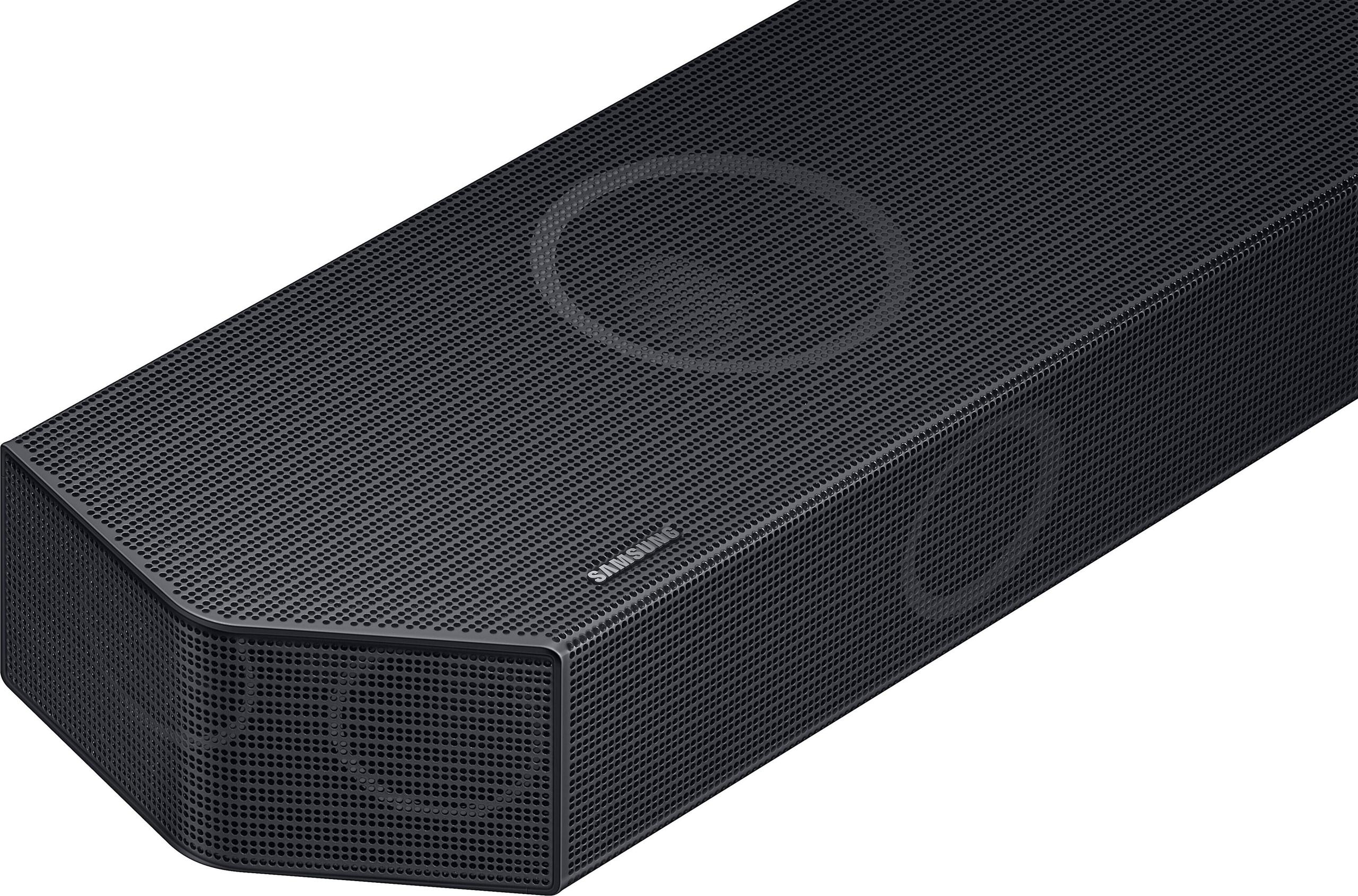




When your TV's built-in speakers just aren't cutting it anymore, a good soundbar can transform your entertainment experience. But with so many options available, choosing between different approaches to surround sound can feel overwhelming. Today we're comparing two soundbars that represent very different philosophies: the budget-friendly Amazon Fire TV Soundbar Plus 5.1 Channel System and the premium Samsung Q Series 9.1.2 Channel Soundbar.
These systems showcase the evolution of soundbar technology over the past few years. The Amazon Fire TV Plus launched in 2023 as Amazon's second-generation soundbar, building on lessons learned from their original model. Meanwhile, the Samsung Q Series 9.1.2 arrived in mid-2022, representing Samsung's push into true three-dimensional audio with physical height channels.
Before diving into the comparison, it's worth understanding what makes modern soundbars tick. The numbers in soundbar names tell you about their speaker configuration—the first number represents regular channels (left, right, center, surround), the second is subwoofers, and the third indicates height channels for overhead effects.
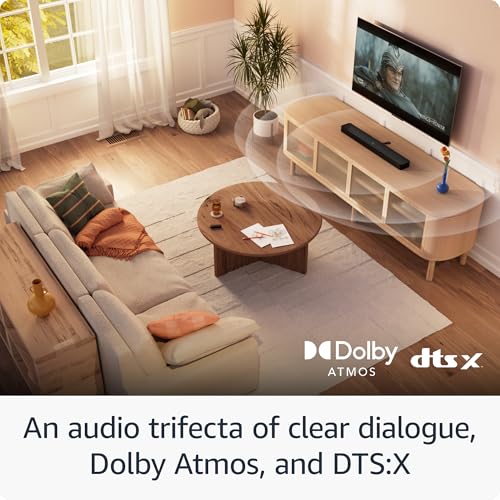
The biggest advancement in recent years has been the implementation of Dolby Atmos and DTS:X, which are audio formats that place specific sounds in three-dimensional space around you. Think of it like having invisible speakers floating above your head—when a helicopter flies overhead in a movie, you actually hear it move from behind you, over your head, and out in front.
There are two ways soundbars handle these height effects. Some use virtualization, which means they use clever audio processing to trick your ears into thinking sounds are coming from above, even though all the speakers are pointing forward. Others use physical up-firing speakers that bounce sound off your ceiling to create genuine overhead effects.
Room calibration has also become increasingly important. Advanced soundbars now use microphones to analyze your room's acoustics and automatically adjust their sound accordingly. This technology, which was once limited to expensive home theater receivers, helps compensate for challenging room layouts and furniture placement.
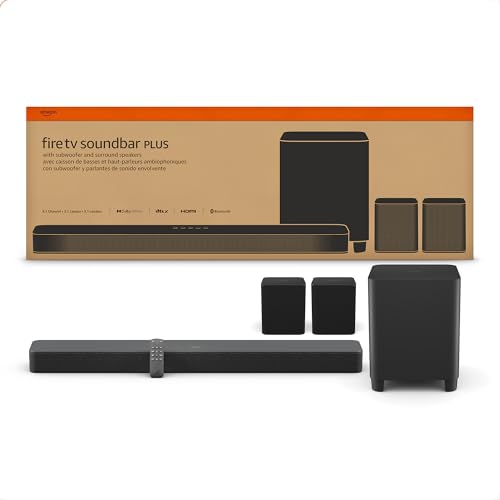
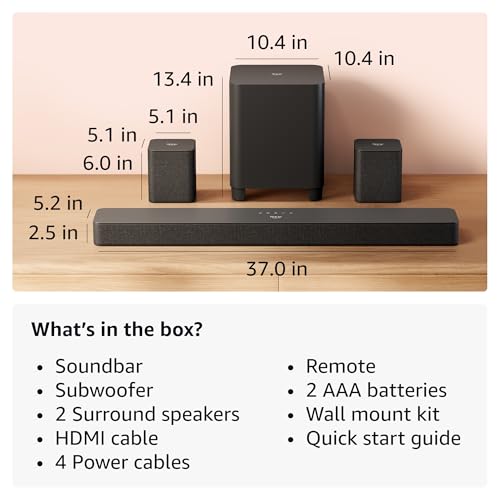
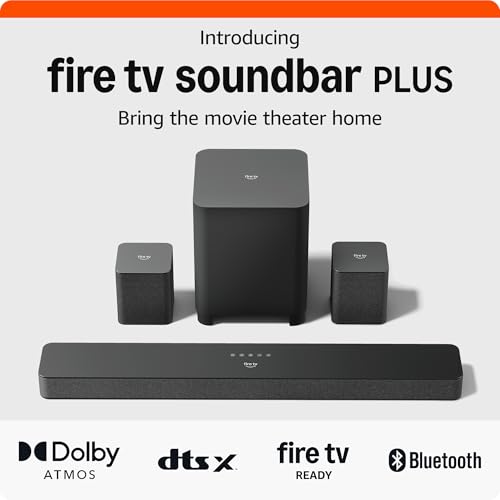
The Amazon Fire TV Soundbar Plus represents a straightforward approach to home theater audio. At the time of writing, it offers one of the most complete 5.1 surround sound packages in its price range, including everything you need right in the box: a soundbar, wireless subwoofer, and two rear satellite speakers.
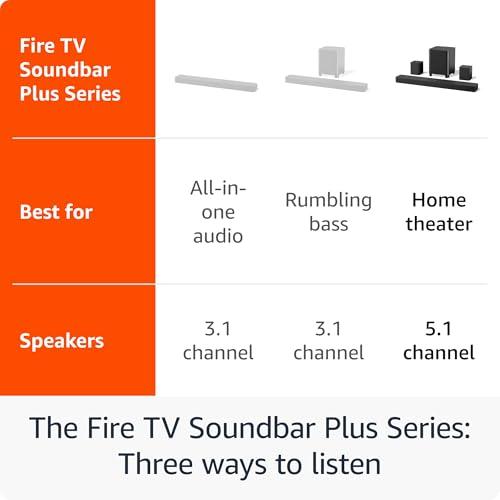
Amazon's strategy here is clear—deliver genuine 5.1 surround sound without the premium price tag. The system uses a 3.1 channel soundbar (left, right, center) paired with external components to create the full surround experience. This means you get dedicated rear speakers that actually sit behind you, creating a true 360-degree soundfield that most standalone soundbars simply can't match.
The Fire TV Plus handles height effects through virtualization rather than physical up-firing speakers. While this saves cost, it means overhead sounds are simulated rather than genuinely positioned above you. The system supports advanced audio formats like Dolby Atmos and DTS:X, but processes them through its existing speaker arrangement.
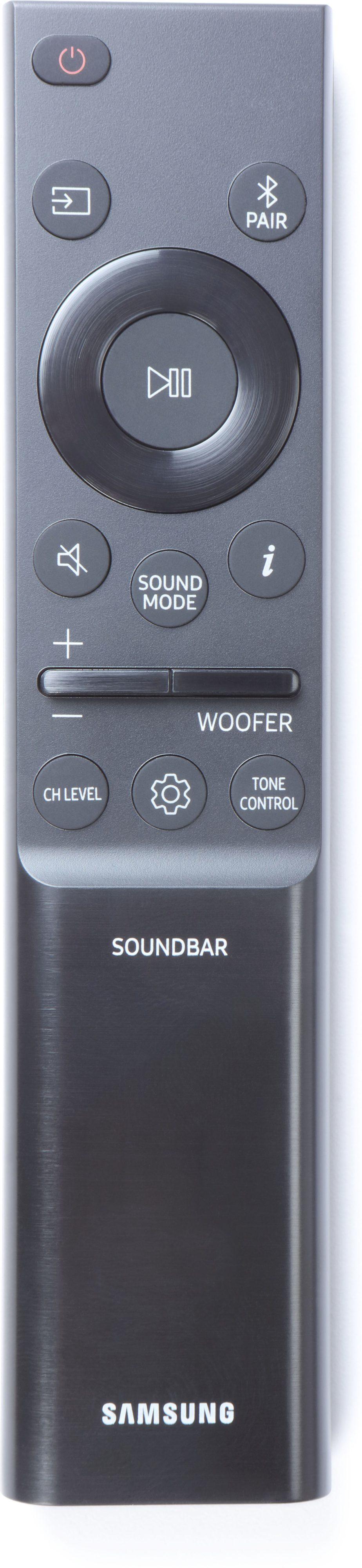
One clever feature is the dialogue enhancement with a dedicated remote button. This boosts the center channel to make speech clearer—particularly useful if you find yourself constantly adjusting volume during movies when dialogue gets drowned out by explosions.
The Fire TV integration is more limited than the name might suggest. Rather than built-in streaming capabilities, it simply means the soundbar can be controlled through compatible Fire TV device menus when connected via HDMI. This streamlines the user experience for Amazon ecosystem users, but doesn't add smart features to the soundbar itself.
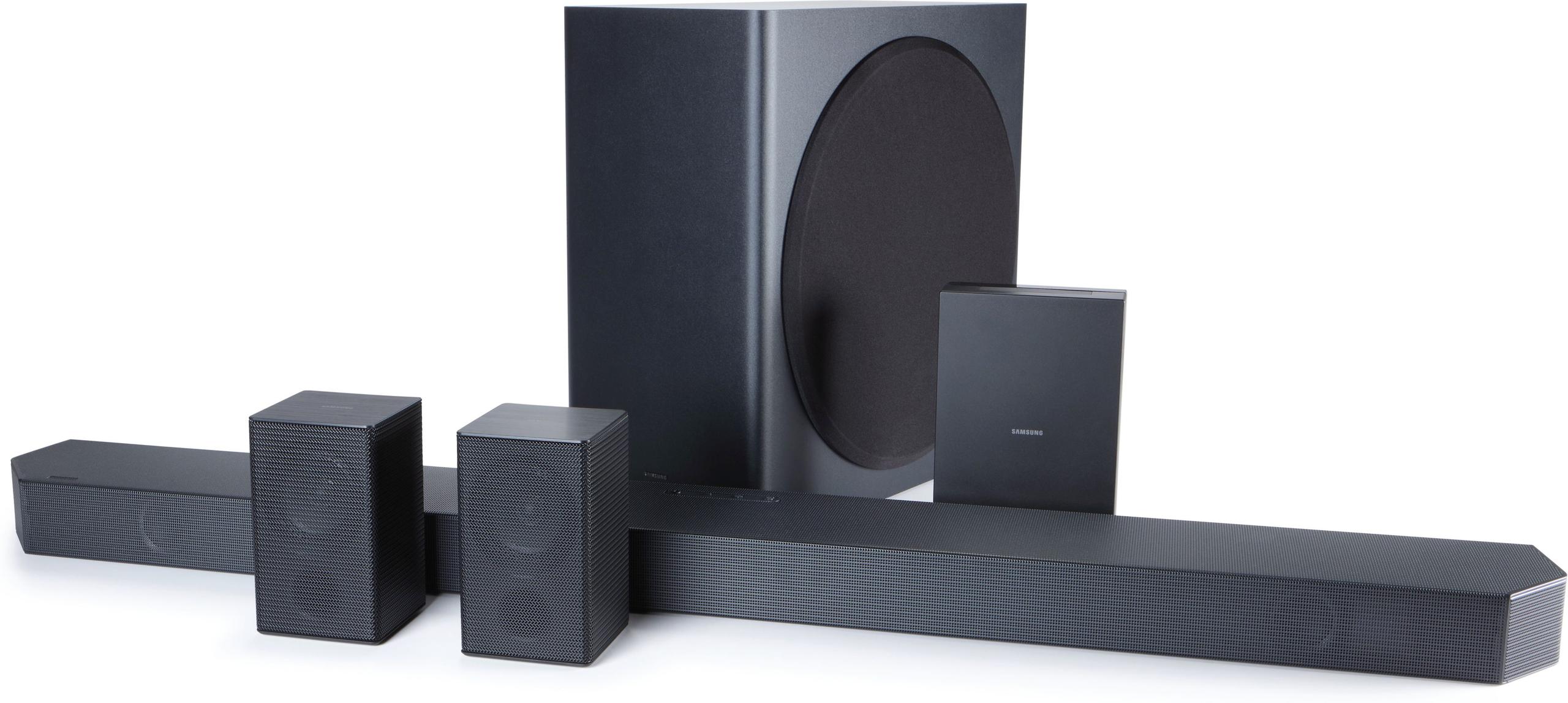
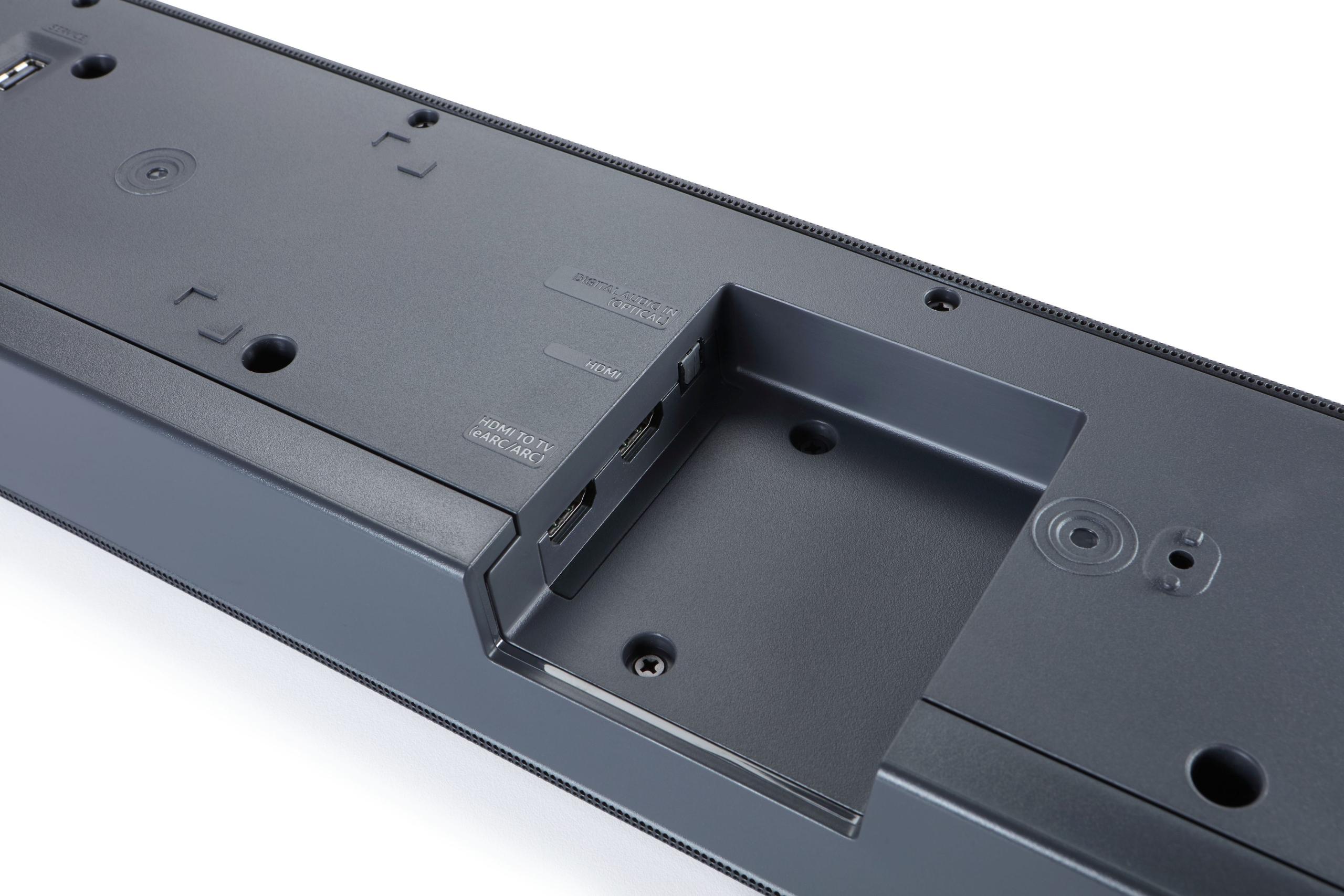
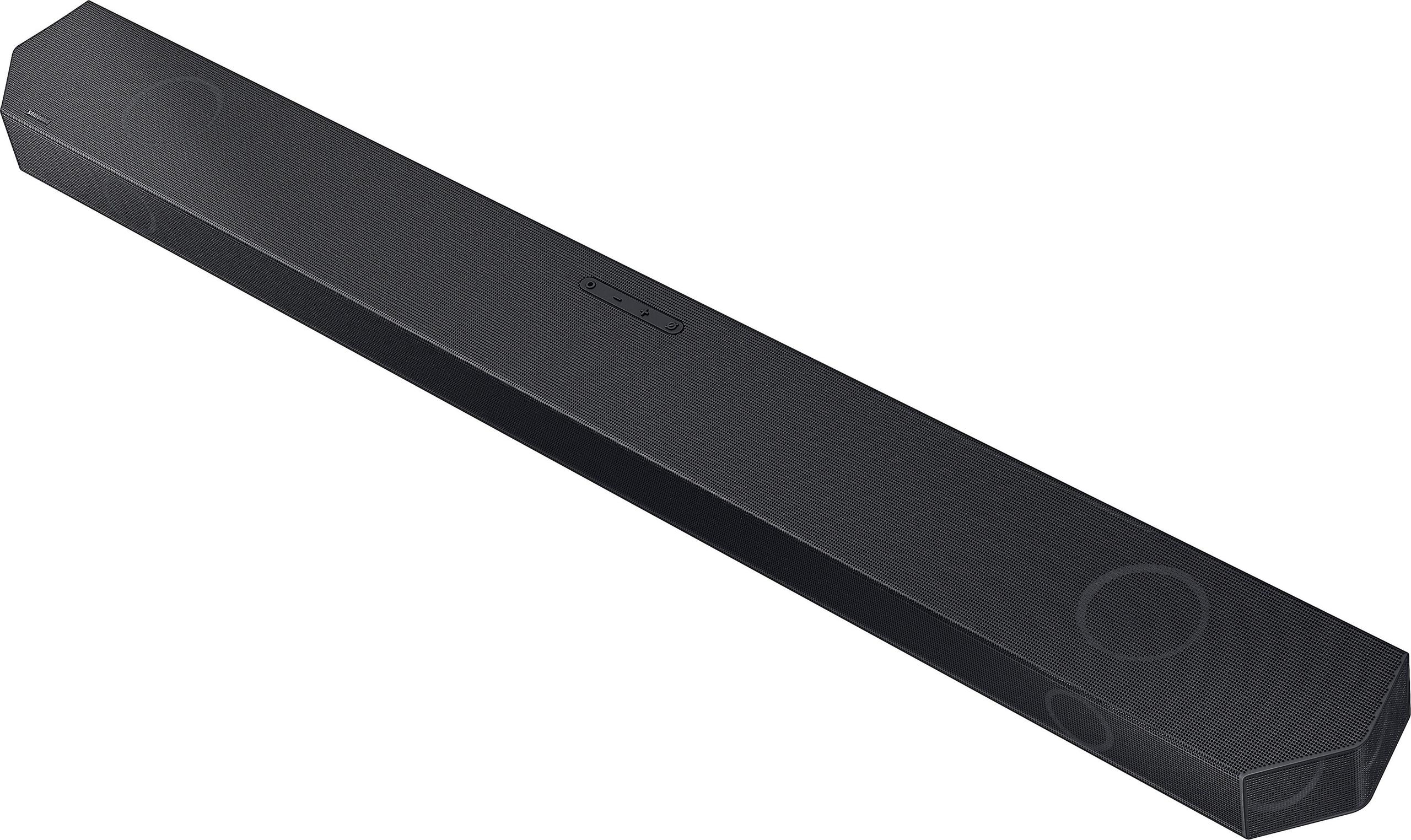
The Samsung Q Series 9.1.2 takes a fundamentally different approach, prioritizing advanced technology and genuine three-dimensional audio. The "9.1.2" configuration means nine regular channels, one subwoofer, and two dedicated up-firing speakers that bounce sound off your ceiling.
This physical approach to height channels makes a significant difference in practice. When a fighter jet flies overhead in Top Gun, you genuinely hear it pass above you rather than just getting a hint of vertical movement. The ceiling bounce technique works best in rooms with 8-10 foot ceilings and requires adequate depth (ideally 15-25 feet) to create proper reflection angles.
Samsung's SpaceFit Sound+ represents one of the more sophisticated room calibration systems available. Using built-in microphones, it analyzes your room's acoustics and automatically adjusts the soundbar's output to compensate for challenging layouts. This technology combines optimized clarity with bass correction, essentially giving you a custom-tuned system for your specific space.
The Q-Symphony feature is particularly compelling for Samsung TV owners. Rather than replacing your TV's speakers, Q-Symphony allows the Samsung soundbar to work in conjunction with compatible Samsung TVs, using both sets of speakers simultaneously. This creates a larger, more immersive soundstage than either component could achieve alone.
For gaming, the Samsung system includes Game Mode Pro, which reduces audio latency and enhances directional audio cues. This isn't just marketing fluff—the precise positioning can provide a legitimate competitive advantage in first-person shooters where hearing enemy footsteps or gunfire direction matters.
This is where the fundamental differences between these systems become apparent. The Amazon Fire TV Plus creates excellent lateral surround effects thanks to its physical rear satellites. When characters move from left to right across the screen, the positioning is convincing and natural. However, the virtualized height effects feel more like enhanced stereo than true three-dimensional audio.
The Samsung Q Series, by contrast, creates a genuinely immersive bubble of sound around the listener. The physical up-firing speakers deliver overhead effects that are immediately noticeable—not subtle hints, but clear directional audio that places sounds above, around, and behind you. This makes action sequences significantly more engaging and creates that "theater at home" experience many people are seeking.
However, room size matters enormously here. In smaller spaces under 12 feet deep, the Samsung's advantages diminish because there isn't sufficient distance for proper ceiling reflection. The Amazon system actually performs better in compact rooms because its lateral surround effects don't rely on room acoustics.
Both systems prioritize speech intelligibility, but they take different approaches. The Amazon Fire TV Plus uses a dedicated dialogue enhancement feature that you can adjust with the remote. This works well for most content, though our research suggests it can make deeper male voices sound somewhat thin due to a dip in the lower midrange frequencies.
The Samsung Q Series employs Active Voice Amplifier (AVA) technology, which automatically analyzes each scene and adjusts vocal levels dynamically. Rather than a simple boost, it intelligently balances dialogue against background effects. This results in more natural-sounding speech that doesn't require constant manual adjustment.
In complex action scenes with explosions and music, the Samsung system maintains better dialogue clarity without sacrificing the excitement of the soundtrack. This is particularly noticeable in Marvel movies or war films where there's constant competition between speech and sound effects.
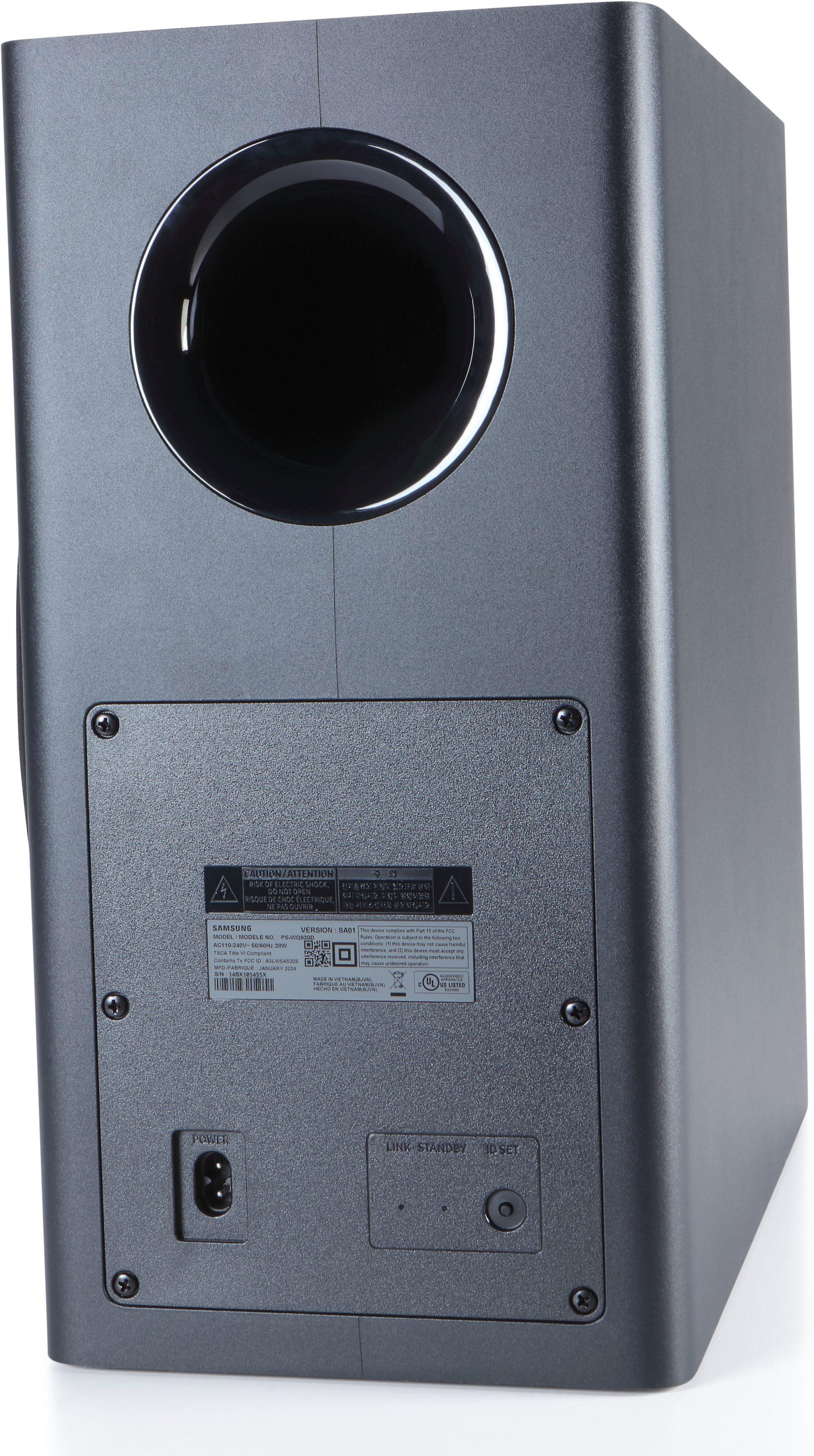
The wireless subwoofer included with the Amazon Fire TV Plus delivers impressive punch for its price range. It provides solid rumble during action sequences and adds weight to music playback. However, it can become somewhat overpowering at higher volumes, occasionally drowning out dialogue during particularly bass-heavy scenes.
The Samsung Q Series includes Auto Sub EQ, which uses a microphone in the subwoofer to analyze and correct low-frequency response based on its placement in your room. This results in more controlled, nuanced bass that integrates better with the main channels. The bass feels more natural and doesn't overwhelm other frequencies, even during demanding action sequences.
For music listening, the Samsung system provides better separation between bass lines and other instruments, while the Amazon system tends to emphasize impact over subtlety. Neither approach is inherently wrong—it depends on your preferences and content types.
Gaming reveals one of the most significant differences between these systems. The Amazon Fire TV Plus suffers from noticeable audio latency that can cause sync issues during fast-paced gaming. While adequate for casual gaming, it's not ideal for competitive play where audio timing matters.
The Samsung Q Series excels in gaming scenarios. Game Mode Pro reduces latency to imperceptible levels and enhances directional audio cues. In competitive shooters like Call of Duty or Valorant, the precise positioning helps identify enemy locations through footsteps and gunfire. The 360-degree audio field created by the height channels adds another layer of situational awareness that can genuinely improve performance.
At the time of writing, the Amazon Fire TV Soundbar Plus represents exceptional value in the sub-$500 range. You're getting a complete 5.1 surround system with no additional purchases required. The performance-per-dollar ratio is compelling, especially considering that many competitors charge extra for rear satellites or subwoofers.
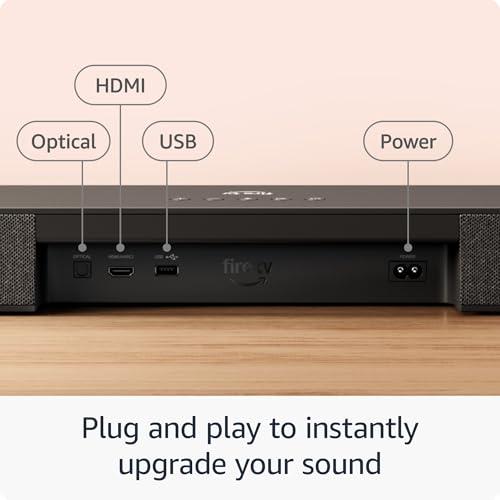
The system's simplicity is also valuable. Everything comes pre-paired and ready to use—you literally just plug it in and turn it on. For users who want better sound without complexity, this approach eliminates the intimidation factor that keeps many people using terrible TV speakers.
The Samsung Q Series 9.1.2 costs significantly more, but the technology justifies the premium for the right user. The physical height channels, room calibration, and advanced processing represent genuine technological advantages, not just marketing features. However, you need the right room and use cases to benefit from these improvements.
For Samsung TV owners, the value proposition improves dramatically. Q-Symphony alone can make the soundbar feel like a much larger system, effectively turning your TV into an extension of the soundbar rather than competition for it.
You're working within a budget under $500 and want the most complete surround sound experience possible at that price point. The Amazon system makes sense for smaller to medium-sized rooms where virtualized height effects aren't a major limitation. It's perfect for apartment dwellers or anyone setting up a secondary viewing area.
The Fire TV Plus is also ideal if you prioritize simplicity over advanced features. The plug-and-play setup appeals to users who want better sound without becoming audio enthusiasts. If your primary content is TV shows, light movie watching, and casual streaming, the performance differences versus premium systems become less important.
You have a medium to large room with proper ceiling height and can take advantage of the physical up-firing speakers. The Samsung system truly shines with demanding content like action movies, concert videos, and immersive gaming where three-dimensional audio makes a substantial difference.
Samsung TV owners should strongly consider the Q Series due to Q-Symphony's transformative effect on the overall sound experience. The integration between TV and soundbar creates a larger, more immersive soundstage that justifies much of the price premium.
Gaming enthusiasts will find the Samsung's low-latency performance and precise directional audio worth the investment, particularly for competitive gaming where audio cues provide tactical advantages.
Both soundbars succeed at their intended goals, but they're aiming for different targets. The Amazon Fire TV Soundbar Plus delivers genuine 5.1 surround sound at an accessible price point with minimal complexity. It's a smart choice for budget-conscious buyers who want a complete system that significantly outperforms TV speakers.
The Samsung Q Series 9.1.2 represents the current state of the art in soundbar technology, with physical height channels, sophisticated room calibration, and seamless ecosystem integration. It's worth the premium for users who can fully utilize its capabilities and have the room setup to benefit from advanced features.
The key is honestly assessing your room, usage patterns, and priorities. If you're mainly watching Netflix in a small apartment, the Amazon system provides excellent value. If you're building a dedicated home theater for movie nights and gaming sessions, the Samsung system offers capabilities that justify its higher cost.
Consider this: the price difference between these systems is meaningful, but in the context of a complete home theater setup, spending more upfront for genuinely superior technology often proves worthwhile over several years of use. However, there's no shame in choosing the more affordable option if it meets your needs—better sound at any level beats the mediocre audio most TVs provide.
| Amazon Fire TV Soundbar Plus 5.1 Channel System | Samsung Q Series 9.1.2 Channel Soundbar |
|---|---|
| Channel Configuration - Determines surround sound capabilities and immersion level | |
| 5.1 channels (soundbar + subwoofer + rear satellites) | 9.1.2 channels (more speakers for fuller soundstage) |
| Height Channel Implementation - Critical for Dolby Atmos overhead effects | |
| Virtualized height effects (simulated overhead sound) | Physical up-firing speakers (genuine overhead sound) |
| Room Size Requirements - Affects whether you can utilize full capabilities | |
| Optimized for small to medium rooms (up to 15 feet) | Requires medium to large rooms (15-25 feet deep) for ceiling bounce |
| Included Components - What you get in the box affects total value | |
| Complete 5.1 system: soundbar, subwoofer, rear satellites | Soundbar with subwoofer and rear speakers included |
| Smart Features - Advanced audio processing and room adaptation | |
| Basic Fire TV integration for menu control | SpaceFit Sound+ room calibration, Q-Symphony TV integration |
| Gaming Performance - Important for competitive and immersive gaming | |
| High audio latency causes sync issues | Game Mode Pro with low latency and enhanced directional audio |
| Dialogue Enhancement - Clarity for speech-heavy content | |
| Manual dialogue boost with dedicated remote button | Active Voice Amplifier (AVA) with automatic scene-based adjustment |
| Bass Calibration - How well low frequencies integrate with your room | |
| Fixed subwoofer tuning | Auto Sub EQ with microphone-based room correction |
| Build Quality - Affects longevity and overall experience | |
| Budget-friendly materials and construction | Premium materials and advanced internal components |
| Setup Complexity - Time and effort required to get optimal performance | |
| Plug-and-play with pre-paired components | More complex but includes automated calibration features |
| Best For - Target user and use cases | |
| Budget-conscious buyers wanting complete 5.1 surround | Home theater enthusiasts with larger rooms seeking premium audio |
The Amazon Fire TV Soundbar Plus 5.1 Channel System works better in smaller spaces under 15 feet deep. Its lateral surround effects from the rear satellites don't rely on ceiling height or room acoustics like the Samsung Q Series 9.1.2 does. The Samsung system needs adequate ceiling height and room depth for its up-firing speakers to properly bounce sound effects off the ceiling.
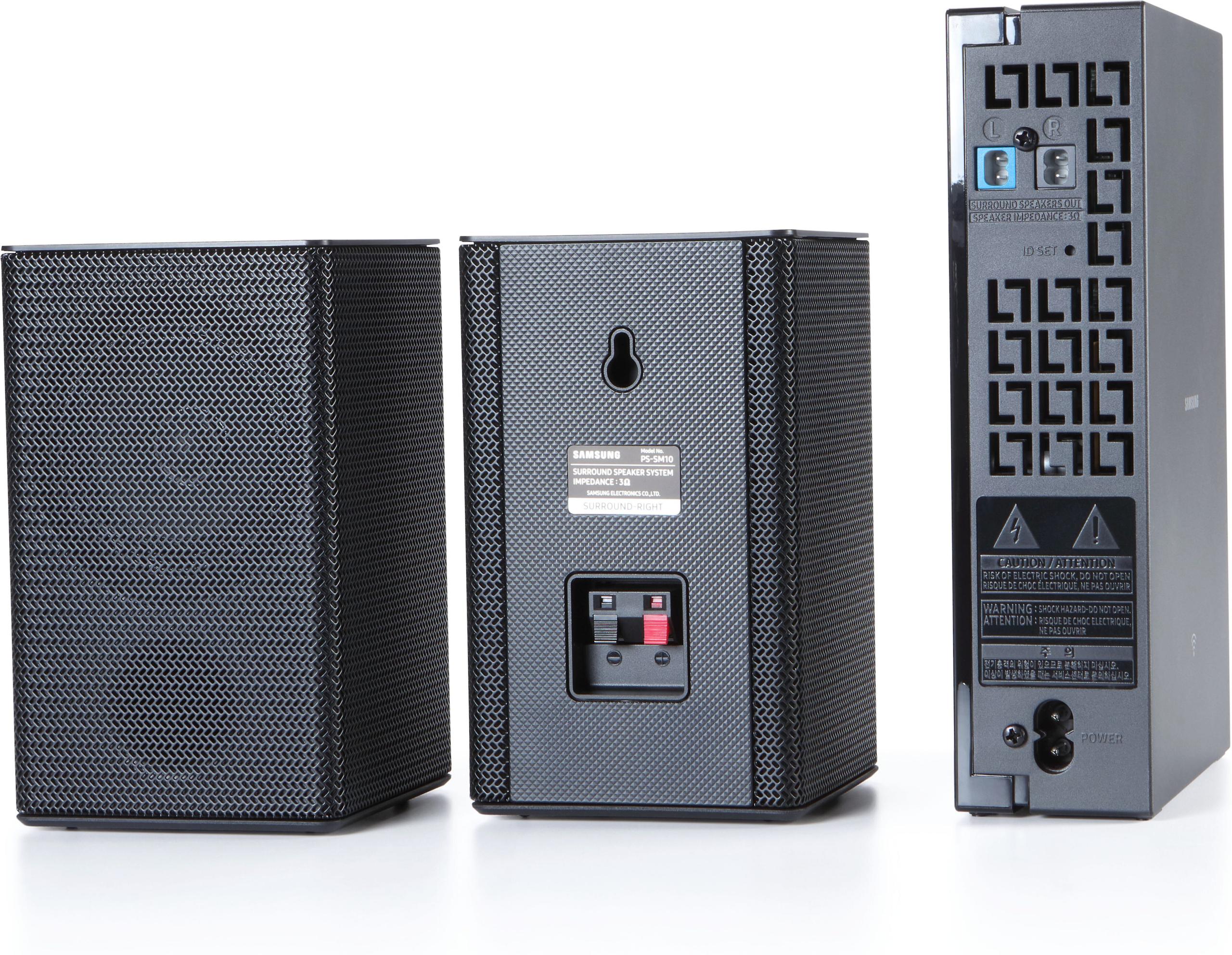
Yes, both the Amazon Fire TV Soundbar Plus and Samsung Q Series 9.1.2 Channel Soundbar include wireless subwoofers and rear satellite speakers in the box. This makes them complete surround sound systems without requiring additional purchases, though the Samsung system has more total speakers in its configuration.
The Samsung Q Series 9.1.2 delivers superior Dolby Atmos performance with physical up-firing speakers that create genuine overhead sound effects. The Amazon Fire TV Soundbar Plus uses virtualized height effects, which simulate overhead sounds through audio processing rather than actually positioning them above you.
The Samsung Q Series 9.1.2 Channel Soundbar offers significantly better gaming performance with its Game Mode Pro feature that reduces audio latency and provides precise directional audio cues. The Amazon Fire TV Soundbar Plus has noticeable audio delay that can cause sync issues during fast-paced gaming.
The Amazon Fire TV Soundbar Plus 5.1 Channel System is simpler to set up with plug-and-play installation and pre-paired components. The Samsung Q Series 9.1.2 offers more advanced features like room calibration but requires more initial configuration to optimize performance.
While the Samsung Q Series 9.1.2 Channel Soundbar works with any TV, Samsung TV owners get additional benefits through Q-Symphony technology, which uses both the TV speakers and soundbar together for a larger soundstage. The Amazon Fire TV Soundbar Plus provides basic integration with Fire TV devices but doesn't require them for full functionality.
Both systems prioritize dialogue clarity, but they use different approaches. The Samsung Q Series 9.1.2 uses Active Voice Amplifier technology that automatically adjusts speech levels based on each scene. The Amazon Fire TV Soundbar Plus offers manual dialogue enhancement through a dedicated remote button.
The Amazon Fire TV Soundbar Plus 5.1 Channel System performs optimally in small to medium rooms up to 15 feet deep. The Samsung Q Series 9.1.2 Channel Soundbar requires medium to large rooms with 15-25 feet of depth and adequate ceiling height for its up-firing speakers to work effectively.
The Amazon Fire TV Soundbar Plus provides excellent value as a complete 5.1 surround system at a lower price point. The Samsung Q Series 9.1.2 costs more but offers advanced technology like physical height channels and room calibration that justify the premium for users who can fully utilize these features.
Yes, both the Amazon Fire TV Soundbar Plus 5.1 Channel System and Samsung Q Series 9.1.2 Channel Soundbar can be wall mounted. The Amazon system includes mounting hardware in the box, while both systems use wireless subwoofers and rear speakers to minimize cable management.
The Samsung Q Series 9.1.2 generally provides better music performance with more natural frequency response and better instrument separation. The Amazon Fire TV Soundbar Plus emphasizes impact over subtlety, which some users prefer for certain music genres, though it may sound less refined overall.
The Amazon Fire TV Soundbar Plus 5.1 Channel System offers the biggest advantage in delivering complete 5.1 surround sound at an accessible price with simple setup. The Samsung Q Series 9.1.2 Channel Soundbar provides genuine three-dimensional audio with physical height channels and advanced room calibration for a more immersive home theater experience.
We've done our best to create useful and informative comparisons to help you decide what product to buy. Our research uses advanced automated methods to create this comparison and perfection is not possible - please contact us for corrections or questions. These are the sites we've researched in the creation of this article: rtings.com - cordbusters.co.uk - techradar.com - developer.amazon.com - t3.com - hometechnologyreview.com - youtube.com - hometechnologyreview.com - whathifi.com - hometechnologyreview.com - hometechnologyreview.com - youm.design - hometechnologyreview.com - dolby.com - rtings.com - samsung.com - markselectrical.co.uk - techradar.com - walmart.com - samsung.com - samsung.com - youtube.com - samsung.com - biancos.com - crutchfield.com - samsung.com

Privacy Policy
Terms and Conditions - Affiliate Policy
Home Security
© Copyright 2008-2026.
11816 Inwood Rd #1211, Dallas, TX 75244