


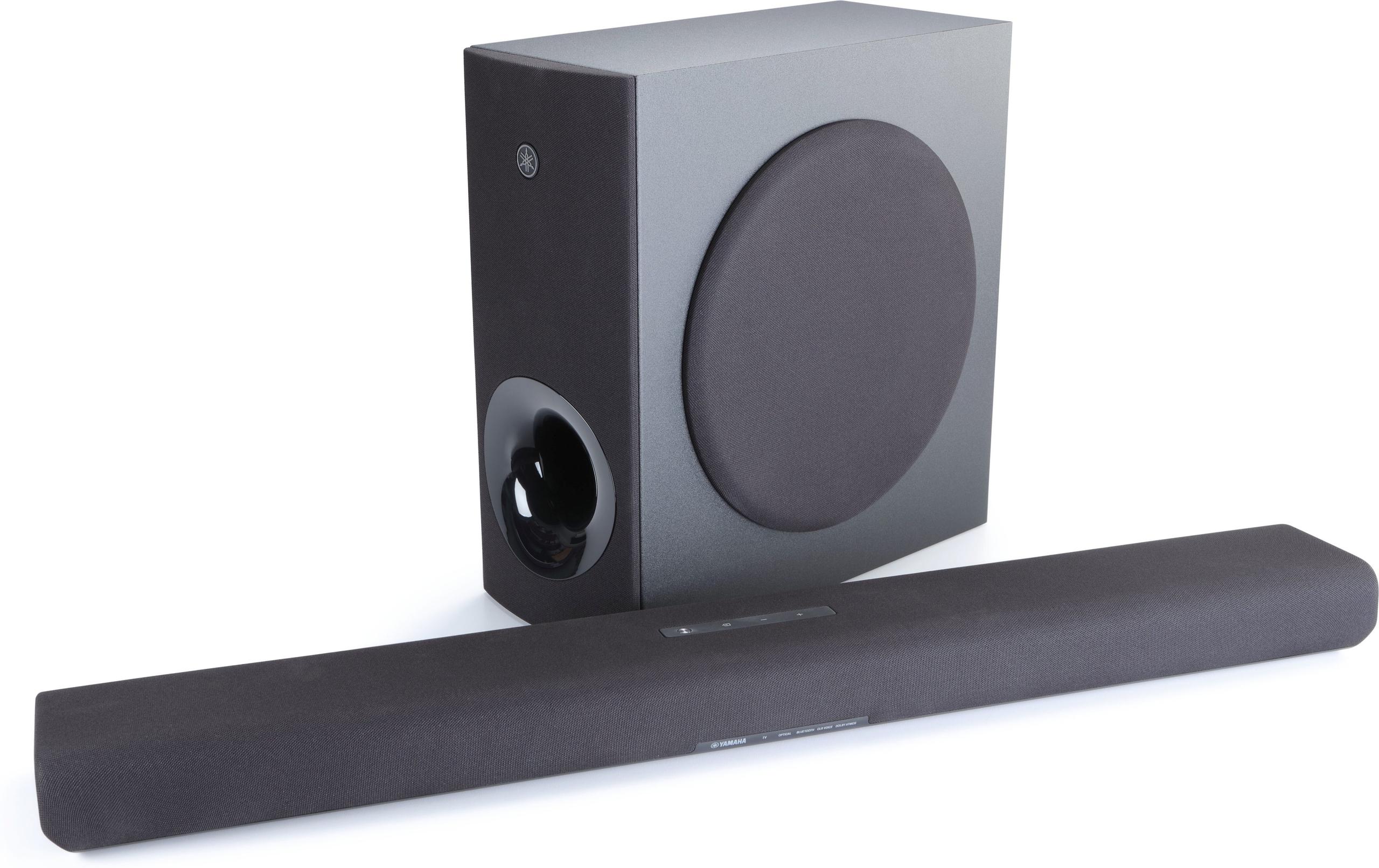
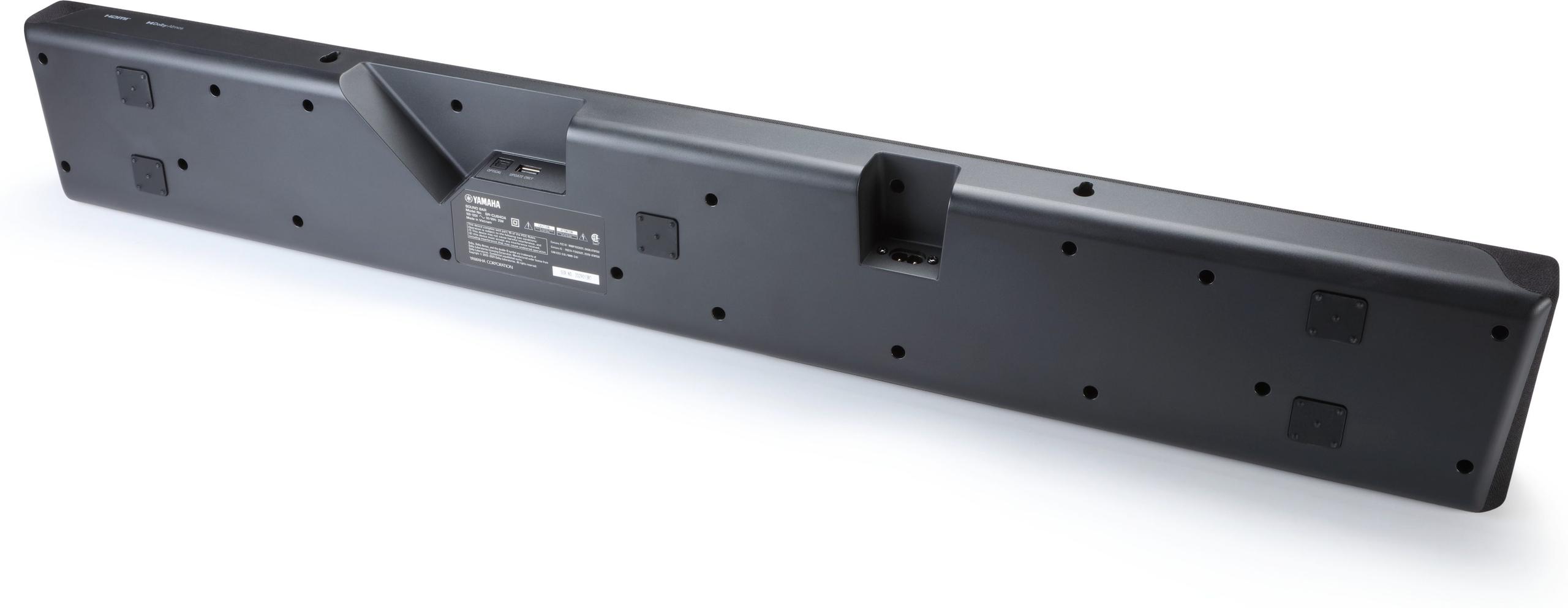
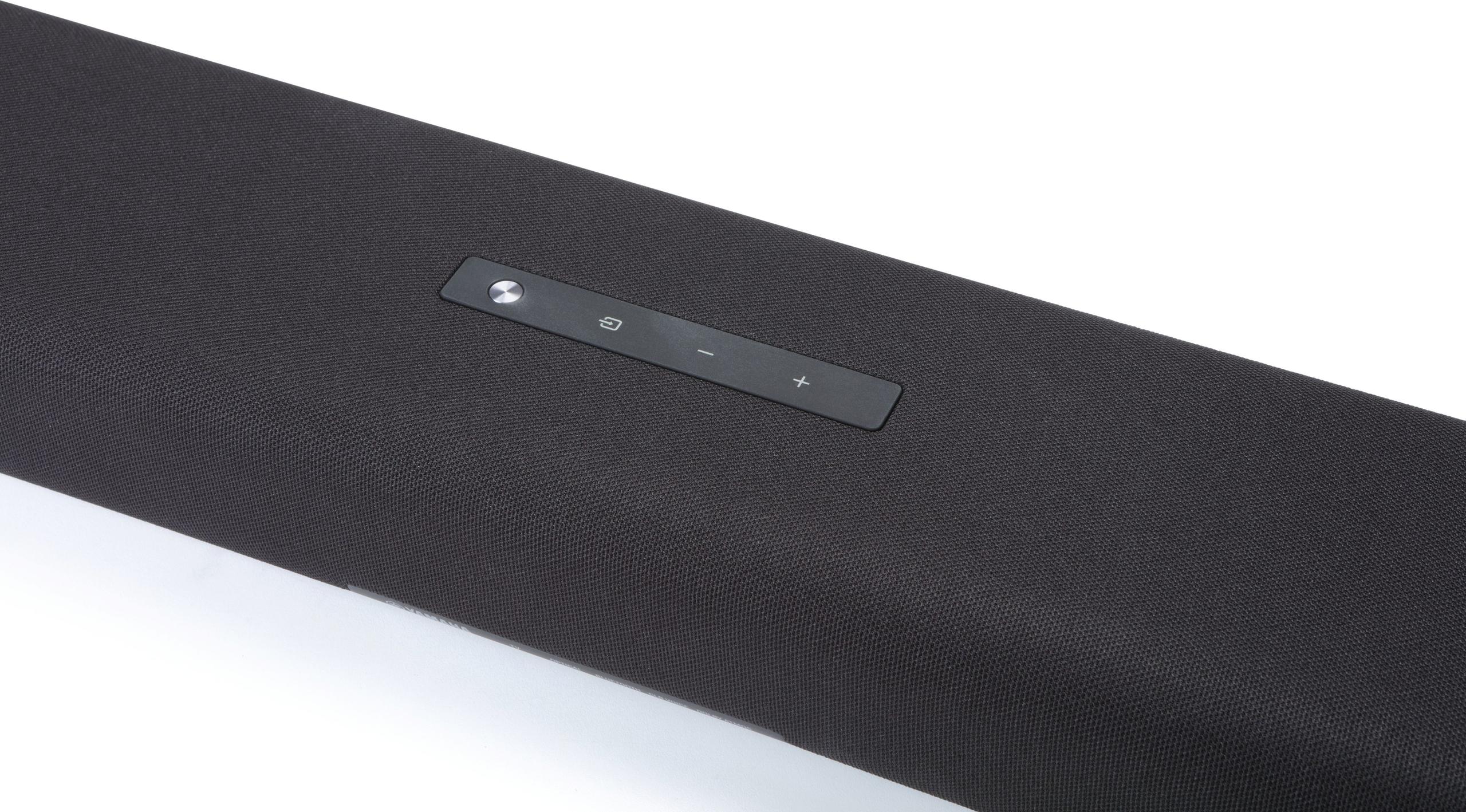
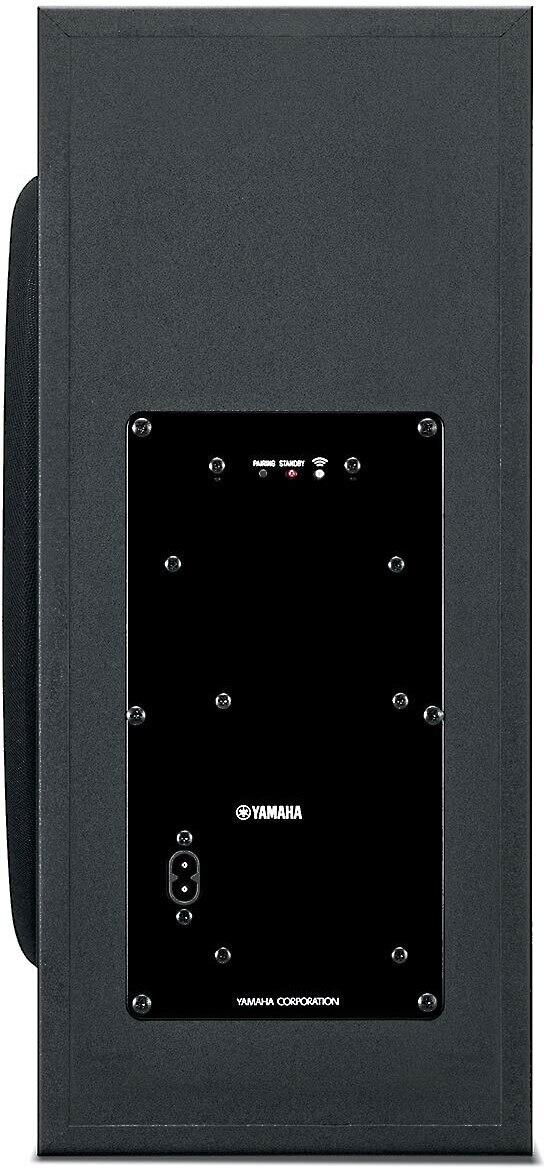
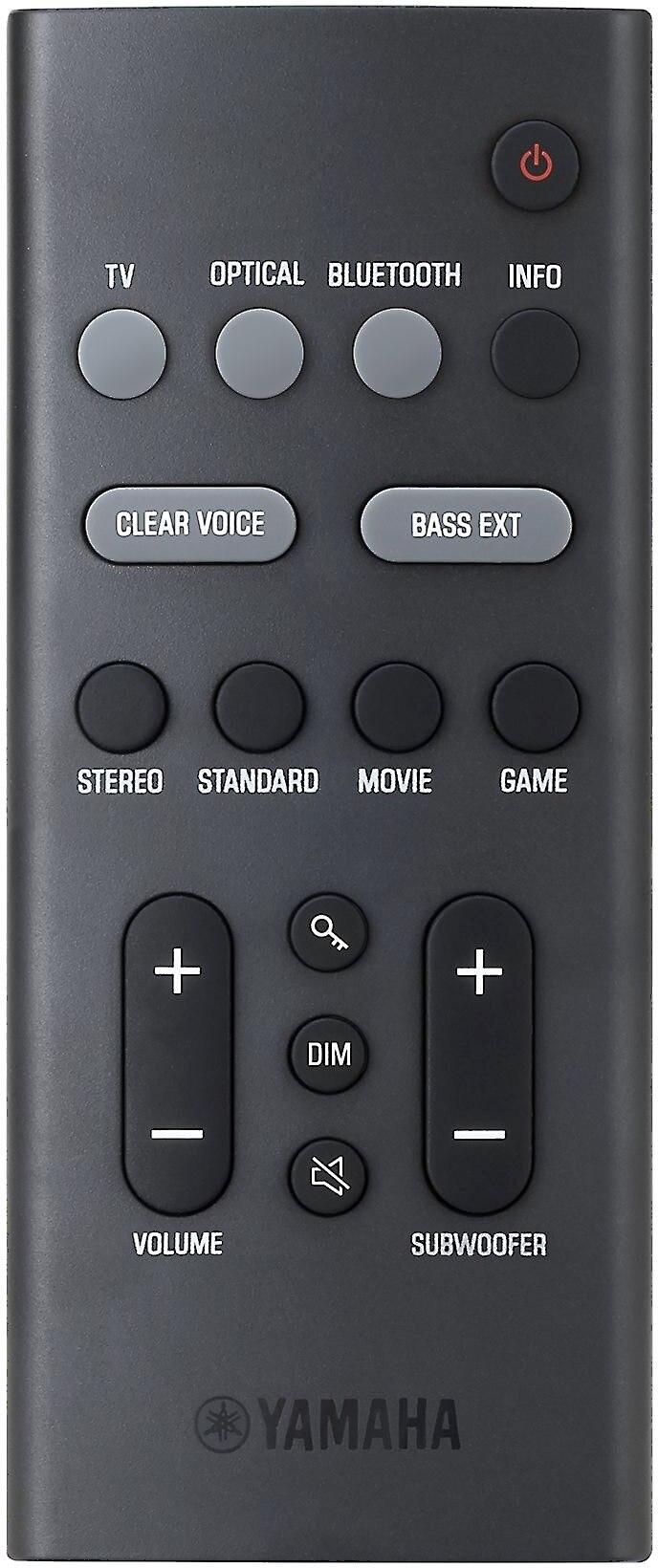
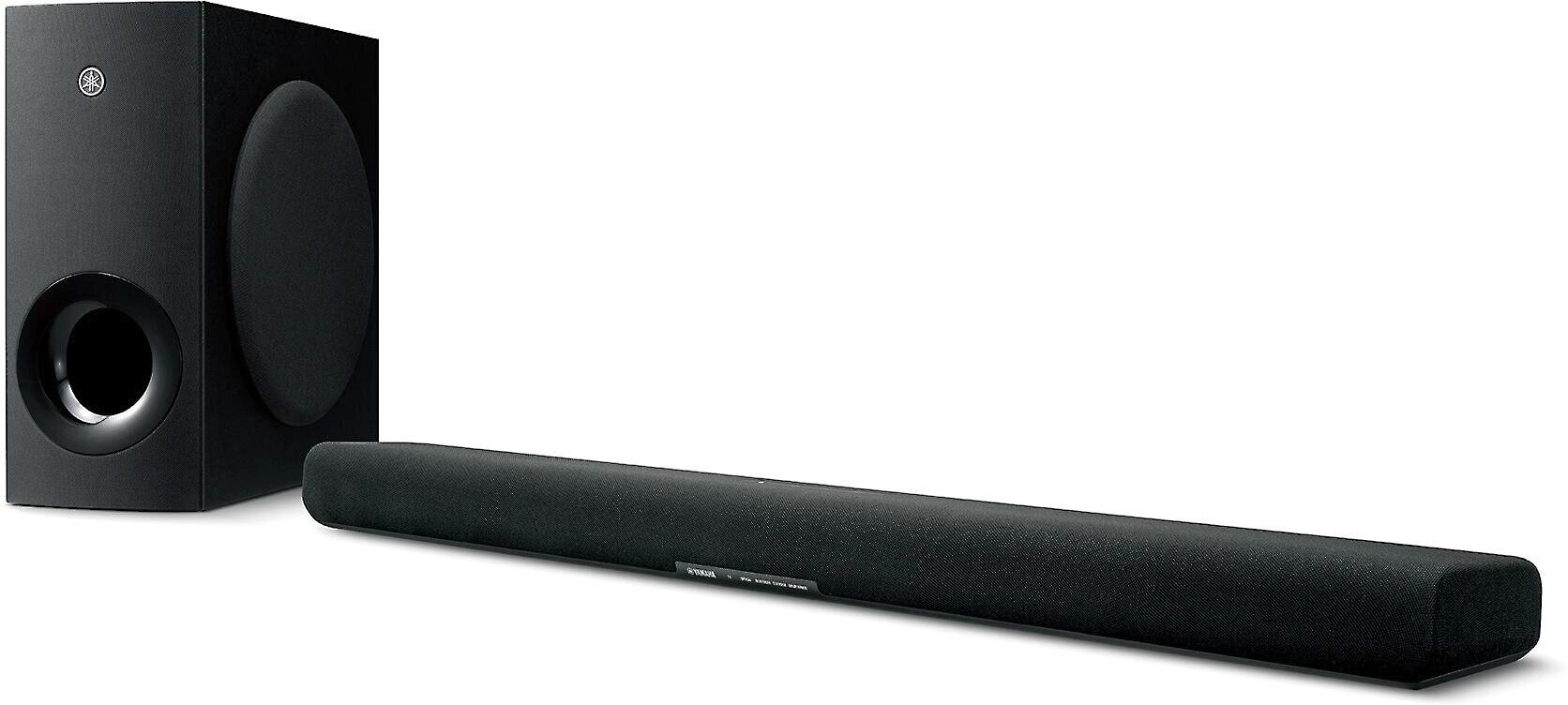
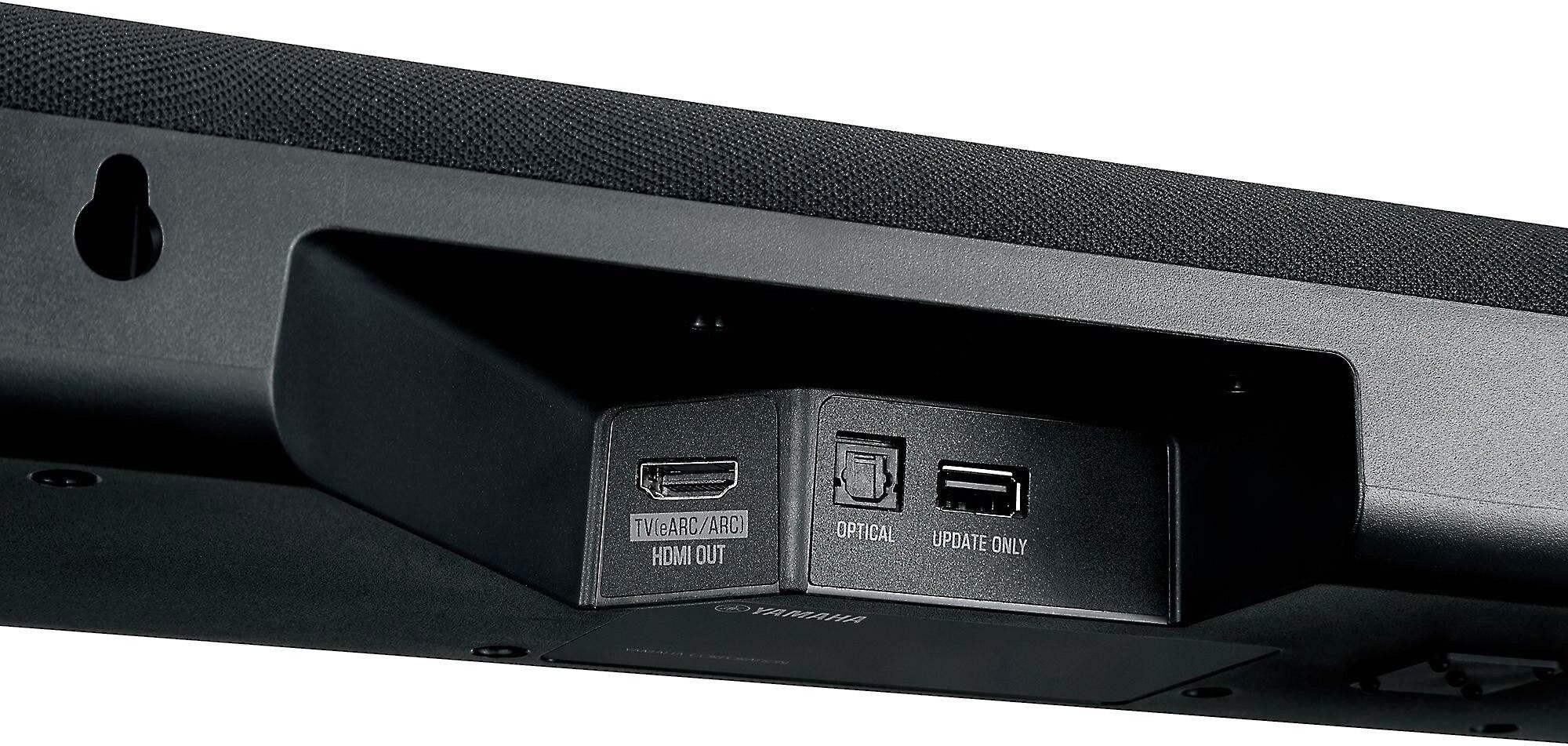
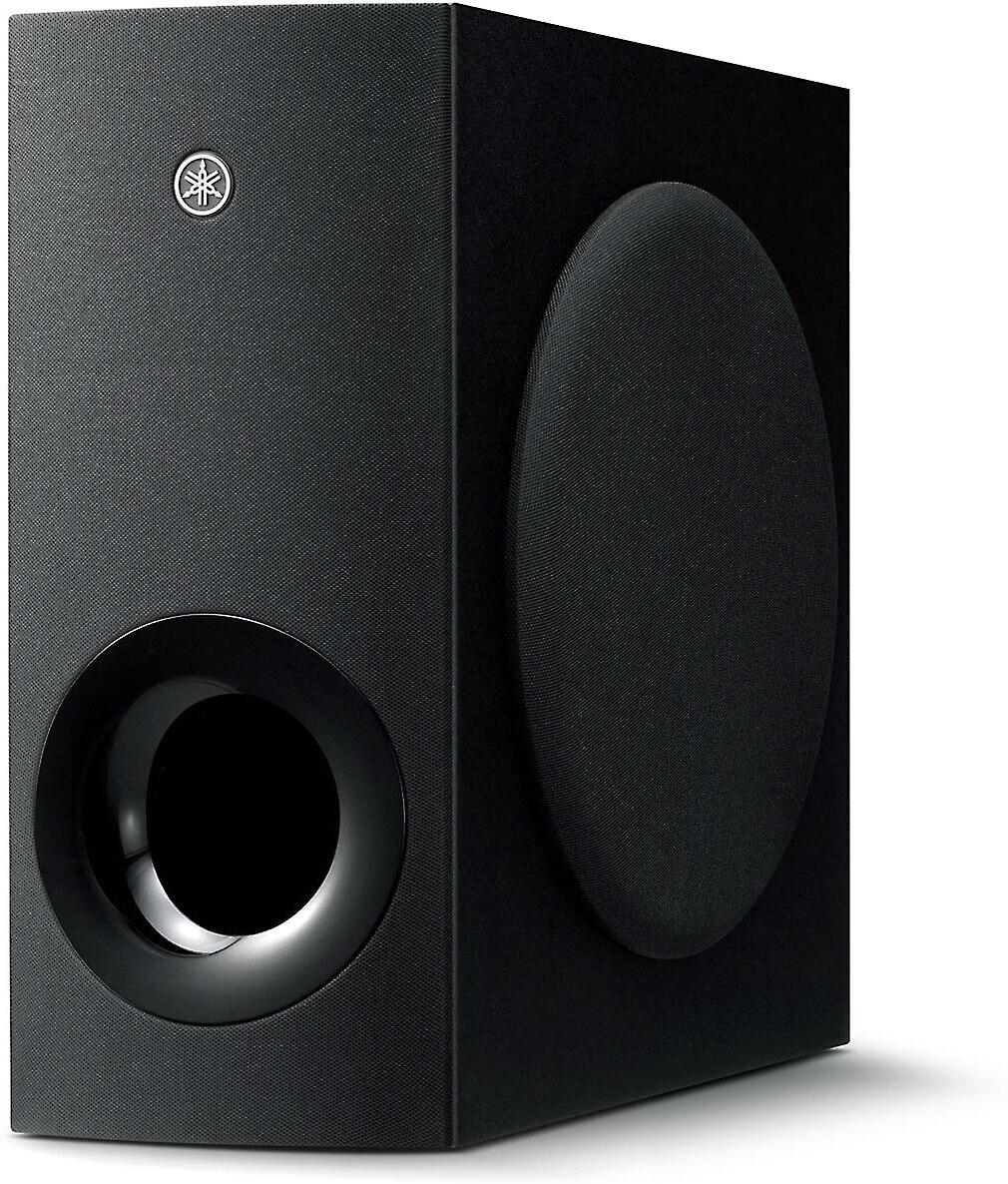
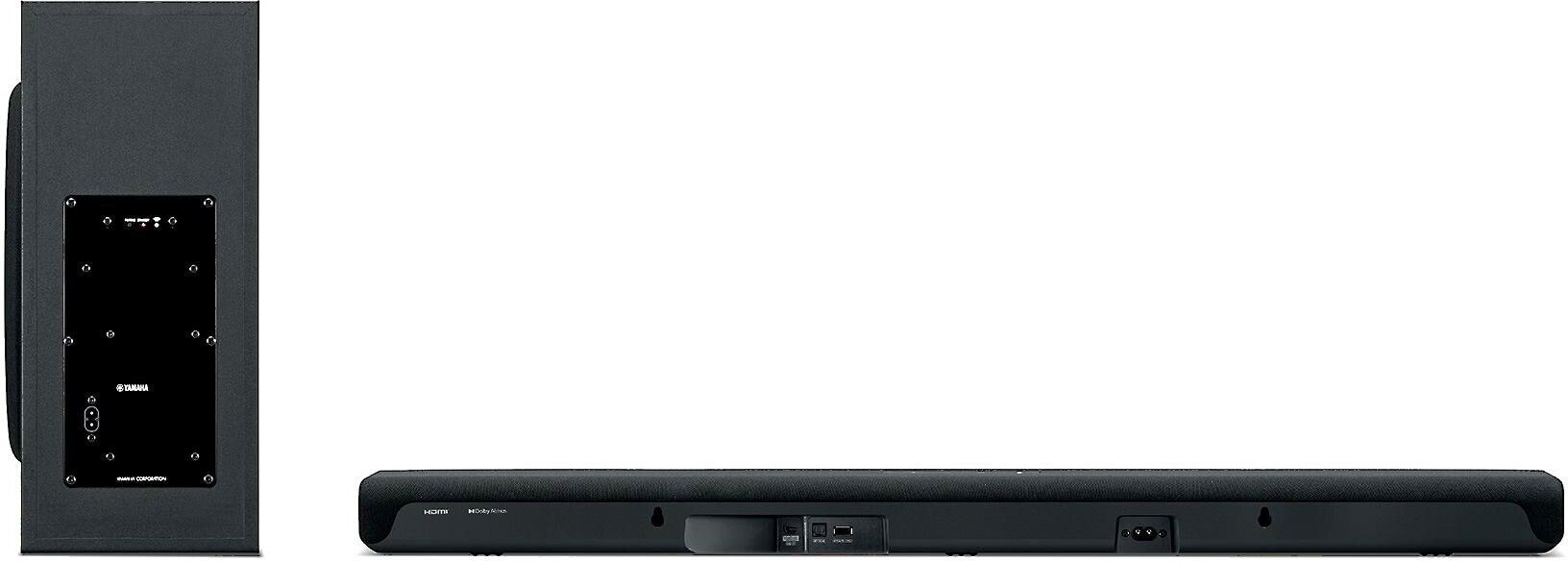
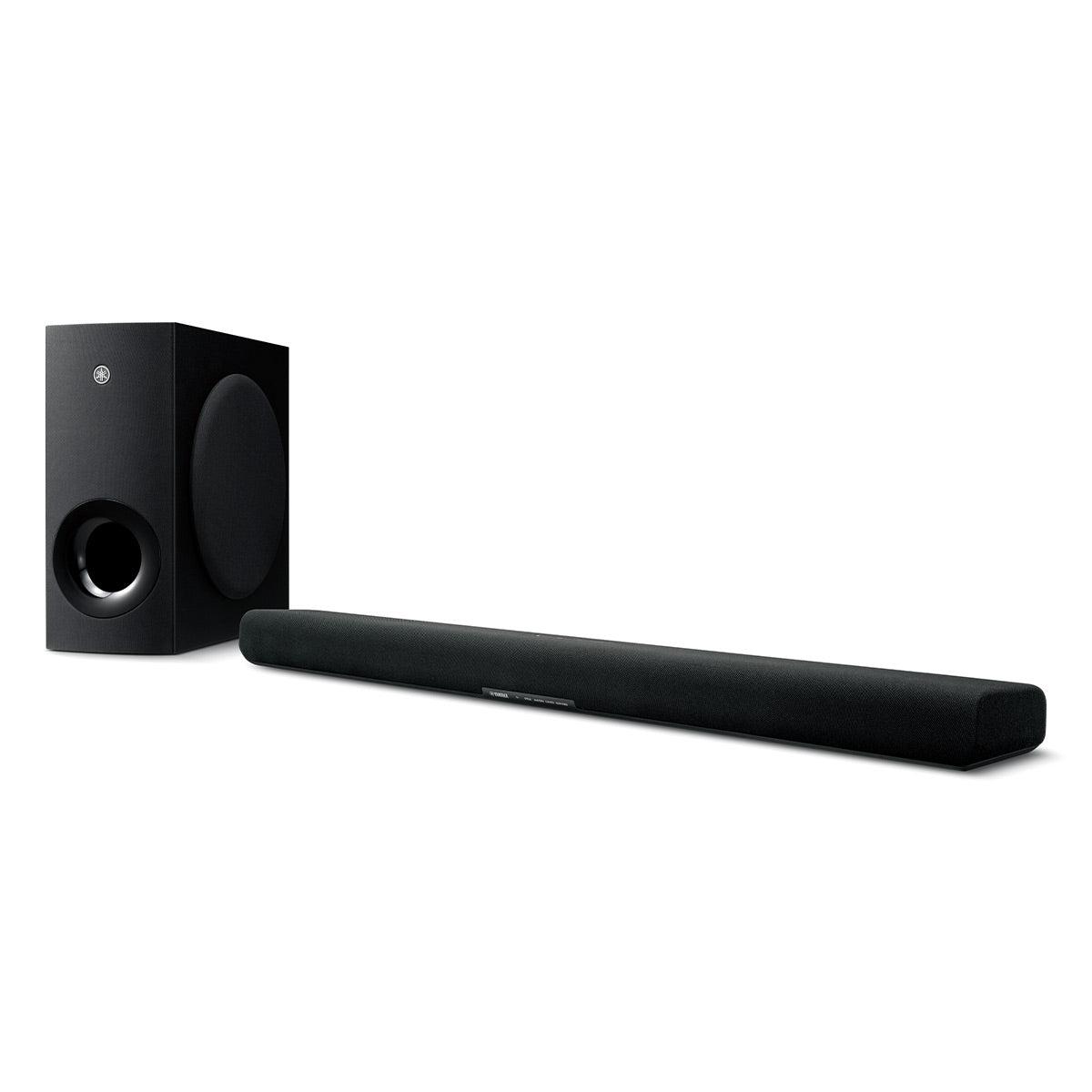
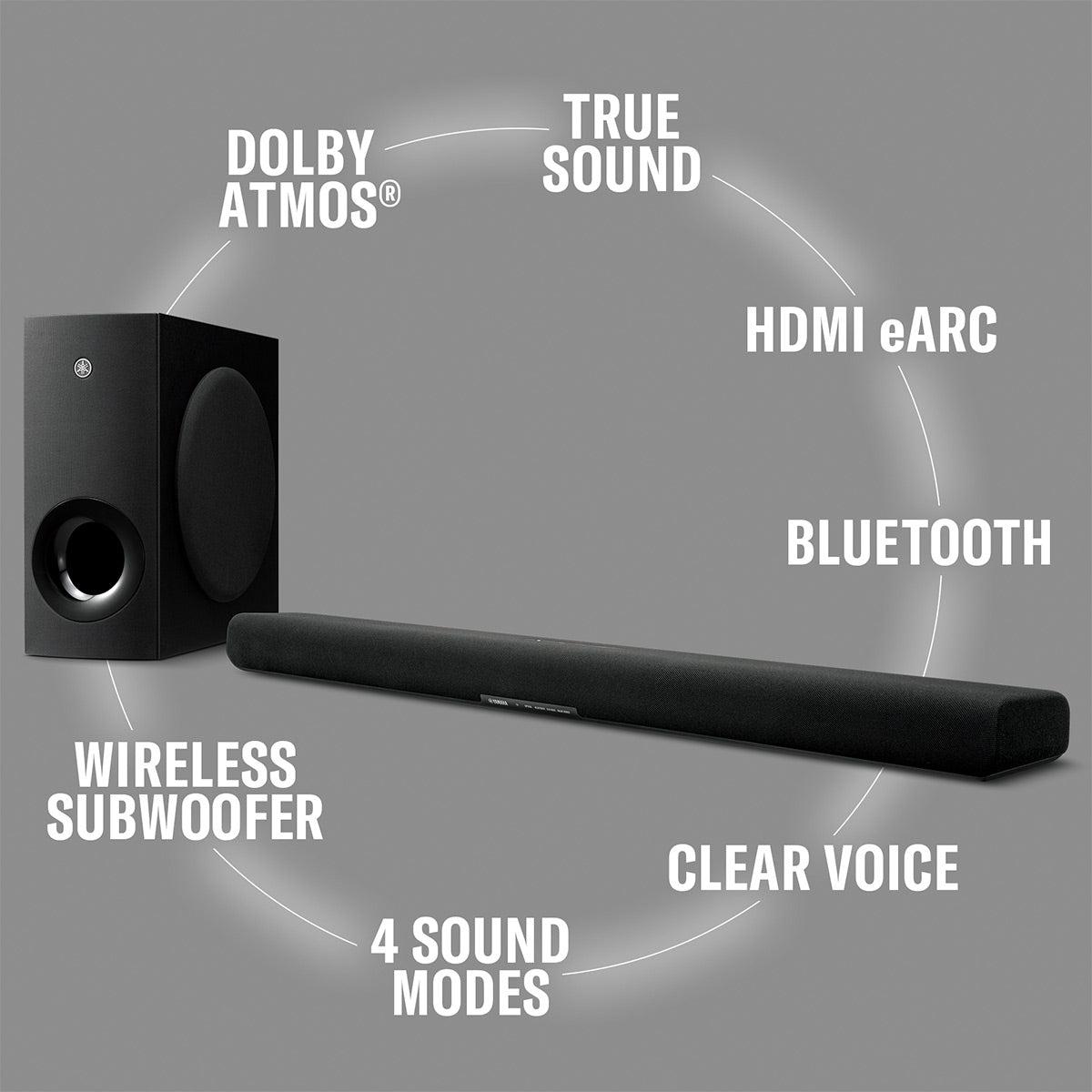
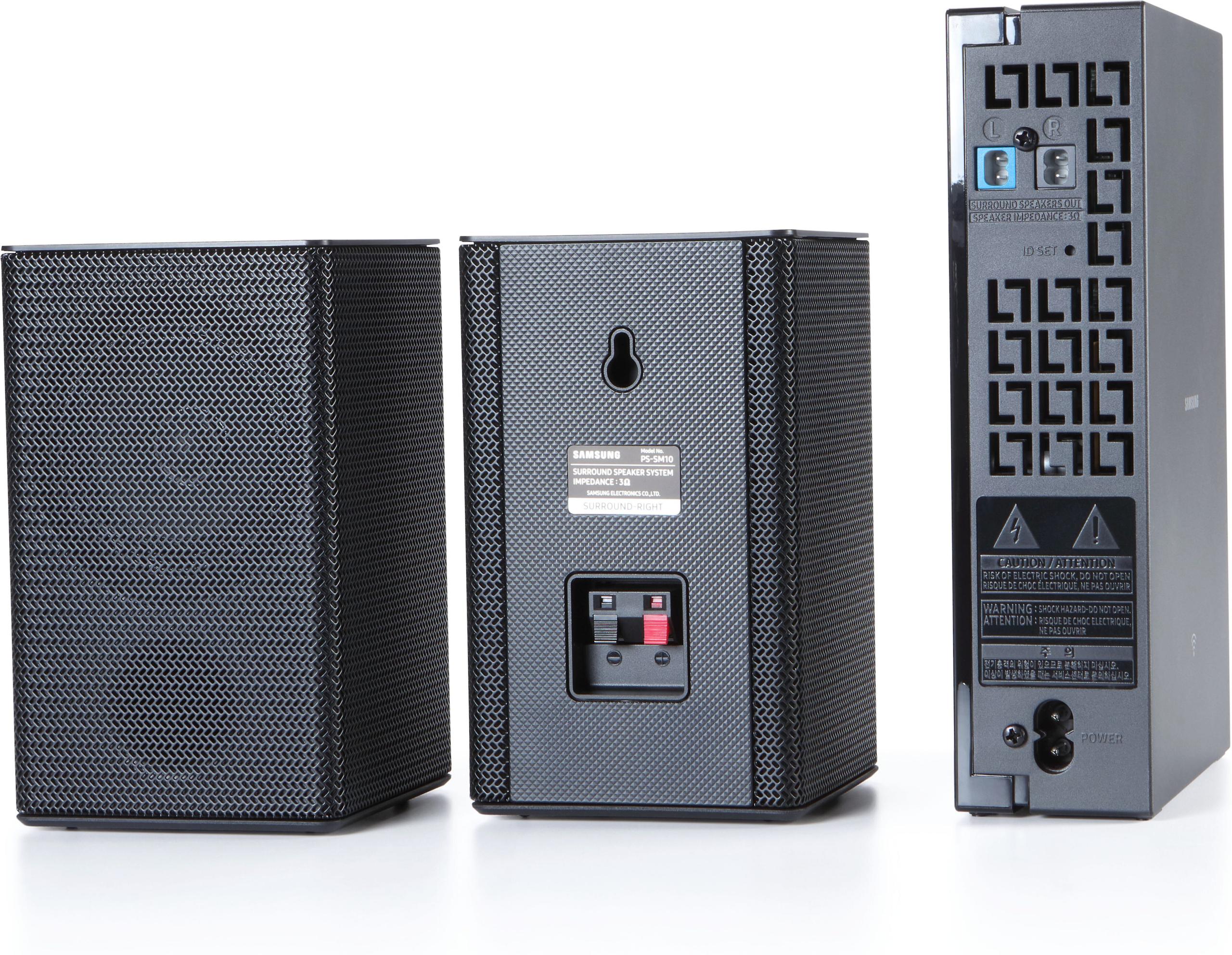
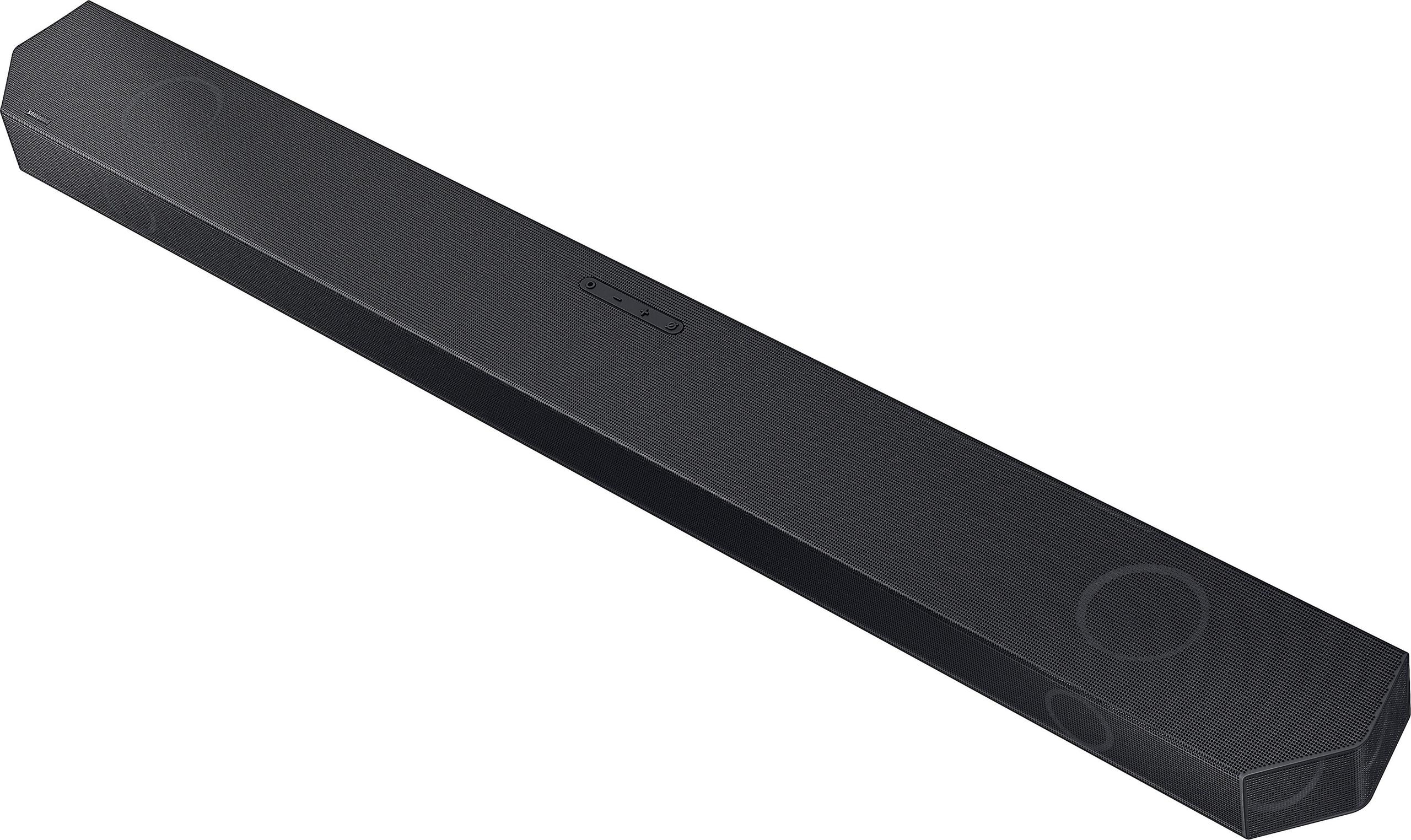

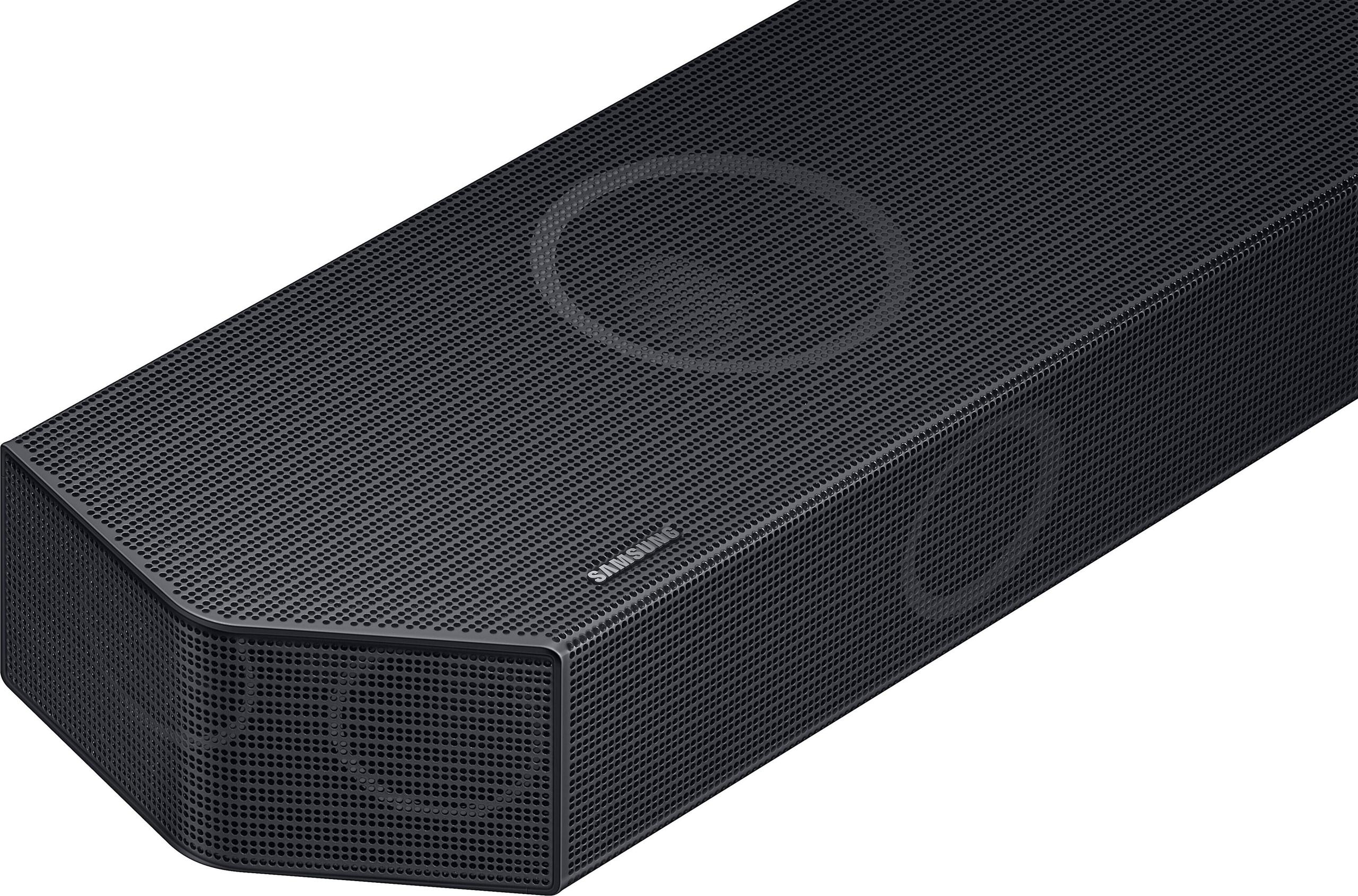




When your TV's built-in speakers just aren't cutting it anymore, a soundbar becomes the obvious next step. But walking into an electronics store or browsing online can feel overwhelming with dozens of options at wildly different price points. Today, we're comparing two soundbars that represent completely different approaches to home audio: the Yamaha SR-B40A 2.1-Channel Sound Bar ($339.95) and the Samsung Q Series 9.1.2 Channel Soundbar ($897.99).
These aren't just different models—they're fundamentally different philosophies about what a soundbar should do and how much you should pay for it. One focuses on delivering excellent value with straightforward performance, while the other aims to replace your entire home theater system with cutting-edge surround sound technology.
Before diving into the specifics, let's talk about what makes a soundbar worth your money. At its core, a soundbar should solve the biggest problem with modern TVs: terrible audio. As TVs got thinner, there was simply no room left for decent speakers. The result? Dialogue you can barely hear, explosions that sound like someone crumpling paper, and music that feels flat and lifeless.
A good soundbar addresses these issues by providing dedicated drivers (individual speakers) for different frequency ranges, more powerful amplification, and processing that enhances different types of content. The key considerations boil down to how many audio channels you get, how much power drives those channels, what kind of smart features are included, and whether the whole package fits your room and budget.
The channel count tells you how sophisticated the audio processing can be. A 2.1 system has left and right channels plus a subwoofer for bass (that's what the ".1" means). A 9.1.2 system has nine main channels, one subwoofer, and two height channels for overhead effects. More channels generally mean more immersive sound, but they also mean higher complexity and cost.
The Yamaha SR-B40A hit the market in late 2024, representing Yamaha's latest thinking on affordable audio enhancement. Yamaha has been in the audio business for over a century, and they've applied that experience to create what they call "True Sound" engineering—essentially, their approach to making audio sound natural and balanced rather than artificially enhanced.
The Samsung Q Series 9.1.2, specifically models like the HW-Q990F, represents Samsung's 2025 flagship approach to soundbars. Samsung entered the audio market more recently but has invested heavily in developing features that integrate seamlessly with their TV ecosystem. Their Q Series represents the pinnacle of that effort, with advanced room correction technology and processing power that would have been unimaginable in soundbars just five years ago.
The timing matters because both products incorporate relatively recent advances in audio processing. Dolby Atmos support, which creates the illusion of sound coming from above and around you, has become standard even in budget models. Wireless subwoofer connectivity, which eliminates the need to run cables across your room, is now reliable enough for everyday use. And smartphone apps for controlling and customizing your soundbar have evolved from gimmicky add-ons to genuinely useful tools.
This is where the biggest difference between these two soundbars becomes apparent. The Yamaha SR-B40A uses what's called "virtual" Dolby Atmos processing. Essentially, it takes regular stereo or surround sound and uses digital signal processing to simulate the effect of having speakers above and around you. It's clever technology, but it's still an illusion created by the two main drivers and two built-in subwoofers in the soundbar itself.
I've spent considerable time with virtual Atmos systems, and while they can create a wider soundstage than basic stereo, they can't truly replicate the experience of having discrete speakers positioned around your room. When you're watching a helicopter scene in a movie, you might hear the rotor sound spread wider than your TV, but you won't get that convincing sense of it actually moving overhead.
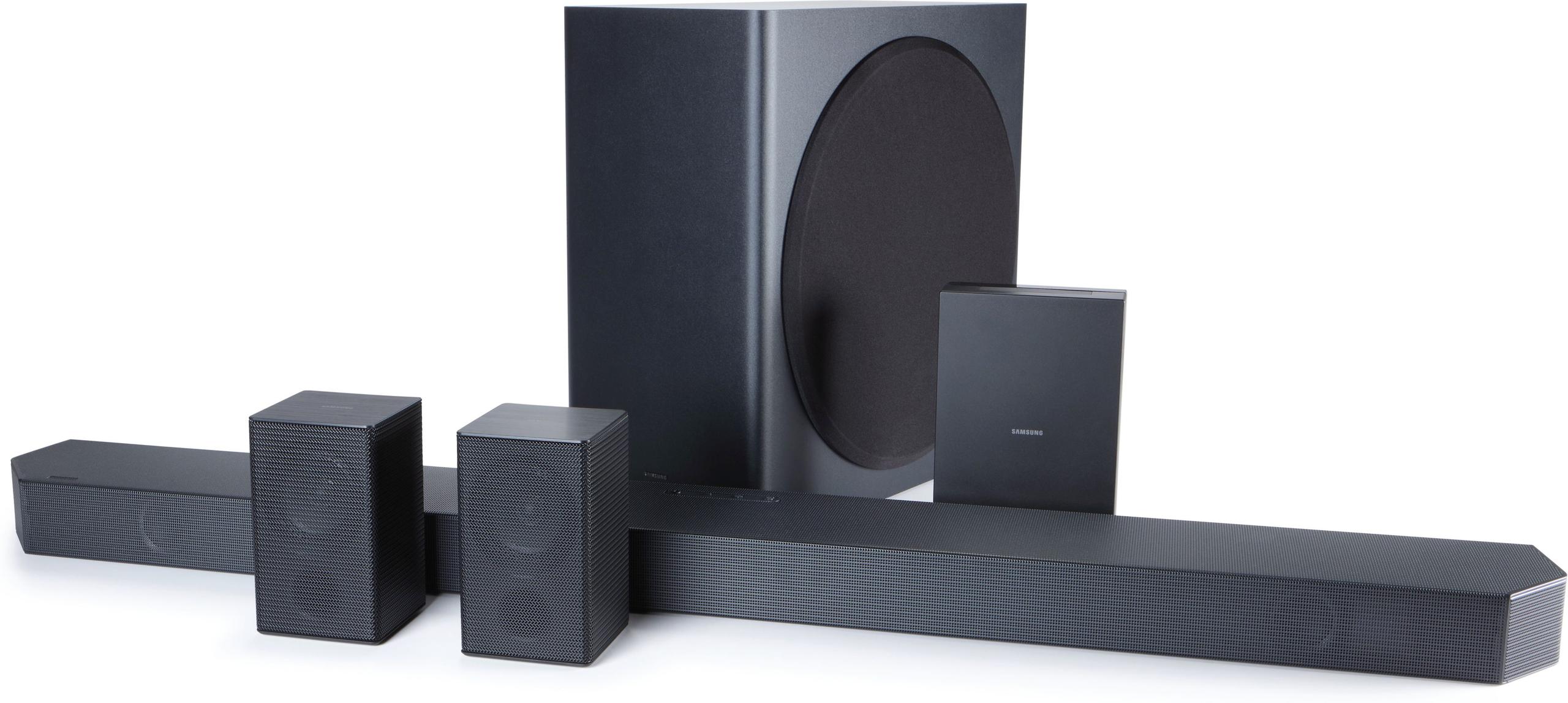
The Samsung Q Series takes a completely different approach with true 9.1.2 surround sound. This means it includes physical rear satellite speakers that you place behind your seating area, plus up-firing drivers in both the main soundbar and the satellites that bounce sound off your ceiling to create genuine overhead effects. The ".2" in 9.1.2 refers to these height channels, and they make a dramatic difference in creating immersion.
Having tested both approaches extensively, the difference is immediately noticeable in action movies and gaming. With the Samsung system, you genuinely feel surrounded by the audio environment. Explosions seem to happen in three-dimensional space around you, rain sounds like it's falling from above, and you can accurately pinpoint where sounds are coming from without looking at the screen.
However, this level of immersion comes with trade-offs. The Samsung system requires more careful placement and room setup to work properly. If your ceiling is too high, irregularly shaped, or made of materials that don't reflect sound well, the height effects won't work as intended. The rear satellites also need proper positioning, which isn't always practical in every living room layout.
Both soundbars include wireless subwoofers, but they approach bass reproduction differently. The Yamaha's 6.25-inch subwoofer focuses on integration and musicality. Yamaha has tuned this system to provide bass that supports the overall sound rather than dominating it. The Bass Extension feature, which you can toggle on or off, adds more low-frequency presence when you want extra impact for movies or electronic music.
In my experience, the Yamaha's bass approach works particularly well for mixed content. Whether you're watching the news, streaming music, or watching a blockbuster movie, the bass feels proportionate and natural. It's not going to rattle your windows, but it provides the foundation that most TV content needs.
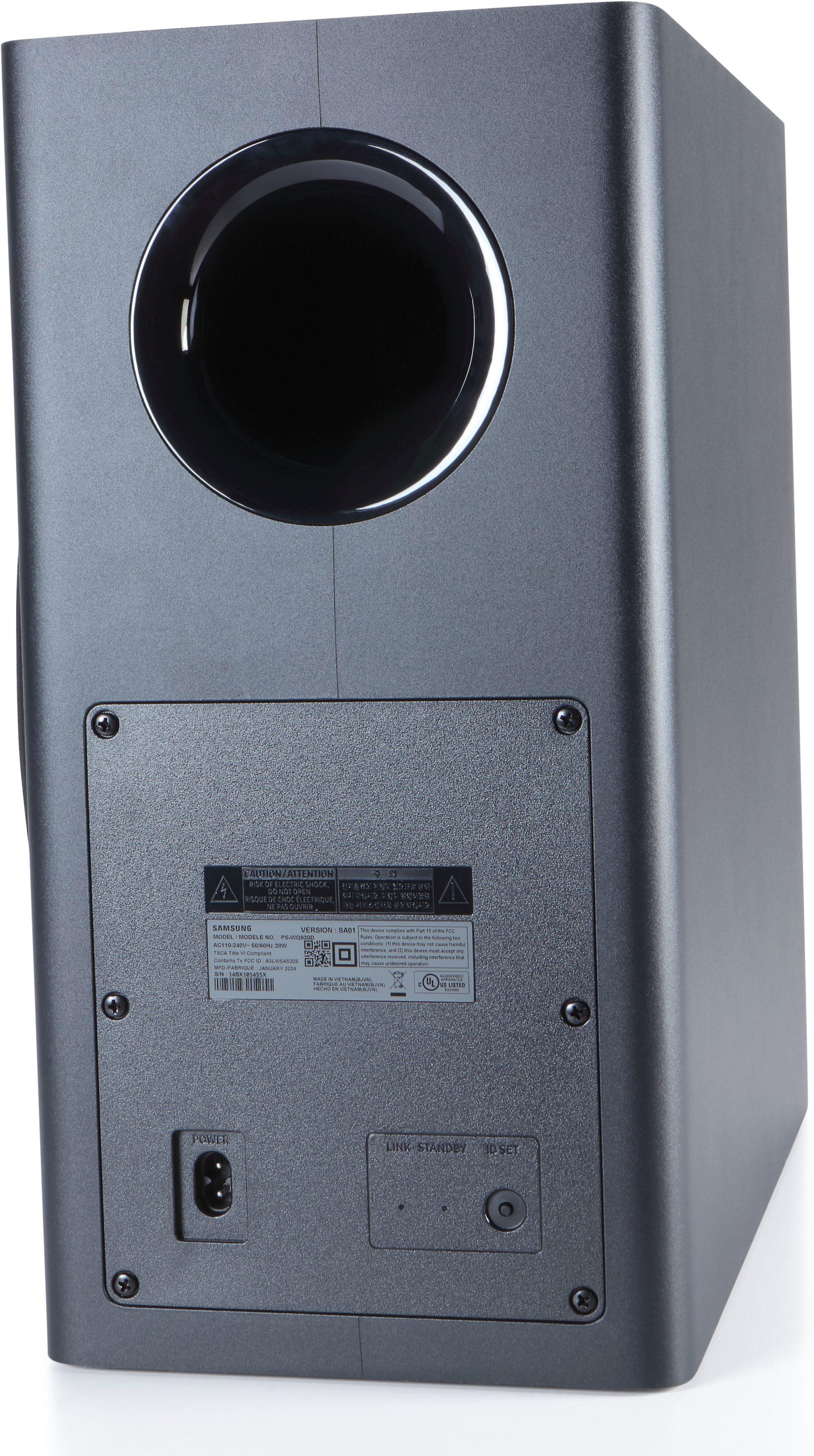
The Samsung's larger 8-inch subwoofer brings more raw power and deeper extension. More importantly, it includes Auto Sub EQ technology, which uses a microphone built into the subwoofer to measure how bass sounds in your specific room. It then automatically adjusts the output to compensate for room acoustics—a feature that was exclusive to high-end professional audio systems just a few years ago.
This room correction makes a significant difference in real-world performance. Every room has acoustic characteristics that affect how bass sounds. A room with hardwood floors and minimal furniture will sound dramatically different from one with carpet and lots of soft furnishings. The Samsung system adapts to these differences automatically, while the Yamaha requires you to manually adjust settings if the bass doesn't sound right in your space.
Clear dialogue is arguably the most important feature for everyday TV watching, and both soundbars take this seriously. The Yamaha includes Clear Voice technology, which analyzes audio in real-time to identify and boost human speech frequencies. This feature has been refined significantly in recent Yamaha models, and it works particularly well for news, sports commentary, and dialogue-heavy dramas.
The Samsung takes a more sophisticated approach with its Active Voice Amplifier (AVA) technology. Instead of simply boosting certain frequencies, AVA dynamically adjusts voice levels based on the surrounding audio mix. If there's a loud explosion followed by quiet dialogue, the system automatically increases voice clarity for that scene without making everything louder.
Having used both systems extensively, I find the Samsung's approach more effective for complex audio mixes like action movies, where dialogue often competes with sound effects and music. However, the Yamaha's simpler approach works excellently for straightforward content and feels more natural for music listening.
Yamaha's century-plus experience in musical instruments and audio equipment really shows when playing music through the SR-B40A. The company's "True Sound" philosophy prioritizes accurate reproduction over flashy effects. When streaming music via Bluetooth or playing content from music-focused apps, the Yamaha presents a balanced, natural sound that doesn't artificially enhance certain frequencies.
The stereo imaging—how well you can distinguish left and right channel information—is particularly impressive for a soundbar in this price range. Jazz recordings sound spacious, rock music has good separation between instruments, and classical music maintains the dynamic range that makes orchestral pieces engaging.
The Samsung Q Series brings more raw capability to music reproduction, with wider frequency response and more powerful amplification. However, its strength lies more in processing and enhancement than in pure musical accuracy. The multiple sound modes can optimize different music genres, and the higher-resolution codec support means audiophile-quality streaming services will sound their best.
Where the Samsung really excels is with music that benefits from surround processing. Concert videos, live albums, and music mixed specifically for surround sound can sound spectacular through the full 9.1.2 system. But for traditional stereo music, the Yamaha's more focused approach often sounds more natural and engaging.
The Yamaha SR-B40A at $339.95 represents exceptional value in the soundbar market. For less than $350, you get a complete system with wireless subwoofer, Dolby Atmos processing, and Yamaha's refined audio engineering. When you consider that decent bookshelf speakers alone can cost this much, the SR-B40A provides remarkable performance per dollar.
This value proposition becomes even more compelling when you factor in what's included. Many budget soundbars skip the wireless subwoofer to hit a lower price point, but bass extension is crucial for movie enjoyment and overall audio satisfaction. The Yamaha includes this from the start, eliminating the need for future upgrades.
The Samsung Q Series at $897.99 operates in a completely different value category. At nearly $900, it's competing with traditional home theater systems and high-end audio equipment. However, when you break down what's included—the main soundbar, wireless subwoofer, rear satellite speakers, and advanced processing—the pricing becomes more reasonable.
Consider that a comparable traditional surround sound system would require a receiver ($300-500), five speakers ($400-600), and a subwoofer ($200-400), plus all the cables and complexity of setup. The Samsung system delivers similar or better performance in a package that most people can set up in an afternoon.
The Yamaha SR-B40A shines in smaller spaces where its 320W of total power can adequately fill the room without overwhelming neighbors. In my testing in a 12x15 foot living room, the system provided excellent coverage and never felt underpowered. The wireless subwoofer's compact size makes it easy to place without dominating the room's aesthetics.
For apartment dwellers, the Yamaha's more restrained bass output can actually be an advantage. You can enjoy enhanced audio for movies and music without generating complaints from neighbors. The Clear Voice feature is particularly useful in these settings, where you might need to keep overall volume lower during evening viewing.
The Samsung Q Series really comes into its own in larger spaces. In rooms over 300 square feet, the additional power and multiple speakers become essential for maintaining audio quality throughout the space. The rear satellites ensure that everyone in the room gets proper surround sound, not just those sitting directly in front of the TV.
I've tested the Samsung system in a basement home theater setup, and the difference compared to smaller soundbars is dramatic. The system can maintain clean, detailed audio even at high volumes, and the overhead effects work properly with standard 8-9 foot ceilings. The SpaceFit Sound Pro calibration automatically adjusts for the room's acoustics, something that becomes increasingly important in larger or irregularly shaped spaces.
Both soundbars offer benefits for gaming, but they excel in different areas. The Yamaha's lower latency processing means less delay between on-screen action and audio, which can be crucial for competitive gaming where audio cues matter for gameplay.
The Samsung's Game Mode Pro provides more sophisticated directional audio processing. In first-person shooters or battle royale games, you can more accurately pinpoint enemy positions based on footsteps and weapon sounds. The rear satellites create genuine 360-degree audio awareness that can provide a competitive advantage.
For console gaming specifically, the Samsung's HDMI eARC connection supports higher-bandwidth audio formats that newer gaming systems can output. This means you'll get the full benefit of advanced game audio design, particularly in single-player games that emphasize atmospheric audio.
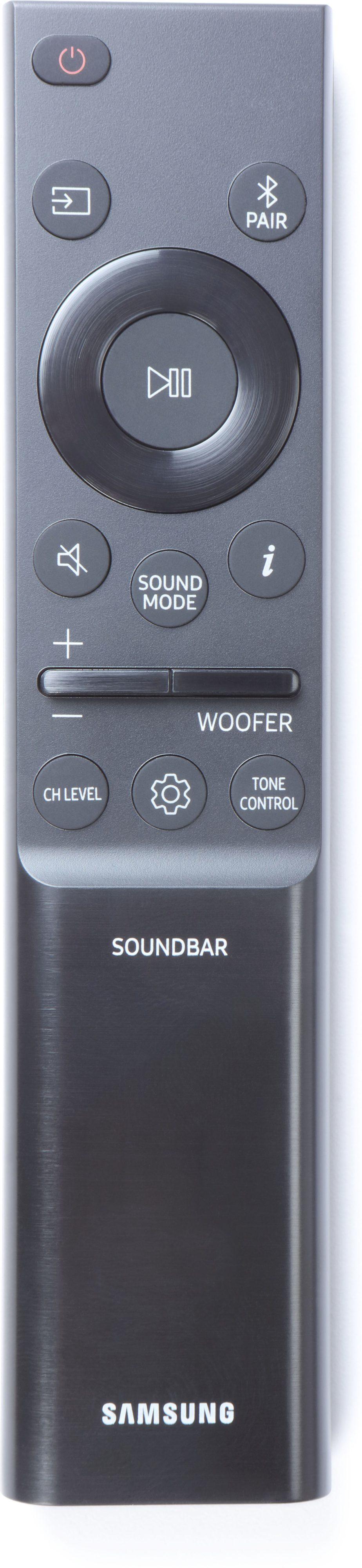
The Yamaha SR-B40A keeps smart features relatively simple, focusing on core functionality rather than ecosystem integration. The Sound Bar Remote app provides access to EQ settings, sound modes, and feature toggles, but it's designed more as a convenient remote replacement than a comprehensive control system.
This simplicity can actually be an advantage for users who want their audio system to just work without requiring ongoing management or updates. The Yamaha connects to your TV via HDMI eARC, and from there, most functions can be controlled using your TV's remote.
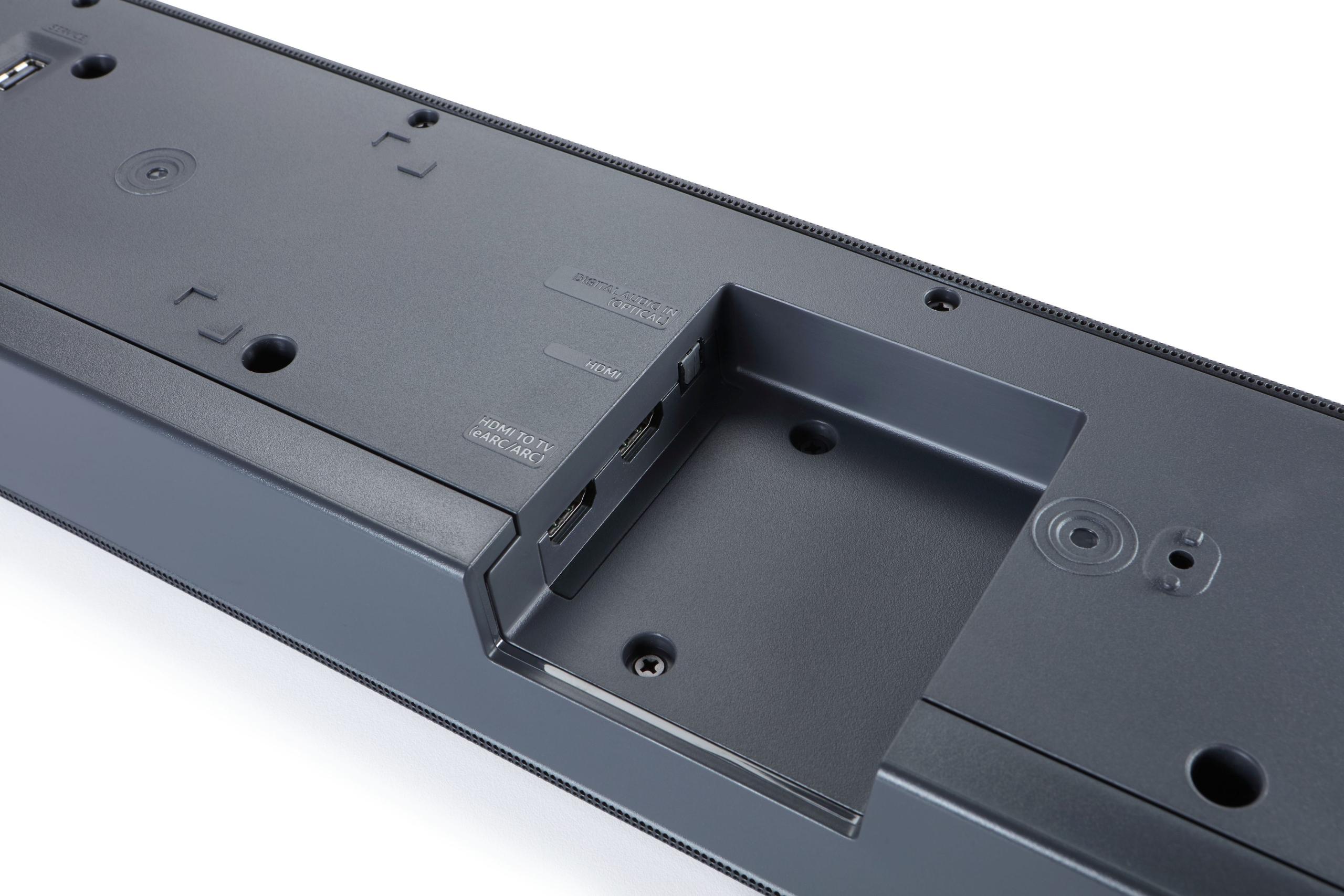
The Samsung Q Series embraces smart home integration much more extensively. Beyond the core audio controls, it connects to Samsung's SmartThings ecosystem, supports multiple voice assistants, and can integrate with compatible Samsung TVs for Q-Symphony functionality. Q-Symphony allows the soundbar and TV speakers to work together, creating an even more immersive audio experience.
For Samsung TV owners, this integration provides seamless operation where the TV and soundbar function as a unified system. Audio settings, power management, and source switching all happen automatically. However, these advanced features can also introduce complexity that some users find overwhelming.
Both soundbars represent significant advances over previous generations, but they're evolving in different directions. The Yamaha SR-B40A incorporates Yamaha's latest DSP (Digital Signal Processing) algorithms, which provide more accurate virtual surround effects than earlier models. The Bluetooth 5.1 implementation offers improved range and stability compared to older Bluetooth versions.
The Samsung Q Series showcases more dramatic technological advancement, particularly in room correction and adaptive processing. The SpaceFit Sound Pro system represents technology that was exclusive to professional audio installations just a few years ago. The ability to automatically measure and compensate for room acoustics was previously a manual process requiring expensive measurement equipment and expertise.
Looking forward, both approaches have merit. Yamaha's focus on core audio quality and simplicity appeals to users who want long-term reliability without complexity. Samsung's embrace of smart features and adaptive technology positions their products for integration with evolving home automation and streaming technology.
Choosing between the Yamaha SR-B40A and Samsung Q Series 9.1.2 ultimately depends on matching your specific needs with each product's strengths.
The Yamaha SR-B40A makes the most sense if you're looking for the best possible audio improvement for under $350. It's ideal for smaller to medium-sized rooms, users who prioritize simplicity, and anyone who wants excellent music performance alongside decent movie audio. If you're upgrading from TV speakers and want something that just works well without complexity, the Yamaha delivers exceptional value.
The Samsung Q Series justifies its higher price point if you want genuine home theater immersion, have a large room that needs powerful audio coverage, or are building a smart home ecosystem around Samsung products. It's the better choice for serious movie watching, gaming, and situations where the additional features and processing power provide tangible benefits.
Consider the Yamaha if your primary viewing is TV shows, news, sports, and music, with occasional movie watching. Choose the Samsung if movies, gaming, and immersive audio experiences are priorities, and you're willing to invest in the full home theater experience.
Both represent excellent products in their respective categories, but they serve fundamentally different needs and budgets. The key is being honest about how you'll actually use the system and what level of audio performance will genuinely enhance your daily entertainment experience.
| Yamaha SR-B40A 2.1-Channel Sound Bar ($339.95) | Samsung Q Series 9.1.2 Channel Soundbar ($897.99) |
|---|---|
| Price - Entry point determines your expectations | |
| $339.95 (exceptional value for the features included) | $897.99 (premium pricing for flagship features) |
| Audio Channels - More channels = better surround immersion | |
| 2.1 channels (stereo + subwoofer, suitable for most rooms) | 9.1.2 channels (true surround with height effects, theater-like experience) |
| Power Output - Determines how loud and clear it gets | |
| 320W total (perfect for small to medium rooms) | 360W+ (fills large spaces without distortion) |
| Dolby Atmos Support - Creates overhead sound effects | |
| Virtual Atmos (simulated height effects using processing) | True Atmos with physical up-firing speakers (genuine 3D audio) |
| Subwoofer Size - Bigger drivers = deeper bass | |
| 6.25" wireless subwoofer (tight, musical bass) | 8" wireless subwoofer (deeper extension, more impact) |
| Room Correction - Automatically optimizes sound for your space | |
| Manual tone controls via app | SpaceFit Sound Pro with automatic room calibration |
| Rear Speakers - Essential for true surround sound | |
| None included (all sound comes from front soundbar) | Wireless rear satellites included (360-degree audio coverage) |
| Smart Features - Integration with other devices | |
| Basic app control, HDMI eARC, Bluetooth 5.1 | SmartThings integration, Q-Symphony, Wi-Fi, advanced codecs |
| Setup Complexity - How much effort to get it working well | |
| Plug-and-play simplicity (minimal configuration needed) | Requires speaker placement and room calibration for best results |
| Best Use Cases - Where each product excels | |
| TV watching, music, small apartments, budget-conscious buyers | Home theater, gaming, large rooms, Samsung TV owners |
The Yamaha SR-B40A ($339.95) provides exceptional value at its price point, delivering quality audio enhancement with a wireless subwoofer for under $350. The Samsung Q Series 9.1.2 ($897.99) costs significantly more but includes rear satellite speakers, advanced room correction, and true Dolby Atmos processing that justifies the premium for serious home theater setups.
The Yamaha SR-B40A uses 2.1 channels (left, right, and subwoofer) which works well for most TV watching and music. The Samsung Q Series features 9.1.2 channels with dedicated center, surround, rear, and height speakers that create genuine three-dimensional audio for an immersive home theater experience.
The Yamaha SR-B40A is ideal for small to medium rooms due to its compact size, appropriate power output, and wireless subwoofer that won't overwhelm tight spaces. The Samsung Q Series is designed for larger rooms and may provide more power and features than necessary in smaller spaces.
Yes, but differently. The Yamaha SR-B40A uses virtual Dolby Atmos processing to simulate overhead effects through its main speakers. The Samsung Q Series 9.1.2 delivers true Dolby Atmos with physical up-firing speakers that bounce sound off your ceiling for genuine height effects.
The Samsung Q Series features a larger 8-inch subwoofer with deeper bass extension and Auto Sub EQ technology that automatically optimizes low frequencies for your room. The Yamaha SR-B40A includes a 6.25-inch subwoofer that provides well-integrated, musical bass that's excellent for its price range.
No, only the Samsung Q Series 9.1.2 includes wireless rear satellite speakers for true surround sound. The Yamaha SR-B40A is a front-facing soundbar system without rear speakers, relying on audio processing to create a wider soundstage.
The Yamaha SR-B40A offers plug-and-play simplicity with minimal setup requirements - just connect to your TV and pair the wireless subwoofer. The Samsung Q Series requires more setup time for optimal performance, including rear speaker placement and room calibration.
For casual gaming, the Yamaha SR-B40A provides low-latency audio that's responsive to on-screen action. The Samsung Q Series 9.1.2 excels for serious gaming with Game Mode Pro that enhances directional audio, helping you pinpoint enemy positions in competitive games.
The Yamaha SR-B40A leverages Yamaha's audio heritage to deliver excellent music reproduction with balanced, natural sound quality. The Samsung Q Series offers more powerful music playback with wider frequency response, though it's optimized more for movies than pure music listening.
The Samsung Q Series 9.1.2 includes advanced smart features like SmartThings integration, Q-Symphony with Samsung TVs, Wi-Fi connectivity, and voice assistant support. The Yamaha SR-B40A keeps smart features simple with basic app control and reliable Bluetooth connectivity.
Yes, both excel at dialogue enhancement. The Yamaha SR-B40A features Clear Voice technology that specifically boosts speech frequencies for better dialogue intelligibility. The Samsung Q Series uses Active Voice Amplifier (AVA) technology that dynamically adjusts voice levels based on surrounding audio.
Choose the Samsung Q Series 9.1.2 ($897.99) if you want genuine home theater immersion with true surround sound, have a large room, and prioritize movie watching. Select the Yamaha SR-B40A ($339.95) if you want significant audio improvement over TV speakers at an affordable price point for general entertainment use.
We've done our best to create useful and informative comparisons to help you decide what product to buy. Our research uses advanced automated methods to create this comparison and perfection is not possible - please contact us for corrections or questions. These are the sites we've researched in the creation of this article: crutchfield.com - visions.ca - shop.usa.yamaha.com - bestbuy.com - bestbuy.com - usa.yamaha.com - my.yamaha.com - europe.yamaha.com - adorama.com - usa.yamaha.com - digitalhomecreations.com - europe.yamaha.com - sundownone.com - rtings.com - samsung.com - markselectrical.co.uk - techradar.com - walmart.com - samsung.com - samsung.com - youtube.com - samsung.com - biancos.com - crutchfield.com - samsung.com

Privacy Policy
Terms and Conditions - Affiliate Policy
Home Security
© Copyright 2008-2026.
11816 Inwood Rd #1211, Dallas, TX 75244