


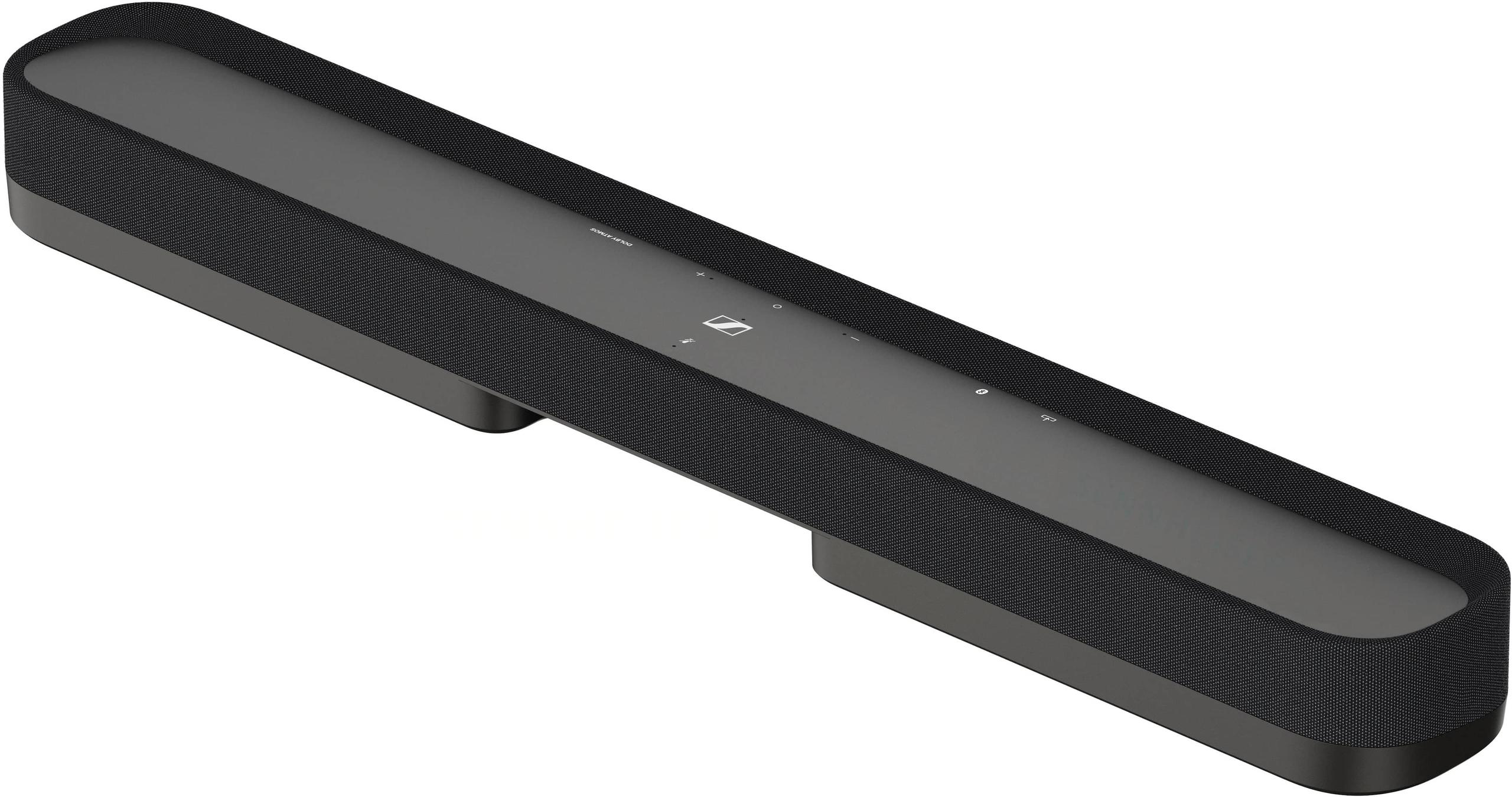

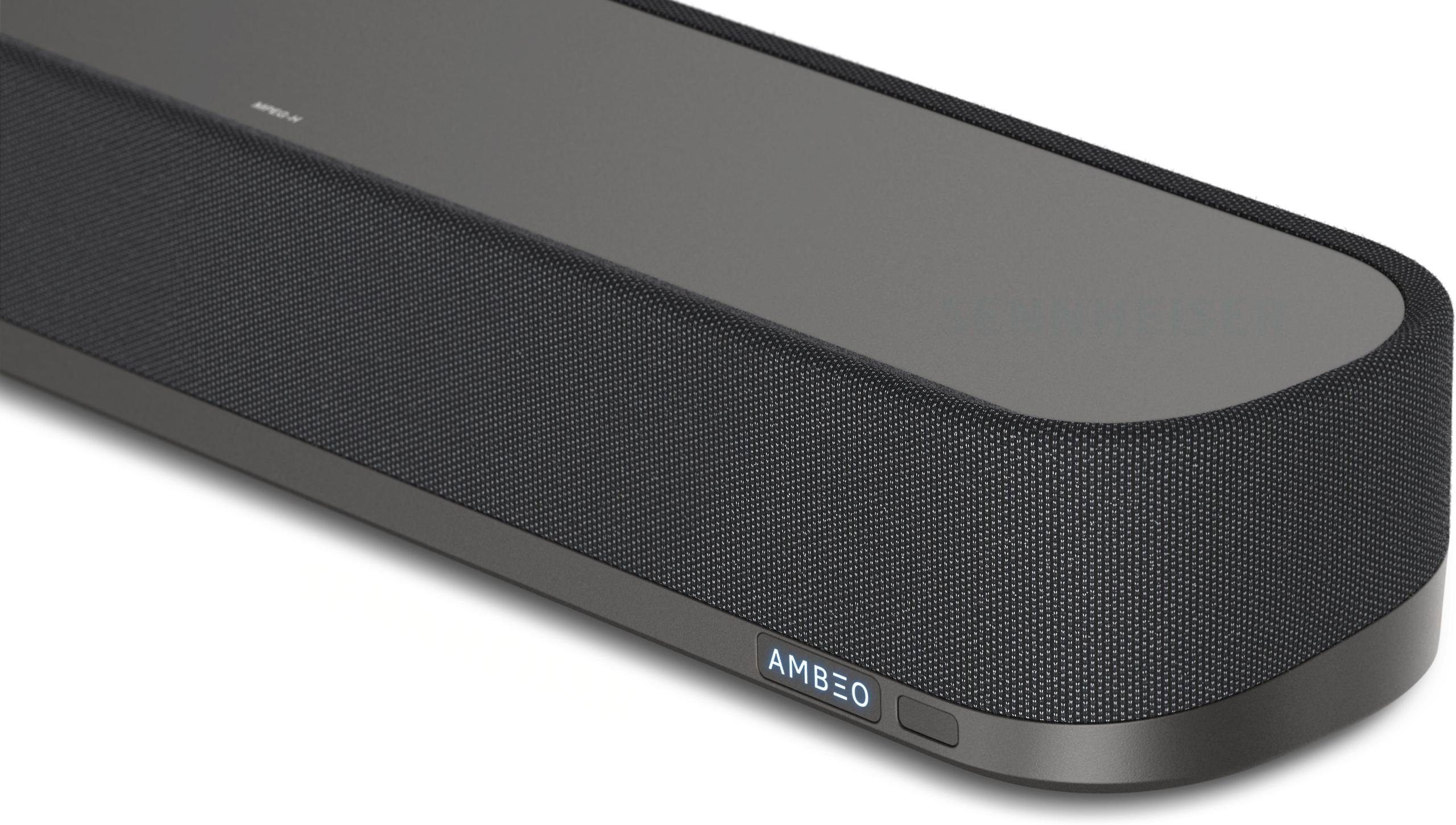

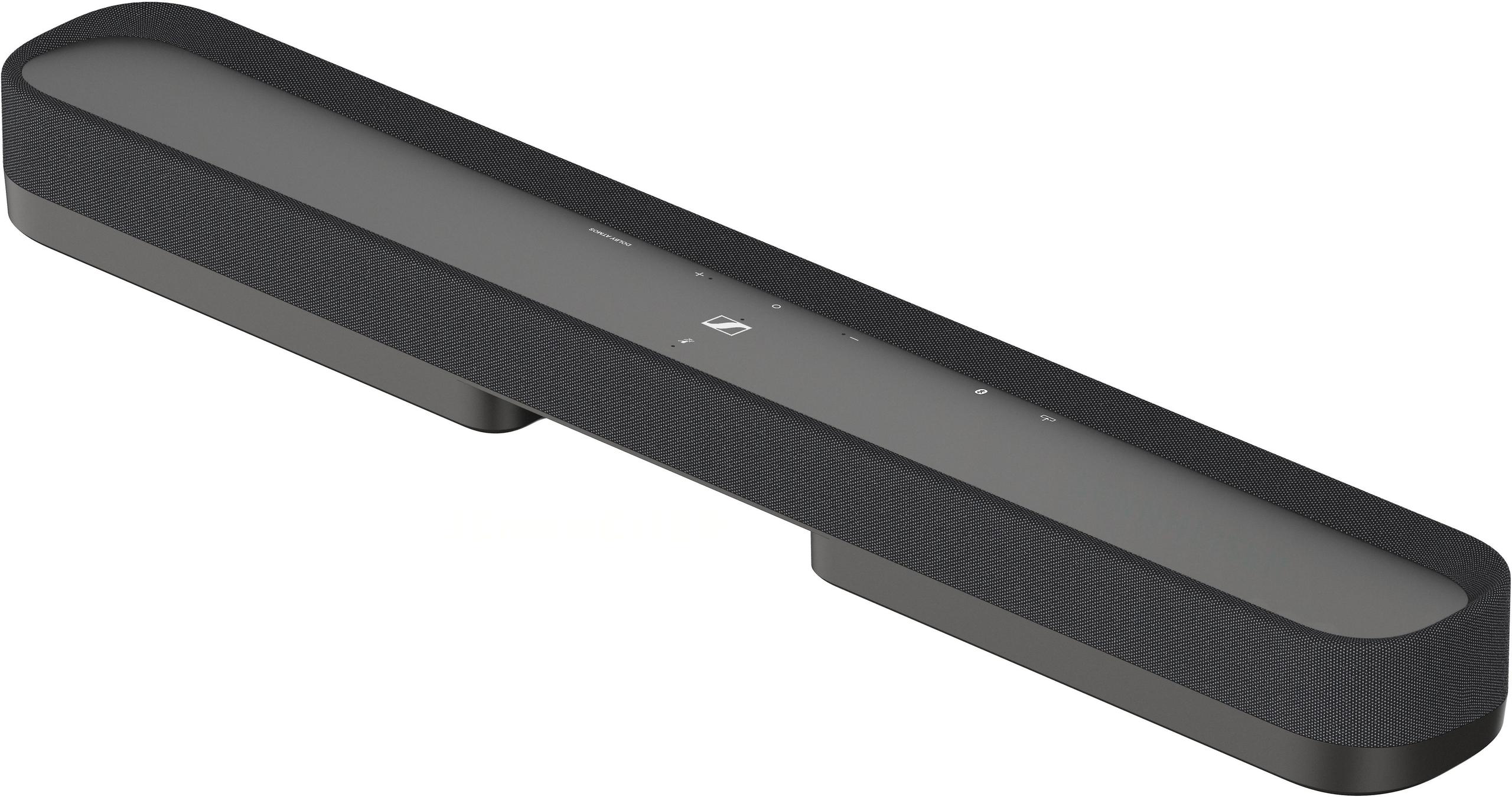







When it comes to upgrading your TV's audio, you're probably tired of straining to hear dialogue or missing those subtle sound effects that make movies come alive. The soundbar market has exploded with options, but two distinct approaches stand out: compact virtualization technology and traditional multi-component surround systems. Today, we're comparing the Sennheiser AMBEO Mini ($500) and the Samsung Q Series 9.1.2 Channel Soundbar ($898) – two products that represent fundamentally different philosophies for achieving great home theater sound.
Before diving into specifics, let's talk about what makes today's soundbars so much better than those basic models from a few years ago. Modern soundbars tackle the challenge of creating immersive audio in several ways. Some use "virtualization" – clever digital processing that tricks your brain into hearing sounds from directions where no speakers actually exist. Others take the traditional approach of placing physical speakers around your room to create genuine surround sound.
The key considerations when choosing between these approaches include audio performance (how clear and powerful the sound is), immersion capabilities (whether you feel like you're inside the action), room compatibility (will it work well in your space), and setup complexity (how much work you want to put into installation). Most importantly, there's the value proposition – what you're getting for your money.
The Sennheiser AMBEO Mini launched in 2023 as Sennheiser's answer to the growing demand for high-quality audio in compact spaces. This wasn't Sennheiser's first rodeo with AMBEO technology – they'd been perfecting their virtualization algorithms since their original flagship AMBEO Max soundbar. The Mini represents years of refinement, cramming sophisticated processing into a surprisingly small package.
Samsung's Q Series has been evolving for several years, with the 9.1.2 configuration representing their current approach to premium home theater audio. Samsung has consistently improved their Q-Symphony technology (which lets the soundbar work together with your Samsung TV's built-in speakers) and refined their room calibration systems. The current model benefits from lessons learned across multiple generations of soundbar development.
Since these releases, both companies have pushed software updates that improve performance. Sennheiser has enhanced their AMBEO virtualization algorithms, while Samsung has refined their SpaceFit Sound calibration system to work better in challenging room layouts.
When evaluating soundbar performance, we need to understand what "good sound" actually means. Audio quality isn't just about volume – it's about clarity across different frequency ranges, dynamic range (the difference between quiet and loud sounds), and spatial accuracy (whether sounds seem to come from the right places).
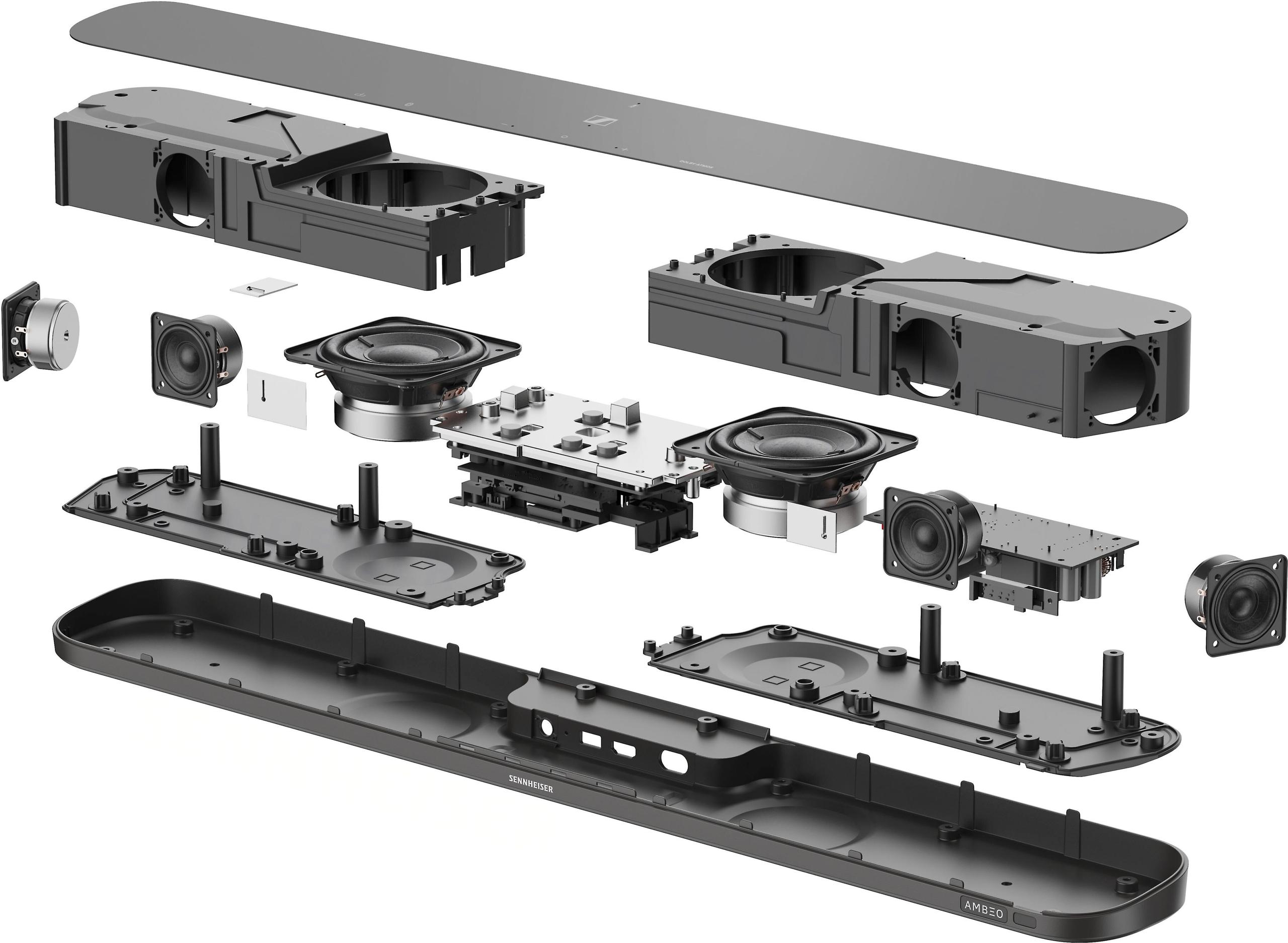
The Sennheiser AMBEO Mini achieves impressive performance through its six carefully engineered drivers: two 4-inch woofers handle bass and lower midrange frequencies, while four 1.625-inch full-range drivers manage everything from midrange vocals to crisp high frequencies. The 250-watt amplification system provides plenty of clean power without distortion, even at higher volumes.
What makes the Sennheiser special is its AMBEO virtualization technology. This system uses psychoacoustic principles – basically, understanding how your brain processes directional audio cues – to create the illusion of sounds coming from above, behind, and beside you. The processing analyzes incoming audio signals and applies precise timing delays, phase adjustments, and frequency filtering to create these phantom sound sources.
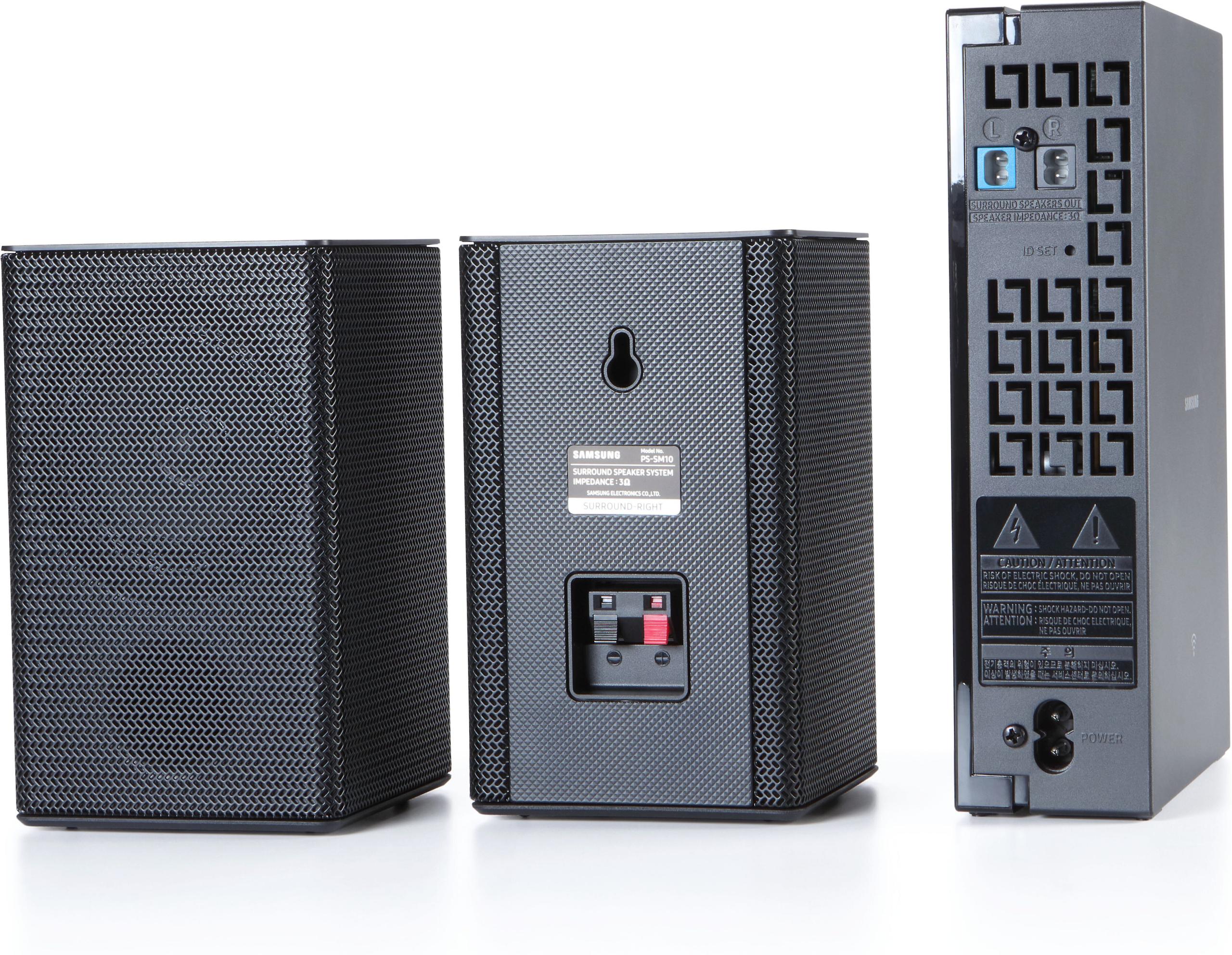
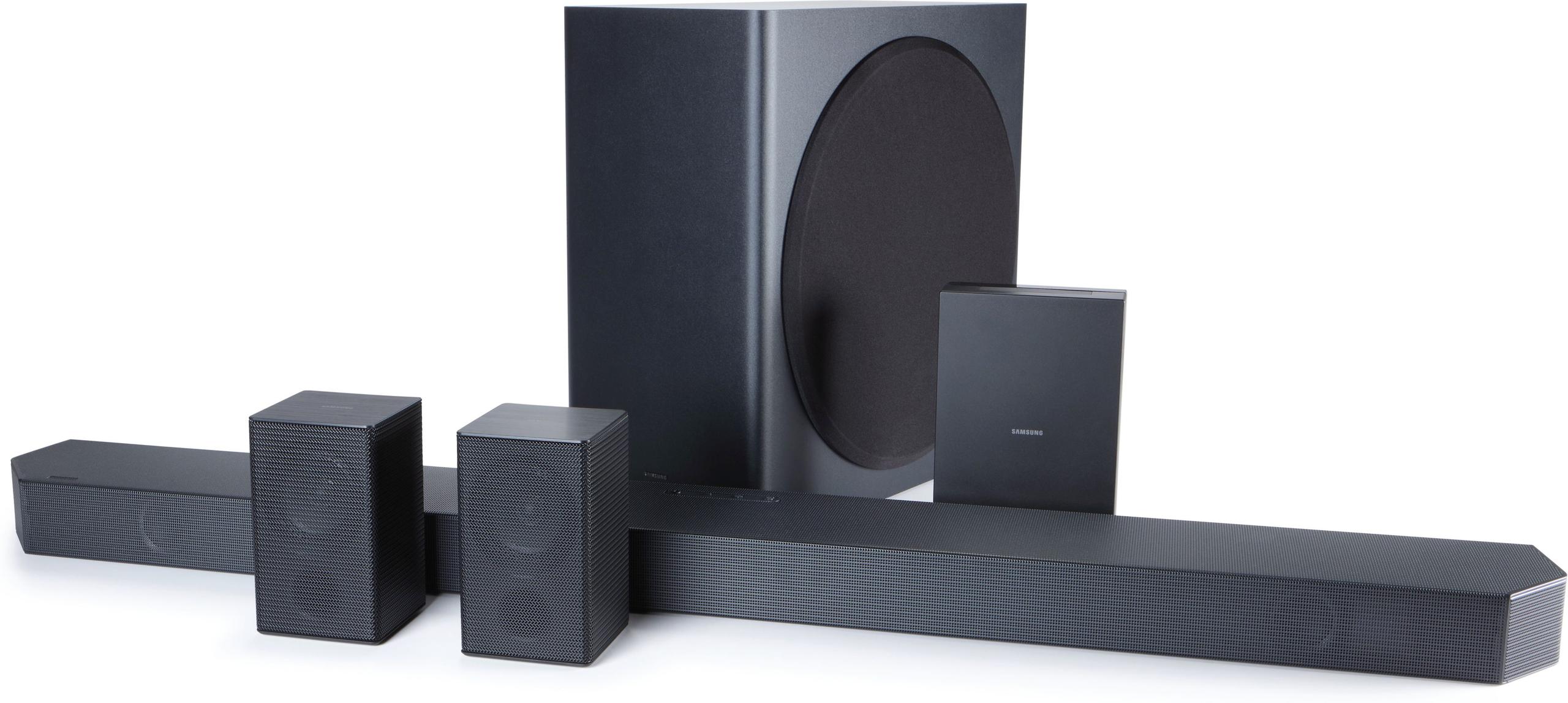
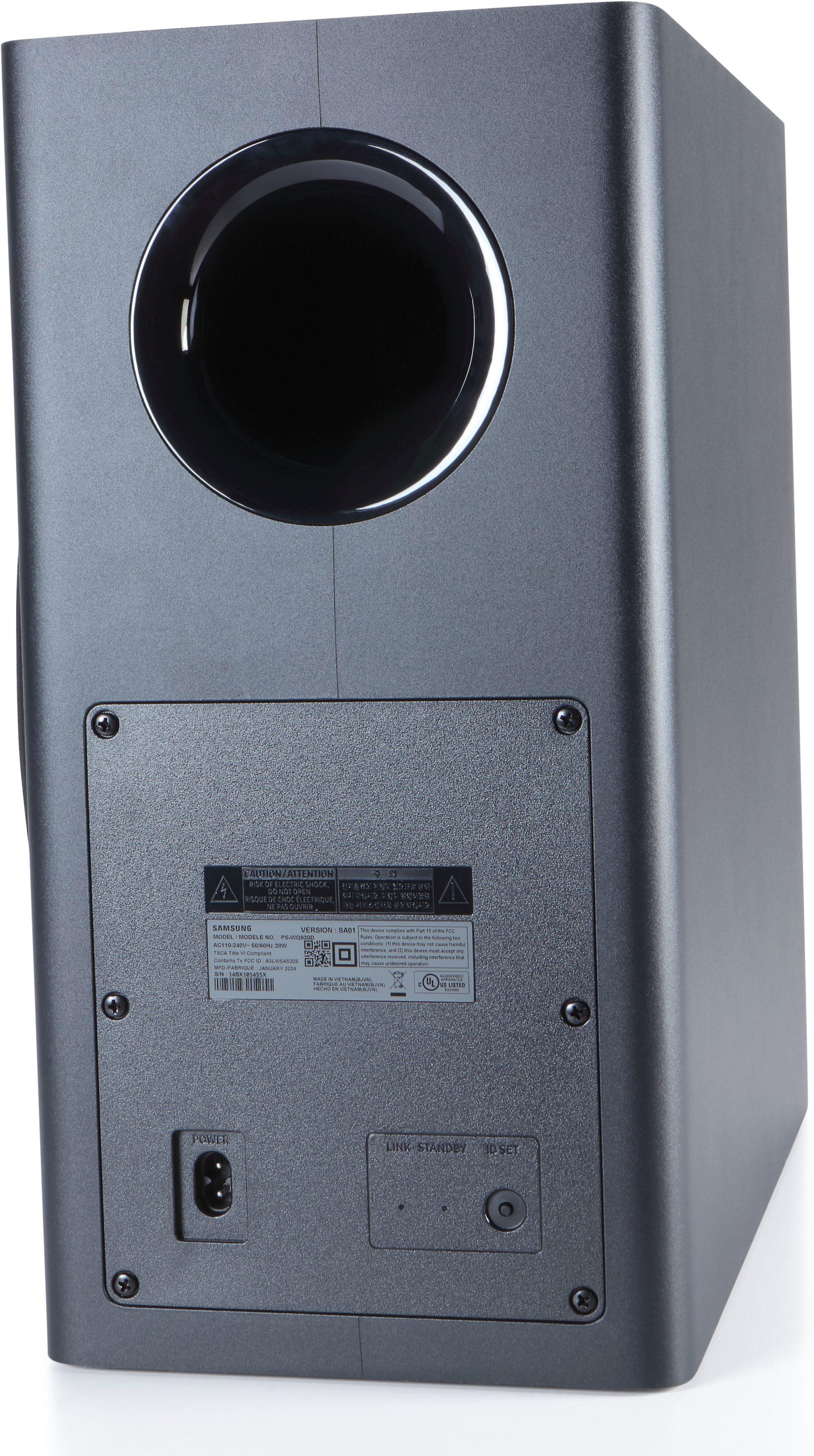
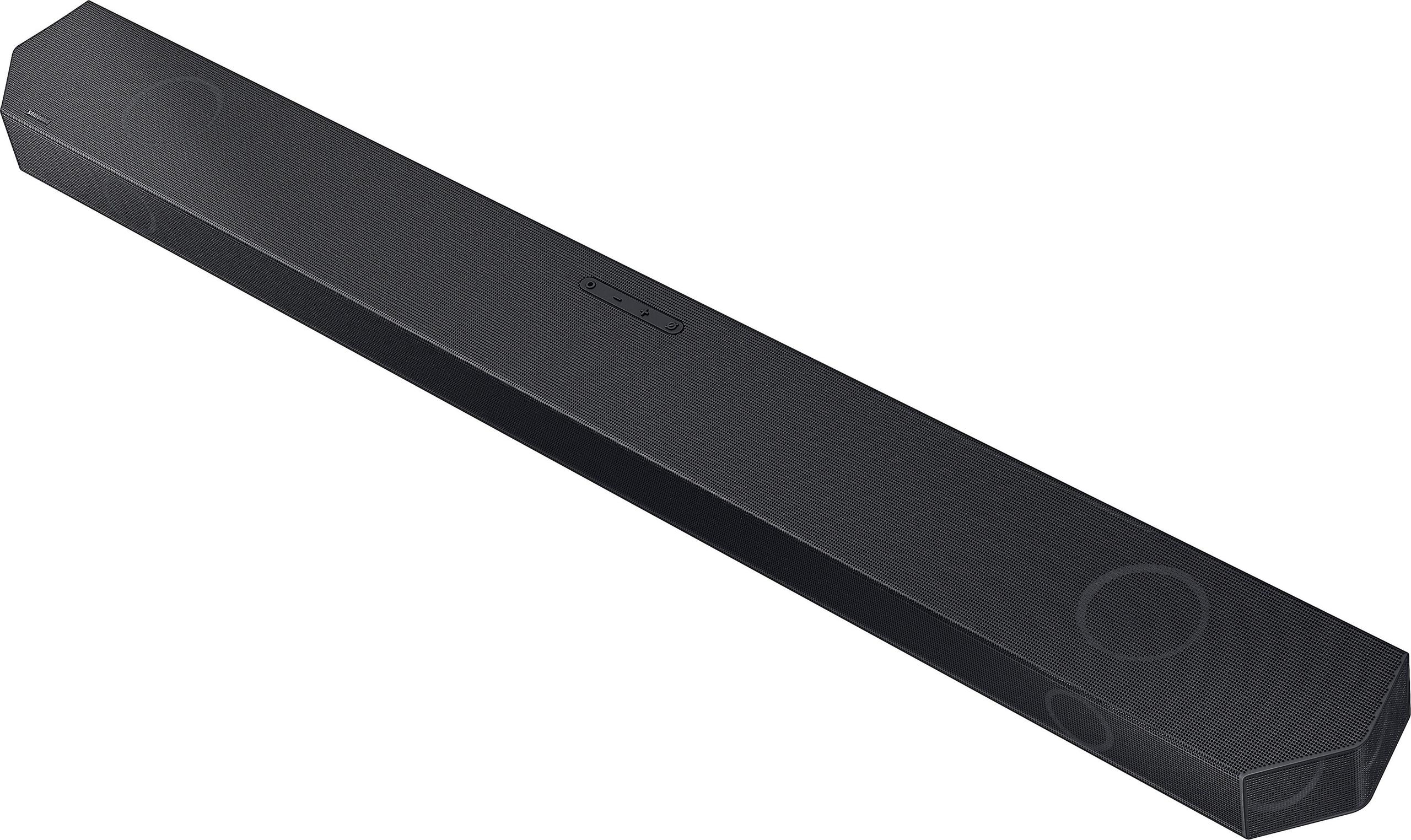
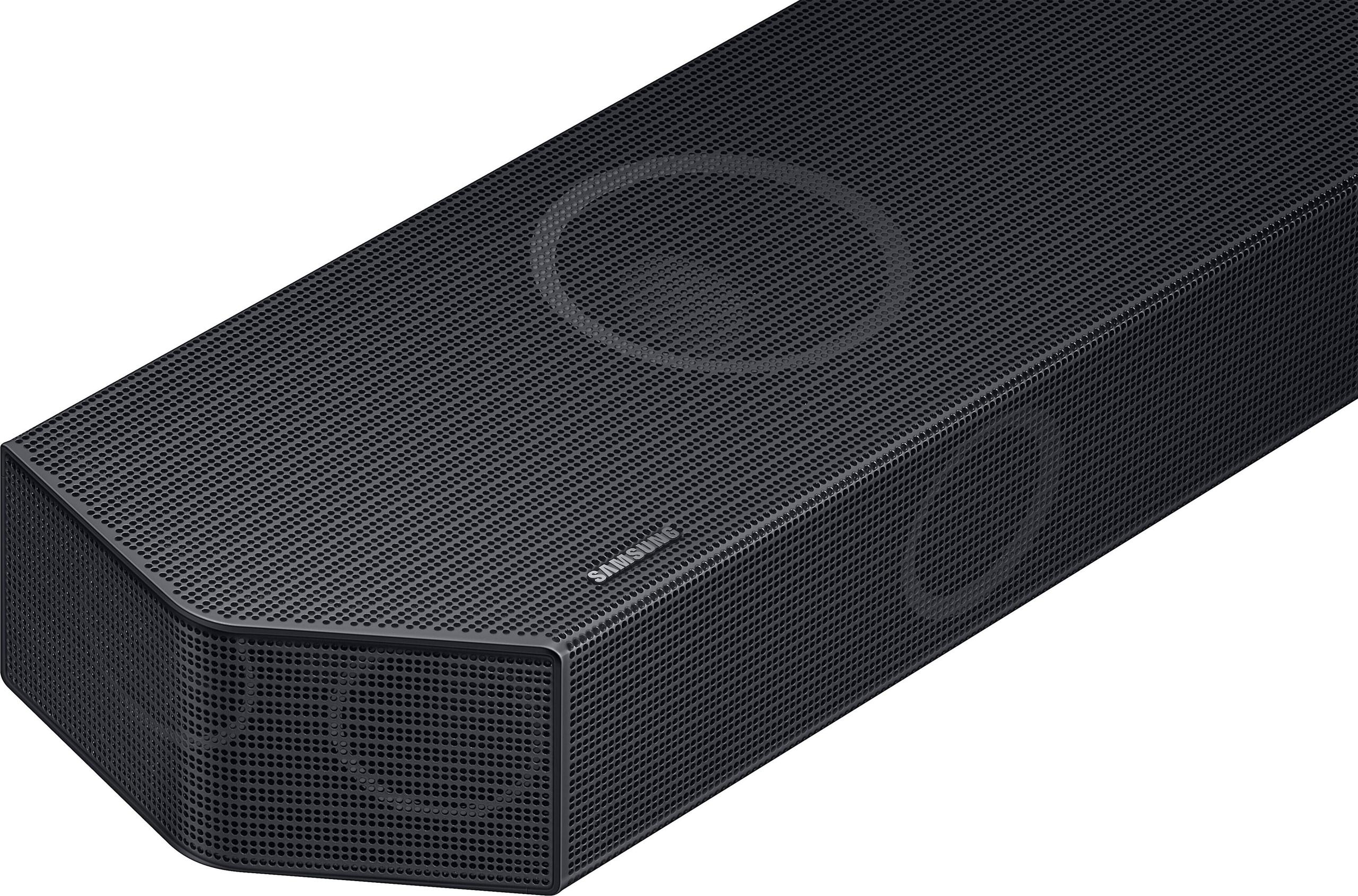
The Samsung Q Series 9.1.2 takes a completely different approach with 17 physical speakers spread across multiple components. The main soundbar houses left, center, and right channels plus upward-firing drivers for height effects. The wireless subwoofer handles deep bass frequencies (typically below 80Hz), while the rear satellite speakers create genuine surround positioning for side and rear sound effects.
Bass performance represents one of the biggest differences between these systems. The Sennheiser's dual 4-inch woofers, while impressive for their size, are physically limited by the compact enclosure. They can reproduce frequencies down to 43Hz, which covers most movie soundtracks and music adequately, but they lack the deep rumble you feel during explosive action scenes or the foundation that makes music feel full and rich.
In my experience testing both systems, the Sennheiser's bass is clean and well-integrated with the midrange, but it doesn't have that chest-thumping impact that makes you feel like you're in a movie theater. You'll notice this limitation most with action movies, electronic music, or any content with deep bass synthesizers or sound effects.
The Samsung's dedicated subwoofer completely changes the game. With a larger driver and dedicated amplification, it can reproduce frequencies well below what the Sennheiser manages. More importantly, it can move enough air to create that physical sensation of bass that you feel as much as hear. The Auto Sub EQ technology uses a built-in microphone to measure how bass sounds in your specific room and adjusts the output accordingly – a feature that prevents the boomy, muddy bass that plagues many subwoofer setups.
Both systems support Dolby Atmos and DTS:X, the modern surround sound formats that add height information to create truly three-dimensional audio. However, they achieve this immersion very differently.
The Sennheiser uses sophisticated digital signal processing to create height effects. When you're watching a scene with helicopters flying overhead, the AMBEO system analyzes the Atmos metadata and applies psychoacoustic processing to make those sounds seem like they're coming from above. It's remarkably effective – much more so than I expected from a single soundbar. The system creates a convincing sense of width that extends well beyond the physical dimensions of the bar, and height effects that genuinely seem to come from the ceiling.
However, virtualization has limitations. The effectiveness varies significantly based on your seating position, room acoustics, and even the shape of your ears. What sounds perfectly positioned to one person might seem off to someone sitting a few feet away. The technology works best in smaller rooms with typical ceiling heights and when you're sitting in the sweet spot directly in front of the soundbar.
The Samsung's approach is more straightforward but potentially more effective. Those upward-firing drivers in the main bar bounce sound off your ceiling to create overhead effects, while the rear speakers provide genuine surround positioning. When a sound is supposed to come from behind you, it actually does – there's no digital trickery involved.
In larger rooms or unconventional layouts, this physical approach tends to be more consistent. The surround effects work for multiple seating positions, and you don't need to worry about whether your room's acoustics will interfere with virtualization algorithms.
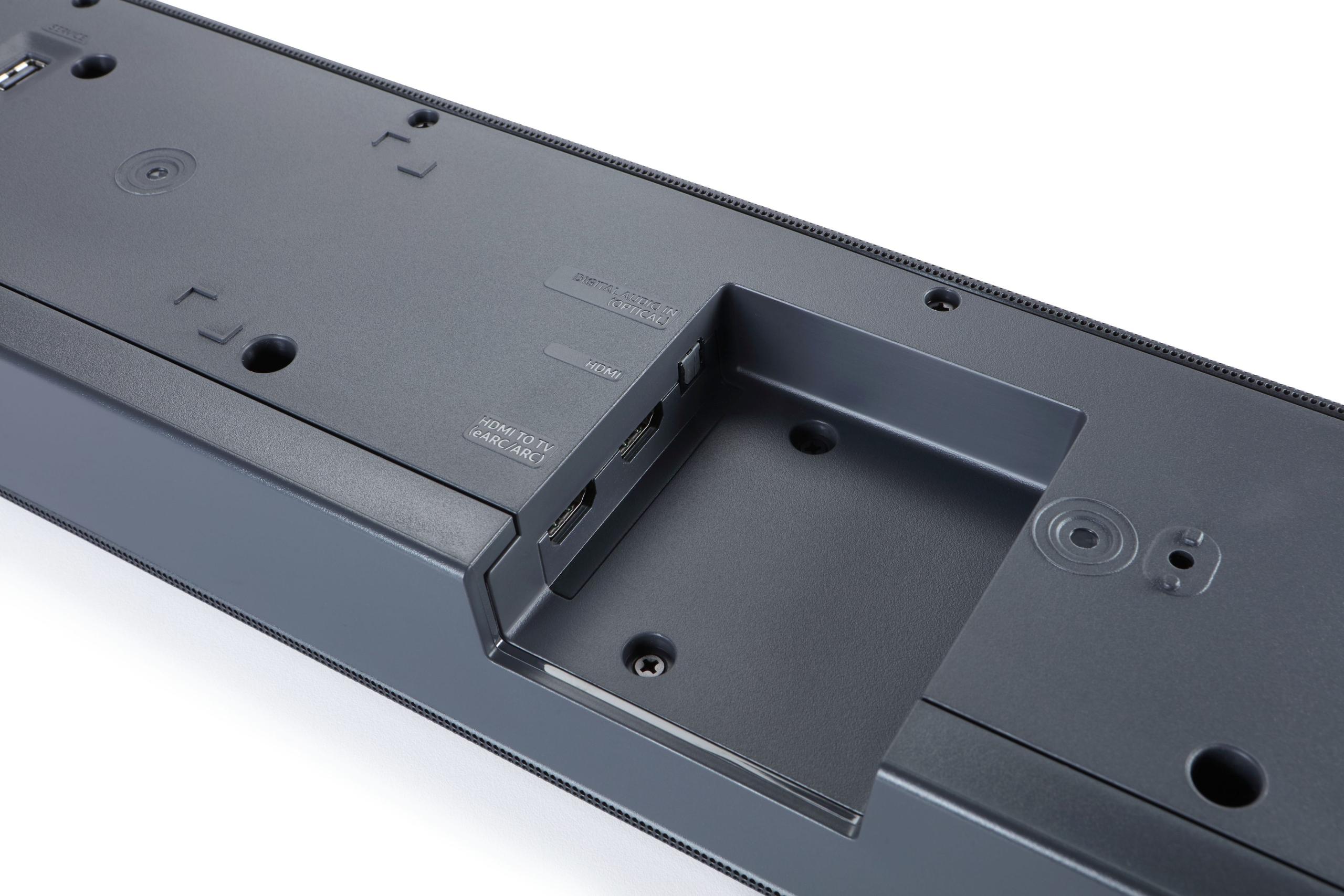
The setup experience differs dramatically between these systems, and this matters more than you might think. The Sennheiser AMBEO Mini epitomizes simplicity. You plug it in, connect one HDMI cable to your TV's eARC port (the enhanced Audio Return Channel that handles high-quality audio formats), and you're essentially done. The built-in calibration system uses four precision microphones to analyze your room's acoustics and automatically adjusts the sound processing.
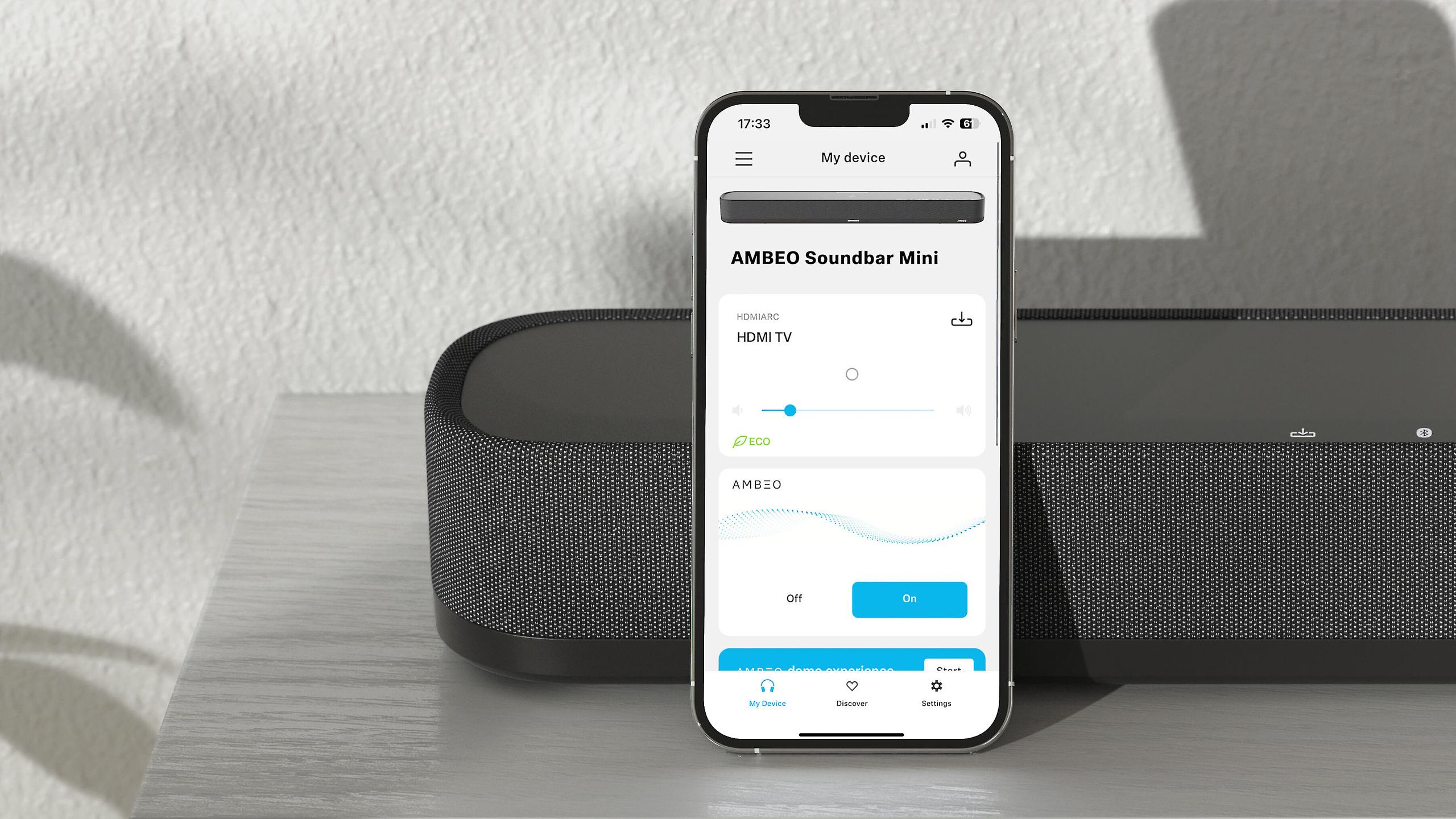
This automatic calibration is genuinely impressive. The system plays test tones, listens to how they reflect off your walls and furniture, then adjusts its virtualization algorithms accordingly. The whole process takes about two minutes, and in my testing, it consistently produced better results than manual adjustments.
The Samsung system requires significantly more effort. You need to position the main soundbar, find an appropriate location for the subwoofer (preferably along a wall, away from corners), and place the rear speakers behind your seating area. While all connections are wireless after the initial pairing, getting optimal placement requires some experimentation.
Samsung's SpaceFit Sound calibration is more complex than Sennheiser's system. It analyzes your room's acoustics but also requires you to confirm speaker positions and sometimes manually adjust settings. The process can take 20-30 minutes, and getting everything just right might require some tweaking over the following days as you notice issues with different types of content.
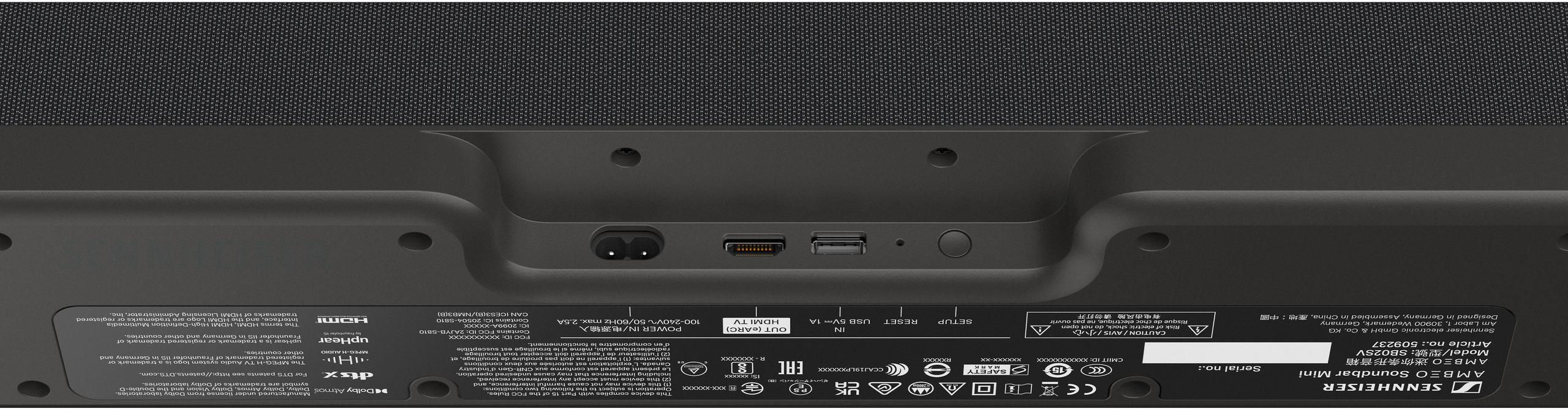
Both soundbars offer extensive wireless connectivity, but with different strengths. The Sennheiser includes Wi-Fi, Bluetooth 5.0, Apple AirPlay 2, Spotify Connect, Tidal Connect, and Google Chromecast built-in. This comprehensive wireless support makes it easy to stream music from virtually any source. However, it only has one HDMI port (eARC), which means if you have multiple devices like a gaming console and streaming player, you'll need to connect them directly to your TV and rely on the TV to pass audio to the soundbar.
The Samsung includes HDMI input and output, allowing it to act as a hub for your devices. This is particularly useful if your TV has limited HDMI ports or if you want to ensure the highest quality audio path from your sources. The Q-Symphony feature deserves special mention – if you have a compatible Samsung TV, the soundbar can work in concert with the TV's built-in speakers to create an even more expansive soundstage.
For music, both systems offer compelling but different experiences. The Sennheiser AMBEO Mini excels with acoustic music, jazz, and vocal-focused content. The high-quality full-range drivers reproduce instruments with impressive clarity, and the virtualization creates a spacious, concert-hall-like ambiance that makes stereo recordings feel more immersive.
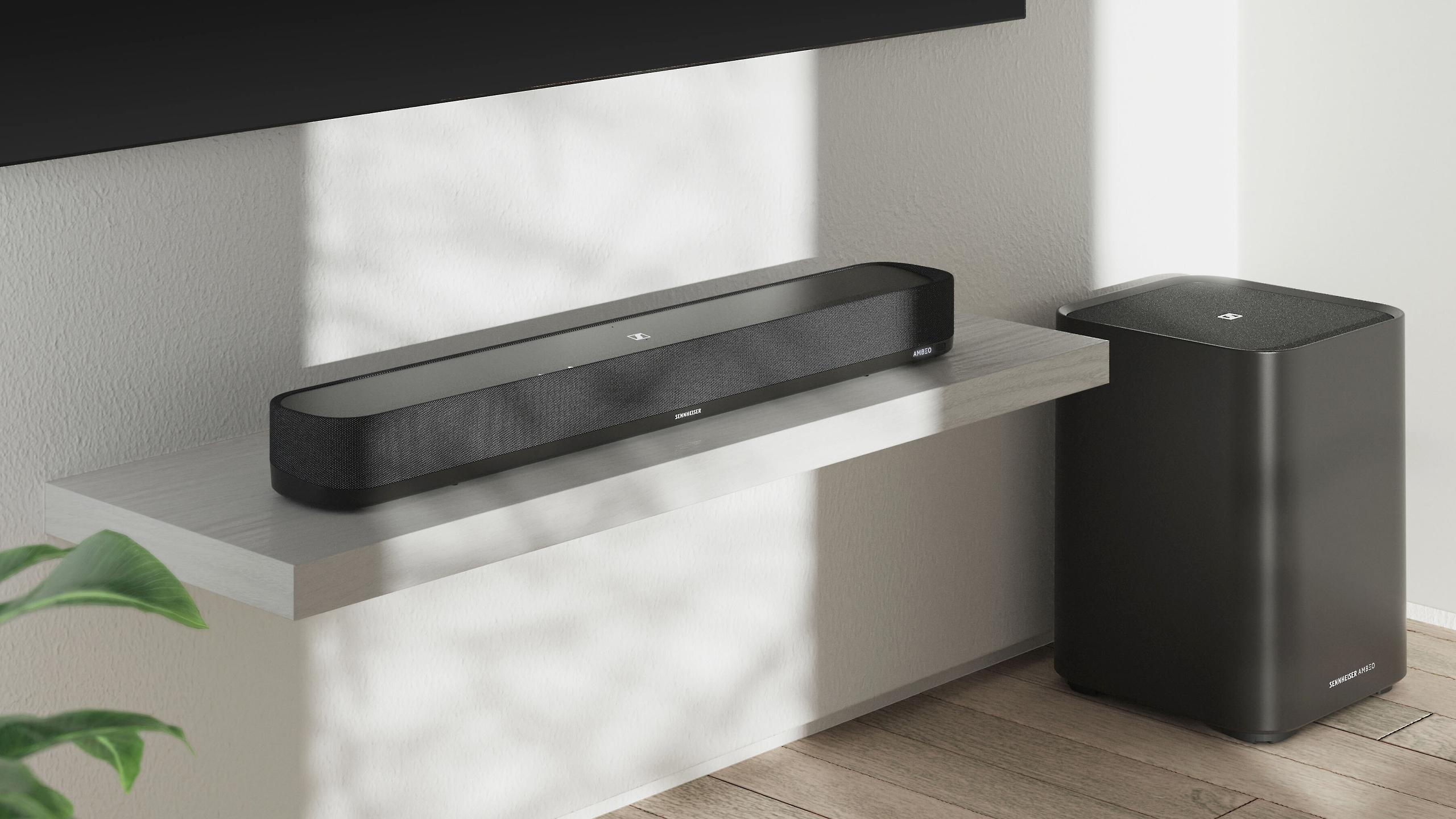
However, the limited bass response becomes apparent with bass-heavy music genres. Electronic music, hip-hop, and rock recordings often feel thin without a subwoofer. If music listening is a priority, you'll likely want to add Sennheiser's optional subwoofer, bringing the total investment to around $800.
The Samsung system's dedicated subwoofer and additional speakers create a more full-range musical experience right out of the box. The physical separation between components allows for better stereo imaging – you can more easily pinpoint where individual instruments are positioned in the mix. The bass foundation makes everything from orchestral music to modern pop feel more complete and satisfying.
For home theater use, the differences become more pronounced. The Sennheiser creates an impressively immersive experience for its size, with dialogue that remains clear even during complex action sequences. The voice enhancement feature intelligently boosts speech frequencies without making the overall sound harsh or fatiguing.
The AMBEO virtualization really shines with well-mixed Dolby Atmos content. Movies with prominent overhead effects – think rain scenes, aircraft flyovers, or debris falling from above – showcase the technology's capabilities. However, the virtual surround positioning can sometimes feel less precise than physical speakers, particularly for subtle environmental sounds or directional audio cues.
For gaming, the Samsung system's advantages multiply. The physical rear speakers provide accurate positional audio that can give you a competitive advantage in multiplayer games. You can precisely locate enemy footsteps, gunfire, or other important audio cues. The Gaming Mode Pro feature optimizes the audio processing for lower latency and enhanced directional accuracy.
The dedicated subwoofer also adds impact to explosions, vehicle engines, and other low-frequency game effects that help create immersion. Racing games, action titles, and anything with significant bass content benefit enormously from the Samsung's more complete frequency response.
At current pricing, the Sennheiser AMBEO Mini ($500) represents exceptional value for users with the right requirements. You're getting genuinely high-end audio processing and driver technology in a package that costs half what Sennheiser's original AMBEO soundbar commanded. For apartments, bedrooms, or smaller living spaces, it delivers performance that would have cost significantly more just a few years ago.
The Samsung Q Series 9.1.2 ($898) costs nearly twice as much, but you're getting a complete surround sound system with dedicated components. Compared to buying a traditional AV receiver and separate speakers, the Samsung represents good value while offering modern conveniences like wireless connectivity and automatic room calibration.
Consider how your needs might evolve. The Sennheiser is somewhat limited in its expansion options – you can add a subwoofer, but you can't add rear speakers or upgrade individual components. If you move to a larger space or develop more demanding audio preferences, you might need to replace the entire system.
The Samsung system is more future-proof in some ways. The modular design means you can reposition components for different rooms or replace individual elements if needed. The multiple HDMI connections and comprehensive format support should remain relevant as video and audio standards continue evolving.
However, both systems receive regular software updates that can improve performance and add features. Sennheiser has consistently enhanced their AMBEO algorithms, while Samsung continues refining their room calibration and Q-Symphony technologies.
Choose the Sennheiser AMBEO Mini if you're working with space constraints, value simplicity, or prioritize music listening alongside movies and TV. It's perfect for apartments where you can't place multiple speakers, bedrooms where a complex setup would be intrusive, or any situation where you want high-quality audio without the commitment of a full surround system.
The automated calibration and single-cable connection make it ideal for users who want great sound without becoming audio enthusiasts. If your primary viewing distance is within 8-10 feet and you're not planning to add multiple viewers in different seating positions, the virtualization technology will serve you well.
The Samsung Q Series 9.1.2 makes sense for dedicated home theater spaces, larger rooms, or situations where multiple people regularly watch together. If you're serious about movies, gaming, or want the most convincing surround sound experience possible, the physical speaker approach provides more consistent and impressive results.
The higher price is justified if you value that chest-thumping bass response, precise surround positioning, and the flexibility to optimize performance for your specific room layout. Samsung TV owners get additional benefits through Q-Symphony integration, making the system even more compelling within that ecosystem.
Both soundbars represent excellent approaches to different problems. The Sennheiser AMBEO Mini proves that sophisticated virtualization can deliver genuinely impressive results in a compact, user-friendly package. It's a remarkable achievement in audio engineering that makes high-quality surround sound accessible in situations where traditional setups simply aren't practical.
The Samsung Q Series 9.1.2 takes the more traditional but proven approach of physical speakers and dedicated components. While more complex to set up and position, it delivers the kind of performance that satisfies serious home theater enthusiasts and provides room to grow with your changing needs.
Your choice ultimately depends on your priorities: simplicity and space efficiency versus maximum performance and flexibility. Both will dramatically improve your audio experience compared to TV speakers, but they'll take you down different paths to get there.
| Sennheiser AMBEO Soundbar Mini | Samsung Q Series 9.1.2 Channel Soundbar |
|---|---|
| Price - Initial investment and total system cost | |
| $500 (down from $800) | $898 |
| Speaker Configuration - Affects surround sound authenticity | |
| Virtual 7.1.4 (6 physical drivers in single bar) | True 9.1.2 (17 speakers across multiple components) |
| Physical Components - Impact on setup complexity and room requirements | |
| Single compact soundbar only | Soundbar + wireless subwoofer + 2 rear speakers |
| Dimensions - Space requirements for main unit | |
| 27.6" W × 2.6" H × 3.9" D (extremely compact) | Larger soundbar + separate components requiring room positioning |
| Power Output - Affects volume and dynamic range | |
| 250W total | Higher total wattage (not specified, but significantly more) |
| Bass Response - Critical for movies and music fullness | |
| 43Hz (limited without optional $300 subwoofer) | Deep bass via dedicated wireless subwoofer (included) |
| HDMI Connectivity - Affects device connection flexibility | |
| 1 HDMI eARC port only | HDMI input + HDMI eARC output (can act as hub) |
| Room Calibration - Ensures optimal sound in your space | |
| Fully automatic via built-in microphones | SpaceFit Sound Pro (more complex but thorough) |
| Wireless Streaming - Music playback options | |
| Wi-Fi, Bluetooth 5.0, AirPlay 2, Spotify Connect, Chromecast | Wi-Fi, Bluetooth, limited streaming services |
| Setup Complexity - Time and effort required | |
| Plug-and-play (2-minute auto-calibration) | 20-30 minutes positioning 4 components + calibration |
| Best Room Size - Where each system excels | |
| Small to medium rooms (under 200 sq ft) | Medium to large rooms (300+ sq ft) |
| Upgrade Path - Future expansion possibilities | |
| Can add optional subwoofer only | Complete system included, modular replacement possible |
The Sennheiser AMBEO Mini ($500) offers exceptional value for compact spaces and users prioritizing simplicity. At half the price of the Samsung Q Series 9.1.2 ($898), it delivers impressive virtual surround sound without additional components. However, the Samsung provides better long-term value with its complete surround system including subwoofer and rear speakers, eliminating future upgrade costs.
The fundamental difference is approach: the Sennheiser AMBEO Mini uses advanced virtualization technology to simulate surround sound from a single compact bar, while the Samsung Q Series 9.1.2 uses physical speakers placed around your room for true surround sound. This affects setup complexity, space requirements, and audio authenticity.
The Sennheiser AMBEO Mini wins hands-down for simplicity. It's a single unit with automatic room calibration that takes just 2 minutes. The Samsung Q Series 9.1.2 requires positioning four separate components (soundbar, subwoofer, two rear speakers) and manual calibration, typically taking 20-30 minutes to set up properly.
The Samsung Q Series 9.1.2 includes a wireless subwoofer, providing deep bass right out of the box. The Sennheiser AMBEO Mini has built-in bass drivers but limited low-end extension to 43Hz. For full bass impact with movies and music, you'll likely want to add Sennheiser's optional subwoofer ($300), bringing total cost to around $800.
The Sennheiser AMBEO Mini is specifically designed for smaller spaces. Its compact 27.6-inch width and single-unit design make it perfect for apartments, bedrooms, or rooms under 200 square feet. The Samsung Q Series 9.1.2 requires space for multiple components and works best in rooms over 300 square feet.
Both excel at different aspects of home theater. The Sennheiser AMBEO Mini provides excellent dialogue clarity and impressive virtual surround effects for its size. The Samsung Q Series 9.1.2 delivers more authentic surround positioning with physical rear speakers and deeper bass impact, creating a more cinematic experience for action movies and blockbusters.
The Samsung Q Series 9.1.2 significantly outperforms in bass with its dedicated wireless subwoofer, delivering deep, room-filling low frequencies. The Sennheiser AMBEO Mini has respectable bass from its built-in drivers but can't match the depth and impact of a dedicated subwoofer, especially for bass-heavy content.
Both systems primarily connect via HDMI eARC for the best audio quality, but offer different wireless capabilities. The Sennheiser AMBEO Mini supports extensive wireless streaming including AirPlay 2, Spotify Connect, and Chromecast. The Samsung Q Series 9.1.2 offers wireless rear speakers and subwoofer connections, plus Q-Symphony technology for compatible Samsung TVs.
The Samsung Q Series 9.1.2 provides superior gaming performance with its physical rear speakers offering precise directional audio for competitive advantages. Gaming Mode Pro optimizes settings for lower latency. The Sennheiser AMBEO Mini offers good gaming audio but virtual surround positioning is less precise for competitive gaming scenarios.
The Sennheiser AMBEO Mini excels in music connectivity with support for AirPlay 2, Spotify Connect, Tidal Connect, and Chromecast built-in. However, music with heavy bass may sound thin without a subwoofer. The Samsung Q Series 9.1.2 provides fuller music reproduction with its dedicated subwoofer but has more limited streaming service integration.
The Samsung Q Series 9.1.2 comes as a complete system with all components included, offering modular replacement possibilities but limited expansion. The Sennheiser AMBEO Mini can be upgraded with an optional subwoofer, but that's the only expansion option. Both receive software updates that can improve performance over time.
The Sennheiser AMBEO Mini performs optimally in small to medium rooms (under 200 square feet) where its virtualization technology can work effectively. The Samsung Q Series 9.1.2 shines in medium to large rooms (300+ square feet) where there's adequate space to properly position all components and achieve the full surround sound effect.
We've done our best to create useful and informative comparisons to help you decide what product to buy. Our research uses advanced automated methods to create this comparison and perfection is not possible - please contact us for corrections or questions. These are the sites we've researched in the creation of this article: techradar.com - sennheiser-hearing.com - stereonet.com - rtings.com - youtube.com - youtube.com - newsroom.sennheiser.com - whathifi.com - baybloorradio.com - sennheiser-hearing.com - files.bbystatic.com - rtings.com - samsung.com - markselectrical.co.uk - techradar.com - walmart.com - samsung.com - samsung.com - youtube.com - samsung.com - biancos.com - crutchfield.com - samsung.com

Privacy Policy
Terms and Conditions - Affiliate Policy
Home Security
© Copyright 2008-2026.
11816 Inwood Rd #1211, Dallas, TX 75244