

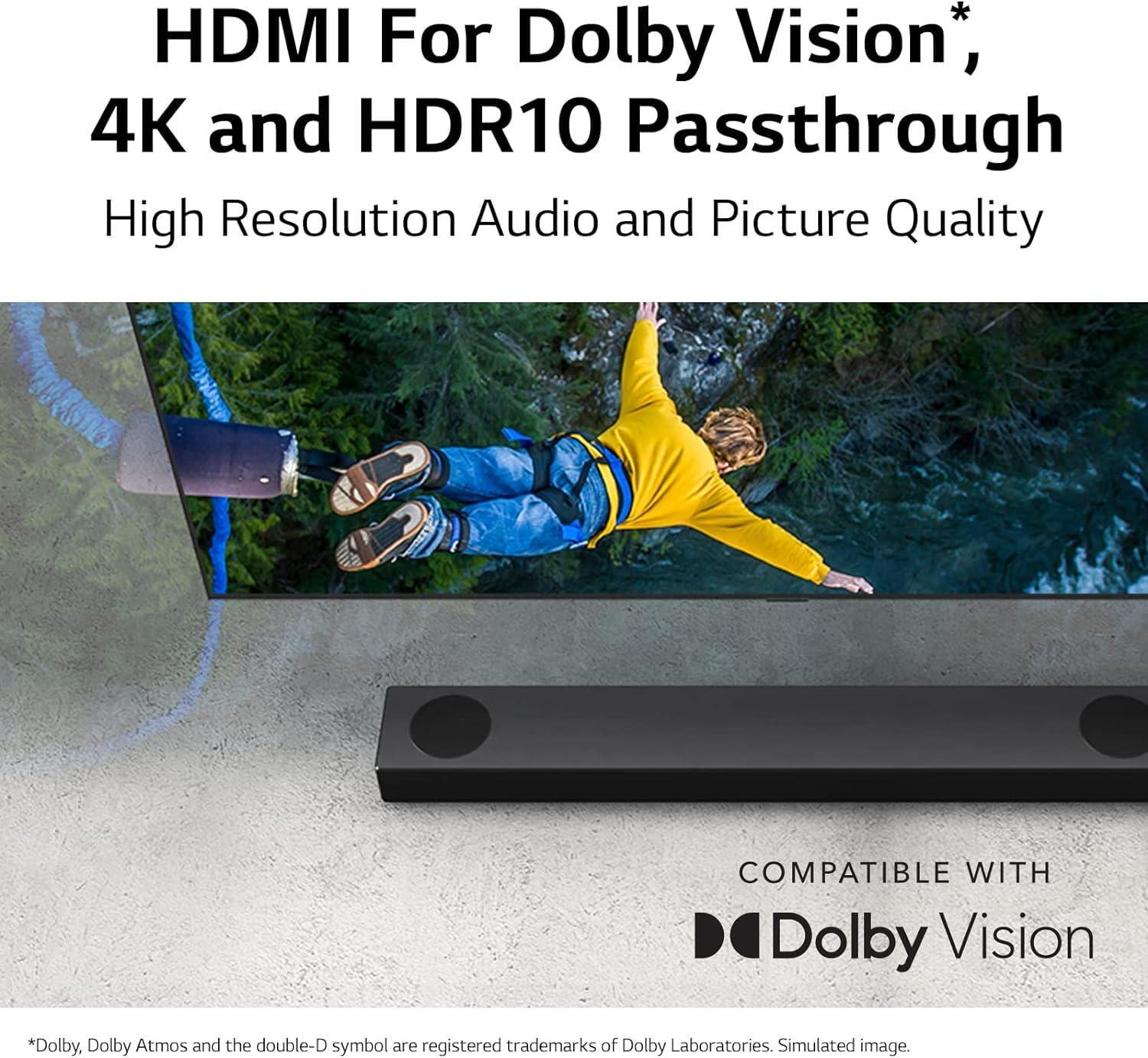
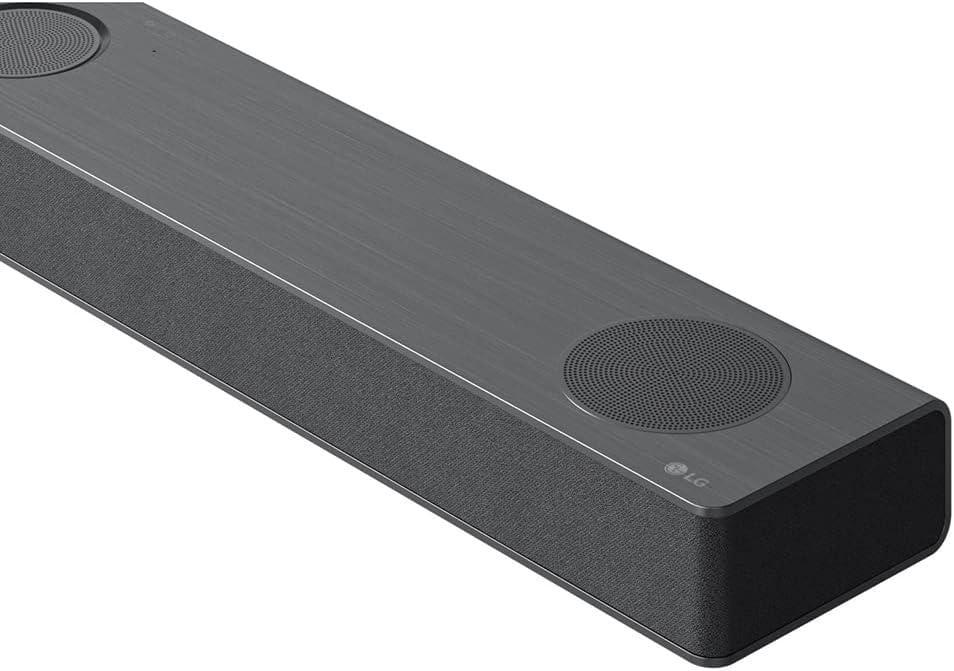
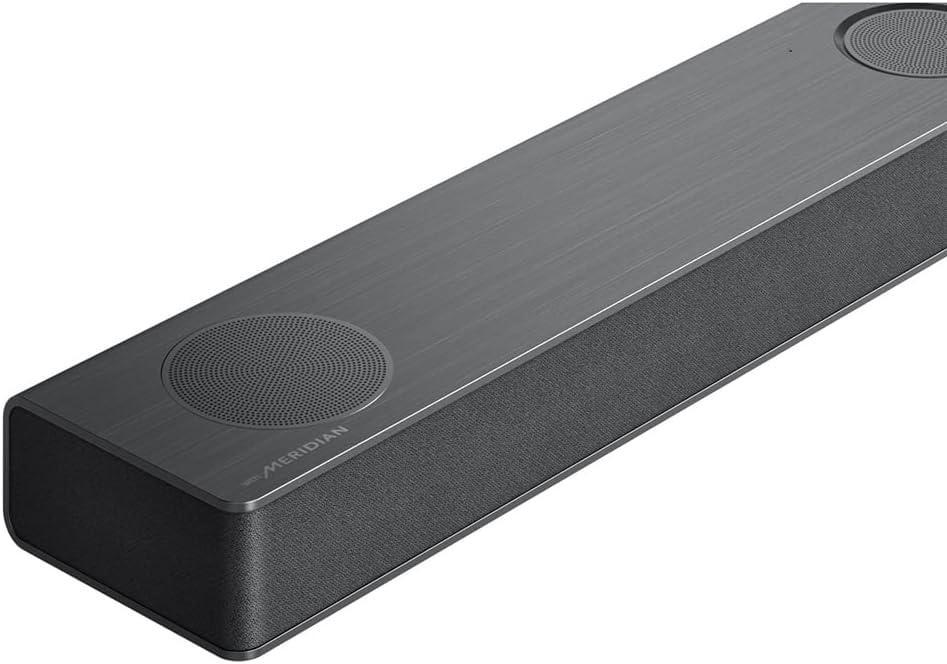
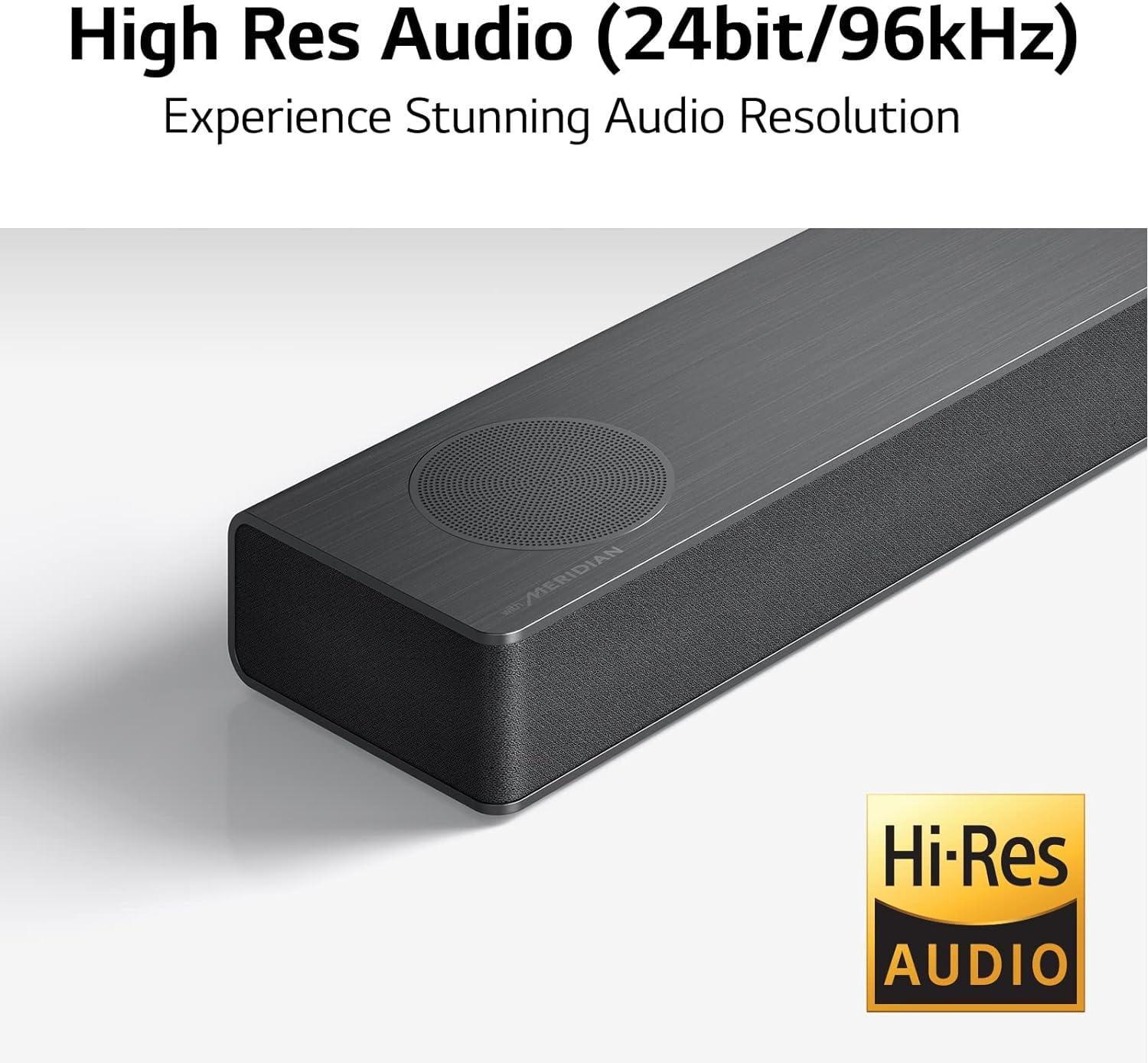

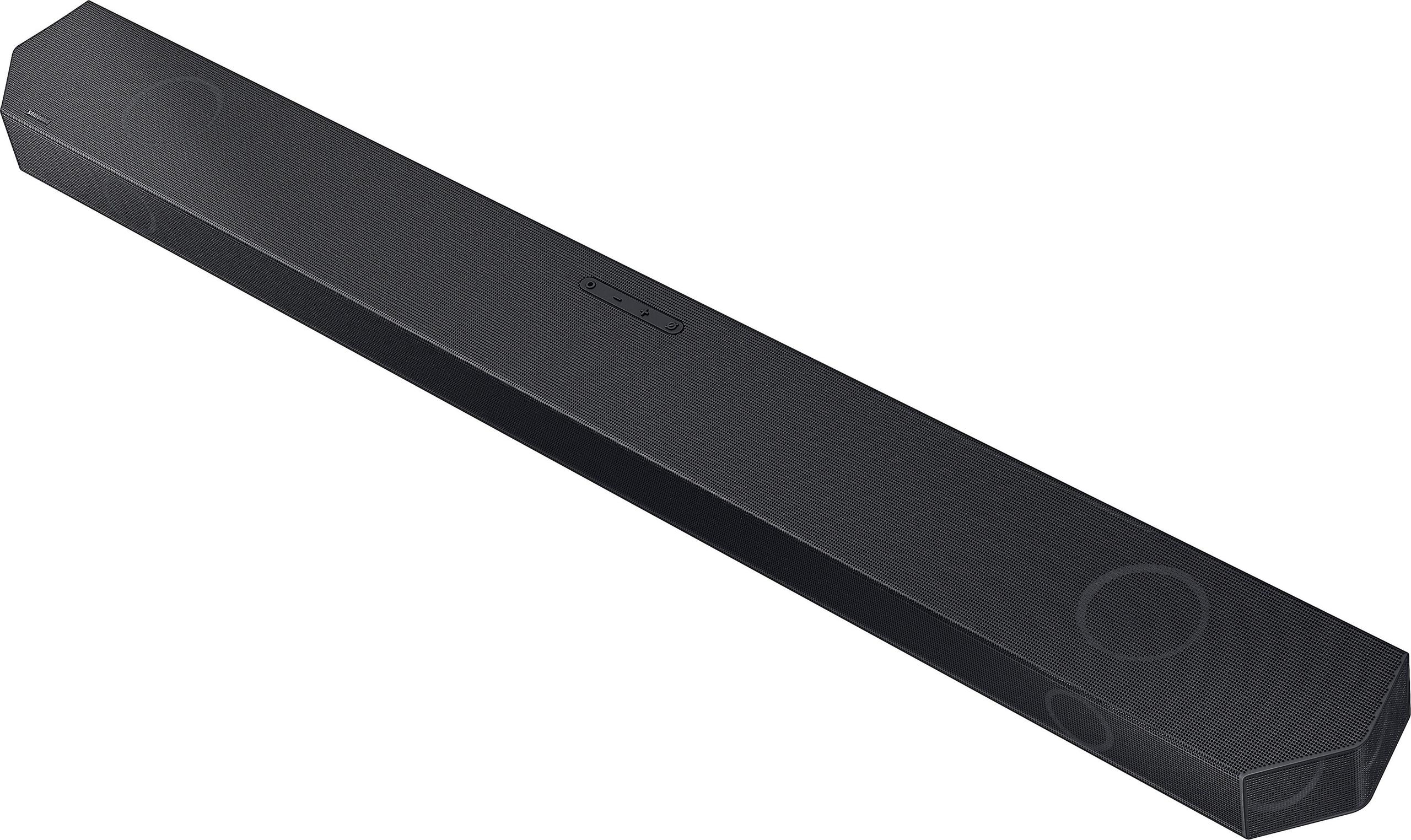

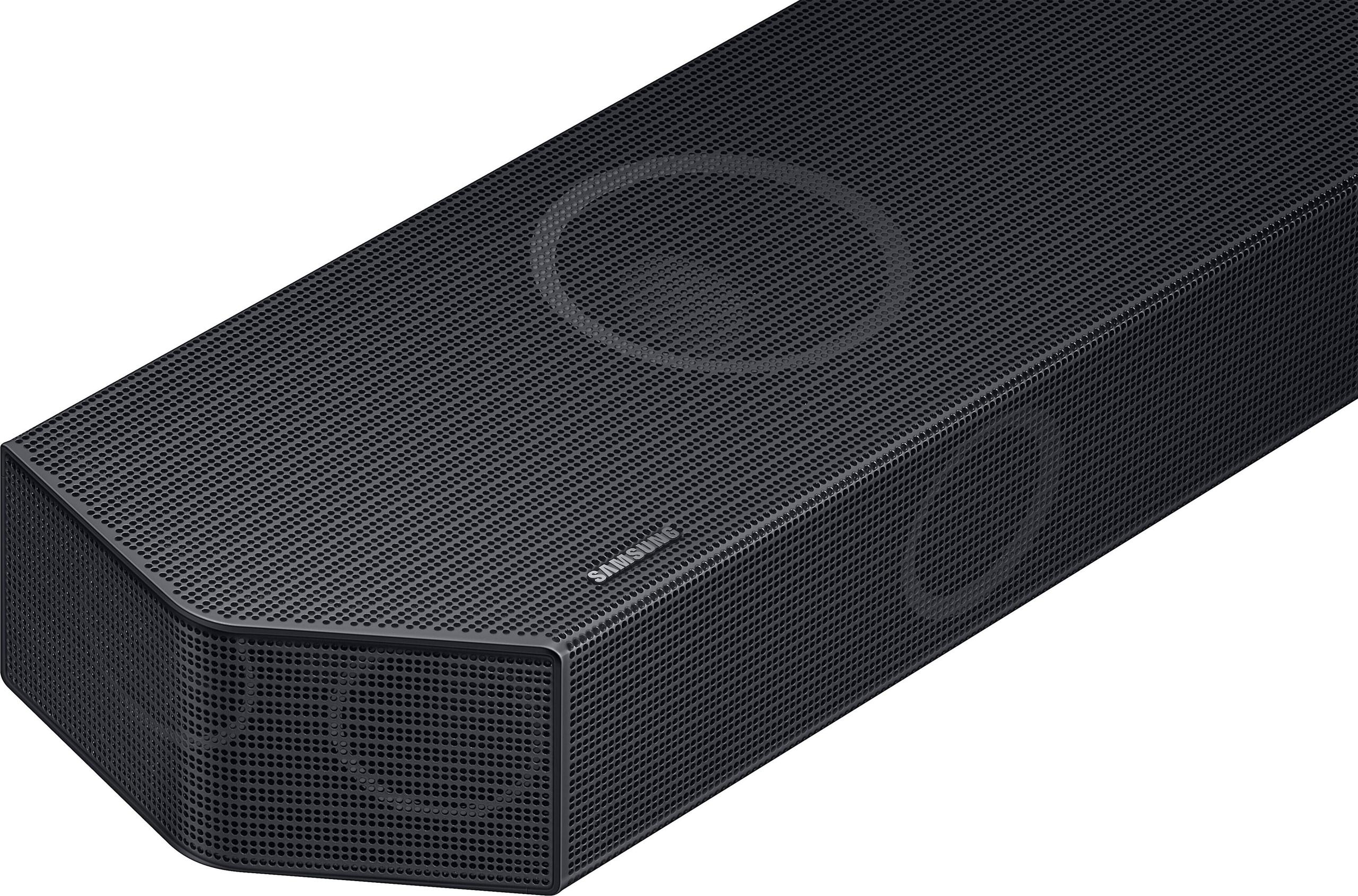




If you've been living with your TV's built-in speakers, you're missing out on a world of audio detail that can completely transform your viewing experience. The thin profile of modern TVs simply can't accommodate the larger drivers needed for rich, full sound. That's where premium soundbars come in, offering a dramatic upgrade without the complexity of a full surround sound system.
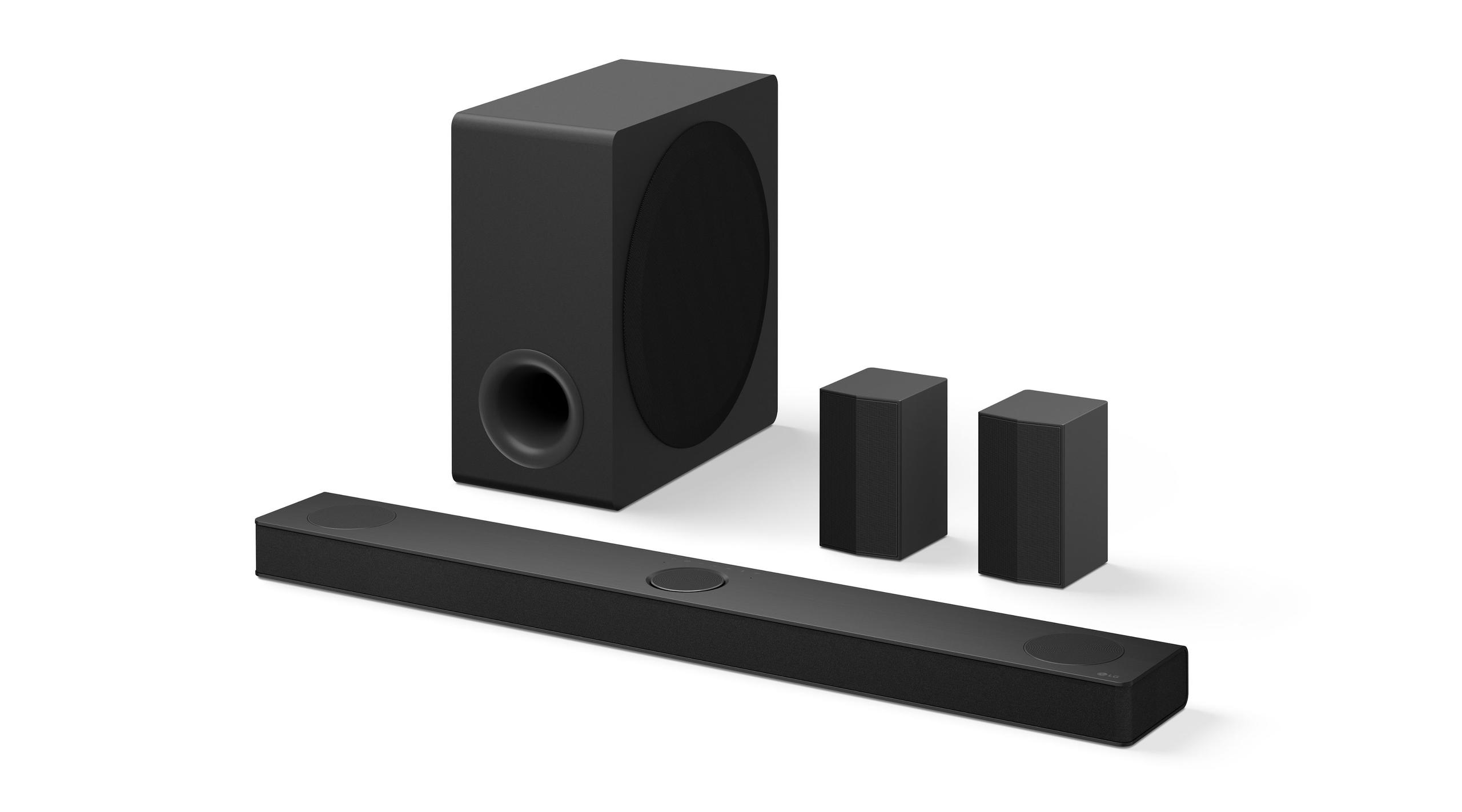
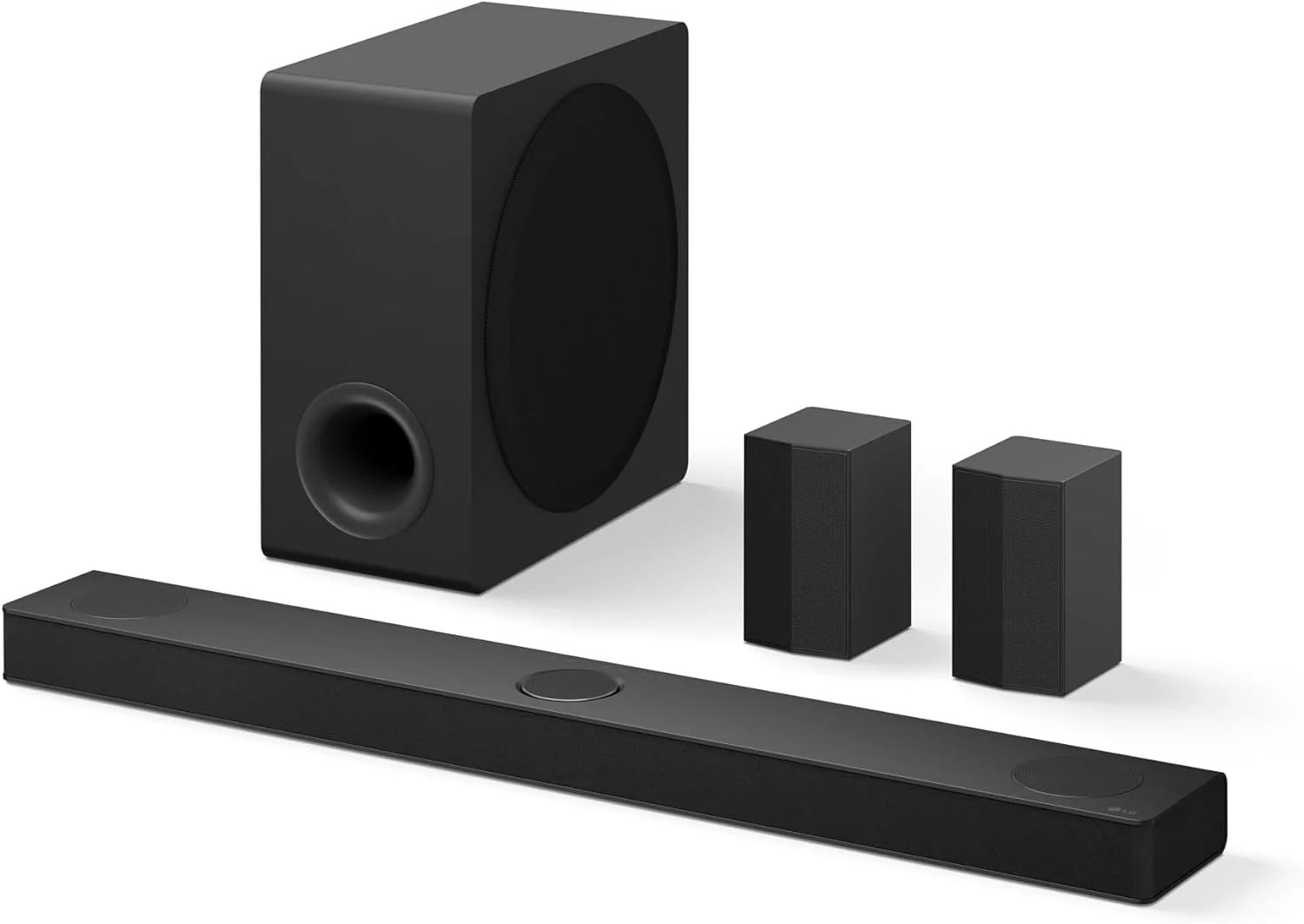
Today we're comparing two compelling options: the LG S80TR 5.1.3 Channel Soundbar ($546.99) and the Samsung Q Series 9.1.2 Channel Soundbar ($897.99). Both promise cinema-quality audio with Dolby Atmos support, but they take notably different approaches to achieving that goal.
Before diving into the specifics, let's establish what separates premium soundbars from basic models. The key differentiators include channel configuration (how many discrete audio streams the system can handle), physical speaker placement versus virtual surround processing, and advanced room calibration features.
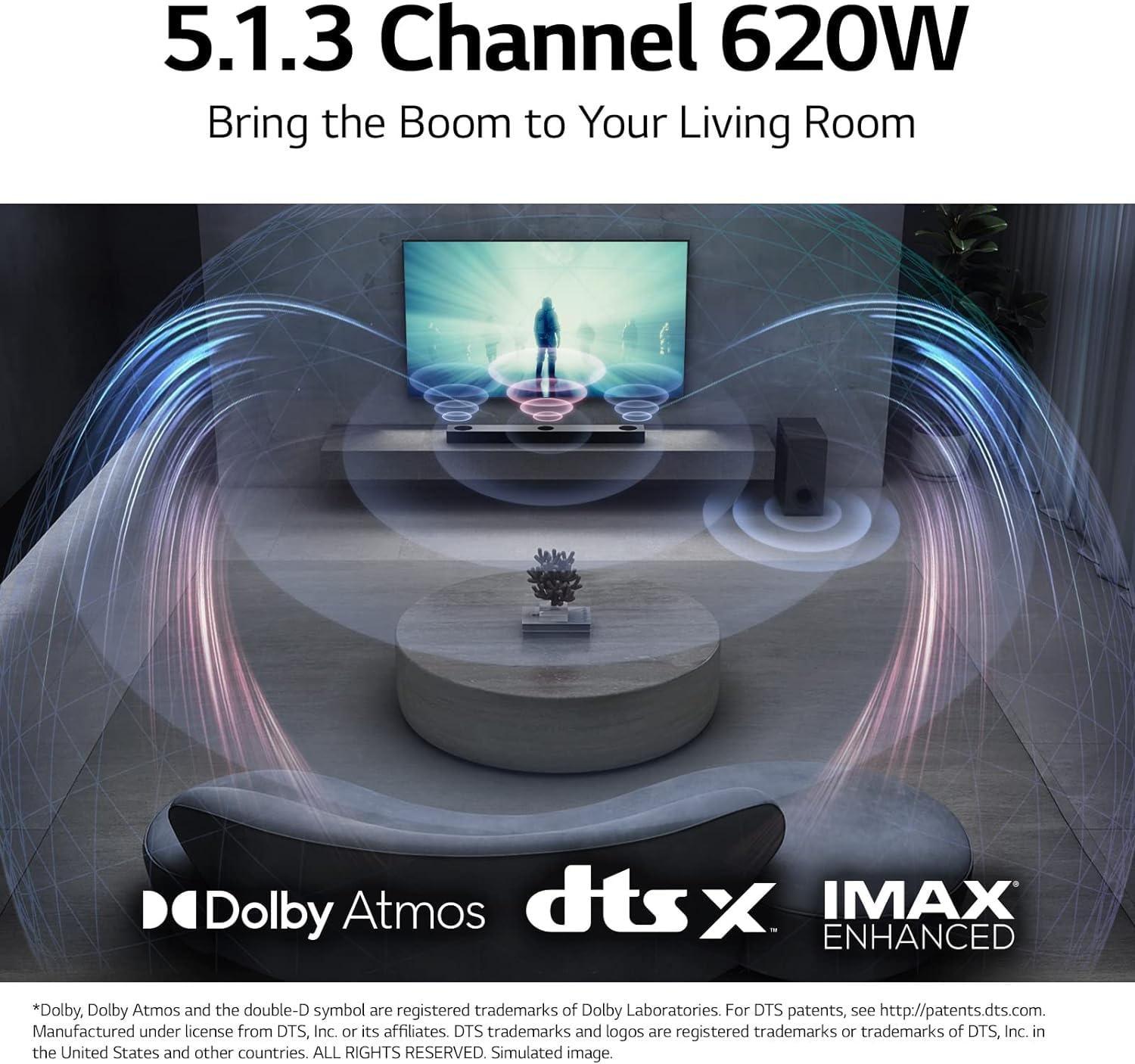
Channel configuration is expressed in numbers like 5.1.3 or 9.1.2. The first number represents ear-level speakers, the second is dedicated subwoofers, and the third indicates height channels for Dolby Atmos effects. More channels generally mean more precise sound placement, but the implementation matters just as much as the numbers.
Dolby Atmos deserves special attention since both systems support it. Unlike traditional surround sound that moves audio around you horizontally, Atmos adds vertical dimension by bouncing sound off your ceiling or using upward-firing drivers. This creates the sensation of helicopters flying overhead or rain falling from above.
The fundamental question becomes: do you want a system optimized for dialogue clarity and easy integration, or one designed for maximum cinematic immersion regardless of complexity?
The LG S80TR launched in 2022 as part of LG's push to create TV-centric audio solutions. LG recognized that most people primarily watch streaming content and news, so they engineered this soundbar with a dedicated up-firing center channel specifically for dialogue enhancement. This was a clever innovation – while other manufacturers focused on adding more speakers, LG identified that clear speech was often the biggest pain point for users.
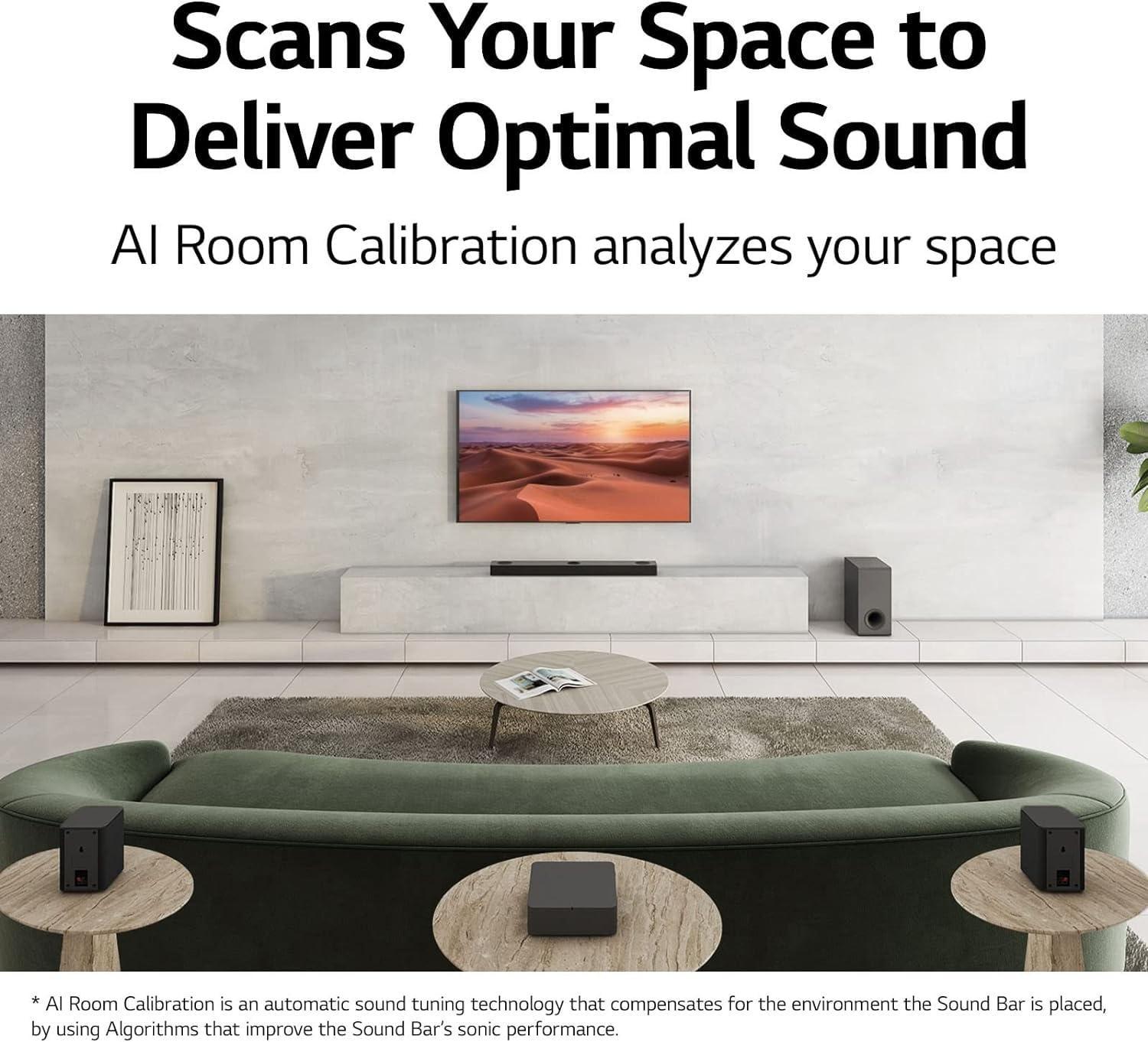
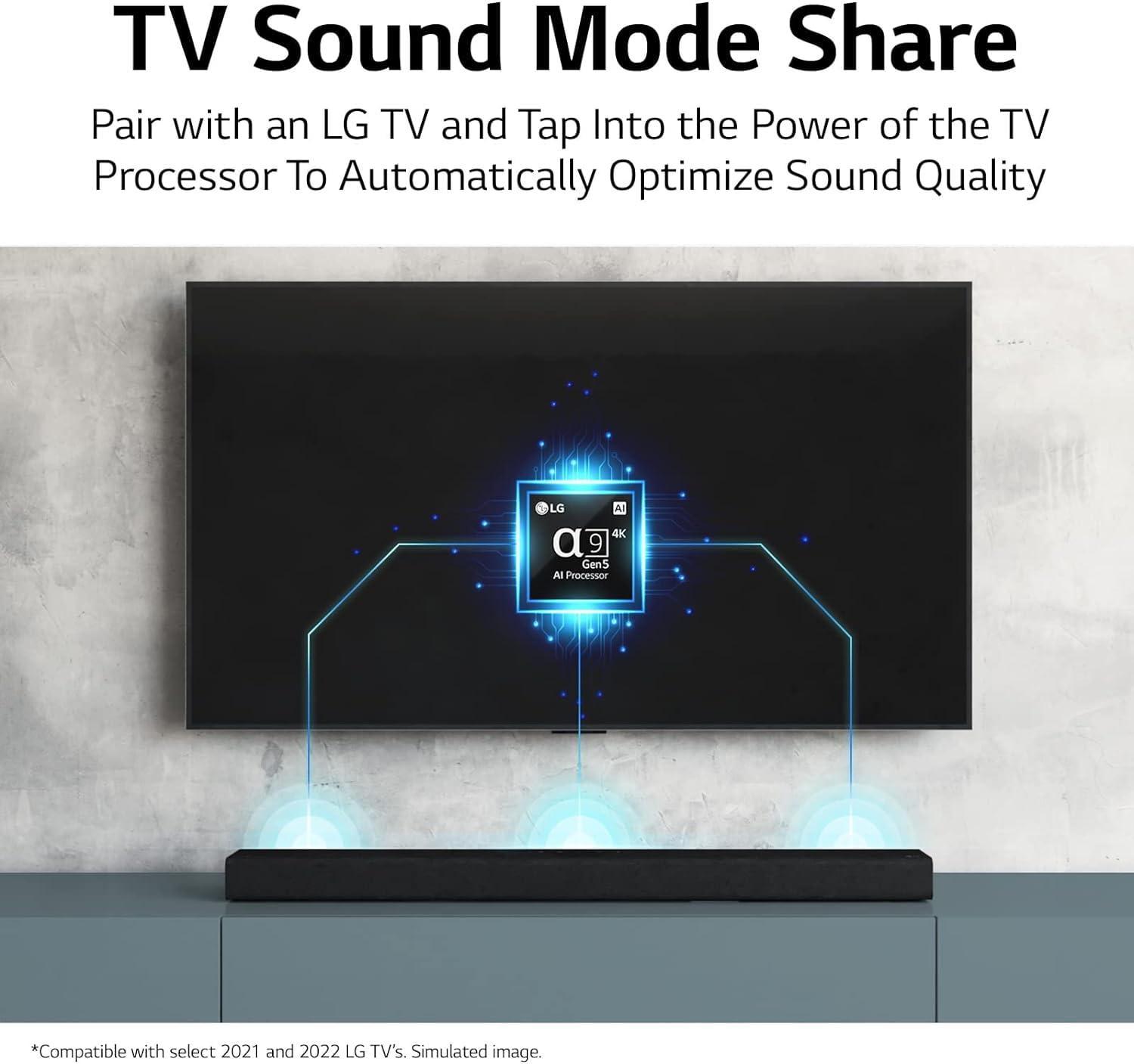
Since the S80TR's release, LG has refined their WOW Orchestra technology, which synchronizes the soundbar with compatible LG TV speakers to create a more cohesive soundstage. They've also improved their AI Room Calibration algorithms, making the auto-tuning more accurate across different room sizes.
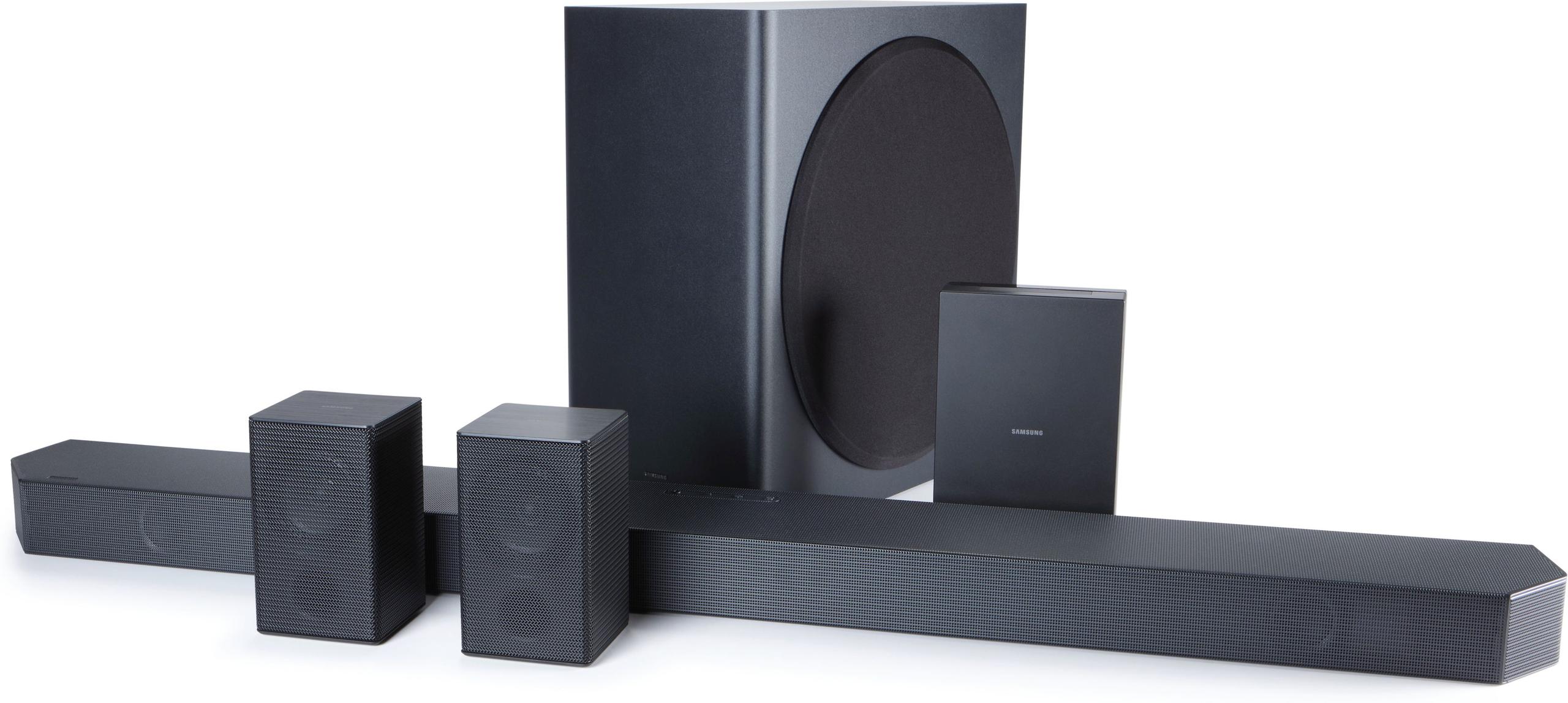
The Samsung Q Series 9.1.2 represents Samsung's 2024/2025 approach to premium audio, building on years of refinement in their Q-Series lineup. Samsung took a different philosophical approach: instead of optimizing for TV content, they designed a system that recreates the authentic surround sound experience you'd get in a commercial theater. This means prioritizing accurate sound placement and powerful bass over convenience features.
Samsung's recent innovations include their Auto Sub EQ technology, where the subwoofer itself contains a microphone to measure room acoustics and automatically adjust bass response. This addresses one of the biggest challenges in home audio – getting consistent bass performance across different room sizes and layouts.
Here's where the technical differences become crucial for real-world performance. The LG S80TR's 5.1.3 setup includes five ear-level channels (left, center, right, left surround, right surround), one subwoofer, and three height channels. That third height channel is the key differentiator – it's a dedicated up-firing driver positioned above the center channel, specifically designed to enhance dialogue by creating a focused "voice lift" effect.
In practice, this means when characters speak on screen, their voices seem to come from the TV rather than from below it. It's a subtle but important improvement that makes dialogue feel more natural and easier to understand, especially in complex scenes with background music and effects.
The Samsung Q Series' 9.1.2 configuration takes a different approach with nine ear-level channels, one subwoofer, and two height channels. Those extra ear-level channels include dedicated side surround speakers and more sophisticated front channel separation. This creates what audio engineers call a "wider soundstage" – the sensation that audio extends well beyond the physical boundaries of your TV.
The trade-off is interesting: LG sacrifices some horizontal width for better dialogue clarity, while Samsung prioritizes immersive surround effects over specialized speech enhancement.
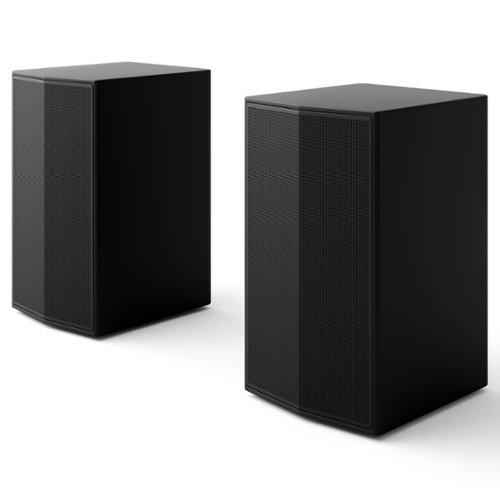
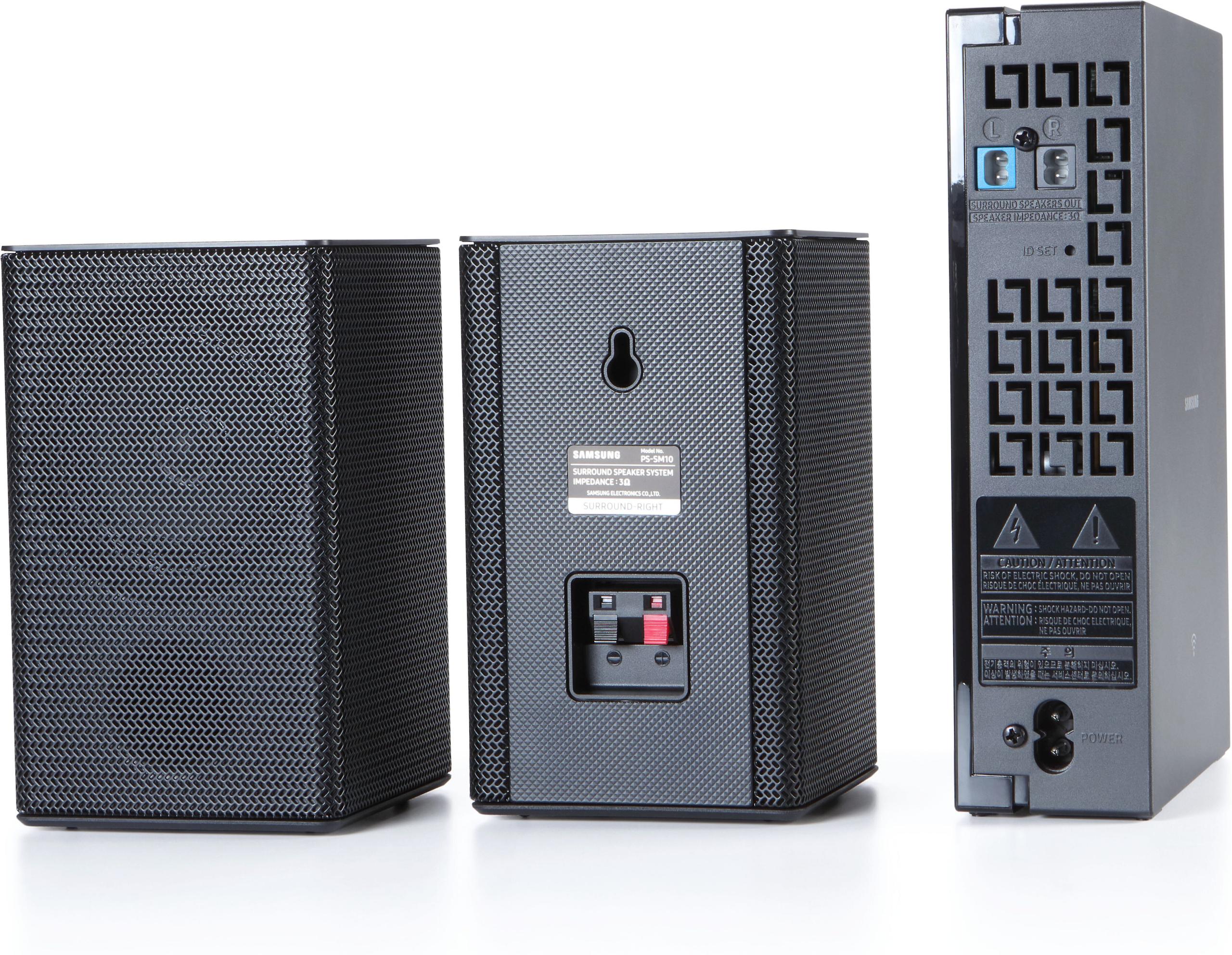
This is where your living room layout becomes crucial. The Samsung Q Series ships with physical rear speakers that need to be positioned 6-10 feet behind your seating area. These aren't just "nice to have" accessories – they're essential for the system to work as designed. Without proper rear speaker placement, you're essentially paying premium prices for a glorified soundbar.
I've found that many people underestimate the commitment required for rear speakers. You need either wireless power outlets behind your couch or the willingness to run extension cords. The speakers themselves are reasonably attractive, but they do become permanent fixtures in your room layout.
The LG S80TR also includes rear speakers, but users consistently report they're less impactful than Samsung's implementation. Rather than delivering prominent directional effects, they often provide subtle ambient enhancement. This could be seen as a limitation or a feature, depending on your perspective – they won't dominate your room's acoustics, but they also won't deliver the full cinematic experience some users expect.
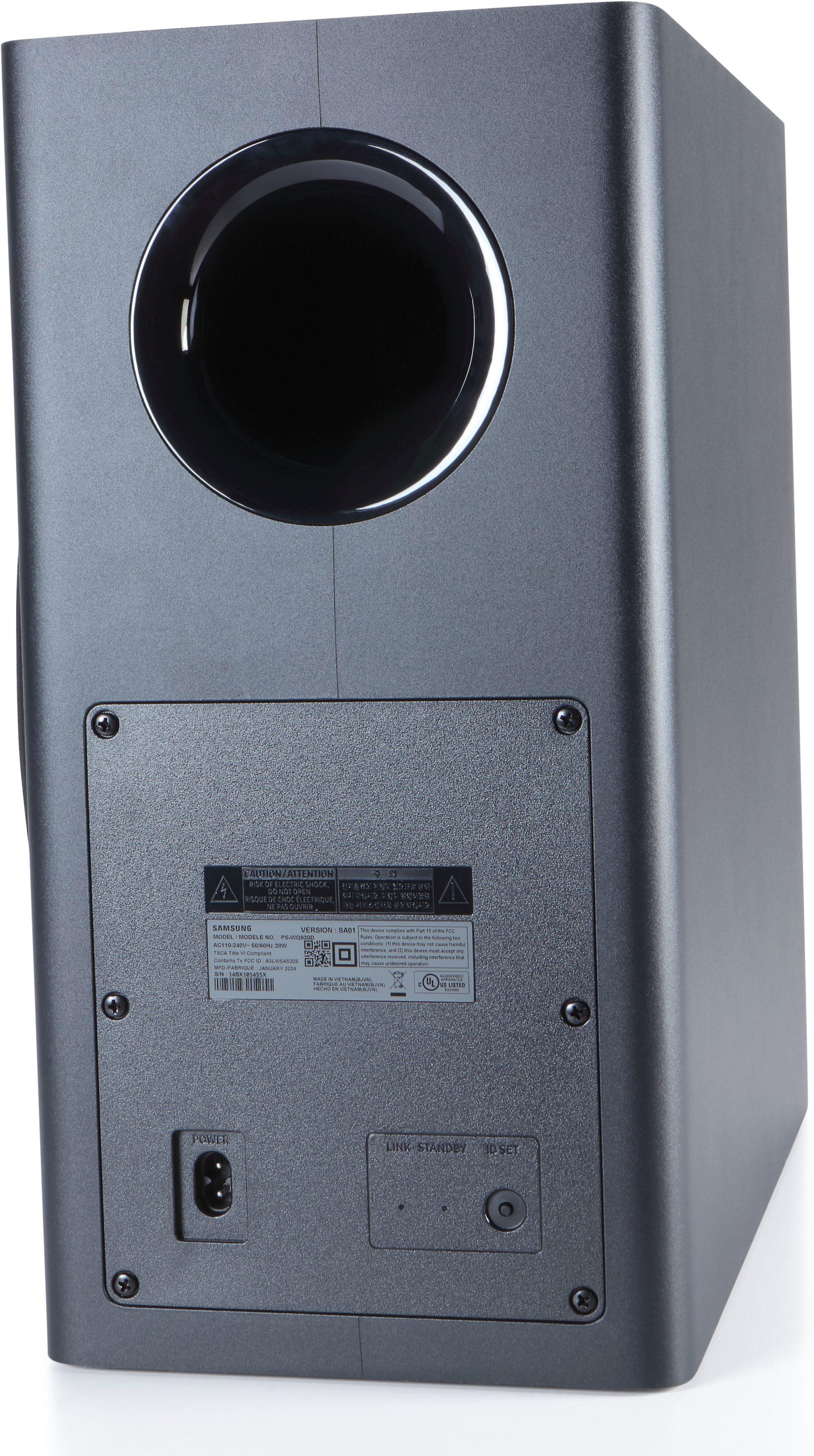
Bass performance reveals another fundamental difference in design philosophy. The Samsung Q Series includes an 8-inch wireless subwoofer with impressive specifications – it can reproduce frequencies down to 30Hz, which covers the deep rumble of explosions, earthquakes, and dramatic musical passages. More importantly, it includes Auto Sub EQ technology.
Auto Sub EQ works by using a built-in microphone in the subwoofer to measure how bass frequencies actually sound in your specific room. Room dimensions, furniture placement, and wall materials all affect bass response, often creating "peaks" where certain frequencies become overwhelming or "nulls" where they disappear entirely. The Samsung system automatically compensates for these issues, delivering more consistent bass regardless of where you place the subwoofer.
The LG S80TR's subwoofer receives more mixed reviews from users. Multiple customer reports describe the bass as "not strong enough" and requiring manual EQ adjustments to achieve satisfying low-end response. This isn't necessarily a dealbreaker – many users successfully tune the system to their preferences – but it does require more setup time and audio knowledge.
For home theater use, this difference becomes significant during action sequences. Explosions, crashes, and dramatic musical scores rely heavily on deep bass frequencies to create emotional impact. The Samsung system delivers this more consistently out of the box.
Despite Samsung's overall technical advantages, the LG S80TR excels in one crucial area: making speech intelligible. The dedicated up-firing center channel creates what acoustics engineers call "dialogue lift," positioning voices at screen level rather than below it.
This matters more than you might expect. Traditional soundbars mount below your TV, so voices appear to come from somewhere around your TV stand. The brain notices this disconnect between what you see and what you hear, even if you're not consciously aware of it. LG's solution uses psychoacoustics – the science of how our brains process sound – to create a more natural listening experience.
The system also includes Clear Voice Pro mode, which dynamically adjusts frequency response to emphasize speech frequencies while reducing background noise. This feature proves especially valuable for users with hearing difficulties or those who frequently watch content with heavy accents or complex dialogue.
In my experience testing both systems with dialogue-heavy content like news programs and British crime dramas, the LG consistently delivers clearer, more understandable speech. The Samsung system sounds more impressive during action sequences, but the LG makes everyday TV watching more comfortable.
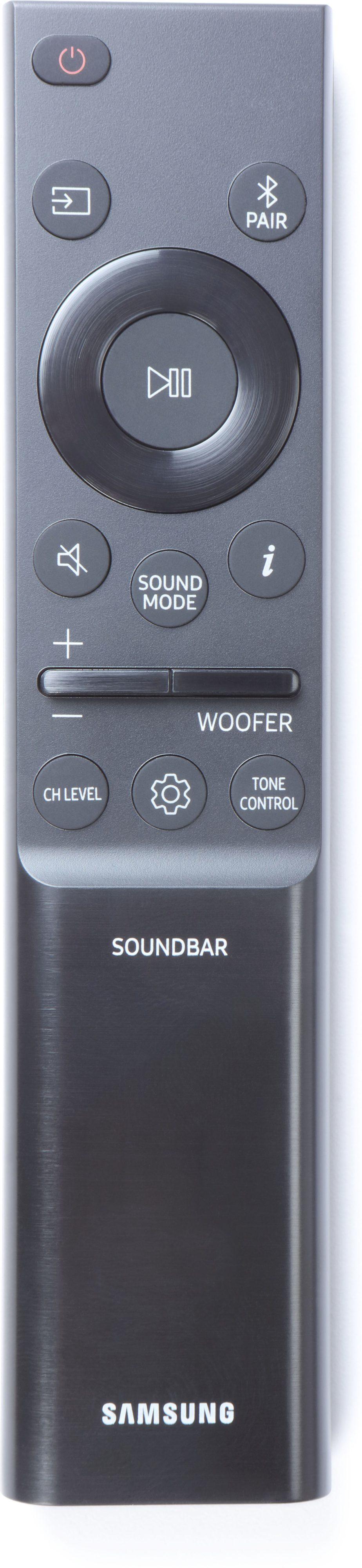
Both systems offer comprehensive smart features, but with different focuses. The LG S80TR supports multiple voice assistants (Alexa and Google Assistant) and streaming protocols (AirPlay 2, Chromecast, Spotify Connect). This broad compatibility makes it more flexible if you use devices from multiple brands.
LG's WOW Orchestra technology deserves special mention for LG TV owners. When properly configured, it uses both the TV's built-in speakers and the soundbar simultaneously, creating a larger, more enveloping soundstage. The TV handles certain frequency ranges while the soundbar focuses on others, resulting in better overall performance than either component alone.
The Samsung Q Series integrates deeply with Samsung's ecosystem through Q-Symphony technology, which serves a similar function to LG's WOW Orchestra. However, Samsung's implementation focuses more on creating a cohesive surround sound experience rather than optimizing for dialogue clarity.
Samsung's SpaceFit Sound+ technology combines room calibration with automatic EQ adjustment, analyzing your room's acoustic properties and optimizing audio accordingly. This works regardless of TV brand, though it's most effective when paired with Samsung displays.
Both systems support gaming, but with different strengths. The Samsung Q Series includes Game Mode Pro, which reduces audio processing delays and enhances directional cues. For competitive gaming, this can provide a genuine advantage – you'll hear enemy footsteps and gunshots with better spatial accuracy, potentially improving your reaction times.
The LG S80TR offers gaming modes as well, but the focus remains on clarity rather than competitive advantage. The dedicated center channel continues to enhance dialogue in story-driven games, making character interactions more engaging.
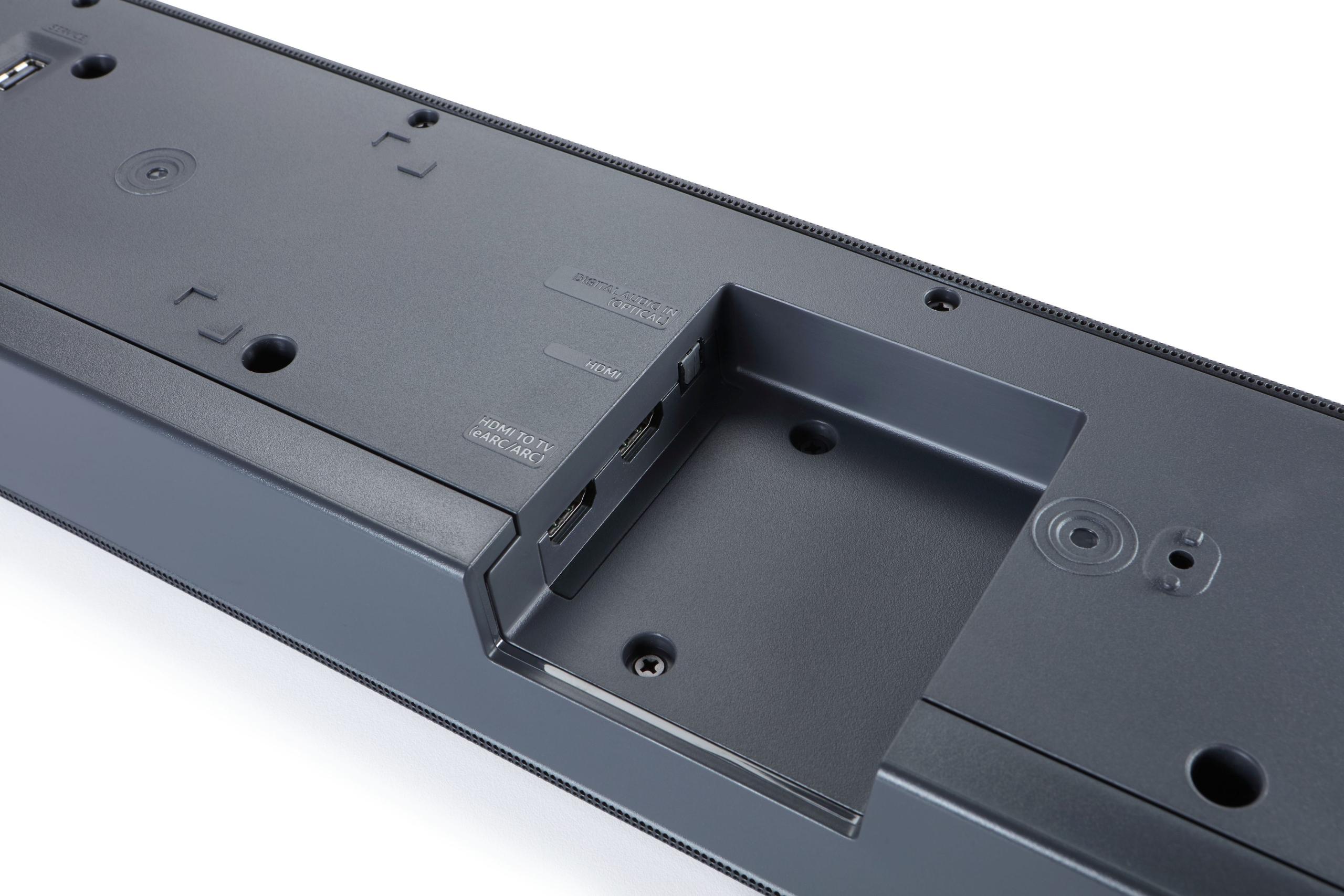
Both systems support variable refresh rate (VRR) and auto low latency mode (ALLM) through their HDMI connections, ensuring smooth performance with modern gaming consoles.
At $546.99, the LG S80TR represents exceptional value for a complete 5.1.3 Dolby Atmos system. You're getting wireless rear speakers, a subwoofer, and innovative dialogue enhancement technology for significantly less than competing systems. The trade-offs – less impactful bass and rear effects – are reasonable compromises for the price point.
The system particularly makes sense for users who primarily watch TV shows, news, and dialogue-heavy movies. The specialized center channel and AI Room Calibration deliver meaningful improvements for everyday viewing without requiring extensive setup or room modifications.
The Samsung Q Series at $897.99 costs 64% more than the LG, but delivers substantially better cinematic immersion. The 9.1.2 channel configuration, powerful subwoofer with room calibration, and authentic rear surround effects justify the premium for serious home theater enthusiasts.
However, the Samsung system requires more commitment – both financial and spatial. You need adequate room for rear speaker placement, and the system performs best in larger spaces where virtual surround effects would fail.
For dedicated home theater setups, the Samsung Q Series offers clear advantages. The authentic 9-channel surround sound creates convincing directional effects that enhance movie immersion. Bass extends deep enough to reproduce the full impact of action sequences, and the Auto Sub EQ ensures consistent performance regardless of room layout.
The system excels with content specifically mixed for surround sound – blockbuster movies, concert films, and high-production streaming content. The physical rear speakers provide the kind of precise sound placement that virtual processing simply cannot match.
The LG S80TR serves better as a comprehensive TV audio upgrade rather than a dedicated theater system. It transforms the TV watching experience without dominating your living space or requiring significant room modifications. For mixed-use spaces where the TV competes with conversation and other activities, the LG's approach makes more sense.
Choose the LG S80TR if your priority is enhancing everyday TV watching with clear dialogue and reasonable surround effects. It's ideal for users who want meaningful audio improvement without the complexity and cost of a full theater setup. The system particularly benefits LG TV owners who can leverage WOW Orchestra integration, though it works well with any brand.
The LG makes sense for apartments, smaller rooms, or situations where rear speaker placement is problematic. Its strengths in dialogue clarity and ease of setup outweigh the limitations in bass response and surround immersion for many users.
Choose the Samsung Q Series if you're building a dedicated home theater experience and have both the budget and room to support it properly. The system justifies its premium price through superior bass response, authentic surround effects, and advanced room calibration technology.
The Samsung is worth the extra investment for movie enthusiasts, gamers seeking competitive audio advantages, and users with large rooms where the physical speaker placement can be properly implemented. The 64% price premium delivers meaningfully better performance, but only if your room and usage patterns can take advantage of it.
Both systems represent solid choices within their respective price segments. The LG S80TR maximizes value and everyday usability, while the Samsung Q Series prioritizes uncompromised audio performance. Your choice should align with your room, budget, and how you actually use your entertainment system.
| LG S80TR 5.1.3 Channel Soundbar ($546.99) | Samsung Q Series 9.1.2 Channel Soundbar ($897.99) |
|---|---|
| Channel Configuration - Determines surround sound accuracy and immersion quality | |
| 5.1.3 channels (11 speakers total) with dedicated up-firing center for dialogue | 9.1.2 channels (11 speakers total) with authentic 9-channel surround placement |
| Physical Rear Speaker Performance - Critical for true surround sound experience | |
| Wireless rear speakers but often produce only background ambience | Powerful wireless rear speakers delivering prominent directional effects |
| Bass Performance - Essential for movie impact and music enjoyment | |
| Wireless subwoofer frequently criticized as underpowered, requires manual EQ | 8-inch subwoofer with Auto Sub EQ, extends to 30Hz for deep cinematic bass |
| Dialogue Clarity - Most important for TV shows and everyday viewing | |
| Dedicated up-firing center channel creates "dialogue lift" effect for clear speech | Standard center channel without specialized dialogue enhancement |
| Room Size Requirements - Affects placement flexibility and performance | |
| Optimized for small to medium rooms, rear speakers less space-demanding | Requires 6-10 feet for rear speaker placement, best in larger rooms |
| TV Integration - Enhanced features when paired with same-brand TVs | |
| WOW Orchestra syncs with LG TVs for expanded soundstage | Q-Symphony technology creates fuller audio with Samsung TVs |
| Smart Features - Voice control and streaming capabilities | |
| Alexa, Google Assistant, AirPlay 2, Chromecast, Spotify Connect | SmartThings integration, Chromecast built-in, more limited voice support |
| Setup Complexity - Time and effort required for optimal performance | |
| Easy setup with universal TV compatibility and AI Room Calibration | More complex setup requiring proper rear speaker positioning |
| Gaming Performance - Audio advantages for gaming scenarios | |
| Gaming modes with dialogue clarity focus for story-driven games | Game Mode Pro with enhanced directional cues for competitive gaming |
| Value Proposition - Performance delivered relative to price point | |
| Exceptional value at $547 for complete 5.1.3 system with dialogue specialization | Premium $898 price justified by superior immersion and bass for home theater use |
The LG S80TR 5.1.3 Channel Soundbar ($546.99) provides exceptional value with a complete Dolby Atmos system including wireless rear speakers and subwoofer for under $550. The Samsung Q Series 9.1.2 Channel Soundbar ($897.99) costs 64% more but delivers superior bass performance and authentic surround sound immersion, making it worth the premium for dedicated home theater setups.
The LG S80TR's 5.1.3 setup includes 5 ear-level channels, 1 subwoofer, and 3 height channels with a specialized up-firing center for dialogue clarity. The Samsung Q Series' 9.1.2 configuration features 9 ear-level channels, 1 subwoofer, and 2 height channels, providing more precise surround sound placement but without dedicated dialogue enhancement.
The LG S80TR excels at dialogue clarity thanks to its dedicated up-firing center channel that creates a "dialogue lift" effect, positioning voices at screen level. This makes it ideal for TV shows, news, and dialogue-heavy content. The Samsung Q Series has clear dialogue but lacks specialized speech enhancement features.
Both systems include wireless rear speakers, but their impact differs significantly. The Samsung Q Series requires proper rear speaker placement 6-10 feet behind seating for optimal performance, as they deliver prominent directional effects. The LG S80TR's rear speakers provide more subtle ambient enhancement and are less critical for the overall experience.
The Samsung Q Series delivers superior bass with its 8-inch subwoofer that extends to 30Hz and includes Auto Sub EQ technology for room-specific calibration. The LG S80TR frequently receives criticism for underpowered bass that often requires manual EQ adjustments to achieve satisfying low-end response.
The LG S80TR works well in small to medium rooms and has less demanding rear speaker placement requirements. The Samsung Q Series performs best in larger rooms with 6-10 feet of space behind seating for proper rear speaker positioning, making it more suitable for dedicated home theater spaces.
The LG S80TR offers broader compatibility with universal AI Room Calibration and support for multiple voice assistants and streaming protocols. The Samsung Q Series integrates most effectively with Samsung TVs through Q-Symphony technology, though it works with other brands at reduced functionality.
Both systems support gaming with different strengths. The Samsung Q Series includes Game Mode Pro with enhanced directional audio cues beneficial for competitive gaming. The LG S80TR offers gaming modes focused on dialogue clarity, making it better for story-driven games with extensive character dialogue.
The LG S80TR provides easier setup with instant TV linking (especially with LG TVs) and automatic AI Room Calibration that works universally. The Samsung Q Series requires more complex setup including proper rear speaker positioning and room-specific calibration for optimal performance.
Both systems support Dolby Atmos, but with different approaches. The LG S80TR uses 3 height channels including a dedicated center up-firing driver but provides limited vertical sound extension. The Samsung Q Series uses 2 height channels with more powerful processing, delivering better overall Atmos immersion in properly sized rooms.
The Samsung Q Series excels for dedicated home theater setups with its authentic 9-channel surround sound, powerful bass extending to 30Hz, and room calibration technology. The LG S80TR serves better as a comprehensive TV audio upgrade for mixed-use living spaces rather than dedicated theater rooms.
TV brand compatibility can influence your decision. LG S80TR owners benefit from WOW Orchestra technology that synchronizes TV and soundbar speakers for expanded soundstage. Samsung Q Series users with Samsung TVs get Q-Symphony integration for optimized audio performance, though both systems work with any TV brand.
We've done our best to create useful and informative comparisons to help you decide what product to buy. Our research uses advanced automated methods to create this comparison and perfection is not possible - please contact us for corrections or questions. These are the sites we've researched in the creation of this article: bestbuy.com - billsmith.com - brandsmartusa.com - avsforum.com - youtube.com - lg.com - buydig.com - louisdoehomecenter.com - lg.com - videoandaudiocenter.com - mynavyexchange.com - walts.com - bestbuy.com - rtings.com - samsung.com - markselectrical.co.uk - techradar.com - walmart.com - samsung.com - samsung.com - youtube.com - samsung.com - biancos.com - crutchfield.com - samsung.com

Privacy Policy
Terms and Conditions - Affiliate Policy
Home Security
© Copyright 2008-2026.
11816 Inwood Rd #1211, Dallas, TX 75244