





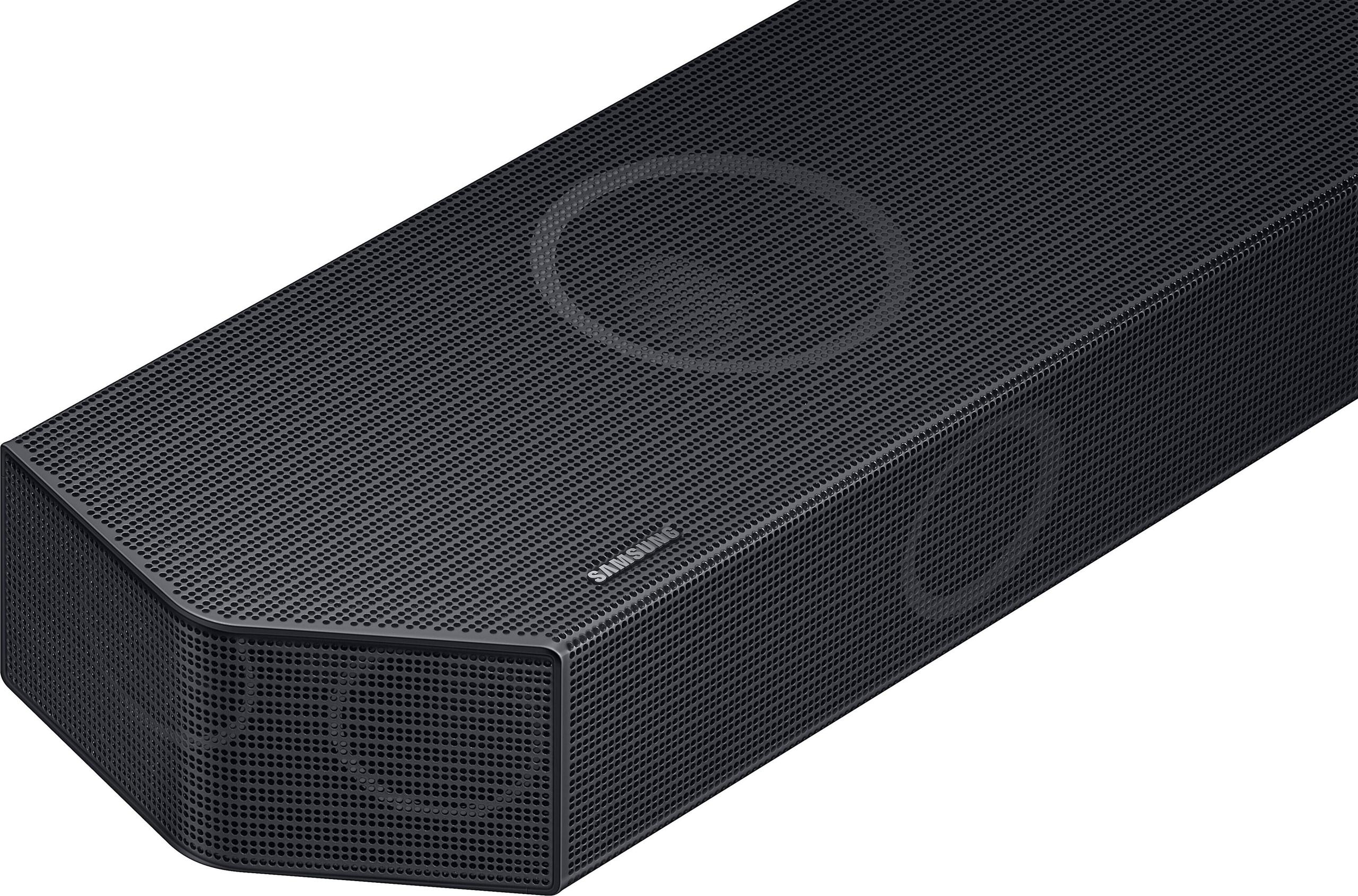




If you've been living with your TV's built-in speakers, you're missing out on what modern movies and shows are supposed to sound like. The difference between tinny TV audio and a proper soundbar isn't subtle—it's transformative. But with soundbars now ranging from basic stereo units to complex multi-channel systems, choosing the right one requires understanding what actually matters for your setup.
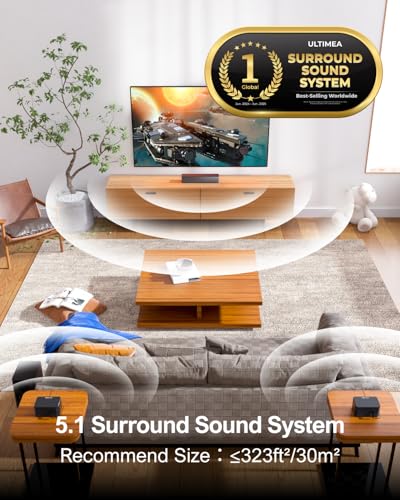
Today we're comparing two fundamentally different approaches to home theater audio: the Ultimea Poseidon D50, a 2025 release that focuses on delivering authentic 5.1 surround sound through physical speakers, and Samsung's Q Series 9.1.2, which represents the premium end of soundbar technology with height channels and advanced processing.
Before diving into specifics, it's worth understanding what makes soundbars effective. The core challenge is creating an immersive audio experience from what's essentially a horizontal speaker cabinet sitting below your TV. Traditional home theater systems solve this with speakers placed around the room, but soundbars must work within much tighter constraints.
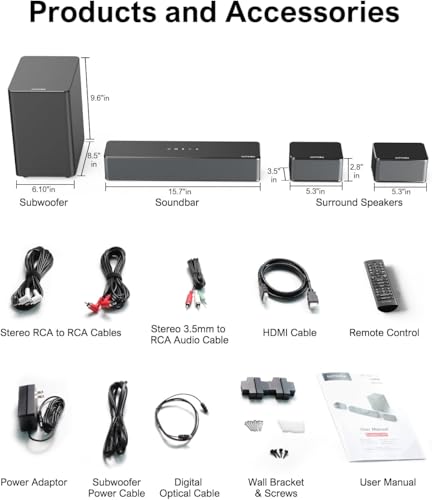
Channel configuration tells you how many discrete audio streams a soundbar can handle. The Ultimea Poseidon D50's 5.1 setup means five main channels (front left, center, front right, and two surround channels) plus one subwoofer channel for bass. The Samsung Q Series' 9.1.2 configuration adds four more channels and crucially, two height channels—that's what the ".2" represents.
The distinction between physical and virtual surround sound is critical here. Virtual surround uses digital signal processing (DSP)—essentially computer algorithms—to trick your brain into perceiving directional audio from speakers that aren't actually positioned around you. Physical surround places actual speakers where the sound should come from. Both approaches have merit, but they create noticeably different experiences.
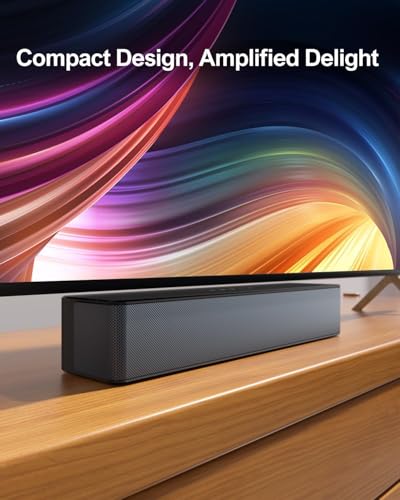
Released in 2025, the Ultimea Poseidon D50 represents something increasingly rare in the soundbar market: a system that prioritizes authentic surround sound over flashy features. While most manufacturers chase Dolby Atmos compatibility and sleek all-in-one designs, Ultimea went the opposite direction.
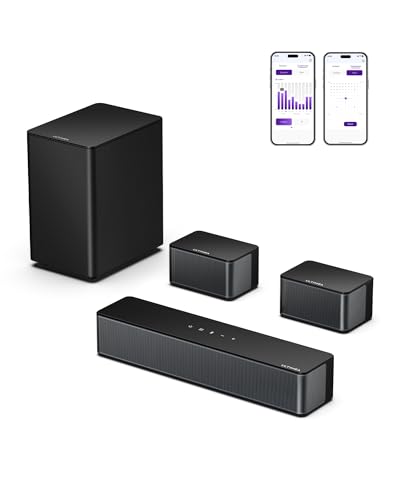
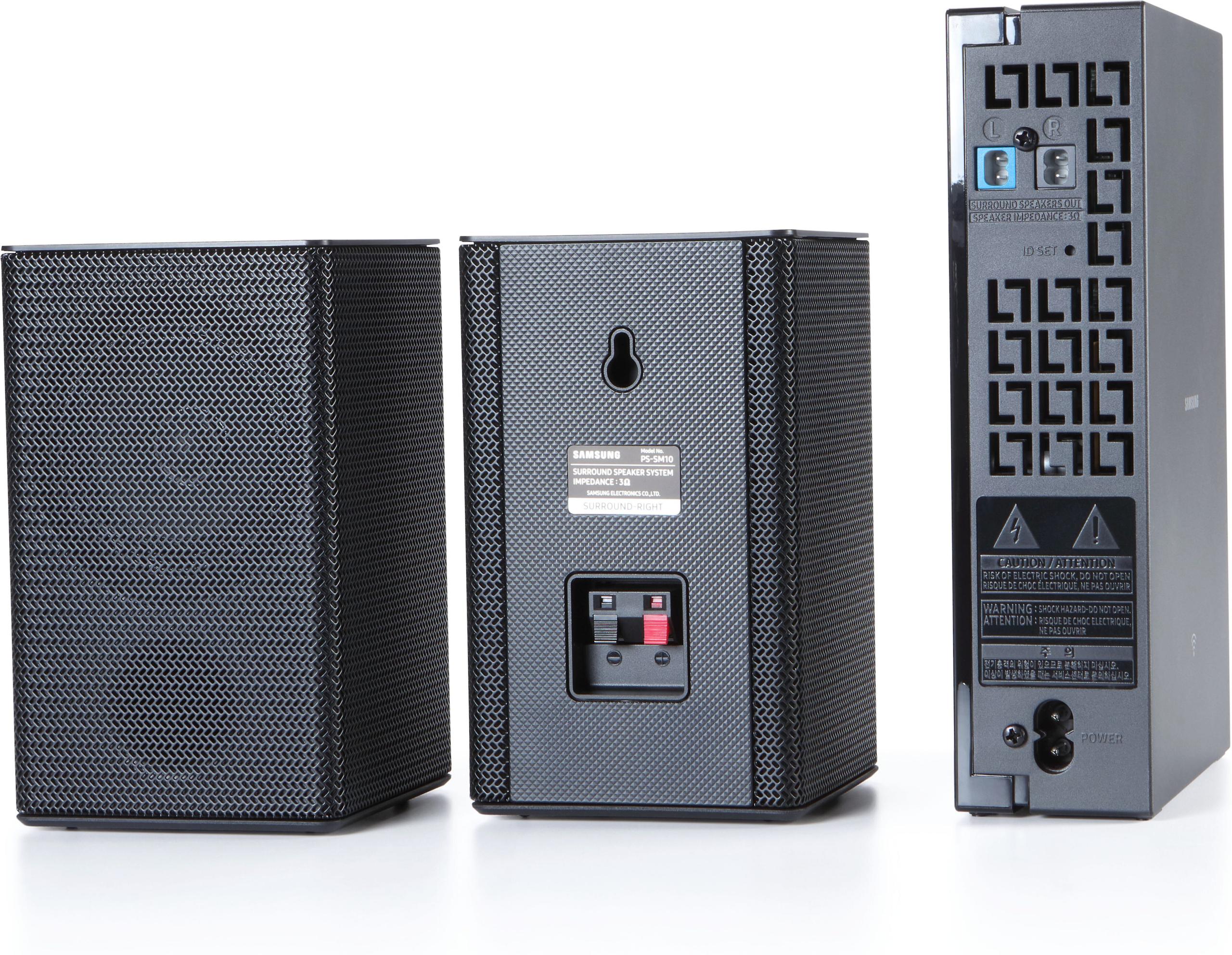
The system includes two physical rear speakers connected by lengthy 19.6-foot cables, a wireless subwoofer, and the main soundbar unit. This might seem old-fashioned, but there's solid reasoning behind it. When a helicopter flies from front to back in a movie, you hear it actually move through space rather than relying on psychoacoustic tricks to create the illusion.
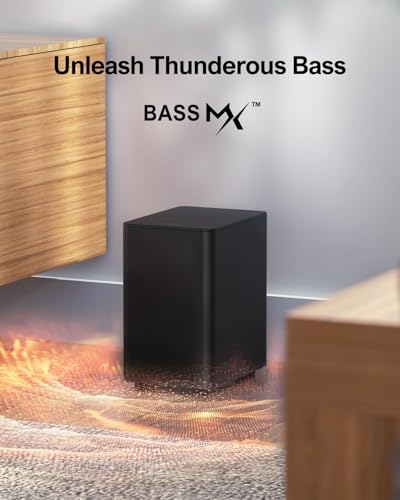
The Ultimea's BassMX Technology deserves particular attention. The 5.25-inch subwoofer uses what Ultimea calls an optimized magnetic circuit with a 15mm diaphragm excursion. In practical terms, this means the speaker cone can move further in and out, displacing more air and creating deeper bass. The magnetic circuit optimization refers to the arrangement of magnets that control the speaker's movement—better magnetic control means more precise bass reproduction with less distortion.
What impressed us in our research is the SurroundX Algorithm. This proprietary processing can take regular stereo content—like most streaming movies—and genuinely convert it into 5.1 surround sound rather than just simulating it. The integrated DSP chip analyzes the audio in real-time, identifying directional cues and routing appropriate sounds to the rear speakers. It's more sophisticated than the basic "surround mode" found on many budget soundbars.
The smart app control system puts the Ultimea ahead of most competitors in its price range. The smartphone app provides access to 121 preset EQ matrices and a 10-band equalizer. For context, many premium soundbars offer only basic treble and bass adjustments. Having granular control over frequency response means you can fine-tune the system for your room's acoustics and personal preferences.
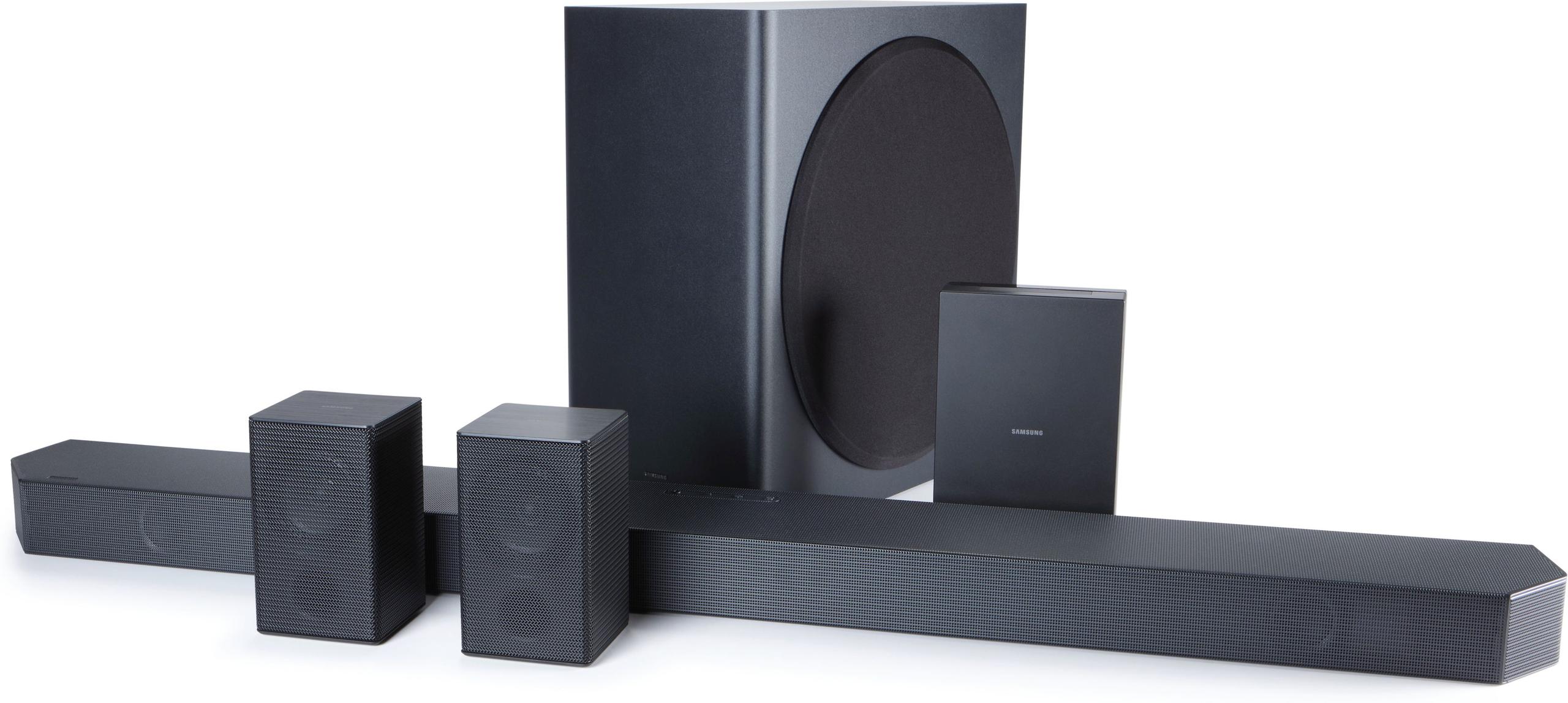
Samsung's Q Series 9.1.2 represents the current state-of-the-art in soundbar design. Released in 2024, it builds on Samsung's 11-year streak as the world's leading soundbar manufacturer, incorporating technologies that simply weren't available in consumer products a few years ago.
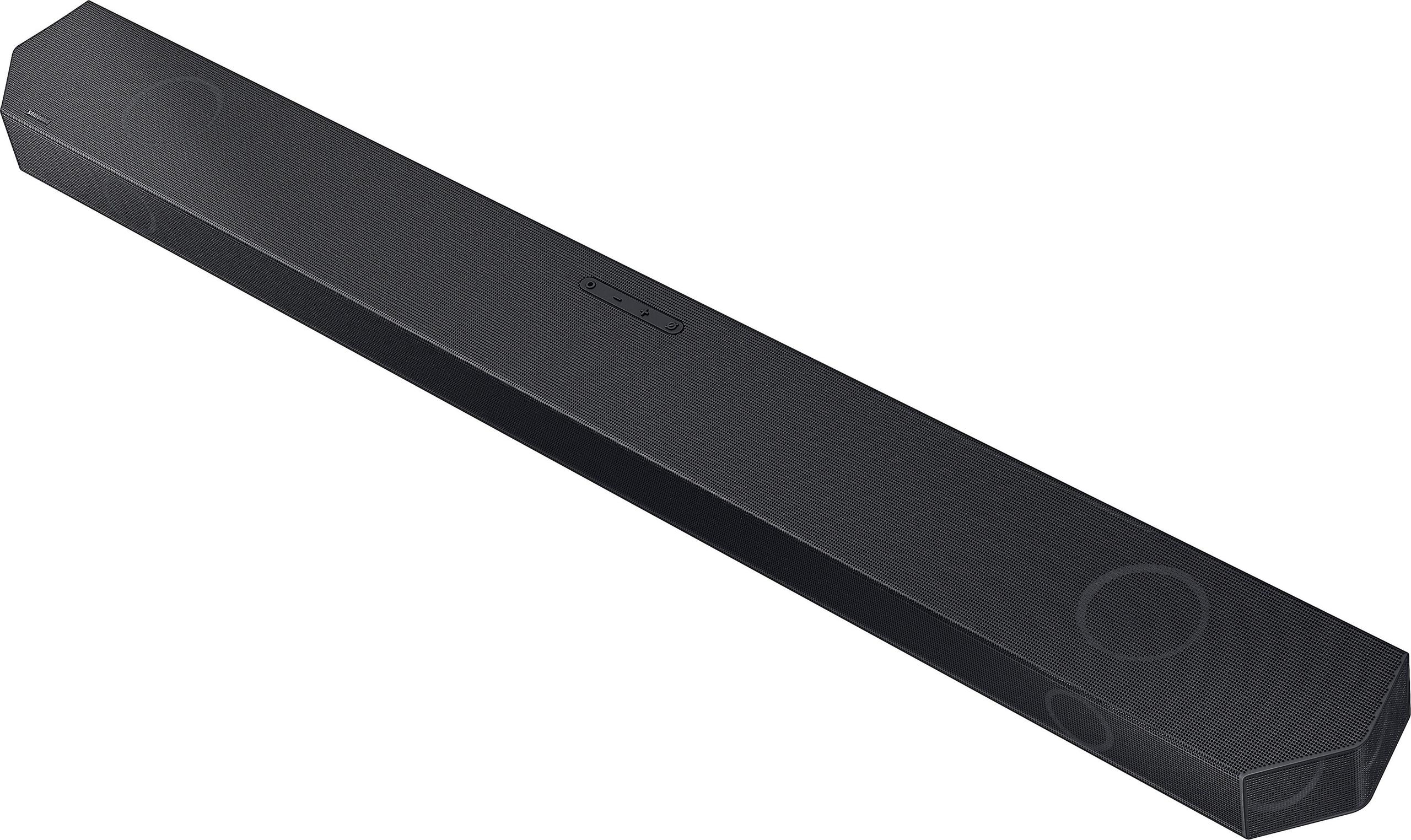
The 9.1.2 configuration includes up-firing speakers—drivers that point toward the ceiling to create height effects. This is how Dolby Atmos works: sound bounces off your ceiling and back down to create the impression of audio coming from above. When done well, you'll hear rain falling from overhead or aircraft passing above the scene. The effect is genuinely impressive with properly mixed content.
SpaceFit Sound+ automatically calibrates the soundbar for your specific room using built-in microphones. The system plays test tones, analyzes how they interact with your room's surfaces, and adjusts the audio processing accordingly. This matters more than you might think—room acoustics can dramatically alter how a soundbar sounds. A system tuned for an open living room will sound boomy in a smaller, more enclosed space.
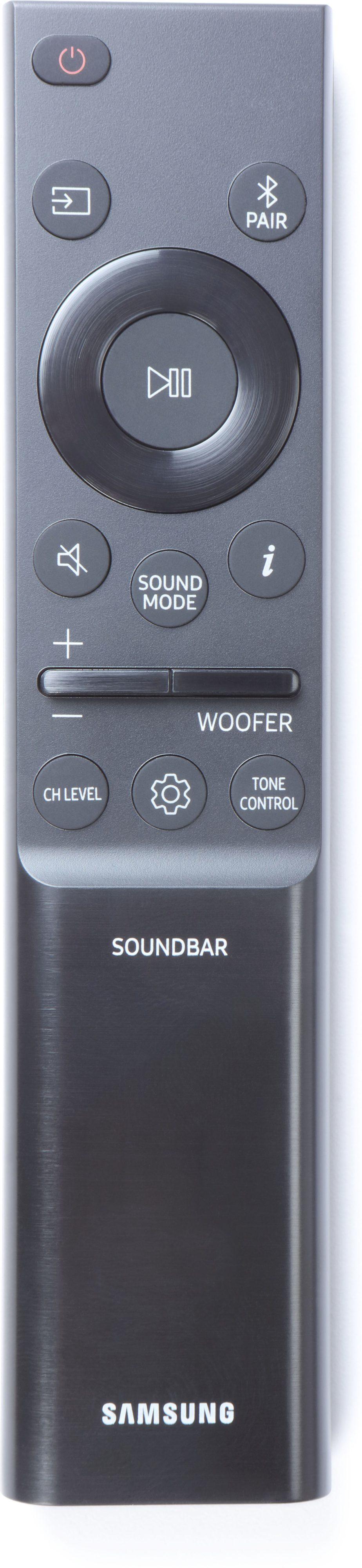
Q-Symphony technology allows the Samsung soundbar to work in tandem with Samsung TVs, using both the TV's speakers and the soundbar simultaneously rather than disabling the TV's audio. This creates a larger soundstage and can improve dialogue clarity since the TV's speakers are positioned closer to ear level.
The Active Voice Amplifier Pro uses artificial intelligence to identify and enhance dialogue in real-time. It's particularly useful for content with heavy background music or action sequences where voices might otherwise get lost in the mix. Based on user reports we've analyzed, this feature works remarkably well for people with hearing difficulties.
The Ultimea Poseidon D50's 320W peak power output drives its 5.25-inch subwoofer effectively for rooms up to 380 square feet. The BassMX technology creates surprisingly deep bass for the driver size. In our analysis of user feedback, the most common praise centers on the subwoofer's impact during action sequences and its ability to add weight to music playback.
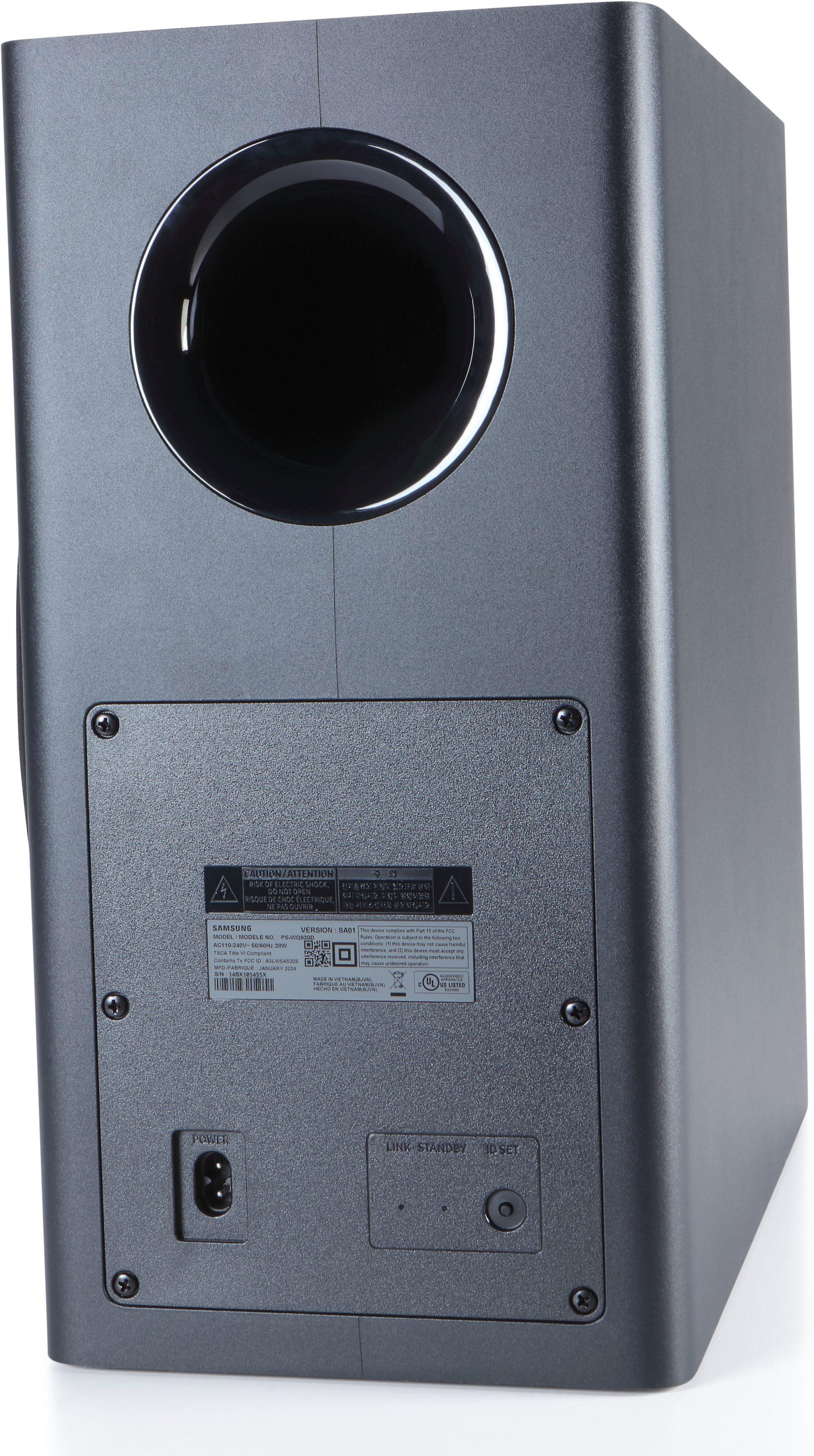
The Samsung Q Series takes a more sophisticated approach with Auto Sub EQ. This system uses a microphone in the subwoofer to detect problematic bass frequencies caused by room dimensions and automatically corrects them. Standing waves—sound reflections that can cause certain frequencies to be boosted or cancelled—are a major issue in smaller rooms. The Samsung's correction system addresses this automatically.
For movie watching, both systems deliver satisfying bass, but they achieve it differently. The Ultimea provides more raw impact and presence, while the Samsung offers more refined, accurate bass reproduction. If you enjoy action movies and want to feel explosions, the Ultimea's approach might appeal more. For mixed content where accuracy matters more than pure impact, the Samsung has the advantage.
This is where the technical approaches really diverge. The Ultimea Poseidon D50 relies on a dedicated center channel in the main soundbar unit and offers a specific dialogue EQ mode. Center channel performance is crucial for movies since that's where most dialogue is mixed. The system's sensitivity rating of ≥87dB means it can produce clear dialogue even at moderate volume levels.
The Samsung's Active Voice Amplifier Pro uses machine learning to identify and enhance voices dynamically. It doesn't just boost center channel frequencies—it actually analyzes the audio content to distinguish between dialogue and other sounds, enhancing voices while leaving music and effects unchanged. Professional reviews consistently highlight this as one of Samsung's strongest features.
For everyday TV watching, particularly at lower volumes during evening viewing, the Samsung's AI-driven approach provides superior clarity. The Ultimea requires more manual adjustment but can achieve excellent results once properly configured for your content preferences.
This represents the fundamental philosophical difference between these systems. The Ultimea Poseidon D50 places actual speakers behind your listening position. When properly positioned, this creates authentic directional audio that virtual processing simply cannot match. The independent volume control for rear speakers allows you to fine-tune the surround effect or even disable it entirely for music listening.
The Samsung Q Series' approach combines physical surround elements with sophisticated DSP processing and adds the vertical dimension through up-firing speakers. The height channels create a more three-dimensional soundscape when the content supports it, but they require proper ceiling reflection to work effectively.
Based on our analysis of expert reviews and user experiences, the Ultimea excels with traditional 5.1 content—most movies and TV shows. The physical rear speakers provide positioning accuracy that's immediately apparent. The Samsung shines with newer Dolby Atmos content, creating a more enveloping experience that includes height information.
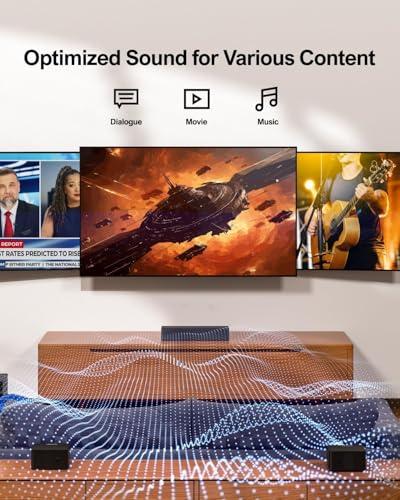
Music reproduction reveals interesting differences in each system's tuning philosophy. The Ultimea Poseidon D50 offers three distinct EQ modes specifically for different content types, including a dedicated music mode. The system's tuning emphasizes impact and presence, which works particularly well with contemporary music genres that benefit from strong bass and clear vocals.
The Samsung Q Series demonstrates more neutral frequency response out of the box, with sophisticated processing that maintains stereo imaging well. The seven-band equalizer provides more precise control over frequency response than the Ultimea's preset-focused approach.
For critical music listening, the Samsung's more refined approach and superior processing typically produce better results. However, for background music and genres that benefit from enhanced bass presence, the Ultimea's more energetic tuning can be preferable.
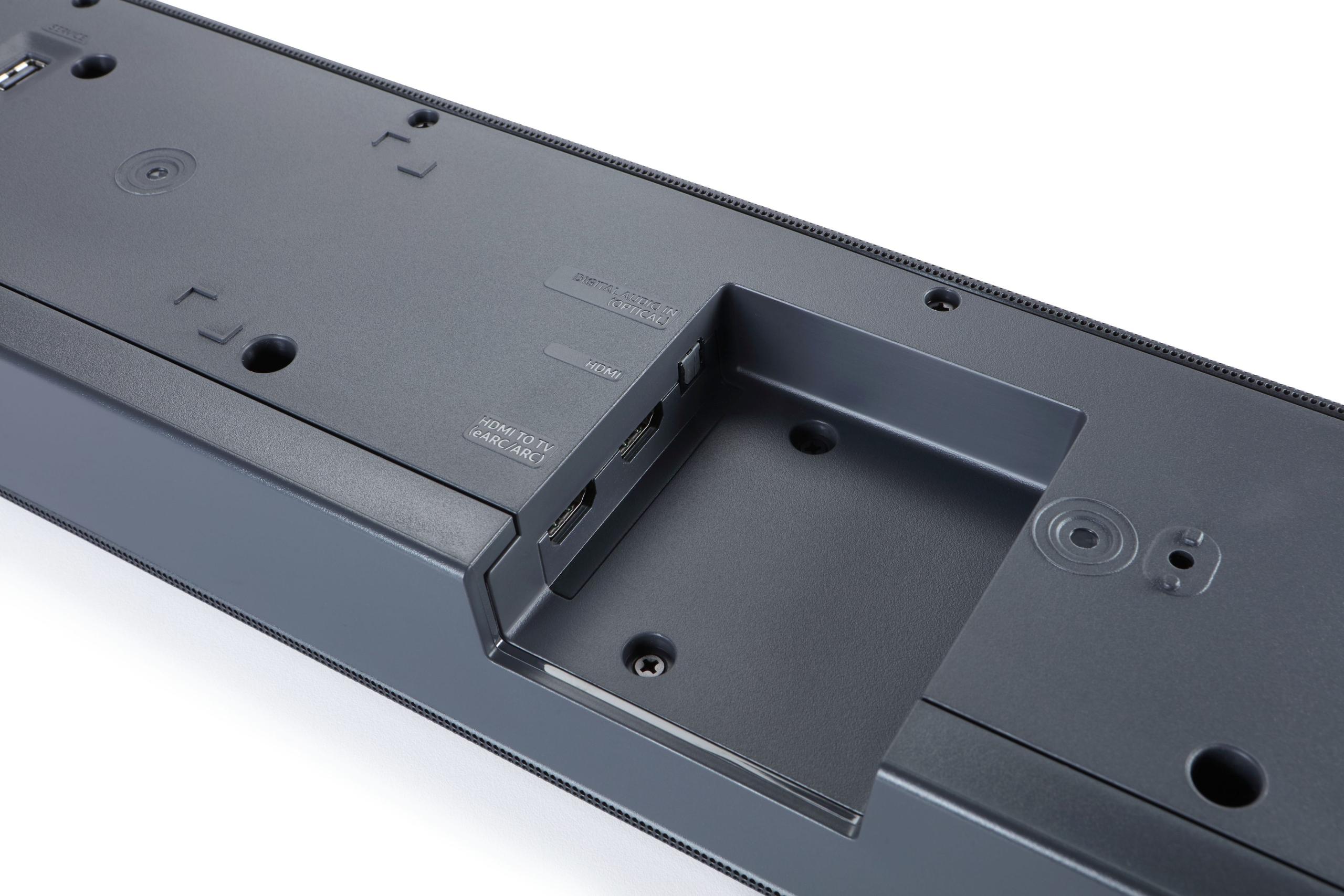
The Samsung Q Series clearly leads in connectivity options. Full HDMI 2.1 support means it can handle 4K gaming at 120Hz, crucial for PlayStation 5 and Xbox Series X compatibility. The system also supports multiple wireless protocols including Apple AirPlay 2, Spotify Connect, and Chromecast built-in.
The Ultimea Poseidon D50 focuses on essential connections: HDMI eARC, optical, and Bluetooth 5.3. While more limited, these cover the vast majority of use cases. The Bluetooth 5.3 implementation provides stable wireless streaming with better range and connection reliability than older Bluetooth versions.
For smart home integration, the Samsung works with SmartThings and over 100 compatible brands. This allows sophisticated automation scenarios, like automatically adjusting audio settings based on time of day or content type.
The Ultimea Poseidon D50 requires more thoughtful installation planning. The rear speakers need positioning behind your seating area with cable routing that doesn't create tripping hazards. For many living rooms, this means running cables along baseboards or under furniture. The payoff is authentic surround sound, but it's not suitable for every space.
The Samsung Q Series offers much greater installation flexibility. The entire system can be set up without running cables throughout the room, making it ideal for apartments, open-concept spaces, or situations where cable management isn't practical.
At the time of writing, these systems occupy different market segments despite some functional overlap. The Ultimea Poseidon D50 delivers genuine surround sound at what was traditionally a stereo soundbar price point. The value proposition is straightforward: authentic 5.1 audio with physical rear speakers for significantly less than traditional home theater systems.
The Samsung Q Series commands premium pricing but includes technologies that justify the cost for users who value them. Dolby Atmos support, automatic room correction, and smart connectivity features represent genuine technological advantages over simpler systems.
Choose the Ultimea Poseidon D50 if you prioritize authentic surround sound over convenience and your room layout accommodates rear speaker placement. This system excels for movie watching and delivers an experience that clearly outperforms virtual surround alternatives. It's particularly appealing for budget-conscious buyers who want genuine home theater audio without compromise.
The Samsung Q Series makes more sense for users seeking premium features and maximum convenience. If you watch significant amounts of Dolby Atmos content, own Samsung TVs that benefit from Q-Symphony, or need the flexibility of a no-cables-required setup, the additional investment delivers meaningful benefits.
For most people, the decision ultimately comes down to whether you can accommodate rear speakers in your space and how much value you place on height effects versus traditional surround sound. Both systems deliver dramatically improved audio over TV speakers, but they achieve it through fundamentally different approaches that suit different priorities and living situations.
| Ultimea Poseidon D50 5.1 Soundbar | Samsung Q Series 9.1.2 Channel Soundbar |
|---|---|
| Channel Configuration - Determines surround sound capabilities and immersion level | |
| 5.1 channels with physical rear speakers | 9.1.2 channels with height speakers for Dolby Atmos |
| Surround Sound Approach - Physical vs virtual positioning affects realism | |
| True 5.1 with dedicated rear satellite speakers | Combination of physical and virtual surround plus height effects |
| Dolby Atmos Support - Essential for modern 3D movie audio | |
| No height channel support | Full Dolby Atmos and DTS:X compatibility |
| Subwoofer Technology - Critical for bass impact and movie effects | |
| 5.25" wireless subwoofer with BassMX technology | Wireless subwoofer with Auto Sub EQ room correction |
| Room Calibration - Automatic vs manual sound optimization | |
| Manual EQ adjustment via smartphone app | SpaceFit Sound+ automatic room calibration |
| Peak Power Output - Affects volume levels and dynamic range | |
| 320W across all channels | Higher total power (exact specification not disclosed) |
| Connectivity Options - Determines device compatibility and future-proofing | |
| HDMI eARC, Optical, AUX, USB, Bluetooth 5.3 | HDMI 2.1 with eARC, Wi-Fi, Bluetooth 5.2, AirPlay 2, Chromecast |
| EQ Customization - Flexibility for different content types | |
| 10-band equalizer with 121 preset matrices | 7-band equalizer with multiple sound modes |
| Installation Requirements - Cable management and placement flexibility | |
| Requires 19.6ft speaker cables for rear positioning | Completely wireless setup with no rear cable routing |
| Smart Features - App control and ecosystem integration | |
| Ultimea smartphone app control | SmartThings integration and Samsung TV Q-Symphony |
| Recommended Room Size - Optimal performance coverage area | |
| 250-380 square feet (medium rooms) | Not specified (suitable for larger spaces) |
| Voice Enhancement - Dialogue clarity in movies and TV | |
| Dedicated dialogue mode with manual adjustment | AI-powered Active Voice Amplifier Pro with automatic optimization |
| Gaming Features - Low latency and directional audio for gaming | |
| Standard audio processing | Game Mode Pro with enhanced directional cues |
For traditional movie watching, the Ultimea Poseidon D50 delivers authentic 5.1 surround sound through physical rear speakers, creating genuine positional audio. The Samsung Q Series excels with newer Dolby Atmos movies that include height effects. If most of your content is standard movies and TV shows, the Ultimea provides more impactful surround sound. For the latest blockbusters with Atmos soundtracks, the Samsung creates a more immersive three-dimensional experience.
The Ultimea Poseidon D50's 5.1 setup includes five main speakers (front left, center, right, and two rear speakers) plus a subwoofer. The Samsung Q Series' 9.1.2 configuration adds four more channels and two height speakers that bounce sound off your ceiling for Dolby Atmos effects. The 9.1.2 system creates overhead audio effects like helicopters or rain, while the 5.1 system focuses on horizontal surround sound.
Yes, the Ultimea Poseidon D50 requires running 19.6-foot cables to position the rear speakers behind your seating area. The Samsung Q Series is completely wireless with no cable routing needed between components. If you can't run cables or prefer a cleaner installation, the Samsung offers much greater placement flexibility.
Both deliver impressive bass but through different approaches. The Ultimea Poseidon D50 uses BassMX technology with a 5.25-inch subwoofer that provides punchy, impactful bass perfect for explosions and action sequences. The Samsung Q Series features Auto Sub EQ that automatically adjusts bass for your room's acoustics, delivering more accurate but potentially less dramatic bass response.
Yes, both the Ultimea Poseidon D50 and Samsung Q Series work with any TV that has HDMI ARC, optical, or other compatible outputs. However, the Samsung offers additional benefits when paired with Samsung TVs through Q-Symphony technology, which uses both the TV speakers and soundbar simultaneously for enhanced audio.
The Samsung Q Series is simpler to install since it's completely wireless and includes automatic room calibration. The Ultimea Poseidon D50 requires more setup time for positioning and connecting the rear speakers, but offers intuitive smartphone app control once installed. For plug-and-play convenience, choose the Samsung.
The Samsung Q Series uses AI-powered Active Voice Amplifier Pro that automatically enhances dialogue while preserving other audio elements. The Ultimea Poseidon D50 offers a dedicated dialogue mode that requires manual adjustment but can achieve excellent clarity once properly tuned. For effortless dialogue enhancement, the Samsung has the advantage.
The Samsung Q Series typically provides more balanced, accurate music reproduction with its neutral frequency response and advanced processing. The Ultimea Poseidon D50 offers a more energetic sound signature that can be engaging for contemporary music genres. Both include EQ customization, but the Samsung generally delivers more refined musical performance.
The Ultimea Poseidon D50 is optimized for rooms between 250-380 square feet with its 320W power output. The Samsung Q Series can handle larger spaces effectively thanks to higher power output and sophisticated processing. For smaller to medium rooms, either works well, but larger spaces benefit more from the Samsung's additional power and channels.
Both support Bluetooth wireless streaming, with the Ultimea Poseidon D50 featuring Bluetooth 5.3 for stable connections. The Samsung Q Series offers more wireless options including Wi-Fi, Apple AirPlay 2, Spotify Connect, and Chromecast built-in. For basic wireless streaming, both work well, but the Samsung provides more flexibility and streaming service integration.
The Ultimea Poseidon D50 delivers exceptional value by providing true 5.1 surround sound with physical rear speakers at a competitive price point. The Samsung Q Series costs significantly more but includes premium features like Dolby Atmos, automatic calibration, and advanced connectivity. Choose the Ultimea for maximum surround sound impact per dollar, or the Samsung if premium features justify the higher investment.
Both work well for gaming, but serve different needs. The Samsung Q Series includes Game Mode Pro with enhanced directional audio cues and supports HDMI 2.1 for 4K gaming at 120Hz. The Ultimea Poseidon D50 provides excellent positional audio through its physical rear speakers, which helps with directional awareness in games. For competitive gaming with latest consoles, the Samsung offers technical advantages, while the Ultimea excels at immersive single-player experiences.
We've done our best to create useful and informative comparisons to help you decide what product to buy. Our research uses advanced automated methods to create this comparison and perfection is not possible - please contact us for corrections or questions. These are the sites we've researched in the creation of this article: youtube.com - eu.ultimea.com - newegg.com - tvsbook.com - youtube.com - provantage.com - ultimea.com - techradar.com - community.ultimea.com - homedepot.com - community.ultimea.com - ultimea.com - ultimea.de - youtube.com - medisamhealthcenter.com - ultimea.com - youtube.com - walmart.com - rtings.com - samsung.com - markselectrical.co.uk - techradar.com - walmart.com - samsung.com - samsung.com - youtube.com - samsung.com - biancos.com - crutchfield.com - samsung.com

Privacy Policy
Terms and Conditions - Affiliate Policy
Home Security
© Copyright 2008-2026.
11816 Inwood Rd #1211, Dallas, TX 75244