

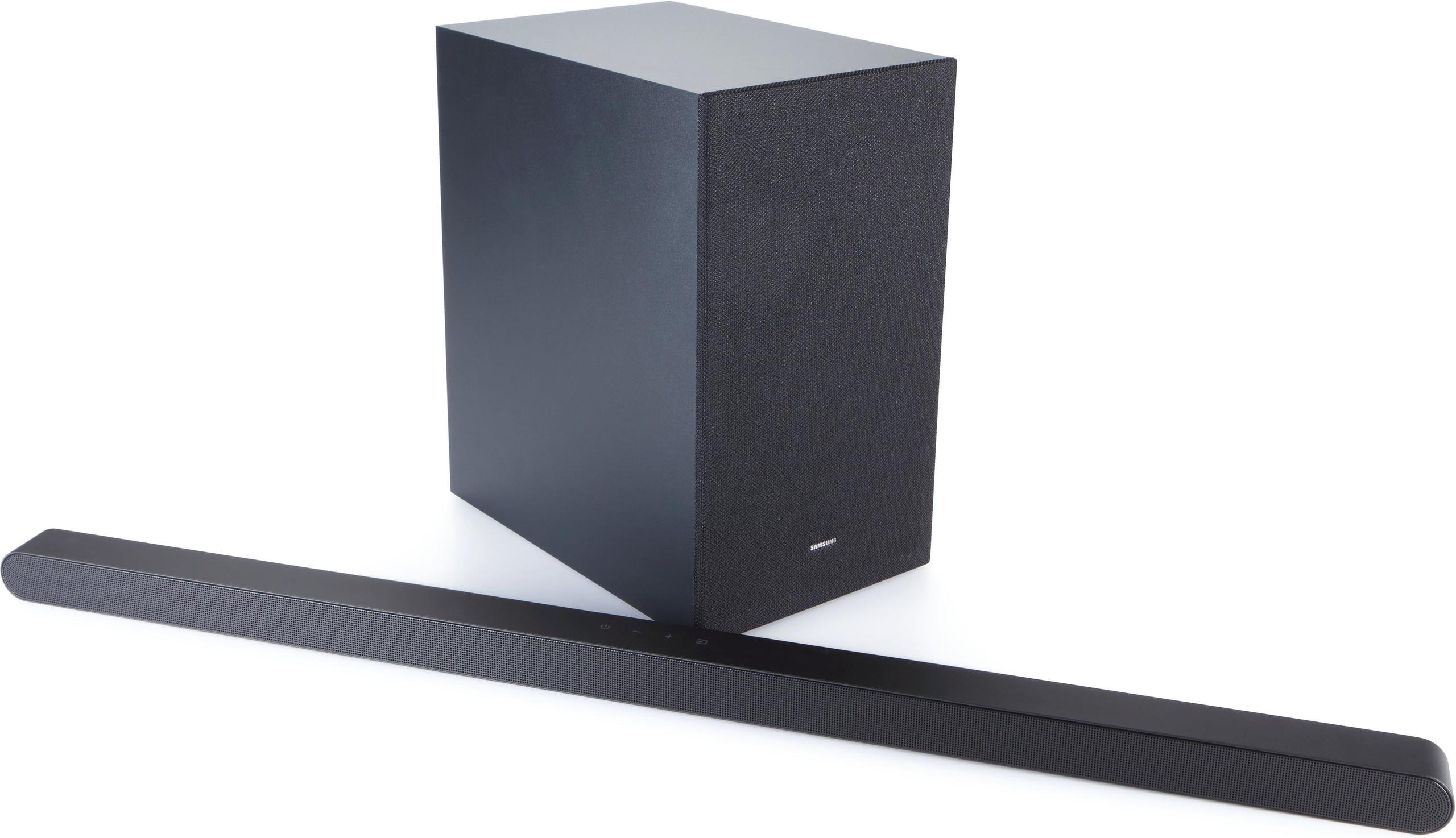
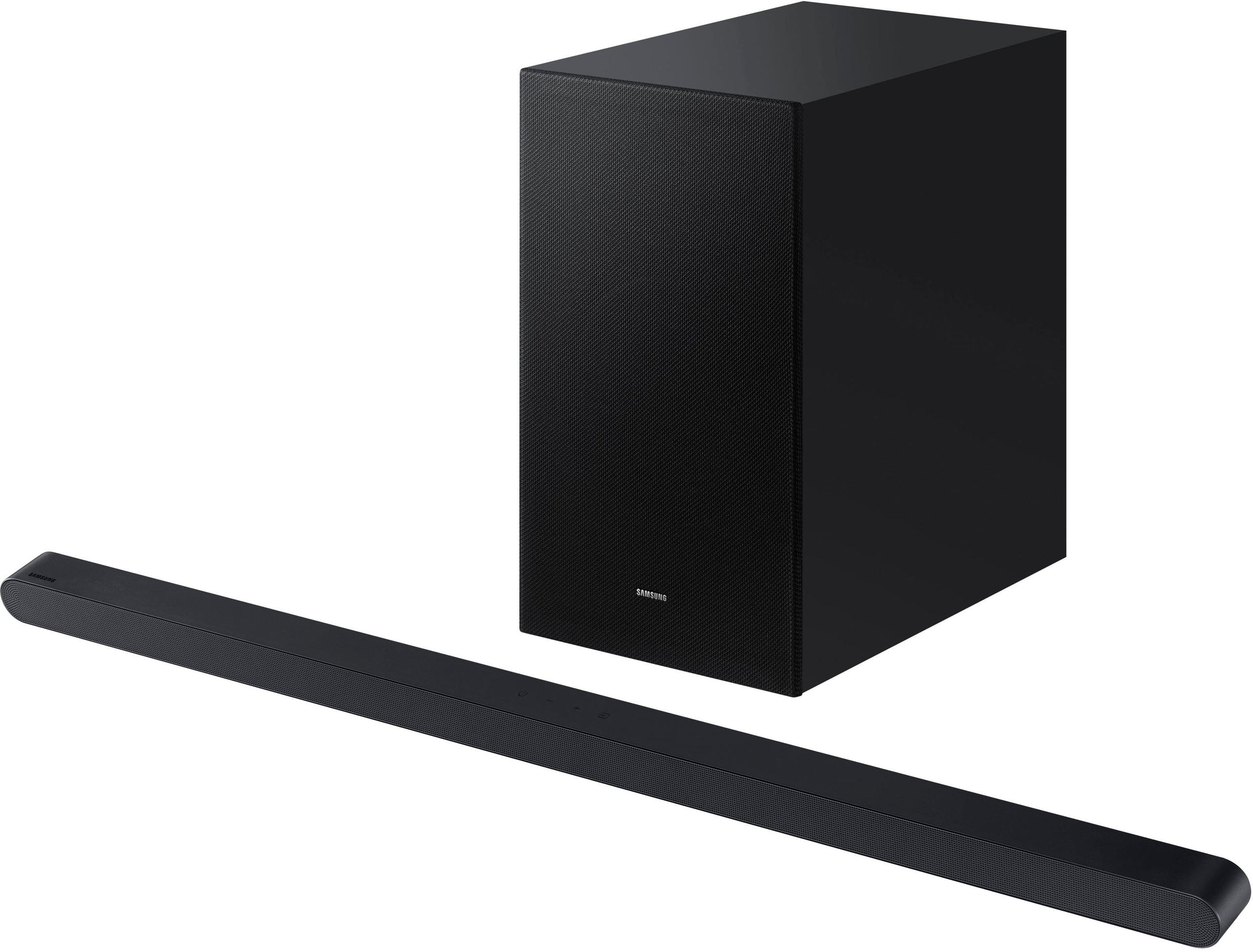
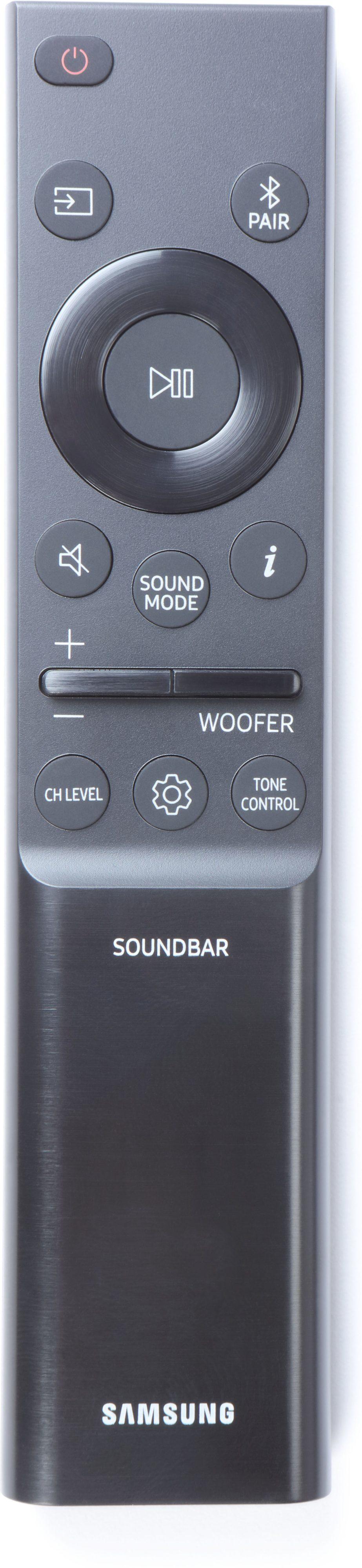
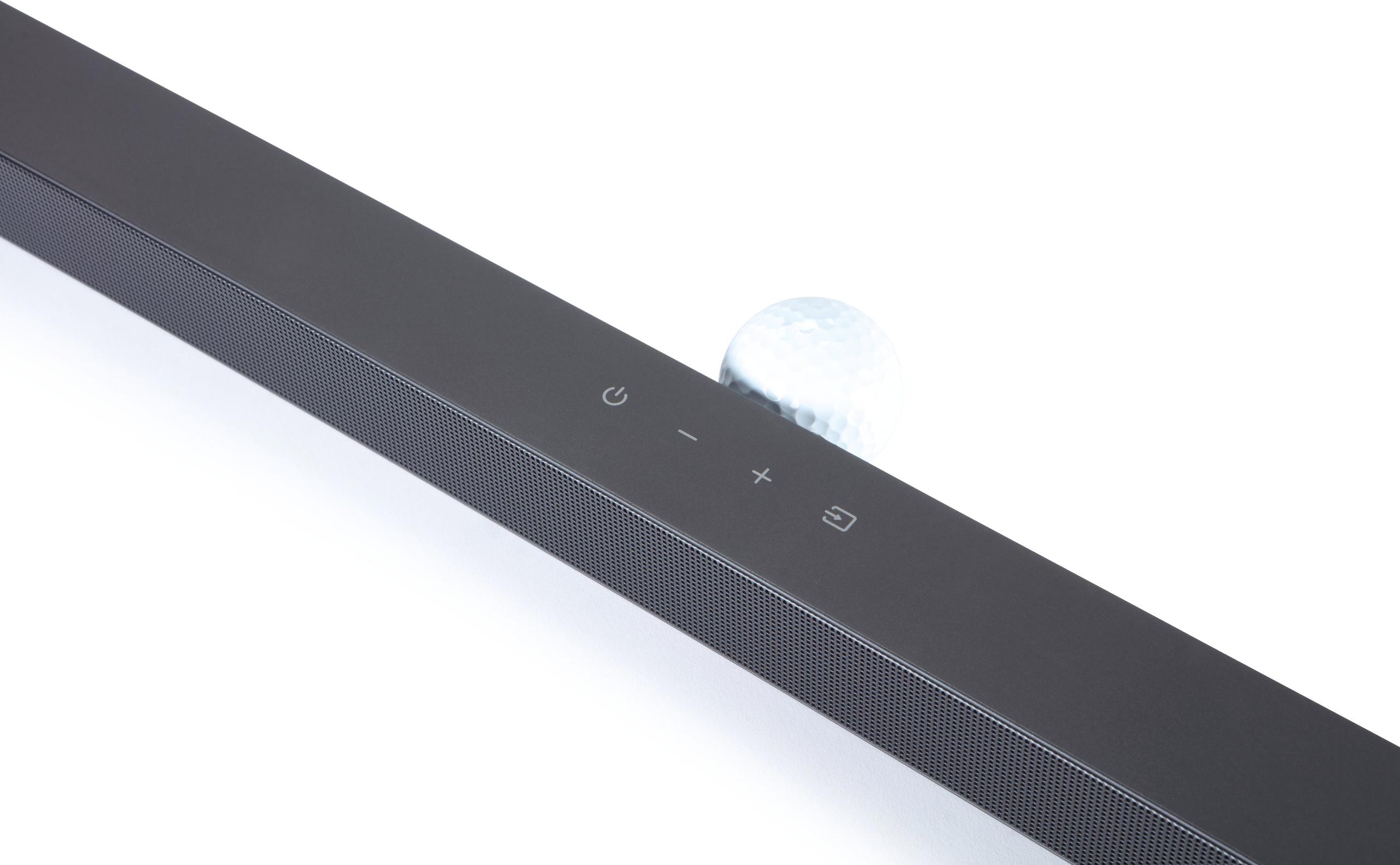

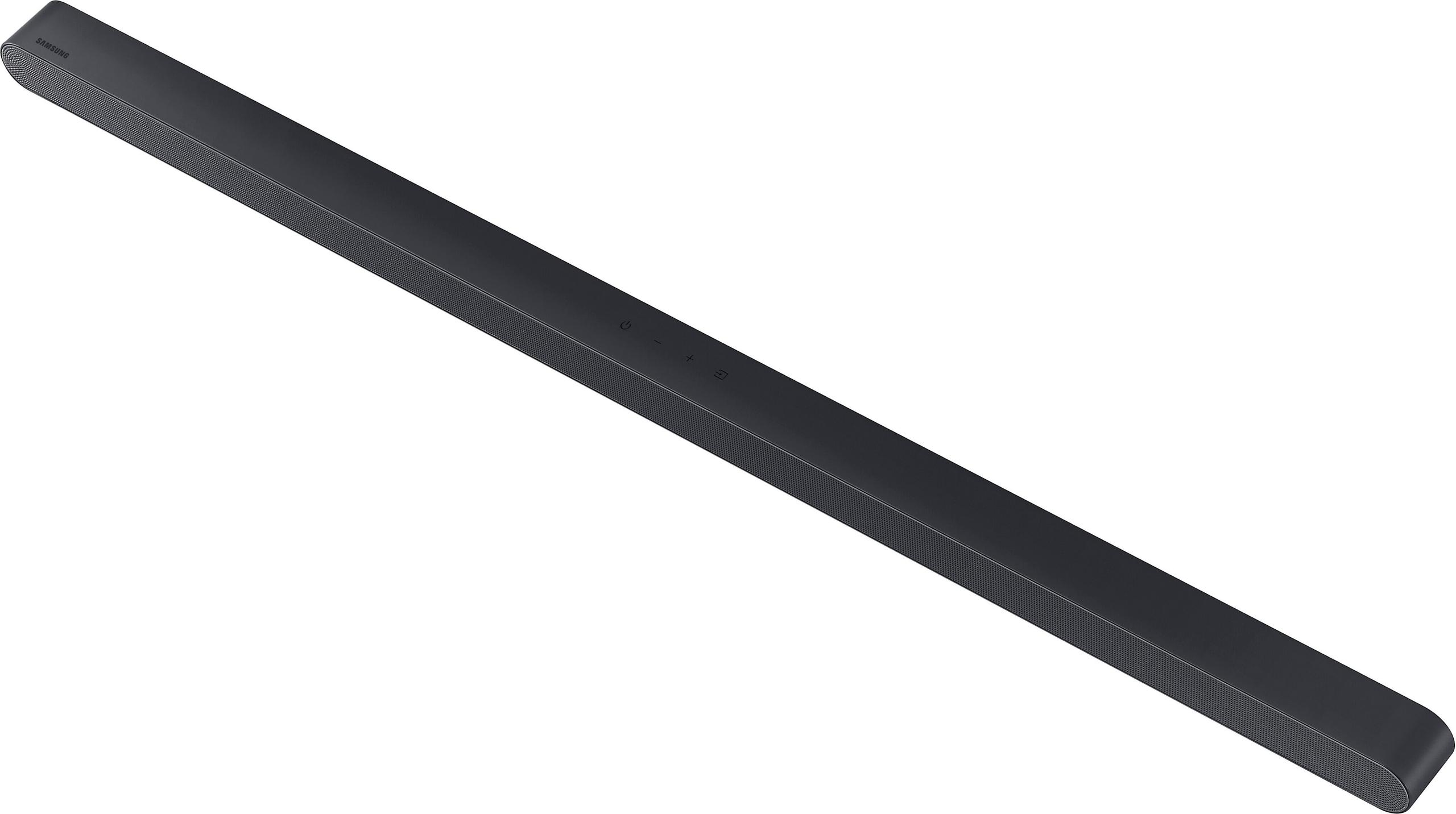
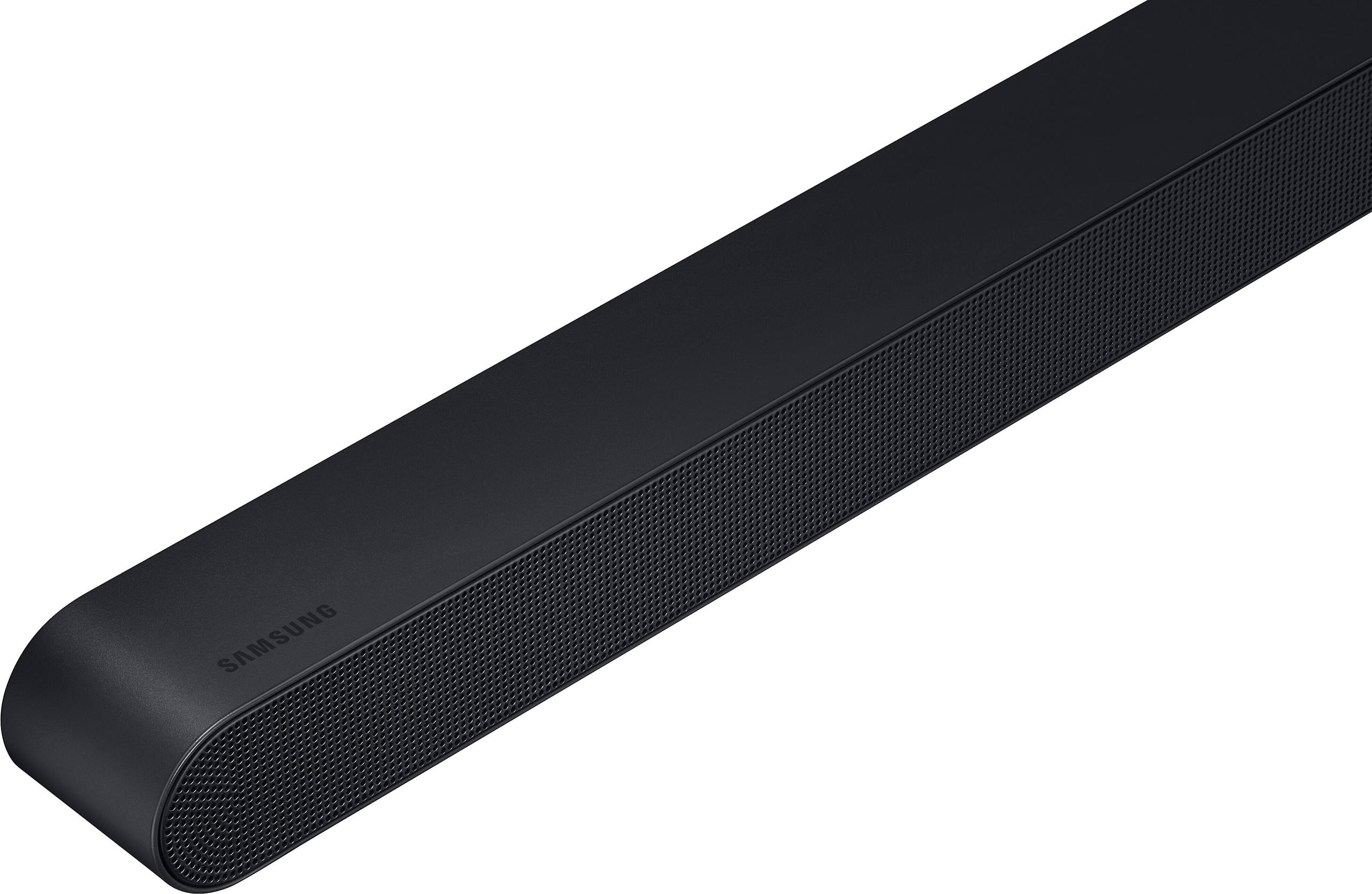

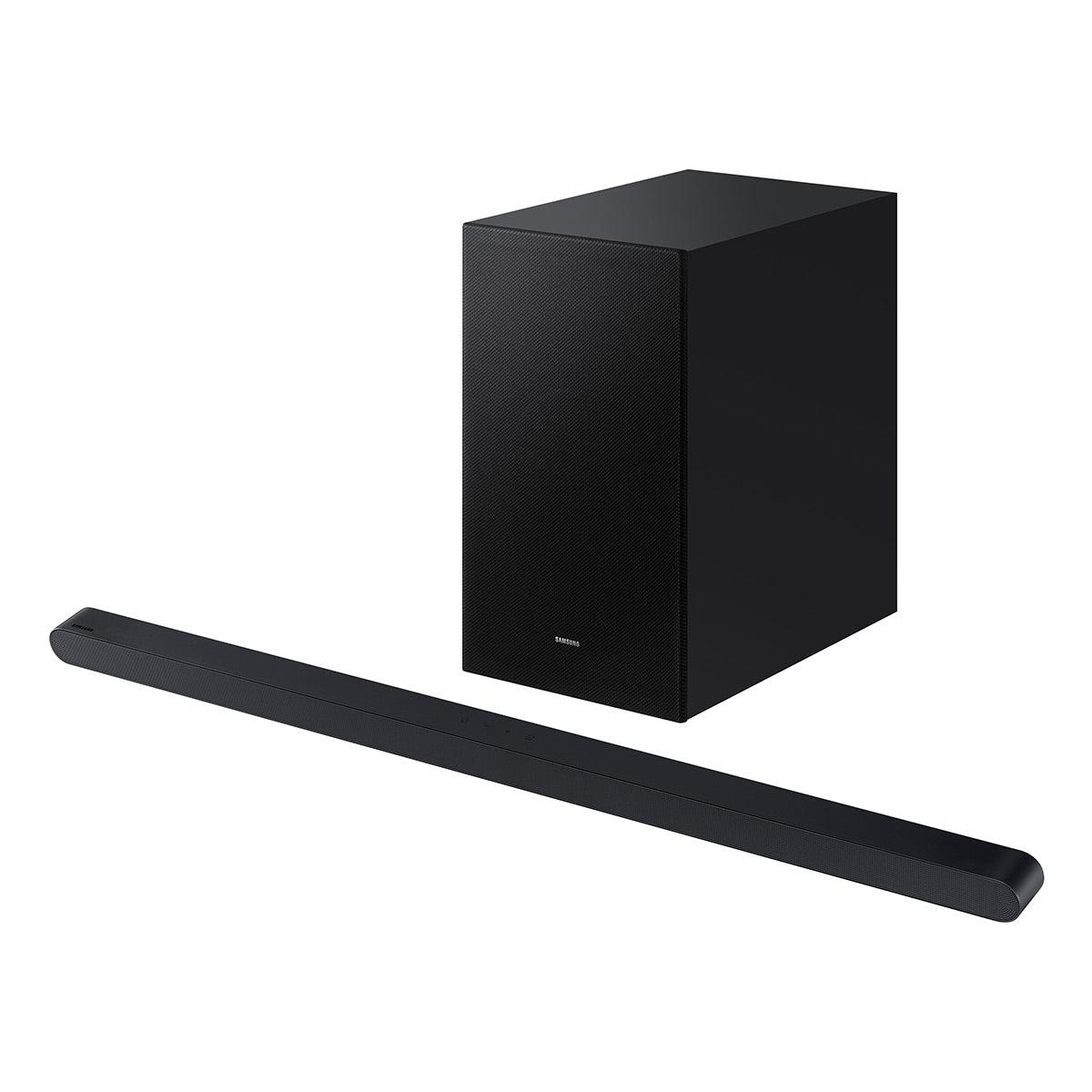

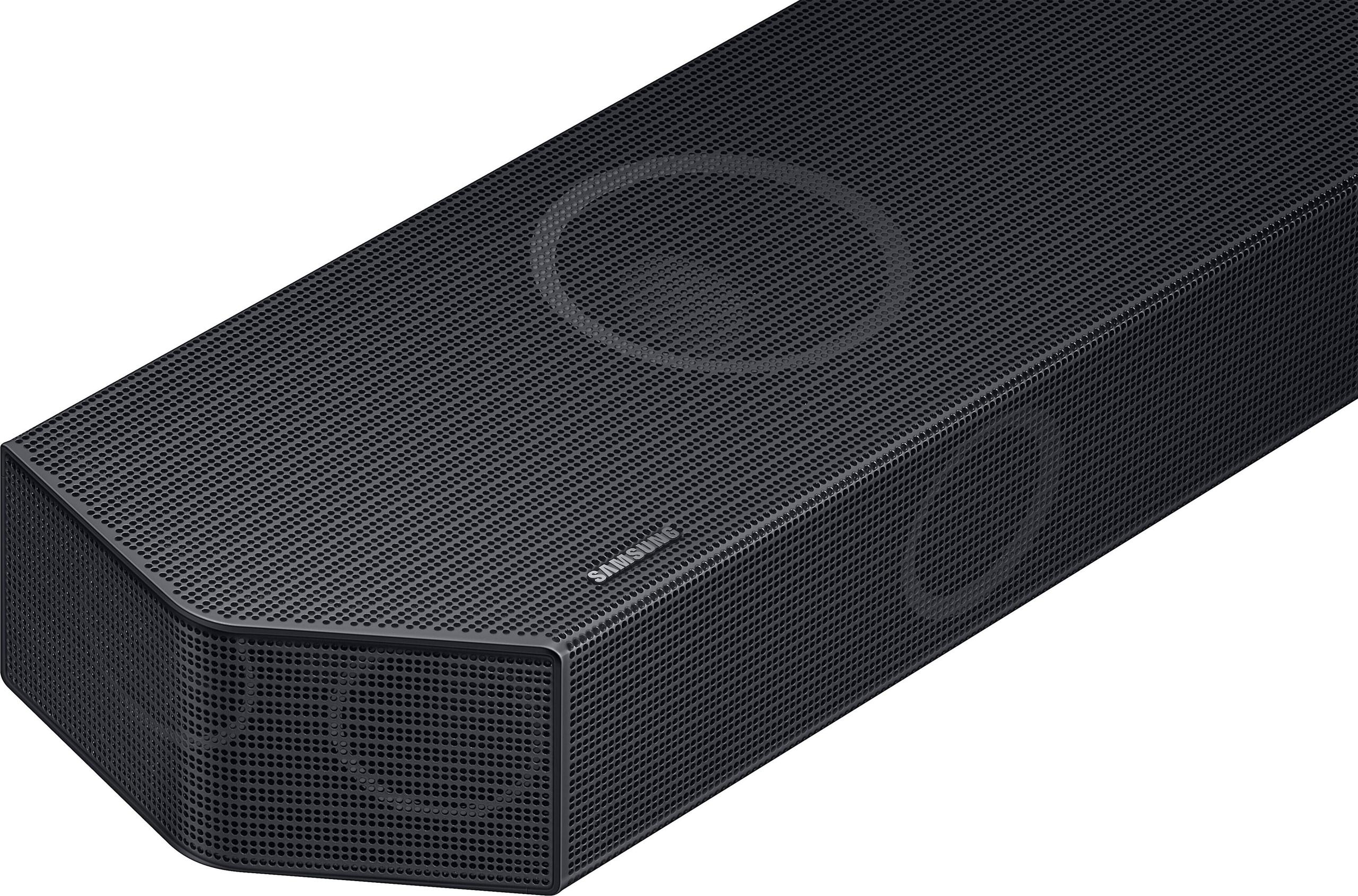




When your TV's built-in speakers just aren't cutting it anymore, you're probably looking at soundbars as the logical next step. Samsung offers two compelling options that take completely different approaches to solving the same problem: weak TV audio. The Samsung HW-S700D 3.1 Channel Slim Soundbar at $377.99 and the Samsung Q Series 9.1.2 Channel Soundbar at $897.99 might both carry the Samsung name, but they're designed for entirely different users and spaces.
Before we dive into the specifics, let's talk about what soundbars are really trying to accomplish. Your TV's speakers are tiny and fire downward or backward – they're an afterthought in modern TV design. Soundbars aim to fix this by placing larger, forward-firing speakers right where the sound should come from: toward you.
But here's where it gets interesting. Not all soundbars have the same goals. Some, like the HW-S700D, focus on being a smart upgrade that dramatically improves dialogue clarity and adds some bass without taking over your living space. Others, like the Q Series 9.1.2, want to replace your entire audio system and create a true surround sound experience that rivals what you'd get in a movie theater.
The number after the product name tells you a lot about what you're getting. That "3.1" in the HW-S700D means three main channels (left, center, right) plus one subwoofer channel. The "9.1.2" designation means nine main channels, one subwoofer, and two height channels – that's a lot more speakers working together to create sound that seems to come from all around you, including above your head.
Samsung released the HW-S700D in 2024 as part of their effort to create a "premium but practical" soundbar that wouldn't break the bank or dominate your living room. It was designed specifically to work seamlessly with Samsung's QLED TVs using their Q-Symphony technology, which lets the TV speakers and soundbar work together instead of competing.
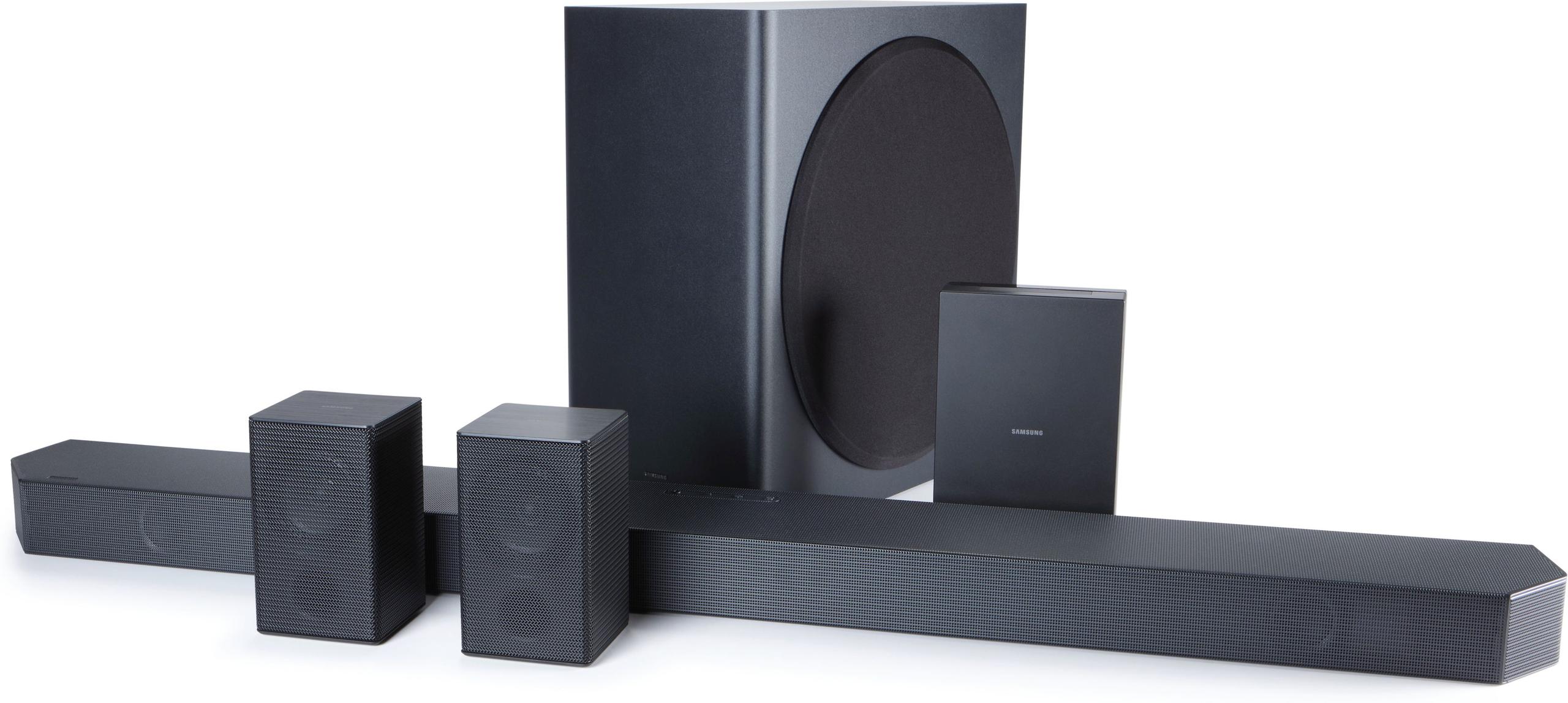
The Q Series 9.1.2, launched in early 2025, represents Samsung's "no compromises" approach to home audio. This isn't just a soundbar – it's a complete surround sound system that happens to be wireless. Samsung built this after feedback from customers who wanted true theater-level audio without running speaker wires throughout their homes.
What's particularly interesting is how Samsung's approach to audio processing has evolved between these releases. The HW-S700D uses what's called "virtual" surround sound – clever digital processing that tries to trick your ears into thinking sound is coming from places where there aren't actually speakers. The Q Series 9.1.2 takes the opposite approach, using actual speakers positioned around your room to create genuine surround sound.
The HW-S700D does something really well that many soundbars struggle with: it makes dialogue crystal clear without making everything else sound weird. This happens because it has a dedicated center channel – a speaker specifically designed to handle human voices. Most TV speakers try to play everything through the same tiny drivers, which is why movie dialogue often gets lost under background music and sound effects.
Samsung's engineers tuned this soundbar specifically for what they call "everyday viewing." That means TV shows, news, Netflix series, and casual movie watching. The built-in subwoofer handles bass frequencies (the low rumbles and music foundation), while the main bar focuses on mid-range and high frequencies where most of the important audio information lives.
One feature I find particularly clever is the Active Voice Amplifier (AVA). This technology automatically detects when there's dialogue happening and subtly boosts those frequencies while keeping background noise in check. It's like having someone constantly adjusting the audio mix to make sure you never miss important dialogue – something that becomes more valuable as streaming content varies wildly in audio quality.
The HW-S700D's approach to Dolby Atmos (that's the technology that creates overhead sound effects) is what engineers call "virtualized." Instead of having speakers that actually fire sound upward, it uses digital processing to manipulate the audio waves so they seem to come from above. This works surprisingly well for content like nature documentaries or dialogue-heavy shows, but it can't match the convincing overhead effects you get from actual upward-firing speakers.
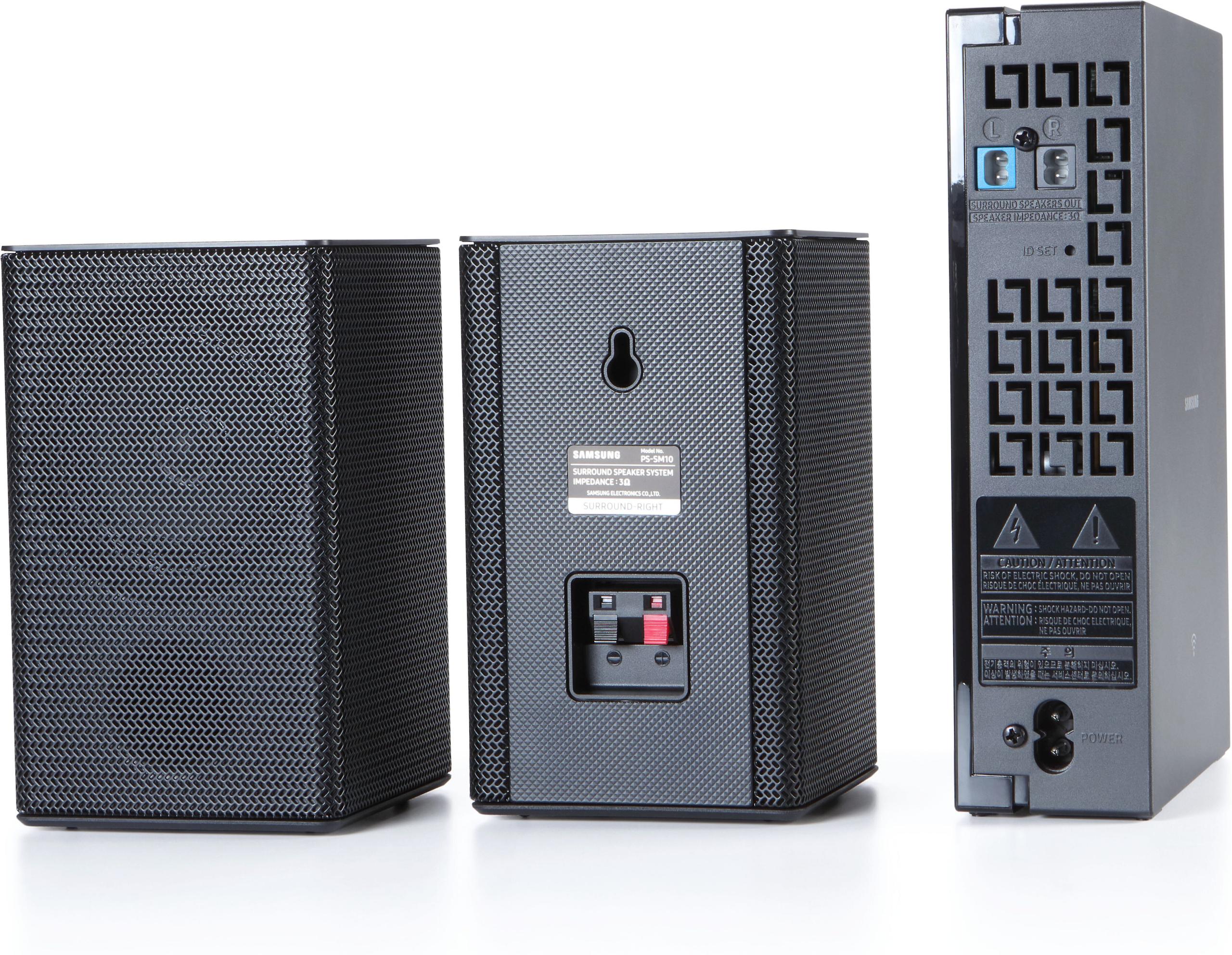
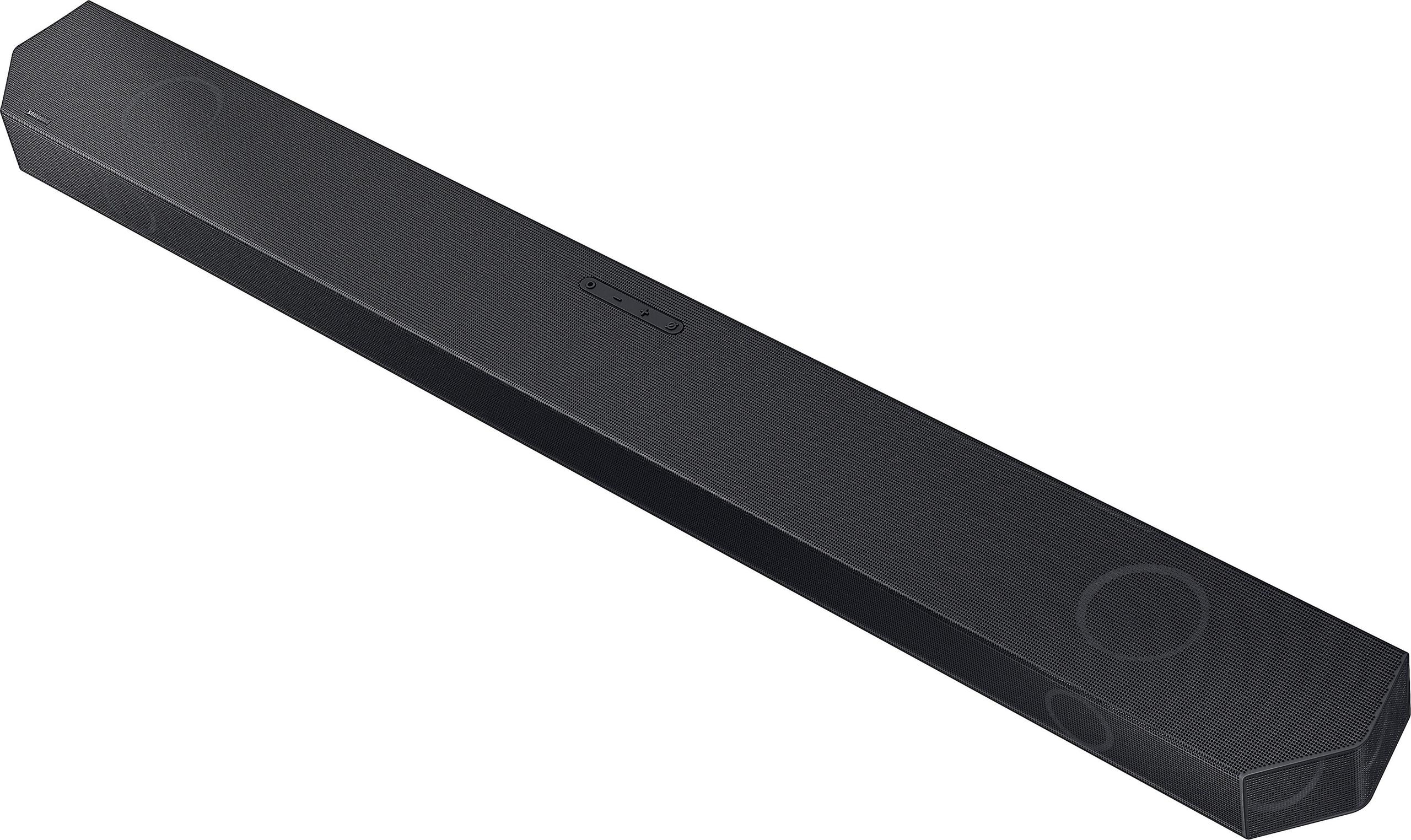
Now, the Q Series 9.1.2 plays in an entirely different league. With its 9.1.2 channel configuration, you're getting speakers that are physically positioned to create authentic surround sound. The main soundbar handles front and center audio, dedicated rear speakers handle sounds that should come from behind you, and upward-firing drivers bounce sound off your ceiling to create height effects.
What makes this setup special is something called "object-based audio." Traditional surround sound assigns specific sounds to specific speakers – explosion goes to the rear left, dialogue goes to center, etc. Object-based audio (used in Dolby Atmos and DTS:X formats) treats each sound as an independent object that can move freely through three-dimensional space. So when a helicopter flies overhead in a movie, the sound literally follows that path through your room.
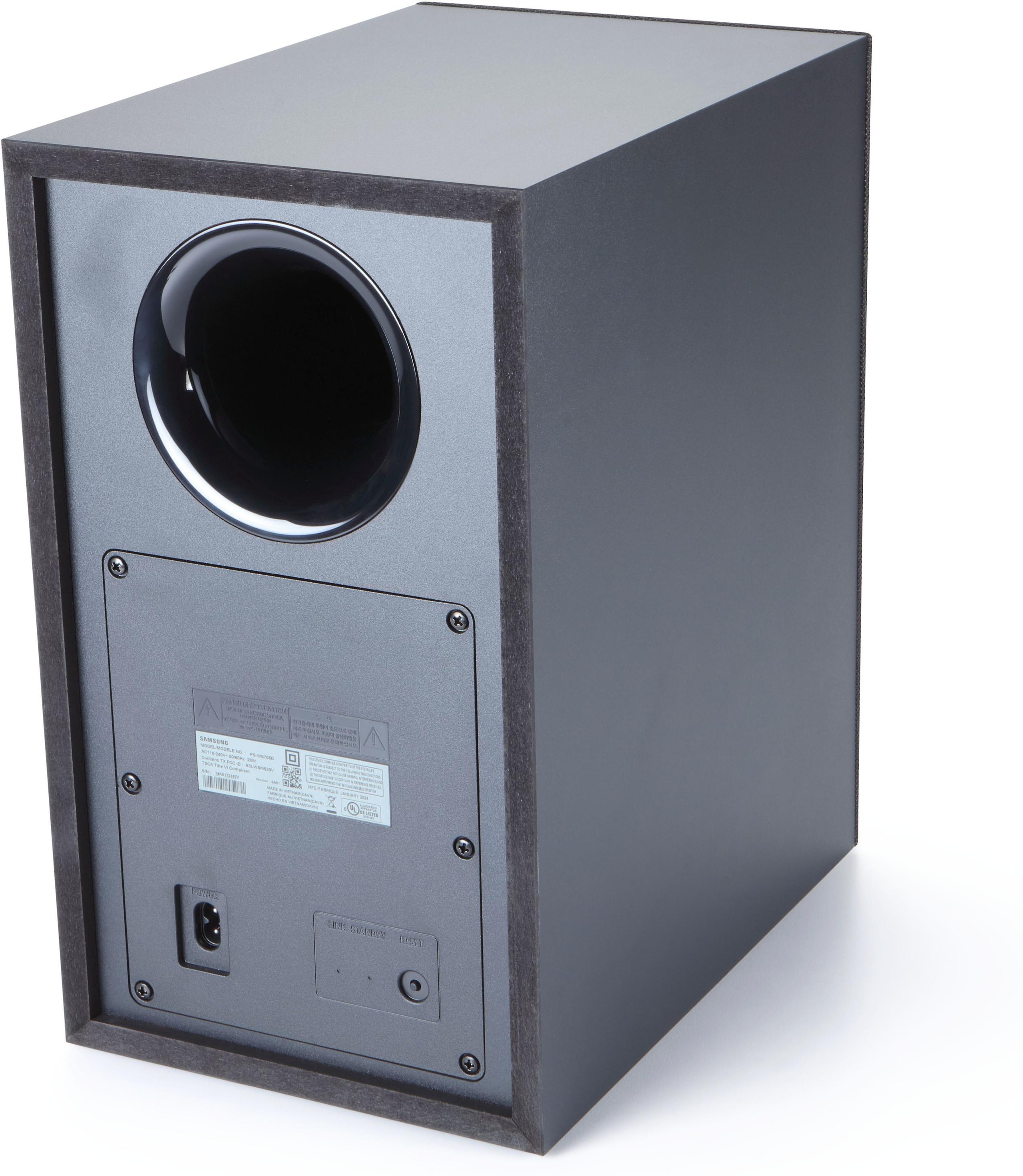
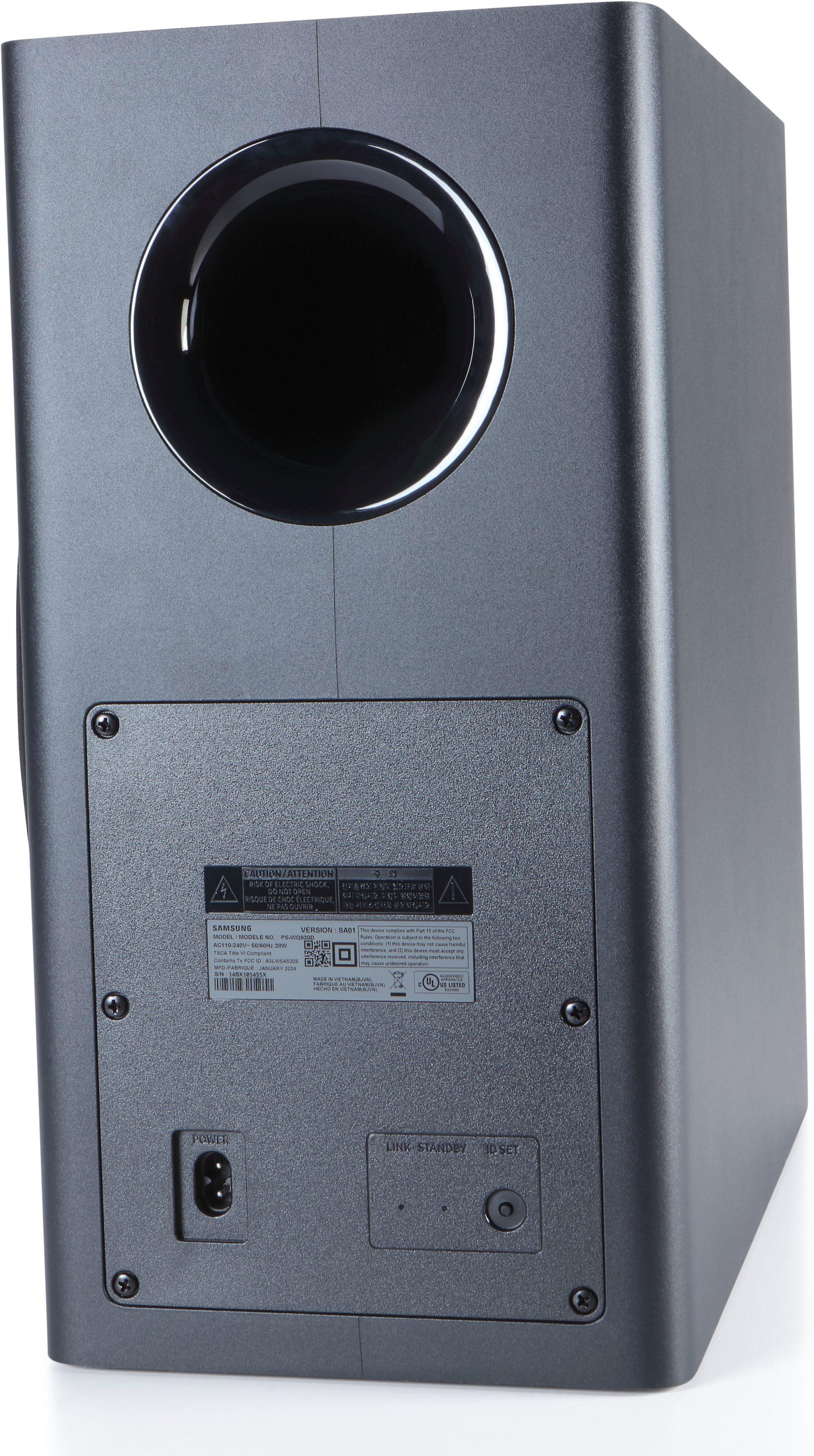
The difference in bass response between these two systems is immediately noticeable. The Q Series comes with an 8-inch subwoofer compared to the HW-S700D's 6-inch unit. Those extra two inches might not sound like much, but subwoofer performance scales dramatically with driver size. The larger sub can move more air, creating deeper, more impactful bass that you feel in your chest during action scenes.
One aspect that often gets overlooked is dynamic range – the difference between the quietest and loudest sounds a system can reproduce. The Q Series 9.1.2's 616W total power output gives it tremendous headroom for those sudden loud moments in movies while still maintaining clarity during whisper-quiet dialogue scenes. This is crucial for home theater use where you want to feel the impact of explosions without having dialogue become inaudible.
Gaming audio has become increasingly important as consoles become more sophisticated and games incorporate cinematic audio design. Both soundbars include Samsung's Game Mode Pro, but they implement it differently.
The HW-S700D reduces audio latency (the delay between when something happens on screen and when you hear it) to keep dialogue and sound effects in sync. For most casual gaming, this works perfectly fine. You'll hear footsteps, gunshots, and dialogue clearly without the distracting delay that can throw off your timing.
The Q Series 9.1.2 takes gaming audio much further. Its multi-channel setup provides genuine directional audio cues that can give you a competitive advantage in online games. When someone's sneaking up behind you in a first-person shooter, you'll hear their footsteps coming from the correct direction, not just "somewhere behind you." This spatial accuracy can be the difference between getting eliminated and making a clutch play.
When we talk about value in audio equipment, we can't just look at the price tag. We need to consider what you're getting for your money and how long it will serve your needs.
The HW-S700D at $377.99 delivers what I'd call "maximum impact per dollar." For someone upgrading from TV speakers, this represents a massive improvement in audio quality for a relatively modest investment. You're getting professional-level dialogue processing, wireless subwoofer convenience, and Samsung ecosystem integration that makes everything work seamlessly together.
But here's what you're not getting: future expandability. The HW-S700D is what it is – a 3.1 system that can't be meaningfully upgraded later. If your audio needs grow, you'll need to replace the entire system.
The Q Series 9.1.2 at $897.99 represents a different value proposition. Yes, it's more than twice the price, but you're getting a system that can serve as your primary audio setup for years to come. The inclusion of rear speakers, multiple HDMI inputs with 8K passthrough, and expandability options mean this system can grow with your entertainment setup.
From a cost-per-channel perspective, the math is actually interesting. The HW-S700D works out to about $126 per effective channel, while the Q Series 9.1.2 comes to roughly $81 per channel when you factor in all the drivers and processing power you're getting. Of course, this only matters if you actually need and will use all those channels.
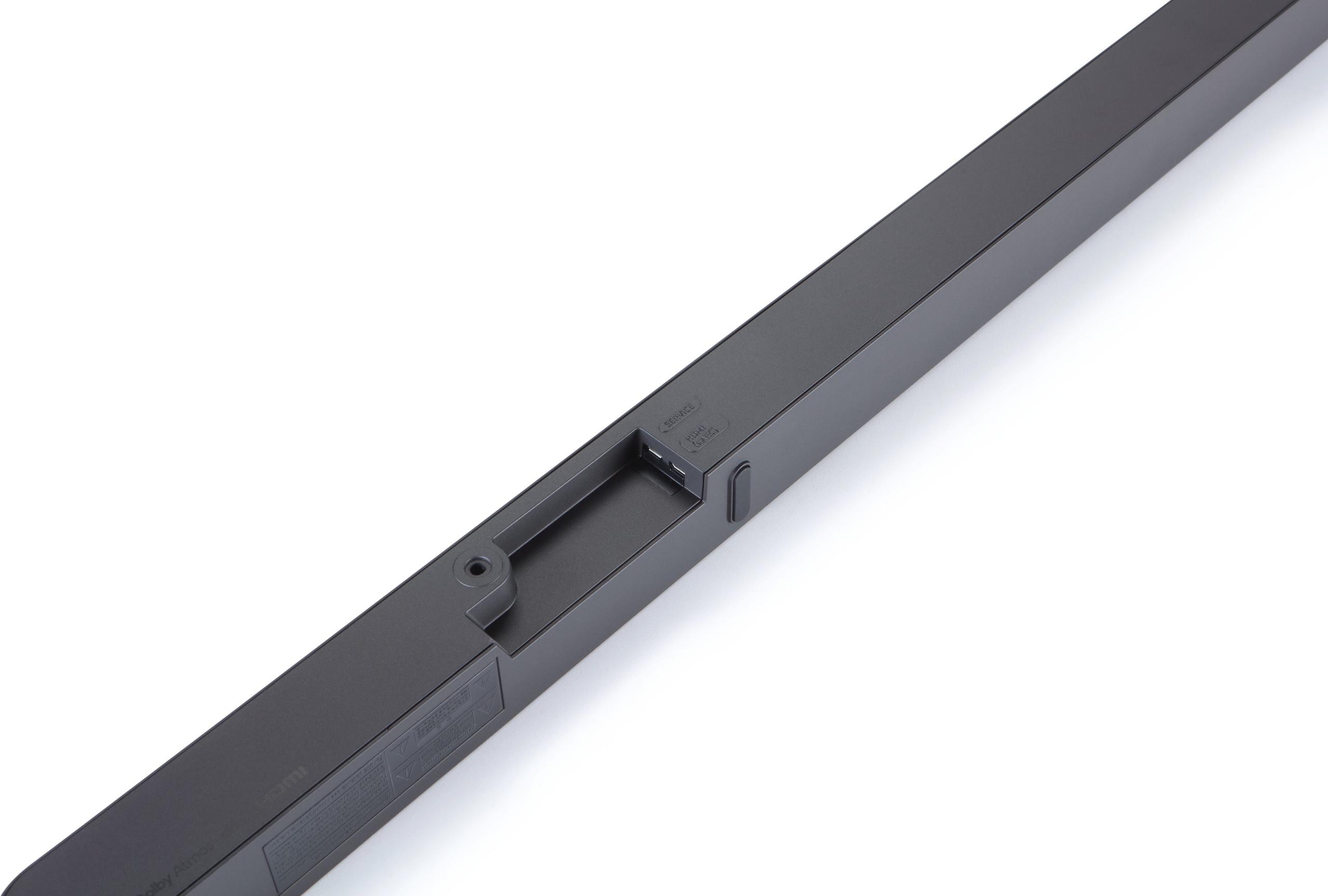
Here's where real-world practicality becomes crucial. The HW-S700D is genuinely plug-and-play. You connect one HDMI cable, plug in the soundbar and subwoofer, and you're done. The subwoofer pairs automatically, and Samsung's SpaceFit Sound technology uses your TV to analyze your room and optimize the audio accordingly.
The Q Series 9.1.2 requires more commitment. You'll need power outlets for the soundbar, subwoofer, and both rear speakers. Those rear speakers need to be positioned correctly – typically 6-8 feet from your seating position and slightly behind you. If your room layout doesn't accommodate this, you won't get the full benefit of the system.
I've found that many people underestimate the importance of proper rear speaker placement. Putting them too close, too far, or at the wrong angle can actually make the surround effect worse than having no rear speakers at all. The Q Series includes SpaceFit Sound Pro, which uses built-in microphones to automatically calibrate the system, but physics still matters.
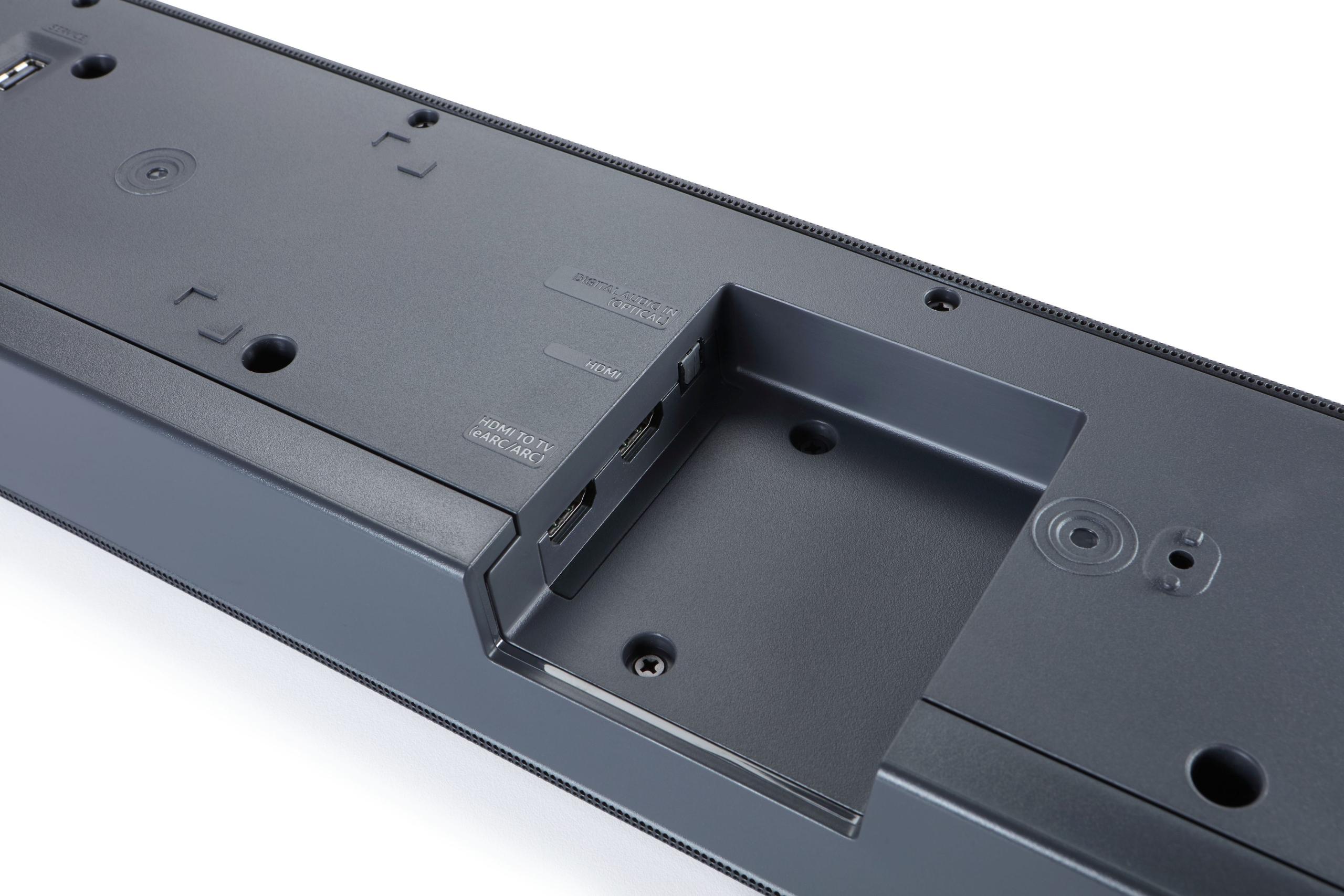
If you're setting up a dedicated home theater space, the decision becomes clearer. The Q Series 9.1.2 is designed specifically for this use case. Its multiple HDMI inputs mean you can connect a streaming device, gaming console, and Blu-ray player directly to the soundbar, then send video to your TV through a single cable.
The 8K HDMI passthrough is more important than it might initially seem. Even if you don't have 8K content today, having that bandwidth available means the system won't become a bottleneck as content and gaming technology evolves. Modern gaming consoles can push 4K at 120Hz, and that requires the full bandwidth that HDMI 2.1 provides.
For movie watching specifically, the Q Series' ability to decode and properly render object-based audio formats makes a dramatic difference. When you watch a properly mixed Dolby Atmos movie, sounds move through your space with startling realism. Rain seems to fall from above, vehicles pan across the room, and ambient effects create a convincing sense of being inside the movie's environment.
The HW-S700D, while excellent for its intended purpose, simply can't create this level of immersion. Its virtual processing works well for dialogue and music, but complex action sequences with lots of simultaneous audio elements can sound somewhat flat and one-dimensional compared to a true surround setup.
Samsung has implemented some genuinely clever technology in both systems, but they serve different purposes. The HW-S700D's Q-Symphony feature, which synchronizes the soundbar with compatible Samsung TV speakers, effectively turns your TV into an additional center channel. This creates a wider, more enveloping front soundstage without requiring rear speakers.
The Q Series takes a more comprehensive approach with features like Auto Sub EQ, which uses microphones in the subwoofer to analyze your room's acoustics and automatically adjust bass response to compensate for room placement and dimensions. This kind of room correction used to require expensive external processors.
Both systems support modern streaming protocols including AirPlay 2, Chromecast built-in, and Spotify Connect. They integrate with Samsung's SmartThings ecosystem, allowing voice control through Alexa or Google Assistant. However, the Q Series' additional processing power means it can handle more simultaneous connections and more complex audio processing tasks.
After spending time with both systems, here's how I'd recommend approaching this decision:
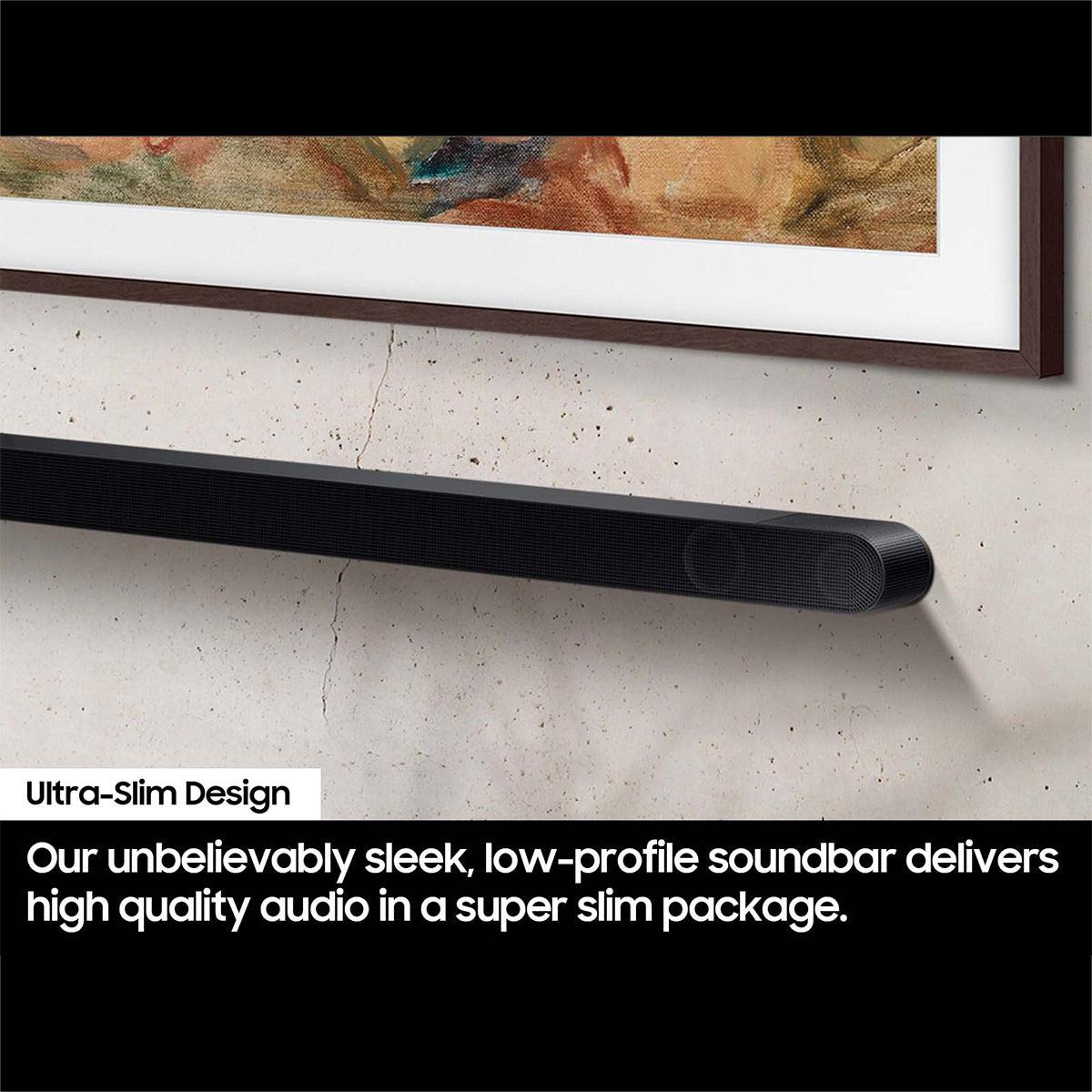
Choose the Samsung HW-S700D if you're looking for the biggest improvement in TV audio quality for the least money and complexity. It's perfect for apartments, bedrooms, or living rooms where a full surround setup isn't practical or necessary. The dialogue clarity alone will transform your viewing experience, and the wireless subwoofer adds the bass impact that makes movies and music more engaging.
Choose the Samsung Q Series 9.1.2 if you're serious about creating a home theater experience and your room can accommodate rear speakers. This system will serve as your primary audio setup for years to come, handling everything from quiet dialogue scenes to explosive action sequences with equal competence.
The key questions to ask yourself are: Do you have a space where rear speakers make sense? Are you planning to use this primarily for movies and gaming, or mostly for TV shows and casual viewing? Can you justify spending over $500 more for genuine surround sound versus virtual processing?
Both soundbars represent excellent value within their respective categories. The HW-S700D maximizes improvement per dollar spent, while the Q Series 9.1.2 maximizes absolute performance and future flexibility. Understanding which approach better matches your needs, space, and budget will lead you to the right choice for your home entertainment setup.
| Samsung HW-S700D 3.1 Channel Slim Soundbar | Samsung Q Series 9.1.2 Channel Soundbar |
|---|---|
| Price - Major factor in value equation | |
| $377.99 (complete system included) | $897.99 (rear speakers and sub included) |
| Channel Configuration - Determines surround sound capability | |
| 3.1 channels (virtual surround processing) | 9.1.2 channels (true physical surround sound) |
| Physical Speakers - More drivers generally mean better sound separation | |
| 7 drivers total in main bar + subwoofer | 17 drivers across all components + subwoofer |
| Subwoofer Size - Bigger drivers produce deeper, more impactful bass | |
| 6-inch wireless subwoofer | 8-inch wireless subwoofer (significantly more powerful) |
| Dolby Atmos Implementation - Height effects create immersive overhead audio | |
| Virtual processing (simulated overhead effects) | Physical up-firing drivers (genuine 3D audio placement) |
| Rear Speakers - Essential for true surround sound experience | |
| Not included (cannot be added later) | Wireless rear speakers included in box |
| Total System Power - Higher wattage supports larger rooms and dynamic range | |
| Not specified (estimated ~200W) | 616W total system power |
| HDMI Connectivity - More inputs mean fewer device switching hassles | |
| 1x HDMI eARC (no passthrough capability) | 2x HDMI inputs + eARC with 8K passthrough |
| Room Size Optimization - Determines which spaces each system works best in | |
| 100-300 sq ft ideal (apartments/bedrooms) | 200-500+ sq ft ideal (living rooms/home theaters) |
| Setup Complexity - Time and effort required for installation | |
| 10-15 minutes (plug and play) | 45-90 minutes (rear speaker positioning required) |
| Q-Symphony Compatibility - Syncs with Samsung TV speakers for wider soundstage | |
| Yes (requires compatible Samsung TV) | Yes (works with broader range of Samsung models) |
| Gaming Features - Low latency and directional audio for competitive advantage | |
| Game Mode Pro (basic latency reduction) | Game Mode Pro + true directional surround cues |
| Future Expandability - Ability to upgrade system over time | |
| None (fixed 3.1 configuration) | Compatible with additional Samsung wireless speakers |
The Samsung HW-S700D 3.1 Channel Slim Soundbar at $377.99 offers the best value for basic TV audio upgrades, delivering excellent dialogue clarity and wireless subwoofer convenience. The Samsung Q Series 9.1.2 Channel Soundbar at $897.99 provides superior value for serious home theater setups, including true surround sound with rear speakers and more powerful bass. Choose the HW-S700D for maximum improvement per dollar, or the Q Series for long-term audio investment.
The Samsung HW-S700D uses 3.1 channels (left, center, right speakers plus subwoofer) with virtual surround processing to simulate directional audio. The Samsung Q Series 9.1.2 features 9.1.2 channels with physical speakers positioned around your room, including dedicated rear speakers and upward-firing drivers for genuine overhead sound effects. The 9.1.2 system creates authentic surround sound, while 3.1 focuses on front-facing audio enhancement.
The Samsung HW-S700D 3.1 Channel Slim Soundbar is ideal for apartments due to its ultra-slim profile, single-unit design, and no rear speaker requirements. It delivers significant audio improvement without complex setup or multiple power outlets. The Samsung Q Series 9.1.2 requires rear speaker placement and multiple power connections, making it less practical for small spaces or rental situations where furniture positioning is limited.
Yes, both the Samsung HW-S700D and Samsung Q Series 9.1.2 work with any TV that has HDMI ARC or optical output. However, Samsung TV owners get additional benefits like Q-Symphony technology, which synchronizes the TV speakers with the soundbar for enhanced audio. SpaceFit Sound features also work best with compatible Samsung TVs for automatic room calibration.
The Samsung Q Series 9.1.2 Channel Soundbar excels for home theater use with true Dolby Atmos processing, dedicated rear speakers, and 616W total power output. It creates genuine surround sound with overhead effects for immersive movie watching. The Samsung HW-S700D focuses on dialogue clarity and is better suited for casual TV viewing rather than cinematic experiences, though it still improves movie audio significantly over TV speakers.
The Samsung HW-S700D requires minimal space with its 43.5-inch width and ultra-slim profile, plus placement area for the wireless subwoofer. The Samsung Q Series 9.1.2 needs significantly more room planning, including proper positioning for rear speakers (typically 6-8 feet from seating) and multiple power outlet access. Consider your room layout carefully before choosing the surround sound system.
The Samsung Q Series 9.1.2 delivers superior bass with its 8-inch wireless subwoofer compared to the Samsung HW-S700D's 6-inch unit. The larger driver size produces deeper, more impactful low-frequency response that you can feel during action scenes. The Q Series also has more total system power to drive the bass without distortion at higher volumes, making it better for bass-heavy content like action movies and music.
Both soundbars include Game Mode Pro for reduced audio latency. The Samsung HW-S700D provides adequate gaming audio with clear dialogue and sound effects synchronization. The Samsung Q Series 9.1.2 offers superior gaming performance with true directional audio cues from its surround speakers, helping identify enemy positions in competitive games. The Q Series also includes multiple HDMI inputs for connecting gaming consoles directly.
The Samsung HW-S700D 3.1 Channel Slim Soundbar offers plug-and-play setup requiring only one HDMI connection and automatic subwoofer pairing, typically completed in 10-15 minutes. The Samsung Q Series 9.1.2 requires more complex installation including rear speaker positioning, multiple power connections, and room calibration, usually taking 45-90 minutes for optimal setup and configuration.
Both the Samsung HW-S700D and Samsung Q Series 9.1.2 support identical streaming features including AirPlay 2, Chromecast built-in, Spotify Connect, and Bluetooth 5.2 connectivity. They also integrate with Samsung SmartThings and support Alexa and Google Assistant voice control. The main difference is processing power, with the Q Series handling more simultaneous connections more smoothly.
The Samsung HW-S700D cannot be expanded beyond its 3.1 configuration - what you buy is the complete system. The Samsung Q Series 9.1.2 offers expansion possibilities with compatibility for additional Samsung wireless speakers and future Samsung audio components. This makes the Q Series a more flexible long-term investment for evolving entertainment needs.
Both soundbars excel at dialogue clarity with dedicated center channels and Active Voice Amplifier technology. The Samsung HW-S700D is specifically tuned for dialogue enhancement and everyday TV viewing. The Samsung Q Series 9.1.2 also provides excellent dialogue clarity while balancing it with surround effects and dynamic range for movies. For pure dialogue focus, the HW-S700D edges ahead, while the Q Series offers dialogue clarity within a fuller audio experience.
We've done our best to create useful and informative comparisons to help you decide what product to buy. Our research uses advanced automated methods to create this comparison and perfection is not possible - please contact us for corrections or questions. These are the sites we've researched in the creation of this article: crutchfield.com - samsung.com - bestbuy.com - avsforum.com - walts.com - samsung.com - samsung.com - videoandaudiocenter.com - samsung.com - samsung.com - samsung.com - pcrichard.com - rtings.com - samsung.com - markselectrical.co.uk - techradar.com - walmart.com - samsung.com - samsung.com - youtube.com - samsung.com - biancos.com - crutchfield.com - samsung.com

Privacy Policy
Terms and Conditions - Affiliate Policy
Home Security
© Copyright 2008-2026.
11816 Inwood Rd #1211, Dallas, TX 75244