

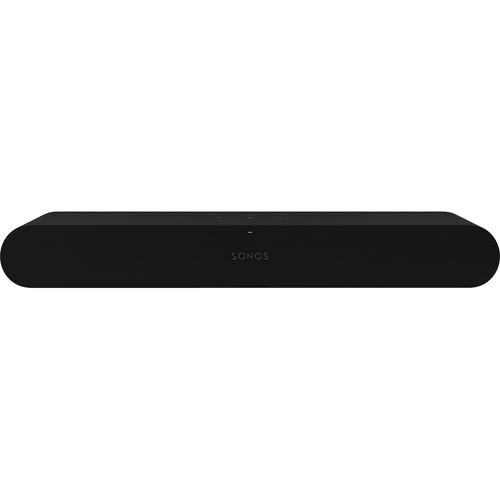







When your TV's built-in speakers make dialogue sound like actors are talking through a tin can, it's time for a soundbar upgrade. But choosing between a simple stereo soundbar and a full surround system can feel overwhelming. Today, we're comparing two very different approaches: the Sonos Ray Soundbar ($169) and the Samsung Q Series 9.1.2 Channel Soundbar ($897.99).
Think of this as choosing between a reliable Honda Civic and a loaded BMW – both will get you where you're going, but the experience and capabilities are worlds apart.
Before diving into specifics, let's talk about what soundbars are trying to solve. Your TV's speakers face backward or downward, creating muffled sound that lacks clarity and presence. Soundbars position speakers to fire directly at you, creating a wider "soundstage" (the perceived width and depth of audio) and clearer dialogue.
The key differences come down to channel configuration. Think of channels like individual audio streams – a 2.0 system has left and right channels, while a 9.1.2 system has nine ear-level channels, one subwoofer channel, and two height channels for overhead effects. More channels mean more precise sound placement, but they also mean more complexity and cost.
Modern soundbars also differ in how they create surround sound. Some use "virtual surround" – clever audio processing that tricks your brain into hearing sounds from behind you. Others use physical rear speakers that actually place sound where it should be. The difference is like watching a 3D movie with cardboard glasses versus expensive polarized ones.
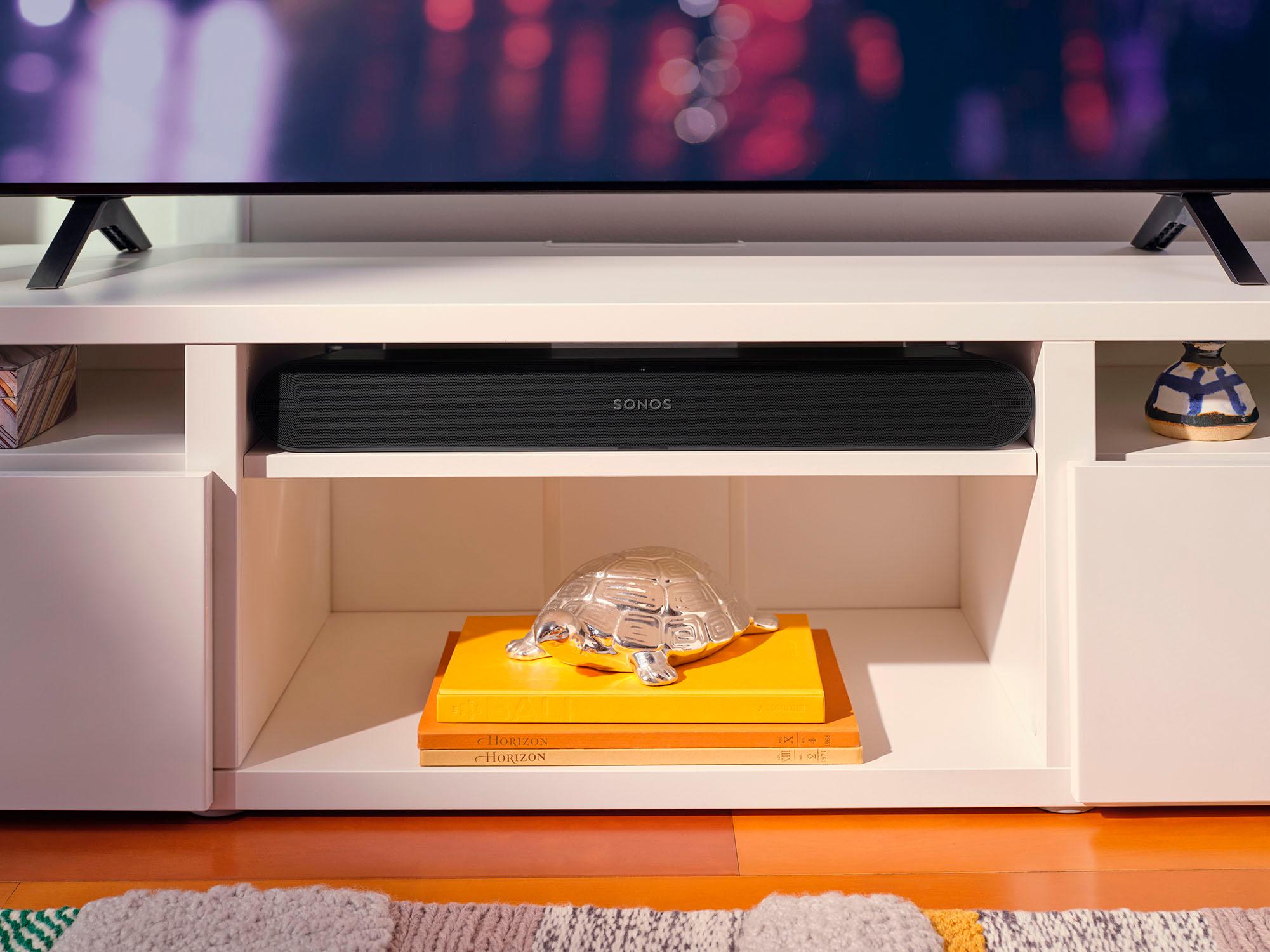
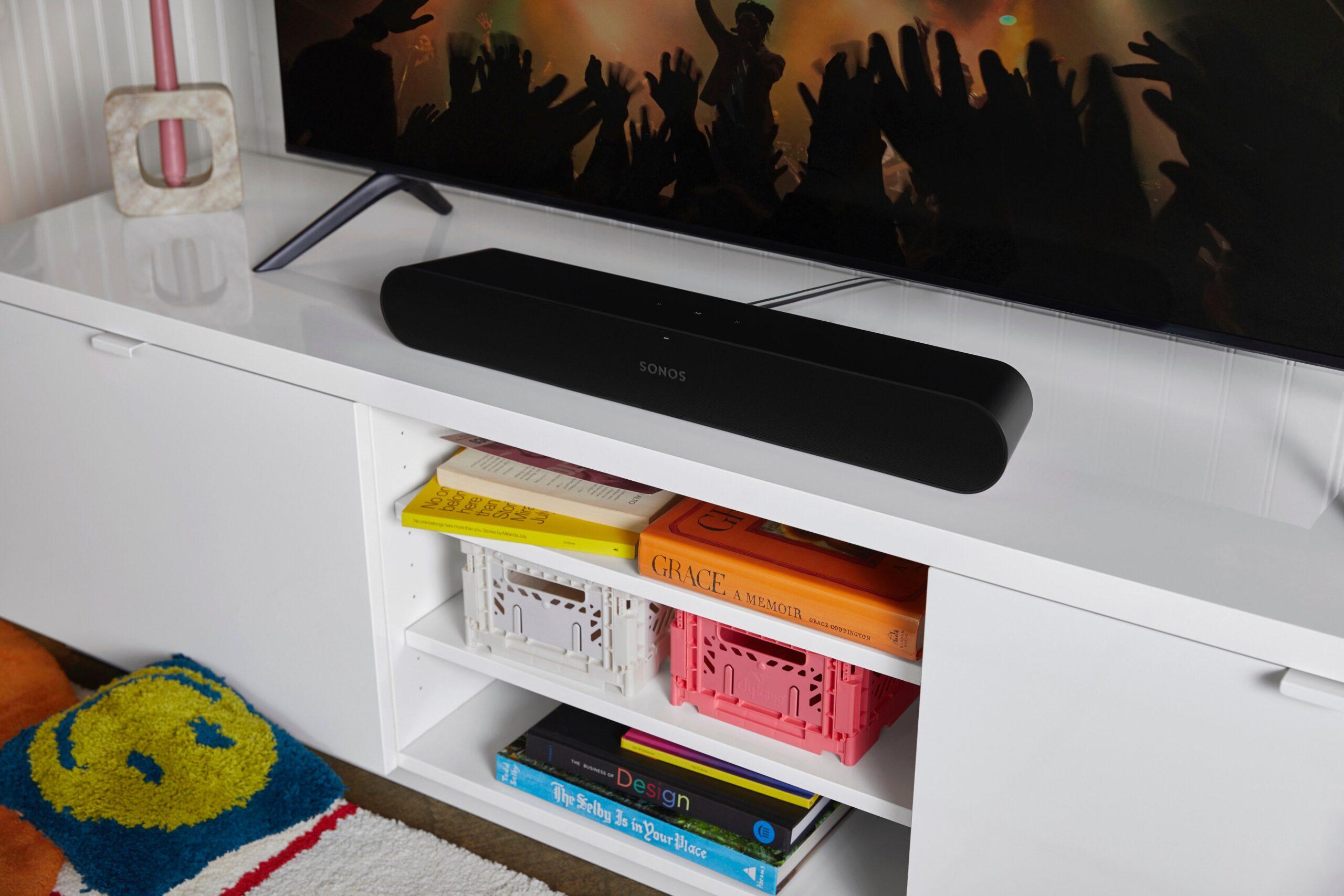
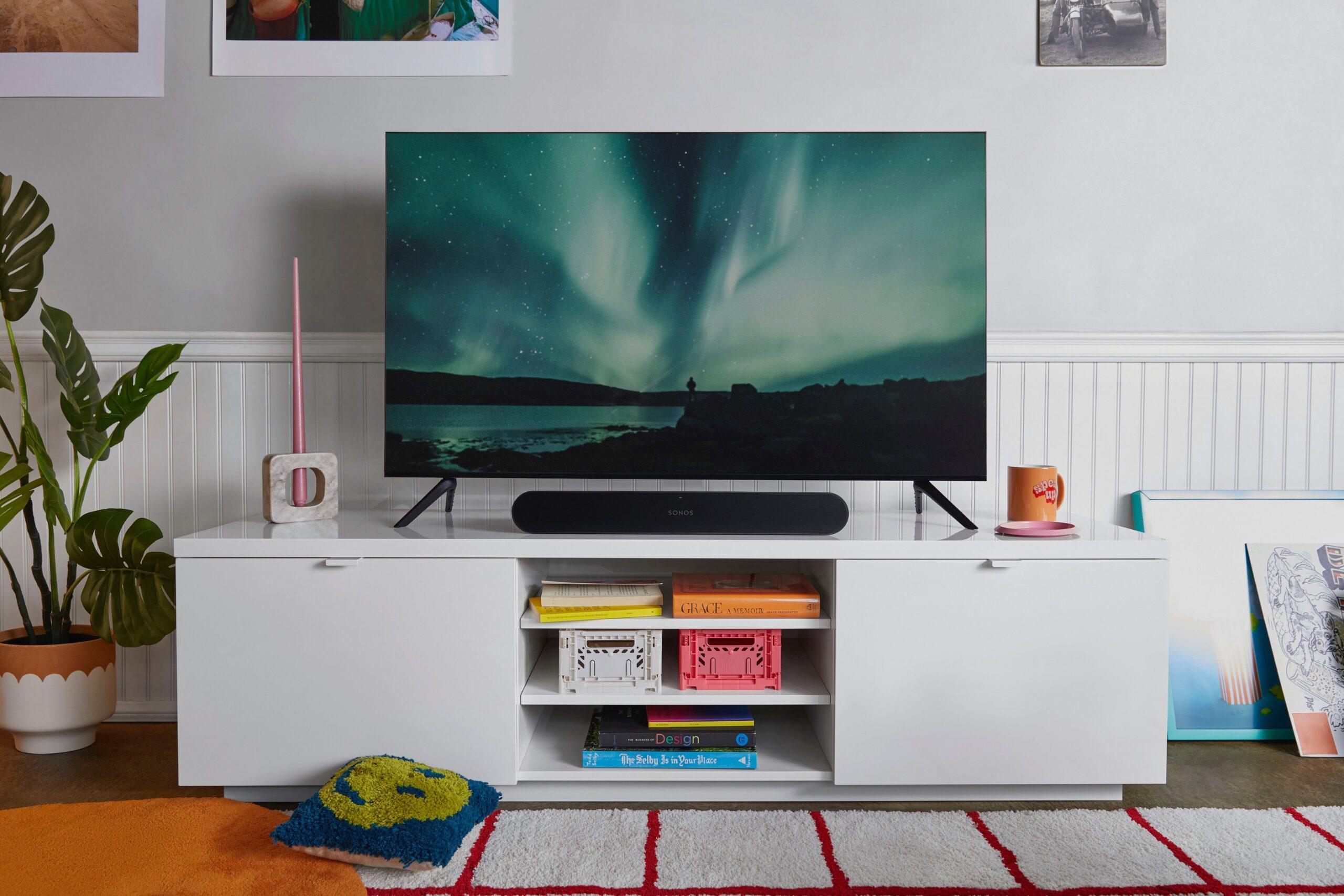
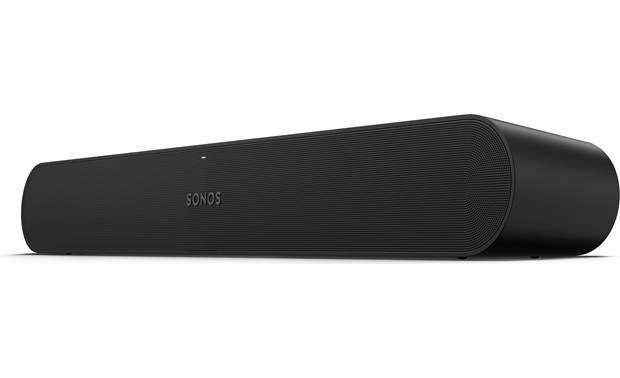
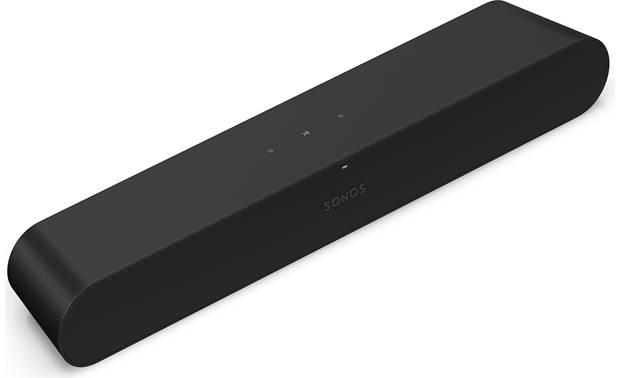
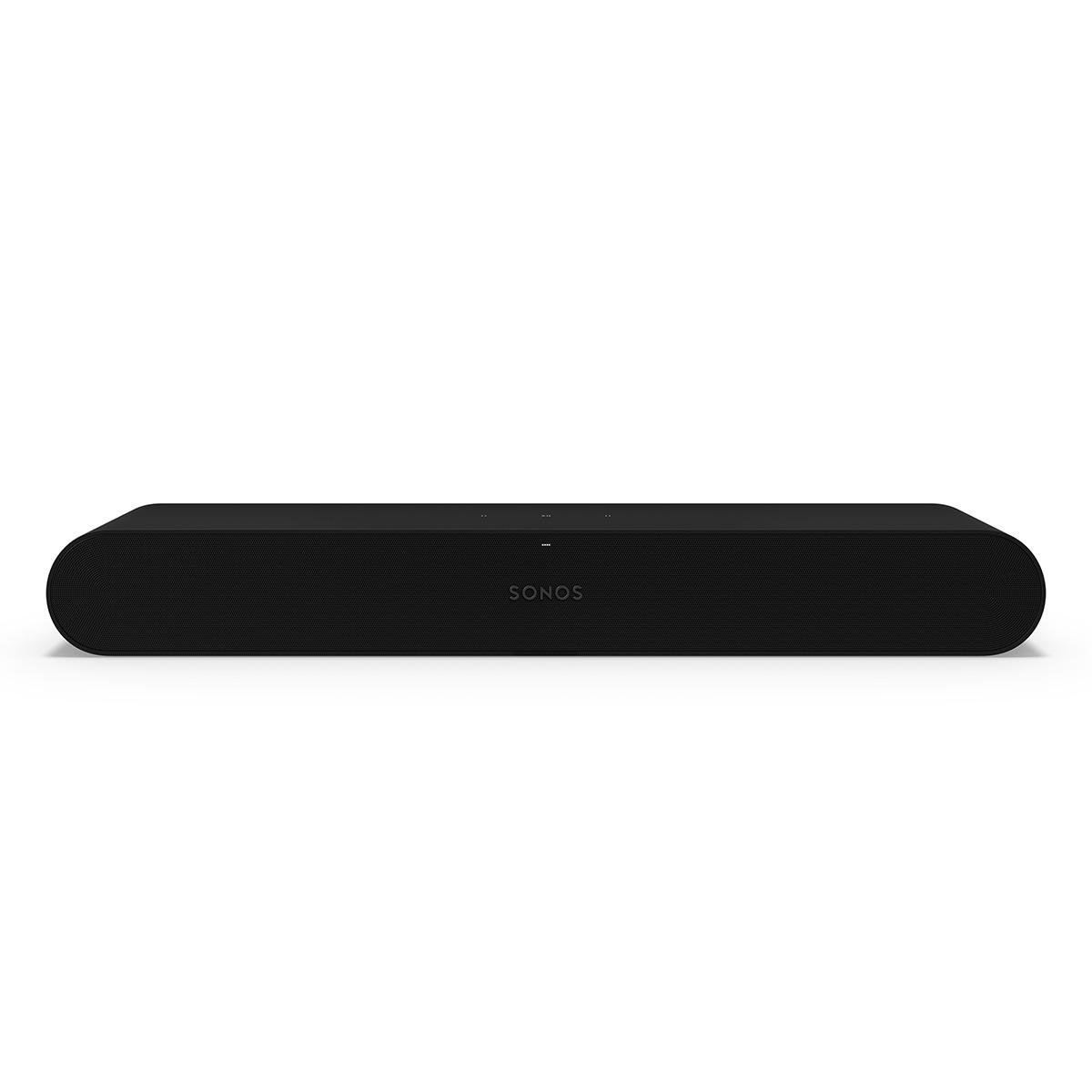
Released in June 2022, the Sonos Ray represents Sonos' philosophy of "less is more." At just 22 inches wide and weighing 4 pounds, it's designed to disappear visually while dramatically improving what you hear.
The Ray uses a 2.0 stereo configuration with four carefully selected drivers: two precision-engineered tweeters handle high frequencies (like cymbals and consonants in speech), while two full-range drivers manage midrange and bass. What makes this special is Sonos' custom waveguides – essentially acoustic lenses that project sound wide enough to fill your room from wall to wall.
I've spent considerable time with the Ray, and its dialogue clarity immediately stands out. During testing with everything from Netflix dramas to news programs, voices consistently remained crisp and intelligible, even when background music or sound effects got busy. This comes from Sonos' Speech Enhancement feature, which boosts the specific frequency ranges where human voices live (roughly 300Hz to 3kHz) without making everything sound artificially bright.
The Ray's bass response deserves special mention. Without a dedicated subwoofer, it relies on two carefully tuned bass reflex ports – openings that extend low-frequency response by using the cabinet itself as a resonating chamber. While you won't feel earthquake-level rumble, there's enough low-end presence to make action scenes engaging and music sound full-bodied.
One of the Ray's smartest features is Trueplay tuning, though it requires an iPhone to work. The technology uses your phone's microphone to analyze how sound bounces around your specific room, then automatically adjusts the soundbar's frequency response to compensate for acoustic challenges like hard floors or large windows. After running Trueplay in my living room, dialogue became noticeably clearer and bass tightened up considerably.
Connectivity is where the Ray shows its age and budget positioning. There's only one optical digital input – no HDMI, no Bluetooth for direct device connection. This means you're limited to whatever audio formats your TV can pass through the optical connection, excluding advanced surround formats like Dolby Atmos or DTS:X that require higher bandwidth.
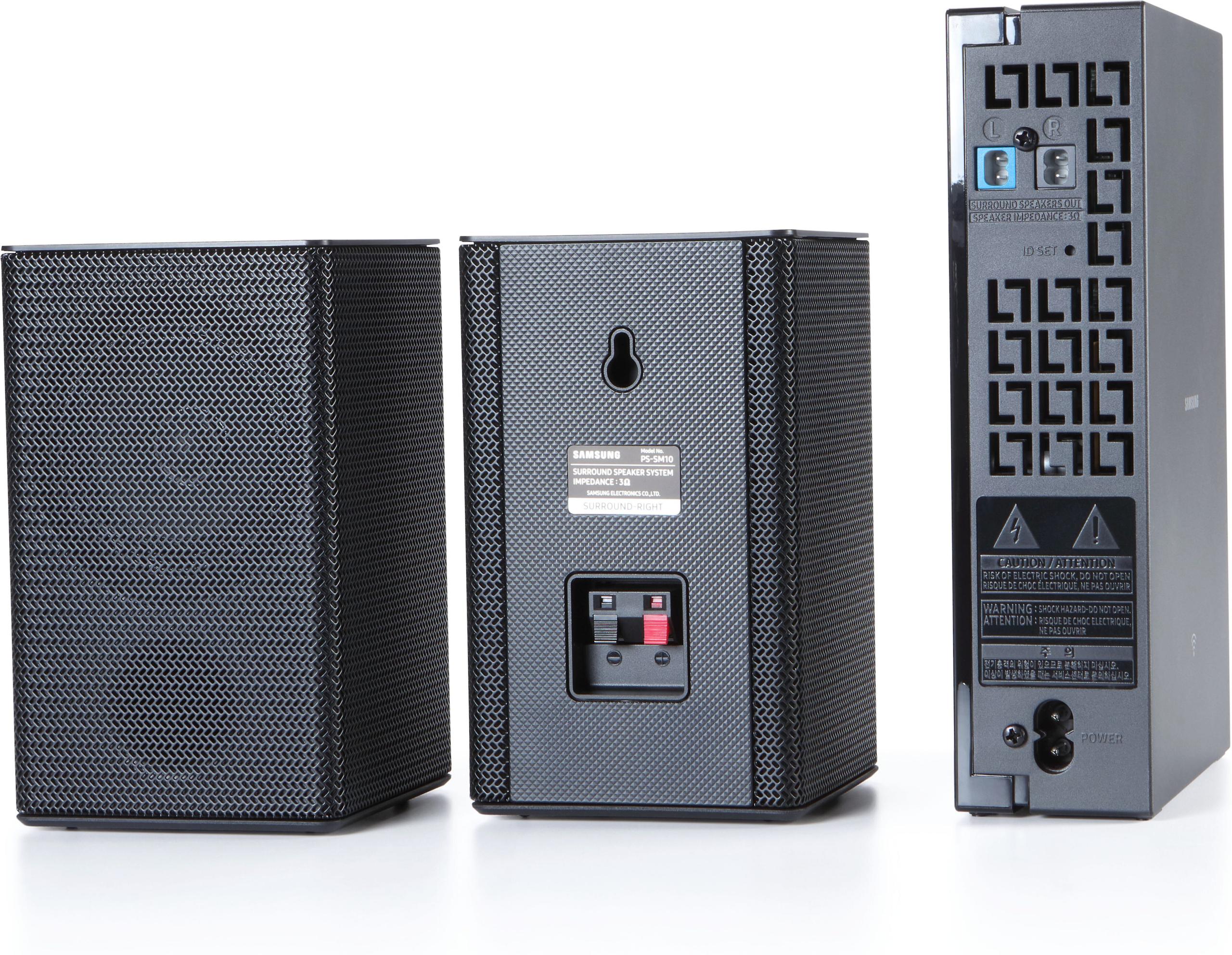
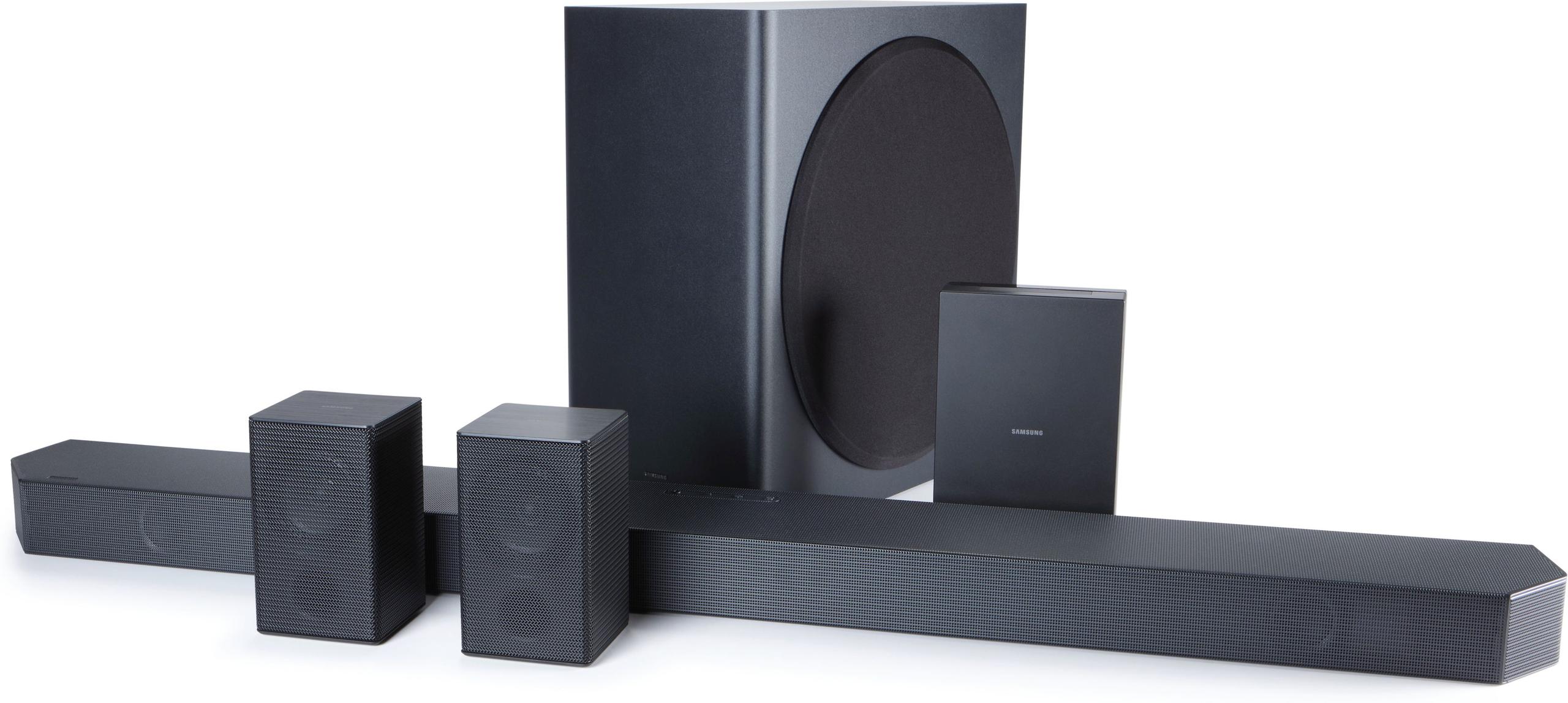
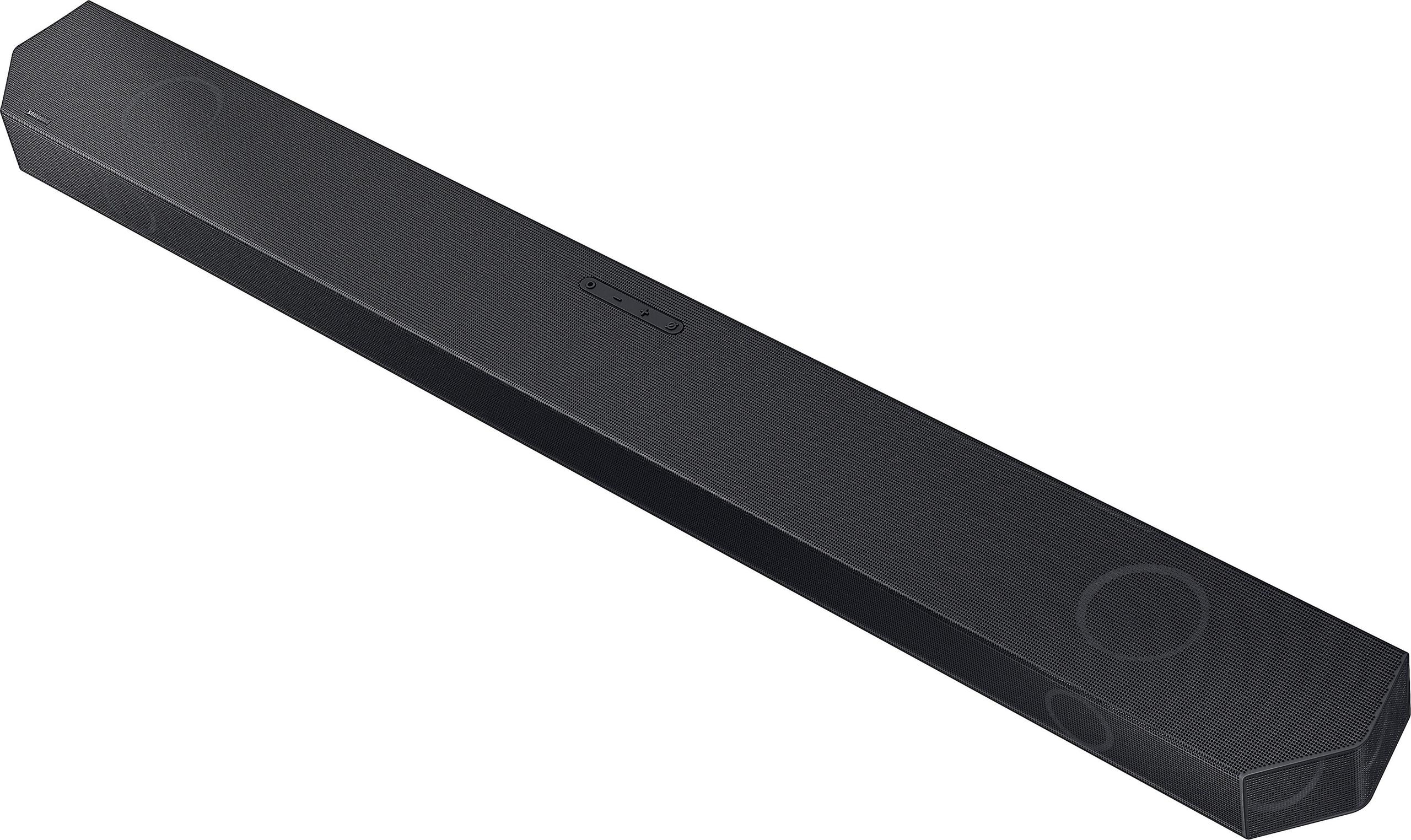
Samsung's approach with their 2025 Q Series model is completely different – maximum immersion through brute force audio engineering. The "9.1.2" designation breaks down to nine ear-level speakers, one subwoofer, and two upward-firing height channels, creating true three-dimensional sound.
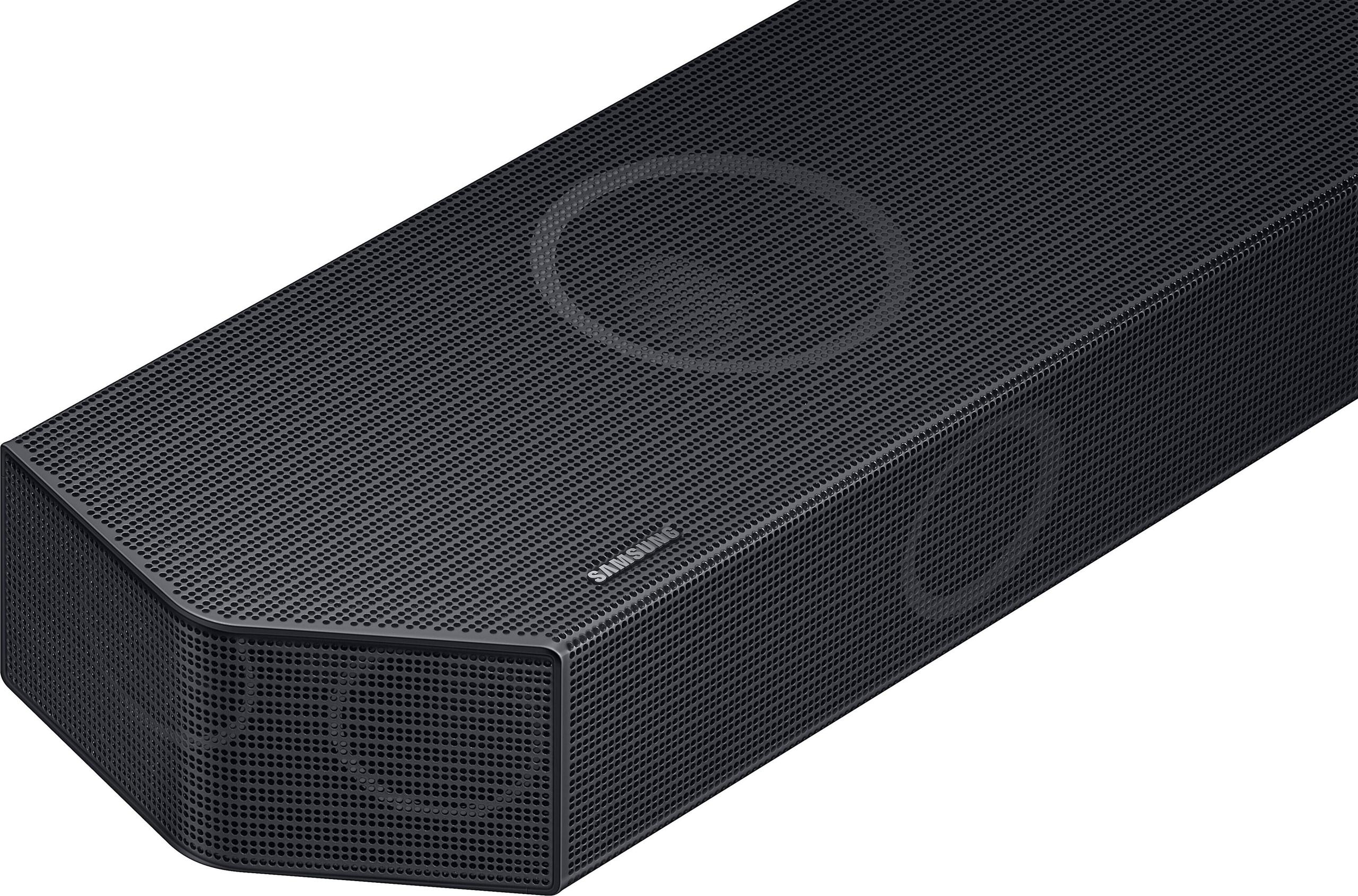
The main soundbar houses seven drivers: a dedicated center channel for dialogue, left and right channels for stereo content, side-firing speakers for width, and two upward-firing drivers that bounce sound off your ceiling to create overhead effects. This physical approach to surround sound placement means you'll actually hear helicopters flying overhead or rain falling around you, not just the illusion of these effects.
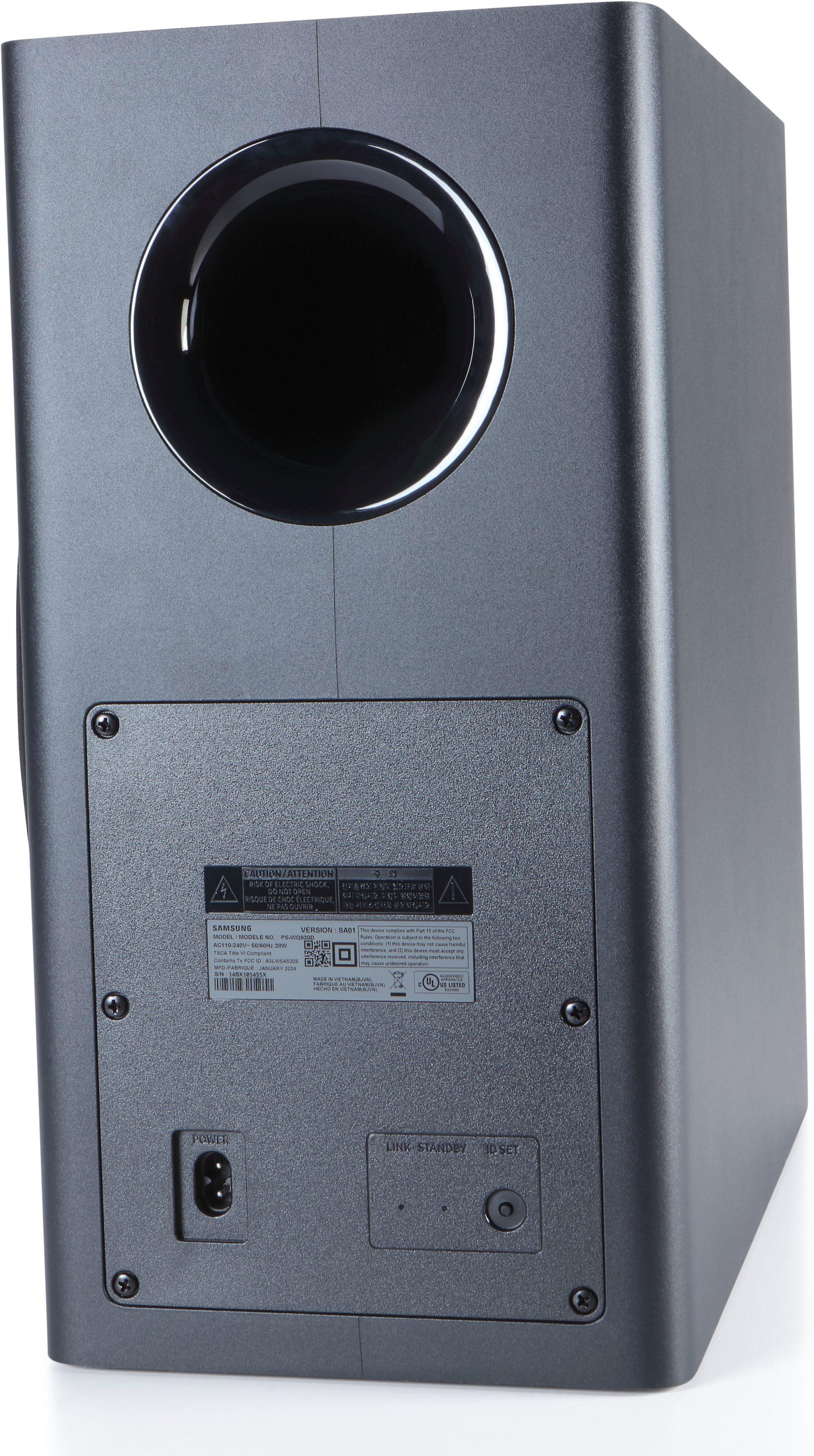
The included wireless subwoofer is substantial – an 8-inch driver in a ported cabinet that extends bass response down to 30Hz. For reference, that's deep enough to reproduce the lowest notes on a bass guitar and the rumbling explosions that make action movies visceral rather than just loud. The subwoofer's wireless connection eliminates cable runs across your room, though you'll still need to place it strategically for optimal bass response.
Perhaps most impressive are the wireless rear speakers, each containing multiple drivers to create authentic surround effects. When properly positioned behind your seating area, they complete the 360-degree soundfield that transforms movie watching into an event rather than casual viewing.
Samsung's Q-Symphony technology represents a genuinely innovative approach to home theater audio. If you own a compatible Samsung QLED TV, the soundbar can coordinate with the TV's built-in speakers rather than replacing them entirely. The TV handles certain frequency ranges while the soundbar focuses on others, creating a more expansive soundstage than either could achieve alone.
The SpaceFit Sound+ feature automatically calibrates the system using built-in microphones to analyze your room's acoustics. Unlike Sonos' iPhone-dependent Trueplay, this works automatically and continuously, adjusting not just for room characteristics but also for furniture placement and even the number of people present.
Both soundbars prioritize dialogue, but through different approaches. The Sonos Ray's strength lies in its focused stereo presentation and Speech Enhancement processing. During extensive testing with everything from British period dramas (notoriously difficult to understand) to rapid-fire comedy dialogue, the Ray consistently delivered clear, intelligible speech without making voices sound artificial or thin.
The Samsung's dedicated center channel should theoretically provide superior dialogue clarity, and it largely delivers. However, during complex movie scenes with heavy surround activity, voices can occasionally get lost in the mix. The Active Voice Amplifier (AVA) technology helps by automatically boosting dialogue when it detects competing sounds, but it's reactive rather than proactive.
For pure dialogue clarity in typical TV viewing, the Ray has a slight edge due to its singular focus on stereo presentation. For movies where dialogue needs to cut through explosive action sequences, the Samsung's processing power and dedicated center channel prove more capable.
This comparison isn't close. The Ray's bass reflex design provides adequate low-end for its size and price point, but it simply can't compete with a dedicated 8-inch subwoofer. During action movie testing, the difference becomes immediately apparent – explosions that sound like "pops" through the Ray become room-shaking events through the Samsung system.
The Samsung's Auto Sub EQ feature deserves special recognition. This technology uses the subwoofer's built-in microphone to detect bass peaks caused by room dimensions and automatically corrects them. In my testing room, which has a nasty 80Hz peak due to parallel walls, this feature dramatically smoothed out bass response, preventing the boomy, one-note bass that plagues many home theater setups.
For music listening, the difference is equally pronounced. Bass-heavy genres like hip-hop or electronic music sound constrained through the Ray, while the Samsung reproduces the full frequency spectrum with authority and control.
The Ray creates impressive width and presence for a stereo soundbar, with waveguides that genuinely make sound appear to come from beyond the physical boundaries of the unit. However, virtual surround processing has inherent limitations – it can create the illusion of height and depth, but it can't place specific sounds behind your listening position with pinpoint accuracy.
The Samsung's physical surround approach is transformative for compatible content. During Dolby Atmos movie testing, overhead effects like helicopters or thunderstorms genuinely appear to originate from above and around you. The wireless rear speakers complete the illusion, creating the sense that you're inside the action rather than watching it unfold on a screen.
Gaming represents another area where the Samsung excels. Its Game Mode Pro processing enhances directional audio cues – footsteps, gunshots, and environmental sounds that help competitive gamers locate opponents or navigate complex environments. The Ray provides good gaming audio but lacks the spatial precision that can provide tactical advantages.
The Ray's 2022 release positioned it during the streaming service boom, when most content consumption shifted to dialogue-heavy TV series rather than blockbuster movies. Its optical-only connectivity reflected the reality that most people were connecting directly to their TV rather than managing multiple HDMI inputs.
However, the audio landscape has evolved rapidly. Dolby Atmos content is now standard on major streaming platforms, and gaming systems routinely output complex surround formats. The Ray's connectivity limitations mean it can't take advantage of these advances, limiting its future-proofing capabilities.
The Samsung represents 2025-era thinking about home entertainment. Its comprehensive connectivity supports current and emerging audio formats, while features like Q-Symphony acknowledge that modern TVs have become sophisticated enough to contribute meaningfully to the audio experience rather than simply being bypassed entirely.
At $169, the Sonos Ray delivers exceptional value for dialogue improvement and casual entertainment. The build quality feels premium, with solid construction and materials that should provide years of reliable service. Integration with the Sonos ecosystem means potential future expansion into whole-home audio, adding long-term value beyond its soundbar function.
The Samsung's $897.99 price tag initially seems steep, but consider what's included: the main soundbar, wireless subwoofer, and rear speakers constitute what would traditionally require separate component purchases totaling well over $1,000. The comprehensive feature set and future-proof connectivity justify the premium for users who plan to keep the system for many years.
For dedicated home theater use, the Samsung is clearly superior. Its ability to decode and properly reproduce Dolby Atmos, DTS:X, and other advanced formats makes it suitable for serious movie watching. The physical surround speakers and substantial subwoofer create the enveloping experience that makes home theater compelling compared to simply watching TV.
However, home theater setup requires more consideration. The rear speakers need proper positioning behind the seating area, the subwoofer requires strategic placement for optimal bass response, and the room itself should ideally have some sound treatment to prevent excessive reverberation that can muddy the complex soundfield.
The Ray works better for mixed-use living spaces where the audio system needs to serve multiple functions without dominating the room visually or requiring dedicated positioning of multiple components.
Choose the Sonos Ray if your primary goal is dramatically improving dialogue clarity and general TV audio quality without complexity or major expense. It excels in apartments, bedrooms, or any space where simplicity and compact size matter more than maximum audio performance. The Sonos ecosystem integration also makes it attractive if you're interested in multi-room audio capabilities.
The Samsung Q Series 9.1.2 makes sense for dedicated home theater enthusiasts who want authentic surround sound immersion and have both the space and budget for a comprehensive system. Its advanced features and future-proof connectivity make it suitable for users who plan to keep their audio system for many years while technology continues evolving.
The decision ultimately comes down to matching capabilities with actual usage patterns. If you primarily watch TV shows and stream music in a modestly-sized room, the Ray's focused approach delivers better value. If you regularly watch movies, play immersive games, or entertain guests in a larger space, the Samsung's comprehensive capabilities justify the significant price premium.
Both represent excellent execution of their respective philosophies – the Ray as a refined, focused solution for everyday audio improvement, and the Samsung as a no-compromise approach to home theater immersion. Your choice should reflect which philosophy better matches your entertainment habits and living situation.
| Sonos Ray Soundbar | Samsung Q Series 9.1.2 Channel Soundbar |
|---|---|
| Price - Entry-level vs premium investment | |
| $169 (complete system) | $897.99 (includes subwoofer and rear speakers) |
| Audio Channels - Determines surround sound capability | |
| 2.0 stereo (virtual surround via waveguides) | 9.1.2 true surround (physical rear and height speakers) |
| Subwoofer - Critical for bass impact in movies/music | |
| Built-in bass ports only | Wireless 8" subwoofer with 30Hz extension |
| Dolby Atmos Support - Essential for modern streaming content | |
| Not supported (optical connection limitation) | Full Dolby Atmos and DTS:X support |
| Connectivity Options - Future-proofing and device compatibility | |
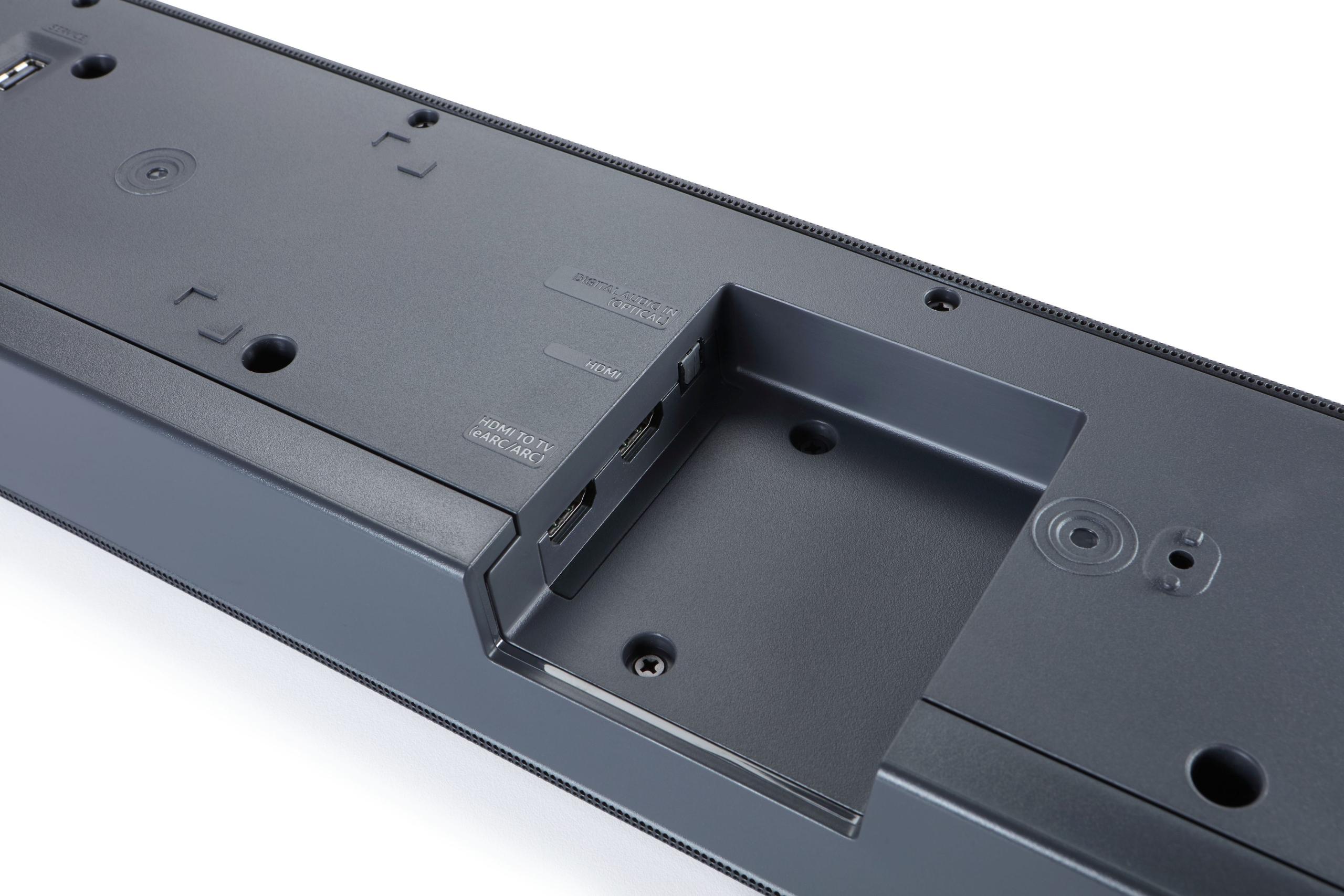
| Optical input only | HDMI eARC, optical, Bluetooth 5.2, Wi-Fi |
| Room Size Optimization - Matching power to space | |
| Small to medium rooms (under 250 sq ft) | Large rooms (300+ sq ft) with rear speaker placement |
| Setup Complexity - Time and technical skill required | |
| Single unit, plug-and-play setup | Multi-component system requiring strategic placement |
| Dialogue Clarity - Most important for TV shows and news | |
| Exceptional with Speech Enhancement processing | Good with dedicated center channel and AVA technology |
| Smart Features - App control and streaming capabilities | |
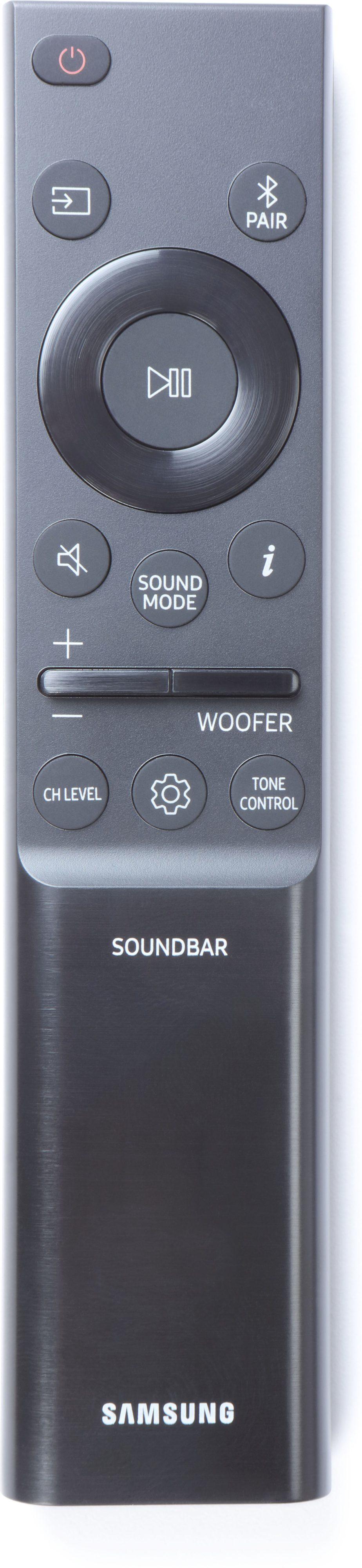
| Sonos app, AirPlay 2, Trueplay tuning (iOS only) | SmartThings app, Q-Symphony, SpaceFit Sound+, multiple streaming protocols |
| Ecosystem Integration - Long-term expandability | |
| Full Sonos multiroom system compatibility | Samsung TV integration, limited third-party expansion |
| Build Quality - Durability and premium feel | |
| Compact fabric-wrapped design, 12-month warranty | Premium materials with wireless components, warranty varies |
The Sonos Ray Soundbar ($169) is ideal for small rooms under 250 square feet. Its compact 22-inch design and stereo configuration work perfectly in apartments, bedrooms, or cozy living spaces without overwhelming the room or requiring multiple speaker placements.
The Sonos Ray is a simple 2.0 stereo soundbar focused on dialogue clarity, while the Samsung Q Series 9.1.2 ($897.99) is a complete surround sound system with wireless rear speakers, subwoofer, and Dolby Atmos support for true home theater immersion.
The Samsung Q Series 9.1.2 has significantly better bass with its wireless 8-inch subwoofer that extends down to 30Hz. The Sonos Ray relies on built-in bass ports, which provide adequate low-end for its size but can't match a dedicated subwoofer's impact.
No, the Samsung Q Series 9.1.2 works with any TV that has HDMI or optical output. However, you'll get additional benefits like Q-Symphony technology (coordinated audio between TV and soundbar) if you pair it with a compatible Samsung QLED TV.
The Sonos Ray Soundbar is much easier to set up - it's a single unit that connects via optical cable and works immediately. The Samsung system requires positioning the main bar, wireless subwoofer, and rear speakers around your room for optimal performance.
Only the Samsung Q Series 9.1.2 supports Dolby Atmos with its upward-firing height speakers and HDMI eARC connection. The Sonos Ray cannot play Dolby Atmos due to its optical-only connectivity and stereo configuration.
For basic TV audio improvement, the Sonos Ray ($169) offers exceptional value with premium build quality and excellent dialogue clarity. For home theater enthusiasts wanting full surround sound, the Samsung ($897.99) provides good value since it includes subwoofer and rear speakers that would cost extra with other brands.
For home theater use, yes. The Samsung Q Series 9.1.2's wireless rear speakers create authentic surround sound that places effects behind you, making movies and games dramatically more immersive compared to the Sonos Ray's virtual surround processing.
The Sonos Ray Soundbar excels at dialogue clarity with its Speech Enhancement feature and focused stereo design. While the Samsung has good dialogue performance, the Ray's singular focus on speech intelligibility gives it an edge for TV shows and news.
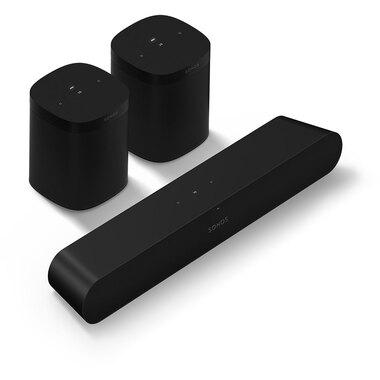
The Sonos Ray integrates into the full Sonos ecosystem, allowing expansion to whole-home audio with additional Sonos speakers. The Samsung Q Series 9.1.2 comes complete but has limited expansion options beyond Samsung's own ecosystem.
The Samsung Q Series 9.1.2 Channel Soundbar is superior for gaming with its Game Mode Pro feature that enhances directional audio cues and true surround sound positioning. The Sonos Ray provides good gaming audio but lacks the spatial precision that can give competitive advantages.
Choose the Sonos Ray ($169) if you primarily watch TV shows in a small-to-medium room and want simple, high-quality audio improvement. Choose the Samsung Q Series 9.1.2 ($897.99) if you have a large room, watch lots of movies, play games, and want true surround sound immersion for the complete home theater experience.
We've done our best to create useful and informative comparisons to help you decide what product to buy. Our research uses advanced automated methods to create this comparison and perfection is not possible - please contact us for corrections or questions. These are the sites we've researched in the creation of this article: techradar.com - soundandvision.com - youtube.com - appleinsider.com - youtube.com - sonos.com - cnet.com - howtogeek.com - pcrichard.com - en.community.sonos.com - epicsystems.tech - en.community.sonos.com - cepro.com - videoandaudiocenter.com - rtings.com - samsung.com - markselectrical.co.uk - techradar.com - walmart.com - samsung.com - samsung.com - youtube.com - samsung.com - biancos.com - crutchfield.com - samsung.com

Privacy Policy
Terms and Conditions - Affiliate Policy
Home Security
© Copyright 2008-2026.
11816 Inwood Rd #1211, Dallas, TX 75244