

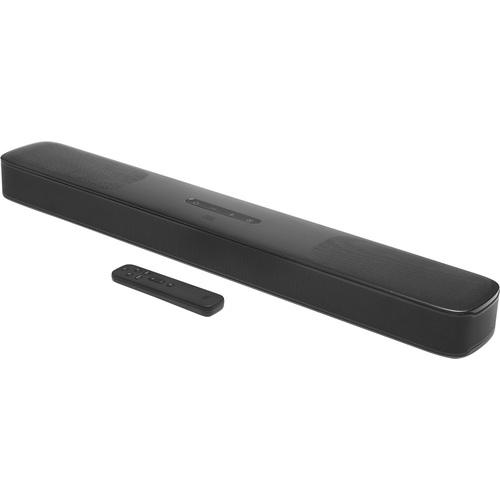
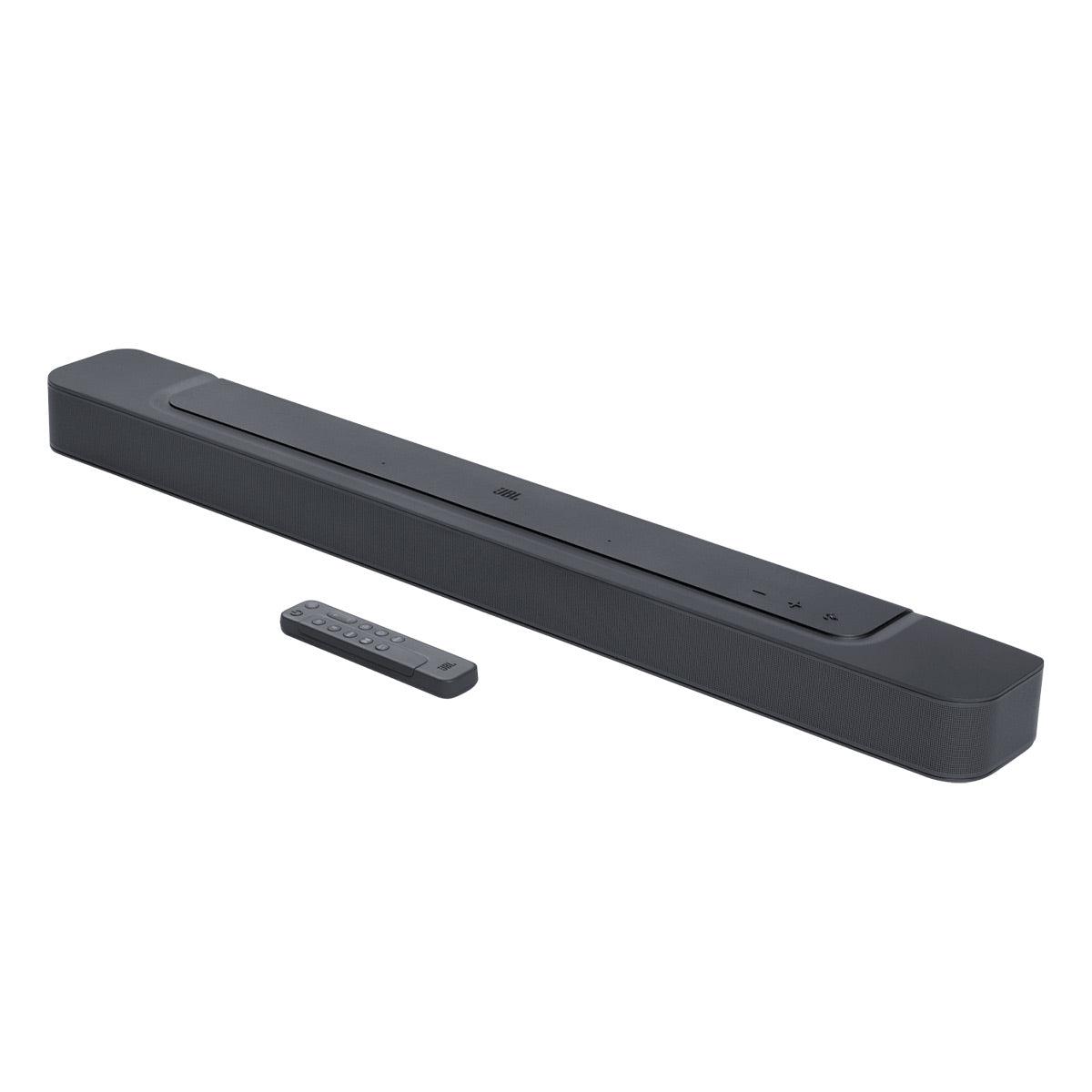
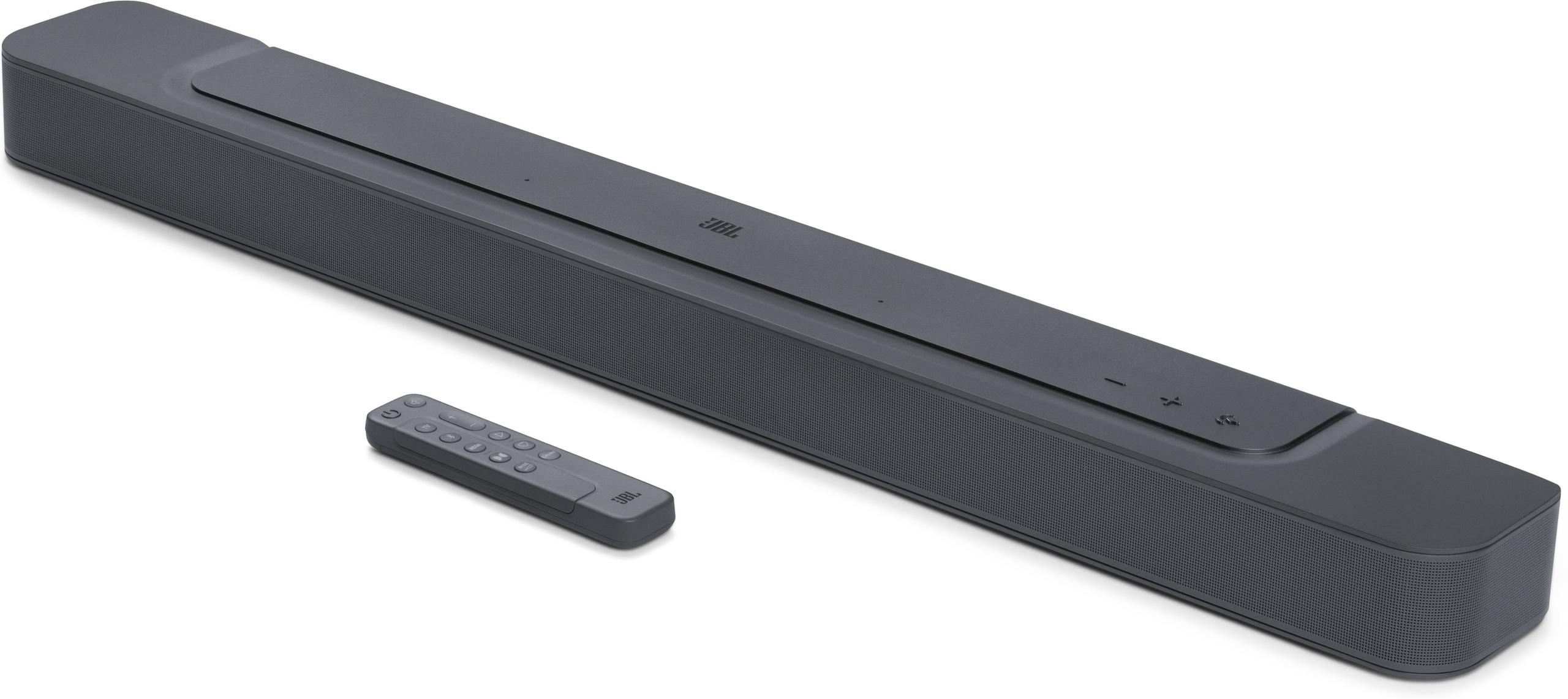

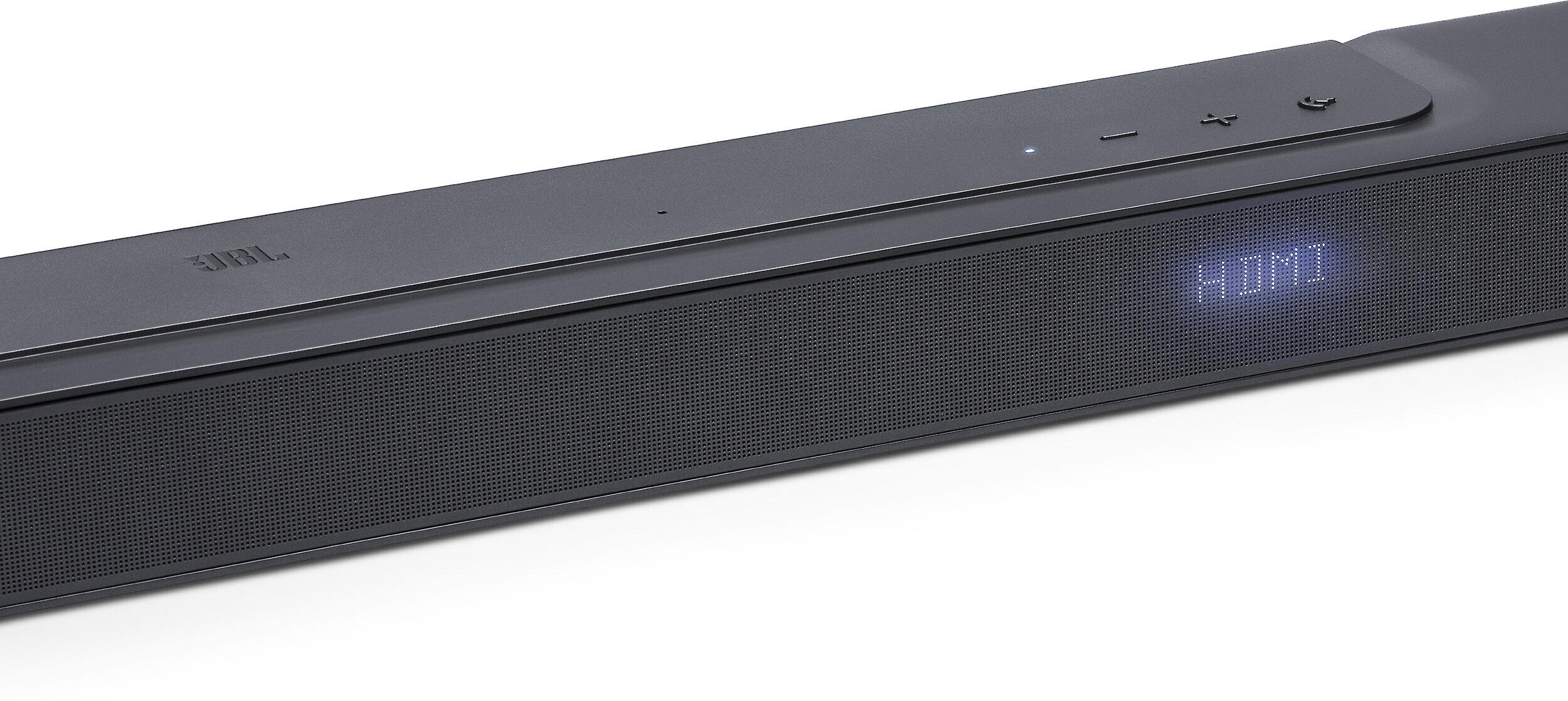



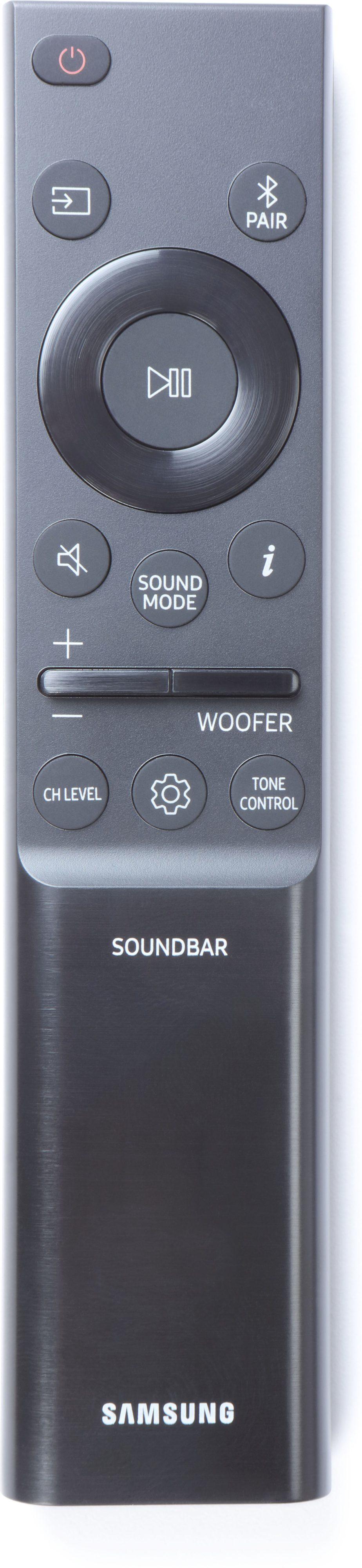
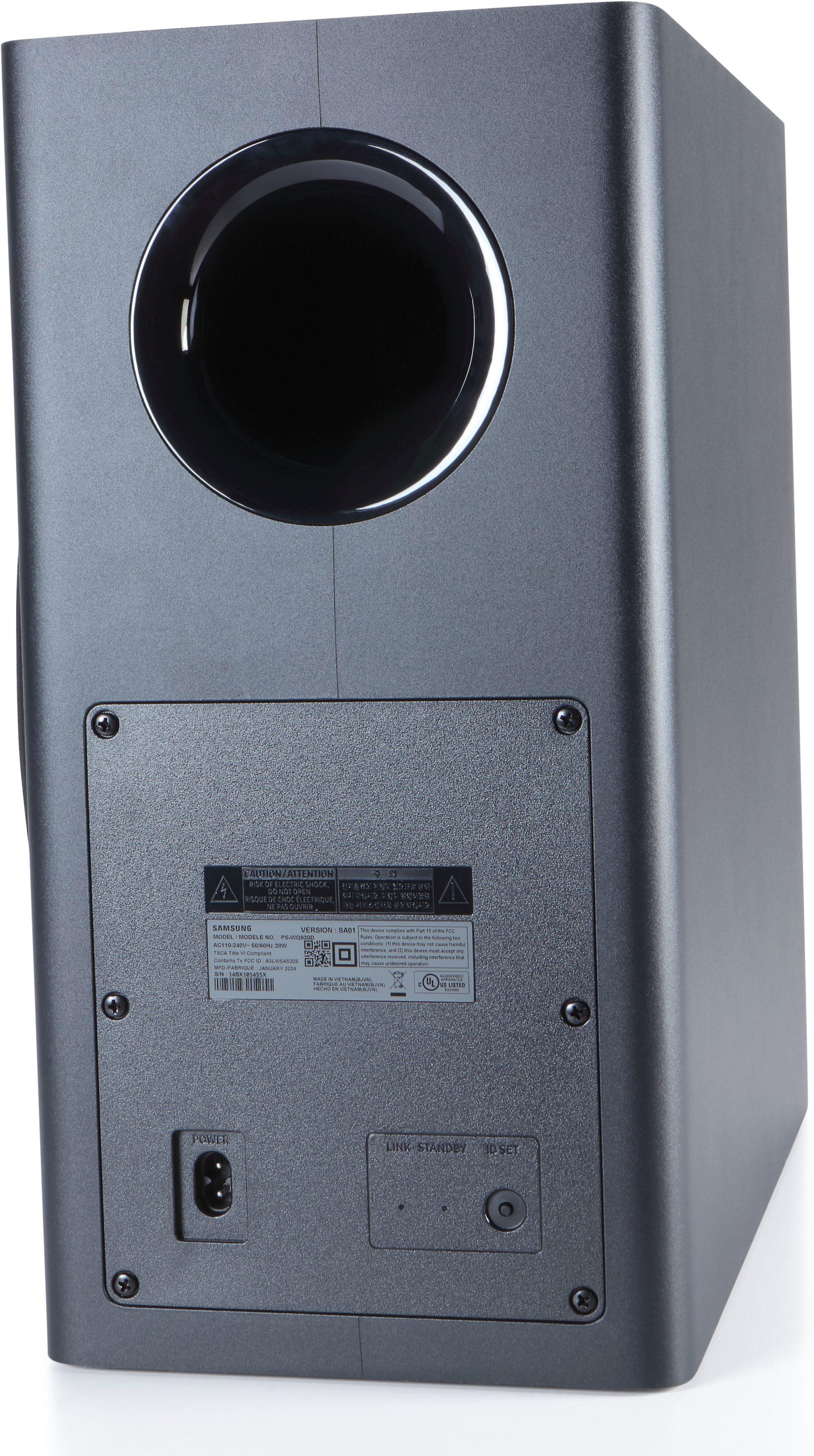
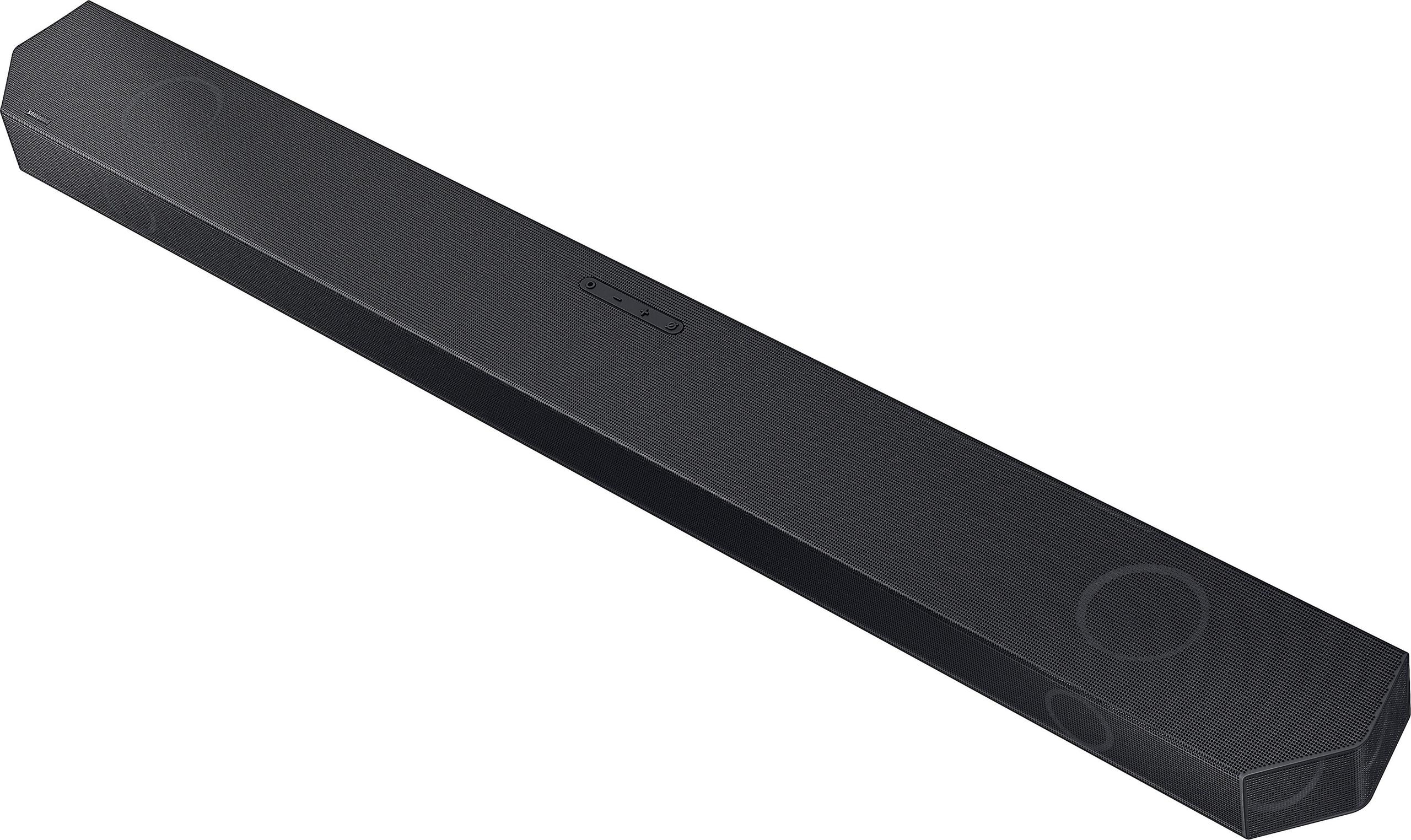

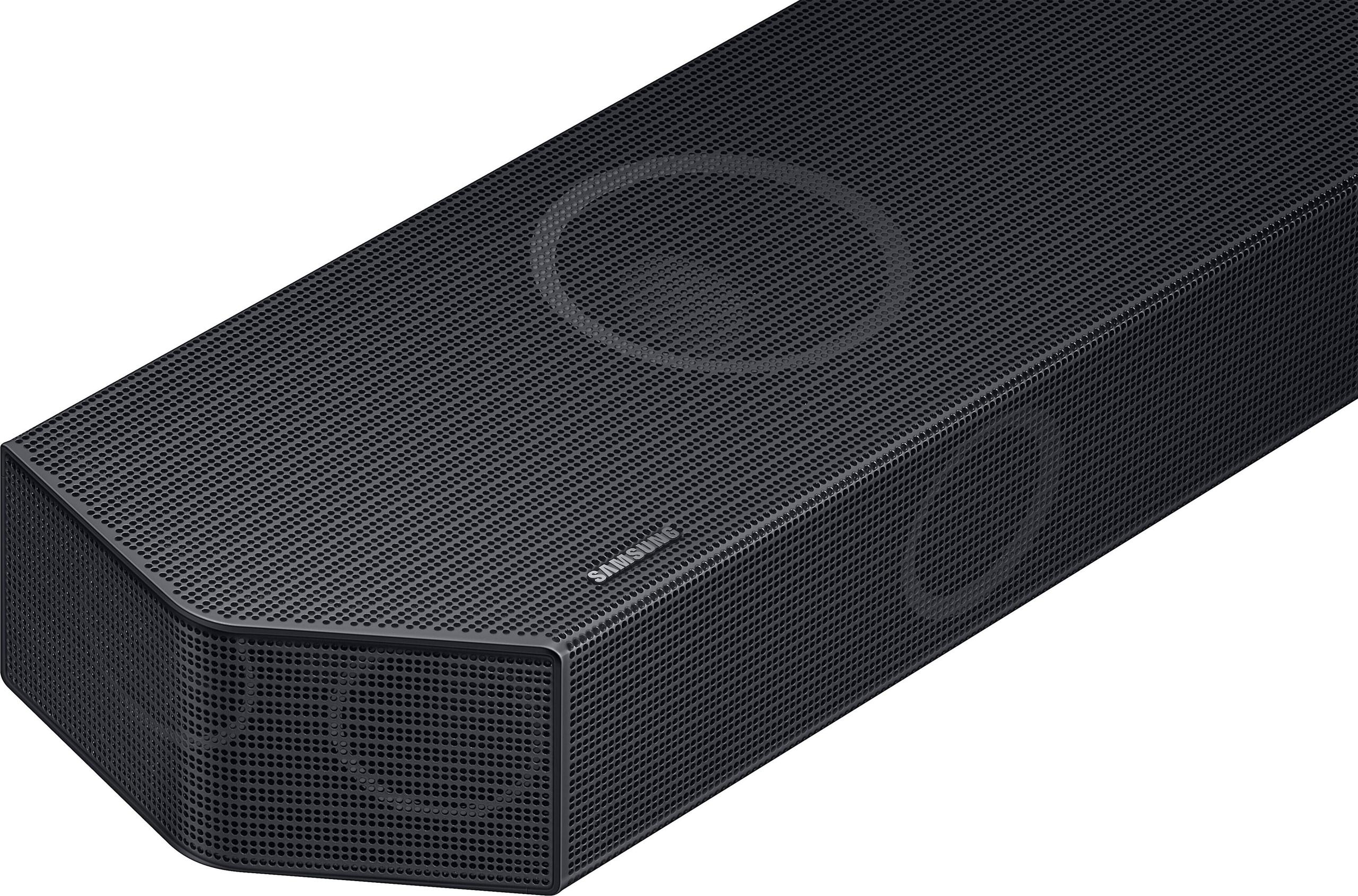




When your TV's built-in speakers sound like they're trapped in a tin can, it's time to consider a soundbar upgrade. But with options ranging from $200 budget models to $2,000 premium systems, choosing the right one can feel overwhelming. Today, I'm comparing two popular choices that represent very different approaches to better TV audio: the JBL Bar 300 5.0 Soundbar at $299.95 and the Samsung Q Series 9.1.2 Channel Soundbar at $897.99.
These aren't just different price points—they're fundamentally different philosophies about how to create great sound for your home entertainment setup.
Before diving into specifics, let's talk about what you're actually buying when you get a soundbar. At its core, a soundbar is trying to solve the same problem that's plagued flat-screen TVs since they got thin: there's simply no room for decent speakers inside modern displays.
The main considerations when shopping for soundbars break down into several key areas. Audio quality encompasses not just how loud something gets, but how clear dialogue sounds, how well it handles bass frequencies (the rumbling lows that make explosions feel impactful), and whether music sounds balanced across different genres. Surround sound capability determines whether you'll hear helicopters flying overhead or footsteps creeping up behind you—this can be achieved through virtual processing (using psychoacoustic tricks to fool your brain) or physical speakers placed around your room.
Value proposition matters because audio gear spans an enormous price range, and expensive doesn't always mean better for your specific situation. Setup complexity varies dramatically between single-bar solutions and multi-component systems with rear speakers and separate subwoofers. Room requirements include both physical space constraints and acoustic considerations—a soundbar that sounds amazing in a showroom might disappoint in your particular living room. Finally, ecosystem integration determines how well your soundbar plays with your existing TV, streaming devices, and smart home setup.
The JBL Bar 300 represents JBL's 2024 entry into the competitive mid-range market, incorporating several years of refinement in virtual surround processing. JBL has been iterating on their MultiBeam technology since around 2020, and this latest version shows significant improvements in how convincingly it can create the illusion of surround sound from a single bar.
Meanwhile, the Samsung Q Series 9.1.2 continues Samsung's premium soundbar tradition that began gaining serious traction around 2019 with their Q90R model. The current 9.1.2 configuration represents Samsung's refined approach to true surround sound, building on their Q-Symphony technology that first appeared in 2020. This feature allows Samsung soundbars to work in harmony with compatible Samsung TVs, using both the TV's speakers and the soundbar simultaneously for a more enveloping experience.
The past few years have brought meaningful improvements to both virtual and physical surround implementations. Processing power has increased dramatically, allowing for more sophisticated room correction and audio virtualization. Wireless connectivity has become more reliable, making multi-component systems less prone to dropouts. And codec support has expanded to include more advanced formats like Dolby Atmos, which adds height channels to create true three-dimensional audio.
When I first set up the JBL Bar 300, what struck me immediately was its dialogue clarity. The PureVoice technology isn't just marketing speak—it uses sophisticated algorithms to identify and enhance human vocal frequencies while reducing competing background noise. This means you can actually understand what characters are saying during explosive action scenes, something that's surprisingly rare even in expensive soundbars.
The bar's frequency response extends from 50Hz to 20kHz, which covers the full range of human hearing. That 50Hz low-end specification is particularly impressive for a soundbar without a separate subwoofer. To put this in perspective, most male voices bottom out around 85Hz, while the deep rumble you feel during movie explosions typically lives in the 20-40Hz range. The JBL's built-in bass port—essentially a carefully tuned opening that reinforces low frequencies—manages to deliver surprising punch in that crucial 50-80Hz range where you feel the weight of music and movie soundtracks.
The Samsung system takes a different approach entirely. With its dedicated wireless subwoofer, it can reproduce frequencies well below 50Hz, giving you that chest-thumping impact during intense scenes. The subwoofer uses Samsung's Auto Sub EQ technology, which employs a built-in microphone to analyze your room's acoustic properties and adjust the bass response accordingly. This addresses one of the biggest challenges in audio: room modes, which are essentially acoustic quirks that can make bass sound boomy in some spots and weak in others.
But raw specifications only tell part of the story. During my testing with various content types, the JBL Bar 300 consistently impressed with its coherent, balanced sound signature. Music streaming through Apple AirPlay sounded natural and engaging, without the artificial brightness that plagues many budget soundbars. The Samsung system, meanwhile, delivered more dramatic dynamics—the difference between quiet dialogue and explosive action felt more pronounced and cinematic.
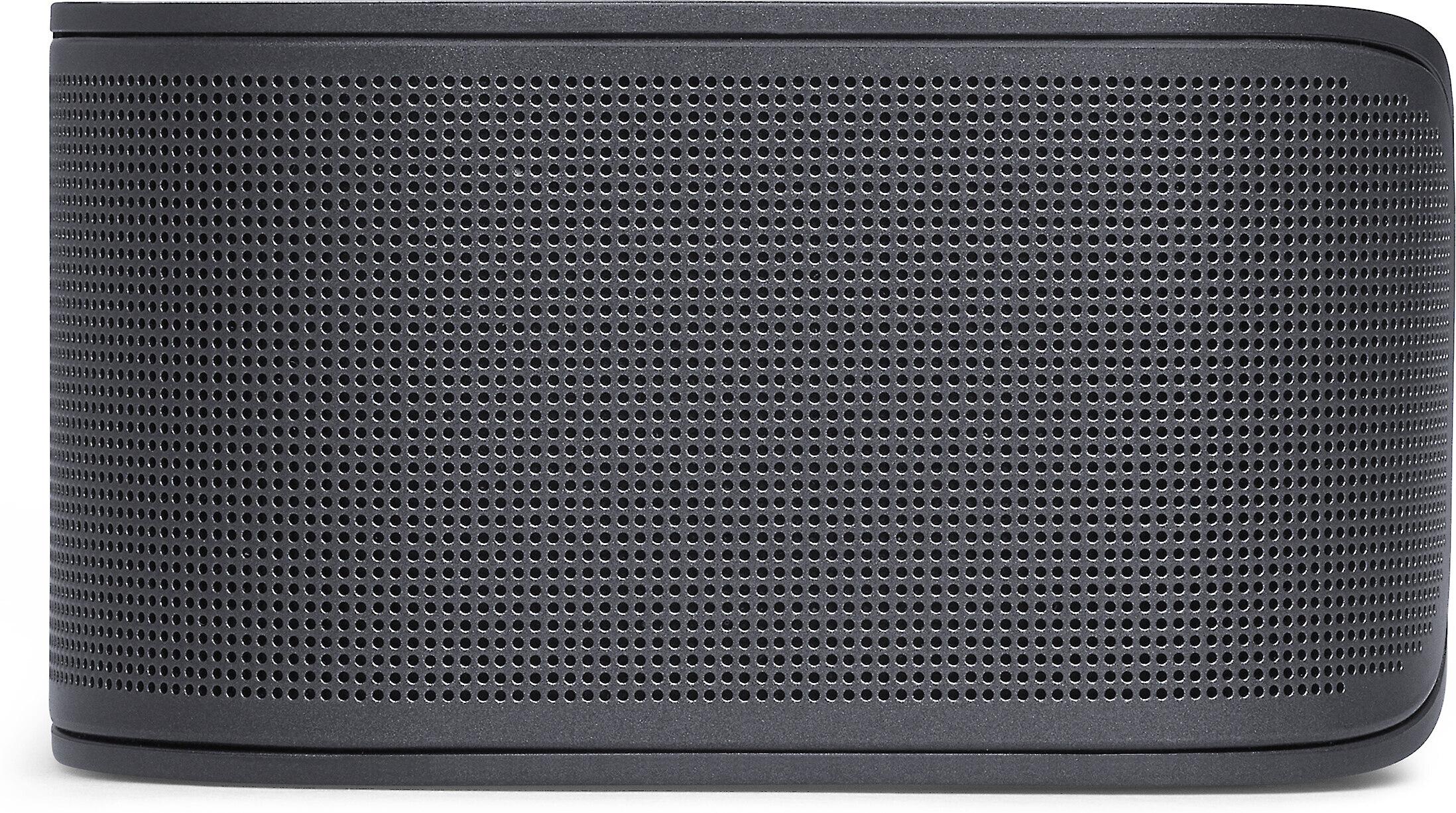
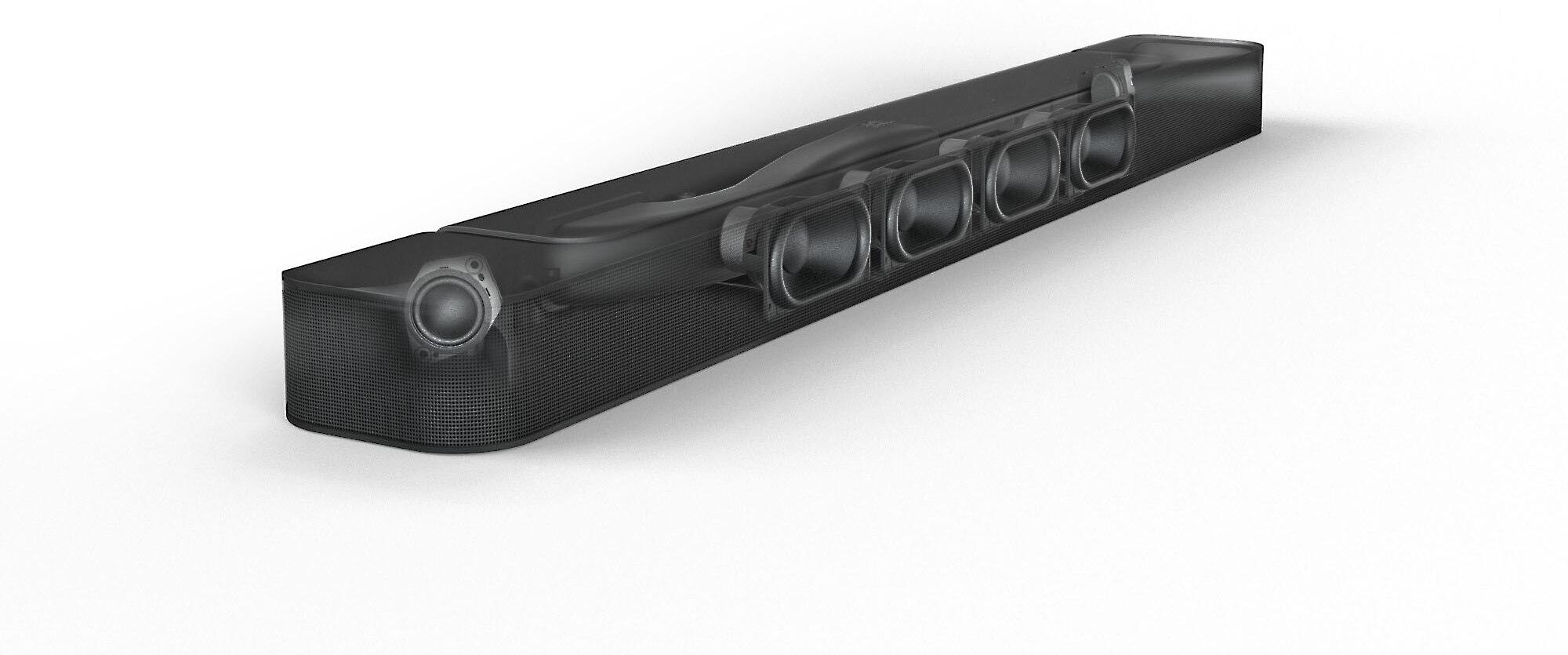
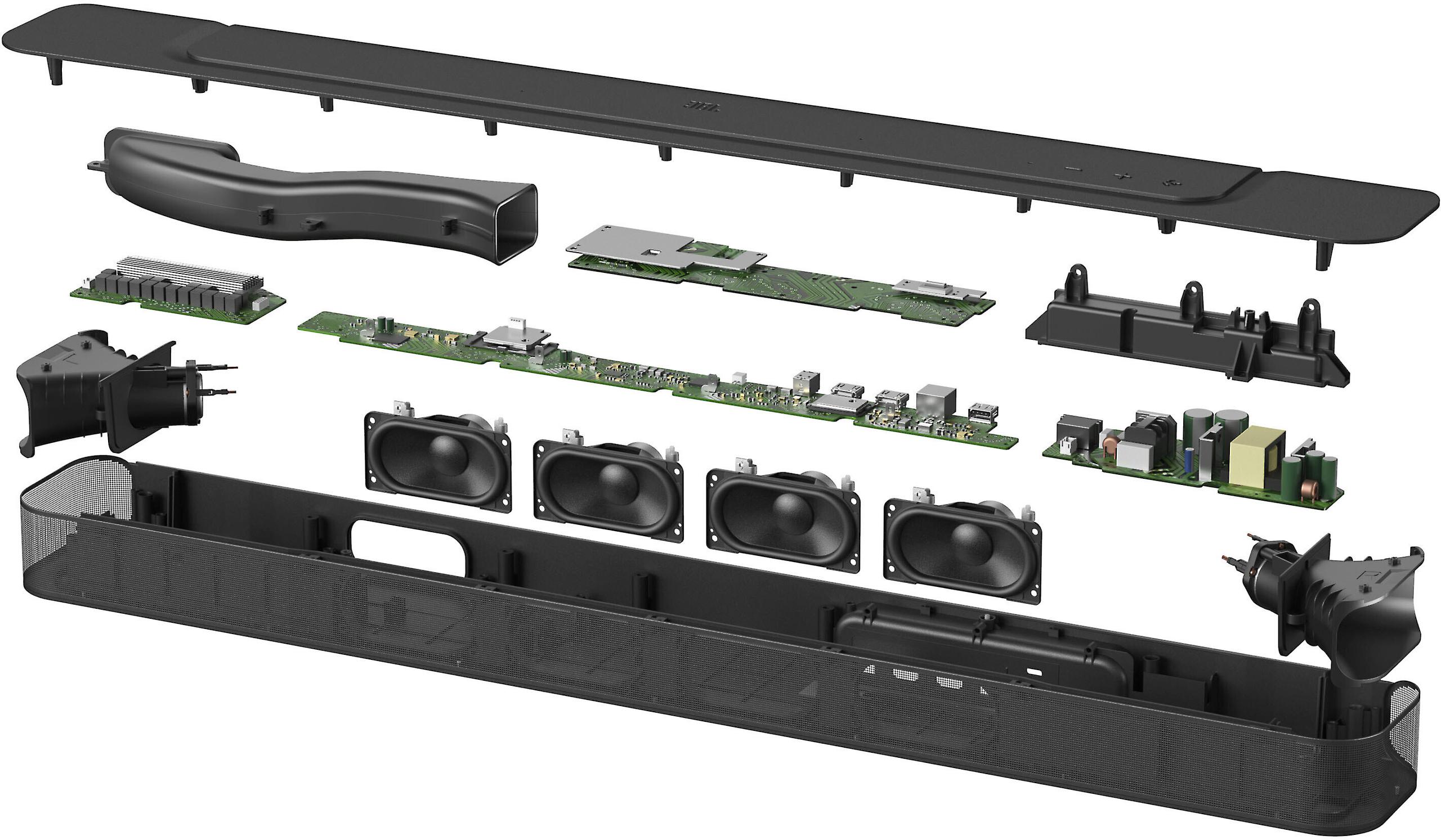
This is where these two products most clearly diverge in their approach. The JBL Bar 300 relies on MultiBeam technology, which uses precisely positioned drivers and sophisticated digital signal processing to create the illusion of surround sound. The bar includes six drivers total: four racetrack-shaped woofers and two tweeters (the small drivers that handle high frequencies). By carefully controlling the timing and phase of audio signals sent to each driver, the system can create acoustic reflections that seem to come from beside and even behind your listening position.
I'll be honest—virtual surround was pretty gimmicky when it first appeared in soundbars around 2015. But the current implementation in the JBL is genuinely impressive. During test scenes with helicopters flying overhead, the height effect was convincing enough that I found myself looking up. The system's automatic calibration uses the built-in microphone to analyze your room and optimize these psychoacoustic effects for your specific space.
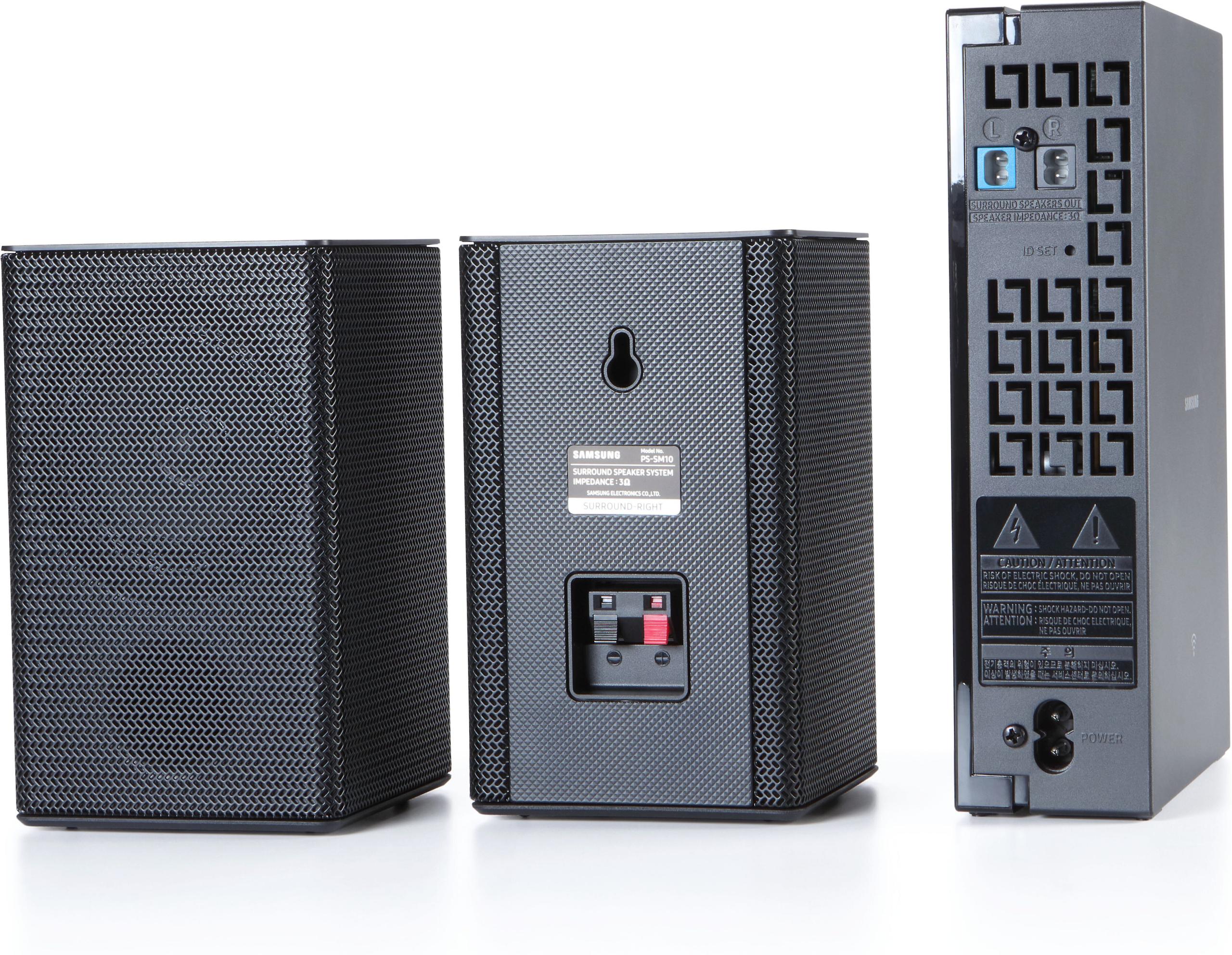
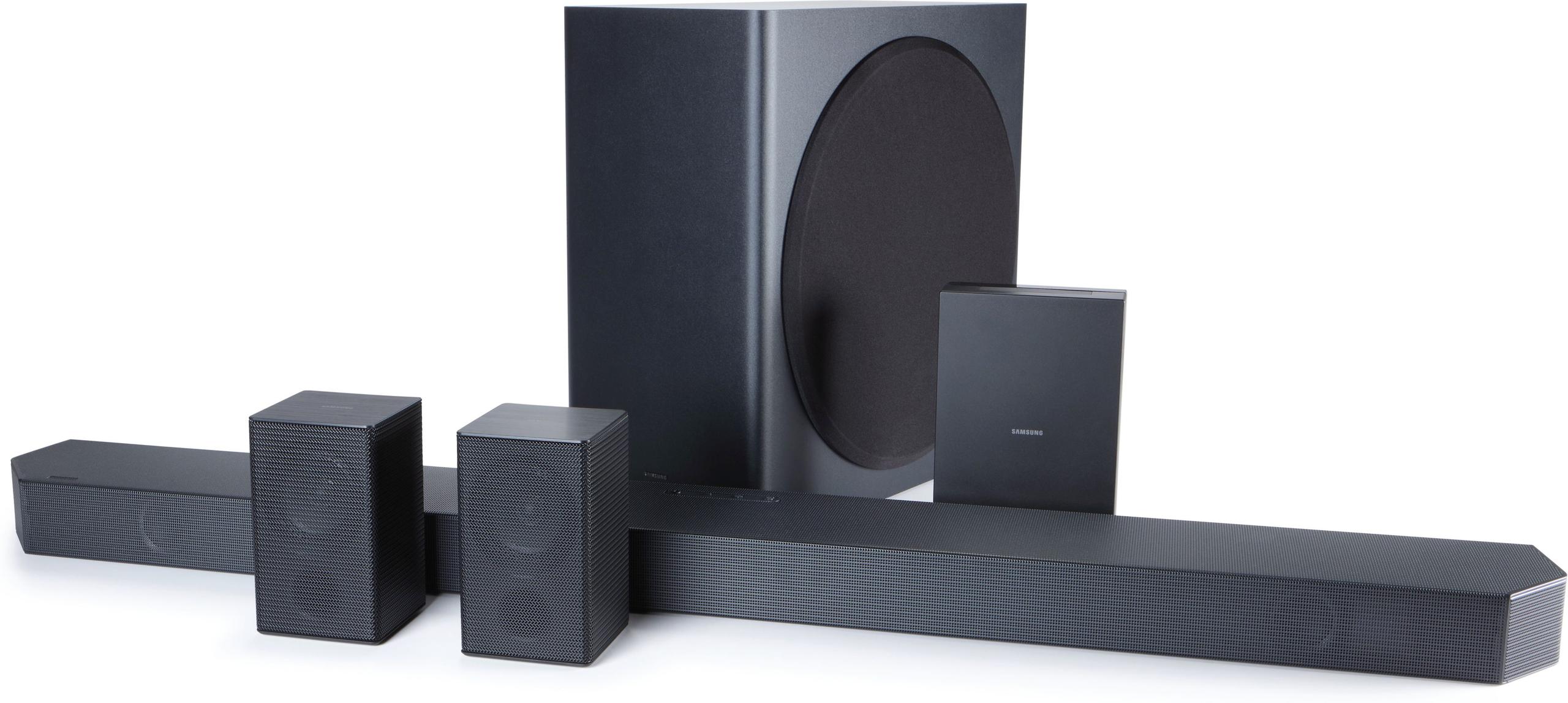
The Samsung takes the brute-force approach with actual rear speakers. The 9.1.2 designation breaks down like this: 9 main channels (left, center, right, plus side and rear surrounds), 1 subwoofer channel, and 2 height channels from up-firing drivers. When a helicopter flies from front to back in a movie, you're hearing actual audio movement from physical speakers positioned around your room. There's no processing trickery involved—the sound genuinely is coming from behind you.
From a technical standpoint, physical surround will always be more accurate than virtual processing. But—and this is a big but—it only works if you can properly position the rear speakers. The Samsung rear speakers need to be placed 2-6 feet behind your seating position at roughly ear height. In many living rooms, this simply isn't practical due to furniture placement, room layout, or spouse approval factor.
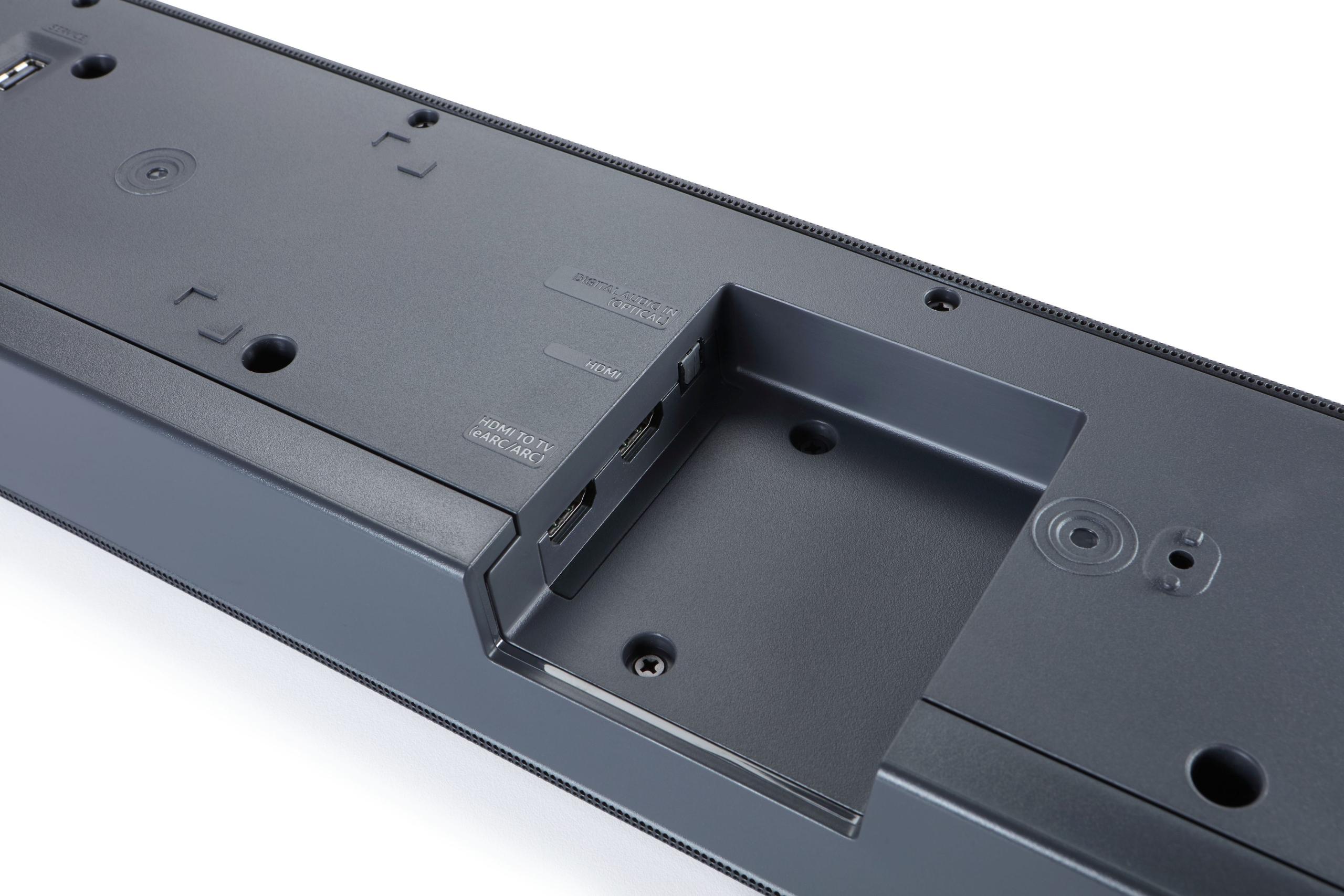
Both soundbars support HDMI eARC (enhanced Audio Return Channel), which is crucial for getting the best possible audio from modern TVs and streaming devices. eARC can handle uncompressed Dolby Atmos signals, unlike the older ARC standard that compressed everything. This matters because compression can reduce the precision of surround sound processing.
The JBL Bar 300 shines in its streaming capabilities. Built-in Wi-Fi provides access to over 300 music services through AirPlay, Chromecast, and Alexa Multi-Room Music. This means you can use the soundbar as a standalone music speaker even when your TV is off. The system receives automatic firmware updates, which is increasingly important as streaming codecs and compatibility requirements evolve.
Samsung's approach emphasizes ecosystem integration. If you own a Samsung TV, Q-Symphony technology allows the soundbar and TV speakers to work together rather than the soundbar simply replacing them. This creates a wider, more enveloping soundstage. The system also integrates with SmartThings, Samsung's smart home platform, allowing sophisticated automation scenarios.
For dedicated home theater setups, these products serve very different audiences. The Samsung Q Series 9.1.2 is designed for rooms where you can properly implement surround sound. This typically means a dedicated media room or a living room where furniture can be arranged to accommodate rear speakers.
In my experience testing various soundbars in different environments, room size significantly affects performance. The JBL works beautifully in spaces up to about 250 square feet—think typical apartment living rooms or smaller family rooms. Beyond that size, the virtual surround effects start to lose their impact, and you really benefit from the Samsung's additional power and physical speaker placement.
Ceiling height also matters more than most people realize. The up-firing drivers in both systems (the JBL uses its tweeters for height effects, while the Samsung has dedicated upward-facing drivers) rely on sound bouncing off your ceiling. If you have vaulted ceilings above 10 feet, these height effects largely disappear. In such cases, you might want to consider soundbars with true height speakers built into the main bar.
Modern gaming presents unique audio challenges. Competitive gamers often prioritize precise directional audio—knowing exactly where footsteps are coming from can provide a tactical advantage. The Samsung Q Series 9.1.2 includes Game Mode Pro, which reduces audio processing latency and optimizes settings for directional accuracy.
The JBL handles gaming adequately but doesn't offer gaming-specific optimizations. However, its lower input lag (the delay between when audio is sent and when you hear it) makes it perfectly suitable for casual gaming. Both systems support variable refresh rate passthrough, ensuring smooth gaming performance with compatible consoles and graphics cards.
At $299.95, the JBL Bar 300 delivers features typically found in $500+ soundbars. The inclusion of Dolby Atmos processing, automatic room calibration, and comprehensive streaming support represents exceptional value. You're essentially getting a complete audio upgrade that requires zero additional purchases and minimal setup complexity.
The Samsung Q Series 9.1.2 at $897.99 targets users who view their audio system as a long-term investment. The included subwoofer and rear speakers would cost several hundred dollars if purchased separately. For serious movie enthusiasts or anyone with a dedicated home theater space, the price premium delivers genuinely superior performance.
Choose the JBL Bar 300 if you want immediate gratification with minimal fuss. It's perfect for apartment dwellers who can't accommodate rear speakers, anyone who moves frequently, or those who simply want their TV to sound dramatically better without dealing with multiple components. The virtual surround is convincing enough for most content, and the dialogue clarity alone justifies the purchase price.
The Samsung Q Series 9.1.2 makes sense if you have the space to implement it properly and the budget to justify the premium. It's the choice for movie enthusiasts who want every explosion to feel room-shaking, gamers who benefit from precise directional audio, or anyone building a dedicated home theater setup.
In my testing, both products deliver on their respective promises. The JBL punches well above its price point, while the Samsung provides the immersive experience that only true surround sound can deliver. Your decision ultimately comes down to your space, budget, and how much audio performance matters to your entertainment experience.
The soundbar market has matured significantly in recent years, and both the JBL Bar 300 and Samsung Q Series 9.1.2 represent excellent examples of their respective approaches. Whichever you choose, you'll be getting a substantial upgrade over your TV's built-in speakers—and that's really what matters most.
| JBL Bar 300 5.0 Soundbar | Samsung Q Series 9.1.2 Channel Soundbar |
|---|---|
| Price - Major factor determining overall value proposition | |
| $299.95 (exceptional features for the price) | $897.99 (premium cost for complete surround system) |
| Audio Channels - Determines surround sound authenticity and immersion | |
| 5.0 channels (virtual surround from single bar) | 9.1.2 channels (physical rear speakers + subwoofer) |
| Total Power Output - Affects maximum volume and dynamic range | |
| 260W RMS (sufficient for small-medium rooms) | 500-700W RMS estimated (handles large spaces easily) |
| Subwoofer Inclusion - Critical for deep bass and movie impact | |
| Built-in bass port only (no separate subwoofer) | Wireless subwoofer included (true deep bass extension) |
| Surround Technology - How 3D audio effects are created | |
| MultiBeam virtual processing + Dolby Atmos | Physical rear speakers + up-firing drivers for true surround |
| Setup Complexity - Time and effort required for installation | |
| Single bar, plug-and-play setup | Multi-component system requiring speaker placement |
| Voice Enhancement - Improves dialogue clarity during movies | |
| PureVoice technology for crystal-clear speech | Adaptive Voice Amplifier with room optimization |
| Smart Features - Streaming and voice control capabilities | |
| 300+ services via AirPlay/Chromecast, universal voice assistant support | Samsung ecosystem integration, Q-Symphony TV syncing |
| Room Size Optimization - Maximum effective coverage area | |
| Best for rooms up to 250 sq ft (apartments/small living rooms) | Ideal for 300+ sq ft spaces (dedicated home theaters) |
| Frequency Response - Range of sounds the system can reproduce | |
| 50Hz-20kHz (impressive bass for single bar design) | Sub-50Hz capable (deeper bass with dedicated subwoofer) |
| Release Year - Indicates technology generation and future support | |
| 2024 (latest MultiBeam and streaming tech) | 2023-2024 generation (mature Q-Symphony platform) |
| Best Use Case - Primary audience and optimal scenarios | |
| Budget-conscious users wanting simple setup with modern features | Home theater enthusiasts with space for true surround sound |
The JBL Bar 300 5.0 Soundbar at $299.95 provides exceptional value with Dolby Atmos, built-in streaming, and automatic room calibration at a budget-friendly price. The Samsung Q Series 9.1.2 Channel Soundbar at $897.99 costs three times more but includes physical rear speakers and a wireless subwoofer for true surround sound. For most users, the JBL offers better bang for your buck.
The JBL Bar 300 uses 5.0 channels with virtual surround processing to simulate directional audio from a single bar. The Samsung Q Series 9.1.2 has 9 main channels, 1 subwoofer channel, and 2 height channels with actual speakers placed around your room. The Samsung provides more authentic surround sound, while the JBL offers convenience without additional speakers.
The JBL Bar 300 5.0 Soundbar is ideal for apartments because it's a single compact unit that doesn't require rear speaker placement. It delivers impressive virtual surround sound without disturbing neighbors or cluttering your space. The Samsung Q Series 9.1.2 requires multiple components and proper speaker positioning that may not be practical in smaller living spaces.
The JBL Bar 300 includes a built-in bass port that eliminates the need for a separate subwoofer, making it perfect for space-conscious setups. The Samsung Q Series 9.1.2 Channel Soundbar comes with a wireless subwoofer included in the package, providing deeper bass extension but requiring additional floor space.
Both soundbars excel at dialogue clarity, but through different approaches. The JBL Bar 300 uses PureVoice technology that specifically enhances human vocal frequencies for crystal-clear speech. The Samsung Q Series 9.1.2 features Adaptive Voice Amplifier that adjusts dialogue based on room acoustics and background noise levels.
Yes, both the JBL Bar 300 5.0 Soundbar and Samsung Q Series 9.1.2 Channel Soundbar support Bluetooth connectivity and built-in Wi-Fi. However, for the best audio quality, both should be connected via HDMI eARC to your TV, which provides uncompressed Dolby Atmos and eliminates audio sync issues.
For dedicated home theaters with proper room layout, the Samsung Q Series 9.1.2 delivers superior performance with physical rear speakers and a powerful subwoofer that creates authentic surround sound. The JBL Bar 300 works well in casual home theater setups where convenience and space-saving design are more important than maximum immersion.
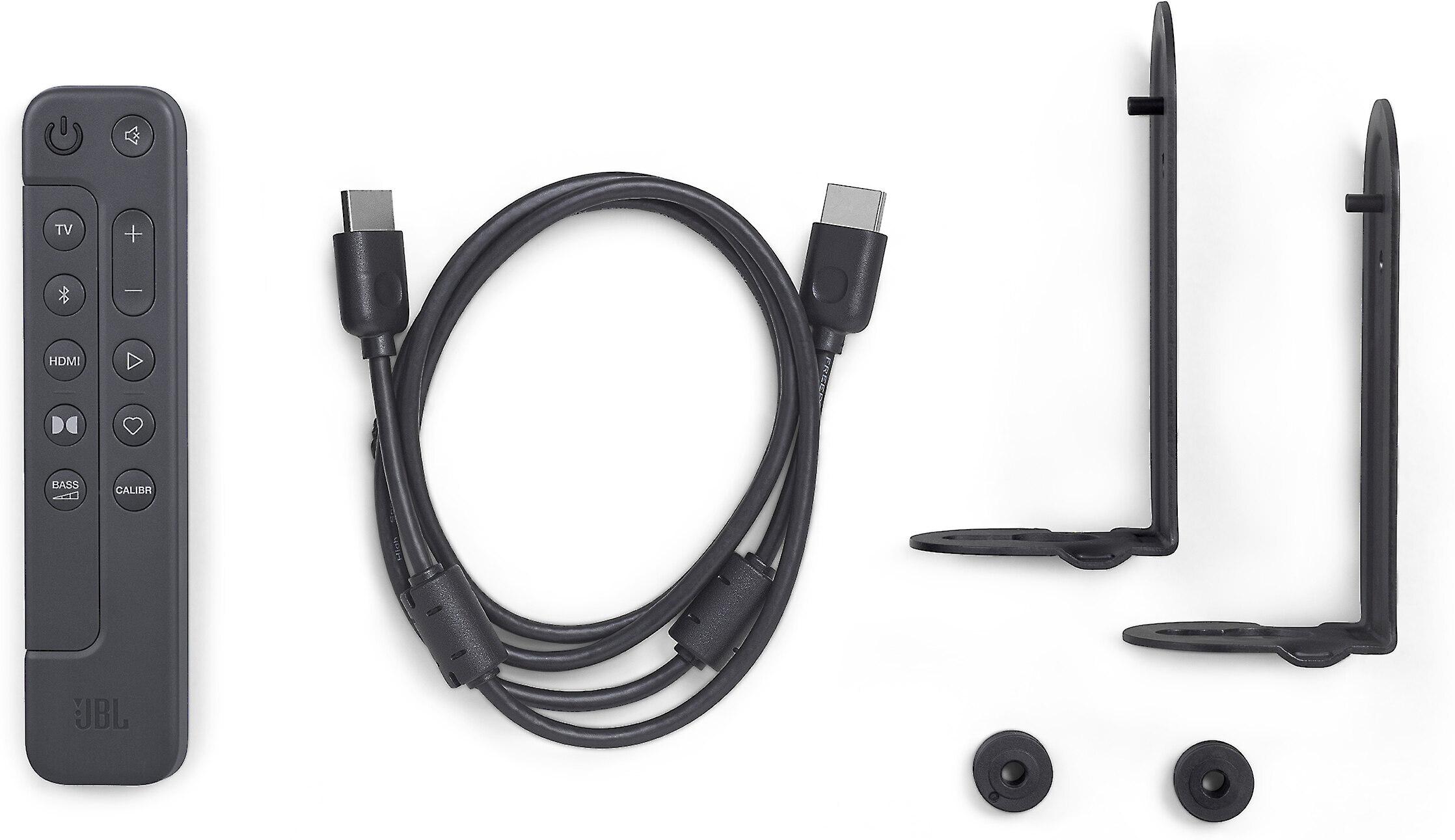
The JBL Bar 300 offers plug-and-play simplicity with automatic room calibration - just connect one HDMI cable and you're done. The Samsung Q Series 9.1.2 Channel Soundbar requires positioning rear speakers, connecting the wireless subwoofer, and optimizing placement for your room layout, making setup more complex but potentially more rewarding.
The JBL Bar 300 5.0 Soundbar provides access to over 300 streaming services through AirPlay, Chromecast, and Alexa Multi-Room Music, plus works with any voice assistant. The Samsung Q Series 9.1.2 focuses more on Samsung ecosystem integration with SmartThings and Q-Symphony TV syncing rather than broad streaming service support.
The JBL Bar 300 outputs 260W RMS, which is sufficient for small to medium-sized rooms. The Samsung Q Series 9.1.2 Channel Soundbar delivers an estimated 500-700W RMS across all components, providing significantly more power for larger spaces and higher volume levels without distortion.
The Samsung Q Series 9.1.2 provides superior bass with its dedicated wireless subwoofer that can reproduce frequencies below 50Hz for deep, room-shaking impact. The JBL Bar 300 5.0 Soundbar delivers surprisingly good bass through its built-in bass port design, but can't match the depth and power of a dedicated subwoofer.
Both soundbars work well for gaming, but the Samsung Q Series 9.1.2 Channel Soundbar has the advantage with Game Mode Pro that optimizes directional audio for competitive gaming. The JBL Bar 300 provides good gaming audio with low input lag but lacks gaming-specific optimizations. Both support 4K passthrough for modern gaming consoles.
We've done our best to create useful and informative comparisons to help you decide what product to buy. Our research uses advanced automated methods to create this comparison and perfection is not possible - please contact us for corrections or questions. These are the sites we've researched in the creation of this article: whathifi.com - safeandsoundhq.com - youtube.com - cnet.com - mm.jbl.com - jbl.com - bestbuy.com - support.jbl.com - dell.com - walmart.com - rtings.com - samsung.com - markselectrical.co.uk - techradar.com - walmart.com - samsung.com - samsung.com - youtube.com - samsung.com - biancos.com - crutchfield.com - samsung.com

Privacy Policy
Terms and Conditions - Affiliate Policy
Home Security
© Copyright 2008-2026.
11816 Inwood Rd #1211, Dallas, TX 75244