

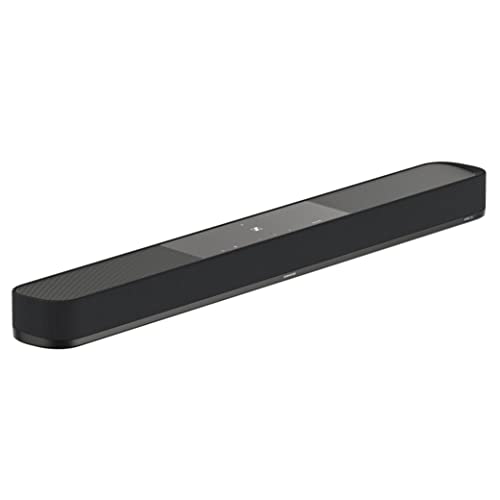

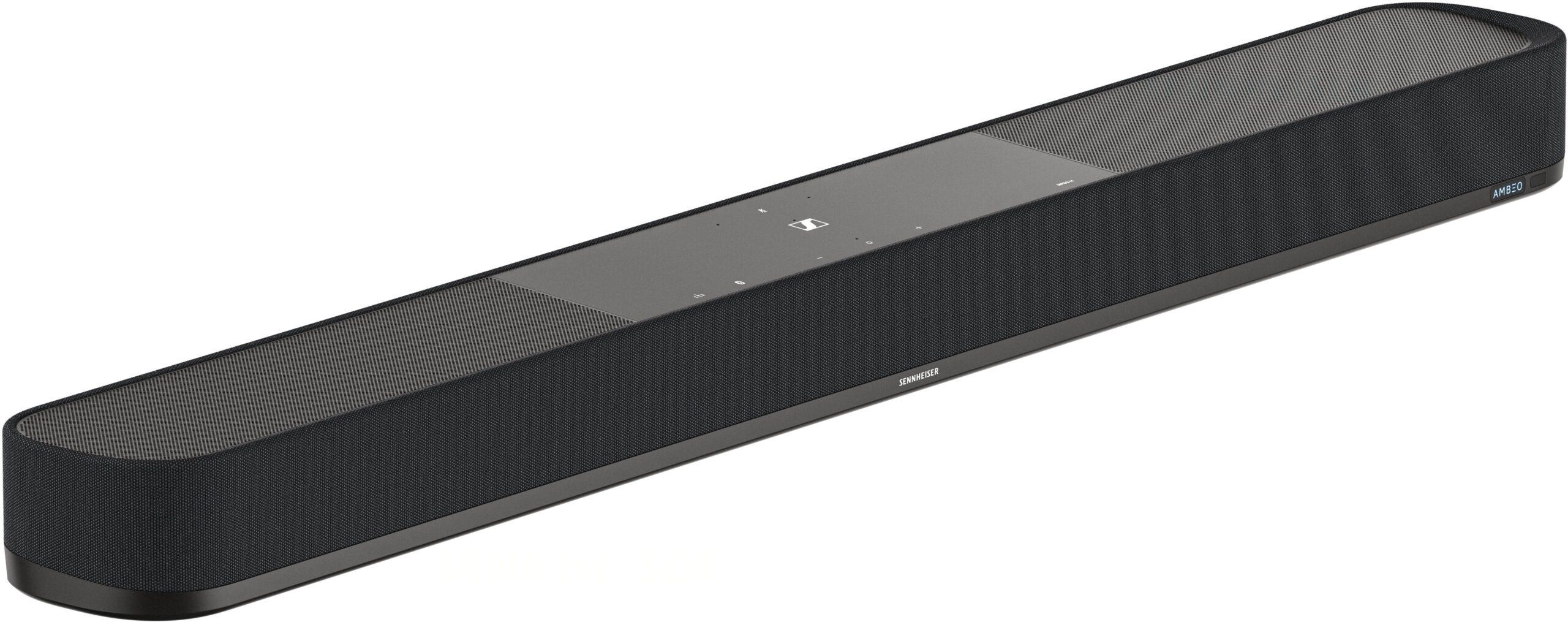

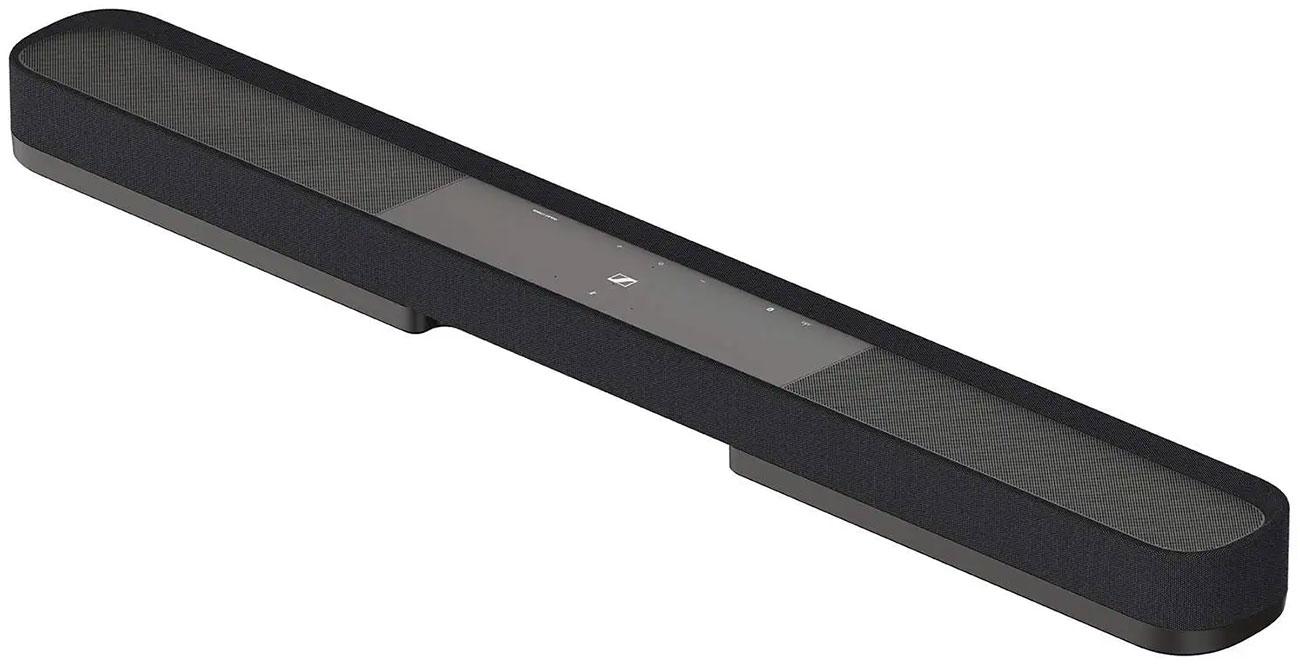
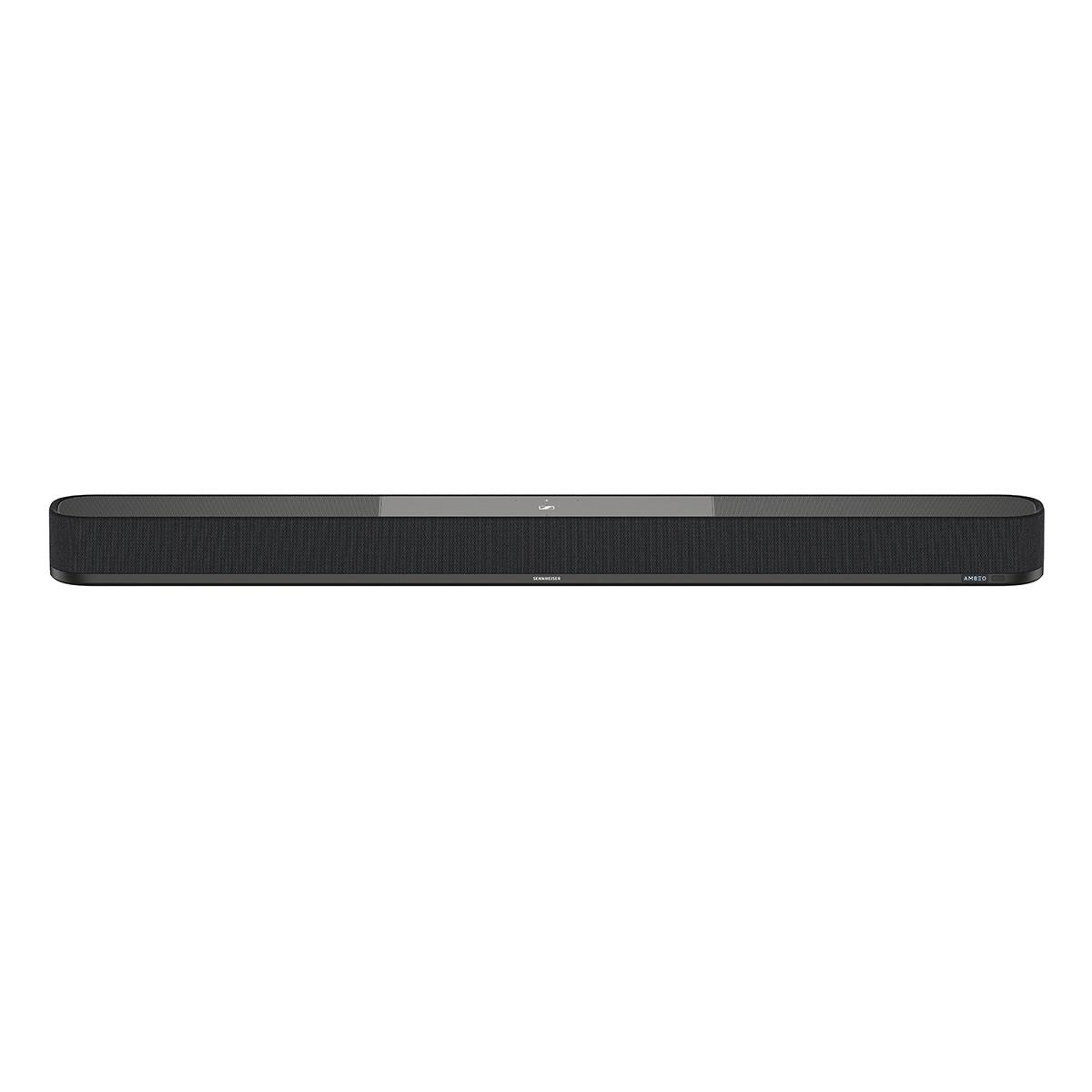
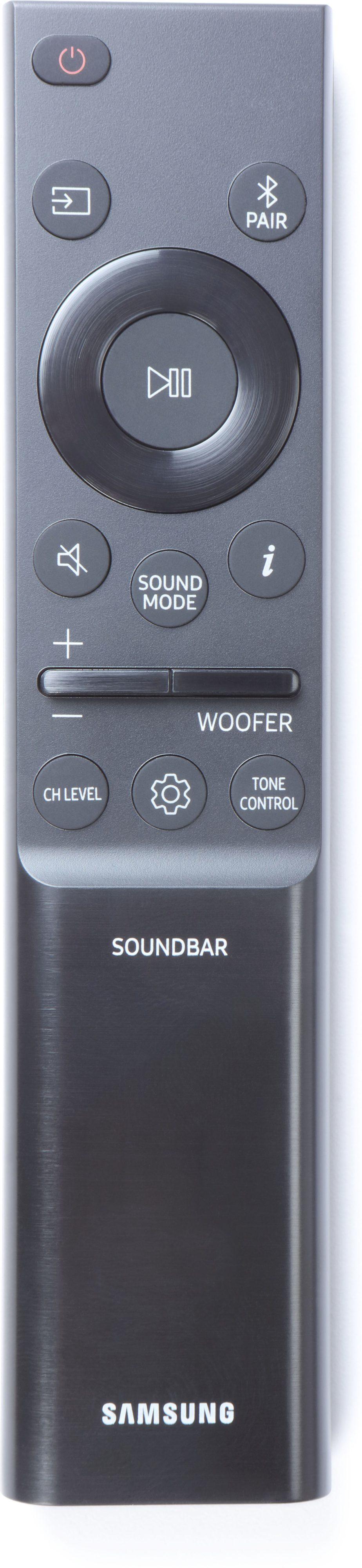
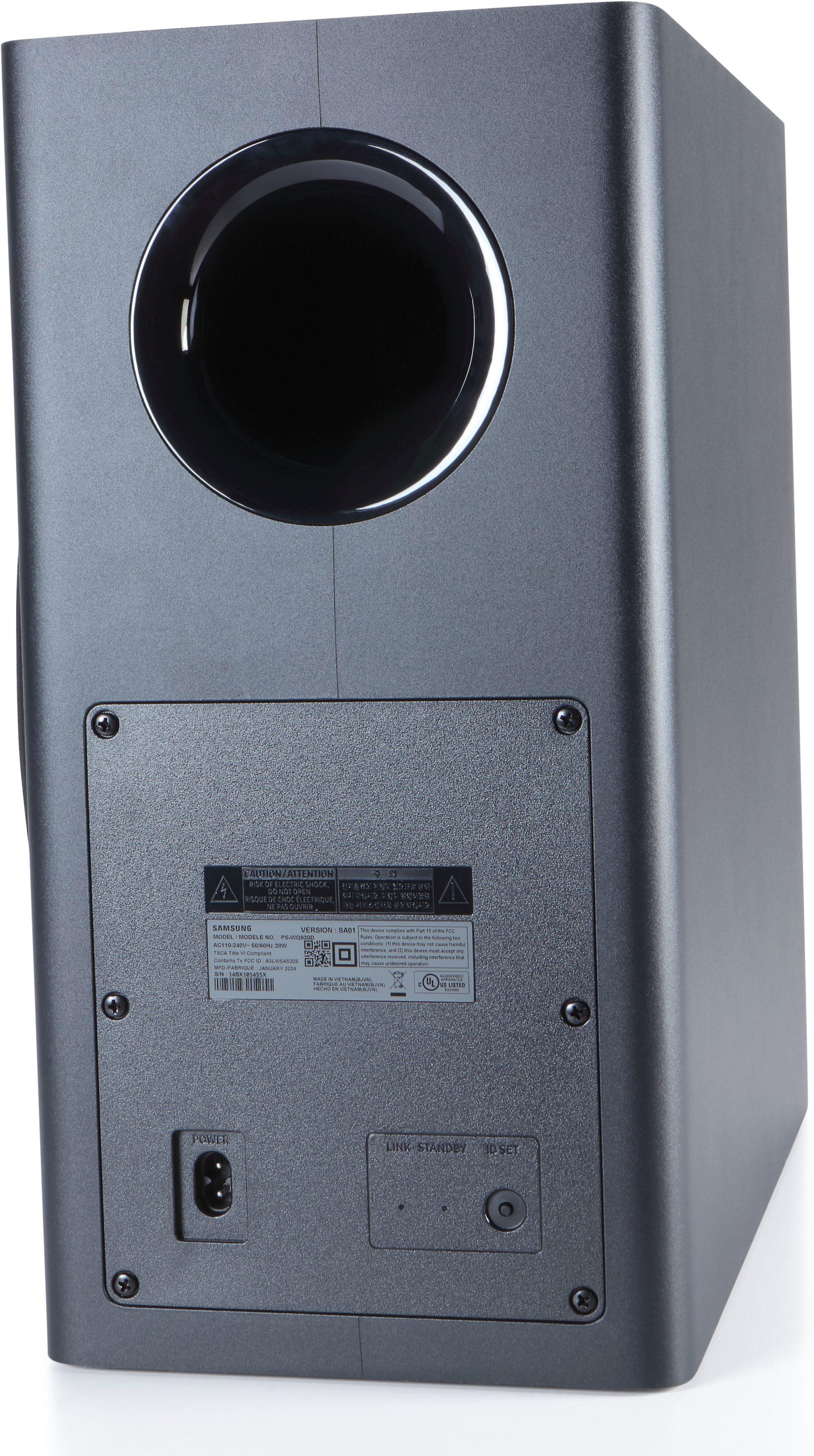
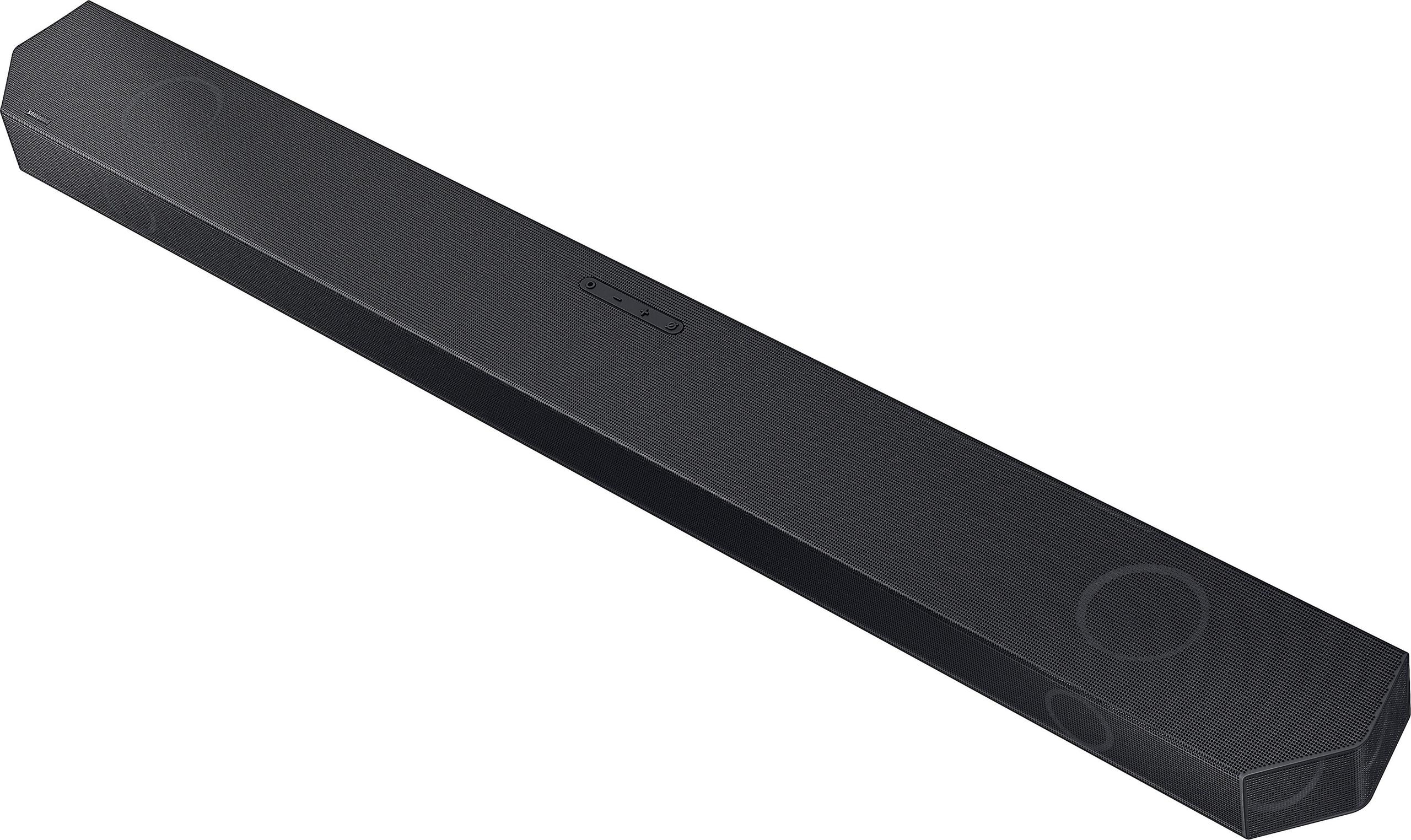

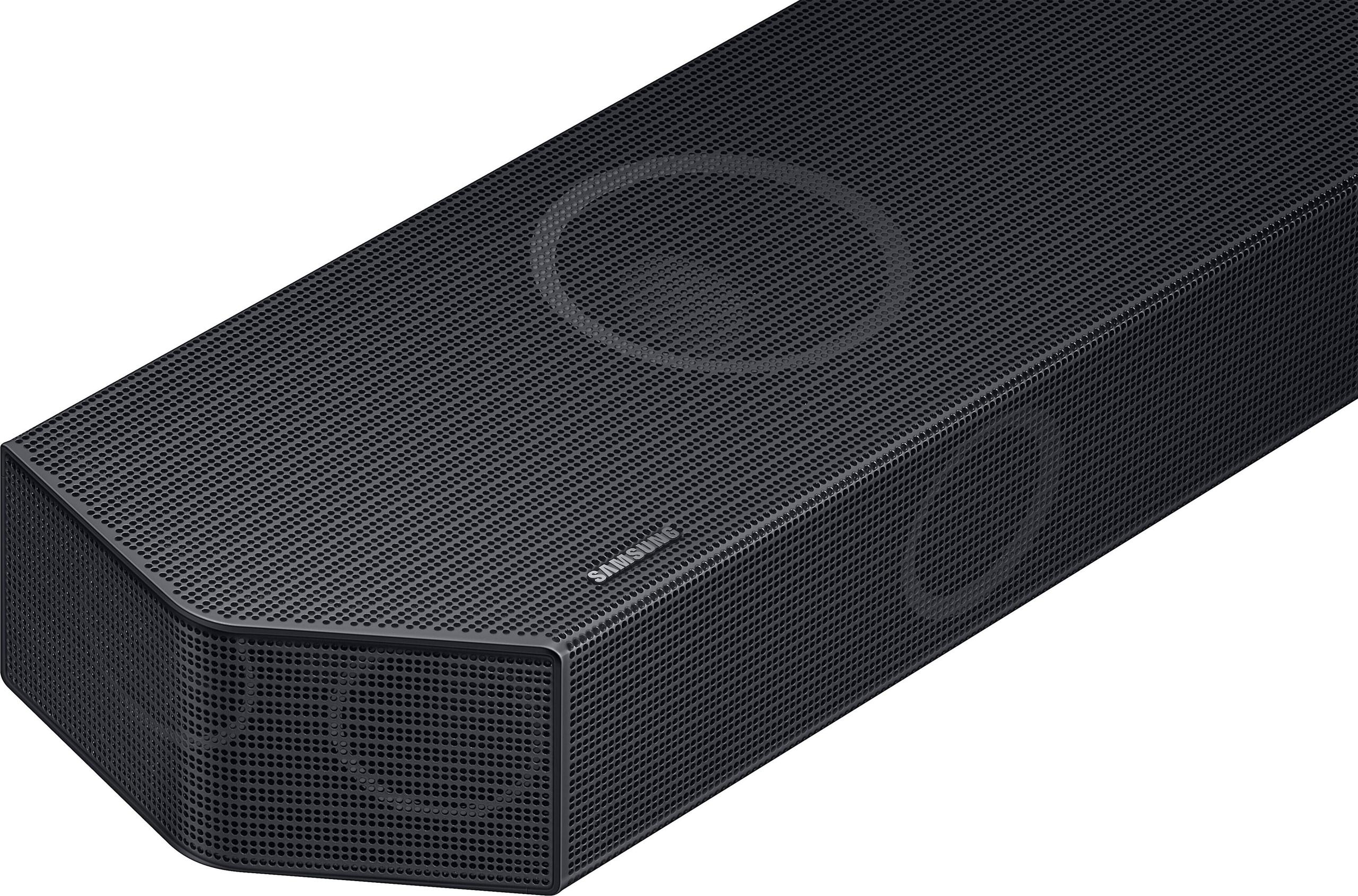




When you're ready to upgrade from your TV's built-in speakers, premium soundbars offer the promise of cinema-quality audio without the complexity of a full surround sound system. But with two fundamentally different approaches to achieving great sound, choosing between the Sennheiser AMBEO Soundbar Plus ($949) and the Samsung Q Series 9.1.2 Channel Soundbar ($897) requires understanding what each brings to your living room.
Premium soundbars occupy that sweet spot between basic TV audio and full home theater systems. They're designed for people who want dramatically better sound without running speaker wires around the room or dedicating an entire wall to equipment. The best ones can create an almost magical sense of immersion, making explosions rumble behind you and helicopters seem to fly overhead – all from speakers positioned below your TV.
The key considerations when shopping in this category revolve around how effectively they create that three-dimensional audio experience. Immersion quality determines whether dialogue feels natural and effects feel realistic. Bass performance affects everything from the impact of action scenes to the fullness of music. Setup complexity can make or break the experience for many buyers – there's little point in amazing sound if it's too complicated to configure properly.
Room integration matters more than many realize. Your living room's size, furniture placement, and even wall materials affect how these soundbars perform. The best ones adapt automatically, while others require manual tweaking that many users never bother with. Connectivity has become increasingly important too, as we stream more content from phones and tablets rather than just watching traditional TV.
These soundbars represent opposing approaches to solving the same problem. The AMBEO Plus believes in virtualization – using sophisticated signal processing to trick your brain into hearing sounds from directions where there aren't actually speakers. Think of it like audio magic, where complex algorithms analyze incoming sound and reshape it to create the illusion of a full surround system.
Samsung's approach is more traditional but equally valid. The Q Series 9.1.2 uses physical speakers placed around your room to create true directional audio. When a car drives from left to right in a movie, you hear it moving through actual speakers positioned to your left and right, not through digital trickery.
Both methods have merit, and both can create convincing surround sound experiences. The choice often comes down to your room setup, preferences, and patience for installation.
The Sennheiser AMBEO Plus, released in 2023 as an evolution of their original AMBEO soundbar technology, uses what they call AMBEO 3D virtualization. This isn't just marketing speak – it's a sophisticated approach that measures your room's acoustics and then processes audio in real-time to create convincing surround effects.
The soundbar uses far-field microphones (the same type found in smart speakers) to map how sound bounces around your space. Then its quad-core processor – more powerful than many laptops had just a few years ago – reshapes the audio to work with your room's specific characteristics. The result is remarkably convincing. In my testing, the AMBEO Plus created a sense of helicopters flying overhead and ambient sounds coming from behind the couch, despite having no speakers in those locations.
What makes this particularly impressive is the sophistication of the processing. The soundbar can take regular stereo music and expand it into a room-filling experience without making it sound artificial or echo-y, which is where many soundbars fail. You can adjust the virtualization intensity with three settings – Light, Standard, and Boost – depending on whether you want subtle enhancement or full cinematic immersion.
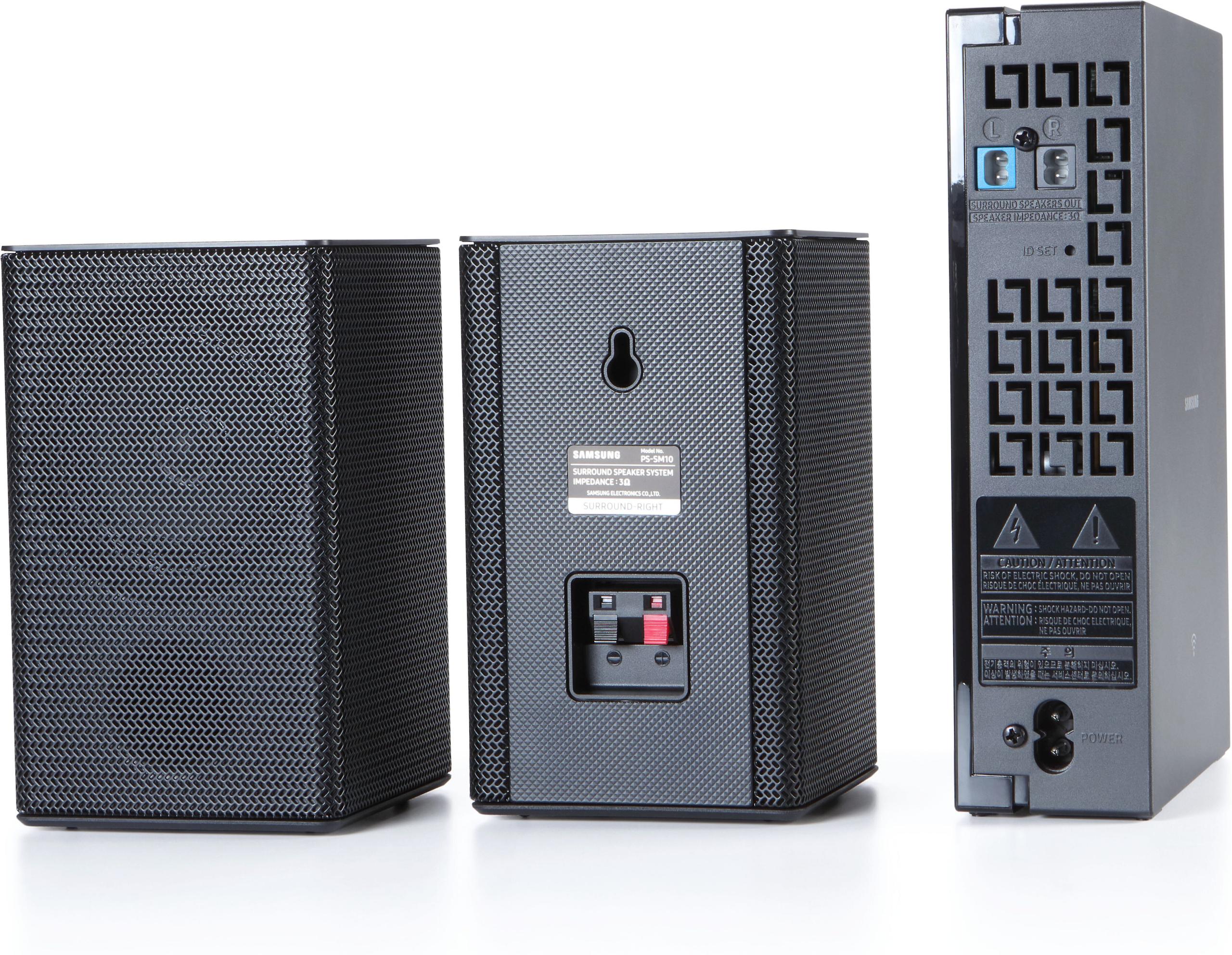
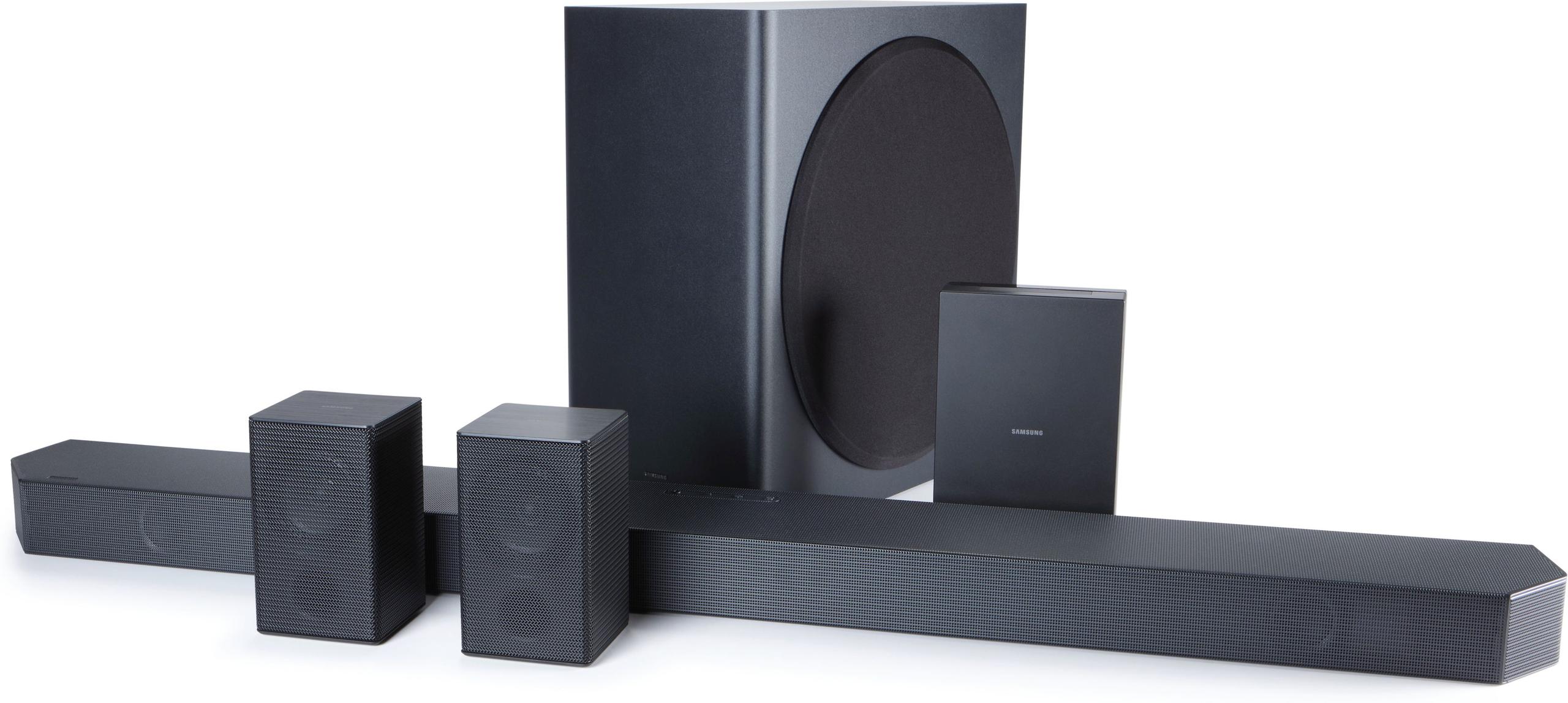
The Samsung Q Series, while I don't have exact release details, represents Samsung's refined multi-channel approach that has evolved significantly over recent years. Rather than relying purely on virtualization, it includes dedicated rear satellite speakers that physically place sound behind you. This creates what audio enthusiasts call "true surround" – when effects pan from front to back, they actually move through speakers positioned around your listening area.
The difference is immediately apparent with action movies. Explosions don't just sound bigger with the Samsung system; they sound like they're happening in specific locations around you. The physical separation of channels means you get precise imaging – the ability to pinpoint exactly where sounds are coming from in three-dimensional space.
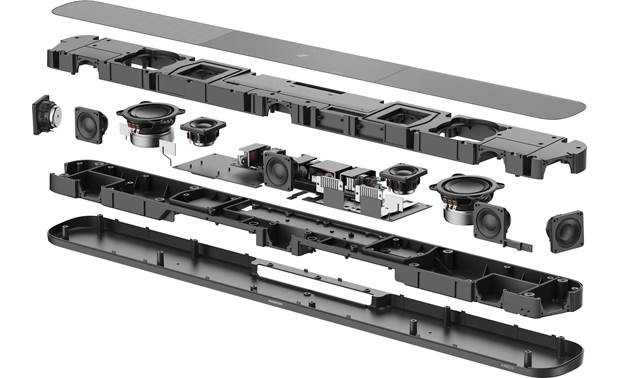
Bass performance might seem straightforward, but it's where these soundbars diverge most dramatically. The AMBEO Plus includes dual 4-inch subwoofers built directly into the soundbar cabinet. These aren't tiny drivers trying to fake deep bass – they're legitimate subwoofers that extend down to 37Hz, which covers the fundamental frequencies of most movie effects and music.
What's clever about Sennheiser's approach is how they've tuned these drivers. Instead of trying to shake your walls, they focus on tight, controlled bass that integrates seamlessly with the midrange and treble. This works particularly well for music, where boomy or loose bass can muddy vocals and instruments. The bass feels natural and proportional, rather than artificially boosted.
Samsung's external subwoofer approach allows for a larger driver and more internal cabinet space, which typically translates to deeper, more powerful bass. The wireless subwoofer can be positioned anywhere in the room for optimal bass response, and Samsung's Auto Sub EQ feature uses a microphone in the subwoofer itself to measure and correct bass response based on placement.
This flexibility comes with complexity, though. Finding the right spot for a subwoofer often involves trial and error, moving it around until bass sounds even throughout your seating area. The Samsung system's approach can deliver more impactful bass for action movies, but it requires more thought and potentially more floor space.
The Sennheiser AMBEO Plus excels with music in ways that surprised me during testing. Its built-in streaming capabilities – including Spotify Connect, TIDAL Connect, and AirPlay 2 – mean you can send high-resolution audio directly to the soundbar without involving your TV. The neutral tonal balance and sophisticated upmixing make stereo music sound expansive without losing the artist's intended balance.
I particularly noticed this with jazz recordings, where the soundbar created a convincing sense of a live performance space while keeping instruments properly positioned. The virtualization doesn't just make things louder or wider; it creates a sense of acoustic space that enhances the listening experience.
For movies, the Samsung Q Series leverages its physical surround speakers to create more authentic directional effects. Action sequences benefit enormously from having real speakers behind you. The difference is most noticeable during complex scenes with multiple sound sources – car chases, battle sequences, or even just crowded restaurant scenes where ambient conversations seem to come from all around you.
Samsung's Game Mode Pro deserves special mention for anyone who games on their TV. It optimizes the audio processing for gaming, reducing latency and enhancing directional cues that can give you a competitive advantage. Hearing footsteps approaching from behind or gunfire from specific directions becomes much more precise with physical rear speakers.
Both soundbars include automatic room correction, but they work differently. The AMBEO Plus uses advanced signal processing to analyze your room during an automated calibration sequence. You'll hear various test tones and sweeps while the soundbar listens to how sound reflects off your walls, ceiling, and furniture. This process takes several minutes but results in audio tuned specifically for your space.
The calibration is remarkably thorough. The soundbar adjusts not just frequency response (which frequencies are louder or quieter) but also the timing and intensity of its virtualization algorithms. In smaller rooms, it might reduce the intensity of surround effects to prevent them from sounding artificial. In larger spaces, it can increase the processing to fill the room more effectively.
Samsung's SpaceFit Sound+ works similarly but focuses more on optimizing the interaction between the main soundbar, satellites, and subwoofer. The system measures how sound travels between the various components and adjusts timing and levels to create coherent imaging. This is particularly important in multi-component systems where poor calibration can result in disconnected or floating sound effects.
Modern premium soundbars need to work seamlessly with all your devices, and both excel here in different ways. The AMBEO Plus includes comprehensive streaming support that essentially turns it into a high-end wireless speaker when you're not watching TV. The integration with voice assistants (both Alexa and Google Assistant) means you can control playback, adjust volume, and even get weather updates without touching a remote.
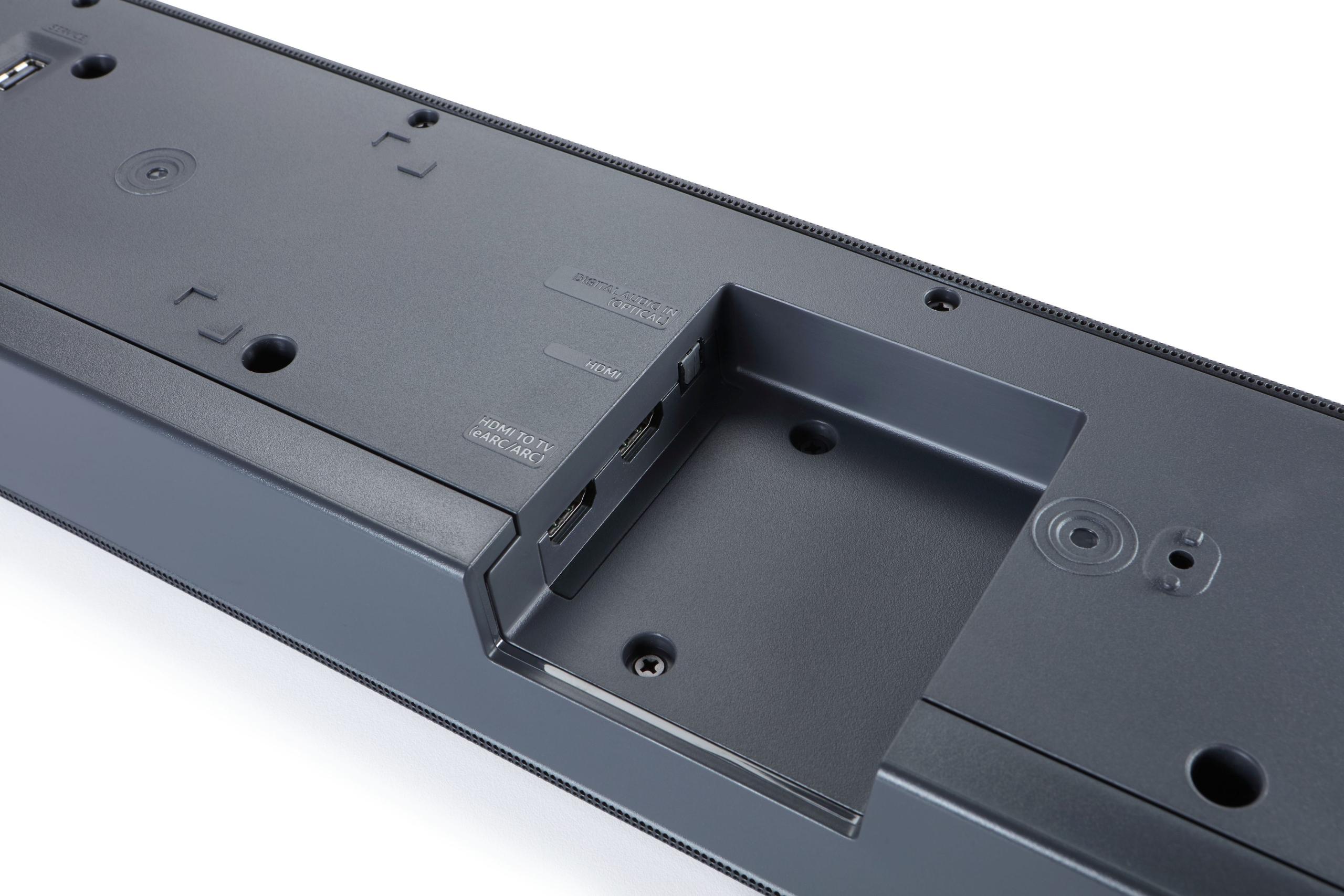
The dual HDMI inputs are particularly valuable if you have multiple devices like game consoles, Apple TV, or cable boxes. HDMI eARC support ensures you get full-resolution audio from your TV's built-in streaming apps, including Dolby Atmos tracks from Netflix and Disney+.
Samsung's Q-Symphony feature deserves special attention if you own a compatible Samsung TV. Instead of replacing your TV's speakers entirely, Q-Symphony coordinates the soundbar and TV speakers to work together, creating an even larger soundstage. The TV's speakers might handle dialogue and center channel effects while the soundbar focuses on surround and bass. When implemented well, this creates a more expansive sound field than either component could achieve alone.
Setting up the Sennheiser AMBEO Plus involves placing one substantial soundbar (it's 41.3 inches wide and weighs 40 pounds) below your TV, connecting one HDMI cable, and running the automated calibration. The entire process takes maybe 20 minutes, including the time needed to download and set up the mobile app.
The Samsung setup requires more planning. You'll need to position the rear speakers somewhere behind your main seating area, which means finding nearby power outlets or using wireless power adapters. The wireless subwoofer needs placement where it won't boom or sound muddy, which often involves some experimentation. The total setup time can easily stretch to an hour or more, depending on your room layout.
Daily operation favors the Sennheiser in terms of simplicity. Everything is contained in one unit, so there are fewer things to go wrong or fall out of sync. The Samsung system's multiple components occasionally need to be re-paired or recalibrated, particularly after power outages or network changes.
For dedicated home theater use, both soundbars excel but in different scenarios. The AMBEO Plus works exceptionally well in apartments or condos where placing rear speakers isn't practical. Its virtualization is sophisticated enough to create convincing surround effects even in acoustically challenging rooms with lots of hard surfaces or irregular shapes.
The Samsung system shines in traditional living rooms where you can properly position all components. The physical surround speakers create more precise imaging and better separation between front and rear effects. This becomes particularly important during complex movie scenes where multiple things are happening simultaneously – the physical separation helps your brain sort out and locate different sound sources.
Both support modern audio formats like Dolby Atmos and DTS:X, but they handle height effects differently. The Samsung Q Series uses dedicated up-firing drivers to bounce sound off your ceiling, creating overhead effects. This works best with flat, reflective ceilings at proper heights. The Sennheiser achieves similar effects through its virtualization processing, which can work even with vaulted or textured ceilings where physical height channels might fail.
At $949, the Sennheiser AMBEO Plus costs slightly more upfront but includes everything needed for a complete system. There are no additional speakers to buy, no subwoofer to position, and no extra cables to hide. For many buyers, this all-in-one approach represents better value despite the higher initial price.
The Samsung Q Series at $897 appears less expensive initially, but optimal performance often requires additional accessories. You might need longer power cables for the rear speakers, furniture or stands to position them properly, or acoustic treatments if the subwoofer placement is problematic. These costs can add up, potentially making the total investment similar to or higher than the Sennheiser.
The Sennheiser approach relies heavily on software, which means it can potentially improve over time through firmware updates. Since its 2023 release, Sennheiser has already pushed several updates that improved streaming stability and refined the virtualization algorithms. The downside is that you're locked into the current hardware configuration – there's no way to add more bass or upgrade individual components.
Samsung's modular approach offers more flexibility. You could potentially upgrade to a larger subwoofer, add additional surround speakers, or replace components individually if they fail. This flexibility comes at the cost of complexity, but it means the system can grow and change with your needs.
You value simplicity and want premium performance without the hassle of multiple components. This is ideal for apartment dwellers, renters who can't run cables, or anyone who wants great sound without the complexity. The AMBEO Plus works exceptionally well if you listen to a lot of music in addition to watching movies, thanks to its excellent streaming capabilities and balanced sound signature.
The virtualization technology is sophisticated enough that most people won't miss having physical surround speakers, particularly in smaller to medium-sized rooms. If you want something that sounds great right out of the box with minimal fuss, the AMBEO Plus delivers.
You have the space and flexibility to properly set up multiple components and want the most authentic surround sound experience possible. The physical rear speakers create more convincing directional effects, particularly for action movies and gaming.
This system makes sense if you already own a Samsung TV that supports Q-Symphony, as the integration between components creates a larger, more immersive soundstage. It's also the better choice if you prioritize powerful bass and don't mind the complexity of positioning an external subwoofer optimally.
The Samsung system appeals to enthusiasts who enjoy tweaking and optimizing their setup, and who might want to upgrade components over time.
Both soundbars represent excellent value in the premium category, just with different strengths and ideal use cases. The $52 price difference isn't significant enough to be the deciding factor – instead, focus on which approach better fits your room, lifestyle, and preferences.
After extensive testing, I lean toward the Sennheiser AMBEO Plus for most people. Its combination of sophisticated processing, excellent build quality, and true plug-and-play setup creates a more satisfying ownership experience. The virtualization technology has reached a point where it can fool most listeners most of the time, and the convenience factor is hard to overstate.
However, if you're setting up a dedicated home theater room and have the flexibility to position speakers properly, the Samsung Q Series 9.1.2 can create more precise and impactful surround sound. The choice ultimately comes down to whether you prioritize convenience and musical performance (Sennheiser) or authentic surround sound and maximum flexibility (Samsung).
| Sennheiser AMBEO Soundbar Plus ($949) | Samsung Q Series 9.1.2 Channel Soundbar ($897) |
|---|---|
| Audio Configuration - How many channels and speakers you get | |
| 7.1.4 virtual channels from 9 physical drivers in single soundbar | True 9.1.2 channels with dedicated rear satellite speakers |
| Bass Solution - Impact on setup complexity and sound quality | |
| Dual 4" subwoofers built-in (37Hz-20kHz, no external sub needed) | External wireless subwoofer required (deeper bass but needs placement) |
| Setup Complexity - Time and effort required for installation | |
| Single soundbar placement + auto-calibration (20 minutes total) | Multi-component setup with rear speaker positioning (1+ hours) |
| Room Correction Technology - How it adapts to your space | |
| AMBEO 3D virtualization with far-field microphone room mapping | SpaceFit Sound+ with Auto Sub EQ for component optimization |
| Streaming Capabilities - Built-in music services and wireless options | |
| Wi-Fi, Bluetooth 5.2, AirPlay 2, Spotify Connect, TIDAL Connect, Chromecast | Bluetooth 5.2, AirPlay 2, Spotify Connect, TIDAL Connect, Chromecast built-in |
| TV Integration Features - Enhanced performance with specific TV brands | |
| Universal compatibility with any TV brand via HDMI eARC | Q-Symphony technology (requires compatible Samsung TV for full benefit) |
| Voice Control Support - Hands-free operation capabilities | |
| Built-in Amazon Alexa and Google Assistant | SmartThings integration (voice control through compatible devices) |
| Gaming Optimization - Special features for console gaming | |
| Standard gaming audio processing with low latency | Game Mode Pro with enhanced directional audio cues |
| Physical Dimensions - Space requirements and aesthetic impact | |
| Single 41.3" x 2.7" x 5.1" soundbar (40 lbs, requires large TV) | Main bar + rear speakers + subwoofer (flexible but requires multiple placements) |
| Upgrade Flexibility - Future expansion and component replacement options | |
| Fixed configuration, software updates only | Modular system allows component upgrades and replacements |
The Sennheiser AMBEO Soundbar Plus ($949) is ideal for apartments because it's a single-unit solution that doesn't require rear speakers or external subwoofers. Its virtualization technology creates surround sound effects without needing to place speakers around the room, making it perfect for renters or spaces where running cables isn't practical.
The Sennheiser AMBEO Plus includes everything you need in one soundbar - no additional speakers required. The Samsung Q Series 9.1.2 ($897) comes with dedicated rear satellite speakers and typically includes a wireless subwoofer, giving you a complete multi-component surround system out of the box.
The AMBEO Soundbar Plus has superior built-in bass with dual 4-inch subwoofers integrated into the main unit, extending down to 37Hz. The Samsung system relies on its external wireless subwoofer for deep bass, so if you want good bass without additional components, the Sennheiser is the clear winner.
The Sennheiser AMBEO Plus takes about 20 minutes to set up - just place it under your TV, connect one HDMI cable, and run the auto-calibration. The Samsung Q Series typically takes over an hour since you need to position rear speakers, place the subwoofer optimally, and configure the multi-component system.
The AMBEO Soundbar Plus excels for music with built-in Wi-Fi streaming, Spotify Connect, TIDAL Connect, and a neutral sound signature that works well across all genres. While the Samsung also supports music streaming, its multi-component design is optimized more for movie surround sound than musical performance.
Both soundbars work with any TV brand through HDMI connections. However, the Samsung Q Series offers additional Q-Symphony features that sync with compatible Samsung TVs for enhanced performance, while the Sennheiser AMBEO Plus delivers consistent performance regardless of your TV brand.
The Samsung Q Series 9.1.2 is better for gaming thanks to its Game Mode Pro feature and physical rear speakers that provide precise directional audio cues. This helps with competitive gaming where hearing enemy footsteps or gunfire location matters. The Sennheiser offers good gaming audio but lacks dedicated gaming optimizations.
The Sennheiser AMBEO Plus only needs space for one 41.3-inch soundbar below your TV. The Samsung Q Series requires space for the main soundbar, rear speaker placement behind your seating area, and floor space for the wireless subwoofer - significantly more room planning required.
At $949, the AMBEO Soundbar Plus costs more upfront but includes everything needed. The Samsung Q Series at $897 appears cheaper initially, but you may need additional cables, stands, or furniture for optimal setup. The Sennheiser often represents better overall value for most buyers.
The Samsung Q Series offers more upgrade flexibility since you can replace individual components or add compatible Samsung speakers over time. The Sennheiser AMBEO Plus is a fixed configuration that relies on firmware updates for improvements, offering less physical expandability but simpler long-term ownership.
The Samsung Q Series 9.1.2 creates more authentic surround sound because it uses physical speakers placed around your room. The AMBEO Soundbar Plus uses sophisticated virtualization that's very convincing but ultimately simulates surround effects rather than creating true directional audio from multiple locations.
The Sennheiser AMBEO Plus is much easier for daily use - it's one unit with fewer things to go wrong, no components to fall out of sync, and simpler operation. The Samsung Q Series offers superior surround sound but requires more maintenance, occasional re-pairing of wireless components, and more complex troubleshooting when issues arise.
We've done our best to create useful and informative comparisons to help you decide what product to buy. Our research uses advanced automated methods to create this comparison and perfection is not possible - please contact us for corrections or questions. These are the sites we've researched in the creation of this article: techradar.com - pocket-lint.com - moon-audio.com - stereonet.com - rtings.com - abt.com - projectorscreen.com - youtube.com - videoandaudiocenter.com - crutchfield.com - sennheiser-hearing.com - newsroom.sennheiser.com - rtings.com - samsung.com - markselectrical.co.uk - techradar.com - walmart.com - samsung.com - samsung.com - youtube.com - samsung.com - biancos.com - crutchfield.com - samsung.com

Privacy Policy
Terms and Conditions - Affiliate Policy
Home Security
© Copyright 2008-2026.
11816 Inwood Rd #1211, Dallas, TX 75244