











Shopping for a soundbar can feel overwhelming, especially when you're comparing products at different price points with completely different approaches. The Sonos Beam Gen 2 ($449) and Samsung Q Series 9.1.2 ($898) represent two distinct philosophies in soundbar design – one prioritizes simplicity and vocal clarity, while the other goes all-in on cinematic immersion. After spending time with both systems, I've found they excel in different scenarios, and understanding these differences is crucial for making the right choice.
Before diving into specifics, it's worth understanding what makes soundbars so popular. Most TV speakers are terrible – they're tiny, face backwards, and lack the power to fill a room with quality sound. Soundbars solve this problem by placing larger, forward-facing drivers in a sleek package that complements your TV setup.
The category has evolved dramatically over the past few years. Early soundbars were simple stereo speakers in a long box. Today's models use sophisticated digital signal processing (DSP) – essentially computer algorithms that manipulate audio signals – to create virtual surround sound, simulate height effects, and optimize performance for your specific room.
When choosing a soundbar, your main considerations should be room size, content preferences, setup complexity tolerance, and budget. Some people want the simplest possible upgrade to their TV's audio, while others want to recreate a full movie theater experience at home.
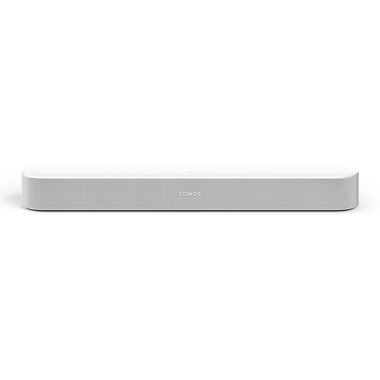
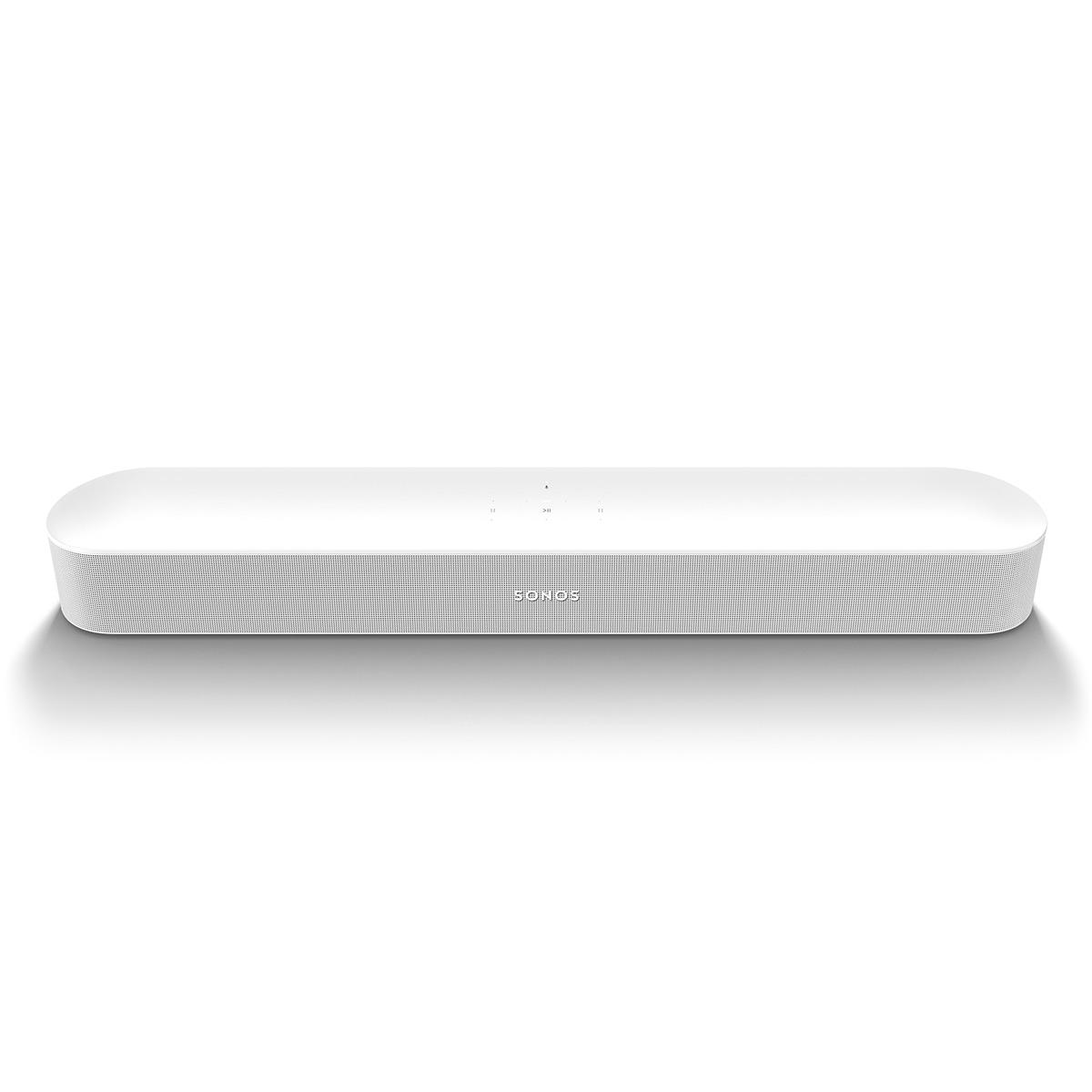
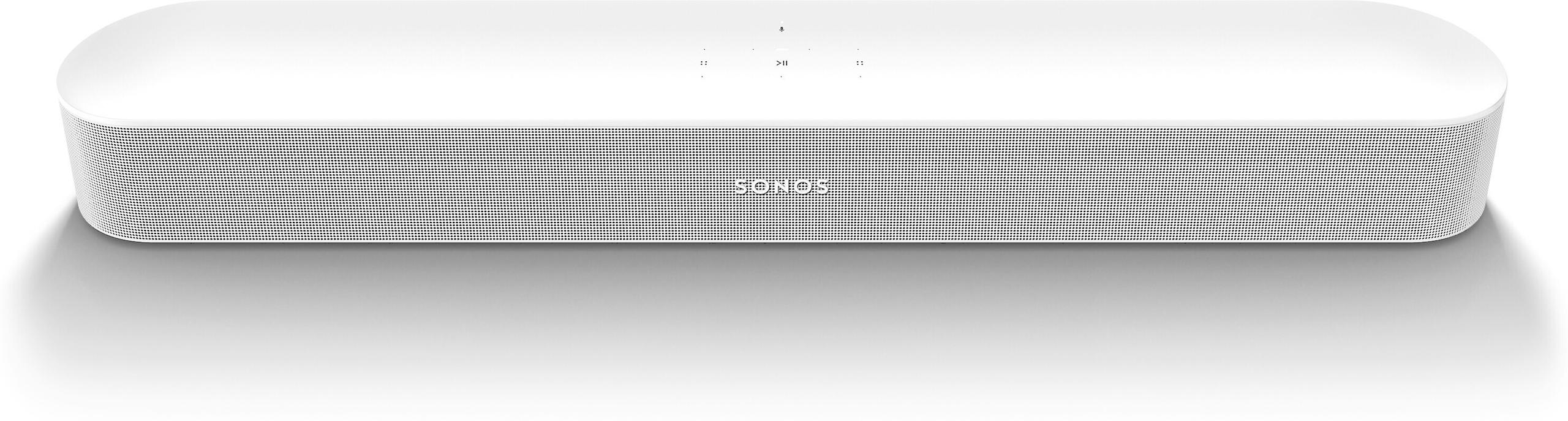
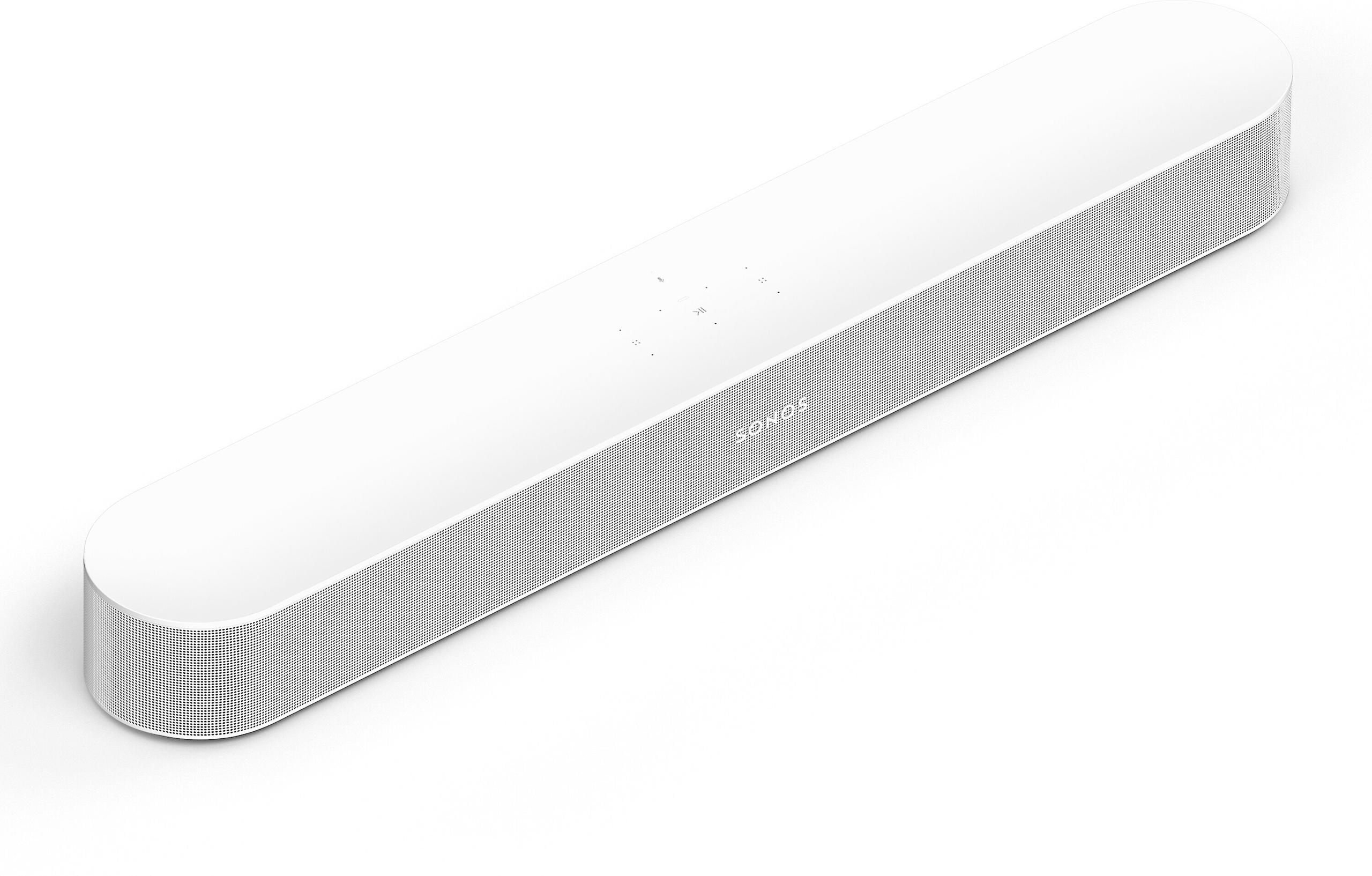
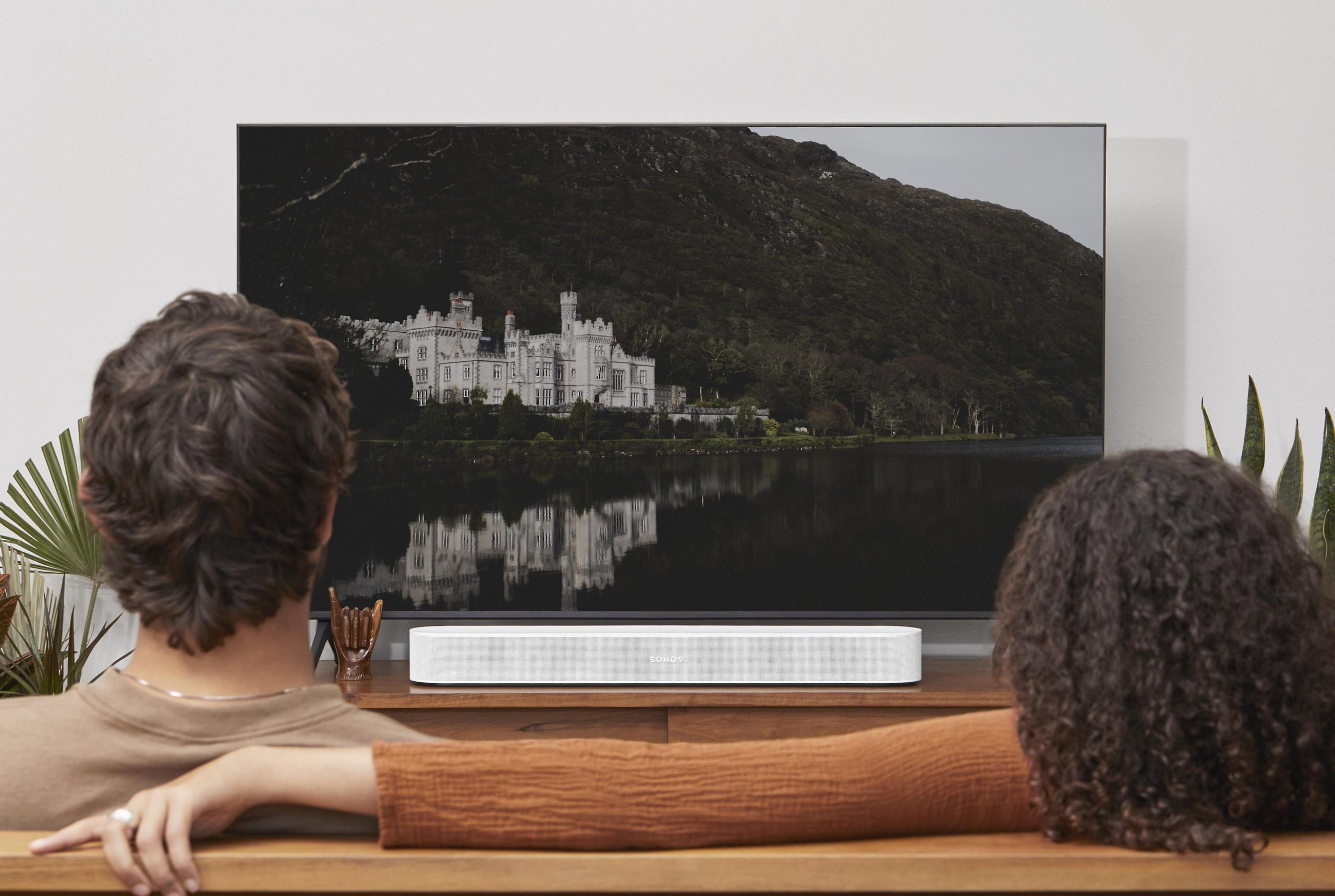
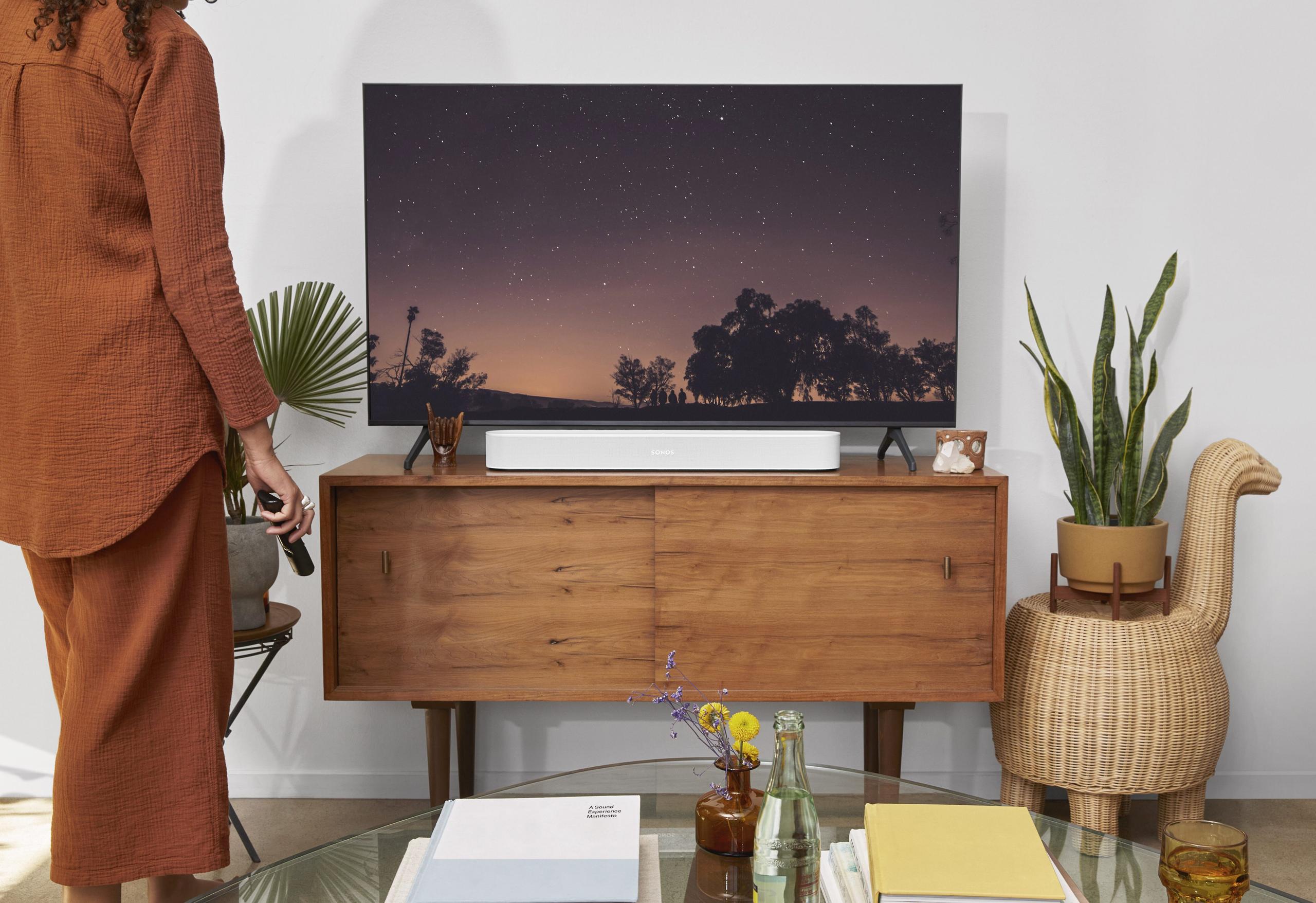
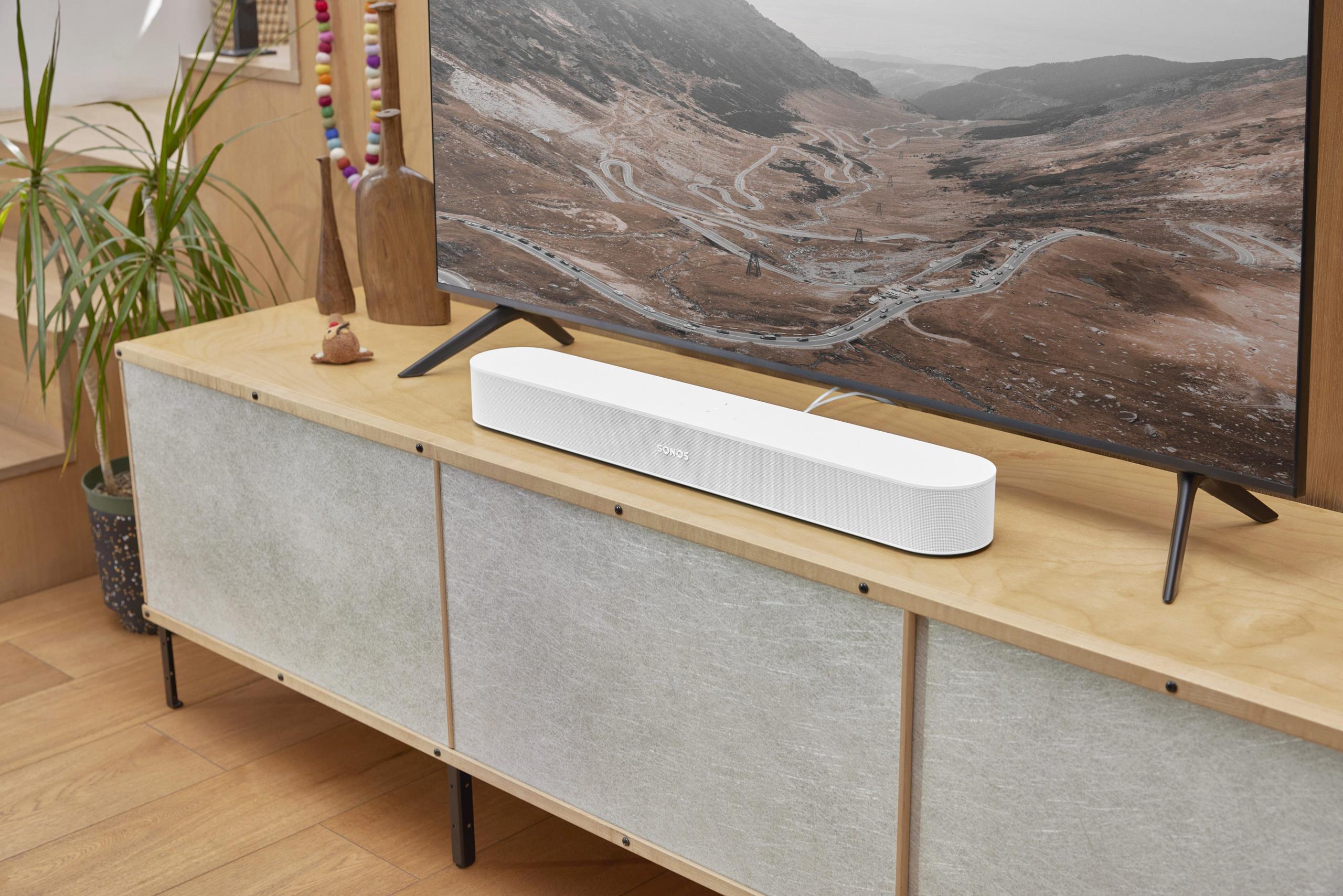
Released in October 2021 as an update to the popular original Beam, the Sonos Beam Gen 2 represents Sonos's philosophy of doing more with less. At just 25.6 inches wide and weighing 6.35 pounds, it's designed to disappear under your TV while delivering surprisingly robust sound.
The key upgrade from the original Beam is Dolby Atmos support, enabled by a 40% faster processor and refined audio algorithms. Dolby Atmos is a surround sound technology that places sounds in a three-dimensional space around you, including overhead effects. While the Beam Gen 2 doesn't have dedicated upfiring speakers (drivers that fire sound upward to bounce off your ceiling), it uses psychoacoustic processing to trick your brain into perceiving height effects.
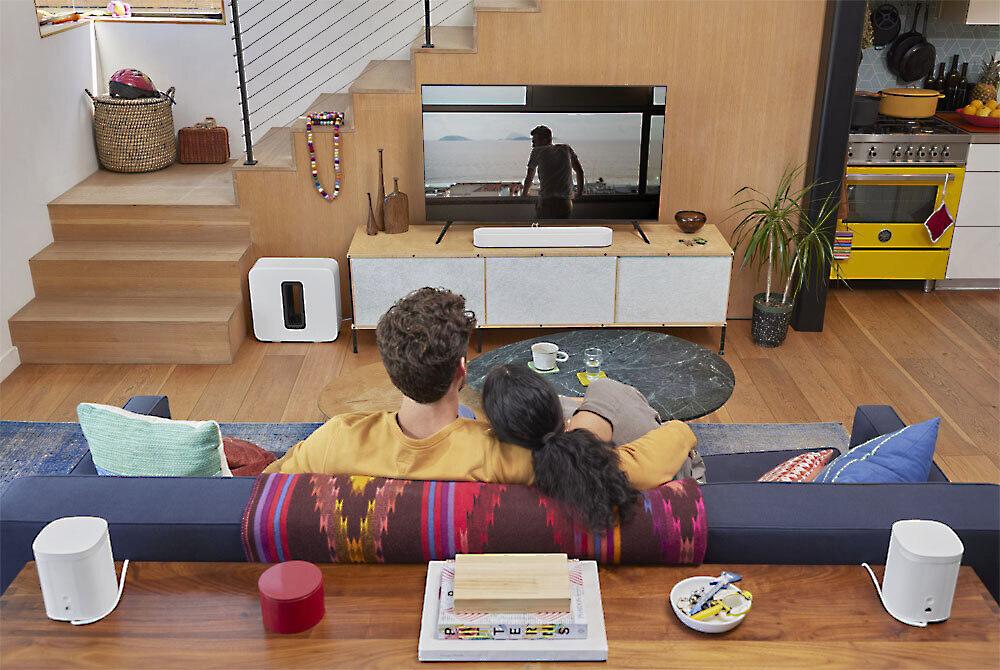
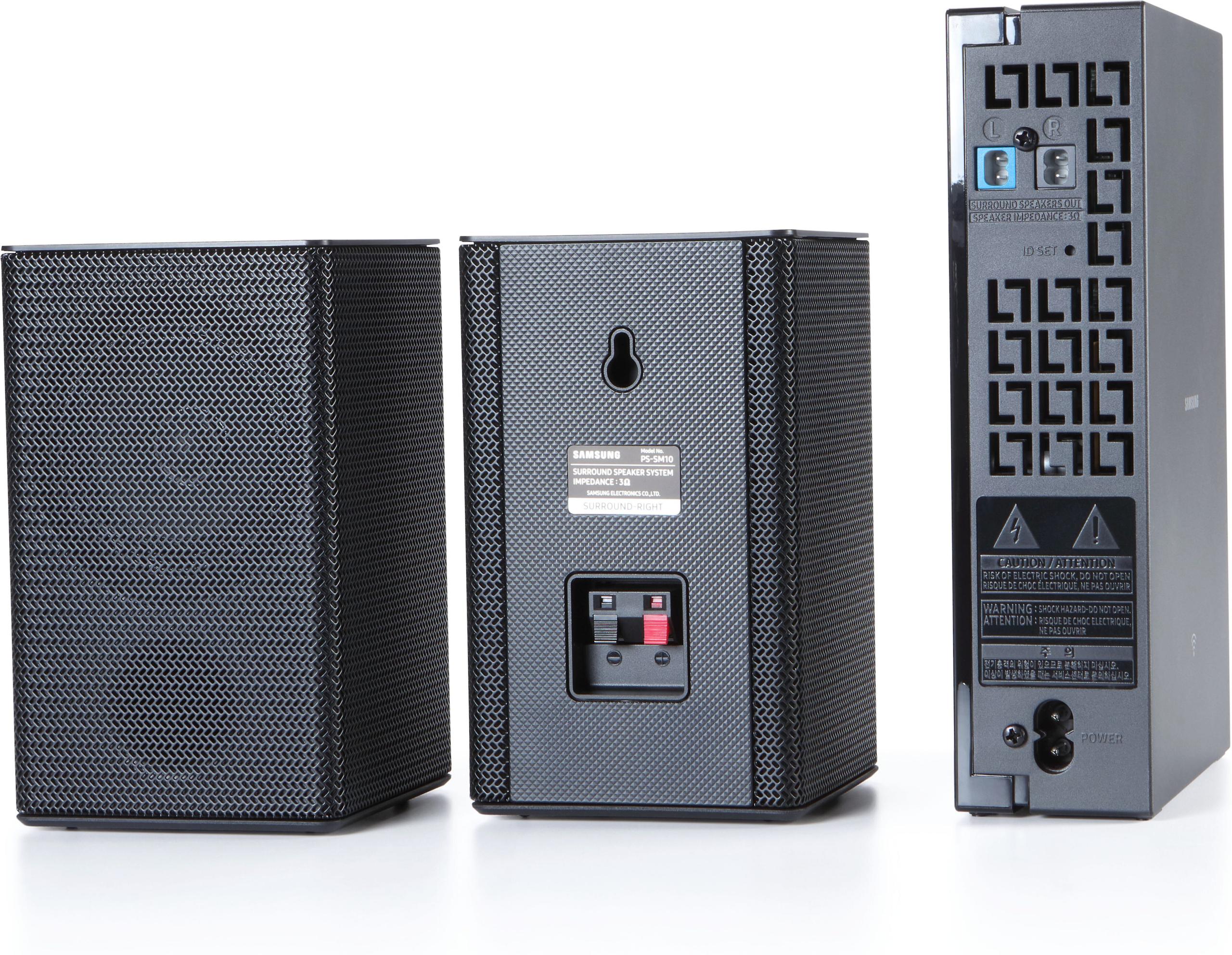
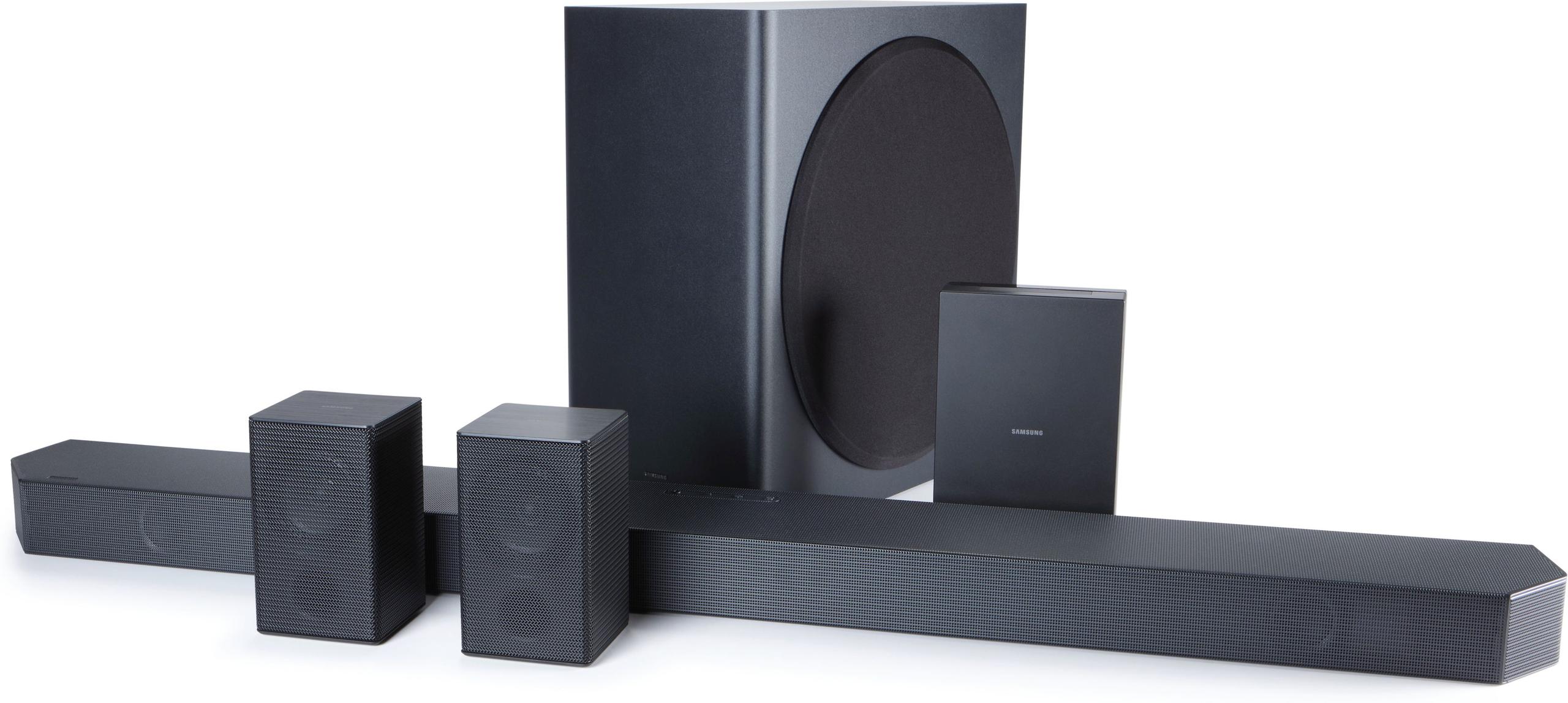
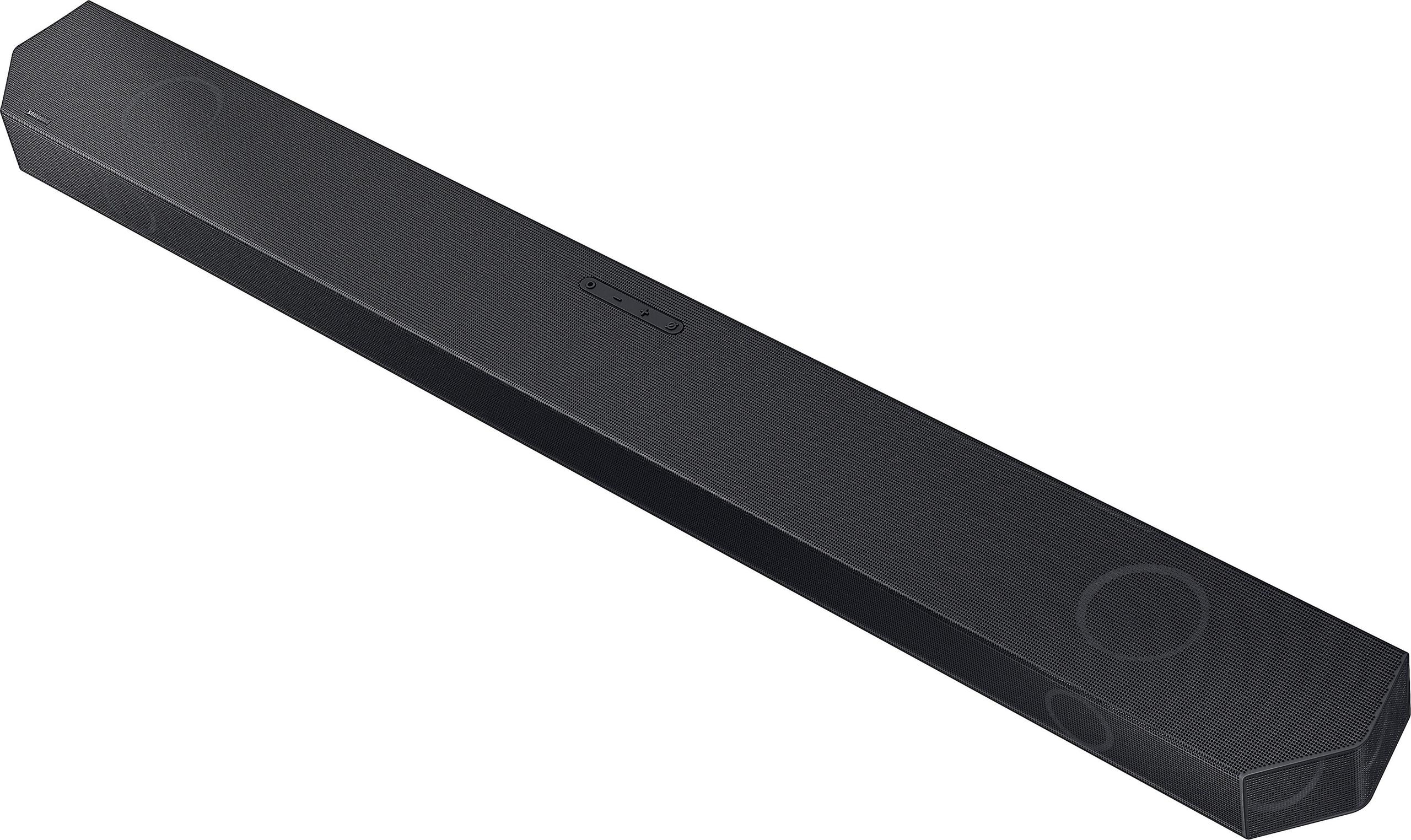
The Samsung Q Series 9.1.2, released in 2022, takes the opposite approach. This isn't just a soundbar – it's a complete surround sound system that includes a wireless subwoofer and rear satellite speakers. The "9.1.2" designation tells you everything about its ambition: 9 main channels, 1 subwoofer channel, and 2 height channels for Dolby Atmos effects.
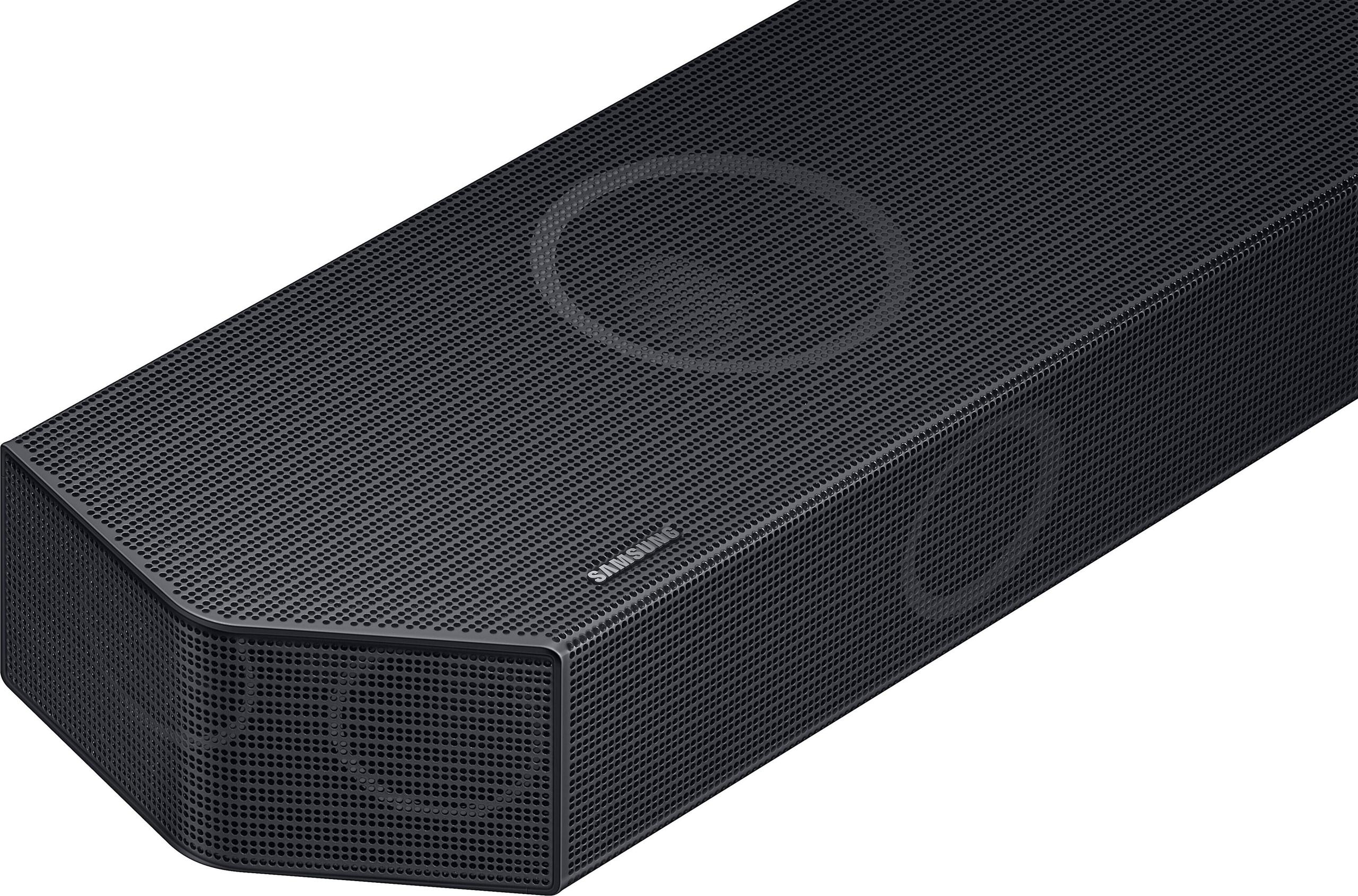
This system includes true upfiring drivers that bounce sound off your ceiling to create genuine overhead effects, plus physical rear speakers that provide authentic surround sound. It's Samsung's answer to customers who want maximum immersion without the complexity of a traditional receiver-based home theater system.
The most significant difference between these soundbars lies in their approach to creating an immersive listening experience. I've tested both extensively, and the differences are immediately apparent.
The Sonos Beam Gen 2 creates what I call "intelligent stereo" – it's still fundamentally a stereo soundbar, but Sonos's processing creates a remarkably wide soundstage that extends well beyond the physical width of the bar. When watching movies, dialogue stays anchored to the center of the screen while sound effects seem to come from various points across your TV wall. The virtual Dolby Atmos processing adds subtle height cues that work better than expected, though they can't match the physical reality of actual upfiring drivers.
What truly sets the Beam Gen 2 apart is its vocal clarity. Sonos has tuned this soundbar specifically for dialogue intelligibility, and it shows. Even at low volumes, conversations cut through background music and sound effects with remarkable clarity. The Speech Enhancement feature can further boost dialogue when needed, making it perfect for late-night viewing or noisy environments.
The Samsung Q Series 9.1.2, meanwhile, delivers true surround sound immersion that the Sonos simply cannot match. With physical rear speakers, sounds actually move around the room. When a helicopter flies overhead in a movie, you hear it start in front of you, pass overhead (thanks to the upfiring drivers), and continue behind you through the rear speakers. This creates a bubble of sound that envelops you in the action.
The difference becomes most apparent with action movies and gaming. While the Sonos creates an impressive phantom soundstage in front of you, the Samsung system makes you feel like you're inside the movie. The discrete channel separation means each speaker can focus on its specific job, resulting in cleaner, more precise audio reproduction.
Bass response reveals another fundamental difference between these approaches. The Sonos Beam Gen 2 includes built-in woofers and passive radiators (speakers without magnets that resonate sympathetically with active drivers to extend bass response), but physics limits what's possible in such a compact enclosure.
For most TV content and music, the Beam Gen 2's bass is adequate and well-integrated. It provides enough low-end punch for explosions and music without overwhelming dialogue or smaller sound effects. However, if you're watching bass-heavy content like action movies or listening to genres like hip-hop or electronic music, you'll notice the limitations. The bass lacks the depth and impact that makes movie soundtracks truly visceral.
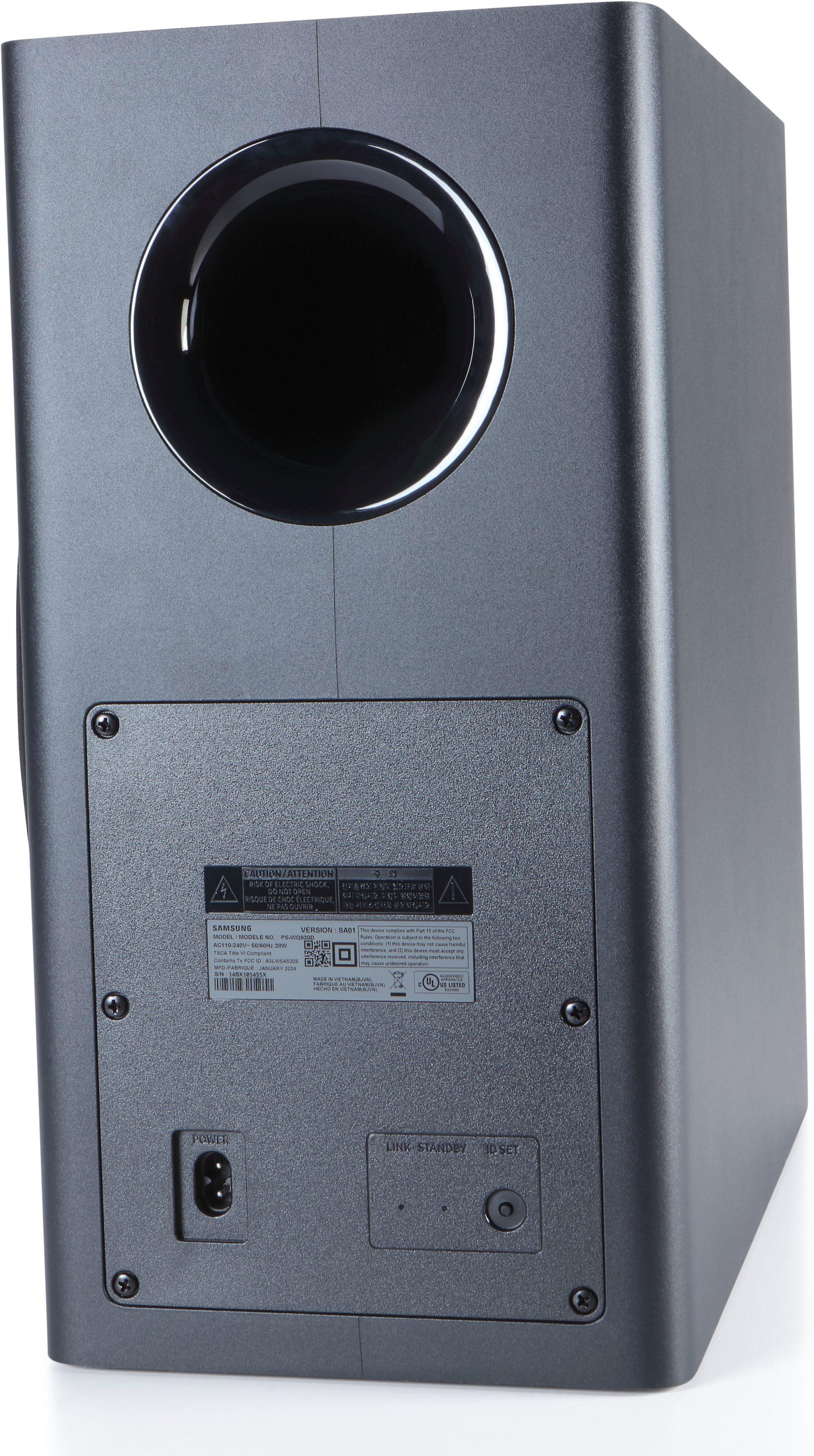
The Samsung system's dedicated 8-inch wireless subwoofer changes the game entirely. This separate component can reproduce frequencies down to 30Hz – deep enough to feel thunder rumbles and explosion impacts in your chest. The subwoofer connects wirelessly to the main soundbar, so you only need to plug it into power and find a good spot in your room.
What impressed me most about Samsung's implementation is the integration. Despite being a separate component, the subwoofer blends seamlessly with the main soundbar. The system uses Auto Sub EQ technology, which analyzes your room acoustics and adjusts the subwoofer's output to compensate for room effects like bass buildup in corners.
While both soundbars handle dialogue well, they take different approaches. The Sonos Beam Gen 2 treats vocal clarity as its primary mission. Every aspect of its tuning prioritizes making speech intelligible and natural. The center channel processing (even though it's technically a stereo soundbar) keeps dialogue locked to the screen center, while sophisticated processing separates vocals from background elements.
I've found the Beam Gen 2 particularly excellent for TV shows, news, and dialogue-heavy movies. Even in complex soundtracks where music and effects compete with speech, voices remain clear and easy to understand. This makes it ideal for anyone who struggles with dialogue clarity or frequently uses subtitles.
The Samsung Q Series 9.1.2 includes Active Voice Amplifier (AVA) technology, which automatically detects and enhances dialogue during quiet passages. While effective, it doesn't match the Sonos's natural vocal presentation. The Samsung system's strength lies more in creating dynamic contrast – when explosions happen, they're truly explosive, which makes the quiet dialogue moments feel more intimate by comparison.
For music listening, these soundbars serve different audiences. The Sonos Beam Gen 2 was designed with music as a primary use case, and it shows. The frequency response is carefully balanced for accurate reproduction across genres, from classical to rock to jazz. The soundstage is wide and well-defined, with good instrument separation and natural tonal balance.
More importantly, the Beam Gen 2 integrates seamlessly with Sonos's multi-room ecosystem. You can group it with other Sonos speakers throughout your home, use it as part of a whole-house audio system, and control everything through the intuitive Sonos app. For music lovers who want their TV soundbar to double as a high-quality music system, this integration is invaluable.
The Samsung system approaches music differently. With its dedicated subwoofer and multiple drivers, it can play music with more impact and dynamics than the Sonos. Electronic music, hip-hop, and rock benefit from the extended bass response and overall power. However, the tuning feels more focused on movie soundtracks than pure music reproduction, and it lacks the multi-room capabilities that make Sonos so appealing for music enthusiasts.
Both soundbars include automatic room calibration, but they work differently. The Sonos Beam Gen 2 uses Trueplay technology, which requires an iOS device to map your room's acoustics. You walk around the room holding your iPhone or iPad while the app plays test tones through the soundbar. The system then adjusts its output to compensate for your room's unique characteristics.
I've found Trueplay to be remarkably effective, especially in challenging rooms with hard surfaces or unusual layouts. The difference before and after calibration is often dramatic, with better bass balance and clearer midrange reproduction.
The Samsung Q Series 9.1.2 uses SpaceFit Sound+, which automatically calibrates the system using built-in microphones. This is more convenient than Sonos's approach since it doesn't require a separate device, and it works continuously in the background to maintain optimal performance as conditions change.
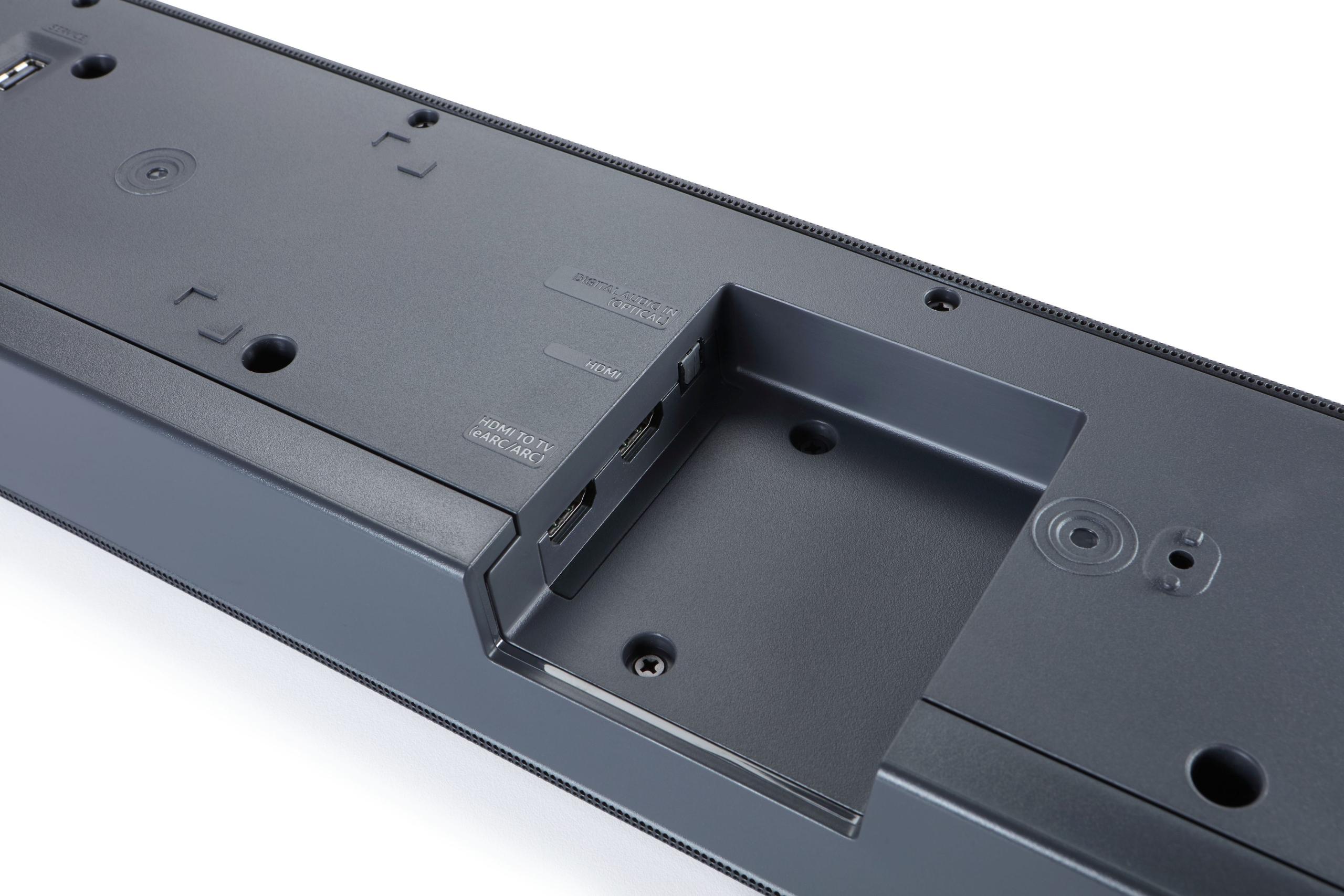
The Sonos Beam Gen 2 includes built-in voice assistants (Amazon Alexa and Google Assistant), allowing hands-free control of both the soundbar and smart home devices. The HDMI eARC connection (enhanced Audio Return Channel, which carries high-quality audio from your TV back to the soundbar) supports advanced audio formats including Dolby Atmos and multichannel PCM.
One of Sonos's strongest advantages is its platform agnostic approach – it works equally well with any TV brand and integrates with virtually every major streaming service. The company has also maintained excellent long-term software support, regularly adding new features and streaming services through firmware updates.
The Samsung system's standout feature is Q-Symphony, which works exclusively with Samsung TVs. When connected to a compatible Samsung TV, Q-Symphony uses both the TV's built-in speakers and the soundbar simultaneously, creating an even wider soundstage. I tested this with a Samsung QLED TV and found it genuinely effective, though it obviously limits your TV choices.
Samsung also includes Game Mode Pro, which optimizes the audio processing for gaming by reducing latency and enhancing directional audio cues. This feature works well with both console and PC gaming, providing better spatial awareness in competitive games.
The Sonos Beam Gen 2 ($449) offers true plug-and-play simplicity. Connect the included HDMI cable to your TV's eARC port, plug in power, and you're done. The entire setup takes minutes, and the compact size means it fits under virtually any TV without blocking the screen or IR sensors.
This simplicity extends to room placement – you don't need to worry about subwoofer positioning, rear speaker placement, or running additional power cables. For renters, people in small spaces, or anyone who values minimal complexity, this is a significant advantage.
The Samsung Q Series 9.1.2 ($898) requires more planning and effort. You'll need to position the wireless subwoofer somewhere in your room (with access to power), find suitable locations for the rear speakers (again, with power access), and ensure everything communicates properly with the main soundbar.
While the setup isn't overly complicated, it does require more thought about room layout and aesthetics. The rear speakers need to be positioned behind your listening area at the correct height and angle, which may require speaker stands or wall mounting.
The Sonos ecosystem approach offers interesting upgrade paths. If you start with the Beam Gen 2 and later want more bass, you can add the Sonos Sub (though at $749, it's expensive). You can also add rear speakers later to create a true 5.1 system, though this brings the total cost well above the Samsung system.
Sonos's track record of long-term software support is excellent. My original Sonos speakers from 2015 still receive regular updates with new features and streaming services. This longevity makes the investment more appealing over time.
The Samsung Q Series 9.1.2 comes complete out of the box – you're getting the full experience immediately. However, there's limited upgrade potential beyond what's included, and Samsung's focus on hardware over long-term software support means fewer feature additions over time.
For dedicated home theater use, these soundbars serve different needs. If you have a smaller room (under 300 square feet) and prioritize dialogue clarity for TV shows and movies, the Sonos Beam Gen 2 delivers exceptional performance for its size and price. It's particularly good for bedrooms or secondary viewing areas where simplicity matters more than maximum impact.
The Samsung Q Series 9.1.2 is designed for primary home theater use in larger rooms. With its true surround sound capabilities and powerful subwoofer, it can fill larger spaces with immersive audio that approaches dedicated component systems costing significantly more.
I've found the Samsung system particularly effective with action movies, sci-fi films, and content with complex soundtracks where the discrete channel separation really shines. The Dolby Atmos implementation with actual upfiring drivers creates genuine overhead effects that virtual processing simply cannot match.
After extensive testing, I believe the choice between these soundbars comes down to your specific situation and priorities.
Choose the Sonos Beam Gen 2 ($449) if you:
Choose the Samsung Q Series 9.1.2 ($898) if you:
The bottom line is that both soundbars excel in their intended roles. The Sonos Beam Gen 2 proves that thoughtful engineering and smart processing can deliver remarkable performance from a compact, simple package. The Samsung Q Series 9.1.2 demonstrates that when you want true home theater immersion, there's no substitute for dedicated components and proper surround sound implementation.
Your choice should ultimately depend on your room size, content preferences, and whether you prioritize convenience or maximum audio performance. Both will dramatically improve your TV's audio – they just do it in very different ways.
| Sonos Beam Gen 2 Soundbar | Samsung Q Series 9.1.2 Channel Soundbar |
|---|---|
| Price - Entry point for quality surround sound | |
| $449 | $898 |
| Channel Configuration - Determines surround sound authenticity | |
| 2.0 channels with virtual 5.0 processing | True 9.1.2 channels with physical surround speakers |
| Physical Setup - Impact on room layout and installation | |
| Single compact soundbar (25.6" wide, 6.35 lbs) | Soundbar + wireless subwoofer + rear satellite speakers |
| Dolby Atmos Implementation - Quality of overhead sound effects | |
| Virtual Atmos using psychoacoustic processing | True Atmos with dedicated upfiring drivers and rear channels |
| Bass Extension - Foundation for movie impact and music fullness | |
| Built-in drivers with passive radiators (limited deep bass) | Dedicated 8" wireless subwoofer (extends to 30Hz) |
| Room Size Optimization - Matching performance to space | |
| Best for small-medium rooms (under 300 sq ft) | Designed for large rooms (300+ sq ft) with rear speaker placement |
| Dialogue Clarity - Critical for TV shows and movie comprehension | |
| Industry-leading with Speech Enhancement technology | Good with Active Voice Amplifier (AVA) but not specialized |
| Smart Features - Ecosystem integration and voice control | |
| Built-in Alexa/Google Assistant, AirPlay 2, Trueplay calibration | Q-Symphony (Samsung TVs only), SpaceFit Sound+, Game Mode Pro |
| Music Performance - Quality for streaming and multi-room audio | |
| Excellent balance, full Sonos ecosystem integration | Good dynamics with subwoofer but lacks multi-room capabilities |
| Setup Complexity - Time and effort required for installation | |
| Plug-and-play, single HDMI connection | Multi-component setup requiring power for sub and rear speakers |
| Upgrade Path - Future expansion possibilities | |
| Can add Sonos Sub ($749) and rear speakers later | Complete system included, no meaningful upgrade options |
The Sonos Beam Gen 2 ($449) offers excellent value for smaller rooms and users who prioritize dialogue clarity and simplicity. The Samsung Q Series 9.1.2 ($898) costs nearly double but delivers true surround sound with physical rear speakers and a dedicated subwoofer, making it better value for large room home theater setups.
The Sonos Beam Gen 2 is a compact single-unit soundbar that uses virtual surround processing, while the Samsung Q Series 9.1.2 is a complete multi-component system with a wireless subwoofer and rear satellite speakers for authentic surround sound.
The Sonos Beam Gen 2 is specifically designed for small to medium rooms under 300 square feet. Its compact 25.6-inch width and single-unit design make it perfect for apartments, bedrooms, or smaller living spaces without the complexity of multiple components.
The Samsung Q Series 9.1.2 has significantly better bass with its dedicated 8-inch wireless subwoofer that extends down to 30Hz. The Sonos Beam Gen 2 relies on built-in drivers and passive radiators, which provide adequate but limited deep bass response.
Yes, both support Dolby Atmos but differently. The Sonos Beam Gen 2 uses virtual Atmos processing to simulate height effects, while the Samsung Q Series 9.1.2 has dedicated upfiring drivers that bounce sound off your ceiling for true overhead effects.
The Sonos Beam Gen 2 offers true plug-and-play setup with just one HDMI connection and no additional components. The Samsung Q Series 9.1.2 requires positioning and powering a subwoofer and rear speakers, making setup more complex but still manageable.
The Sonos Beam Gen 2 excels at dialogue clarity with industry-leading vocal processing and Speech Enhancement technology. While the Samsung Q Series 9.1.2 includes Active Voice Amplifier, it's not specifically optimized for dialogue like the Sonos.
Both work well for music but serve different needs. The Sonos Beam Gen 2 offers excellent musical balance and integrates with the Sonos multi-room ecosystem. The Samsung Q Series 9.1.2 provides more dynamic impact with its subwoofer but lacks multi-room audio capabilities.
For home theater, the Samsung Q Series 9.1.2 is superior with true surround sound, powerful bass, and authentic Dolby Atmos effects. The Sonos Beam Gen 2 works well for casual movie watching in smaller spaces but can't match the cinematic immersion of the Samsung system.
No, the Samsung Q Series 9.1.2 works with any TV brand, but you'll get additional features like Q-Symphony (which uses both TV and soundbar speakers simultaneously) only with compatible Samsung TVs. The Sonos Beam Gen 2 works equally well with all TV brands.
The Sonos Beam Gen 2 includes built-in Alexa and Google Assistant, AirPlay 2, and Trueplay room calibration. The Samsung Q Series 9.1.2 offers SpaceFit Sound+ calibration, Game Mode Pro for gaming, and SmartThings integration, with features optimized for Samsung ecosystem users.
The Sonos Beam Gen 2 can be expanded with a Sonos Sub and rear speakers later, though this significantly increases the total cost. The Samsung Q Series 9.1.2 comes as a complete system with no meaningful upgrade options beyond what's included in the box.
We've done our best to create useful and informative comparisons to help you decide what product to buy. Our research uses advanced automated methods to create this comparison and perfection is not possible - please contact us for corrections or questions. These are the sites we've researched in the creation of this article: whathifi.com - en.community.sonos.com - techradar.com - youtube.com - consumerreports.org - bestbuy.com - youtube.com - sonos.com - wave-electronics.com - en.community.sonos.com - epicsystems.tech - tomsguide.com - bestbuy.com - rtings.com - samsung.com - markselectrical.co.uk - techradar.com - walmart.com - samsung.com - samsung.com - youtube.com - samsung.com - biancos.com - crutchfield.com - samsung.com

Privacy Policy
Terms and Conditions - Affiliate Policy
Home Security
© Copyright 2008-2026.
11816 Inwood Rd #1211, Dallas, TX 75244