

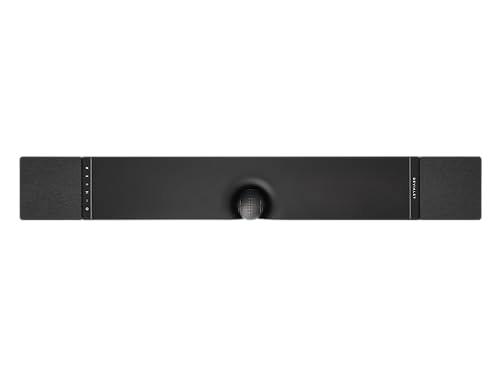
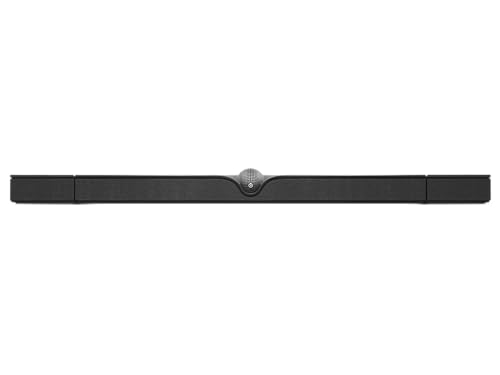
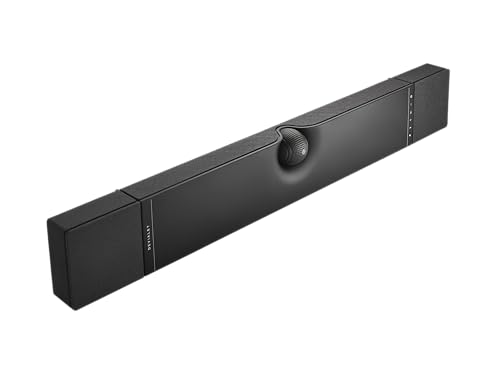
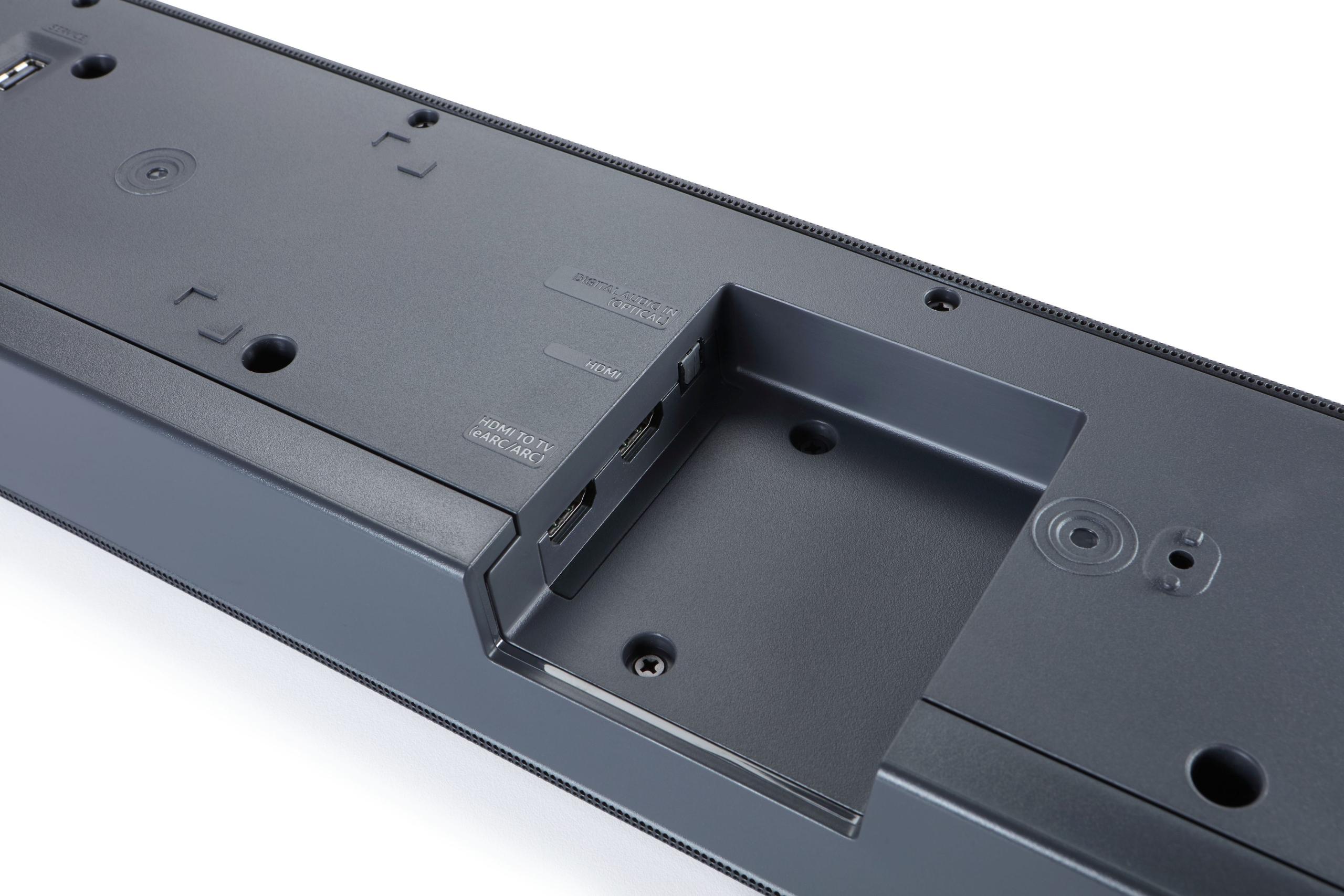
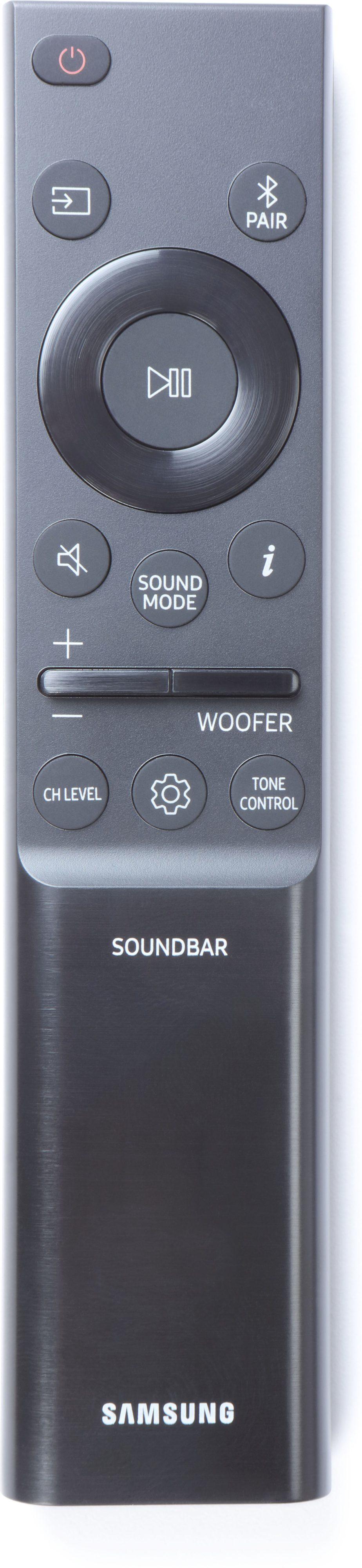
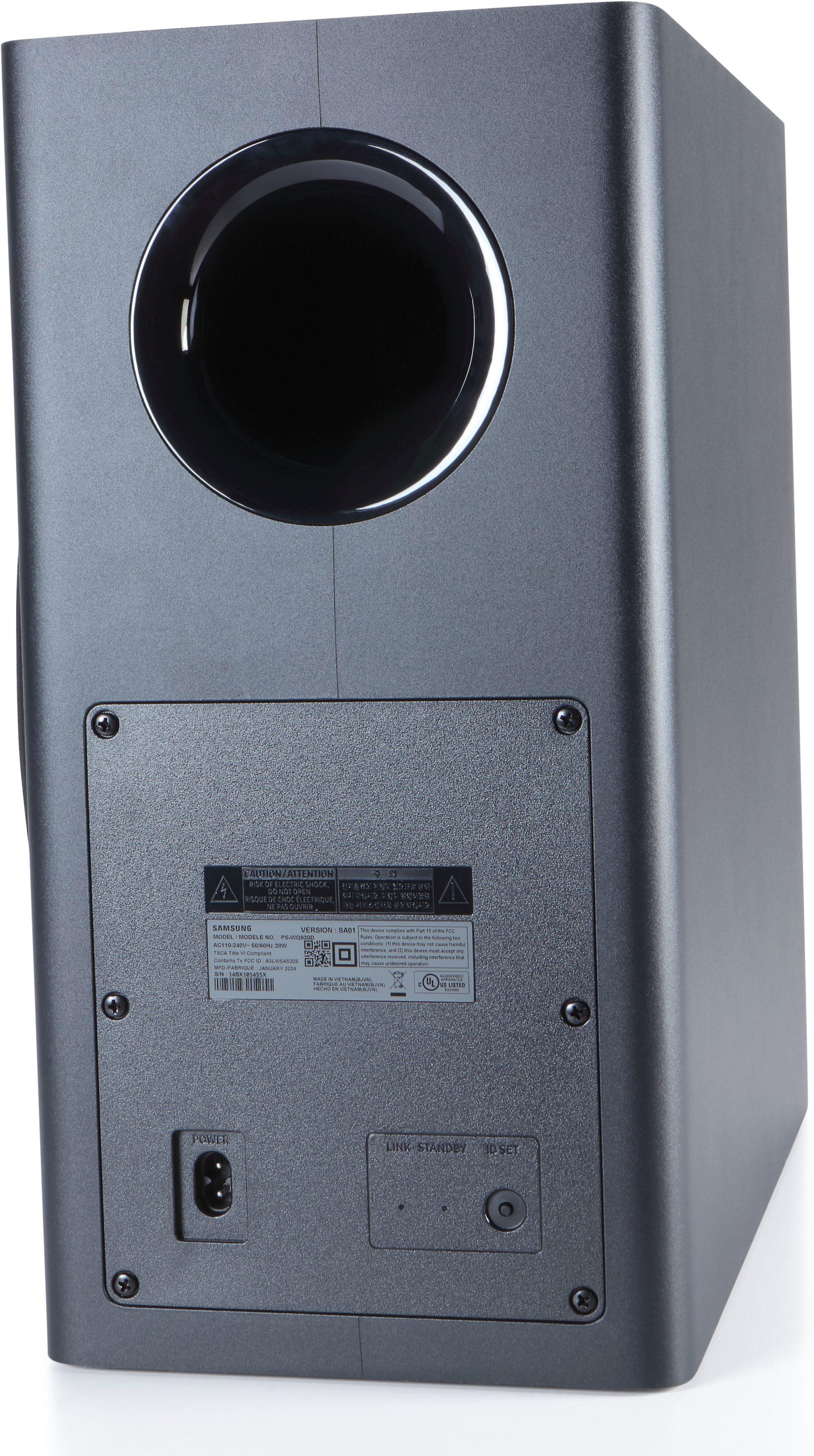
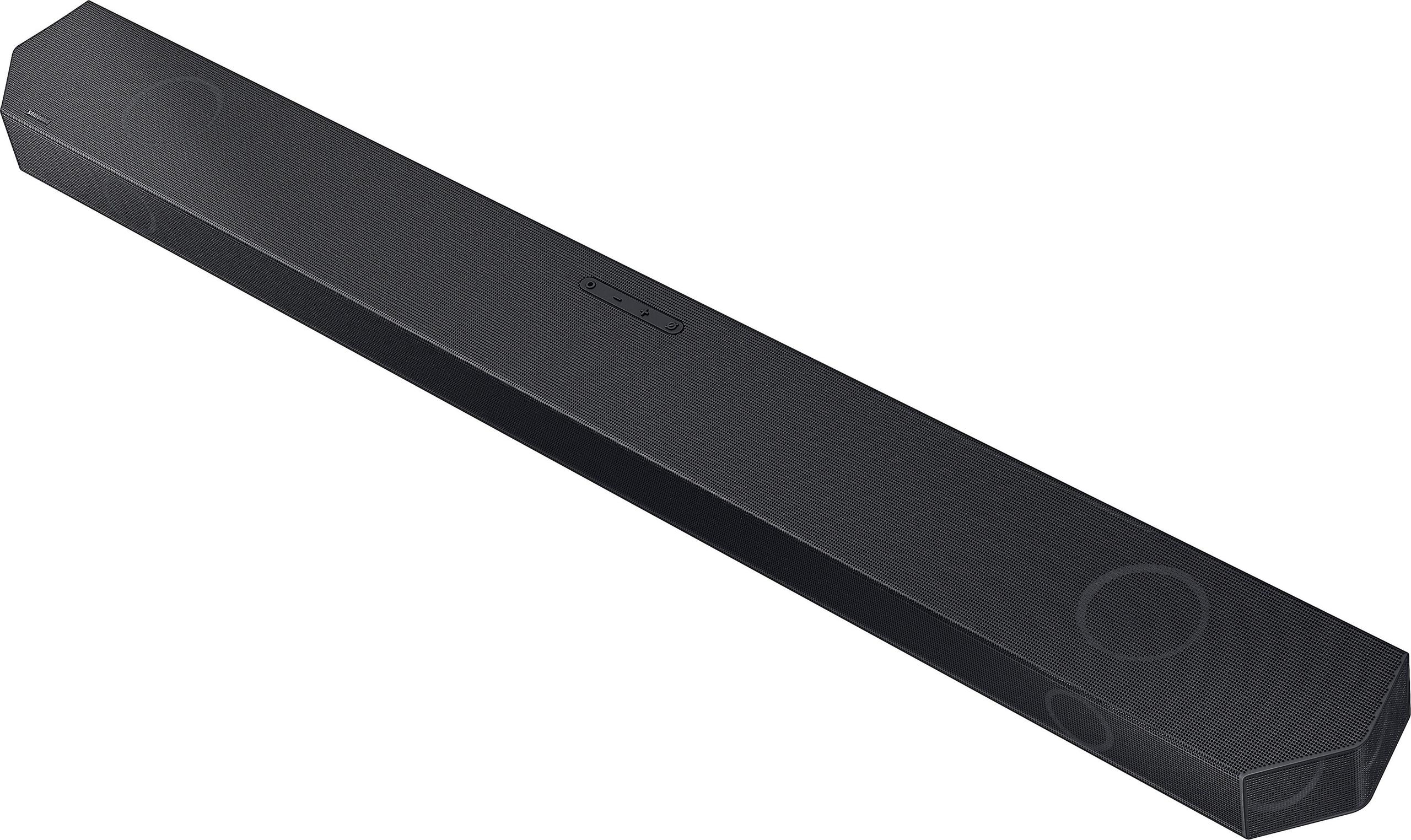

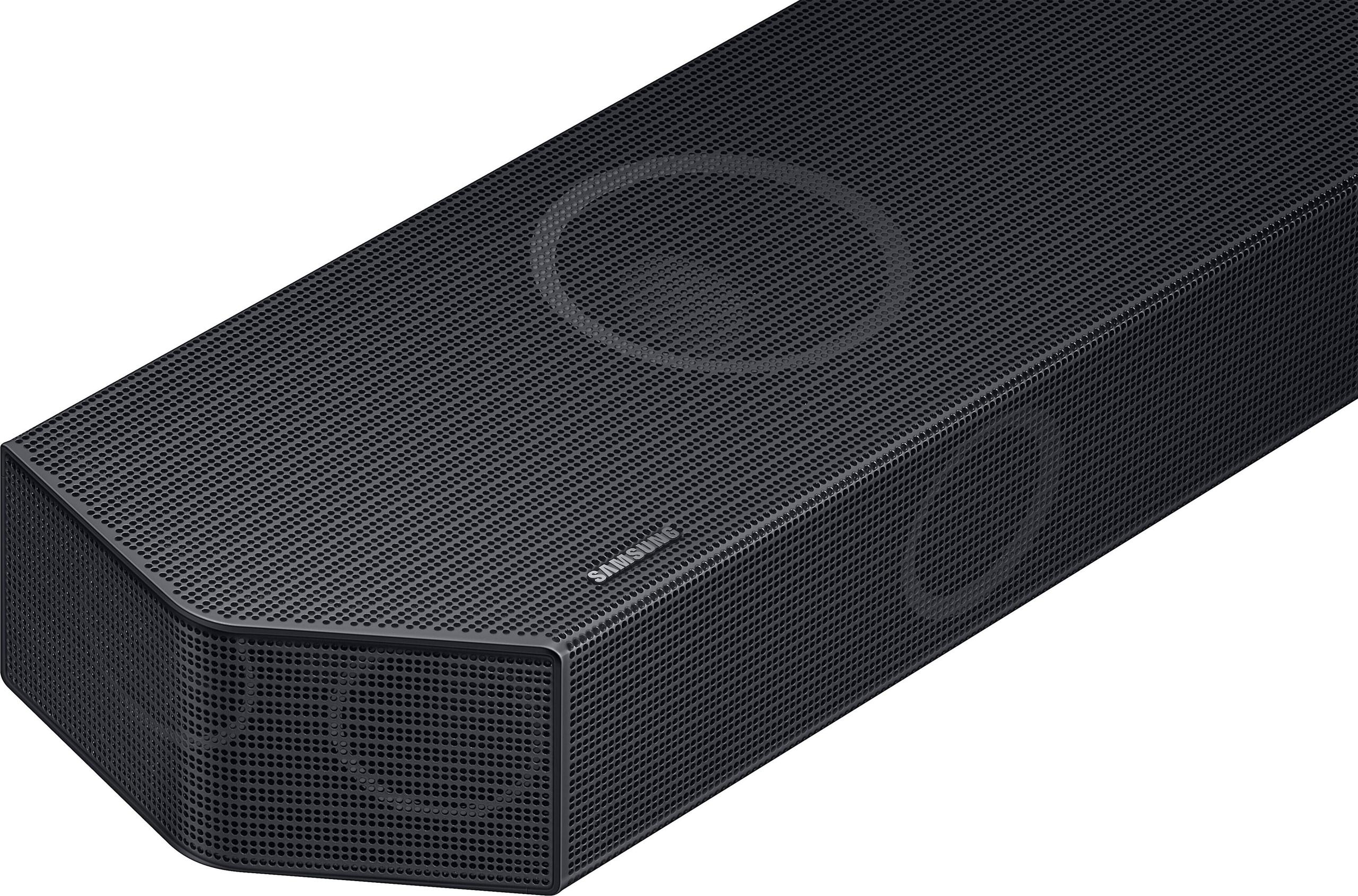




The soundbar market has exploded over the past few years, with manufacturers taking wildly different approaches to solving the same basic problem: how do you get cinematic audio without filling your living room with speakers and cables? Today we're comparing two products that couldn't be more different in their philosophy, despite both targeting the premium end of the market.
The Devialet Dione, released in 2022, represents the "all-in-one luxury" approach - cramming everything into a single, impossibly sleek bar that costs about as much as a decent used car. Meanwhile, the Samsung Q Series 9.1.2, launched in 2024, takes the traditional route of multiple components working together, but does it really, really well while keeping the price reasonable.
Understanding how these products differ isn't just about comparing specs - it's about understanding two completely different philosophies about what premium audio should be.
Before diving into the details, let's establish what separates premium soundbars from the basic models you'll find at big box stores. The key differentiators come down to a few critical areas that directly impact your listening experience.
Audio performance is obviously paramount, but it's more nuanced than just "louder equals better." We're talking about frequency response (how evenly the soundbar reproduces bass, mids, and treble), dynamic range (the difference between the quietest and loudest sounds), and spatial reproduction (how convincingly it creates the illusion of surround sound). These factors determine whether dialogue cuts through action sequences, whether explosions feel impactful without drowning out everything else, and whether music sounds natural rather than compressed.
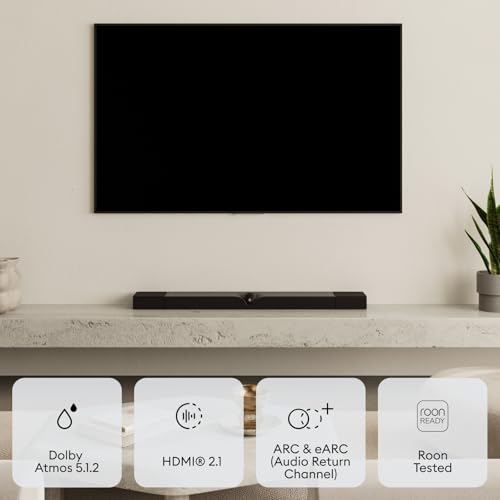
Format support has become increasingly important as streaming services and 4K Blu-rays use advanced audio codecs. Dolby Atmos creates overhead sound effects that make helicopters feel like they're flying above you, while DTS:X offers similar capabilities with slightly different processing. The difference between having these formats and not having them is night and day for modern movies and games.
Integration capabilities matter more than you might expect. How well does the soundbar work with your TV's remote? Can it automatically adjust settings based on what you're watching? Does it seamlessly handle switching between your gaming console, streaming device, and cable box? These seemingly minor conveniences become major quality-of-life factors over years of daily use.
The fundamental difference between the Devialet Dione and Samsung Q Series starts with their basic architecture, and this choice affects absolutely everything else about how they perform.
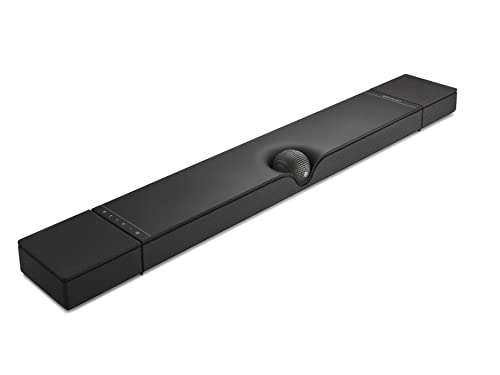
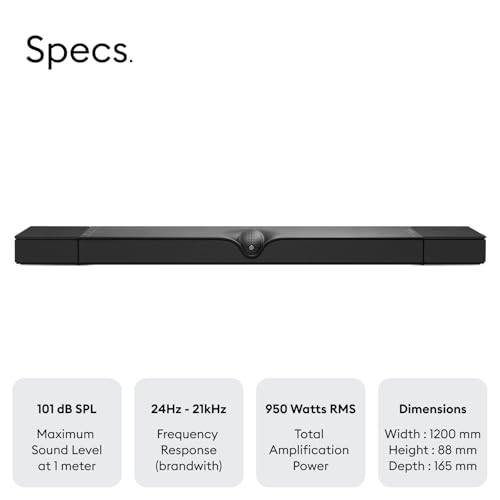
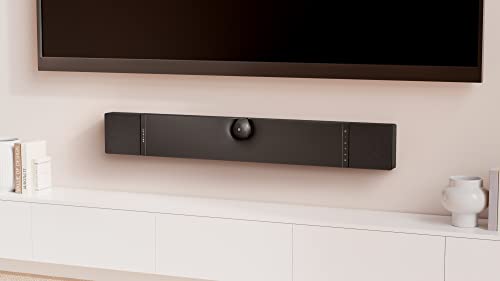
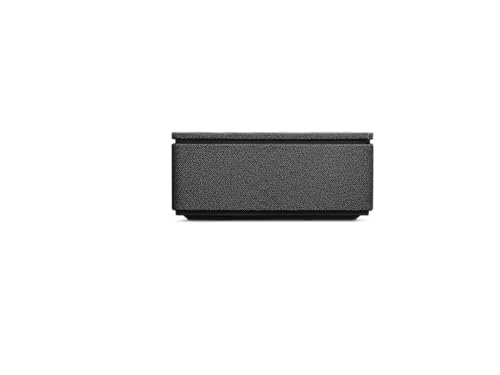
The Devialet Dione is essentially an engineering marvel disguised as a soundbar. At just over 47 inches wide and barely 3 inches tall, it houses 17 individual drivers and 950 watts of amplification. This isn't just impressive from a miniaturization standpoint - it represents a completely different way of thinking about soundbar design.
Traditional soundbars struggle with bass because physics is unforgiving: to reproduce low frequencies effectively, you need either large drivers or lots of air movement. Most manufacturers solve this by adding a separate subwoofer, but Devialet decided to engineer their way around the problem. They use eight specialized aluminum cone drivers in what they call a "push-push" configuration - essentially, pairs of drivers that work against each other to cancel out vibrations while maximizing bass output.
The result is a soundbar that can reach down to 24 Hz (the threshold where you feel bass more than hear it) without needing any external components. This matters enormously for apartment dwellers, minimalists, or anyone who's ever tried to find the perfect spot for a wireless subwoofer that doesn't annoy neighbors or look awkward in their living room.
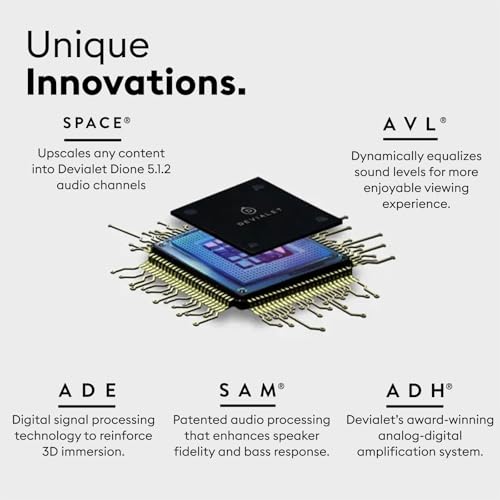
But Devialet's engineering goes deeper than just clever driver arrangement. Their ADH (Analog Digital Hybrid) amplification technology combines the best aspects of different amplifier designs. Class A amplifiers are known for pure, distortion-free sound but run hot and waste energy. Class D amplifiers are efficient and powerful but can sound harsh. ADH uses Class A amplification to define the signal's character while Class D stages provide the muscle, resulting in amplification that measures at an almost impossibly low 0.001% distortion.
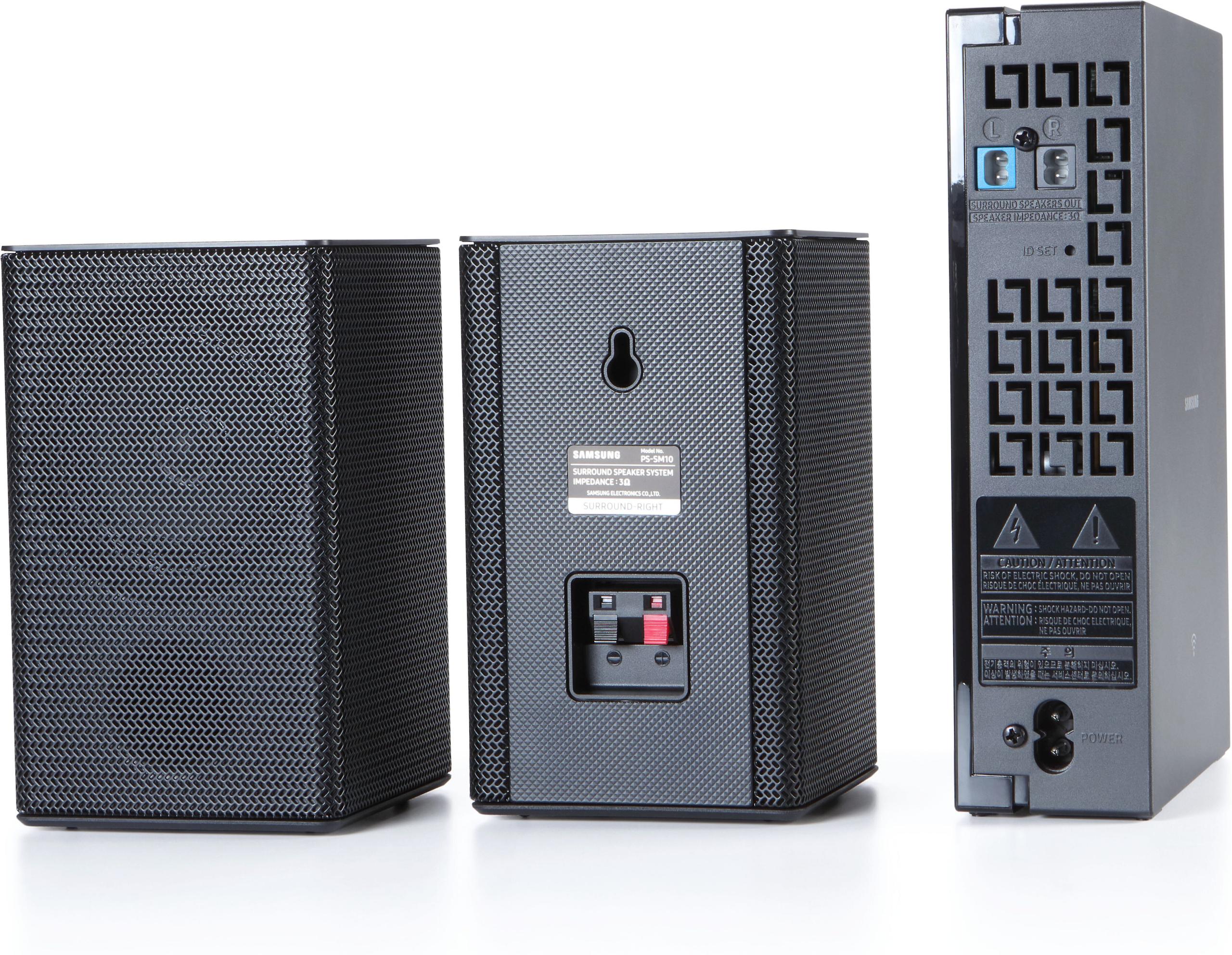
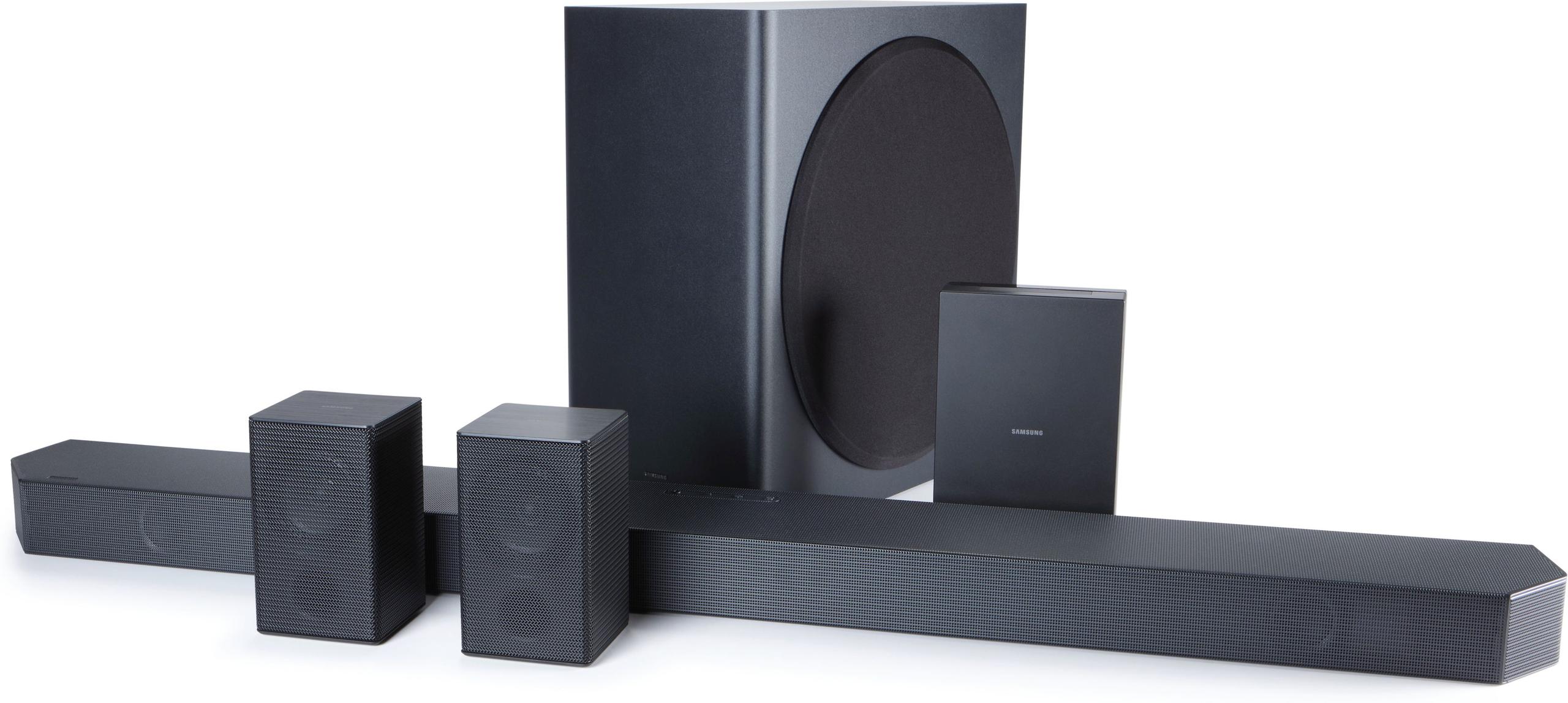
The Samsung Q Series 9.1.2, by contrast, embraces the traditional approach but executes it with modern sophistication. You get a main soundbar, a wireless subwoofer, and discrete rear speakers that work together to create a true 9.1.2-channel surround system.
This approach has obvious advantages: dedicated rear speakers can create directional effects that no amount of digital processing can truly replicate. When a car crashes behind you in a movie, you hear it behind you, not as a reflected approximation bouncing off your wall. The separate subwoofer can be larger and more powerful than anything that would fit in a slim soundbar, and you can position it optimally in your room for the best bass response.
Samsung's implementation gets particularly interesting with their Q-Symphony technology, which was refined significantly since its introduction around 2020. Instead of disabling your TV's built-in speakers when you connect a soundbar (the normal behavior), Q-Symphony keeps them active and coordinates them with the soundbar's drivers to create a larger, more enveloping soundstage. The TV's speakers handle some mid and high-frequency content while the soundbar focuses on what it does best.
This approach works especially well for dialogue. TV speakers are positioned closer to the screen, so voices feel more naturally anchored to the actors speaking them. Meanwhile, the soundbar handles the heavy lifting for music, effects, and bass. It's a clever solution that takes advantage of components you already own rather than fighting against them.
When evaluating soundbar performance, we need to consider how they handle different types of content, because the priorities for movies, music, and gaming can be quite different.
The Devialet Dione approaches audio with an almost obsessive focus on accuracy and refinement. Their SAM (Speaker Active Matching) technology continuously monitors each driver and corrects for nonlinearities in real time. This means the difference between what goes into the soundbar and what comes out is minimal - a characteristic that's immediately apparent when listening to high-quality music sources.
Based on extensive user feedback and professional reviews, the Dione excels particularly with music reproduction in ways that most soundbars simply don't. Where typical soundbars might make your Spotify playlists sound acceptable, the Dione makes them sound genuinely engaging. Vocals are precisely positioned, instrumental separation is clear, and the frequency balance remains consistent whether you're listening at whisper-quiet levels or neighbor-annoying volumes.
This musical competence extends to movie soundtracks as well. Hans Zimmer's thunderous scores in films like "Dune" come through with both power and nuance - you get the visceral impact of those deep synthesizer hits while still being able to hear the subtle orchestral details layered underneath.
The Samsung Q Series takes a more traditional home theater approach, optimizing primarily for cinematic impact. The separate components allow for better channel separation and more convincing directional effects. When a helicopter moves from front to back in a movie, you can actually track its movement through the physical space rather than just hearing it change tonally.
Samsung's approach particularly shines with complex action sequences where lots of things are happening simultaneously. The discrete rear channels can handle ambient effects and background music while the front array focuses on dialogue and primary action. This separation prevents the audio fatigue that can occur when a single soundbar tries to do everything at once.
Bass reproduction represents perhaps the starkest difference between these approaches, and both solutions have distinct advantages depending on your priorities and living situation.
The Devialet Dione's integrated bass system is genuinely impressive for a single-unit design. Those eight internal subwoofers can move enough air to provide genuine low-frequency impact down to 24 Hz - frequencies you feel in your chest during explosion scenes. The push-push driver configuration also means the soundbar itself doesn't vibrate or "walk" across your TV stand during bass-heavy content, something that can be problematic with traditional soundbar designs.
However, there are physical limitations to what's possible in a 3-inch-tall enclosure. While the Dione can reach low frequencies, it can't move the same volume of air as a larger dedicated subwoofer. In practical terms, this means excellent bass quality and surprising quantity, but perhaps not the room-shaking impact that some home theater enthusiasts crave.
The Samsung Q Series's dedicated subwoofer takes a more traditional but potentially more powerful approach. Without size constraints, Samsung can use larger drivers and enclosures designed specifically for bass reproduction. The wireless connection means you can position the subwoofer wherever it sounds best in your room - often a corner or along a wall where room acoustics can amplify the effect.
User reports consistently indicate that the Samsung system can produce more overwhelming bass when desired, making it potentially better for action movies and bass-heavy music genres. However, the tradeoff is obviously the additional component that needs space and power, plus the potential for the subwoofer to sound disconnected from the main soundbar if not properly positioned and calibrated.
The effectiveness of surround sound reproduction represents another fundamental difference in approach between these systems.
The Devialet Dione uses sophisticated digital signal processing to create virtual surround effects from its single-bar configuration. Their ADE (Advanced Dimensional Experience) technology combines precise driver positioning with advanced acoustic modeling to bounce sounds off your walls and ceiling in ways that create convincing directional effects.
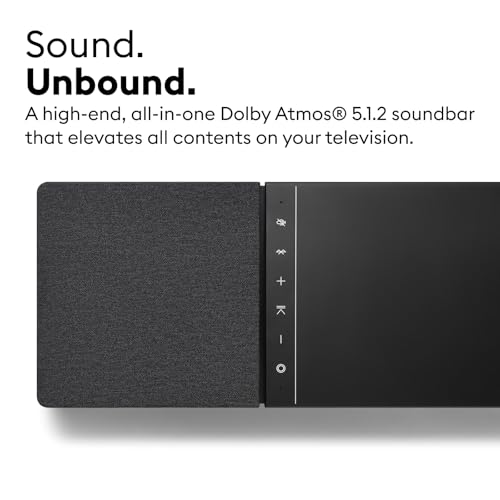
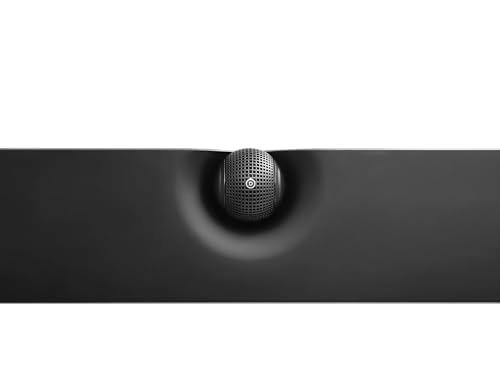
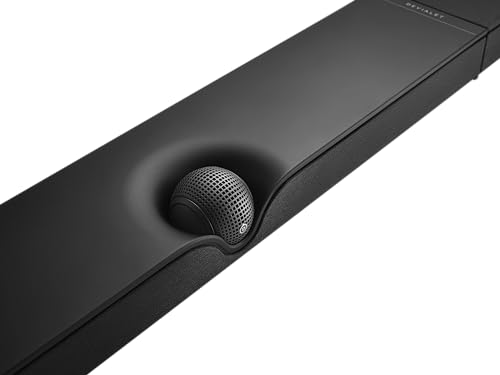
This works remarkably well for overhead effects in Dolby Atmos content. Rain falling from above, aircraft flying overhead, or debris falling around you in action sequences can be surprisingly convincing. The Dione's rotating ORB center channel is particularly clever - it physically rotates to maintain optimal positioning whether the soundbar is sitting on a TV stand or wall-mounted, ensuring dialogue always projects toward the listening position.
However, virtual surround has inherent limitations. It depends heavily on room acoustics and seating position, and it can never fully replicate the precise localization possible with discrete speakers positioned around the room.
The Samsung Q Series doesn't need to rely as heavily on acoustic tricks because it has physical speakers behind you. When rear effects pan from left to right behind your seating position, they actually move between two real speakers rather than being processed approximations. This makes for more convincing surround effects, especially in complex scenes with multiple directional audio elements.
The Samsung system's height effects benefit from having more speakers total - the combination of upfiring drivers on both the main bar and rear speakers creates more opportunities for convincing overhead effects. In Dolby Atmos content with lots of height information, this can result in a more enveloping experience.
At the time of writing, these products occupy very different price segments, which significantly impacts their value proposition for different types of buyers.
The Devialet Dione sits firmly in ultra-premium territory, commanding prices typically associated with high-end audiophile equipment. This positioning makes sense given the engineering involved and the materials used - the aluminum construction, proprietary driver technologies, and sophisticated digital processing represent genuine innovations rather than marketing fluff.
However, that pricing puts it in competition not just with other soundbars, but with dedicated audiophile speakers and amplifiers. For serious music listeners, this comparison becomes relevant because the Dione is genuinely capable of serving as a primary music system in ways that most soundbars simply cannot.
The value proposition becomes clearer when you consider what you're not buying: no separate subwoofer, no rear speakers, no additional cables or power connections, no complex room calibration procedures. For buyers who prioritize simplicity and aesthetics alongside performance, the premium pricing may be justified by the convenience and space savings.
The Samsung Q Series operates in what we might call the "accessible premium" category - significantly more expensive than basic soundbars, but priced to compete with other complete surround systems rather than audiophile equipment. This positioning offers a much more straightforward value proposition: you get a complete 9.1.2 surround system with all the modern format support and convenience features you'd expect from a premium product.
The Samsung approach also offers better upgradeability and customization options. Don't like the bass response? You can potentially upgrade or add subwoofers. Want more surround immersion? Additional rear speakers might be an option. This modularity provides a clearer upgrade path and better long-term value retention.
Both systems include the connectivity options you'd expect from premium products in 2024, but with some important differences that affect real-world usability.
The Devialet Dione focuses on high-quality wireless connectivity and integration with modern streaming workflows. AirPlay 2 support means seamless integration with Apple devices, while Spotify Connect allows direct streaming without using your phone as a middleman. The built-in DAC supports high-resolution audio up to 24-bit/96kHz, making it genuinely capable of high-end music reproduction from digital sources.
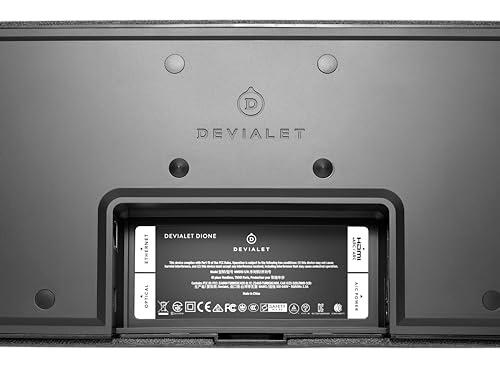
However, the Dione's wired connectivity is surprisingly limited for such an expensive product. You get HDMI eARC and optical digital input, but no additional HDMI inputs for connecting gaming consoles or streaming devices directly. This means everything needs to connect through your TV, which works fine for most setups but limits flexibility.
The Samsung Q Series takes a more comprehensive approach to connectivity, including multiple HDMI inputs with 4K passthrough capabilities. This is particularly valuable for gaming setups where you might want to connect a PlayStation, Xbox, and streaming device directly to the soundbar. The Game Pro mode automatically adjusts audio processing when it detects gaming content, reducing latency and emphasizing directional audio cues that can provide competitive advantages.
Samsung's SmartThings integration also enables more sophisticated smart home automation. The soundbar can potentially adjust its settings based on time of day, automatically switch to night mode when other devices indicate it's bedtime, or coordinate with smart lighting for a more immersive movie-watching experience.
One area where these products diverge significantly is in their support for audio formats, particularly DTS content.
The Devialet Dione supports Dolby Atmos and standard Dolby Digital formats but notably lacks DTS:X support. DTS:X is an alternative to Dolby Atmos that appears on many 4K Blu-rays and some streaming content. While Devialet processes DTS content by converting it to PCM and applying their own spatialization, you lose the object-based audio information that makes DTS:X content special.
For many users, this limitation might not matter - Netflix, Disney+, and most major streaming services primarily use Dolby formats. However, if you have a collection of 4K Blu-rays or frequently rent movies that use DTS:X encoding, this represents a meaningful limitation.
The Samsung Q Series supports both Dolby Atmos and DTS:X natively, ensuring compatibility with virtually any content you might encounter. Given the premium pricing of 4K Blu-rays, having full format support helps protect your investment in physical media.
After evaluating both approaches extensively, clear usage patterns emerge that favor one system over the other.
Choose the Devialet Dione if you prioritize audio quality above all else, particularly for music listening. If your living space has aesthetic constraints that make multiple components impractical, the Dione's all-in-one design provides premium performance without compromising your décor. Music enthusiasts who want a single device that can serve as both their home theater system and primary music playback device will find the Dione uniquely capable in this regard.
The Dione also makes sense for Apple ecosystem users who value seamless integration with their devices. The combination of AirPlay 2, high-resolution audio support, and sophisticated room correction creates an almost plug-and-play experience for iPhone and Mac users.
Choose the Samsung Q Series if you want the most convincing surround sound experience possible at a reasonable price point. Gamers will particularly appreciate the multiple HDMI inputs and specialized gaming modes. If you own a Samsung TV, the Q-Symphony integration provides benefits that would be difficult to replicate with any other soundbar brand.
The Samsung system also makes more sense for households with varied content preferences. The discrete surround speakers excel with action movies and sports, while the comprehensive format support ensures compatibility with any content source you might encounter.
These products represent two fundamentally different philosophies about what premium audio should be, and both approaches have merit depending on your priorities and situation.
The Devialet Dione succeeds brilliantly as an audiophile product that happens to be a soundbar, rather than a soundbar trying to be audiophile equipment. If you value simplicity, aesthetics, and genuine music performance, the premium pricing becomes easier to justify.
The Samsung Q Series delivers a more traditional but comprehensive home theater experience with modern conveniences and smart integration. For most users seeking an upgrade from basic TV audio, it provides better value and more flexibility.
Your choice ultimately depends on whether you prioritize sonic refinement and elegant simplicity, or comprehensive features and authentic surround immersion. Both products excel at what they're designed to do - they're just designed to do different things.
| Devialet Dione Soundbar | Samsung Q Series 9.1.2 Channel Soundbar |
|---|---|
| Channel Configuration - Determines surround sound capabilities and immersion | |
| 5.1.2 channels in single unit | True 9.1.2 channels across multiple components |
| Physical Design - Affects room aesthetics and placement flexibility | |
| All-in-one ultra-slim bar (47.2" x 3" x 6.5") | Multi-component system (soundbar + subwoofer + rear speakers) |
| Total Drivers - More drivers can mean better sound distribution | |
| 17 drivers integrated in soundbar | 17 drivers distributed across all components |
| Bass Solution - Critical for action movies and music impact | |
| 8 integrated aluminum subwoofers, no external sub needed | Dedicated wireless subwoofer with larger enclosure |
| Amplification Technology - Affects sound quality and distortion levels | |
| ADH® (Analog Digital Hybrid) with 950W RMS, 0.001% THD | Traditional amplification with SpaceFit Sound+ calibration |
| Audio Format Support - Determines compatibility with movies and streaming | |
| Dolby Atmos only (no DTS:X support) | Full Dolby Atmos and DTS:X support |
| Connectivity Options - Impacts how many devices you can connect | |
| HDMI eARC + optical only | Multiple HDMI inputs with 4K passthrough + eARC + optical |
| TV Integration Features - Enhances experience with compatible TVs | |
| Universal compatibility with room correction | Q-Symphony technology (optimized for Samsung TVs) |
| Music Performance - Important if soundbar doubles as music system | |
| Audiophile-grade with 24-bit/96kHz DAC and hi-res streaming | Movie-optimized with decent music capabilities |
| Smart Features - Convenience and automation capabilities | |
| AirPlay 2, Spotify Connect, Devialet app control | SmartThings integration, gaming modes, voice assistant support |
| Installation Complexity - Time and effort required for setup | |
| Plug-and-play single unit setup | Multi-component placement and wireless pairing required |
| Expandability - Future upgrade and customization options | |
| Fixed configuration, no expansion possible | Modular system allows component upgrades |
The Devialet Dione is an all-in-one premium soundbar that packs everything into a single sleek unit, while the Samsung Q Series 9.1.2 is a complete multi-component system with a separate subwoofer and rear speakers. The Devialet focuses on audiophile-grade sound quality and minimalist design, whereas the Samsung provides traditional surround sound with discrete speakers positioned around your room.
The Devialet Dione is ideal for small spaces since it's a single ultra-slim unit that doesn't require any additional components. You won't need to find space for a subwoofer or rear speakers, making it perfect for apartments, dorms, or minimalist setups. The Samsung Q Series requires space for multiple components, which can be challenging in smaller rooms.
Yes, both the Devialet Dione and Samsung Q Series 9.1.2 support Dolby Atmos for immersive overhead audio effects. However, the Samsung also supports DTS:X format, while the Devialet only supports Dolby formats. This means the Samsung Q Series offers broader compatibility with different movie and streaming content.
The Devialet Dione excels at music reproduction with its audiophile-grade components, high-resolution audio support up to 24-bit/96kHz, and sophisticated acoustic engineering. It's designed to serve as both a home theater system and a premium music player. The Samsung Q Series is optimized primarily for movies and TV, though it handles music adequately.
The Devialet Dione uses eight integrated aluminum subwoofers that deliver surprisingly deep bass down to 24Hz without requiring a separate subwoofer. The Samsung Q Series 9.1.2 includes a dedicated wireless subwoofer that can potentially produce more overwhelming bass impact due to its larger size and dedicated positioning in your room.
The Samsung Q Series 9.1.2 typically offers better value, providing a complete 9.1.2 surround system with all modern features at a fraction of the cost of the Devialet Dione. The Devialet commands premium pricing for its luxury engineering and audiophile-grade performance, making it a significant investment.
The Samsung Q Series offers multiple HDMI inputs with 4K passthrough, making it easy to connect gaming consoles, streaming devices, and other sources directly. The Devialet Dione only has HDMI eARC and optical inputs, so gaming consoles must connect through your TV rather than directly to the soundbar.
The Samsung Q Series 9.1.2 is better suited for large home theaters thanks to its discrete rear speakers that create authentic surround effects and fill bigger spaces more effectively. The Devialet Dione uses virtual surround processing, which works well in medium-sized rooms but may not provide the same room-filling presence in very large spaces.
Both soundbars work with any TV brand, but the Samsung Q Series offers special Q-Symphony technology that provides enhanced integration with Samsung TVs, using the TV's built-in speakers alongside the soundbar for expanded sound. The Devialet Dione works universally with all TV brands through HDMI eARC or optical connections.
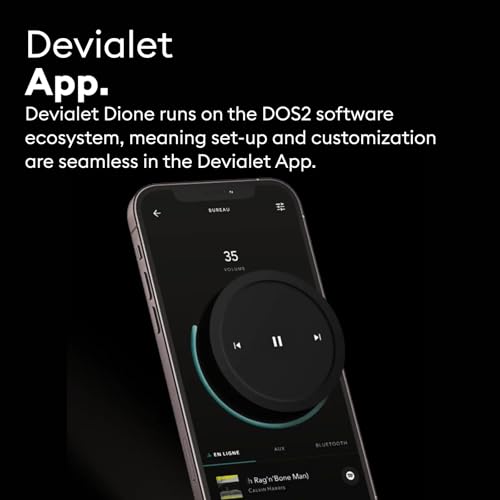
The Devialet Dione offers the simplest setup since it's a single unit that you just connect and configure through the app. The Samsung Q Series 9.1.2 requires positioning and connecting multiple components including the wireless subwoofer and rear speakers, making installation more complex but potentially more customizable.
The Devialet Dione excels with high-quality wireless streaming, supporting AirPlay 2, Spotify Connect, and high-resolution audio formats. The Samsung Q Series offers broader smart home integration through SmartThings, built-in voice assistants, and gaming-specific features, making it more versatile for different household needs.
Choose the Samsung Q Series 9.1.2 if you want the most authentic surround sound experience with discrete speakers and comprehensive format support. Choose the Devialet Dione if you prioritize premium sound quality, elegant design, and exceptional music performance in a simple all-in-one package. Your decision depends on whether you value traditional surround immersion or audiophile-grade refinement.
We've done our best to create useful and informative comparisons to help you decide what product to buy. Our research uses advanced automated methods to create this comparison and perfection is not possible - please contact us for corrections or questions. These are the sites we've researched in the creation of this article: rtings.com - crutchfield.com - devialet.com - ooberpad.com - bhphotovideo.com - kjwestone.co.uk - whathifi.com - devialet.com - devialet.com - sound-advice.online - kjwestone.co.uk - device.report - tmraudio.com - devialet.com - devialetchat.com - projectorscreen.com - soundandvision.com - bestbuy.com - youtube.com - av.com - audiofi.ca - devialet.com - blog.son-video.com - audioconnection.com.au - baybloorradio.com - cdn.abicart.com - smarthomesounds.co.uk - e-piphany.co.za - cloneyaudio.com - devialet.com - catalog.asbis.ee - av.com - soundandvision.com - youtube.com - comparisontabl.es - rtings.com - samsung.com - markselectrical.co.uk - techradar.com - walmart.com - samsung.com - samsung.com - youtube.com - samsung.com - biancos.com - crutchfield.com - samsung.com

Privacy Policy
Terms and Conditions - Affiliate Policy
Home Security
© Copyright 2008-2026.
11816 Inwood Rd #1211, Dallas, TX 75244