








If you're tired of straining to hear dialogue over your TV's tinny speakers, you're not alone. The built-in speakers on most modern TVs are frankly terrible – they're thin, lack bass, and make everything sound like it's coming from inside a cardboard box. That's where soundbars come in, and they've become the go-to solution for anyone wanting better audio without the complexity of a full surround sound system.
Today we're comparing two very different approaches to solving your TV audio problems: the Ultimea Poseidon M60 Boom and the Samsung Q Series 9.1.2 Channel Soundbar. These represent fundamentally different philosophies about what makes great home theater sound, and understanding these differences will help you make the right choice for your setup.
Before diving into specifics, let's talk about what actually matters when choosing a soundbar. The most important factor is channel configuration – this tells you how many separate audio channels the system can handle. Think of channels like different instruments in an orchestra: the more you have, the richer and more detailed the sound becomes.
A 5.1 system has five main channels (front left, center, front right, and two surrounds) plus one subwoofer channel for bass. A 9.1.2 system adds four more channels and two "height" channels that fire sound upward to bounce off your ceiling, creating the illusion that helicopters are actually flying overhead.
The second crucial factor is physical setup complexity. Some soundbars put everything in one sleek bar, while others include separate rear speakers and subwoofers that need to be positioned around your room. More components usually mean better sound but also more work to set up properly.
Audio processing is equally important but less visible. Modern soundbars use digital signal processors (DSPs) – essentially specialized computers – to analyze incoming audio and optimize it in real-time. The quality of this processing often separates good soundbars from great ones.
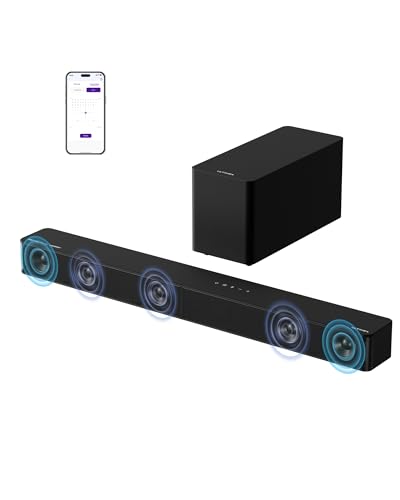
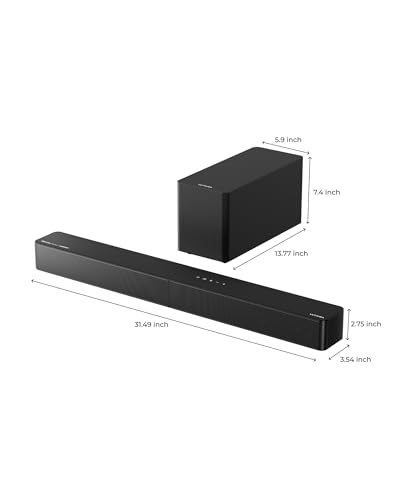
The Ultimea Poseidon M60 Boom, released in 2024, represents what I'd call the "intelligent simplicity" approach. It's a 5.1 system that packs all five main channels into a cleverly designed modular soundbar that splits into two pieces for easier setup, then connects together. The system includes a dedicated wooden subwoofer but achieves surround sound through advanced digital processing rather than physical rear speakers.
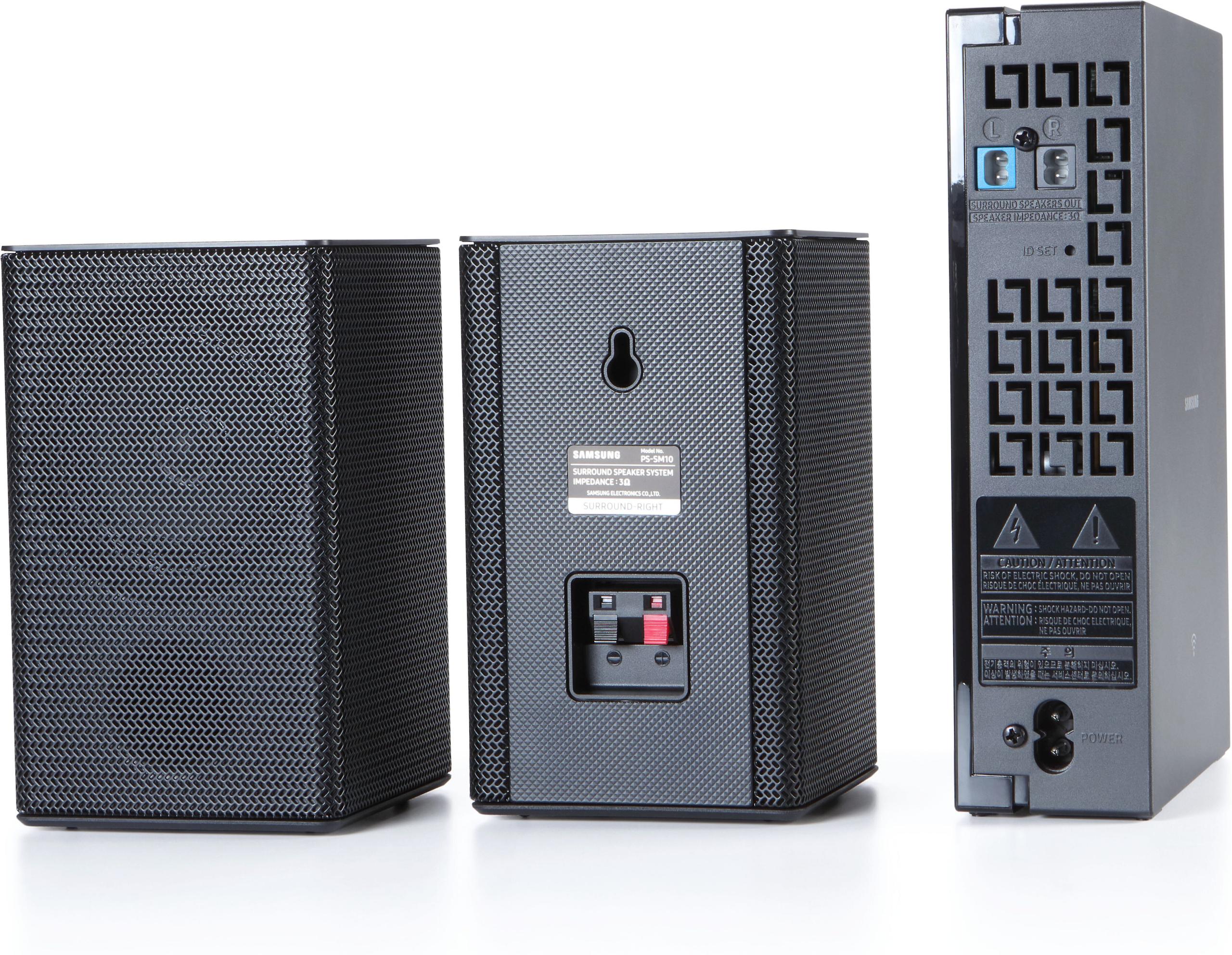
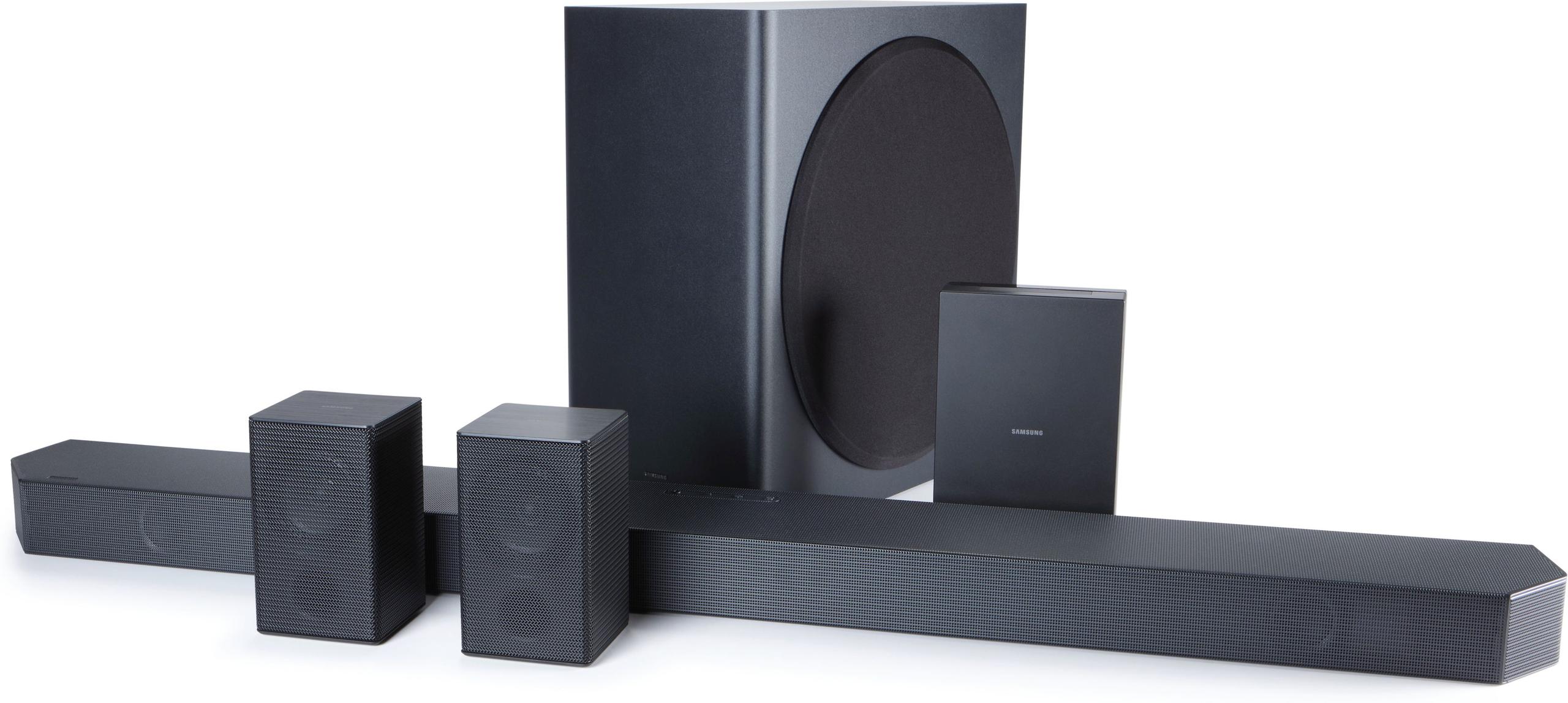
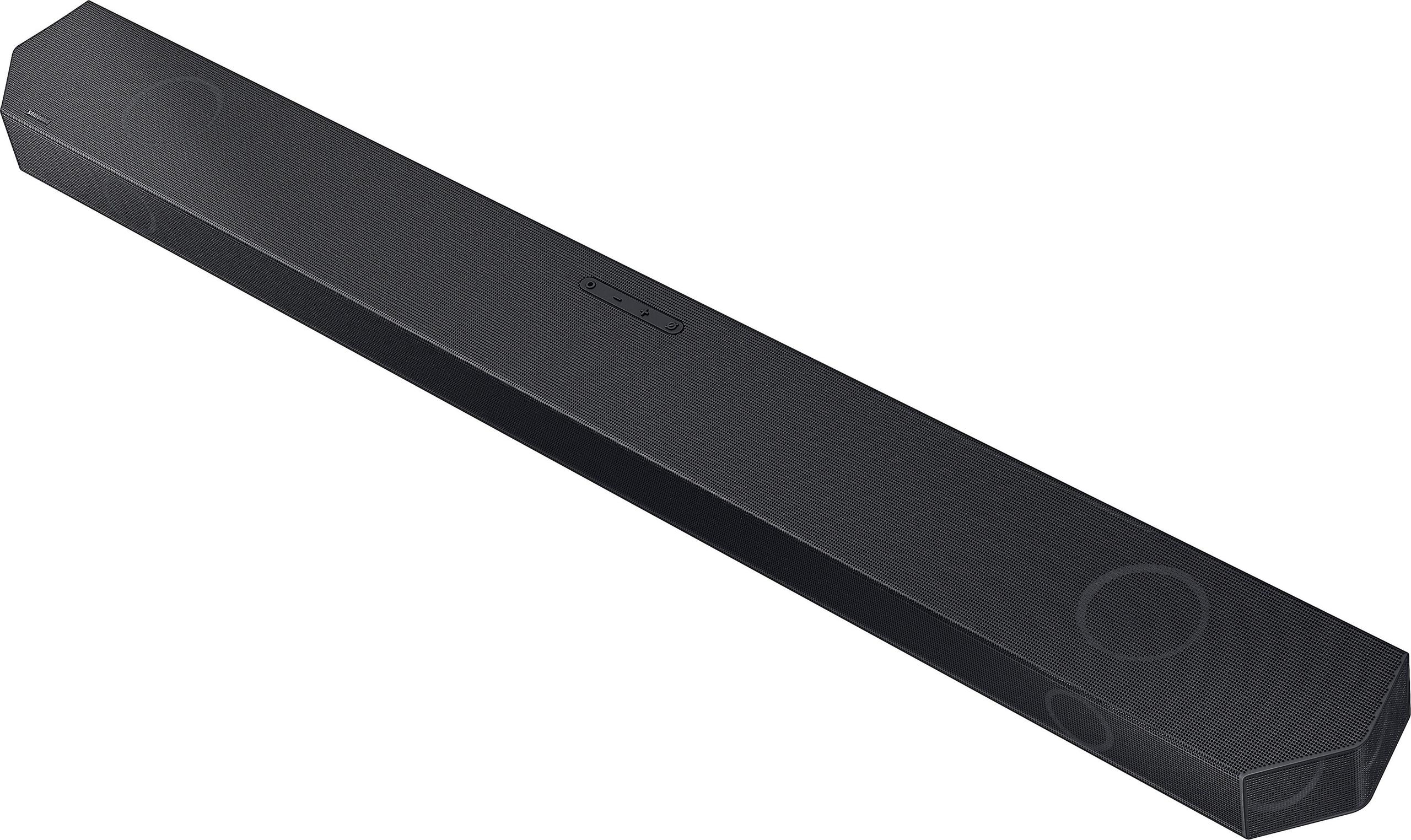
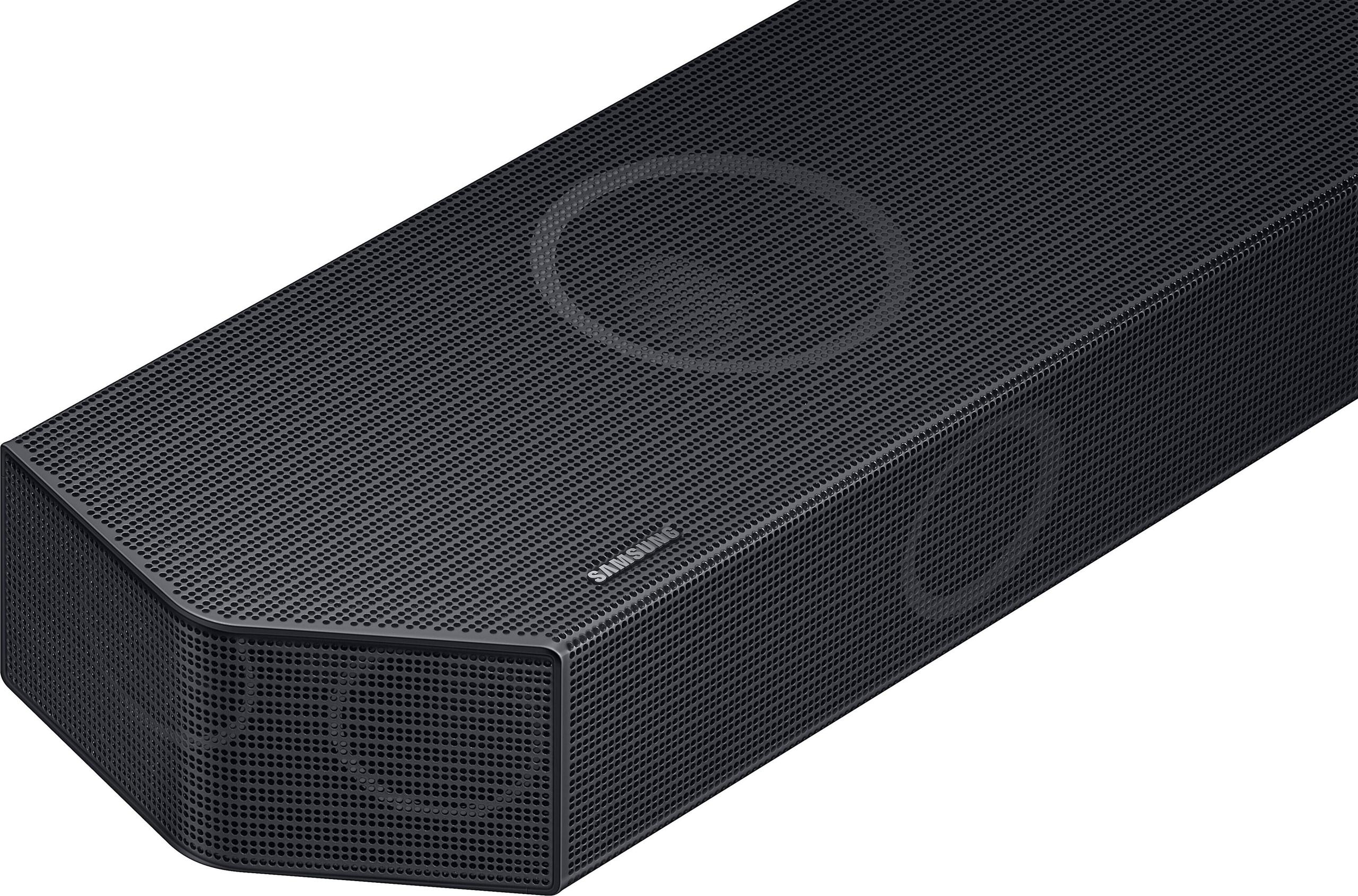
The Samsung Q Series 9.1.2, also from 2024, takes the traditional premium route with 17 individual speakers spread across multiple components. This includes the main soundbar, a wireless subwoofer, and two rear satellite speakers that create genuine surround sound by physically placing speakers behind your listening position.
These different approaches reflect a fundamental choice: do you want the convenience of a simple setup with surprisingly sophisticated sound, or are you willing to deal with more complexity to achieve the most authentic surround sound experience possible?
The Ultimea M60 Boom delivers 340W of peak power, which might not sound like much compared to some systems, but it's how that power is used that matters. The system employs triple-core DSP technology – that's three separate processors running at different speeds to handle different aspects of the audio. Two cores run at 800MHz while one operates at 600MHz, providing over 2000 MIPS (million instructions per second) of processing power.
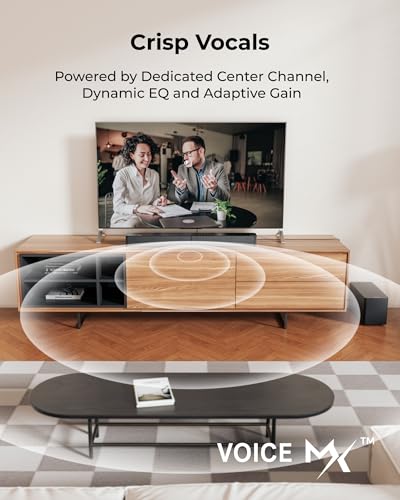
This computational muscle enables something called VoiceMX technology, which dynamically enhances the 300Hz–3kHz frequency range where human voices live. In practical terms, this means dialogue stays crystal clear even when explosions are shaking your windows. Based on our research into user experiences, this dialogue clarity is one of the Ultimea's standout features.
The Samsung system takes a different approach with its discrete center channel – a dedicated speaker solely responsible for dialogue. This physical separation means voices don't have to compete with music and sound effects for the same driver, resulting in exceptional speech clarity. Samsung's Active Voice Amplifier (AVA) takes this further by automatically adjusting dialogue levels based on background noise, ensuring you can follow conversations even during quiet late-night viewing.
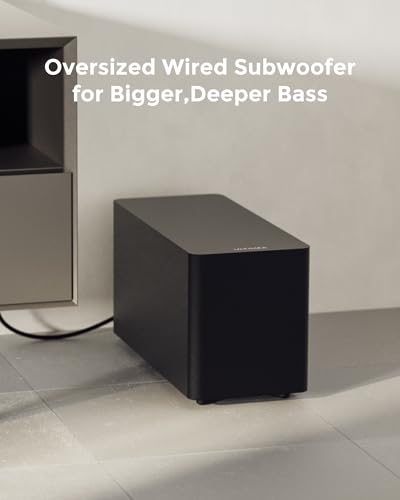
Bass response separates mediocre soundbars from ones that can truly fill a room. The Ultimea M60 Boom employs BassMX technology with a 5.25-inch driver capable of 16mm excursion – that's how far the speaker cone can move back and forth. More excursion generally means deeper, more powerful bass. The wooden subwoofer cabinet isn't just for looks; wood resonates differently than plastic, providing warmer, more natural-sounding bass.
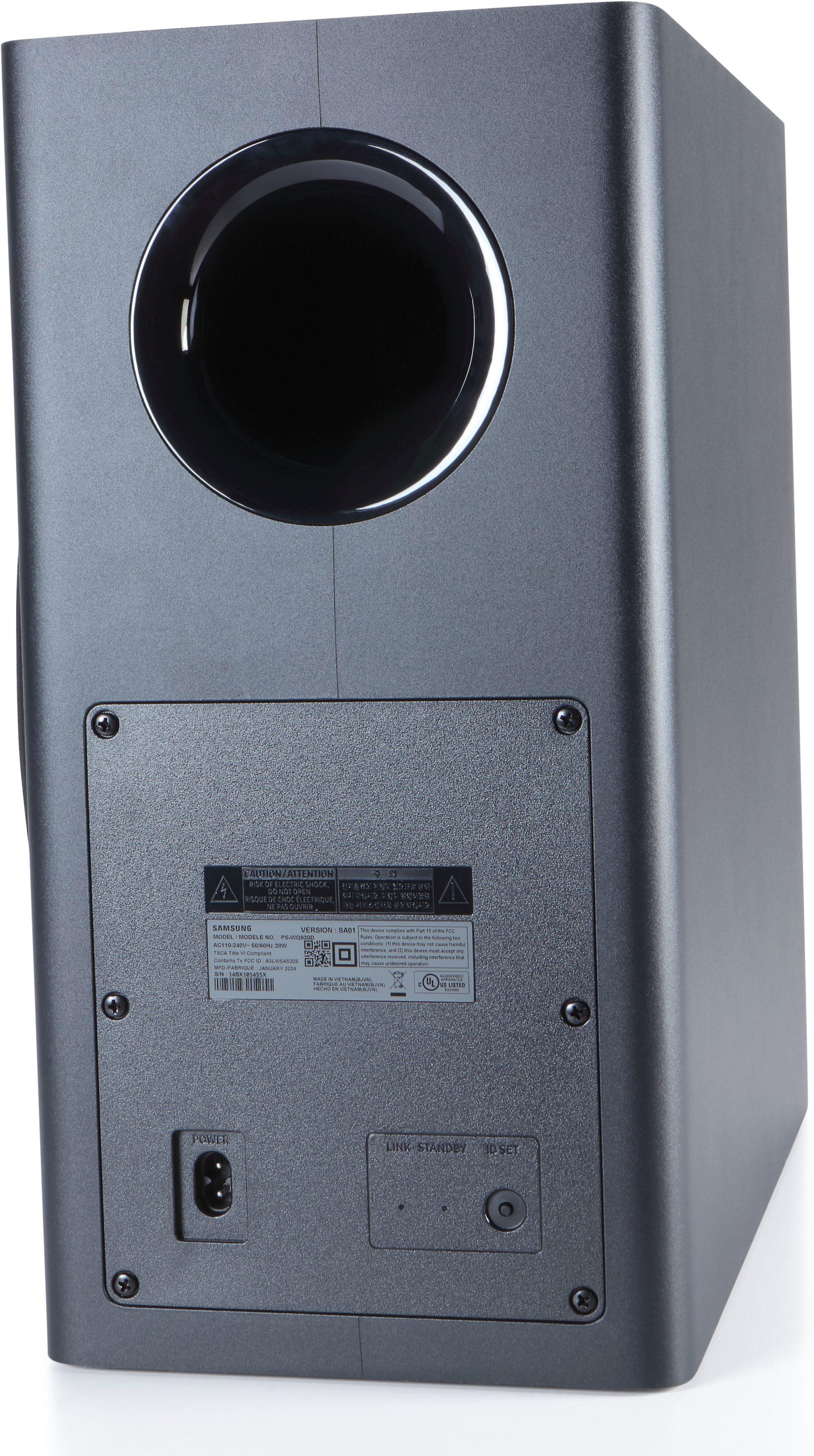
The Samsung system counters with Auto Sub EQ, a smart feature that uses a microphone in the subwoofer to analyze your room's acoustics and automatically adjust bass response. This is particularly valuable because subwoofer placement dramatically affects bass quality – put it in the wrong corner, and you might get boomy, uneven bass. Samsung's system continuously monitors and corrects for these issues.
From our evaluation of user feedback, both systems deliver impressive bass for their respective categories, but they serve different preferences. The Ultimea provides more raw impact and punch, while the Samsung offers more refined, room-adapted bass response.
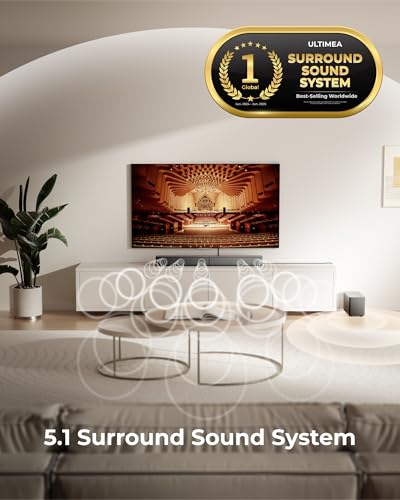
Here's where these systems diverge most dramatically. The Ultimea M60 Boom achieves 5.1 surround sound through virtualization – using advanced algorithms to create the illusion of sounds coming from behind you even though all speakers face forward. It's similar to how noise-canceling headphones can create spatial effects using just two drivers.
This approach has real advantages: no rear speakers to place or wire, instant setup, and surprisingly convincing results for most content. Based on expert reviews, the Ultimea's virtual surround works well for movies and gaming, though it can't quite match the precision of physical rear speakers.
The Samsung 9.1.2 uses actual rear speakers positioned behind your listening area, creating what audio engineers call discrete channels. When a helicopter flies from screen left to behind your right shoulder, you're hearing different speakers activate in sequence, creating genuine spatial movement. The system also includes upfiring drivers that bounce sound off your ceiling for height effects.
This physical approach provides more accurate spatial positioning, but it requires careful speaker placement and room acoustics that support ceiling reflections. In rooms with vaulted or textured ceilings, the height effects may not work as intended.
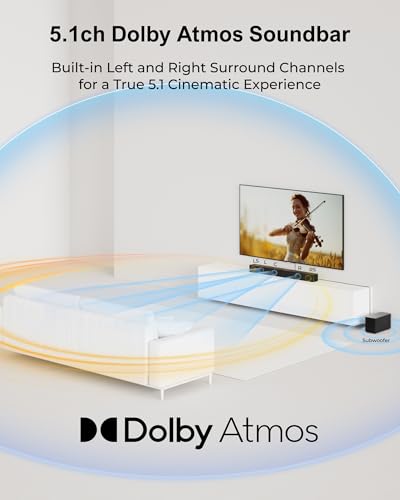
Both systems support Dolby Atmos, the latest surround sound format that adds height information to create three-dimensional soundscapes. However, they implement it very differently.
The Ultimea M60 Boom processes Atmos through sophisticated upmixing algorithms that analyze the incoming audio and redistribute it across available channels. While this doesn't provide true overhead effects, it creates a noticeably more expansive soundstage compared to traditional stereo or basic surround sound.
The Samsung system includes dedicated upfiring speakers that physically fire sound toward your ceiling. When properly calibrated with compatible ceiling surfaces, this creates genuine overhead effects – you'll hear raindrops falling from above or aircraft passing overhead with remarkable realism.
Based on expert evaluations, the Samsung's Atmos implementation is more convincing when it works well, but the Ultimea's approach is more consistent across different room types.
Setting up the Ultimea Poseidon M60 Boom is refreshingly straightforward. The modular soundbar arrives in two pieces that twist together – no tools required. Connect the wired subwoofer, plug in the HDMI cable, and you're essentially done. Most users report having the system operational within minutes.
The Samsung Q Series 9.1.2 demands more investment upfront. You'll need to position rear speakers optimally (typically 2-3 feet behind and slightly above ear level), run or hide cables, and work through the room calibration process. This isn't necessarily difficult, but it requires planning and potentially some furniture rearrangement.
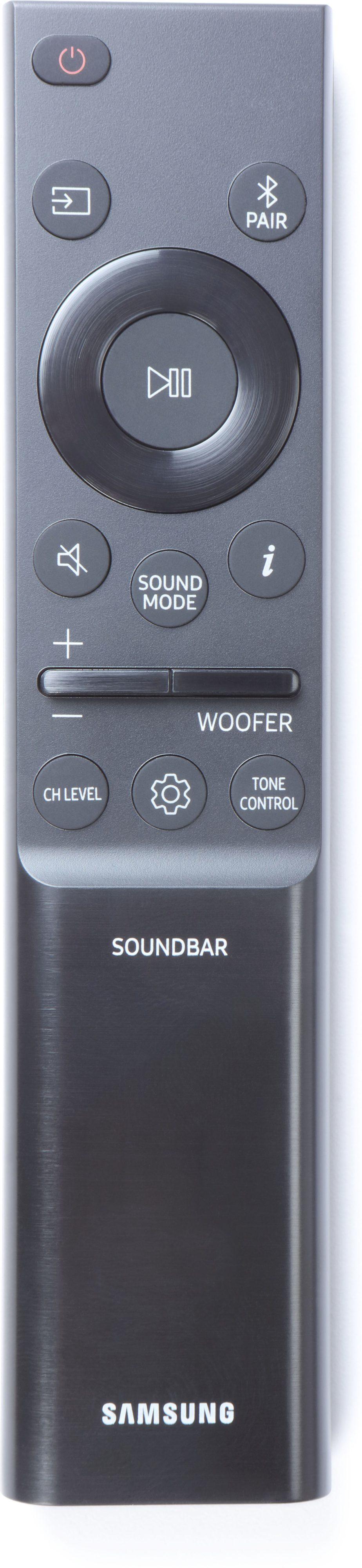
Both systems offer app-based control, but with different focuses. The Ultimea app provides six preset EQ modes (Movie, Music, Voice, Sport, Game, Night) plus manual three-band EQ adjustment. The interface prioritizes simplicity – you can quickly switch between watching Netflix and playing games with preset optimizations for each.
The Samsung app offers more granular control with a seven-band graphic EQ and advanced features like SpaceFit Sound+, which uses built-in microphones to analyze your room and automatically adjust the sound profile. If you own a compatible Samsung TV, Q-Symphony technology allows the TV's speakers to work alongside the soundbar for an even fuller soundstage.
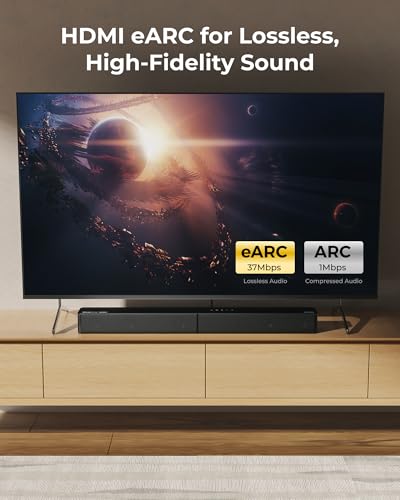
The Ultimea M60 Boom focuses on essential connections done well. HDMI eARC handles lossless audio from your TV, while Bluetooth 5.4 provides the latest wireless standard for music streaming with minimal latency – crucial for gaming or watching videos on your phone.
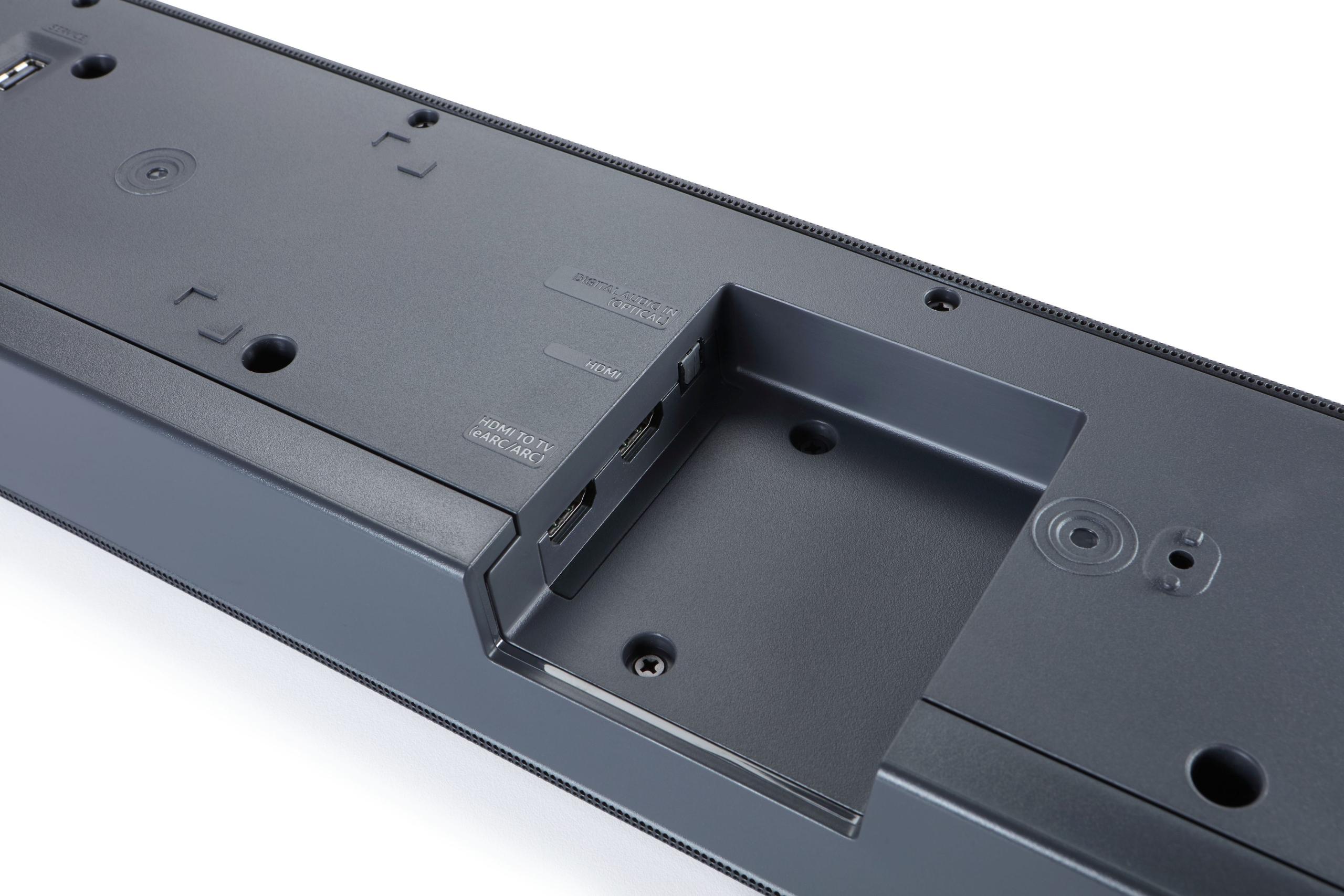
The Samsung system offers more comprehensive connectivity, including HDMI 2.1 input with 4K@120Hz passthrough capability. This means you can connect a gaming console directly to the soundbar and still get full 4K resolution at high refresh rates – important for PlayStation 5 or Xbox Series X gaming.
At the time of writing, these systems occupy different price segments, with the Ultimea M60 Boom positioned as a premium budget option and the Samsung Q Series 9.1.2 sitting in the mid-to-upper tier.
The Ultimea delivers exceptional value by focusing resources on audio processing and driver quality rather than complex multi-component designs. Features like triple-core DSP processing and BassMX technology typically appear in much more expensive systems. For users who want a significant audio upgrade without complexity or high cost, it's hard to beat.
The Samsung justifies its higher price through authentic surround sound capabilities and advanced features like automatic room correction. If you're building a dedicated home theater or have a large living space where proper surround sound makes sense, the additional investment pays dividends in immersion and long-term satisfaction.
For a dedicated home theater room, the Samsung Q Series 9.1.2 is the more appropriate choice. Its discrete channels create the enveloping soundfield that makes movies truly cinematic. The ability to precisely position sounds in three-dimensional space enhances everything from subtle atmospheric details to explosive action sequences.
However, if your "home theater" is really a living room that serves multiple purposes, the Ultimea M60 Boom might be more practical. Its compact design doesn't dominate the space, and the virtual surround sound provides satisfying immersion without requiring rear speaker placement that might interfere with normal room use.
Both systems represent 2024 technology standards, incorporating several years of refinement in DSP processing and wireless connectivity. The Ultimea's Bluetooth 5.4 support and advanced virtualization algorithms reflect the latest developments in compact audio systems, while the Samsung's SpaceFit Sound+ and HDMI 2.1 features prepare it for emerging display technologies.
Since 2020, soundbar technology has particularly advanced in room correction algorithms and wireless audio quality. Both systems benefit from these improvements, though they apply them differently based on their design philosophies.
Choose the Ultimea Poseidon M60 Boom if you want the best audio improvement with minimal effort. It's ideal for apartments, smaller living rooms, or anyone who prioritizes simplicity without sacrificing sound quality. The advanced DSP processing and excellent dialogue clarity make it particularly good for TV and movie watching, while Bluetooth 5.4 ensures solid music streaming performance.
The Samsung Q Series 9.1.2 makes sense when you have space for proper surround speaker placement and want authentic multi-channel audio. It's the better choice for larger rooms, dedicated home theaters, or situations where you frequently watch action movies and want maximum immersion. The additional setup complexity pays off in superior spatial audio reproduction.
Both systems represent solid engineering approaches to home audio improvement. The Ultimea proves that sophisticated audio processing can deliver impressive results in a simple package, while the Samsung demonstrates that traditional surround sound principles still matter when implemented with modern technology. Your choice should depend on your space, setup preferences, and how much you value authentic surround sound versus convenient simplicity.
| Ultimea Poseidon M60 Boom 5.1 Soundbar | Samsung Q Series 9.1.2 Channel Soundbar |
|---|---|
| Channel Configuration - Determines surround sound authenticity and immersion quality | |
| 5.1 channels (all integrated in main bar) | 9.1.2 channels with discrete rear and height speakers |
| Physical Setup - Impacts installation complexity and room flexibility | |
| Modular 2-piece soundbar + wired subwoofer | Multi-component system with wireless sub and rear satellites |
| Surround Sound Method - Affects how convincing the surround experience feels | |
| Virtual surround through advanced DSP processing | Physical surround with dedicated rear speaker placement |
| Peak Power Output - Influences maximum volume and dynamic range capability | |
| 340W total system power | Higher power output across 17 individual speakers |
| Dolby Atmos Implementation - Determines overhead sound effect quality | |
| Virtualized through sophisticated upmixing algorithms | True height channels with dedicated upfiring drivers |
| Bass Technology - Affects low-frequency impact and room-filling capability | |
| BassMX with 5.25" driver, 16mm excursion, wooden cabinet | Auto Sub EQ with wireless subwoofer and room correction |
| Smart Features - Influences daily usability and customization options | |
| ULTIMEA app with 6 presets + 3-band manual EQ | 7-band graphic EQ, SpaceFit Sound+, Q-Symphony TV integration |
| Connectivity Options - Determines compatibility with modern devices and gaming | |
| HDMI eARC, Bluetooth 5.4, optical, USB, AUX | HDMI eARC + 2.1 input with 4K@120Hz passthrough, Wi-Fi, wireless Dolby Atmos |
| Dialogue Clarity Technology - Critical for movie and TV watching experience | |
| VoiceMX vocal enhancement (300Hz-3kHz range optimization) | Discrete center channel + Active Voice Amplifier with background noise adaptation |
| Room Adaptation - Affects how well the system works in different spaces | |
| Manual EQ adjustment via app | SpaceFit Sound+ automatic room analysis and calibration |
| Setup Time - Real-world consideration for getting optimal sound quickly | |
| Minutes (twist-together bar + plug in subwoofer) | 30-60 minutes (rear speaker positioning + calibration process) |
| Best For - Target user and usage scenario | |
| Smaller rooms, renters, simple setup priority, excellent value | Larger rooms, dedicated home theaters, authentic surround sound priority |
The Ultimea Poseidon M60 Boom is better suited for small rooms due to its compact, integrated design. All speakers are housed within the main soundbar unit, eliminating the need for rear speaker placement that might not be practical in smaller spaces. The virtual surround sound technology still provides an immersive experience without requiring optimal speaker positioning around the room.
The Samsung Q Series 9.1.2 delivers superior surround sound with its 9.1.2 channel configuration and physical rear speakers. This system creates authentic surround effects by placing actual speakers behind your listening position, while the Ultimea M60 Boom relies on virtual surround processing. For true surround sound immersion, the Samsung system is the clear winner.
The Ultimea Poseidon M60 Boom is significantly easier to set up. The modular soundbar pieces twist together in seconds, and you only need to connect the wired subwoofer. Most users can have it running within minutes. The Samsung Q Series 9.1.2 requires positioning rear speakers, running cables, and completing room calibration, which can take 30-60 minutes.
Both soundbars excel at dialogue clarity but use different approaches. The Samsung system has a dedicated center channel speaker solely for dialogue, while the Ultimea M60 Boom uses VoiceMX technology to enhance the vocal frequency range. Both deliver excellent speech clarity, with the Samsung having a slight edge due to its discrete center channel.
The Ultimea Poseidon M60 Boom provides more impactful bass with its BassMX technology and wooden subwoofer cabinet. The 5.25-inch driver with 16mm excursion delivers punchy, room-filling low frequencies. The Samsung system offers more refined bass with automatic room correction, but the Ultimea wins for pure bass impact and depth.
The Samsung Q Series 9.1.2 supports a wider range of audio formats including Dolby Atmos, DTS:X, and various wireless audio standards. It also features HDMI 2.1 with 4K@120Hz passthrough for gaming. The Ultimea M60 Boom supports essential formats including Dolby Atmos and offers Bluetooth 5.4 connectivity, but has fewer overall format options.
The Samsung Q Series 9.1.2 is better for gaming due to its HDMI 2.1 input with 4K@120Hz passthrough capability, allowing direct connection of gaming consoles. The discrete surround speakers also provide better directional audio cues. However, the Ultimea system offers ultra-low latency Bluetooth 5.4 and dedicated Game mode for solid gaming performance.
The Ultimea Poseidon M60 Boom offers exceptional value by delivering premium features like triple-core DSP processing and advanced bass technology at a lower price point. The Samsung system provides better overall performance but at a higher cost. For budget-conscious buyers seeking significant audio improvement, the Ultimea is the better value choice.
The Samsung Q Series 9.1.2 is better suited for large rooms due to its higher total power output, discrete rear speakers, and ability to create authentic surround sound across wider listening areas. The physical speaker separation ensures consistent surround effects throughout larger spaces, while the Ultimea M60 Boom works best in smaller to medium-sized rooms.
Both systems offer comprehensive app control, but serve different needs. The Ultimea system provides user-friendly control with six preset modes and simple EQ adjustment. The Samsung soundbar offers more advanced features like SpaceFit Sound+ room correction and Q-Symphony TV integration, making it more sophisticated but potentially more complex to navigate.
For dedicated home theater use, the Samsung Q Series 9.1.2 is the superior choice. Its true 9.1.2 channel configuration with physical rear and height speakers creates authentic cinematic immersion. The discrete channels provide precise sound positioning that enhances movie watching. The Ultimea M60 Boom still delivers excellent movie sound but through virtual processing rather than true surround placement.
Choose the Ultimea Poseidon M60 Boom if you want excellent sound quality with simple setup, have a smaller room, or prioritize value and convenience. Select the Samsung Q Series 9.1.2 if you have a large room or dedicated home theater space, want authentic surround sound, and don't mind the more complex setup process for superior audio performance.
We've done our best to create useful and informative comparisons to help you decide what product to buy. Our research uses advanced automated methods to create this comparison and perfection is not possible - please contact us for corrections or questions. These are the sites we've researched in the creation of this article: ultimea.com - ultimea.com - youtube.com - bestbuy.com - youtube.com - avsforum.com - youtube.com - manuals.plus - youtube.com - device.report - ultimea.com - ultimea.de - community.ultimea.com - ultimea.com - community.ultimea.com - ultimea.com - youtube.com - aliexpress.com - ultimea.com - rtings.com - samsung.com - markselectrical.co.uk - techradar.com - walmart.com - samsung.com - samsung.com - youtube.com - samsung.com - biancos.com - crutchfield.com - samsung.com

Privacy Policy
Terms and Conditions - Affiliate Policy
Home Security
© Copyright 2008-2026.
11816 Inwood Rd #1211, Dallas, TX 75244