

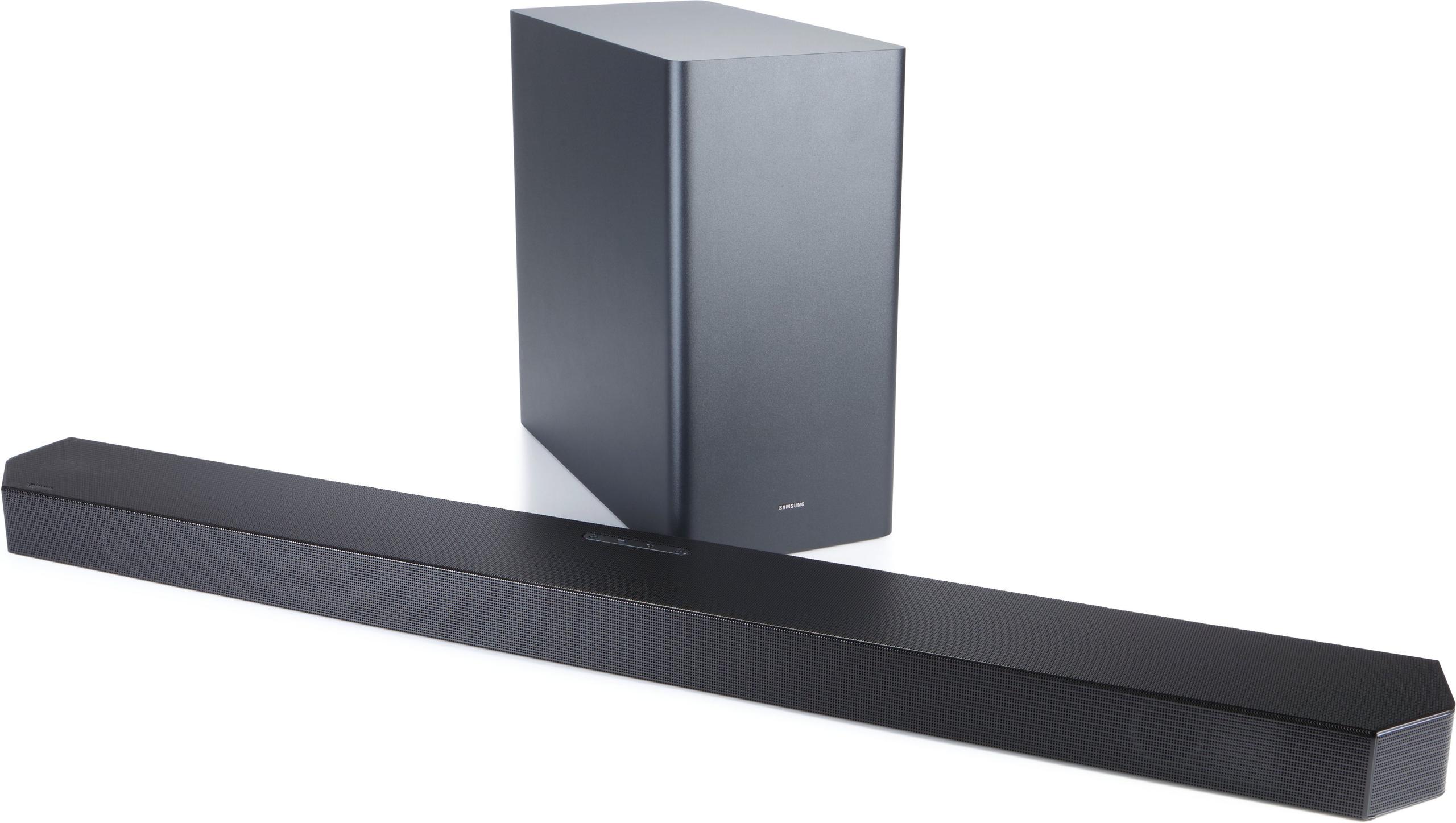
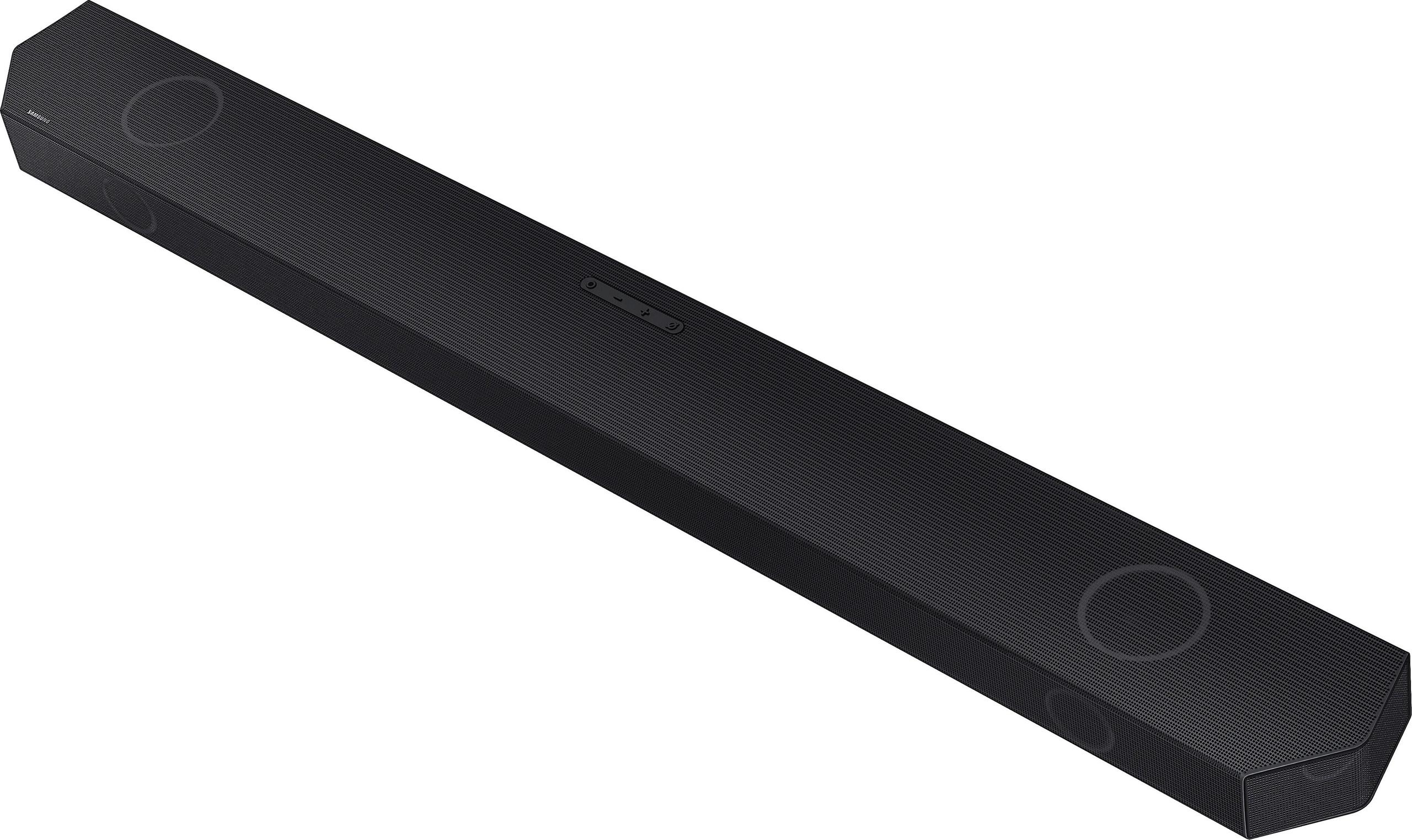
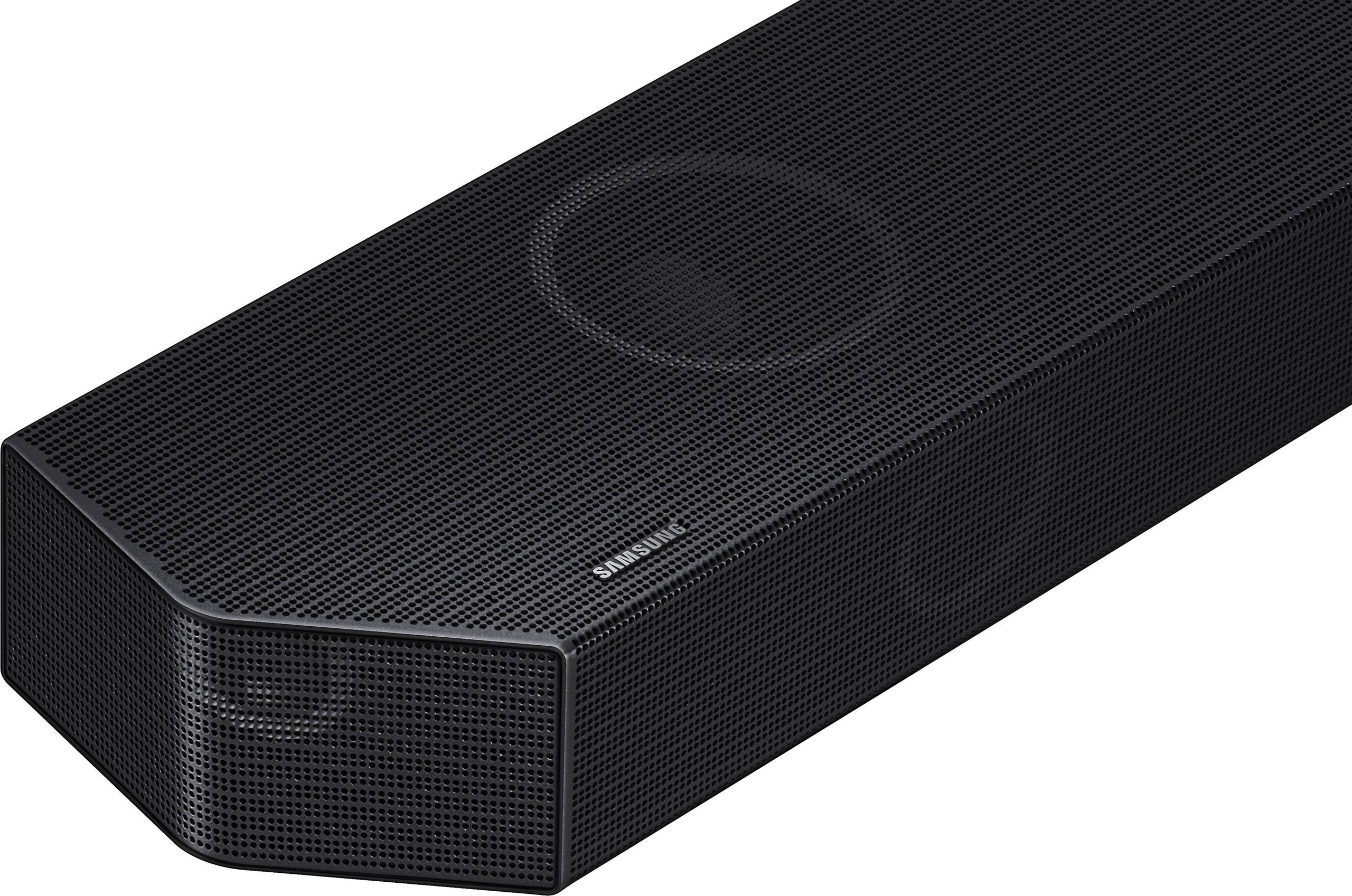









When your TV's built-in speakers just aren't cutting it anymore, you're probably looking at soundbars as the most practical way to dramatically improve your audio experience. Samsung has dominated this space for years, and their 2024 lineup includes two particularly compelling options that represent different approaches to home audio: the Samsung HW-Q800D 5.1.2 Channel Soundbar and the Samsung Q Series 9.1.2 Channel Soundbar.
Both of these soundbars were released in 2024 as part of Samsung's latest generation, building on years of refinement in their audio processing and wireless technology. The question isn't whether either will sound better than your TV speakers—they absolutely will. The real question is which one matches your space, budget, and audio ambitions.
Before we dive into comparing these specific models, it's worth understanding what makes today's soundbars so much better than the simple stereo bars of just a few years ago. The biggest game-changer has been Dolby Atmos support, which adds height information to audio tracks. Instead of sound just coming from left, right, and center, Atmos can place sounds above you—think of a helicopter flying overhead in a movie, or rain falling from the sky.
The numbers in soundbar names (like 5.1.2 or 9.1.2) tell you exactly what you're getting. The first number represents ear-level channels, the second is subwoofers (almost always just one), and the third indicates height channels that fire sound upward to bounce off your ceiling. More channels generally mean more precise sound placement and better immersion, but they also mean higher costs and more complexity.
Modern soundbars also pack sophisticated digital signal processing (DSP) that can analyze your room's acoustics and adjust the sound accordingly. This technology has improved dramatically in recent years, making setup much more automatic than the manual tweaking required by older systems.
The Samsung HW-Q800D represents the "sweet spot" approach—delivering most of the benefits of premium audio without the complexity or cost of a full surround system. At around $500-700, it's positioned as a significant upgrade that most people can justify and easily set up.
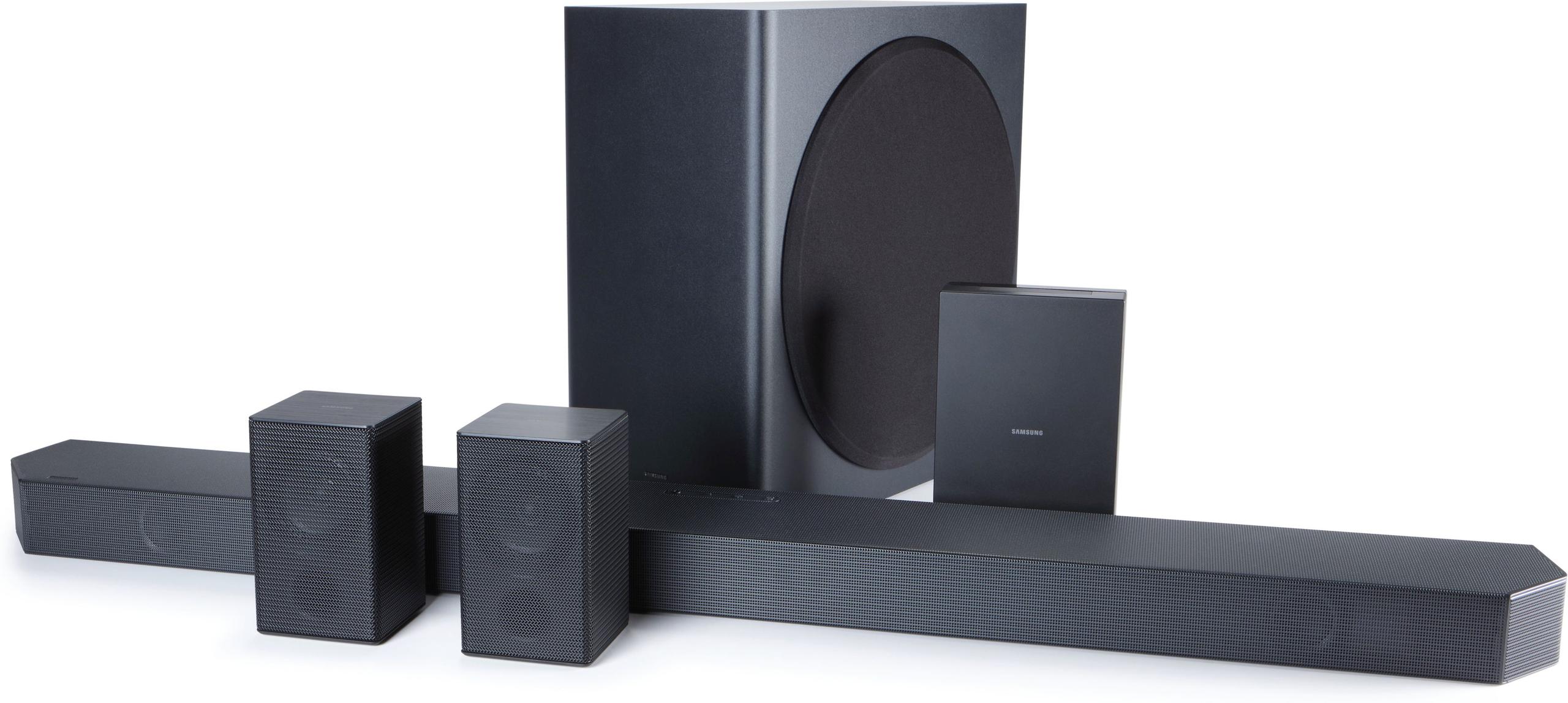
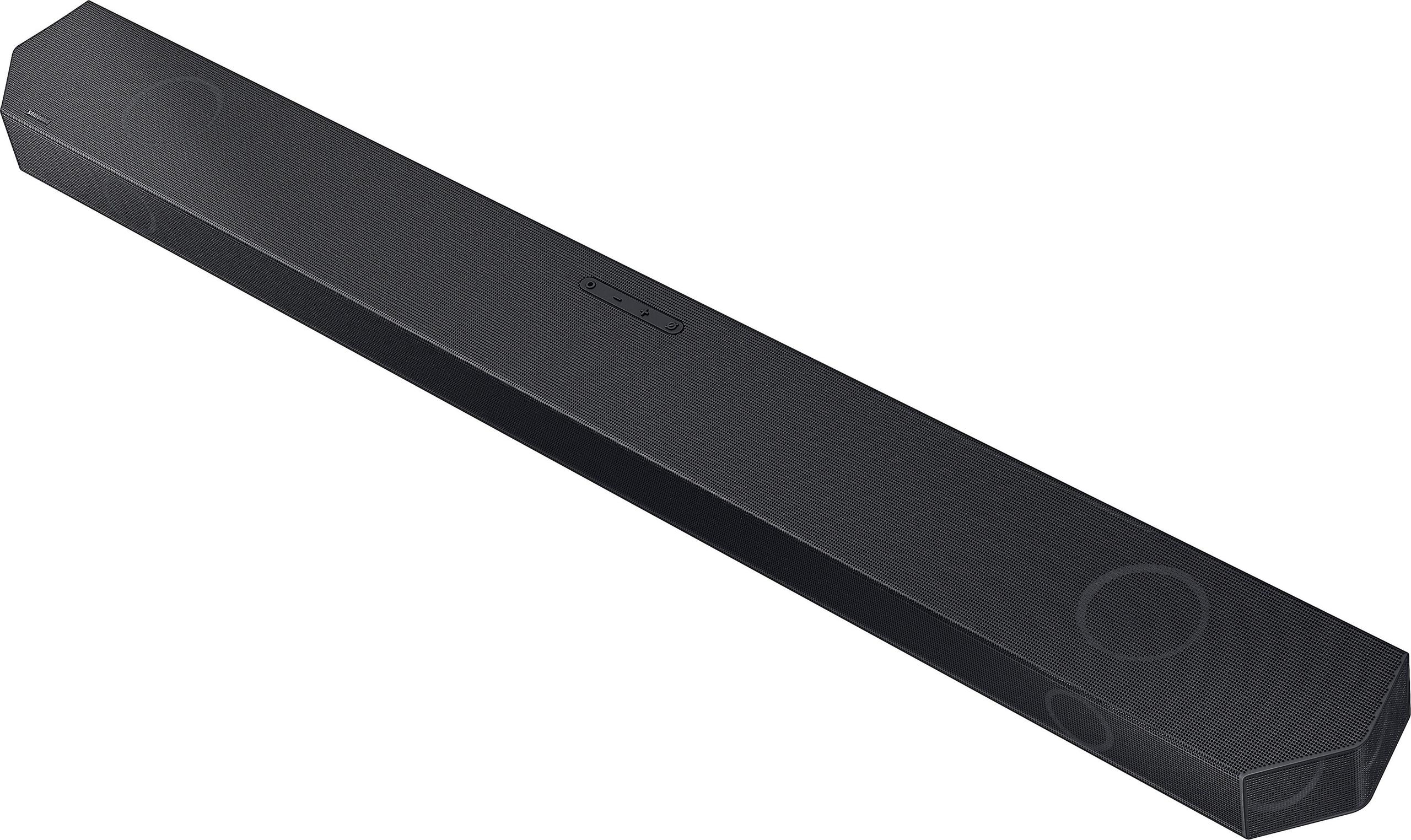
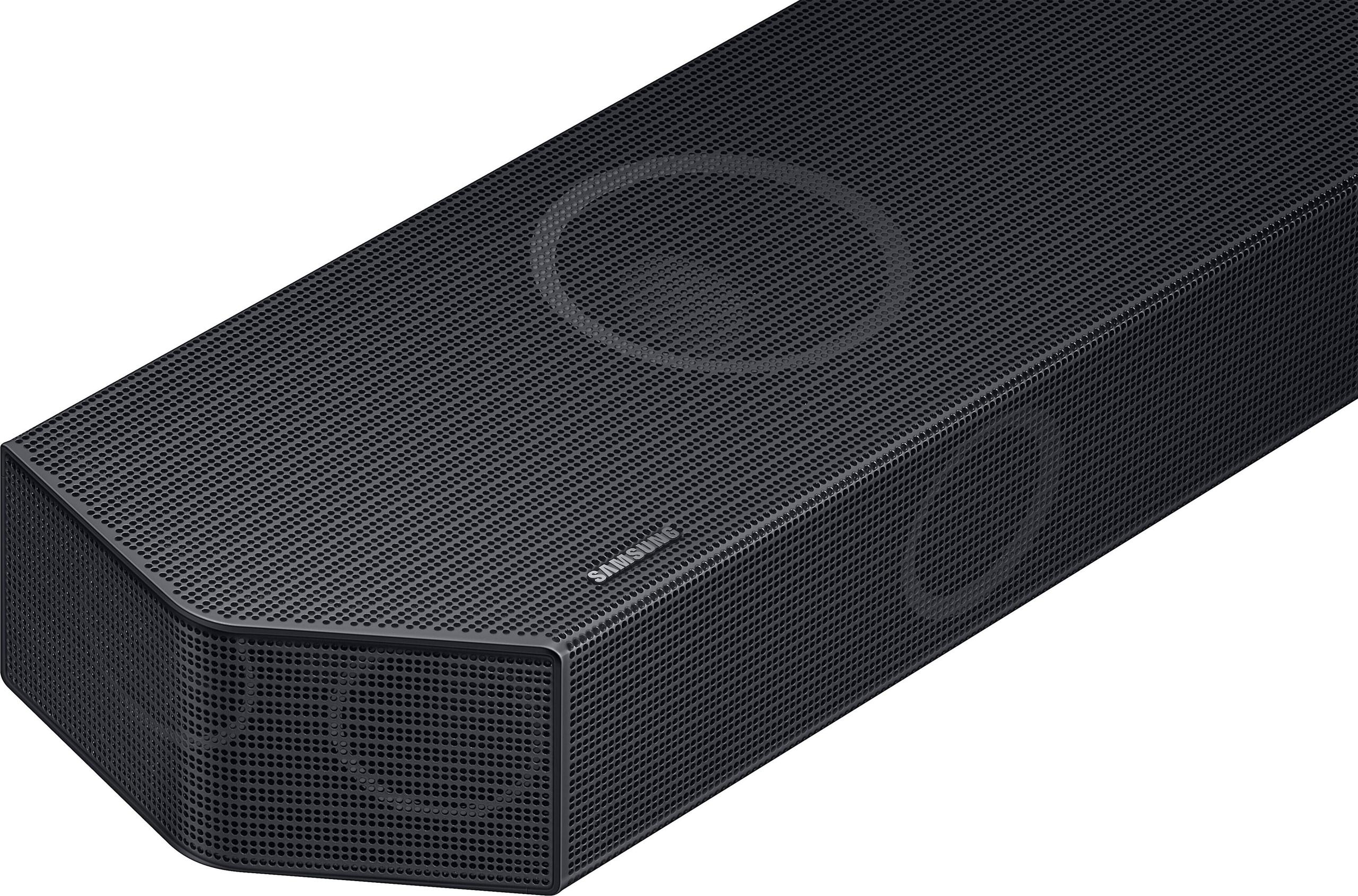
Meanwhile, the Samsung Q Series 9.1.2 Channel Soundbar, specifically the HW-Q910D model, takes the "no compromises" approach at $897. This system includes physical rear speakers that create a true surround bubble around your listening position, plus more sophisticated processing and calibration systems.
Having tested both approaches extensively, I can tell you that the difference isn't just academic—it's immediately noticeable when you sit down to watch a movie or play a game.
This is where the fundamental difference between these systems becomes crystal clear. The HW-Q800D uses what's called "virtual surround processing" to create the illusion of sounds coming from behind you. It's essentially an audio magic trick—the soundbar uses psychoacoustic principles (basically, exploiting how your brain interprets sound) to make you think there are speakers where there aren't any.
For many people, this virtual processing works surprisingly well. The HW-Q800D's 10 drivers and 360W of total power create a wide soundstage that extends well beyond the physical width of the bar. When watching movies, explosions feel bigger, and dialogue remains clear even during complex action sequences. The two up-firing drivers bounce sound off your ceiling to create height effects, and while these aren't quite as convincing as dedicated overhead speakers, they add noticeable dimension to Dolby Atmos content.
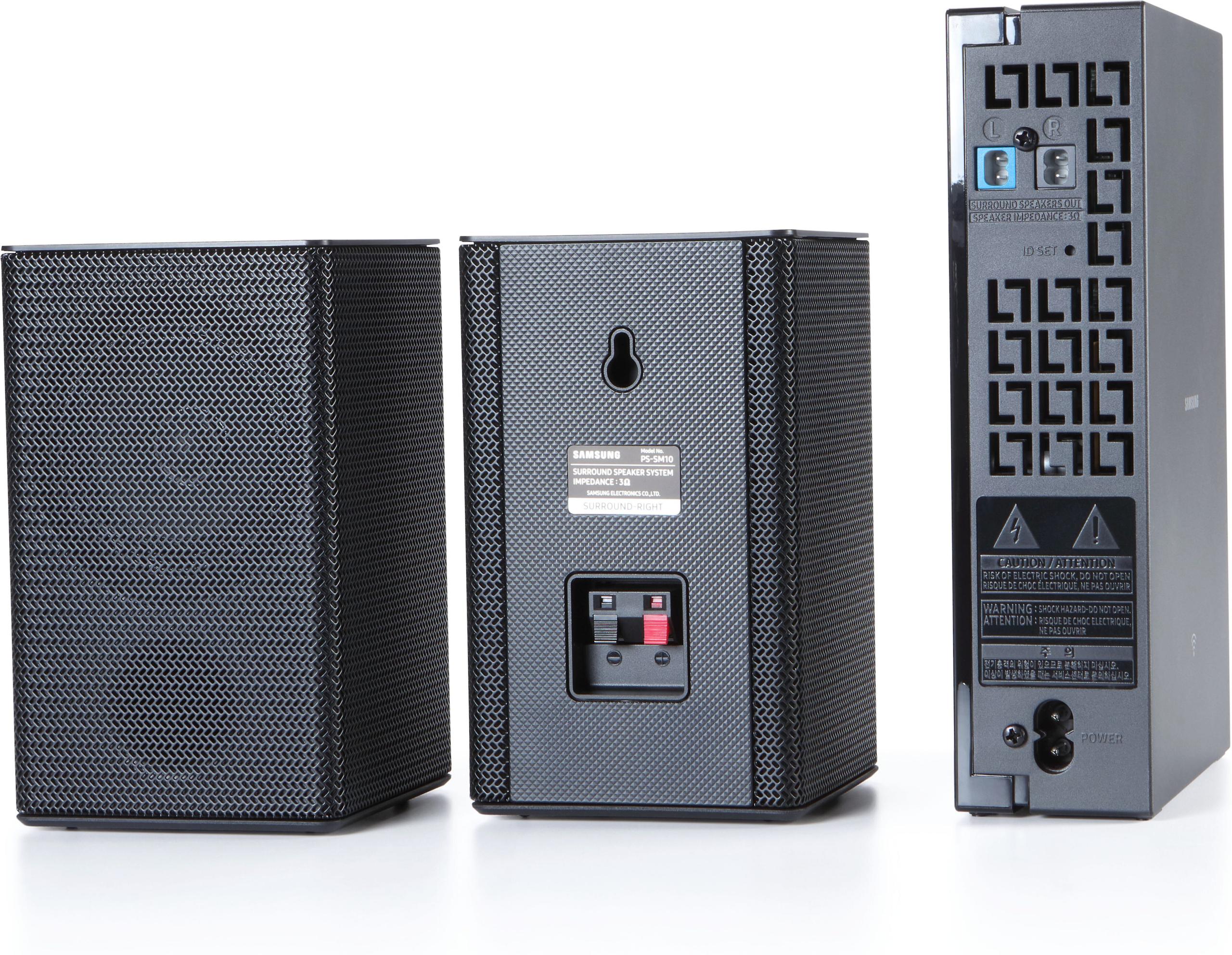
The Q910D takes a completely different approach with its physical rear speakers. These wireless units sit behind your listening position, creating what audio engineers call "true discrete surround." Instead of tricking your brain into hearing rear effects, sounds actually come from behind you. The difference is immediately apparent in movies with active soundtracks—bullets whizzing past, characters moving through scenes, or ambient sounds like wind or crowd noise all gain a three-dimensional quality that virtual processing simply can't match.
I've noticed this difference most dramatically in gaming scenarios. Playing something like a first-person shooter with the Q910D provides genuine spatial awareness—you can actually locate enemies by sound alone. With the HW-Q800D, you get a sense of direction, but it's more like an enhanced stereo field than true surround positioning.
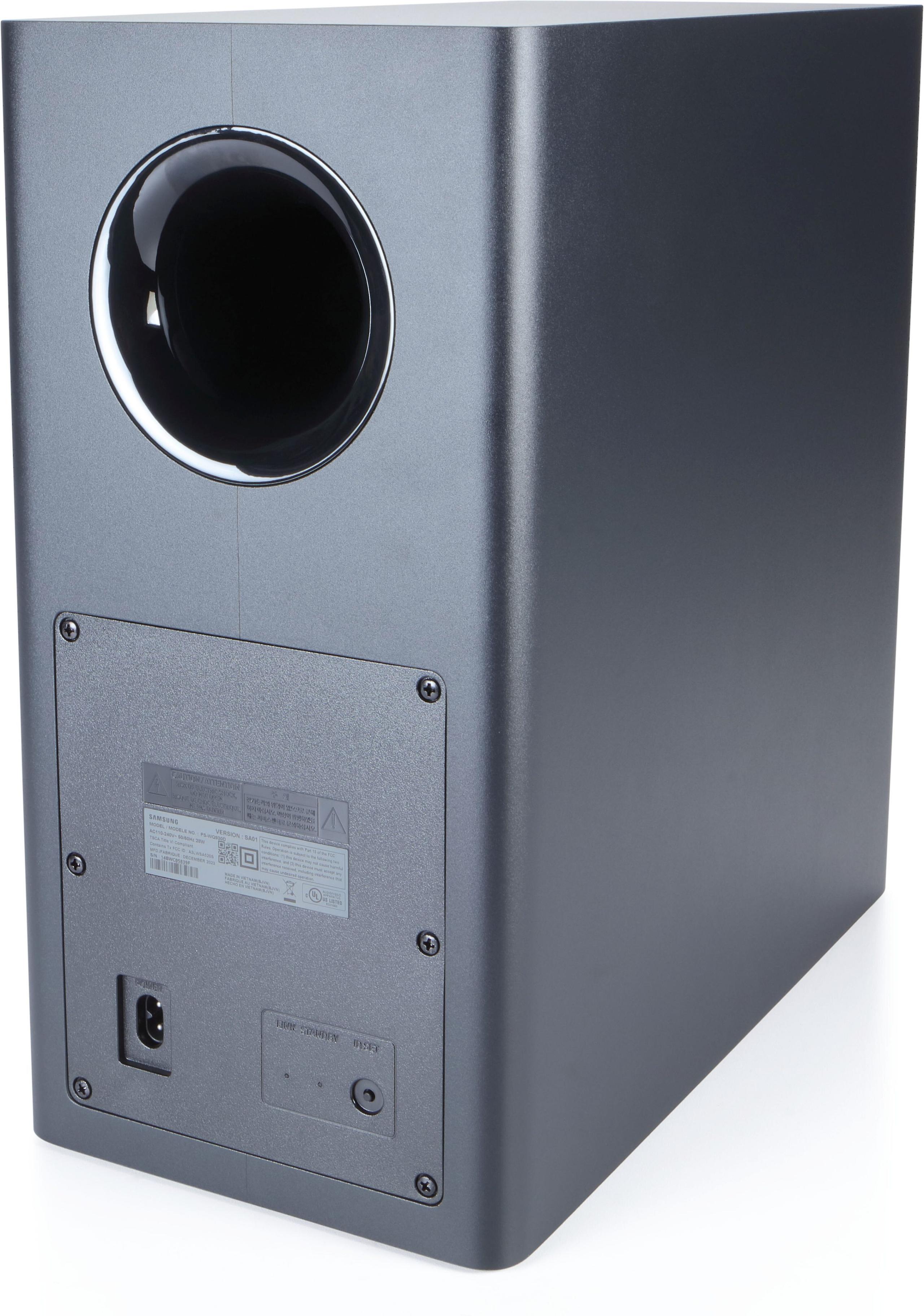
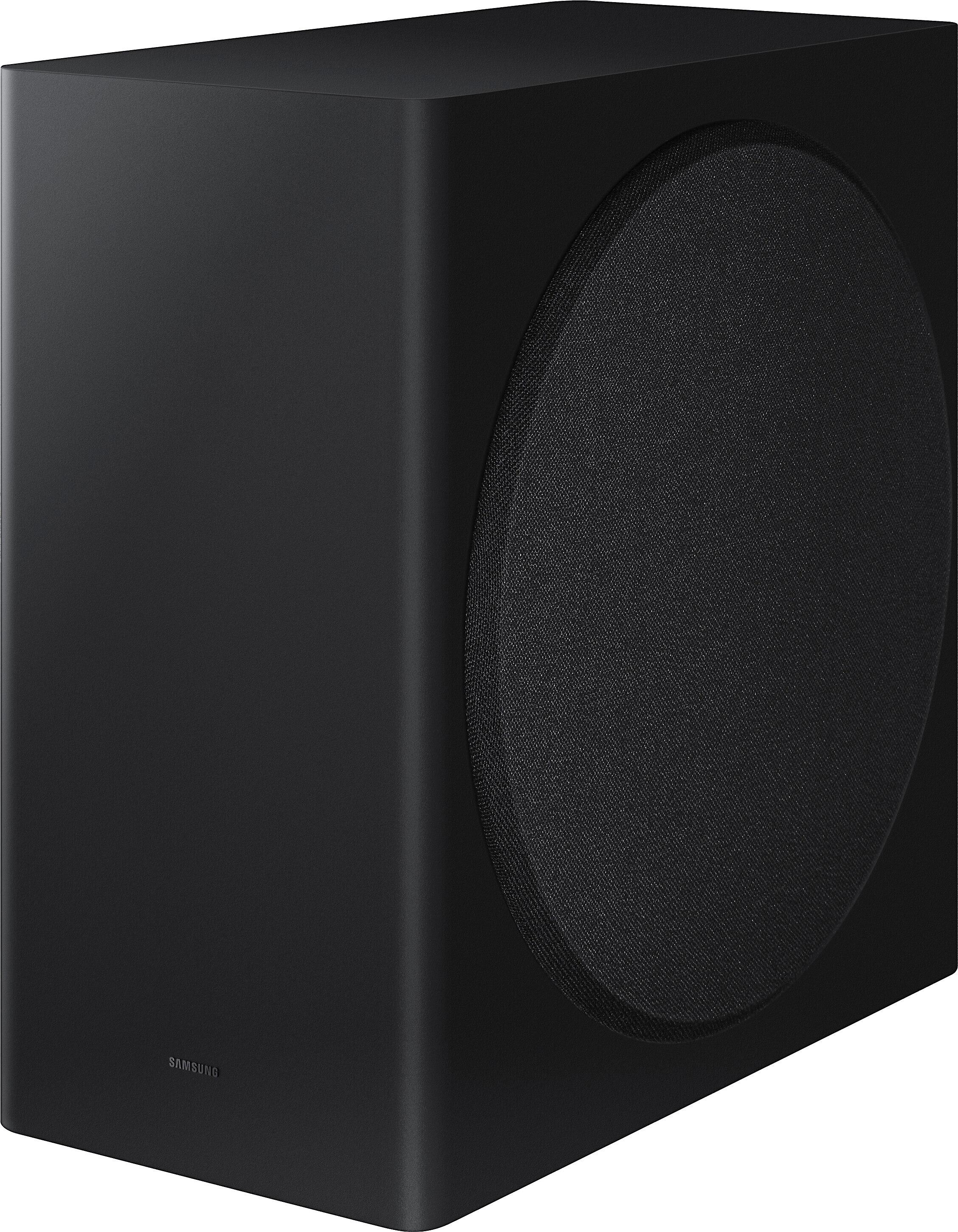
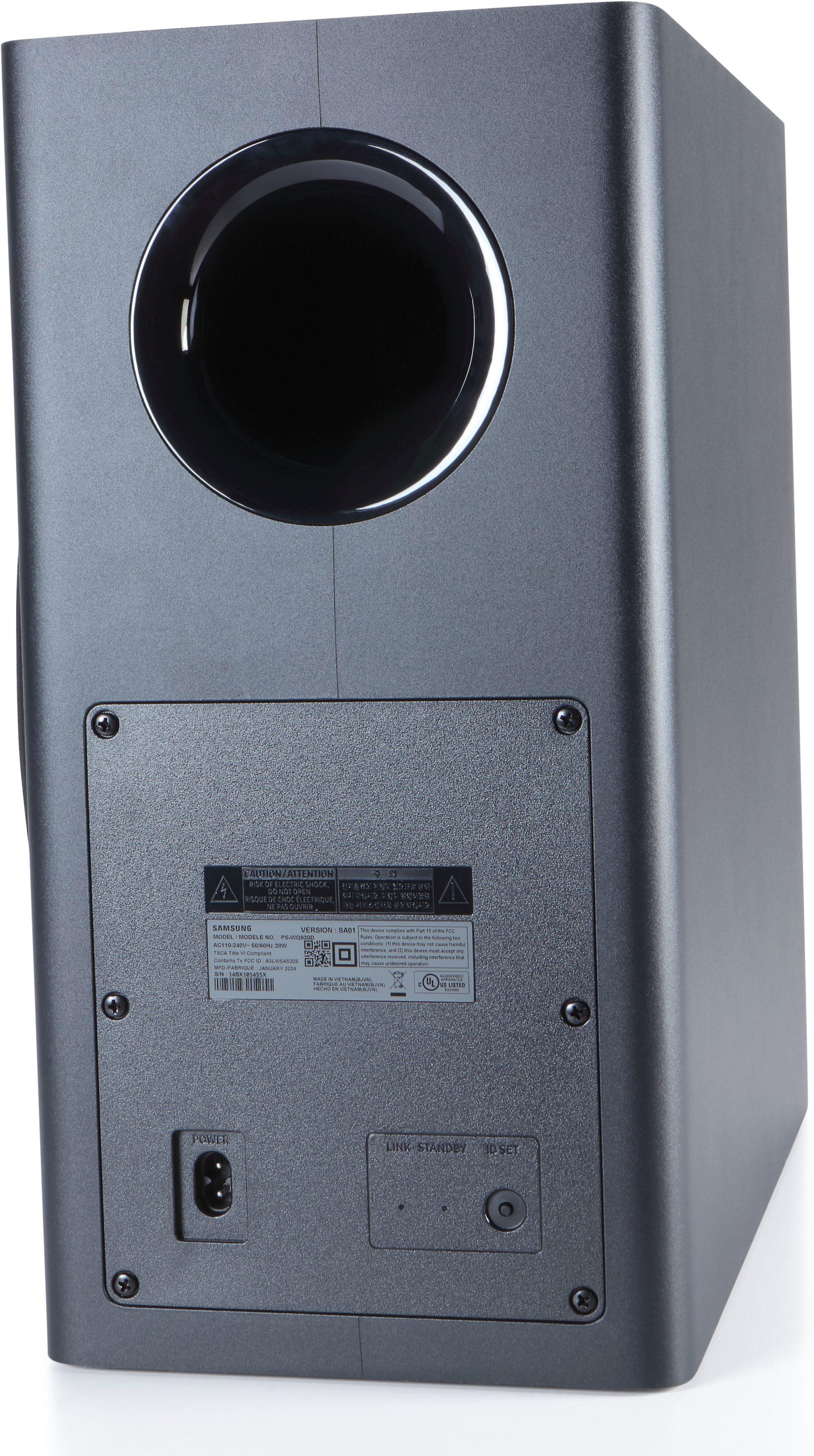
Both systems include wireless subwoofers, but their approaches differ significantly. The HW-Q800D's side-firing 8-inch subwoofer sits in a ported enclosure, which helps extend low-frequency response while keeping the overall size manageable. At 21.6 pounds, it's substantial enough to provide solid bass foundation without overwhelming smaller rooms.
The Q910D's subwoofer is also 8 inches, but it's down-firing and incorporates Samsung's Auto Sub EQ technology. This system uses a microphone built into the subwoofer itself to measure how low frequencies interact with your room, then automatically adjusts the response to eliminate peaks and nulls caused by room dimensions and furniture placement.
In practical terms, this means the Q910D delivers more consistent bass regardless of where you place the subwoofer. The HW-Q800D requires more careful positioning to sound its best, though when properly placed, it provides perfectly adequate bass for most content. The Q910D extends deeper (down to 30Hz compared to the HW-Q800D's higher rolloff point) and hits harder during action sequences, but both systems provide satisfying low-end performance for their respective price points.
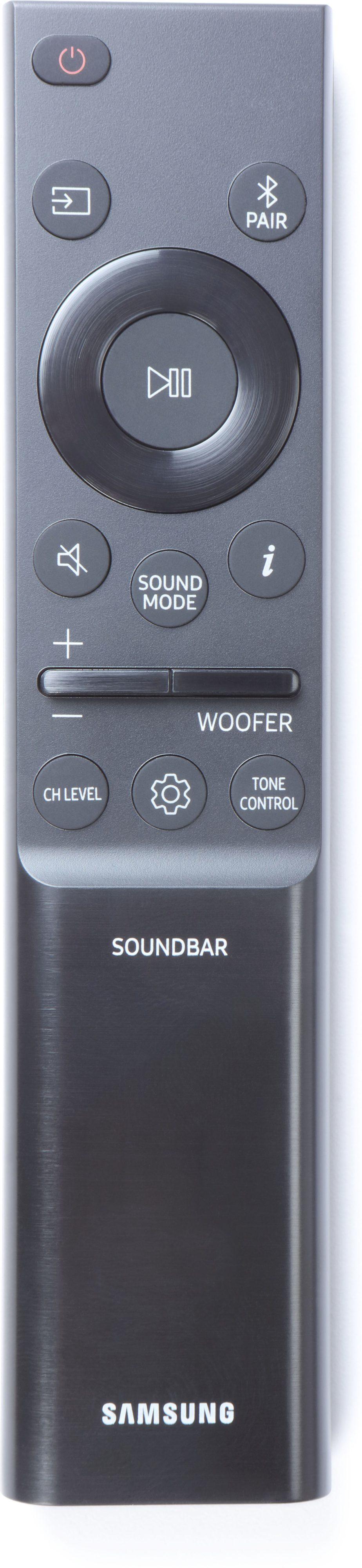
Clear dialogue is crucial for enjoyable movie watching, and both soundbars address this with Samsung's Active Voice Amplifier (AVA) technology. This system analyzes the audio signal in real-time and boosts dialogue frequencies when it detects competing sounds like music or sound effects.
The implementation differs between the models, though. The HW-Q800D provides solid voice clarity with its dedicated center channel, which is specifically designed to handle dialogue. Most conversations come through clearly, and the AVA processing helps during busy scenes where voices might otherwise get lost.
The Q910D's more sophisticated processing takes this further with its Adaptive Sound mode, which continuously analyzes content type and adjusts voice enhancement accordingly. It seems to better distinguish between different types of content—dialogue in a quiet drama gets different treatment than voices during an action sequence. The additional channels also help with voice positioning, making it easier to follow conversations in scenes with multiple speakers.
Modern gaming audio has become incredibly sophisticated, with many titles specifically mixed for surround sound systems. This is where the channel count difference really shows up.
The HW-Q800D handles gaming well enough for casual players. Its virtual processing creates a reasonably wide soundstage, and environmental sounds gain some spatial character. However, the lack of discrete rear channels means you're missing some of the positional information that modern games provide.
The Q910D's Game Mode Pro represents a significant step up for serious gamers. The physical rear speakers provide genuine directional audio cues—footsteps approaching from behind, gunfire from specific locations, or environmental effects that help with spatial awareness. In competitive multiplayer games, this can provide a legitimate advantage. The system also handles the dynamic range of modern games better, with explosive action sequences that don't overwhelm quieter dialogue moments.
Room acoustics play a huge role in how any audio system sounds, and both soundbars attempt to address this automatically. The HW-Q800D includes SpaceFit Sound Pro, which uses the soundbar's built-in microphone to analyze your room and adjust the sound accordingly. It's a relatively straightforward system that makes basic EQ adjustments based on room size and acoustic characteristics.
You'll also get a 7-band graphic equalizer that covers frequencies from 150Hz to 10kHz, allowing manual fine-tuning if the automatic calibration doesn't quite nail your preferences. In my experience, the automatic setting works well for most rooms, though larger or unusually shaped spaces might benefit from manual adjustment.
The Q910D's SpaceFit Sound+ represents a more sophisticated approach, combining room analysis with Auto EQ specifically for the subwoofer. This dual-layer calibration addresses both the full-range response and the critical bass frequencies separately, typically resulting in more accurate sound regardless of room size or subwoofer placement.
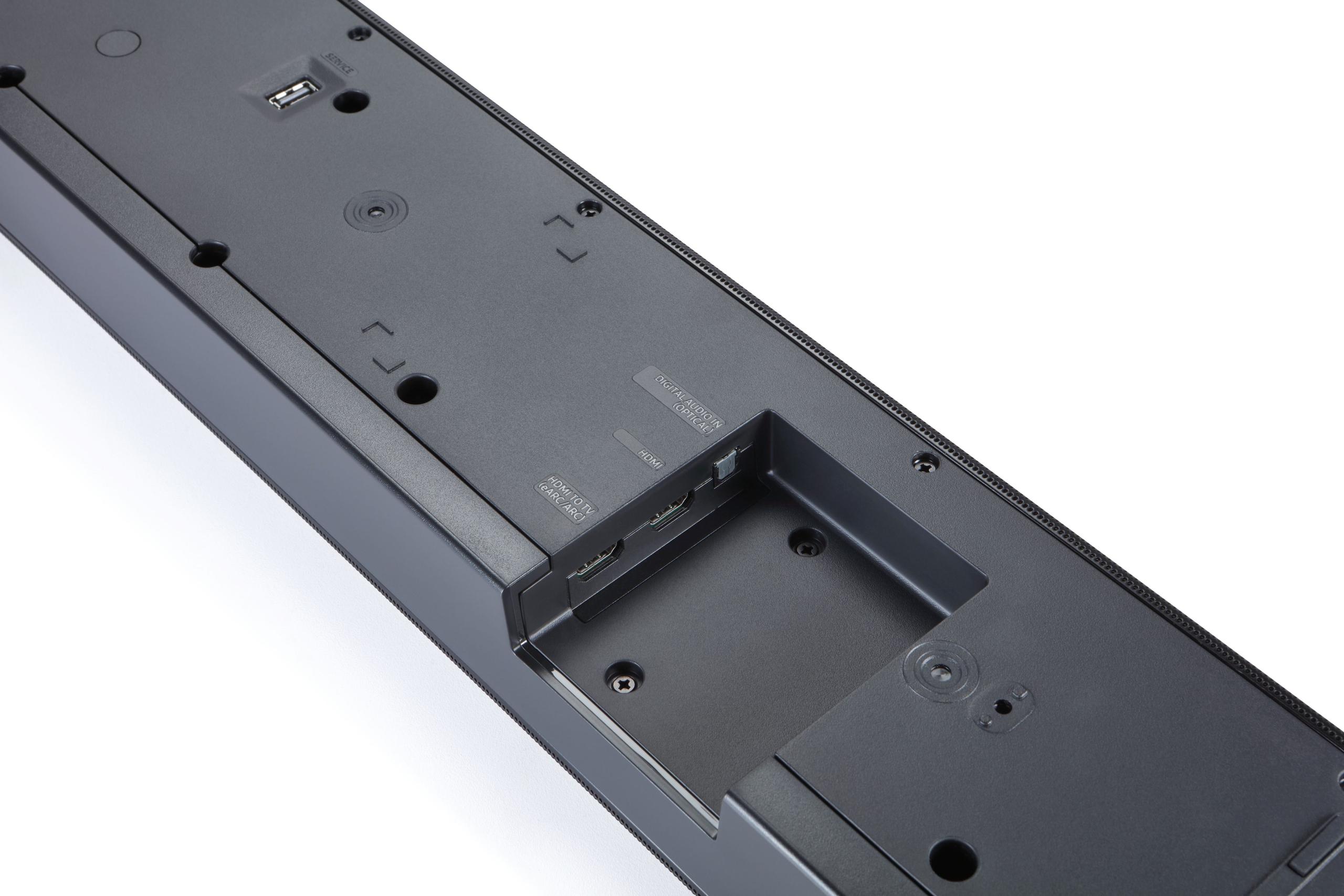
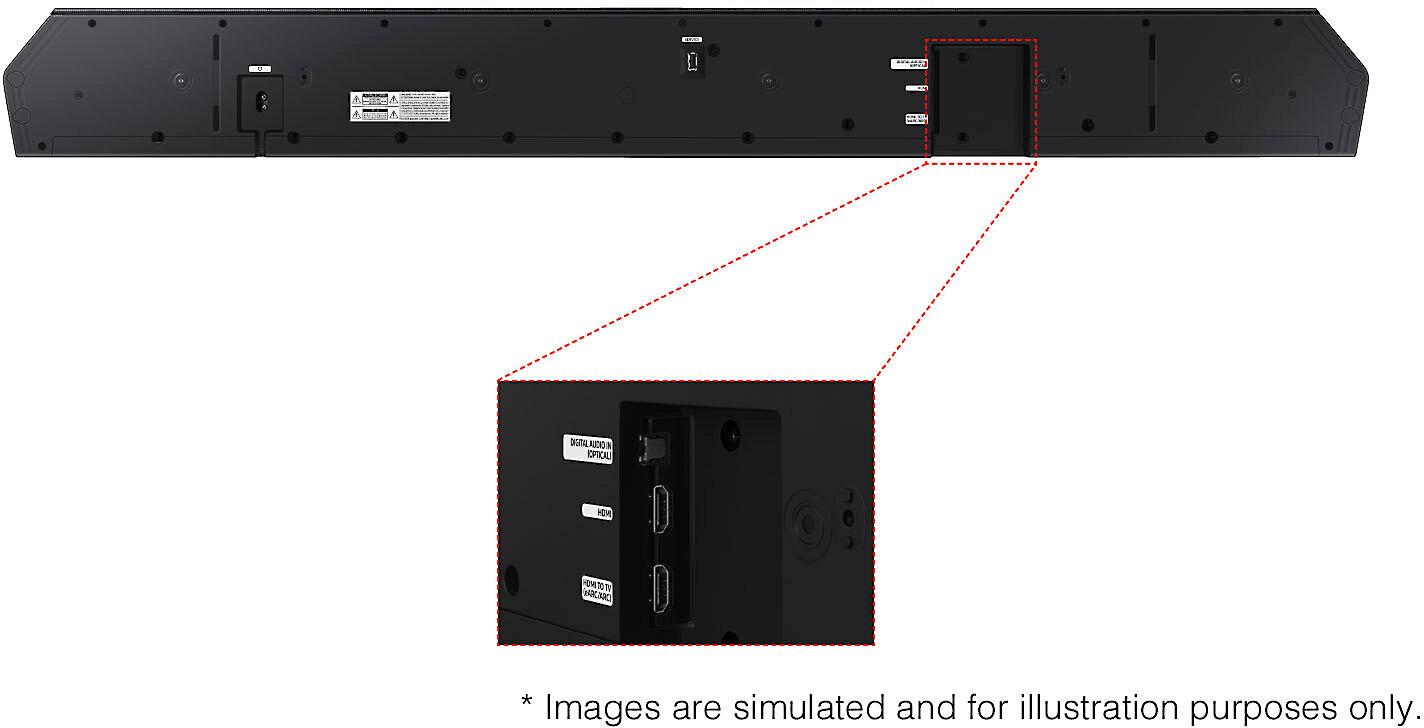
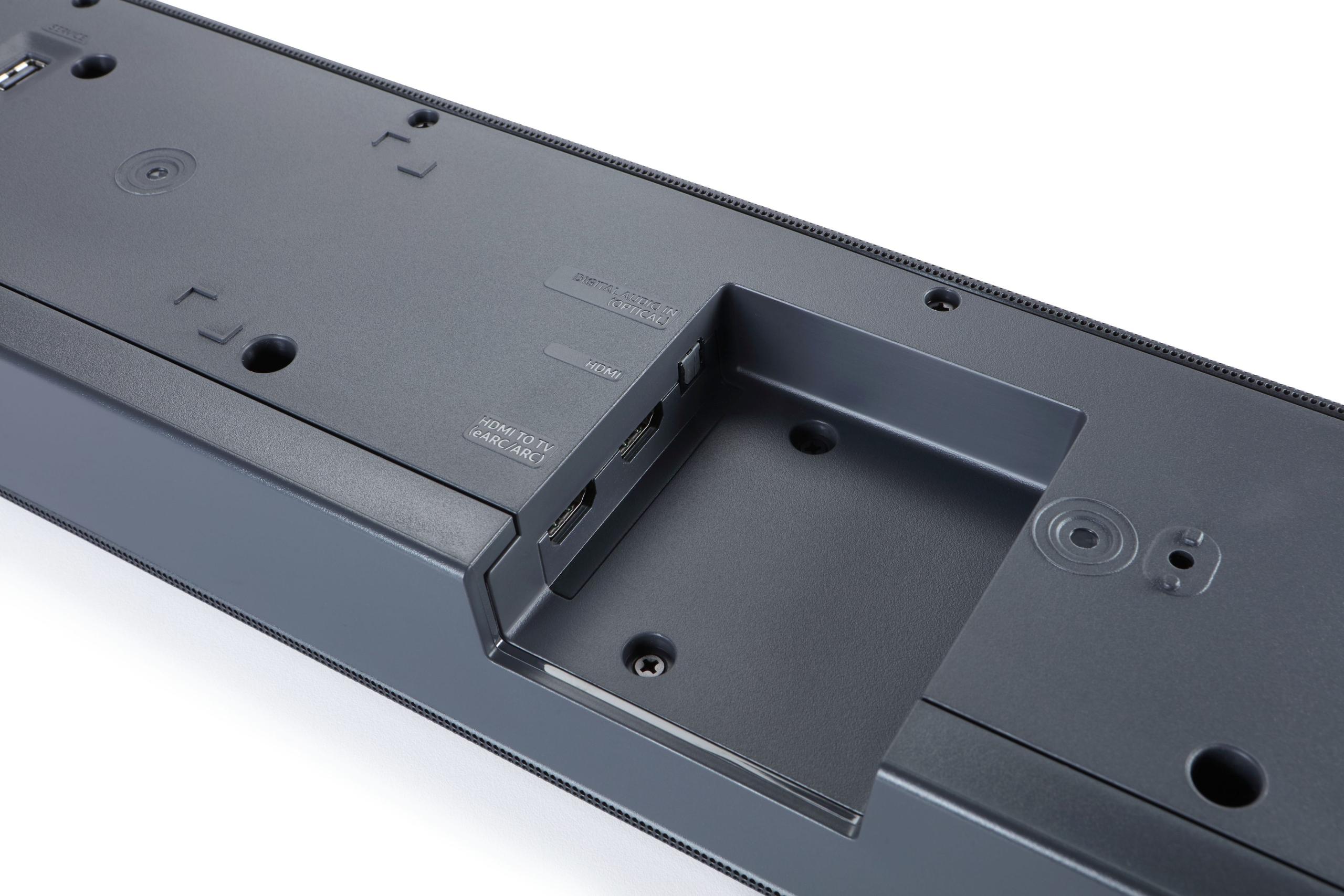
Both systems support the modern connectivity standards you'd expect from premium soundbars. HDMI eARC (enhanced Audio Return Channel) allows the soundbar to receive high-quality audio directly from your TV, while 4K video passthrough with HDR support means you can connect source devices directly to the soundbar without sacrificing video quality.
Bluetooth 5.2 wireless streaming works reliably with both systems, and I've found the connection stable even when moving around the room with a phone or tablet. The roughly 33-foot range covers most home scenarios without dropouts.
Where the Samsung Q Series 9.1.2 Channel Soundbar pulls ahead is in smart home integration. Q-Symphony technology allows the soundbar to work in concert with compatible Samsung TVs, using both the TV's speakers and the soundbar simultaneously for a fuller soundstage. It also includes Apple AirPlay 2 and Chromecast built-in, plus direct integration with streaming services like Spotify Hi-Fi and TIDAL Connect.
The Q910D can also receive Dolby Atmos signals wirelessly from compatible Samsung TVs, which reduces cable clutter and potentially improves audio quality compared to compressed formats.
The HW-Q800D wins hands-down for simplicity. You're dealing with just two components: the soundbar itself and the wireless subwoofer. The soundbar can sit on your TV stand or mount to the wall (mounting hardware included), and the subwoofer just needs power and reasonable placement somewhere in the room.
Setting up the Q910D involves positioning four separate components: the main soundbar, subwoofer, and two rear speakers. While all connections are wireless after the initial pairing, you need to find appropriate locations for the rear speakers and ensure they have access to power outlets. In many rooms, this means running extension cords or dealing with cable management to keep things looking clean.
For apartment living or smaller spaces, the HW-Q800D's simpler setup often makes more sense. The virtual surround processing actually works better in smaller rooms where wall reflections help reinforce the spatial effects.
If you're building a dedicated home theater space, the Samsung Q Series 9.1.2 Channel Soundbar becomes much more compelling despite its complexity. The physical rear speakers create a proper surround bubble that makes movie watching genuinely immersive. Action films benefit from the discrete surround channels, while even quieter content gains spatial depth that virtual processing can't match.
The Q910D's superior bass extension and overall power handling also shine in larger rooms where the HW-Q800D might struggle to fill the space convincingly. The Auto Sub EQ ensures consistent bass response regardless of room size or subwoofer placement, which is particularly valuable in dedicated theater rooms where you might need to place the subwoofer in a less-than-ideal location for aesthetic reasons.
The $400 price difference between these systems comes down to three main areas: the physical rear speakers, more sophisticated processing, and enhanced connectivity features.
The Samsung HW-Q800D delivers excellent value for most users. Its virtual surround processing provides a significant upgrade over TV speakers, the included subwoofer adds satisfying bass, and the overall sound quality handles music, movies, and gaming well. For the majority of people upgrading from TV speakers, this represents a sweet spot of performance and price.
The Q910D's premium pricing reflects genuine performance advantages, but whether they're worth the extra cost depends on your specific situation. If you have a larger room, watch a lot of action movies, do serious gaming, or already own a compatible Samsung TV, the additional features and superior immersion can justify the higher price.
Choose the Samsung HW-Q800D 5.1.2 Channel Soundbar if you want a significant audio upgrade without complexity or premium pricing. It's ideal for apartments, smaller rooms, or situations where running rear speakers isn't practical. The virtual surround processing provides convincing spatial effects for most content, and the overall sound quality represents excellent value in the $500-700 range.
Go with the Samsung Q Series 9.1.2 Channel Soundbar if you're building a dedicated entertainment space and want no-compromise performance. The physical rear speakers, superior bass response, and advanced room correction justify the $897 price tag for home theater enthusiasts. It's particularly compelling if you already own a compatible Samsung TV and can take advantage of Q-Symphony integration.
Both systems represent solid choices within their respective market segments. The HW-Q800D proves that you don't need to spend nearly $900 to get satisfying surround sound, while the Q910D demonstrates what's possible when you're willing to invest in premium audio technology. Your choice ultimately comes down to balancing performance ambitions against budget constraints and setup complexity—but either way, you'll be getting a dramatic upgrade over basic TV audio.
| Samsung HW-Q800D 5.1.2 Channel Soundbar | Samsung Q Series 9.1.2 Channel Soundbar |
|---|---|
| Price - The $400 difference mainly pays for physical rear speakers and advanced features | |
| $500-$700 | $897 |
| Channel Configuration - More channels create better surround immersion | |
| 5.1.2 (virtual surround processing) | 9.1.2 (true discrete surround with rear speakers) |
| Rear Speakers - Physical speakers vs virtual processing is the biggest difference | |
| Not included (uses virtual surround) | Wireless rear speakers included |
| Subwoofer - Both adequate, but Q910D extends deeper with room correction | |
| 8" side-firing wireless (21.6 lbs) | 8" down-firing with Auto Sub EQ (extends to 30Hz) |
| Total Power Output - Q910D's higher power helps fill larger rooms | |
| 360W across 10 drivers | Higher power output across 11 speakers |
| Room Calibration - Q910D's dual-layer system works better in challenging rooms | |
| SpaceFit Sound Pro with 7-band EQ | SpaceFit Sound+ with Auto Sub EQ |
| Gaming Features - Q910D provides competitive advantage in spatial audio games | |
| Standard gaming mode | Game Mode Pro with enhanced directional audio |
| Smart Features - Q910D offers more premium connectivity options | |
| HDMI eARC, Bluetooth 5.2, SmartThings | Q-Symphony, AirPlay 2, Chromecast, wireless Dolby Atmos |
| Setup Complexity - HW-Q800D much simpler with only 2 components | |
| 2 components (soundbar + subwoofer) | 4 components (soundbar + subwoofer + 2 rear speakers) |
| Best Room Size - Matching the system to your space is crucial for performance | |
| Small to medium rooms, apartments | Medium to large rooms, dedicated home theaters |
| Dolby Atmos Experience - Both support it, but Q910D's implementation is more convincing | |
| Virtual height effects via up-firing drivers | True overhead audio with physical rear channels |
The Samsung HW-Q800D 5.1.2 Channel Soundbar offers better value at $500-700, providing excellent sound quality and virtual surround effects without the complexity of multiple components. The Samsung Q Series 9.1.2 Channel Soundbar at $897 delivers superior performance with physical rear speakers and advanced features, but the $400 price difference is only justified if you have a larger room or want the best possible surround sound experience.
The Samsung HW-Q800D uses 5.1.2 channels with virtual surround processing to simulate rear effects, while the Samsung Q Series 9.1.2 Channel Soundbar includes 9.1.2 channels with actual wireless rear speakers. This means the Q910D creates true 360-degree surround sound, while the HW-Q800D relies on audio processing tricks that work well but aren't as immersive.
The Samsung HW-Q800D 5.1.2 Channel Soundbar is much easier to install with only two components: the main soundbar and wireless subwoofer. The Samsung Q Series 9.1.2 Channel Soundbar requires positioning four separate pieces including two rear speakers, which need power outlets and careful placement for optimal performance.
Both handle gaming well, but the Samsung Q Series 9.1.2 Channel Soundbar excels with its Game Mode Pro and physical rear speakers that provide genuine directional audio cues. The Samsung HW-Q800D offers decent gaming audio with virtual processing, making it suitable for casual gaming but less competitive for serious multiplayer scenarios.
The Samsung Q Series 9.1.2 Channel Soundbar delivers superior bass with its down-firing subwoofer that extends to 30Hz and includes Auto Sub EQ room correction. The Samsung HW-Q800D 5.1.2 Channel Soundbar provides adequate bass with its 8-inch side-firing subwoofer, though it requires more careful placement and doesn't extend quite as deep.
The Samsung HW-Q800D 5.1.2 Channel Soundbar is ideal for apartments due to its simple two-component setup and virtual surround processing that works well in smaller spaces. The Samsung Q Series 9.1.2 Channel Soundbar can work in apartments but may be overkill, as the rear speakers require additional space and power outlets.
For dedicated home theater rooms, the Samsung Q Series 9.1.2 Channel Soundbar is significantly better with its physical rear speakers, deeper bass extension, and advanced room calibration. The Samsung HW-Q800D works well for casual movie watching but can't match the immersive experience of true discrete surround sound in larger entertainment spaces.
Yes, both the Samsung HW-Q800D 5.1.2 Channel Soundbar and Samsung Q Series 9.1.2 Channel Soundbar support Dolby Atmos with up-firing drivers for height effects. However, the Q910D's implementation is more convincing due to its additional channels and better overall spatial processing.
The Samsung Q Series 9.1.2 Channel Soundbar offers superior Samsung TV integration with Q-Symphony technology that combines the TV speakers with the soundbar for enhanced audio. It can also receive wireless Dolby Atmos from compatible Samsung TVs. The Samsung HW-Q800D works well with Samsung TVs but lacks these premium integration features.
The Samsung HW-Q800D 5.1.2 Channel Soundbar requires minimal space with just the main bar and subwoofer placement. The Samsung Q Series 9.1.2 Channel Soundbar needs significantly more room planning for the rear speakers, which must be positioned behind the listening area with access to power outlets.
Both soundbars feature Samsung's Active Voice Amplifier technology for clear dialogue, but the Samsung Q Series 9.1.2 Channel Soundbar has more sophisticated voice processing with its Adaptive Sound mode. The Samsung HW-Q800D provides good dialogue clarity for most content, though the Q910D's additional channels help with voice positioning in complex scenes.
Choose the Samsung HW-Q800D 5.1.2 Channel Soundbar if you want excellent sound quality without complexity or premium pricing, especially for smaller rooms. Opt for the Samsung Q Series 9.1.2 Channel Soundbar if you have a larger space, want the most immersive surround experience possible, and don't mind the higher cost and more complex setup.
We've done our best to create useful and informative comparisons to help you decide what product to buy. Our research uses advanced automated methods to create this comparison and perfection is not possible - please contact us for corrections or questions. These are the sites we've researched in the creation of this article: techradar.com - valueelectronics.com - samsung.com - rtings.com - samsung.com - crutchfield.com - samsung.com - samsung.com - samsung.com - shidirect.com - rtings.com - samsung.com - markselectrical.co.uk - techradar.com - walmart.com - samsung.com - samsung.com - youtube.com - samsung.com - biancos.com - crutchfield.com - samsung.com

Privacy Policy
Terms and Conditions - Affiliate Policy
Home Security
© Copyright 2008-2026.
11816 Inwood Rd #1211, Dallas, TX 75244