

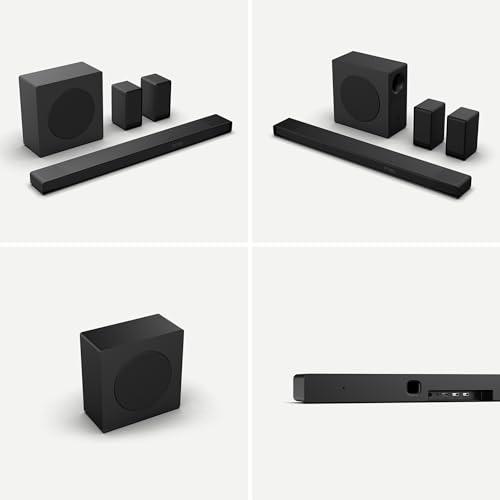
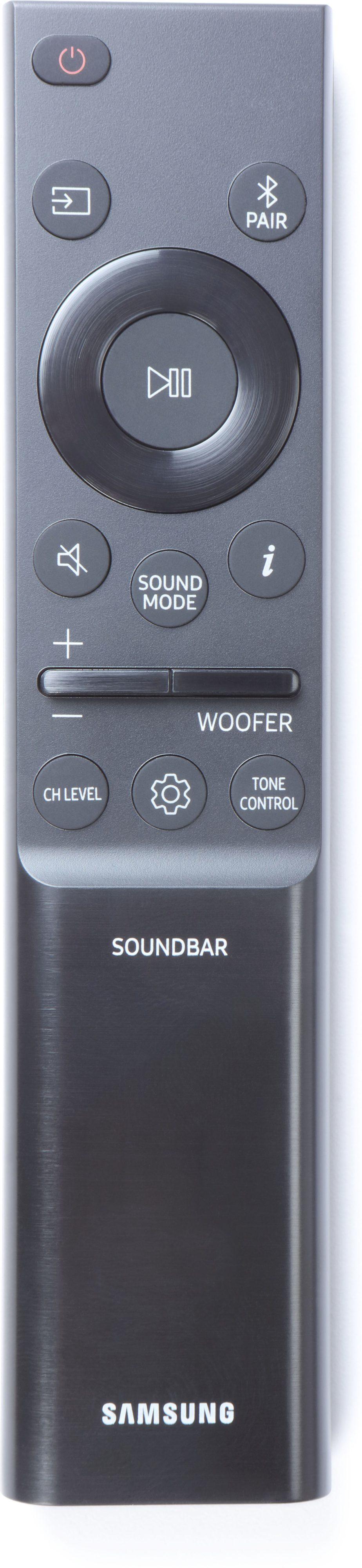
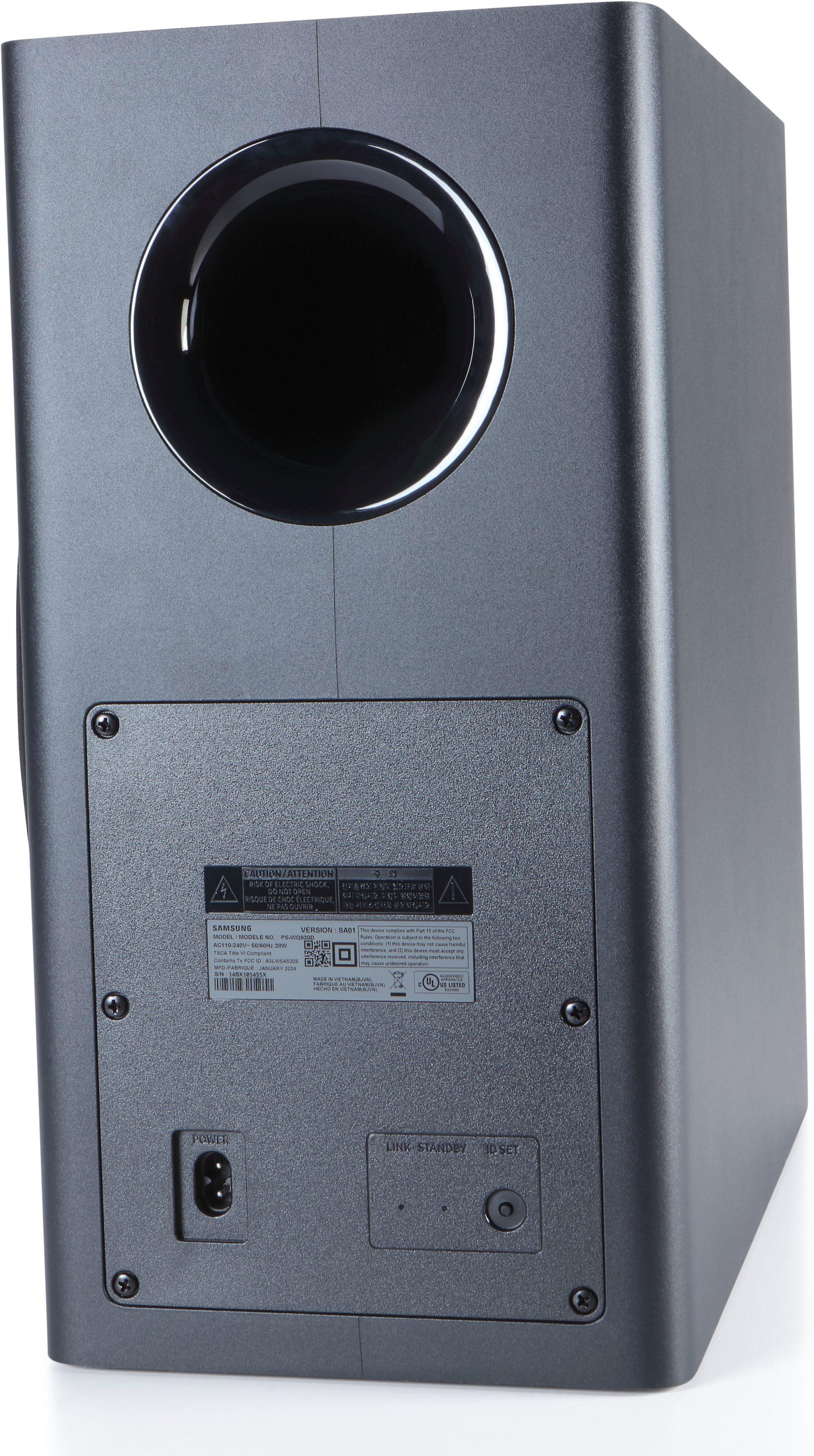
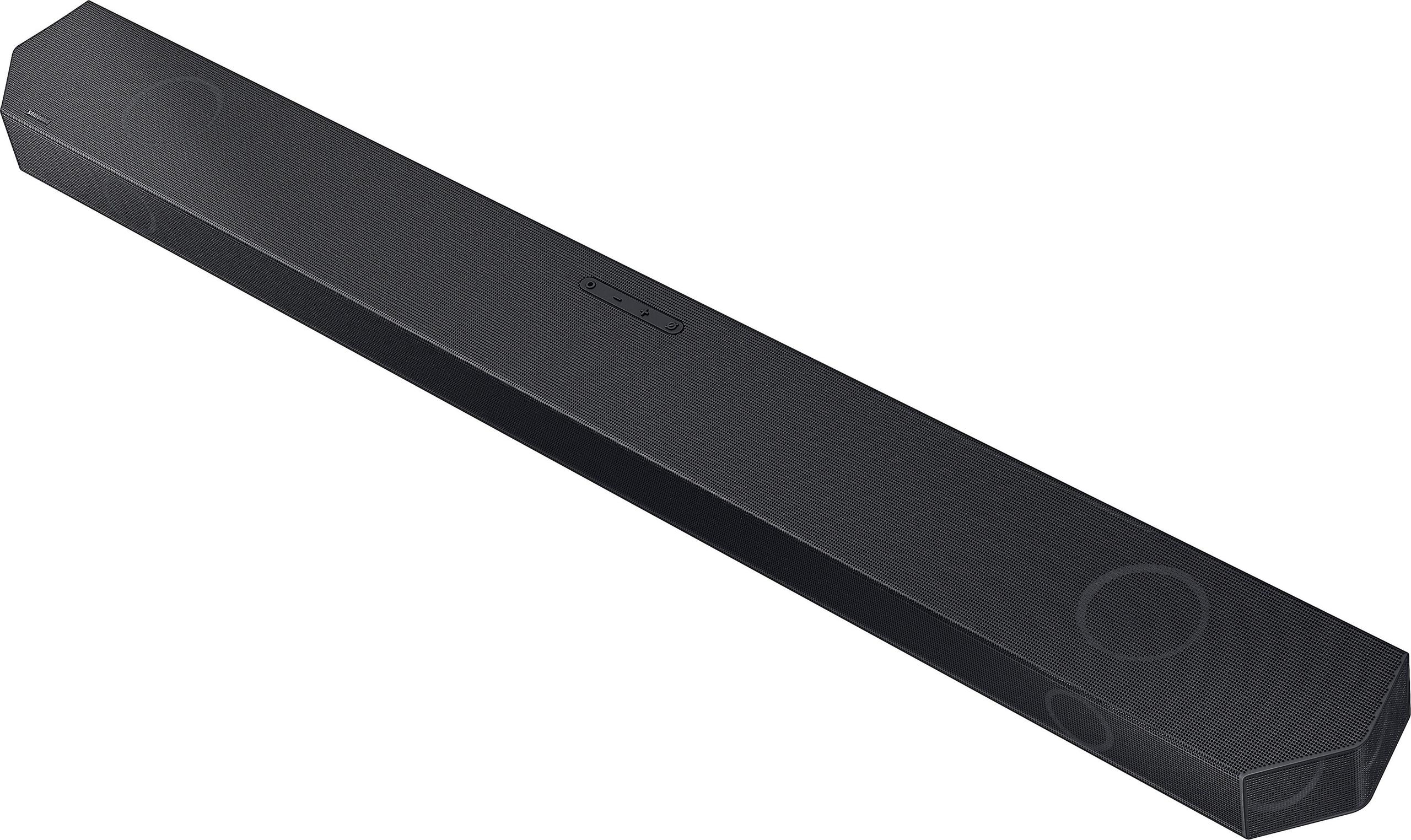

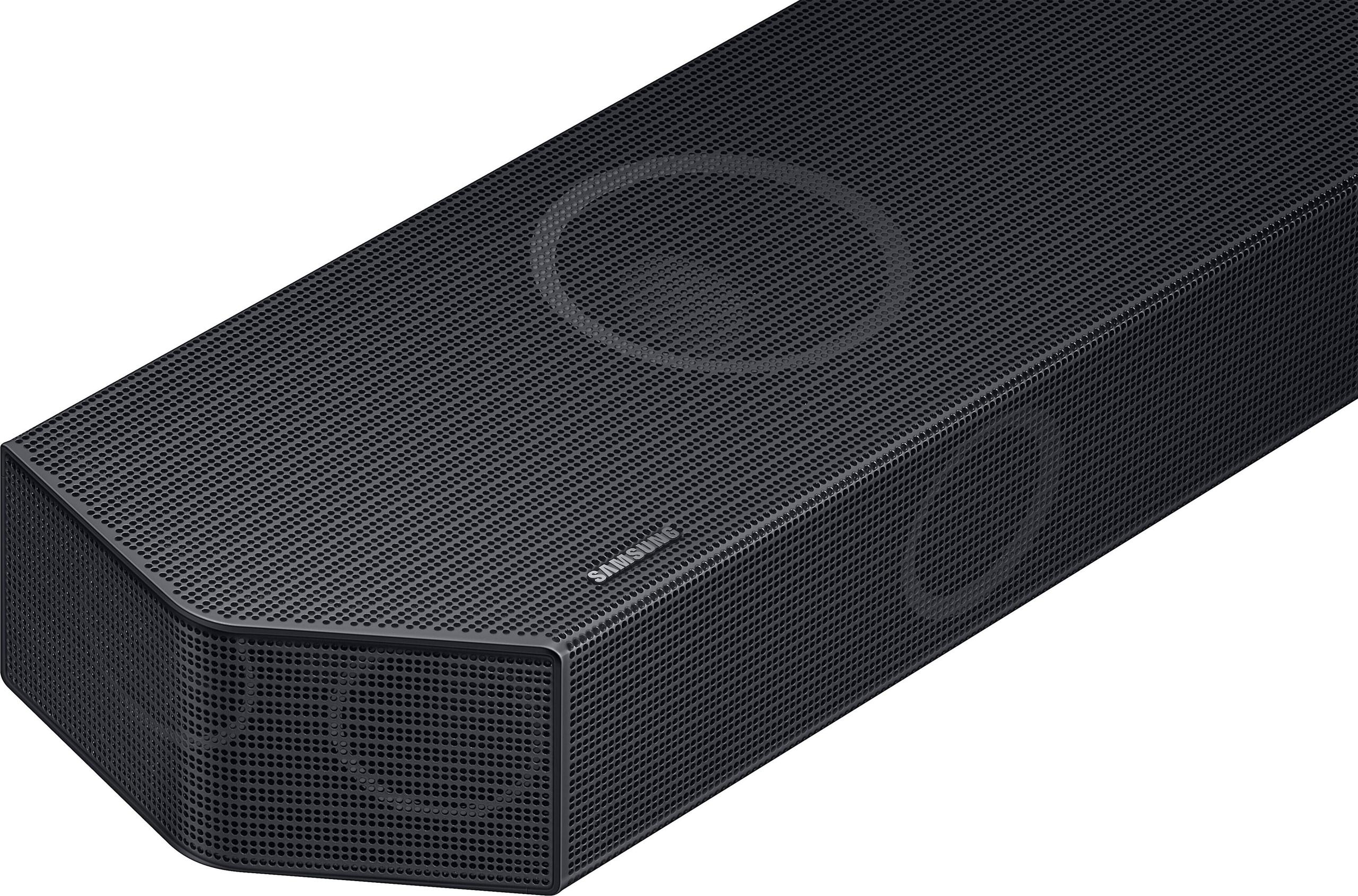




When you're shopping for a premium soundbar, you're essentially trying to bridge the gap between your TV's terrible built-in speakers and a full home theater system with receivers and multiple speakers wired around your room. The sweet spot lies in getting immersive surround sound with modern features like Dolby Atmos—where sound seems to come from above you—without turning your living room into a wire management nightmare.
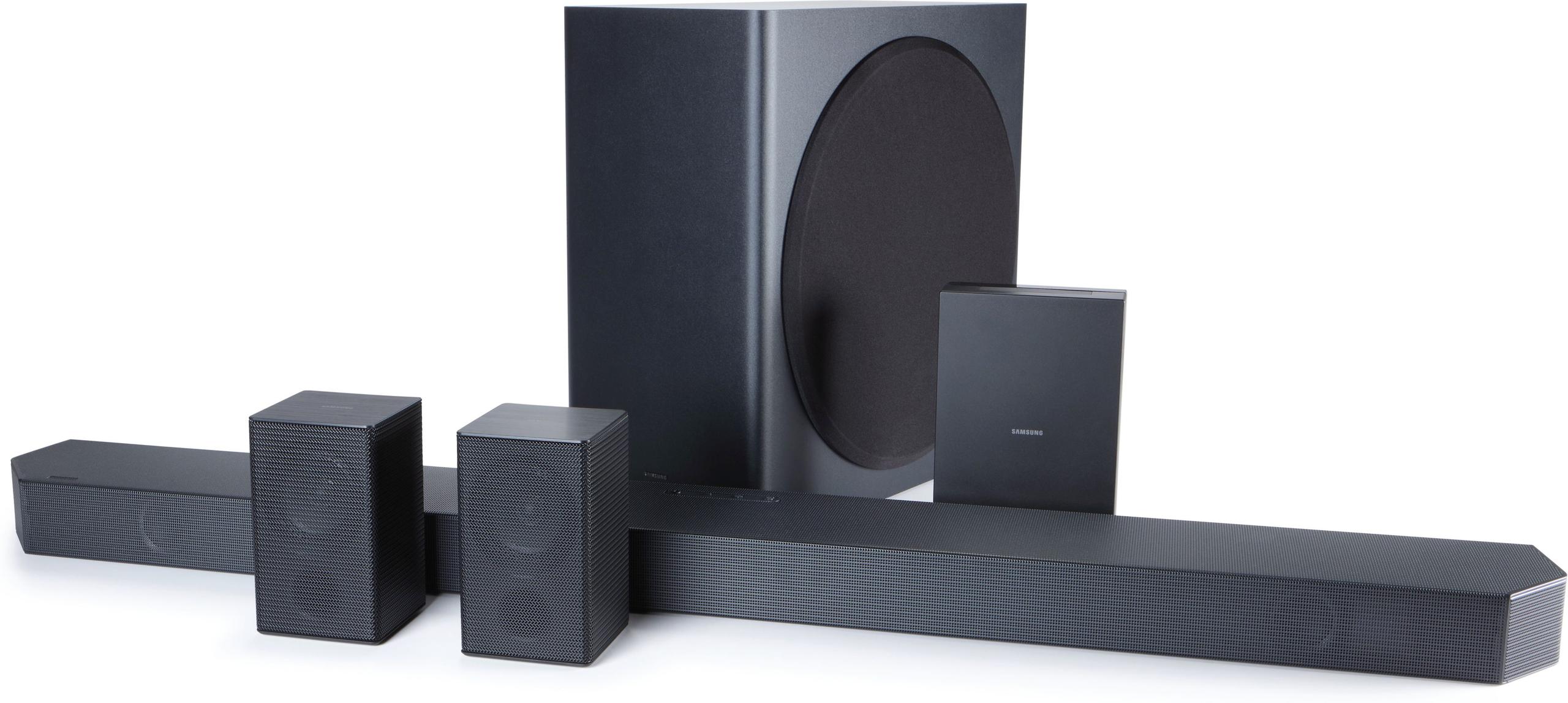
The Hisense AX5140Q and Samsung Q Series 9.1.2 represent two compelling but different approaches to this challenge. Released in 2024, both soundbars arrived in a market where manufacturers have finally figured out how to deliver convincing surround sound without requiring you to run speaker cables behind your walls.
Before diving deep, let's decode those confusing number sequences. The Hisense AX5140Q uses a 5.1.4 configuration, while the Samsung Q Series 9.1.2 employs a 9.1.2 setup. These aren't random model numbers—they tell you exactly how the sound is organized.
The first number represents the main horizontal channels: left, center, right, and any additional side or rear speakers. The second number is always "1" for the subwoofer (the big speaker that handles bass). The third number indicates height channels—speakers that fire sound upward to bounce off your ceiling, creating the illusion that helicopters are actually flying overhead.
So the Hisense has 5 main speakers, 1 subwoofer, and 4 height speakers, while the Samsung has 9 main speakers, 1 subwoofer, and 2 height speakers. This fundamental difference shapes everything about how these soundbars perform.
Here's where things get interesting. The Samsung takes a traditional audiophile approach with more discrete channels spread horizontally around you. Think of it like having more individual instruments in an orchestra—each sound gets its own dedicated speaker, creating incredibly precise placement. When a car drives from left to right in a movie, you'll hear it move smoothly across distinct speakers rather than having the soundbar fake the movement with processing tricks.
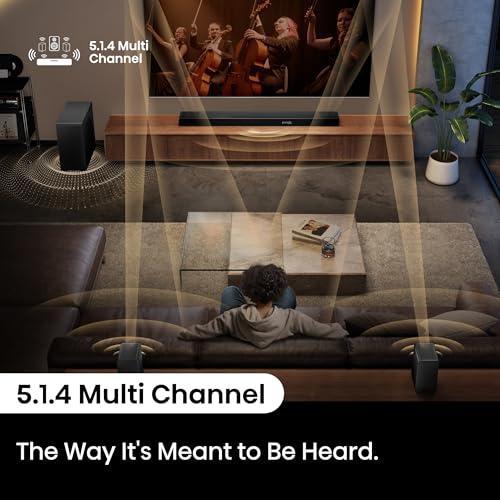
The Hisense, meanwhile, prioritizes vertical immersion with four up-firing speakers compared to Samsung's two. These speakers fire sound toward your ceiling, which then reflects back down to create overhead effects. In practice, this means rain, aircraft, or atmospheric sounds in Dolby Atmos movies feel more convincing with the Hisense—you genuinely get that "dome of sound" sensation that makes you look up occasionally.
From our research into user experiences, the difference is noticeable. People consistently report that the Samsung excels at precise left-to-right movement and creating distinct sound zones, while the Hisense impresses with its overhead immersion, especially in scenes with weather effects or flying objects.
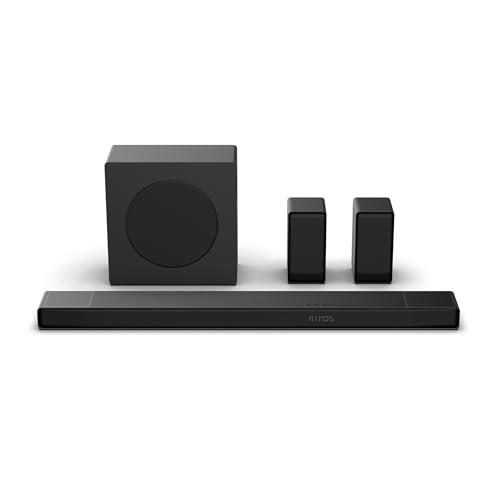
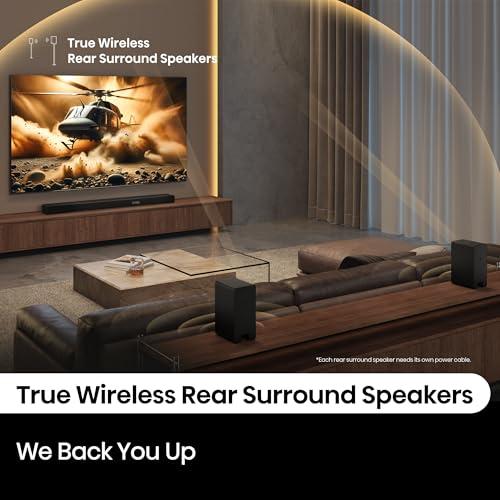
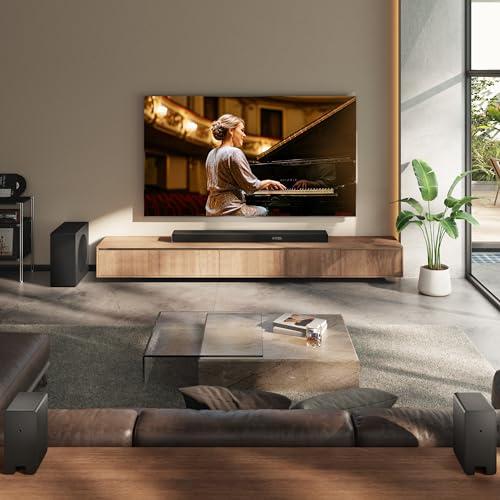
This might be the biggest practical difference between these systems. The Hisense AX5140Q is almost completely wireless—only the main soundbar needs to be connected to your TV via HDMI. The subwoofer and rear satellite speakers communicate wirelessly, automatically pairing when you plug them in. Users consistently praise this approach because you can place the rear speakers wherever makes sense in your room without worrying about running cables under furniture or around doorways.
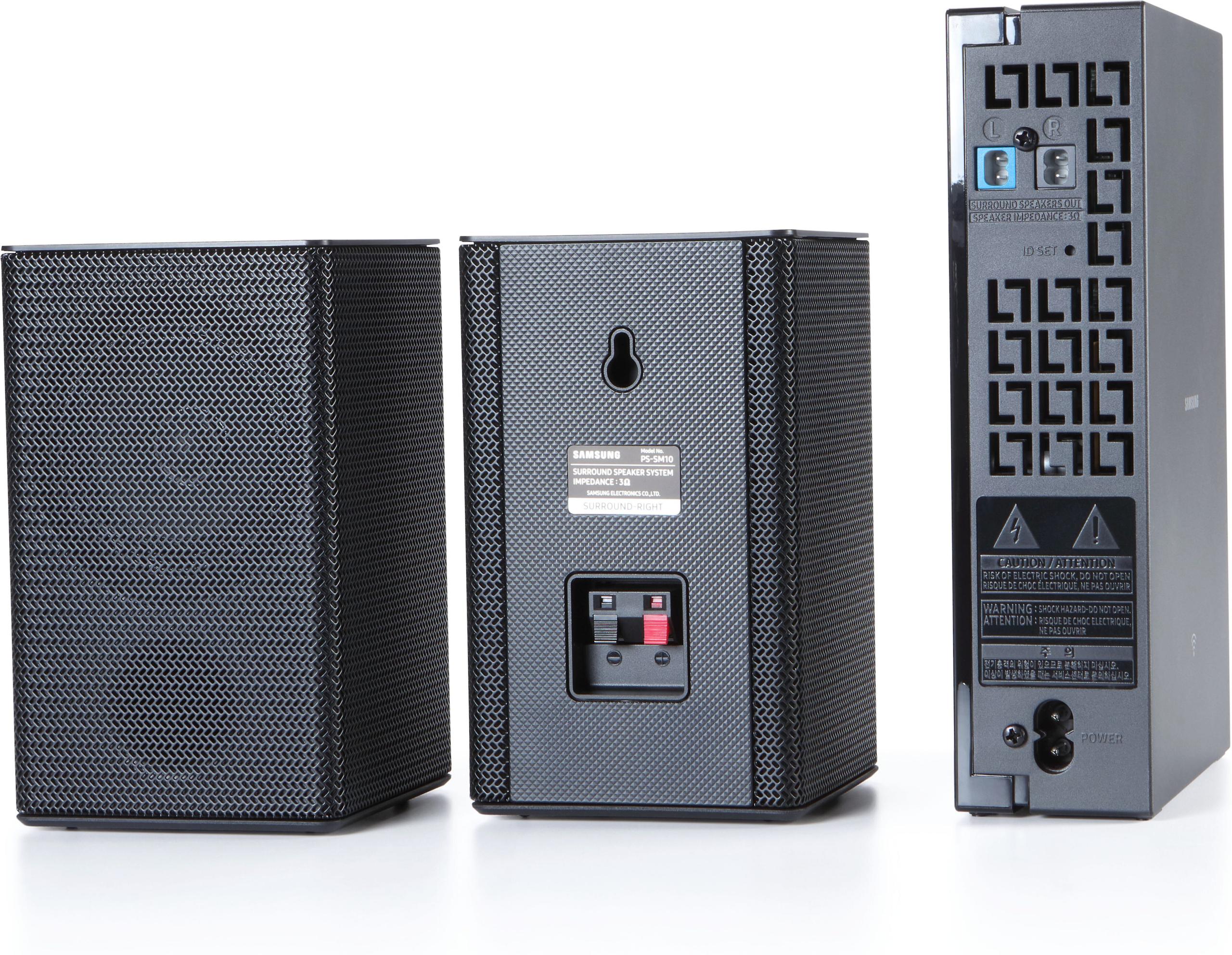
The Samsung requires its satellite speakers to be wired to a receiver unit, though the subwoofer remains wireless. This is more traditional and potentially more reliable, but it means more planning during setup. You'll need to think about cable management and may need longer speaker wires depending on your room layout.
In smaller apartments or rooms where you can't easily hide wires, the Hisense offers a significant advantage. But if you're setting up a dedicated home theater room where you can plan speaker placement carefully, the Samsung's wired approach might actually provide more flexibility in the long run.
For everyday TV watching, dialogue clarity matters more than anything else. The Samsung has a significant advantage here with its dedicated center channel that handles conversations with laser focus. This discrete center speaker means voices don't get muddled with sound effects or music—they stay anchored to the screen where they belong.
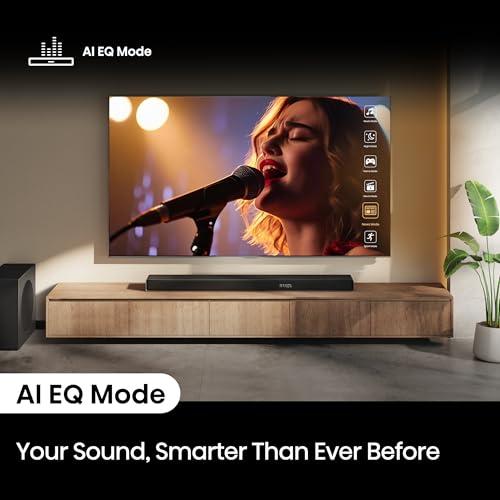
The Hisense compensates with AI EQ Mode, which analyzes what you're watching and adjusts the sound automatically. If it detects dialogue-heavy content, it boosts the frequencies where human voices live while reducing background noise. This works well, but it's still processing rather than dedicated hardware.
Based on user feedback, the difference becomes obvious when watching complex scenes with lots of ambient noise. The Samsung keeps conversations crystal clear even when explosions or music are happening simultaneously, while the Hisense occasionally requires you to adjust the volume or switch to Voice mode.
This is where the channel count differences really show. The Samsung's nine channels create what audio engineers call "phantom imaging"—the illusion that sounds are coming from spaces between the physical speakers. This makes movie soundtracks feel more spacious and realistic.
However, the Hisense counters with superior overhead effects thanks to its four height channels. In Dolby Atmos movies like "Mad Max: Fury Road" or "Blade Runner 2049," the atmospheric effects are more convincing. Users report actually looking up during scenes with aircraft or weather effects, which is the holy grail of home audio.
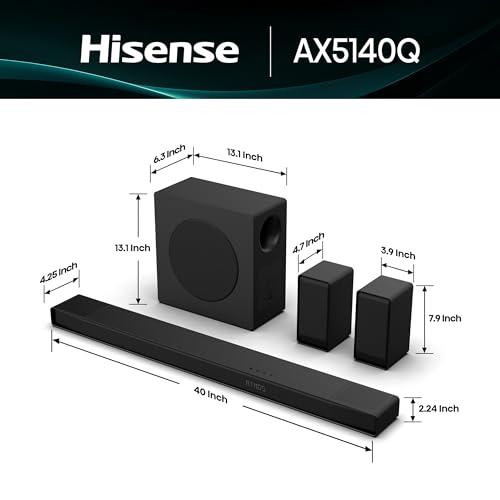
The bass performance differs significantly too. The Samsung delivers more controlled, precise low-frequency effects that integrate seamlessly with the main speakers. The Hisense's 6.5-inch wireless subwoofer produces impressive room-filling bass for its size, though some users report occasional resonance issues in certain room configurations.
Gaming has become a crucial consideration for modern soundbars, and these two take different approaches. The Samsung offers 4K 120Hz passthrough with support for variable refresh rate technologies like FreeSync and G-SYNC. This means you can connect your PlayStation 5 or Xbox Series X directly to the soundbar, and it'll pass the video signal to your TV without any quality loss while processing the audio.
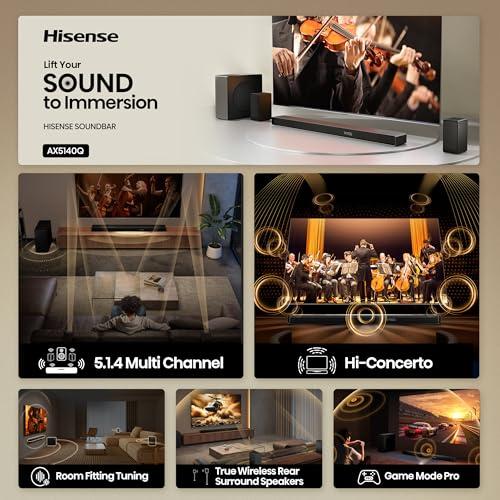
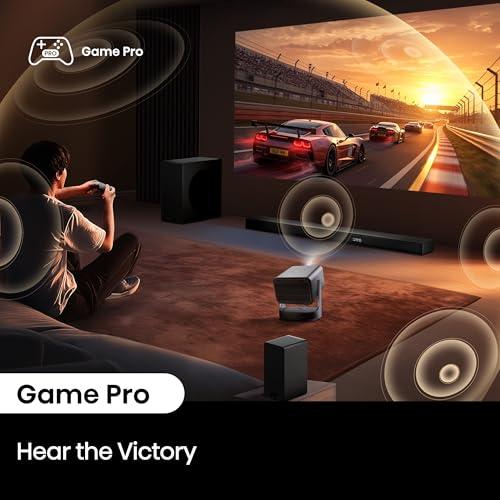
The Hisense includes Game Pro mode, which adjusts the audio processing to emphasize positional cues—footsteps, gunshots, and environmental sounds that help you react faster in competitive games. While it doesn't have the advanced passthrough features of the Samsung, the fully wireless design eliminates cable clutter around gaming setups.
For serious gamers, especially those with newer consoles, the Samsung's advanced connectivity features provide a meaningful advantage. But for casual gaming where audio immersion matters more than technical specs, the Hisense delivers excellent results.
Both soundbars include room correction technology, but they work differently. The Samsung's SpaceFit Sound+ analyzes your room's acoustics and adjusts the audio accordingly. This happens automatically and generally works well across different room sizes and furniture arrangements.
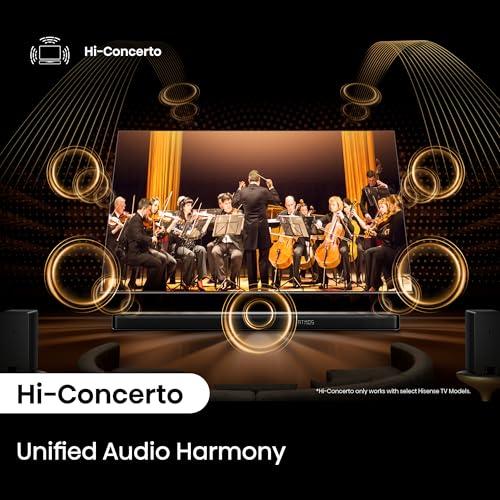
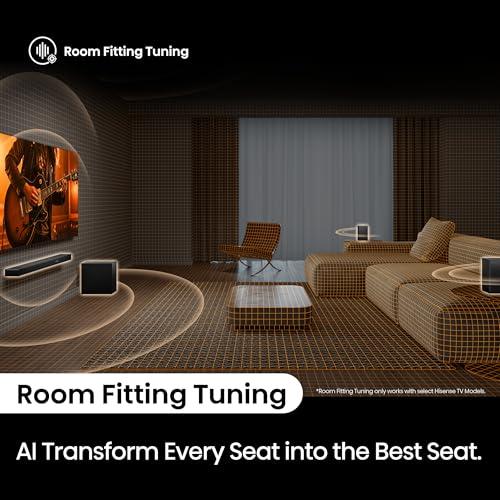
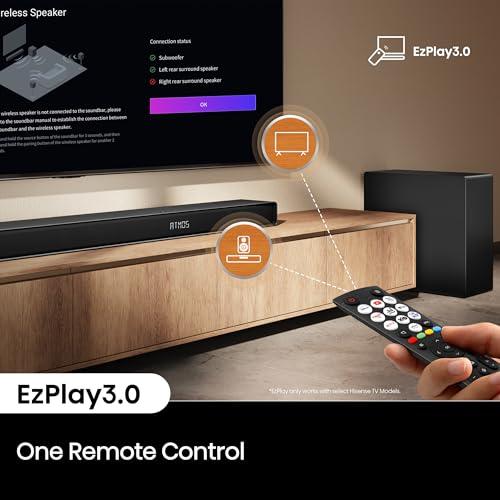
The Hisense combines AI EQ with room fitting tuning that works particularly well when paired with Hisense TVs through their Hi-Concerto platform. This integration allows the TV and soundbar to work together as a unified system, with coordinated processing and simplified control through a single remote.
If you own a Samsung TV, the Samsung soundbar offers Q-Symphony technology, which uses both the TV speakers and soundbar simultaneously to create an expanded soundstage. Similarly, the Hisense works best with Hisense TVs for optimal integration.
The reality is that both systems work fine with any TV brand, but you'll get the best experience when matching brands for the advanced features.
At the time of writing, the Samsung costs significantly more than the Hisense—roughly 70% higher. This price difference reflects their different market positions and target audiences.
The Hisense delivers what most people actually need from a premium soundbar: convincing surround sound, impressive Dolby Atmos effects, and simple setup, all at a price that doesn't require serious budget planning. For the majority of buyers, it provides 90% of the Samsung's performance at 60% of the cost.
The Samsung justifies its premium through refinement and advanced features that matter to specific users. The superior dialogue clarity, precise surround placement, and gaming connectivity features serve people who prioritize audio quality and have the budget to pay for incremental improvements.
When evaluating these soundbars, focus on these key areas:
Dialogue Intelligibility: Can you understand conversations without constantly adjusting volume? The Samsung wins here due to its dedicated center channel.
Surround Immersion: Do effects convincingly move around you? Both excel, but differently—Samsung for precision, Hisense for overhead effects.
Setup Complexity: How long from unboxing to enjoyable sound? The Hisense dramatically simplifies installation with its wireless design.
Bass Integration: Does the subwoofer blend seamlessly or sound separate? The Samsung achieves better integration through superior processing.
Gaming Compatibility: Can it handle modern console features? The Samsung offers more advanced passthrough capabilities.
The Hisense represents exceptional value for people who want to upgrade significantly from TV speakers without dealing with complex installation or premium pricing. It's particularly compelling for apartment dwellers or anyone who moves frequently, since the wireless design makes relocation painless.
The Samsung serves audio enthusiasts and serious home theater builders who understand that the last 10% of performance often costs 50% more and consider it worthwhile. It's also the clear choice for gamers who want their soundbar to serve as a hub for multiple devices.
After researching extensive user feedback and expert opinions, the truth is that both soundbars will dramatically improve your TV watching experience compared to built-in speakers. The differences, while real and sometimes significant, matter more to audio enthusiasts than casual users.
The Hisense AX5140Q offers remarkable value and convenience that makes it the smarter choice for most people. Its combination of convincing surround sound, impressive Atmos effects, and wireless simplicity delivers the core benefits of premium audio without the premium complexity or cost.
The Samsung Q Series 9.1.2 serves a more specific audience willing to pay significantly more for refinement, precision, and advanced features. If you're building a serious home theater or need the gaming connectivity features, the price premium becomes justified.
For most buyers, the Hisense provides the better overall package—impressive performance that exceeds expectations at a price that won't trigger budget anxiety. But if audio quality is a genuine priority and budget isn't a primary concern, the Samsung delivers measurably superior dialogue clarity and surround precision that justifies its higher cost.
The beauty of the current soundbar market is that both approaches work well. Whether you choose the value-focused wireless convenience of the Hisense or the premium refinement of the Samsung, you'll end up with dramatically better audio than what your TV can provide on its own.
| Hisense AX5140Q | Samsung Q Series 9.1.2 |
|---|---|
| Channel Configuration - Determines surround sound precision and immersion quality | |
| 5.1.4 channels (5 main + 1 sub + 4 height) | 9.1.2 channels (9 main + 1 sub + 2 height) |
| Height Channels - Critical for convincing Dolby Atmos overhead effects | |
| 4 up-firing speakers (front + rear) | 2 up-firing speakers (front only) |
| Speaker Setup - Impacts installation complexity and placement flexibility | |
| Fully wireless rear speakers (power-only) | Wired rear speakers to receiver unit |
| Total Power Output - Affects maximum volume and dynamic range | |
| 600W total system power | Not specified (typically higher for 9-channel) |
| Dialogue Clarity - Essential for TV shows and movies | |
| AI EQ processing with Voice mode | Dedicated center channel with advanced processing |
| Gaming Features - Important for console integration | |
| Game Pro mode, no 120Hz passthrough | 4K 120Hz passthrough with VRR support |
| Room Correction - Optimizes sound for your specific space | |
| Room fitting tuning with AI EQ | SpaceFit Sound+ automatic calibration |
| TV Integration - Simplifies control and enhances performance | |
| Hi-Concerto with Hisense TVs, EzPlay 3.0 | Q-Symphony with Samsung TVs |
| Connectivity Options - Determines device compatibility | |
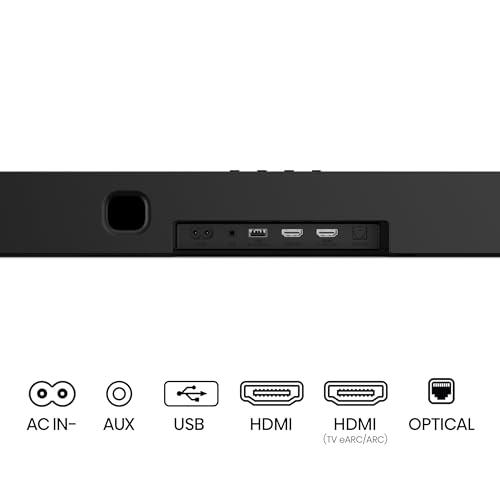
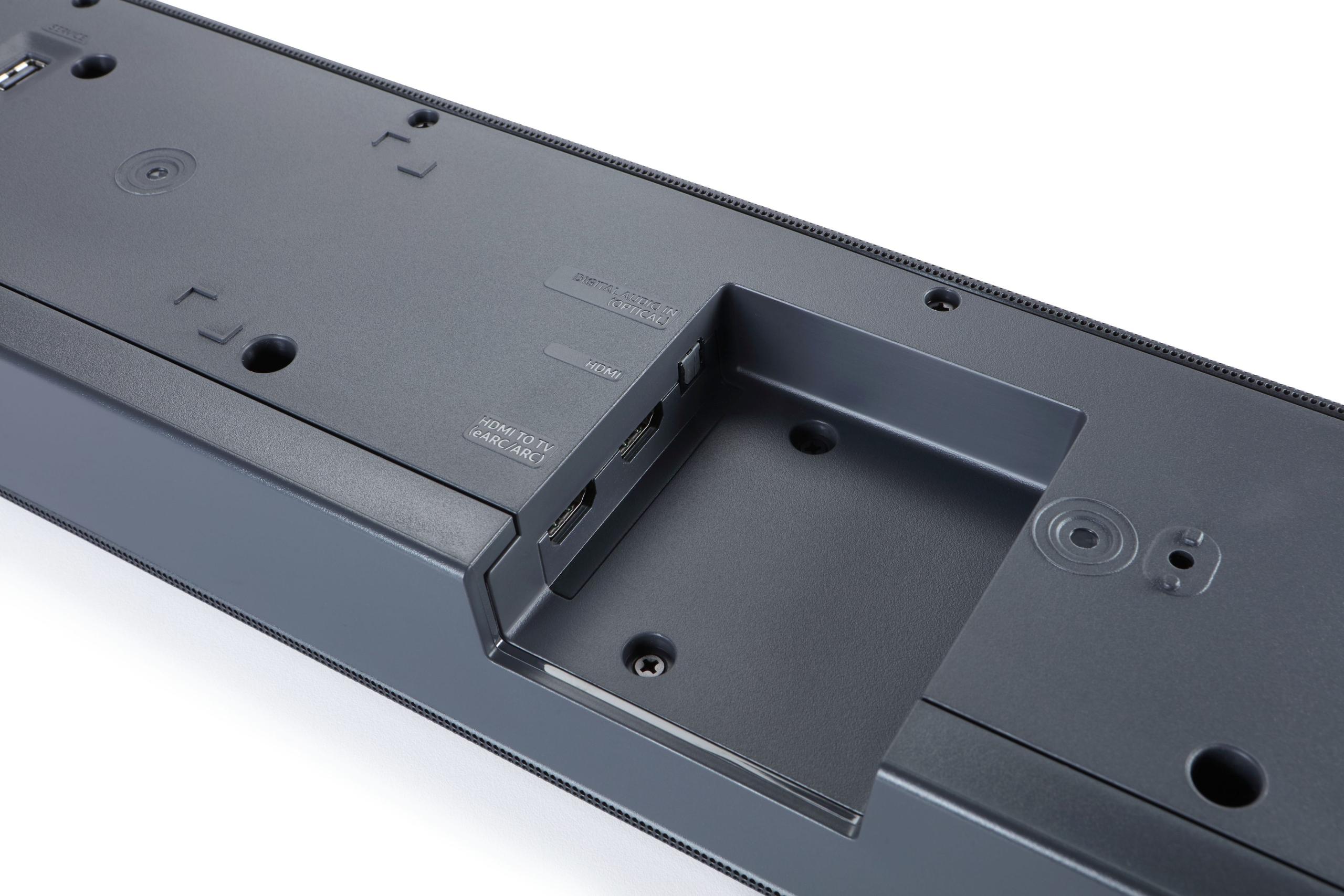
| HDMI eARC, Optical, AUX, USB, Bluetooth 5.3 | HDMI eARC, multiple HDMI inputs, Chromecast built-in |
| Value Proposition - Performance per dollar at time of writing | |
| Exceptional value with 90% of premium performance | Premium refinement justifies higher cost for enthusiasts |
| Best For - Target user scenarios | |
| Budget-conscious buyers wanting wireless convenience | Audio purists and serious gamers prioritizing precision |
The Samsung Q Series 9.1.2 provides more precise surround sound placement with 9 discrete channels, while the Hisense AX5140Q offers superior overhead effects with 4 height channels versus Samsung's 2. For traditional left-right-rear surround effects, the Samsung wins, but for Dolby Atmos height immersion, the Hisense excels.
The Hisense AX5140Q is significantly easier to install because its rear speakers are completely wireless - they only need power outlets. The Samsung Q Series 9.1.2 requires wired connections between the satellite speakers and receiver unit, making placement more complex and requiring cable management.
The Samsung Q Series 9.1.2 is superior for gaming due to its 4K 120Hz passthrough support and variable refresh rate compatibility with modern consoles. The Hisense AX5140Q offers a dedicated Game Pro mode but lacks advanced passthrough features needed for PlayStation 5 and Xbox Series X optimization.
Both the Hisense AX5140Q and Samsung Q Series 9.1.2 work with any TV brand through HDMI eARC or optical connections. However, you'll get enhanced features like simplified control and optimized audio when pairing the Hisense with Hisense TVs or the Samsung with Samsung TVs.
The Samsung Q Series 9.1.2 provides superior dialogue clarity thanks to its dedicated center channel that keeps voices focused and separate from effects. The Hisense AX5140Q uses AI processing and Voice mode to enhance dialogue, which works well but isn't as precise as a discrete center speaker.
Both soundbars include wireless subwoofers, but the Samsung Q Series 9.1.2 typically offers more controlled and refined bass integration. The Hisense AX5140Q features a 6.5-inch subwoofer that delivers impressive room-filling bass for its size, though some users report occasional resonance in certain room configurations.
The Hisense AX5140Q provides exceptional value, delivering approximately 90% of premium soundbar performance while costing significantly less than the Samsung Q Series 9.1.2. The Samsung justifies its higher cost through superior refinement and advanced features, but the Hisense offers the better price-to-performance ratio.
Both soundbars excel in home theater applications. The Samsung Q Series 9.1.2 provides more precise audio placement ideal for dedicated theater rooms, while the Hisense AX5140Q offers impressive immersion with easier wireless installation perfect for living room theaters. Choose based on whether you prioritize precision or convenience.
Both the Hisense AX5140Q and Samsung Q Series 9.1.2 support all major formats including Dolby Atmos, DTS:X, Dolby TrueHD, and DTS-HD Master Audio. The Samsung typically includes more advanced processing algorithms, while the Hisense offers DTS Virtual:X for enhanced virtualization of non-Atmos content.
Yes, both soundbars offer room optimization. The Samsung Q Series 9.1.2 features SpaceFit Sound+ that automatically calibrates audio based on room acoustics. The Hisense AX5140Q includes room fitting tuning combined with AI EQ that adapts to your space and content type for optimal sound.
The Hisense AX5140Q is ideal for apartments due to its fully wireless rear speakers that don't require cable management and its compact components that fit easily in smaller spaces. The Samsung Q Series 9.1.2 requires more planning for speaker wire routing, making the Hisense more apartment-friendly.
Both soundbars support TV remote control through HDMI CEC. The Hisense AX5140Q offers enhanced integration with Hisense TVs through EzPlay 3.0, while the Samsung Q Series 9.1.2 provides Q-Symphony integration with Samsung TVs. Either soundbar will work with universal TV remotes for basic volume and power control.
We've done our best to create useful and informative comparisons to help you decide what product to buy. Our research uses advanced automated methods to create this comparison and perfection is not possible - please contact us for corrections or questions. These are the sites we've researched in the creation of this article: shop.hisense-usa.com - manuals.plus - dolby.com - youtube.com - gzhls.at - rtings.com - youtube.com - bestbuy.com - manuals.plus - bestbuy.com - hisense-usa.com - youtube.com - device.report - manuals.plus - youtube.com - device.report - manuals.plus - youtube.com - rtings.com - samsung.com - markselectrical.co.uk - techradar.com - walmart.com - samsung.com - samsung.com - youtube.com - samsung.com - biancos.com - crutchfield.com - samsung.com

Privacy Policy
Terms and Conditions - Affiliate Policy
Home Security
© Copyright 2008-2026.
11816 Inwood Rd #1211, Dallas, TX 75244