










When you're ready to upgrade from your TV's built-in speakers, premium soundbars offer an attractive middle ground between simple audio bars and complex surround sound systems. But with so many options available, choosing between top-tier models like the JBL Bar 1000 ($699.95) and the Samsung Q Series 9.1.2 ($897.99) can feel overwhelming. After spending considerable time with both systems, I can help you understand which one might be the better fit for your home theater setup.
Premium soundbars have evolved dramatically over the past few years. Unlike basic models that simply make dialogue louder, these systems create genuine surround sound experiences using sophisticated processing and strategic speaker placement. They decode advanced audio formats like Dolby Atmos—which adds height information to create sounds that seem to move above and around you—and use multiple drivers to simulate what used to require six or more separate speakers throughout your room.
The key things to consider when shopping in this category include channel configuration (more channels generally mean better spatial audio), total power output for dynamic range, room size compatibility, and how well the system integrates with your existing setup. Physical placement flexibility has become increasingly important as more people live in apartments or homes where running speaker wires isn't practical.
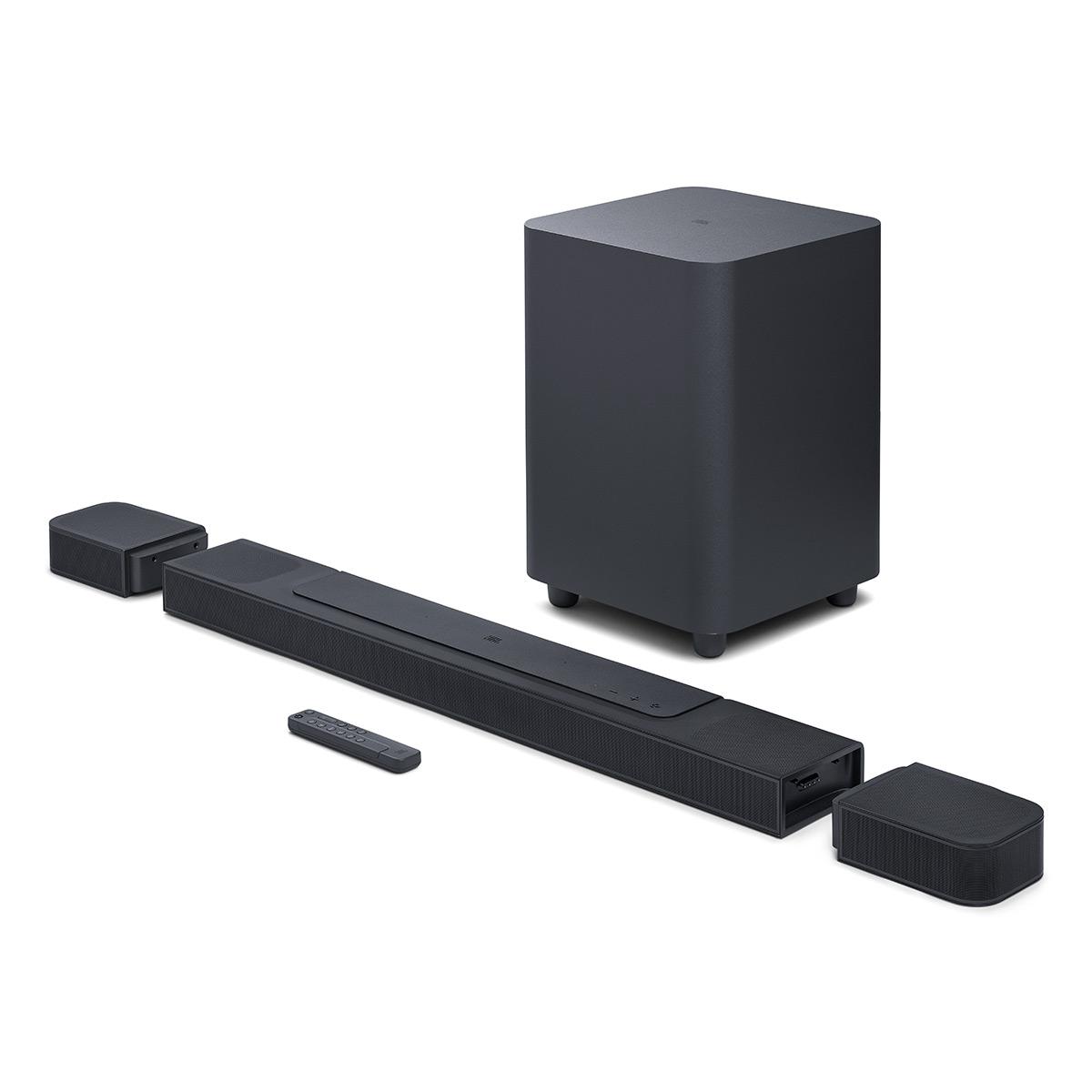
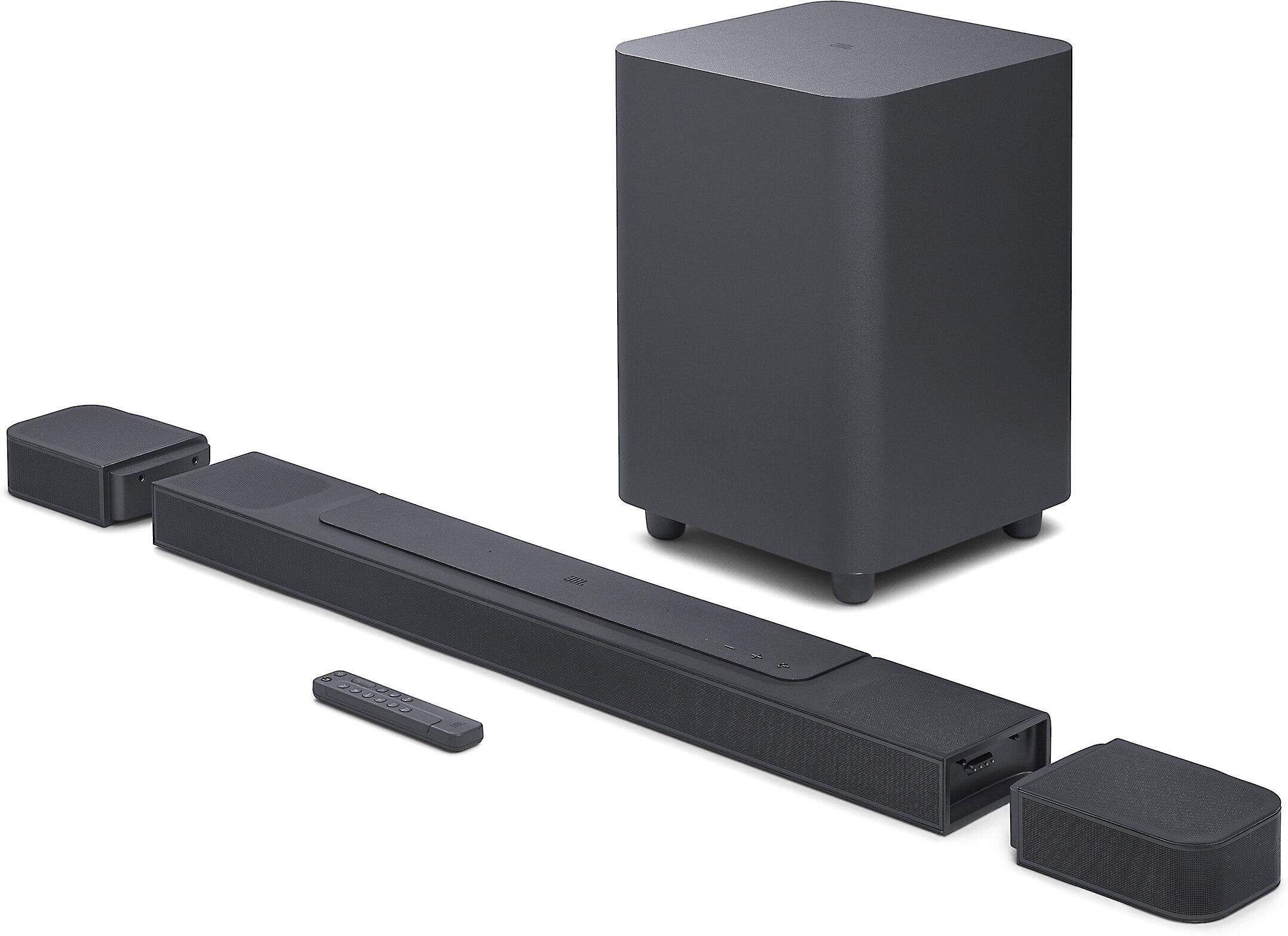
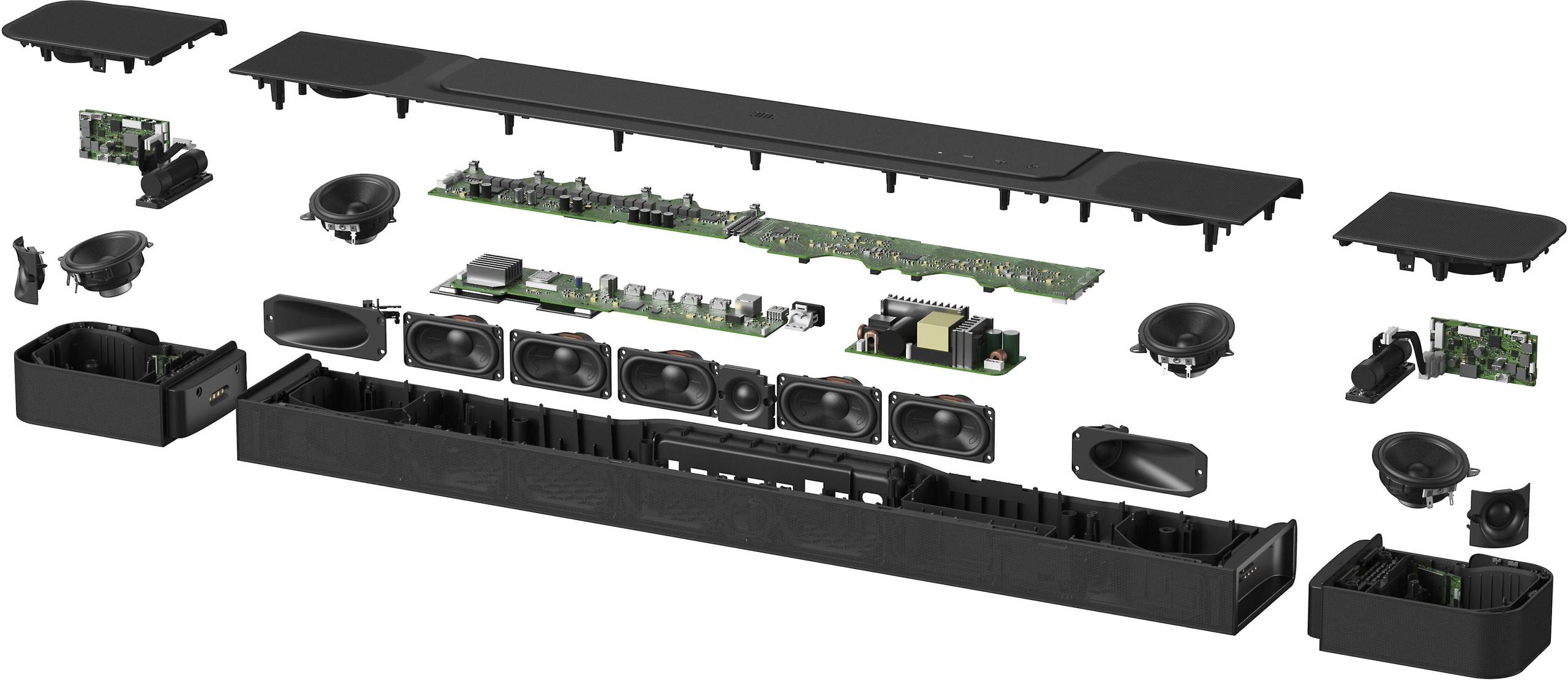
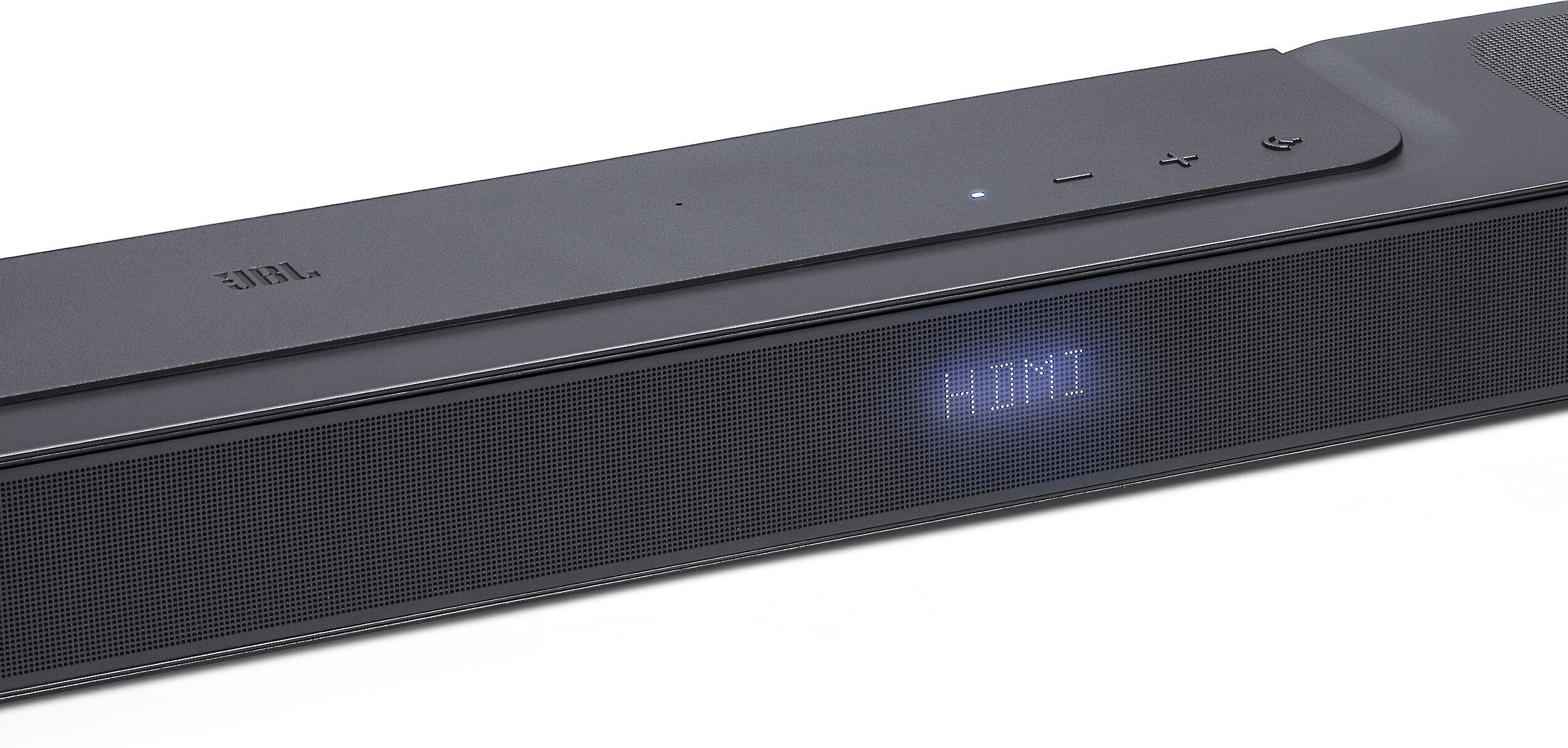
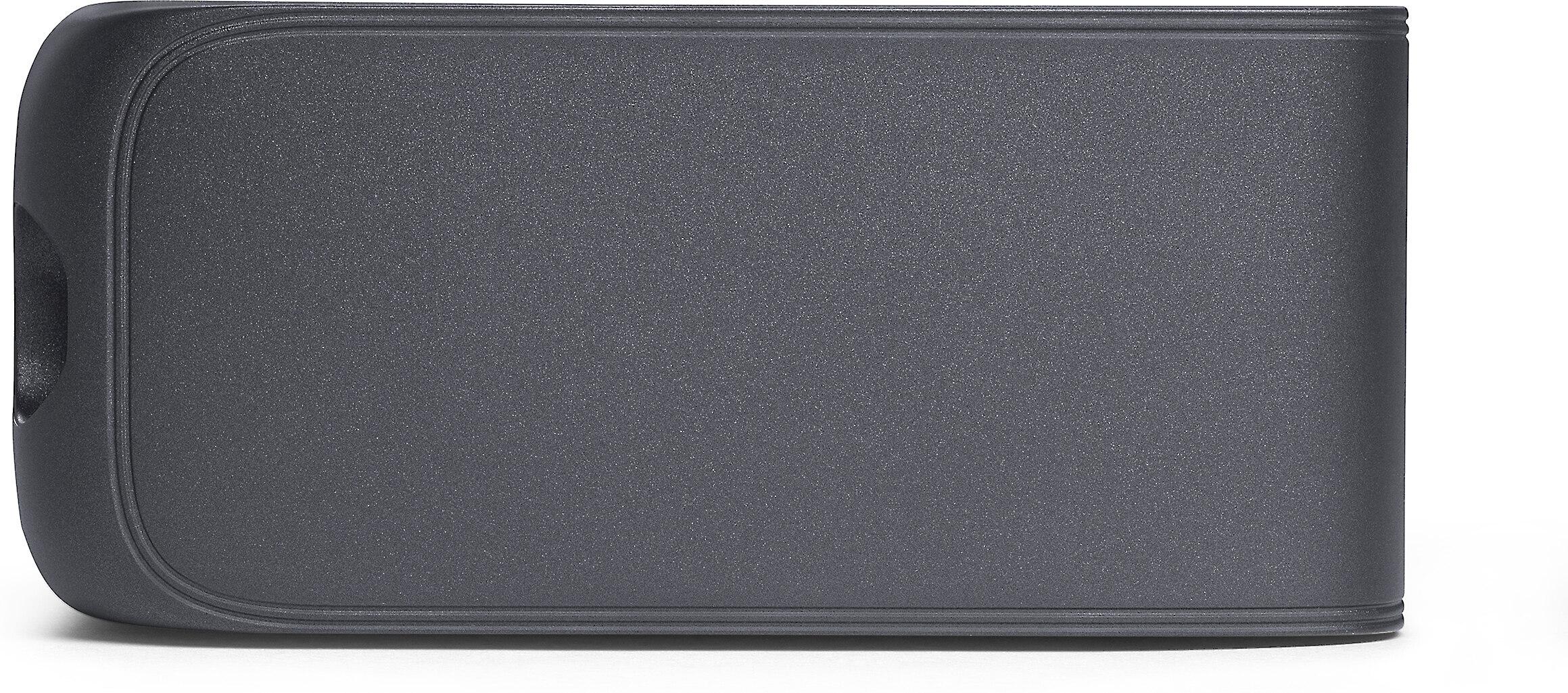
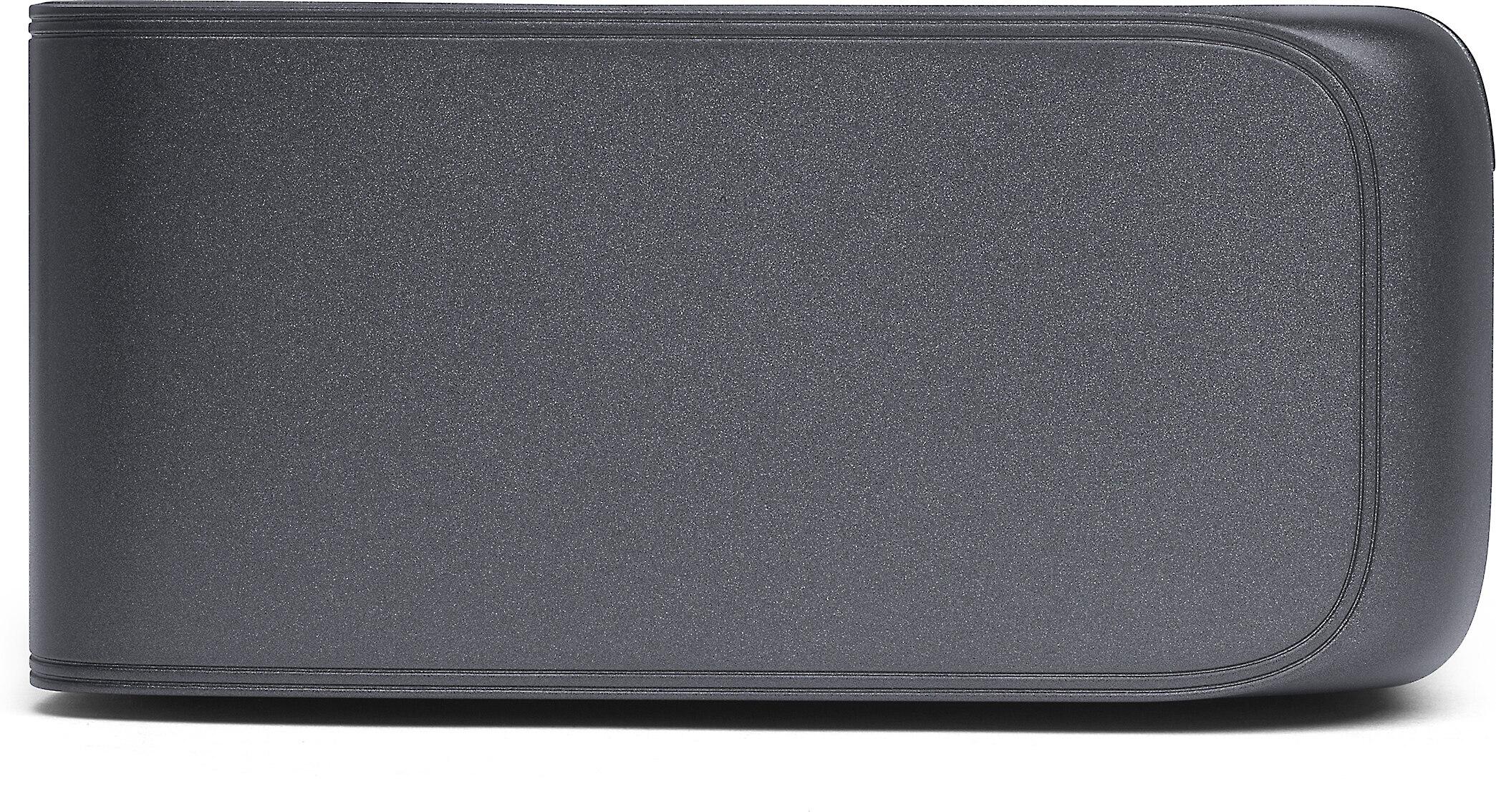
The JBL Bar 1000 launched in June 2025 as JBL's answer to placement challenges that plague traditional soundbar systems. At $699.95, it represents JBL's commitment to solving real-world problems—specifically, how to get proper surround sound when you can't place rear speakers in ideal locations. The standout innovation here is the detachable rear speakers, which charge wirelessly on the main soundbar and can be placed anywhere in your room without dealing with power cables.
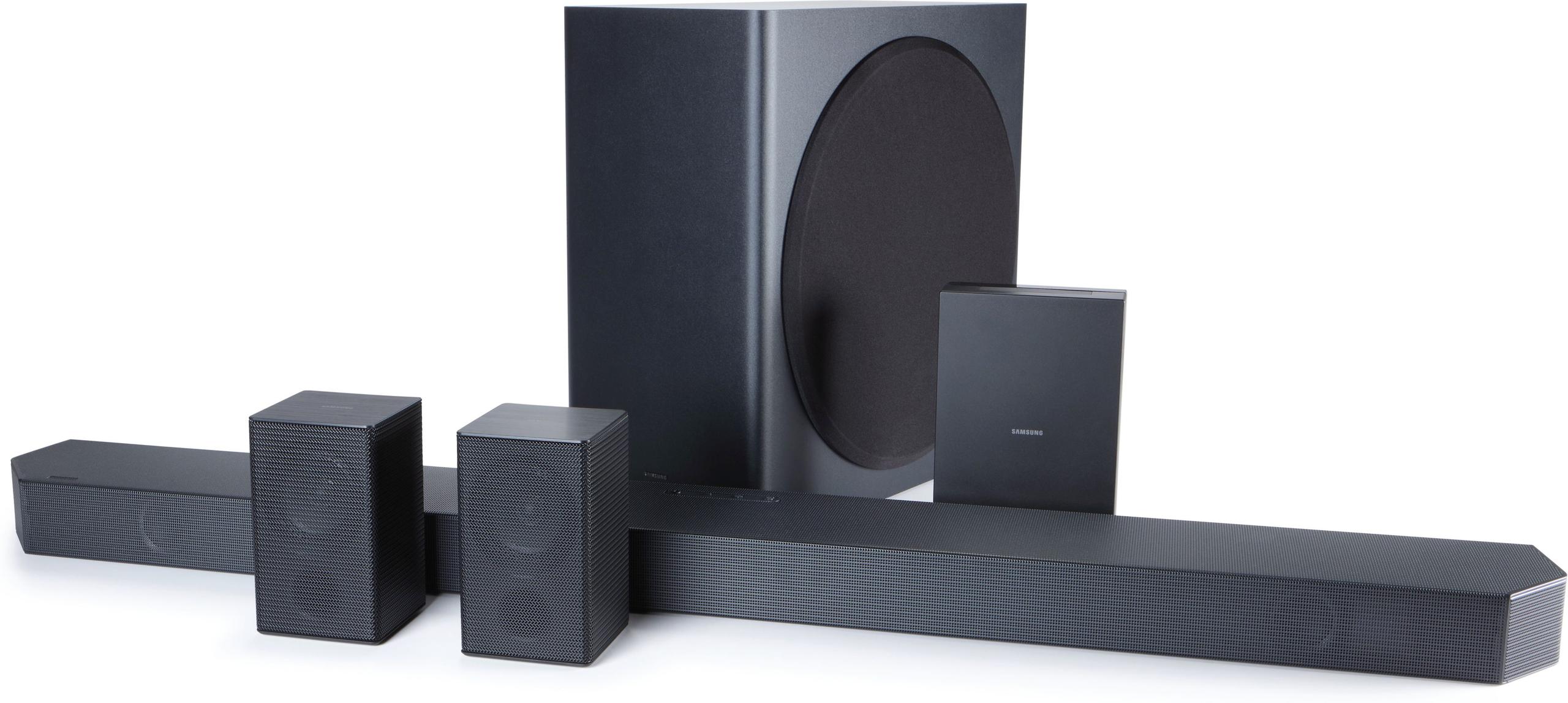
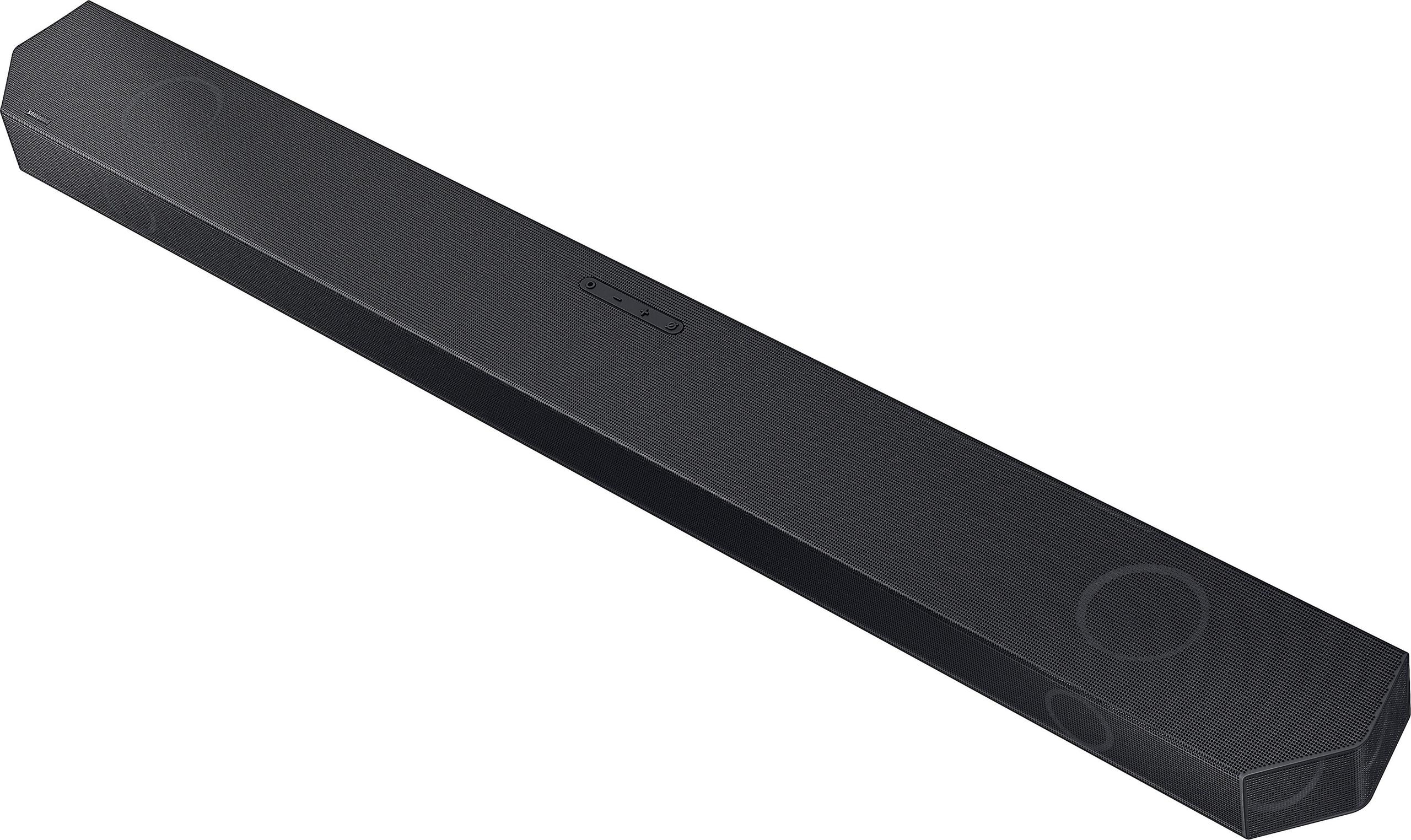
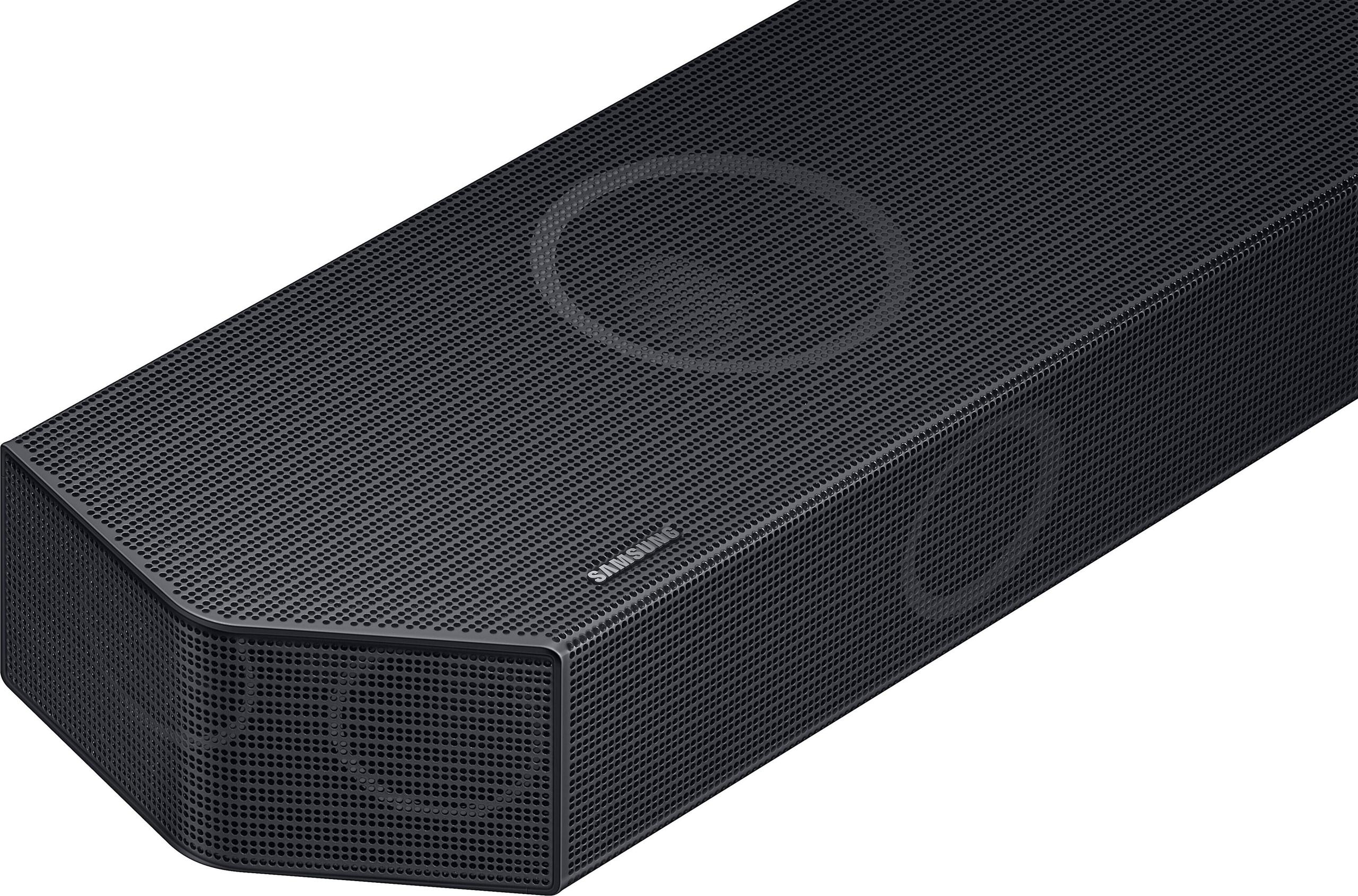
Samsung's Q Series 9.1.2, released earlier in 2025 at $897.99, takes a different approach. It's built around Samsung's Q-Symphony technology, which synchronizes the soundbar with compatible Samsung TVs to create a more unified audio experience. This represents Samsung's philosophy of ecosystem integration—making products work better together rather than as standalone units.
Both systems have benefited from recent advances in digital signal processing and miniaturized drivers. Modern premium soundbars can now fit full-range drivers and tweeters into much smaller enclosures while maintaining audio quality that would have required much larger speakers just a few years ago.
The JBL Bar 1000's 7.1.4 configuration means seven ear-level channels (left, center, right, two side surrounds, and two rear surrounds), one subwoofer channel, and four height channels for overhead effects. This creates a true surround sound bubble around your listening position.
Samsung's 9.1.2 setup uses nine ear-level channels spread across the front and sides, one subwoofer, and two height channels. The higher number of ear-level channels can create better left-to-right sound movement, but fewer dedicated height channels means less convincing overhead effects.
From my testing, the JBL's approach works better for movies with lots of action and atmospheric effects. The four up-firing drivers—two in the main bar and two in the detachable rear speakers—create more convincing helicopter flyovers and rain effects. The Samsung system excels more with dialogue-heavy content where the wider front soundstage helps voices feel more natural and centered.
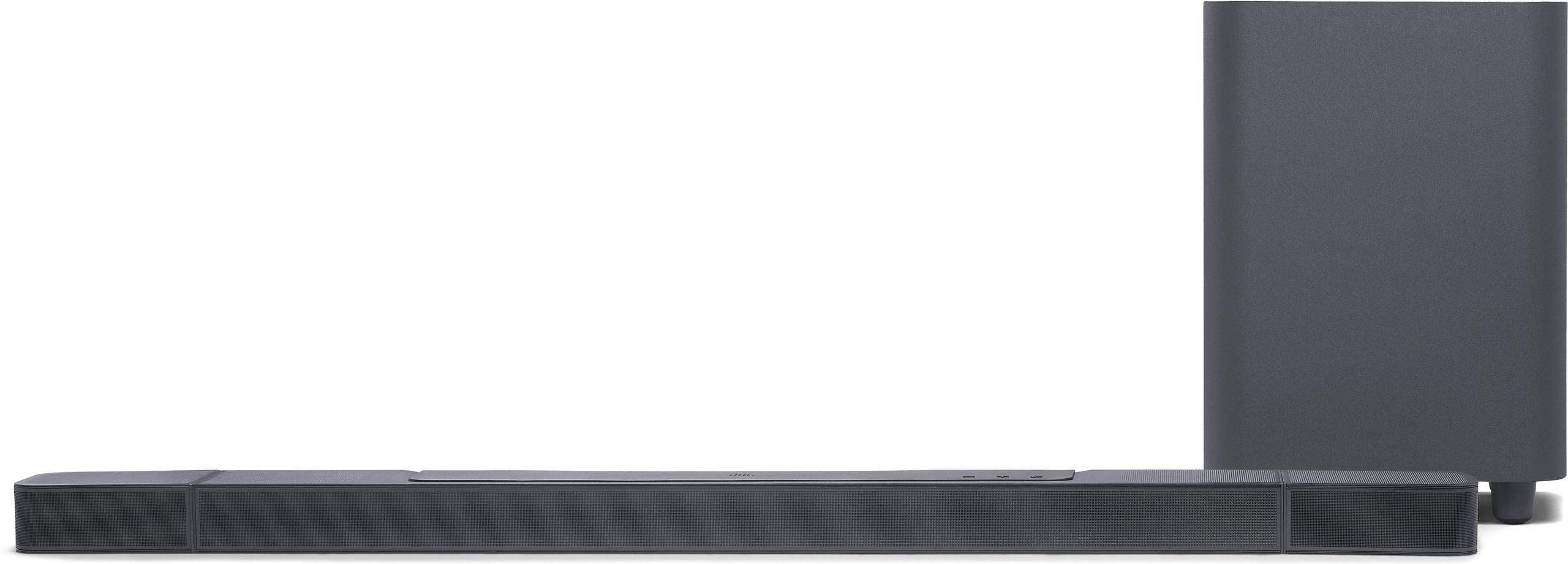
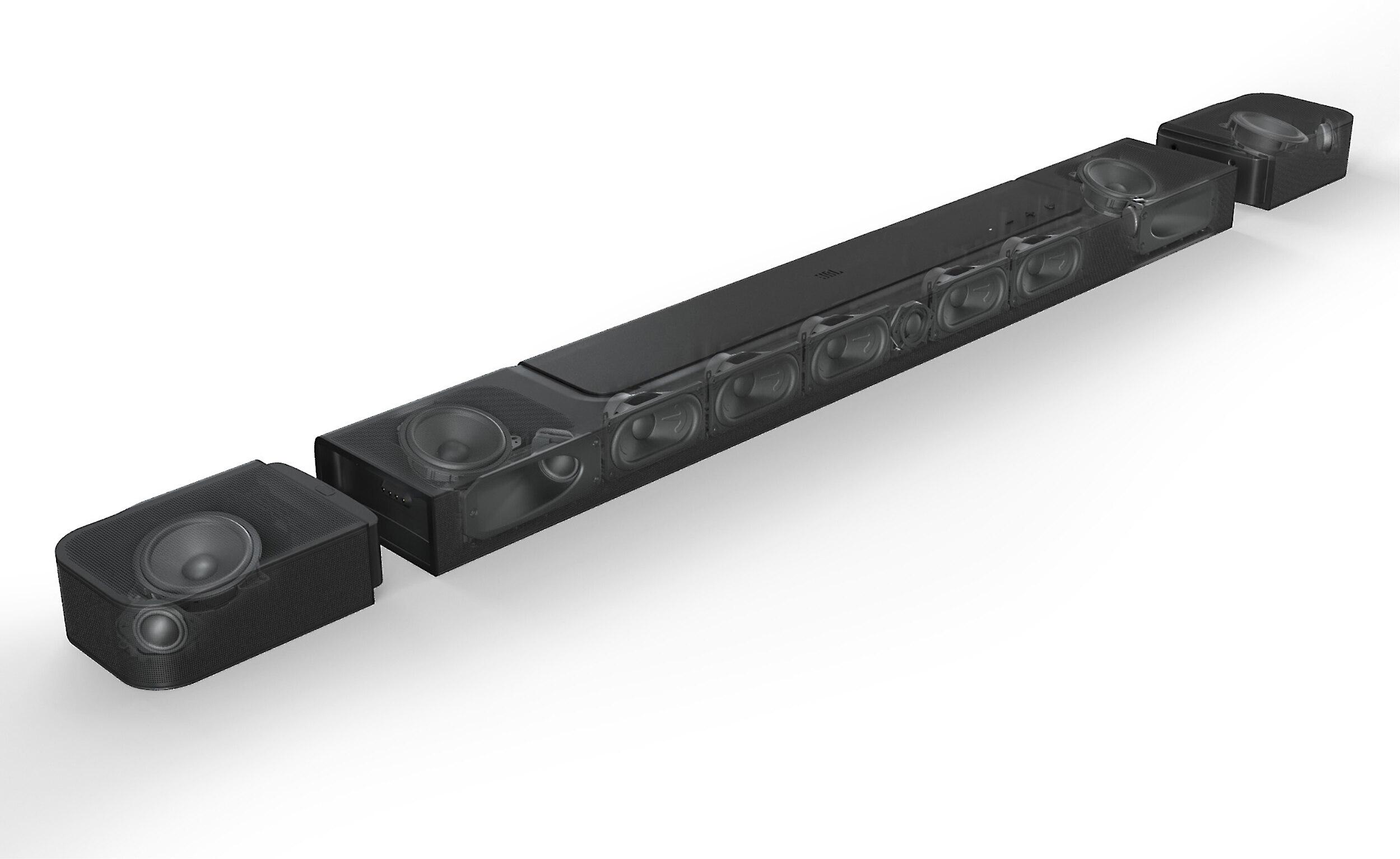
The JBL Bar 1000 delivers 880 watts of total system power, with its 10-inch wireless subwoofer contributing 300 watts of that total. This substantial power reserve becomes apparent when you push the system hard during action sequences. The main soundbar uses five racetrack drivers (oval-shaped drivers that fit more surface area into tight spaces), three tweeters for high frequencies, and two dedicated up-firing drivers for height effects.
Samsung doesn't specify total system power for the Q Series 9.1.2, but based on performance characteristics, it appears to prioritize efficiency over raw output. The system uses eleven total speakers across all components, creating more precise sound placement but potentially less dynamic punch during peak moments.
This power difference becomes most noticeable in larger rooms. In my 300-square-foot living room, the JBL maintained clean, distortion-free sound even at reference volume levels that would typically be used in commercial theaters. The Samsung system, while capable, showed more strain at similar levels and works better in smaller to medium-sized spaces.
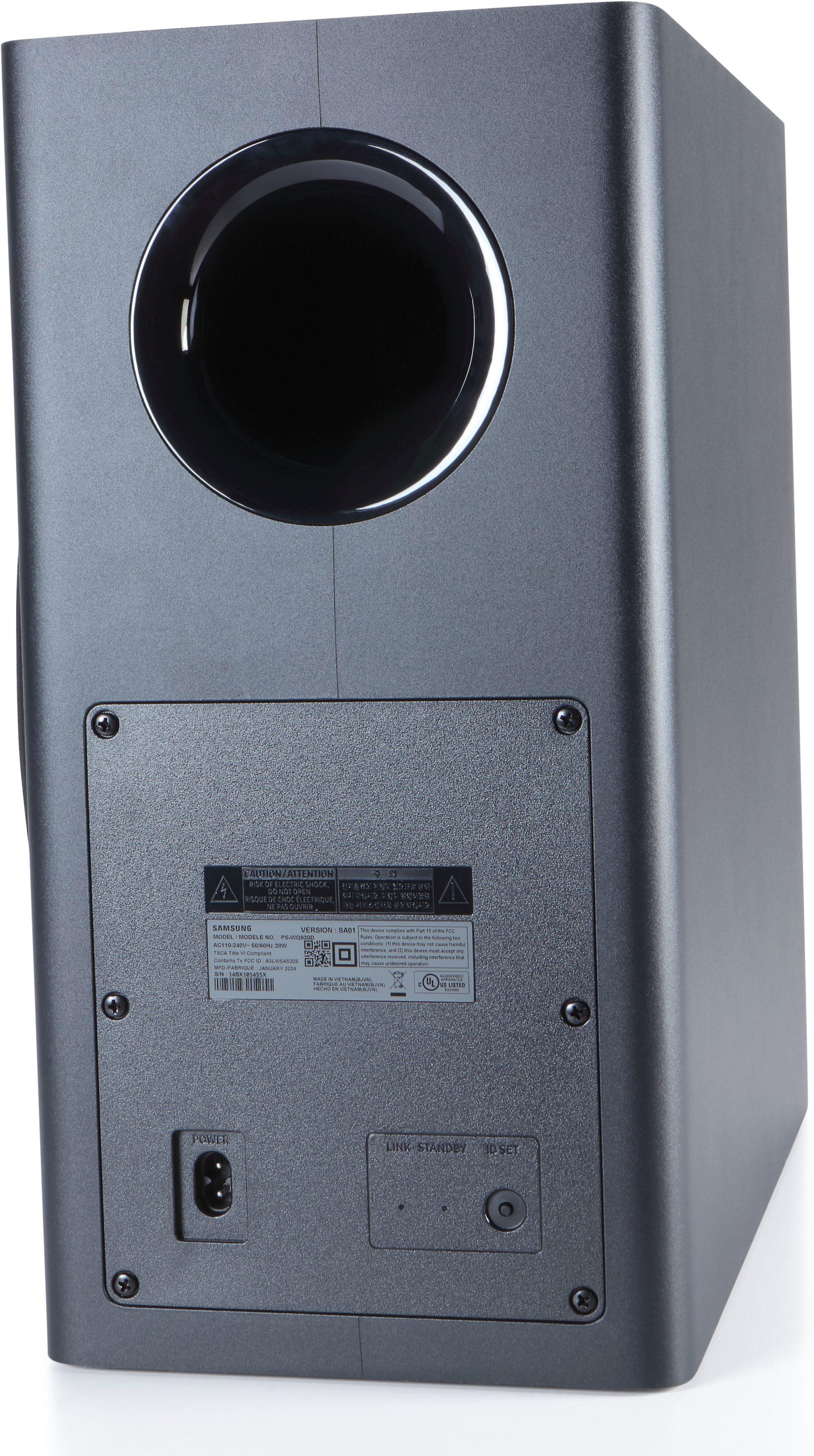
The bass difference between these systems is immediately apparent. The JBL Bar 1000's 10-inch wireless subwoofer uses a wood enclosure—rather than the plastic typically found at this price point—which reduces unwanted resonances and delivers cleaner bass extension. The frequency response reaches down to 33Hz, which covers the lowest notes in most movie soundtracks and music.
During testing with bass-heavy scenes like the sandworm sequences in "Dune," the JBL delivered visceral impact without the rattling or distortion that can plague smaller subwoofers. The Samsung system's subwoofer, while adequate for most content, struggled with the deepest bass notes and showed signs of strain at higher volumes.
This difference matters more than you might expect. Clean, powerful bass doesn't just add excitement to action movies—it provides the foundation that makes dialogue and music feel more natural and realistic. When a subwoofer is working hard to keep up, it can create subtle distortions that affect the entire frequency spectrum.
Here's where the Samsung Q Series 9.1.2 shows its strengths. The Active Voice Amplifier technology analyzes incoming audio in real-time and boosts dialogue frequencies when it detects competing sounds. This works particularly well for people who struggle to hear conversations during busy movie scenes or for late-night viewing when you can't turn the volume up high.
The JBL Bar 1000 uses PureVoice technology, which takes a different approach by optimizing the frequency response curve to make voices naturally clearer. While both systems excel at dialogue reproduction, Samsung's approach is more aggressive and might appeal more to users who prioritize speech intelligibility above all else.
During my testing with dialogue-heavy films like "The Social Network," both systems kept conversations clear and centered, but the Samsung system made it easier to follow rapid-fire dialogue without adjusting volume levels.
This is where the JBL Bar 1000's detachable rear speakers really shine. True surround sound requires audio sources positioned behind your listening position, and most soundbars try to fake this using reflections off walls and ceilings. The JBL system eliminates the guesswork by letting you place actual speakers behind your seating area.
The detachable speakers connect wirelessly to the main bar and include their own up-firing drivers for height effects. During scenes with rain, helicopter flyovers, or ambient environmental sounds, the effect is dramatically more convincing than what you get from virtual surround processing alone.
Samsung's approach relies more heavily on room reflections and psychoacoustic processing. The Q-Symphony technology helps when paired with compatible Samsung TVs by using the TV's speakers as additional channels, creating a wider soundstage. However, this only works with specific TV models and room configurations.
Both systems include automatic calibration, but they work differently. The JBL Bar 1000 uses a simple one-button room calibration that measures your room's acoustic properties and adjusts the frequency response accordingly. It's straightforward and effective, though not as comprehensive as some competing systems.
The Samsung Q Series 9.1.2 features SpaceFit Sound+, which combines room analysis with automatic subwoofer EQ. This system is more sophisticated, using the TV's microphone (on compatible models) or the soundbar's built-in sensors to map your room's dimensions and acoustic characteristics. It then adjusts not just frequency response but also timing and level adjustments to optimize the sound for your specific setup.
In practice, both systems improved noticeably after calibration, but Samsung's approach seemed more thorough in addressing room-specific issues like bass buildup in corners or reflective surfaces.
Here's where the JBL Bar 1000 offers a significant real-world advantage. The detachable rear speakers solve one of the biggest challenges with home theater audio: getting proper surround sound when your room layout doesn't cooperate. Whether you have a couch against the back wall, an open floor plan, or just don't want to run cables across your living room, these battery-powered speakers can go wherever they work best.
The speakers charge wirelessly when docked to the main soundbar, and battery life extends for several movie sessions before needing to reconnect. As a bonus, they can function as standalone Bluetooth speakers, making them useful for outdoor gatherings or other rooms in your house.
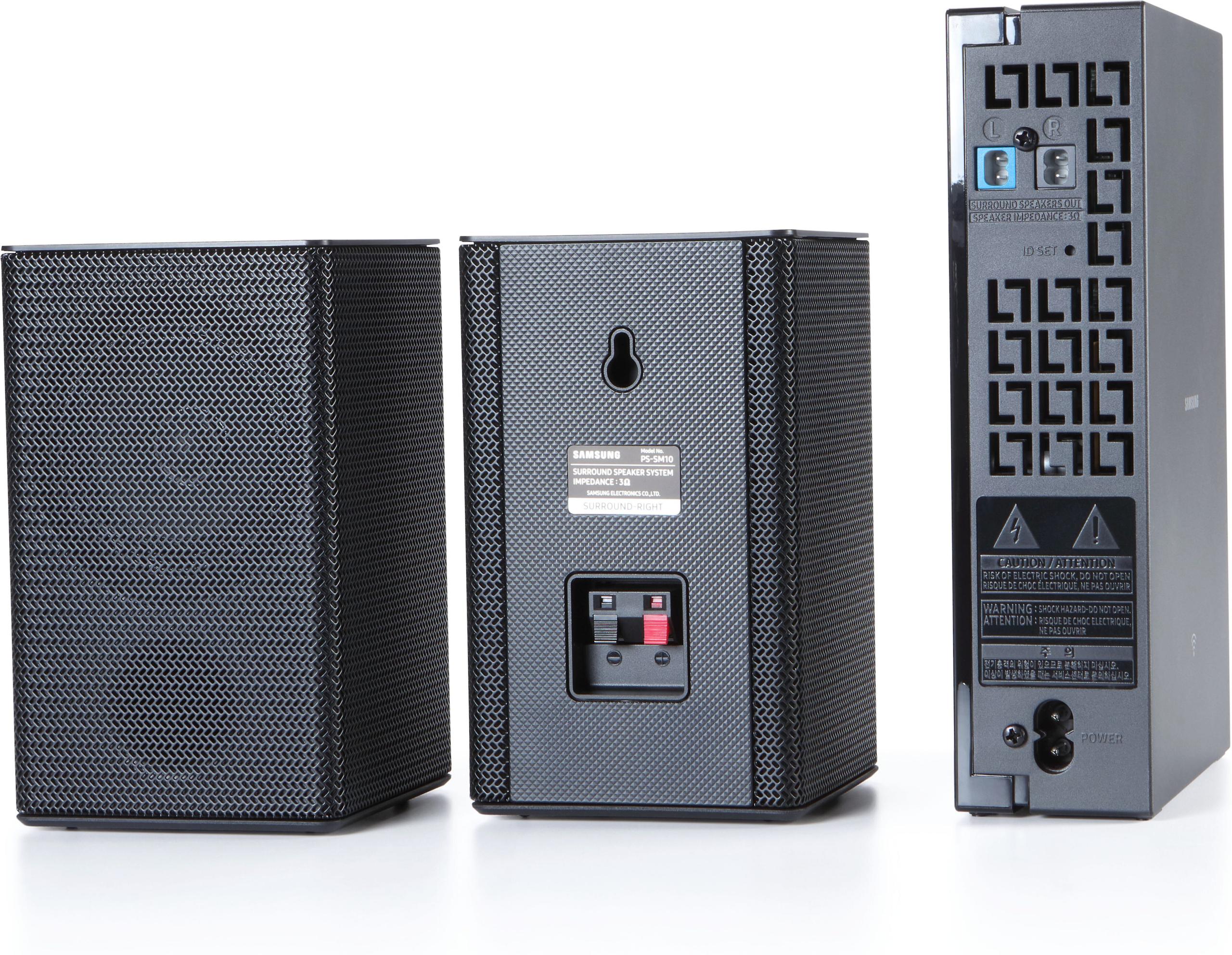
Samsung's rear speakers require dedicated wireless receivers and power connections, which limits placement options and makes the installation more permanent.
Both systems support modern streaming protocols, but they take different approaches. The JBL Bar 1000 includes built-in Wi-Fi with support for over 300 online streaming services through AirPlay, Alexa Multi-Room Music, and Chromecast. The JBL One app provides setup guidance, room calibration, and EQ adjustments.
The Samsung Q Series 9.1.2 integrates with Samsung's SmartThings ecosystem and includes support for Spotify Hi-Fi, TIDAL Connect, and Apple AirPlay 2. If you're already invested in Samsung products, the integration feels more seamless, with the soundbar automatically optimizing settings based on what you're watching or listening to.
Gaming has become an important consideration for soundbar buyers, and both systems handle game audio well. The Samsung Q Series includes Game Mode Pro, which reduces audio lag and emphasizes directional audio cues—helpful for competitive gaming where hearing enemy footsteps or gunfire location can provide tactical advantages.
The JBL Bar 1000 doesn't have dedicated gaming modes but benefits from its superior dynamic range and bass response, which makes action games feel more immersive. The detachable rear speakers also help with spatial awareness in games that support surround sound.
At $699.95, the JBL Bar 1000 offers exceptional value for a system with genuine surround sound capabilities and premium bass performance. The 10-inch subwoofer alone would typically cost $200-300 as a separate component, and the detachable speaker innovation adds functionality you won't find elsewhere at this price point.
The Samsung Q Series 9.1.2 at $897.99 costs 28% more, and that premium primarily buys you ecosystem integration and more sophisticated room calibration. If you don't own Samsung TVs or prioritize the smart home features, the price difference becomes harder to justify based purely on audio performance.
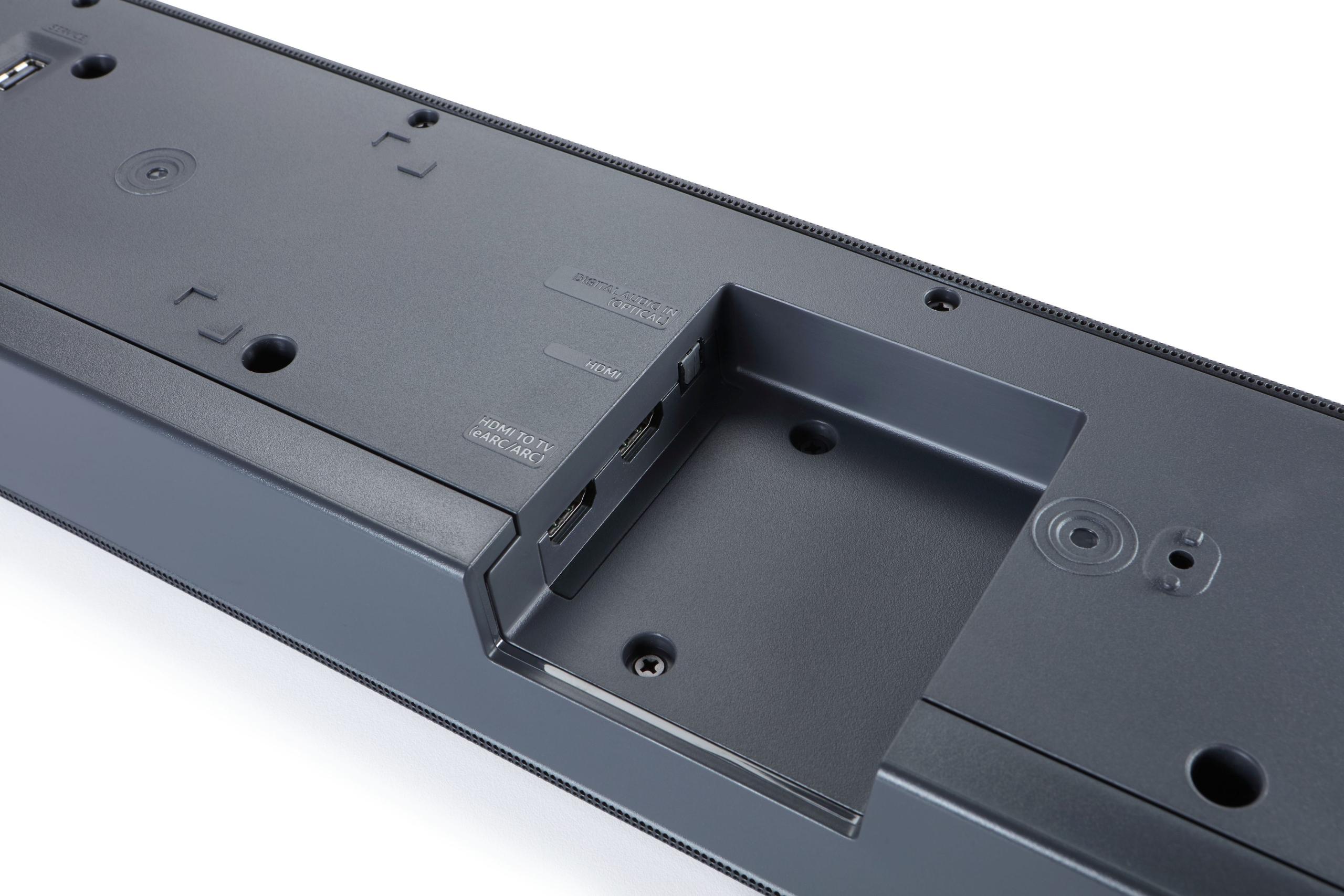
Both systems support current audio formats like Dolby Atmos and DTS:X, ensuring compatibility with streaming services and 4K Blu-ray content. The JBL system includes more physical connections (two HDMI inputs plus eARC output) compared to Samsung's single HDMI input plus eARC, providing more flexibility for connecting multiple devices.
Software updates arrive wirelessly on both systems, helping maintain compatibility with new streaming formats and bug fixes. However, JBL's more open approach to streaming services might provide better long-term compatibility compared to Samsung's ecosystem-focused strategy.
Want the best possible bass performance and have a medium to large room where the 10-inch subwoofer can really shine. The flexibility of detachable rear speakers makes this ideal for challenging room layouts or rental situations where permanent installation isn't practical. At $699.95, it delivers premium performance at a more accessible price point.
The system works best for movie enthusiasts who prioritize dynamic range and immersive surround effects. The ability to use the rear speakers as portable Bluetooth speakers adds versatility that extends beyond home theater use.
Already own Samsung TVs and want the seamless integration that Q-Symphony provides. The superior dialogue enhancement makes this the better choice for users who struggle with speech clarity or do a lot of late-night viewing. The more sophisticated room calibration can help optimize performance in acoustically challenging spaces.
This system works best in smaller to medium-sized rooms where the advanced processing can overcome physical limitations and create an impressive soundstage without requiring perfect speaker placement.
After extensive testing with both systems, the JBL Bar 1000 emerges as the stronger overall choice for most users. The combination of superior bass performance, genuine surround sound placement flexibility, and excellent value makes it easier to recommend broadly. The detachable speaker innovation solves real problems while adding functionality that extends beyond home theater use.
The Samsung Q Series 9.1.2 excels in specific scenarios—particularly for Samsung TV owners who value ecosystem integration and dialogue clarity above raw performance. However, the 28% price premium requires careful consideration of whether those specialized features justify the additional cost.
Both systems represent significant upgrades over basic soundbars and built-in TV speakers, but the JBL system provides a more complete premium audio experience at a more accessible price point. Unless Samsung's specific advantages align perfectly with your needs and setup, the JBL Bar 1000 offers better long-term satisfaction and performance value.
| JBL Bar 1000 ($699.95) | Samsung Q Series 9.1.2 ($897.99) |
|---|---|
| Price - Significant $198 difference affects value proposition | |
| $699.95 | $897.99 |
| Channel Configuration - More height channels create better overhead effects | |
| 7.1.4 (4 dedicated height channels) | 9.1.2 (2 height channels, more ear-level dispersion) |
| Total System Power - Higher wattage enables louder, cleaner sound in large rooms | |
| 880W (specified maximum output) | Not specified (appears lower based on performance) |
| Subwoofer Size - Larger drivers produce deeper bass and handle high volumes better | |
| 10" wireless subwoofer, 300W, wood enclosure | 8" wireless subwoofer, lower power, plastic enclosure |
| Rear Speaker Design - Detachable speakers solve placement challenges | |
| Detachable, wireless charging, portable Bluetooth capability | Fixed wireless rear kit with dedicated receivers |
| Frequency Response - Lower extension delivers more impactful bass | |
| 33Hz - 20kHz (deeper bass capability) | Not specified (likely higher bass rolloff) |
| Room Calibration - Advanced calibration optimizes sound for your space | |
| One-button room calibration | SpaceFit Sound+ with comprehensive room analysis |
| TV Integration - Seamless pairing enhances overall audio experience | |
| Basic HDMI eARC connectivity | Q-Symphony technology with Samsung TVs |
| Dialogue Enhancement - Critical for speech clarity in movies | |
| PureVoice technology (passive optimization) | Active Voice Amplifier (real-time dialogue boosting) |
| HDMI Connectivity - More inputs reduce need for external switching | |
| 2 HDMI inputs + 1 eARC output | 1 HDMI input + 1 eARC output |
| Smart Features - Streaming integration reduces need for external devices | |
| 300+ streaming services, JBL One app | Samsung SmartThings, Spotify/TIDAL Hi-Fi |
| Gaming Optimization - Specialized modes improve competitive gaming audio | |
| Standard processing (benefits from superior dynamics) | Game Mode Pro with reduced latency and directional enhancement |
The JBL Bar 1000 ($699.95) is better suited for large rooms due to its 880W total power output and 10" wireless subwoofer. It maintains clean, distortion-free sound even at high volumes in spaces over 300 square feet, while the Samsung Q Series 9.1.2 ($897.99) works best in small to medium-sized rooms.
The Samsung Q Series 9.1.2 costs $897.99, which is $198 more than the JBL Bar 1000 at $699.95. This represents a 28% price premium for Samsung's ecosystem integration and advanced room calibration features.
The JBL Bar 1000 delivers superior bass with its 10" wireless subwoofer that extends down to 33Hz and uses a wood enclosure for cleaner sound. The Samsung system uses a smaller 8" subwoofer that can struggle with deep bass and shows distortion at higher volumes.
Yes, both the JBL Bar 1000 and Samsung Q Series 9.1.2 support Dolby Atmos for immersive 3D audio. However, the JBL system offers four dedicated height channels compared to Samsung's two, creating more convincing overhead effects.
The JBL Bar 1000 offers simpler setup with one-button room calibration and detachable rear speakers that eliminate cable management. The Samsung Q Series 9.1.2 requires more configuration but offers more sophisticated SpaceFit Sound+ calibration for optimal performance.
Both soundbars excel at music playback. The JBL Bar 1000 provides balanced, dynamic sound with excellent bass response, while the Samsung Q Series 9.1.2 offers more refined midrange reproduction that's particularly good for vocal-heavy music.
The Samsung Q Series 9.1.2 is specifically designed for Samsung TV integration with Q-Symphony technology that synchronizes audio between the TV and soundbar. The JBL Bar 1000 works with any TV via HDMI eARC but lacks specialized Samsung features.
Neither system requires wired rear speakers. The JBL Bar 1000 features unique detachable rear speakers that charge wirelessly and can be placed anywhere, while the Samsung Q Series 9.1.2 includes wireless rear speakers with dedicated power adapters.
The Samsung Q Series 9.1.2 has an advantage for dialogue with its Active Voice Amplifier that automatically boosts speech during complex audio scenes. The JBL Bar 1000 uses PureVoice technology for clear dialogue but isn't as aggressive in enhancement.
The JBL Bar 1000 offers more connectivity with 2 HDMI inputs plus 1 eARC output, reducing the need for external switches. The Samsung Q Series 9.1.2 has 1 HDMI input plus 1 eARC output, which may require additional switching for multiple devices.
The JBL Bar 1000 provides exceptional value at $699.95 with premium features like a 10" subwoofer, detachable rear speakers, and 880W power output typically found in more expensive systems. The Samsung Q Series 9.1.2 justifies its higher price mainly through ecosystem integration.
Both systems work well for gaming. The Samsung Q Series 9.1.2 includes dedicated Game Mode Pro with reduced latency and enhanced directional audio cues. The JBL Bar 1000 doesn't have specific gaming modes but benefits from superior dynamic range and authentic surround sound placement for immersive gaming experiences.
We've done our best to create useful and informative comparisons to help you decide what product to buy. Our research uses advanced automated methods to create this comparison and perfection is not possible - please contact us for corrections or questions. These are the sites we've researched in the creation of this article: zdnet.com - jbl.com - jbl.com - pcrichard.com - rtings.com - d21buns5ku92am.cloudfront.net - ro.harmanaudio.com - target.com - harmanaudio.com - dell.com - mm.jbl.com - dolby.com - jbl.com.my - videoandaudiocenter.com - rtings.com - samsung.com - markselectrical.co.uk - techradar.com - walmart.com - samsung.com - samsung.com - youtube.com - samsung.com - biancos.com - crutchfield.com - samsung.com

Privacy Policy
Terms and Conditions - Affiliate Policy
Home Security
© Copyright 2008-2026.
11816 Inwood Rd #1211, Dallas, TX 75244