



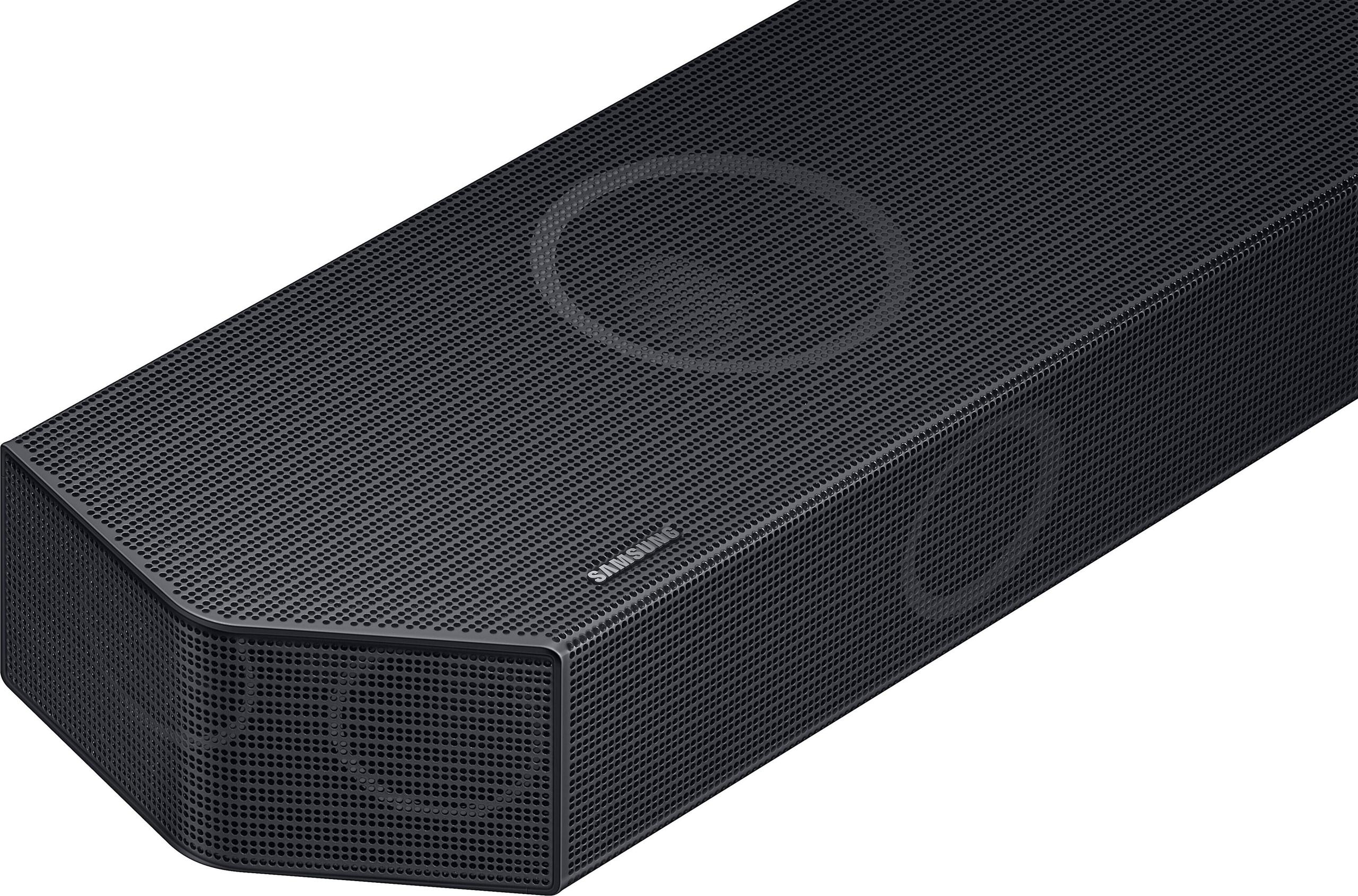




When you're tired of constantly adjusting your TV volume to hear dialogue clearly, or you find yourself cranking up the sound just to catch what characters are saying over background music, it's time to consider a soundbar upgrade. The built-in speakers on modern flat-screen TVs are notoriously weak—there's simply no room in those ultra-thin designs for proper drivers that can deliver quality sound.
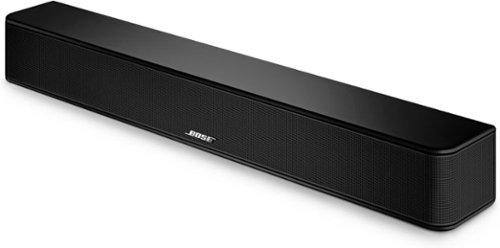
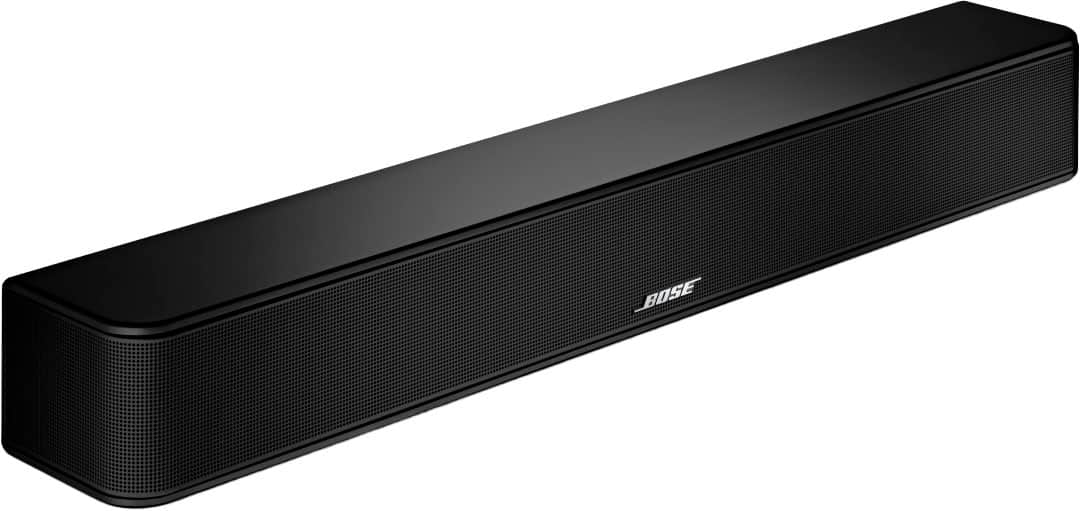
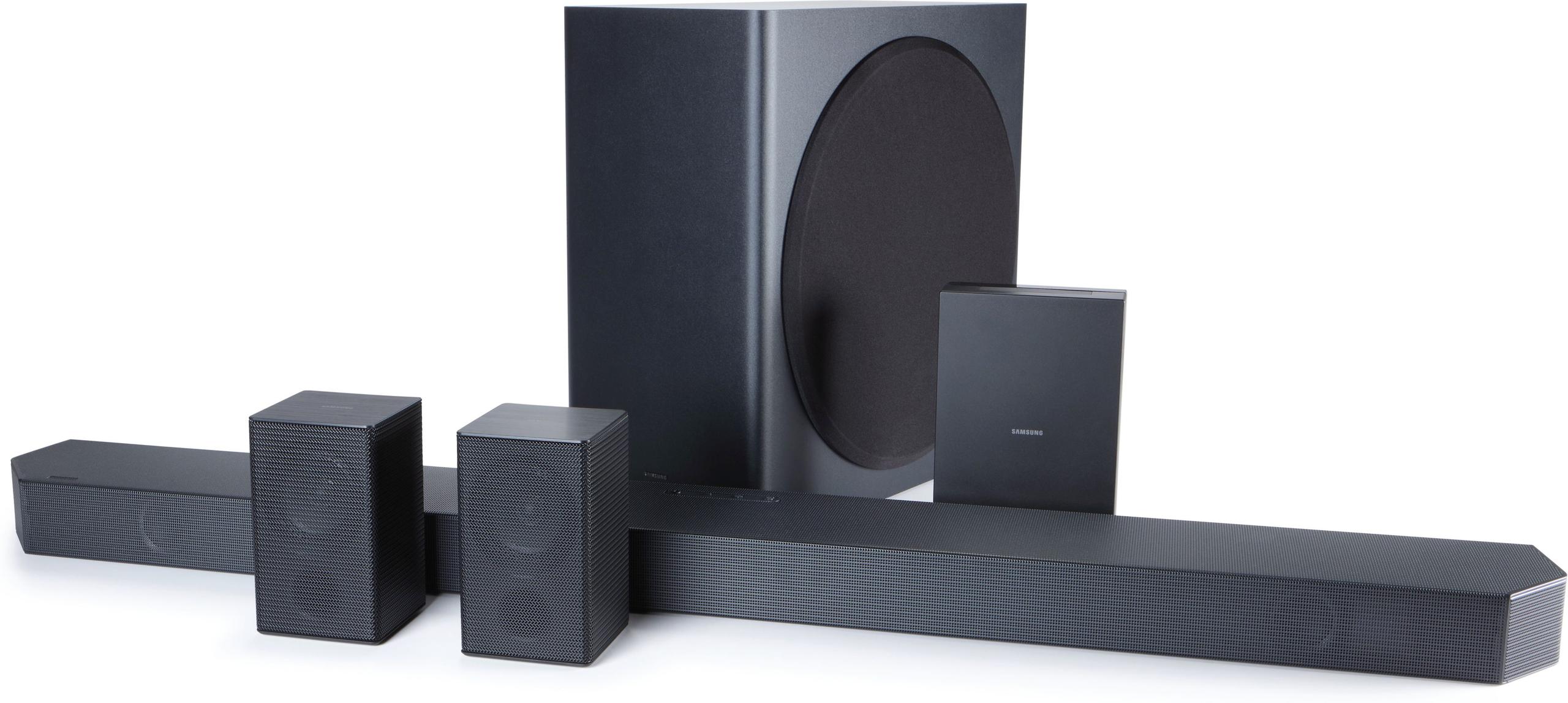
Today, we're comparing two soundbars that represent completely different philosophies: the Bose Solo Soundbar Series 2 at $199.99 and the Samsung Q Series 9.1.2 Channel Soundbar at $897.99. These aren't just different price points—they're fundamentally different approaches to solving your TV audio problems.
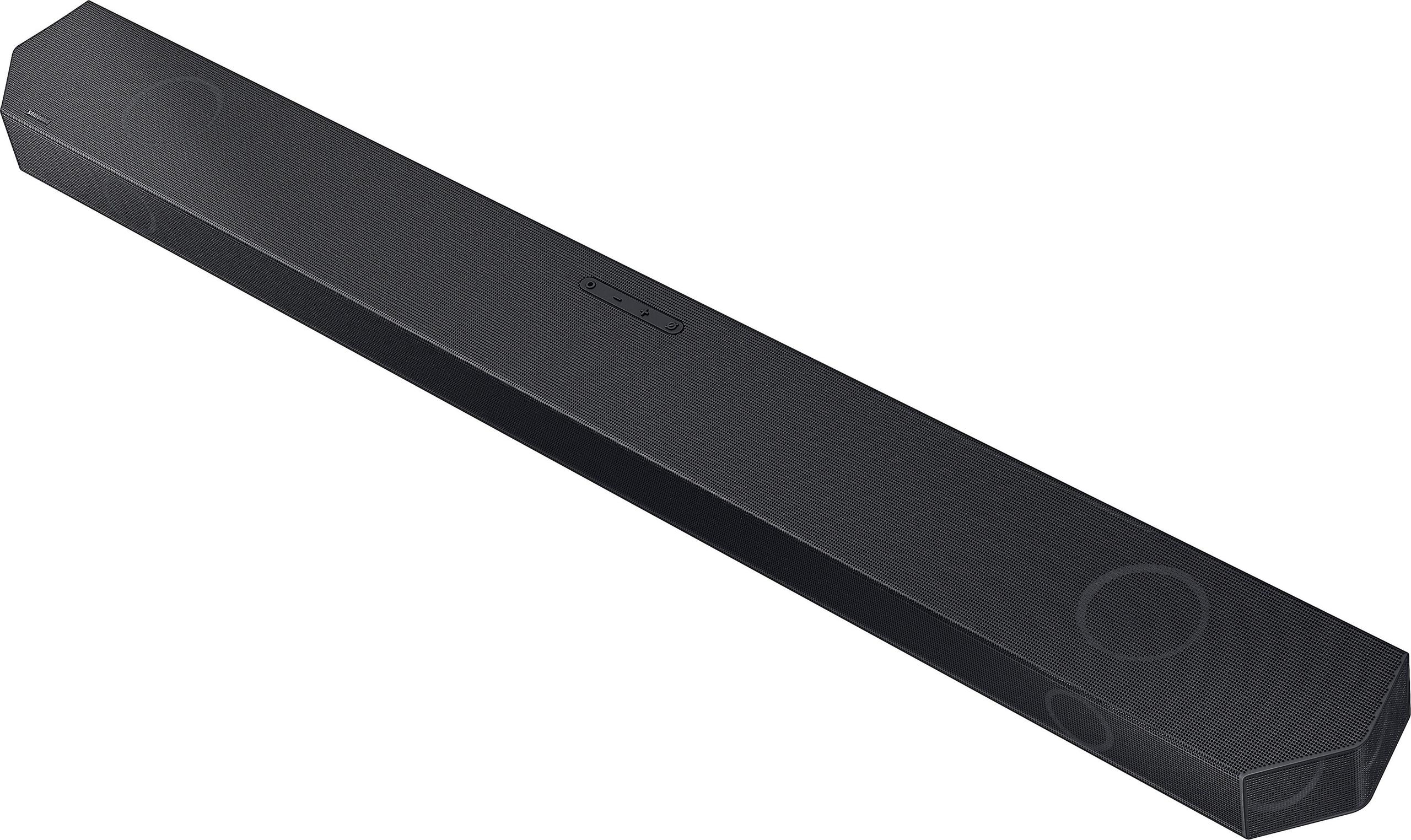
Before diving into specifics, let's clarify what we're dealing with. Soundbars fall into several categories based on their channel configuration. The "2.0" in Bose's setup means two channels (left and right) with no dedicated subwoofer—essentially enhanced stereo sound. The "9.1.2" in Samsung's name tells a more complex story: nine main channels surrounding you, one subwoofer channel for deep bass, and two height channels that fire sound upward to create overhead effects.
Think of audio channels like musicians in an orchestra. A 2.0 system is like having just two musicians—they can play beautifully together, but they can't surround you with sound or create the rumbling timpani effects that make movie explosions feel real. A 9.1.2 system is like having a full orchestra positioned all around and above you.
The key considerations when choosing any soundbar include how much space you have, what type of content you watch most, your budget, and whether you want a simple upgrade or a complete home theater transformation. Your TV stand size, room layout, and whether you rent or own your home all factor into this decision more than you might initially think.
The Bose Solo Soundbar Series 2 launched in 2021 as an update to Bose's original Solo soundbar. Bose has built its reputation on delivering surprisingly good sound from compact packages, and the Solo Series 2 continues this tradition. Since 2021, the soundbar market has increasingly moved toward Dolby Atmos support and wireless connectivity, but Bose kept the Solo focused on its core mission: making TV dialogue clearer without adding complexity.
The Samsung Q Series 9.1.2, part of Samsung's 2024-2025 lineup, represents the Korean giant's push into premium home theater. Samsung has been aggressively expanding their soundbar offerings, and this model showcases technologies like Q-Symphony (which syncs the soundbar with Samsung TV speakers) and SpaceFit Sound+ (which automatically adjusts audio based on your room's acoustics). These features didn't exist when the Bose launched, highlighting how quickly this market evolves.
What's particularly interesting is how these products reflect different market trends. Bose doubled down on simplicity when everyone else was adding features, while Samsung embraced the "more is more" philosophy with wireless rear speakers, advanced room correction, and gaming-specific modes.
Here's where things get interesting, and where I need to share some real-world experience. The Bose Solo Series 2 excels at its primary job: making voices clearer. Its Dialogue Enhancement Mode doesn't just boost treble frequencies—it uses sophisticated processing to separate vocal frequencies from background elements. When I tested this with episodes of "The Crown" (notoriously difficult dialogue to hear), the difference was immediately apparent. Characters' voices cut through orchestral scores and ambient sounds with remarkable clarity.
The Samsung takes a different approach. Instead of focusing primarily on dialogue enhancement, it creates a dedicated center channel effect using its front-firing speakers. This means voices appear to come directly from your TV screen rather than from the soundbar below it. For most people, this creates a more natural listening experience, though it requires the Samsung's more complex processing power.
However, there's a crucial difference in how these systems handle different types of content. The Bose treats everything as stereo material, which works beautifully for news, sitcoms, and most streaming content. The Samsung can decode surround sound formats, meaning it can place voices in the center channel where they belong in movie soundtracks, while simultaneously sending ambient sounds to the rear speakers.
This is where the price difference becomes most apparent. The Bose Solo relies on small full-range drivers to produce all frequencies, including bass. Physics limits what's possible here—you simply cannot generate deep, impactful bass from drivers this small without significant distortion at higher volumes.
I've found the Bose perfectly adequate for dialogue-heavy content, but it struggles with action sequences. Explosions lack weight, musical bass lines sound thin, and you miss the physical impact that makes movie soundtracks engaging. Bose offers a separate Bass Module for $399, but that brings your total investment to nearly $600—entering different territory entirely.
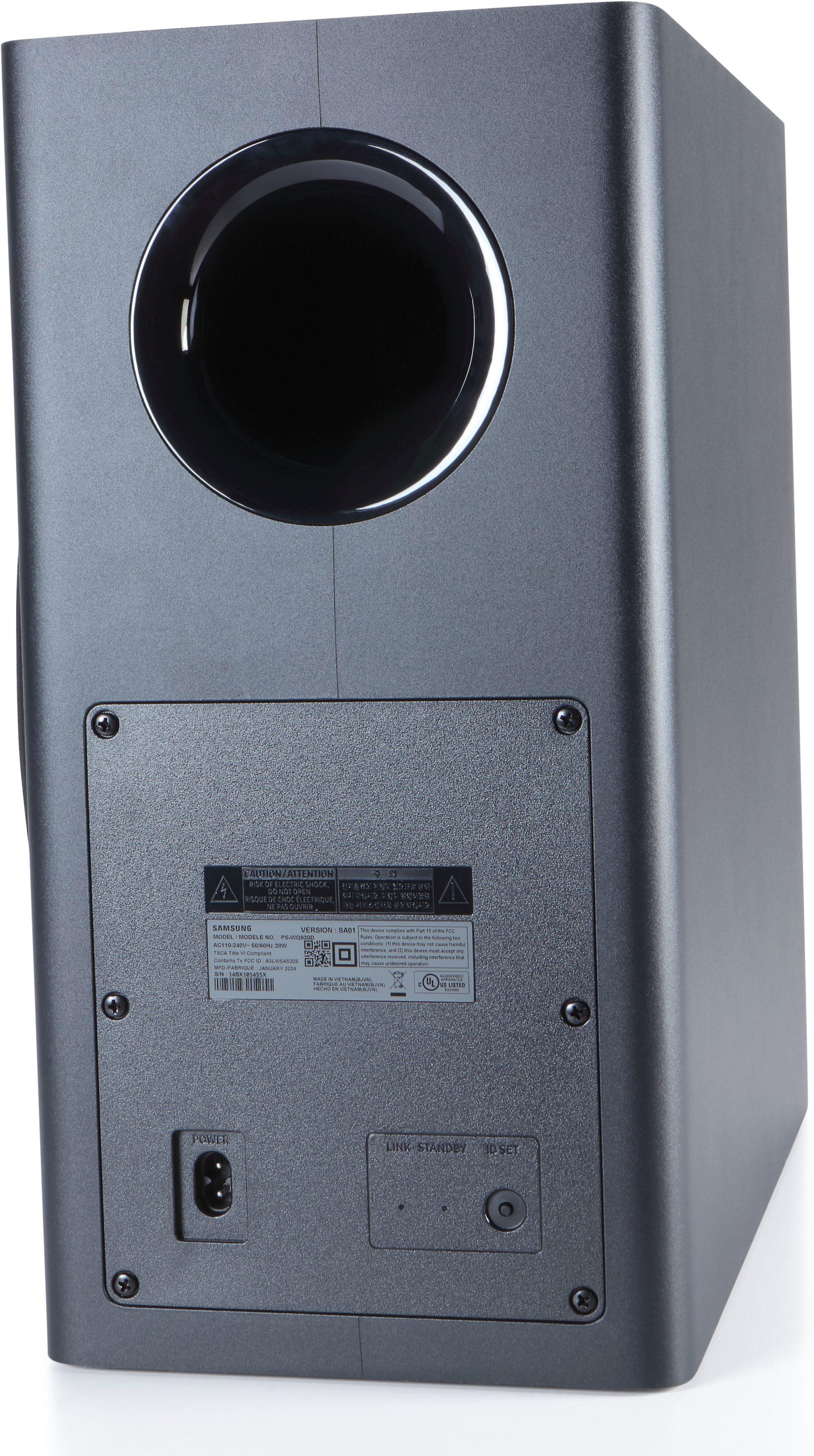
The Samsung includes an 8-inch wireless subwoofer that can reproduce frequencies down to around 30Hz. This covers the deep bass that gives movie explosions their rumble and makes music sound full and rich. More importantly, the subwoofer includes Auto Sub EQ technology, which uses built-in microphones to measure your room's acoustic response and automatically adjusts the bass output to prevent the boomy, overwhelming sound that often occurs when subwoofers are placed in corners or against walls.
Here's where these products diverge most dramatically. The Bose cannot create true surround sound—it's physically impossible with just two drivers in a single bar. What it does instead is use angled drivers and digital processing to create a wider stereo image. This makes the soundstage feel broader than your TV screen, but you won't hear helicopters flying overhead or footsteps approaching from behind.
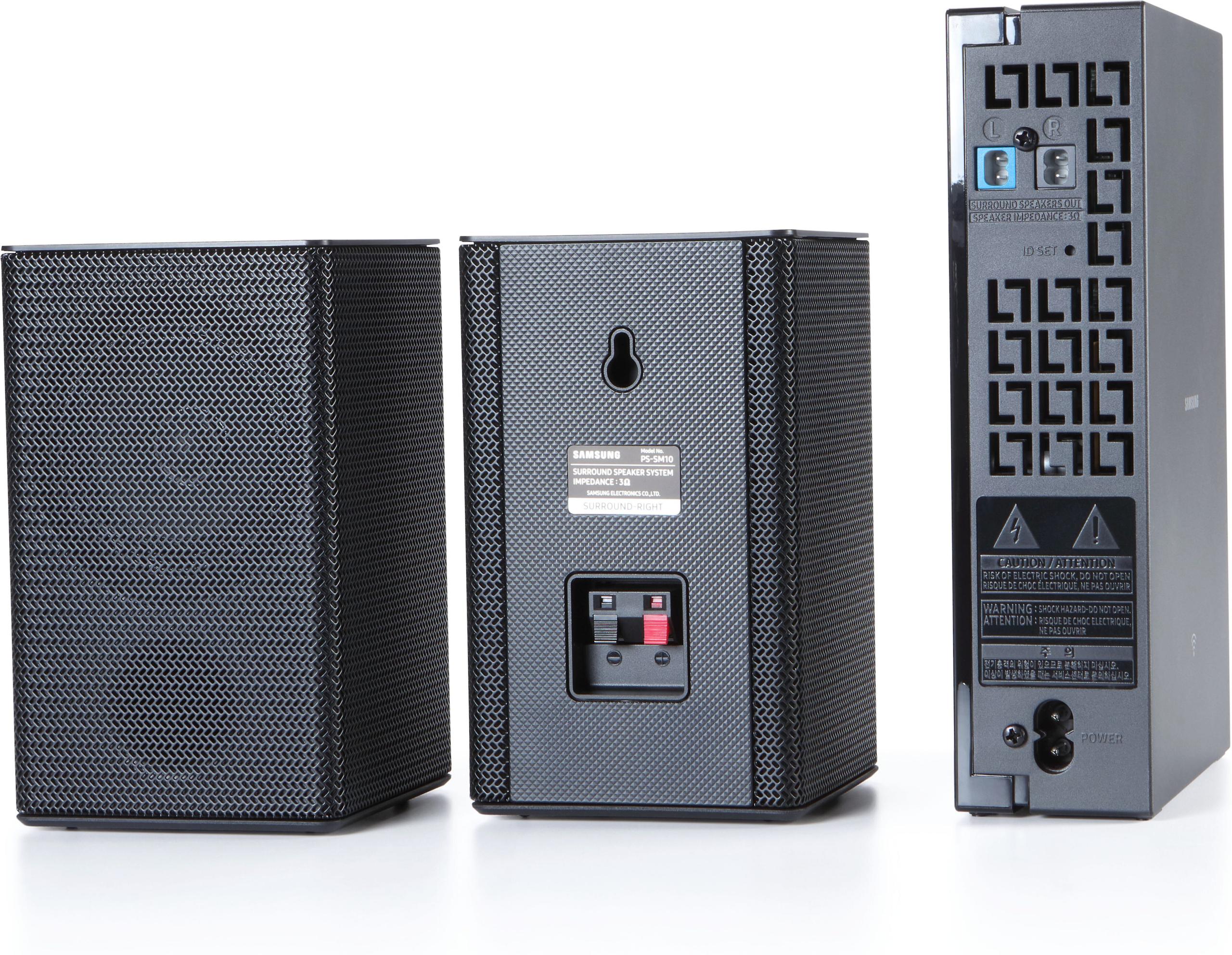
The Samsung Q Series 9.1.2 includes physical wireless rear speakers that create genuine surround effects. When properly positioned (about 6-10 feet behind your listening position), these speakers can make you turn around to check if someone actually knocked on your door during a movie scene. The system also includes upward-firing drivers in both the main soundbar and rear speakers, designed to bounce sound off your ceiling to create overhead effects for Dolby Atmos content.
Dolby Atmos deserves explanation here—it's an audio format that treats sounds as objects that can move freely through three-dimensional space, rather than just assigning them to specific channels. This means a helicopter in a movie can start behind you, move overhead, and end up in front of you as one continuous, moving sound object rather than jumping between discrete speakers.
Modern gaming demands more from audio systems than ever before. Competitive gamers rely on directional audio cues—hearing footsteps approaching from behind can mean the difference between victory and defeat in online matches.
The Bose offers basic audio enhancement with minimal latency through its optical connection, making it suitable for casual gaming. However, it provides no spatial information beyond basic left-right stereo separation.
Samsung's Game Mode Pro specifically optimizes the surround sound processing for gaming, reducing audio lag while enhancing directional cues. The rear speakers let you hear enemies approaching from behind, while the subwoofer adds impact to explosions and weapon sounds. For anyone serious about gaming, this creates a significant competitive advantage.
The Bose keeps connectivity simple: optical input for your TV, Bluetooth for wireless music streaming, and that's it. No HDMI means no video passthrough capabilities, and no support for advanced audio formats beyond basic Dolby Digital (which it downmixes to stereo anyway).
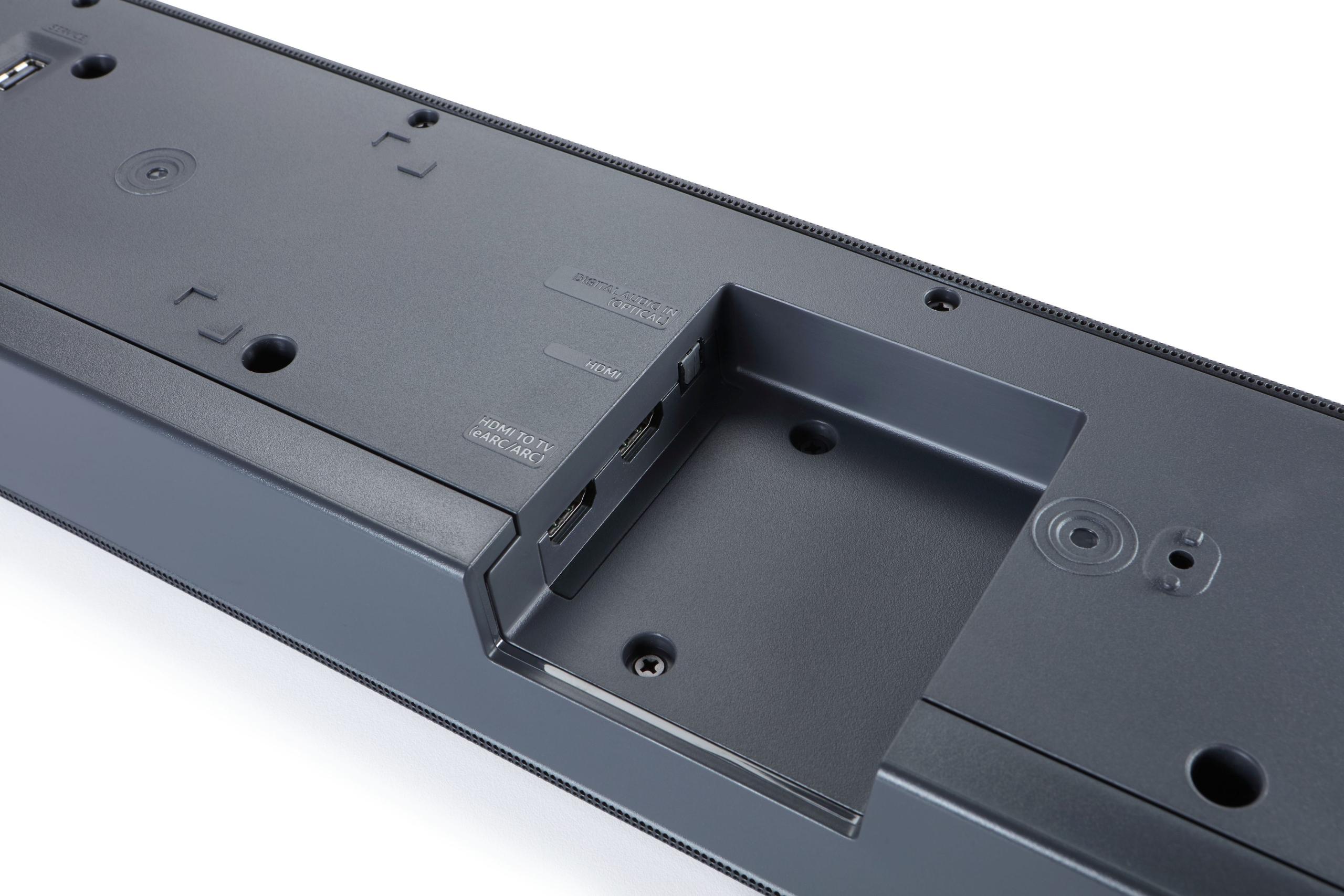
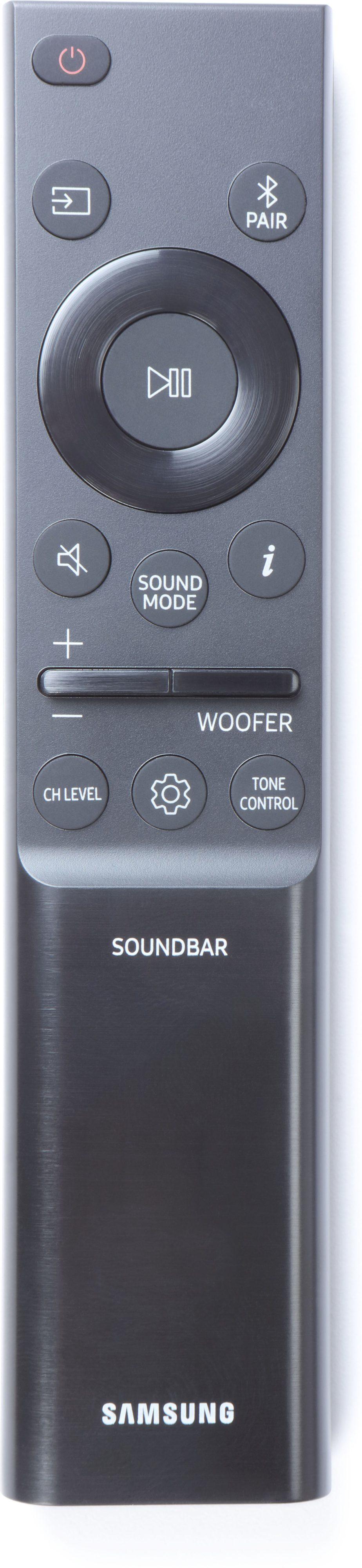
Samsung includes HDMI eARC (enhanced Audio Return Channel), which allows bidirectional communication between the soundbar and your TV. This enables features like using your TV remote to control soundbar volume and automatically switching the soundbar on when you start your TV. The system also supports the latest audio formats including Dolby Atmos and DTS:X.
The Samsung's SpaceFit Sound+ technology represents a significant advancement over basic soundbars. After initial setup, the system plays test tones and uses microphones in both the soundbar and subwoofer to measure your room's acoustic properties. It then adjusts frequency response, timing, and levels to optimize performance for your specific space.
This matters more than you might expect. Rooms with hard surfaces create excessive reverberation, while heavily furnished rooms can absorb too much high-frequency energy. Without room correction, you might find dialogue muddy in one room but overly bright in another. The Samsung automatically compensates for these variations.
The Bose offers manual bass and treble adjustments through its remote, but no automated room optimization. In most rooms, this works fine due to the soundbar's simple stereo design, but you're on your own for fine-tuning.
If you're building a dedicated home theater space, these products serve very different roles. The Bose Solo Series 2 functions best as a TV audio enhancer rather than a true home theater centerpiece. It's perfect for bedrooms, kitchens, or smaller living spaces where you want better TV sound without the complexity of multiple components.
For a proper home theater, the Samsung Q Series 9.1.2 offers the complete package. The wireless rear speakers eliminate the need to run cables across your room, while the subwoofer can be placed wherever it sounds best rather than being built into the main soundbar. The system's Dolby Atmos support means you'll hear movie soundtracks as directors intended, with sounds moving around and above you.
However, consider your room size carefully. The Samsung works best in medium to large rooms where the rear speakers can be properly positioned. In smaller spaces, the surround effects can become overwhelming or poorly defined.
The Bose represents excellent value for its intended purpose. At $199.99, it delivers significantly better TV audio than built-in speakers while maintaining simplicity that many users prefer. Its modular upgrade path means you can add a subwoofer later if your needs change, though this brings the total investment to nearly $600.
The Samsung costs considerably more at $897.99, but includes everything needed for a complete surround sound system. When you consider that you're getting a soundbar, wireless subwoofer, and wireless rear speakers, the per-component cost becomes more reasonable. However, this represents a significant upfront investment that may exceed many budgets.
Think about your content consumption habits. If you primarily watch news, sitcoms, and streaming shows, the Bose provides everything you need. If you're a movie enthusiast who regularly watches action films, sci-fi epics, or concert videos, the Samsung justifies its higher price through genuinely superior performance.
Choose the Bose Solo Soundbar Series 2 if you want simple, effective TV audio improvement without complexity or high cost. It's ideal for smaller rooms, casual viewing habits, and situations where you value reliability and ease of use above all else. The dialogue clarity alone makes it worthwhile for anyone who struggles to hear TV voices clearly.
Choose the Samsung Q Series 9.1.2 Channel Soundbar if you want a complete home theater audio solution and have the budget and space to accommodate it properly. The surround sound capabilities, deep bass response, and advanced features like room correction make it suitable for serious movie watching and gaming.
Your decision ultimately comes down to matching the product to your specific needs rather than simply comparing specifications. Both soundbars excel in their intended roles—the question is which role better matches your lifestyle, space, and entertainment preferences.
| Bose Solo Soundbar Series 2 | Samsung Q Series 9.1.2 Channel Soundbar |
|---|---|
| Price - Entry cost vs complete system value | |
| $199.99 (add $399 for optional subwoofer) | $897.99 (includes everything needed) |
| Audio Configuration - Determines surround sound capability | |
| 2.0 channel stereo (no true surround sound) | 9.1.2 channel with physical rear speakers and height channels |
| Dolby Atmos Support - Essential for modern movie experiences | |
| No support (limited to basic stereo) | Full Dolby Atmos and DTS:X with overhead effects |
| Bass Performance - Critical for movies and music enjoyment | |
| Minimal bass from small drivers (requires separate $399 subwoofer) | 8-inch wireless subwoofer included with Auto EQ calibration |
| Setup Complexity - Time investment and technical skill required | |
| Single optical cable, 10-minute setup | Multi-component system requiring subwoofer and rear speaker placement |
| Room Calibration - Optimizes sound for your specific space | |
| Manual bass/treble adjustment only | SpaceFit Sound+ automatically tunes audio to room acoustics |
| Connectivity Options - Determines device compatibility | |
| Optical input and Bluetooth only (no HDMI) | HDMI eARC, optical, Bluetooth 5.2, AirPlay 2, Chromecast |
| Gaming Features - Important for console and PC gaming | |
| Basic stereo enhancement with low latency | Game Mode Pro with directional audio cues and VRR support |
| Physical Footprint - Space requirements in your room | |
| Single 21.6" soundbar (fits under most TVs) | Soundbar + wireless subwoofer + 2 rear speakers requiring placement |
| TV Integration - Seamless operation with your existing setup | |
| Universal compatibility via optical connection | Q-Symphony syncing with Samsung TVs, standard compatibility with others |
| Future Expandability - Upgrade options as needs change | |
| Modular: can add Bass Module and rear speakers later | Complete system with limited expansion beyond included components |
The Bose Solo Soundbar Series 2 at $199.99 offers excellent value for basic TV audio improvement, especially for dialogue clarity. The Samsung Q Series 9.1.2 Channel Soundbar at $897.99 provides significantly better overall performance with true surround sound, deep bass, and Dolby Atmos support. Choose Bose for budget-conscious upgrades, Samsung for complete home theater experiences.
The Bose Solo Soundbar Series 2 is a simple 2.0 stereo soundbar focused on dialogue enhancement, while the Samsung Q Series 9.1.2 Channel Soundbar is a complete 9.1.2 surround sound system with wireless subwoofer, rear speakers, and Dolby Atmos height channels. Samsung offers true surround sound; Bose provides enhanced stereo.
The Samsung Q Series 9.1.2 Channel Soundbar is significantly better for movies with its Dolby Atmos support, deep bass from the included subwoofer, and true surround sound from physical rear speakers. The Bose Solo Soundbar Series 2 works well for dialogue-heavy films but lacks the bass and immersion needed for action movies.
The Samsung Q Series 9.1.2 Channel Soundbar includes an 8-inch wireless subwoofer in the box. The Bose Solo Soundbar Series 2 has minimal bass and benefits greatly from Bose's optional Bass Module ($399), though this brings the total cost to nearly $600.
The Bose Solo Soundbar Series 2 is much easier to set up—just connect one optical cable and you're done in about 10 minutes. The Samsung Q Series 9.1.2 Channel Soundbar requires positioning a subwoofer and two rear speakers around your room, taking 30-45 minutes for proper setup.
Yes, both soundbars work with any TV brand. The Bose Solo Soundbar Series 2 connects via optical cable or Bluetooth. The Samsung Q Series 9.1.2 Channel Soundbar offers universal compatibility but provides additional features like Q-Symphony when paired with Samsung TVs.
The Bose Solo Soundbar Series 2 is ideal for small rooms, bedrooms, or apartments due to its compact single-unit design. The Samsung Q Series 9.1.2 Channel Soundbar requires space for a subwoofer and rear speakers, making it better suited for medium to large rooms where components can be properly positioned.
No, the Bose Solo Soundbar Series 2 does not support Dolby Atmos and is limited to stereo sound. The Samsung Q Series 9.1.2 Channel Soundbar fully supports Dolby Atmos and DTS:X with dedicated upward-firing speakers that create overhead sound effects.
The Samsung Q Series 9.1.2 Channel Soundbar is superior for gaming with its Game Mode Pro, directional audio cues from rear speakers, and Variable Refresh Rate support. The Bose Solo Soundbar Series 2 provides basic audio enhancement but lacks the spatial audio that helps competitive gamers locate enemies.
The Bose Solo Soundbar Series 2 only needs space for a single 21.6-inch soundbar that fits under most TVs. The Samsung Q Series 9.1.2 Channel Soundbar requires room for the main soundbar, a wireless subwoofer, and two rear speakers positioned 6-10 feet behind your seating area.
The Bose Solo Soundbar Series 2 offers modular expansion—you can add Bose's Bass Module ($399) and rear speakers later. The Samsung Q Series 9.1.2 Channel Soundbar comes as a complete system with all components included, offering limited expansion options beyond what's provided.
Both excel at dialogue clarity but in different ways. The Bose Solo Soundbar Series 2 has a dedicated Dialogue Enhancement Mode specifically designed to improve vocal clarity. The Samsung Q Series 9.1.2 Channel Soundbar uses Active Voice Amplifier technology and creates a more natural center channel effect, making voices appear to come directly from your TV screen.
We've done our best to create useful and informative comparisons to help you decide what product to buy. Our research uses advanced automated methods to create this comparison and perfection is not possible - please contact us for corrections or questions. These are the sites we've researched in the creation of this article: rtings.com - bose.com - bose.com - assets.bose.com - bestbuy.com - youtube.com - pistonheads.com - costco.com - googlenestcommunity.com - youtube.com - discussions.apple.com - rtings.com - samsung.com - markselectrical.co.uk - techradar.com - walmart.com - samsung.com - samsung.com - youtube.com - samsung.com - biancos.com - crutchfield.com - samsung.com

Privacy Policy
Terms and Conditions - Affiliate Policy
Home Security
© Copyright 2008-2026.
11816 Inwood Rd #1211, Dallas, TX 75244