


















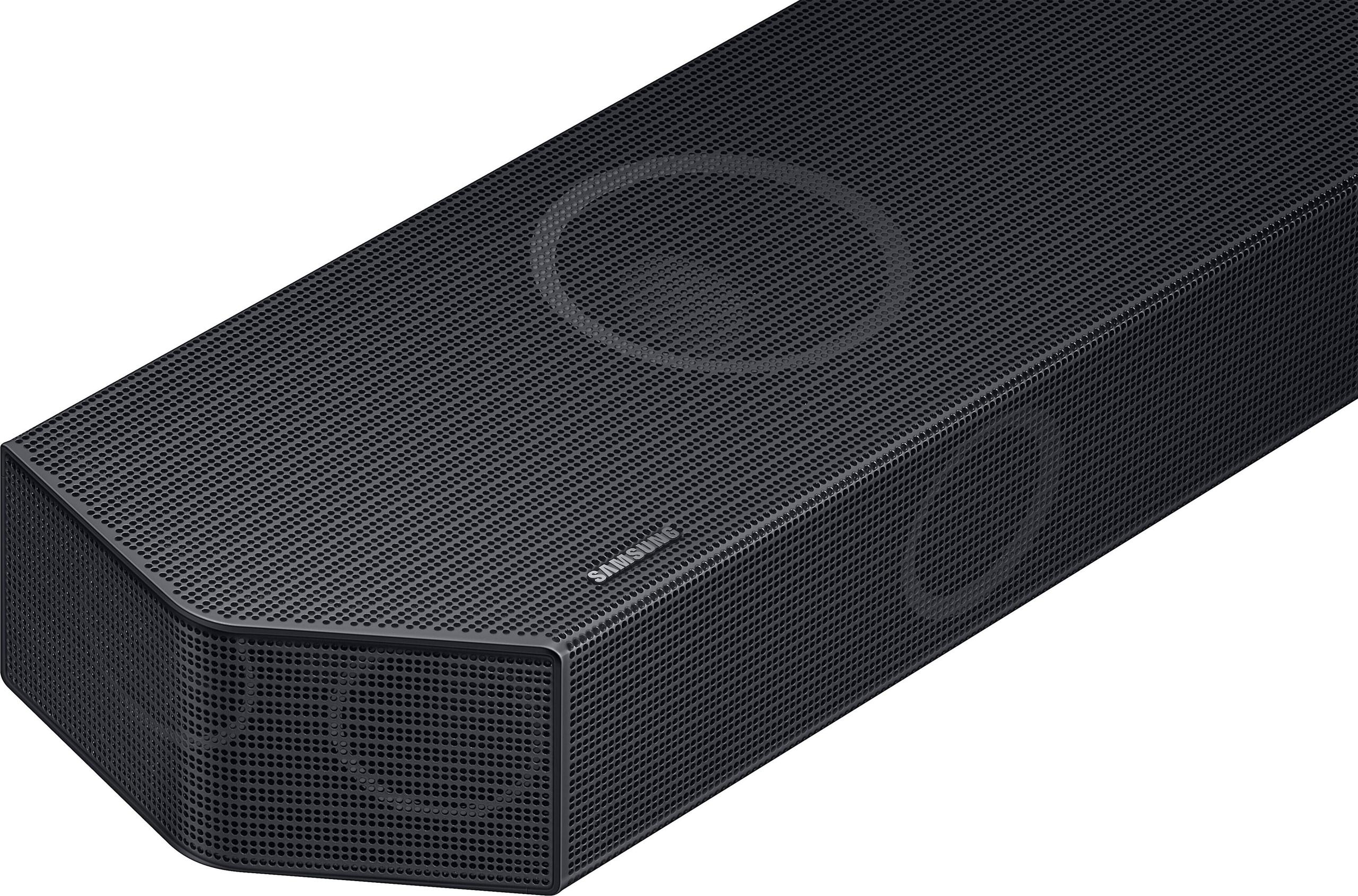




When your TV's built-in speakers make dialogue sound like it's coming through a tin can, you know it's time for an upgrade. Premium soundbars have revolutionized how we experience movies, music, and games at home, but choosing between different approaches can feel overwhelming. Today we're comparing two standout options: the Sonos Arc ($540.60) and the Samsung Q Series 9.1.2 Channel Soundbar ($897.99).
These soundbars represent fundamentally different philosophies for achieving immersive audio. The Sonos Arc, launched in 2020, pioneered the "smart soundbar" category with its sleek all-in-one design and advanced virtual surround processing. Meanwhile, Samsung's Q Series 9.1.2, part of their 2025 lineup, delivers a complete surround system right out of the box with physical rear speakers and a dedicated subwoofer.
Modern premium soundbars focus on one key innovation: Dolby Atmos. This technology creates "object-based" audio, where sounds can be precisely placed anywhere in a three-dimensional space around you. Instead of traditional channel-based audio that sends specific sounds to specific speakers, Atmos treats each sound as an individual object that can move freely through your listening space.
The magic happens through a combination of upward-firing speakers (that bounce sound off your ceiling) and sophisticated digital processing. When a helicopter flies overhead in a movie, you'll actually hear it pass above your head rather than just coming from the front speakers.
However, achieving convincing Atmos varies dramatically between products. Some use physical speakers placed throughout your room, while others rely on psychoacoustic processing—essentially tricking your brain into hearing sounds from directions where no speakers exist. Each approach has distinct advantages and limitations that affect performance, cost, and room compatibility.
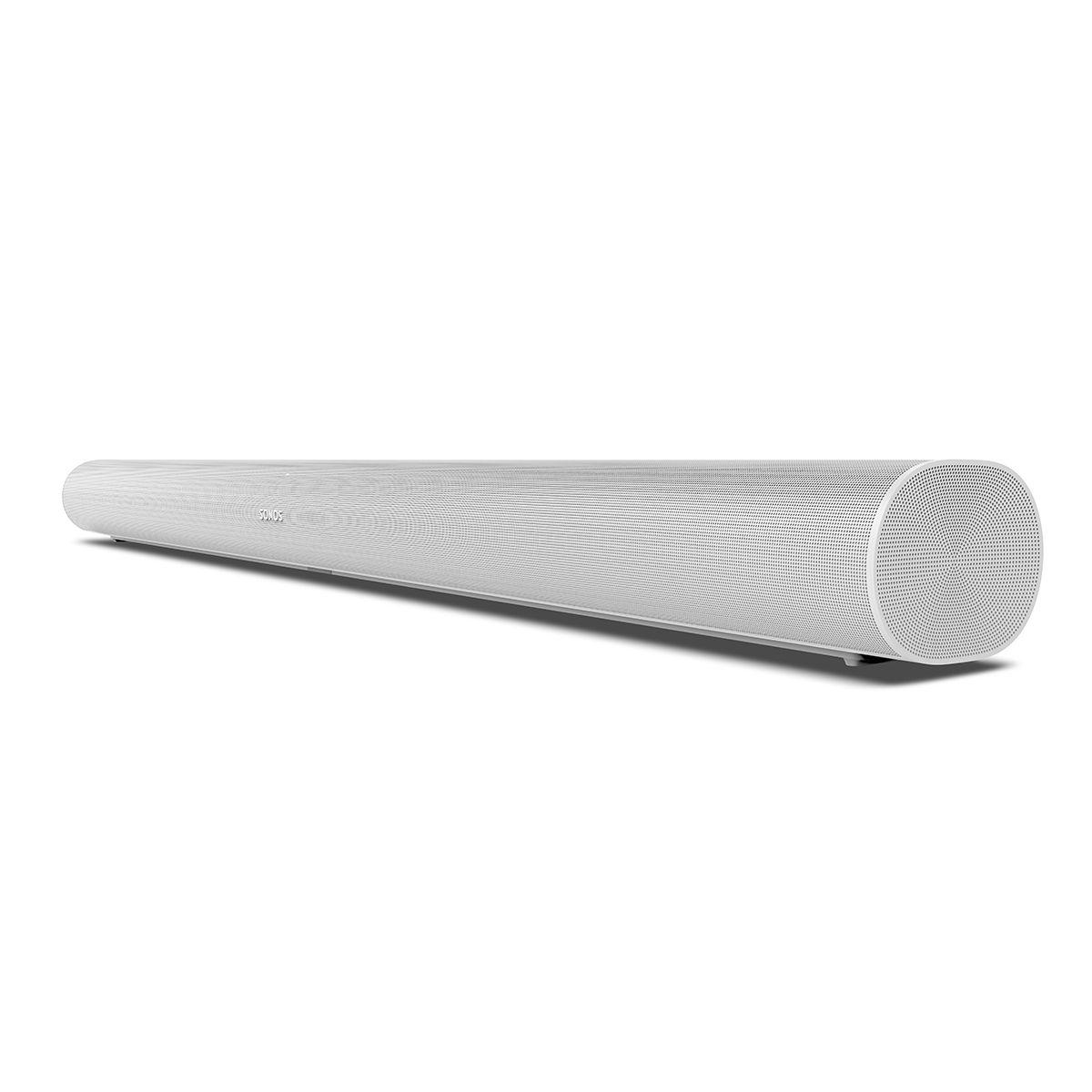
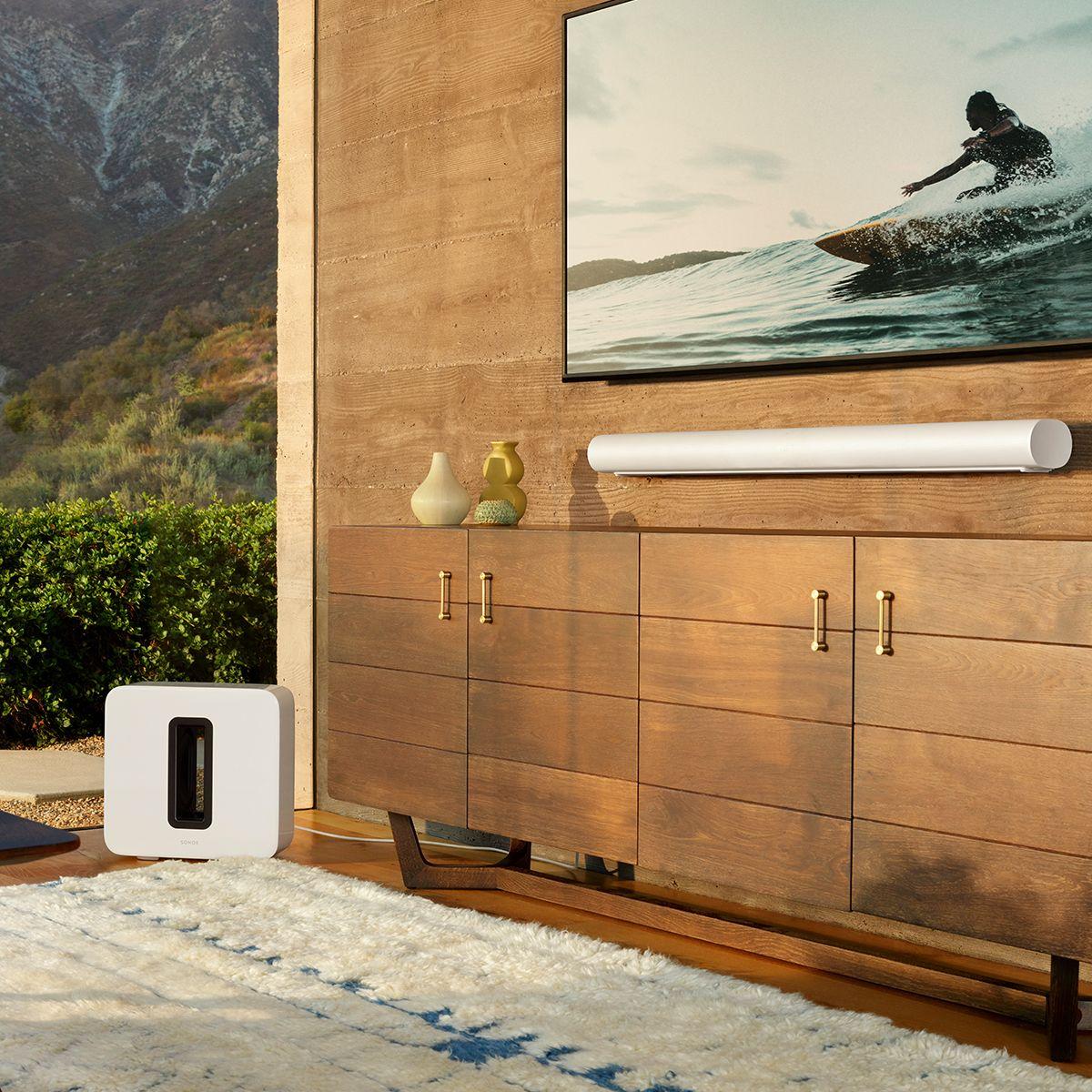
The Sonos Arc embodies the "less is more" philosophy. This single 41-inch soundbar houses eleven carefully tuned drivers: three silk-dome tweeters for crystal-clear highs, eight elliptical woofers for midrange and bass, plus sophisticated processing to create virtual surround sound. When Sonos released it in 2020, it represented a significant leap forward from their previous Playbar, adding Dolby Atmos support and dramatically improved voice assistant integration.
What makes the Arc special is its computational audio approach. Advanced algorithms analyze incoming audio signals and use psychoacoustic principles to make sounds appear to come from behind and above you, even though all the drivers face forward. It's like audio sleight-of-hand—your brain fills in the spatial gaps based on subtle timing and frequency cues.
Since its launch, Sonos has continuously enhanced the Arc through software updates. The most significant addition was Sonos Voice Control in 2022, allowing users to control their entire Sonos ecosystem without relying on Amazon or Google. They've also improved lip-sync accuracy and added new streaming service integrations, demonstrating how modern soundbars can evolve after purchase.
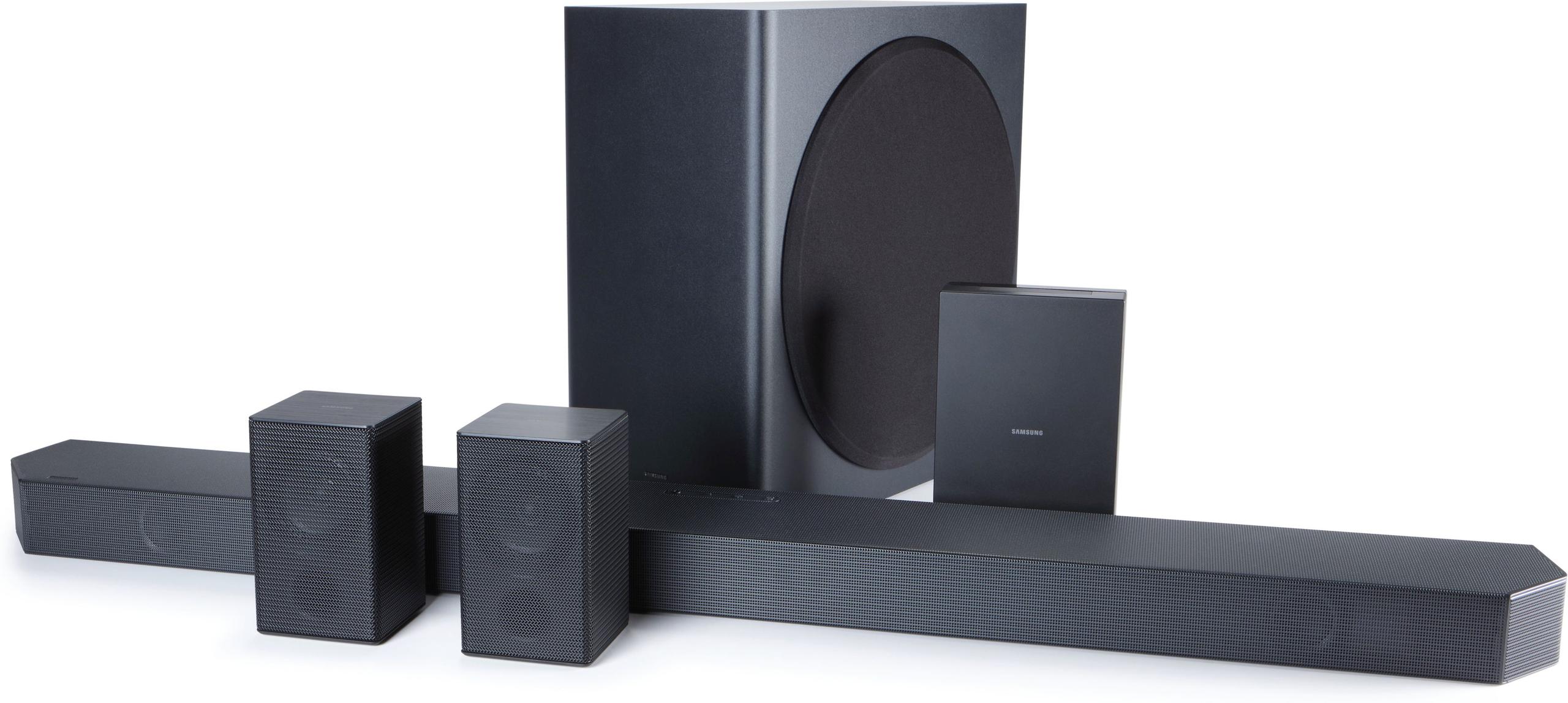
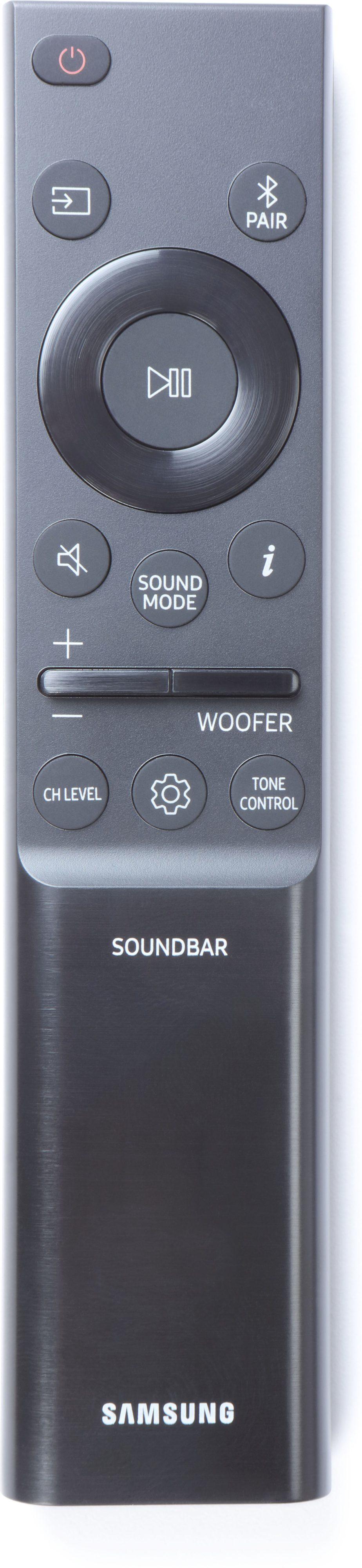
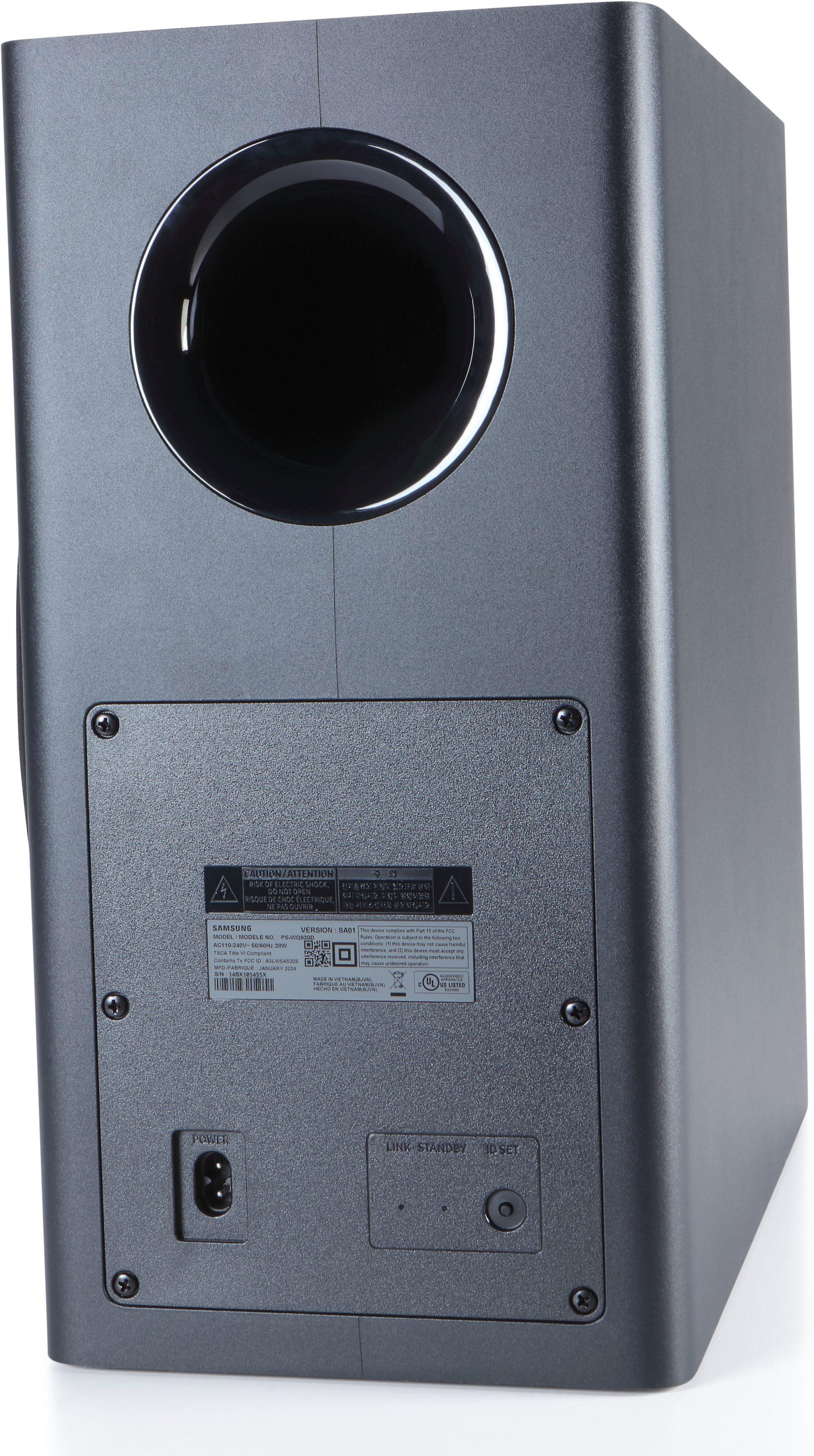
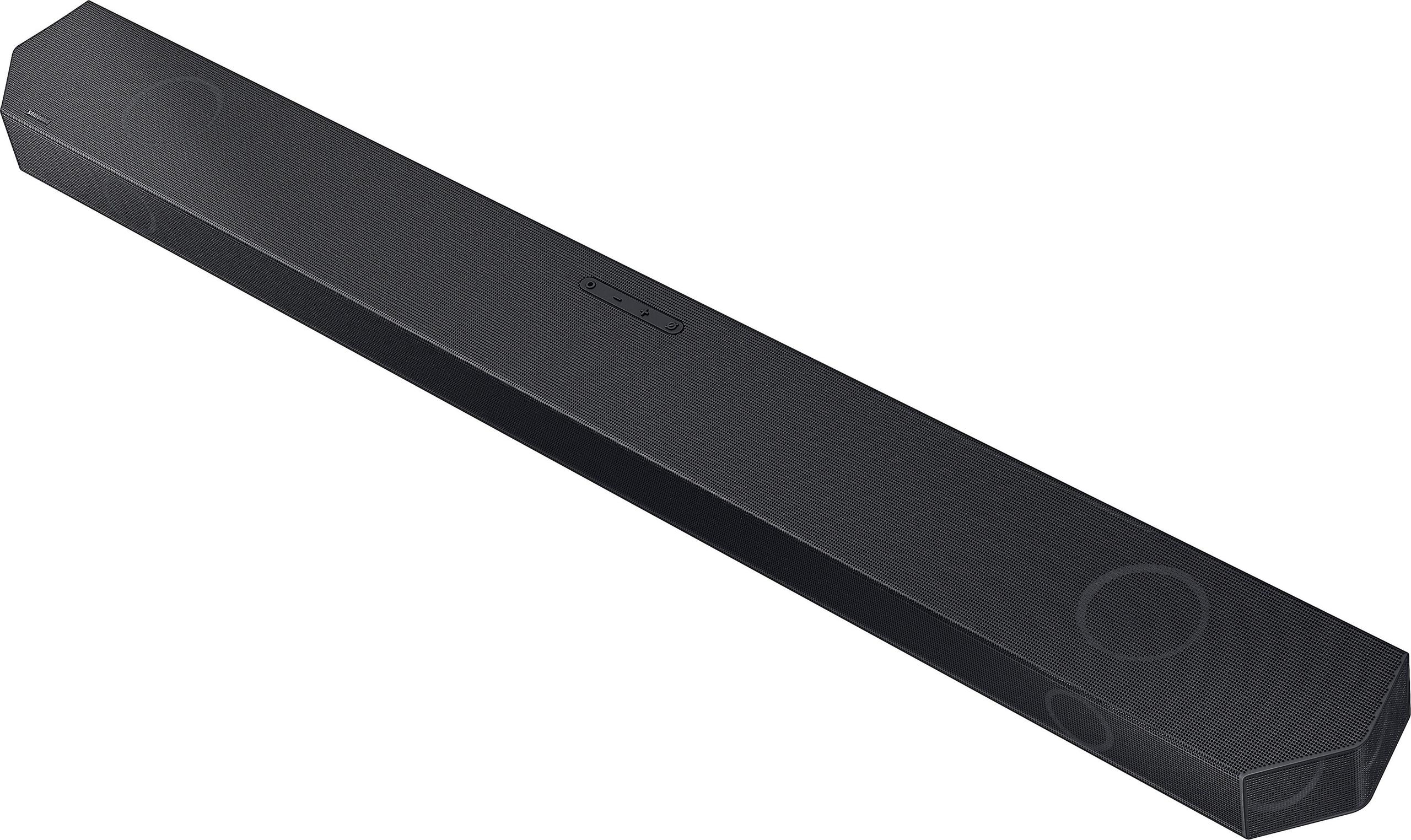
Samsung's approach with the Q Series 9.1.2 is radically different. Rather than virtualizing surround sound, they provide it physically. This system includes a main soundbar, two wireless rear speakers, and an 8-inch subwoofer, creating true 9.1.2 channel audio. The "9.1.2" designation means nine main channels (left, center, right, plus surround and back surround channels), one dedicated subwoofer channel, and two height channels for Atmos effects.
Released as part of Samsung's 2025 refresh, this model builds on years of refinement in their Q Series lineup. Samsung has continuously improved their wireless connectivity, reducing the audio dropouts that plagued earlier models. They've also enhanced their Q-Symphony technology, which allows the soundbar to work in harmony with compatible Samsung TVs, using both the TV's speakers and the soundbar simultaneously for an even fuller sound.
The inclusion of dedicated rear speakers means you get authentic directional audio. When a character speaks from off-screen, the sound genuinely comes from behind you rather than being virtually projected. It's the difference between watching a movie and feeling like you're inside it.
Here's where the philosophical differences become immediately apparent. During action sequences in movies like "Top Gun: Maverick," the Samsung Q Series 9.1.2 creates an undeniably more convincing surround experience. Jet engines roar past with genuine directional movement, and the physical rear speakers make you instinctively turn your head to follow the action. The dedicated height channels bounce sound off your ceiling to create tangible overhead effects—you'll actually duck when debris falls from above.
The Sonos Arc takes a more subtle approach. Its virtual surround processing is remarkably sophisticated, using phase shifts, time delays, and frequency filtering to trick your brain into hearing sounds from all directions. While it can't match the physical presence of real rear speakers, it creates a surprisingly wide and enveloping soundstage that extends well beyond the soundbar's physical footprint. The Arc excels with content that has consistent surround mixing, like Netflix's spatial audio content or Apple Music's Dolby Atmos tracks.
However, room acoustics play a crucial role in the Arc's performance. In my experience testing both systems, the Arc performs beautifully in rectangular rooms with standard 8-10 foot ceilings and minimal acoustic treatment. But in irregular spaces, open floor plans, or rooms with vaulted ceilings, its virtual effects become less convincing. The Samsung system, by contrast, maintains its surround accuracy regardless of room shape because it uses actual speakers positioned around you.
This is perhaps the most dramatic difference between these systems. The Samsung Q Series includes an 8-inch wireless subwoofer that extends bass response down to around 30Hz—deep enough to feel explosion rumbles in your chest and capture the full weight of orchestral music. During test scenes from "Blade Runner 2049," the sub delivers those iconic low-frequency drones with room-shaking authority.
The Sonos Arc, being an all-in-one design, relies on its eight built-in woofers for bass. While these drivers are impressively engineered for their size, physics ultimately limits how much low-end a soundbar can produce. The Arc's bass is tight and controlled—excellent for dialogue clarity and musical accuracy—but lacks the visceral impact that home theater enthusiasts crave. Sonos addresses this limitation with their optional Sub, available for $449-$799 depending on the generation, but this significantly increases the total system cost.
Interestingly, Sonos has refined the Arc's bass response through software updates since launch. Their latest algorithms do a better job of maximizing the available bass while preventing the distortion that can occur when small drivers are pushed too hard.
Both systems excel here, but with different approaches. The Sonos Arc's three dedicated tweeters and center channel processing create exceptionally clear dialogue. Speech Enhancement mode, accessible through the Sonos app, specifically boosts vocal frequencies without making the overall sound harsh. This proves invaluable during complex movie scenes where dialogue competes with background music and sound effects.
The Samsung system uses Active Voice Amplifier (AVA) technology, which analyzes incoming audio in real-time to identify and emphasize vocal frequencies. It's particularly effective during quiet dialogue scenes—the system automatically raises voice levels while maintaining the overall dynamic range. However, I've noticed that AVA can sometimes make music vocals sound slightly artificial, prioritizing clarity over naturalness.
For home theater use, both systems handle the common problem of inconsistent audio mixing in streaming content. Modern movies and TV shows often have dramatically different volume levels between dialogue and action sequences. Both soundbars include night modes that compress dynamic range, making quiet scenes audible without requiring you to constantly adjust volume during explosive moments.
Here's where personal preference and intended use diverge significantly. The Sonos Arc was designed from the ground up as both a home theater and music system. Its tonal balance leans toward accuracy rather than excitement, with natural midrange reproduction that makes vocals sound lifelike and instruments maintain their distinct character. Jazz recordings sound particularly impressive, with piano notes displaying proper weight and brass instruments maintaining their metallic bite without harshness.
Sonos's Trueplay room correction technology (available only on iOS devices) automatically adjusts the Arc's frequency response based on your room's acoustics. Using your iPhone's microphone, Trueplay plays test tones and analyzes how your room affects the sound, then applies corrective EQ to optimize performance. It's remarkably effective—I've heard the same Arc sound dramatically different in various rooms after Trueplay calibration.
The Samsung Q Series takes a more theatrical approach to music reproduction. Its sound signature emphasizes dynamics and impact over subtle detail, making rock and electronic music sound thrilling but sometimes overwhelming delicate acoustic recordings. The included subwoofer adds weight to genres that benefit from extended bass, but can dominate music that wasn't mixed with subwoofers in mind.
Samsung has improved their music performance through their SpaceFit Sound+ technology, which automatically analyzes your room using built-in microphones and adjusts both the soundbar and subwoofer settings accordingly. Unlike Sonos's iOS-only solution, SpaceFit works automatically without additional devices.
The pricing story here is more complex than the initial numbers suggest. The Sonos Arc at $540.60 appears significantly cheaper than the Samsung Q Series 9.1.2 at $897.99, but that comparison only tells part of the story.
The Samsung system provides everything needed for a complete surround experience from day one. You're getting a main soundbar, wireless subwoofer, and rear speakers all included in that $898 price. Comparable Sonos systems require additional purchases: the Arc ($541) plus Sub ($449-$799) plus rear speakers ($449-$899 per pair) totals between $1,439 and $2,239 depending on which generation components you choose.
However, Sonos's modular approach offers flexibility that many users find valuable. You can start with just the Arc and add components as budget allows or needs evolve. Many users find the Arc alone sufficient for smaller rooms or primarily music listening, making future expansion optional rather than necessary.
From a longevity perspective, Sonos has demonstrated exceptional commitment to supporting older products through software updates. Original Playbar units from 2013 still receive feature updates and new streaming service integrations. Samsung's track record is less consistent, though their recent Q Series models have received regular firmware updates addressing connectivity issues and adding new features like improved gaming modes.
Modern soundbars must integrate seamlessly with increasingly complex entertainment systems, and these two products take different approaches to connectivity challenges.
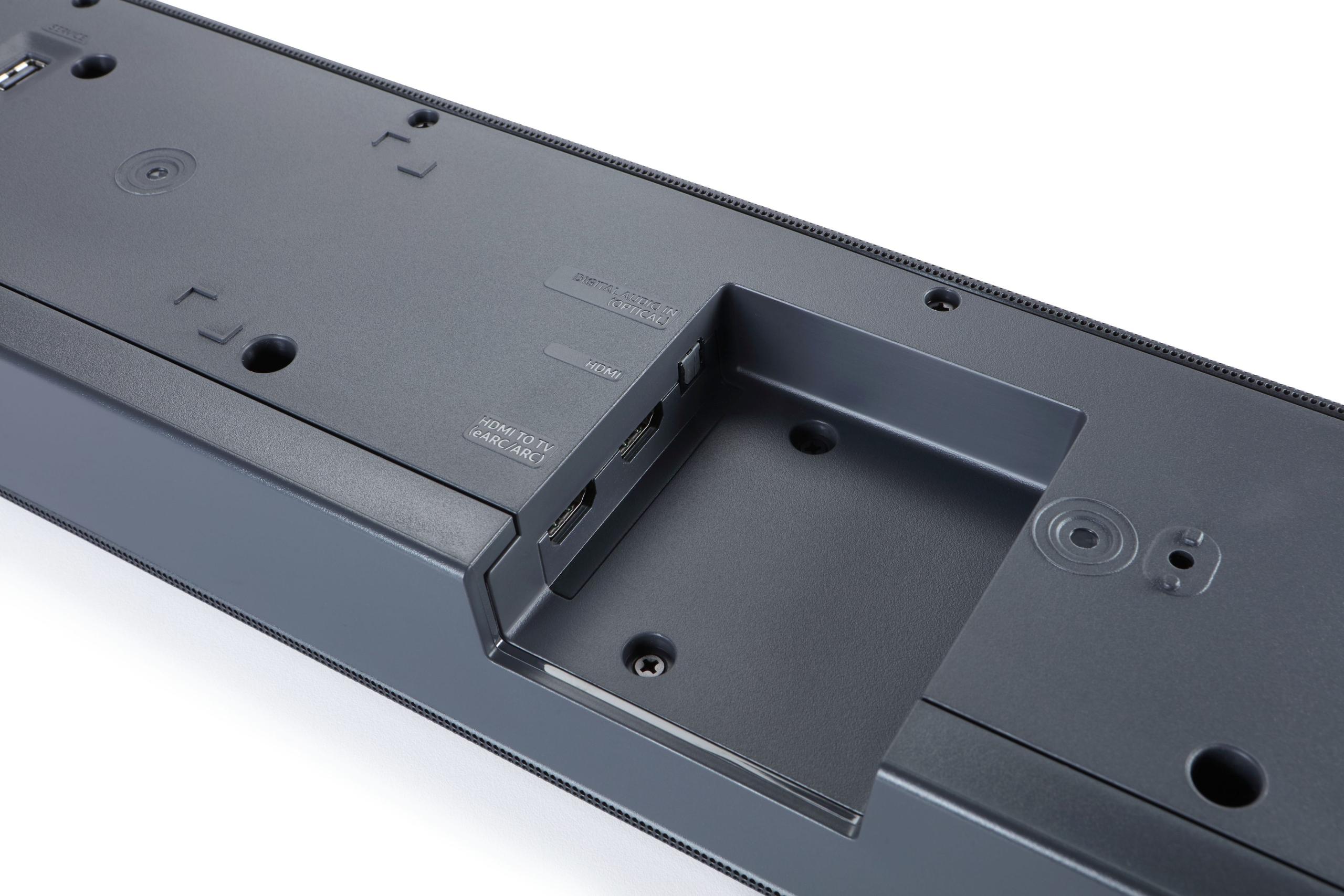
The Samsung Q Series offers more traditional connectivity options. Multiple HDMI inputs support 4K/120Hz passthrough with Variable Refresh Rate (VRR) and Auto Low Latency Mode (ALLM)—crucial features for serious gaming. This makes it an excellent choice for users with multiple gaming consoles, streaming devices, and other HDMI sources. The system also includes Bluetooth for direct music streaming from phones and tablets.
Sonos prioritizes network-based connectivity over physical connections. The Arc connects to your TV through a single HDMI eARC port and relies on Wi-Fi for everything else. While this limits flexibility with multiple sources, it enables powerful multi-room audio capabilities that Samsung can't match. You can group the Arc with other Sonos speakers throughout your home, creating synchronized whole-house audio experiences.
The Sonos Arc shines with music streaming integration. It supports over 100 streaming services natively, with many offering high-resolution audio support. Apple AirPlay 2 allows seamless streaming from iOS devices, while the Sonos app provides unified control over multiple music sources. Samsung's music streaming capabilities are more basic, though they do include built-in Chromecast and support for major services like Spotify and Tidal.
Gaming represents an increasingly important use case for premium soundbars, and the two systems approach this differently. The Samsung Q Series 9.1.2 includes dedicated Game Mode Pro, which optimizes audio processing for directional accuracy and minimal latency. This proves particularly valuable in competitive gaming, where hearing enemy footsteps or gunfire location can provide strategic advantages.
The physical rear speakers create authentic directional audio that helps gamers locate opponents and environmental cues. Combined with the low-latency HDMI 2.1 inputs, the Samsung system provides a comprehensive gaming audio solution that rivals dedicated gaming headsets for spatial awareness.
Sonos's approach to gaming is more general-purpose. While the Arc processes gaming audio competently, it lacks dedicated gaming optimizations. The single HDMI connection also limits flexibility for users with multiple gaming systems. However, for casual gaming or single-console setups, the Arc's superior dialogue clarity can actually enhance story-driven games with extensive voice acting.
Physical space requirements differ dramatically between these systems. The Samsung Q Series demands careful planning—rear speakers need placement 6-10 feet behind your primary seating position, and the subwoofer requires flexible placement options for optimal bass response. This makes it ideal for dedicated theater rooms but challenging in apartments or open floor plans where speaker placement is constrained.
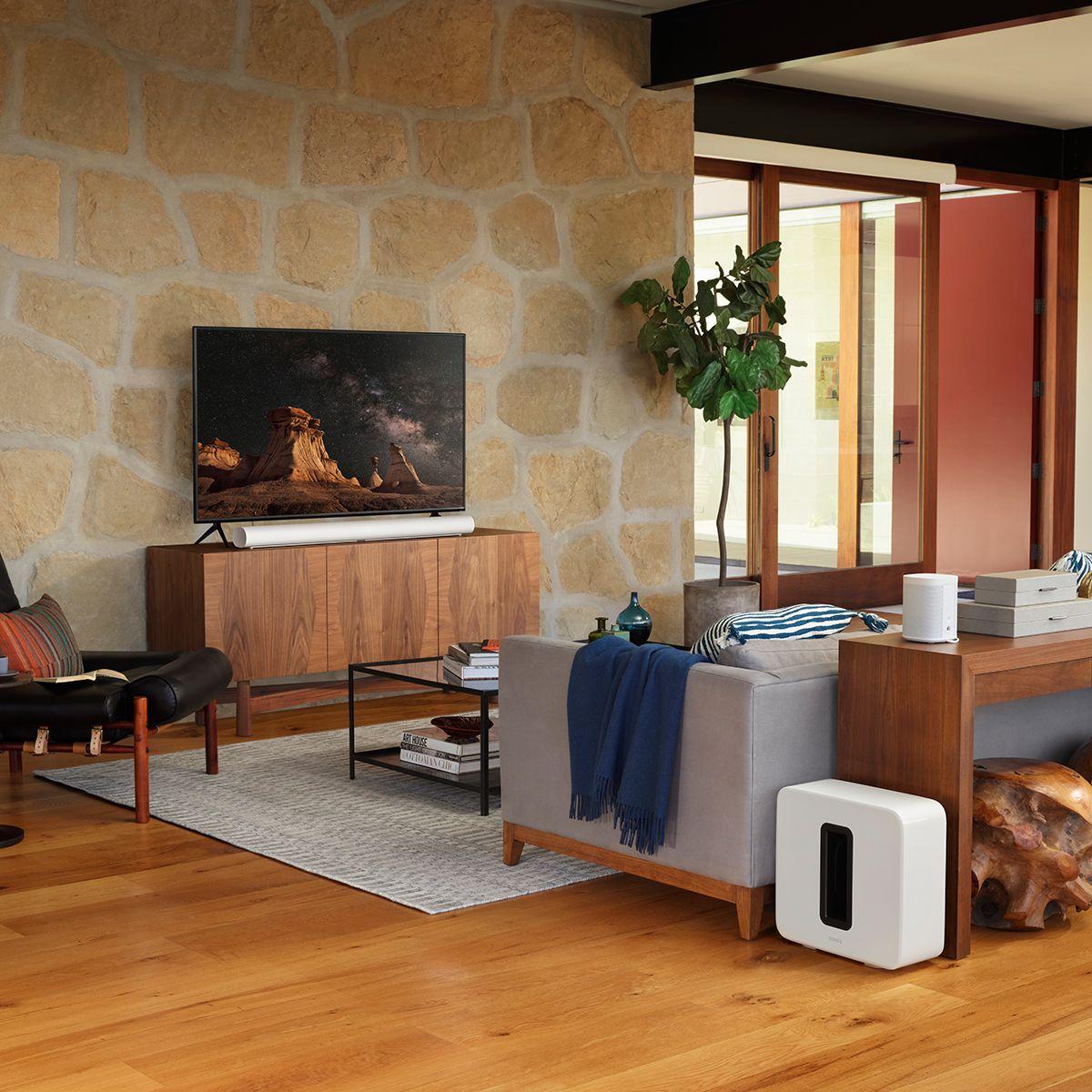
The Sonos Arc adapts to almost any space. Its single-unit design fits under TVs in bedrooms, apartments, or living rooms without requiring additional floor space. However, performance does vary with room characteristics. Rooms with hard surfaces (wood floors, large windows, minimal furniture) can sound overly bright, while heavily carpeted and furnished rooms may sound muffled.
Both systems offer wall-mounting options, though the Samsung setup becomes more complex with multiple wireless components to position. The Sonos Arc mounts elegantly as a single unit, maintaining its minimalist aesthetic while providing optimal listening height.
Since their respective launches, both manufacturers have demonstrated different approaches to product evolution. Sonos has consistently enhanced the Arc through software updates, adding features like voice control improvements, better streaming service integration, and refined audio processing algorithms. This means Arc owners have received genuinely new capabilities without purchasing new hardware.
Samsung's improvements focus more on hardware iterations within their Q Series lineup. Each year typically brings better wireless connectivity, improved driver designs, and enhanced integration features. However, these improvements require purchasing newer models rather than updating existing ones.
This difference affects long-term value considerations. Sonos products tend to maintain relevance longer through software updates, while Samsung users might feel pressure to upgrade hardware more frequently to access the latest features.
Choosing between the Sonos Arc and Samsung Q Series 9.1.2 ultimately depends on your priorities, space, and long-term plans.
Choose the Sonos Arc if you value flexibility, superior music performance, and elegant simplicity. It's ideal for smaller spaces, renters who can't position rear speakers optimally, or users who prioritize music listening equally with movies. The ability to expand gradually makes it perfect for buyers who want to spread costs over time while still getting excellent performance from the soundbar alone.
The Samsung Q Series 9.1.2 suits users who want immediate, complete surround immersion without compromise. It's perfect for dedicated theater rooms, gaming enthusiasts, or anyone who primarily watches action movies and wants maximum impact. The included subwoofer and rear speakers deliver experiences that the Sonos system can only match with significantly higher total investment.
Consider your room carefully—the Samsung system requires space and flexibility for optimal speaker placement, while the Sonos Arc adapts to almost any environment. Think about your sources too: multiple gaming consoles favor Samsung's connectivity options, while multi-room music streaming gives Sonos clear advantages.
Both systems represent excellent engineering and will dramatically improve your audio experience over TV speakers. The choice comes down to whether you prefer Samsung's immediate completeness or Sonos's elegant flexibility. Either way, you're getting a premium audio experience that will transform how you enjoy entertainment at home.
| Sonos Arc Wireless Sound Bar ($540.60) | Samsung Q Series 9.1.2 Channel Soundbar ($897.99) |
|---|---|
| Audio Channels - Determines surround sound authenticity | |
| 5.0.2 virtual channels (simulated surround) | 9.1.2 physical channels (true surround with rear speakers) |
| What's Included - Affects total system cost | |
| Soundbar only (subwoofer and rears sold separately) | Complete system: soundbar + 8" subwoofer + wireless rear speakers |
| Bass Response - Critical for movie impact and music fullness | |
| Built-in woofers only (requires $449+ Sub for deep bass) | Dedicated 8" wireless subwoofer included (extends to 30Hz) |
| Room Size Compatibility - Determines placement flexibility | |
| Any room size (performance varies with acoustics) | Large rooms preferred (6-10ft behind seating for rears) |
| Design Philosophy - Affects long-term satisfaction | |
| Minimalist single-bar (expandable over time) | Complete theater system from day one |
| HDMI Connectivity - Important for gaming and multiple sources | |
| Single HDMI eARC port (no passthrough) | Multiple HDMI 2.1 inputs with 4K/120Hz, VRR, ALLM |
| Music Performance - Key if you stream music frequently | |
| Audiophile-tuned with Trueplay room correction | Theater-optimized (can overwhelm delicate music) |
| Voice Assistant Integration - Convenience factor | |
| Built-in Sonos Voice, Alexa, Google Assistant | Basic voice control (less refined than Sonos) |
| Codec Support - Affects content compatibility | |
| Dolby Atmos only (no DTS:X support) | Dolby Atmos + DTS:X (broader format support) |
| Multi-Room Audio - Expands whole-home capabilities | |
| Full Sonos ecosystem integration (100+ services) | Basic music streaming (limited multi-room features) |
| Room Calibration - Optimizes sound for your space | |
| Trueplay (iOS devices only) | SpaceFit Sound+ (automatic, works with any device) |
| Total System Cost - Real-world budget impact | |
| $541-$2,239 (depending on expansions) | $898 complete (no additional purchases needed) |
The Samsung Q Series 9.1.2 Channel Soundbar ($897.99) offers better immediate value, providing a complete surround system with rear speakers and subwoofer included. The Sonos Arc ($540.60) has a lower entry price but requires additional purchases ($449-$899 each) for subwoofer and rear speakers to match Samsung's capabilities, potentially costing $1,439-$2,239 total.
The Samsung Q Series 9.1.2 includes an 8-inch wireless subwoofer, providing deep bass out of the box. The Sonos Arc relies on built-in woofers that deliver adequate bass for casual listening but requires the optional Sonos Sub ($449-$799) for cinema-level low-end impact.
The Sonos Arc is ideal for small spaces due to its single-bar design that fits under any TV without requiring additional speaker placement. The Samsung Q Series 9.1.2 needs 6-10 feet behind seating for rear speakers, making it better suited for larger, dedicated theater rooms.
Both soundbars connect via HDMI eARC/ARC ports found on most modern TVs. The Sonos Arc uses a single HDMI connection, while the Samsung Q Series 9.1.2 offers multiple HDMI 2.1 inputs supporting 4K/120Hz passthrough for gaming consoles and streaming devices.
The Samsung Q Series 9.1.2 delivers authentic surround sound using physical rear speakers that create genuine directional audio. The Sonos Arc uses advanced virtual processing to simulate surround effects from a single unit, which is impressive but can't match the directional accuracy of real rear speakers.
The Sonos Arc excels at music with audiophile-tuned drivers and Trueplay room correction for natural sound reproduction. The Samsung Q Series 9.1.2 is optimized for movies and can sound overly aggressive with delicate music, though it handles bass-heavy genres well thanks to its included subwoofer.
The Sonos Arc offers plug-and-play simplicity with guided app setup and a single HDMI connection. The Samsung Q Series 9.1.2 requires positioning multiple wireless components (soundbar, subwoofer, rear speakers) throughout your room, making setup more complex but providing complete surround coverage.
The Samsung Q Series 9.1.2 includes Game Mode Pro with low-latency processing and multiple HDMI 2.1 inputs supporting Variable Refresh Rate (VRR) and Auto Low Latency Mode (ALLM). The Sonos Arc handles gaming audio well but lacks dedicated gaming optimizations and has limited connectivity options.
The Sonos Arc supports over 100 streaming services natively with high-resolution audio support and seamless Apple AirPlay 2 integration. The Samsung Q Series 9.1.2 covers major services like Spotify and Tidal but focuses more on HDMI sources than streaming integration.
The Sonos Arc is designed for gradual expansion within the Sonos ecosystem, allowing you to add the Sub and rear speakers when budget allows. The Samsung Q Series 9.1.2 comes complete but offers limited expansion options beyond the included components.
The Sonos Arc offers superior voice integration with built-in Sonos Voice Control, Amazon Alexa, and Google Assistant, plus advanced far-field microphones with beamforming technology. The Samsung Q Series 9.1.2 provides basic voice control but focuses more on audio performance than smart features.
The core difference is philosophy: the Sonos Arc is a premium single-unit soundbar with optional expansion, prioritizing elegance and music quality. The Samsung Q Series 9.1.2 is a complete surround system emphasizing maximum movie immersion with physical rear speakers and included subwoofer for authentic theater experiences.
We've done our best to create useful and informative comparisons to help you decide what product to buy. Our research uses advanced automated methods to create this comparison and perfection is not possible - please contact us for corrections or questions. These are the sites we've researched in the creation of this article: whathifi.com - soundandvision.com - en.community.sonos.com - cnet.com - worldwidestereo.com - abt.com - creativeaudio.net - target.com - sonos.com - worldwidestereo.com - businessinsider.com - en.community.sonos.com - youtube.com - rtings.com - samsung.com - markselectrical.co.uk - techradar.com - walmart.com - samsung.com - samsung.com - youtube.com - samsung.com - biancos.com - crutchfield.com - samsung.com

Privacy Policy
Terms and Conditions - Affiliate Policy
Home Security
© Copyright 2008-2026.
11816 Inwood Rd #1211, Dallas, TX 75244